The purpose of the proposed study was twofold: (a) to explore the feasibility and usability of a new Internet-Based Caregiver Support Service (ICSS) for family caregivers who take care of persons with Alzheimer’s disease and related dementias (ADRD); and (b) to evaluate the effects of participation in ICSS on caregiver health outcomes. This technology-based program was designed exclusively for Chinese Canadians with diverse ethno-cultural-linguistic backgrounds. The ICSS service used e-mail as the vehicle for asynchronous communication between a family caregiver and a health professional in a language of choice (English, Simplified Chinese, or Traditional Chinese). Against a backdrop of increasing computer use and Internet access to health information, this study explored the feasibility of using technology to deliver health care support programs to Chinese family caregivers. The development and evaluation of the ICSS system contributed to our understanding of the interface between meeting high professional standards of health care and high accessibility and usability technology standards.
Background
Technology-Based Intervention Programs for Caregivers
Numerous studies have documented that family members taking care of individuals with ADRD experience high levels of stress, which can lead to depression, physical symptoms, and psychosocial problems (Burns & Rabins, Reference Burns and Rabins2000; Gräsel, Reference Gräsel1995; Sörensen, Pinquart, & Duberstein, Reference Sörensen, Pinquart and Duberstein2002). Interventions designed to alleviate the caregiving burden have been developed in a variety of formats, such as individualized, family, and group programs. Service models typically provide information, instrumental support, and psychosocial support in various contexts such as in-person clinics or in-home meetings, telephone, videophones, newsletters, and Web-based services (Colantonio, Cohen, & Corlett, Reference Colantonio, Cohen and Corlett1998; Sörensen et al., Reference Sörensen, Pinquart and Duberstein2002). Although many different types of caregiver support services are available, researchers consistently find that caregivers underutilize such services. Time constraints, lack of respite care, transportation, and health issues have been identified as reasons for non-participation in face-to-face caregiver support services (Galinsky, Schopler, & Abell, Reference Galinsky, Schopler and Abell1997).
A systematic review was conducted previously on the use of Information Communication Technologies (ICT) to provide support interventions to caregivers of people with dementia (Powell, Chiu, & Eysenbach, Reference Powell, Chiu and Eysenbach2008). The review identified 15 papers on five interventions: (a) ComputerLink, (b) AlzOnline, (c) Caring for Others, (d) Telephone-Linked Care (TLC), and (e) Computer Telephone Information System (CTIS) – the last two interventions were part of the Resources for Enhancing Alzheimer’s Caregiver Health (REACH) project (Schulz, Burgio, Burns, Eisdorfer, Gallagher-Thompson, Gitlin, Reference Schulz, Burgio, Burns, Eisdorfer, Gallagher-Thompson and Gitlin2003). The review results of the 15 papers revealed that the technology-based interventions being studied were complex with various elements of networked support. Sample sizes were small and overall participant use of the technology-based programs was low to moderate. Interest in providing technology-based health care programs continues, however, because geographic and time constraints prevent some caregivers from attending traditional support groups. Also, younger caregivers and therefore caregivers of the future are those most interested in receiving support via the Internet (Colantonio, Cohen, & Pon, Reference Colantonio, Cohen and Pon2001).
Internet-based interventions are a convenient alternative to other forms of support, allowing caregivers contact with other caregivers and professionals for meaningful guidance and mutual support (White, Dorman, Mahoney, Tarlow, & Sandaire, Reference White, Dorman, Mahoney, Tarlow and Sandaire2000). Results of technology-based programs for dementia caregivers showed an increase in decision confidence, reduction in emotional strain, reduction in spousal relationship conflict, and less activity restriction (Bass, McClendon, Brennan, & McCarthy, Reference Bass, McClendon, Brennan and McCarthy1998; Brennan, Moore, & Smyth, Reference Brennan, Moore and Smyth1995). A real-time Web-based education workshop (AlzOnline) was found to increase the self-efficacy of caregivers and decrease subjective caregiving burden (Glueckauf, Ketterson, Loomis, & Dages, Reference Glueckauf, Ketterson, Loomis and Dages2004). A study that used online videoconferencing to replicate face-to-face support groups showed that the intervention group experienced a decline in stress compared with an escalation in stress for the control group (Marziali & Donahue, Reference Marziali and Donahue2006; Marziali, Donahue, & Crossin, Reference Marziali, Donahue and Crossin2005).
Ethno-Cultural-Linguistic Needs
Across different ethnic and language groups, studies show that caregivers experience more caregiving burden than non-caregivers do (Ho, Friedland, Rappolt, & Noh, Reference Ho, Friedland, Rappolt and Noh2003; Patterson, Semple, Shaw, Yu, He, Zhang et al., Reference Patterson, Semple, Shaw, Yu, He and Zhang1998). Caregivers from different ethnic backgrounds, however, vary in the degree of experienced stress, psychosocial outcomes, and service utilization (Connell & Gibson, Reference Connell and Gibson1997; Janevic & Connell, Reference Janevic and Connell2001). The CTIS (Belle, Burgio, Burns, Coon, Czaja, Gallagher-Thompson et al., Reference Belle, Burgio, Burns, Coon, Czaja and Gallagher-Thompson2006) was found to improve the quality of life in Hispanic or Latino American and in Black or African American caregivers.
The target population in this study was Chinese Canadians. In Canada, the number of Chinese immigrants has increased substantially since the mid-1980s (Chui, Tran, & Flanders, Reference Chui, Tran and Flanders2005). They have come mainly from China, Taiwan, and Hong Kong and speak the third dominant language in Canada after English and French. Because Chinese elders and their caregivers view dementia as a natural aspect of aging, they seem less fearful and less horrified by dementia compared with the responses of Western European Americans. Chinese cultural values such as extended family support, filial piety, and traditional health beliefs may help Chinese caregivers to accept and care for family members with less distress (Ikels, Reference Ikels2002). Studies show that compared with Caucasian American caregivers, Chinese caregivers experience less depression, anxiety, and psychological distress (Pang, Chow, Cummings, Leung, Chiu, Lam et al., Reference Pang, Chow, Cummings, Leung, Chiu and Lam2002; Patterson et al., Reference Patterson, Semple, Shaw, Yu, He and Zhang1998).
Similarly, cultural beliefs about dementia can affect how Chinese Canadians use support services (Haley, Han, & Henderson, Reference Haley, Han and Henderson1998). A Canadian survey of 2,214 Chinese immigrants aged 55 and older reported cultural-linguistic barriers to health services access (Lai & Chau, Reference Lai and Chau2007). In another study, Chinese Canadian women caregivers were concerned about the negative effects of Western culture on traditional values regarding caregiving (Ho et al., Reference Ho, Friedland, Rappolt and Noh2003). These findings suggest that Chinese caregivers may need support services tailored to their ethnic-cultural belief systems. The ICSS system was built to address these issues and to provide easy accessibility through the use of technology.
The Intervention Design
With respect to the clinical protocol of the caregiver support intervention, the ICSS identified intervention goals and followed therapy processes similar to those that occur in face-to-face intervention programs. The main difference was that the ICSS users accessed the services via the Internet and communicated via e-mail. The ICSS supported two Internet-based communication tools: (a) a caregiver information handbook, and (b) personalized e-mail communication between client and clinician.
The designated Web site content consisted of a caregiving information handbook with more than 400 pages of information on disease diagnosis and progression, caregiving strategies, and a listing of community resources. The content was developed by a team of occupational therapists and social workers who had extensive experience with family caregiving information needs, and the content was subsequently translated into Chinese by a professional translator. The translations were then reviewed and edited by bilingual clinical staff to ensure that the translation was clinically appropriate and culturally relevant.
The personalized e-mail therapeutic intervention occurred through a password-protected, secure Web site. The embedded e-mail function supported text-based exchanges between each caregiver and a designated therapist. Two experienced clinicians, with a clinical background in occupational therapy and/or social work, provided the e-mail psychosocial, educational intervention. Half of the participant caregivers were randomly assigned to each therapist. The therapists initiated the first e-mail contact, introduced themselves, and asked each participant to share any concerns they had about caring for a family member with dementia. The e-mail exchange occurred asynchronously in a language of choice (English, Simplified Chinese, or Traditional Chinese).
The therapists responded to each caregiver using standard therapeutic strategies such as empathic understanding, validation of emotions, and reactions to difficult caregiving situations, and informational and emotional support. The aim at the outset was to establish rapport and build a trusting relationship with each caregiver. Depending on caregiver needs, each therapist provided information about the disease and its management, such as strategies for ensuring home safety and strategies for managing the care recipient’s difficult behaviour. Although community resources were listed on the Web site, the therapists frequently provided support as to how best to access specific service agencies. In addition, the therapists focused on the importance of caregiver self-care in order to offset the high levels of stress associated with caring for a person with dementia (Chiu, Marziali, Tang, Colantonio, Carswell, Eysenbach et al., Reference Chiu, Marziali, Tang, Colantonio, Carswell and Eysenbach2008). The ultimate aim of the intervention was to help caregivers manage more effectively the burden of caring for a family member with dementia and improve the overall quality of life for both the caregiver and the care recipient.
The technical design of the ICSS Web site, www.familycaregiving.ca, was adapted from a well-tested Web site built to provide services to caregivers of family members with neuro-degenerative diseases (Marziali & Donahue, Reference Marziali and Donahue2006). The Web site was designed to meet four requirements: (a) Functionality: The Web site supported content (information handbook), an e-mail tool and allowed the research team to upload and revise content, access e-mail records, and transaction logs; (b) Usability: We followed the recommendations published by the National Institute on Aging (2001) to make the Web site senior friendly (Chiu & Henderson, Reference Chiu and Henderson2005) and applied general usability principles to achieve an ease-of-use layout, including format and comprehension of posted content (short paragraphs, grades six to eight reading level) (Brinck, Gergle, & Wood, Reference Brinck, Gergle and Wood2002); (c) Security: The e-mail account was password protected, and encryption ensured security of all e-mail transmissions; and (d) Language: All interfaces were available in English, Simplified Chinese, or Traditional Chinese.
Methodology
We used a mixed-methods design to implement the intervention and for data collection. First, a usability study was conducted to evaluate ease of access to the Web site content and e-mail exchange link. Results of the usability study resulted in revisions to the interface design before recruiting participants for the intervention program. Second, the caregivers’ responses to using an online support service and the service effects on health outcomes were evaluated at baseline and at termination of the intervention program. Third, the ethno-cultural needs of the caregivers and their subjective experiences of using online services were explored using in-depth interviews.
Ethics approvals were obtained from the University of Toronto Ethics Review Board, the COTA Health’s Ethics and Research Committee, and the Yee Hong Center for Geriatric Care’s (Yee Hong) Research Committee.
The ICSS Usability Study
Three Chinese caregivers were recruited to participate in a usability study. Each completed a series of tasks using the information Web site and e-mail tools. For example, they sent and received messages and browsed the site to examine the information handbook. The usability study was conducted in a laboratory with an observer present to record participant reactions, questions, and responses. Following the lab study, semi-structured interviews were conducted with each participant. In addition, each participant completed a questionnaire that assessed Internet usage and online caregiving service preferences. Finally, an expert review (heuristic evaluation) was conducted.
Intervention Study
The aim of the intervention study was to evaluate Chinese dementia caregivers’ responses to using an online support service and to observe effects of the service on caregiver health outcomes. We hypothesized that the online program would result in a pre-post intervention decrease in caregiver burden.
Sample
A convenience sampling strategy was used to recruit participants from Yee Hong, a not-for-profit organization that serves Chinese seniors and their caregivers in the Greater Toronto Area. Four criteria regarding selection of caregiver participants were included: (a) caregivers 18 years or older, caring for a family member attending or waiting for one of Yee Hong’s Adult Day Care Programs for dementia; (b) who spoke, read, and wrote Chinese; (c) who self-identified as caring for a person with ADRD who was living in the community (i.e., not an institutional setting); and (d) had access to the Internet.
Data Collection
Potential participants received a letter inviting their participation followed by a telephone call to screen for their eligibility. Eligible caregivers were invited to participate. Those who declined were asked reasons for refusing the service. Those who agreed received an information consent form to sign and return. In addition, they completed and returned a set of questionnaires. They also were assigned a user name and password for accessing their e-mail account. Participants were asked to log on to the Web site, and those experiencing difficulties were asked to contact the project coordinator for information and support. All project staff were fluent in Chinese and could read and write Chinese.
Instruments
A series of questionnaires typically used in studies of dementia caregiver support programs were used and administered at baseline and termination of the program. The intervention goal of the ICSS was to reduce perceived caregiver burden. The 28-item Burden Scale for Family Caregivers (BSFC) (Gräsel, Chiu, & Oliver, Reference Gräsel, Chiu and Oliver2003) was the primary outcome measure. It measures the level of perceived or subjective burden of family members who assist individuals at home with activities of daily living. The BSFC has good psychometric properties and is sensitive to change following intervention programs (Gräsel, Reference Gräsel1995; Gräsel et al., Reference Gräsel, Chiu and Oliver2003). A Chinese version was developed using a backward-translation technique. Analysis of this version yielded a Cronbach’s alpha of 0.91.
Seven additional measures were used in this study. The Revised Memory and Behavior Problems Checklist (RMBPC) (Teri, Truax, Logsdon, Uomoto, Zarit, & Vitaliano, Reference Teri, Truax, Logsdon, Uomoto, Zarit and Vitaliano1992), a 24-item measure, tracked the caregiver’s ability to react to a care recipient’s problem behaviours. A Chinese version of the RMBPC has shown good internal consistency and test-retest reliability (Fuh, Liu, Wang, Wang, & Liu, Reference Fuh, Liu, Wang, Wang and Liu1999). The Center for Epidemiological Studies-Depression (CES-D) (Radloff, Reference Radloff1977), a 20-item scale with excellent psychometric properties, was used to measure the caregiver’s level of depression. A Chinese version showed an alpha reliability of 0.92 (Rankin, Galbraith, & Johnson, Reference Rankin, Galbraith and Johnson1993). The Self Rated Health (SRH) index consists of one item rating of perceived overall health of the caregiver. A Chinese version was used in a population survey in Shanghai, China (Yu, Kean, Slymen, Liu, Zhang, & Katzman, Reference Yu, Kean, Slymen, Liu, Zhang and Katzman1998). The Multidimensional Scale of Perceived Social Support (MSPSS) (Zimet, Dahlem, Zimet, & Farley, Reference Zimet, Dahlem, Zimet and Farley1988) – a 12-item measure of caregivers’ perceptions of support availability from significant others, family, and friends – has good psychometric properties, and a Chinese version was considered reliable and valid across cultures (Zhang & Norvilitis, Reference Zhang and Norvilitis2002). The Positive Aspects of Caregiving (PAC) (Cohen, Colantonio, & Vernich, Reference Cohen, Colantonio and Vernich2002), a 9-item scale, was developed for the Canadian Study of Health and Aging to identify positive aspects of caregiving. For this study, a Chinese version was developed using a backward-translation technique. The OARS Multidimensional Functional Assessment Questionnaire (OARS) (Older Americans Resources and Services, 1978), a 15-item measure of activities of daily living, was used to assess care recipients’ functioning level. The Caregiver Competence Scale (CCS) is a one-item, four-point scale that we used to measure caregiver perceived competence of caregiving skill and knowledge.
Follow-up Interviews
A qualitative research sampling strategy was used to select a sub-sample of caregiver participants for in-depth follow-up interviews (Strauss & Corbin, Reference Strauss and Corbin1998). A theoretical sampling strategy identifying age (younger-older), gender, caregiving experience (little versus a lot), and frequency of use of the ICSS system (one e-mail exchange versus five or more) was used to select the sub-sample. The purpose was to capture variations within each identified dimension. In-depth interviews with a sub-sample of 10 participants were sufficient for reaching saturation on the identified dimensions.
All interviews were conducted by the first author (TC) following an interview guide. Although the participants could choose the language they wanted for the interview, 90 per cent chose to be interviewed in Chinese. The interviews were audio-taped, translated into English, and transcribed verbatim. The transcribed text was analyzed using the software program ATLAS.ti. Constant comparison, line-by-line coding, and analytic memoing were used to identify salient themes (Patton, Reference Patton1990), using an interpretive grounded-theory approach (Charmaz, Reference Charmaz, Denzin and Lincoln2005). An audit trail was kept to record the analysis decisions.
Results
Usability of ICSS
One female and two male adult children took part in the usability testing. All three were providing minor to moderate levels of care to a parent with dementia, and all were moderate to heavy Internet and e-mail users. The usability testing and heuristic evaluation revealed that the Web site interface supported the program’s core functionality. Redesign suggestions were identified and used to improve the layout and functionality (Chiu & Lottridge, Reference Chiu and Lottridge2005a). The findings also showed that language preferences varied in four specific caregiver-healthcare provider communication scenarios: (a) reading Web sites, (b) sending e-mail, (c) receiving e-mail, and (d) telephone or face-to-face contact with professionals. Chinese was preferred when speaking to the therapist face-to-face, but English was preferred for sending e-mails because inputting Chinese characters was difficult. However, a few Chinese words were interspersed with English to convey specific words or concepts, especially when there were no English equivalents or when the caregivers did not know the English equivalent. Caregivers preferred to receive affect-centered information in Chinese due to the highly personal and cultural-specific nature of emotional expression. In contrast, disease-centered information was acceptable in both languages or only in English. English was preferred because of the need to learn new terms associated with caregiver information obtained from the English media and the wish to build context-specific vocabulary (Chiu & Lottridge, Reference Chiu and Lottridge2005b).
Intervention Study
A total of 132 caregivers were identified from the waiting list and active-member list of Yee Hong. They were mostly daughters (40.9%) or sons (34.1%) of the care recipient and were Cantonese speaking (87.1%). After phone screening, 69 (52.3%) did not meet the recruitment criteria. Sons or daughters were eight times more likely than spouses to qualify for accessing the service using the Internet (χ2 = 12.67; df = 1; p < 0.05). Many spousal caregivers did not have computers or Internet access. With regard to language, we had expected that Mandarin-speaking Chinese familiesFootnote 1 would have greater need for the service due to their more recent immigrant status. Yet, compared with Cantonese-speaking families, the Mandarin-speaking families were 10 times less likely to qualify for the e-health program (χ2 = 6.62; df = 1; p < 0.05). Many did not qualify for the program because we were unable to contact them for an interview after numerous tries (Chiu et al., Reference Chiu, Marziali, Tang, Colantonio, Carswell and Eysenbach2008).
Of 63 (47.7%) caregivers who qualified for the study, only 35 (55.6%) were interested in receiving the ICSS program. Moreover, 28 (44.4%) eligible caregivers refused participation because they were too busy or too stressed and felt they knew enough about giving care to someone with ADRD. Among the 35 caregivers who gave consent, 28 (80.0%) completed the service and questionnaires at post-intervention and 7 (20%) failed to complete the questionnaires.
The typical participant was female, in her 40s to 50s, worked full-time, had college or higher education, was not born in Canada, and had immigrated to Canada 10 to 20 years previously. The majority of care recipients were the parents who co-resided with the caregiver. The caregivers were in two groups related to length of providing care – about one half had been providing care for less than five years and the other half for more than 10 years. The hours per week of providing care were less than 11 hours or more than 20 hours.
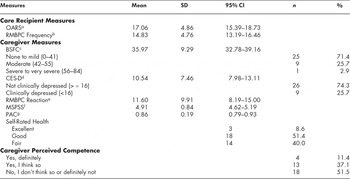
Table 1 shows baseline measures of care recipients’ needs for assistance with activities of daily living (OARS), and exhibited memory and behavioural problems (RMBPC Frequency). Caregivers showed moderate levels of distress in relation to care recipient-manifested problems (RMBPC Reaction): 28 per cent of caregivers experienced moderate or severe burden (BSFC), and 25.7 per cent were clinically depressed (CES-D). Caregivers reported moderate to high levels of social support from friends and family (MSPSS) and were overall positive about caregiving (PAC). In self-rating health, 40 per cent of the caregivers rated their health as fair, and 51.5 per cent considered themselves as not having the skills or knowledge to provide good care to the family member with dementia.
Baseline measures of care recipients and caregivers (n = 35)

95% CI = 95 percent confidence interval.
a OARS = Older Americans Resources and Services Multidimensional Functional Assessment Questionnaire. A score of 0 indicates excellent function in all areas, and a score of 28 indicates being dependent in all areas.
b RMBPC = Revised Memory and Behavioral Checklist – Frequency Subscale. A higher score indicates the care recipients have more memory or behavioural problems (0 – never occurred; 24 – problems occurred in all areas).
c BSFC = Burden Scale for Family Caregivers. A higher score indicates greater perceived caregiving burden (0 – No, definitely not; 84 – Yes, definitely in all areas).
d CES-D = Center for Epidemiological Studies-Depression. A higher score indicates greater depression (0 – rarely or none of the time; 60 – most or all of the day in all areas).
e RMBPC – Reaction Subscale. A higher score indicates the caregivers were more bothered or upset when the problems happened (0 – not at all; 96 – extremely in all problem areas).
f MSPSS = Multidimensional Scale of Perceived Social Support. A higher score indicates a perception of greater social support (1 – very strongly disagree; 7 – very strongly agree).
g PAC = Positive Aspects of Caregiving. A higher score indicates more positive attitude towards caregiving (0 – none at all; 1 – yes in all areas).
Caregivers’ language preferences between Chinese and English varied on the basis of the communication modes. When receiving an e-mail, most were comfortable with either Chinese or English (60.7%). When writing an e-mail, they preferred English (60.7%). When speaking to the online practitioner, they preferred Cantonese and English (53.6%), or Cantonese only (32.1%).
Frequency of Program Use
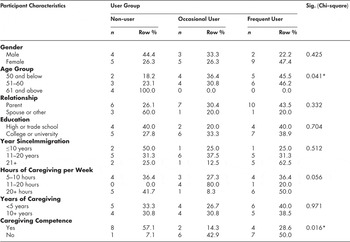
Caregivers who completed the study were grouped into three ICSS user groups: non-users (n = 9), occasional users (1 to 2 times; n = 8), and frequent users (3 or more times; n = 11). Age of participants and perceived caregiving competence had a statistically significant effect on usage (see Table 2). Participants who were older tended to be non-users, while younger participants were more likely to be occasional or frequent users (χ2 = 9.96; df = 4; p = 0.041). With respect to caregiving competence, non-users mostly rated themselves as competent to give good care while occasional or frequent users rated themselves as less competent (χ2 = 8.28; df = 2; p = 0.016). Age and caregiving competence were correlated (Spearman r = −4.03; p = 0.020), with an older age associated with greater perceived competence. Both older age and greater perceived competence were associated with less usage. There was no group effect regarding gender, education, year of immigration, years of care, hours of care, and relationship with care recipient (see Table 2).
Participant characteristics by user group (n = 28)

* p = 0.05
Caregivers were offered the services for six months. They sent e-mails during weekdays and weekends. Some sent e-mails as early as 7 a.m. and many sent e-mails past midnight. There were three peak hours: 10–11 p.m., followed by 1–2 p.m. (during lunch hours) and 5–6 p.m. (after work before going home). Sixty-one percent of the e-mails were sent outside routine office hours (9 a.m. to 5 p.m.).
Post-Intervention Study Outcomes
The primary outcome measure was BSFC, which measured perceived burden in caregivers. In this study, the BSFC score showed a correlation with problem and memory behaviour (subscales of the RMBPC; r = 0.41 and 0.43), depression (CES-D; r = 0.64), positive aspects of care (PAC; r = –0.62), and caregiver competence (CCS; r = 0.48).
The pre-post BSFC change score was not statistically significant. The BSFC change score was then compared among the three user groups (see Table 3). Non-users had increased BSFC scores at post-intervention. Occasional users had a minimal change in BSFC scores. Frequent users had a decrease in BSFC scores, indicating lower perceived burden. As usage frequency increased, there was a trend in decreasing BSFC change scores. An analysis of variance (ANOVA) showed that the differences among the three groups were not statistically significant (F = 1.78, p = 0.19). When BSFC change scores between non-users and frequent users were compared, the difference was 7.42 and statistically significant (t = 2.50, df = 17, p = 0.02).
BSFC change score by user group (n = 27Footnote a)

a One participant was excluded because of an extreme increase in post-BSFC score due to extenuated circumstances.
b A positive BSFC change score is indicative of a worsened perceived burden, and a negative BSFC change score indicates an improvement.
Intent-to-treat was analyzed by including seven caregivers who dropped out. Dropout caregivers were assumed to have a BSFC change score of 5.22 (the mean change score of non-users). After including the seven drop-outs, the mean BSFC change score was 1.93 (SD = 8.06), which was not statistically significant (F = 2.76, df = 34, p = 0.079). BSFC change scores between non-users (n = 14) and frequent users (n = 10) had a difference of 7.42 (t = 3.15, df = 22, p = 0.005). The reasons for dropping out of the program included a lack of time (too busy to complete the questionnaire or use the service), reduced caregiving needs (family member admitted to a nursing home or out of country for several months), and unavailability of a home computer after the study had started. One caregiver dropped out but agreed to participate in the follow-up interview, allowing us to gain an in-depth understanding of reasons for not participating.
Analysis of Follow-up Interviews
Analysis of the follow-up interviews showed that caregivers varied in the ways they felt about using technology to access services and in the degree to which an online service was beneficial. The theoretical sampling strategy yielded interviews with six female and four male caregivers, spanned younger (adult children) to older (spouse) caregivers, had been providing care from one to 10 years, and ranged in use of the ICSS system from “not at all” to frequent use. The interviews explored what the caregivers believed in, how they gave care, what services were needed, how they used the online support, and why. Two main categories were identified: (a) caregiving beliefs and support services needs, and (b) the experiences of using online support.
Caregiving Beliefs and Support Service Needs
Four themes were identified that characterized caregiving beliefs and service needs. Because most care recipients were the parents of the participants, we use the term “parent” in this section, with an understanding that they may also include spouses, grandparents, or other relatives.
Embracing Traditional Family Values. Participants felt that taking care of their parents was more than a responsibility; it was the way of life. They cared about their parents and wanted them to be happy. They put themselves in their parents’ position; appreciating that their parents would not want to be “abandoned” in a nursing home. One caregiver explained, “I have applied for a nursing home once. She felt I did not want her anymore. I could not send her away like this.” They tried their best to give care at home, but being a caregiver is not easy. They felt they needed a lot of patience and recognized the need to have enough rest. One caregiver said, “It is quite stressful, just to be patient.” Another explained, “I meditate to release my pressure.” Some had the perception that their caregiving belief was different from that of Westerners.
Living with Worries and Emotional Struggles. Caregivers felt they did not know enough about their parents’ illness. When their parents did something inappropriate because of their illness such as taking a bath five times a day, the caregivers tried to reason with them and to change their behaviour. Doing so often resulted in conflicts and frustrations. Having conflicts with their parents was the caregivers’ greatest emotional struggle. One caregiver shared his experience. “Everybody can say that it takes time to learn. But when it comes to a time that you have to do it, you can’t always tolerate it.” They were scared when their parents had delusional thoughts. They worried about safety and were unsure if what they were doing was right or not. A caregiver explained, “One time, she got up in the middle of the night and started cooking. I was so frightened.” Some did not know who to ask and where to get help. Some wanted their parents to attend an adult day program but expressed the concern that the waiting list was very long.
Seeking External Help and Reflecting on Self. Caregivers consulted doctors, friends, family members, and relatives. They read brochures and books, viewed videos, or searched the Internet. They tried to attend workshops or to join support groups but did not always have the time for that. A caregiver explained, “I attended a caregiver group once. We shared with each other. It was somewhat helpful but I had to work and couldn’t go again.” Those who needed more support had applied for or used services like adult day programs and home support services. They reflected on how their negative emotional reactions such as getting angry might not help but could aggravate the problems. The same caregiver said, “I have reflected on it myself and understand that it is impossible for her to understand and remember my explanations.” Caregivers made an effort to calm down and respond positively. Knowing what to do did not mean that they could do so easily. Some caregivers asked other family members to remind them to stay calm.
Sharing the Care and Caring for the Family. Participants stated that they provided care in teamwork with other family members, such as their spouse or their mother. In some families, these family members were the primary caregivers instead of the participants. A caregiver explained, “My mom is the full-time caregiver. I take care of dad part-time. My sister who lives with us helps out. Two other siblings who do not live together also help out.” These participants supported both the primary caregivers and the care recipients. For some participants who were the primary caregivers, the other family members offered occasional help. Some had siblings who shared limited care living in the area. Others had siblings living outside Canada who called and visited regularly.
Traditional Chinese family values explained why the participants were passionately involved in the care of their parents. Their passion for caregiving contextualized how they expressed their concerns about the illness, sought information and help, and framed and solved problems. The closeness of a family in sharing care and in caring for one another formed a close communication and support network in the family.
The Experiences of Using Online Support
Participants frequently referred to their mastery of English and computer literacy when describing their experience and use of the online support. There was a split of usage experiences in the information Web site and e-mail support.
Talking in Chinese, Typing in English, and Wanting Stories. Almost all participants preferred being interviewed in Chinese. Because some participants were not proficient in English, they felt that reading in Chinese was faster, yet some preferred to read the English version because they wanted to learn English medical terms to build up their vocabulary. For example, a caregiver explained, “I would use the Chinese page. I can read it more quickly…. If I want to find something to talk to the doctor, I may view the English site.” Some preferred English because they had been in Canada for a long time. Most preferred to type in English because typing Chinese on an English keyboard was difficult. They liked to hear the stories of other caregivers. Participants preferred to be notified when there was new information, and they welcomed the idea of receiving notices in their regular e-mail account, such as their Hotmail and Yahoo accounts.
Needing Help to Access Accounts in an Unfamiliar Portal. Most participants had used e-mail and had a regular e-mail account for personal use. When using an e-mail account in a Web-based portal, some were able to access the account and solve technical problems. For example, one caregiver said, “I haven’t used it. I can’t find the address.” Others relied on their spouse or children to help solve related problems (e.g., going to the portal’s URL address, logging onto the e-mail account, and/or typing and sending e-mails). Because caregivers did not access the accounts frequently, they often forgot their user name and password or forgot that they had access to a support service. A caregiver said, “I sometimes forgot to check the e-mails and the e-mails piled up.”
From Liking All Information in One Place to Favouring Human Contacts. Those participants who had accessed the portal found it helpful because it had all the information they needed in one place. They felt the information was comprehensive, clear, and easy to read. They used the information to learn more about the illness, prepare them for what might come next, and learn how to manage in daily care. One caregiver described how she used the information, “We re-read the information sometimes. When we have got some experiences, we have a different understanding of the information. That is very good.” Some had limited Internet search experience; others had used advanced features such as the bookmark functions. Some printed the information out and reviewed it. They also shared what they learned with other family members. For example, a caregiver who shared the care with her mother and daughter said, “My mom and daughter have not reviewed the Web site. I tell them what I have read and we talk about it.” Some did not use the information Web site, and preferred e-mail support or talking to someone directly.
From Expressing Self Freely to Not Being Able to Compose an E-mail. Participants who had used the e-mail support felt they could express themselves freely and relieve their stress in e-mails. A caregiver said, “When I just need to vent, then writing e-mail is helpful.” They could get an answer quickly, faster than asking their doctors. Caregivers felt the online therapists were professional, caring, and provided satisfactory advice. Caregivers said they would not use the e-mail support when they felt they could handle the care. A caregiver explained, “I won’t use it much, but it is good to feel there is support for me.” Even if they did not send any e-mail, they felt good that they had something to fall back on when there was a problem. Some felt that writing in English did not allow them to express themselves fully. Others were unsure what to ask or how to ask. A caregiver explained, “I don’t know what information you need to answer my problems. Do I need to tell the whole story? Will it be back and forth many times? [Doing so is] not very convenient.”
Experiencing Improvements in Perceived Burden after Service Use. The BSFC change score showed that frequent users had a decrease in perceived burden compared with an escalation of perceived burden among non-users. Interviews of frequent users collected accounts of critical incidents showing how the services had helped to improve the caregiving situations. For example, one caregiver in an e-mail described the problem of her father taking the garbage out in the middle of the night. After discussing the situation with the therapist, obtaining some suggestions, and receiving guidance when trying out the suggestions, the caregiver expressed gratitude because the problem was eventually resolved. The caregiver said the suggestions were not entirely new to her. However, validating the ideas from an expert gave her more confidence to manage the situation. Besides, she shared the care with other family members. Each had their ideas of what to do. She explained that an impartial outside expert had been helpful to keep everybody on the same page doing the same thing. She recognized that being consistent was very important in caring for someone with dementia. Another caregiver said in an e-mail that he was worried about his mother who did not eat her lunch when left alone at home on Mondays. His mother attended an adult day program from Tuesday to Friday. On Mondays, nobody was available to take care of her. The therapist suggested some local resources. Eventually the caregiver received service from a home helper who visited her mother supervising her lunch on Mondays. The caregiver was happy with the outcome. He said he now felt much relieved when leaving his mother at home on Mondays.
Discussion and Lessons Learned
Similarities and Differences with Other Technology-Based Programs
In this study, caregivers received services through a caregiver-therapist e-mail support and bilingual information Web portal. However, the type of ICT mediation and service delivery model differed from previous ICT-mediated interventions in five respects. First, telephone-computer systems were used in CTIS (Czaja & Rubert, Reference Czaja and Rubert2005) and TLC (Mahoney, Tarlow, & Jones, Reference Mahoney, Tarlow and Jones2003) to access information and communicate with experts, peers, or support groups. This study used a personal computer as the communication medium. Second, three other studies used personal computers: ComputerLink, AlzOnline, and Caring for Others. However, ComputerLink (Brennan et al., Reference Brennan, Moore and Smyth1995) used a local computer network. Since the early 1990s, the Internet has become more popular, and the computer-user interface has improved. The current study used the Internet as the medium and applied user-centered principles in designing the interface. Third, AlzOnline (Glueckauf et al., Reference Glueckauf, Ketterson, Loomis and Dages2004) users accessed real-time education classes via Web- and telephone-based technologies. Caring for Others (Marziali et al., Reference Marziali, Donahue and Crossin2005) provided caregivers with videoconferencing support groups. These two interventions differed from the current study in two aspects: (a) the two studies used synchronous communication while this study used asynchronous e-mails, enabling the caregivers to access service at a time convenient to them, and (b) the two studies provided group supports instead of individual supports, which allowed the caregivers to obtain personalized information. Fourth, most interventions were provided in English, except the CTIS which was available in both Spanish and English. This study provided the service in three languages: English, Simplified Chinese, and Traditional Chinese. Fifth, this study assigned a professional to each caregiver for continuity of service. The ongoing communications facilitated rapport building and minimized the need for the caregivers to repeat telling their situations. In sum, each intervention model has unique designs that contributed to caregiver improvements. Accordingly, factors contributing to intervention effectiveness are complex.
Outcome evaluations of five ICT-mediated interventions (Powell et al., Reference Powell, Chiu and Eysenbach2008) showed most interventions had positive treatment effects in certain subgroups but not in all participants. For example, in one of the CTIS studies (Eisdorfer, Czaja, Loewenstein, Rubert, Arguelles, Mitrani et al., Reference Eisdorfer, Czaja, Loewenstein, Rubert, Arguelles and Mitrani2003), participants who received CTIS and family therapy experienced lessened depression at month 6. At month 18, Cuban American caregivers experienced more benefits than other ethnic groups. In the second CTIS study (Finkel, Czaja, Schulz, Martinovich, Harris, & Pezzuto, Reference Finkel, Czaja, Schulz, Martinovich, Harris and Pezzuto2007), no differences were found in all participants on depression, burden, social support, and health behaviour; but there was an improvement in depression for caregivers who were more depressed at baseline. Similarly, all TLC participants did not show a difference in scores of “bother” (bothered by the disruptive behavior of the care recipients), depression, or anxiety, but participants with lower mastery scores at baseline had declines in “bother”, depression, and anxiety (Mahoney, Tarlow & Jones, Reference Mahoney, Tarlow and Jones2003). In the ComputerLink study (Bass et al., Reference Bass, McClendon, Brennan and McCarthy1998; Brennan et al., Reference Brennan, Moore and Smyth1995), all participants had an increase in decision confidence. However, only certain subgroups showed positive outcomes in three aspects: (a) greater reduction in emotional strain for caregivers with more informal support, (b) in relationship strain for spouses, and (c) in activity restriction for caregivers with more informal support. All participants in the AlzOnline study (Glueckauf et al., Reference Glueckauf, Ketterson, Loomis and Dages2004) showed an improvement in three self-efficacy subscales and subjective caregiving burden, but there was no change in positive caregiving experience or perceptions of burden. In the Caring for Others study (Marziali & Donahue, Reference Marziali and Donahue2006), no difference was found in health status, depression, burden, or social support, but the intervention group experienced a decline in stress compared with an escalation in stress for the control group.
Similar to the prior studies, the current study did not show improvements in all participants, but it did show improvement in a subgroup. There was a decrease in perceived burden among frequent users compared with an escalation of perceived burden in non-users. Delivering support services via ICT mediation seems to involve a complex interaction between the caregiver’s capacity to use the Internet and the caregiver’s needs for service. The findings showed non-users were older and were more competent in giving care while frequent users were younger and rated themselves as less competent. Perhaps younger caregivers were more comfortable with using the Internet and had a greater need to improve their caregiving competence. Consequently, they experienced fewer access barriers to Internet use and were more motivated to use the service. On the other hand, older caregivers might not have a strong service need or might be unable to use the Internet. They were less likely to adopt the new service and used the service less frequently.
Lessons Learned
How frequent users and non-users experienced the service was better understood through in-depth interviews. In the interviews, frequent users felt that the e-mail mode of communication was useful because it enabled them to express their concerns freely and receive immediate support from a health professional. They felt the information site was comprehensive and helpful, with all the information they needed in one place. Non-users or occasional users explained the challenges they experienced. Although Chinese caregivers needed informational and emotional support, addressing these needs using online bilingual support was not sufficient to ensure service use – users’ English or computer literacy had an impact on the perception of service usefulness. Their usage pattern was affected by their information seeking behaviour and learning styles. Inputting Chinese language was a challenge. Some forgot to access the service. The study showed that if caregivers used the service more frequently, they were more likely to benefit from the service. We analyzed how usage by non-users and occasional users could be increased, and consequently, we proposed a redesign of the ICSS.
Our proposed redesign of the ICSS had four enhancements: (a) building a sense of presence of the portal service; (b) expanding from a primary caregiver to a caregiving family; (c) using narratives to inform and educate; and (d) addressing multilingual needs with a digital solution. First, we considered several factors in “building a sense of presence of the portal service”: When caregivers are busy giving care or juggling other life responsibilities, they may forget the availability of the ICT-mediated service. The enhancement involves sending reminder e-mail messages to the caregivers on a regular basis. The messages are sent to their regular e-mail account and contain a specific topic about caregiving, dementia, or resources. The messages are designed to increase their awareness of the service and to offer specific topics to trigger reflection on their own situations.
Factors we considered in “expanding from a primary caregiver to a caregiving family”: Conventional caregiving services focus mainly on the needs of the primary caregiver. This study began with a solitary caregiver model in mind, but through interviews we found that other family members were also involved in providing care. Each of them was in need of information and support services, which could be supported by the portal. This finding led to the design of a Family Forum, which supports the caregiving family as a whole instead of only the primary caregiver. The Family Forum allows members in the same family to communicate with the online practitioner in a message board format. Each family has a private message board. All family members can log on to view the messages posted by the online practitioners and by other members in the family. They can post their own messages to share online or seek information. Each member can choose to post the messages in Chinese or English.
For “using narratives to inform and educate”, our proposed enhancement builds on the premise that health care professionals understand that caregivers need information. Often, the information is presented in an instructional format, yet participants wanted to read stories. This enhancement involves the use of stories to enrich the learning experience through Short Stories. In each short story (in both Chinese and English), the content was written in a format that they can relate to and to learn from the examples. The stories are expected to serve as triggers to stimulate the caregivers to expand the scope and increase the frequency of communicating with the online practitioners.
Finally, we considered several issues in “addressing multilingual needs with a digital solution”: Many Canadians who speak English as a second language have completed higher education and are fluent in daily conversation. Yet, participants with similar backgrounds had difficulties expressing health care concepts or emotional contents in English. Even though communication in Chinese is an option, typing in Chinese is not easy and was not the preferred option of many participants. In addition, new immigrants are unsure what to ask or how to ask. A new design feature called Telling More was developed to assist these users to compose the e-mail with technology assistance. The new interactive design provides the users a list of descriptor situations they may encounter to choose from (in both languages). Once selected, the descriptors are converted into a draft e-mail, ready for sending or editing. The design enables users to create e-mail messages more effectively and efficiently.
Limitations
The sample was a convenience sample of volunteers recruited from one Chinese-speaking agency in Toronto who met specific selection criteria (related to computer use); the results of this study are therefore not generalizable to a more heterogeneous population. These results can be applied to those dementia caregivers who speak Cantonese but cannot be generalized to those who speak Mandarin. Because the socio-economic status, education, and timing of immigration would be different from their Cantonese counterparts, further research should focus on examining the specific ethno-linguistic needs of Mandarin-speaking immigrants.
Spousal caregivers have different user needs and technological requirements. In this study all spousal caregivers we invited declined use of the e-mail support service. This may be a cohort effect as interest in receiving support by Internet is associated with younger caregivers of people with dementia (Colantonio et al., Reference Colantonio, Cohen and Pon2001). As a result, we can learn from the experience of only Chinese children or grandchildren of individuals with dementia.
Using the number of messages exchanged in order to segment the participants into three groups may mask other factors that influenced the outcomes. For example, some caregivers sent many short and often less meaningful messages while others wrote infrequently but provided longer, more detailed messages. To address this limitation, we conducted a content analysis of the e-mails exchanged between the caregivers and therapists (Chiu et al., Reference Chiu, Marziali, Tang, Colantonio, Carswell and Eysenbach2008). It was observed that when caregivers wrote long e-mails, the therapist response could be brief; alternately, when caregivers wrote short e-mails, the therapist response could be long and detailed. The analysis suggests that long e-mail messages from the caregivers provided a good picture of what was happening and what was needed, thus resulting in a short response from the therapist. In contrast, short e-mails from caregivers appeared to require a longer therapist response where they reflected on possible meanings of what had been communicated. Perhaps, in the future, analyses should combine frequency of e-mail messages with length of messages in order to better understand the meanings of different usage patterns.
A question that this study did not address was the cost of an Internet-based service compared with clinic-based support services for caregivers of family members with dementia. Future studies using randomized, controlled designs will need to examine the differences between online services and face-to-face services for caregivers. Do the frequency of contacts and the content of the therapist caregiver interactions vary? Also, is there a difference in costs and cost-effectiveness?
Conclusion
Internet-mediated support is a viable solution for family caregivers who take care of a family member with ADRD. This study provides some evidence that caregivers can benefit from receiving professional support via asynchronous e-mails and a dedicated information Web site. The ICSS is a feasible approach: it can support caregivers who prefer an alternative service model. In particular, the service can meet the ethno-cultural-linguistic needs of some immigrant caregivers. This emerging service requires more research in three areas: (a) the enhancement of the technology design, (b) service delivery models for immigrant caregivers, and (c) the evaluation of effectiveness and cost-effectiveness using an experimental design.