Introduction
Antimicrobial resistance (AMR) represents one of the most pressing public health challenges worldwide, largely driven by the inappropriate and excessive use of antimicrobial agents.1 The rising burden of multidrug-resistant infections, along with a limited pipeline of newer agents, has raised concerns about the difficult to treat infections and the sequalae of poorer clinical outcomes.Reference Schwartz, Bell and Hughes2,Reference Spellberg, Guidos and Gilbert3
If left unaddressed, the rising threat of AMR could lead to a global health crisis, with projections suggesting it may cause up to 10 million deaths annually by 2050.Reference O’Neill4 The global spread of AMR also contributes to higher healthcare costs by extending hospital stays, increasing the need for advanced interventions, and raising the risks of both morbidity and mortality.Reference Cassini, Diaz Högberg and Plachouras5,Reference Smith and Coast6 In response, a variety of global and national initiatives have been launched to combat AMR.7,Reference Ranjalkar and Chandy8
Within hospitals, the emergency department (ED) serves as a critical point of care for implementing key interventions, including the judicious use of antibiotics and robust infection prevention and control measures through antimicrobial stewardship programs (ASPs) to prevent the emergence and spread of multidrug-resistant bacteria.Reference Sapozhnikov, Albarillo and Pulia9–Reference May, Martín Quirós, Ten Oever, Hoogerwerf, Schoffelen and Schouten12 More often than not, the antimicrobial stewardship interventions are tailored to the settings in developed countries. In recent years, healthcare setups within India have demonstrated a positive impact of antimicrobial stewardship interventions which are tailored to practice settings within the countryReference Panditrao, Shafiq and Kumar-M13–Reference Nampoothiri, Hisham, Mbamalu, Mohamed, Singh and Charani15
Emergency units are often not part of antimicrobial interventions on account of rapid turnover rate of patients in these units. Antibiotics are frequently initiated in the ED, often under conditions of rapid clinical decision making and limited diagnostic certainty. These settings often serve as the point where antibiotics are first prescribed, whether for patients being admitted, referred or discharged to community-based care.Reference Corsini, Marini and Ottone16 In referral centers, this challenge is further compounded by patients presenting with prior antimicrobial exposure, including broad spectrum agents, often from the WHO AWaRe Watch and Reserve categories. “Watch” antibiotics have a higher potential for resistance and should be used cautiously, while “Reserve” antibiotics are last-resort agents intended for the treatment of confirmed or suspected multidrug-resistant infections.Reference Kaur, Bhagat and Kaur17
Nurses play a central role in antimicrobial stewardship in the ED as continuous caregivers who translate prescribing decisions into clinical practice. Their responsibilities include facilitating appropriate culture collection prior to antibiotic initiation, ensuring correct administration of antimicrobials, supporting adherence to institutional guidelines, and identifying opportunities for optimization of therapy. This positions nurses as key enablers of practical, bedside implementation of stewardship principles in high-intensity clinical environments.Reference Kirby, Broom, Overton, Kenny, Post and Broom18 , Reference Bleakley and Cole19
The ED frequently serves as the first point of contact for critically ill patients, many of whom have prior healthcare exposure and ongoing antimicrobial therapy. Additionally, due to resource constraints, the ED often functions as a transit area where patients remain for extended periods, making it an important setting for influencing antimicrobial use and diagnostic practices.
This quasi-experimental study aimed to evaluate the impact of a nurse-led antimicrobial stewardship intervention in the ED on guideline-concordant antibiotic use, diagnostic stewardship, and device-related infection prevention practices.
Methodology
This study was conducted as part of the ongoing project initiated by Indian Council of Medical Research (ICMR) titled “Implementation of AMSP in Various Tertiary Care Centres Across India.” This project has received Ethical approval from the Institute Ethics Committee (IEC). The nurses involved in this study were designated antimicrobial stewardship nurses, specifically deployed to carry out stewardship-related audit, documentation, and feedback activities.
This quasi experimental prepost study was conducted in the emergency medical unit of a government-funded tertiary care teaching hospital in North India. The hospital serves as a high-volume referral center, receiving patients from multiple neighboring states. The ED of our center manages a daily footfall of 150 patients, who often present to the ED after multiple prior healthcare exposures, often with incomplete documentation and a history of antimicrobial therapy. Due to resource constraints, a considerable number of patients remain in the unit for more than 24 hours, further increasing their risk of healthcare-associated infections (HAIs) and prolonged antibiotic exposure. In our ED, patients are triaged using a color-coded system based on the severity of their presentation and the urgency of resuscitative or active medical care required. Patients are categorized into red (high acuity), yellow (moderate acuity), or green (low acuity) zones.
Inclusion and exclusion criteria
Adult patients (≥18 years) presenting to the ED with a suspected or confirmed infection and an expected stay of more than 12 hours were included. Suspected infection was defined based on clinical features (fever, respiratory symptoms), laboratory parameters such as leucocytosis, or organ dysfunction consistent with sepsis (qSOFA score ≥ 2).Reference Seymour, Liu and Iwashyna20 All consecutive patients admitted prior to 8 am were considered for screening.
Patients receiving only topical antimicrobials, those with noninfectious diagnoses, and severely immunocompromised patients such as solid organ or bone marrow transplant recipients or febrile neutropenia (wherein the medical management diverges significantly from standard care protocols) were excluded from the study.
Training of stewardship nurses
Prior to the commencement of the study, focused training sessions were conducted for stewardship nurses who have experience in audit and feedback process in the institute over a period of one month. Training included principles of antimicrobial therapy, AWaRe classification, institute antibiotic policy, diagnostic stewardship, and infection prevention practices. These sessions were led by a Clinical Pharmacology Senior Resident with extensive experience in AMSP implementation. Training was delivered through didactic sessions and competency was assessed through periodic assessments and daily review of completed audit forms.
Data collection
A random sample of 15 eligible patients per day was selected for evaluation out of all the patients who received the nursing stewardship intervention. Data were collected prospectively using structured Case Record Forms and included patient demographics, clinical diagnosis, antimicrobial prescriptions, culture collection practices, and clinical outcomes. One of the core fields was the history of prior hospitalization and the previously received antimicrobials. Stewardship nurses recorded data in real time from admission until ED discharge, transfer, or outcome (including death or discharge against medical advice).
Appropriate antimicrobial use was defined based on institutional antibiotic policy and assessed using the AmRAT tool,Reference Kakkar, Shafiq and Sahni21 considering choice of agent, dose, frequency, and duration. Guideline adherence or compliance was defined as concordance of prescribed antimicrobial therapy with institutional recommendations for the given clinical condition.
Observation phase
The preintervention (observation) phase was conducted over six months (July to December 2024). During this period, prospective audits were carried out to evaluate antibiotic usage patterns, diagnostic practices and infection prevention practices among referred and admitted patients.
A daily note was prepared by the stewardship nurse to identify and document system level gaps affecting antimicrobial decision-making, such as delays in diagnostics prior to starting antimicrobials, limited de-escalation practices and inconsistent adherence to infection prevention protocols. Some of these gaps are often linked to the rotational nature of duties of the staff.
Intervention phase
Based on the findings from the Observation phase, a structured antimicrobial stewardship nurse-led intervention bundle was implemented over three months (February–April 2025). The intervention was nurse-led at the level of daily execution and communication. Stewardship nurses were the ground-level drivers of the program. During the intervention phase, these nurses conducted daily bedside rounds at a fixed time each morning (9:00 AM) for all eligible patients. Relevant clinical details, antimicrobial prescriptions, investigation status, and culture-related information were recorded. Antibiotic appropriateness was assessed during these daily reviews with support from the Clinical Pharmacology Senior Resident, based on the patient’s clinical condition, suspected focus of infection, available microbiological data, and alignment with the institutional antibiotic policy. The nurse were integral to translating stewardship principles into day-to-day practice often by written or verbal feedback during their daily observations.
Based on the data from Observation phase, the antimicrobial stewardship (AMS) team focussed on three conditions (acute febrile illness, suspected pneumonia and sepsis). For these syndromes, evidence-based clinical algorithms were developed by integrating the antibiotic policy along with local antibiogram data and expert clinician consensus. Additionally, the stewardship nurses developed a checklist for assessing adherence to device related infection-prevention practices. This included peripheral and central venous lines, endotracheal or tracheostomy tube and urinary catheter. Device care was assessed by the stewardship nurses at a single time point each day, and necessary feedback was communicated to the bedside nurses.
By embedding these strategies into the ED’s daily workflow, the intervention aimed to promote rational antibiotic use, improve diagnostic stewardship, ensure consistent infection prevention practices, and ultimately enhance patient safety and outcomes.
Data analysis
All study data were systematically recorded using the CRF and infection control bundle checklists. These data were entered into Microsoft Excel for organization and analysis. Descriptive statistics, including frequencies, percentages, means, and standard deviations, were used to summarize data as applicable. Trends in antimicrobial prescribing, culture positivity rates, and clinical outcomes before and after the intervention were compared. The primary aim of the analysis was to assess changes in prescribing behavior, diagnostic practices, and clinical outcomes across the Observation and intervention phase. For comparison of continuous data, paired “t” test and for categorical data, χ2 (with Yate’s correction if needed) were used. A P value < .05 was considered as statistically significant. No formal sample size calculation was done, as this was an implementation-focused quality improvement study. A convenience sample of 200 patients in each phase was considered based on feasibility and operational constraints of the ED.
Results
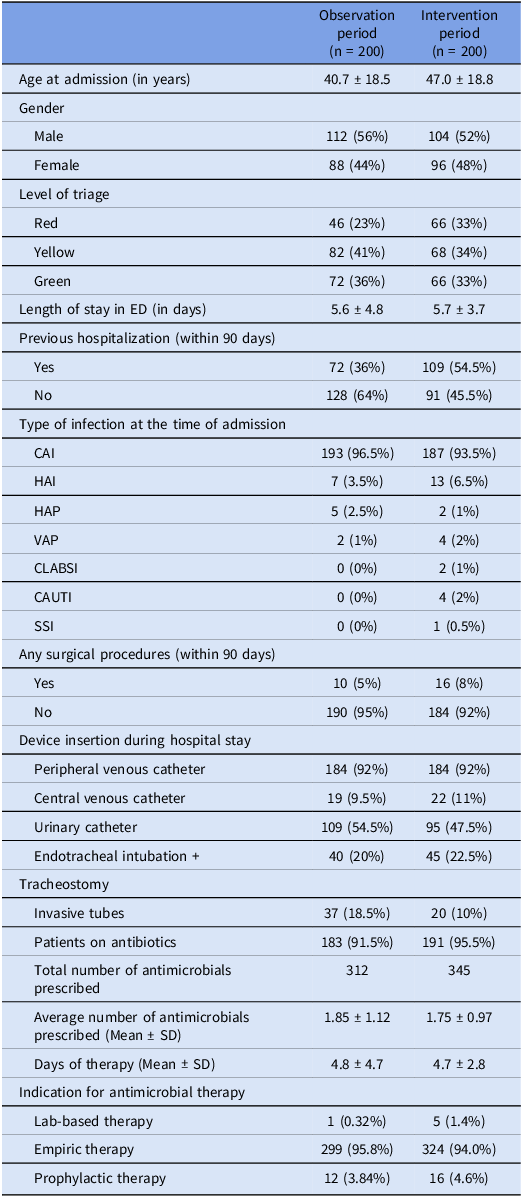
A total of 1,260 patients were screened for potential eligibility of whom, a total of 400 patients were assessed during the observation and intervention phases (200 in each period). In the intervention phase, higher proportion of patients were in the red category of triage, suggesting a greater severity of illness in this period. (Table 1). A higher proportion of patients in the intervention phase also had a history of prior hospitalization. Length of stay remained comparable between the two groups. Device utilization patterns were broadly similar across both phases.
Patient demographics and baseline characteristics

Note. CAI, community-acquired infection; HAI, healthcare-associated infection; HAP, hospital-acquired pneumonia; VAP, ventilator-associated pneumonia; CLABSI, central line-associated bloodstream infection; CAUTI, catheter-associated urinary tract infection; SSI, surgical site infection, ED, emergency department, SD, standard deviation.
Antibiotic use pattern
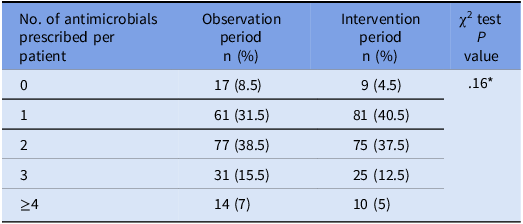
The mean number of antibiotics per patient did not differ significantly between the two phases (P = .31, unpaired t-test). The proportion of patients receiving a single antibiotic increased from 31.5% in the Observation phase to 40.5% Intervention phase, while the proportion receiving three or more antibiotics decreased from 22.5% to 17.5% (Table 2). However, the overall distribution of antibiotic use did not differ significantly between the groups (χ2 test, P = .16).
Antimicrobial utilization pattern

*Not statistically significant.
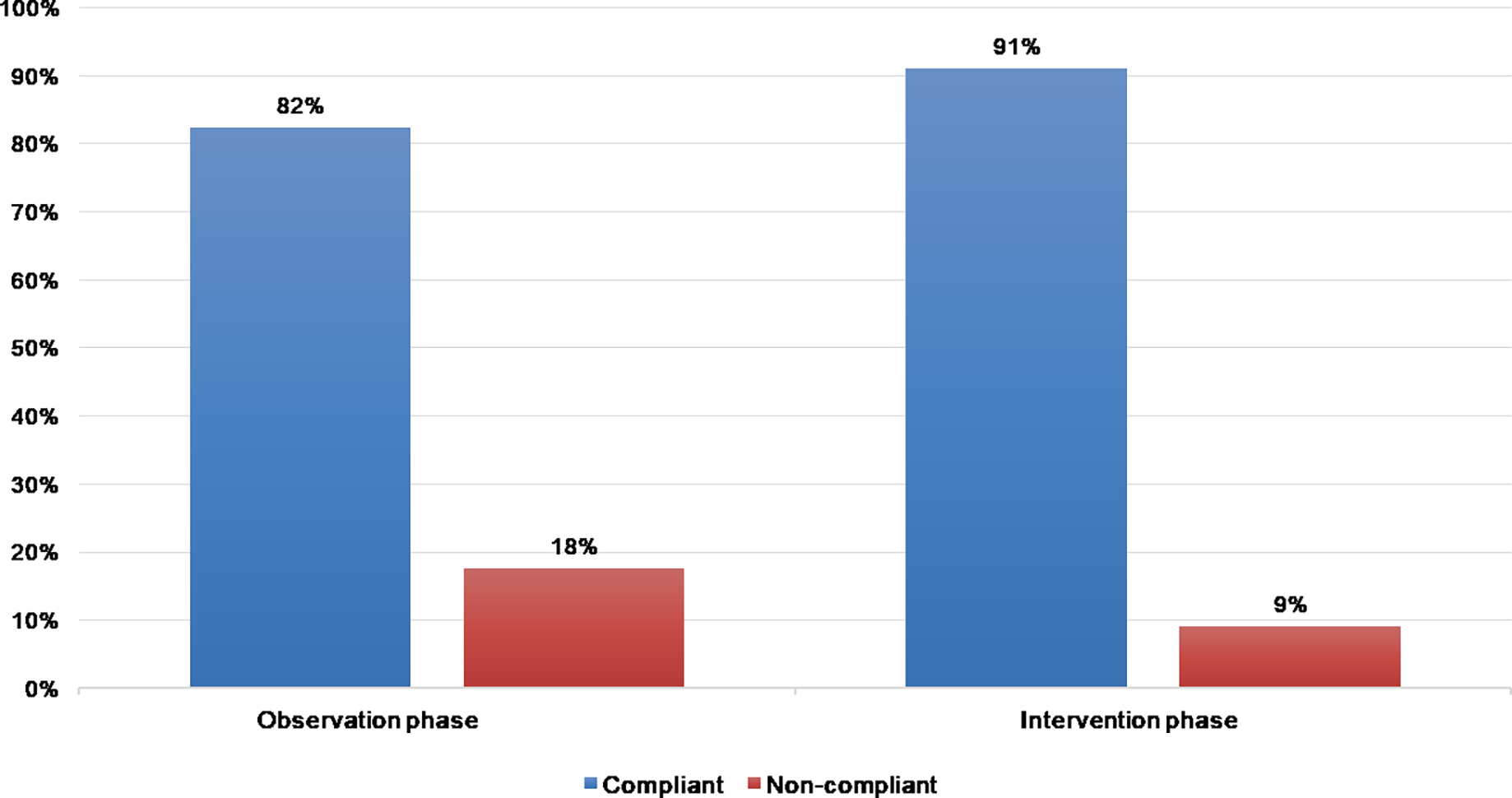
Compliance with hospital antibiotic guidelines increased from 82.4% to 91.0%, which was statistically significant (χ2 test, P = .001) (Figure 1). While empiric therapy remained the predominant indication in both phases, its proportion showed a modest decline (Table 1). The pattern of use with regard to AWaRe classification was largely similar in the two phases (Figure 1, supplementary)
Assessment of compliance of antibiotic prescriptions with the institutional policy (observation, n = 312, intervention, n = 345) χ2 test, P = .001, statistically significant.

Assessment of appropriateness
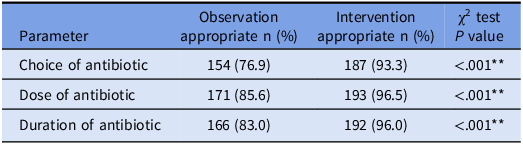
Significant improvements were observed in multiple parameters of antibiotic appropriateness in the intervention phase. The proportion of patients receiving appropriate antibiotic choice, correct dosing, and appropriate duration of therapy increased significantly in the intervention phase (χ2 test, P < .001 for all comparisons) (Table 3) (χ2 test, P value < .001). Correspondingly, improvements were noted in drug selection, dosing frequency, and treatment duration.
Comparison of appropriateness of antibiotic choice, dose, and duration in observation and intervention periods

** Statistically significant.
Utilization of diagnostics
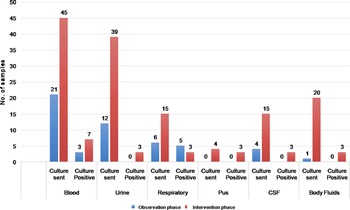
After the intervention, the proportion of patients in whom culture collection was done prior to antibiotic initiation or modification increased from 46 (23%) to 80 (40%), a difference that was statistically significant (P < .001).
The analysis of culture samples before and after the intervention reveals clear trends. Postintervention, there was a notable increase in the number of cultures sent for blood (21 to 45), urine (12 to 39), CSF (3 to 15), and body fluids (1 to 20), accompanied by modest rise in positivity rates: blood (3 to 7), urine (0 to 3), CSF (0 to 1), and body fluids (0 to 3) (Figure 2).
Culture collection practices in observation phase and after antimicrobial stewardship intervention.

The total number of samples sent rose from 46 preintervention to 138 postintervention, with culture positivity increasing from 8 (4%) to 22 (11%) cases; however, this increase did not reach statistical significance (P value = .79, χ2 test).
Adherence to device-related infection prevention practices
During the postintervention period, all patients were on invasive devices with peripheral cannula being commonest (184/200 patients). Sixteen patients had both peripheral and central venous lines. Ninety-five patients had a urinary catheter and 45 had either endotracheal tube or tracheostomy tube (Table 1). Peripheral venous access was used initially to allow immediate administration of fluids, medications, and blood products. The need for peripheral lines was assessed daily according to the checklist, and early removal was communicated through feedback (16/184 cases had phlebitis which required re-siting of the canula). Central venous access was subsequently required due to the severity of illness, the need for vasoactive drugs, hemodynamic monitoring, or anticipated prolonged intravenous therapy, where peripheral access alone was insufficient or unreliable. For central lines, 3/22 cases were found to have one or more components non-compliant with the device care (Soiled dressing (n = 1), Catheter ports not covered (n = 2). During the data collection period, 15/95 urinary catheters were noted to have lack of compliance: perineal care not done (n = 11), bag touching the floor (n = 7), failure to empty the bag in dedicated clean jug (n = 11). Out of 45 patients with endotracheal tubes and tracheostomy tube examined, in three device dressing was soiled and three had lapses in sterile suctioning technique.
Discussion
The present study demonstrates that a structured antimicrobial stewardship intervention implemented in the ED was associated with improvements in antibiotic use, diagnostic practices, and infection prevention processes, even within the constraints of a high-volume, time-pressured setting. By embedding stewardship activities into routine workflows through nurse-led data collection, prescription audit and feedback, and bundle checklists, we observed improvements across several indicators in the intervention phase.
A significant improvement was observed in compliance with the hospital antibiotic policy, with respect to choice, dose and duration. It was noted in the observation phase, that antibiotics are often initiated empirically and often more than one antibiotic is prescribed to one patient. The rise in guideline-concordant prescriptions highlights the effectiveness of prescription audit combined with real-time feedback. Within this process, nurses contributed by ensuring completeness of documentation, facilitating timely review of prescriptions, and supporting communication between prescribers and the stewardship team. Emerging evidence supports the inclusion of nurses as active antimicrobial stewards, noting their proximity to prescribing decisions and their influence on monitoring, reassessment, and escalation or de-escalation of therapy.Reference Kilpatrick, Hutchinson, Manias and Bouchoucha22,Reference Bos, Schouten, De Bot, Vermeulen and Hulscher23
Antibiotic prescribing patterns also shifted following the intervention, with an increase in proportion of patients receiving a single antibiotic and a reduction in those who received three or more antibiotics, although this trend was not statistically significant. This highlights the importance of AMS in preventing the use of redundant coverage, which is the one of the reasons for the noticeable decline. In the emergency setting like ours, there is a higher proportion of patients presenting with prior hospitalization and antecedent antimicrobial exposure. This is probably one of the reasons why there was a persistent predominance of “Watch” category antibiotics in our cohort. Similar challenges have been reported in other ED-based stewardship studies, where patient acuity and incomplete prior treatment histories limit early narrowing of therapy.Reference Morris, Bai and Burry24,Reference Leuthner and Doern25
Another key finding was the significant improvement in the utilization of diagnostics to guide antibiotic use and de-escalation practices. Often, broad-spectrum antibiotics, started empirically, are continued for a longer duration due to a lack of culture reports or other diagnostic workup. Our results suggest that reinforcing early assessment and culture collection can strengthen microbiological confirmation and support downstream de-escalation. Recent studies emphasize that timely cultures obtained in the ED are strongly associated with more appropriate antibiotic modification and shorter durations of therapy, reinforcing the value of stewardship interventions at this early point of care.Reference Timbrook, Caffrey, Luther, Lopes and LaPlante26
While not a primary focus of the study, improvements in selected infection prevention practices were observed following the introduction of structured checklists. The relatively short duration of ED stay (2–3 days) may have contributed to higher observed compliance. Similar findings regarding nurse-led IPC interventions have been made and directly translate into decreased antimicrobial exposure.Reference Blackburn, Avsar, Patton, Moore and Ousey27 , Reference Lim, Woods and Waite28 However, these findings should be interpreted cautiously, as observations were limited to periods when stewardship nurses were present, and device-days could not be systematically assessed. It is likely that with longer periods of observation, these figures could change.
Importantly, this study illustrates the value of implementing AMS in the emergency department, a setting traditionally viewed as difficult for stewardship interventions. Early stewardship in the ED has been shown to influence the entire trajectory of antibiotic use during hospitalization, affecting choice, duration, and opportunities for de-escalation.Reference Ruiz-Ramos, Escolà-Vergé, Monje-López, Herrera-Mateo and Rivera10,Reference Pulia, Redwood and May11 By targeting the first point of antibiotic decision-making and empowering nurses to operationalize stewardship tools, our intervention demonstrates a feasible and scalable model for AMS integration in acute care.
Strengths
The methodology emphasized practicality, teamwork, and seamless integration into existing clinical workflows. By combining training, supervision, and routine monitoring, the intervention strengthened IPC practices, optimized antibiotic usage, and contributed meaningfully to the hospital’s broader AMR containment efforts.
Limitations
This study has several limitations. It was conducted in a single tertiary care center with a high patient turnover and frequent staff shift changes, which may have impacted the consistency of antimicrobial stewardship practices. ED overcrowding and prioritization of life-saving interventions limited documentation completeness and culture acquisition in critically ill patients. Infection prevention practices were assessed through spot observations rather than continuous monitoring. As whole-day observation was not feasible, some checklist parameters relied on verbal confirmation, which may have introduced reporting bias. The study employed a pre–post quasi-experimental design without randomization, limiting causal inference. A formal sample size calculation was not done apriori and a cutoff of 200 patients assessment was taken as a convenience sample. Additionally, sustainability and long-term clinical outcomes of the intervention were not assessed.
Conclusion
The implementation of a nurse-driven antimicrobial stewardship program in the ED was associated with significant improvements in antimicrobial prescribing practices, diagnostic stewardship, and infection prevention processes. The enhanced compliance with institutional antibiotic guidelines and improved culture collection practices indicate a shift toward more evidence-based prescribing. Although overall mortality remained similar between the pre and postintervention periods, improvements in antimicrobial stewardship processes and diagnostic practices suggest potential downstream clinical benefit. These findings underscore the potential role of nurse-driven multipronged stewardship interventions in optimizing antimicrobial use in high-acuity emergency settings, particularly in resource-constrained healthcare systems.
Supplementary material
The supplementary material for this article can be found at https://doi.org/10.1017/ice.2026.10501.
Acknowledgments
We wish to acknowledge the Indian Council of Medical Research for their on-going support under which the current study was carried out.
Financial support
The study was funded by the Indian Council of Medical Research (ICMR) under the project “Implementation of AMSP in Tertiary Care Centres across India” (Sanction No. AMR/AMSP/269/2022-ECD-II, 19 May 2022). The ICMR grant supported the salaries of the nursing staff engaged in the study.
Competing interests
Authors have no conflicts of interest to declare.
Ethical standard
The study protocol has received ethical clearance from the Institutional Ethics Committee of the Postgraduate Institute of Medical Education and Research (PGIMER) (Chandigarh, India) [approval number IEC-01/2022-2305].