Robust and consistent evidence (Marshall et al. Reference Marshall, Lewis, Lockwood, Drake, Jones and Croudace2005; Norman et al. Reference Norman, Lewis and Marshall2005; Crumlish et al. Reference Crumlish, Whitty, Clarke, Browne, Kamali, Gervin, McTigue, Kinsella, Waddington, Larkin and O'Callaghan2009) has demonstrated that a longer duration of untreated psychosis (DUP) is associated with a poorer outcome. In the psychiatry field, research allows the early identification of young people who are likely to be in the prodromal psychosis phase, which is also known as attenuated psychosis syndrome (APS), clinical high risk (CHR) or ultra-high risk (UHR) (Carpenter & Schiffman, Reference Carpenter and Schiffman2015). Those efforts are also partly aimed to reduce the DUP, which might affect the long-term course of severe psychosis, such as schizophrenia. Low conversion rates of psychosis reported in recent studies (Yung et al. Reference Yung, Yuen, Berger, Francey, Hung, Nelson, Phillips and McGorry2007; Hartmann et al. Reference Hartmann, Yuen, McGorry, Yung, Lin, Wood, Lavoie and Nelson2016) raised the question whether earlier detection has a positive or detrimental effect on this population, especially for those who do not convert to psychosis. However, it is certain that a diagnosis of APS largely reduces the DUP for those who converted to psychosis (Valmaggia et al. Reference Valmaggia, Byrne, Day, Broome, Johns, Howes, Power, Badger, Fusar-Poli and McGuire2015).
Many studies have focused on demographic characteristics (Chang et al. Reference Chang, Tang, Hui, Chiu, Lam, Wong, Chung, Law, Tso, Chan, Hung and Chen2011; Compton et al. Reference Compton, Gordon, Goulding, Esterberg, Carter, Leiner, Weiss, Druss, Walker and Kaslow2011), clinical features (Birnbaum et al. Reference Birnbaum, Wan, Broussard and Compton2017), personality (Compton et al. Reference Compton, Bakeman, Alolayan, Balducci, Bernardini, Broussard, Crisafio, Cristofaro, Amar, Johnson and Wan2015), cognition (Kake et al. Reference Kake, Garrett and Te Aonui2016), stigma-related issues (Bay et al. Reference Bay, Bjornestad, Johannessen, Larsen and Joa2016), and education/awareness of mental disorders (Bay et al. Reference Bay, Bjornestad, Johannessen, Larsen and Joa2016), which could contribute to a lengthy DUP. Meanwhile, the association between a longer DUP and specific outcomes (Perkins et al. Reference Perkins, Gu, Boteva and Lieberman2005; Penttila et al. Reference Penttila, Jaaskelainen, Hirvonen, Isohanni and Miettunen2014; Qin et al. Reference Qin, Zhang, Wang, Min, Yan, Chen, Fu and Zhang2014; Kane et al. Reference Kane, Robinson, Schooler, Mueser, Penn, Rosenheck, Addington, Brunette, Correll, Estroff, Marcy, Robinson, Meyer-Kalos, Gottlieb, Glynn, Lynde, Pipes, Kurian, Miller, Azrin, Goldstein, Severe, Lin, Sint, John and Heinssen2016), such as poorer response to medical treatment, higher risk of relapse, worse global function, poorer cognitive performance, and lower quality of life, have been additionally suggested. However, for individuals with APS, a length of the period between the onset of attenuated psychotic symptoms and receiving appropriate diagnosis/care also exists, which we defined as the ‘duration of untreated prodromal symptoms (DUPrS)’. Little is known about the demographic characteristics, clinical features, and general function of individuals with APS during the DUPrS, before the onset of psychosis. Further, whether a long DUPrS increases the conversion rate of psychosis among the ‘at-risk’ population also remains unknown.
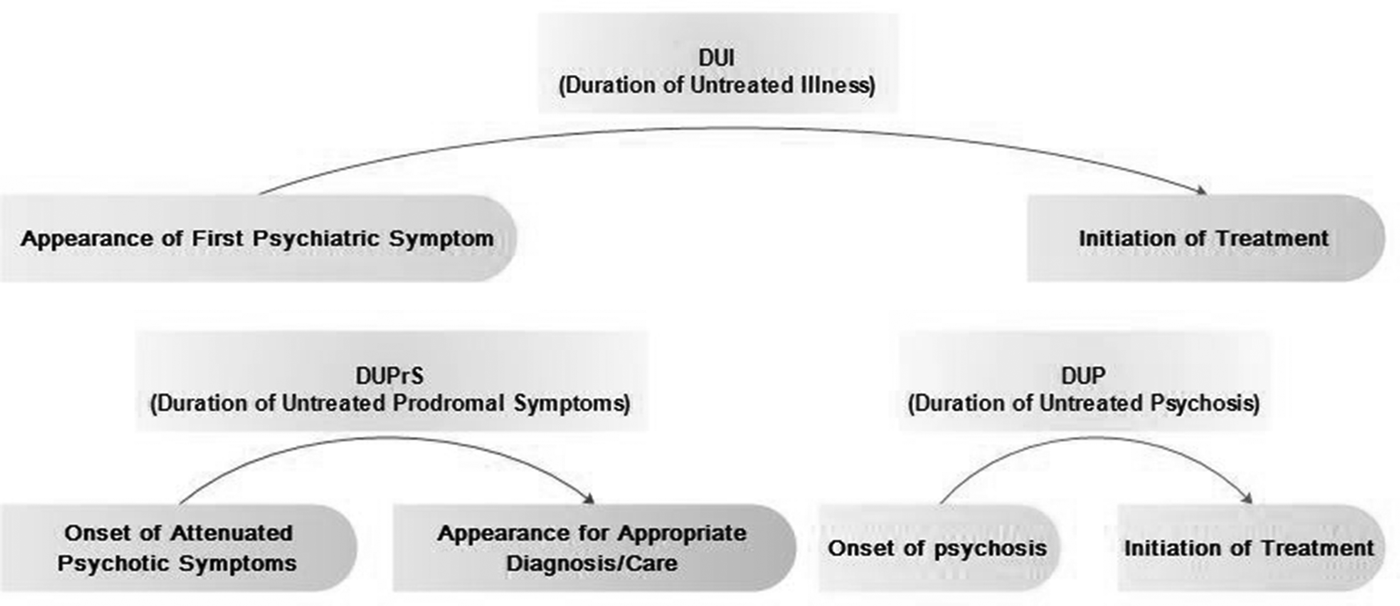
Separately, there is another concept of the duration of untreated illness (DUI), developed to take into account the time elapsed from the onset of psychiatric symptom to initiation of adequate drug treatment (Murru & Carpiniello, Reference Murru and Carpiniello2016). In psychosis, the DUI is distinguished from DUPrS, which is calculated from the same start point but ends once adequate treatment has been administered. However, the DUPrS is distinguished from DUP, which presents with different start and end points. DUPrS starts from when attenuated psychotic symptoms manifest and ends with the first visit to mental health services (most APS subjects would not receive any treatment at this point). Figure 1 is used to further clarify the concepts of DUP, DUI, and DUPrS when compared with each other.
Conceptual Instruction for DUP (duration of untreated psychosis), DUI (duration of untreated illness) and DUPrS (duration of untreated prodromal symptoms).

To date, there is limited literature that focuses on DUPrS in the APS population. A longitudinal study conducted by Fusar-Poli et al. (Reference Fusar-Poli, Meneghelli, Valmaggia, Allen, Galvan, McGuire and Cocchi2009) with 49 participants found a correlation between longer DUPrS and a reduced improvement in Global Assessment of Functioning scores after 12 months. Subsequent findings from Chon et al. (Reference Chon, Lee, Kim, Huh, Park, Lee, Shin and Kwon2015) study with 73 subjects who were at ultra-high risk for psychosis supported Fusar Poli et al.'s results. However, the impact of DUPrS on the outcome of conversion to psychosis is mostly unknown. On the other hand, a recent study (n = 76) from Carrion et al. (Reference Carrion, Demmin, Auther, McLaughlin, Olsen, Lencz, Correll and Cornblatt2016) found the lack of association between DUPrS and conversion to psychosis. They suggested that the severity of symptoms at baseline may be more important than DUPrS in the prediction of psychosis.
Since few previous analysis has investigated the complex and multifaceted factors that could lead to the conversion to psychosis after the follow-up, the consequences of a prolonged DUPrS among individuals with APS are unclear. Therefore, the main aim of the current study was to analyse the association between the length of DUPrS and outcomes of APS. Our hypothesis was that a longer DUPrS would be associated with higher conversion rates. In addition, we aimed to explore the correlation between DUPrS and demographic characteristics, clinical features, and general function in a clinical cohort of individuals with APS.
Method
Setting
The current study was conducted at the Shanghai Mental Health Centre (SMHC) by the Shanghai at risk for psychosis (SHARP) program (Zhang et al. Reference Zhang, Li, Woodberry, Seidman, Zheng, Li, Zhao, Tang, Guo, Lu, Zhuo, Qian, Chow, Li, Jiang, Xiao and Wang2014, Reference Zhang, Li, Woodberry, Xu, Tang, Guo, Cui, Liu, Chow, Li, Jiang, Xiao, Seidman and Wang2017). The Research Ethics Committee at the SMHC approved the study in 2011. Individuals with CHR were recruited from the out-patient department, which serves over 800 000 outpatients of all ages per year, and provides comprehensive clinical services, including psychological assessment and counselling, as well medical management.
Sample
There were 417 individuals who made their first visit for psychological treatment and were identified as being at high risk of psychosis between 2011 and 2015. Individuals were recruited consecutively using clinic-wide questionnaire [Prodromal Questionnaire-Brief (Loewy et al. Reference Loewy, Bearden, Johnson, Raine and Cannon2005), Chinese version (Xu et al. Reference Xu, Zhang, Zheng, Li, Tang, Luo, Sheng and Wang2016)] screening and clinician referrals. The total recruited sample consisted of 417 individuals with CHR, aged between 14 and 45 years, who were required to have completed at least 6 years of primary education. The exclusion criteria included the following: severe somatic diseases (e.g. pneumonia, cancer, or heart failure etc.), mental retardation, dementia, and drug abuse. Among the 417 individuals with CHR, 391 met the criteria for APS, while 26 individuals with CHR met the criteria for Genetic Risk and Deterioration Syndrome (GRDS). Individuals with GRDS were excluded in this analysis due to the unclear onset time of functional deterioration.
Definition and assessment
CHR was defined and assessed according to the structured interview for prodromal symptoms (SIPS) and scale of prodromal syndromes (SOPS, henceforth known as SIPS/SOPS) (Miller et al. Reference Miller, McGlashan, Rosen, Somjee, Markovich, Stein and Woods2002; Reference Miller, McGlashan, Rosen, Cadenhead, Cannon, Ventura, McFarlane, Perkins, Pearlson and Woods2003; McGlashan et al. Reference McGlashan, Walsh and Woods2010). The SIPS consisted of the following: positive symptoms (Scales P1–P5; i.e. Unusual Thought Content, Suspiciousness, Grandiosity, Perceptual Abnormalities, and Disorganized Communication), Negative Symptoms (Scales N1–N6), Disorganized Symptoms (Scales D1–D4), and General Symptoms (Scales G1–G4). The positive symptoms (Scales P1–P5), in particular, were key for identifying CHR, which was rated on a 1–6 scale, with 6 indicating ‘severe and psychotic’ and 3–5 indicating prodromal-range symptoms. The inclusion criteria for CHR for psychosis required the presence of any of the following: (1) recent onset of positive symptoms rated at a level of 6, which occurred for at least a few minutes a day, at least once a month [i.e. brief intermittent psychotic syndrome (BIPS)], (2) at least one positive symptom rated 3–5, which was present at least once a week on average, within the prior month, and had either newly occurred within the past year or had increased by at least one point (indicating worsening symptoms) compared with the previous year [i.e. attenuated positive symptom syndrome (APSS)], (3) a functional deterioration [i.e. a 30% drop in the global assessment of functioning (GAF) score relative to 12 months prior] in the context of either schizotypal personality disorder or at least one first-degree relative with psychosis (i.e. GRDS). All individuals with APS who were included in the current study had APSS or BIPS.
The DUPrS (Zhang et al. Reference Zhang, Li, Woodberry, Xu, Tang, Guo, Cui, Liu, Chow, Li, Jiang, Xiao, Seidman and Wang2017) was measured retrospectively based on information from the SIPS interview; it was defined as the period between the onset of the first attenuated psychotic positive symptom (at least at moderate level, corresponding to 3 points or higher on the SIPS/SOPS) and the commencement of professional help at mental health services (the date at his/her first visit). APS individuals were followed-up over a 1-year period, and conversion to psychosis was determined using the Presence of Psychotic Symptoms in SIPS/SOPS (POPS) criteria. POPS was determined by the presence of a level 6 positive symptom, which was either (1) dangerous or disorganizing, or (2) occurred for at least 1 h a day, on average, for 4 days a week, for at least 1 month. Except for those who did not desire any further contact, APS subjects were re-assessed every 6 months by face-to-face interviews or by telephone using SIPS/SOPS.
The English version of SIPS/SOPS reportedly had a good inter-rater reliability and validity for predicting psychosis transition, and is widely used across countries (Miller et al. Reference Miller, McGlashan, Rosen, Cadenhead, Cannon, Ventura, McFarlane, Perkins, Pearlson and Woods2003). As reported in our previous studies (Zhang et al. Reference Zhang, Li, Woodberry, Seidman, Zheng, Li, Zhao, Tang, Guo, Lu, Zhuo, Qian, Chow, Li, Jiang, Xiao and Wang2014, Reference Zhang, Li, Woodberry, Xu, Tang, Guo, Cui, Liu, Chow, Li, Jiang, Xiao, Seidman and Wang2017), the Chinese version (Zheng et al. Reference Zheng, Wang, Zhang, Li, Li and Jiang2012) of the SIPS/SOPS also demonstrated good inter-rater reliability (the Intraclass Correlations Coefficient r = 0.96, p < 0.01 on the SIPS total score) and validity (26.4%, converted to psychosis in the ensuing 2 years) in a Chinese clinical population. The first author in the current study trained four psychiatrists at the SMHC. The inter-rater reliability for the SIPS/SOPS positive symptoms ranged from 0.86 (P5) to 0.98 (P4) among the rating of the four interviewers.
Statistical analysis
The sample was divided into two groups, namely the short DUPrS group and long DUPrS group according to the median DUPrS of the full sample. Analyses of demographics and clinical characteristics between the DUPrS groups were conducted via independent t test for continuous variables or χ2 statistics test for categorical variables. Clinical symptoms (positive, negative, and general symptoms) and GAF for the DUPrS groups were displayed using error bars, line charts, and histograms. Microsoft Excel was used to plot the graphs, and SPSS version 16.0 (SPSS, Inc., Chicago, IL, USA) was used for the statistical analyses. Explorations of all the variables by normality tests (Kolmogorov–Smirnov test) guided our choice of statistical tests. Comparative data between DUPrS groups were mainly assessed using nonparametric analysis by a Mann–Whitney U test for non-normal distribution variable. Cumulative life tables were constructed to assess the conversion rates among the DUPrS groups. The log-rank analysis was applied to compare life-table data. Statistical significance was set at p < 0.05.
Results
Socio-demographic, clinical, and DUPrS characteristics
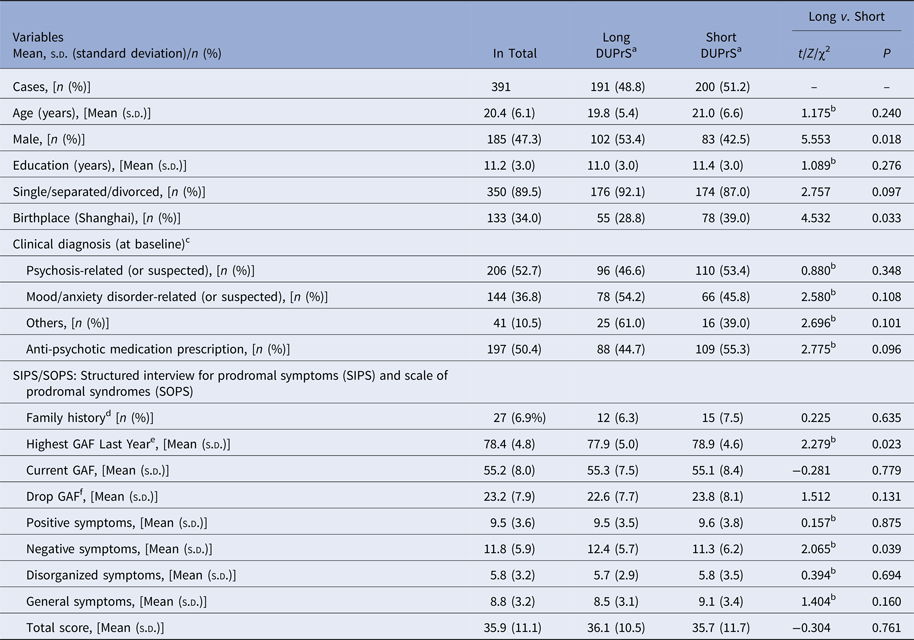
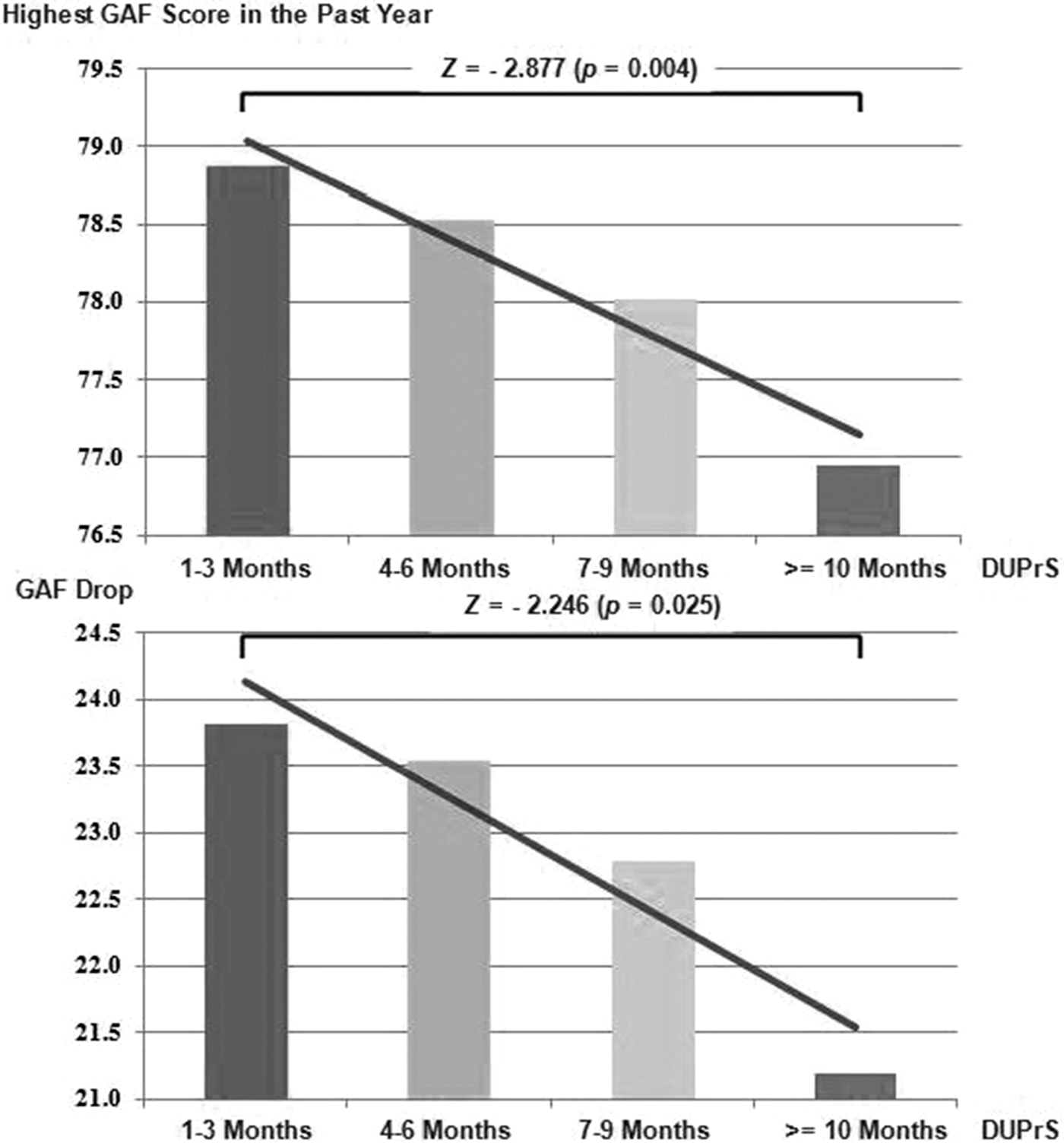
Table 1 shows the socio-demographic, clinical, and DUPrS characteristics of the study cohort. The average DUPrS of Individuals with APS was 4.8 ± 3.8 months (median = 3 months, range = 1–22 months). Individuals were classified as ‘short DUPrS’ or ‘long DUPrS’ according to the median DUPrS of the full sample. Individuals in the long DUPrS group were generally men and non-natives of Shanghai. The highest level of functioning in the last year was significantly higher for individuals in short DUPrS group. Individuals who were younger (p = 0.066) or with severe negative symptoms (p = 0.065) also showed a longer DUPrS, but these trends were not statistically significant.
Demographics and clinical variables, comparing individuals with attenuated psychosis syndrome (APS) with a longer duration of untreated prodromal symptoms (DUPrS; >3 months) to those with a shorter DUPrS (⩽3 months)

a The median DUPrS was 3 months for the whole sample, which applied here to divide the individuals with APS into two groups (i.e. long DUPrS >3 months v. short DUPrS ⩽3 months group).
b Mann–Whitney U test was used for non-normal distribution variable
c Clinical diagnosis was collected from outpatients’ medical records, which were created by their attending doctors according to the Chinese mental health diagnostic manual. The ‘suspected’ indicates a nonconclusive diagnosis. Take ‘psychosis-related (suspected)’ as an example, when a clinician gives the diagnosis of ‘suspected schizophrenia’ or ‘state of suspiciousness,’ we classify them into the ‘Suspected Psychosis’ group.
d Family history: having at least one first-degree relative with psychosis.
e Highest global assessment function (GAF) in the prior year: The highest GAF score within the prior year, from the baseline recruitment time point.
f Drop GAF: the difference between the current GAF score from the highest in the past year
Association between DUPrS and symptoms
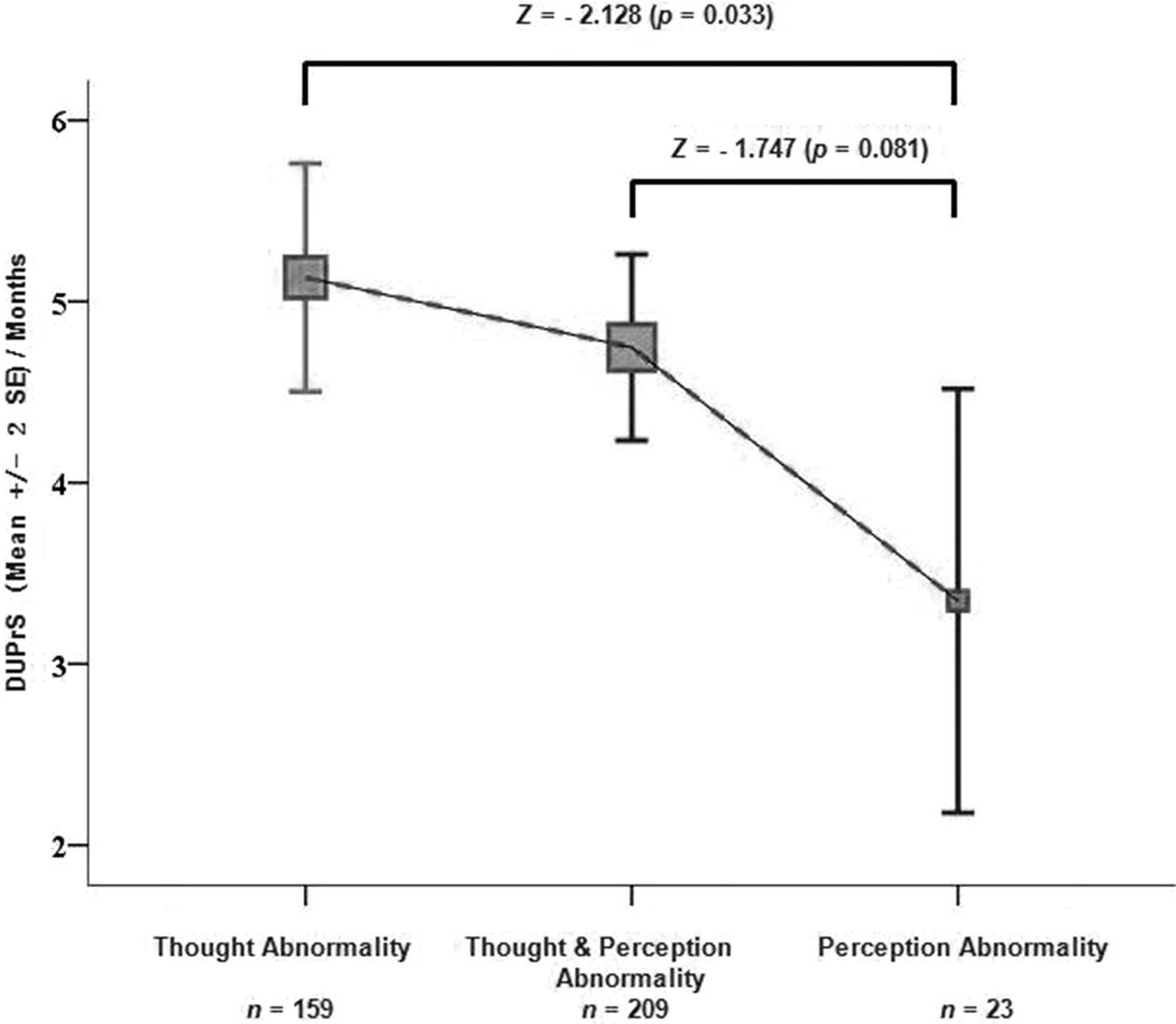
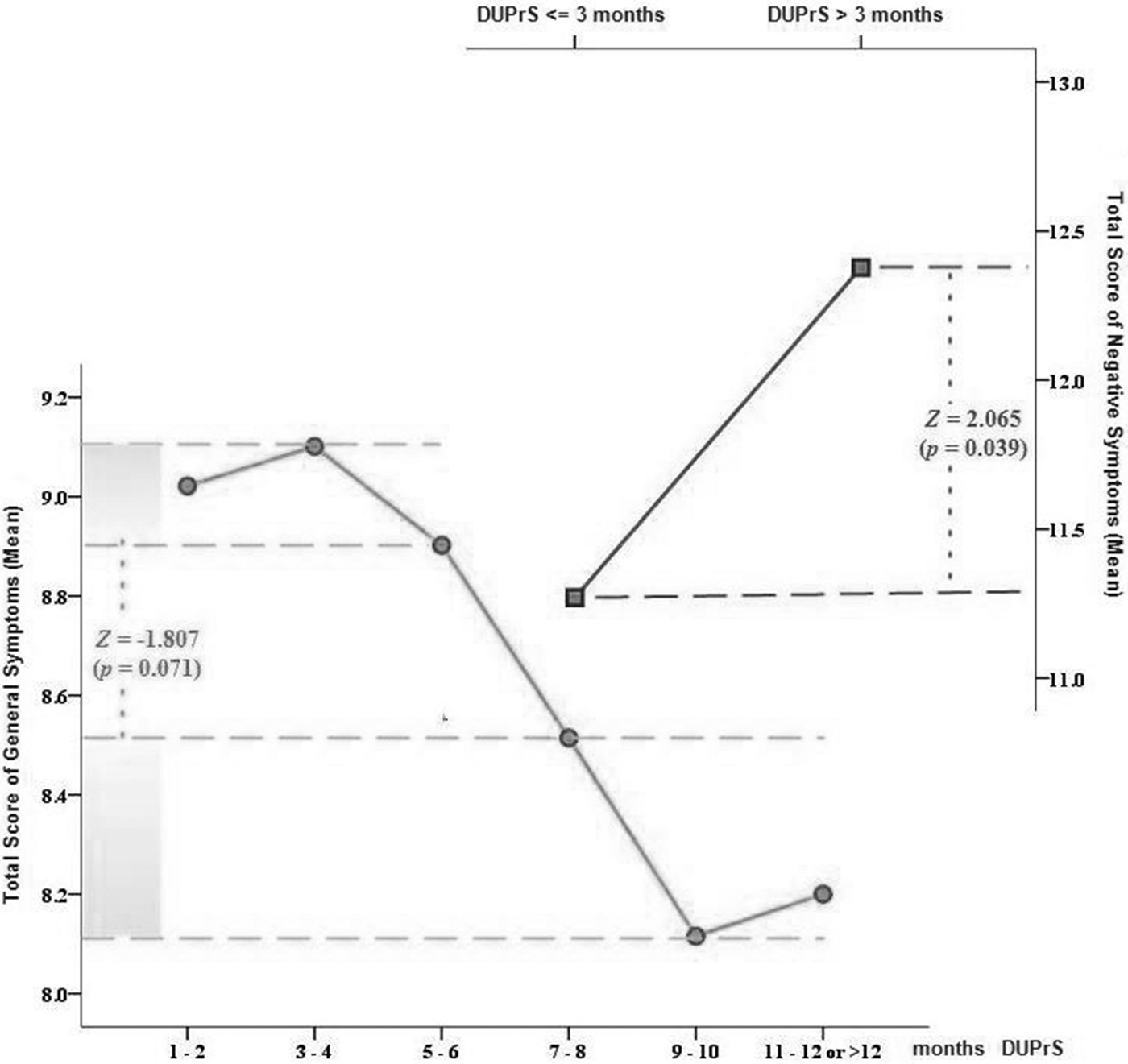
Overall, individuals with APS who also showed thought abnormality had a longer DUPrS, relative to those who had perception abnormality alone (Fig. 1). The total scores of the general and negative symptoms from the SIPS assessment for the DUPrS-class trajectory are shown in Fig. 2. Although general symptoms declined during a prolonged DUPrS (DUPrS ⩽6 months v. DUPrS >6 months, p = 0.071), negative symptoms increased with a longer DUPrS (DUPrS ⩽3 months v. DUPrS >3 months, p = 0.039).
Mean ± standard error (s.e.) of the DUPrS (duration of untreated prodromal symptoms) across groups for individuals with APS (attenuated psychosis syndrome) with thought abnormality alone, both thought and perception abnormality, and perception abnormality alone. Note: thought abnormality was defined as individuals with CHR who received a rating level of ‘3’ or higher on any of the P1–P3 scales (i.e. P1: unusual thought content, P2: suspiciousness, and P3: grandiosity) of the SOPS. Perception abnormality was defined as individuals with CHR who received a rating level of ‘3’ or higher on the P4 scale (Perceptual abnormalities) of the SOPS.

DUPrS and GAF
Figure 3 presents the mean GAF scores of the different DUPrS groups using a histogram. We compared the highest GAF score in the past year, current GAF score, and the drop in GAF score among varying DUPrS groups. Although there was no difference for the current GAF, the highest GAF score in the past year was significantly higher in those with a shorter DUPrS, compared with those with a longer DUPrS. Further, the drop GAF was higher in individuals with a shorter DUPrS.
Mean total score of general and negative symptoms at various DUPrS (durations of untreated prodromal symptoms). Note: general symptoms were as follows: G1: sleep disturbance; G2: dysphoric mood; G3: motor disturbances; and G4: impaired tolerance to normal stress. Negative symptoms were as follows: N1: social anhedonia; N2: avolition; N3: expression of emotion; N4: experience of emotions and self; N5:ideational richness; and N6: occupational functioning.

DUPrS and Conversion
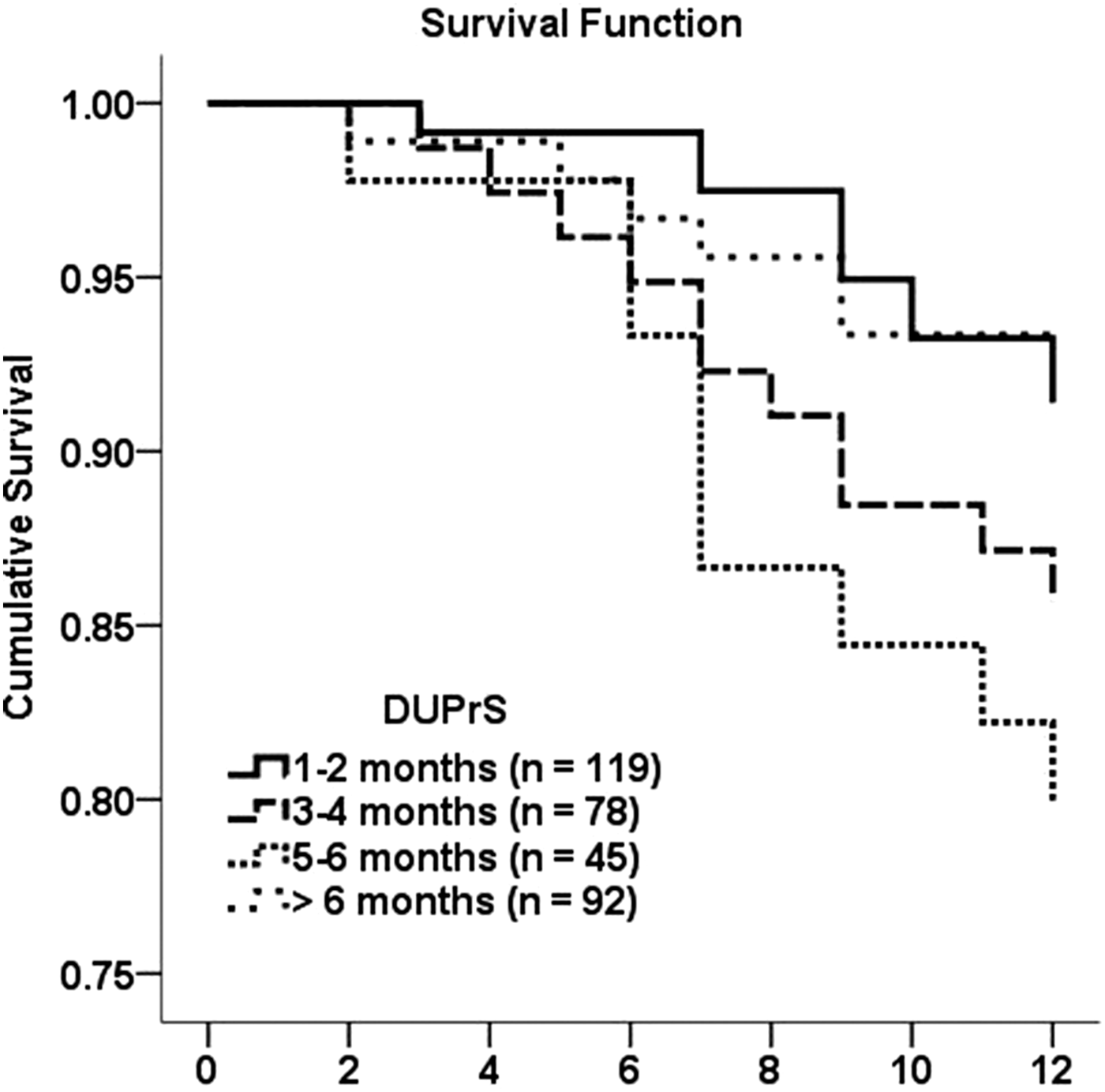
Overall, 57 of the 334 individuals with APS who were followed-up for at least 1-year developed psychosis (conversion group). Specifically, of 57 converters, 51 were diagnosed with schizophrenia (among them, 23 were hospitalized in psychiatric units), and six met POPS criteria on the interview and were diagnosed with bipolar disorder with psychotic symptoms. A life-table analysis of conversion rates when the DUPrS was 1–2 months, 3–4 months, 5–6 months, or >6 months are shown in Fig. 4. Within the 1-year follow-up, 17 individuals converted to psychosis during 1–2 months, 16 during 3–4, 12 during 5–6 months, and 12 when DUPrS had lasted for >6 months. Log-rank comparisons were performed at 1-year follow-up intervals. The conversion rates were higher in the APS group with a DUPrS for 5–6 months, compared with those who had a DUPrS for 1–2 months (p = 0.039) and 3–4 months (p = 0.090). However, there was no significant difference between individuals with APS who had a DUPrS of <6 months v. those with a DUPrS of >6 months (p > 0.15) (Fig. 5).
Histogram of the mean of GAF (global assessment function) score for varying DUPrS (durations of untreated prodromal symptoms). GAF drop indicates the difference between the current GAF score and the highest GAF score within the past year.

Life-table survival curves for the varying DUPrS (durations of untreated prodromal symptoms). Note: cumulative survival indicates the proportion of individuals with APS (attenuated psychosis syndrome) who did not convert to psychosis. Life table survival was stratified by a DUPrS of 1–2 months, 3–4 months, 5–6 months and >6 months.

Discussion
In efforts to improve early intervention services providing prodromal stage-specific, targeted care, it is critical to understand both the nature of the association between the DUPrS and outcomes, in addition to the factors that contribute to a lengthy DUPrS. Several noteworthy findings emerged from the current analysis, which was the first longitudinal study to examine the association of the DUPrS with demographic, clinical, and functional features at baseline and conversion at follow-up, in a cohort of individuals with APS. First, in contrast to the association between a prolonged DUP with a poor outcome in patients with psychosis, a longer DUPrS was not related to greater risk of conversion to psychosis among individuals with APS. This result is consistent with previous research finding in a medium-term follow-up study (Carrion et al. Reference Carrion, Demmin, Auther, McLaughlin, Olsen, Lencz, Correll and Cornblatt2016). A possible explanation for this discrepancy is that individuals with APS with a longer DUPrS might have more tolerable or stable attenuated positive symptoms, compared with those who show a rapid deterioration of symptoms characterized by a short DUPrS, which could have prevented these individuals from approaching a psychiatrist for their mental health problems earlier. Moreover, it is also possible that a longer DUPrS is a feature of a subgroup of individuals with APS who are more likely to have a low risk for psychosis. For example, the low level of general symptoms (i.e. sleep disturbance, dysphoric mood, motor disturbances, and impaired tolerance to normal stress) was identified as a potential characteristic for a longer DUPrS in individuals with APS. Recent evidence has supported the role of sleep disturbances (Lunsford-Avery et al. Reference Lunsford-Avery, Goncalves, Brietzke, Bressan, Gadelha, Auerbach and Mittal2017), affective symptoms (Fusar-Poli et al. Reference Fusar-Poli, Nelson, Valmaggia, Yung and McGuire2014), deficits in neurological soft signs (Mittal et al. Reference Mittal, Dean, Bernard, Orr, Pelletier-Baldelli, Carol, Gupta, Turner, Leopold, Robustelli and Millman2014), and stressful experiences (Fusar-Poli et al. Reference Fusar-Poli, Tantardini, De Simone, Ramella-Cravaro, Oliver, Kingdon, Kotlicka-Antczak, Valmaggia, Lee, Millan, Galderisi, Balottin, Ricca and McGuire2017) in emerging psychosis. More importantly, individuals with APS were routinely treated with medicine in mental health services in the following year (221 of 334 individuals, i.e. 66.2%, were treated with antipsychotics). Since, however, delayed therapeutic intervention for APS (with a longer DUPrS) did not predict a higher risk of conversion according to our results, gentler treatment (Wang et al. Reference Wang, Jiang, Zhang, Li, Woodberry and Seidman2013) such as nutritional supplement, psychological support etc. (Stafford et al. Reference Stafford, Jackson, Mayo-Wilson, Morrison and Kendall2013) might be a better fit for individuals with APS.
To our knowledge, only three small-sample (n < 100) studies (Fusar-Poli et al. Reference Fusar-Poli, Meneghelli, Valmaggia, Allen, Galvan, McGuire and Cocchi2009; Chon et al. Reference Chon, Lee, Kim, Huh, Park, Lee, Shin and Kwon2015; Carrion et al. Reference Carrion, Demmin, Auther, McLaughlin, Olsen, Lencz, Correll and Cornblatt2016) have focused on the relationship between the DUPrS and characteristics of individuals with APS. Thus, at least three noteworthy findings have emerged from the current analysis. Firstly, more male individuals with APS had a longer DUPrS. This result is highly consistent with a growing body of literature (Chang et al. Reference Chang, Tang, Hui, Chiu, Lam, Wong, Chung, Law, Tso, Chan, Hung and Chen2011; Fridgen et al. Reference Fridgen, Aston, Gschwandtner, Pflueger, Zimmermann, Studerus, Stieglitz and Riecher-Rossler2013; Apeldoorn et al. Reference Apeldoorn, Sterk, van den Heuvel, Schoevers, Islam, Genetic, Bruggeman, Cahn, deHaan, Kahn, Meijer, Myin-Germeys, van Os and Wiersma2014) that implicates men with a longer DUP compared with women, due to a lower level of awareness of psychosis among men (Cotton et al. Reference Cotton, Wright, Harris, Jorm and McGorry2006). Secondly, the finding that non-local residents with APS had a longer DUPrS than native-born individuals also corroborated with previous studies on DUP (Sterk et al. Reference Sterk, Slief, Blankers, Linszen and de Haan2010; Apeldoorn et al. Reference Apeldoorn, Sterk, van den Heuvel, Schoevers, Islam, Genetic, Bruggeman, Cahn, deHaan, Kahn, Meijer, Myin-Germeys, van Os and Wiersma2014). One possibility is that Shanghai is one of the biggest cities in China and have well-developed health care system, which is characterized by an easy service access. Thirdly, as expected, a lower premorbid general function level extended the DUPrS. This is partly consistent with a finding from a cross-sectional study with a small of individuals with UHR, which was conducted by Chon et al. (Reference Chon, Lee, Kim, Huh, Park, Lee, Shin and Kwon2015). They also described a phenomenon where a slower functional decline was correlated with a longer DUPrS [which they defined as the duration of untreated prodromal positive symptoms (i.e. DUPP)]. The current study supported the relationship that a lower decline in general function was linked to a longer DUPrS (Fusar-Poli et al. Reference Fusar-Poli, Meneghelli, Valmaggia, Allen, Galvan, McGuire and Cocchi2009), but argued that this could be attributed to a difference on the level of premorbid function, rather than to functional decline itself. Individuals with APS with a higher level of function before symptom onset were more likely to seek help.
With regard to the association between DUPrS and positive symptoms, our result demonstrated that individuals with APS who had perception abnormality had a shorter DUPrS, compared with those who had thought abnormality. Additionally, a longer DUPrS group was associated with more severe negative symptoms, but with less severe general symptoms. There are several explanations for these associations. Firstly, perception abnormality, such as hallucinations, might make individuals with APS and those around them to identify of symptoms more easily, compared with those with thought abnormality symptoms, leading to a shorter DUPrS. A few studies have revealed this phenomenon even in DUP and psychosis, which could be due to the effect of confounding factors or impaired insight (Drake et al. Reference Drake, Haley, Akhtar and Lewis2000). For example, patients with severe hallucinations (lost insight) are less likely to seek professional help. Secondly, severe negative symptoms were associated with a longer DUPrS, which corroborated with a meta-analysis conducted by Boonstra et al. (Reference Boonstra, Klaassen, Sytema, Marshall, De Haan, Wunderink and Wiersma2012) who demonstrated that a shorter DUP was associated with less severe negative symptoms, especially when the DUP was less than 9 months. One possible explanation for this result is that as the psychotic pathology progresses, there is an increase in the intensity of negative symptoms. Thirdly, unsurprisingly, severe general symptoms were associated with a shorter DUPrS. This might be because individuals with APS subjects with severe general symptoms tend to be anxious and stressed, which could lead to seeking help for their problems.
The major strengths of the study are its large sample size and longitudinal study design, which allowed us to investigate the relationship between the DUPrS and psychotic conversion. Few previous studies have paid attention to the DUPrS, which could make a difference to the concept of DUP. However, there are some limitations to this study. Firstly, as in all previous DUP studies, data on the DUPrS were accessed retrospectively and thus, was reliant on self-reports. Although we made a great effort to record the precise time of attenuated symptoms onset during the SIPS interview, recall bias could not be excluded. Secondly, although our results offered evidence of a relationship between the DUPrS and demographic and clinical features, these relationships may not be interacting directly. For example, many confounders (such as insight, stigma, and the health care system) might play a role in mediating these associations. Meanwhile, the direction of influence also remains unknown, i.e. it is unclear whether a longer DUPrS caused more severe negative symptoms, or if the opposite occurs. However, despite these limitations, the current study provided novel information on the association between the DUPrS and conversion to psychosis. Further, it highlighted potential demographic and clinical barriers to help-seeking among a representative large cohort of individuals with APS.
Acknowledgements
This study was supported by Ministry of Science and Technology of China, National Key R&D Program of China (2016YFC1306803), National Natural Science Foundation of China (81671329, 81671332), Shanghai Science and Technology Committee (15411967200), Clinical Research Plan of SHDC (16CR2015A, 16CR3016A), Shanghai Key Laboratory of Psychotic Disorders (13dz2260500), Shanghai Jiao Tong University Foundation (YG2014MS40), Shanghai Mental Health Center Foundation (2016-FX-01) and Program of Shanghai Academic Research Leader(16XD1402400).
Declaration of Interest
None.