In 1902, Emile Wangermée, the Vice-Governor General of the Congo Free State, issued a curious note concerning ‘the names of the indigenous people’. For the sake of clarity, his circular read, ‘each one of our indigenous individuals’ should be identifiable by a name that remained invariable throughout a lifetime. Administrators needed to listen carefully to the name that the indigenous subject expressed as his or hers, and the phonetics of this ‘actual sound’ would serve as a basis for orthography. To this name should be added an invented surname, one that hinted at the geographical provenance of the subject, and that was passed on from generation to generation for the sake of clarity. However, the author continued, there might be confusion between first name and the newly created surname, as both would have an indigenous ring. Consequently, administrators needed to persuade parents to give newborn children a European first name from the outset to clearly distinguish first name from surname. This measure, Wangermée concluded, would set things straight and ensure a ‘fixity of names’ in all future official documents.Footnote 1 This directive demonstrates the colonial authorities’ obsession with classification and fixity, an obsession that lasted throughout the era when the territory was known as the Belgian Congo. The aim was to create a clear overview of the colonized, make the mass controllable, and fix each element geographically, ethnically and by name.Footnote 2 Taxation was often the incentive. Much ink has been spilled on the consequences of this zeal: the ‘invented traditions’ (Hobsbawm and Ranger Reference Hobsbawm and Ranger1983) and ‘imagined communities’ (Anderson Reference Anderson1983) are issues widely studied (Kuper Reference Kuper2005; Ranger Reference Ranger, Ranger and Vaughan1993; Apter Reference Apter1992; Mudimbe Reference Mudimbe1988). As Nancy Rose Hunt (Reference Hunt2016) has shown, any local practice or phenomenon beyond the comprehension of the administrators was likely to turn the Belgian Congo into a ‘nervous state’. Every aspect of the colony needed to be orderly and manageable, named and labelled, to avoid a nervous breakdown. Accordingly, social distinctions and ranks were to be carefully classified too. To David Graeber (Reference Graeber2012), overzealous bureaucratic procedures are ways of managing social situations founded on the ‘structural violence’ inherent in social inequality. A diligent array of procedures can collide with the ‘dead zones of the imagination’, which in turn can lead to absurdities with results opposing those initially in mind.
In this article, I explore how this urge to categorize affected medical care in the city of Coquilhatville, today named Mbandaka. In Congolese cities, medical care was strictly segregated, and Coquilhatville had two hospitals, one for whites and another for blacks. In the early 1940s, an elite class of Africans, the so-called évolués, eager to mark social distance, claimed the right to privileged medical treatment not accorded to other African patients, as befitted their status. In order not to offend any sensibilities – fearing an articulate and assertive but at the same time frustrated and powerful class of intellectuals – the colonial authorities were willing to meet their demands. However, as I show in this article, while trying to draw rigid class lines and matching healthcare, the colonial authorities became thoroughly enmeshed in their taxonomic zeal. Responding to ever more numerous demands to be differentiated from yet another ‘lower’, they added a disabling number of divisions and subdivisions to the classification. The resulting blur had unexpected consequences. Indeed, the medical care accorded to African évolués slowly shifted towards care that was previously exclusively reserved for Europeans, as it left the doors of the hospital for Europeans slightly ajar to Africans. As I argue, it was the local colonial administrators themselves who – unwillingly – facilitated this opening, trapped as they were with their incessant creation of social distinctions to stratify the African upper class.
As Pierre Bourdieu (Reference Bourdieu and Bourdieu1999 [Reference Bourdieu and Bourdieu1993]: 124) put forward, ‘there is no space in a hierarchized society that is not itself hierarchized and that does not express hierarchies and social distinctions’. In their attempt to satisfy a growing demand for stratification within the upper class and corresponding ‘special’ medical treatment, the authorities were stuck while trying to translate social space into physical space. Indeed, the importance of a particular physical space (in our case, the place where the patient is medically treated or hospitalized) is always relative: it needs to stand out from a particular space that is less important. And here is where the authorities gradually ran out of options, the only way out being to admit (a certain segment of) the African upper class into the hospital for Europeans. It is important to note that, overall, medical care in Coquilhatville remained rigidly segregated along colour lines, despite these pressure valves. It was only on 30 June 1960, when independence lifted ‘racial’ barriers, that the floodgates gave way. From that moment onwards, it seemed that every single inhabitant of Coquilhatville wanted to be treated in the prestigious hospital for whites, inaccessible for so long that it had become a mythical place.
My argument emerges from a close reading of four archival sources. First, I studied the Archives Africaines in Brussels to unearth reports, letters, notes and plans that circulated among the Belgian administrators and discussed healthcare and medical infrastructure in Coquilhatville and beyond. In particular, a series of letters concerning the medical treatment of upper-class African patients attracted my attention. Second, a search through the archives at the research centre Æquatoria at Bamanya, not far from Mbandaka, yielded some interesting documents, among them a scathing pamphlet on social distinction among évolués. The Roman Catholic religious order Filles de la Charité, whose nuns served in both hospitals, also maintains an interesting archive in Mbandaka, one that is especially valuable because it offers a taste of former daily life in the city. A diligent archivist in their midst copied by hand excerpts from a collection of letters between the nuns, carefully placed in chronological order and sorted by theme. These lively pieces are illustrated by beautiful black and white pictures. These notebooks are invaluable, because the nuns were not keen on putting official requests or complaints to administrators on paper. Often, letters to the Filles begin with a phrase such as ‘Following our conversation in my office this morning’, revealing the nuns’ preference for discreet dealings. Finally, I was captivated by the beautiful registers at the maternity ward of the former luxurious hospital for whites, covering the years 1947 to the present day.
Like Johannes Fabian (Reference Fabian2002: 776), I do not assign to things collected in the field a ‘subservient status’ nor relegate them to the appendices section, but consider them to be fully fledged partners in sketching the grand scheme. Following Ann Stoler (Reference Stoler2002: 93), I move from ‘archive-as-source to archive-as-subject’ and approach the archival data with ethnographic zeal, as a site of knowledge production rather than a site of knowledge retrieval; I study rather than extract, and focus on the form as much as on the content. Stoler argues that colonial archives are epistemological experiments, as the authorities produce knowledge about the colonized, they categorize, label, measure and count, but inevitably also invent. She encourages us to see archives not only as ‘monuments of states’ but also as ‘sites of state ethnography … as cultural artifacts of fact production, of taxonomies in the making, and of disparate notions of what made up colonial authority’ (ibid.: 90). Moreover, the material carriers of the data gain importance throughout this article. I carefully explore the objects, such as the books in which the births were registered in careful ink-drenched handwriting or the scribbles in the margins of the series of letters. I am inspired by the work of Patricia Hayes (Reference Hayes2015), who takes papers, folders and cards seriously too, and explores through these ‘materials of life’ the modalities of colonial rule as encountered by the colonized – Namibian migrants in South Africa in her case. In her analysis, the visual is a constituent part of the documents she scrutinizes; the outlook of the passport photograph, the stamp, the signature and the seal are as important as what they formally represent. The relationships between these constituents, and the consecutive layers added to the document, are an invaluable source of data.
Scholars have published interesting studies on the segregation of medical care during colonial times, including how this segregation affected urban planning (Horwitz Reference Horwitz2013; Njoh Reference Njoh2012; Yeoh Reference Yeoh2003; Curtin Reference Curtin1985). The neutral or sanitary zone provided to separate European from African neighbourhoods is a good case in point (Beeckmans Reference Beeckmans and Bigon2016; Beeckmans and Lagae Reference Beeckmans, Lagae and Nunes Silva2015; Lagae et al. Reference Lagae, Boonen, Liefooghe and Amuri Mpala-Lutebele2013). With this article, which roughly spans the period from the 1930s to the 1960s, I connect to this stream of writing but put the focus on the sharpening of social categories and how this is reflected in medical care. Following Arlette Farge (Reference Farge1997), I hone in on a ‘micro-événement’ (micro-event), or rather several ‘micro-désordres’ (micro-disorders), that stirred up the dust of Coquilhatville – the demands for medical care appropriate to social status – to sketch a bigger picture. Her suggestion to add ‘la parole’ (the spoken word) to the micro-événement cannot be heeded adequately – unfortunately – as the voice of the Congolese on this topic is largely absent from the colonial archives, the mouthpiece of the colonial administrator. However, I try to grasp the ‘sentiments and attitudes’ (Farge Reference Farge1997: 2) that pervaded the city during that period, and present the reminiscences I collected among current inhabitants of the city, harking back to le temps des Belges (the time of the Belgians). To these, I add ethnographic data gleaned during fieldwork in the hospitals of Mbandaka in September and October 2016 to capture the atmosphere of the day.
The article proceeds as follows: first it describes the hospital for Europeans and then the one for Africans. I go on to consider the categorization of évolués and show how the authorities used taxonomy. Finally, I discuss the results of their directives to explore medical segregation in the city, before and after independence.
The scandalous hospital
Mbandaka is a town of 350,000 inhabitants, situated along the Congo River, some 500 kilometres upstream from the capital Kinshasa.Footnote 3 Notwithstanding the sweltering heat, it is a nice place to walk around. Unlike those in many DRC cities, most compounds in Mbandaka are not walled off, so passers-by can see the splendour of ancient villas and buildings. Wandering around, it is easy to imagine what a pleasant town it must have been for administrators and colonists. Today, the harsh socio-economic conditions and deficient basic infrastructure have dimmed the city's charm, but the view of the mighty Congo River is still captivating.
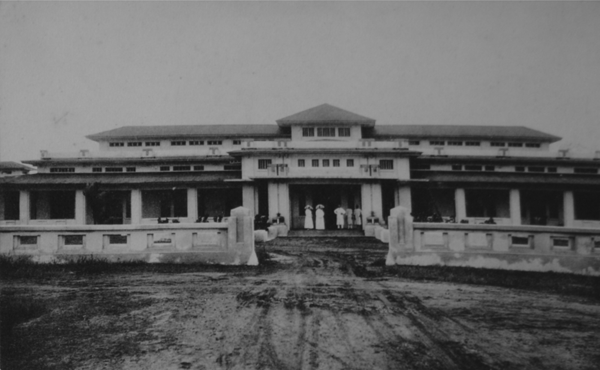
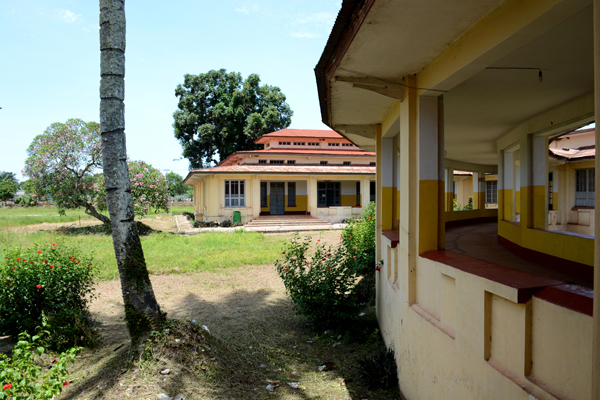
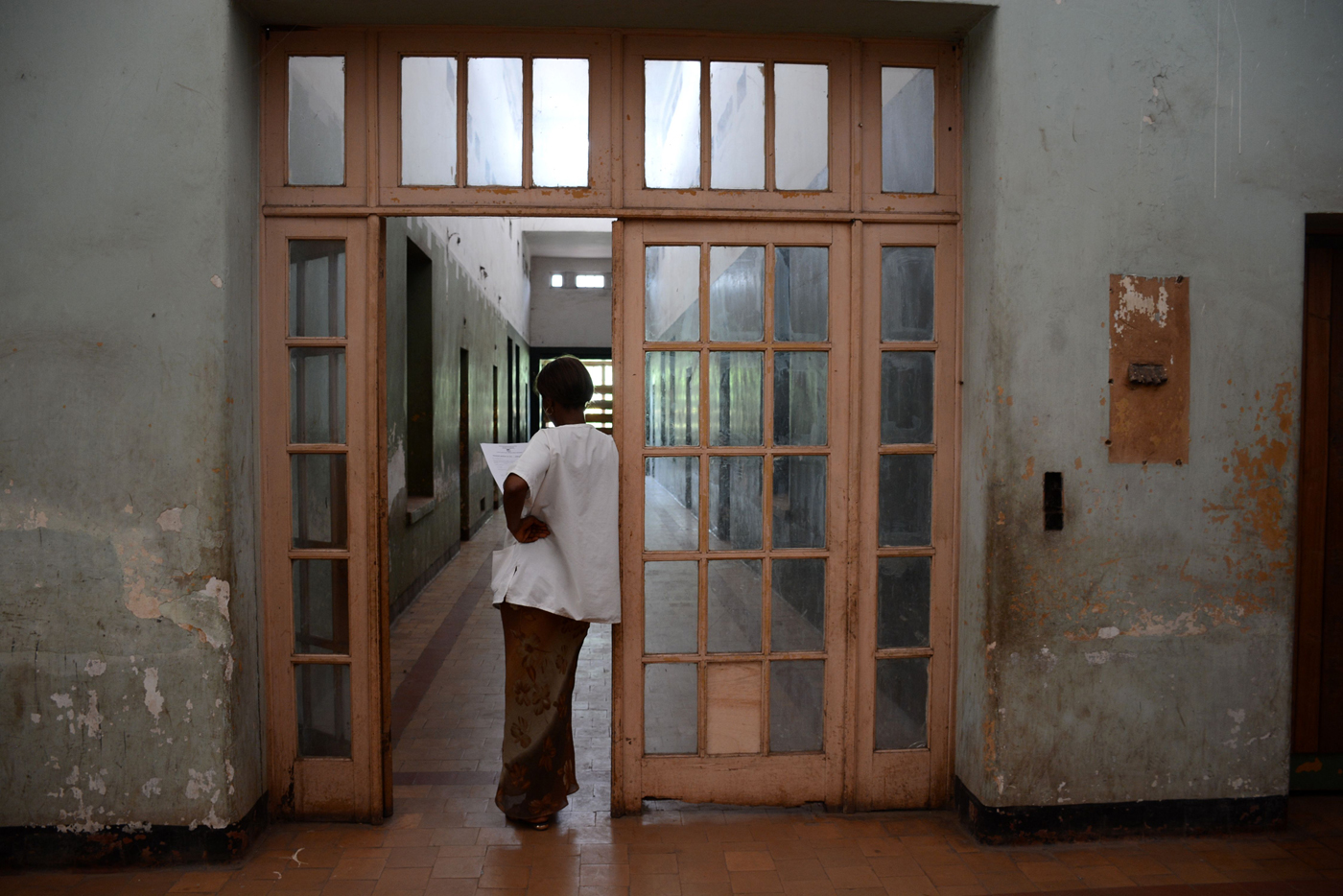
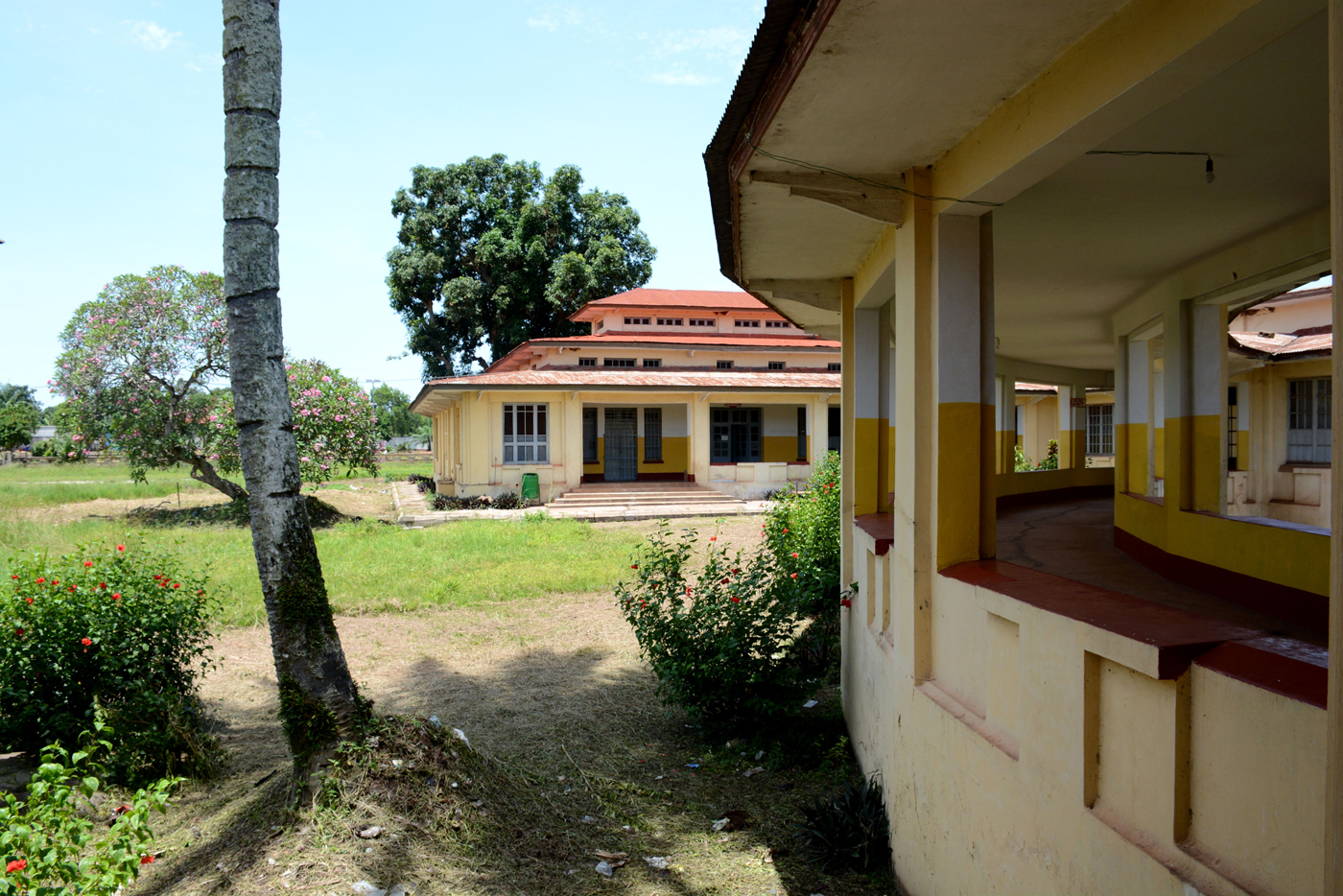
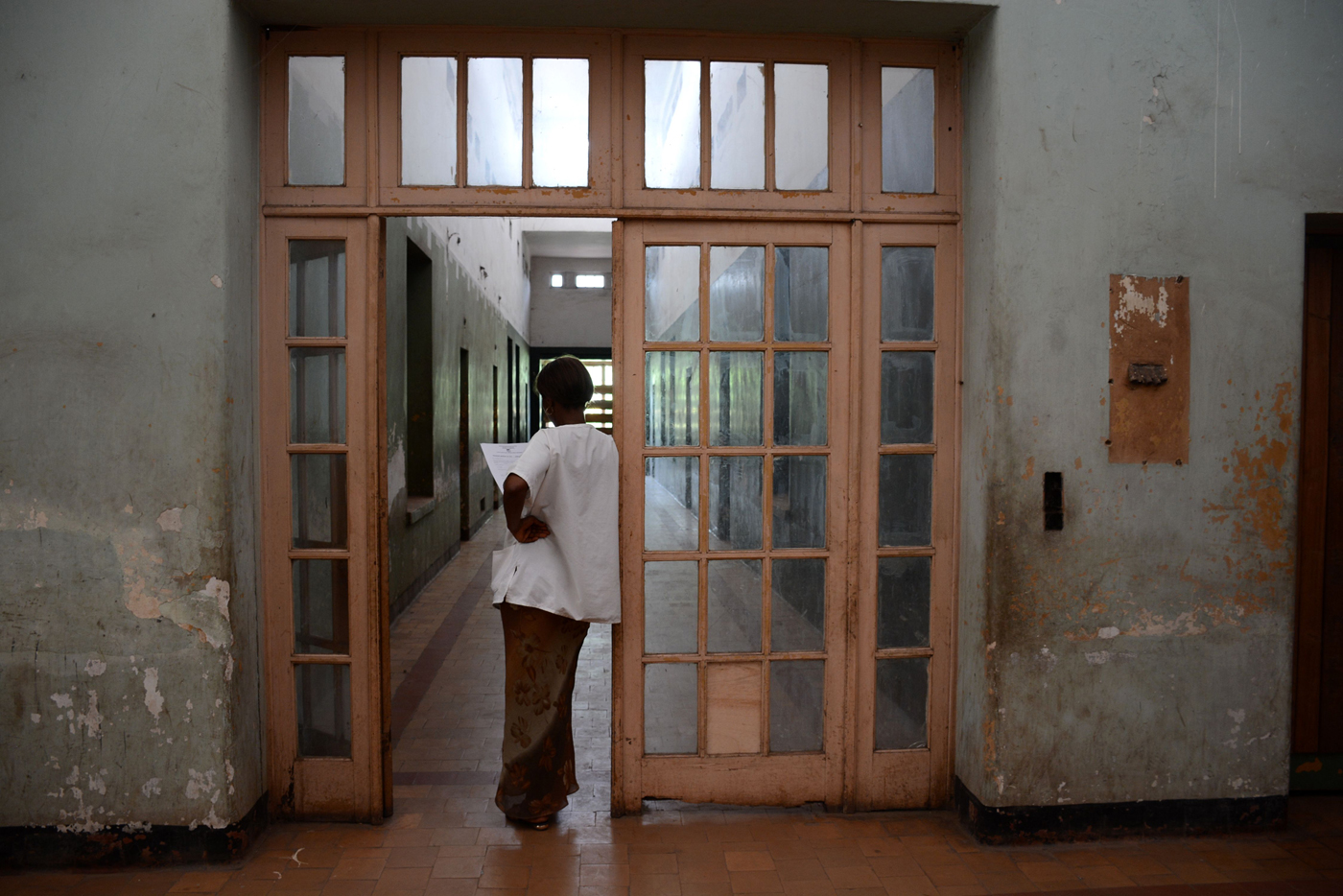
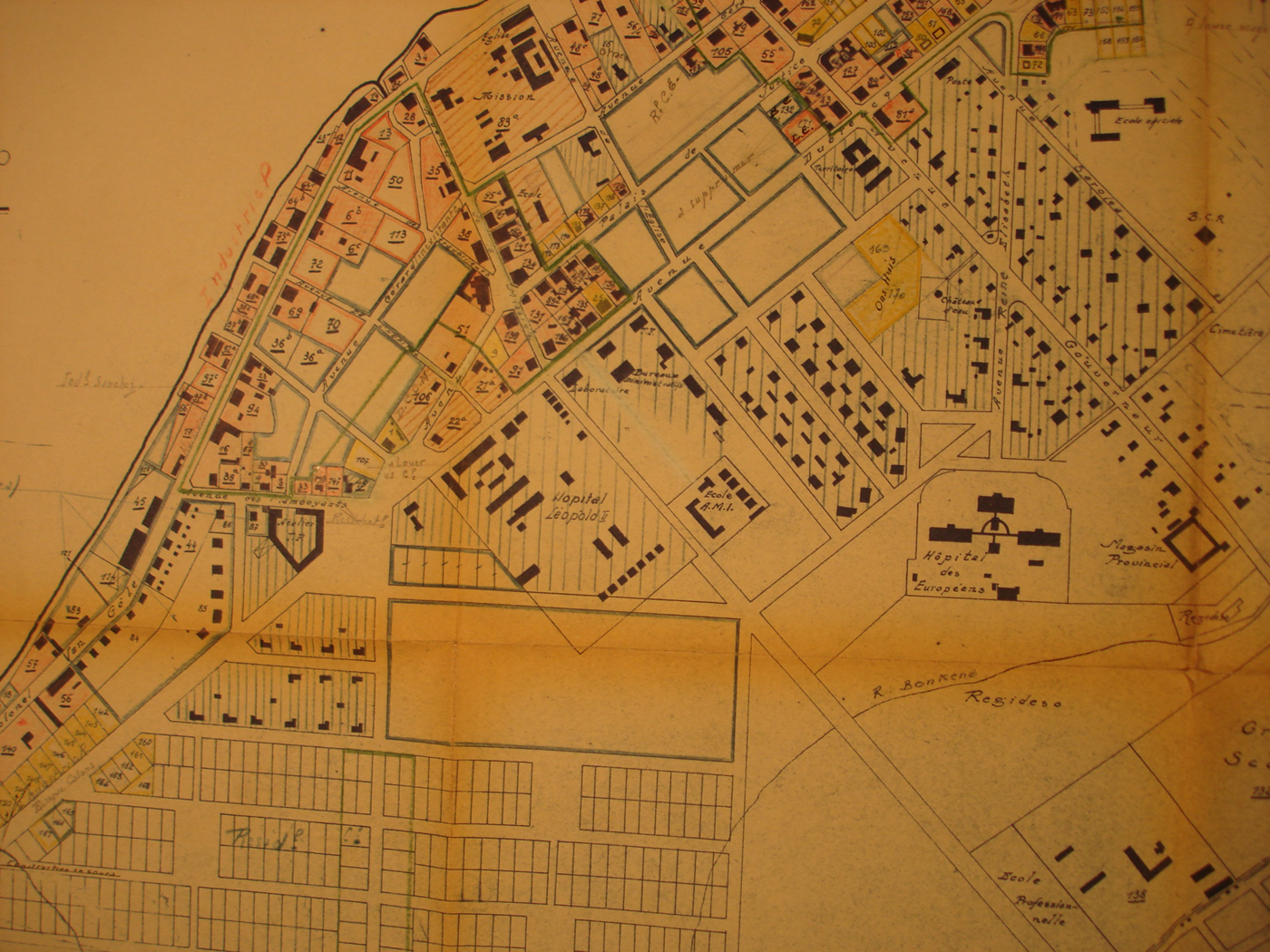
Coquilhatville had two separate hospitals, one for black people and another for whites. While the former was a modest building without architectural ambitions, the latter is imposing in its grandeur (Figures 1 and 2). The planning of this hospital for Europeans, the future Clinique Reine Elisabeth, started at the end of the 1920s, as the existing one, Hôpital de la Rive on the banks of the Congo River, was falling into disrepair.Footnote 4 Fierce debate preceded the decision on where exactly the new hospital was to be built, as the authorities at different levels did not agree. Whereas the Gouverneur de Province Duchesne and the Médecin Provincial Strada would have liked a ‘safe and clean’ site some 4 kilometres outside the city centre, their superiors, Governor General Tilkens and Médecin en Chef Trolli respectively, preferred a location in the centre.Footnote 5 When by January 1929 Duchesne had to yield on its positioning, he was in no mood to make concessions on the prestige of the project; quite the contrary, he was determined to add a touch of glamour to ‘his’ city. As a result, the project took off with grand ambitions, beyond the imaginable and without regard to expense, so it seemed; it even affected urban planning. Indeed, to enhance the prestige of the hospital, a wide tree-lined road leading to its entrance was created, the Avenue Reine Elisabeth (today's Avenue de la Clinique), but it ran diagonally across the road grid, crossing all existing streets. Although there are certainly some interesting parallels to be drawn between urban planning and hospital design (Hughes Reference Hughes1997), this particular intervention in urban development seemed disproportionate. Today, approaching the Clinique Reine Elisabeth by this avenue is still a dazzling experience.Footnote 6 The road gently ascends, and the higher you go the more the Clinique reveals its splendour. Soon, the large pavilion that houses the administration welcomes you at the head of an array of three identical pavilions linked by covered corridors, truly wide yet open to the air on every side (Figure 3). This whole complex is arranged in a huge garden, enclosed by a low wall that allows everyone to fully behold its grandeur. When you enter the hospital building today, however, it is eerily empty, and no one seems to be passing along its lengthy hallways (Figure 4). As expressed by the receptionist Odette, ‘There is no frequency,’Footnote 7 while her colleague Fely mentioned a ‘deficiency in patients’.Footnote 8 This must have been the impression the hospital gave during colonial times too.
The grand administrative pavilion of the Clinique Reine Elisabeth, the hospital for whites, immediately after completion in 1931. Source: Archive of Filles de la Charité in Mbandaka.

Soeur Lohest and nurses standing in the modest hospital for blacks, Hôpital Léopold II, in 1928. On the right, the Pavillon Chirurgie; on the left, the Pavillon Médical; in the centre, the surgical room. Source: Archive of Filles de la Charité in Mbandaka.

The back of the desolate administrative pavilion, with, on the right, the grand corridor leading to the Pavillon Maternité, in November 2016.
A nurse standing in the empty hallways of the Clinique in October 2016.
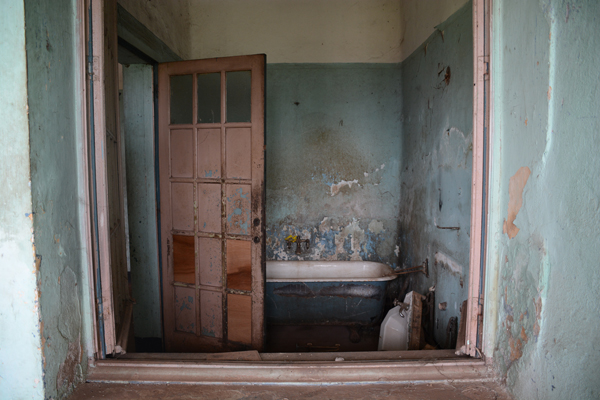
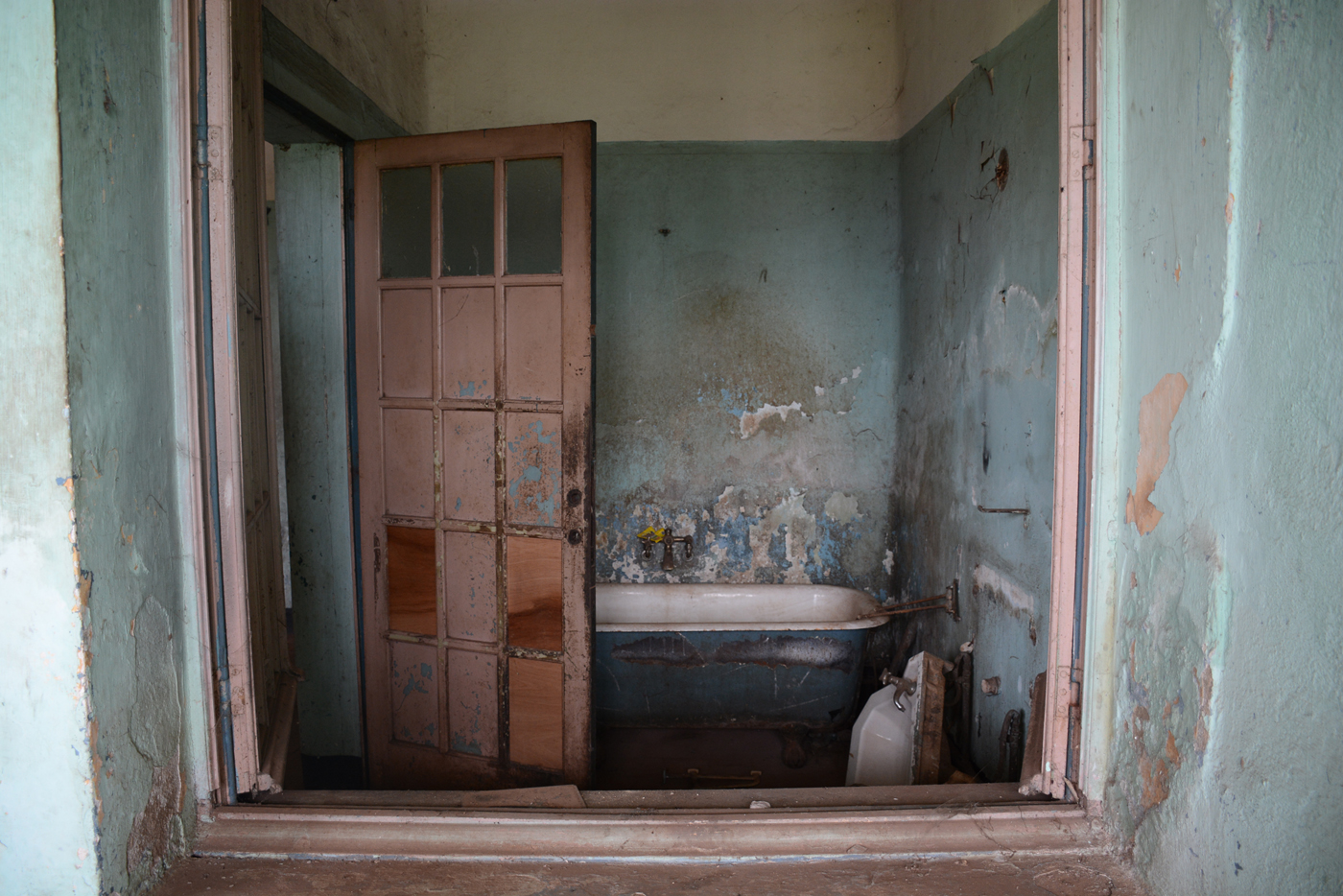
Indeed, the Belgians in the metropole called the Clinique a ‘scandal’ after officials touring the Congo in 1931–32 noted the many empty beds in the grand hospital, and their words soon spread in Belgium. They framed it as a waste of public money, inadmissible after the Wall Street Crisis had ruthlessly raged across the country and jeopardized the public budget. At the time of its inauguration on 15 December 1931, the huge administration pavilion was finished, as well as two pavilions each containing twelve rooms. These twenty-four rooms were large and luxurious: each included a private bathroom with a bathtub (Figure 5), a lavish stockroom, and a large sitting room with splendid views over the huge lawns. Considering the number of Europeans in Coquilhatville and the surrounding areas who relied on this hospital, 377 individuals in 1933,Footnote 9 this was clearly an oversupply of hospital beds. Moreover, there were plans to establish dispensaries in the main towns of each district in the vicinity of Coquilhatville, so it was expected that, in due course, there would be even fewer potential patients. Twenty-four expansive rooms just seemed too many. But the head of the provincial Public Works Department, De Boeck, was adamant that ‘the new hospital for Europeans is to become one of the gems of the city’.Footnote 10 The fact that the second pavilion was in use only from 1938 onwards due to a lack of patients clearly suggests the hubris of the planners.
A reminder of the grand bathrooms in the Clinique, October 2016.
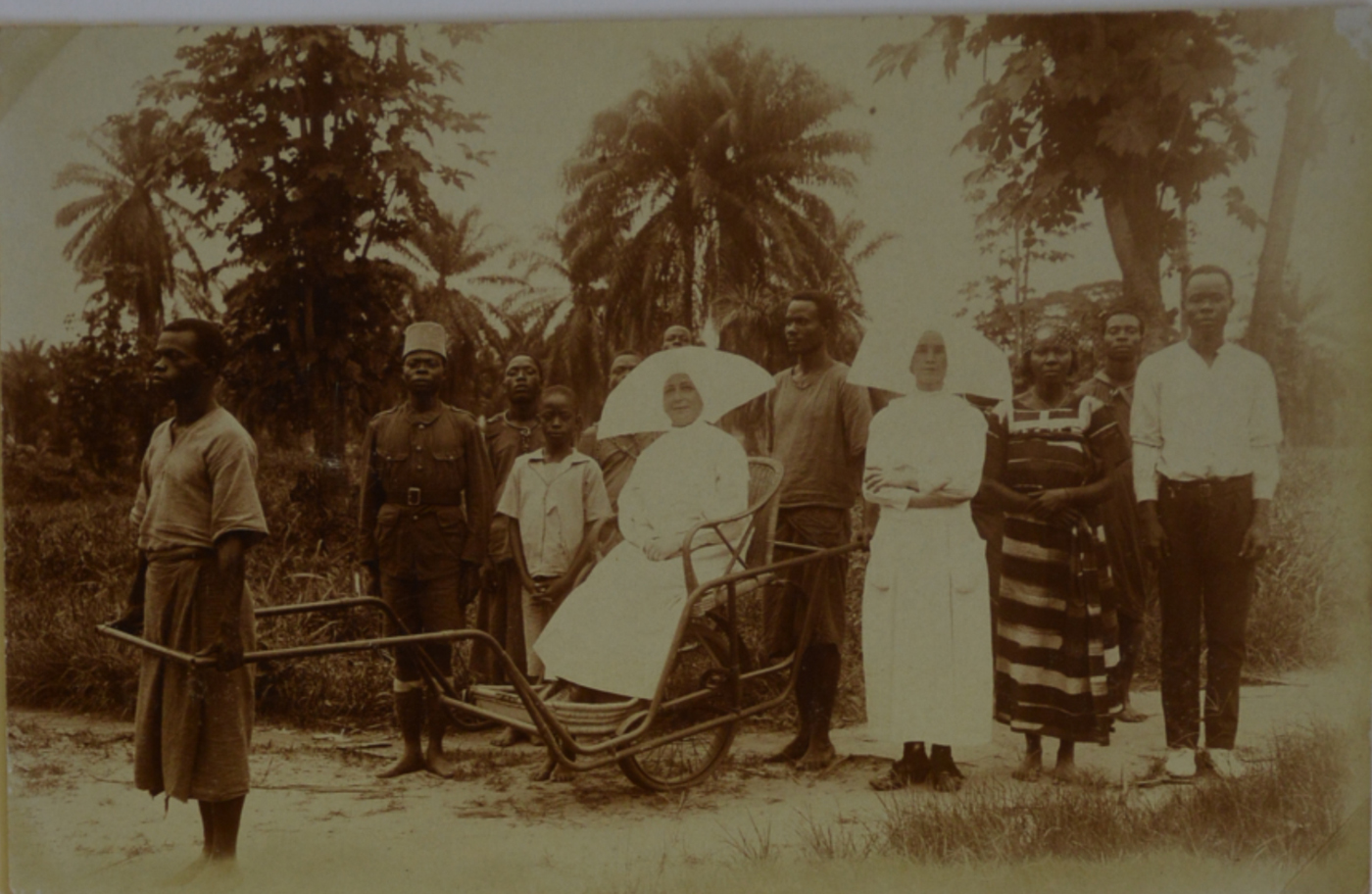
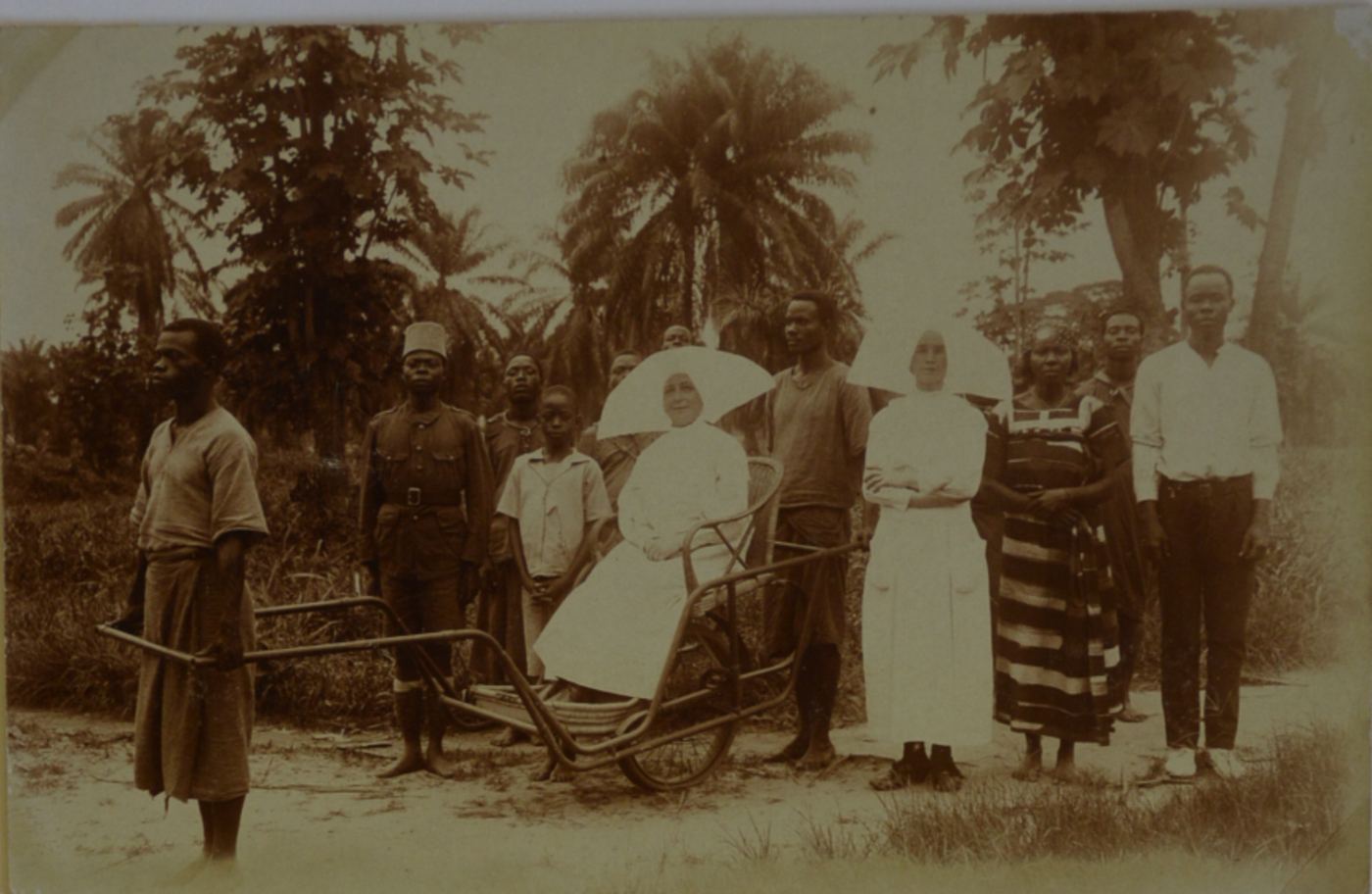
To nurse the (few) patients at the Clinique, the colonial authorities signed an agreement with the Filles de la Charité de Saint Vincent de Paul, a French order that was already present in Coquilhatville and whose (mostly Belgian) nuns, with their extravagantly pointed white wimples, were a notable sight (Figure 6). Their convent was situated on the shores of the Congo River, near the former hospital for Europeans where they had served. The nuns also offered medical care at the hospital for Africans, Hôpital Léopold II, and they ran a primary school. Four new sisters joined the existing team in 1930, and they were destined to serve in the Clinique. The charitable sisters seemed not to be averse to a touch of glamour either. From the planning of the grand Clinique onwards, the Filles de la Charité expressed the wish to be accommodated within its premises, arguing that their current convent was situated too far away from the future hospital. In a letter to a colleague on 28 July 1931, soeur Dubois wrote that the Governor General had refused to respond to her wishes, brushing aside her argument of inconvenient distance and adding that the acute financial crisis did not allow supplementary expenses.Footnote 11 Duchesne fully supported their claim, though, and suggested that the nuns stay in a few houses on Avenue Reine Elisabeth, a stone's throw from the Clinique, while their case was pending. Soeur Dubois described their temporary residence as cosy but ‘minuscule!’ and said that their (temporary) chapel with its ivory-inlaid altar was perfect.Footnote 12 Since not much seemed to be happening, many urgent complaints to various officials were issued over the following years, until finally, through sheer persistence, the Filles got what they wanted. On 29 August 1933, their new convent, right at the centre of the Clinique complex, was inaugurated. ‘A woman's will is God's will!’ was the comment with which soeur Dubois greeted the happy event.Footnote 13 Soon afterwards, the sisters serving the hospital for Africans would also join them in quarters at the luxurious Clinique.
Two prisoners, guarded by agents of the Force Publique, guide soeurs Constant and Van de Casteele to their work at the Hôpital Léopold II in 1926. Source: Archive of Filles de la Charité in Mbandaka.
The nuns at the Clinique were not particularly busy as patients were few; in the words of soeur Dubois in 1933, ‘There is just so little work to do.’Footnote 14 The oversupply of (luxurious) hospital rooms soon led to abuses. In May 1935, the head of the Service de l'Hygiène Van Hoof complained to Médecin Provincial Schwers about the numerous travelling Europeans – all fit and well – who commandeered rooms at the hospital as if it were a hotel, an arrangement that could no longer be tolerated.Footnote 15 All those empty hospital rooms could have been put to good use, though. Indeed, at the end of the 1930s, a heated debate erupted concerning the way in which black people were treated in the (overcrowded) hospital for blacks.
The hospital for blacks
The fact that there was prestige attached to being nursed at the Clinique Reine Elisabeth is not hard to grasp: one only needs to glance at what used to be the hospital for Africans and compare the two. The grandeur of the Clinique makes the former Hôpital Léopold II look like a place of last resort. Its pavilions are tiny, its ceilings low, its corridors narrow, its rooms dismal. The hospital complex consisted of various buildings that were scattered haphazardly in its compound; besides the pavilions for different categories of patients, there was a lazaret for sleeping sickness patients, a pavilion for detainees, a pharmacy, a dispensary, a residence for doctors and the office building of the Service de l'Hygiène. All these buildings gave the ensemble a half-baked impression, lacking consistency. Over a period of three years, the hospital was run by nine different médecins-directeurs (head doctors) with different nationalities (Canadian, Russian, Swiss, Italian, Algerian, Norwegian and Belgian), preferences and requirements; undoubtedly, this chequered leadership contributed to the messy ensemble that resulted.Footnote 16 Whereas the Clinique looked like a luxurious top-of-the-range five-star hotel, the Hôpital Léopold II had little allure. Only in the early 1950s did the colonial authorities begin to plan a new hospital for Africans that was bigger and bolder. However, this new hospital would only open its doors in 1962, two years after independence, which ended medical segregation. Today, a public road runs through the former buildings of the scattered Hôpital Léopold II to ease the flow of traffic. The whole complex now accommodates a school – a spartan one – as well as the office of the Health Inspection Department and the Ministère d’Énergie, de Mines, d'Hydrocologie, d’Écologie et Développement Durable, amongst other facilities (Figure 7).
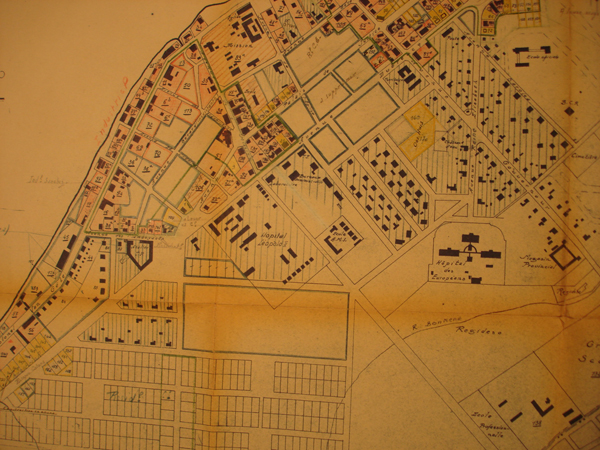
A map of Coquilhatville in 1949. In the centre, the many scattered, separate buildings of the Hôpital Léopold II; to its right, the grand Clinique (indicated as Hôpital des Européens) with the three pavilions that were finished at the time. Note also the diagonal Avenue Reine Elisabeth leading to its entrance. The Congo River is on the left. Source: Archives Africaines, Brussels.
During colonial times, the hospital for Africans was, obviously, as full as the Clinique was empty. Hôpital Léopold II was completed in 1920 to replace the former hospital for Africans, which consisted of mud and bamboo units that were about to fall apart. Initially, the hospital had only forty-eight beds, and Duchesne's demand to increase this to 168 was not met by Governor General Lippens, who stated that it seemed to be triggered merely by a ‘desire for symmetry’, to create greater equilibrium in the scattered ensemble of buildings.Footnote 17 Only in 1931, just when the grand Clinique was inaugurated, was the request for 168 beds finally granted.Footnote 18 The infrastructure that housed them was modest and 168 beds soon turned out to be insufficient. In 1934, a daily average of 200 patients were hospitalized, while a further 450 to 500 were given medical attention at the hospital's dispensary, where crowds queued up while waiting their turn. As many as thirty patients were awaiting surgery at any given time.Footnote 19 The overcrowded conditions soon led to a series of complaints. Grievances were expressed about the shortage of personnel, which in turn triggered complaints about unqualified staff.Footnote 20 Médecin Provincial Schwers observed that the nuns serving at the hospital were not expected to have a degree whereas the nuns at the Clinique were, a glaring injustice in his eyes. Schwers also denounced a standard practice that required male and female patients undergoing compulsory examinations to undress in front of each other due to limited space.Footnote 21 Other complaints concerned patients – easily identifiable by their hospital outfits: a khaki shirt and indigo loincloth – strolling about the town to escape the hustle and bustle of the hospital.Footnote 22 Neighbours, meanwhile, complained about the nightly sounds of the mentally ill.Footnote 23
With an overcrowded hospital for blacks and an empty one for whites, the solution seems easy. It was not. Receiving – and even seeing – Africans in the hospital for Europeans involved crossing a sacred line. Doctor Massey found out how hardwired this line really was. As the former mud-and-bamboo hospital for Africans was falling into disrepair, at a certain point he refused to see his patients there any longer. Instead, while waiting for the Hôpital Léopold II for Africans to be finished, he received his African (ambulatory) patients on the ground floor of the Hôpital de la Rive for Europeans. Coquilhatville society was shocked. In July 1921, the Vice-Governor General wrote to the Commissaire de District (district commissioner) to condemn this unusual practice, ‘likely to greatly inconvenience the European patients’.Footnote 24
The need to separate the two communities worked the other way round as well. In September 1949, Schwers ordered Ruppol, the médecin-directeur of the Clinique, to install a doctors’ office where the local European doctors – among them the médecin-directeur of Hôpital Léopold II – could receive their European patients on an independent basis. Up until then, the doctors treated their private European patients in a room in Hôpital Léopold II, and Schwers wished to end this ‘twisted’ situation.Footnote 25 Many measures were also taken to clearly separate the communities at the city level. A neutral zone was implemented from the beginning of the 1930s (Claeys Reference Claeys2009: 139ff.). A road was constructed that led directly from the Hôpital Léopold II to the African neighbourhoods, drawing off the processions of weeping mourners who would otherwise pass the Clinique and thus discomfit the European patients.Footnote 26 Blurred lines were a source of anxiety for the ‘nervous state’ (Hunt Reference Hunt2016) and needed to be avoided at all costs. And then yet another sensibility surfaced.
Trapped in taxonomy
While complaints about Hôpital Léopold II persisted, a vigorous debate gripped Coquilhatville from the 1930s. It concerned the évolués, an upper class of educated Congolese who were granted certain rights following their assumption, to varying degrees, of a lifestyle similar to the European one (Monaville Reference Monaville2013; Mutamba Makombo Reference Mutamba Makombo1998).Footnote 27 The debate concerned social distinction within this group and the increasing rigidity of boundaries. Indeed, the évolués were not only eager to differentiate themselves from ‘ordinary’ Congolese, but also to stratify internally according to each individual évolué’s affinity with a European lifestyle. In the eyes of some, non-compliance with the sexual sobriety assumed to be concomitant with this way of life revealed the ‘fake’ évolués. It was an issue that commanded much attention in Coquilhatville. In 1936, a short story in the local magazine Le Coq Chante explored the adventures of Eugène Sisa, an évolué who is so enchanted by his new status that he allows himself ‘plenty of fantasies at the fringes of matrimony’. By the end of the 1940s, an unknown local author – whom I suggest is one with a clearly defined religious affiliation – wrote a scathing document, accusing the évolués of behaviour unworthy of their status. He particularly despised this ‘camouflaged polygamy’ (Hunt Reference Hunt1991), veiled in secrecy, and framed these multiple adulterers not as ‘évolués’ but as ‘évoluants’, in the process of being civilized but not yet at this final stage.Footnote 28 It was thus initially the évolués themselves who sought to trace different categories within their class; thereafter, the colonial officials took over these claims. And the debate soon spilled over into the realm of medical care.
It all began with protests by a few Africans from outside Belgian Congo in early 1939. The British consul forwarded the first complaints, which concerned the way in which some ‘Coast-men’ from Nigeria, Côte d'Ivoire and Sierra Leone were treated at Hôpital Léopold II during compulsory medical examination for an ongoing medical survey in the area. Defining these individuals as ‘évolués’, the consul particularly required that their wives and children should be examined away from the other patients, if possible in a separate room and at another time, and in the presence of a female nurse. As the Coast-men were not numerous, the consul added, this demand should be easy to comply with.Footnote 29 A more serious and formal complaint was made by Public Prosecutor Merckaert soon afterwards, on behalf of six Senegalese Muslims. It was directed at the Congolese nurses at Hôpital Léopold II, who, during the medical examination, had treated the men in a most indecent way. It was particularly the loose lips of these nurses, ‘who did not always show a sense of appropriate discretion’, as Schwers commented, that had caused offence, as they had spread the results of the medical examinations of the men and of their spouses.Footnote 30 Médecin-directeur Ledent of the hospital retaliated by casting doubt on the testimonies of the Senegalese. He stated that they themselves were part of the problem, with their arrogant behaviour and bad influence on the Congolese. Without doubt, he added, the Senegalese felt too good to have to endure the same examination as the Congolese, hence their frustration.Footnote 31 The complaint was closed without further action.
The following year, it was Congolese religious figures who pressed charges, demanding to be treated differently from Congolese lay people. Médecin-directeur Dresse of the hospital of Lisala, a small town roughly 300 kilometres from Coquilhatville, outlined the first case, which had repercussions throughout the whole province. In his letter to Schwers, Dresse asked for advice as he did not know which way to turn. A Congolese abbé had presented himself at the dispensary for Europeans, defining himself as an évolué and claiming medical care proper to this status, but Dresse had referred him to the dispensary for Africans. In the latter, Dresse had suggested, the abbé could be treated in the same office of the dispensary where Dresse occasionally received his European patients. However, under no circumstances could he be examined in the European dispensary. The abbé and his (white) superior were furious, and Dresse was undecided. In his response, Schwers outlined the customary categorization that the authorities handed down throughout Belgian Congo: separate hours for medical care, clearly set apart from the times when both the Europeans and the ‘ordinary’ Congolese were treated, should be reserved for a group comprising ‘indigenous évolués, mulattos civilisés and Asians’.Footnote 32 Unwittingly, Schwers hereby further complicated taxonomy, as he not only added the distinction between évolué and civilisé (civilized) but also differentiated according to ‘racial’ background, adding mulattos and Asians to those entitled to distinctive medical treatment. In the margins of this letter, an anonymous writer added an interesting handwritten note. A clear categorization was urgently needed, this author acknowledged, as the ‘civilisation’ of the Congolese was rapidly proceeding, and soon numerous lawyers, traders and intellectuals would join the abbés and priests. The author thus makes a shift towards professional occupation as a basis for inclusiveness. The authorities ought to be prepared, he continued. The Médecin en Chef should draw directives at the national level, the author suggested, so that, once and for all, it would be clear who had the right to be medically treated where, when and how. At this point, the acting Chef du Service de l'Hygiène, Thomas, intervened. He too acknowledged that there was an urgent need for a better defined categorization and concomitant official directives. While such a directive was being drawn up, he stated, it was imperative to make a clear distinction between indigènes civilisés and indigènes évolués, thus sustaining the distinction that Schwers had made earlier. However, Thomas included divergent professions in each category. And he added a suggestion with far-reaching consequences. To comfort the indigènes civilisés (under which he classified not only priests and preachers, but also the rare Congolese or non-Congolese engaged in liberal professions, with a university degree or holding a high rank as officers), a ‘special room’ should be reserved for them at the hospital for Africans. In addition, they could even be treated – in the worst-case scenario – in a separate room in the hospital for Europeans.Footnote 33 Thus, Thomas initiated the first sliver of an opening for admitting Africans, albeit indigènes civilisés exclusively, to the hospital for Europeans. This eventuality was still distant, but now it had been raised.
Finally, in 1940, Governor General Ryckmans closed the debate by drawing up official guidelines on the appropriate behaviour towards ‘indigènes évolués’ during medical care, in which he drew together previous attempts to stratify this group. Ryckmans began by commending the installation in many hospitals of a separate room for the ‘ordinary’ évolués, but in the same breath he put forward additional directives for the ‘category of blacks that are much more civilized’ (civilisés), a category he deemed necessary to differentiate from the other évolués. In his view, this category of ‘higher’ évolués consisted of the religious and the liberal professionals who had adopted a European lifestyle.Footnote 34 They should be received in the same office where Europeans were examined in the hospital for Africans by the doctor of their choice, immediately before or after these consultations, he continued. This directive was loud and clear. Nevertheless, Ryckmans did not have such a straightforward answer to what should be done if hospitalization was needed. After a first examination and diagnosis, he stated, medical staff should preferably treat the patients at home. But if there was a pressing need for hospitalization, he went on, they should set up ‘a comfortable little room’ in the hospital for Africans, and even consider the possibility of offering the patients ‘un petit local’ (a small room) in the hospital for Europeans.Footnote 35 Ryckmans thus endorsed Thomas's opening of the hospital for Europeans to Africans, albeit to a well-defined category of Africans, and on the vague basis of ‘appropriate lifestyle’. But the imbroglio did not end here. Evidence suggests that the religious contingent then approached Ryckmans to claim a supplementary distinction. Indeed, one month after the directive, Ryckmans added another category within the group of ‘indigènes évolués’: a differentiation between the prètres on the one hand and the frères et religieuses on the other, the former being definitely higher ranked as they were used to rubbing shoulders with Europeans, and thus destined to be treated accordingly.Footnote 36 In doing so, instead of issuing a clarification, Ryckmans added yet another layer to the social stratification and, as a consequence, merely increased the confusion. Not unexpectedly, he did not specify what kind of space he had in mind to treat this particular category. The next step up from getting a special room, albeit a small one, in the hospital for Europeans would be to have exactly the same room as all the European patients. In brief, the authorities were completely lost in their homespun web of categories, a maze of denominations that made every upper-class Congolese wonder where he (and, to a much lesser extent, she) belonged.Footnote 37
The required ‘proximity to a European lifestyle’ was a very vague criterion indeed. But in 1948, the colonial authorities introduced the carte de mérite civique (civic merit card), tangible proof that the bearer of the card belonged to a ‘different’ class. All Congolese who had never been banned or sentenced, had shaken off polygamy and sorcery and had enjoyed a degree of education were entitled to such a card. The carte came with a slight improvement in legal status and fewer constraints when walking about town and in European neighbourhoods. It opened up access to a special room for évolués too, if the hospital provided one.Footnote 38
The discussions about categorizing the évolués followed the ‘war psychosis’ among the white population of Coquilhatville during World War Two, a population that was near ‘physical and psychic breakdown’, as Schwers noted (Vinck Reference Vinck2001). Despite the authorities’ efforts to conceal the ongoing war by censoring the media, the Congolese easily noticed the dissent among the white population. It was especially the detention of German and Italian citizens that puzzled the Congolese and brought the ongoing war right into their midst. They noticed that all whites were not the same. Few scholars, with the exception of some historians, have discussed categorization among white populations in the colonies. Duncan Money (Reference Money2016), for instance, has written an interesting study on the white community in the Copperbelt in northern Rhodesia. Ann Stoler (Reference Stoler1989) also regrets that scholars often represent the ‘colonial state’ as a homogeneous group. As she argues, the colonial authorities themselves created this image, as ‘it provides a way of creating the sense of (colonial) community and context that allows for colonial authority and for a particular set of relations of production and power’ (ibid.: 138). As such, it does not come as a surprise that the local authorities in Coquilhatville did all they could to conceal the ongoing world war. And then there was another uneasy category of the petits blancs, such as the Portuguese, Lebanese and Greeks, who, with their African wives and métis children, were ‘threatening and upsetting the colonial order of things’ (De Boeck and Baloji Reference De Boeck and Baloji2016: 300). In Coquilhatville, this category particularly covered the Indians, who were (and still are) numerous, and who included among them ‘the builder of Mbandaka’, the Indian trader Patel Ismail Youssuf (Lufungula Lewono Reference Lufungula Lewono2002). In her interesting study on the categorization of patients in medical reports in German East Africa in the early 1900s, Manuela Bauche (Reference Bauche, Castryck, Strickrodt and Werthmann2016) explores the difficulties the authors faced when deciding into which category – European or ‘indigenous’ – the Goans and the Boers fitted, the former because their ‘biological race’ was problematic, the latter because of their distinct way of life. As a solution, they were both accorded a place somewhere at the bottom of the hierarchy in the European category.
Note that all doctors, obviously, were white, the Congolese being excluded from higher education until independence was in sight. But there was a steadily growing group of medical assistants, whose highly regarded training regimes included apprenticeships in tropical medicine institutes in Europe. These ‘middle figures’ (Hunt Reference Hunt1999) must have felt the same frustrations as the évolués, because, as a manual for ‘indigenous’ medical students reported: ‘He is situated somewhere between the indigenous and the European community: to the former, he does not really belong any longer, to the latter, he does not really belong as yet.’Footnote 39 Although Dr Constant, who was trained as a medical assistant, remembers that the doctors never discriminated,Footnote 40 we shall see that not all assistants concurred, and right after independence, the bubble of accumulated frustrations burst open. Indeed, it is important to bear in mind that the évolués were especially keen on getting close to the white population and did not strive for greater rights for the Congolese as a whole, feeling that they had little common ground with their compatriots. It was only towards the 1950s, propelled by a feeling of frustration at being stuck at the intermediary level, that individuals belonging to this social class triggered a change of mindset in the political landscape throughout the country (Jewsiewicki Reference Jewsiewicki1976: 69). Among them was Paul Bolya, a medical assistant from Coquilhatville, who attended the round-table negotiations in Brussels that paved the way to independence (Sabakinu Kivilu Reference Sabakinu Kivilu, Vellut, Cornelis, de Lame, de Villers, Etambala, Lagae and Marchal2005). Also present in Brussels was another notable example of an évolué, Patrice Lumumba, independent Congo's first prime minister.
Let us return to the colonial administrators trying to create social categories and matching medical care. How had they become trapped in taxonomy? Their main incentive had been to bolster the self-esteem of members of the upper class and enhance ‘their standing in the eyes of the other indigenous people’.Footnote 41 As such, perception by the other was an important motive; it was all a matter of pride and appearance. But to appear higher in rank, and thus in significance, one needs an underling, someone from whom to distance oneself. This idea of ‘reference others’ pushed the authorities to add ever more categories. Fear of a slippery slope pervaded the debate, too. Whereas the Chef du Service de l'Hygiène had initially suggested granting the ‘Coast-men’ special treatment ‘as they are only a few’, visions of hordes of upper-class patients demanding their rights surfaced in subsequent cases. In his letter to Schwers, Dresse mentioned that if he started treating African abbés in the dispensary for Europeans, soon the clerks and lower-level officers would want the same favour too. Likewise, the anonymous writer of the comments maintained the need for a clear directive as he expected the évolués steadily to become more numerous. But despite all these expressions of concern, the criteria for judging who was to be considered an évolué and what ‘kind’ of évolué were not set clearly. On the contrary: different authorities listed different professional occupations under different categories. As such, some considered the clerks to be évolués (Thomas) whereas others did not (Schwers and Dresse). The only invariable criterion throughout the discussion was similarity to a European lifestyle, as vague as this was. The more the lifestyle of the évolué reflected the European one, the more he could assert his right to be treated medically as a European. The privilege granted consisted of an approach – both in time and in space – to the medical treatment the Europeans enjoyed.
The sharpening of social categories was extrapolated to spatial considerations. Indeed, there was no point in establishing categories of upper-class people in order to provide them with corresponding medical care if they would all end up in the very same hospital room. Spatial categorization also needed to be fine-tuned. Thomas set out the options by suggesting that, for those ‘more or less évolués or believing they are’, the medical staff should install some ‘small rooms separated by partitions’ inside the wards of the hospital for Africans, to separate them from the other African patients.Footnote 42 Governor General Ryckmans’ directives are illustrative too. While he urged avoiding a decision about where the évolué concerned should be treated by continuing medical treatment at home, he also came up with a peculiar solution in case hospitalization was required. He suggested installing a ‘large comfortable room’ at the hospital for Africans, and, if that did not work, a ‘little store’ in the hospital for Europeans. Note the hierarchical orientations of these rooms. The large comfortable room was to be installed in the Africans’ hospital to clearly set the évolué apart from the other African patients. When such distinctive treatment was to be given in the hospital for Europeans, however, just ‘un petit local’ (a tiny room) would suffice, in order not to upset the European patients who needed to feel that they were entitled to a more prestigious welcome. The ranking of spaces to receive upper-class patients shows that there were limits to the objectification of social opposition in physical space and to ‘the principle of vision and division, as categories of perception and evaluation or of mental structures’ (Bourdieu Reference Bourdieu and Bourdieu1999 [Reference Bourdieu and Bourdieu1993]: 125). The authorities had reached their ‘dead zones of the imagination’ (Graeber Reference Graeber2012).
In Hôpital Léopold II, after 1951, a separate pavilion with two rooms was reserved for the ‘ordinary’ évolués,Footnote 43 although it was accessible only to those in possession of a carte de mérite civique.Footnote 44 These were individual rooms, and they were clearly more generous than the space allotted to the patients in the wards of the pavilions. Apart from the large and fairly sophisticated room, each unit for évolués was provided with a kitchen where the évolué had the right to have his wife or servant cook his meals to order, if the food provided by the Filles de la Charité was not to his liking. The two units shared a spacious living room. Despite these facilities, the rooms were completely dwarfed by the rooms of the Clinique. Moreover, the local press voiced citizens’ frustrations with the hospital for the blacks, with its overcrowded maternity ward served by only two toilets and one tap (Likinda Reference Likinda1957: 6), and with patients queueing to be examined for such a long time that they simply lay down on the floor while waiting (Epervier 1959: 2).
As we have seen, the local authorities’ continuous attempts to categorize, divide and subdivide the évolués forced a tiny opening for the admission of these Africans to the Clinique. The Archives Africaines do not contain any data on the number of évolués who were eventually hospitalized in the Clinique. And, as I have already noted, their voice is virtually absent in colonial archives. A notable exception is La Voix du Congolais, a magazine that appeared from 1955 to 1959 and was edited by évolués (Kadima-Tshimanga Reference Kadima-Tshimanga1982). Oral histories revive these missing persons, however, and fieldwork throughout the country yielded Congolese informants who all had a story of a local notable évolué. Elderly members of the current staff of the hospital remember that, in the late 1950s, a local well-off trader and évolué by the name of Bolodjwa – still a prominent family in Mbandaka today – had been in surgery in the Clinique.Footnote 45 Unfortunately, the pre-independence registers from the Pavillon Chirurgie have disappeared, so there is no way to verify this. The register of the Pavillon Maternité, however, is nearly complete, and it is beautiful.
A black woman in the hospital for whites
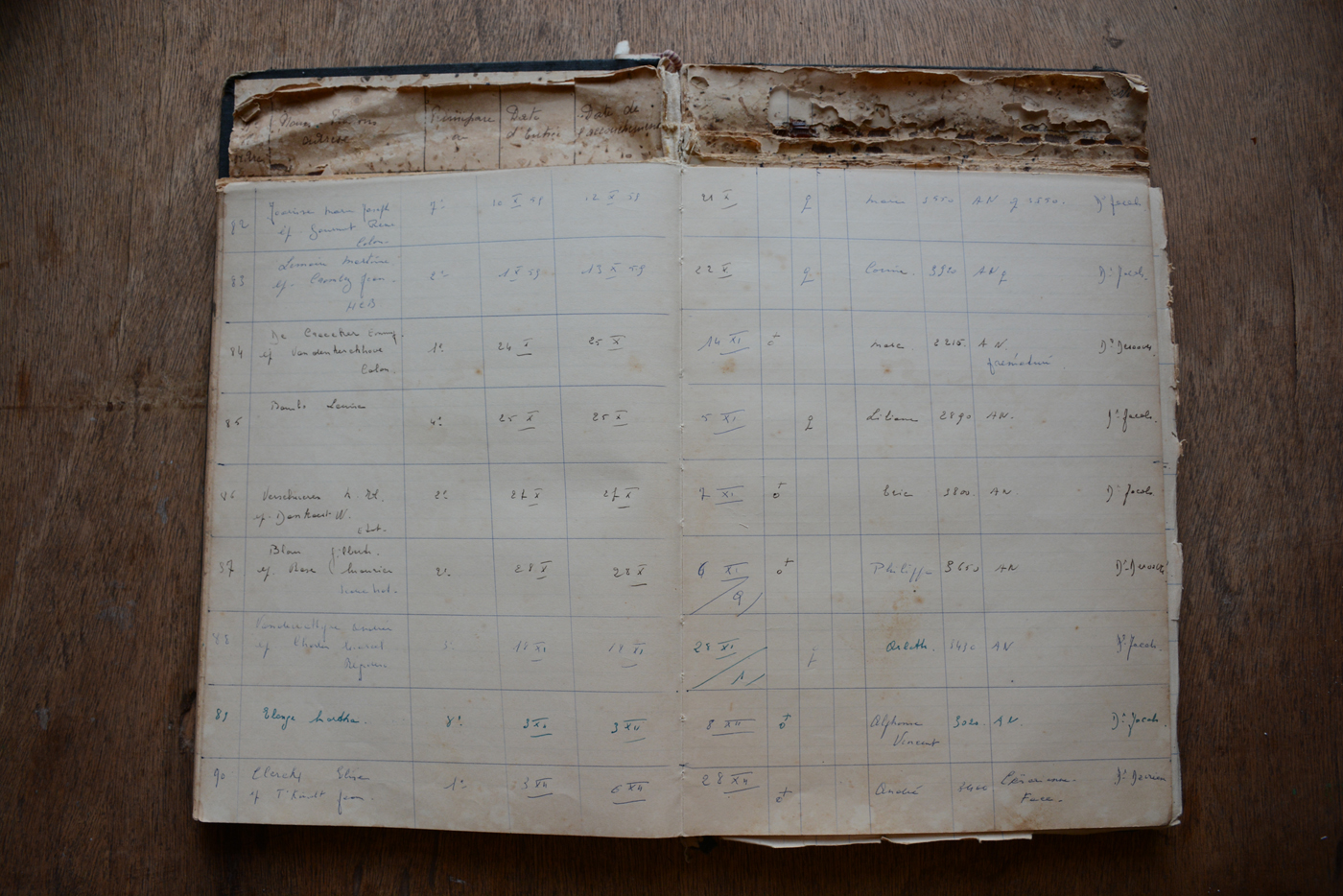
On 25 October 1959, eight months prior to independence, the first Congolese-sounding name appears in the register of the maternity ward – Bombo Louise, an apparent misfit in the column of European names. On 3 December 1959, another appears: Elonge Marthe. Until independence, these women are the only Congolese whose names appear in the register of the hospital for white people (Figure 8).
A page from the birth register for 1952–62, with the names of Bombo Louise and Elonge Marthe. Source: Courtesy of Suza Songokai.
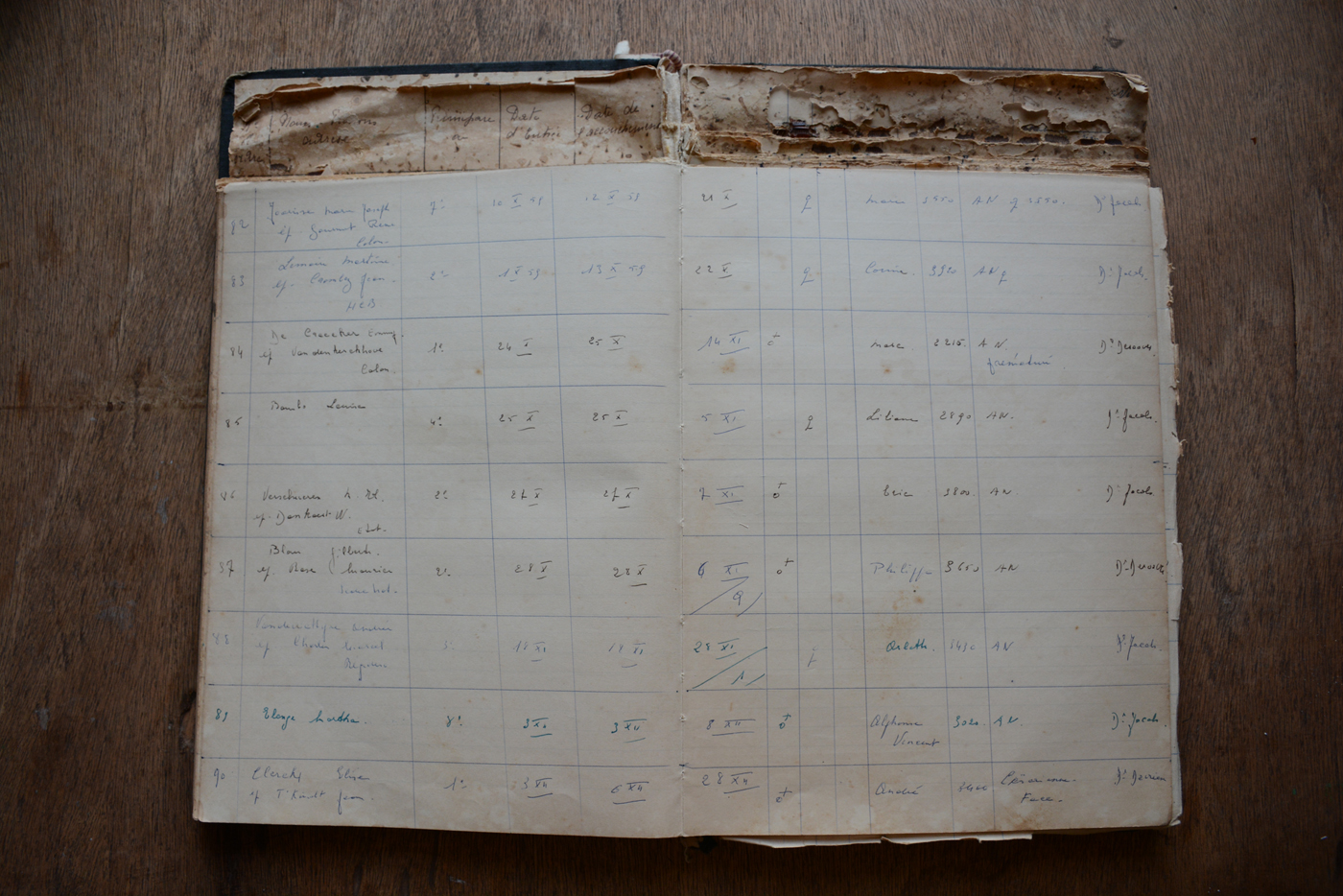
The births in the Clinique are written down by hand in a register.Footnote 46 There are twenty-seven registers in total, documenting all births up to the present day.Footnote 47 Mama Suza, the head of the maternity ward, keeps the unsorted books in a cupboard in her office, the same office where she examines her patients. The registers all look somewhat different: some are thick, others thin, some have hard covers, others soft, some have an inscription at the front, some do not. The nature of the details registered differs as well. For instance, while the name of the newborn occupies a prominent place in the first two registers, it completely disappears after independence, but now the exact hour of birth is added, a category not included before. From independence day, as ‘racial’ barriers were lifted, a steadily increasing number of Congolese women gave birth in the prestigious Clinique.
One specific register is fascinating here; it covers the years 1952 to 1962. It is interesting because it runs right through independence, allowing a close pre- and post-independence comparison. The black linen hard cover sports a pre-printed vignette with the words ‘CONGO-BELGE’, but a blue pen has thoroughly erased ‘BELGE’, a clear rejection of Belgian rule. At the top of this label, someone has written the consecutive years that the register covers, from 1952 to 1962, and underneath, in flowing calligraphy, ‘Naissances’ (births). Although the book was once bound, it seems to have fallen apart at the seams, and two flesh-coloured plasters prevent its final disintegration.
The register has thirteen columns set out over each double spread. A description of the data registered in the columns extends from the pages, but it is legible only on the left page, insects having destroyed the information on the right. The column with data identifying each woman who gave birth is intriguing. The methods of identification change throughout the book, with a clear rupture after 30 June 1960, the day when Congo gained its independence. Whereas, before this date, a woman giving birth was identified by her husband's name, after independence the father of the child gradually disappears from the picture. From the register covering the years 1962 to 1964 onwards, the woman takes a prominent place. This register, although covering only two years, is much thicker than the register running from 1952 to 1962, a clear and palpable indication of the sudden rise in births. It is indeed illustrative of the ‘scandalous’ hospital that, up until independence, there was an average of four births a month – a very small number considering the huge twelve-room maternity ward. Enjoying plenty of room, the new mothers could take plenty of time, too, and often stayed for as long as two weeks after the birth of the child. Immediately after independence, the number of births starts to increase at a heightened pace, reaching as many as 250 births a month in 1981, a busy year by any reckoning, when twenty-two Filles served in the Clinique.Footnote 48 Obviously, by then a prolonged stay in the maternity ward was no longer possible; mothers now stayed for three days at most.
So, just two months prior to independence, Louise Bombo and Marthe Elonge made their appearance among the European women in the register; they were the odd ones out in many respects. Indeed, whereas the European women by then are registered with their name and surname in full, the name and surname of their husbands preceded by ‘ép.’ and followed by their profession, Louise and Marthe occupy their entries all by themselves.Footnote 49 In is unclear how these women ended up in the Clinique in the first place. Perhaps they were the wives of local évolués, although the names of their husbands go unmentioned. Perhaps they were wives or domestic and sexual partners (once called ménagères to suggest a cross between housekeepers and mistresses) of European men who ensured that the mothers of their children-to-be gave birth in the best possible circumstances, but preferred not to see their names attached to the affair.Footnote 50 Hunt (Reference Hunt1999) has documented the substantial métis culture in the region, which remained shrouded in secrecy because these unions rarely resulted in marriages in the colonial period. After independence, it seems that every (African) woman in Coquilhatville and its surroundings wished to give birth in the prestigious Clinique.Footnote 51 The Clinique was the only ‘fancy’ option in town, as the new hospital for Africans, though under construction, had not yet been completed at independence.Footnote 52 The first woman to do so was Madame Sikumoya, giving birth on 5 June 1960, and many followed.
Independence was a violent dawn in Coquilhatville, as in many other Congolese cities, with Congolese soldiers mutinying, demanding higher wages and ranks. The Clinique was closed for six weeks and reopened only when the dust had settled, on 15 September 1960. Indeed, as a Fille de la Charité wrote to a colleague, on the third day after independence, everything seemed calm and peaceful, although no one dared venture onto the streets, everyone fearing everyone else.Footnote 53 This was just the lull before the storm, though. The next day, bullets flew across town and fourteen dead and twenty-five injured were taken to the Clinique. Animosity between black and white exploded, colonial administrators left the city, and only fifty Europeans remained.Footnote 54 When UN troops arrived some weeks later, they stayed at the Clinique as all the hotel rooms were occupied by soldiers.Footnote 55 The Filles de la Charité were advised to leave, but decided to stay.Footnote 56 Even within the hospital, ‘racial’ tensions rose. As expressed by soeur Spirlet, ‘At the hospital, the nuns are facing a hard time, as those gents make them feel their “Independence”.’Footnote 57 This culminated in a threat by a medical assistant to doctor Van Drogenhouck of Hôpital Léopold II, who was told to leave the Congo immediately so his assistant could take his place; if not, ‘he would be held to account’.Footnote 58 Another assistant headed to the Clinique to remove Dr Jacobs.Footnote 59 Patients became unruly too. In the maternity ward, at the beginning of December 1960, there were two Indian women; all the others were African wives of highly placed officials, and all were similarly demanding.Footnote 60
As I have discussed, the demands of the African upper class to be (medically) treated in the same way as Europeans forced open a small fissure but could not dismantle ‘racial’ barriers. Only from independence onwards was the Clinique overtaken by Congolese patients. However, the social barrier was never actually lifted, as most of the patients of the Clinique still belonged to the higher ranks of society. As soeur Rubens explained in 1962: ‘The Clinique is undoubtedly the place that has undergone the most significant changes. The Clinique for Europeans before independence has become a genuine hospital for Congolese évolués after independence.’Footnote 61 The Filles continued to maintain the Clinique as a hospital with high standards, adding a ‘European touch’ with their curtains and tablecloths.Footnote 62 But the altered profile of the patients, and their own evolving viewpoints on matters of class over two post-independence decades, pushed the Filles de la Charité to leave the Clinique by the end of 1984, as they now felt unable to fulfil their duties properly while serving exclusively what they defined as ‘white’ and ‘évolués’ patients.Footnote 63 Today, the Clinique looks very desolate. Although its position and design remain arresting, it has lost the enchanted aura that initially drew the post-independence elite. Now, when sick or injured, they prefer to be treated in the new hospital that before independence was meant for Africans exclusively, Hôpital Général de Référence Wangata, or else in the financially much more accessible dispensaries in the townships, framed in derogatory terms as ‘boutiquiers’ (shopkeepers) by employees of the Clinique.Footnote 64 Occasionally, among the few (African) patients of the Clinique, someone from the ‘almost white’ category appears – an Indian patient.Footnote 65
Acknowledgements
I wish to thank Nancy Rose Hunt, Luce Beeckmans and Honoré Vinck for their comments on earlier drafts. Thanks to Simon De Nys-Ketels who joined the fieldwork, and to Honoré Vinck for translating Lomongo articles. I warmly thank Johan Lagae for his encouragement. Gratitude to médecins-directeurs Parfini Iyetshi and Hilaire Manzibe for their kind cooperation and for granting full access to the hospitals. Special thanks to the head of the maternity section, Suza Songokai, for allowing me to browse and photograph the birth registers, and to the welcoming staff of both hospitals. I want to express my gratitude to the soeurs of Filles de la Charité, to Charles Lonkama and to Guillaume Essalo. Finally, I am very grateful to the reviewers for their insightful comments. This research was funded by the Fund for Scientific Research (FWO), and is part of project no. G045015N, directed by Johan Lagae: ‘Urban landscapes of colonial/postcolonial healthcare: towards a spatial mapping of the performance of hospital infrastructure in Kinshasa, Mbandaka and Kisangani (DRC) from past to present (1920–2014)’.