INTRODUCTION
The family Corycaeidae Dana, 1852, including two genera, Corycaeus Dana, 1845 and Farranula Wilson, Reference Wilson1932, are marine pelagic copepods occurring typically in the epipelagic zone of tropical-to-temperate seas (Motoda, Reference Motoda1963; Boxshall & Halsey, Reference Boxshall and Halsey2004). Of these, the genus Farranula was established as Corycella by Farran (Reference Farran1911), but the generic name was replaced by the present name by Wilson (Reference Wilson1932) since the latter had already been used in protozoa by Légar (Reference Légar1893). The genus Farranula is composed of seven species (Farranula carinata (Giesbrecht, Reference Giesbrecht1891), F. concinna (Dana, 1849), F. curta (Farran, Reference Farran1911), F. gibbula (Giesbrecht, Reference Giesbrecht1891), F. gracilis (Dana, 1849), F. longicaudis (Dana, 1849) and F. rostrata (Claus, 1863)). The genus Farraula has been differentiated from the other genus, Corycaeus, by morphological characteristics, as follows: in both sexes, the prosome consisting of two segments, fusion of the genital somite and the anal somite, P1–P3 lacking exopodal spines on the first and second exopodal segments, and P4 lacking an endopod. Until recently, each species of Farranula has mainly been identified based on general appearance, such as proportions of prosome and urosome, distance between eyes, lateral and/or dorsal shape of second urosomal somite and, additionally, males have been separated only by their sizes (Farran, Reference Farran1911; Tanaka, Reference Tanaka1957; Motoda, Reference Motoda1963). For these reasons, since Farran (Reference Farran1911) recorded F. curta (as Corycella curta) as the seventh species of Farranula, the number of species has not increased. From recent detailed morphological studies and genetic analyses for small cyclopoid copepods such as oncaeids, several of the alleged cosmopolitan species were proved to be species complex, including two or more closely related species (Elvis et al., Reference Elvers, Böttger-Schnack, Blohm and Hagen2006; Böttger-Schnack & Machida, Reference Böttger-Schnack and Machida2010; Wi et al., Reference Wi, Shin and Soh2011). Wi & Soh (Reference Wi and Soh2013) also verified that in Farranula species the mouthpart armatures, the surface ornamentation of the second urosomal somite, and the lengths of the exopodal spines of each leg are important characters of the detailed morphological descriptions of F. gibbula and F. concinna, and suggested that further research on small copepods should be undertaken to enable precise identification based on the minute details.
As a part of establishing precise taxonomic criteria for corycaeid copepods, morphological comparisons between Farranula species were performed in the present study. As a result, we found that F. curta (as Corycaeus curtus) from the Indian Ocean by Dana (1912) and F. rostrata (as Corycaeus rostratus) described from the East China Sea by Chen et al. (Reference Chen, Zhang and Zhu1974) are the same species and also new to science. Therefore, a new species is described in detail with mouthpart appendages, legs, and surface ornamentation of the second urosomal somite, and compared to F. curta (Farran, Reference Farran1911) and F. rostrata (Claus, 1863), previously described.
In earlier descriptions of F. carinata (Giesbrecht, 1892; Farran, Reference Farran1911; Dahl, Reference Dahl1912; Chen et al., Reference Chen, Zhang and Zhu1974; Zheng et al., Reference Zheng, Li, Li and Chen1982), important identification details of the mouthparts and legs (see above) were not given. In particular, concrete knowledge about male morphology and information on sexual dimorphism is very insufficient. The lack of records from Korean waters concerning this species might be associated with these difficulties in identification. To overcome these taxonomic problems, the morphological characteristics differentiating F. carinata from the other species of Farranula are discussed, and additional defining characters for this species are proposed.
MATERIALS AND METHODS
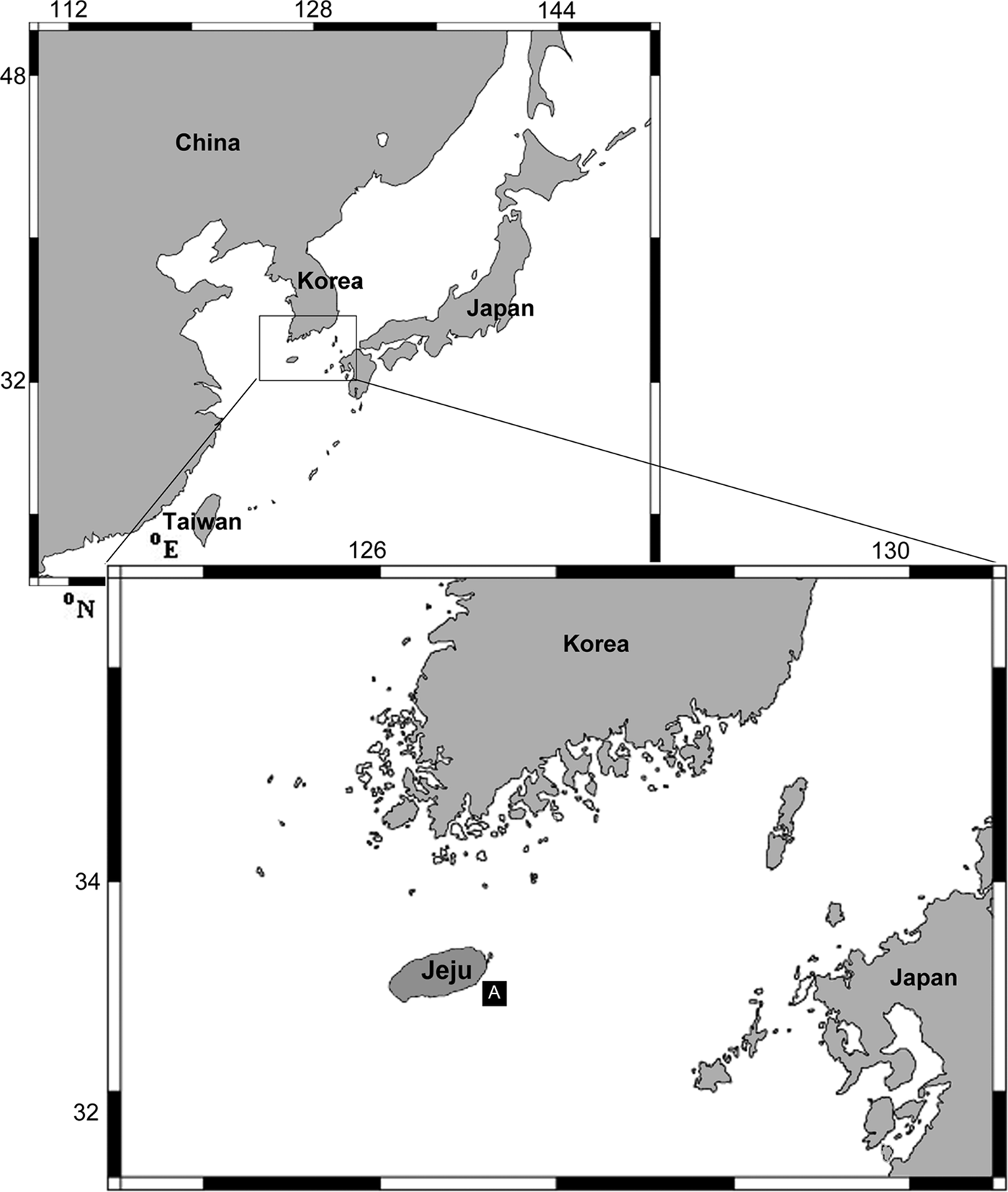
Zooplankton were collected from the East China Sea, south of Jeju Island, Korea on 28 November, 2011 (Figure 1). A conical net (mesh size 100 µm, mouth diameter 45 cm) was towed vertically from near the bottom to the surface at one station (total depth 172 m, temperature: 21.5–18.0°C, salinity: 34.1–34.5 psu). Vertical profiles of temperature and salinity were recorded using a conductivity/temperature/depth (CTD) profiler (Sea-bird Electronics, Inc. Bellevue, WA, USA) at the station. After collection, samples were preserved immediately in 4% neutralized formalin/seawater solution buffered with borax. Farranula specimens were sorted out from the zooplankton samples under a compound microscope. Each specimen was dissected under a dissecting microscope (Nikon, JP/E200) in CMC-10 aqueous mounting medium (Masters Company Inc., Wood Dale, IL, USA), mounted on slides and sealed with high-quality nail varnish. Drawings were done using a stereo microscope (Nikon AFX-II) equipped with a drawing tube. Scale bars are given in µm. Total body length and the ratio of prosome to urosome (including caudal rami) were measured along the lateral aspect, where telescoping of somite is not considered. Zoogeographical distributions of the species of Farranula were determined from the website of Razouls et al. (http://copepodes.obs-banyuls.fr). The descriptive terminology follows Huys & Boxshall (Reference Huys and Boxshall1991). Abbreviations used in the text and figures are as follows: ae, aesthetasc; CR, caudal rami; P1–P6, first to sixth thoracopods; exp, exopod; enp, endopod; exp(enp)-1(-2, -3) is used to denote the proximal (middle, distal) segment of a ramus. All type specimens were deposited at the National Institute of Biological Resources (NIBR), Incheon, Korea and Marine Biodiversity Institute, Seocheon, Korea (MABIK).
Location of sampling station A, off south-east coast of Jeju Island, Korea.

SYSTEMATICS
Order CYCLOPOIDA Burmeister, 1835
Family CORYCAEIDAE Dana, 1852
Genus Farranula Wilson, Reference Wilson1932
Farranula orbisa sp. nov.
(Figures 2–5)
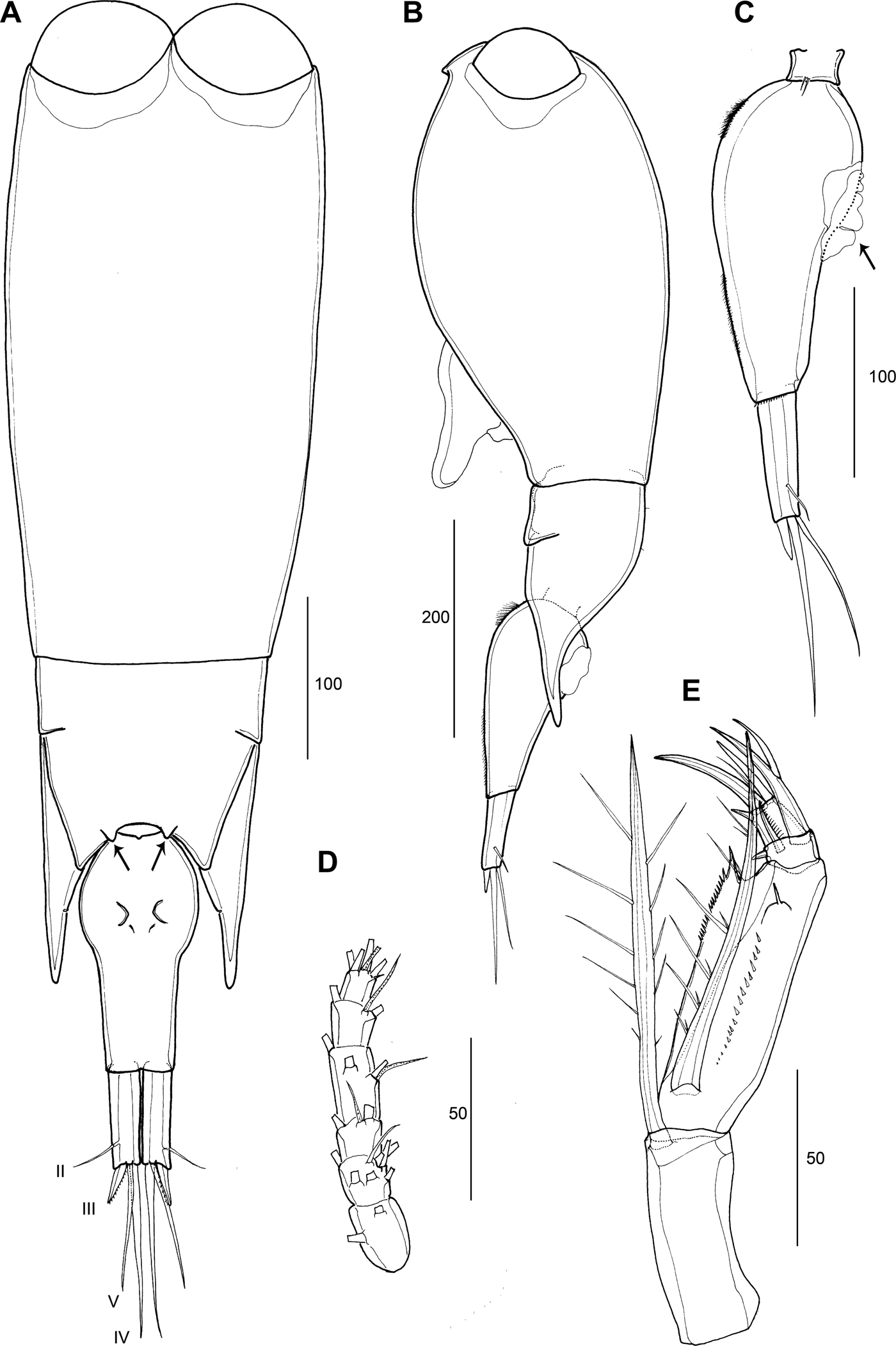
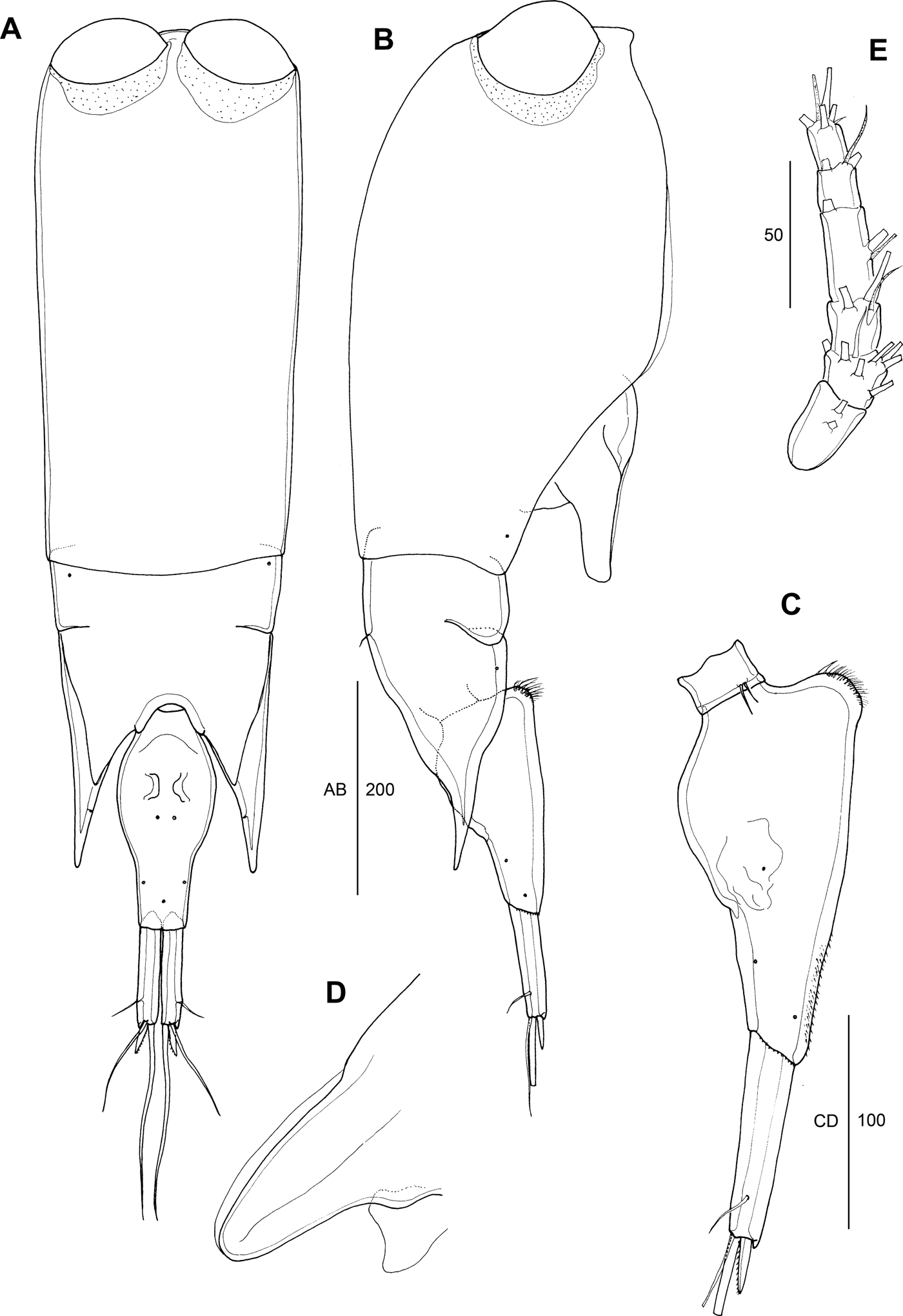
Farranula orbisa sp. nov., adult female (holotype): (A) habitus, dorsal view; (B) habitus, lateral view; (C) urosome, lateral view, arrow indicating ventral ornamentation on second urosomal somite; (D) antennule; (E) antenna, ventral view.
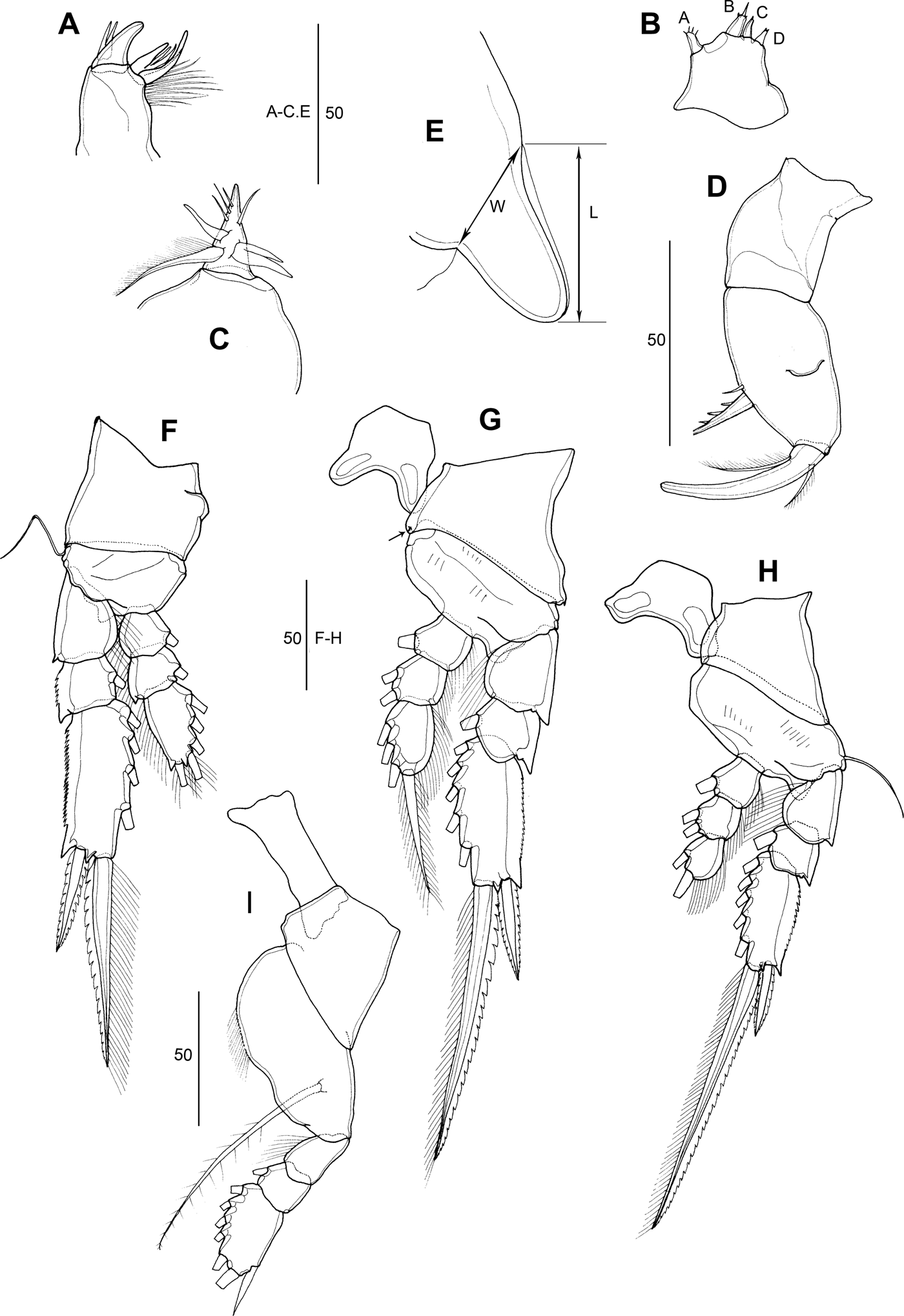
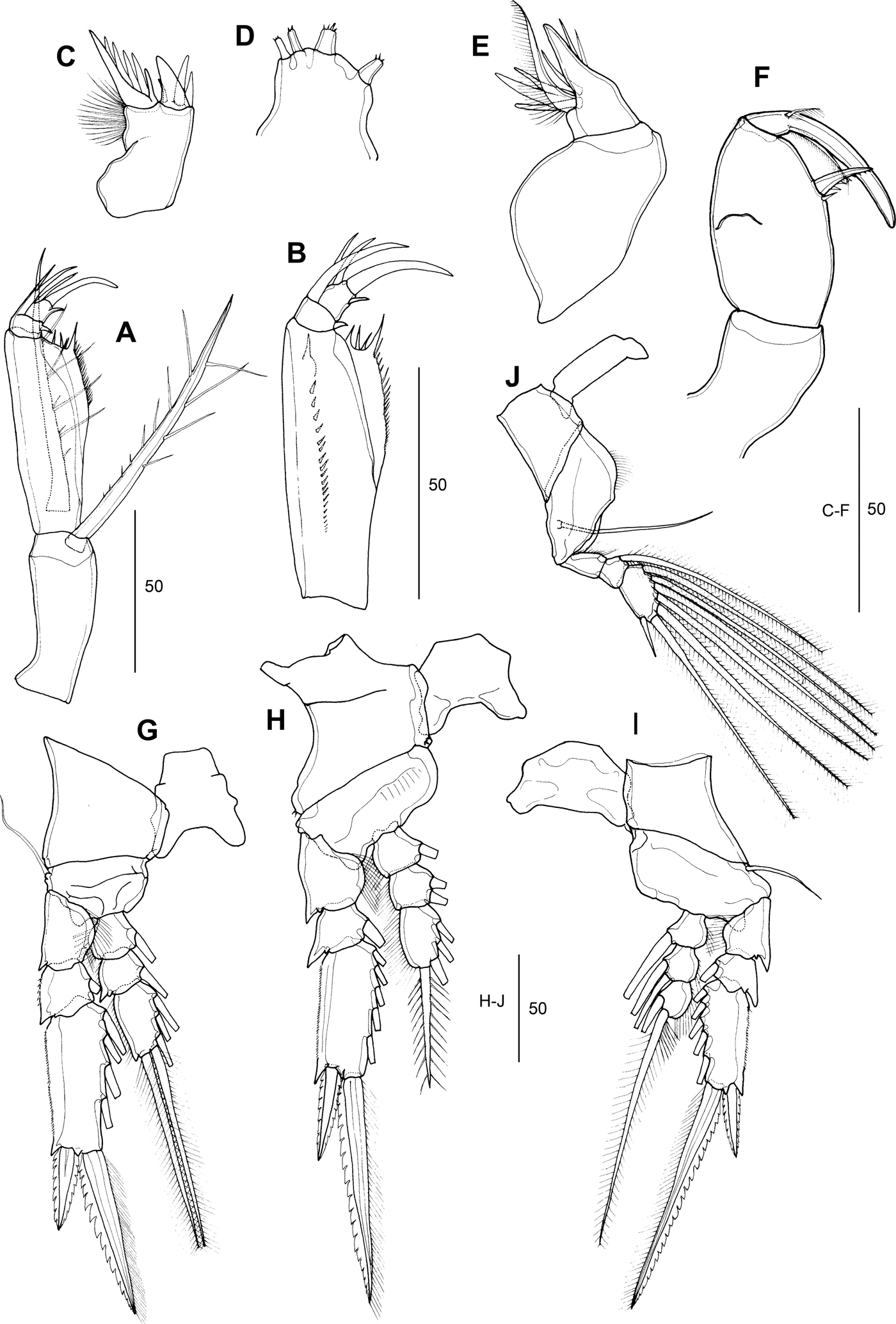
Farranula orbisa sp. nov., adult female (holotype): (A) mandible, dorsal view; (B) maxillule, individual elements designated using uppercase letters; (C) maxilla, lateral view; (D) maxilliped; (E) ventral cephalothoracic process; (F) P1; (G) P2, arrow indicating vestigial coxal seta; (H) P3; (I) P4.
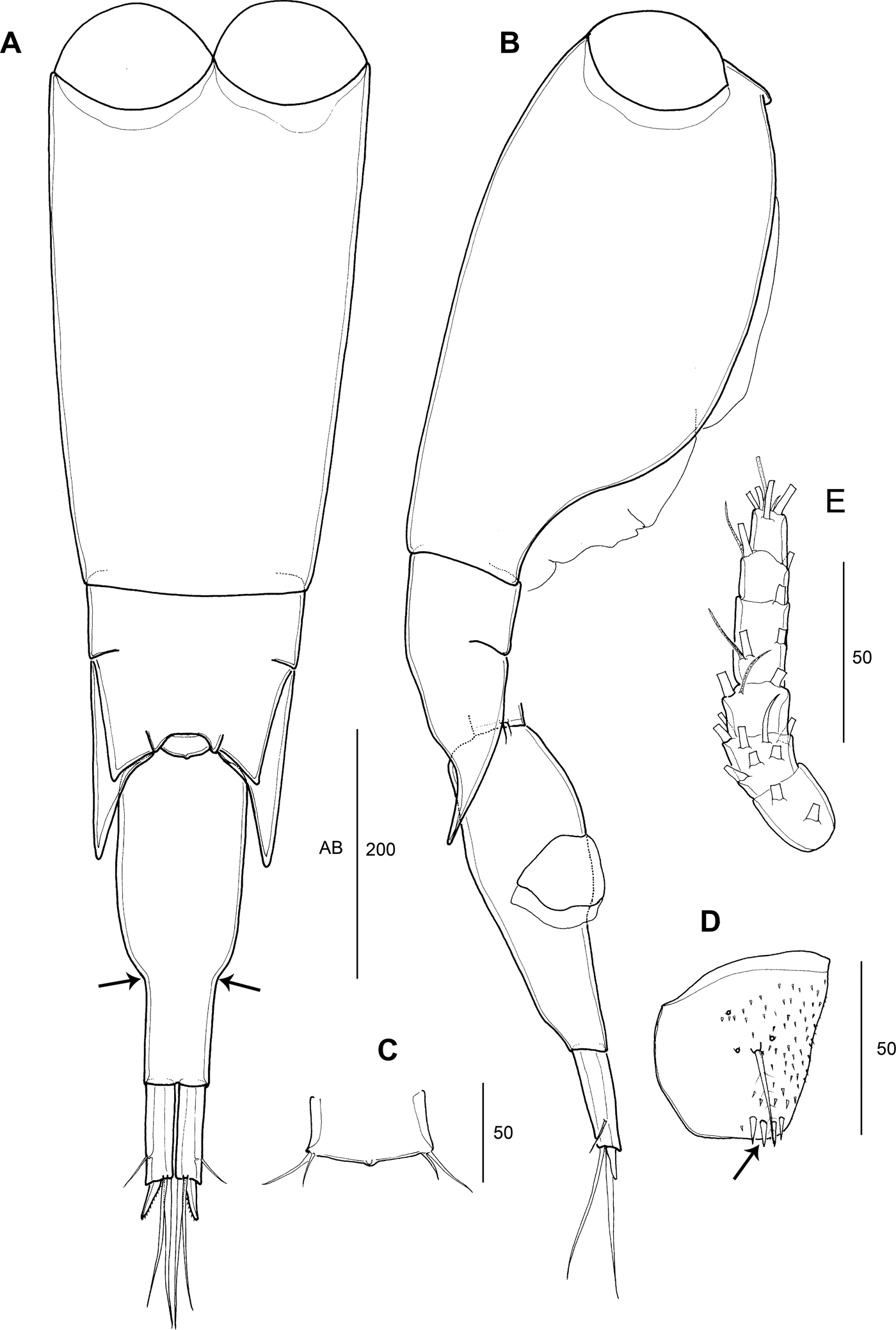
Farranula orbisa sp. nov., adult male (paratype): (A) habitus, dorsal view; (B) habitus, lateral view; (C) P5; (D) P6, left side; (E) antennule.
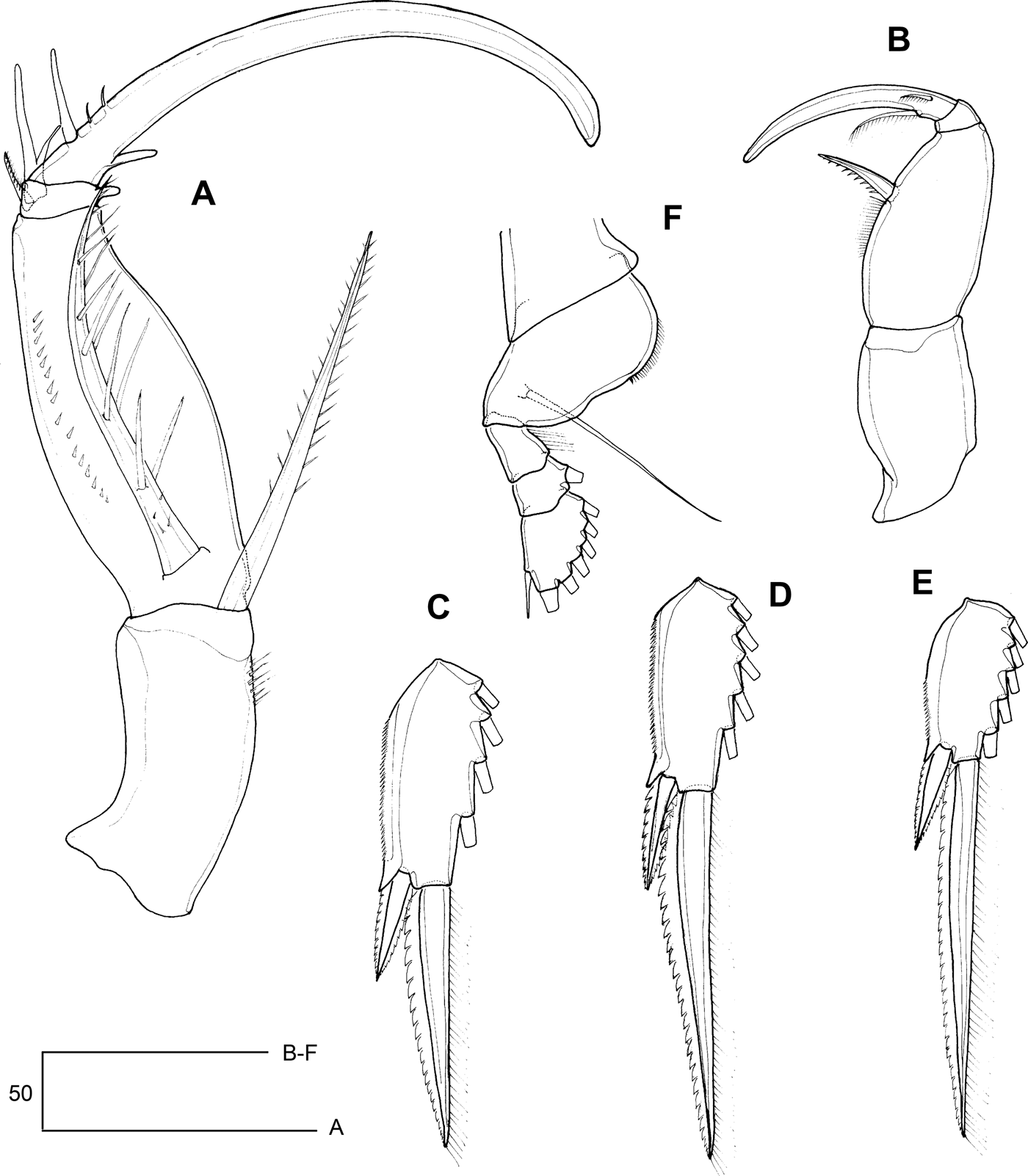
Farranula orbisa sp. nov., adult male (paratype): (A) antenna, ventral view; (B) maxilliped; (C) P1, exp-3; (D) P2, exp-3; (E) P3, exp-3; (F) P4, basis and exopod.
Corycaeus (Corycella) curtus: M. Dahl, Reference Dahl1912, Taf. XIV, figures 26–28, Taf. XV, figures 19, 20, 28.
Corycaeus (Corycella) rostratus: Chen et al., Reference Chen, Zhang and Zhu1974, Pl.22, figures 1–6.
TYPE MATERIALS
Holotype: adult female mounted on one glass slide, NIBRIV0000267308; coll. D.-H. Cho, off Jeju Island (126°56.36′N 33°16.40′E; water depth: 170 m) on 28 November 2011.
Paratypes: three adult females mounted on four glass slides, NIBRIV0000267309 and two adult males dissected and mounted on three glass slides, NIBRIV0000267310; coll. D.-H. Cho, off Jeju Island (126°56.36′N 33°16.40′E; water depth: 170 m) on 28 November 2011. Two adult females and two adult males undissected and preserved in 70% ethanol in one vial, MABIKCR00178444; coll. D.-H. Cho, off Jeju Island (126°56.36′N 33°16.40′E; water depth: 170 m) on 28 November 2011.
DIAGNOSIS
Female : body cylindrical, tapering posteriorly. Total body length in lateral view 719 µm (average 722 ± 15.6 µm, N = 4), measured from anterior margin of prosome to posterior margin of caudal rami. Urosome distinctly narrower than prosome.
Prosome two-segmented (Figure 2A, B), frontal part rounded, with two large separate cuticular lenses, about 2.4 times as long as urosome including CR, 3.4 times as long as urosome excluding CR, cephalosome completely fused with first pedigerous somite, with ventral process, 1.4 times longer than width at base (marked in Figure 3E), second to fourth pedigerous somites forming single compound somite with suture line between second and third pedigerous somites, third pedigerous somite dorsally covering fourth pedigerous somite, forming inverted triangular shape, fourth pedigerous somite with extended and pointed posterolateral corners, reaching to two-thirds distance of second urosomal somite, with small protrusions on inner distal margin (arrowed in Figure 2A).
Urosome (Figure 2A–C) two-segmented: first urosomal somite bearing P5 ventrolaterally (Figure 2C), genital double-somite and anal somite combined as second urosomal somite. Proportional lengths (%) of urosomites and CR are 7.1: 66: 26.9, second urosomal somite (Figure 2A–C) distinctly rounded from anterior to mid-region, about twice longer than maximum width at anterior third region, anteroventral margin with patch of minute spinules (indicated by arrow in Figure 2C), just rounded without round hump-like projection in lateral view, posteroventral and lateral margin fringed with minute spinules, posterior margin finely serrated ventrolaterally (Figure 2C), dorsoposterior surface almost bearing mucilaginous trace of spermatophore around genital opening (arrowed in Figure 2C); genital area located dorsolaterally, paired genital apertures approximately one-third distance from anterior margin of dorsal surface, hidden behind opercula.
Caudol rami (Figure 2A–C) cylindrical, about three-quarters of second urosomal somite, 3.3 times longer than wide at base, each ramus armed with four setae: slender anterolateral seta II, outer posterolateral seta III short, robust, spiniform, and serrated along medial margin, inner terminal seta IV longest (Figure 2C), and dorsal seta V 2.3 longer than outer seta III and 1.3 times shorter than seta IV.
Antennule (Figure 2D) short, 6-segmented. Armature formula 1-[2], 2-[8], 3-[2 + ae], 4-[3 + a], 5-[2 + ae], 6-[5 + (1 + ae)]. Proportional lengths (%) of segments measured along posterior non-setiferous margin 22.6:14.5: 11.3:25.8:14.5:11.3.
Antenna four-segmented (Figure 2E), with coxa and basis fused and three endopodal segments: coxobasis 2.5 times longer than wide, with strong bipinnate seta at inner distal margin; endopod three-segmented: unequal in length, first endopodal segment robust and longest among endopodal segments, about 2.9 times as long as wide at base, bearing bipinnate seta on inner proximal margin, much shorter than coxobasal seta, inner distal margin roughly serrated from two-thirds of margin, with long, curved spinous process at three-quarters of serrated part, outer lateral margin ornamented row of denticles, naked seta on distolateral margin; second endopodal segment shortest, bearing three elements: curved stout spine arising from outer distal margin, with lateral branch; slender, pinnate spine located near its base and reaching almost middle of distal spine; short curved spine arising from inner margin, outer distal spine 1.8 times longer than its branched spine; third endopodal segment cylindrical, as long as wide and armed with three elements: one stout terminal spine, short spine arising from inner margin, strong seta on the outer margin, and terminal spine 1.2 times shorter than outer spine on second endopodal segment. Length ratio of terminal spine to outer spine on third exopodal segment 1.5:1.
Mandible (Figure 3A) with two elements on gnathobase: one spine and one blade; spine broad and robust, with two naked slender setae on medial area and one basal seta; blade forming spinous processes, surrounded by patch of spinules around base.
Maxillule (Figure 3B) reduced, praecoxal arthrite bearing four articulated spinous elements: innermost one A at some distance from other elements and distal margin serrated, almost equal in length of element B, element B stout, distal margin with spinous process, twice longer than element C, distal margin of element C serrated and element D shortest.
Maxilla (Figure 3C) two-segmented, allobasis shorter than syncoxa: syncoxa unarmed; allobasis produced distally into strong spine, with four naked setae proximally, inner margin bearing three spines of different lengths: medial one naked, ventral one split into two branches (arrowed in Figure 3C), and dorsal one longest, unipinnate innermost spine.
Maxilliped (Figure 3D) three-segmented: syncoxa unarmed; basis robust and expanded, with two elements along inner margin: proximal one short, located at base of distal one with two spinules along inner margin, located at two-thirds distance of inner margin, 3.3 times longer than proximal one, 2.3 times shorter than basis; endopodal segment drawn out into long curved claw, unornamented and almost equal to length of basis, accessory armature consisting of slender long, unipinnate seta on inner proximal margin, and short unipectinate spine laterally on outer proximal margin of claw.
Legs 1–3 (Figure 3F–H) comprising coxa, basis and three-segmented rami; intercoxal sclerite well developed; basis of P1 and P3 with naked outer seta and round process between insertions of endopod and exopod, and that of P2 with vestigial coxal seta (arrowed in Figure 3G); exopods distinctly longer than endopods.
Exopods of P1–P3: inner margin of proximal segments with long setules, first segments of P1–P3 without spine, and relative length ratio of terminal spine to distal outer spine of P1–P3 different: P1 smallest (1.9:1), in P2 2.8:1, and P3 largest (3.9:1), terminal spines longer than distal segments, in P1 1.3 times longer, in P2 about 1.8 times longer, and in P3 2.5 times longer.
Endopods of P1–P3: outer margin of segments with fringe of long setules, relative lengths of distal segments of P1–P3 different, relatively: P1 longest, and P3 shortest, each segment of P3 equal in length; outer margins of endopodal segments fringed with setules in P1–P3.
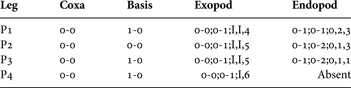
P4 (Figure 3I): with transversely extended, narrow intercoxal sclerite; coxa unarmed; basis with outer basal seta arising from posterior surface, fringed with row of setules along inner margin; exopod well developed, three-segmented, bearing spinules along inner margin of first segment, proportional length ratio of each segment 34.2:23.7:42.1, distal segment 1.3 times as long as terminal spine; endopod absent. Armature formula of P1–P4 as follows (Roman numerals indicate spines, Arabic numerals indicate setae):
P5 (Figure 2C) consisting of two unequal simple setae located ventrolaterally.
P6 (Figure 2A) represented by operculum closing off each genital aperture.
Male: total body length in lateral view 693 µm (average: 692.5 ± 11.5 µm, N = 4), measured from anterior margin of prosome to posterior margin of urosome. Urosome distinctly narrower than prosome (Figure 4A, B).
Prosome two-segmented, two large contiguous cuticular lenses very close to each other on frontal part: cephalosome fused with first pedigerous somite, second to fourth pedigerous somites fused into compound somite; prosomal somite about 1.6 times as long as urosome including CR, 2.1 times longer than urosome excluding CR (Figure 4A, B); suture line present between second and third pedigerous somites dorsolaterally; paired epimeral extensions of third pedigerous somite largely covering with fourth pedigerous somite, forming inverted triangle-shape on each side, fourth pedigerous somite with extended and pointed posterolateral corners, reaching to one-third of second urosomal somite (Figure 4A, B).
Second urosomal somite (Figure 4A, B): dorsal part of anterior margin more protruded, compared to ventral part, in lateral view, posterior part between sharply narrowing region (indicated by arrows in Figure 4A) and rear margin about 2.2 times shorter than rest of second urosomal somite and slightly longer than CR.
Caudal rami 3.4 times longer than wide at base (Figure 4A, B), about 3.5 times shorter than urosome. Armature of the rami similar to that of female. Caudal seta III 3.2 times shorter seta V and seta IV 1.1 times longer than seta V.
Antennule (Figure 4E) short, 6-segmented. Armature formula as in female. Proportional lengths (%) 21.7:11.6:14.5:24.7:11.6:15.9.
Antenna (Figure 5A) sexually dimorphic, four-segmented, with coxa and basis fused and endopod three-segmented; coxobasis 2.6 times longer than wide at base, with long bipinnate strong seta on inner distal margin, almost equal to length of first endopodal segment, fringed with patch of spinules along inner margin; first endopodal segment about 3.6 times as long as width at base, bearing bipinnate seta on ventral proximal margin, almost same as long as coxobasal seta, outer lateral margin ornamented with row of denticles; second endopodal segment short, bearing three elements: stout spine arising from outer distal margin, with lateral branch, short plumose spine located near base, and short blunt spine arising from inner distal margin; third endopodal segment drawn out into long claw, armed with four elements: short spine arising from proximal inner margin, long naked seta and two slender, naked setae inserted on outer proximal margin.
Maxilliped (Figure 5B) sexually dimorphic, four-segmented, comprising syncoxa, basis and two-segmented subchela; syncoxa without surface ornamentation, unarmed; basis robust, oval-shaped, particularly swollen in proximal half, inner margin with spiniform seta ornamented with several tough spinules along inner margin, with row of fine spinules between proximal third and seta, 2.3 times longer than basal seta. Subchela comprising unarmed proximal and distal endopodal segments, drawn out into long curved claw, with accessory armature consisted of minute, unipinnate spine on outer proximal margin and long unipinnate spine delimited basally to inner proximal corner of claw.
Legs 1–3 (Figure 5C–E) segmentation and armature similar to those of female, except relative length ratios of terminal spine to outer distal spine (in P1 2.5:1, in P2 3.4:1 and in P3 4.6:1) different from those of female (in P1 1.9:1, in P2 2.8:1 and in P3 3.9:1).
P4 (Figure 5F) similar to that of female, except relative length of distal segment to terminal spine longer (1.6 times) than that of female (1.3 times).
P5 (Figure 4B, C) similar to that of female.
P6 (Figure 4B, D) represented by genital flap closing off each genital aperture, armed with long seta, surface ornamented with unique pattern of denticles and three small secretory pores: inner part ornamented with small denticles, and distal margin with comparatively large denticles (indicated by arrow in Figure 4D).
ETYMOLOGY
The specific name is derived from the Latin word orbis, meaning round shape, and refers to the conspicuous round shape of dorso- and latero-anterior margin of second urosomal somite in female.
REMARKS
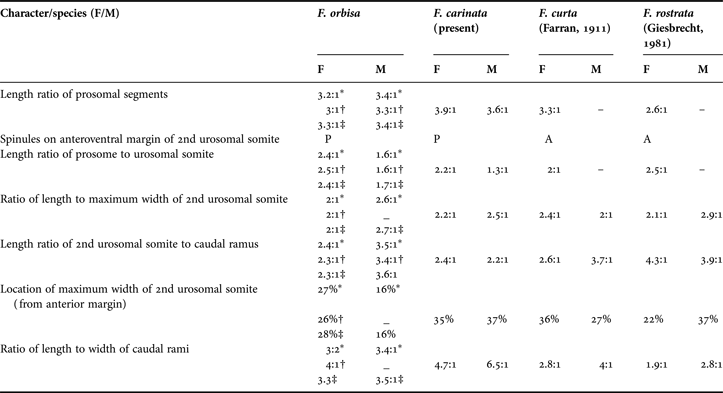
Farranula orbisa sp. nov. from off Jeju Island, Korea represents the typical morphological characteristics of the genus Farranula by the ventral cephalothoracic process of the female, the both sexes P2 with reduced inner coxal seta and P4 lacking an endopod, and proximal exopodal spine of both sexes (Farran, Reference Farran1911; Wi & Soh, Reference Wi and Soh2013). The morphological combination of F. orbisa, such as distinct round shape between anterior margin and mid-region of the second urosomal somite in females and the fourth pedigerous somite with sharply extended outer distal margin (in lateral view) and the anterior margin of the second urosomal somite forming a dorsal protrusion in males, are markedly differentiated from other Farranula species. Hitherto, due to identification difficulties caused by very small size and similar shape of body and each appendage, F. orbisa was erroneously regarded as F. curta (as Corycaeus curtus) by M. Dahl (Reference Dahl1912) and as F. rostrata (as Corycaeus (Corycella) rostratus) by Chen et al. (Reference Chen, Zhang and Zhu1974). In order to verify morphological differences among four Farranula (F. orbisa, F. curta, F. rostata and F. carinata) species, which have been difficult to identify due to similar body shape, a comprehensive comparison of their morphological characters is given in Table 1, which shows F. orbisa to be a new species differentiated from the remainder by the following points: in both sexes the adjacent eyes on the frontal margin of the prosome, maximum width of second urosomal somite located relatively upward and, in female, second urosomal somite bearing patch of spinules on the anterovental margin, relatively short CR, and the proportions of body segments.
Comparison of respective proportion for each segment and width among four species of Farranula (F. orbisa, F. carinata, F. curta (Farran, Reference Farran1911) and F. rostrata).
F, female; M, male; *, present study; †, M. Dahl (Reference Dahl1912); ‡, Chen et al. (Reference Chen, Zhang and Zhu1974).
Farranula carinata (Giesbrecht, Reference Giesbrecht1891)
(Figures 6–8)
Farranula carinata (Giesbrecht, Reference Giesbrecht1891), adult female: (A) habitus, dorsal view; (B) habitus, lateral view; (C) urosome, lateral view; (D) ventral cephalothoracic process; (E) antennule.
Farranula carinata (Giesbrecht, Reference Giesbrecht1891), adult female: (A) antenna, dorsal view; (B) antenna, endopod, ventral view; (C) mandible, dorsal view; (D) maxillule; (E) maxilla, dorsal view; (F) maxilliped; (G) P1; (H) P2; (I) P3; (J) P4.
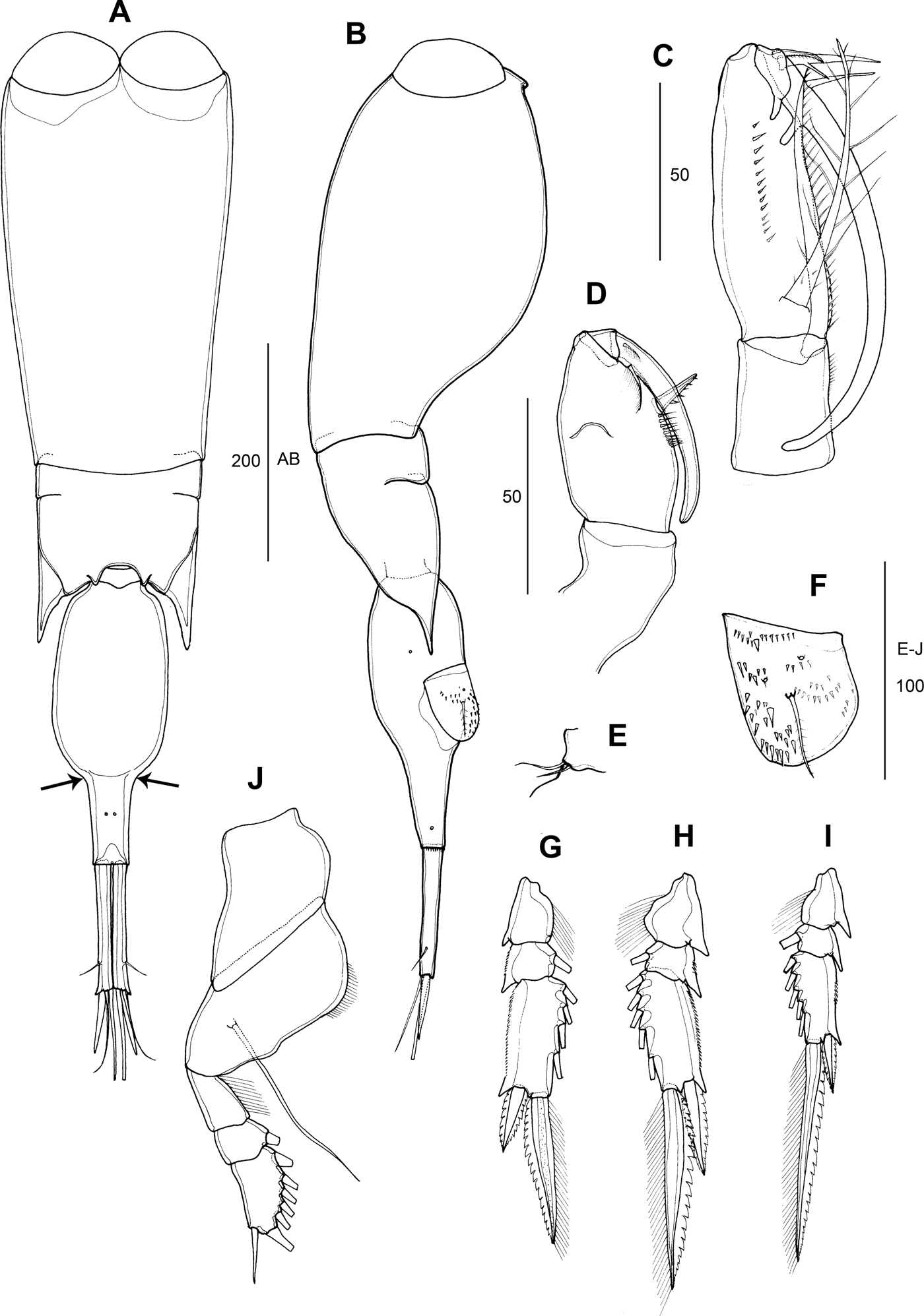
Farranula carinata (Giesbrecht, Reference Giesbrecht1891), adult male: (A) habitus, dorsal view; (B) habitus, lateral view; (C) antenna, ventral view; (D) maxilliped; (E) P5; (F) P6, right side; (G) P1, exopod; (H) P2, exopod; (I) P3, exopod; (J) P4.
Corycaeus carinatus Giesbrecht, Reference Giesbrecht1891; Reference Giesbrecht1893 (‘1892’), p. 661, 675, 771, figures 20, 26.
Corycaeus (Corycella) carinatus: M. Dahl, Reference Dahl1912, p. 118, Taf. XV, figures 7, 8, 11–14, 21, 31–34; Tanaka, Reference Tanaka1960, p. 87, Pl. 38, figures 1–3; Chen et al., Reference Chen, Zhang and Zhu1974, p. 65, Pl. 22, figures 13–15; Zheng et al., Reference Zheng, Li, Li and Chen1982, p. 149, figure 95.
Farranula carinata: Motoda, Reference Motoda1963, p. 255, figure 28; Itoh, Reference Itoh, Chihara and Murano1997, p. 967, Pl. 219, figure 357; Boxshall & Halsey, Reference Boxshall and Halsey2004, pp. 492–493, figure 154E.
MATERIALS EXAMINED
Two adult females dissected and mounted on three glass slides, NIBRIV0000267311, two adult males dissected and mounted on three slides, NIBRIV0000267312; coll. D.-H. Cho, off Jeju Island (126°56.36′N 33°16.40′E; water depth: 170 m) on 28 November 2011, and two adult females and two adult males undissected, preserved in 70% ethanol in one vial, MABIKCR00178445, respectively.
Female: Body cylindrical, tapering posteriorly. Total body length in lateral view 945 µm (average: 922.5 ± 18.3 µm, N = 5), measured from anterior margin of prosome to posterior margin of caudal rami. Urosome distinctly narrower than prosome (Figure 6A–C).
Prosome length about 2.2 times longer than urosome including caudal rami, 3.1 times longer than urosome, excluding caudal rami; first prosomal somite with ventral process, about 1.4 times longer than width at base (Figure 6D), second prosomal somite without dorsoposterior projection on third pedigerous somite in lateral view, with extended and pointed posterolateral corners reaching to three-quarters distance of second urosomal somite and small protrusions on inner distal part in dorsal view. Proportional lengths (%) of urosomites and caudal rami are 7.8:56.7:35.5. Second urosomal somite (Figure 6A–C) rounded at two-thirds distance from anterior margin in dorsal view and forming irregular dorsal margin in lateral view, and the remainder slightly narrowing, 2.2 times longer than maximum width at anterior third, anteroventral margin protruded slightly upward, bearing patch of spinules, posteroventral and lateral margins fringed with minute spinules and denticles, posterior margin finely serrated ventrally (Figure 6C). Two secretory pores at just below genital apertures and three secretory pores at distal margin of second urosomal somite in dorsal view.
Caudal rami (Figure 6A–C) about 2.4 times shorter than second urosomal somite, 4.7 times longer than wide at base. Caudal setation similar to that of F. orbisa, outer seta III 3 times shorter than dorsal seta V and seta IV 1.9 times longer than seta V.
Antennule (Figure 6E) short, 6-segmented. Armature formula as in genus. Proportional lengths (%) of segments measured along posterior non-setiferous margin 24:9.3:14.7:26.7:12:13.3.
Antenna (Figure 7A, B) similar to that of F. orbisa, except first endopodal segment about 2.8 times longer than wide at base, length ratio of outer distal spine to its branched spine on second endopodal segment 3:1, and terminal spine and outer spine on third endopodal segment almost equal in length.
Mandible (Figure 7C) similar to those of F. orbisa.
Maxillule (Figure 7D) similar to that of F. orbisa, except lengths of each element almost equal.
Maxilla (Figure 7E) similar to those of F. orbisa.
Maxilliped (Figure 7F) similar to that of F. orbisa, but length of basis 1.6 times as long as wide at base and 3.3 times longer than distal seta, and distal seta with more spinules along inner margin (indicated by arrow in Figure 7F), as compared to that of F. orbisa.
Swimming legs 1–3 biramous (Figure 7G–I), with armature and ornamentation as in F. orbisa. Exopods of P1–P3: length ratios of terminal spines to distal spines different, in P1 1.9:1, in P2 2.8:1 and P3 largest (3.9:1), terminal spines longer than distal segments, in P1 1.3 times longer, in P2 about 1.8 times longer, and in P3 2.4 times longer. P4 (Figure 7J) similar to that of F. orbisa, except proportional lengths of endopodal segments 34.2:23.7:42.1 and distal segment 1.2 times longer than terminal spine. P5 (Figure 6C) similar to that of F. orbisa. P6 (Figure 6A) represented by operculum closing off each genital aperture.
Male: total body length in lateral view 880 µm (average: 863 ± 14.3 µm, N = 4), measured from anterior margin of prosome to posterior margin of CR. Urosome distinctly narrower than prosome (Figure 8A, B).
Prosome (Figure 8A, B) two-segmented: prosome 1.3 times longer than urosome including CR, 1.8 times longer than urosome excluding CR; pleural area extending to anterior third of urosome. Two large cuticular lenses located at very close to each other on frontal margin.
Second urosomal somite (Figure 8A, B) about 2.5 times as long as maximum width at one-third distance from anterior margin, posterior part between sharply narrowing region (indicated by arrows in Figure 8A) and rear margin 2.4 times shorter than rest of second urosomal somite and 1.5 times shorter than CR.
Caudal rami 6.5 times longer than wide at base (Figure 8A, B), about 2.2 times shorter as long as urosome. Armature of rami similar to that of female, except for length ratio of seta III to seta V much larger than that of female.
Antennule (not figured) similar to that of F. orbisa.
Antenna (Figure 8C) similar to that of F. orbisa, but coxobasis 2.2 times longer than wide and first endopodal segment about 3.5 times as long as width at base.
Maxilliped (Figure 8D) similar to that of F. orbisa, except length of basis to basal seta much longer than basal seta (3.8 times), as compared to that of F. orbisa (2.3 times longer).
Legs 1–3 (Figure 8G–I) similar to female in segmentation and armature, except proportional lengths of terminal spine to outer distal spine of P2 and P3 shorter (2.1:1 and 2.5:1) than those of female (2.8:1 and 3.9:1), respectively. P4 (Figure 8J) similar to that of female, except length ratio of distal segment to terminal spine (1.4:1) larger than that of female (1.2:1). P5 (Figure 8E) similar to that of female. P6 (Figure 8F) similar to that of F. orbisa. Surface ornamented with unique pattern of many denticles and two small secretory pores: inner part of surface covered with large irregular sized denticles.
REMARKS
Females of F. carinata redescribed from Korean waters are in agreement with Giesbrecht's original description (1893 [‘1892’]), Figures 20, 26], characterized by a combination of slender CR, and dorsal and lateral outline of second urosomal somite. The morphological combination such as the larger first prosomal somite, proportions of prosome to urosome, relatively longer CR, and the location of maximum width of second urosomal somite of both sexes distinctly differed from those of other Farranula species (Table 1). In addition, important morphological details, hitherto not being considered as identification keys in earlier literature, were compared to those of F. orbisa as follows: in females (1) the anterior margin of the second urosomal somite with conspicuous protrusion ventrally in lateral view; (2) in the CR, the length ratio of dorsal seta V to outer seta III is larger (3:1) (vs smaller 2.3:1); (3) in the antenna, the length ratio of outer distal spine to its branched spine on the second endopodal segment is much larger (3:1) (vs smaller, 1.8:1); (4) lengths of elements of maxillule almost equal, but different in F. orbisa; (5) in P1–P3, each proportional length of terminal spine to distal spine on the second exopodal segment differed from those of F. orbisa; in males; (6) the body length much longer (853 µm) (vs shorter, 692.5 µm); (7) in P4 exp-3, the length ratio of the segment to terminal spine was smaller (1.4:1) (vs longer, 1.6:1), and in both sexes, (8) in the maxilliped, length ratio of the basis to basal seta much larger (female 3.3:1, male 3.8:1) than that of F. orbisa (female 2.3:1, male 2.3:1).
DISCUSSION
To date, though seven species of Farranula have been recorded from diverse warm waters, identification difficulties coupled with insufficient knowledge and their small body size (<1 mm) and very close general morphology have led to frequent taxonomic confusion (Farran, Reference Farran1911; Wi & Soh, Reference Wi and Soh2013). Recently, Wi & Soh (Reference Wi and Soh2013) provided additional morphological characteristics for Farranula by the fuller descriptions of F. concinna (Dana, 1849) and F. gibbula (Giesbrecht, Reference Giesbrecht1891), such as P1 and P3 without coxal setae, P2 with a vestigial coxal seta and the basis of P4 fringed with spinules along the inner medial margin, and showed that details of the mouthparts and the legs and the ornamentation on the second urosomal somite to be important characteristics to identify the species of Farranula. On the other hand, Wi & Soh (Reference Wi and Soh2013) suggested that Chen's F. rostrata was identical to Dahl's F. curta rather than Giesbrecht's F. rostrata (1893 (‘1892’), as Corycaeus rostratus). However, we confirmed that both specimens described by Dahl (Reference Dahl1912) and Chen et al. (Reference Chen, Zhang and Zhu1974) are the same species to F. orbisa, characterized by the shape of the second urosomal somite in both sexes, the anterovental spinules of the second urosomal somite and the closely located eyes in the female, and the length-to-width ratio of CR in the male.
The original description of F. curta by Farran (Reference Farran1911, Pl. XI, figures 1–6, as Corycella curta) includes the female characterized by the second urosomal somite without ornamentation on the anteroventral margin, and the eyes located at some distance for both sexes and the simple figures of the male. Subsequently, M. Dahl (Reference Dahl1912) recorded F. curta (as Corycaeus (Corycella) curtus) from the Indian Ocean, but it differed distinctly from Farran's (Reference Farran1911) original description, in particular in morphological features such as the shape of the second urosomal somite and the distance between the eyes. Moreover, because the description of the male was limited to only the lateral habitus, reasonable comparison between both descriptions for males was impossible. Chen et al. (Reference Chen, Zhang and Zhu1974) also described four species of Farranula from the East China Sea, of which the female, described as F. rostrata, agreed with that of Dahl's F. curta. Definitely, the species differed from the original F. rostrata described by Giesbrecht (Reference Giesbrecht1893 (‘1892’)) in morphological characteristics, such as the shape of the second urosomal somite, the relative length of CR to urosome, the distance between the eyes, the proportions of the prosomal somites, and the length ratio of the caudal seta IV and V.
Females of F. carinata (Giesbrecht, Reference Giesbrecht1891) from the Korean waters agree well with the female of the original F. carinata (Giesbrecht, 1893(‘1892’), as Corycaeus carinatus) recorded from the Indo-Pacific Ocean by a combination of the following morphological characteristics: the proportional lengths of second urosomal somite to caudal rami, eyes located at a distance on the frontal part of prosome, the lateral margins of the second prosomal somite reaching over the half distance of the second urosomal somite, and the anteroventral protrusion of second urosomal somite. However, in the figures of Giesbrecht (Reference Giesbrecht1893 (‘1892’)), the mouthpart appendages and the male were not described. Later, M. Dahl (Reference Dahl1912) described just habitus and the urosome of both sexes of F. carinata (as Corycaeus (Corycella) carinatus, Taf. XV, figures 7, 21) from the Indian Ocean, but it somewhat differed from the Korean F. carinata in morphological characters: in female, the ratio of length to maximum width of the second urosomal somite is smaller (1.9:1) compared to that of Korean specimen (2.2:1) and the length to width ratio of CR is shorter (4.4:1) than in Korean F. carinata (4.7:1). Tanaka (Reference Tanaka1960) also described the female of the species (as Corycaeus (Corycella) carinatus) from the Indian Ocean, but it differed from the original F. carinata in some morphological features: the lateral corner of the last pedigerous somite is shorter, not reaching over the middle area of the second urosomal somite and the anterior part of the second urosomal somite is wider than the dorsomedial part. These characteristics are rather close to those of F. gracilis figured by M. Dahl (Reference Dahl1912, Taf. XV, figure 15). On the other hand, the female of F. carinata described by Chen et al. (Reference Chen, Zhang and Zhu1974, as Corycaeus (Corycella) carinatus) from the East China Sea showed relatively short urosome and long caudal rami, as compared to those of the Korean species, while the females of F. carinata described by Zheng et al. (Reference Zheng, Li, Li and Chen1982) and Itoh (Reference Itoh, Chihara and Murano1997) almost agreed with the Korean specimens. However, the specimens of Chen et al. (Reference Chen, Zhang and Zhu1974) show a relatively wider range of body lengths (770–920 µm), compared to specimens from the western Pacific, which may include the copepodid stage of F. carinata.
As we confirm through a morphological comparison between F. orbisa and F. carinata, morphological details such as the proportions of the antennule, the antenna, the mouthpart appendages, and the relative spine lengths of the legs (see remarks of F. carinata) can be given as an important identification key for species within Farranula as well as Corycaeus. And the results can help in reconfirming the previously recorded species of Farranula from different oceans as well, and will be used for global biodiversity estimates and ecological studies of species within Farranula in the future.
ACKNOWLEDGEMENT
We wish to thank Dr B.A.V. Maran (KIOST) for useful comments on the manuscript.
FINANCIAL SUPPORT
This study was supported by the National Institute of Biological Resources (NIBR), Korean project on the survey of Korean indigenous species and the National Marine Life Collection programme (project) sponsored by the Ministry of Land, Transport and Maritime Affairs, Korea (MABIK 2012-001-03). Also, this study was partly supported by the projects entitled ‘Assessment of the Impact of Climate Change on Marine Ecosystem in the south sea of Korea’ (PM56600) and ‘Long-term change of structure and function in marine ecosystems of Korea’, both funded by the Ministry of Land, Transport and Maritime Affairs, Korea.