

Introduction
Phosphorus (P) is an essential element for plant growth. Any export of agricultural products is related to mineral nutrient exports, including P, which should be replaced by equivalent imports of off-farm nutrients. About 80–90% of the global P demand derives from the food production (Smil, Reference Smil2000). Estimates show that at the current rate of extraction, global phosphate rock (PR) reserves will be exhausted within the next centuries (Smil, Reference Smil2000; Desmidt et al., Reference Desmidt, Ghyselbrecht, Zhang, Pinoy, Van der Bruggen, Verstraete and Meesschaert2015). Thus, future availability of the world's main P source is uncertain (Cordell et al., Reference Cordell, Drangert and White2009). Without these P inputs, it would be impossible to maintain food production at current global yields (Cordell, Reference Cordell2010). A growing global food demand is expected to further increase P fertilizer use in order to sustain food security. P from alternative sources such as food waste, human excreta and other recycled sources will be of major importance (Neset et al., Reference Neset, Cordell, Mohr, Van Riper and White2016). Therefore, improved P recycling has recently become a matter of increasing research efforts and public discussions (Schröder et al., Reference Schröder, Smit, Cordell and Rosemarin2011; van Dijk et al., Reference van Dijk, Lesschen and Oenema2016). In industrialized regions such as in Europe, the three most important and mainly available feedstock sources for P recycling are:
i) Urban organic household and park waste (UOW), accounting for 10–15% of the currently recycled P (RP) in Central and Northern European countries (Fricke and Bidlingmaier, Reference Fricke, Bidlingmaier and Aachen2003).
ii) Sewage sludge (SS) and SS-based residues, accounting for more than 50% of the potentially recyclable P (Fricke and Bidlingmaier, Reference Fricke, Bidlingmaier and Aachen2003; Antikainen et al., Reference Antikainen, Lemola, Nousiainen, Sokka, Esala, Huhtanen and Rekolainen2005; Ott and Rechtberger, Reference Ott and Rechtberger2012; van Dijk et al., Reference van Dijk, Lesschen and Oenema2016; Zoboli et al., Reference Zoboli, Zessner and Rechberger2016).
iii) Slaughterhouse wastes, such as bone meal and meat meal, as well as a combination of both, which are by-products of the rendering industry, made from animal processing. The total P potential in the European Union (EU) from the rendering industry ranges between 110 000 and 128 000 mg per year (Dobbelaere, Reference Dobbelaere2013; van Dijk et al., Reference van Dijk, Lesschen and Oenema2016).
The choice of the P recycling treatment affects three main agronomic and environmental aspects, such as the (i) processes’ direct emissions of atmospheric greenhouse gases (GHGs), (ii) the consumption of non-renewable resources and (iii) the flows of organic matter (OM) and other plant nutrients. For example, P recovery from SS by thermal or chemical processes requires considerable inputs of energy (e.g., for dewatering and drying the solid phase, production and transport of chemicals, drying of precipitates, pressurization, etc.), and/or of chemicals (e.g., acids and bases in order to manipulate pH; Ewert et al., Reference Ewert, Hermanussen, Kabbe, Mêlè, Niewersch, Paillard, Stössel and Wagenbach2015). The selection of a treatment process, such as composting versus anaerobic digestion, further influences the characteristics of the final product, the energy balance and the emissions of GHGs (Funda et al., Reference Funda, Kern, Raussen, Bergs and Hermann2009; Lampert et al., Reference Lampert, Tesar and Thaler2011; Battini et al., Reference Battini, Agostini, Boulamanti, Giuntoli and Amaducci2014). For instance, during composting, the energy contained in the treated OM, as well as 43–62% of the nitrogen (N), is lost unproductively (Eklind and Kirchmann, Reference Eklind and Kirchmann2000; Svensson et al., Reference Svensson, Odlare and Pell2004). In contrast, during anaerobic digestion, most of the energy contained in the OM is transformed into biogas. However, the remaining digestate usually has a high water content, which makes it expensive to handle and spread in the field. Therefore, the consequences of any treatment approach should be taken into consideration in a holistic approach.
In a review of the available literature, we did not find a comprehensive overview of potential environmental implications of different treatment options for recycling of different recyclable P containing off-farm residues in order to obtain a fertilizer product suited for field application. The available studies, e.g., Linderholm et al. (Reference Linderholm, Tillman and Mattsson2012); Kalmykova et al. (Reference Kalmykova, Palme, Yu and Karlfeldt Fedje2015); Chiew et al. (Reference Chiew, Spångberg, Baky, Hansson and Jönsson2015) and Sørensen et al. (Reference Sørensen, Dall and Habib2015) addressed single technologies for stabilized SS or UOWs and compared the effects of single treatments such as incineration versus direct application.
The focus of this study is to explore and compare the environmental performance of a broader range of different treatment options for stabilized SS, slaughterhouse wastes, UOWs as well as biomass ashes, using RP and triple superphosphate (TSP) as standards. We applied life cycle assessments (LCAs) with a comparable set of system boundaries from the supply of inputs to fertilization for all treatment options and for each of the addressed feedstocks in order to identify the approaches with less environmental impacts. The following hypotheses were tested:
1) Simple technological approaches of P recycling have low negative environmental impacts due to the low inputs of resources. This means that any additional treatment step (e.g., drying, solubilization, precipitation) of the addressed organic wastes will increase the overall environmental impact and resource depletion.
2) The overall environmental impact is heavily influenced by added values during the treatment or after field application, e.g., energy gains, N as additional plant nutrient or a long-term soil C-sequestration.
3) A favorable combination of added values and low treatment impacts results in RP fertilizers (RPFs) with lower impacts in all observed categories compared to those of the conventional references (PR and water-soluble P fertilizers such as TSP).
4) Specific treatments which result in RPFs with a higher P concentration in the final product (e.g., struvite or ashes), have a preferable effect for long distance transport compared to the untreated material.
Material and methods
Feedstocks and treatments
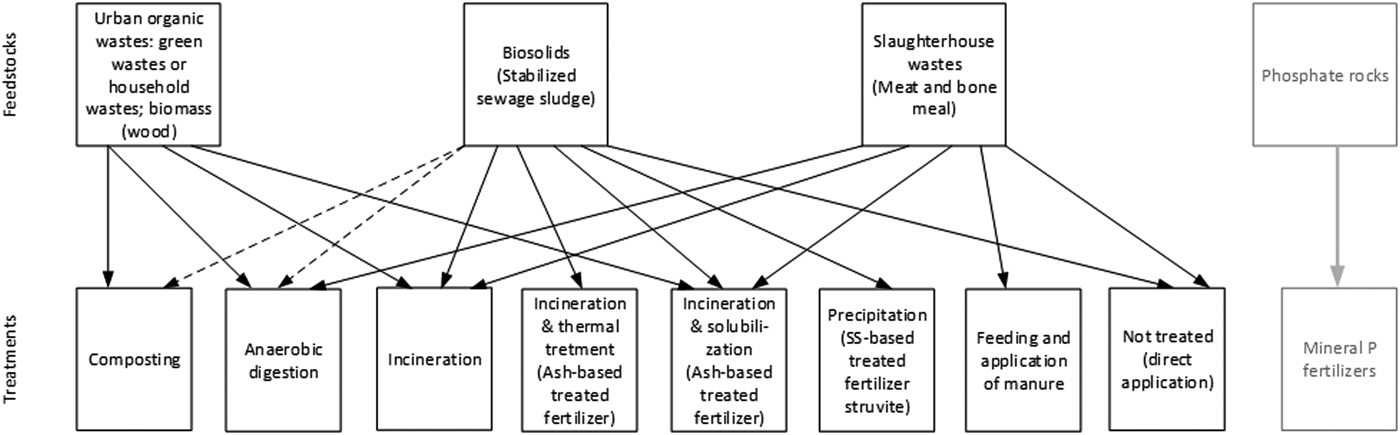
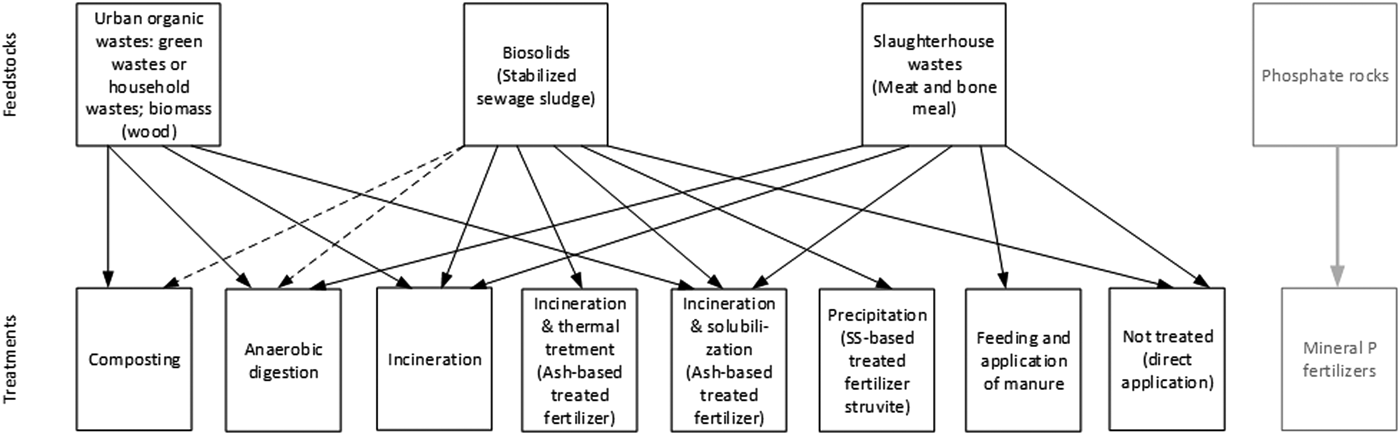
The present LCA study addresses the potential environmental impacts of the following treatment options for the main potential P recycling sources described above and biomass ashes (see also Fig. 1 and Table 1).
i) For collected UOWs from source separated collection in urban areas: composting and anaerobic digestion. The composting approach differentiates between a ‘standard composting technique’ for UOWs (UOW-Comp) and a ‘low emission technique’ by partly encased composting with specific semi-permeable membranes (UOW-Comp-low). The assessment did not include incineration as treatment option, as only a small share of UOWs is incinerated in the EU (Egle et al., Reference Egle, Zoboli, Thaler, Rechberger and Zessner2014).
Fig. 1.P fertilizers from four feedstocks. Arrows with solid black lines show methods assessed by present study, while dashed arrows show further possible treatment methods which were not evaluated. Black boxes and black names show renewable P sources, gray colors the conventional reference of mineral P fertilizers based on mined phosphate rock.
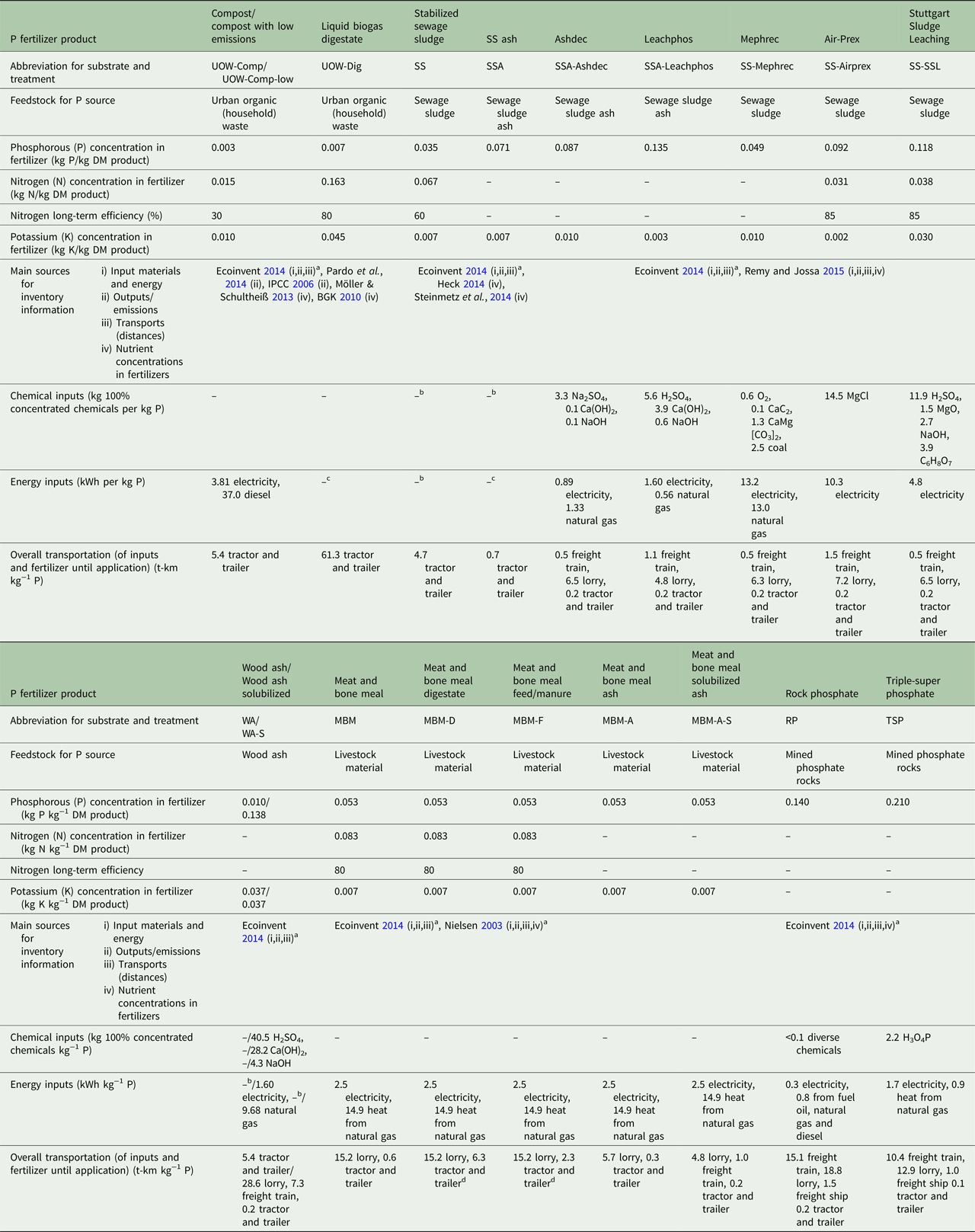
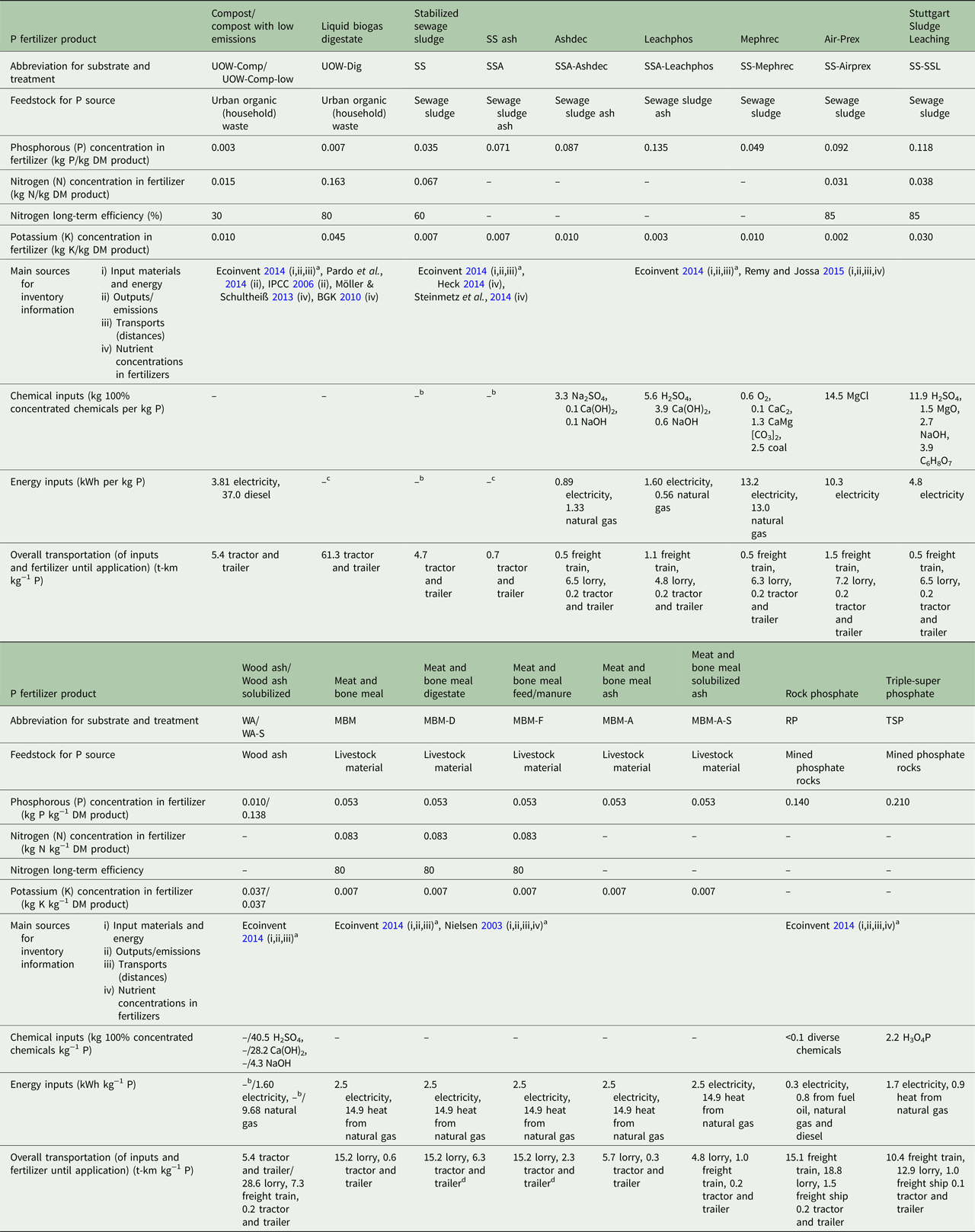
 Table 1.
Data on dry matter (DM) contents, nutrient contents (P, N, K) as well as inventory data for the production of the specific P fertilizers.
a Including own calculations (for instance for transport or partially for energy use) based on Ecoinvent (2014) data sets.
b Potential inputs are accounted for the previous product‘s waste disposal phase, and not to the P fertilizer.
c Net energy gain.
d Transports for field applications account for the characteristics of the final material (mixed digestate for MBM-D, mixed slurry for MBM-F).
ii) For biomass ashes, such as wood ash (WA): direct field application as standard, and field application after chemical solubilization to increase the plant P availability as optional alternative.
iii) For SS: direct field application of biosolids (stabilized SS) as standard disposal approach, versus the production and field application of RPFs obtained by new approaches of post-treatment of SS as alternatives. The alternatives are either obtained by application of chemical precipitation methods, i.e., the two struvite production approaches Airprex® (SS-Airprex) and Stuttgart Sludge Leaching treatment (SS-SSL), by a metallurgical treatment (SS-Mephrec) or by thermal treatments (different kinds of ashes). By analyzing the latter, we compared the environmental impacts related to the direct use of the SS ash (SSA) after incineration with RPFs obtained after a subsequent chemical solubilization of P in order to increase plant P availability. This included the approaches ASH DEC® (Rhenania process; SSA-ASH DEC) designed for production of calcined phosphates by supplementation of Na2CO3, as well as LeachPhos© (SSA-LeachPhos), a chemical P solubilization approach with acids and subsequent precipitation as struvite.
iv) For hygienized and dried slaughterhouse wastes: direct field application of the dried meat and bone meal (MBM), or anaerobic digestion prior to field spreading (MBM-D). A third assessed option includes the potential effect of feeding MBM before using the livestock excreta as fertilizer for manuring soils (MBM-F). We assessed the environmental impacts of the P content of 101.4 kg fed MBM (3.33 kg P), of which 1 kg P ended up in the excreta (default 30% of the fed MBM-P) and we excluded the part that was converted to livestock products such as eggs, milk or meat via mass allocation. A potential added value of feeding MBM is a partial solubilization of non-reactive apatitic-P in the digestive tract to plant available P forms ending up in the manures. The latter was assumed to substitute extracted soybean meal from North and South America, which is the main protein feed used for Europe's livestock (FAO, 2004). Further alternatives calculated in present LCA are incineration of dried MBM, and the use of its ash either as untreated ash (MBM-A), or after subsequent chemical P solubilization to increase plant P availability (MBM-A-S);
v) Mined P resources are included as references of P fertilization. Their addressed treatment options were PR (imported from Morocco) with direct field application and the solubilization of PR and production of TSP with increased plant P availability. For TSP, we assumed PR to be mined in Morocco and production to be partly in Morocco as well as in the EU.
Impact categories
Five LCA impact categories were calculated for each of the P fertilizers and referred to the functional unit of 1 kg P: (i) abiotic resources depletion potential [ADP; calculated in kg antimony equivalents (Sb-eq)], (ii) fossil primary energy demand [FED; calculated in mega joule (MJ)], (iii) global warming potential [GWP, calculated as CO2-equivalents (CO2-eq) with a time horizon of 100 yr], (iv) acidification potential [AP; calculated as sulfur dioxide equivalents (SO2-eq)] and (v) the eutrophication potential [EP; calculated as phosphate equivalents].
ADP considers the use of resources from the lithosphere for production of P fertilizers, including—where applicable—RP and chemicals. Fossil energy use for inputs, processing, transports and field application (surface broadcast) is considered for the FED. The GWP takes the effect of direct emissions relevant for climate change, primarily methane (CH4), nitrous oxide (N2O) and carbon dioxide (CO2), and indirect emissions (e.g., N2O emissions after NH4+-deposition in neighboring ecosystems) into account (IPCC 2006). In the present study, the GWP also includes the long-term CO2 sequestration of organic C as soil humus after a RPF application (e.g., after application of biosolids, composts or digestates). The AP analyses acidifying substances (SO2, NH3 and NOX). The EP covers potential losses of phosphate (PO4) and N (as NO3, NH3 and NOX) from fertilizer production with their potential negative impacts on aquatic and terrestrial ecosystems. All mineral-based and RPFs were assessed along their life cycle until field application, without considering differences of the fertilizers’ plant P availability. Environmental impacts were related to the functional unit 1 kg P. We used the software SimaPro (v 8.3; Pré Consultants, 2016) and data sets from Ecoinvent (2014; including own calculations for specific parameters) in order to combine inventory data (see Table 1) with characterization factors from the method ‘CML’ (updated version of Guinée et al., Reference Guinée, Gorrée, Heijungs, Huppes, Kleijn, de Koning, van Oers, Wegener Sleeswijk, Suh, Udo de Haes, de Bruijn, van Duin and Huijbregts2002).
System boundaries and allocation
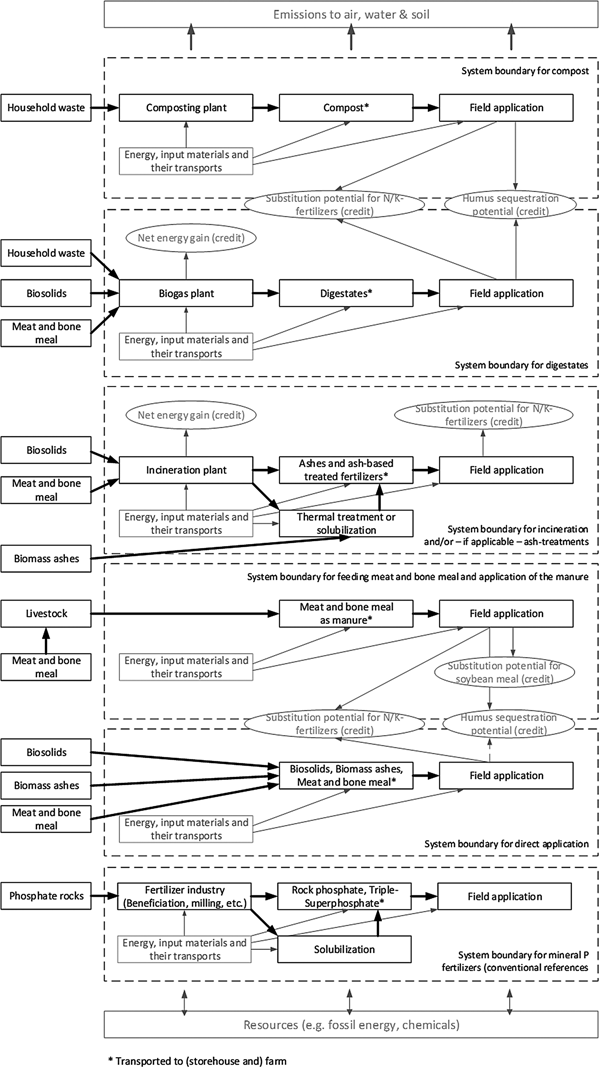
The system boundaries start where an interchangeability of treatments is possible and a change of the state of the art seems to be feasible. For instance, the alternatives composting and anaerobic digestion are available for UOW's P recycling. Consequently, for UOW, as well as for other feedstocks, system boundaries include the phases of processing and distribution of RPFs. This covers transport after collection and field spreading of the fertilizer, acquisition of input materials, e.g., chemicals for processing, the demand on energy carriers, etc. (Fig. 2).
Infrastructural processes, i.e., capital goods such as buildings and roads for transports were excluded from the main calculations, but they are considered in the sensitivity analysis.
The regulatory compliance for certain RPFs affected our definition of the system boundary: According to Article 14 of Directive 91/271/EEC (Council of the European Union, 1991), SS, for instance, is classified as ‘waste’ which has to be collected and shall be re-used whenever appropriate. In accordance with other studies (Pradel et al., Reference Pradel, Aissani, Villot, Baudez and Laforest2016), we used a ‘zero burden assumption’ for wastes, meaning that wastes are principally free from both environmental burdens and credits because they are allocated to the previous products’ waste phases. With this assumption, and by accounting for all treatments’ inputs to the fertilizer product, allocation was generally avoided. This holds true also for the two references PR and TSP, since no co-products arise during their production.
Eutrophication and losses of P, N and organic carbon (Corg) from fertilized soils do not depend on the fertilizer type only, but depend on several other parameters, e.g., soil characteristics such as pH values, climatic conditions, i.e., moisture or temperature, field disposal device, soil incorporation, microbial activity, etc. (Chien et al., Reference Chien, Prochnow, Cantarella and Sparks2009). Furthermore, not all P fertilizers contain N or Corg (e.g., RP, TSP and ashes). Thus, our comparison did not include the EP or gaseous carbon (C) and N losses during and after application within the study's system boundaries.
Data and sensitivity analyses
Data for LCAs on P concentrations in the different feedstocks and the inputs needed for their treatment were summarized in Table 1. Data on emissions from the production of fertilizers, e.g., during composting, were taken from Ecoinvent (2014). The sensitivity analysis for compost emissions was calculated based on data and results published by Pardo et al. (Reference Pardo, Moral, Aguilera and del Prado2014). For emissions from biogas facilities, we assumed a leakage of 2% of CH4 but negligible losses of N2O according to IPCC (2006) guidelines. Credits for substituted energy from biogas facilities derived from the German energy mix according to Ecoinvent (2014).
For the organically based RPFs with relevant concentrations of other nutrients, such as C, N and K, the calculation addressed credits for added values, i.e., for a humus sequestration potential, for substituted K fertilizers (potassium sulfate, as this fertilizer is often used in European agriculture, especially in organic farming) and mineral N (ammonium nitrate, the most important N compound of the most frequently used fertilizers), the latter two based on data provided by Ecoinvent (2014). The credit for the humus sequestration potential was derived based on a long-term trial by Kluge (Reference Kluge2006), assuming that organic fertilization (100 yr) with compost will increase soil humus content by 10% (from 2.60 to 2.86% for a depth of 0.25 m and a soil density of 1.3). Kluge (Reference Kluge2006) used an application of 5.3 mg dry matter compost per hectare and year due to a constant Corg reproduction for a grain-based crop rotation. This is equivalent to an increase of Corg by approximately 5 mg ha−1 over 100 yr within 0.25 m soil depth and a soil density of 1.3. This assumption considers no change in ploughing/cultivation techniques. The estimated credits were specifically determined for all organic fertilizers considering their respective P and Corg/N/K contents. The N fertilizer's added value considers an agronomic long-term N efficiency, i.e., that not all N will be available for plant uptake even over some decades. For instance, N fertilizer efficiency is 80% of N in the case of MBM (Jeng et al., Reference Jeng, Haraldsen, Grønlund and Pedersen2006; Table 1). The soil-liming effect, which is relevant for all fertilizers except for TSP, as well as effects from other substituted nutrients by the organically based fertilizers, such as S or Mg, were generally not included in the quantitative analysis.
Processes included within the LCAs’ system boundaries. Resources for processes within the systems’ boundaries and emissions from processes of these systems were considered in the analyses.
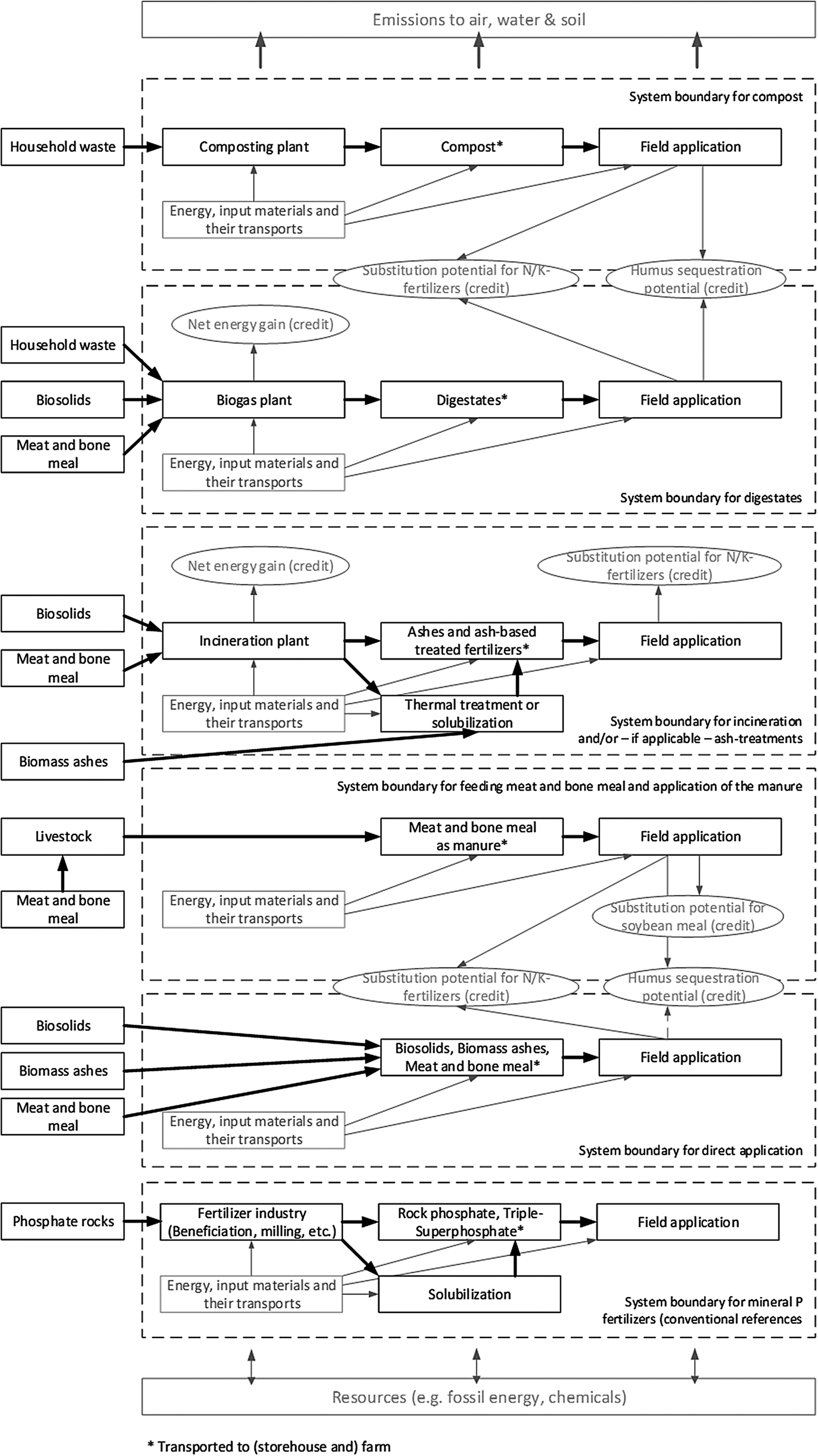
Due to different types (liquid or solid), varying application machinery, as well as different P concentrations per kg fresh matter of a certain fertilizer, and due to the fertilizers’ specific water contents, the impacts from transports after production and from fertilizing vary among the RPFs. For a useful comparison of the different RPFs, comparable transport distances were used. For an industrial production of a P fertilizer (this is the case for SS-based RPFs, for MBM, PR and TSP), in total a 500 km transport by a lorry (16–32 mg; fleet average concerning loading) was assumed from the production site to a regional storehouse. Furthermore, a 20 km transport from the storehouse to the farm by tractor and trailer was assumed for these industrial RPFs. For regionally produced, bulky RPFs (composts, digestates or untreated SS), in total 50 km with tractor and a trailer, or a tanker for liquids, were assumed. For transports of auxiliary inputs, which are also considered within the category ‘transport’, e.g., chemicals for SS-based RPFs, each 100 km of lorry and freight train were assumed. For transports from Morocco for PR and TSP, we estimated distances of 200 km of freight ship to Europe (Spain) and each 2000 km of freight train and lorry until the production site (Table 1 for additional information on transports).
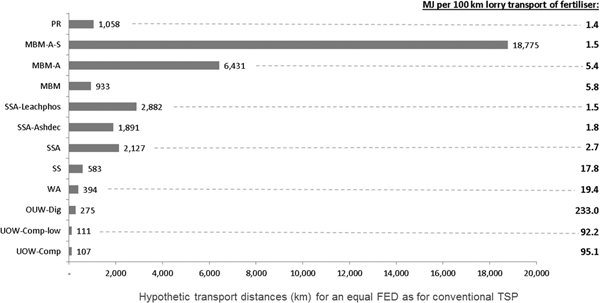
Sensitivity analyses were done for (1) transport distances of all RPFs (for the possible distance to reach the transport impacts of TSP; Fig. 4) and (2) for the impacts of C- and N-containing GHGs from the composting processes, as these emissions have a strong impact on the results. For the latter aspect, we compared data from Ecoinvent (2014) to emissions calculated for composted food wastes based on Pardo et al. (Reference Pardo, Moral, Aguilera and del Prado2014). The sensitivity analyses considered (3) infrastructure [production machinery and buildings as well as roads for transportation; according to the Ecoinvent (2014) data sets], (4) the effect of renewable energy instead of fossil energy carriers required for all fertilizer production/recycling processes and (5) the substitution of N and K by vinasse [with an Ecoinvent (2014) data set], instead of mineral fertilizers. Vinasse was selected in order to investigate and reflect the effects on the situation of organic farming, because organic farmers are not allowed to use ammonium nitrate but they have to use organic N-containing fertilizers such as vinasse.
Results
Fossil energy demand
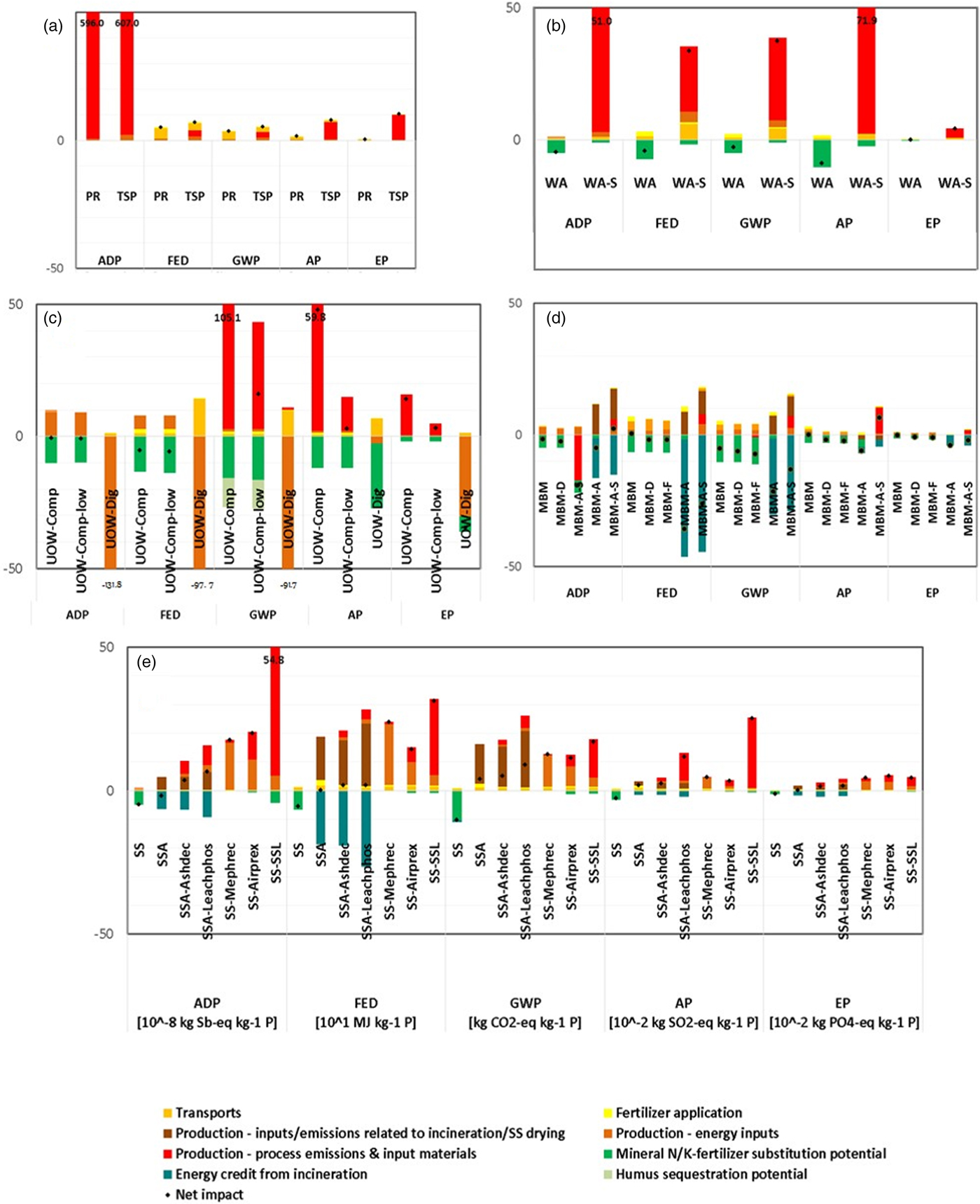
The impact category FED of the treatment of UOWs by conventional composting showed a comparable value as the standards PR and TSP (Fig. 3). The credits (i.e., negative FED values) are mainly achieved by the substituted N and K fertilizers. However, the anaerobic digestion is a more energy-efficient way of P recycling from household wastes. On the one hand, it provides a higher N fertilizer effect (due to lower N losses during the entire treatment chain and the higher N fertilizer value of digestate N), and on the other hand, it co-produces energy (electricity and heat) which accounts for about two-thirds of the mitigated FED.
LCA results per kg P for (a) mineral P fertilizers (PR, TSP) and for four waste feedstocks and different treatments: (b) untreated biomass (wood) ash (WA) and solubilized wood ash (WA-S); (c) urban organic household wastes (UOW) composted (UOW-Comp, UOW-Comp-low) and digested (UOW-Dig); (d) meat and bone meal directly fertilized (MBM), digested (MBM-D) and fed (MBM-F; where the manure is applied), MBM-A (MBM-ash), MBM-A-S (solubilized MBM ash); (e) sewage sludge (SS) with stabilized material directly used, SS ash (SSA), chemically treated SSA-ASH DEC and SSA-LeachPhos, the metallurgical SS-Mephrec, and the struvites SS-Airprex and SS-SSL. Analyzed impact indicators are the abiotic resources depletion (ADP; kg Sb-eq), the fossil energy depletion potential (FED; MJ), the global warming potential (GWP; kg CO2-eq), the acidification potential (AP; kg SO2-eq) and eutrophication potential (EP; kg phosphate-eq) from selected P fertilizers per kg P.
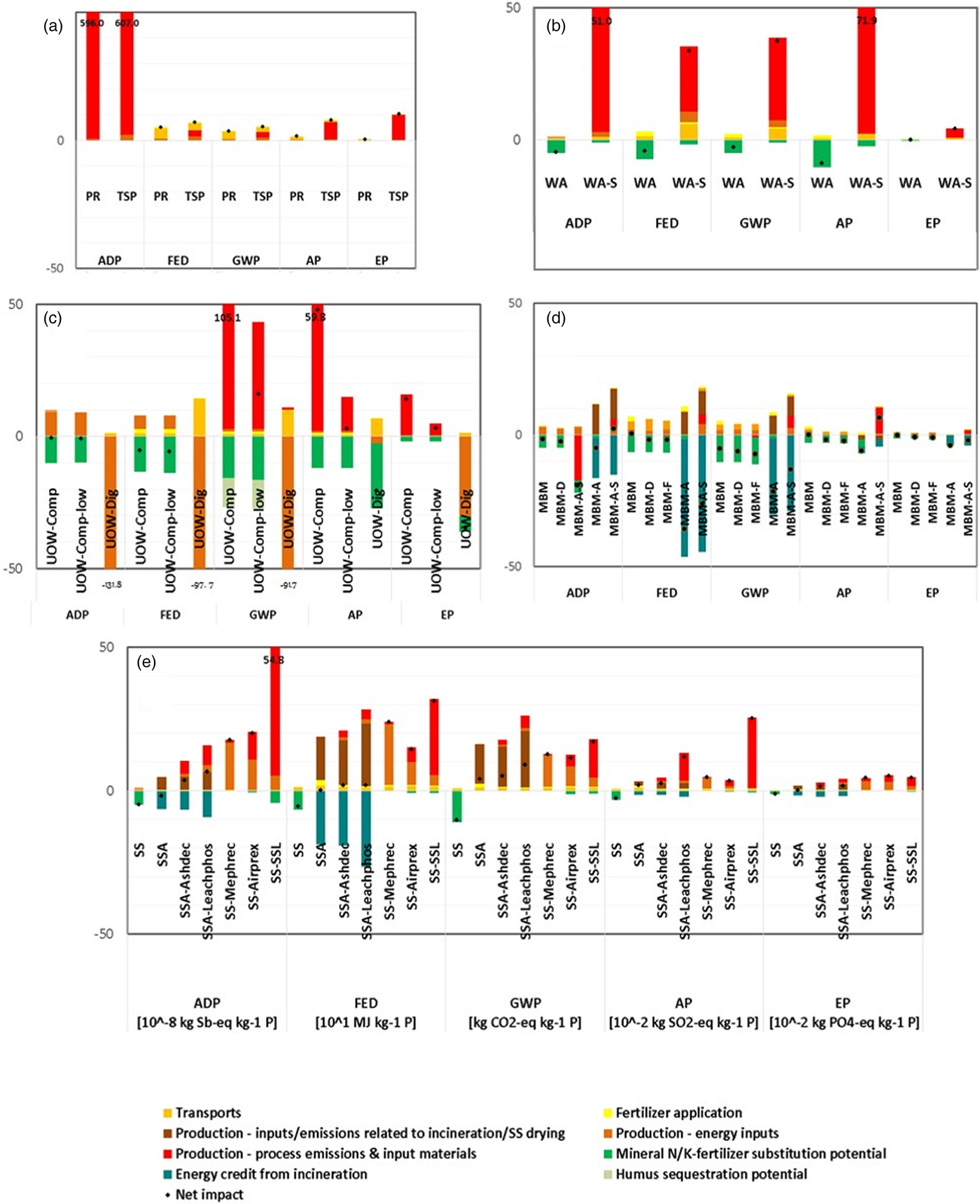
The treatments of SS showed two recycling pathways with a negative FED (net credits). Biosolids, i.e., stabilized SS directly applied to agricultural land, provide a N/K fertilizer effect as added value resulting in credits, while the production of SS ashes (SSAs) provides energy from the incineration process. However, for SSA, the drying of dewatered SS requires about 80% of the energy inputs obtained from incineration. Thus, only 20% of the energy gains from incinerating the SS are a net credit. Consequently, directly fertilized biosolids have the lowest environmental net impact and are the best option for P recycling from SS in terms of the FED. Furthermore, almost zero net demand for FED was found for ASH DEC® process for the production of calcined phosphates and the LeachPhos© process for solubilization of ash-P due to the net credits from SS incineration. The other RPFs based on SS showed some of the highest FEDs for all RPFs considered in the present study due to high chemical inputs for mobilization and solubilization of P during the recycling treatment (e.g., SS-SSL).
The five treatment options of dried (stabilized) MBM indicate generally negative FED balances as a consequence of credits from N/K-fertilizing effects (for untreated MBM, for digested MBM-D and fed MBM-F) and energy from the incineration (for MBM-A and MBM-A-S). The incineration of dried MBM (drying as a requirement for stabilization to produce a storable waste product is outside the system boundaries), releases high-energy gains accounted for as credits. Net energy gains were also found for MBM-A-S with its solubilized P, despite the chemical treatment, which requires a considerable amount of energy, especially for the production of the chemical inputs, such as acids.
The application and treatments of biomass ashes resulted in a mitigated FED for P in untreated WA, and in a high FED for solubilized P in WA-S. WA has a comparably low P concentration and thus needs a high amount of chemical inputs for the treatment to produce 1 kg of solubilized P fertilizer. This results in a high FED impact, which nearly reaches the FED of SS-SSL. Furthermore, biomass ash is a waste by-product of heating (the incineration for thermal energy is outside the system boundary), hence there is no credit that compensates for the treatment's impacts.
Mining and treatment of PR is related to a low-energy demand in comparison to many recycling approaches. The solubilization of P to produce TSP is related to a relatively little impact on FED. TSP shows a lower impact on FED for transport due to higher P concentration (Other impact categories—ADP, AP and EP section).
Global warming potential
In general, results for the impact category GWP were found to be similar to those of the FED. By exploring P recycling alternatives from UOWs, anaerobic digestion was identified as the best option, providing a high GWP mitigation potential (=negative net impact; Fig. 3). This is mainly due to relatively low emissions from mostly closed (airtight) digestion systems, the added values provided by energy gains and by the high N/K fertilizer substitution and, to a lesser extent, by the Corg sequestration potential. While N is hardly lost from the biogas treatment and C is converted to CH4 in biogas and subsequently to energy, substantial emissions arise during conventional composting in the form of CO2, CH4, NH3, NOX and N2O (Pardo et al., Reference Pardo, Moral, Aguilera and del Prado2014). Consequently, standard composting resulted in high environmental impacts in terms of GWP. However, composting carried out in a controlled environment (low emission techniques) showed significantly lower GWP, lying in between standard composting and anaerobic digestion. The humus sequestration potential of composts is comparably high, but it cannot compensate the overall unfavorable environmental effects.
By analyzing seven options for production of RPFs based on SS, we identified the lowest GWP impact for direct field application of biosolids, mainly due to the added values provided by the fertilizer substitution potentials of N and K, and supplemented by the humus sequestration potential. While this direct application showed a GWP mitigation potential, N is lost to the air with the incineration and thus SSA has a higher GWP net impact. Some of the chemically treated RPFs based on SS, especially the production of struvite after P mobilization by acids (SSL), or of converter slags by the Mephrec process, showed a relatively high GWP per kg P, with an impact comparable to that of low emission composting. The driving forces are the high inputs of means (acids, bases and inorganic salts as well as energy carriers) needed for these processes.
For treatments of slaughterhouse wastes as dried and storable MBM, incineration and field application of the ash provided the highest GWP mitigation effect (treatment MBM-A). The chemical post-treatment of slaughterhouse waste ashes to produce a solubilized fertilizer from MBM (i.e., MBM-A-S) still showed a GWP reduction, due to a relatively high P content in MBM-A and the high credit from the previous incineration step. From the GWP perspective, the use of fed MBM-F, anaerobic digestion (MBM-D) and directly spread MBM presented further valuable treatments for P recycling, but offered lower GWP mitigation potentials than incineration with subsequent P solubilization. However, all these treatment options provided an overall negative net GWP impact due to the added N/K fertilizer value, the replaced animal feeds, or the energy gain obtained by anaerobic digestion.
Concerning the GWP results per kg of P, biomass ash (e.g., WA) as incineration waste showed an overall low GWP impact. However, a chemical post-treatment of the biomass (wood) ashes for an increase of the P fertilizer value (WA-S) showed high GWP impacts due to a low P concentration in the ash, which requires comparably high amounts of chemicals (e.g., in comparison to PR).
Relatively low GWPs were found for the conventional references PR and TSP (Fig. 3). The latter has a slightly higher impact on GWP due to the chemical processes involved in P solubilization and production of a water-soluble P fertilizer based on PR.
Other impact categories—ADP, AP and EP
With a few exceptions, results of the other impact categories ADP, AP and EP were found to be low for those P recycling options with low FED and GWP (Fig. 3). The major exceptions are the fertilizers PR and TSP. Both showed quite low to intermediate impacts regarding FED and GWP per kg P, but by far the highest impact on ADP. PR and TSP have a higher ADP by a factor of 10, compared with the RPFs’ ADPs, which is mainly due to the use of the finite source PR. Their APs and EPs indicated results in the intermediate range (for TSP significantly higher than for PR).
UOWs, as a potential P recycling source, showed a relatively low ADP for composting (a slight mitigation potential), but high gaseous emissions of N and thus a high AP and EP. Anaerobic digestion treatment showed the lowest impacts among all evaluated RPFs.
The chemical treatment of SS for P solubilization, in order to increase the P recovery rates, partially resulted in high ADP and AP impacts, especially the struvites obtained after P mobilization via acid supplementation in the SS-SSL treatment. For the EP, the comparison showed generally moderate impacts for SS-ash-based recycling RPFs and high impacts in case of the struvites produced by the SSL treatment.
The highest impact for AP was found for the solubilized PF from biomass (wood) ash (WA-S). Concerning ADP and EP, WA-S’ impacts are high and moderate, respectively.
Implications of the transport distances
Considering the whole life cycle, results show that transport has a considerable impact on several impact categories, especially for bulky fertilizers with high contents of water (e.g., biogas digestates) and/or low P concentration in the fresh matter (e.g., composts). Since TSP has a substantially higher P concentration compared with all other P fertilizers, the transport stage of TSP showed lower environmental impacts.
Although the same transport distance (50 km by tractor) was assumed for all regionally produced RPFs, the digestates showed a substantially higher impact of transportation than other RPFs. This is due to the higher water content of digestates, i.e., a higher amount of fresh matter is transported in order to obtain the same amount of fertilizer P applied to the fields. However, the biogas’ mitigated FED from energy gains and fertilizer substitution overcompensated the transports impacts by a factor of about 8.
In a sensitivity analysis concerning the effects of varying transport distances on total results of FED or GWP, low P concentrations (per kg DM) and low DM contents were found as the major factors influencing the results. Liquid RPFs and RPFs with low P contents can only be transported over short distances until environmental effects exceed those of conventional reference TSP (e.g., 107 km for UOW-Comp and 275 km for UOW-Dig). However, RPFs with high fresh matter P concentration, such as ashes or dried RPFs, could be transported over long distances before showing higher results than TSP, if their net environmental impacts of the treatments are rather low (e.g., MBM-A: 6431 km; MBM-A-S: 18 775 km).
Figure 4 shows two aspects of transports’ FED results: (i) further possible transport distances to reach the same FED of the conventional reference TSP for fertilizers with lower FED impacts than for TSP; (ii) MJ FED demand per 100 km of fertilizer transport per kg P of those fertilizers. As can be seen in Fig. 4, some transport distances are very specific: the MBM-A-S, which has a highly concentrated P content, could still be transported over very long distances because of its P concentration and the high credit from the incineration. Although MBM-A had actually lower impacts (higher credits) throughout all indicators than MBM-A-S, it could be transported only one-third of the distance of MBM-A-S due to the low P concentration in the ash. SSA, ASH DEC® and LeachPhos©, as well as PR and MBM, showed still intermediate transport distances before their total FED would be higher than those of TSP. Due to the very low P concentration in WA, its transport is not competitive with TSP over wide distances from the FED point of view. Biosolids show a relatively high additional transport distance for a fertilizer with a low DM content, especially due to a comparatively high P concentration. Although the low (FED) net impact as a result of the high credits for added values, the digestate (UOW-Dig) has a low distance only, before its FED reaches that of TSP. For composts, the additional distances are low, for all other RPFs of this study they are even lower or in the negative range, i.e., their total FED is already higher per kg P than that of TSP.
Sensitivity analysis results: possible transport distances for selected P fertilizers to reach the primary energy demand (FED) of conventional TSP. The x-axis shows the transport distance in km that is hypothetically possible. Additionally, bold text on the right side describes the primary energy demand (MJ FED) per 100 km of fertilizer lorry transport per kg of P.

Discussion
General discussion
The overall aim of any P recycling is to reduce the dependency on non-renewable resources, including mined PR and the use of fossil energy. Our results show that mineral P fertilizers have the highest ADP compared with all RPFs, compromising the ability of future generations to meet their needs, because of increased depletion of abiotic resources. However, the ability of future generations to meet their needs might be also influenced by the recovery rates of other nutrients, the soil carbon sequestration or increased GHG emissions. Therefore, a comprehensive recycling approach should aim to increase the P recovery rates and to provide a conclusive and environmental friendly concept for recycling of all major P sources.
Hypothesis 1, stating that any further treatment of a feedstock increases the environmental impacts, can only partially be confirmed for the RPFs whose treatment procedures do not create high credits by the added values obtained. The results of the LCAs indicate that for biosolids and biomass ashes rather simple techniques have the lowest environmental impact on P recycling per unit fertilizer P. However, for UOW and for MBM more sophisticated or advanced techniques of P recycling might reduce the environmental impact. This is related to the fact that the environmental impact of additional treatment steps may differ among feedstocks. For example, incineration of biosolids is related to a higher environmental impact than direct field application due to the low-energy concentration in SS, its high-water content which requires drying and the loss of added values (N, S fertilizer value), while incineration of MBM will alleviate the environmental impact due to the strong added values (produced energy). Concerning hypothesis 2, the results also show that added values (energy gains, added fertilizer values beyond the P recycling or, to a lower extent, potential C sequestration) may have considerable influence on the environmental performance of the treatments. Hypothesis 3, stating that added values—possibly in a combination with low impacts from treatments—lead to lower environmental impacts than for the references PR and TSP, can also be confirmed for a number of RPFs such as UOW-Dig, SS, WA or MBM-A.
Finally, also the transport distances between the site of production and the site of field spreading may have a considerable effect on the environmental performance. With increasing transport distances, the nutrient concentration on a fresh matter base will become the driving factor governing the environmental impact of recycling approaches. Hence, hypothesis 4 is confirmed for more sophisticated treatment approaches for SS- and MBM-based RPFs (e.g., ASH DEC®, LeachPhos© or SSA; Fig. 4). On the contrary, the solubilization of WA leads to high environmental impacts, which cannot be compensated by lower transport impacts. For fertilizers derived from UOWs (composts and digestates), the transport has a high impact per km. However, due to the added values of digestates and the low emissions of anaerobic digestion (in terms of AP, EP and GWP) in comparison to composting, its transportability is nevertheless higher than for compost (Fig. 4). The reversal distance related to the FED, for instance, is 413 km, meaning that for transport distances >413 km, composting has a lower net environmental impact than anaerobically digested UOWs.
Best treatment options
The results indicated that any treatment approach has its individual strengths and drawbacks concerning environmental issues, fertilizer effects including plant P availability, etc. The calculations showed the lowest environmental impacts among the assessed P fertilizers for the digestate from UOWs, for biosolids applied directly, for biomass ash (WA), as well as for MBM-A, MBM-D and MBM-F. These RPFs showed net credits for all assessed impact categories due to added values, e.g., from energy gains or N and K fertilizer effects. Further RPFs provided lower environmental impacts than PR and TSP (but not consistently net credits for added values; e.g., MBM-A-S, SSA), whereas some more sophisticated approaches of P recycling (e.g., SS-Mephrec, SS-Airprex and SS-SSL) showed higher impacts than PR and TSP.
Sewage sludge
For SS, the assessments of our study indicate that chemically processed and solubilized RPFs, i.e., struvites (especially SSL) and SSA-based RPFs are related to higher environmental impacts per kg P than the use of PR and TSP, as shown by the indicators FED, ADP, GWP and AP. These results are in line with those of a previous study of Kalmykova et al. (Reference Kalmykova, Palme, Yu and Karlfeldt Fedje2015). A specific disadvantage of the chemical treatments is the loss of OM and nutrients such as N and S, which diminishes the credits that could have been accounted for added values. This is especially the case for struvite production after P mobilization with acids. Moreover, we did not consider all fertilizers added values with elements such as S or Mg in the calculation. However, with the inclusion of N, K and soil accumulation of Corg, we took effects into account, which are underexposed or not accounted for in other studies (e.g., Linderholm et al., Reference Linderholm, Tillman and Mattsson2012; Chiew et al., Reference Chiew, Spångberg, Baky, Hansson and Jönsson2015; Kalmykova et al., Reference Kalmykova, Palme, Yu and Karlfeldt Fedje2015).
In accordance with our results, Kalmykova et al. (Reference Kalmykova, Palme, Yu and Karlfeldt Fedje2015) concluded that direct biosolid application has lower impacts than conventional production of mineral P for all analyzed environmental LCA indicators. Analogously, Linderholm et al. (Reference Linderholm, Tillman and Mattsson2012) and Magid (Reference Magid2013) described that for SS the post-treatment incineration and the landfilling of the ashes led to higher environmental effects and higher costs than their direct field application. However, a holistic approach should also include a risk assessment for the soil accumulation of organic and inorganic pollutants or a LCA toxicity indicator for the production processes of P fertilizers. Toxic pollution during production or after application was not covered by the present LCA.
Food wastes
The assessments of the potential approaches to treat UOWs clearly indicated that their anaerobic digestion is related to lower environmental impacts than their composting. This is due to the lower GHG emissions during treatment, due to higher added values from the energy gain and the lower N losses, and due to a higher N fertilizer value. Another approach of UOW treatment not accounted for in the present study is UOW incineration (Chiew et al., Reference Chiew, Spångberg, Baky, Hansson and Jönsson2015).
Meat and bone meal
For slaughterhouse wastes as dried and storable MBM, the products from all five different treatment options were identified as promising RPFs in terms of LCA, showing only minor treatment-specific advantages and disadvantages.
Biomass ashes
According to our LCA results, biomass ashes, e.g., from wood material as a waste from heating, can be recommended to be used as RPF. On the contrary, a chemically treated biomass (wood) ash with a higher concentration of solubilized P showed high environmental impacts.
Sensitivity analysis for recycled fertilizers’ impacts
The results presented in Fig. 3 consider credits for substituted mineral fertilizers. If a substitution of N and K is done by, for instance, vinasse in organic farming, lower credits would diminish the mitigating effects of the RPFs to about the half (e.g., by 45% for the digestate's GWP). This is due to lower environmental impacts of nutrients in the sugar production's co-product vinasse, compared to impacts of mineral fertilizer production for all indicators except for the ADP (abiotic resource depletion for the nutrients from vinasse is higher than for minerals N and K). For organic agriculture, this means that the credits for the N/K-fertilizing effect of RPFs could be overestimated. Contrarily, if N from legume N fixation (legume forages) is substituted by the RPF, the credit for the indicator GWP would be more than three times higher.
By analyzing gaseous emissions from household waste's composting, we conducted a sensitivity analysis with the data record from Pardo et al. (Reference Pardo, Moral, Aguilera and del Prado2014) and compared the numbers to the data record provided by Ecoinvent (2014). However, we found a nearly equal impact of the biogenic emissions (on the AP, GWP and EP) as for the Ecoinvent (2014) data set and hence no relevant effect on the results. The GWP impact from the composting process according to Pardo et al. (Reference Pardo, Moral, Aguilera and del Prado2014) was calculated to be only 4% lower than those from the measured data in the Ecoinvent data set, which were used for the calculation presented in Fig. 3.
By considering the infrastructure (production machinery, buildings or roads for transportation), the environmental impacts showed a slightly different picture. The most important change is found for the indicator ADP: with infrastructure, the highest impacts resulted for struvites due to their impacts of the chemical input material and their highly sophisticated technical production facilities. For the other impact indicators, the inclusion or exclusion of infrastructure does not really affect the results shown in Fig. 3.
If energy inputs for RPFs’ processing (electricity and heat from gas or coal) are completely changed to renewable sources and zero environmental burdens are assumed for the renewable energy, lower impacts would be found in general (e.g., −28 and −18% for the average of all FED and GWP impacts, respectively). However, the basic findings and the ranking of fertilizers’ impacts would not change. UOW-Dig, directly spread biosolids, and the five MBM variants, SSA and WA would remain in the front ranks; for some indicators, even their order is hardly changed. Due to their chemical inputs, the intensely processed RPFs WA-S, SS-SSL, SSA-LeachPhos, SSA-ASH DEC and SS-Airprex would show significantly lower overall impacts (on average −44 and −22% for their FED and GWP impacts, respectively), but they would nevertheless occupy rather the rear ranks. SS-Mephrec, whose process requires no chemicals but much energy, would reduce its impact by, e.g., −89 and −86% for FED and GWP, respectively. UOW-Comp and UOW-Comp-low as well as PR and TSP perform generally differently, depending on the indicator, but their rankings would also not show significant changes with the renewable energy inputs.
Implications of the nutrient forms and nutrient effects in the soil
Organic farming principles do not allow the use of water-soluble mineral P fertilizers, arguing that the solubilization of PR is related to strong environmental impacts (e.g., FED). Furthermore, the organic agriculture principles advocate systems that feed the soil, not the plant, and the use of easily available, water-soluble nutrient sources does not comply with the aim of indirect nutrient supply of crops via the soil ecosystem (Lampkin et al., Reference Lampkin, Foster, Padel, Brouwer and Cain2000), leading to a low preferability or even a rejection of fertilizers, which contain a high proportion of N and P in water-soluble forms. This is the major reason to prefer PR as one major potential P source allowed for fertilization, and to ban water-soluble P fertilizers. However, the use of P fertilizers with a low plant P availability has relevant negative implications: the P from PR and other apatitic fertilizer sources like bone meals or ashes will be released in geological time scales in soils with a moderate acidic to moderate alkaline soil pH (Fardeau et al., Reference Fardeau, Morel and Jahiel1988). Therefore, any application of apatitic P fertilizers in soils with the described characteristics has minor agronomic value, and it will increase the potential risk of P losses via erosion. The present results also indicate that the additional environmental effects of P solubilization are rather low in comparison to the environmental impact of PR mining and P solubilization for production of a water-soluble fertilizer, and especially compared to the transport to Europe (Schröder et al., Reference Schröder, Cordell, Smit and Rosemarin2010). Furthermore, the differences in the assessed impact categories between PR and TSP are much lower than the differences among several treatment options currently allowed in organic farming (e.g., composting versus anaerobic digestion). In contrast to TSP, P solubilization from, e.g., ashes is related to a much higher environmental impact than solubilization of PR, which is based on the considerable lower P concentration in ashes. The lower the P concentration in the treated feedstock, the higher are the LCA impacts of chemically treated RPFs per unit P. This demonstrates a dilemma, as a part of the provided P may change from a potential P source for plant growth to a potential pollutant.
A further dilemma arises from N-containing recycling sources: organic agriculture prefers the use of organic household waste composts instead of organic household waste digestates due to the low contents of mineral N forms in composts, and high contents of mineral N forms in digestates. However, the results of the present LCA calculations clearly indicated a better performance of digestion than composting for the entire treatment chain, the nutrient recovery rates and the subsequent fertilizer value. Digestion allows for a cascading use with the added value energy gain during the treatment, and for a higher added value in the final product, compared to composts, due to the higher fertilizer value (Benke et al., Reference Benke, Rieps, Wollmann, Petrova, Zikeli and Möller2017). Therefore, a reorientation using current scientific findings should be carried out in organic farming to better integrate RPFs into fertilizer schemes.
Limitations of the applied LCA approach and its system boundaries
A first limitation is that the chosen methodological approach did not consider P plant availability but only the functional unit ‘1 kg of P’. Fertilizing P with ash-based RPFs, ashes, PR or MBM is limited by the P availability for plants, especially in neutral and alkaline soils (Cabeza et al., Reference Cabeza, Steingrobe, Römer and Claasen2011). It goes beyond the focus of this study to include the variations of soil pH and the respective plant availability in the LCA calculation of the different P fertilizers.
As shown by the LCA calculation, the solubilization of P from PR, MBM and ashes generates an additional environmental impact, especially for feedstocks with a low P concentration due to the inputs of, e.g., acids. The challenge is to find biological approaches for P solubilization. An option for a biological solubilization of PR and other apatite-rich P sources, such as MBM, is the use as mineral P supplement in animal diets. The low pH in the digestive tract of animals makes the apatite-rich P available for plants.
As data compilation was quite challenging and many different P fertilizers were analyzed, we relied on the simplifying assumption that waste feedstocks generally have zero burdens and zero credits. A future LCA study could consider the value of all wastes in depth (Pradel et al., Reference Pradel, Aissani, Villot, Baudez and Laforest2016). It might gain different results and conclusions concerning the RPFs, if not zero burden wastes but secondary resources with their upstream chain (collection and specific environmental impacts) are considered in the LCA analyses. Similarly, further work could consider the phase after the application of the various P fertilizers with different soils and crops (crop rotations). Another important aspect, concerning a broader view of sustainability and P use, is the recovery efficiency of P (and other nutrients) of the recycling processes. Simple processing of P feedstocks, such as anaerobic digestion, composting or incineration, provides a high potential P recovery rate. On the opposite, struvite's precipitation processes show clearly lower P recycling rates. However, in our study, this is only indirectly addressed with a higher amount of inputs, i.e., the P-containing feedstock, and wastes were addressed with a zero burden assumption. Recycling rates could also be addressed with further indicators, e.g., an estimate for overall nutrient use efficiency. A good overall LCA result can be paired with a trade-off concerning the quality of the RPF, e.g., concerning the risk of contaminants accumulation. The LCA results represent one important contribution to analyze the strengths and weaknesses of P fertilizers and recycling pathways; however, they should also be accompanied by other indicators, such as risk assessment results. An assessment of environmental impacts could be supplemented by a multi-criteria analysis with a comprehensive view on sustainability, including issues from the economic and the social–ethical dimensions. A follow-up study could also consider globally or regionally available P feedstocks to define and assess different treatment options. A broader analysis would give insight into different cascading waste uses and future pathways toward sustainable and circular waste-recovery systems at national or international level. For instance, SS with low pollutant contents could on the one hand be used directly, especially if it is not used for direct human consumption products. On the other hand, for SS with high loads of pollutants, a variety of treatment options are available to decrease the risk of pollutant accumulation.
Conclusions and outlook
In order to preserve the essential element P for future generations and to reduce global P resource depletion, it is important to close nutrient cycles by using available P recycling sources. The goal of high P recycling rates requires appropriate and environmentally friendly treatment options for the major recyclable P sources, which circulate between rural and the urban areas. It is important that the identification and development of these appropriate treatment options considers specific characteristics of the addressed recycling streams (chemical composition, specific needs for hygienization and stabilization, potential added values, etc.). From a LCA perspective, there is no standard treatment procedure suited for all the sources of P. Depending on the specific characteristics of the feedstocks, the results of the treatment options for each of the addressed feedstocks vary. The challenge is to identify the best practices in terms of environmental and economic aspects for each of the feedstocks which differ among the treatments. The results clearly indicated that the obtained added values, such as N and K fertilizing effects of the underlying P fertilizer, heavily influenced the overall environmental impacts. However, each additional treatment step, if not generating some added value, increases environmental burdens.
The LCA results clearly show some major advantages of the use of specific RPFs (UOW-Dig, WA, SS, SSA, MBM/-based RPFs) compared to conventional P fertilizers. For SS, the most promising approaches to recycle P range from the direct application of a material with extremely low pollutant contents (risks) to various treatment options for SS with higher contamination levels. Additionally, other treatment options for the use of MBM and UOWs, e.g., anaerobic digestion to be used for energy-dense feedstocks and low emission composting on woody (lignified) materials, which are recommended based on the LCA results, should be further elaborated to supply P to future generations.
Acknowledgements
The authors thank the two anonymous reviewers for their valuable comments and are grateful to colleagues from BOKU University, FiBL Austria and FiBL Switzerland, especially Jürgen Friedel, Thomas Lindenthal, Paul Mäder, Theresia Markut, Matthias Meier, Richard Petrasek, Christian Schader, Sarah Symanczik, Lina Weissengruber and Rainer Weisshaidinger. Furthermore, the authors would like to thank all their colleagues in the project ‘IMproved Phosphorus Resource efficiency in Organic agriculture Via recycling and Enhanced biological mobilization’ (‘IMPROVE-P’; FP7 ERA-Net, CORE Organic II project no. 249667) for their valuable inputs and the CORE Organic II funding bodies of Austria, Denmark, Germany, Great Britain, Norway and Switzerland for the financial support.