CHD, defined as a gross structural abnormality of the heart or intrathoracic great vessels, Reference Mitchell, Korones and Berendes1 is the most common congenital abnormality and accounts for nearly one-third of all major congenital anomalies. Reference Van der Linde, Konings and Slager2 CHD has a global birth prevalence of 8 per 1000 live births, representing approximately 1.35 million newborns each year. Though the global birth prevalence is thought to be relatively similar, regional variations, possibly due to genetic and environmental factors, have led to low prevalence rates reported in Africa. Reference Van der Linde, Konings and Slager2 The burden in developing countries is thought to be underestimated mainly due to significant under-reporting as well as high early fetal and neonatal mortality related to CHD in this part of the world. World health Organization estimates that 90% of these children have suboptimal or no access at all to health care, with most of these children concentrated in lower middle-income countries. Reference Wren and O’Sullivan3,Reference Jivanji, Lubega, Reel and Qureshi4
Delayed diagnosis of cyanotic congenital cardiac defects occurs when children with CHDs are diagnosed after they are discharged home after birth while acyanotic defects are diagnosed when cardiac surgery or intervention should have already been performed. Early diagnosis and surgical correction and/or transcatheter intervention lead to better outcomes. Reference Brown, Ridout, Hoskote, Verhulst, Ricci and Bull5–Reference Downing7 About 30–50% of all CHDs will result in death if surgery or transcatheter-based intervention is not done within 1 year (major defects) or 4 weeks (critical defects). According to Eckersley et al Reference Eckersley, Sadler, Parry, Finucane and Gentles6 , late diagnosis of isolated critical CHD carried a significantly higher risk of mortality (29%) compared to early diagnosis (12%). Emphasis should therefore be placed on early screening, especially in the high-risk population. Fetal echocardiography increases in the rate of pre-natal detection of critical cardiac defects by about 69% Reference Hill, Block, Tanem and Frommelt8,Reference Chung, Lee and Kim9 and allows for early planning for post-natal care therefore significantly reducing neonatal morbidity and mortality. Reference Kovalchin and Silverman10 Post-natal neonatal examination on its own misses out about 50% of the children with CHDs. Reference Wren, Richmond and Donaldson11 Studies have shown that pulse oximetry, in addition to physical examination within the first 72 hours of life, has increased the rate of neonatal diagnosis with a sensitivity of 87.5% and a specificity of 99.8%. Reference Oakley, Soni, Wilson and Sen12–Reference Riede, Worner, Dahnert, Mockel, Kostelka and Schneider15
In Kenya, like in most developing countries, children are often repeatedly admitted and treated for recurrent chest infections and fail to thrive without evaluation for cardiac disease due to lack of skilled personnel, poor diagnostic tools, and poor referral systems. Reference Otaigbe and Tabansi16,Reference Go17 Published data from Africa Reference Otaigbe and Tabansi16 show that the mean age that children presented to a health care facility for cardiac evaluation was after a child’s second birthday. Locally, a study done at the largest public tertiary facility in Kenya reported that the overall mean age at referral to a paediatric cardiologist was 16.9 months with a mean age of 18.6 months of echocardiography confirmed diagnosis of CHDs. Reference Awori, Ogendo, Gitome, Ong’uti and Obonyo18
Methods
Objectives
The primary objective was to determine the prevalence and factors associated with the late diagnosis of CHD seen at three tertiary care hospitals in Kenya.
Study design and setting
The study was an analytical cross-sectional study on paediatric patients, aged 0–18 years, over a 5-year period, between January, 2011 and December, 2016. Inclusion criteria included all children aged 0–18 years with an echocardiography-confirmed diagnosis of CHD on follow-up at Aga Khan University Hospital Nairobi (AKUHN), Mater Hospital and Kenyatta National Hospital (KNH).
The Aga Khan University Hospital, Nairobi is a not-for-profit private hospital and provides high-quality specialised healthcare and acts as a tertiary care centre for much of Eastern and Sub-Saharan Africa with a full complement of paediatric sub-specialists. Mater Hospital is a faith-based institution that caters to patients from all socio-economic classes in Kenya. It has the largest cardiac program in East and Central Africa for screening and diagnosis of CHD as well as surgical and transcatheter-based interventions. Kenyatta National hospital is the largest public tertiary care hospital in Kenya. It receives referral patients from all over the country. It, however, mostly serves patients from the low socio-economic class and those financially covered by the National Hospital Insurance Fund.
Data collection and analysis
Medical records of the patients, at the various health facilities, who fulfilled the inclusion criteria, underwent detailed chart review. A total number of 410 participants were targeted and randomly selected using systematic sampling where every second child reviewed and who met the inclusion criteria was recruited. The number of patient files sampled from each centre was calculated at a ratio 26:75:75, based on the cohort of patients on follow-up in each facility. Over the past 5 years, during the study period, a total of 260 children with cardiac pathology were seen at Aga Khan University Hospital, while a total of 1500 children were seen at Kenyatta National Hospital and another 1500 children were seen at Mater Hospital. The sample size from AKUHN, KNH, and Mater hospital was therefore 61, 175, and 175, respectively. Data were captured electronically by the principal investigator and stored in the Research Electronic Data Capture (REDCap) platform located at the Aga Khan University Hospital, Nairobi. Patients with CHDs were then stratified by timing of diagnosis into those who were diagnosed late (beyond one year of life) and those who were diagnosed early (before 1 year of life). Continuous variables were analysed using summary statistics such as means (ranges) or median (IQR), while categorical and discrete data were analysed using percentages and proportions. Tests of association between risk factors and timing of diagnosis were performed using chi-square for categorical and continuous variables and any variable with p-value <0.25 was included in the model. Multiple logistic regression analysis was used to determine factors associated with the late diagnosis adjusting for age and sex of the patient. A P-value of <0.05 was considered statistically significant. Patients where a definitive cardiac intervention was recommended were further divided into those who received surgery/transcatheter-based interventions and those who did not. The proportion of patients who received surgery/catheter-based interventions locally, abroad, or through the humanitarian programmes was also assessed. All the data were analysed using the IBM Statistical Package for the Social Sciences (SPSS) version 22.00.
Ethics
Approvals for the study were obtained from the Institutional Ethics Review Committee at the Aga Khan University Hospital Nairobi (ref 2016/REC-51), Mater Hospital (ref TMH/DMS/VOL.2017/010) and Kenyatta National Hospital (ref UON/CHS/HEPI/4/1). The review committees from all three institutions waived the need for informed consent. Access to the results was restricted to the principal investigator and co-investigators.
Results
Four hundred and eleven patients were included in the study; 61 from AKUHN, 175 from Mater Hospital, and 175 from KNH. Of the 411 patients analysed, 205 (49.9%) were male and 206 (51.1%) were female. The median age at diagnosis of CHD was 15 (IQR 5–48) months.
Prevalence of late diagnosis of CHD
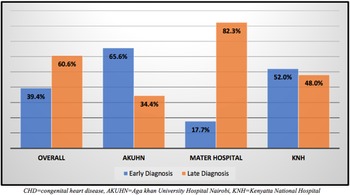
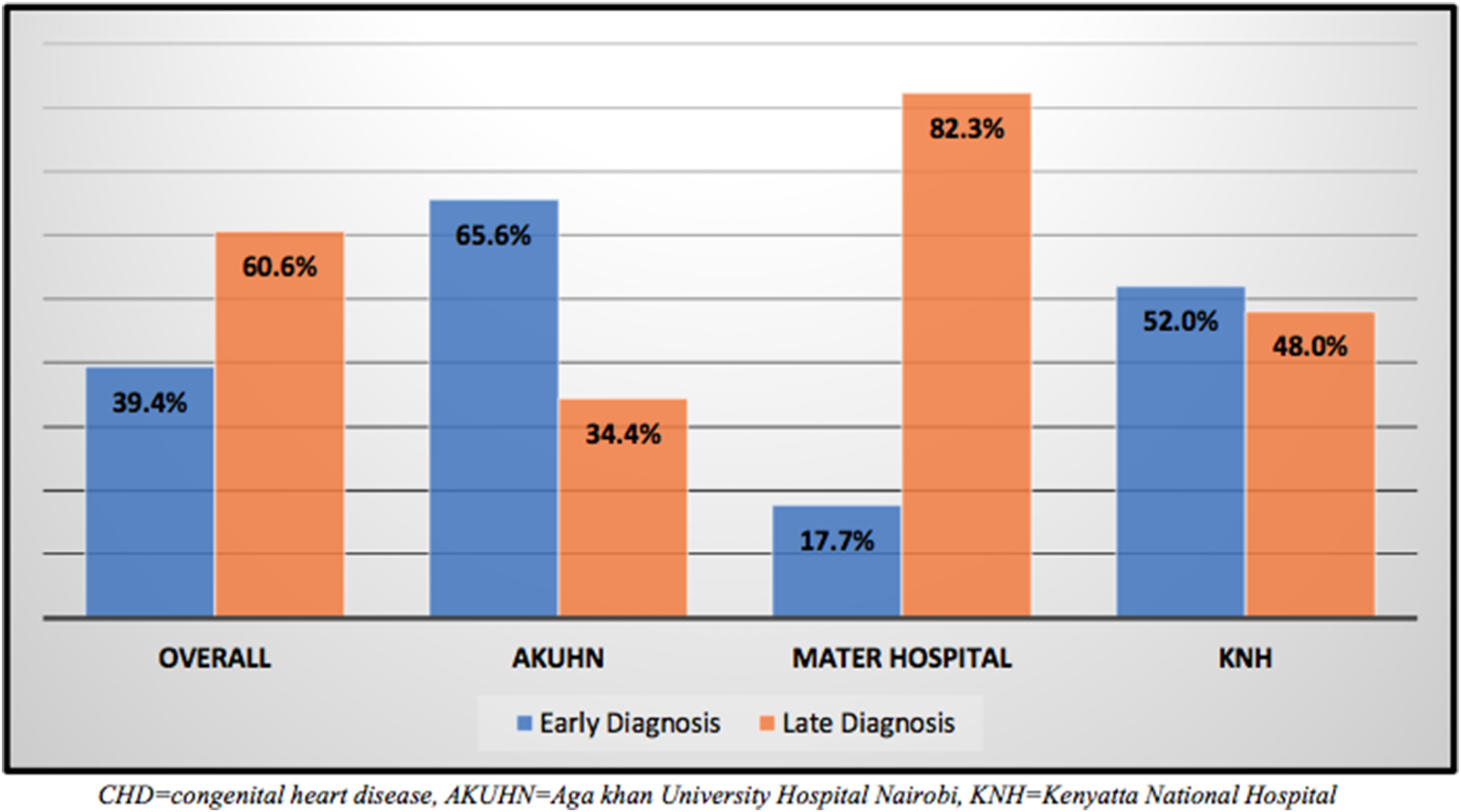
The overall prevalence of late diagnosis of CHD was 60.6% (249/411, 95% CI = 55.7–65.3), with 39.4% (162/411) patients being diagnosed early. When comparing the prevalence of late diagnosis in the three institutions, 21 (34.4%) patients were diagnosed late at AKUHN, with 84 (48%) and 144 (82.3%) in KNH and Mater Hospital, respectively (Fig 1). The most common cardiac defects seen were patent ductus arteriosus (29.2%), ventricular septal defects (28.0%), atrial septal defects (17.7%), and tetralogy of Fallot (10.4%).
Proportion of patients with CHD diagnosed late at the three tertiary care facilities.
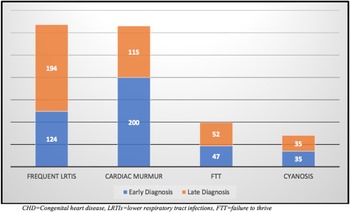
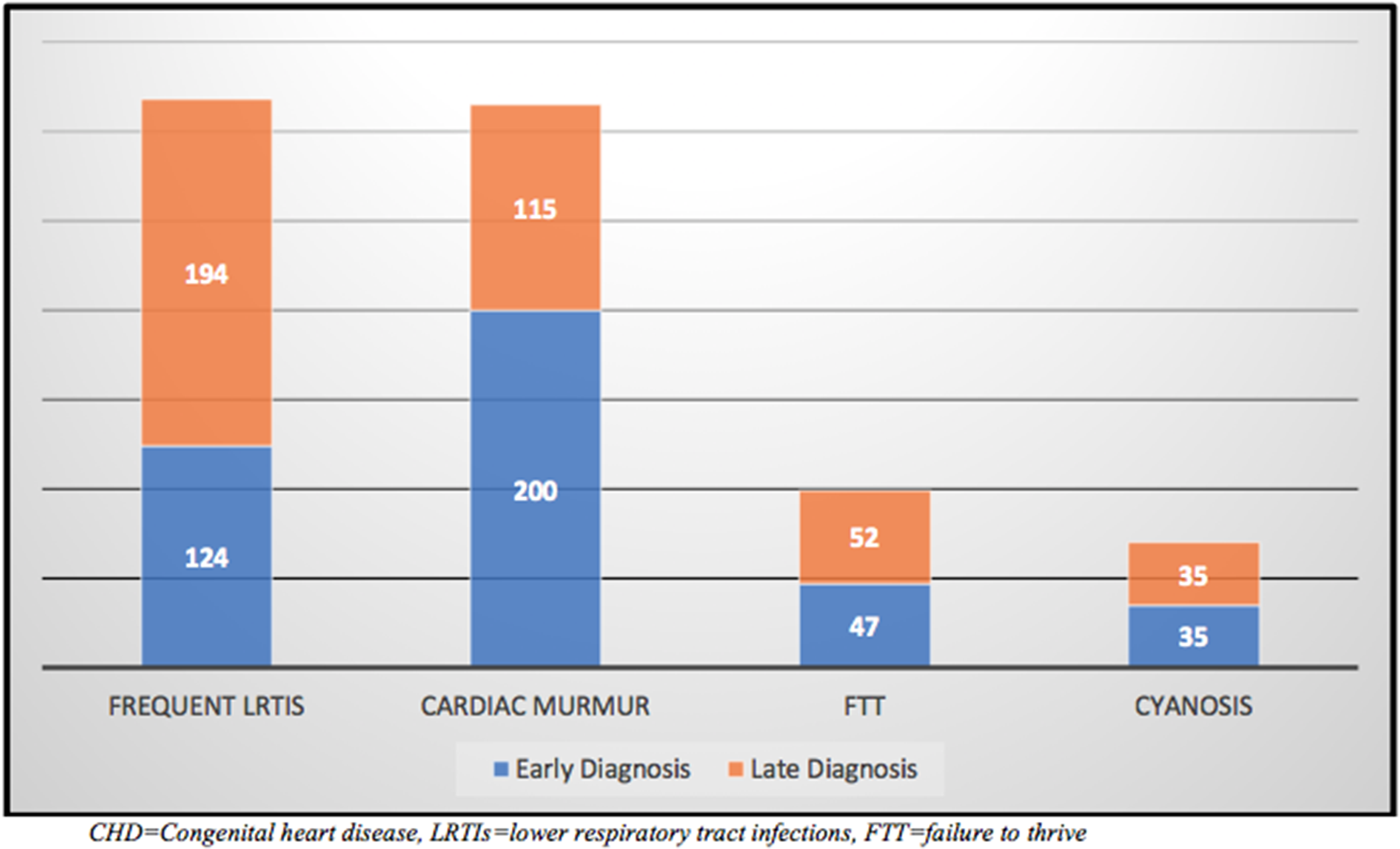
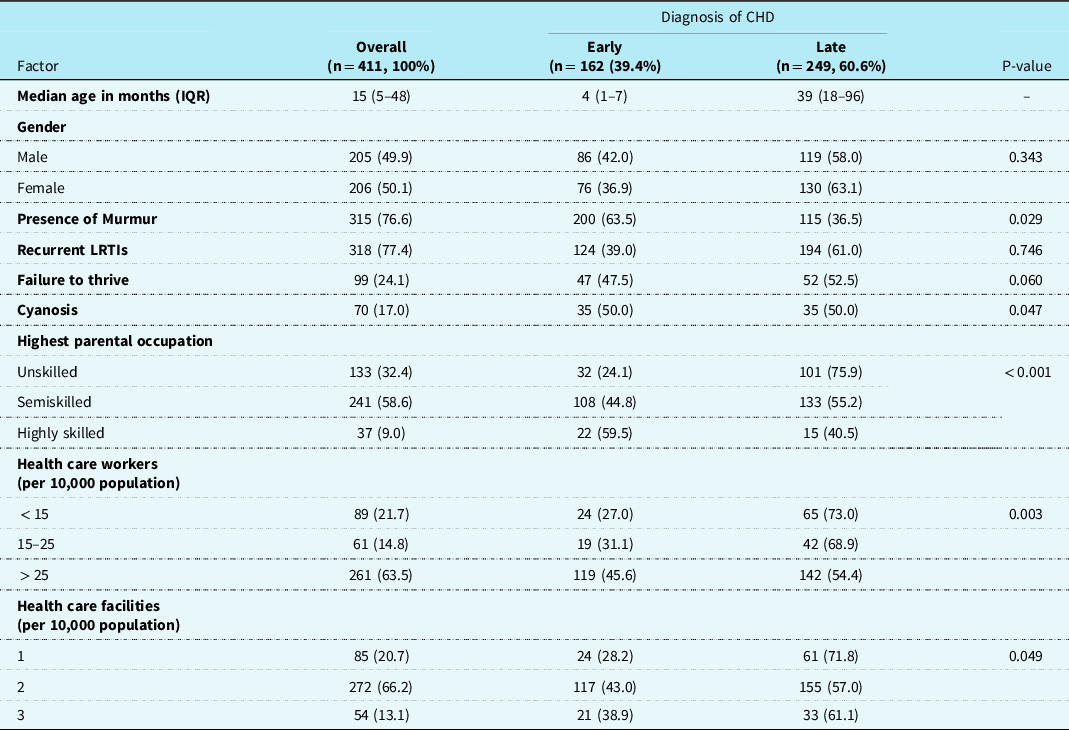
Recurrent lower respiratory tract infections, found among 318 (77.4%) of the children, were a common presenting feature. Of these, 194 (61.0%) had a late diagnosis of CHD and 124 (39.0%) had an early diagnosis. The presence of a cardiac murmur was seen in 315 (76.6%) children, with 115 (36.5%) being diagnosed late and 200 (63.5%) being diagnosed early. Failure to thrive was present in 99 (24.1%) children where 52 (52.5%) of those were diagnosed late and 47 (47.5%) were diagnosed early. Cyanosis was found in 70 (17.0%) children with an equal distribution in those diagnosed early and those late (Fig 2).
Common presenting symptoms in children diagnosed with CHD.
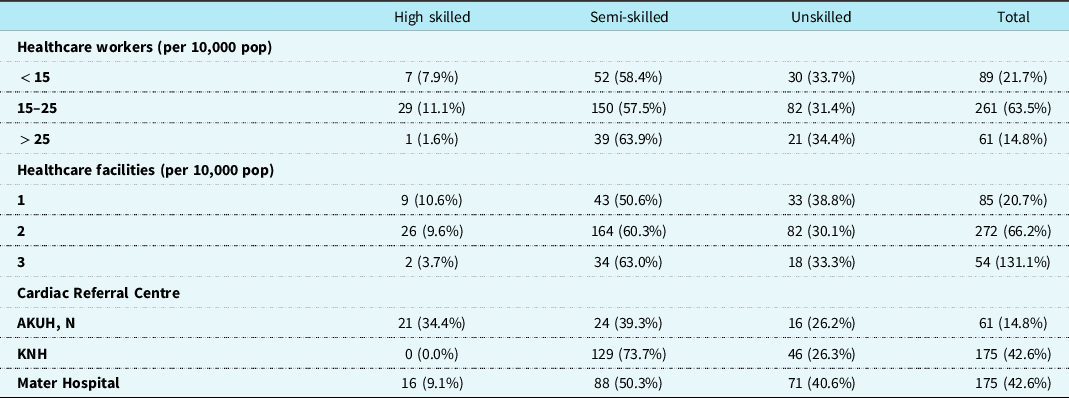
The Patients’ socio-economic status was assessed using the highest parental occupation level. Unskilled (performance of simple and routine physical/manual tasks) parents comprised 32.4%, semi-skilled (performance of complex technical and practical tasks) and highly skilled (performance of complex problem-solving and decision-making tasks) were 58.6 and 9%, respectively. Majority of patients seen at AKUHN had highly skilled (34.4%) and semi-skilled (39.3%) parents while the majority seen at Mater hospital and KNH had semi-skilled and unskilled parents. Patients’ access to healthcare was also assessed based on their county of residence. They were classified according to number of healthcare workers per 10,000 population in their county of residence where 21.7% of participants were in areas with less than 15 per 10,000, 14.8% in areas with 15–25 per 10,000, while 63.8% were from areas with > 25 per healthcare workers per 10,000. Additionally, patients were classified based on number of healthcare facilities per 10,000 population in their county of residence with 20.7, 66.2, and 31.1% in areas with 1 per 10,000, 2 per 10,000, and 3 per 10,000, respectively (Table 1).
Access to healthcare by patients with CHD based on the parental occupation level.
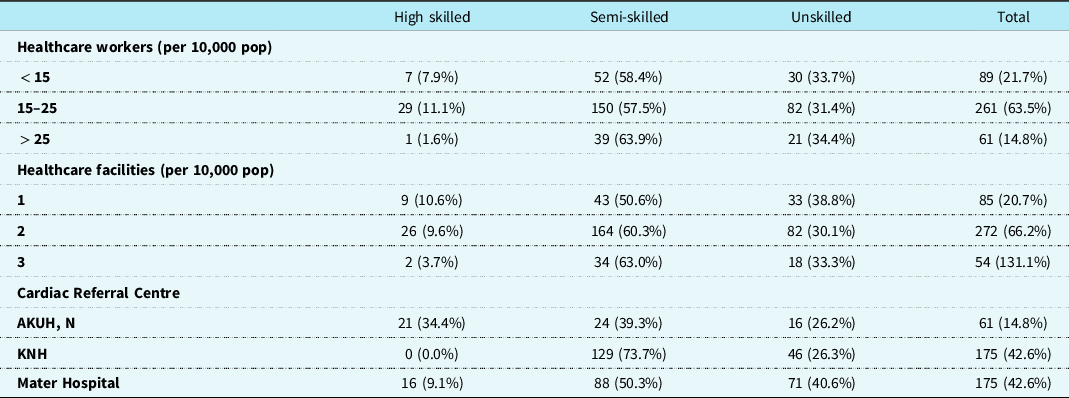
AKUHN = Aga Khan University Hospital Nairobi, KNH = Kenyatta National Hospital
Factors associated with late diagnosis of CHD
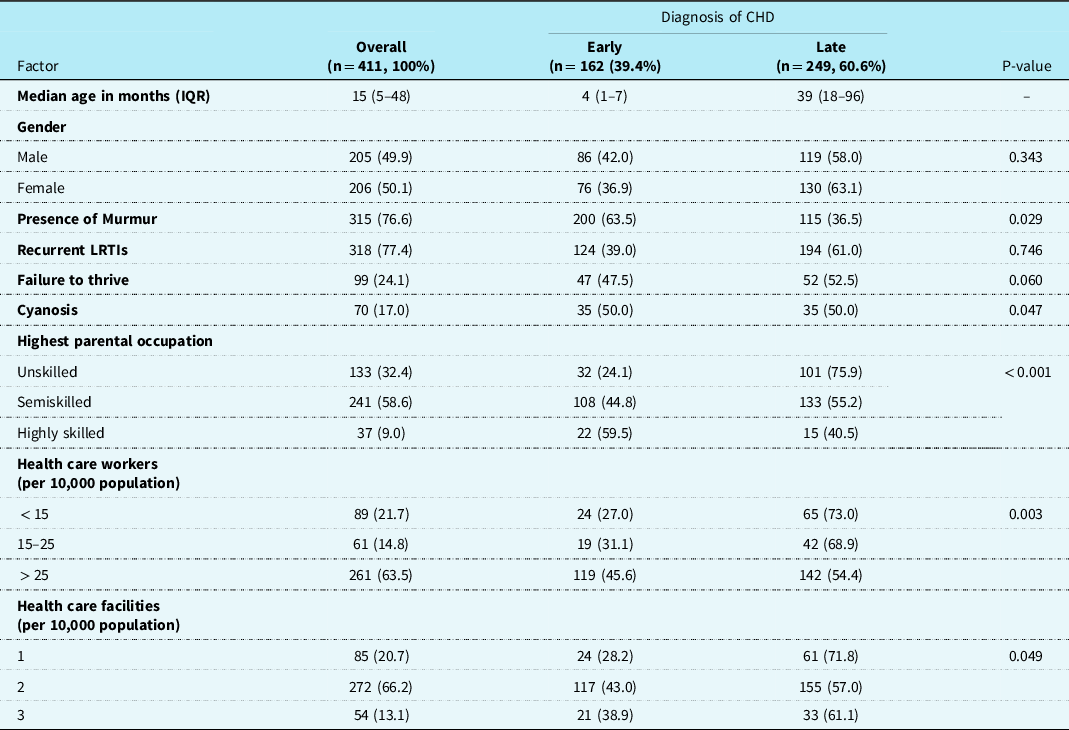
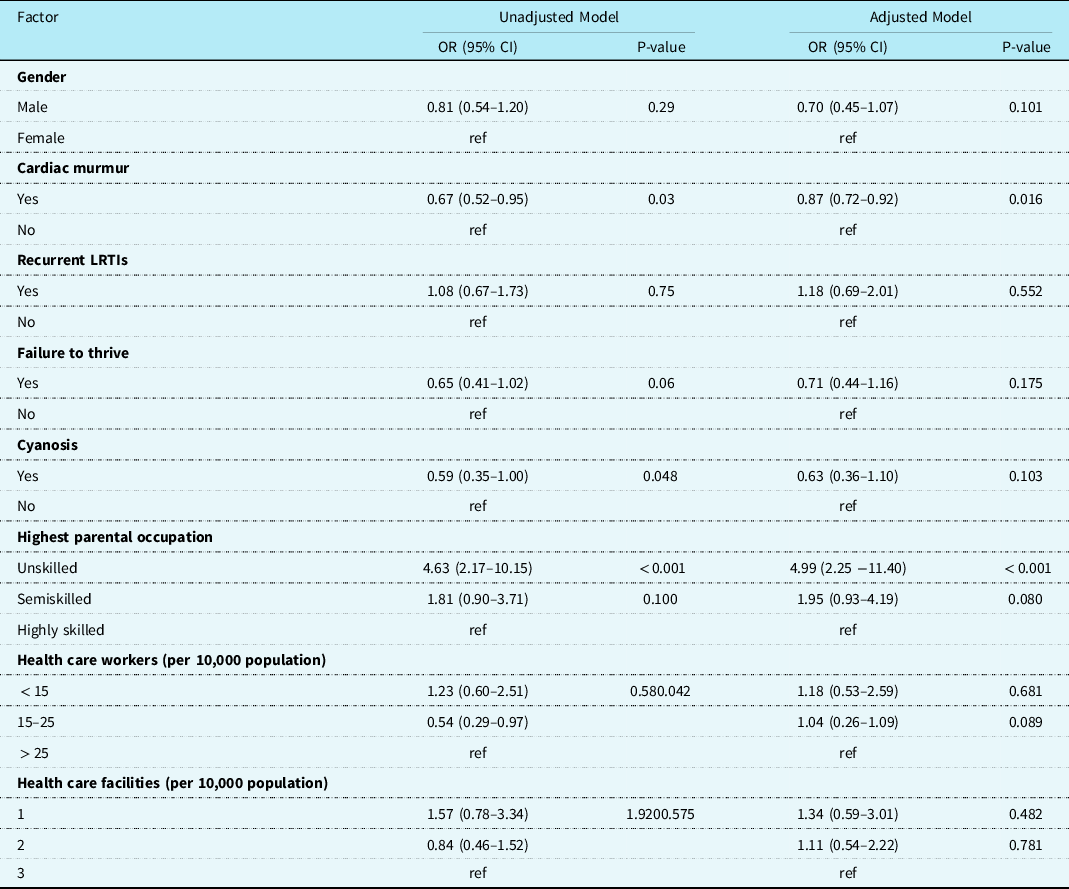
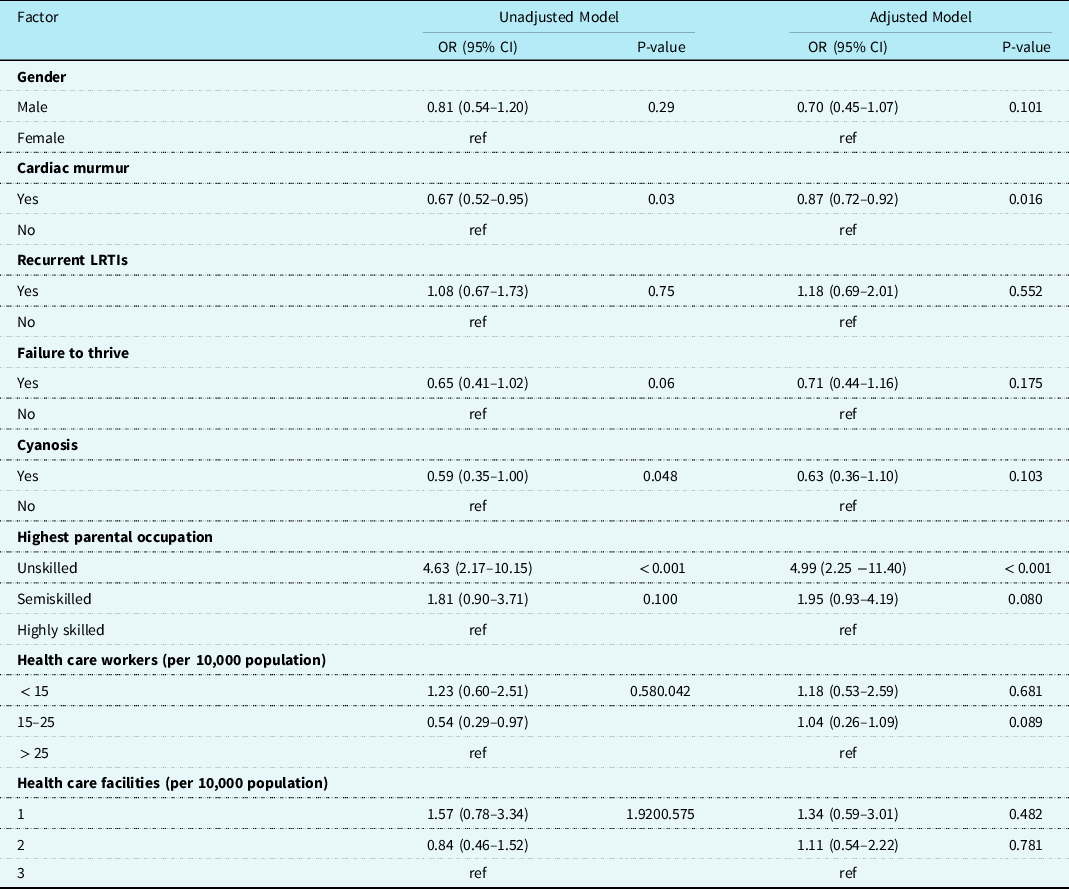
Multi-variable analysis of the risk factors is presented in Table 2. There was statistically significant decreased odds of late diagnosis among children with a murmur compared to children without a murmur (OR = 0.87; 95% CI 0.72–0.92, p-value = 0.016). There was also a reduced odds of late diagnosis among children with cyanosis compared to children without cyanosis, though this was not statistically significant (OR = 0.628; 95% CI 0.358–1.100, p-value = 0.103).
Association of risk factors and timing of congenital heart disease diagnosis among children at the three tertiary care facilities.
IQR=interquartile range, LRTIs=lower respiratory tract infections.
The prevalence of late diagnosis also decreased with an increase in the number of healthcare workers per 10,000 population, where 65 (73.0%) were diagnosed late in areas with less than 15 healthcare workers compared to 24 (27.0%) diagnosed early, 42 (68.9%) diagnosed late in areas with 15–25 healthcare workers compared to 19 (31.1%) diagnosed early and 142 (54.4%) compared to 119 (45.6%) for areas with more than 25 healthcare workers per 10,000 population (p-value 0.003) (Table 2). Children from areas where healthcare workers were less than 15 per 10,000 population had 1.18 (95% CI 0.53–2.59) times greater odds of late diagnosis compared to children from areas where the healthcare workers were more than 25. Similarly, children from areas where healthcare workers were between 15 and 25 had a 1.04 (95% CI 0.26–1.09) times greater odds. However, none of the two groups were statistically significant (p-value = 0.681 and 0.089, respectively) (Table 3).
Odds ratio estimates on factors associated with late diagnosis of congenital heart disease among children on follow-up at the three tertiary care facilities.
IQR=interquartile range, LRTIs=lower respiratory tract infections.
Further still, areas with one healthcare facility had the highest prevalence of late diagnosis at 71.8% (p-value 0.049). The odds of late diagnosis decreased with the increase in the number of healthcare facilities per 10,000 population. Children from areas with one healthcare facilities had 1.34 (95% CI 0.59–3.01) times greater odds of late diagnosis when compared to children from areas with three healthcare facilities per 10,000 population and those from areas with two healthcare facilities had 1.11 (95% CI 0.54–2.22) times greater odds of late diagnosis. However, none of the groups were statistically significant (p-value = 0.482 and 0.781, respectively) (Table 3).
Using highly skilled as the reference group, the odds of late diagnosis among children from unskilled parents were five times greater than children from highly skilled parents (OR = 4.99; 95% CI 2.25–11.40, p-value <0001). Similarly, though not statistically significant, the odds of late diagnosis among children from semi-skilled parents were twice as high as that of children from highly skilled parents (OR = 1.95; 95% CI 0.93–4.19, p-value = 0.08) (Table 3).
Three hundred and sixty-nine patients required surgical intervention; of these 249 (60.6%) underwent surgery, 16 (6.4%) at KNH and AKUHN, and 220 (88.4%) under the humanitarian programme at the Mater hospital. Thirteen patients (5.2%) were referred to an international cardiac centre.
Discussion
We report a prevalence of late diagnosis of CHD of 60.6% (95% CI 55.7–65.3%) which is alarmingly high despite our extremely lenient cut-off point of 1 year for late diagnosis. This is in sharp contrast to studies from developed countries Reference Eckersley, Sadler, Parry, Finucane and Gentles6 where early diagnosis of cardiac defects is defined as diagnosis made antenatally or within the early neonatal period. In our study, the median age for the diagnosis was 15 (IQR 5–48) months which is comparable to the study done locally by Awori et al Reference Awori, Ogendo, Gitome, Ong’uti and Obonyo18 where the overall mean age at referral to a paediatric cardiologist was 16.9 months with the mean age of echocardiography confirmed diagnosis being 18.6 months.
The most common congenital cardiac lesions seen were patent ductus arteriosus (29.2%), ventricular septal defects (28%), atrial septal defects (17.7%), and tetralogy of Fallot (10.4%). These findings are similar globally, where the most common acyanotic heart lesions include ventricular septal defect, patent ductus arteriosus and atrial septal defect with tetralogy of Fallot being the most common cyanotic CHD Reference Mocumbi, Lameira, Yaksh, Paul, Ferreira and Sidi19 . However, the actual frequency of individual lesions in our population would be difficult to accurately assess because some critical CHDs lead to early fetal or neonatal mortality that go unreported.
Usman et al Reference Rashid, Qureshi, Hyder and Sadiq20 reported that the timing of diagnosis is influenced by the clinical presentation. Children with acyanotic cardiac defects had a much more delayed diagnosis compared to those with cyanotic cardiac defects. This difference is partly attributed to the obvious finding of bluish discolouration leading to earlier medical consultation by the parents or the attending doctor. On the other hand, acyanotic pathology with increased pulmonary blood flow was frequently misdiagnosed as pneumonia until alternate diagnosis of CHD was suspected. Otaigbe et al Reference Otaigbe and Tabansi16 , assessing children with CHDs, demonstrated that the most common presenting symptoms and signs were a cardiac murmur (36%), fast breathing (19.8%), failure to thrive (11%), and cyanosis (9.9%). These findings differ slightly in our study where children presented most commonly with recurrent lower respiratory tract infections (77.4%), cardiac murmur (76.6%), failure to thrive (24.1%), and cyanosis (17%).
The presence of a murmur conferred a statistically significant decreased odds of late diagnosis compared to its absence (OR = 0.87; 95% CI 1.13–3.12, p-value = 0.016). This was also observed with the presence of cyanosis (OR = 0.63; 95% CI 0.36–1.10), though not statistically significant (p-value = 0.103). This could be attributed to the fact that a murmur and cyanosis are signs and symptoms known to be more specific for cardiac disease and therefore its early suspicion. On the other hand, recurrent lower respiratory infections and failure to thrive, though commonly found in children with CHD, are symptoms of several other paediatric pathology. However, when analysed against other variables including gender and socio-economic status, recurrent lower respiratory tract infections were found to be significantly associated with lower parental occupational level. This could explain why this symptom is very common in our setting and was associated with late diagnosis of CHDs as it is not specific to cardiac pathology.
In 2015, Kenya adopted the Integrated Management of Childhood Illness guidelines created by WHO and UNICEF which places emphasis on the identification and management of the most common causes of illness and death in children under 5 years with pneumonia being the most common cause. This has led to an increased awareness for pneumonia-like symptoms by both healthcare workers and the general public and could explain why patients with CHD, presenting with respiratory symptoms were frequently diagnosed and treated for pneumonia prior to investigation for cardiac disease due to the frequency of pneumonia-like episodes.
Socio-economic status and low parental literacy level have frequently been a big contributor to the delay in diagnosis of common paediatric congenital pathology Reference Rashid, Qureshi, Hyder and Sadiq20,Reference Shavers21 . In our study, we used the parental level of occupation as a surrogate for assessing socio-economic status as this indirectly influence access to healthcare. Compared to children with highly skilled parents, the odds of late diagnosis were found to be two times greater in children with semi-skilled parents (OR = 1.95; 95% CI 0.93–4.19, p-value = 0.08) and five times greater in children with unskilled parents (OR = 4.99; 95% CI 2.25–11.40, p-value <0001). Lower socio-economic classes usually coincide with low levels of education, resulting in reduced awareness of symptoms of CHD as well as available diagnostic and curative options and this negatively influences their health-seeking behaviour. Additionally, poverty limits their access to healthcare with some patients opting for home deliveries or early hospital discharge postnatally, leading to missed opportunities for early detection while others cannot afford diagnostic and curative health services even when they are available. However, it is important to note that 40% of patients with highly skilled parents were diagnosed late whereas about a quarter of patients with unskilled parents were diagnosed early. This shows that though one’s socio-economic status influences access to healthcare, other factors like cultural beliefs, physical environment as well as social and community networks may contribute to access to healthcare.
Poor access to healthcare has been found to be associated with delayed diagnosis Reference Rashid, Qureshi, Hyder and Sadiq20 . The odds of late diagnosis of CHD were found to decrease with an increase in the number of healthcare workers per 10,000 population. Though this was not statistically significant, it may suggest that an increase in the number of healthcare workers leads to a more efficient health system and subsequently better healthcare. Nevertheless, this can be explored further in future studies where healthcare workers are divided according to their cadres to assess the effect, if any, each has on the timing of diagnosis. The odds of late diagnosis similarly decreased with an increase in the number of healthcare facilities per 10,000 population though it was also not statistically significant. Consequently, one could postulate that there are factors besides the number of healthcare facilities that influence the quality of healthcare as well as patients’ access to health services. Such factors include staffing of healthcare workers in these facilities as well as their level of expertise, the infrastructure, and diagnostic equipment present in these facilities and the patients’ attitude towards services provided in these facilities.
In those patients where surgery or transcatheter-based intervention was recommended, only 60% received the service. About 88% of these patients received cardiac intervention at Mater Hospital, under the humanitarian programme that relies on international cardiac teams coming to Kenya. Majority of the patients who received cardiac intervention abroad were those who were diagnosed early whereas majority of patients who received the service under the local humanitarian programme and other local hospitals were diagnosed late. This could suggest that those who were diagnosed early and those who were able to seek corrective interventions abroad have a common denominator like high socio-economic status that facilitates the two outcomes.
Even with the improvement, over the last 10 years, in the ability to diagnose CHD in some developing countries, there is still limited access to facilities for paediatric cardiac surgery as well as surgical expertise, which results in a large number of potentially preventable mortality and morbidity Reference Yacoub22 . The ratio of cardiac surgery centers per million of inhabitants in sub-Saharan Africa is 1:33 excluding South Africa Reference Yankah, Fynn-Thompson, Antunes, Edwin, Yuko-Jowi and Mendis23 . Most of the patients therefore have to wait for a long time before undergoing corrective surgery. Referral to international cardiac centers is expensive and therefore inaccessible to most patients. This may lead to delays in receiving cardiac surgery as families need to first raise funds, thus negatively affecting surgical outcomes. There are also those that are operated on locally by foreign surgeons who come to offer humanitarian services but only visit periodically which may lead to delay in receiving corrective surgery Reference Jivanji, Lubega, Reel and Qureshi4,Reference Stolf24
Initiatives should be adopted to enhance early detection of CHD including the use of easily available pulse oximetry for all newborns. In areas where resources are available, antenatal screening for CHD using fetal echocardiography should also be encouraged. Efforts to increase awareness, by educating both healthcare workers and the general public on symptoms and signs suggestive of cardiac disease, should be carried out.
Limitations
In our study, data collection was retrospective, thus there were cases of missed data from clinical records as well as incomplete reporting. The information obtained from these tertiary referral centres may not be generalisable to the whole country as patients may have had earlier diagnosis of CHD, prior to referral, and the current prevalence of 60.6% may be overestimated. There was limited data, due to a smaller sample size, on the factors associated with late diagnosis and may not be statistically powered enough to make conclusive statements.
Conclusion
Despite our extremely lenient cut-off point of 1 year for late diagnosis, the prevalence of late diagnosis in our setting remains alarmingly high. Presence of a cardiac murmur and the level of parental education were associated with a decreased odd of late diagnosis. Other factors like the cyanosis, an increase in the number of healthcare workers as well as number of healthcare facilities per 10,000 population showed some association with decreased odds of late diagnosis of CHD, but these were not statistically significant.
Supplementary material
To view supplementary material for this article, please visit https://doi.org/10.1017/S1047951122003353
Acknowledgements
We would like to acknowledge the contribution of Prof. William Macharia, Dr Hussein Dossajee and the support from the Aga Khan University administration while undertaking the study.
Financial support
This research received no specific grant from any funding agency, commercial, or not-for-profit sectors.
Conflicts of interest
None
Ethical standards
The authors assert that all procedures contributing to this work comply with the ethical standards of the relevant national guidelines on human experimentation and with the Helsinki Declaration of 1975, as revised in 2008, and has been approved by the Institutional Ethics Review Committee at Aga Khan University Hospital, Nairobi.