INTRODUCTION
Scleractinian corals represent the outcome of intricate symbioses between the coral host and a diverse group of Symbiodinium spp. (zooxanthellae), endolithic algae, fungi, bacteria, archaea, protists, viruses and associated macro/meiofauna (Rohwer et al., Reference Rohwer, Seguritan, Azam and Knowlton2002; Kramarsky-Winter et al., Reference Kramarsky-Winter, Harel, Siboni, Ben Dov, Brickner, Loya and Kushmaro2006; Sekar et al., Reference Sekar, Mills, Remily, Voss and Richardson2006), collectively known as the holobiont. The baroque three-dimensional characteristics of coral reefs create a hotspot for these symbioses while housing extraordinary biodiversity, largely dominated by smaller invertebrates (Buhl-Mortensen et al., Reference Buhl-Mortensen, Vanreusel, Gooday, Levin, Priede, Buhl-Mortensen, Gheerardyn, King and Raes2010; Knowlton et al., Reference Knowlton, Brainard, Fisher, Moews, Plaisance, Caley and McIntyre2010). These invertebrates often live in complex interdependencies with scleractinian corals, relying on the corals for food, habitat and settlement space (Glynn & Enochs, Reference Glynn, Enochs, Dubinsky and Stambler2011; Stella et al., Reference Stella, Pratchett, Hutchings and Jones2011). By utilizing corals for such close partnerships, many reef invertebrates have become reliant on coral substrate, a large portion even exhibit high degrees of specialization and develop lifelong associations (Blackall et al., Reference Blackall, Wilson and van Oppen2015); these interdependencies are the result of millions of years of co-evolution. Symbiotic relationships can either be obligate (must live on their host to survive) or facultative (may live on their host, but do not have to for survival) (Connor, Reference Connor1995; Stella et al., Reference Stella, Pratchett, Hutchings and Jones2011). The forms of symbiosis and species relationships will have profound consequences for the overall functioning, ecology and dynamics of the coral reef (Nelson et al., Reference Nelson, Kuempel and Altieri2016), which could create forces (e.g. micro-niche specialization) that drive genetic divergence and over time lead to sympatric speciation by host shift (Tsang et al., Reference Tsang, Chan, Shih, Chu and Chen2009).
One of the most visible and ubiquitous coral associates are the barnacles, which as adults can be found partially embedded in the coral tissue. Darwin's own (Reference Darwin1859) seminal work on speciation patterns of coral barnacles first highlighted this important association in the marine environment. More recently, Mokady et al. (Reference Mokady, Loya, Achituv, Geffen, Graur, Rozenblatt and Brickner1999) examined the genetic diversity of two genera of coral-inhabiting barnacles. The Cantellius genus had low genetic variability and moderate phenotypic plasticity over a large host range, inhabiting corals from three families. The Savignium genus displayed large morphological and genetic variation within and between species, clustering phylogenetically according to coral host, indicating strong co-speciation patterns between the coral host and the barnacles. The genetic differences between the two barnacle genera correlated with differences in life-history parameters such as host-infestation, reproduction and larval trophic type.
The Copepoda have developed more associations with marine animals than any other group of Crustacea (Humes, Reference Humes1985; Stock, Reference Stock1987, Reference Stock1988; Ivanenko, Reference Ivanenko1998), accounting for ~363 coral associated species in 99 genera, 19 families and three orders (Cheng et al., Reference Cheng, Mayfield, Meng, Dai and Huys2016). Coral-associated copepod abundance and presence seem to be determined by specific life history and reproductive patterns, surface area of host coral colony and nitrate and chlorophyll-a concentrations in the ambient seawater. There are no population studies of coral associated copepods since there is still a vast number of undescribed coral-inhabiting species. However, population structure has been revealed on small and large geographic scales for harpacticoid copepods living in high intertidal rock pools and mudflats (Burton et al., Reference Burton, Feldman and Curtsinger1979; Schizas et al., Reference Schizas, Coull, Chandler and Quattro2002; Denis et al., Reference Denis, Ravallec, Pavillon and Van Wormhoudt2009; Willett & Ladner, Reference Willett and Ladner2009; Gregg et al., Reference Gregg, Foltz and Fleeger2010).
Population structure of coral-associated fauna remains an important yet understudied subject for reef ecologists. The need to discern gene flow and speciation patterns between shallow and mesophotic reefs (MCEs − photosynthesis-based reefs developing between 30 and 100 m) has become a paramount objective for marine conservationists. Shallow-water corals are experiencing dramatic population declines from temperature-induced bleaching and disease outbreaks linked to global warming, compounded with local anthropogenic stressors (Gardner, Reference Gardner2003; Carpenter et al., Reference Carpenter, Abrar, Aeby, Aronson, Banks, Bruckner, Chiriboga, Cortes, Delbeek, DeVantier, Edgar, Edwards, Fenner, Guzman, Hoeksema, Hodgson, Johan, Licuanan, Veron, Wallace, Weil and Wood2008; Harvell et al., Reference Harvell, Altizer, Cattadori, Harrington and Weil2009). Congruently, as coral reefs diminish so too does available substrate for coral reef-associated invertebrates and the persistence of metapopulations may depend on periphery subpopulations that extend to the edge of a species' range (Holstein et al., Reference Holstein, Smith, Gyory and Paris2015). MCEs may better withstand disturbances experienced on shallow-water reefs due to their increased distance from land and relatively more stable temperatures (Hinderstein et al., Reference Hinderstein, Marr, Martinez, Dowgiallo, Puglise, Pyle, Zawada and Appeldoorn2010; Slattery et al., Reference Slattery, Lesser, Brazeau, Stokes and Leichter2011; Kahng et al., Reference Kahng, Copus and Wagner2014, Reference Kahng, Copus, Wagner, Rossi, Bramanti, Gori and Orejas2016). MCEs could be vital refuge habitats for coral reef-associated invertebrates and could act as stepping stones between shallow and deeper environments. Therefore, understanding gene flow between coral reefs from a wide range of species with different degrees of association is important for conservation and management of resident coral reef biodiversity.
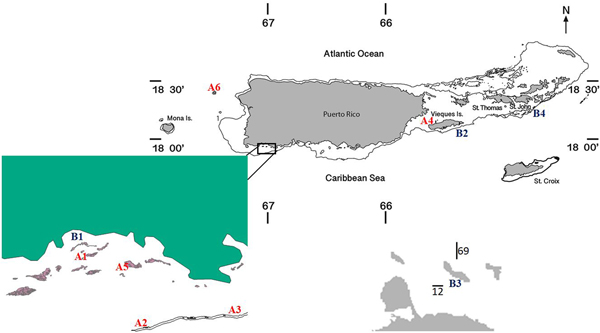
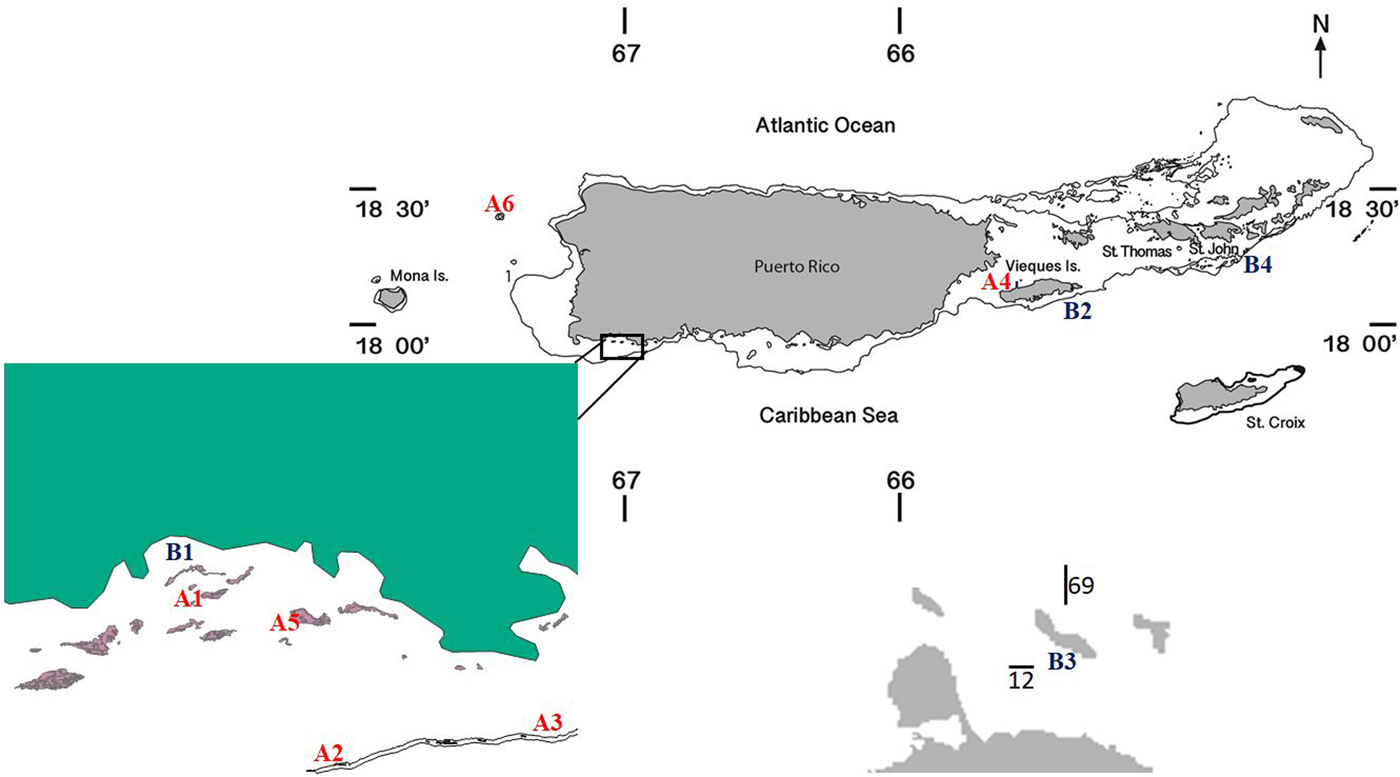
The motivation to include non-coral MCE-associated fauna stems from the complete lack of data on this significant component of mesophotic habitats and its potential to provide a different perspective from previous studies focusing on corals themselves. Thus, this study aims to better understand connectivity of reefs with representatives from two crustacean taxa displaying different association types to corals. We estimated population level characteristics of (i) the barnacle Ceratoconcha domingensis (Des Moulins, 1866), an obligate symbiont of the coral Agaricia lamarcki (Milne Edwards & Haime, 1851), from shallow and mesophotic reefs in La Parguera and Guánica, Puerto Rico and (ii) the free-living harpacticoid copepod, Laophontella armata (Willey, Reference Willey1935), from a mesophotic coral ecosystem in El Seco (Vieques, Puerto Rico) and a mangrove habitat in Curaçao (Figure 1; Table 1). Barnacles were extracted from A. lamarcki since the coral has a wide geographic range in the Caribbean basin and a recorded depth distribution from 10 to 75 m (i.e. depth-generalist, Aronson et al., Reference Aronson, Bruckner, Moore, Precht and Weil2008). This plate-shaped coral also has pronounced levels of population connectivity across the same geographic range where the barnacles were collected from Hammerman et al. (Reference Hammerman, Rivera-Vicens, Galaska, Weil, Alfaro, Appeldoorn and Schizas2017).
Site map for barnacle Ceratoconcha domingensis and copepod Laophontella armata collections across the US Caribbean and Curaçao: Barnacle sites (red), A1 (Inner La Parguera, Puerto Rico), A2 (La Parguera Shelf Edge, Puerto Rico), A3 (Guánica Shelf Edge, Puerto Rico), A4 (Vieques, Puerto Rico), A5 (Outer La Parguera, Puerto Rico) and A6 (Desecheo, Puerto Rico); Copepod sites (blue), B1 (La Parguera Shallow, Puerto Rico), B2 (El Seco Mesophotic, Puerto Rico), B3 (Curaçao Shallow) and B4 (St. John Mesophotic, US Virgin Islands).
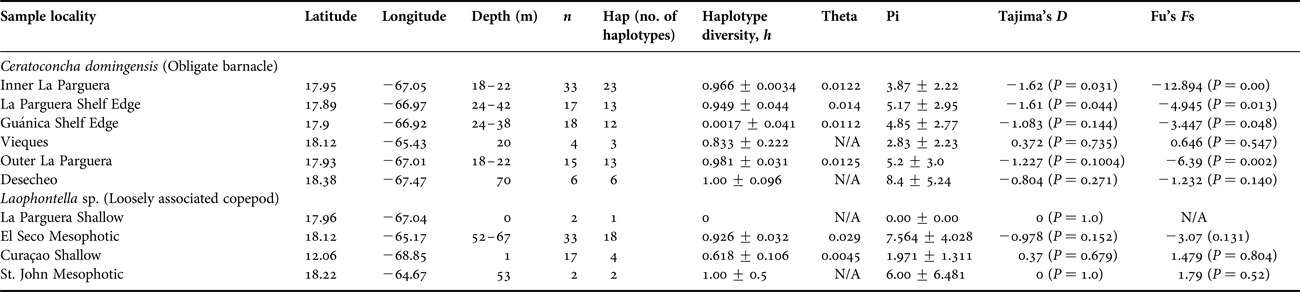
Collection information and diversity indices for the barnacle (Ceratoconcha domingensis) and copepod (Laophontella armata) sample sets.

MATERIALS AND METHODS
Sample collections and DNA extraction
The mesophotic (>30 m) samples of copepods from El Seco, Vieques were obtained through previous mesophotic research cruises conducted by the Department of Marine Sciences at the University of Puerto Rico at Mayagüez (UPRM-DMS). The copepod specimens were collected along with other meiofauna and macrofauna after washing mesophotic coral fragments and other substrata overtop a 0.125 mm mesh sieve. All organisms were placed in 50 ml vials and fixed in absolute ethanol. Copepod samples were handpicked with fine tweezers after being observed and identified under a dissection microscope. The species identification of the copepods was cross-checked against the literature after dissections of a few specimens. The shallow samples of L. armata were collected opportunistically in Curaçao from fine sediment below mangrove roots. These collections consisted of sieving loose sediments near mangrove roots with a 0.500 mm on top of a 0.125 mm mesh sieve. Again, the subsequent samples were fixed, examined under microscope and prepared for DNA extraction. DNA extraction for the copepods consisted of placing a whole specimen into a 1.5 ml DNA- and RNA-free microcentrifuge tube and using the Chelex protocol (Sigma Aldrich). The Chelex solution consisted of 0.25 g of Chelex per 3 ml of PCR grade water. The tissue samples were submerged in 20 µl of Chelex solution and incubated on ice for 15 min. Following incubation, the samples were vortexed for 30 s, and then incubated for 20 min at 95 °C. The tube was centrifuged for three minutes at 12,000 rpm and the supernatant was pipetted off without disturbing the pellet.
Barnacles were removed from mesophotic (>30 m) and shallow (<18 m) Agaricia lamarcki colonies in south-west Puerto Rico (La Parguera and Guánica), Vieques (an island east of Puerto Rico) and Desecheo (an island off the west coast of Puerto Rico) using scuba with a chisel and hammer (Figure 1). Sampling in La Parguera resulted in three groupings based on distance from land (Inner, Outer and Shelf Edge La Parguera) and one grouping for Guánica (Guánica Shelf Edge, Table 1). In the lab, barnacle samples were stored in 50 ml conical vials in 95% ethanol in a −20°C freezer until molecular processing. The barnacles were macerated in a mortar and by pestle to a fine pulp and DNA extraction followed standard protocols as outlined by the Qiagen DNeasy Plant and Tissue Mini Kit (Qiagen, Valencia, CA). All DNA templates were inspected for quality on 2% agarose gels and with the Nanodrop Spectrophotometer 2000.
PCR amplification and sequencing preparation
Copepod and barnacle partial Cytochrome C Oxidase Subunit I (COI) was PCR-amplified. Primers specifically designed for Laophontella armata were used to amplify the COI gene, after initial amplification with the universal COI primers LCO1490 and HCO2198 (Folmer et al., Reference Folmer, Black, Hoeh, Lutz and Vrijenhoek1994). The new species-specific primers were designed with Primer3 and are as follows: LaophontellaF (5′-ACA ATG TGG TAG TAA CTG CTC-3′) and LaophontellaR (5′-GAT CCC CTC CAC CTC TTA CG-3′). Each individual PCR reaction contained 12.5 µl MyTaq™ Mix (2×, Bioline), 0.3 µl LaophontellaF primer, 0.3 µl LaophontellaR primer, 4.5 µl distilled H2O and 7.0 µl DNA template. The PCR conditions for the copepod DNA were 95°C for 1 min, followed by 35 cycles each at 95°C for 30 s, 47°C for 30 s, and 72°C for 1 min, with a final extension step at 72 °C for 7 min. Barnacle COI was amplified using the universal primers LCO1490 (5′-GGT CAA CAA ATC ATA AAG ATA TTG-3′) and HCO2198 (5′-TAA ACT TCA GGG TGA CCA AAA AAT CA-3′). Prior to DNA amplification, the extracted barnacle DNA was 1/10 diluted. Individual reactions then consisted of 0.3 µl LCO1490, 0.3 µl HCO2198, 8.0 µl of distilled H2O and 4.0 µl of diluted barnacle DNA template. Cycle conditions for barnacle amplification were as follows: 94°C for 2 min, followed by 35 cycles at 95°C for 15 s, 45.5°C for 50 s and 72°C for 1 min, with a final extension at 72 °C for 5 min. All positively confirmed copepod and barnacle PCR amplicons were purified using 4.0 μl of ExoSAP-IT PCR cleanup reagent (Thermo Fisher Scientific) per 5 μl of PCR product. Samples were plated on 96-well sequencing plates and were processed for Sanger sequencing in both directions using the Big Dye 3.1 Terminator Cycle Sequencing Kit and the ethanol-precipitated products were loaded into an ABI 3130xl 16-capillary Genetic Analyzer at Yale University. All DNA sequences have been submitted to GenBank (Ceratoconcha domingensis COI: accession numbers MH347748–MH347839; Laophontella armata COI: accession numbers MH347840–MH347893).
The DNA chromatograms produced were visually inspected for quality and accuracy in nucleotide base assignment in Codon Code Aligner v. 5.1.5 (Codon Code Corp.). Sequences were trimmed in Codon Code Aligner then aligned by the MAFFT Algorithm v. 7 (Katoh & Standley, Reference Katoh and Standley2013) for further analyses. Substantiated sequences were imported into DNAsp v. 5.10.01 (Librado & Rozas, Reference Librado and Rozas2009) and clustered based on sample locality. An ARLEQUIN haplotype file was generated by DNAsp for downstream genetic diversity and population structure analyses. Statistical selections of best-fit models of nucleotide substitution for both datasets were performed using jModelTest 2.1.10 (Darriba et al., Reference Darriba, Taboada, Doallo and Posada2011).
Genetic diversity and population structure
Molecular diversity indices for copepod and barnacle COI sequences, including the number of variable sites (S), number of haplotypes (Hap), haplotype diversity (h) and the mean number of nucleotide differences between haplotypes (k) were calculated for each sample locality in DNAsp. Nucleotide diversity (π), neutrality tests (Tajima's D and Fu's Fs), and population structure (AMOVA) were estimated using the software ARLEQUIN v. 3.5.2.2 (Excoffier & Lischer, Reference Excoffier and Lischer2010). All analyses done in ARLEQUIN were performed using the Tamura–Nei model of nucleotide substitution (Tamura & Nei, Reference Tamura and Nei1993) determined by jModelTest2 with 10,000 permutations. Pairwise ΦST population comparisons were done between all sample locations (Weir & Cockerham, Reference Weir and Cockerham1984) as implemented in ARLEQUIN and statistical significance was tested against the null hypothesis of panmixia. Haplotype networks were illustrated with a median-joining network algorithm (ε = 0) (Bandelt et al., Reference Bandelt, Forster and Röhl1999) using the software PopART v. 1.7 (Leigh & Bryant, Reference Leigh and Bryant2015) to analyse haplotype genealogy. Sequence divergences between populations were estimated in PAUP (Swofford, Reference Swofford2001).
RESULTS
Ceratoconcha domingensis (Cirripedia: Balanomorpha: Pyrgomatidae)
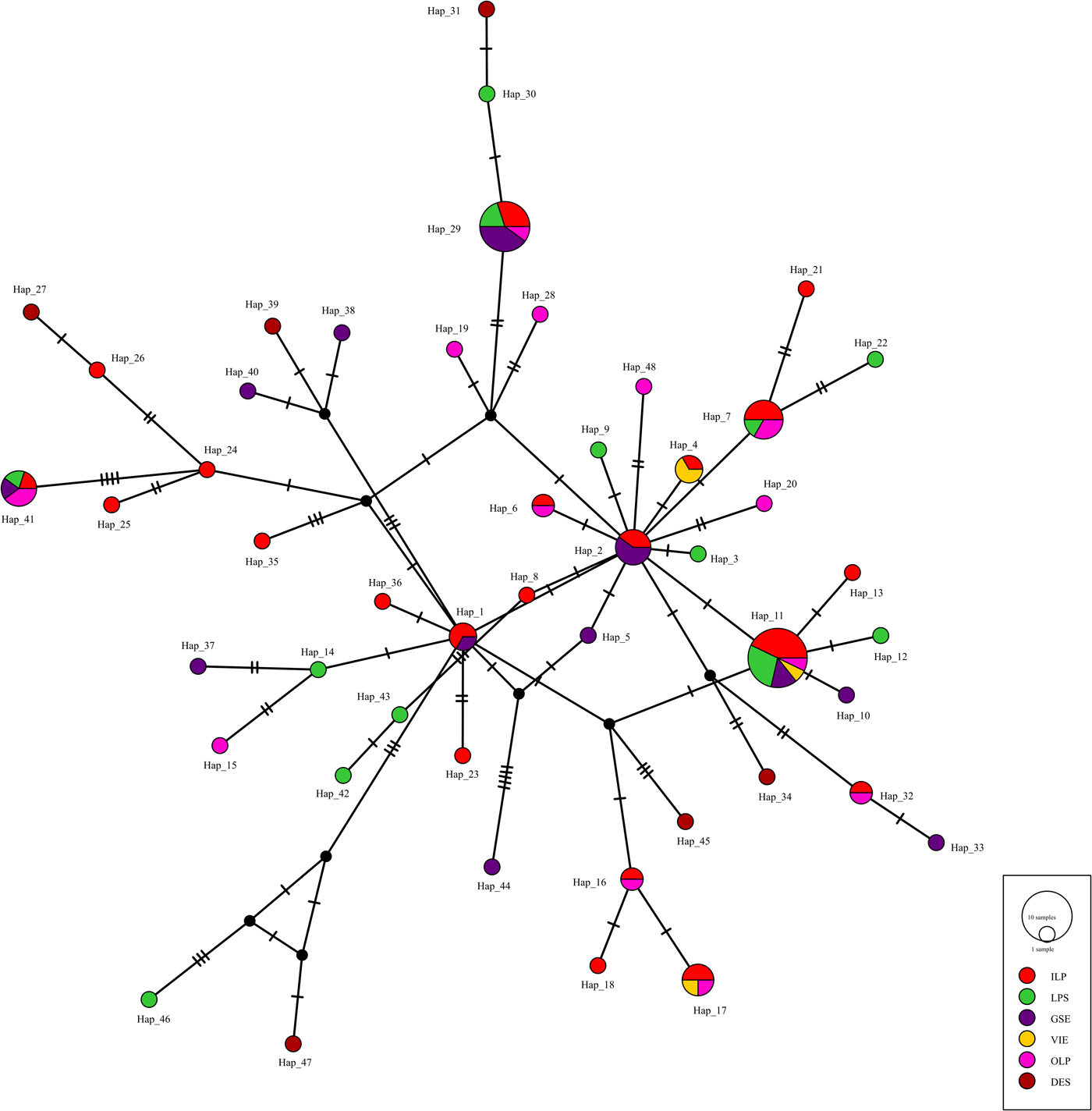
COI sequences (680 bp) were obtained from 92 individual barnacles, representing six different sample locations (Table 1). The locality with the most samples was Inner La Parguera (N = 32, depth 18–22 m) and the lowest was Vieques (N = 4, depth 20 m). From these 92 sequences, we identified 48 COI haplotypes, 37 of which were singletons. Desecheo (depth 70 m) had the highest haplotype diversity as all sequences were different (h = 1.00); however, the sample size was small (N = 6). Inner and Outer La Parguera (both sites at depth 18–22 m) had larger sample sizes (N = 32 and N = 15, respectively) and still displayed high haplotype diversity, 0.966 and 0.981 respectively (Table 1). The lowest haplotype diversity was observed in the Guánica Shelf Edge (h = 0.002; depth 24–38 m; Table 1). The sample locality represented by the highest number of COI haplotypes was Inner La Parguera (N = 23), while the lowest was Vieques (N = 3). Haplotype 11 was the most abundant (N = 14) throughout our sample set, found at all locations except Desecheo (Figure 2). Haplotype 11 was most common in Inner La Parguera (N = 6) and the La Parguera Shelf Edge (N = 4, depth 24–42 m). Haplotype 7 (N = 6) was exclusively found in La Parguera, though most commonly in Inner La Parguera (N = 3).
Median-joining network based on Ceratoconcha domingensis COI haplotypes generated in this study. The network was estimated using the median-joining algorithm in PoPArt with epsilon = 0. Each circle represents a different haplotype and the size of a circle correlates with number of individuals belonging to that given haplotype. Colours indicate the geographic origin of sequences as follows: i. Inner La Parguera (ILP), red; ii. La Parguera Shelf Edge (LPS), green; iii. Guánica Shelf Edge (GSE), purple; iv. Vieques (VIE), yellow; v. Outer La Parguera (OLP), pink; vi. Desecheo (DES), maroon.
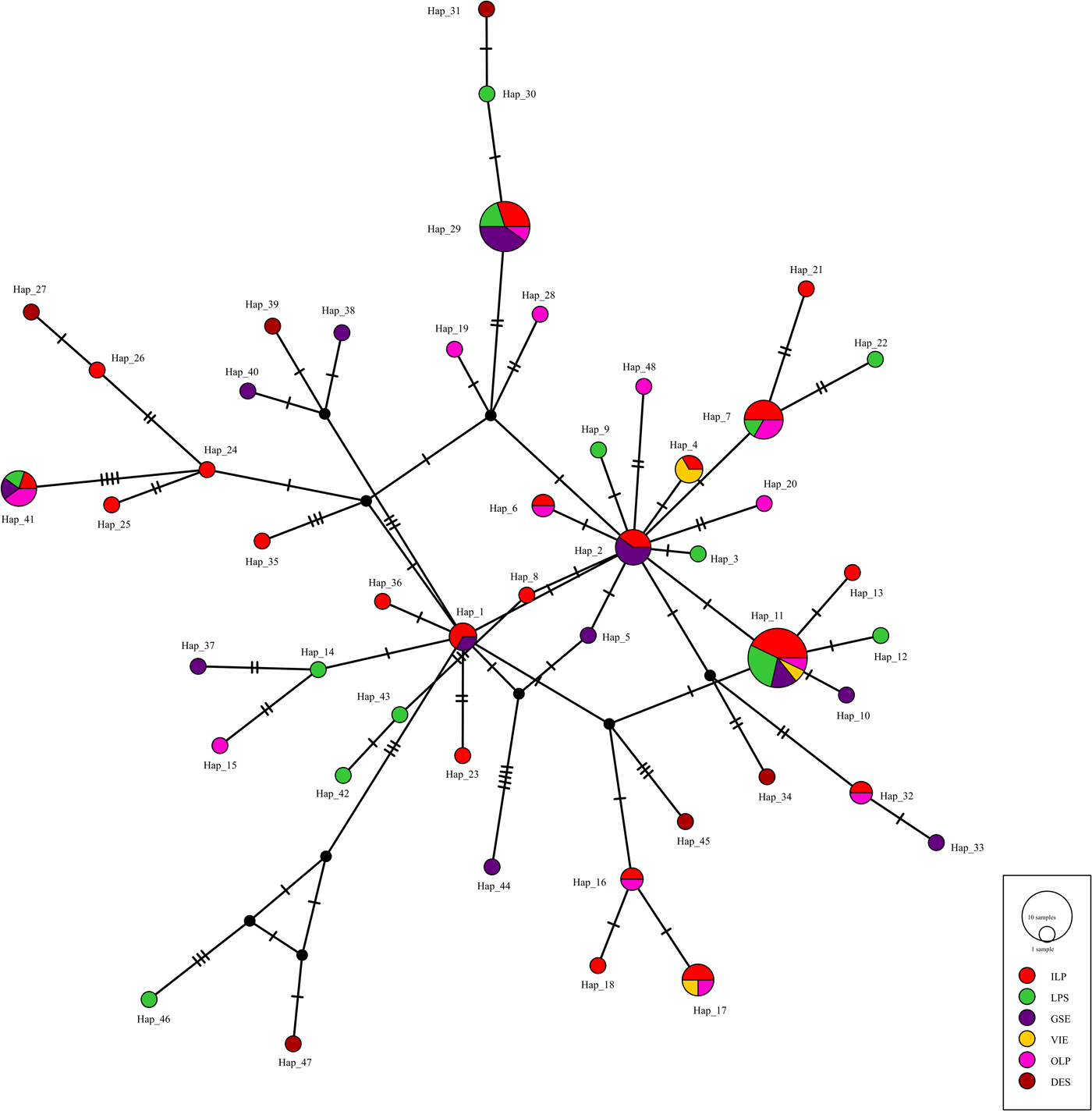
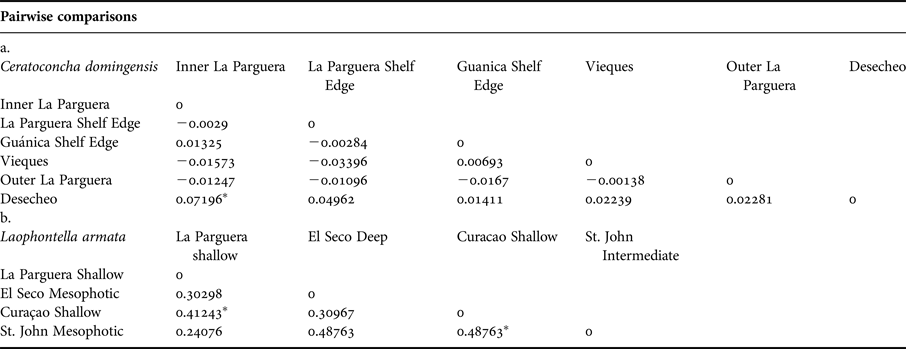
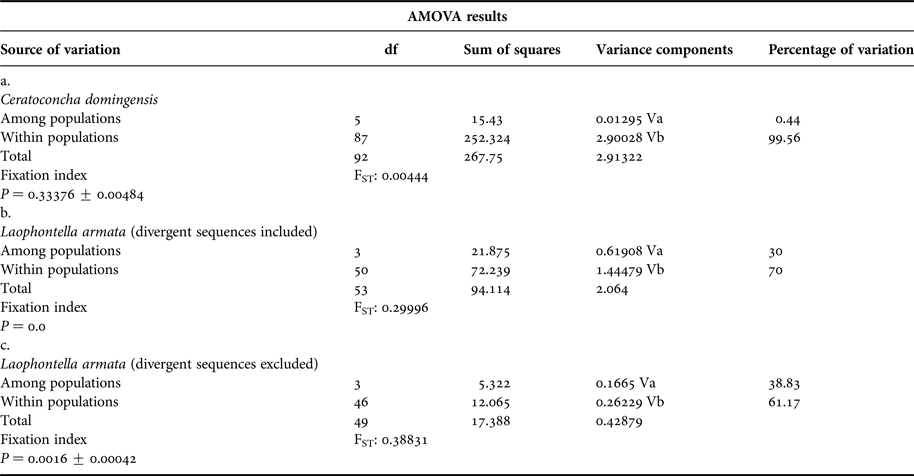
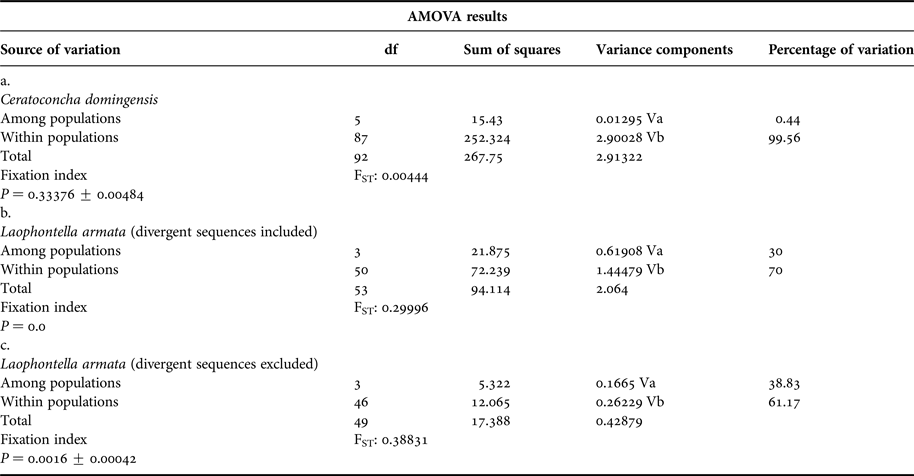
The haplotype network for barnacle COI sequences does not indicate the presence of any distinct sequence clusters by geography, suggesting the absence of population structure among the sampled locations (Figure 2). Nucleotide diversity (π) values were highest for La Parguera Shelf Edge (0.0083) and Outer La Parguera (0.0082). Similarly, the highest values of θ were observed in the La Parguera Shelf Edge (0.0130) and Outer La Parguera (0.0108). The Desecheo and Vieques samples represented six and four of the 48 haplotypes, respectively, though due to the small sample size and high similarity with the other locations, they were not considered while discussing π and θ values per site (Table 1). The excess of singletons resulted in rejecting the equilibrium hypothesis for all sample locations (Fu's Fs) and Inner and La Parguera Shelf Edge (Tajima's D) was statistically significant (Table 1). AMOVA results indicated that there was no population structure (ΦST = 0.00797) between the sample localities (Table 3). Pairwise ΦST comparisons confirmed the AMOVA results showing no significant differences among the sampled locations (Table 2).
FST pairwise comparisons (Weir & Cockerham, Reference Weir and Cockerham1984) for the barnacle and copepod data sets.
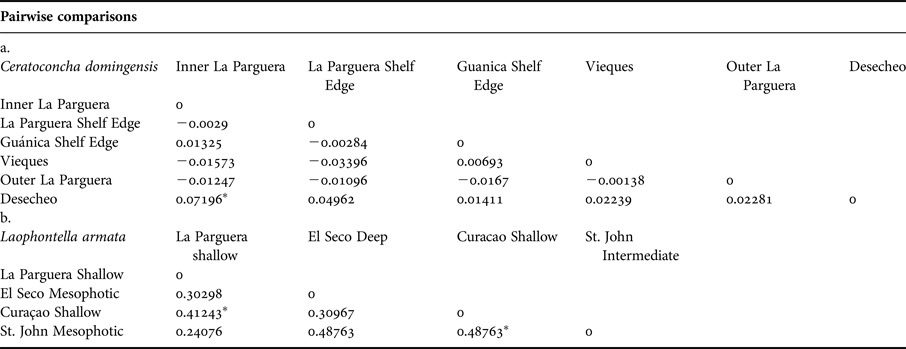
*Represents significant comparisons with a P-value ≤0.05.
AMOVA results for both the barnacle sample set (a) and copepod sample set including (b) and excluding (c) outlier haplotypes.
Laophontella armata (Copepoda: Harpacticoida: Tetragonicipitidae)
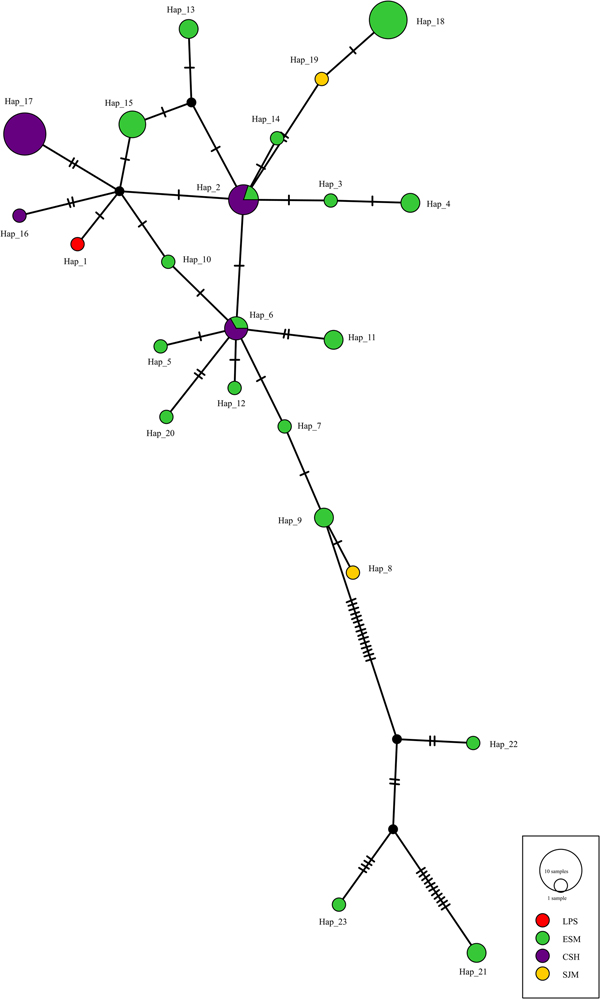
Laophontella armata samples yielded 54 COI sequences (496 bp) from four different locations (Table 1). Sample locations La Parguera Shallow and St. John Mesophotic both were represented by two sequences each, and while included in the PoPArt analyses, they were not considered further. The considered data set consisted of 50 Laophontella COI sequences from El Seco Mesophotic (N = 33) and Curaçao Shallow (N = 17). Of the 50 sequences, 20 were identified as haplotypes and of those, 11 were singletons (El Seco Mesophotic, N = 18; Curaçao, N = 2, Figure 3). Haplotype diversity was higher in El Seco Mesophotic (h = 0.926) than Curaçao Shallow (h = 0.618, Table 1). Haplotype 17 was the most common haplotype (N = 10) and was exclusively found in Curaçao Shallow. Haplotype 18 (N = 8) was the second most common haplotype and was unique to El Seco Mesophotic. COI haplotypes 2 and 6 were the only shared haplotypes between El Seco Mesophotic (N = 1 for both haplotypes) and Curaçao (N = 4 for Haplotype 2, and N = 6 for Haplotype 6).
Median-joining network based on Laophontella armata COI haplotypes generated in this study. The network was estimated using the median-joining algorithm in PoPArt with epsilon = 0. Each circle represents a different haplotype and the size of a circle correlates with number of individuals belonging to that given haplotype. Colours indicate the geographic origin of sequences as follows: i. La Parguera Shelf Edge (LPS), red; ii. El Seco Mesophotic (ESM), green; iii. Curaçao Shallow, purple; iv. St. John Mesophotic (SJM), yellow.
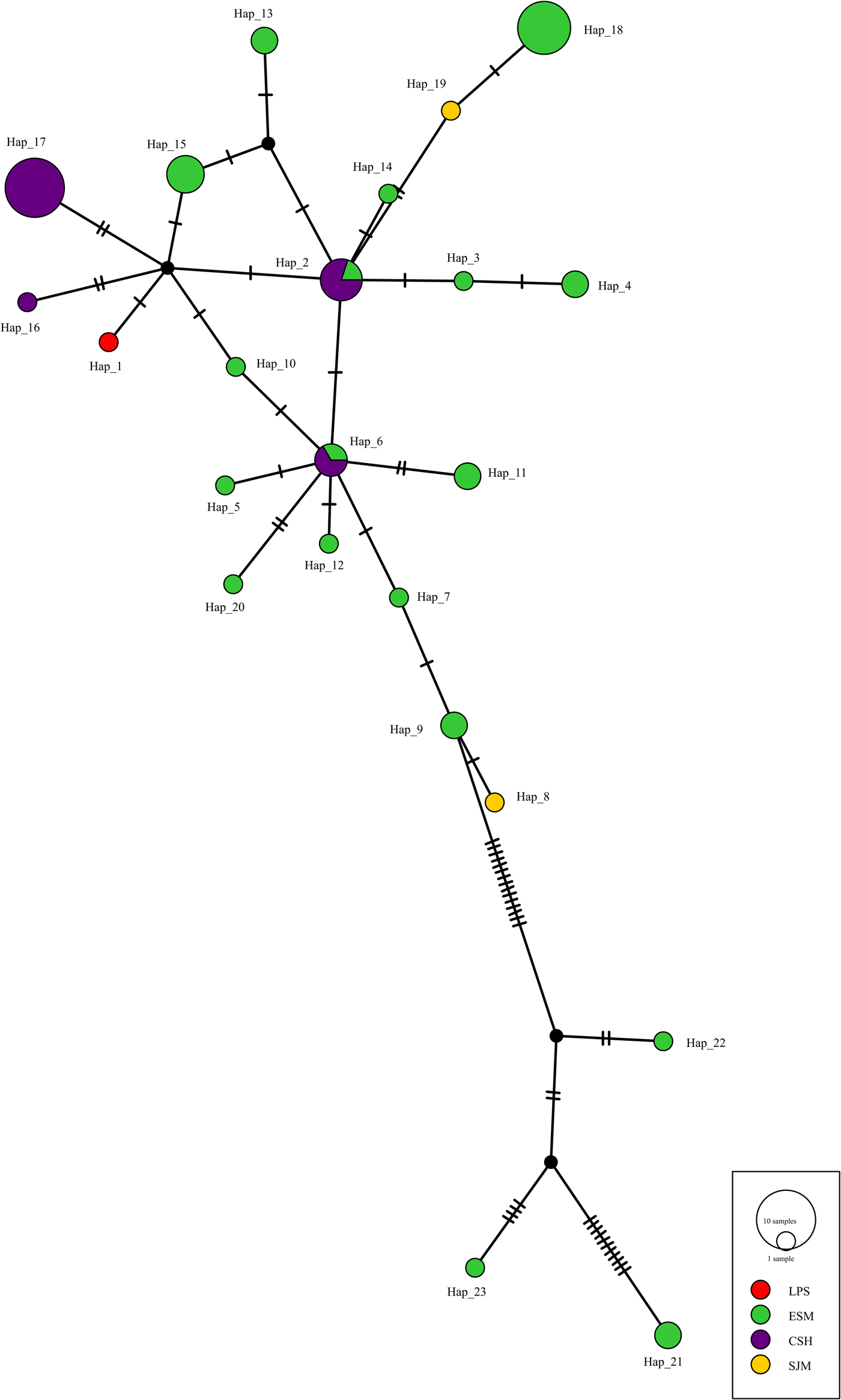
The haplotype network did not indicate any distinct clustering by geography except the exclusive occurrence of Haplotypes 17 and 18, in Curaçao and El Seco Mesophotic, respectively (Figure 2). The highest π and θ values were observed in the El Seco Mesophotic sample set, 0.015 and 0.029, respectively. Neutrality tests Tajima's D and Fu's Fs were found to be insignificant indicating that the nucleotide patterns of variation are consistent with the neutral theory of evolution. Pairwise ΦST comparison between El Seco Mesophotic and Curaçao Shallow indicate a strong population structure between the two locations (Table 2). Surprisingly, within the El Seco Mesophotic sample set there were three divergent haplotypes (Haplotypes 21 (N = 1), 22 (N = 1) and 23 (N = 2)) that could represent three cryptic species of Laophontella. The divergent sequences are not obvious numts since they do not contain stop codons and match other harpacticoid copepod sequences already present in GenBank, therefore we suggest that they represent harpacticoid copepod sequences. Pairwise ΦST comparisons were performed including and excluding these sequences, in both cases ΦST values showed structure between El Seco and Curaçao (included: 0.3097, Table 2; excluded: 0.2804). Sequence divergence values for the COI gene between El Seco and Curaçao with the four divergent sequences excluded ranged from 0.2–1.6%, whereas genetic distance between the divergent sequences and all other sequences ranged between 5.1–7%. Furthermore, AMOVA analyses including all sample localities (El Seco, La Parguera, St. John, Curaçao) were run twice, including (ΦST = 0.2999) and excluding (ΦST = 0.3883) the divergent sequences (Table 3).
DISCUSSION
As dramatic phase shifts continue in most marine ecosystems, the risk of losing undocumented marine biodiversity, as well as altering natural gene flow patterns when creating fragmented habitats increases (Plaisance et al., Reference Plaisance, Caley, Brainard and Knowlton2011). Gene flow is a complicated process and the result of pre- and post-zygotic factors relating to the species in question and environment where they reproduce (Cowen & Sponaugle, Reference Cowen and Sponaugle2009). For instance, the scleractinian coral Agaricia lamarcki, has pronounced gene flow between shallow and mesophotic colonies in south-west Puerto Rico (Hammerman et al., Reference Hammerman, Rivera-Vicens, Galaska, Weil, Alfaro, Appeldoorn and Schizas2017). Although, the Symbiodinium populations within A. lamarcki contain depth-differentiated clades, with specific clade profiles from either shallow or mesophotic depths (Bongaerts et al., Reference Bongaerts, Frade, Ogier, Hay, van Bleijswijk, Englebert, Vermeij, Bak, Visser and Hoegh-Guldberg2013; Lucas et al., Reference Lucas, Stat, Smith, Weil and Schizas2016). Despite insights into demographic properties of corals and their relationship to endosymbionts, relatively little knowledge is available pertaining to speciation and gene flow of coral-associated fauna. By taking a more holistic approach to community-level population structure, a better handle of gene flow can be surmised and it can be determined how genetically interconnected coral reefs are with one another and how that leads to both patterns of panmixia and genetic structure. Studies with single species can fail to identify dispersal barriers, for instance the concomitant use of 27 species from different trophic levels indicated the presence of four phylogeographic breaks within the Hawaiian Archipelago (Toonen et al., Reference Toonen, Andrews, Baums, Bird, Concepcion, Daly-Engel, Eble, Faucci, Gaither, Iacchei, Puritz, Schultz, Skillings, Timmers and Bowen2011). A multispecies approach is a more informative and unbiased approach to estimate patterns of connectivity that characterize the whole community (Toonen et al., Reference Toonen, Andrews, Baums, Bird, Concepcion, Daly-Engel, Eble, Faucci, Gaither, Iacchei, Puritz, Schultz, Skillings, Timmers and Bowen2011).
The COI haplotype network and AMOVA analysis of the obligate coral barnacle, Ceratoconcha domingensis indicated no geographic partition between La Parguera and Guánica (Figure 2; Tables 2 and 3). Geographically, sample sites are within ~20 km of one another and both La Parguera and Guánica contain connected and continuous reef habitat. Within this continuous reef network, Agaricia lamarcki exhibits genetic panmixia (Hammerman et al., Reference Hammerman, Rivera-Vicens, Galaska, Weil, Alfaro, Appeldoorn and Schizas2017) as its obligate barnacle symbiont C. domingensis. The high abundance and the plate morphology of A. lamarcki are especially conducive for barnacle nauplius settlement (Liu et al., Reference Liu, Hoeg and Chan2017). Predominant westerly driven currents could uniformly transport larvae across south-west Puerto Rico and further aid in propagule retention, allowing for recruitment of coral associated barnacles in a stepping stone fashion (Appeldoorn et al., Reference Appeldoorn, Hensley, Shapiro, Kioroglou and Sanderson1994; Zitello et al. Reference Zitello, Whitall, Dieppa, Christensen, Monaco and Rohmann2008). The excess of rare barnacle sequences in all locations is consistent with the scenario of population growth as indicated by the negative values of Fu's Fs (Table 1). The demographic history of many marine species is characterized by population expansions (Delrieu-Trottin et al., Reference Delrieu-Trottin, Mona, Maynard, Neglia, Veuille and Planes2017).
Future investigations should sample Pyrgomatidae barnacles from more species within the Agaricia genus as well as other coral hosts (Young & Christoffersen, Reference Young and Christoffersen1984; Chen et al., Reference Chen, Lin and Chan2012). By sampling across all the agariciid corals and across a wider geographic setting, a better handle on biodiversity and host preference can be obtained and will allow for comparative inferences into gene flow and cryptic speciation. The utility of DNA barcoding for elucidating such phenomena has already been proven (Neigel et al., Reference Neigel, Domingo and Stake2007; Plaisance et al., Reference Plaisance, Knowlton, Paulay and Meyer2009; Raupach & Radulovici, Reference Raupach and Radulovici2015). Specifically, COI barcoding with Millepora-associated barnacles (Wanella spp.) revealed five distinct clades within sampling sites in Taiwan, corresponding to differences in shell and opercula plate morphology (Tsang et al., Reference Tsang, Chan, Shih, Chu and Chen2009). The distinct clades indicated the presence of cryptic species with a significant difference in preference for host growth form between encrusting and branch-forming Millepora. A similar trend may persist for agariciid-associated barnacles and warrants further investigation.
High levels of population structure were estimated for the harpacticoid copepod, Laophontella armata between the mesophotic reef in El Seco off the eastern coast of Puerto Rico and from a shallow mangrove habitat in Curaçao (Tables 2 and 3). This copepod species is considered a habitat generalist since it inhabits both mangrove and mesophotic habitats. However, shared haplotypes (Haplotype 2 and 6) were identified between the two strikingly different environments (Figure 3). This was unexpected due to the obligatory benthic life history of L. armata, the shear geographic distance between the two localities (770 km – straight line; 1790 km – contour of the Caribbean plate), and expectations from previous studies on the population structure of harpacticoid copepods (Burton et al., Reference Burton, Feldman and Curtsinger1979; Burton, Reference Burton1998; Schizas et al., Reference Schizas, Street, Coull, Chandler and Quattro1999; Gregg et al., Reference Gregg, Foltz and Fleeger2010; Handschumacher et al., Reference Handschumacher, Steinarsdottir, Edmands and Ingolfson2010). Most studies on harpacticoid copepods reveal population structure on small and large geographic scales (e.g. Schizas et al., Reference Schizas, Street, Coull, Chandler and Quattro1999, Reference Schizas, Coull, Chandler and Quattro2002; Edmands, Reference Edmands2001; Denis et al., 2009; Willett & Ladner, Reference Willett and Ladner2009; Gregg et al., Reference Gregg, Foltz and Fleeger2010). Both mud-dwelling harpacticoid copepods, such as Microarthridion littorale, and rock pool copepods such as Tigriopus spp. exhibit population subdivision along saltmarsh estuaries (Schizas et al., Reference Schizas, Street, Coull, Chandler and Quattro1999) and rock pools (Handschumacher et al., Reference Handschumacher, Steinarsdottir, Edmands and Ingolfson2010), respectively. In a more extreme setting, research on deep-sea hydrothermal vent-associated siphonostomatoid copepods showed high levels of gene flow and genotypic diversity across several ocean basins suggesting copepod populations could be large and continually undergoing population growth (Gollner et al., Reference Gollner, Stuckas, Kihara, Laurent, Kodami, Martinez Arbizu and Duperron2016). Sometimes, species with limited dispersal can be more widespread than those with extensive plankton dispersal, since restricted dispersal can help maintain a population at high densities after rare, long-distance transport events (Johannesson, Reference Johannesson1988). These rare transport events could explain the shared haplotypes observed between Laophontella subpopulations from El Seco (Puerto Rico), Vieques and Curaçao.
The three divergent haplotypes (Hap 21, 22 and 23) from El Seco were consistently BLASTed as harpacticoid copepod sequences, and they may represent several morphologically similar species. The only species of Laophontella recorded from the tropical Atlantic/Caribbean (Bermuda (Willey, Reference Willey1935) and Bahamas (Geddes, Reference Geddes1968)) is Laophontella armata. The morphology of Laophontella is very distinct with large cuticular spines and is almost impossible even for a novice to mistaken their identity. All specimens were sorted and few were dissected by experienced copepodologists, therefore if there are cryptic species, they share the same general body morphology with Laophontella and belong to this genus. Alternatively, these haplotypes represent uncommon deeply divergent lineages within Laophontella, at least in El Seco, Vieques. This discovery could also indicate a vast under-estimation of mesophotic reef-associated copepod biodiversity and more generally meiofauna and small macrofauna. It has been suggested that MCEs represent a hotspot of biodiversity with dozens of new species of macroalgae (e.g. Ballantine & Ruiz, Reference Ballantine and Ruiz2010), fish (e.g. Pyle & Kosaki, Reference Pyle and Kosaki2016), crustaceans (e.g. Schizas et al., Reference Schizas, Dahms, Kangtia, Corgosinho and Galindo Estronza2015) and mites (e.g. Pešić et al., Reference Pešić, Chatterjee, Alfaro and Schizas2014) being described in recent years. These taxonomic studies highlight the importance of MCEs and the need for these deeper habitats to be protected with similar management policies as the shallow water coral reefs.
The extreme case of shared haplotypes in copepods between the El Seco mesophotic reef off the east coast of Puerto Rico and a shallow mangrove habitat in Curaçao show how interconnected seemingly disjunct populations of crustaceans can be and reveal a shared genetic and biological diversity between shallow and mesophotic habitats. This is an important issue in the central question of whether MCEs are refuge habitats for all or only a few species (Bongaerts et al., Reference Bongaerts, Riginos, Brunner, Englebert, Smith and Hoegh-Guldberg2017) since shared genetic backgrounds are indicative of species with high connectivity. Further research should focus on sampling more mesophotic reef-associated fauna to discern habitat usage, gene flow, host preference and specificity. This is especially important given the remarkable biodiversity encountered in both shallow and mesophotic reefs. More studies are needed to further elucidate the shared meio- and macrofauna habitats and possible routes of genetic exchange. In conclusion, panmixia estimated between the coral-inhabiting barnacle and the shared haplotypes found between the neritic and mesophotic locations for the harpacticoid copepod, highlights the genetic interplay between shallow and deeper habitats and the significance of using multiple species to decipher population connectivity at the community level.
Acknowledgements
We thank Milton Carlo, Orlando Espinosa, Jaaziel Garcia and Monica Alfaro for assistance in specimen collection and sorting.
Financial support
Specimens were collected under the auspices of the Department of Natural Resources for Puerto Rico (O-VS-PVS15-MA-00017-29092014) and the cruises were funded by the following NOAA grants to the Caribbean Coral Reef Institute, UPRM: NA06NOS4780190, NA10NOS4260223, NA11NOS4260157 and NA11NOS4260184. A portion of the work was supported by the National Oceanic and Atmospheric Administration's Center for Sponsored Coastal Ocean Research (NOAA/CSCOR) (NA06NOS4780190), through the Caribbean Coral Reef Institute and Puerto Rico Sea Grant project # R-101-1-14 awarded to NVS and Monica Alfaro. DNA sequencing costs were covered by Seagrant (award number PD-326) awarded to Matt Lucas.