





Introduction
Environmental education is widely recognised as a key mechanism for shaping children’s understanding of biodiversity and their willingness to engage in conservation behaviours. Evaluating how educational interventions influence young learners is therefore fundamental for improving the effectiveness of conservation strategies. This need has become increasingly urgent in the context of the accelerating global biodiversity crisis. According to the International Union for Conservation of Nature, a substantial and growing number of species face extinction risk, primarily as a consequence of human-driven pressures such as habitat degradation, pollution and unsustainable resource use (IUCN, 2021; Keck et al., Reference Keck, Peller, Alther, Barouillet, Blackman, Capo, Chonova, Couton, Fehlinger, Kirschner, Knüsel, Muneret, Oester, Tapolczai, Zhang and Altermatt2025; Ramírez & Santana, Reference Ramírez and Santana2019). These threats are particularly acute in island ecosystems, where high levels of endemism, restricted geographic ranges and ecological isolation make species especially vulnerable to extinction processes. Importantly, environmentally harmful practices are often reinforced by limited ecological literacy and insufficient environmental awareness, both of which point to persistent gaps in environmental education (Valderrama-Hernández et al., Reference Valderrama-Hernández, Alcántara and Limón2017).
Concurrently, children’s everyday contact with nature has declined globally as urbanisation intensifies and digital engagement increases. This progressive reduction in direct nature experience – conceptualised by Pyle (Reference Pyle1978) as the “extinction of experience” – is a primary concern in environmental education research (Soga & Gaston, Reference Soga and Gaston2016). Recent literature highlights that the shift toward sedentary, indoor and digitally mediated lifestyles severely limits opportunities for direct interaction with local ecosystems (Louv, Reference Louv2020; Soga & Gaston, Reference Soga and Gaston2023). Empirical evidence suggests that many school-aged children frequently demonstrate greater familiarity with widely publicised exotic fauna than with local species (Ballouard et al., Reference Ballouard, Brischoux and Bonnet2011). Such trends weaken both emotional and cognitive connections with nearby environments, potentially undermining future conservation engagement. As underscored by recent studies, this disconnection not only diminishes children’s well-being but also erodes their ability to recognise and value local biodiversity, ultimately weakening the foundations of pro-environmental behaviours (Nandyal, Reference Nandyal2025; Wang et al., Reference Wang, Geng, Zhou, Ye and Ma2016).
Children’s environmental values are shaped through multiple socialisation pathways. Family contexts remain influential, yet they may also reproduce environmentally unsustainable norms (Yus-Ramos, Reference Yus-Ramos1994). At the same time, research has demonstrated that knowledge exchange between generations is not purely top-down; children can act as agents of change within their households, influencing parental attitudes and behaviours (Damerell et al., Reference Damerell, Howe and Milner-Gulland2013; Vaughan et al., Reference Vaughan, Gack, Solorazano and Ray2003). Within this dynamic, schools represent particularly powerful settings for cultivating environmental literacy, fostering critical reflection and encouraging behaviours aligned with local conservation priorities (Stevenson, Reference Stevenson2007; UNESCO, 2017).
Environmental education includes a wide range of teaching approaches designed to improve environmental knowledge, foster positive attitudes towards nature and build problem-solving skills (Edsand & Broich, Reference Edsand and Broich2020; Lucas, Reference Lucas1979). Although many programmes report positive outcomes (Ortiz et al., Reference Ortiz, Conkey, Brennan, Fedynich and Green2018; Ruiz-Mallén et al., Reference Ruiz-Mallén, Barraza, Bodenhorn and Reyes-García2009; Spooner et al., Reference Spooner, Jensen, Tracey and Marshall2019), their effectiveness is not uniform. Research shows that impacts depend strongly on programme design, contextual relevance and the quality of evaluation (Ardoin et al., Reference Ardoin, Bowers and Gaillard2020).
A persistent limitation in environmental education research is the lack of systematic, rigorous assessment of programme effectiveness. Without such evaluation, it remains difficult to determine whether interventions successfully generate meaningful cognitive or attitudinal change (Pérez Juste, Reference Pérez Juste2000). Furthermore, the evidence base is geographically skewed toward Europe and North America (Kossack & Bogner, Reference Kossack and Bogner2012; Koutromanos et al., Reference Koutromanos, Sofos, Anastasiades and Zaranis2018). In contrast, studies from biodiversity-rich regions – where the socio-ecological context demands locally grounded and culturally responsive approaches – remain comparatively limited, despite significant contributions from tropical landscapes (Kuhar et al., Reference Kuhar, Bettinger, Lehnhardt, Tracy and Cox2010; Lanjouw, Reference Lanjouw2021; Robinson et al., Reference Robinson, Ariga, Cameron and Wang2022). This geographical gap obscures the diverse methodologies required to effectively engage communities in the Global South and hampers the development of a more inclusive understanding of conservation education’s global impact.
In response to these gaps, the present study evaluates the effects of a classroom-based environmental education intervention on children’s knowledge and perceptions of local biodiversity on Margarita Island.
The main objective of this research was to assess changes in children’s perception and knowledge of Margarita Island’s biodiversity, focusing on six emblematic species. The intervention incorporated the local colloquial terms “ñeros” and “navegaos” – expressions commonly used on the island to refer, respectively, to people born locally and to immigrants. These terms were pedagogically adapted to classify animal species according to their native or migratory status. This culturally responsive approach was designed to strengthen students’ conceptual and emotional connections with local biodiversity by drawing on familiar linguistic references, in line with recommendations emphasising the value of socio-culturally contextualised environmental education. By evaluating the effectiveness of this intervention, the study provides valuable insights into how environmental education can enhance children’s awareness and foster a deeper commitment to local biodiversity conservation. These findings contribute to the broader discussion on the role of education in promoting sustainable behaviours and preserving ecological heritage. Moreover, by enhancing environmental awareness and encouraging conservation actions, this study aligns with the 2030 Agenda for Sustainable Development (United Nations, 2015). Specifically, it contributes to SDG 4 (Quality Education) by promoting the acquisition of knowledge for sustainable development (Target 4.7) and supports SDG 14 (Life Below Water) and SDG 15 (Life on Land) by fostering the protection of marine and terrestrial ecosystems through community-based literacy and the conservation of island biodiversity.
Materials and methods
Study area
Margarita Island harbours considerable biological diversity within the Caribbean region (Sanz D´Angelo, Reference Sanz D´Angelo2007), although its landscapes have been substantially transformed by recent land-use change. The establishment of the Free Trade Zone in 1971 and the Free Port policy in 1974 repositioned the island as Venezuela’s primary tourism destination, triggering profound socio-economic restructuring. As tourism expanded, traditional livelihoods – particularly artisanal fishing and small-scale agriculture – were progressively displaced by service-oriented employment linked to the tourism and commercial sectors (Briceño-Linares et al., Reference Briceño-Linares, Aranguren-Alvarez, Clarenda, Díaz, Doest, Haines, Houtepen, Martin, Millán, Nunes, Schmaltz, Sucre, van Slobbe and Rodríguez2024; Sanz D´Angelo et al., Reference Sanz D´Angelo, Riveros, Gutiérrez and Moncada2011).
Like many island systems, Margarita exhibits ecological characteristics that heighten conservation vulnerability, including restricted species ranges, high levels of endemism and strong sensitivity to anthropogenic disturbance. Rapid and extensive urban expansion has intensified human–wildlife conflicts and contributed to habitat loss, hunting pressure, the introduction of exotic species, wildlife trafficking driven by the illegal wildlife trade for the pet market, inadequate waste management and other environmental stressors. Collectively, these pressures have become key drivers of ecosystem degradation and biodiversity decline on the island (Caula & Sanz D´Angelo, Reference Caula and Sanz DAngelo2021; Sanz D‘Angelo & Caula, Reference Sanz and Caula2015; Sanz D´Angelo et al., Reference Sanz D´Angelo, Oviol, Medina and Moncada2010).
Although multiple conservation measures have been implemented – including the creation of Cerro El Copey National Park, Laguna de La Restinga National Park, three natural monuments and, more recently, the Macanao Wildlife Reserve (2021) – current assessments indicate that the existing protected-area network still faces important limitations in ensuring the long-term persistence of threatened species (Briceño-Linares et al., Reference Briceño-Linares, Aranguren-Alvarez, Clarenda, Díaz, Doest, Haines, Houtepen, Martin, Millán, Nunes, Schmaltz, Sucre, van Slobbe and Rodríguez2024; Sanz D´Angelo, Reference Sanz D´Angelo2007).
Interdisciplinary leadership and species selection
The project was designed as a knowledge-transfer initiative bridging higher education, national research institutions and the school system. It was executed by an interdisciplinary team led by PhD ecologists, alongside an education specialist, a biologist with classroom experience and a nature-oriented graphic designer. This collaborative framework ensured that scientifically robust, validated ecological data was translated into age-appropriate, culturally relevant and pedagogically engaging materials for primary education.
Six emblematic and threatened vertebrate species – two mammals, two birds and two reptiles – were selected to act as pedagogical focal species linking scientific content with locally meaningful biodiversity. Three of these taxa are endemic and critically endangered: the Margarita capuchin monkey (Sapajus apella margaritae) and the Margarita deer (Odocoileus margaritae), both associated with Cerro El Copey National Park, and the Ñángaro parrot (Thectocercus acuticaudatus neoxena), the island’s only endemic parrot population. These species face multiple pressures including habitat loss, hunting, invasive species and illegal capture for the pet trade (Carrillo, Reference Carrillo1994, Reference Carrillo2007; Novo et al., Reference Novo, Morales, Rodríguez and De Hertelendy1997; Rojas-Suárez, Reference Rojas-Suárez, Morales, Novo, Bigio, Luy and Rojas-Suárez1994; Sanz D´Angelo & Márquez, Reference Sanz D´Angelo and Márquez1994; Sanz D´Angelo et al., Reference Sanz D´Angelo, Moncada, Morales, Urbani and Ceballos-Mago2021).
The remaining focal species comprised two marine turtles – the leatherback (Dermochelys coriacea) and the hawksbill (Eretmochelys imbricata) – both classified as endangered, and the Caribbean flamingo (Phoenicopterus ruber). The flamingo was included due to its ecological and socio-cultural relevance and its documented recolonisation of Margarita Island, with successful nesting reported in 2015 (Bermúdez-Villapol et al., Reference Bermúdez-Villapol, Marcano, Figueroa, Dubois, Yáñez and Moya2017; Marcano et al., Reference Marcano, Martínez, Amundarain, Bermúdez and Figueroa2023; Sanz D´Angelo, Reference Sanz D´Angelo2020).
Theoretical framework
As a culturally responsive strategy, the “Ñeros and Navegaos” programme is grounded in situated learning theory, which posits that learning is a social process deeply embedded in a specific cultural context (Lave & Wenger, Reference Lave and Wenger1991). By utilising the vernacular terms “ñero” refers to island natives, while “navegao” denotes those arriving from elsewhere as symbolic mediators, the intervention translated abstract ecological data into the students’ lived reality. Within this framework, flagship species function as “boundary objects” that facilitated communication between scientific research and local folk culture, transforming conservation messaging into an exploration of territorial identity (Sánchez-Contreras & Murga-Menoyo, Reference Sánchez-Contreras and Murga-Menoyo2019).
This intervention was further grounded in the principles of place-based education (PBE), which leverages the local environment as the primary starting point for learning (Sobel, Reference Sobel2004). PBE serves as a strategy for curricular sustainability, allowing educational content to root itself in the social and ecological reality of the territory (Sánchez-Contreras & Murga-Menoyo, Reference Sánchez-Contreras and Murga-Menoyo2019). In island contexts, this connection is essential: ecological literacy is most effectively achieved when students perceive nature not as a distant concept but as a constituent element of their territorial heritage (Eppinga et al., Reference Eppinga, de Scisciolo and Mijts2019; Nandyal, Reference Nandyal2025).
The integration of PBE and situated learning is particularly urgent in the Caribbean, where environmental education must move beyond generic messaging toward issue-based to action-oriented approaches (Armstrong, Reference Armstrong2005; Cambers et al., Reference Cambers, Belmar, Brito-Feliz, Diamond, Key, Paul and Townsend2008). Consequently, this framework functions as an operational tool for Education for Sustainable Development (ESD), aligning with SDG 4 (Target 4.7) by fostering territorial ownership and supporting SDGs 14 and 15. Ultimately, our approach sought to transform conservation imperatives into locally meaningful cultural actions (Collins-Figueroa, Reference Collins-Figueroa2012; Nandyal, Reference Nandyal2025).
Research design and ethical procedures
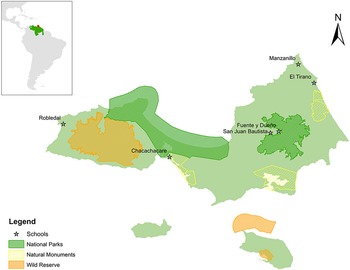
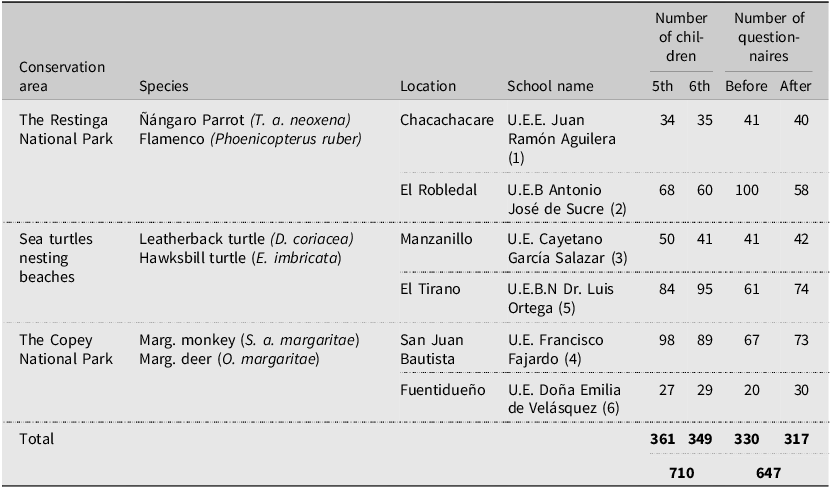
This study employed a quantitative quasi-experimental research design with a pre-test/post-test approach. Six rural schools were selected based on (Figure 1, Table 1): (i) proximity to national parks or beaches used by nesting sea turtles; (ii) absence of major social issues (e.g., drug abuse, crime or sexual services) that could divert community attention from environmental conservation; and (iii) willingness of the headteacher and teachers to actively participate in the project.
The six rural schools selected are located near national parks or sea turtle nesting beaches on Margarita Island, Venezuela. These schools are situated near areas that are home to the six flag species included in the study.
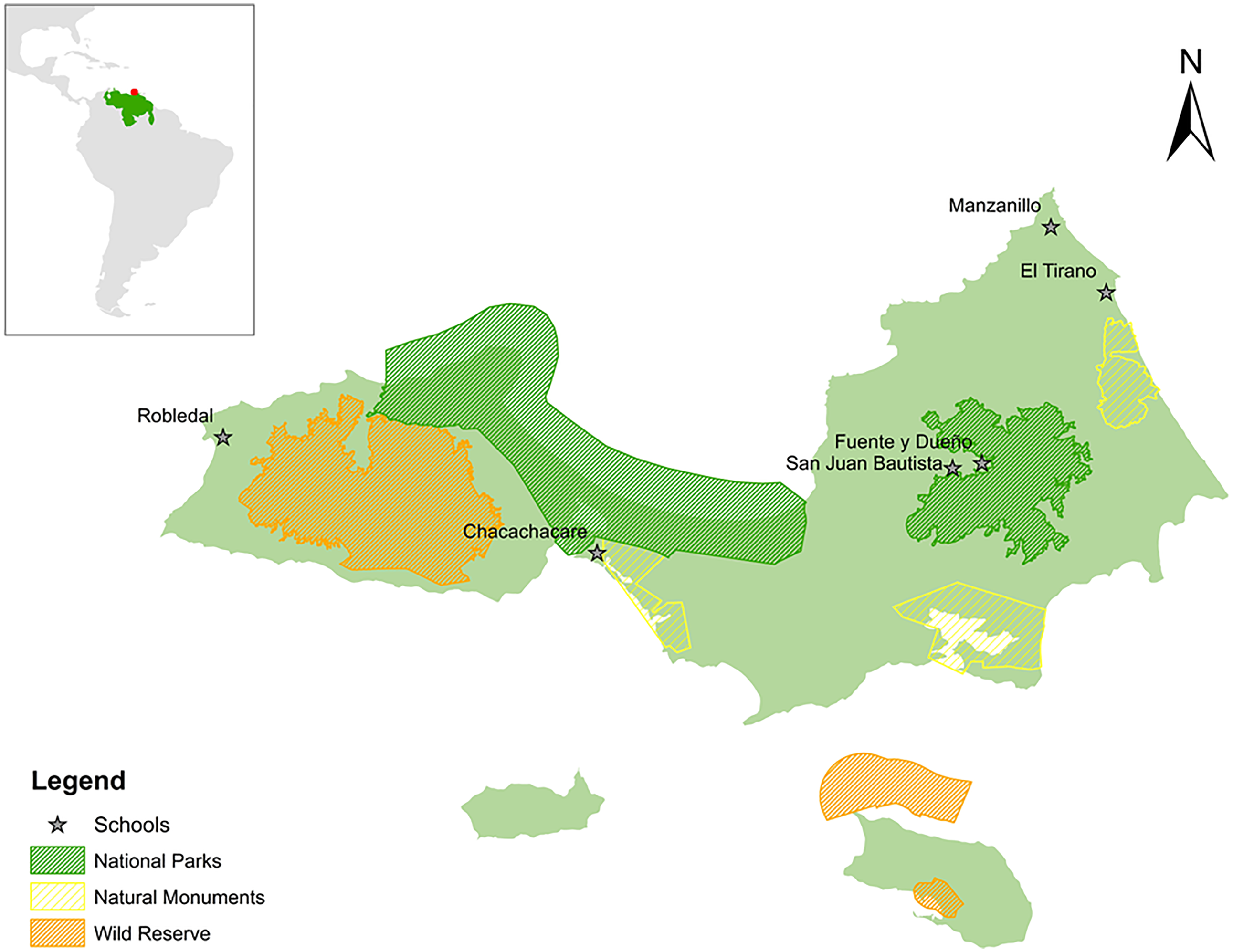
The six selected schools, located near national parks or sea turtle nesting beaches, the six emblematic and threatened species inhabiting conservation areas and the number of students chosen for testing before and after the environmental intervention at the schools
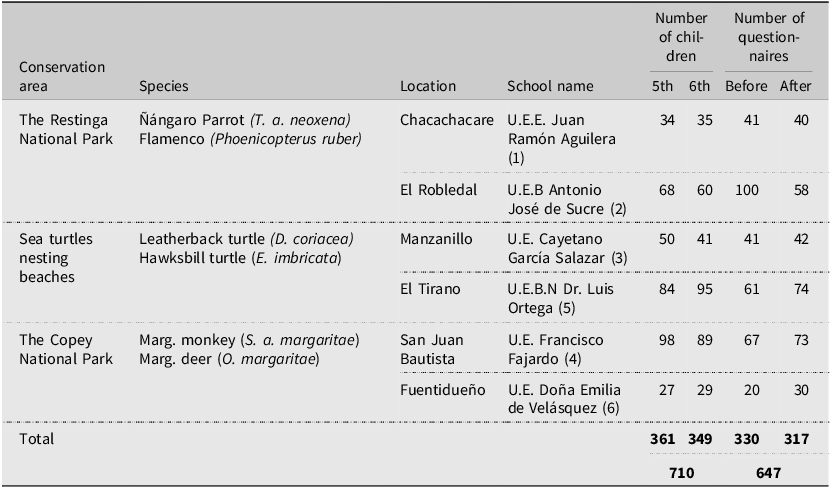
Table 1. Long description
The table presents data on the number of children and questionnaires in different schools near conservation areas. It has six rows and seven columns. The columns are Conservation area, Species, Location, School name, Number of children (5th, 6th), and Number of questionnaires (Before, After). The rows list data for different schools: U.E.E. Juan Ramón Aguilera (1) in Chacachacare with 34 and 35 children in 5th and 6th grades respectively, and 41 and 40 questionnaires before and after; U.E.B. Antonio José de Sucre (2) in El Robledal with 68 and 60 children in 5th and 6th grades respectively, and 100 and 58 questionnaires before and after; U.E. Cayetano García Salazar (3) in Manzanillo with 50 and 41 children in 5th and 6th grades respectively, and 41 and 42 questionnaires before and after; U.E.B.N Dr. Luis Ortega (5) in El Tirano with 84 and 95 children in 5th and 6th grades respectively, and 61 and 74 questionnaires before and after; U.E. Francisco Fajardo (4) in San Juan Bautista with 98 and 89 children in 5th and 6th grades respectively, and 67 and 73 questionnaires before and after; U.E. Doña Emilia de Velásquez (6) in Fuentidueño with 27 and 29 children in 5th and 6th grades respectively, and 20 and 30 questionnaires before and after. The total number of children is 361 in 5th grade and 349 in 6th grade, with 330 and 317 questionnaires before and after respectively.
The project was conducted in accordance with Venezuelan educational regulations governing research and school-based activities. Institutional authorisation was granted by the Ministry of Education through the Educational Zone of Nueva Esparta State (Permit No. 0046), ensuring data confidentiality and participant anonymity. All activities were closely coordinated with headteachers and environmental coordinators to align with administrative protocols, ensuring data confidentiality and participant anonymity. Under these institutional frameworks, each school managed the consent from parents or legal guardians and students. Furthermore, all classroom sessions were delivered in the presence of the students’ regular teachers, ensuring a safe and familiar environment for the participants.
Intervention activities
Across the six participating schools, the entire population of fifth and sixth-grade students (N = 710) engaged in the educational activities. These grade levels were specifically selected as they align with the concrete operational stage of cognitive development (ages 9–12); at this stage, children are developmentally prepared to transition from simple observations toward more complex ecological reasoning (Piaget, Reference Piaget1952). Furthermore, students in this age bracket possess the necessary literacy and reading comprehension skills required to reliably complete the evaluation instruments (Table 1).
Teacher-focused actions
-
a. An 8-hour professional development workshop on Margarita Island’s biodiversity and classroom strategies was delivered to teachers and environmental coordinators.
-
b. Participants received a USB drive containing bibliographic resources and visual materials used during training.
Student-focused actions
-
c. Two classroom sessions (2 hours each) introduced students to local biodiversity, focal species and conservation challenges using visual and interactive materials.
-
d. Environmental games were conducted in classrooms or playground spaces.
-
e. Outreach materials (stickers, posters, bags and caps) featuring the selected species were distributed.
-
f. Each classroom received a biodiversity poster highlighting the focal taxa.
The student-focused interventions were delivered directly by the interdisciplinary research team to ensure consistency in the delivery of scientific content. Classroom teachers acted as observers and facilitators during these sessions, subsequently reinforcing the content using the materials provided in the teacher workshops.
All activities were designed to promote active participation rather than passive reception. The pedagogical approach followed four principles: participant-centred learning, multimodal instruction, contextualised learning in familiar environments (Esteban-Guitart, Reference Esteban-Guitart2016; Méndez & Arteaga, Reference Méndez and Arteaga2013) and structured cognitive challenge to stimulate critical thinking.
Assessment of children’s knowledge and perceptions
For the quantitative assessment, a systematic sub-sampling approach was implemented within each classroom. Ten students per class were randomly selected – ensuring gender balance – to complete the evaluation instruments. This strategy was designed to maintain a manageable yet statistically representative sample for the pre- and post-intervention analysis. Consequently, a total of 647 valid surveys were processed (330 pre-intervention and 317 post-intervention), representing approximately 45% of the total student population (N = 710) engaged in the project.
Data collection utilised independent samples for the pre-test and post-test phases. This design was specifically chosen to address the high volatility in student attendance and inter-school mobility typical of the region, which precluded the strictly longitudinal tracking of individuals. By treating the cohorts as independent groups, the study successfully assessed the aggregate educational impact across the student population while ensuring participant anonymity and complying with the administrative protocols of the participating schools. The questionnaire assessed:
-
1. Environmental attitudes and values (Questions 1–8).
-
2. General Environmental Knowledge (Questions 9–11).
-
3. Knowledge of Margarita Island’s biodiversity (Question 12–18).
Question formats included multiple choice, true/false items, Likert scales, open responses and drawing tasks (Supplementary Material 1).
Data analysis
Survey responses were coded numerically and entered into OpenOffice Calc. Descriptive analyses were conducted using dynamic tables and percentage graphs
Because data did not meet normality assumptions (Kolmogorov–Smirnov test), differences between pre- and post-intervention groups were analysed using the Mann–Whitney U test. Effect sizes were calculated using Rosenthal’s r:
 $r = {z \over \sqrt{N}}$
Effect magnitudes were interpreted following education-specific benchmarks proposed by Kraft (Reference Kraft2020): small (≈0.05), medium (0.05–0.20) and large (>0.20). Statistical analyses were performed using PAST v4 (Hammer et al., Reference Hammer, Harper and Ryan2001) and Psychometrica (Lenhard & Lenhard, Reference Lenhard and Lenhard2017).
Results: the Impact of the Intervention
The teacher training workshop was positively received by the 25 participating educators. Teachers reported increased awareness of Margarita Island’s biodiversity, including endangered and invasive species, conservation areas and local environmental threats. Several participants reported incorporating this knowledge into their classroom practices, and one teacher subsequently organised a training session for colleagues, indicating early signs of institutional-level knowledge transfer beyond the intervention itself.
A total of 647 valid student questionnaires were collected, including 330 responses before the intervention (control group) and 317 responses after the intervention (treatment group) (Table 1). The sample consisted of 60% girls and 40% boys. Most students were between 10 and 12 years old (31% aged 10, 44% aged 11 and 21% aged 12); a small proportion (4%) fell outside the main target range (9 or 13 years old). Half of the participants were enrolled in fifth grade and half in sixth grade.
Changes in environmental attitudes
Regarding seven attitudinal questions, a high percentage of children (60–90%) chose the most pro-environmental opinions, both before and after the intervention. Nevertheless, we observed statistically significant improvements in environmentally conscious attitudes in three more specific questions: attitudes towards hunting animals (+18%; U = 42,510; p < 0.05), opinions on turtle fishing (+12%; U = 45,482; p < 0.05) and views on keeping birds at home (+15%; U = 4,507; p < 0.05) (Figure 2, Table 2).
Answer to attitudinal questions: attitudes towards hunting animals, opinions on turtle fishing and views on keeping birds at home, before and after the intervention. (a) What do you think about hunting animals? (b) What do you think about turtle fishing? (c) What do you think about keeping birds as pets?.
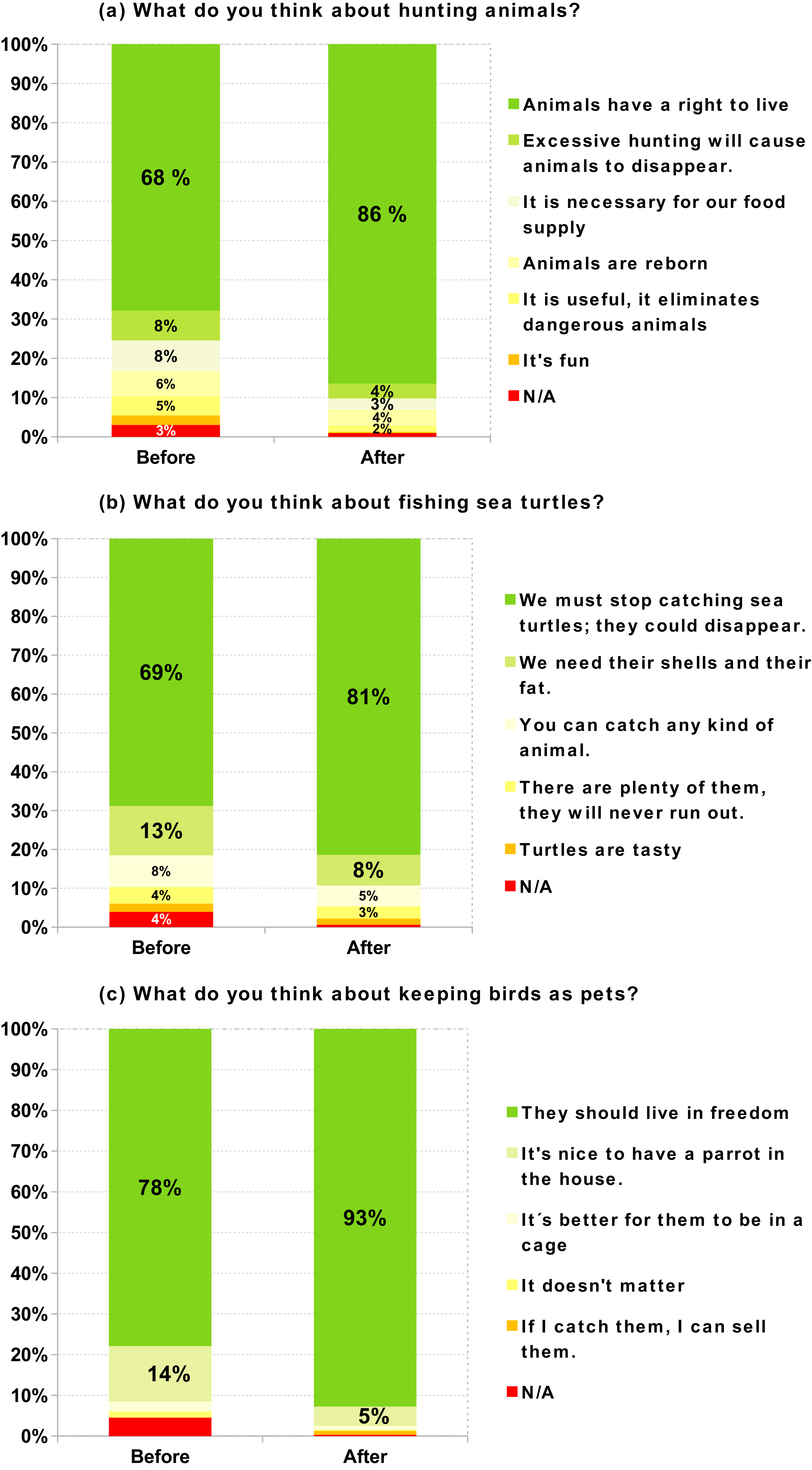
Figure 2. Long description
Panel A: A stacked bar graph comparing attitudes towards hunting animals before and after an intervention. The horizontal axis represents the time periods before and after the intervention, and the vertical axis represents the percentage of respondents. The bars are divided into different colors representing various attitudes: Animals have a right to live, Excessive hunting will cause animals to disappear, It is necessary for our food supply, Animals are reborn, It is useful, it eliminates dangerous animals, It’s fun, and N/A. Before the intervention, 68 percent believe animals have a right to live, 8 percent think excessive hunting will cause animals to disappear, 6 percent believe it is necessary for our food supply, 5 percent think animals are reborn, 3 percent believe it is useful, it eliminates dangerous animals, 3 percent think it’s fun, and 17 percent are N/A. After the intervention, 86 percent believe animals have a right to live, 4 percent think excessive hunting will cause animals to disappear, 2 percent believe it is necessary for our food supply, 3 percent think animals are reborn, 2 percent believe it is useful, it eliminates dangerous animals, 2 percent think it’s fun, and 1 percent are N/A. Panel B: A stacked bar graph comparing opinions on turtle fishing before and after an intervention. The horizontal axis represents the time periods before and after the intervention, and the vertical axis represents the percentage of respondents. The bars are divided into different colors representing various opinions: We must stop catching sea turtles; they could disappear, We need their shells and their fat, You can catch any kind of animal, There are plenty of them, they will never run out, Turtles are tasty, and N/A. Before the intervention, 69 percent believe we must stop catching sea turtles; they could disappear, 13 percent think we need their shells and their fat, 8 percent believe you can catch any kind of animal, 4 percent think there are plenty of them, they will never run out, 4 percent believe turtles are tasty, and 2 percent are N/A. After the intervention, 81 percent believe we must stop catching sea turtles; they could disappear, 8 percent think we need their shells and their fat, 5 percent believe you can catch any kind of animal, 3 percent think there are plenty of them, they will never run out, 3 percent believe turtles are tasty, and 0 percent are N/A. Panel C: A stacked bar graph comparing views on keeping birds as pets before and after an intervention. The horizontal axis represents the time periods before and after the intervention, and the vertical axis represents the percentage of respondents. The bars are divided into different colors representing various views: They should live in freedom, It’s nice to have a parrot in the house, It’s better for them to be in a cage, It doesn’t matter, If I catch them, I can sell them, and N/A. Before the intervention, 78 percent believe they should live in freedom, 14 percent think it’s nice to have a parrot in the house, 5 percent believe it’s better for them to be in a cage, 2 percent think it doesn’t matter, 1 percent believe if I catch them, I can sell them, and 0 percent are N/A. After the intervention, 93 percent believe they should live in freedom, 5 percent think it’s nice to have a parrot in the house, 1 percent believe it’s better for them to be in a cage, 0 percent think it doesn’t matter, 1 percent believe if I catch them, I can sell them, and 0 percent are N/A.
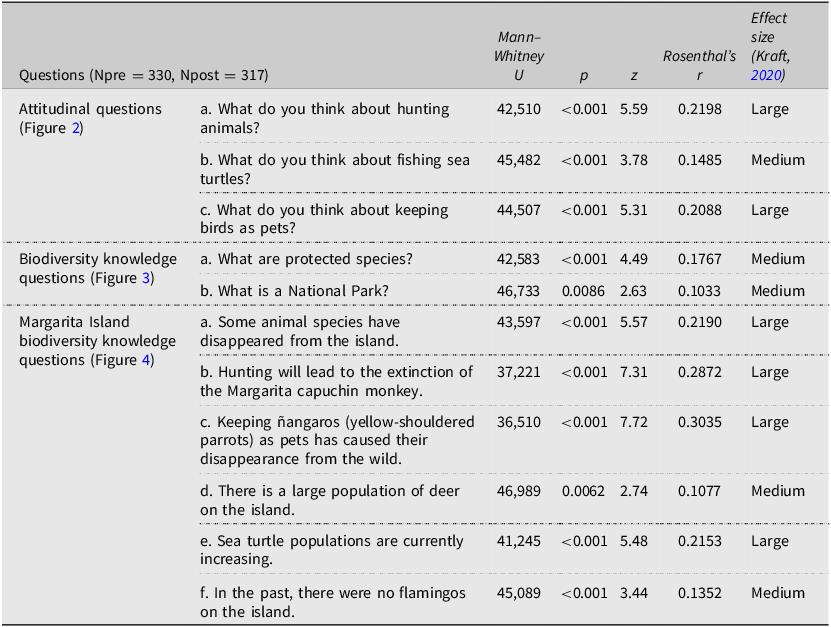
Differences in responses to eight questionnaire items among groups of children before and after the educational intervention. U = Mann–Whitney test statistic, p = probability of accepting the null hypothesis, z = standardised Mann–Whitney z and Rosenthal’s r = effect size statistic of the intervention. The effect size was interpreted according to Kraft (Reference Kraft2020) as small (≤0.05), medium (0.05 < 0.20) and large (≥0.20)
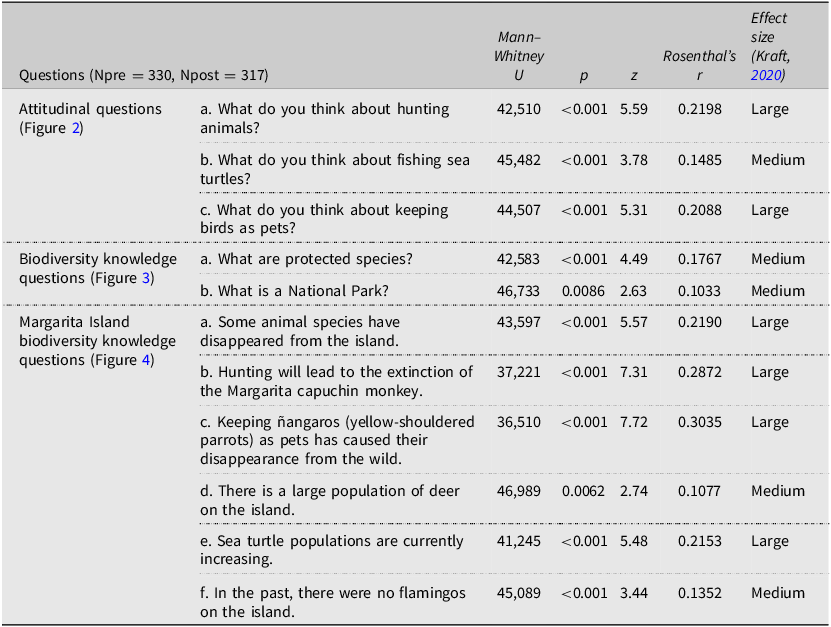
Table 2. Long description
A table comparing questionnaire responses before and after an educational intervention. The table has 12 rows and 5 columns. Column headers are Questions, Mann-Whitney U, p, z, Rosenthal’s r, and Effect size. Row labels include Attitudinal questions, Biodiversity knowledge questions, and Margarita Island biodiversity knowledge questions. Row 1: Attitudinal questions, 42,510, <0.001, 5.59, 0.2198, Large. Row 2: What do you think about hunting animals?, 45,482, <0.001, 3.78, 0.1485, Medium. Row 3: What do you think about fishing sea turtles?, 44,507, <0.001, 5.31, 0.2088, Large. Row 4: What do you think about keeping birds as pets?, 42,583, <0.001, 4.49, 0.1767, Medium. Row 5: Biodiversity knowledge questions, 46,733, 0.0086, 2.63, 0.1033, Medium. Row 6: What are protected species?, 43,597, <0.001, 5.57, 0.2190, Large. Row 7: Margarita Island biodiversity knowledge questions, 37,221, <0.001, 7.31, 0.2872, Large. Row 8: Some animal species have disappeared from the island., 36,510, <0.001, 7.72, 0.3035, Large. Row 9: Hunting will lead to the extinction of the Margarita capuchin monkey., 46,989, 0.0062, 2.74, 0.1077, Medium. Row 10: Keeping ñangaros (yellow-shouldered parrots) as pets has caused their disappearance from the wild., 41,245, <0.001, 5.48, 0.2153, Large. Row 11: There is a large population of deer on the island., 45,089, <0.001, 3.44, 0.1352, Medium. Row 12: Sea turtle populations are currently increasing., 45,089, <0.001, 3.44, 0.1352, Medium.
(a) Mann–Whitney U; (b) Rosenthal’s r; (c) Effect Size (Kraft, Reference Kraft2020).
In these final questions, the percentage of children who believed turtles needed to be caught because we needed to use their shells and fat decreased from 13% to 8%, while the percentage of children who thought birds were better off in cages dropped from 14% to 5%. The intervention greatly affected attitudes toward hunting animals and keeping birds at home and a moderate effect on opinions regarding turtle fishing.
General biodiversity knowledge
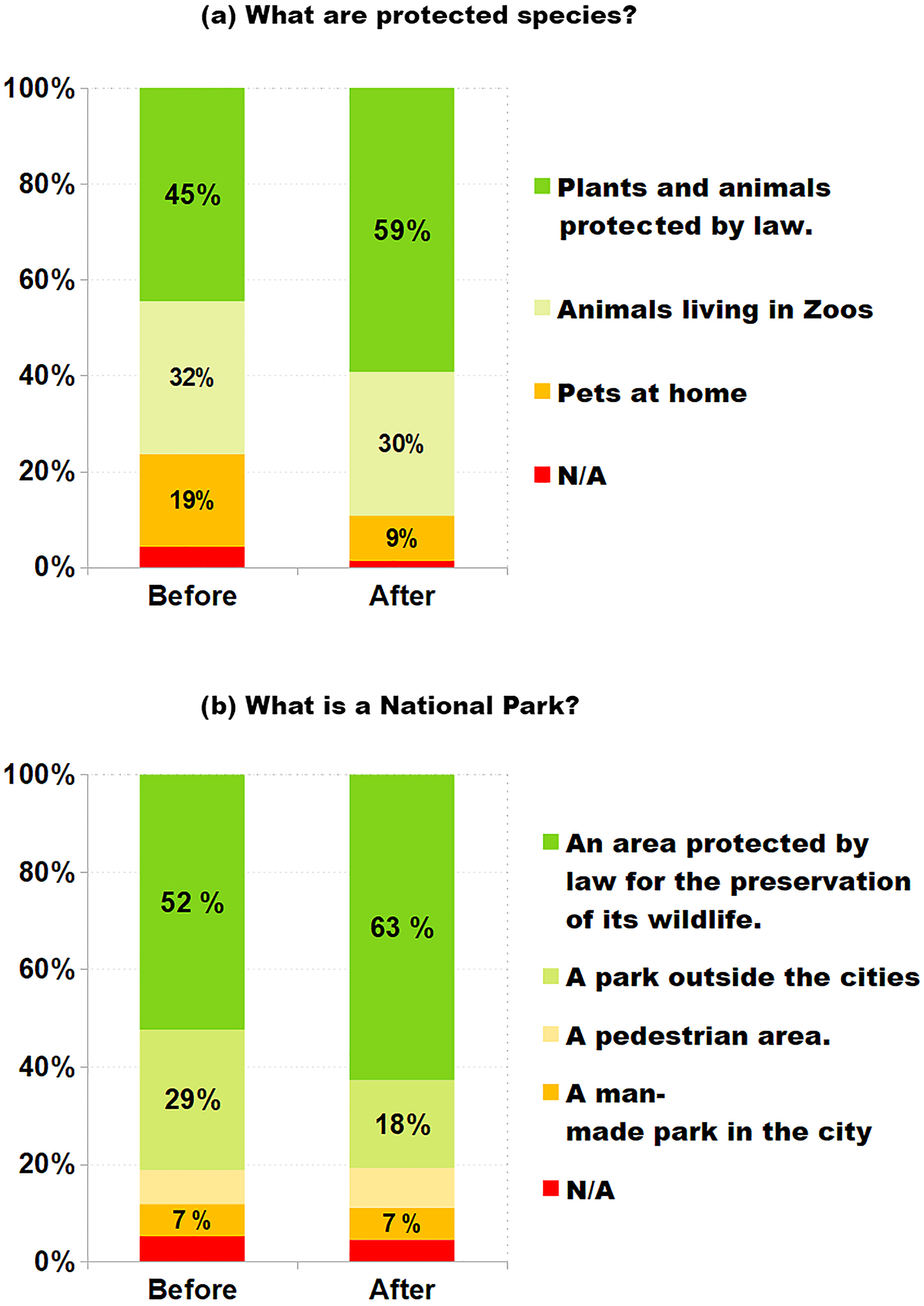
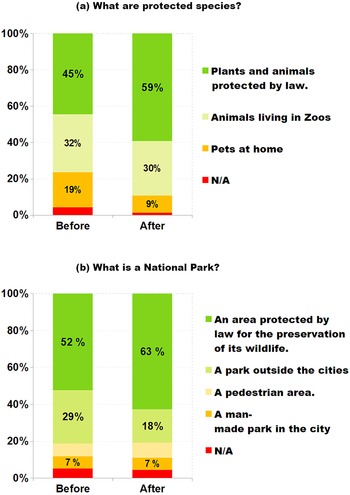
Regarding general biodiversity knowledge (Figure 3), statistically significant improvements were observed for two of the three items. The proportion of students correctly identifying what are protected species increased by + 14% (U = 42,583; p < 0.05), while correct understanding of the concept of a National Park increased by +11% (U = 46,733; p < 0.05). In both questions, the effect sizes were moderate. In contrast, understanding of the biodiversity concept remained limited. Approximately 65% of students defined biodiversity as the diversity of animals and plants, while only 20% selected the scientifically accurate definition encompassing species, genetic and ecosystem diversity. These proportions did not change following the intervention. Figure 3. Bar charts showing the percentage of correct answers to biodiversity knowledge questions before and after the intervention.
Bar charts showing the percentage of correct answers to biodiversity knowledge questions before and after the intervention. (a) What are protected species? (b) What is a National Park?.
Knowledge of Margarita Island’s biodiversity
Significant learning gains were observed in 10 questions specifically related to Margarita Island’s biodiversity. Six of these were true/false items (Figure 4; Table 2).
Bar graphs showing changes in children’s correct responses to biodiversity questions related to native and endangered species on Margarita Island. The correct answer is underlined in each graph.
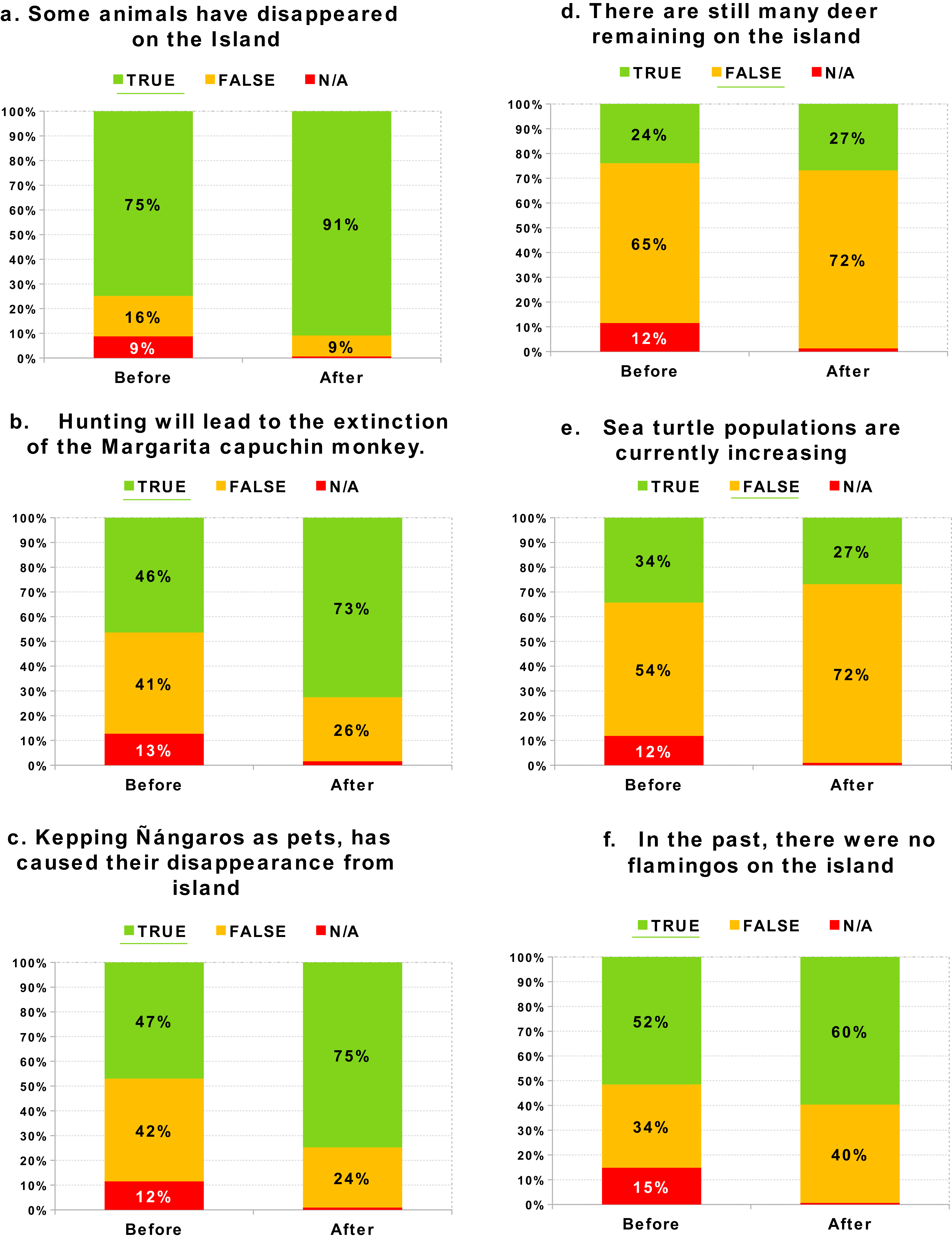
Figure 4. Long description
Panel A: A bar graph compares the percentage of correct responses to the statement Some animals have disappeared on the island before and after an educational intervention. The horizontal axis represents the time periods Before and After, and the vertical axis represents the percentage of correct responses. The bars are grouped by response categories TRUE, FALSE, and N A. Before the intervention, 75 percent of responses were TRUE, 16 percent were FALSE, and 9 percent were N A. After the intervention, 91 percent of responses were TRUE, 9 percent were FALSE, and 0 percent were N A. Panel B: A bar graph compares the percentage of correct responses to the statement Hunting will lead to the extinction of the Margarita capuchin monkey before and after an educational intervention. The horizontal axis represents the time periods Before and After, and the vertical axis represents the percentage of correct responses. The bars are grouped by response categories TRUE, FALSE, and N A. Before the intervention, 46 percent of responses were TRUE, 41 percent were FALSE, and 13 percent were N A. After the intervention, 73 percent of responses were TRUE, 26 percent were FALSE, and 1 percent were N A. Panel C: A bar graph compares the percentage of correct responses to the statement Keeping Nangaros as pets, has caused their disappearance from island before and after an educational intervention. The horizontal axis represents the time periods Before and After, and the vertical axis represents the percentage of correct responses. The bars are grouped by response categories TRUE, FALSE, and N A. Before the intervention, 47 percent of responses were TRUE, 42 percent were FALSE, and 12 percent were N A. After the intervention, 75 percent of responses were TRUE, 24 percent were FALSE, and 1 percent were N A. Panel D: A bar graph compares the percentage of correct responses to the statement There are still many deer remaining on the island before and after an educational intervention. The horizontal axis represents the time periods Before and After, and the vertical axis represents the percentage of correct responses. The bars are grouped by response categories TRUE, FALSE, and N A. Before the intervention, 24 percent of responses were TRUE, 65 percent were FALSE, and 12 percent were N A. After the intervention, 27 percent of responses were TRUE, 72 percent were FALSE, and 1 percent were N A. Panel E: A bar graph compares the percentage of correct responses to the statement Sea turtle populations are currently increasing before and after an educational intervention. The horizontal axis represents the time periods Before and After, and the vertical axis represents the percentage of correct responses. The bars are grouped by response categories TRUE, FALSE, and N A. Before the intervention, 34 percent of responses were TRUE, 54 percent were FALSE, and 12 percent were N A. After the intervention, 27 percent of responses were TRUE, 72 percent were FALSE, and 1 percent were N A. Panel F: A bar graph compares the percentage of correct responses to the statement In the past, there were no flamingos on the island before and after an educational intervention. The horizontal axis represents the time periods Before and After, and the vertical axis represents the percentage of correct responses. The bars are grouped by response categories TRUE, FALSE, and N A. Before the intervention, 52 percent of responses were TRUE, 34 percent were FALSE, and 15 percent were N A. After the intervention, 60 percent of responses were TRUE, 40 percent were FALSE, and 0 percent were N A.
Before the intervention, 75% of students correctly recognised that species had disappeared from the island; this increased to 91% afterward (+16%; U = 43,597; p < 0.05). Notably strong effects were observed for endemic (“ñero”) species. The proportion of students recognising that hunting could lead to the extinction of the Margarita monkey increased from 46% to 73% (+27%; U = 37,221; p < 0.05). Similarly, agreement with the statement that keeping Ñángaro parrots as pets contributed to their disappearance increased from 47% to 75% (+28%; U = 36,510; p < 0.05). More modest gains were observed in response to the statement “There are still a lot of deer on the island,” the percentage of children who correctly answered “false” increased from 65% to 72% afterward the intervention (+7%; U = 46,989; p < 0.05).
For migratory or non-endemic (“navegaos”) species, before the intervention, 54% of children believed the statement “there are more Sea turtles now” to be false, however correct responses increased by 18% (U = 41,245; p < 0.05) after the intervention, this percentage increased to 72% (+18%; U = 41,245; p < 0.05). Furthermore, before the intervention, 52% of the children were aware that there were no flamingos on the island, but this awareness increased by +8% (U = 45,089; p < 0.05). Overall, effect sizes ranged from moderate to large, with the strongest effects associated with endemic species.
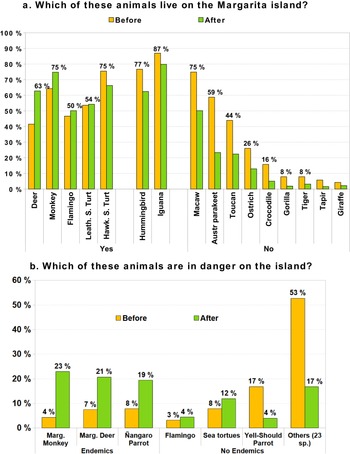
When presented with 16 animal species and asked to identify those occurring on the island, students showed a marked reduction in incorrect selections of non-native species after the intervention (Figure 5a). The largest decreases were observed for the Australian parakeet (−35%), macaw (−24.7%), toucan (−21.5%) and ostrich (−13.1%), all of which do not occur on Margarita Island. In contrast, correct selection of native species increased, particularly for the Margarita deer (+21.3%) and Margarita monkey (+10.5%), while the selection of flamingos and sea turtles remained high (50-75% children) and relatively unchanged.
Answers to questions about Margarita Island’s biodiversity, presented with illustrations of animal species and their names, before and after the intervention.
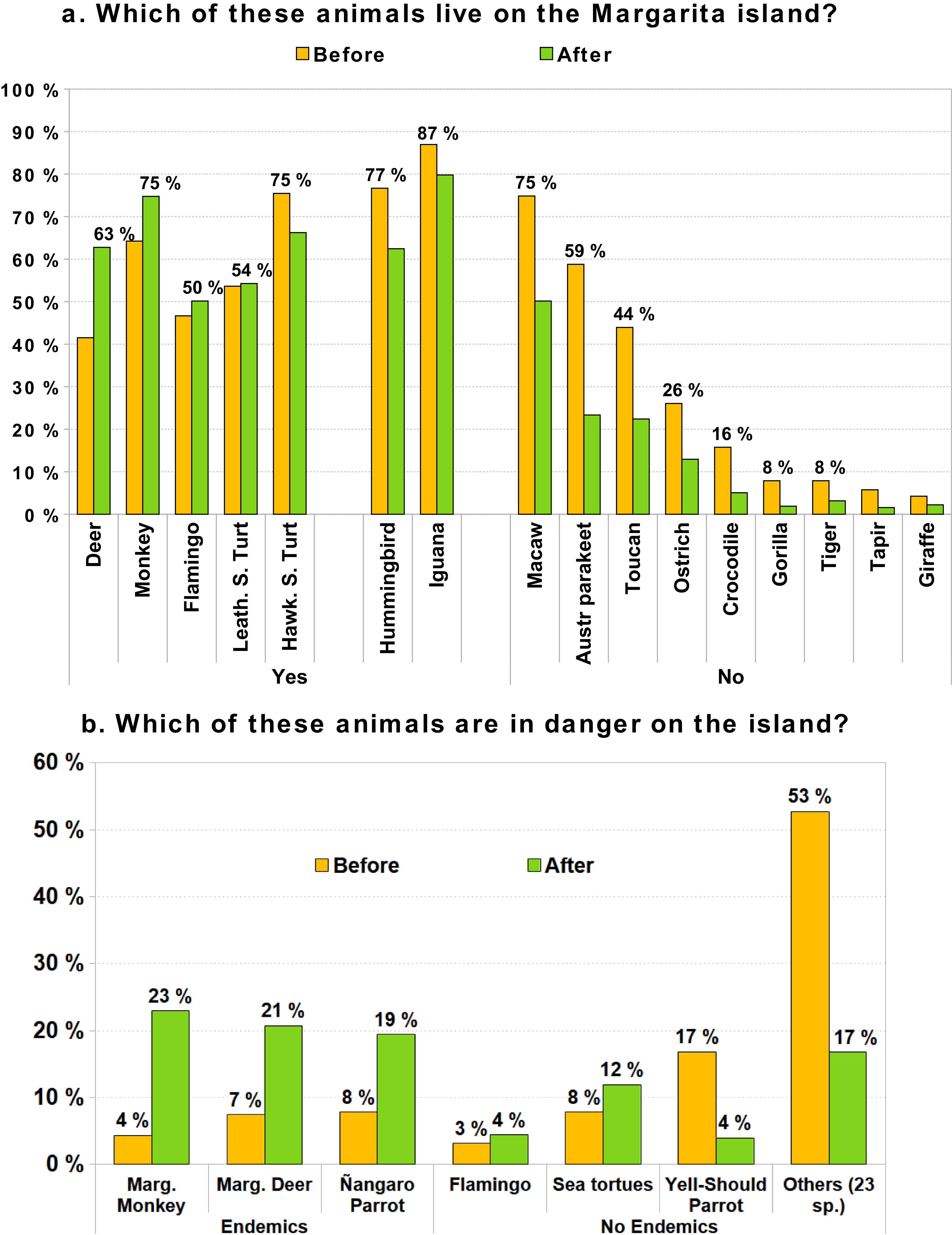
Following the intervention, recognition of the Margarita monkey, deer and Ñángaro parrot as threatened species increased by 28–30% (Figure 6a). In contrast, awareness of the conservation status of sea turtles and yellow-shouldered parrots (Amazona barbadensis) was already high prior to the intervention and showed limited change. This result is consistent with the fact that A. barbadensis was not a focal species in the present study, as it has been the subject of long-term conservation and education programmes on Margarita Island (Briceño-Linares et al., Reference Briceño-Linares, Aranguren-Alvarez, Clarenda, Díaz, Doest, Haines, Houtepen, Martin, Millán, Nunes, Schmaltz, Sucre, van Slobbe and Rodríguez2024). Previous research and sustained outreach initiatives in local schools – particularly in the Macanao Peninsula – have successfully raised awareness of this species among children, resulting in high baseline knowledge level.
Answers to questions about Margarita Island’s biodiversity, presented with illustrations of animal species and their names, before and after the intervention.
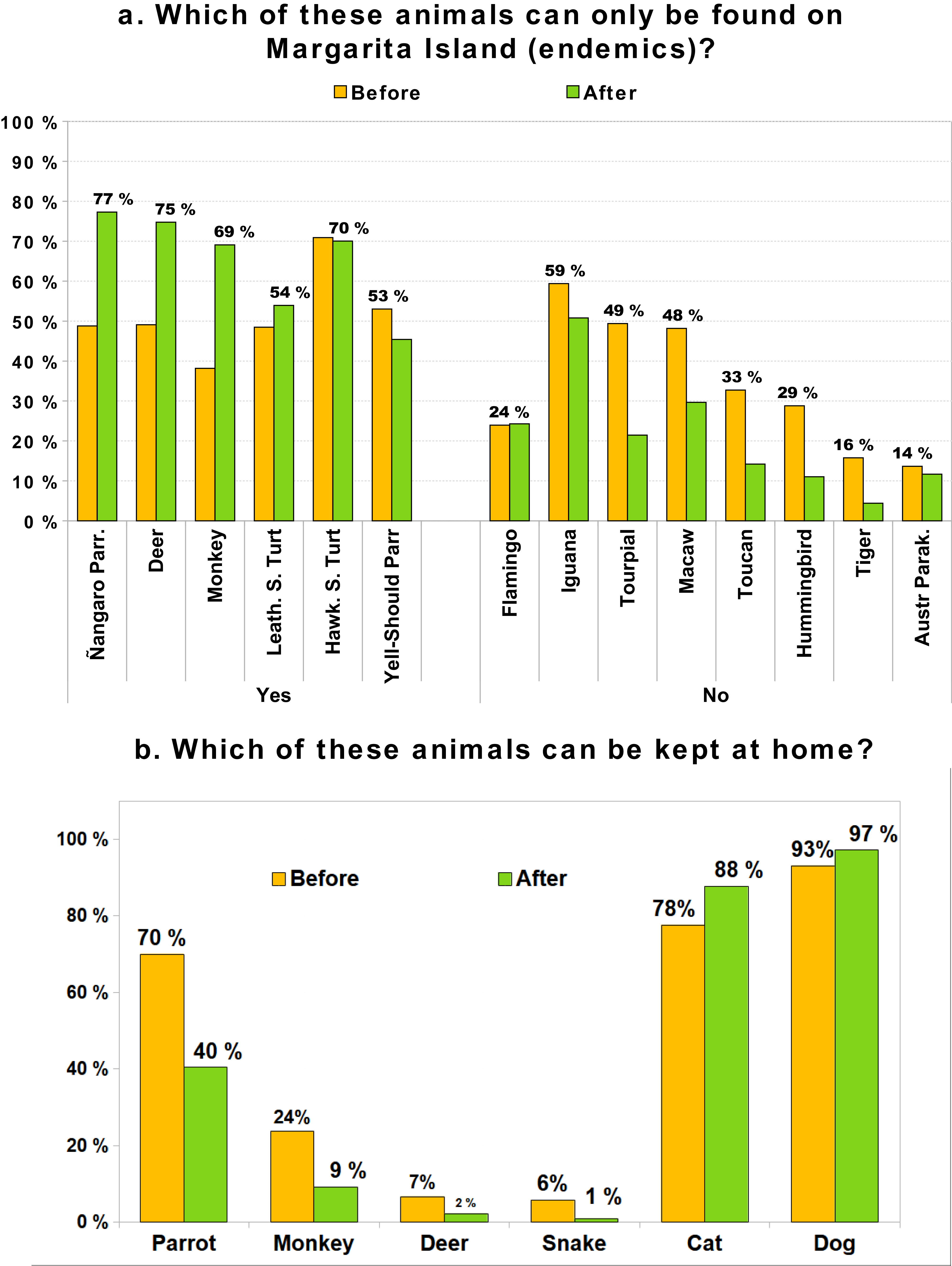
Figure 6. Long description
Panel A: A bar graph compares the knowledge of animals endemic to Margarita Island before and after an educational intervention. The horizontal axis lists animal names, and the vertical axis shows the percentage of respondents. The graph includes two sets of bars for each animal: one for before the intervention (yellow) and one for after the intervention (green). The animals listed are Nangaro Parrot, Deer, Monkey, Leath. S. Turt, Hawk. S. Turt, Yell-Should Parr, Flamingo, Iguana, Tourpial, Macaw, Toucan, Hummingbird, Tiger, and Austr. Parak. Notable trends include increased knowledge after the intervention for most animals, with the Nangaro Parrot showing the highest increase. Panel B: A bar graph compares the knowledge of animals that can be kept at home before and after an educational intervention. The horizontal axis lists animal names, and the vertical axis shows the percentage of respondents. The graph includes two sets of bars for each animal: one for before the intervention (yellow) and one for after the intervention (green). The animals listed are Parrot, Monkey, Deer, Snake, Cat, and Dog. Notable trends include increased knowledge after the intervention for all animals, with the Dog showing the highest increase.
When asked which animals could live at home, students showed a clear shift in their responses following the intervention (Figure 6b). Selection of wild species as suitable pets decreased markedly, particularly for parrots (−30%) and monkeys (−15%). Deer were already widely recognised as inappropriate domestic animals prior to the intervention and showed little change. In contrast, correct identification of dogs and cats as domestic species increased by 10 and 4 percentage points, respectively, from initial values of 77.6% and 93.0%. These results indicate a reduction in socially normalised practices of wildlife captivity and a clearer distinction between wild and domestic animals.
Discussion
Contextual relevance and teacher capacity
This study underscores the critical importance of contextualising environmental education to enhance its relevance and effectiveness for children. Integrating locally meaningful environmental and cultural elements has been shown to foster stronger engagement and motivation (González Quiroz et al., Reference González Quiroz, Areas Sevilla and López2021). When students perceive that environmental issues directly affect their own surroundings, they are more likely to develop a sense of responsibility and willingness to act.
The necessity of environmental education is widely recognised in the face of escalating global ecological challenges. However, awareness alone is insufficient to promote meaningful behavioural change. Educational programmes must be tailored to the specific socio-ecological contexts in which learners are embedded, and their impacts must be systematically evaluated to ensure effectiveness.
The strong interest expressed during the teacher workshop further highlights the pivotal role of educator capacity in programme success. Participants emphasised the scarcity of accessible, locally relevant literature on Margarita Island’s biodiversity and the need for pedagogical materials adapted to classroom realities. This aligns with previous research demonstrating that teachers act as key mediators between scientific knowledge and student learning and that their confidence and content knowledge strongly influence environmental education outcomes (Ardoin et al., Reference Ardoin, Bowers and Gaillard2020; Heimlich & Ardoin, Reference Heimlich and Ardoin2008).
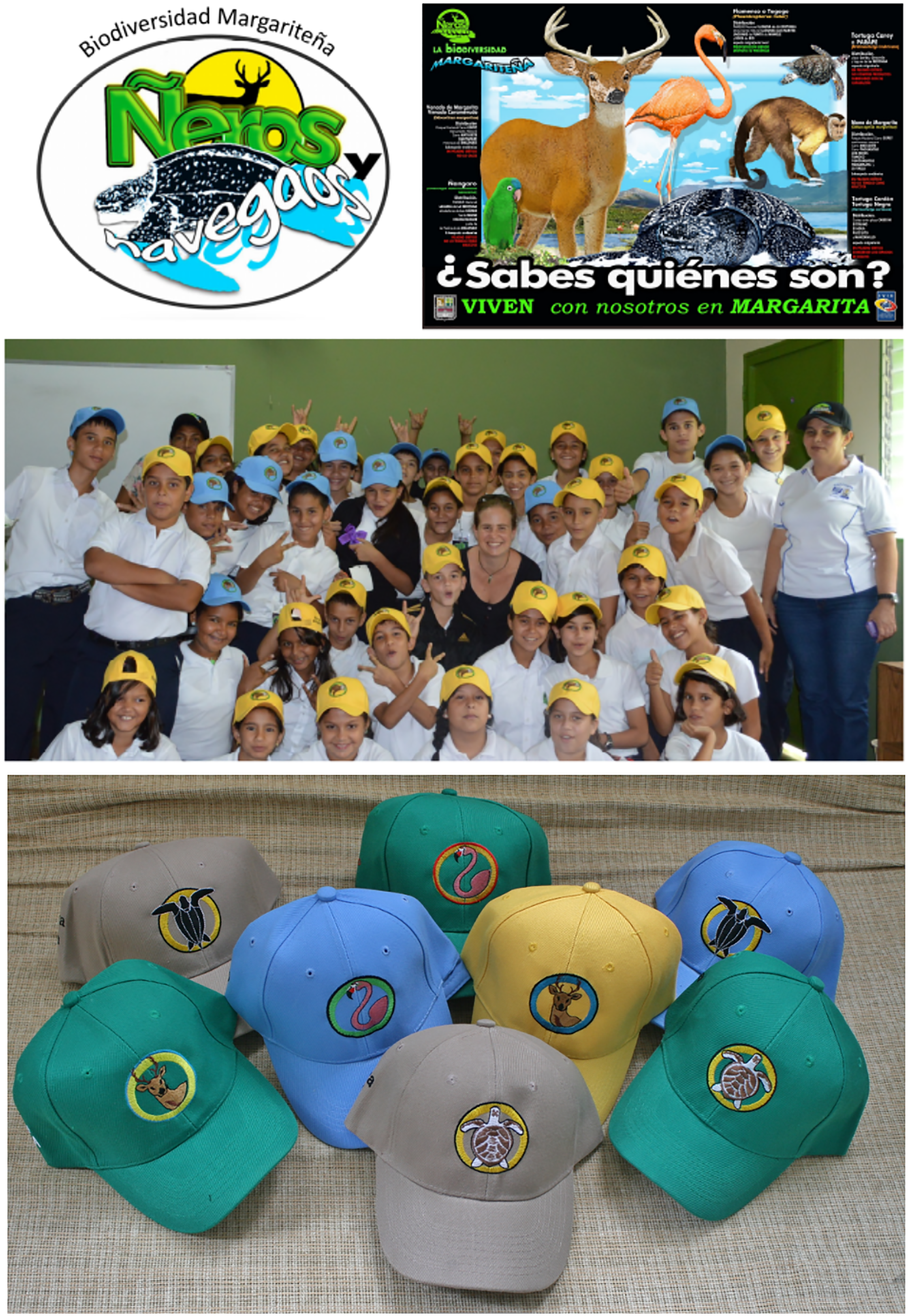
Without adequate contextualised resources, educators may struggle to deliver accurate and locally meaningful content. The provision of well-designed lesson plans, visual materials and multimedia tools can help bridge the persistent gap between environmental theory and classroom practice (Figure 7). Strengthening teacher capacity in this way supports the development of students’ place-based environmental understanding and stewardship of both terrestrial and marine ecosystems (Monroe et al., Reference Monroe, Plate, Oxarart, Bowers and Chaves2019; Stevenson et al., Reference Stevenson, Brody, Dillon and Wals2013).
Photographic documentation of the educational intervention. The images illustrate selected outreach materials used during the activity, as well as classroom work conducted with the children.
The proactive initiative of one educator to share workshop content, combined with the active participation of school environmental coordinators, suggests a promising pathway for peer-to-peer knowledge diffusion. While a system-wide multiplier effect was not formally assessed, the strategic role of these coordinators within the school hierarchy may amplify the impact of short-term interventions and foster long-term curricular integration.
Attitudinal change in a high-baseline context
Children in this study already expressed relatively pro-environmental attitudes prior to the intervention, a pattern frequently reported in environmental education research with primary school populations (Collado et al., Reference Collado, Evans, Corraliza and Sorrel2013; Evans et al., Reference Evans, Brauchle, Haq, Stecker, Wong and Shapiro2007). Nevertheless, statistically significant improvements emerged in behaviourally specific items, particularly those related to hunting, turtle fishing and keeping birds as pets.
This finding suggests that while general environmental concern may be widespread, targeted interventions remain necessary to influence attitudes linked to everyday practices (Heimlich & Ardoin, Reference Heimlich and Ardoin2008). The moderate to strong effects observed indicate that even relatively short interventions can generate meaningful attitudinal shifts when content is locally relevant and pedagogically engaging.
Importantly, the marked reduction in acceptance of keeping wild birds and monkeys as pets points to the potential of school-based programmes to challenge culturally embedded practices associated with illegal wildlife trade, a major conservation concern in tropical regions. Hunting and the use of sea turtles and their eggs remain culturally normalised activities in parts of the study area, often perceived as traditional food practices. The intervention appears to have increased children’s understanding of the ecological consequences of these behaviours.
Some items showed limited change, particularly those related to broadly accepted pro-environmental norms. This may partly reflect social desirability bias, whereby respondents provide socially expected answers rather than fully candid responses (Huelva & Asián-Cháves, Reference Huelva and Asián-Chaves2002).
From general awareness to territorial identity
Prior to the intervention, many children demonstrated general awareness of environmental issues but limited knowledge of Margarita Island’s local fauna and their conservation status. Following the programme, students showed clear improvements in recognising protected species and understanding the role of national parks.
One of the most notable findings was that the largest knowledge gains were associated with endemic (“ñero”) species. Students showed substantial improvement in recognising threats to the Margarita monkey and the Ñángaro parrot and in correctly identifying native fauna.
This pattern is consistent with place-based and situated learning theories, which emphasise that environmental learning is more effective when grounded in locally meaningful contexts (Esteban-Guitart & Moll, Reference Esteban-Guitart and Moll2014; Gruenewald, Reference Gruenewald2003). Endemic species likely functioned as powerful cognitive anchors because of their strong territorial and symbolic links to island identity. Similar outcomes have been documented in flagship species programmes, where locally salient fauna enhance engagement and knowledge retention (Veríssimo et al., Reference Veríssimo, Fraser, Groombridge, Bristol and MacMillan2011).
In contrast, learning gains for migratory or widely distributed (“navegaos”) species were more moderate, suggesting lower perceived local relevance and reinforcing the importance of territorial identity in shaping children’s environmental learning.
Although children were familiar with some native species, they initially misidentified several non-native animals (e.g., macaws, toucans and ostriches) as occurring on the island. The intervention substantially reduced these errors, indicating improved ecological discrimination.
Visibility and human–wildlife interactions also appeared to influence baseline knowledge. Flamingos, for example, were relatively well recognised even before the intervention, likely due to their conspicuous morphology and recent recolonisation of the island. In contrast, many children were unaware of the Margarita deer, probably because the species is elusive and has declined due to hunting pressure. Monkeys, which frequently interact with agricultural areas (“conucos”), were more familiar to students, consistent with documented human–wildlife conflict on the island (Sanz D´Angelo et al., Reference Sanz D´Angelo, Moncada, Morales, Urbani and Ceballos-Mago2021).
Value of the cultural framing strategy
The ‘Ñeros and Navegaos’ framework may have facilitated programme engagement by embedding biodiversity learning within locally meaningful cultural categories. By repurposing vernacular social terminology, the intervention potentially reduced the perceived epistemic distance between scientific knowledge and students’ lived experience.
Culturally responsive environmental education is increasingly recognised as essential for fostering meaningful learning and pro-environmental behaviour, particularly in socio-ecologically distinct regions such as islands (Bang et al., Reference Bang, Marin, Faber and Suzukovich III2014; McKinley et al., Reference McKinley, de Vocht and Stansfield2017). The observed improvements in species recognition and attitudes toward wildlife captivity suggest that culturally resonant metaphors can strengthen both cognitive retention and normative reflection.
Implications for island conservation education
In insular socio-ecological systems – where intense human pressures intersect with high biodiversity vulnerability – culturally grounded environmental education may represent an underutilised conservation tool. Islands are globally recognised as more vulnerable to biodiversity loss due to high endemism and ecological fragility (Kier et al., Reference Kier, Kreft, Lee, Jetz, Ibisch, Nowicki, Mutke and Barthlott2009; Whittaker & Fernández-Palacios, Reference Whittaker and Fernández-Palacios2007).
The present findings indicate that relatively low-intensity school interventions, when scientifically robust and culturally tailored, can contribute meaningfully to building local conservation awareness. The evidence of teacher-level knowledge diffusion further suggests potential system-wide benefits through multiplier effects.
Limitations and future research
Several limitations should be acknowledged. First, different students participated in the pre- and post-intervention assessments, preventing individual-level change tracking. Second, the six-month evaluation window does not permit assessment of long-term knowledge retention or behavioural outcomes. Third, self-reported attitudes may be partially influenced by social desirability bias, which is common in environmental education research (Kollmuss & Agyeman, Reference Kollmuss and Agyeman2002).
Future studies should incorporate longitudinal designs, behavioural indicators and stronger school–community linkages to determine whether observed cognitive and attitudinal shifts translate into sustained conservation behaviours. In particular, further research should explore community-level effects of school-based interventions, including potential intergenerational knowledge transfer from children to parents and other household members. Understanding these spillover dynamics could clarify whether relatively short educational programmes generate broader social impacts beyond the classroom.
Conclusion
The “Ñeros and Navegaos” project shows that culturally contextualised environmental education can effectively improve children’s knowledge of local biodiversity and shift attitudes toward wildlife conservation in island settings. Integrating culturally meaningful categories with place-based content increased recognition of native species and reduced acceptance of practices linked to wildlife exploitation.
Despite these gains, persistent conceptual gaps and limited recognition of endemic species indicate the need for sustained, developmentally appropriate interventions and stronger support for teachers.
In insular socio-ecological systems, where human pressures and biodiversity vulnerability intersect sharply, culturally grounded environmental education may represent a critical yet underutilised conservation tool.
Beyond its immediate results, this study offers critical implications for educational policy and programme development in island contexts. First, it underscores the need for curriculum regionalisation, where global sustainability goals are translated into locally meaningful content. Second, teacher professional development should prioritise not only biological knowledge but also pedagogical strategies for place-based education. Finally, we recommend investment in the production of high-quality, culturally-situated teaching materials, as these resources empower educators to act as long-term facilitators of conservation, reducing dependency on external interventions.
Supplementary material
The supplementary material for this article can be found at https://doi.org/10.1017/aee.2026.10201.
Acknowledgements
We express our sincere gratitude to the Zona Educativa del Gobierno de Nueva Esparta and the Ministerio del Poder Popular para la Educación for authorising the implementation of this study in local schools. We also thank the Departamento de Educación Ambiental and the División de Diversidad Biológica of the Ministerio del Poder Popular para el Ambiente – Región Nueva Esparta for their valuable support in organising the teacher workshop and coordinating efforts to strengthen conservation education in schools. Special thanks are extended to graphic designer Jesús Ramón León (“Mon”) for creating the project’s name and all the educational materials used. We are also deeply grateful to José Manuel Briceño, from the Conservation of Amazona barbadensis project led by Provita on Margarita Island, for his invaluable logistical support.
Financial support
This work was supported by the Ministerio del Poder Popular para la Ciencia y la Tecnología in Venezuela under Grant Project PEI No. 2011001230.
Ethical statement
This study did not involve medical procedures or invasive interventions. All data were collected anonymously and analysed in aggregate form to ensure participant confidentiality. The project was carried out in accordance with Venezuelan educational regulations governing research and educational activities in schools. Written authorisation was granted by the Educational Zone of Nueva Esparta State, Ministry of Popular Power for Education of Venezuela (Permit No. 0046, issued April 29, 2013). This authorisation allowed the implementation of the project “Socialization and Knowledge Transfer on the Biodiversity of Margarita Island”, under the theme “Neros y Navega’os: Margarita’s Biodiversity,” in the following schools: U.E. Cayetano García Salazar, U.E.B. Dr Luis Ortega, U.E. Monseñor Nicolás Eugenio Navarro, U.E. Antonio José de Sucre, U.E. Juan Ramón Aguilera, U.E. Francisco Fajardo and U.E. Doña Emilia de Velásquez. The programme was directed toward 5th- and 6th-grade students and teachers in Nueva Esparta State. All activities were coordinated with school principals, environmental coordinators and teachers, following the administrative procedures required by the Educational Zone for school-based research and outreach activities. At the time the study was conducted, the Ethics Committees of the Venezuelan Institute for Scientific Research (IVIC) and the University of Carabobo did not oversee or require ethical approval for educational or non-interventional school-based studies of this nature, as these activities were regulated through the corresponding educational authorities.
Author Biographies
Sabina A Caula Biologist with a PhD in Evolutionary Biology and Ecology and more than 25 years of experience in research, university teaching and academic management in ecology, conservation and education for sustainability. My work focuses on the analysis of socio-ecological systems and on integrating ecological and social approaches to address sustainability challenges. I have published in indexed international scientific journals, led competitive research projects and developed environmental education and community engagement initiatives, contributing both to academic advancement and to the societal impact of scientific knowledge.
Virginia Sanz D´Angelo (1964–2024) was a Venezuelan ecologist and ornithologist recognised for her lifelong commitment to the study and conservation of Caribbean island biodiversity, particularly on Margarita Island. She earned her biology degree and PhD in Ecology from the Universidad Central de Venezuela and later served as a researcher at the Venezuelan Institute for Scientific Research (IVIC). Her work focused on parrot conservation, waterbird monitoring and human–environment interactions. Deeply engaged with local communities, she combined rigorous field research with environmental education. Sanz D´Angelo mentored numerous students and helped found the Venezuelan Ornithologists’ Union, leaving a lasting scientific and conservation legacy.
Elysa Silva I am a biologist graduated from the Universidad Central de Venezuela, specialising in Ecology, and I hold both a Master’s and a PhD in Conservation and Ecological Restoration from the Universidad de Alicante, where I currently work as a postdoctoral researcher. My research focuses on environmental science and the application of ecological knowledge to conservation challenges. I have participated in international scientific meetings and collaborative research projects addressing species conservation and environmental management. By combining strong field experience with solid academic training, I promote interdisciplinary approaches to sustainability and environmental education, reflecting my commitment to evidence-based conservation in complex socio-ecological systems.
Laura Noemi Quinteiro I hold a degree in Education with a specialisation in Learning Difficulties from the National Open University of Venezuela and have also undertaken studies in Biology at the Universidad Central de Venezuela. With more than 20 years of experience in educational research and practice, I have contributed to the development and implementation of innovative teaching methodologies. My work focuses on improving learning processes through evidence-based pedagogical strategies, with particular interest in inclusive education and environmental learning contexts.




 Open access

