Introduction
The indigenous chicken (Gallus gallus domesticus) genetic resources (IC) comprise more than 80% of the overall poultry population in rural villages, despite their low productivity. Indigenous chicken are of importance for nutrition and income security among the poor rural households. They play a vital gender role for women, widows and orphaned children in terms of cash incomes and savings, food security, nutrition and socio-cultural activities (Kaudia and Kitalyi, Reference KAUDIA and KITALYI2002). They are highly adapted to the harsh scavenging conditions, poor nutrition and disease and parasite challenges. Their adaptation is attributed to hereditary characteristics that have resulted in differences in reactions to environmental stimuli. These reactions are intimately associated with anatomical-physiological characteristics, which have developed as a result of natural selection. According to Romanov et al. (Reference ROMANOV, WEZYK, CYWA-BENKO and SAKHATSKY1996), local adapted breeds possess genes and alleles that are pertinent to their adaptation to the local environments.
In most developing countries, there is almost no organisational structure for IC breeding programmes. The current breeding strategies concentrate on specialised commercial chicken lines, derived by intense selection from a few breeds with a great genetic uniformity of traits under selection (Notter, Reference NOTTER1999). Therefore, sustainable breeding strategies need to be developed which take into account their economically important and unique attributes. These locally adapted IC can only be conserved in the most rational and sustainable way by ensuring that they are a functional part of different production systems. Their conservation should be through utilisation if they are to be of any benefit to the poor rural households. This discussion will focus on five very relevant questions that need to be answered if the conservation of IC is to be effective and sustainable: What, why and how should we conserve, who are the stakeholders and what are their roles in conservation efforts?
What to conserve?
origin of indigenous chickens
Chickens (Gallus gallus domesticus) are generally considered to have evolved from jungle fowl (Gallus gallus) inhabiting India, Indo-China, South China, Philippines and Indonesia (Moiseyeva et al., Reference MOISEYEVA, ROMANOV, NIKIFOROV, SEVASTYANOVA and SEMYENOVA2003). They are thought to have been domesticated in South-East Asia from where they were distributed to all parts of the world. Natural and, to some extent, human selection coupled with mutations and random drifts over time have resulted in the modifications and subsequent development of the various chicken genotypes presently available in various climatic regions.
indigenous chicken genotypes in Kenya
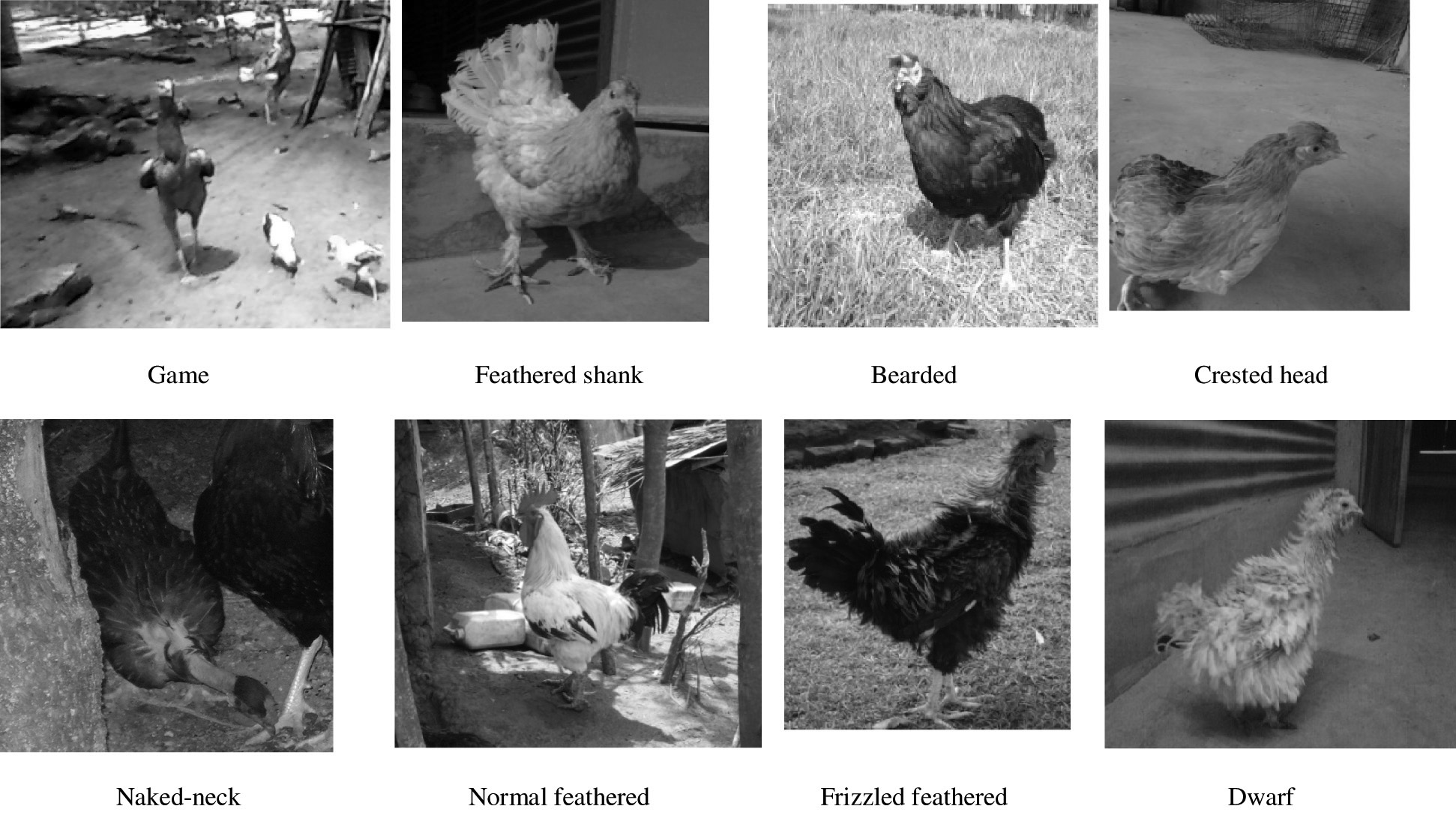
IC have been characterised along genetic lines for feather (such as normal or frizzled feathered), body structure (such as naked neck, dwarf types) and colour variants (such as black, white, brown, mottled etc.). The phenotypes are a result of genes with major phenotypic effects, and hence are considered genotypes (Falconer, Reference FALCONER1989). Some of the major genotypes available include the crested-head, frizzle, naked-neck, dwarf, tailless, bearded, normal feathered and feathered-shank (Figure 1) (Njenga, Reference NJENGA2005). IC genotypes present in Kenya are shown in Figure 1. Performances also differ with presence of major genes. The dwarf gene has increased feed efficiency and egg mass production (Yeasmin et al., Reference YEASMIN, HOWLIDER and AHAMMAD2003). The dwarf genes are favoured by farmers due to better reproductive capacity. The bearded and feathered-shank types are adapted to cold environments (Bartels, Reference BARTELS2003) and have been shown to have increased body weight and egg mass (Fayeye et al., Reference FAYEYE, AYORINDE, OJO and ADESINA2006) for better egg and meat productivity in very cold environments. The crested-head genotype is considered to be a superior egg producer. These genotypes possess major genes known to significantly contribute to adaptability and fitness in the tropics (Horst, Reference HORST1988) however, they have not been exploited, utilised nor conserved for present and future use.
Different Indigenous Chicken Genotypes in Kenya.
Source: Indigenous Chicken Improvement Programme (INCIP), Egerton University

indigenous chicken ecotypes in Kenya
An ecotype refers to chicken from one agro-ecological zone or area as distinguished from another. The names are derived from ecological zones and, in some areas, regional names have been used (Gondwe, Reference GONDWE2005). The origin of an ecotype is a combination of separate adaptation, evolution, selection (natural and artificial), mutation and genetic drift. Natural selection pressure is imposed by climate change, endemic parasites and diseases as well as available nutrition. Directed selection, migration and mutation may have led to non-random or directional changes in the allele frequencies of the population. Thus each ecotype comprises a unique set of genes (a number of diverse adaptive and productive traits) with special utility in the tropics (Horst, Reference HORST1989). Distinct ecotypes have been reported in Tanzania (Msoffe et al., Reference MSOFFE, MINGA, OLSEN, YONGOLO, JUUL-MADSEN, GWAKISA and MTAMBO2001), Ethiopia (Tadelle and Ogle, Reference TADELLE and OGLE2001), Zimbabwe (Mcainsh et al., Reference MCAINSH, KUSINA, MADSEN and NYONI2004), Botswana (Badubi et al., Reference BADUBI, RAKERENG and MARUMO2006) and Kenya (Ngeno, Reference NGENO2011). These ecotypes population presents a high between-and within-ecotype variation in body weight, egg weight, reproduction performance, plumage colour, comb type and skin colour. The annual egg production ranges from 20 to 100 eggs, mature live weight from 0.7 to 2.1 kg for females and from 1.2 to 3.2 kg for males (Tadelle et al., Reference TADELLE, MILLION, ALEMU and PETERS2003; Ngeno, Reference NGENO2011). This large phenotypic variation points is important for selection, breeding and promotion of the most productive ecotype under specific management conditions.
Why conserve?
unique attributes and properties of indigenous chickens: heat tolerance
Global temperature is predicted to increase globally (IPCC, 2007). The frequency and severity of droughts, which is associated with increased temperatures, is already high in Kenya and is expected to increase further in future (Ojwang et al., Reference OJWANG’, JASPAT and SITUMA2010), and such changes in temperature is expected to negatively impact levels of IC production. Direct effects involve heat exchanges between the birds and the surrounding environment that are related to radiation and temperature. High ambient temperature can compromise the ability of IC to dissipate heat and provoke heat stress. Heat tolerance is one of the adaptations which contribute to the performance of tropically derived breeds and their crosses in warm environments (Turner, Reference TURNER1984). Certain major genes have been found to be relevant to the indigenous breeds in their tropical production environment (Horst, Reference HORST1989). There are a number of genes with major effects on the phenotype that seem to be of special interest for poultry keeping in smallholder systems in developing countries (FAO, 2010). The superior heat tolerance has been attributed to feather distribution gene, naked-neck (Na) and the feather structure gene, frizzle (F). These genes cause a reduction in tropical heat stress by improving the IC ability to dissipate heat resulting in better performance.
adaptation and nutrition
Indigenous chicken are known to be alert to predators, protective of their young, have high hatching ability, possess excellent foraging ability and long legs which are suitable for fast running. All these adaptation are necessary in a scavenging production system (Tadelle et al., Reference TADELLE, ALEMU and PETERS1999). Free-ranging chickens can fulfil their nutritional requirements for proteins, energy, vitamins and minerals by scavenging due to good foraging ability, and the ability to utilise high fibre diets. Indigenous chicken have anatomical and physiological adaptations to compensate for variations in the nutrient concentration of the diet. Kondra et al. (Reference KONDRA, SELL and GUENTER1974), in a study using strains of meat and egg-type chicken fed on high fibre, reported a significant increase in weight, size and number of various components of the digestive system. The study revealed that an addition of fibre to feed resulted in a relative increase in the weight of the alimentary canal, the crop, proventriculus, gizzard, length of the small and large intestines, caeca and total number and length of villi. Increase in size and number of various organs is considered to be an attempt to hold and process a relatively large volume of feed and extract the nutrients more efficiently (Kondra et al., Reference KONDRA, SELL and GUENTER1974). The study concluded that chickens were capable of enlarging the length and weight of their digestive system, in accordance with the increased volume of feed of low nutrient density, so that required nutrients may be obtained. The anatomical and physiological adaptation to utilise diets of low and variable quality could be more advanced and complex in IC. Moreover, IC adaptability may be boosted by the possible adaption to local feeds found in the immediate environment.
parasite tolerance
Most poultry kept in free-range scavenging systems are infected with various sorts of endo- and ecto-parasites. All rural scavenging chickens harbour one or more species of endo-parasitic worms. The most commonly encountered helminthes in scavenging systems are nematodes; Ascaridia galli, Capillaria anatis, Capillaria contorta, Capillaria bursata, Capillaria obsignata, Cheilospirura hamulosa, Dispharynx nasuta, Gongylonema ingluvicola, Heterakis gallinarum, Strongyloides avium, Syngamus trachea, Tetrameres Americana (Bagust, Reference BAGUST1994). The common cestodes are Amoebotaenia cuneata, Choanotaenia infundibulum, Hymenolepis cantaniana, Hymenolepis carioca, Raillietina echinobothrida, Raillietina tetragona and Raillietina cesticillus (Bagust, Reference BAGUST1994). In a study on the prevalence of IC gastro-intestinal endo-parasites in Kenya, Kaingu et al. (Reference KAINGU, KIBOR, SHIVAIRO, KUTIMA, OKENO, WAIHENYA and KAHI2010) used 710 adult free-ranging local chickens sampled from six districts, Kakamega (162), Bondo (81), Narok (81), Bomet (150), Turkana (70) and West Pokot (166). In that study, it was observed that 192 (27.04%) were infected with coccidial oocysts, 182 (25.63%) with Ascaridia galli, 10 (1.41%) with Heterakis gallinarum, 2 (0.3%) with Syngamus trachea, 37 (5.21%) with Capillaria retunsa, 8.45% with Capillaria annulata, 21 (2.96%) with Raillietina tetragona, 94 (13.24%), while 112 (15.8%) had no helminthes infestation. The most common ecto-parasites included Menacanthus stramineus, Menacanthus cornutus, Goniodes gigas, Lipeurus lawrensis tropicalis, Echidnophaga gallinacea, Menopon gallinae, Argus persicus, Cnemidocoptes mutans and Gonoicotes gallinae (Njunga, Reference NJUNGA2003). It has been established that although they do not directly cause disease in the host, they weaken the immune system and can cause increased susceptibility to other more harmful disease agents (FAO, 2010). Most rural farmers are not aware of the presence of worms in their chickens, hence virtually no control measures are taken as long as the birds are still able to survive and reproduce. A study by Schou et al. (Reference SCHOU, PERMIN, JUUL-MADSEN, SØRENSEN, LABOURIAU, NGUYEN, FINK and PHAM2007), revealed the existence of 24 major histocompatibility complex (MHC) haplotypes in IC, although only one exerted incomplete resistance to the helminth Ascaridia galli. Resistance to H. beramporia, A. galli and T. mothedai worms is linked to allele 276 whilst 251 and 264 are associated with increased susceptibility to R. tetragona (Schou et al., Reference SCHOU, PERMIN, JUUL-MADSEN, SØRENSEN, LABOURIAU, NGUYEN, FINK and PHAM2007). Kenyan IC population have 45 different LEI0258 marker alleles with 16 MHC B haplotypes (Ngeno et al., unpublished), whereas, depending on the parasite, environmental variations and climate change in their production environments, IC ecotypes have between 20 to 27. The observed MHC variability suggest that IC host different MHC genes which are associated with immune response, performance and life history strategies.
disease resistance or tolerance
IC have a reputation for hardiness and resistance to diseases, and less susceptible ecotypes have been reported in different countries. In Egypt, Mandarah ecotype (Hassan et al., Reference HASSAN, AFIFY and ALY2004), Poule De Benna ecotype in North and West Africa and Nkhuku ecotype in Southern Africa (FAO, 2007) have been reported to be able to endure Newcastle disease. Hassan et al. (Reference HASSAN, AFIFY and ALY2004) reported that the Mandarah ecotype in Egypt can withstand infectious bursal disease virus. Mdegela et al. (Reference MDEGELA, MINGA, LAWRENCE, MWALUSANYA, YONGOLO, MTAMBO, MUTAYOBA, KATULE and OLSEN1998) and Msoffe et al. (Reference MSOFFE, MINGA, OLSEN, YONGOLO, JUUL-MADSEN, GWAKISA and MTAMBO2001) found that the Kuchi (game) ecotype was not easily affected by fowl typhoid, and Oluyemi et al. (Reference OLUYEMI1979) reported the Fayoumi breed to be less vulnerable to avian leucosis complex.
Among the genotypes, frizzled and naked-neck birds have been described as more disease resistant than other genotypes. Mahrous et al. (Reference MAHROUS, GALAL, FATHI and ZEIN2008) revealed that these genotypes have a higher total antibody titre compared to their normal-feather counterparts. Using India ink, Hamal et al. (Reference HAMAL, BURGESS, PEVZNER and ERF2006) demonstrated the phagocytic ability of naked-neck and frizzled birds to be more efficient compared to normally feathered genotype. Moreover, the ability to efficiently dissipate heat can promote the immune system. From these studies it can be concluded that naked-neck and frizzled feathered can withstand some diseases.
Different alleles have been correlated either positively or negatively with certain traits. Allele 205 is positively associated with higher primary antibody responses against Newcastle disease (NCD), 307 is negatively correlated with elevated primary antibody responses against NCD and positively correlated with bodyweight (Lwelamira et al., Reference LWELAMIRA, KIFARO and GWAKISA2008). Among the 45 LEI0258 marker alleles reported in Kenyan IC, allele 194 and 349 host the MHC haplotype B11, which is known to confer resistance to Marek's disease virus (Wakenell et al., Reference WAKENELL, MILLER, GOTO, GAUDERMAN and BRILES1996) and was found in the majority of ecotypes (Ngeno et al., unpublished). Attention needs to be focussed on breeding for resistance to reduce the levels of diseases, zoonotic transmission and economic losses. Although breeding for disease resistance is usually not straightforward, there could be negative correlations between disease resistant and production traits.
Kenya is already experiencing a number of problems due to climate change and variability (CVC) including more frequent droughts, prolonged dry spells, increased heat stress and disease outbreaks (IPCC, 2007). CVC can lead to a shift in the forage type available, their quality and quantity and, indirectly, affects IC performance. The quality and quantity of the forage materials is likely to be affected by impact of CVC due to changes in forage growth and dry matter (DM) yield, as increase in temperatures may increase lignification of plant tissues, reducing the digestibility and the rates of digestion. This may consequently lead to reduced nutrient availability for IC and ultimately to a reduction in performance. Conversely, CVC generally affect distribution and abundance of predators, competitors, disease vectors and parasites, which not only leads to the emergence of new diseases but also affects disease pattern. Therefore CVC effects on IC can limit their potential for providing food, nutrition, income and job securities to the human population. In the face of CVC challenges, adaptation of IC to tropical conditions (heat stress, poor quality, more frequent disease and parasite challenges) is imperative and has created a necessity for promoting the conservation of IC to maintain populations. Therefore, there is a need for sustainable breeding strategies to be developed which take into conserve IC as well as account for their economically important and unique attributes.
How can we conserve?
conservation options for efficient egg and meat production
Options for in situ conservation (through utilisation for egg and meat production) of IC are presented under the following four scenarios that ensure that the genotype is matched with the environment.
1. In the long term, under good management conditions, exotic chicken or their crossbreds with indigenous will most likely predominate (Option 1)
2. In systems where both eggs and meat are important and the management is suboptimal, there is a need for a dual-purpose chicken that is well adapted to these environments (Option 2).
3. In hot environments, exploitation of major genes that allow better heat dissipation may be suitable option of chicken production (Option 3).
4. In rural areas where the scavenging system is an integral part of the farming systems requiring low-inputs, low-output and periodic destruction of a large portion of the flock due to outbreaks of diseases, dependence on adapted indigenous chicken will exist for the foreseeable future (Option 4).
option 1
Management conditions can be of two types, one is completely intensive (flock confinement under climate-controlled environment, use of commercial feeds and provision of health care) and the other with non-optimal conditions (housing not completely climate control environment). Two types of breeding programme may be needed for these production environments, one which focuses on the use of purely exotic chicken and the other which uses hybrid birds. Exotic chickens are bred for industrial production because of their commercial efficiency. The system is run completely on a profit basis, therefore stocks are genetically selected for economically important traits of fast growth, high production and reproduction. When technical conditions are not optimum, and for farmers who want to keep exotic breeds and, at the same time, maintain the quality products and unique attributes of IC under this system may well need a breeding program which produces hybrid birds. Hybrid birds are created by crossing IC that has been selected for high performance with exotic breeds. Such hybrids benefit from directly transmitted gene effects of both the sire and dam but lack maternal effects, as defined as any influence of a dam on its progeny, excluding those from directly transmitted genes (Legates, Reference LEGATES1972). Although maternal effects are apparent, dam-hens do not control chicks in this option, hence post hatch maternal effects are not expected.
Currently, some of the commercial breeders have included liveability in their breeding objectives which is an indirect way of increasing survival and disease resistance within the commercial flocks (Preisinger and Flock, Reference PREISINGER and FLOCK2000). Indigenous chickens with diverse alleles and MHC haplotypes are useful in crossbreeding as a means of promoting survivability and disease tolerance of commercial exotic birds. This option is most suitable for companies, organisations, financially stable individuals and employees in developing countries who want to invest in chicken farming, but is not practical for poor rural farmers.
option 2
In this system, provision of inputs is low to medium. Water, supplementary feeds, night shelters, and a small amount of medication are provided. Birds are left to free range, and scavenged feed constitutes the substantial part of the total feed consumed, giving flocks that have low input costs with improved productivity and are highly adapted to the harsh scavenging conditions. Development of suitable synthetic breeds may be a better option for this scenario. A synthetic breed benefit from the unique attributes of the foundation breeds. Synthetic breeds, created through selection and crossbreeding, have improved growth traits, feed efficiency, sexual maturity and egg production abilities. Improved IC can be utilised as a foundation stock in the development of a synthetic breed. The ecotype lines selected are subjected to several generations of selection with emphasis on growth and egg production, until homogeneity is achieved. For example, the Fayoumi breed in Egypt and Desi breed in India were developed through several generations of selection and crossing. In Kenya, breeding programs may focus on IC ecotypes which are currently under evaluation to establish synthetic breeds. These ecotypes include Kakamega, Siaya (Bondo), Narok, Turkana, West Pokot, Taita Taveta, Lamu and Bomet. Organisational structures for breeding programmes have to be set-up which promote uptake of its products, as farmers are the clients of the breeding scheme. Farmers influence the breeding goal, as these depend on their customers' demands and preferences. To improve farmer's uptake of the program products, incentives suggested by FAO (2010) include free package of product and management training, frequent farm visit, health care provision (e.g. vaccinations), identification and rewarding best performing farmers are needed.
option 3
In hot environments, where chicken are reared under scavenging systems, naked-neck and frizzle feathers IC genotypes may be suitable in the future, as they have a number of genes with major effects on the phenotype that are of special interest in controlling body temperatures in hot regions. These genes are known to restrict and affect the structure of the feathers which enable heat dissipation by convection. The advantage of these genes over their normally feathered counterparts in a hot, humid environment are evident in terms of feed intake, growth rate (Deeb and Cahaner, Reference DEEB and CAHANER1999) and weight gain (Yaccin et al., Reference YACCIN, TESTIK, OIKAN, SATTER, CELEN and CAHANER1997). Naked neck and frizzle feather genotypes have increased growth rates, body weights, feed conversion, egg production and disease tolerance in tropical temperatures above 25°C (Mahrous et al., Reference MAHROUS, GALAL, FATHI and ZEIN2008). For example, the feather restriction or Naked Neck gene results in 40% less feather coverage. This considerably reduces the need for protein input for feather production. Genetic improvement through selection within the flock could be a promising and sustainable strategy which could produce annual genetic changes of between 0.5-4%, in relation to the mean of the single or multiple traits that are of interest (FAO, 2010).
option 4
In rural areas, the scavenging production system is predominant. The system is an integral part of farming where no feed is supplied at all and, instead, chicks and mature chickens are left to forage. Health care is not provided, although birds are sometimes provided with night shelters. Limited supplies of grains and vegetable proteins have led to competition between animals and man for these products, thus limiting the intensification of chicken farming. For grain-deficient countries, one solution may lie with the genetic improvement of the IC. The economic strength of IC lies in the low cost of production when compared to the value of the outputs. Such strategies have been used to develop IC in Egypt (Kosba et al., Reference KOSBA, FRAGHALY, BAHIE, IRAQI, EL-LABAN and EL-HALIM2006), Iran (Kamali et al., Reference KAMALI, GHORBANI, SHARBABAK and ZAMIRI2007) and high yielding exotic hybrids (Siegel et al., Reference SIEGEL, DODGSON and ANDERSSON2006), and the birds described in option 2 and 3 could be used as breeding stock. Within a population kept under similar scavenging conditions, birds are first evaluated and best performing individuals (depending on the objective) are considered for subsequent improvement.
Who are the stakeholders and what are their roles?
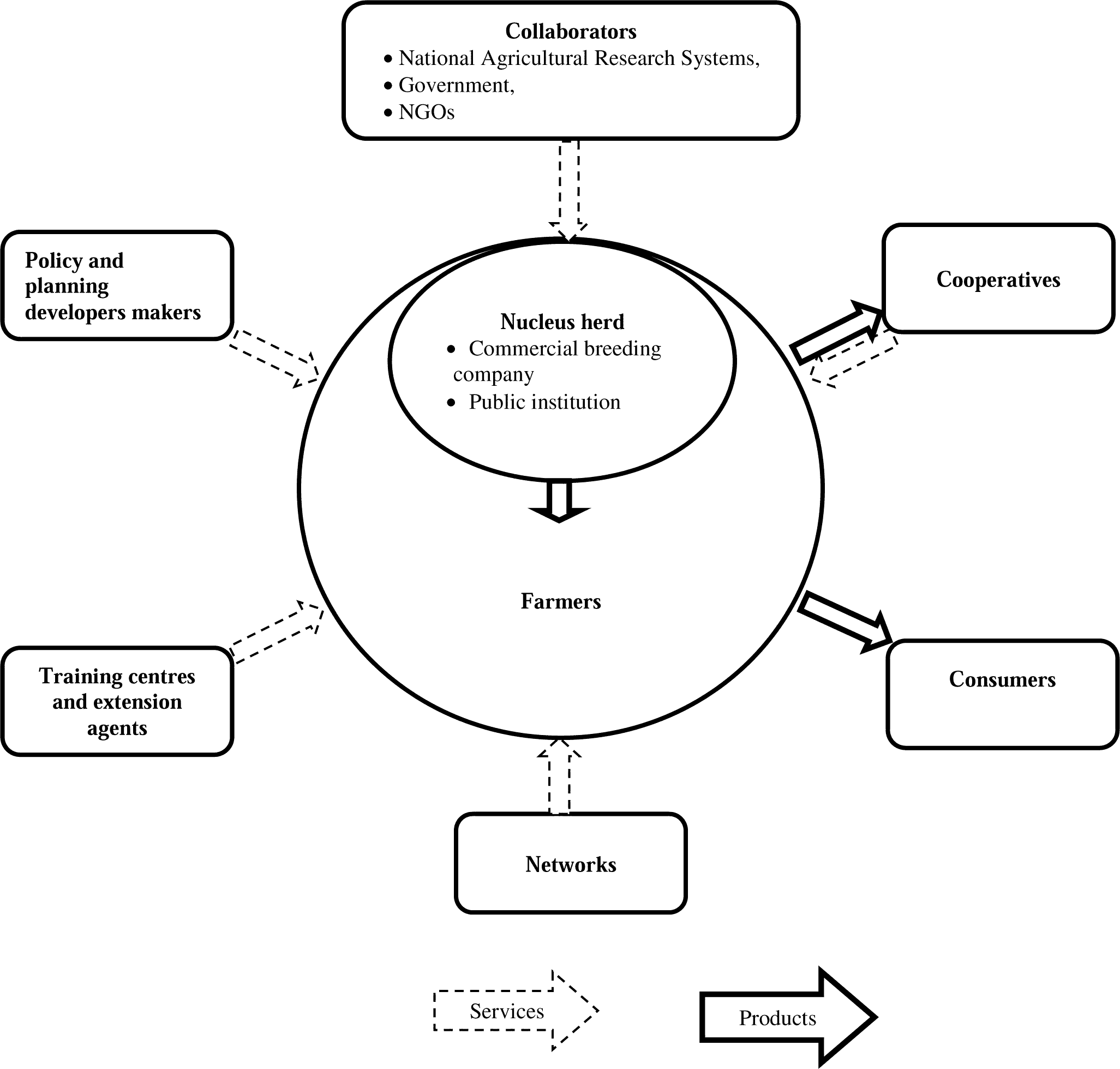
Options for genetic improvement and in situ conservation of IC have been presented under the four scenarios described above, however the major challenge is determining who will implement these plans, who will convince the farmers, and what are their roles. Stakeholders comprise nucleus flocks, farmers, collaborators (institutions involved in IC research activities), farmer's training centres and extension agents, cooperatives, consumers, networks, policy and planning developers. The stakeholders and their potential roles are presented in Figure 2.
Nucleus flocks, where genetic improvement is the major activity, need to be owned by a commercial breeding company (which is less dependent on external funding) or a research institution. They are responsible for spearheading the definition of breeding goals, implementation and evaluation of breeding schemes in collaboration with stakeholders in IC value chain.
Farmers are the clients of the breeding scheme and have responsibility for day-to-day management of the production population. They can influence the breeding goals depending on their customers’ preferences for IC and IC products.
The main collaborators in the breeding program include national agricultural research systems (NARS), government and non-governmental organisations (NGOs). The NARS groups are responsible for the generation of new knowledge. Government and NGOs plays key roles in dissemination of the nucleus products.
Training centres have been set up for farmers to acquire and share knowledge, views and experiences. Extension agents are responsible for passing necessary knowledge and skills to farmers in all aspects of chicken breeding, feeding, diseases and parasites control and treatment and marketing.
Organizational structure of the stakeholders in an Indigenous Chicken breeding programme.
IC farmers need to be encouraged to form group enterprises, organised such that products from one enterprise will be an input in the next enterprise. Enterprises include farmers, processors, traders, co-operatives and extension services. To enhance efficient flow of products and services, capacity strengthening, micro-credit schemes, monitoring and evaluation systems need to be developed. Staff from government departments and NGO's will be needed to act as principal catalysts for the process of group formation, production and marketing. This way, farmers and traders will be able to intensify IC production and marketing, resulting in sustainable IC enterprises.
Consumers drive the programme in that they force the breeders and producers to focus breeding goals in ways that satisfy their (market) demands. Consumers influence the breeding traits through their preferences and purchasing power.
Indigenous chicken improvement projects often fail because stakeholders’ communication and involvement are inadequate. This paper proposes a novel method of including co-operating networks as stakeholder in IC breeding programs. Networks can bring together all other IC stakeholders. This can help IC stakeholders understand their networks and corresponding stakeholder involvement, allowing them to make more informed decisions. Networking could help researchers and policy makers to understand the problems encountered by IC farmers and how current policies and regulations affect the IC production value chain and which changes may be needed to improve the situation.
Conclusions
Indigenous chicken genetic resources dominate poultry flocks in rural villages, despite their low productivity, however they have great potential to contribute to improved rural livelihoods. However, a holistic approach that increases productivity without increasing production costs or leading to loss of biodiversity is currently not available. Conversely, in most developing countries, there is almost no organisational structure for breeding programmes for improving and conserving IC. Locally adapted IC can only be conserved in the most rational and sustainable way by ensuring that they are a functional part of different production systems. Their conservation should be through utilisation, if they are to be of any benefit to the poor rural households. This paper suggested options for in situ conservation of IC via egg and meat production under four scenarios that ensure that the genotype is matched with the environment. Currently, options two and four are best suited for low to moderate income earners and poor rural farmers respectively, whereas option three suits to farmers in dry and warm regions. These suggested strategies could improve IC productivity leading to improved livelihood in rural households who are custodians of these indigenous genetic resources. Value chains generally have several players involved, and it is important that the role of various stakeholders in the IC production chain is clearly specified and their networks are well established.