INTRODUCTION
Much research in recent years has been focused on obtaining accurate species inventories from different ecosystems. Even in the deep-sea (Woolley et al., Reference Woolley, Tittensor, Dunstan, Guillera-Arroita, Lahoz-Monfort, Wintle, Worm and O'Hara2016), brittle-stars are abundant in all marine habitats. Ophiolepis Müller & Troschel, Reference Müller and Troschel1840 is a worldwide genus, mostly found in tropical oceans at shelf depths (<200 m) (Stöhr et al., Reference Stöhr, O'Hara and Thuy2012). Species from the western Atlantic were thought to be well-known and have been extensively documented (Hendler, Reference Hendler1975, Reference Hendler1988; Hendler & Turner, Reference Hendler and Turner1987; Hendler et al., Reference Hendler, Miller, Pawson and Kier1995; Pomory, Reference Pomory2007), whereas many Indo-west Pacific species have been recorded only a few times.
The taxonomy of the genus Ophiolepis has undergone several revisions. The genus was first described by Müller & Troschel (Reference Müller and Troschel1840), with Ophiura annulosa Blainville, Reference Blainville1834 (=Ophiolepis superba H.L. Clark, Reference Clark1915) as the type species (see Clark & Melville, Reference Clark and Melville1976 for designation of type species). Then, Lyman proposed the new genus Ophiozona Lyman, Reference Lyman1865, closely related to Ophiolepis. The main difference between these genera was the absence of the accessory dorsal arm plates in Ophiozona. Therefore, Ophiolepis impressa Lütken, Reference Lütken1859 and Ophiolepis pacifica Lütken, Reference Lütken1856 were transferred to this genus as well as several other species. However, Matsumoto (Reference Matsumoto1917) redefined and restricted the genus Ophiozona only to Ophiolepis impressa and Ophiolepis pacifica. Subsequently, Devaney (Reference Devaney1974) synonymized Ophiozona with Ophiolepis, transferring these two species back to the genus Ophiolepis.
The recent descriptions of new species (Hendler, Reference Hendler1988; McKnight, Reference McKnight2003) have led to a reconsideration of the taxonomy of the genus as subgroups have been identified based on diagnostic external morphological characters. Hendler (Reference Hendler1988) suggested that there are three clearly distinct groups of species restricted to the Western Atlantic. The first group includes Ophiolepis ailsae Hendler & Turner, Reference Hendler and Turner1987, O. gemma Hendler & Turner, Reference Hendler and Turner1987, O. impressa, O. kieri Hendler, Reference Hendler1979 and O. paucispina Hendler, Reference Hendler1988, which have a convex and narrow disc with several columns of dorsal interradial scales and arms that are rounded and tapering. The second group is composed of Ophiolepis elegans Lütken, Reference Lütken1859, O. crassa Nielsen, Reference Nielsen1932 and O. variegata Lütken, Reference Lütken1856 and is characterized by flat, short and basally broad arms. The last group includes only O. pawsoni Hendler, Reference Hendler1988, in which the disc scales are irregularly arranged. Recent research on higher taxonomy of ophiuroids, based on morphological characters, have shown that many families (i.e. Ophiolepididae Ljungman, Reference Ljungman1867, Ophiomyxidae Ljungman, Reference Ljungman1867 and Ophiocomidae Ljungman, Reference Ljungman1867) represent paraphyletic groups (Thuy & Stöhr, Reference Thuy and Stöhr2016). Similar results have been reported from genetic data (O'Hara et al., Reference O'Hara, Hugall, Thuy, Stöhr and Martynov2017), highlighting the need to solve phylogenetic relationships at lower taxonomic levels.
As a result of the inconsistencies at higher taxonomic classification of brittle-stars and genetic data suggesting the existence of undescribed species in well-sampled regions (Bribiesca-Contreras et al., Reference Bribiesca-Contreras, Solis-Marin, Laguarda-Figueras and Zaldivar-Riveron2013) a complete revision of the genus is being carried out by TPE. The aim of the present paper is to report and describe the new species discovered in the course of examining specimens as part of that extensive systematic revision. We describe three new species, Ophiolepis aemulata sp. nov., O. buitronae sp. nov. and O. crebra sp. nov., and provide modified diagnoses of O. impressa and O. superba, that separate them from their congeners O. buitronae sp. nov. and O. crebra sp. nov., respectively. We also include the designation of the neotype for O. superba, the type species of the genus.
MATERIALS AND METHODS
A total of 695 specimens from eight different species of the genus Ophiolepis were examined (see Appendix Table 1). See Pomory (Reference Pomory2007), Hendler et al. (Reference Hendler, Miller, Pawson and Kier1995) and Stöhr et al. (Reference Stöhr, O'Hara and Thuy2012) for a detailed description of main characters considered for brittle-star taxonomy; see Pineda-Enriquez et al. (Reference Pineda-Enriquez, Solis-Marin and Laguarda-Figueras2014) for relevant morphological characters of the genus.
The type material of each new species was photographed using a multifocal microscope (Olympus SZX12-MDU). Some specimens from the type series were exposed to undiluted bleach until ossicles separated, except for specimens of Ophiolepis crebra sp. nov., where due to the low number of specimens or their small size no internal structures were taken. All the different structures were mounted on aluminium stubs, gold coated and examined in a Hitachi S-2460N (Laboratorio de Microscopia, Instituto de Biologia, Universidad Nacional Autónoma de Mexico) or a Leica 440 (SEM Lab, National Museum of Natural History, Smithsonian Institution) scanning electron microscope (SEM).
List of institutional abbreviations:
AMNH: American Museum of Natural History, New York.
CAS: California Academy of Sciences, San Francisco, California.
FLMNH: Florida Museum of Natural History, University of Florida, Gainesville, Florida.
ICML-UNAM: Colección Nacional de Equinodermos Dra. María Elena Caso Muñoz, Instituto de Ciencias del Mar y Limnología, Universidad Nacional Autónoma de México, México.
LACM: Los Angeles County Museum, Los Angeles, California.
MCZ: Museum of Comparative Zoology, Harvard University, Boston, Massachusetts.
MNHM: National Museum of Natural History, Paris.
MV: Museums Victoria, Melbourne, Australia.
NSMT: National Museum of Nature and Science, Tokyo, Japan.
SMNH: Swedish Museum of Natural History, Stockholm, Sweden.
USNM: National Museum of Natural History, Smithsonian Institution, Washington, DC.
YPM: Yale Peabody Museum of Natural History, Connecticut.
ZMUC: Zoological Museum, Natural History Museum of Denmark, Copenhagen.
ZMB: Zoological Museum of Hamburg, Germany.
RESULTS
SYSTEMATICS
Order OPHIURIDA Müller & Troschel, Reference Müller and Troschel1840
Family OPHIOLEPIDIDAE Ljungman, Reference Ljungman1867
Genus Ophiolepis Müller & Troschel, Reference Müller and Troschel1840
TYPE SPECIES
Ophiolepis superba H.L. Clark, Reference Clark1915 (a replacement name for Ophiolepis annulosa Blainville, Reference Blainville1834).
SPECIES INCLUDED
Ophiolepis affinis Studer, Reference Studer1882; Ophiolepis ailsae Hendler & Turner, Reference Hendler and Turner1987; Ophiolepis biscalata McKnight, Reference McKnight2003; Ophiolepis cardioplax Murakami, Reference Murakami1943; Ophiolepis cincta Müller & Troschel, Reference Müller and Troschel1842; Ophiolepis crassa Nielsen, Reference Nielsen1932; Ophiolepis elegans Lütken, Reference Lütken1859; Ophiolepis fulva H.L. Clark, Reference Clark1940; Ophiolepis gemma Hendler & Turner, Reference Hendler and Turner1987; Ophiolepis grisea H.L. Clark, Reference Clark1940; Ophiolepis impressa Lütken, Reference Lütken1859; Ophiolepis irregularis Brock, Reference Brock1888; Ophiolepis kieri Hendler, Reference Hendler1979; Ophiolepis nodosa Duncan, Reference Duncan1887; Ophiolepis pacifica Lütken, Reference Lütken1859; Ophiolepis paucispina (Say, Reference Say1825); Ophiolepis pawsoni Hendler, Reference Hendler1988; Ophiolepis plateia Ziesenhenne, Reference Ziesenhenne1940; Ophiolepis rugosa Koehler, Reference Koehler1898; Ophiolepis superba H.L. Clark, Reference Clark1915; Ophiolepis unicolor H.L. Clark, Reference Clark1938; Ophiolepis variegata Lütken, Reference Lütken1856.
Ophiolepis aemulata sp. nov.
(Figures 1–3; Table 1)
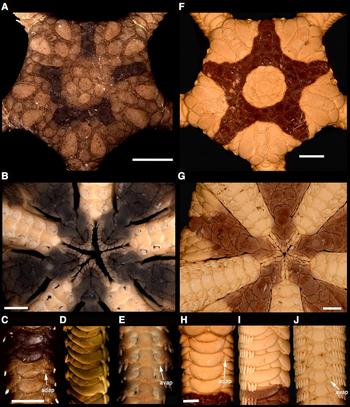
Left: Ophiolepis aemulata sp. nov. Holotype USNM 1224609 (dd: 17 mm). Right: Ophiolepis superba Neotype MCZ 143456 (dd: 24 mm): dorsal disc surface (A, F); ventral disc surface (B, G); dorsal arm plates and ADAP (C, H); lateral arm plates (D, I) and ventral arm plates and AVAPs (E, J). Scale bars A, F, 5 mm; B–E, G–J, 2 mm.

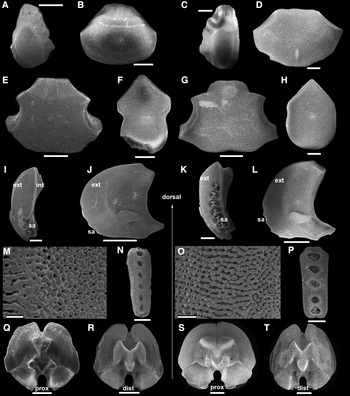
Left: Ophiolepis aemulata sp. nov. Paratype USNM E40093 (dd: 17 mm), Right: Ophiolepis superba MCZ 803 (dd: 20 mm): radial shield, external aspect, proximal edge upwards (A, C); dorsal arm plate (B, D); ventral arm plate (E, G); oral shield (F, H); lateral arm plates, distal aspect with spine articulations (I, K) external aspect (J, L) and stereom structure (M, O); dental plate, external aspect, ventral downwards (N, P); arm vertebrae, dorsal upwards, proximal aspect (Q, S) and distal aspect (R, T). Scale bars A, C, 2 mm; B, D–L, N, P–T, 500 µm; L, 100 µm; and M, 50 µm.

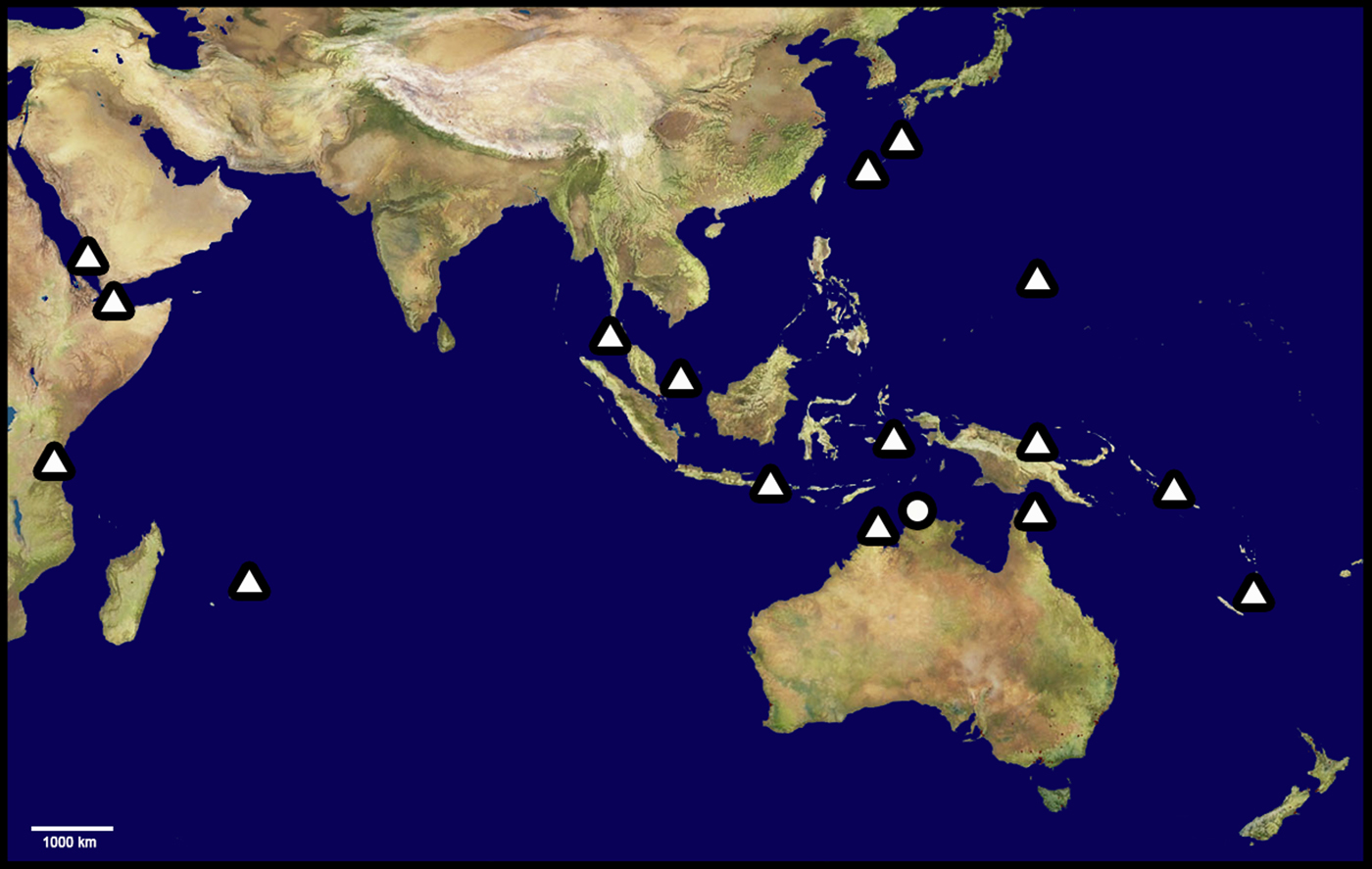
Distribution map for Ophiolepis aemulata sp. nov. (○) and O. superba (Δ).

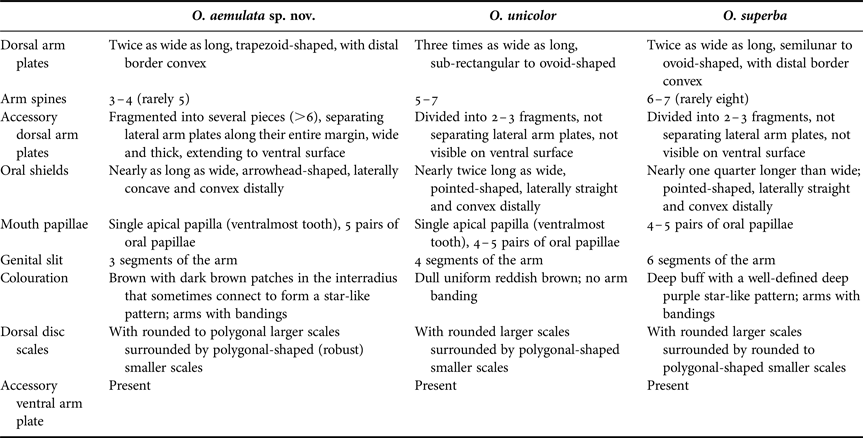
Comparison of morphological characters between Ophiolepis aemulata sp. nov., O. unicolor and O. superba.

TYPE MATERIAL
Holotype: One adult specimen preserved in ethanol. (East Arm Boat Ramp, off Port Darwin, Northern Territory, Australia; coordinates: 12°20′30.8″S 130°53′39.1″E; intertidal) (USNM 1224609); coll. 12 March 1986.
Paratypes: Three adult specimens preserved in ethanol. (East Arm Boat Ramp, off Port Darwin, Northern Territory, Australia; coordinates: 12°20′30.8″S 130°53′39.1″E; intertidal) (USNM 40093); coll. 12 March 1986, one of the specimens has been disarticulated for SEM images and ossicles are preserved on a SEM stub.
ETYMOLOGY
The specific epithet derives from the Latin word aemulatus, to copy or equal something, referring to the strong resemblance with the species Ophiolepis superba.
COMPARATIVE MATERIAL EXAMINED
Ophiolepis superba one adult specimen in 70% ethanol. (Zanzibar, Tanzania, Western Indian Ocean; coordinates: −6.028749° 39.473784°) (Neotype MCZ 143456); coll. G.A. Cheney and Caleb Cook, 1860–1865. Six adult specimens in 70% ethanol. (Zanzibar, Tanzania, Western Indian Ocean; coordinates: −6.028749° 39.473784°) (MCZ 803); coll. G.A. Cheney and Caleb Cook, 1860–1865. One adult specimen in 70% ethanol. (SOL4934 31BS18, Australia, Joseph Bonaparte Gulf; coordinates: 11°38.123′S, 129°49.288′E; water depth: 26 m) (MV F171194); coll. 12 September 2009. Ophiolepis aemulata sp. nov. one adult specimen in 70% ethanol. (East Arm Boat Ramp, Darwin Harbor, Northern Territory, Timor Sea, Australia; intertidal) (NMST 2026); coll. 12 March 1986. See Appendix for additional examined material.
DIAGNOSIS
Disc rounded-pentagonal, covered with numerous, flat, thin, larger scales slightly imbricated, with polygonal margins, surrounded by a continuous border of numerous smaller scales. Radial shields completely exposed, flat, irregularly triangular, almost twice as long as wide. Accessory dorsal arm plates fragmented in several pieces, extending from beneath the dorsal arm plates along the margin of the lateral arm plates and separating them. One small accessory ventral arm plate on each side between the lateral arm plate and the ventral arm plate, distal to the tentacle scales. Oral shields longer than wide, with concave lateral sides. Each jaw bears a single apical (ventralmost tooth) and five or six oral papillae. Lateral arm plates with two to four arm spines, rarely five, decreasing in size dorsally. Two tentacle scales, operculiform, attached to the lateral arm plate; and two pairs of smaller tentacle scales around the rim of the pore, attached to the ventral arm plate.
HOLOTYPE DESCRIPTION
Disc diameter (dd) 17 mm; length of the longest arm (al) 46 mm (Figure 1). Disc rounded-pentagonal; dorsal surface flat, slightly elevated; ventral surface flat (Figure 1A). Interradius sloping ventrally from the lateral margin. Disc covers proximal eight arm segments. Arms stout, gradually tapering; dorsal surface rounded and ventral surface flat; arm tip finely tapered, dorso-ventrally flattened.
Disc covered with numerous flat, thin, large, irregular scales, completely separated from each other by a continuous row of slightly imbricated, irregular, smaller scales. Larger plates do not imbricate and are well separated by smaller scales. These scales are polygonal with irregular margins; central scales more rounded than the elongated scales at the interradius, which are ovoid and larger. Conspicuous central rosette; central plate the largest and rounded; radial plates ovoid, five in number and surrounded by a continuous border of numerous smaller scales (which vary in shape and size). Dorsal interradii with three columns of larger scales; the central one radiates from each radial primary plate (Figure 1A). The central column has four large scales surrounded by smaller ones, which are darker than the rest of the scales creating a star-like pattern. Radial shields flat, at the same level of the disc scales, irregularly triangular, almost twice as long as wide, with convex abradial lobe, and widely separated by three large scales, the proximal one is the largest, the middle and distal scales are round, the latter is larger in size and has two adjacent scales at both sides, which are twice as wide as long and positioned diagonally outwards. There are nine larger scales surrounding each pair of radial shields, except at the distal edge.
Each jaw bears a single apical oral papilla (ventralmost tooth) and five oral papillae (Figure 1B). First and second proximal papillae conical-shaped, third and fourth papillae quadrangular, as long as wide; distalmost the largest, elongated, attached to the adoral shield. Oral shields twice as long as wide, central region constricted; with an acute angle, rounded laterally; distal margin rounded and depressed. Madreporite with single, large hydropore. Adoral shields tumid; shaped almost like an isosceles triangle, twice as long as wide, with distal margin concave; lateral abradial margin somewhat convex; lateral adradial margin slightly concave; pairs contiguous interradially.
Genital slit extending from oral shield to the end of the fourth ventral arm plate, not extending to the border of the disc; bordered by three short genital plates at the distal end and by the lateral arm plates and smaller scales on the proximal end (Figure 1B). The abradial genital plate only visible from the distal end of the genital slit, almost three times as long as wide, and as long as three arm segments; it is rounded on its proximal edge and pointed on its distal end, barely runs along the genital slit and it is separated from the arm by ventral disc scales. The adradial genital plate is only visible along the distal half length of the genital slit, it is narrow, shorter than two arm segments, and in contact with the arm and the distal genital plate. The abradial genital plate lies between the interradial disc scales and the scales at the base of the arm distally; it almost reaches the edge of the disc. Ventral interradius with some larger scales, partially surrounded by smaller ones.
Proximal dorsal arm plates (Figure 1C) are ovoid-shaped, thick, elevated distally; and separated from each other on the first few segments, the next arm plates overlapping, concealing the proximal apex of the adjacent plate. The distal segments of the arm bear triangular dorsal arm plates, separated from each other by the lateral arm plates that are contiguous dorsally and ventrally. Accessory dorsal arm plates (ADAPs) large and fragmented into more than four small, irregular pieces which are arranged in a row that extends from beneath the dorsal arm plates, along the proximal and distal margins of the lateral arm plates, separating each arm segment laterally. Lateral arm plates (Figure 1D) are thick and elevated distally. Arm spines less than half of a segment in length, slightly tapering towards the tip; ventralmost spine largest and thickest, spines decreasing in size towards the dorsal surface. No arm spines on first and second segments, one spine on third to seventh segments, two spines on eighth segment, three spines on ninth and tenth segments, succeeding plates with three or four on each side, rarely five. Ventral arm plates (Figure 1E) overlapping; as long as wide on the first eight proximal arm segments; subsequent ventral arm plates slightly wider than long and somewhat hexagonal; distal ventral arm plates triangular and separated by lateral arm plates. Accessory ventral arm plates (AVAPs) are small, triangular, one on each distal edge of the ventral arm plates all across the length of the arm, which are inserted between the latter and the distal portion of the tentacle scales. Two tentacle scales forming ovoid operculum over each tentacle pore along the total arm length, attached to the lateral arm plates; first and second arm segments bearing a second pair of small tentacle scales around the rim of the pore, attached to the ventral arm plates; subsequent arm segments bear only one, but smaller scale on the inner part of each tentacle pore.
Paratype variation: The paratype series consists of three specimens (USNM E40093), with disc diameter: 17, 18 and 21 mm; and longest arm length: 36, 40, 47 mm, respectively. The morphology of the paratypes is nearly identical to that of the holotype. There are only slight variations in the extent of the dark brown patches on the dorsal surface of the disc. In some specimens the dark brown patches are connected to form a star-like pattern (specimens with dd: 17 and 18 mm), while in one of the other specimens, the patches are completely isolated from each other (specimen with dd: 21 mm). In the largest of the paratypes (dd: 21 mm) the oral shield is pointed proximally, with straight lateral edges and convex distal edge; with three tentacle scales on the first segment and two in all other segments; and no arm spines on the first six segments, one on the seventh to tenth segments, and variable on the rest of the segments (maximum of four spines). Additionally, one specimen (with dd: 17 mm), only has four oral papillae, instead of the five seen in the type and other paratypes (dd: 18 and 21 mm).
DISARTICULATED OSSICLES
Specimen analysed: one paratype USNM E40093 (dd: 17 mm). Radial shield (external view) irregularly triangular, with a raised smooth oval centre (visible part that is exposed, almost the entire radial shield) bordered by four pores in the proximo-abradial part (which is covered/overlapped by disc scales) (Figure 2A). Dorsal arm plate stout and somewhat oval-shaped, wider than long; distal and proximal edges rounded, but proximal half as long as distal, lacking spur on the proximal portion (Figure 2B). Ventral arm plate with proximal side truncated and with a spur, lateral side concave forming the border of the tentacle pore and with a conspicuous rim, distal side rounded (Figure 2C). Oral shield arrowhead-shaped, lateral borders slightly concave and distal side convex (Figure 2F). Lateral arm plate D-shaped, with three spine articulations along the distal aspect, each consisting of two parallel ridges (Figure 2I). The proximal edge of the outer lateral arm plate with a discernible band of different stereom structure, and one spur on the proximal edge (Figure 2J). The outer surface with equal and smooth stereom pores (Figure 2M). Dental plate thin and elongated, dorsal portion wider than ventral; with six ovoid to rounded tooth foramina, none of which perforates the plate (Figure 2N). Proximal vertebrae (Figure 2Q) almost quadrangular, with typical zygospondylous articulation, with narrow muscle flanges and a V-shaped groove; distal view (Figure 2R).
COLOUR
Colour of specimen preserved in 70% ethanol (Figure 1); the dorsal side of the disc is brown with dark brown patches in the interradii, which sometimes connect to form a star-like pattern on the centre. The arms are banded with dark brown bands of two to three segments alternating with pale bands of four to six segments. The ventral side of the disc is dark brown all over. The ventral part of the arms is lighter in colour. Live colouration has not been recorded.
REMARKS
There are eight known species of the genus reported for the Indo-Pacific and Western Pacific regions, however this species is closely related to two of its congeners: Ophiolepis superba and O. unicolor. However, the distribution of O. aemulata sp. nov. is narrower and is not sympatric with any of these two species. Specimens of O. aemulata sp. nov. were first identified as O. superba due to its similarities, therefore differences between these are presented in Table 1. Records of juveniles or small size specimens of this species have not been found. Ophiolepis aemulata sp. nov. is easily recognized from its congeners by its colouration, the presence of two to four arm spines, five or more oral papillae and their distinct ADAPs that separate the lateral arm plates.
Ophiolepis superba H. L. Clark, Reference Clark1915
(Figures 1–3; Table 1)
Ophiura annulosa. – Blainville, Reference Blainville1834: 244, pl. 24, figs 1–4.
Ophiolepis annulosa. – Müller & Troschel, Reference Müller and Troschel1840: 328; Reference Müller and Troschel1842: 89; Lütken, Reference Lütken1859: 100, 105, pl. II, fig. 5a, b; Lyman, Reference Lyman1865: 58; Studer Reference Stöhr, O'Hara and Thuy1882: 19; H.L. Clark, Reference Clark1908: 289; Matsumoto, Reference Matsumoto1917: 300; A.M. Clark & Melville, Reference Clark and Melville1976: 268.
Ophiolepis superba H.L. Clark, Reference Clark1915: 89; Reference Clark1921: 143; A.M. Clark & Rowe, Reference Clark and Rowe1971: 90, 128–129; Domantay & Domantay, Reference Domantay and Domantay1966: 64–65; A.M. Clark & Melville, Reference Clark and Melville1976: 269; Cherbonnier & Guille, Reference Cherbonnier and Guille1978: 236–239; Stöhr et al., Reference Stöhr, O'Hara and Thuy2017.
TYPE MATERIAL
No type material or type locality has ever been designated for this species.
NEOTYPE
Based on the IZCN 2000, article 72.4.2 the type specimen should be the one illustrated by Blainville (Reference Blainville1834) and misidentified as Ophiura annulosa Lamarck, 1816. This specimen was recognized by Müller & Troschel (Reference Müller and Troschel1840) as a distinct taxon and placed in their new genus Ophiolepis as the new combination Ophiolepis annulosa. Two years later Müller & Troschel (Reference Müller and Troschel1842) published a description of Ophiolepis annulosa, presumably based on specimens from the Red Sea deposited in collections in Germany and the Netherlands. Lyman (Reference Lyman1865) designated Ophiolepis annulosa as the type species for the genus and listed two lots of specimens from Zanzibar. Subsequently, Ophiolepis annulosa was renamed as O. superba by H. L. Clark (1905a), and that combination was officially established as the type for the genus (H. L. Clark, Reference Clark1915; A. M. Clark & Melville, Reference Clark and Melville1976; International Commission on Zoological Nomenclature, 1981). Unfortunately, the whereabouts of the specimen illustrated by Blainville (Reference Blainville1834) and those described by Müller & Troschel (Reference Müller and Troschel1842) are unknown or could not be located. The only specimens that were located were those described by Lyman (Reference Lyman1865), which are deposited in the Museum of Comparative Zoology, Harvard University, Boston, MA, USA. Although Müller & Troschel (Reference Müller and Troschel1842) and Lütken (Reference Lütken1859) have made brief descriptions of the species as Ophiolepis annulosa, a proper diagnosis is still missing. Both descriptions emphasized the distinctive colour pattern of thick black to dark-purple bands on the arms and a star-like pattern or star-shaped ring on the disc, while the rest of the body varies from deep buff to dark brown (Müller & Troschel, Reference Müller and Troschel1842; Lütken, Reference Lütken1859). Despite this, a specimen not showing this pattern was described briefly by H. L. Clark (Reference Clark1915). Therefore, neotypification provides the only solution for the latter problem and will help clarify the identity of the species. Herein we designate a neotype from MCZ 803; seven specimens; Zanzibar, Tanzania, belonging to the specimens studied by Lyman (1865: 58) and which conform to the colour pattern of the species as described by Blainville (Reference Blainville1834: pl. 24), Müller & Troschel (Reference Müller and Troschel1842: 89–90), and Lütken (Reference Lütken1859: pl. II, fig. 5a, b). Following the ICZN 2000, Article 75.3, the specimen MCZ 143456, one adult specimen preserved in ethanol, is designated as the neotype.
COMPARATIVE MATERIAL EXAMINED
Ophiolepis superba six adult specimens in 70% ethanol. (Zanzibar, Tanzania, Western Indian Ocean; coordinates: −6.028749° 39.473784°; intertidal) (MCZ 803); coll. G.A. Cheney and Caleb Cook, 1860–1865. Ophiolepis superba one adult specimen in 70% ethanol. (SOL4934 31BS18, Australia, Joseph Bonaparte Gulf; coordinates: 11°38.123′S, 129°49.288′E; water depth: 26 m) (MV F171194); coll. 12 September 2009. See Appendix for additional examined material.
DIAGNOSIS
Disc rounded-pentagonal, covered with numerous, flat, thin, larger scales slightly imbricated, with rounded margins, surrounded by a continuous border of numerous smaller scales. Radial shields completely exposed, flat, irregularly triangular, almost twice as long as wide. Accessory dorsal arm plates fragmented in two or three pieces. Each jaw bears four or five oral papillae. Lateral arm plates with seven arm spines, rarely eight, decreasing in size dorsally. Two tentacle scales, operculiform, attached to the lateral arm plates, plus two smaller scales attached to the rim on the ventral arm plate.
NEOTYPE DESCRIPTION
Disc diameter 24 mm; length of the longest arm 57 mm (Figure 1). Disc rounded-pentagonal; dorsal surface flat, slightly sunken in the centre; ventral surface flat (Figure 1F). Disc covers proximal eight arm segments. Arms stout, gradually tapering; dorsal surface rounded and ventral surface flat; arm tip finely tapered, dorso-ventrally flattened.
Disc covered with numerous flat, thin, large, rounded scales, completely separated from each other by a continuous row of slightly smaller scales (Figure 1F). Larger scales do not imbricate and are well separated by smaller scales. These scales are rounded-shaped with regular margins; central scales more polygonal-shaped than the elongated and rounded scales at the interradii, which are ovoid and larger. Inconspicuous central rosette; central plate rounded; radial plates not distinguishable, the centre of the disc is delimited by a dark star-like pattern. Dorsal interradii with three columns of larger scales. The central column has four large scales surrounded by smaller ones, varying in size and shape; which are darker than the rest of the scales (pale-yellow) creating a star-like pattern. Radial shields flat, at the same level of the disc scales, irregularly triangular, almost twice as long as wide, with convex abradial lobe, and widely separated by three large scales, the proximal one is the largest, the middle and distal scales are round, the latter is larger in size and has two adjacent scales at both sides (distally), which are twice as wide as long and positioned diagonally outwards.
Each jaw bears four (rarely five) oral papillae (Figure 1G). First and second proximal papillae papiliform-shaped, third and fourth papillae quadrangular, as long as wide. The distalmost is the largest, elongated, attached to the adoral shield. Oral shields twice as long as wide, central region constricted; with an acute angle and straight laterally; lateral margins straight; distal margin convex. Madreporite with single, large hydropore, larger than the rest of the oral shields. Adoral shields tumid, twice as long as wide, with distal margin straight; lateral abradial margin somewhat convex; lateral adradial margin slightly straight; pairs contiguous interradially.
Genital slit extending from oral shield to the end of the sixth ventral arm plate, not extending to the border of the disc (Figure 1G). The abradial genital plate only visible from the distal end of the genital slit, almost three times as long as wide, and as long as three arm segments; it is rounded on its proximal and distal edges, runs along the genital slit. Ventral interradii with numerous larger rounded scales, partially surrounded by smaller ones.
Proximal dorsal arm plates are ovoid to semi-circular; the next arm plates overlapping, concealing the proximal apex of the adjacent plate (Figure 1H). The distal segments of the arm bear triangular dorsal arm plates. ADAPs large and fragmented into two or three small, irregular pieces which are arranged along the proximal margin of the lateral arm plates. Lateral arm plates are thick and smooth (Figure 1I). Arm spines almost half the length of the arm segment, rounded; increasing in size ventrally (Figure 1J). No arm spines on first and second segments, one spine on third to seventh segments, two spines on eighth segment, three spines on ninth and tenth segments, succeeding plates with three or four on each side, rarely five. Ventral arm plates overlapping; as long as wide on the first eight proximal arm segments; subsequent ventral arm plates slightly wider than long and somewhat hexagonal; distal ventral arm plates triangular and separated by lateral arm plates (Figure 1J). AVAPs are small, triangular, one on each distal edge of the ventral arm plates all across the length of the arm, which are inserted between the latter and the distal portion of the tentacle scales (Figure 1J). Two tentacle scales forming an ovoid operculum over each tentacle pore along the total arm length, attached to the lateral arm plates; first and second arm segments bearing a second pair of small tentacle scales around the rim of the pore, attached to the ventral arm plate; subsequent arm segments bear only one, but smaller scale on the inner part of each tentacle pore.
DISARTICULATED OSSICLES
Adult specimen: MCZ 803 (dd: 20 mm, al: 54 mm); not the neotype MCZ 143456 in order to preserve the latter in the best condition; both specimens belonged to the same lot. Radial shield (external view) irregularly triangular, with a raised smooth oval centre (visible part that is exposed, almost the entire radial shield) bordered by three pores in the proximo-abradial part (which is covered/overlapped by disc scales) (Figure 1C). Dorsal arm plate thick and oval-shaped, almost twice as wide as long; distal edge rounded; proximal and lateral edges straight; lacking spur on the proximal portion (Figure 1D). Ventral arm plate with proximal side elevated in the midline, nearly straight sides, lacking spur, lateral sides concave forming the border of the tentacle pore and with a conspicuous rim, distal side sinuous-shaped, with a slight midline depression (Figure 1G). Oral shield pointed proximally, lateral borders straight and rounded distally (Figure 1H). Lateral arm plate D-shaped, with six noticeable spine articulations along the distal aspect, each consisting of two parallel ridges (Figure 1K). The proximal edge of the lateral arm plate with a discernible band of different stereom structure, and one spur towards the ventral surface. The outer surface with equal and smooth stereom pores (Figure 1O). Dental plate thin and elongated and somewhat quadrangular in shape, dorsal portion slightly wider than ventral portion; with five ovoid to rounded tooth foramina, none of which perforates the plate (Figure 1P). Proximal vertebra slightly longer than wide (Figure 1S), with typical zygospondylous articulation, narrow muscle flanges and a V-shaped groove; distal view (Figure 1T).
COLOUR
Colour of specimen preserved in 70% ethanol (Figure 1F); the dorsal side of the disc is deep buff with a deep-purple star-like pattern on the centre and interradii. The arms are banded with deep-purple bands of seven to eight segments alternating with pale bands of seven to eight deep buff (same colours as the disc); these bands are only present on the dorsal and lateral surface of the arms, not ventrally. The ventral side of the disc is deep-purple all over the jaws and interradii, with a star-like pattern. The ventral part of the arms is deep buff.
DISTRIBUTION
Specimens of this species have been found Zanzibar, Tanzania, Africa (Lyman, Reference Lyman1865); Ceylon, Sri Lanka (H.L. Clark, Reference Clark1915); Saudi Arabia, Red Sea; Djibouti; Ambon Island and Gili Island, Indonesia; Pulau Tioman, Malaysia; east of Phuket, Thailand; Solomon Island; Gulf of Carpentaria and Gulf of Joseph Bonaparte Australia; Okinawa Island, Japan; Papua New Guinea; Mariana Island, Guam and Lifou, New Caledonia up to 50 m depth (Figure 3). The distribution that we present here is based on the specimens we revised and that certainly belongs to this species.
REMARKS
Ophiolepis superba is a well-known species from the Indo-Pacific region, its relatively large size and distinct colouration pattern make it relatively easy to recognize both in the field and in collections. Specimens with a dd of 7 mm or less tend to have five arm spines that are relatively small and seem to lack the AVAP. In specimens larger than 10 mm dd, this plate is either rudimentary or absent. This species is closely related to two of its congeners from the Indo-Pacific: O. unicolor and O. aemulata sp. nov. Differences between these species are presented in Table 1.
Ophiolepis buitronae sp. nov.
(Figures 4–6, Table 2)
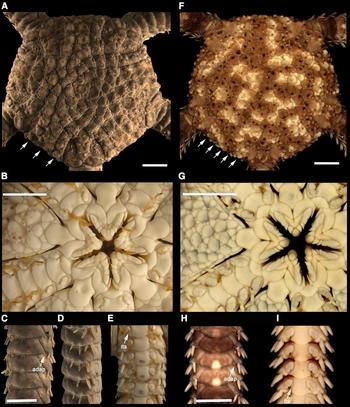
Left: Ophiolepis buitronae sp. nov. Holotype ICML-UNAM 3.122.56 (dd: 13 mm), Right: Ophiolepis impressa Lectotype ZMUC NHMD 141838 (dd: 13 mm); dorsal disc surface (A, F); ventral disc surface (B, G); dorsal arm plates and ADAP (C, H); lateral arm plates (D); ventral arm plates and inner tentacle scales (its) (E, I). Scale bars A, B, F and G 5 mm, C–E and H–I, 2 mm.

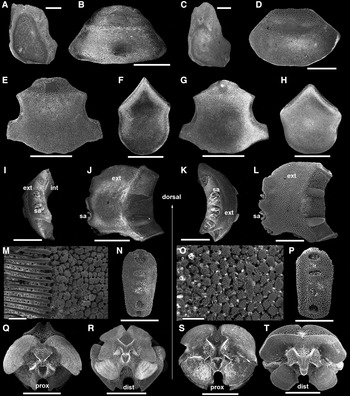
Left: Ophiolepis buitronae sp. nov. Paratype USNM E37706 (dd: 8 mm), Right: Ophiolepis impressa USNM E37646 (dd: 9 mm); radial shield, external aspect, proximal edge upwards (A, C); dorsal arm plate (B, D); ventral arm plate (E, G); oral shield (F, H); lateral arm plates, distal aspect with spine articulations (I, K), external aspect (J, L) and outer surface ornamentation (M, O); dental plate, external aspect, ventral downwards (N, P); arm vertebrae, dorsal upwards, proximal aspect (Q, S) and distal aspect (R, T). Scale bars A, C, 1 mm; B, D–L, N, P–T, 500 µm; M, O, 300 µm.

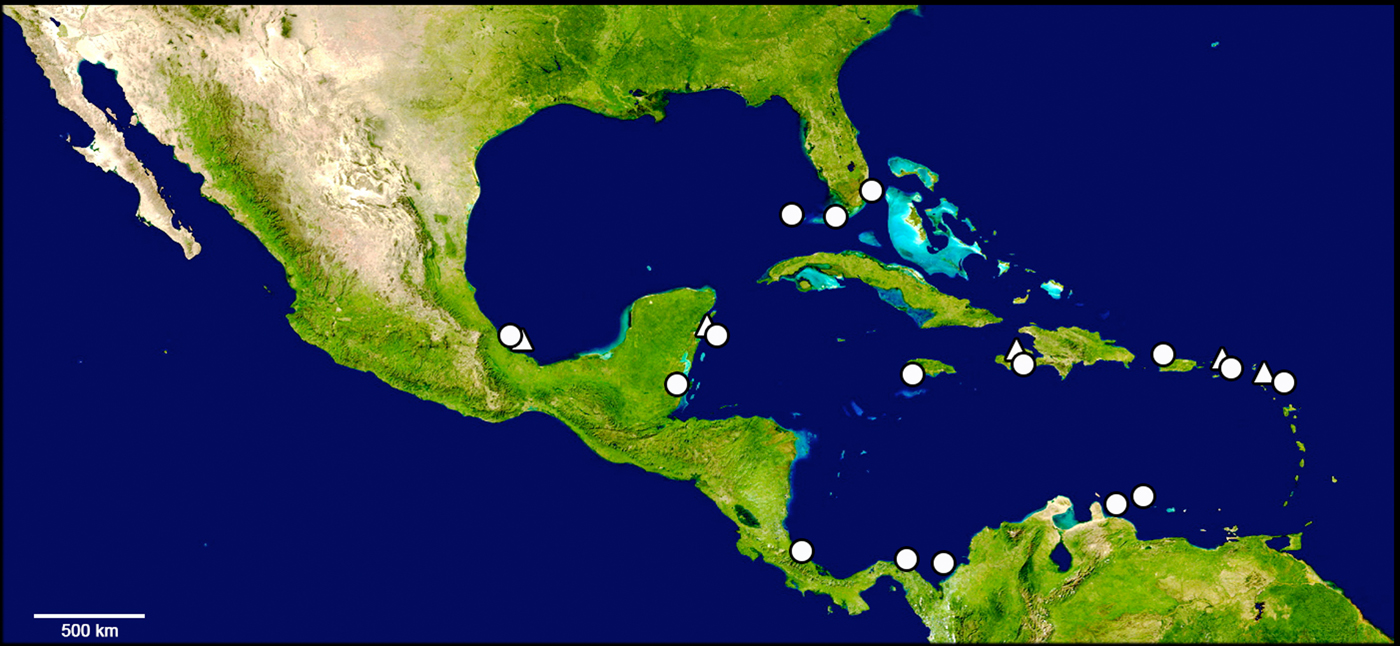
Distribution map for Ophiolepis buitronae sp. nov. (Δ) and O. impressa (○).

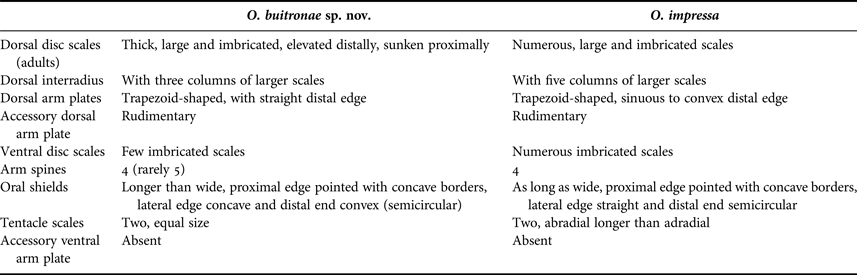
.Comparison of morphological characters between Ophiolepis buitronae sp. nov. and O. impressa.

TYPE MATERIAL
Holotype: One adult specimen in 70% ethanol (Isla Sacrificios, Veracruz, Veracruz, Mexico; 19°18.4′N 96°09.242′W; 7–10 m depth, scuba); (ICML-UNAM 3.122.56) coll. F.A. Solís-Marín, 8 March 2005.
Paratypes: One adult specimen in 70% ethanol (Isla Lobos, Tamiahua, Veracruz; 21°28.362′N 97°13.876′W; 12 m depth, scuba) (ICML-UNAM 3.122.73); 17 March 2011. One adult specimen, dried (Bajo Grande, San Bernardo Archipelago, Bolívar, Colombia; 09°44.522′N 75°41.98′W; 5.4 m depth) (ICML-UNAM 3.122.55); coll. 14 July 2004. Six adult specimens dried (Bizoton, Haiti) (MCZ 6259); coll. 1927. One adult specimen in 75% ethanol (Tennessee Reef, Florida Keys, Monroe County; 6 m depth) (UF 10269); coll. F. Michonneau, G. Paulay, S. McPherson, M. Bemis, H. Lin, J. Moore and N. Evans, 3 May 2010. One adult specimen in 80% ethanol (Rocroy sud, Guadaloupe Island, Lesser Antilles; 27 m depth) (UF 13765); coll. L. LeGall, Y. Buske and Y. Turpin, 10 May 2012. One adult specimen in 70% ethanol (SW side of Isla Uva, off Puerto Limon, Limon Province, Costa Rica; 6 m depth) (LACM E.1987-60.22); coll. G. Hendler, 1987. One adult specimen in 85% ethanol (SE Rendezvous Cay, Belize District, Belize; 4 m depth) (LACM E.1999-9.19); coll. G. Hendler, 1999. Six adult specimen in 70% ethanol (Looe Key National Marine Sanctuary, Inter-Mediate Deep Reef at Buoy #28, Florida Keys, Florida; 14 m depth) (USNM E37706); coll. G. Hendler; 7 May 1985.
ETYMOLOGY
Named after an extraordinary echinoderm palaeontologist, Dra. Blanca Estela Buitrón Sánchez, researcher of the Instituto de Geología, Universidad Nacional Autónoma de México (UNAM).
COMPARATIVE MATERIAL EXAMINED
Ophiolepis buitronae sp. nov. two adult specimens in 70% ethanol (SE of Key Largo, Florida Reefs, Unnamed Reef, Monroe Co, Florida, USA; coordinates: 25.011 N 80.36933 W; 12.1 m depth) (LACM E.2011-4.2); coll. G. Hendler, 31 March 2011. Two adult specimens in 75% ethanol (Port Louis, entrée grotte aux barracudas, Guadeloupe Island, Lesser Antilles; coordinates: 16.4557, −61.5345W) (UF 13764); coll. Buske, Yan; Vassard, Emmanuel, 15 May 2012. See Appendix for additional examined material.
DIAGNOSIS
Disc sub-pentagonal to rounded; dorsal surface rough; covered with thick, large, imbricated scales, arranged in three columns in each dorsal interradius. Radial shields depressed, with uneven surface, irregularly triangular, longer than wide. Accessory dorsal arm plates small (rudimentary), one on each distal edge of each dorsal arm plate, and inserted between the latter and the lateral arm plate. Oral shields longer than wide. Each jaw bears a single apical (ventralmost tooth) and four oral papillae. Arm spines usually four on each side of an arm segment, rarely five. Lacking accessory ventral arm plates.
HOLOTYPE DESCRIPTION
Disc diameter 13 mm; length of the longest arm 63 mm (Figure 4). Disc sub-pentagonal to rounded; dorsal surface rough, slightly convex with the central region slightly sunken; ventral surface flat (Figure 4A). Disc covers proximal six arm segments. Arms slender, gradually tapering; dorsal surface rounded and ventral surface flat; arm tip finely tapered, dorso-ventrally flattened.
Disc covered with numerous thick, large, imbricated scales, with angular margins and straight edges joined at obtuse angles, elevated distally and sunken proximally (Figure 4A). Smaller irregular scales surrounding larger ones. Primary rosette barely distinguishable; central plate the smallest, surrounded by a continuous border of one row of numerous smaller scales (which vary in shape and size). Radial shields depressed, with uneven surface, irregularly triangular, longer than wide, with a slight abradial lobe, and widely separated by three larger scales, the proximal one is largest, the middle one is rectangular, wider than long, and the distal scale is rounded-triangular and has two adjacent scales at both sides, which are wider than long and positioned diagonally outwards. Dorsal interradii with three columns of larger scales; central column with four scales equal to or larger than the four scales of each lateral column.
Each jaw bears a single apical oral papilla (ventralmost tooth) and four oral papillae (Figure 4B). First and second proximal papillae papilliform, third papillae quandrangular. The distalmost is the largest, with broadly rounded lateral margins, attached to the adoral shield. Oral shields longer than wide, central region depressed; proximal edge pointed and concave on both sides; lateral margins slightly concave; distal margin convex, nearly semicircular. Madreporite with single, large hydropore. Adoral shields with concave proximal side and convex distal side; distal edge pointed; lateral margin slightly concave; proximal margin pointed; pairs touching interradially. Genital slit extending from oral shield to fifth ventral arm plate; bordered by a long distal genital plate and two small scales proximally. Ventral interradii with few larger imbricated scales, surrounded by smaller ones; the largest of them centred and near the margin.
Proximal dorsal arm plates trapezoid with straight margins except the distal one, which is rounded; neighbouring plates overlap, concealing proximal apex of the previous plate (Figure 4C). ADAPs small (rudimentary), one on each distal edge of each dorsal arm plate, and inserted between the latter and the lateral arm plate. Lateral arm plate stout, slightly thicker distally (Figure 4D). Arm spines stout; base and middle thick, gradually narrowing to blunt point; one on first three segments, two on fourth segment, three on fifth segment, and four (rarely five) on subsequent segments distally. Ventralmost spine the longest, more than half the length of the arm segment, and thicker than the dorsal most spine, spines decrease in size towards the dorsal surface; dorsal arm-spines are thinner and pointed, and as long as one third of the segment length. Ventral arm plates overlapping; twice as wide as long on the first four proximal arm segments; subsequent ventral arm plates as wide as long; distal arm plates triangular and separated by lateral arm plates (Figure 4E). Two tentacle scales attached to lateral arm plates, forming an ovoid operculum over each tentacle pore along the total arm length; first and second arm segments bearing a second pair of tentacle scales attached to the ventral arm plate; subsequent arm segments bearing one smaller rim-like scale attached to the ventral arm plate.
DISCARTICULATED OSSICLES
Specimen analysed: one Paratype USNM E37706 (dd: 8 mm). Radial shield (external view) irregularly triangular, with a rough and sunken centre (visible part that is exposed, almost the entire radial shield) bordered by a groove all around with three pores in the proximo-abradial part (which is covered/overlapped by disc scales) (Figure 5A). Dorsal arm plate trapezoidal, proximal margin slightly convex with a spur, distal and lateral margins straight (Figure 5B). Ventral arm plate wider than long; proximal edge is truncated and with a spur, slightly depressed at the centre, distal lateral edges are tumid at their distal portion, which forms the edge of the tentacle pore; distal edge is slightly rounded but with a small notch at the centre (Figure 5E). Oral shield almost twice as long as wide, pointed proximally, lateral sides slightly concave, distal side rounded (Figure 5F). Lateral arm plate D-shaped, with four spine articulations along the distal aspect, each consisting of two parallel ridges (Figure 5I). External view of lateral arm plate; proximal edge has a discernible band of different stereom structure, with horizontal striations and two spurs (Figure 5J). The outer surface with spiny stereom pores (Figure 5M). Dental plate sub-oval in outline, dorsal portion wider than the ventral portion, with five tooth foramina, none of which perforates the plate; the third and fourth foramens dorsal to ventral are ovoid while the rest are almost circular (Figure 5N). Proximal vertebra (Figure 5Q) with typical zygospondylous articulation, slightly elongated, with wing-like muscle flanges and U-shaped groove, distal view (Figure 5R).
COLOUR
Live colouration is either all dark brown or with a specific pattern; the disc being reddish light brown, with dark brown scales surrounding the primary disc plates and the radial shields. The arms are light brown with a banded dark brown pattern. Ventral surface is very light in colour, as well as the arm spines. Dried specimens are darker on the dorsal surface and the colouration pattern is less conspicuous but still evident. Specimens preserved in ethanol have the same colouration as live ones.
REMARKS
There are seven other ophiolepidid species in the Western Atlantic (Ophiolepis ailsae, O. elegans, O. gemma, O. impressa, O. kieri, O. paucispina and O. pawsoni). Ophiolepis buitronae sp. nov. possesses three rows of larger scales on each dorsal interradius, similar to O. ailsae, O. gemma, O. kieri and O. paucispina, but the larger scales on these species are not as thick as on O. buitronae sp. nov. Also, they are slightly convex in O. ailsae, O. gemma, O. kieri and O. paucispina. Ophiolepis elegans differs in having a single row of flat, larger scales. In comparison O. pawsoni has a different arrangement of dorsal disc scales, in which the thin intercalary scales are rare, thus the disc is mostly covered by large, thick, round to ovoid scales. Ophiolepis buitronae sp. nov. is clearly distinguished from its closest Western Atlantic congener not only by its unique colour pattern (which is darker than O. impressa, with more prominent arm-banding; Figure 4) but also by consistently thicker disc scales which are somewhat rounded, swollen, with thicker borders and uneven surface; by the presence of radial shields with an uneven surface and fewer scales in each ventral interradius. The most conspicuous difference is the presence of three columns of well-defined interradial disc scales in O. buitronae sp. nov., rather than the five irregular columns of disc scales in each interradius present in O. impressa.
Specimens of this species can be distinguished from O. impressa even when the disc is as small as 5 mm in diameter. On smaller specimens, three rows of dorsal interradial disc scales are present in both species. Nevertheless, disc scales of O. buitronae sp. nov. are thicker even at that size, and the dorsal surface of the disc on its congeners has more disc scales. Differences between O. impressa and O. buitronae sp. nov. are presented in Table 2.
Ophiolepis impressa Lütken, Reference Lütken1859
(Figures 4–6, Table 2)
Ophiolepis impressa Lütken, Reference Lütken1859: 101–102; Ljungman, Reference Ljungman1866: 306; Devaney, Reference Devaney1974: 154–155; Lewis & Bray, Reference Lewis and Bray1983: 173; Hotchkiss, Reference Hotchkiss, Rützel and Macintyre1982: 405; Hendler, Reference Hendler1988: 269; Alvarado & Solís-Marín, Reference Alvarado and Solís-Marín2013: 633; Gondim et al., Reference Gondim, Alonso, Pereira Dias, Castro Manso and Christoffersen2013: 50, 54–55.
Ophiozona impressa. – Lyman, Reference Lyman1865: 64; Verrill, Reference Verrill1899: 8; H.L. Clark, Reference Clark1901: 242; Reference Clark1915: 337; Reference Clark1919: 57, 72; Reference Clark1933: 41, 73; Koehler, Reference Koehler1907: 289; Reference Koehler and Michaelsen1914: 2, 11, 150; Matsumoto, Reference Matsumoto1915: 82; Reference Matsumoto1917: 298, 389; A.H. Clark, Reference Clark1921: 57; Reference Clark1922: 213; Reference Clark1939: 452; Reference Clark and Galtsoff1954: 378; Fell, Reference Fell1960: 33; Tommasi, Reference Tommasi1970: 74.
TYPE MATERIAL
Lectotype: One specimen preserved dry. (Saint Thomas, U.S. Virgin Island; 1 m depth) (ZMUC NHMD 141838); coll. Riise.
Paralectotype: Eleven specimens preserved dry. (Saint Thomas, U.S. Virgin Island; 1 m depth) (ZMUC NHMD 107681). Paralectotype: one specimen preserved dry. (Saint Thomas, U.S. Virgin Island; 1 m depth) (ZMB 865).
COMPARATIVE MATERIAL EXAMINED
Ophiolepis impressa two adult specimens in 70% ethanol (Reef Flat, Near Smithsonian Laboratory, Station Cbc 80–29, Carrie Bow Cay Belize; 2 m depth) (LACM E.1980-177.2); coll. G. Hendler, 01 April 1980. Six adult specimens in 75% ethanol (Port Louis, Epave avion, Guadeloupe Island, Lesser Antilles; coordinates: 16.426833 N −61.54275 W) (UF 12774); coll. LeGall, Line, Buske, Yan, Turpin, Yannis, Vassard, Emmanuel, Moolenbeek, Robert and Netchy, Kris, 14 May 2012. See Appendix for additional examined material.
EMENDED DIAGNOSIS
Conspicuous central rosette and four or five radiating columns of larger scales in each interradius (Figure 4); disc covered with numerous thick, rounded, larger scales, surrounded by a continuous row of numerous smaller scales (Figure 4F). Ventral interradii covered by numerous large and thick scales (Figure 4G). Radial shields depressed, rugose, irregularly triangular, longer than wide. Oral shields about as long as wide. Each jaw with four oral papillae, plus an apical papilla (ventralmost tooth). Lateral arm plates with four or five arm spines, slightly decreasing in size dorsally; two ventralmost spines are thicker and almost as long as one arm segment (Figure 4I, E). Accessory dorsal arm plates present on almost all arm segments, distally between the dorsal arm plates and the lateral arm plates (Figure 4H). Three thin genital plates along the genital slit, increasing in size distally (Figure 4G). Lacking accessory ventral arm plates.
DISARTICULATED OSSICLES
Specimen analysed: one specimen USNM E37646 (dd 9 mm). Radial shield (external view) irregularly triangular, with a swollen central region (exposed region) bordered by a groove with four pores in the proximo-abradial part (which is covered/overlapped by disc scales) (Figure 5C). Dorsal arm plate trapezoidal; proximal and lateral sides straight and distal side rounded with a wide proximal spur (Figure 5D). Ventral arm plates wider distally than proximally; proximal edge is convex and with a centred spur; lateral edges convex proximally where the tentacle pore opens and distal edge is slightly rounded (Figure 5G). Oral shield almost as wide as long, pointed proximally, with lateral sides nearly straight and rounded distally (Figure 5H). Lateral arm plate D-shaped, with four spine articulations along the distal aspect, each consisting of two parallel ridges (Figure 5J). External view of LAP; proximal edge with a discernible band of different stereom structure, with horizontal striations and two spurs (Figure 5L). The outer surface with spiny stereom structure (Figure 5O). Dental plate ovoid, dorsal portion slightly wider than the ventral portion, with four tooth foramina but none perforating the plate; the second foramen (from dorsal to ventral) is ovoid while the rest are almost circular (Figure 5P). Proximal vertebra (Figure 5S) with typical zygospondylous articulation, almost quadrangular, with narrow muscles flanges and V-shaped groove, distal view (Figure 5T).
REMARKS
Specimens from the type material include both Ophiolepis impressa and a previously undescribed species (see above) as specimens of these two species are often found together. From the 15 specimens of the original syntype material, there are 13 specimens that correspond to O. impressa (Figure 4); from which one was designated as the lectotype (ZMUC NHMD 141838), and the 12 remaining were designated as paralectotypes (ZMUC NHMD-107681) and (ZMB 865). It can be easily distinguished from its western Atlantic congeners by the presence of more than four columns of disc scales on each interradius, the smooth radial shields, a greater density of scales on the ventral interradii, the presence of four to five arm spines and by its lighter cream-brown colour with darker spots on the dorsal surface. The arms also show a banded pattern of cream and brown.
Ophiolepis crebra sp. nov.
(Figures 7 and 8; Table 3)
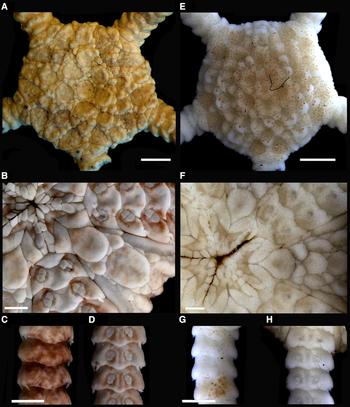
Left: Ophiolepis crebra sp. nov. Holotype MV F162621 (dd: 7 mm), Right: Ophiolepis rugosa MV F122623 (dd: 4.2 mm); dorsal disc surface (A, E); ventral disc surface (B, F); dorsal arm plates (C, G); ventral arm plates (D, H) Scale bars A, C–E, G–H, 1 mm; and B, F, 0.5 mm.

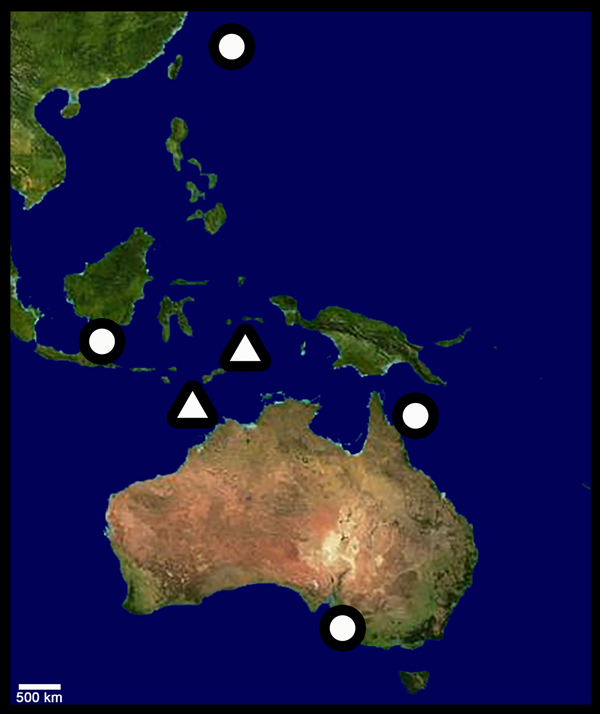
Distribution map for Ophiolepis crebra sp. nov. (Δ) and O. rugosa (○).

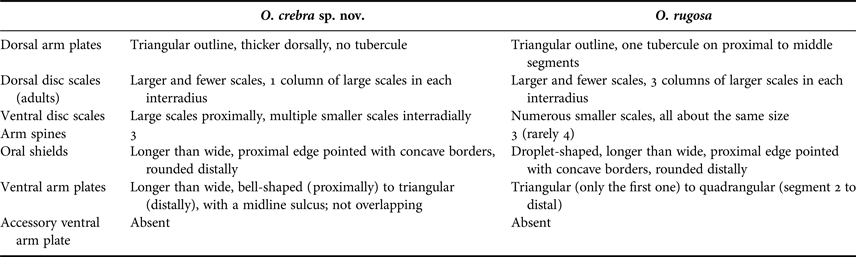
Comparison of morphological characters between Ophiolepis crebra sp. nov. and O. rugosa.

TYPE MATERIAL
Holotype: One adult specimen preserved in 75% ethanol. (North-western Australia, SS05/2007 Stn. 161; coordinates: 14°33.732′S 122°55.092′E; 95 m depth) (MV F162621); coll. 4 July 2007.
Paratype: One adult specimen preserved dried (Ambon Island, Indonesia; 70 m depth) (ZMUC OPH 5920); coll. Theodor Mortensen, February 1922.
ETYMOLOGY
The specific epithet derives from the Latin word creber, thick, which refers to the thickness of the disc scales.
COMPARATIVE MATERIAL EXAMINED
Ophiolepis rugosa one adult specimen in 75% ethanol. (Ss05/2007 125, Lacepede, North-western Australia; coordinates: 15.8112 S 121.0623 E; 85–100 m depth) (MV F122623); Dianne J. Bray; coll., 29 June 1905. One adult specimens in 75% ethanol. (Biolum 22, Lizard Island, Big Vicki, Australia; coordinates: 14.69 S 145.43667 E; 5–12 m depth) (MV F1109845). See Appendix for additional material.
DIAGNOSIS
Disc slightly pentagonal covered with imbricated, thick, large scales, which have a tuberculous dorsal surface and irregular swollen distal margins, each surrounded by a continuous border of thick, smaller and irregular scales. A single row of two larger, sunken, ovoid scales in each interradius, the distal being the largest, longer than wide. Single large scale proximally on each ventral interradius, and two vertical irregular scales distally, these with elevated margins and with some smaller scales on the sides of the genital plates. Oral shields longer than wide, droplet-shaped. Lateral arm plates with three small, pointed arm spines, similar in size. Dorsal arm plates trapezoid, swollen on the distal margin. Accessory dorsal arm plates present only on basal segments. Two tentacle operculiform scales attached to the lateral arm plate, with only one small tentacle scale attached to the rim on the ventral arm plate. Lacking accessory ventral arm plates.
HOLOTYPE DESCRIPTION
Disc diameter 7 mm; length of the longest arm 20 mm (Figure 7). Disc slightly pentagonal; dorsal surface elevated; ventral surface flat (Figure 7A). Interradii sloping ventrally from the lateral margin. Disc covers proximal five arm segments. Arms slender, dorso-ventrally flattened, gradually tapering; dorsal surface rounded and ventral surface flat.
Disc covered with numerous, conspicuous, thick, imbricated large scales (<0.5 mm), with swollen distal margins and uneven surface proximally; these scales are surrounded by smaller ones which are also tumid, irregular in shape and size (Figure 7A). Conspicuous central rosette; central plate rounded and the five radial plates slightly ovoid. Dorsal interradii with one column of two large ovoid scales, the distal one is longer than wide. Radial shields with uneven surface, sunken, irregularly triangular, wider than long, with convex abradial lobe and separated radially from each other by three larger scales; the proximal one is the largest, the middle one is the smallest and slightly rectangular, wider than long and the distal scale is irregularly shaped with two adjacent scales at both sides, which are broader than long and somewhat triangular, with rounded angles. Five larger scales bordering each pair of radial shields on their proximal side. Each jaw bears a single apical oral papilla (ventralmost tooth) and four oral papillae (Figure 7B). First and second proximal papilla very stout, third papillae quadrangular longer than wide. The distalmost is the largest, rectangular, wider than long, attached to the adoral shield. Oral shield tumid, longer than wide; proximal edge pointed with concave margins; lateral and distal margins nearly semicircular. Madreporite with single, large hydropore. Adoral shields tumid; distal angle pointed, claw-shaped; lateral margin slightly straight; proximal edge pointed; pairs joined together. Genital slit extending from oral shield to fourth ventral arm plate at the border of the disc; bordered by two genital plates, the proximal is narrower and shorter than the distal one, which extends to almost the edge of the disc. Ventral interradii with one large oval scale, distally two vertical irregular scales with elevated margins and with some smaller scales on the sides of the genital plates surrounded by smaller ones.
Proximal dorsal arm plates are trapezoid-shaped, almost twice as long as wide, elevated distally; neighbouring arm plates overlapping, concealing the proximal apex of preceding plates (Figure 7C). Single ADAP at both distal edges of a few basal dorsal arm plates, irregular in shape. The distal segments of the arm bear triangular dorsal arm plates, separated from each other by the lateral arm plates that are touching dorsally and ventrally. Lateral arm plates thicker at distal margins. Arm spines slender, pointed and short, almost as long as one fourth of the length of an arm segment; none on first segment, one on second segment, two on third segment, and three on subsequent segments. Ventral arm plates overlapping and elevated, longer than wide and somewhat bell-shaped, with sharply pointed distal lateral edges; distal ventral arm plates triangular and separated by lateral arm plates (Figure 7D). Two large tentacle scales attached to the lateral arm plate, forming ovoid operculum over each tentacle pore all along the length of the arm; adradial tentacle scale is shorter and more triangular in shape and abradial is larger and somewhat D-shaped. Second and third arm segments bear a second pair of extra tentacle scales attached to the ventral arm plates, smaller in size; subsequent arm segments bear only one smaller rim-like scale attached to the ventral arm plate.
DISTRIBUTION
The species is found off North-western Australia and Ambon Island, Indonesia (Figure 8).
REMARKS
Due to limited number of specimens of O. crebra sp. nov. and their designation as type material, no ossicles were isolated and only external morphology is described. Ophiolepis crebra sp. nov. possesses thick arm plates, which could be mistaken with the nodular arm plates present in O. rugosa and O. nodosa; however the nodular dorsal arm plates are well defined in the latter species (see Fujita, Reference Fujita2016 for a photograph of O. nodosa, and Pineda-Enriquez et al., Reference Pineda-Enriquez, Solis-Marin and Laguarda-Figueras2014, for a discussion on the systematic position of this species). The closest relative to O. crebra sp. nov, is O. rugosa and the morphological differences and similarities between these two species are summarized in Table 3 (Baker, Reference Baker1979; Fujita, Reference Fujita2016; Pineda-Enriquez et al., Reference Pineda-Enriquez, Solis-Marin and Laguarda-Figueras2014).
DISCUSSION
As part of an extensive revision of the genus we identified three new species of Ophiolepis (O. buitronae sp. nov., O. aemulata sp. nov. and O. crebra sp. nov.), that mainly consists of misidentified specimens. Species of Ophiolepis are delimited in accordance to the pattern, distribution, size, and thickness of the disc scales, as well as the shape and size of the dorsal arm plates, and the presence of accessory dorsal and ventral arm plates (Pineda-Enriquez et al., Reference Pineda-Enriquez, Solis-Marin and Laguarda-Figueras2014). Based on these characteristics it was evident to us that, in some cases, specimens in museum lots corresponded to two different species.
Specimens of the new species Ophiolepis buitronae sp. nov. had been consistently misidentified as Ophiolepis impressa since 1856, when this species was described by Lütken, who included specimens of both species as part of the type series of O. impressa. These 14 specimens were collected by A.H. Riisse on the small island Saint Thomas, in the Caribbean Sea (type locality of O. impressa). There are no previous reports on morphological variation within O. impressa, but the distinguishing taxonomic characters we suggest are conspicuous and consistent across all specimens. Furthermore, the existence of Ophiolepis buitronae sp. nov. is supported by molecular evidence (Bribiesca-Contreras et al., Reference Bribiesca-Contreras, Solis-Marin, Laguarda-Figueras and Zaldivar-Riveron2013).
Initially, Bribiesca-Contreras et al. (Reference Bribiesca-Contreras, Solis-Marin, Laguarda-Figueras and Zaldivar-Riveron2013) compared specimens of O. impressa from inside the anchialine cave Aerolito de Paraiso and from open waters and found that they formed two clades rather than one, and that these clades were not separated geographically. We examined these specimens and were able to separate each clade using the morphological characters outlined above. Thus, molecular and morphological evidence both suggest that O. buitronae is a new species. It has a sympatric distribution, and it has been collected together with specimens of O. impressa (as in the type material for the latter, designated by Lütken). Thus, they are easily misidentified due to the morphological similarities when observed in the field. The distribution of both species may be broader than reported here, as only the material we examined and reliable photographic records were considered. As many specimens had been misidentified, it will be necessary to review all previous reports not included in this study.
The species Ophiolepis aemulata sp. nov. had been misidentified as O. superba. A few specimens deposited in the scientific collection of the USNM and NSMT were found under this name, but they clearly belong to the new species. Ophiolepis aemulata sp. nov. has been recorded only from around Darwin, Australia. We suspect that the species has a wider distribution as it is likely that there are more misidentified specimens that were not found during this revision. This also applies for Ophiolepis crebra sp. nov., as we found specimens in scientific collections identified as other species (e.g. O. irregularis). Finally, this work prompted the designation of the neotype of O. superba, which will help clarify its identity.
According to our results and previous accepted species (Stöhr et al., Reference Stöhr, O'Hara and Thuy2017), the genus Ophiolepis now comprises 25 species. Eight of these occur in the Western Atlantic: O. ailsae, O. gemma, O. elegans, O. kieri, O. paucispina, O. pawsoni, O. impressa and O. buitronae sp. nov. One species occurs in the Eastern Atlantic: O. affinis. Across the Indo-west Pacific, our findings have increased the species richness of the genus to nine species: O. biscalata, O. cardioplax, O. cincta, O. irregularis, O. nodosa, O. rugosa, O. superba, O. unicolor, O. aemulata sp. nov. and O. crebra sp. nov. Lastly, there are six species that are found in the eastern Pacific Ocean: O. crassa, O. fulva, O. grisea, O. pacifica, O. plateia and O. variegata.
It is evident that a complete systematic revision of the Ophiolepididae and Hemieuryalidae is required at both genus and family-level. O'Hara et al. (Reference O'Hara, Hugall, Thuy, Stöhr and Martynov2017), in a new robust molecular phylogeny of the Ophiuroidea, have shown that the traditional Ophiolepididae was not monophyletic. Instead it consists of four family-level clades, the Ophiolepididae (restricted), Hemieuryalidae, Ophiomusaidae and Ophiosphalmidae, the latter two placed in an order (Ophiurida), separate from the former two (Amphilepidida). The phylogeny also showed that several ophiolepidid genera (in particular Ophiozonella Matsumoto, Reference Matsumoto1915) are also not monophyletic.
SUPPLEMENTARY MATERIAL
The supplementary material for this article can be found at https://doi.org/10.1017/S0025315417001503.
ACKNOWLEDGEMENTS
We are grateful to David Pawson and Paul Greenhall (USNM), Gustav Paulay, John Slapcinski and Amanda Bemis (FLMNH), Sabine Stöhr (SMNH), Adam Baldinger and Penny Benson (MCZ), Gordon Hendler and Katie Grooves (LACM), Eric A. Lazo-Wasem (YPM), Marc Eléaume (MNHN), Rich Mooi (CAS), Estefania Rodriguez (AMNH), Toshihiko Fujita (NSMT) for access to their collections. We also thank Melanie Mackenzie and Christopher Rowley (MV), Alicia Duran and Ma. Esther Diupotex (ICML-UNAM) for the loan of specimens, and D. Eibye-Jacobsen (ZMUC) for the loan of the type material. We thank Berenit Mendoza (IB, UNAM) for taking the SEM photographs; Susana Guzmán Gómez (IB, UNAM) and Scott Whitaker (USNM); for technical assistance in photography. Thanks also go to Jorge Velez-Juarbe (LACM) Sylvia, Michelle Healy, Alejandro Velázquez and David Baldwin for comments on earlier versions of the manuscript. To Isaac Pardo (UNAM) for assistance with the database. Finally, to two anonymous reviewers for their helpful comments and corrections that greatly improved the manuscript.
FINANCIAL SUPPORT
This work was funded by grants given by CONACYT and Posgrado en Ciencias del Mar y Limnología (UNAM) to TPE and GBC.