Introduction
Weed interference reduces soybean yield, especially when weeds are present during the critical weed-free period (CWFP). The CWFP in soybean to prevent a 2.5% yield loss occurs from emergence to the V4 growth stage; that is, approximately from soybean emergence to 30 days after emergence (Van Acker et al. Reference Van Acker, Swanton and Weise1993). In North America, it has been estimated that if no weed control measures are implemented, there is an average soybean yield loss of 52% due to weed interference; however, greater losses can occur depending on relative time of crop and weed emergence, weed species composition, weed density, soil nutrient status, and weather conditions (Soltani et al. Reference Soltani, Dille, Burke, Everman, VanGessel, Davis and Sikkema2017). For example, competition from green foxtail at densities of 128 plants m−2 reduced soybean yield 80% (Weaver Reference Weaver2001). Crop-weed competition models show that populations of common ragweed, common lambsquarters, common cocklebur (Xanthium strumarium L.), velvetleaf, and jimsonweed (Datura stramonium L.) at high densities can reduce soybean yield by 75% (Weaver Reference Weaver1991; Weaver Reference Weaver2001).
Crop cultivars with herbicide-resistant traits have been widely adopted over the past two decades. The introduction of glyphosate-resistant soybean in 1996 quickly gained popularity among soybean producers to the point that greater than 95% of soybean was seeded to cultivars with this resistance trait in the United States (Young Reference Young2006). More recently, soybean cultivars with resistance to synthetic auxin herbicides, including dicamba and 2,4-D, have been developed. The use of these cultivars and herbicides will provide improved control of some annual, biennial, and perennial broadleaf weeds and control of selected herbicide-resistant broadleaf weed species that would otherwise have limited chemical control options in soybean (Behrens et al. Reference Behrens, Mutlu, Chakraborty, Dumitru, Jiang, Lavallee, Herman, Clemente and Weeks2007; Spaunhorst and Johnson Reference Spaunhorst and Johnson2017). Herbicide-resistant traits have advanced weed management in soybean by increasing efficiency through the use of more efficacious herbicides, and their use has resulted in lower cost of herbicides, labor, machinery, and fuel (Fernandez-Cornejo et al. Reference Fernandez-Cornejo, Klotz-Ingram and Jans2002).
The introduction of hydroxyphenylpyruvate dioxygenase (HPPD)-resistant soybean cultivars, which are currently under development, will allow for the application of isoxaflutole to soybean and thus an additional mode of action that, when used judiciously in an integrated weed management program, can aid in slowing the evolution of glyphosate-resistant weed species, including Palmer amaranth, waterhemp, and horseweed. This can be accomplished by controlling such species before they set seed (Ditschun et al. Reference Ditschun, Soltani, Robinson, Tardiff, Kaastra and Sikkema2016; Meyer et al. Reference Meyer, Norsworthy, Young, Steckel, Bradley, Johnson, Loux, Davis, Kruger and Bararpour2015; Schryver et al. Reference Schryver, Soltani, Hooker, Robinson, Tranel and Sikkema2017).
HPPD-inhibiting herbicides represent the most recently discovered class of herbicides used for weed management in field crop production; they were first commercialized in Canada in the late 1990s. These herbicides inhibit the HPPD enzyme, which is responsible for the biosynthesis of plastoquinone, an essential cofactor for the production of carotenoids, and an electron transporter in the photosynthetic electron transport chain (Pallet et al. Reference Pallett, Little, Sheekey and Veerasekaran1998). The HPPD-inhibiting herbicides are injurious to most dicotyledonous crops; therefore, most HPPD-inhibiting herbicides are used for weed management in corn, with two active ingredients, pyrasulfotole and bicyclopyrone, registered for use in cereal crops.
The use of isoxaflutole on isoxaflutole-resistant soybean could provide residual control of some annual grass and broadleaf weed species. Adequate rainfall is required after application to dissolve the herbicide in soil water solution so it can be absorbed by the developing weed seedlings that are shorter than 5 cm; it will not control larger weeds when applied PRE (OMAFRA 2016). The length of residual activity depends on weather conditions and rate applied; season-long control of most species can be expected with application of isoxaflutole at 105 g ai ha−1 or greater (Anonymous 2017). If lower rates of isoxaflutole are applied, or if little to no rainfall occurs within 14 days of herbicide application, weed control may be reduced. However, weed escapes may be controlled with herbicides applied POST. In addition to resistance to isoxaflutole, these soybean cultivars also have transgenes that confer resistance to glyphosate or glufosinate, providing a POST-applied, nonselective herbicide option for the control of weed escapes.
Two-pass weed control programs that include a soil-applied residual herbicide, applied PRE, followed by (fb) a nonselective POST herbicide can provide effective, full-season weed control as part of an integrated weed management strategy. Glyphosate and glufosinate provide broad-spectrum control of emerged weeds at the time of application that offers a safety net to control weeds not controlled with the soil-applied residual herbicide, without concern of crop injury. The PRE application of a residual herbicide fb glyphosate or glufosinate applied POST provides multiple sites of action that will reduce the evolution of herbicide-resistant weed biotypes (Gressel and Segel Reference Gressel and Segel1990). The use of residual herbicides fb glyphosate applied POST compared with glyphosate alone increased control of redroot pigweed and common lambsquarters by 20% and giant foxtail by 4% to 19% (Tharp and Kells Reference Tharp and Kells2002). Similarly, the same study showed the application of a residual herbicide before glufosinate applied POST increased control of common ragweed and giant foxtail. Generally, two-pass weed control strategies provide improved weed control and reduce the selection intensity for herbicide-resistant weeds.
The purpose of the current study was to determine the level of weed control in isoxaflutole-resistant soybean achieved with two-pass weed control programs on different soil textures in Ontario, Canada.
Materials and methods
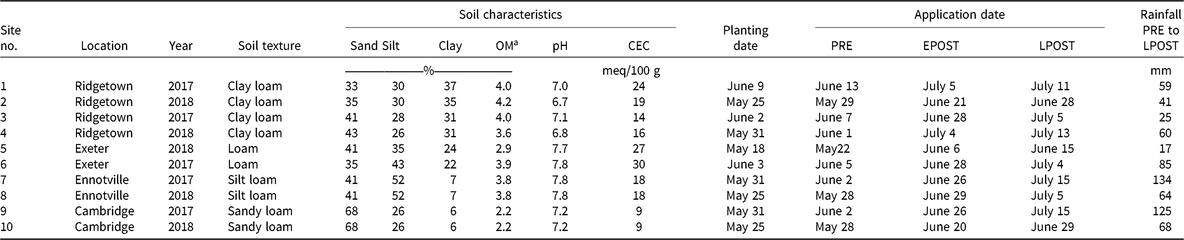
A total of 10 field experiments were completed over 2 years (2017 and 2018) near Cambridge, Ennotville, Exeter, and Ridgetown (two sites), Ontario. Trials were conducted on soils with varying characteristics that were selected to represent typical soil textures found within Ontario. Sites were organized in descending order on the basis of clay content (Table 1). Land was prepared using conventional tillage methods. Regionally appropriate isoxaflutole-resistant soybean cultivars were planted 5-cm deep in rows spaced 0.76-m apart at approximately 372,500 seeds ha−1.
Soil characteristics, planting date, and rainfall between the PRE and LPOST application dates at 10 trial locations in Ontario, Canada, in 2017 and 2018.

a Abbreviations: EPOST, early postemergence; LPOST, late postemergence; OM, organic matter.
Treatments were arranged in a randomized complete block design with three or four replications depending on space availability at each site. Plots measured 3-m wide (four soybean rows) by 8- or 10-m long. Herbicides were applied at three different times: (1) PRE, applied after soybean planting and before soybean emergence; (2) early postemergence (EPOST), applied when weeds in the untreated weedy control were an average of 7.5-cm tall; and (3) late postemergence (LPOST), applied when weeds were 7.5-cm tall in the plots treated with a PRE herbicide. Isoxaflutole plus metribuzin was applied at three different rates: low (52.5 + 210 g ai ha−1), medium (79 + 316 g ai ha−1), and high (105 + 420 g ai ha−1). Glyphosate (900 g ae ha−1) was applied EPOST, LPOST, and EPOST fb LPOST. Herbicides were applied using a CO2-pressurized backpack sprayer calibrated to deliver 200 L ha−1 at 240 kPa equipped with a 1.5-m boom with four 120-02 ultra low-drift nozzles (Hypro Ultra low drift 120-02; Pentair, New Brighton, MN) spaced 50-cm apart, resulting in a spray width of 2 m.
Visible soybean injury was assessed 1, 2, and 4 weeks after soybean emergence (WAE) on a scale of 0 (no visible crop injury) to 100 (complete plant death). Visible weed control was assessed by weed species before each POST herbicide application and 4 and 8 weeks after the LPOST application (WAA) on a scale of 0 (no visible weed control) to 100 (no weeds present). In addition, at 4 WAA, weed density was determined by counting the number of weeds by species in two 0.5-m2 quadrats per plot. The weeds were cut at the soil surface, placed in bags by species, dried at 60 C to constant moisture, and weighed. Soybean was harvested at maturity with a small-plot research combine; seed weight and moisture were recorded. Soybean yield was adjusted to 13% moisture before analysis.
SAS, version 9.4 (SAS Institute, Inc. Cary, NC) was used to analyze data with the GLIMMIX procedure. An initial analysis was conducted to determine if there was a significant site-by-treatment interaction for injury, weed control, and yield. In this initial analysis, site, treatment, and the site-by-treatment interaction were fixed effects, and replication within site was a random effect. If the site-by-treatment effect was significant, a Tukey-Kramer multiple means-comparison test was conducted to determine how the sites grouped; otherwise, data from all sites were pooled. This step was only conducted during the first weed control evaluation at the EPOST application timing. The same site groupings were held constant for the remaining control, density, and biomass evaluations for each weed species. Soybean injury, weed control, and yield were analyzed to assess treatment differences with a mixed model.
The fixed effect was treatment and the random effects included site, the site-by-treatment interaction, and replication within site. The Wald test was used to test the significance of random effects, whereas the F test was used to test the significance of fixed effects. The assumptions that errors were random, independent, homogenous, and normally distributed were confirmed by residual plots and the Shapiro-Wilks normality test. Data were transformed when necessary with the natural log and arcsine square root transformations. When transformation occurred, data were compared on the transformed scale; however, for presentation purposes, data were converted back to the original scale. Means were separated using a Tukey-Kramer multiple means comparison test at P < 0.05.
Results and discussion
Soybean injury
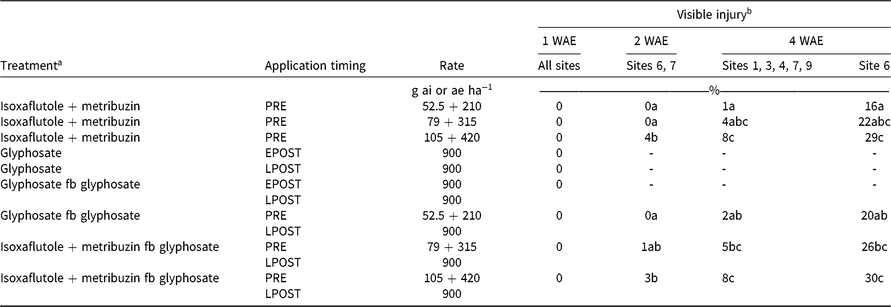
At 1 WAE, there was no soybean injury from any of the herbicides evaluated (Table 2). At 2 WAE at sites 6 and 7, isoxaflutole plus metribuzin applied at the high rate caused 3% to 4% soybean bleaching, which is characteristic of isoxaflutole phytotoxicity. At 4 WAE at sites 1, 3, 4, 7, and 9, isoxaflutole plus metribuzin at the low, medium, and high rates caused 1% to 2%, 4% to 5%, and 8% soybean bleaching, respectively. At 4 WAE at site 6, isoxaflutole plus metribuzin at the low, medium, and high rates caused 16% to 20%, 22% to 26%, and 29% to 30% soybean bleaching, respectively. No soybean injury was observed at sites 2, 5, 8, or 10. Generally, soybean injury was more pronounced at the sites with greater rainfall after application (Table 1).
Visible estimates of soybean bleaching due to isoxaflutole plus metribuzin application at 1, 2, and 4 WAE from 10 field experiments conducted in Ontario, Canada, in 2017 and 2018.

a Abbreviations: EPOST, EPOST, early postemergence; fb, followed by; LPOST, late postemergence; WAE, weeks after emergence.
b Means followed by the same letter within a column are not significantly different according to the Tukey-Kramer multiple range test at P < 0.05.
Increased rainfall after herbicide application increases isoxaflutole absorption in corn, reduces metabolism, and elevates isoxaflutole concentration within the plant, resulting in greater phytotoxic effects (Soukup et al. Reference Soukup, Jursik, Hamouz, Holec and Krupka2004). Soils with high pH have decreased adsorption of diketonitrile, the first and more toxic metabolite of isoxaflutole, allowing for greater absorption by plants (Mitra et al. Reference Mitra, Bhowmik and Xing2001). We suggest that the higher level of soybean injury at site 6 was due to a combination of greater rainfall after application and a more alkaline soil. No injury symptoms were observed from the glyphosate applications.
Common lambsquarters
Common lambsquarters control was evaluated at eight sites in this study. There was a significant treatment-by-site interaction for common lambsquarters control (data not shown); therefore, results from sites 3 and 5 are presented separately from results from sites 1, 4, 6, 7, 9, and 10.
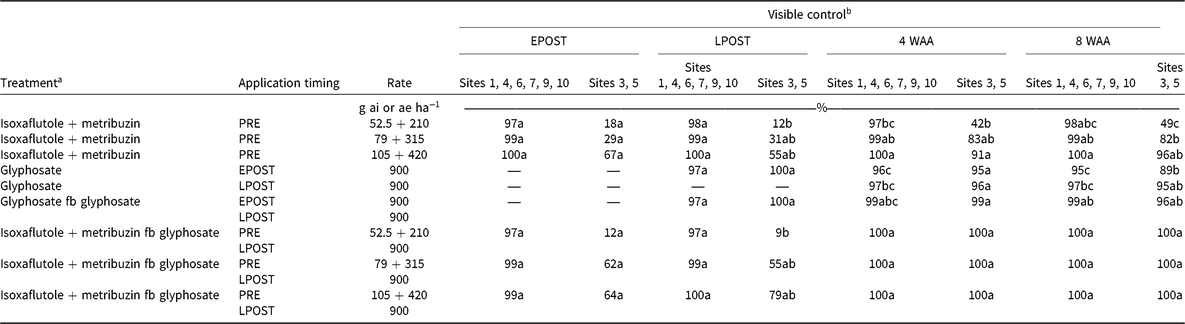
At the EPOST application timing, there was no difference in common lambsquarters control at the low, medium, and high rates of isoxaflutole plus metribuzin within either of the combined site groups (Table 3). At the sites with more rainfall (i.e., sites 1, 4, 6, 7, 9, and 10), isoxaflutole plus metribuzin at the low, medium, and high rates controlled common lambsquarters 97% to 100%. In contrast, at the sites with less rainfall (i.e., sites 3 and 5), isoxaflutole plus metribuzin at the low, medium, and high rates controlled common lambsquarters 12% to 18%, 29% to 62%, and 64% to 67%, respectively.
Visible estimates of common lambsquarters control at EPOST and LPOST application timings and 4 and 8 WAA from eight field experiments conducted in Ontario, Canada, in 2017 and 2018.

a Abbreviations: —, no data; EPOST, early postemergence; fb, followed by; LPOST, late postemergence; WAA, weeks after late postemergence application; WAE, weeks after emergence.
b Means followed by the same letter within a column are not significantly different according to the Tukey-Kramer multiple range test at P < 0.05.
At the LPOST application timing, there was no difference in common lambsquarters control among the herbicide treatments evaluated at the sites with more rainfall; all herbicide treatments controlled common lambsquarters 97% to 100% (Table 3). In contrast, at the sites with less rainfall, isoxaflutole plus metribuzin applied at the low, medium, and high rates controlled common lambsquarters 9% to 12%, 31% to 55%, and 55% to 79%, respectively. Glyphosate (900 g ha−1) applied EPOST controlled common lambsquarters 100%. The medium and high rates of isoxaflutole plus metribuzin applied PRE and glyphosate applied EPOST provided similar control of common lambsquarters.
At 4 WAA, at the sites with greater rainfall, isoxaflutole plus metribuzin applied at the low and high rates resulted in a small but significant increase in common lambsquarters control, from 97% to 100% (Table 3). Glyphosate applied EPOST, LPOST, and EPOST fb LPOST controlled common lambsquarters 96% to 99%. At the sites with less rainfall, isoxaflutole plus metribuzin applied at the low, medium, and high rates controlled common lambsquarters 42%, 83%, and 91%, respectively. At both site groups, as the rate of isoxaflutole plus metribuzin was increased, there was an increase in common lambsquarters control. There was a difference in control between the low and high rates. The medium rate did not differ from either the low or high rate. There was no difference in common lambsquarters control with glyphosate applied EPOST, LPOST, and EPOST fb LPOST. At all sites, the two-pass program of isoxaflutole plus metribuzin applied PRE fb glyphosate applied LPOST controlled lambsquarters 100%. There was an increase in common lambsquarters control with an application of glyphosate after isoxaflutole plus metribuzin applied PRE at the low rate. When isoxaflutole plus metribuzin were applied at the medium or high rate, there was no increase in common lambsquarters control when glyphosate was applied LPOST.
At 8 WAA, there were different trends in common lambsquarters control between the two site groups (Table 3). At the sites with more rainfall, there were no differences in common lambsquarters control among the three rates of isoxaflutole plus metribuzin evaluated. The sequential application of glyphosate applied EPOST fb LPOST controlled common lambsquarters 4% more than did the EPOST application. At the sites with less rainfall, isoxaflutole plus metribuzin applied at the low, medium, and high rates controlled common lambsquarters 49%, 82%, and 96%, respectively. Glyphosate applied EPOST, LPOST, and EPOST fb LPOST controlled common lambsquarters 89% to 96%. At all sites, the two-pass programs of isoxaflutole plus metribuzin applied PRE fb glyphosate applied LPOST controlled common lambsquarters 100%.
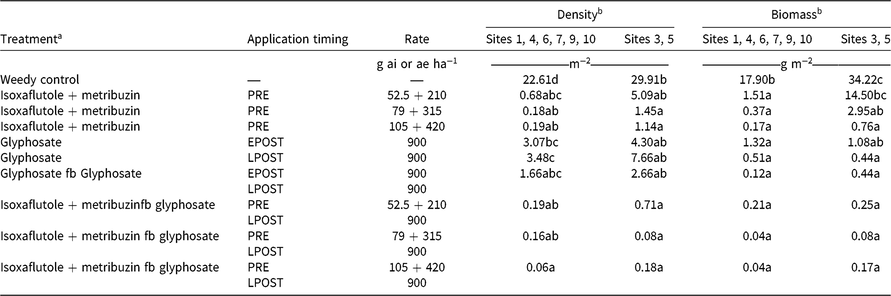
At 4 WAA, at the sites with more rainfall, isoxaflutole plus metribuzin reduced common lambsquarters density by 97% or more (Table 4). There was no difference in common lambsquarters density among the three rates evaluated. Glyphosate applied EPOST, LPOST, and EPOST fb LPOST reduced common lambsquarters density 85% to 93%. At the sites with less rainfall, isoxaflutole plus metribuzin applied PRE reduced common lambsquarters density 83% to 96%; there was no difference among the three rates evaluated. Glyphosate applied EPOST, LPOST, and EPOST fb LPOST reduced common lambsquarters density 74% to 91%. At both groups of sites, the two-pass program including isoxaflutole plus metribuzin applied PRE fb glyphosate applied POST reduced common lambsquarters density 98% to 100%. There was no weed control benefit of a two-pass program compared with a one-pass program with isoxaflutole plus metribuzin; however, a two-pass program with diverse herbicide modes of action can delay the selection of resistant weed biotypes.
Common lambsquarters density and biomass data at 4 wk after LPOST application from eight field experiments conducted in Ontario, Canada, in 2017 and 2018.

a Abbreviations: —, no data; EPOST, early postemergence; fb, followed by; LPOST, late postemergence.
b Means followed by the same letter within a column are not significantly different according to the Tukey-Kramer multiple range test at P < 0.05.
At 4 WAA, at sites with more rainfall, common lambsquarters biomass was reduced 92% to 99%; there was no difference among herbicide treatments evaluated (Table 4). At the sites with less rainfall, isoxaflutole plus metribuzin applied at the low, medium, and high rates reduced common lambsquarters biomass 58%, 91%, and 98%, respectively. The low rate did not differ from the weedy control. Glyphosate applied EPOST, LPOST, and EPOST fb LPOST reduced common lambsquarters biomass 97% to 99%; there was no difference among the glyphosate application timings. At both groups of sites, the two-pass programs of isoxaflutole plus metribuzin applied PRE fb glyphosate applied POST reduced common lambsquarters biomass 99%.
At the sites with less rainfall, common lambsquarters control with isoxaflutole plus metribuzin applied PRE increased over time. This may have been due to the reactivation of isoxaflutole plus metribuzin by late spring/early summer rains or to advanced soybean growth that shaded out the weeds. In contrast, common lambsquarters control with glyphosate decreased over time. This is not surprising, because glyphosate does not provide residual herbicide activity and would not be efficacious on later emerging common lambsquarters. The herbicide treatment by soil texture interaction was not significant for common lambsquarters control. Common lambsquarters control was more closely correlated with rainfall: sites receiving more rainfall had greater common lambsquarters control. The results of this study are consistent with those of a study conducted in corn by Chomas and Kells (Reference Chomas and Kells2004), in which isoxaflutole controlled common lambsquarters 52% to 72% and 97% to 100% in years receiving limited and abundant rainfall after application, respectively. Similarly, application of isoxaflutole plus atrazine (79 + 800 g ha−1) controlled common lambsquarters 78% and 100% with 66% less rainfall in May and June than the 30-year average and a year with normal rainfall, respectively (Stewart et al. Reference Stewart, Soltani, Nurse, Hamil and Sikkema2012).
Pigweeds
Redroot pigweed and Powell amaranth were combined during weed control assessments in this study, and are hereafter referred to as pigweeds. These pigweeds were evaluated at eight sites and the treatment-by-site interaction was not significant (data not shown); therefore, data were pooled across all sites.
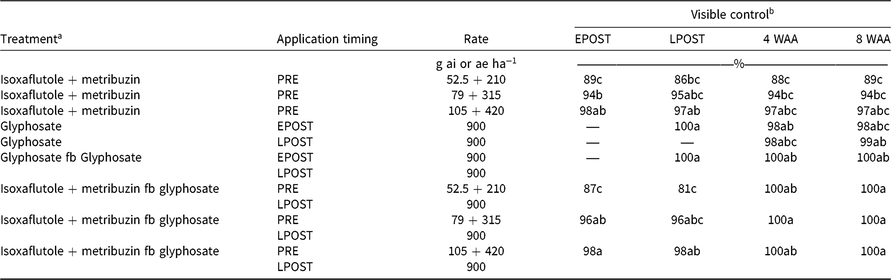
At the EPOST application timing, isoxaflutole plus metribuzin, applied at the low rate, controlled pigweeds 87% to 89% (Table 5). Isoxaflutole plus metribuzin, applied at the medium or high rate, controlled pigweeds 94% to 98%. The low rate of isoxaflutole plus metribuzin provided 5% to 11% lower control of pigweeds than the medium and high rates; there was no difference in pigweed control between the medium and high rates.
Visible estimates of control of pigweed species at EPOST and LPOST application timings and 4 and 8 WAA at sites 1, 3, 4, 5, 7, 8, 9, and 10 in Ontario, Canada, in 2017 and 2018.

a Abbreviations: —, no data; EPOST, early postemergence; fb, followed by; LPOST, late postemergence; WAA, weeks after late postemergence application.
b Means followed by the same letter within a column are not significantly different according to the Tukey-Kramer multiple range test at P < 0.05.
At the LPOST application timing, the low, medium, and high rates of isoxaflutole plus metribuzin controlled pigweeds 81% to 86%, 95% to 96%, and 97% to 98%, respectively (Table 5). Oddly, on average, the low rate of isoxaflutole plus metribuzin, which was intended to receive an LPOST application of glyphosate, controlled pigweeds 81%. This was less control than the high rate of isoxaflutole plus metribuzin, which provided 97% to 98% control. This result may be an artifact of variable pigweed density throughout the experimental area. Glyphosate applied EPOST controlled pigweeds 100%, which was higher than isoxaflutole plus metribuzin applied at the low rate.
At 4 and 8 WAA, pigweed control assessments with isoxaflutole plus metribuzin were similar, suggesting that isoxaflutole plus metribuzin provides full-season residual control of pigweeds (Table 5). There was no difference in pigweed control among the three rates of isoxaflutole plus metribuzin evaluated. Glyphosate applied EPOST, LPOST, or EPOST fb LPOST controlled pigweeds 98% to 100%. Glyphosate applied LPOST after isoxaflutole plus metribuzin at the low or medium rate improved pigweed control 6% to 12% compared with PRE herbicides alone. All the two-pass programs of isoxaflutole plus metribuzin applied PRE fb glyphosate applied LPOST controlled pigweeds 100%.
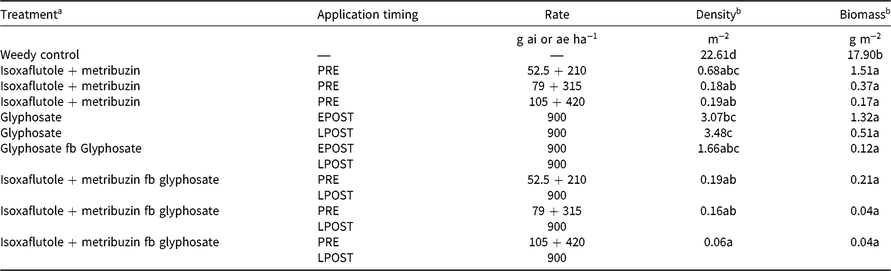
At 4 WAA, all treatments reduced pigweed density 85% to 99%, compared with the weedy control (Table 6). All rates of isoxaflutole plus metribuzin with and without glyphosate applied LPOST reduced pigweed density similarly between 97% to 99%. The medium and high rates of isoxaflutole plus metribuzin, applied PRE, and all three rates of isoxaflutole plus metribuzin fb glyphosate applied LPOST decreased pigweeds 13% to 15% more than glyphosate applied EPOST or LPOST. Pigweed biomass was reduced 92% to 99% by all treatments, compared with the weedy control; there were no differences among the herbicide treatments evaluated. The results of this study are similar to those of Butts et al. (Reference Butts, Norsworthy, Kruger, Sandell, Young, Steckel, Loux, Bradley, Conley, Stotenberg, Arriaga and Davis2016), with greater decrease in pigweed density observed with PRE fb POST herbicide applications compared with a single POST application.
Density and biomass of pigweed species at 4 WAA at sites 1, 3, 4, 5, 7, 8, 9, and 10 in Ontario, Canada, in 2017 and 2018.

a Abbreviations: —, no data; EPOST, early postemergence; fb, followed by; LPOST, late postemergence; WAA, weeks after late postemergence application.
b Means followed by the same letter within a column are not significantly different according to the Tukey-Kramer multiple range test at P < 0.05.
Common ragweed
Common ragweed populations were evaluated at four sites in this study. There was a significant treatment-by-site interaction; therefore, results from site 2 are presented separately from those from sites 1, 4, and 6.
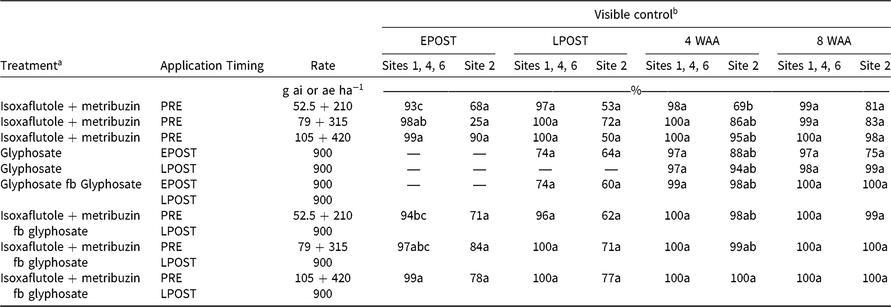
At the EPOST application timing, at sites that received more rainfall (sites 1, 4, and 6), isoxaflutole plus metribuzin applied at the low, medium, and high rates controlled common ragweed 93% to 94%, 97% to 98%, and 99%, respectively (Table 7). In contrast, at the site with less rainfall (site 2), isoxaflutole plus metribuzin, applied PRE, controlled common ragweed 25% to 90%, with no differences observed among rates.
Visible estimates of common ragweed control at EPOST and LPOST application timings and 4 and 8 WAA from four field experiments conducted in Ontario, Canada, in 2017 and 2018.

a Abbreviations: —, no data; EPOST, early postemergence; fb, followed by; LPOST, late postemergence; WAA, weeks after late postemergence application.
b Means followed by the same letter within a column are not significantly different according to the Tukey-Kramer multiple range test at P < 0.05.
At the LPOST application timing, there was no difference in common ragweed control with the low, medium, or high rate of isoxaflutole plus metribuzin or with glyphosate applied EPOST within either of the combined site groups (Table 7). At sites with more rainfall, isoxaflutole plus metribuzin applied at the low, medium, and high rates controlled common ragweed 96% to 97%, 100%, and 100%, respectively. Glyphosate applied EPOST controlled common ragweed 74%. At the site with less rainfall, isoxaflutole plus metribuzin applied at the low, medium, and high rates controlled common ragweed 53% to 62%, 71% to 72%, and 50% to 77%, respectively, and glyphosate applied EPOST controlled common ragweed 60% to 64%. Common ragweed control with isoxaflutole plus metribuzin was 19% to 50% higher at the sites with more rainfall compared with site 2, which had less rainfall.
At 4 WAA, at the sites with more rainfall, there was no difference in common ragweed control among the herbicides evaluated; all treatments controlled common ragweed 97% to 100% (Table 7). In contrast, at site 2, the high rate of isoxaflutole plus metribuzin applied PRE fb glyphosate applied LPOST controlled common ragweed 100%. The low rate of isoxaflutole plus metribuzin without a second pass provided 69% control. At site 2, all other treatments controlled common ragweed 86% to 99%.
At 8 WAA, there was no difference in common ragweed control with any treatment among the combined site groups (Table 7). At sites with higher rainfall, all treatments controlled common ragweed 97% to 100%. However, at the site with less rainfall, common ragweed was controlled 75% to 100%.
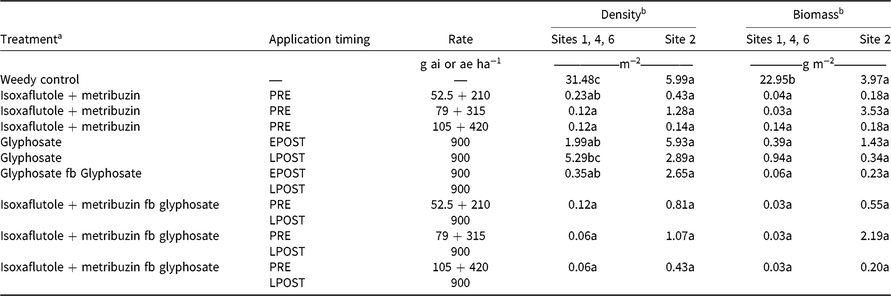
At 4 WAA, at sites with more rainfall, common ragweed density and biomass were reduced 83% to 99 and 96% to 99%, respectively. All herbicide treatments reduced common ragweed density, with the exception of glyphosate applied LPOST (Table 8). The greater density with glyphosate applied LPOST suggests that glyphosate is less efficacious on larger weeds. This is supported by findings of Soltani et al. (Reference Soltani, Nurse and Sikkema2016), whose results showed an improvement in common ragweed control when glyphosate was applied to weeds 10- or 20-cm tall compared to 30-cm weeds. At site 2, there was no decrease in common ragweed density and biomass with the herbicide treatments evaluated.
Common ragweed density and biomass data at 4 wk after LPOST application from four field experiments conducted in Ontario, Canada, in 2017 and 2018.

a Abbreviations: —, no data; EPOST, early postemergence; fb, followed by; LPOST, late postemergence.
b Means followed by the same letter within a column are not significantly different according to the Tukey-Kramer multiple range test at P < 0.05.
In this study, at sites with more rainfall, isoxaflutole plus metribuzin applied PRE provided consistent common ragweed control throughout the season (Table 8). This may be due to herbicide activation early in the growing season preventing new weeds from emerging. In contrast, at site 2, which received less rainfall, control decreased between the assessments at the EPOST and LPOST applications but increased after the LPOST application. This was due to a flush of common ragweed emerging between the EPOST and LPOST application timings, which may have then been controlled by reactivation of isoxaflutole plus metribuzin and closure of the soybean canopy. Stewart et al. (Reference Stewart, Soltani, Nurse, Hamil and Sikkema2012) reported similar results: 97% common ragweed control was obtained with application of isoxaflutole plus atrazine (79 + 800 g ai ha−1) at sites that received higher levels of rainfall in comparison with only 83% control obtained with the same treatment at sites that received less rainfall.
Velvetleaf
Velvetleaf was evaluated at three sites in this study. No significant treatment-by-site interaction was observed (data not shown); thus, data from these sites were combined.
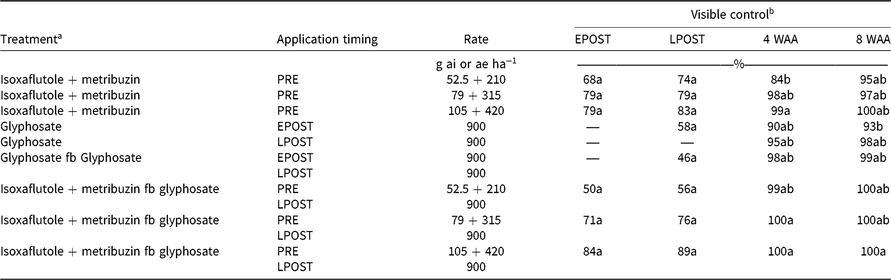
At the EPOST and LPOST application timings, isoxaflutole plus metribuzin controlled velvetleaf 50% to 84% and 56% to 89%, respectively; there was no rate effect (Table 9). Glyphosate applied EPOST controlled velvetleaf 46% to 58%.
Velvetleaf control at EPOST and LPOST application timings and 4 and 8 WAA at sites 1, 2, and 3 in Ontario, Canada, in 2017 and 2018.

a Abbreviations: —, no data; EPOST, early postemergence; fb, followed by; LPOST, late postemergence; WAA, weeks after late postemergence application.
b Means followed by the same letter within a column are not significantly different according to the Tukey-Kramer multiple range test at P < 0.05.
At 4 WAA, isoxaflutole plus metribuzin at the low, medium, and high rates controlled velvetleaf 84%, 98%, and 99%, respectively (Table 9). The low rate provided lower velvetleaf control than the high rate, whereas the medium rate resulted in similar control as the low and high rates. Glyphosate applied EPOST, LPOST, or EPOST fb LPOST controlled velvetleaf 90% to 98%. The two-pass programs of isoxaflutole plus metribuzin applied PRE fb glyphosate applied LPOST controlled velvetleaf 99% to 100%. At the respective rates of isoxaflutole plus metribuzin applied PRE, there was no improvement in velvetleaf control with glyphosate applied LPOST.
At 8 WAA, all treatments in this study provided 93% to 100% velvetleaf control (Table 9). The high rate of isoxaflutole plus metribuzin applied PRE fb glyphosate applied LPOST controlled velvetleaf 7% more than a single application of glyphosate applied EPOST.
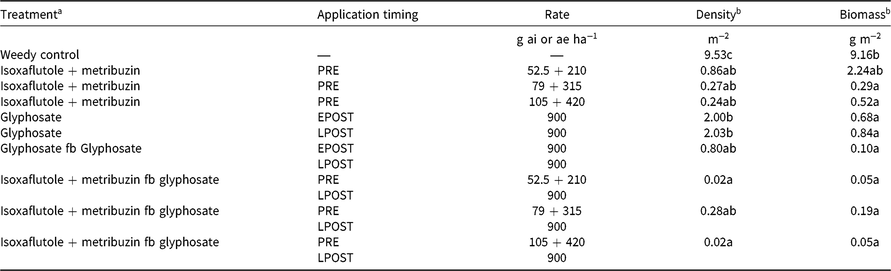
At 4 WAA, the herbicide treatments evaluated reduced velvetleaf density 79% to 99% compared with the weedy control (Table 10). The low and high rates of isoxaflutole plus metribuzin applied PRE fb glyphosate applied LPOST decreased density 21% more than a single application of glyphosate did at the EPOST or LPOST application timings. All treatments evaluated reduced velvetleaf biomass 91% to 99% compared with the weedy control, except isoxaflutole plus metribuzin applied PRE at the low rate, which reduced velvetleaf biomass 76%. The inconsistency in the density and biomass data suggests that glyphosate applied EPOST and LPOST resulted in suppression of velvetleaf, but the plants were still present at 4 WAA. There was a 91% reduction in density with isoxaflutole plus metribuzin applied PRE at the low rate, although the plants that did escape grew quite large.
Velvetleaf density and biomass data at 4 wk after LPOST application at sites 1, 2, and 3 in Ontario, Canada, in 2017 and 2018.

a Abbreviations: —, no data; EPOST, early postemergence; fb, followed by; LPOST, late postemergence.
b Means followed by the same letter within a column are not significantly different according to the Tukey-Kramer multiple range test at P < 0.05.
Velvetleaf control increased over time, which may have been a result of the residual activity of isoxaflutole plus metribuzin and soybean canopy closure (Table 10). Glyphosate was slower acting on velvetleaf compared with other weed species, as evidenced by the low level of control at the LPOST evaluation timing. The dense hairs on velvetleaf may reduce glyphosate absorption. Because of the lack of residual control by glyphosate, there was a flush of velvetleaf after application, which is supported by the density and biomass evaluations 4 WAA. Sequential applications of either isoxaflutole plus metribuzin applied PRE fb glyphosate applied LPOST or glyphosate applied EPOST fb LPOST increased velvetleaf control and reduced density and biomass. The results of this study are similar to those of Wiesbrook et al. (Reference Wiesbrook, Johnson, Hart, Bradley and Wax2001), who found improved velvetleaf control with sequential glyphosate applications.
Barnyardgrass
Barnyardgrass was evaluated at sites 1, 2, 4, 6, and 10. The site-by-treatment interaction was not significant (data not shown); therefore, data from the five sites were pooled.
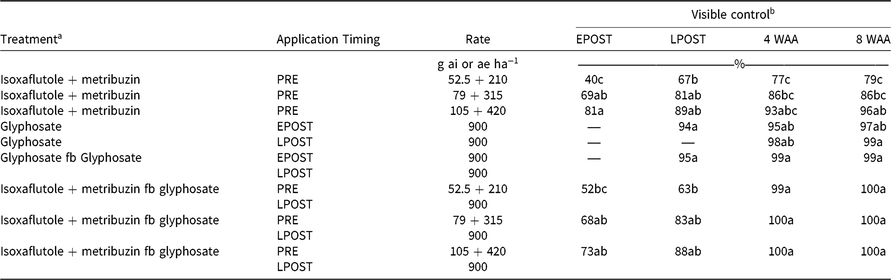
At the EPOST application timing, isoxaflutole plus metribuzin applied PRE at the low, medium, and high rates controlled barnyardgrass 40% to 52%, 68% to 69%, and 73% to 81%, respectively (Table 11). There was a trend toward improved barnyardgrass control with increasing rates of isoxaflutole, although differences were not always statistically significant. This may have occurred because of natural variability in the population of barnyardgrass across sites and the susceptibility of barnyardgrass to isoxaflutole plus metribuzin, compared with other species.
Barnyardgrass control data at EPOST and LPOST application timing and 4 and 8 WAA at sites 1, 2, 4, 6, and 10 in Ontario, Canada, in 2017 and 2018.

a Abbreviations: —, no data; EPOST, early postemergence; fb, followed by; LPOST, late postemergence; WAA, weeks after late postemergence application.
b Means followed by the same letter within a column are not significantly different according to the Tukey-Kramer multiple range test at P < 0.05.
At the LPOST application timing, barnyardgrass control was similar among the three rates of isoxaflutole plus metribuzin evaluated; control ranged from 63% to 89% (Table 11). Glyphosate applied EPOST controlled barnyardgrass 94% to 95%.
At 4 WAA, isoxaflutole plus metribuzin applied PRE controlled barnyardgrass 77% to 93%; there were no differences among rates evaluated (Table 11). Glyphosate applied EPOST, LPOST, or EPOST fb LPOST controlled barnyardgrass 95% to 99%. The two-pass programs of isoxaflutole plus metribuzin applied PRE fb glyphosate applied LPOST controlled barnyardgrass 99% to 100%. The LPOST application of glyphosate after isoxaflutole plus metribuzin applied PRE at the low and medium rate improved barnyardgrass control 22% and 14%, respectively. A sequential application of glyphosate after application of the high rate of isoxaflutole plus metribuzin did not increase control.
At 8 WAA, isoxaflutole plus metribuzin applied at the low, medium, and high rates controlled barnyardgrass 79%, 86%, and 96%, respectively; and glyphosate applied EPOST, LPOST, or EPOST fb LPOST controlled barnyardgrass 97% to 99% (Table 11). Similar to findings at 4 WAA, there was a 14% to 21% increase in barnyardgrass control when glyphosate was applied LPOST after isoxaflutole plus metribuzin was applied at the low or medium rate. There was no increase in barnyardgrass control when glyphosate was applied LPOST after the high rate of isoxaflutole plus metribuzin applied PRE. The two-pass programs of isoxaflutole plus metribuzin applied PRE fb glyphosate applied LPOST controlled barnyardgrass 100%.
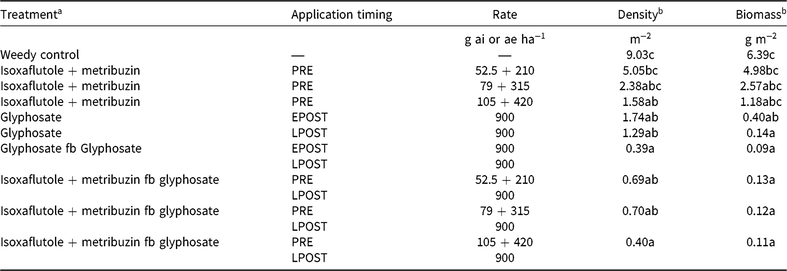
At 4 WAA, barnyardgrass density was reduced by 83% to 96% with all herbicide treatments except the low and medium rates of isoxaflutole plus metribuzin when applied PRE (Table 12). Isoxaflutole plus metribuzin applied PRE at the low, medium, and high rates reduced barnyardgrass density 44%, 74%, and 83%, respectively. Glyphosate applied EPOST, LPOST, or EPOST fb LPOST reduced barnyardgrass density 81% to 96%; there was no difference among application timings. Isoxaflutole plus metribuzin applied PRE fb glyphosate applied LPOST reduced barnyardgrass density 92% to 96%.
Barnyardgrass density and biomass data at 4 wk after LPOST application at sites 1, 2, 4, 6, and 10 in Ontario, Canada, in 2017 and 2018.

a Abbreviations: —, no data; EPOST, early postemergence; fb, followed by; LPOST, late postemergence.
b Means followed by the same letter within a column are not significantly different according to the Tukey-Kramer multiple range test at P < 0.05.
At 4 WAA, barnyardgrass biomass was reduced by 94% to 99% with all herbicide treatments except isoxaflutole plus metribuzin applied PRE (Table 12). Isoxaflutole plus metribuzin applied PRE at the low, medium, and high rates reduced barnyardgrass biomass 22%, 60%, and 82%, respectively. Glyphosate applied EPOST, LPOST, or EPOST fb LPOST reduced barnyardgrass biomass 94% to 99%; there was no difference among application timings. Isoxaflutole plus metribuzin applied PRE fb glyphosate applied LPOST reduced barnyardgrass biomass 98%.
Over time, there was an increase in barnyardgrass control with isoxaflutole plus metribuzin. This may have been due to residual control of isoxaflutole plus metribuzin preventing the emergence of new individuals and a reduction in barnyardgrass growth due to soybean canopy closure. By the end of the season, stunted barnyardgrass plants in plots where isoxaflutole plus metribuzin was applied PRE were shaded and not able to fully develop. The application of glyphosate applied LPOST after isoxaflutole plus metribuzin at the low rate improved barnyardgrass control and decreased density and biomass. Similarly, Stephenson and Bond (Reference Stephenson and Bond2012) found that isoxaflutole plus atrazine (90 + 1,120 g ha−1) controlled barnyardgrass 84%; the sequential application of glyphosate applied POST increased control by 7%.
Foxtail
Green foxtail and giant foxtail populations were combined during assessments. These species occurred at the following eight sites: 1, 2, 3, 4, 5, 6, 8, and 10. There was no significant site-by-treatment interaction (data not shown); thus, data from these sites were combined (Table 13).
Control of species of foxtail at EPOST and LPOST application timing and 4 and 8 WAA at sites 1, 2, 3, 4, 5, 6, 8, and 10 in Ontario, Canada, in 2017 and 2018.

a Abbreviations: —, no data; EPOST, early postemergence; fb, followed by; LPOST, late postemergence; WAA, weeks after late postemergence application.
b Means followed by the same letter within a column are not significantly different according to the Tukey-Kramer multiple range test at P < 0.05.
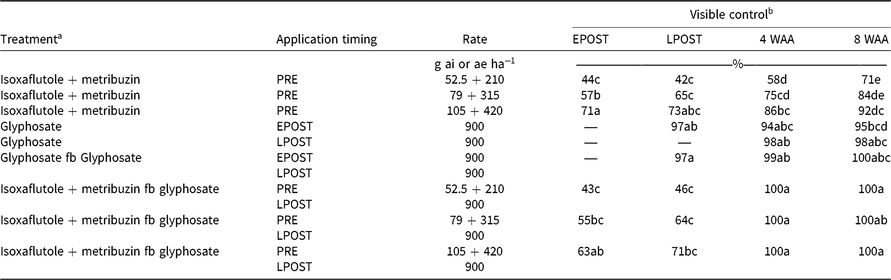
At the EPOST application timing, isoxaflutole plus metribuzin at the low, medium, and high rates controlled foxtails 43% to 44%, 55% to 57%, and 63% to 71%, respectively (Table 13). At the LPOST application timing, isoxaflutole plus metribuzin controlled foxtail 42% to 73%; there was no difference among the rates evaluated (Table 13). Glyphosate applied EPOST controlled foxtails 97%.
At 4 WAA, isoxaflutole plus metribuzin applied PRE at the low, medium, and high rates controlled foxtail 58%, 75%, and 86%, respectively. The high rate provided better control than the low rate; however, control with the medium rate did not differ from the low or high rate (Table 13). Glyphosate applied EPOST, LPOST, and EPOST fb LPOST controlled foxtails 94% to 99%. The sequential application of isoxaflutole plus metribuzin applied PRE fb glyphosate applied LPOST controlled foxtail 100%. Application of glyphosate LPOST after isoxaflutole plus metribuzin applied PRE at the low, medium, and high rates increased foxtail control 42%, 25%, and 14%, respectively.
At 8 WAA, isoxaflutole plus metribuzin applied PRE at the low, medium, and high rates controlled foxtails 71%, 84%, and 92%, respectively (Table 13). Similar to observations at 4 WAA, the high rate controlled foxtail better than did the low rate, whereas control at the medium rate did not differ from either the low or high rate. Glyphosate applied EPOST, LPOST, and EPOST fb LPOST controlled foxtails 95% to 100%. The sequential application of isoxaflutole plus metribuzin PRE fb glyphosate applied LPOST controlled foxtail 100%. Glyphosate applied LPOST after isoxaflutole plus metribuzin applied PRE at the low, medium, and high rates increased foxtail control 29%, 16%, and 8%, respectively.
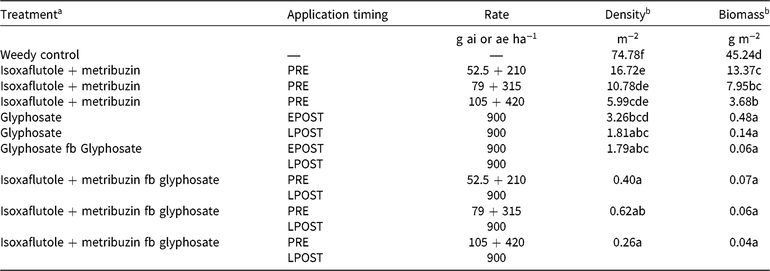
At 4 WAA, all treatments decreased foxtail density 78% to 99%, compared with the untreated control (Table 14). Isoxaflutole plus metribuzin applied PRE reduced foxtail density by 78% to 92%; there was no difference among the rates evaluated. Glyphosate applied EPOST, LPOST, and EPOST fb LPOST reduced foxtail density 96% to 98%. The sequential application of isoxaflutole plus metribuzin applied PRE fb glyphosate applied LPOST reduced foxtail density 99%. In comparison, foxtail biomass was reduced 70% to 99% with all herbicide treatments. Similar to findings in the weed control assessments, the high application rate of isoxaflutole plus metribuzin reduced foxtail biomass by an additional 21% compared with the low rate; however, the decrease in biomass at the medium rate did not differ from either the low or high rate. Glyphosate applied EPOST, LPOST, or EPOST fb LPOST and the sequential PRE application of isoxaflutole plus metribuzin fb glyphosate applied LPOST reduced foxtail biomass 99%.
Density and biomass of species of foxtail at 4 wk after LPOST application at sites 1, 2, 3, 4, 5, 6, 8, and 10 in Ontario, Canada, in 2017 and 2018.

a Abbreviations: —, no data; EPOST, early postemergence; fb, followed by; LPOST, late postemergence.
b Means followed by the same letter within a column are not significantly different according to the Tukey-Kramer multiple range test at P < 0.05.
Grass weed species, including foxtail, were less sensitive to isoxaflutole plus metribuzin than broadleaf species (Table 14). The low and medium rates of isoxaflutole plus metribuzin cannot be relied on as effective foxtail control strategies, especially with high populations such as those present in this study. Glyphosate applied LPOST is very efficacious for the control of foxtails that escape the PRE herbicide. The results from this study are similar to those of Schultz et al. (Reference Schultz, Weber, Allen and Bradley2015), who reported that where isoxaflutole plus S-metolachlor plus metribuzin was applied PRE fb glyphosate applied POST, giant foxtail was controlled 99%.
Crabgrass
Large crabgrass [Digitaria sanguinalis (L.) Scop.] was evaluated at four sites in this study. The site-by-treatment interaction was not significant (data not shown), so data from the sites were pooled.
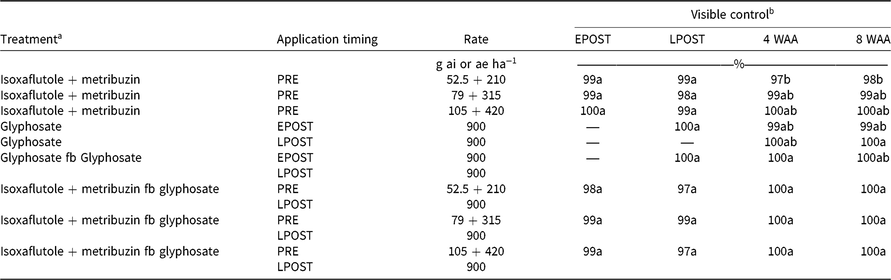
At the EPOST and LPOST application timings, isoxaflutole plus metribuzin controlled large crabgrass 98% to 100% and 97% to 99%, respectively; there was no difference in large crabgrass control among the rates of isoxaflutole plus metribuzin evaluated (Table 15). At the LPOST application timing, glyphosate, applied EPOST controlled large crabgrass 100%.
Crabgrass control at EPOST and LPOST application timings and 4 and 8 WAA at sites 4, 8, 9, and 10 in Ontario, Canada, in 2017 and 2018.

a Abbreviations: —, no data; EPOST, early postemergence; fb, followed by; LPOST, late postemergence; WAA, weeks after late postemergence application.
b Means followed by the same letter within a column are not significantly different according to the Tukey-Kramer multiple range test at P < 0.05.
At 4 and 8 WAA, the three rates of isoxaflutole plus metribuzin controlled large crabgrass 97% to 100% and 98% to 100%, respectively, with no difference in crabgrass control observed among the rates evaluated (Table 15). Glyphosate applied EPOST, LPOST, and EPOST fb LPOST and the sequential PRE applications of isoxaflutole plus metribuzin fb glyphosate applied LPOST controlled large crabgrass 99% to 100%. There was no increase in large crabgrass control when glyphosate was applied LPOST after isoxaflutole plus metribuzin applied PRE at the medium or high rate.
At 4 WAA, all the herbicide treatments evaluated reduced large crabgrass density by 82% to 97%, with the exception of glyphosate applied LPOST, which did not reduce density (Table 16). The herbicide treatments evaluated reduced large crabgrass biomass by 84% to 99%.
Crabgrass density and biomass at 4 wk after LPOST application at sites 4, 8, 9, and 10 in Ontario, Canada, in 2017 and 2018.

a Abbreviations: —, no data; EPOST, early postemergence; fb, followed by; LPOST, late postemergence.
b Means followed by the same letter within a column are not significantly different according to the Tukey-Kramer multiple range test at P < 0.05.
Large crabgrass had the lowest density of all species evaluated in this study. This may have contributed to the high level of control (>97%) across all herbicide treatments and assessment timings. The medium and high rates of isoxaflutole plus metribuzin provided similar large crabgrass control and reduction in density and biomass, and there was no additional benefit of glyphosate applied LPOST. These data suggest that large crabgrass is very sensitive to isoxaflutole plus metribuzin, especially at higher rates.
Residual properties of isoxaflutole plus metribuzin in addition to competition with soybean as the canopy closed prevented emergence of new crabgrass. By the end of the season, large crabgrass that survived herbicide application had died due to soybean canopy closure, which did not allow large crabgrass to intercept incident radiation, owing to its prostrate growth habit.
Results from this study support findings by Schultz et al. (Reference Schultz, Weber, Allen and Bradley2015), showing that large crabgrass was controlled 99% with application of three rate combinations of isoxaflutole plus S-metolachlor plus metribuzin fb glyphosate. The same study showed glyphosate applied EPOST fb LPOST controlled large crabgrass 99%, which is also consistent with results of the current study.
Witchgrass
Witchgrass (Panicum capillare L.) was evaluated at three sites in this study. The site-by-treatment effect was not significant (data not shown) for this species; therefore, data from the three sites were pooled.
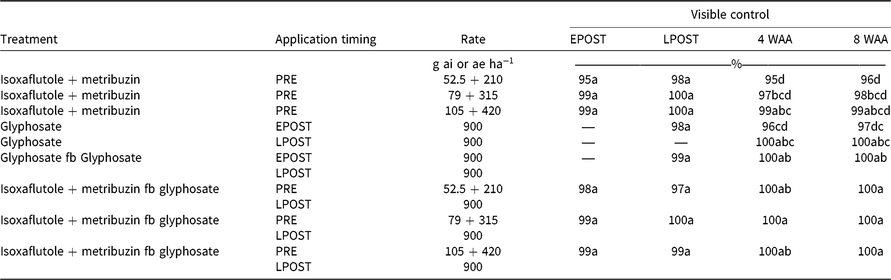
At the EPOST and LPOST application timings, all rates of isoxaflutole plus metribuzin controlled witchgrass 95% to 100%; there was no difference among the rates of isoxaflutole plus metribuzin evaluated (Table 17). Glyphosate applied EPOST controlled witchgrass 98% to 99% at the LPOST evaluation timing.
Witchgrass control at EPOST and LPOST application timings and 4 and 8 WAA at sites 1, 4, and 6 in Ontario, Canada, in 2017 and 2018.a

a Abbreviations: —, no data; EPOST, early postemergence; fb, followed by; LPOST, late postemergence; WAA, weeks after late postemergence application.
b Means followed by the same letter within a column are not significantly different according to the Tukey-Kramer multiple range test at P < 0.05.
At 4 WAA, isoxaflutole plus metribuzin at the low, medium, and high rates controlled witchgrass 95%, 97%, and 99%, respectively (Table 17). The high rate provided better control than did the low rate, whereas control at the medium rate was similar to both the low and high rates. Glyphosate applied EPOST, LPOST, or EPOST fb LPOST controlled witchgrass 96%, 100%, and 100%, respectively. The two-pass programs of isoxaflutole plus metribuzin applied PRE fb glyphosate applied LPOST controlled witchgrass 100%. Witchgrass control at 8 WAA was similar to that at 4 WAA.
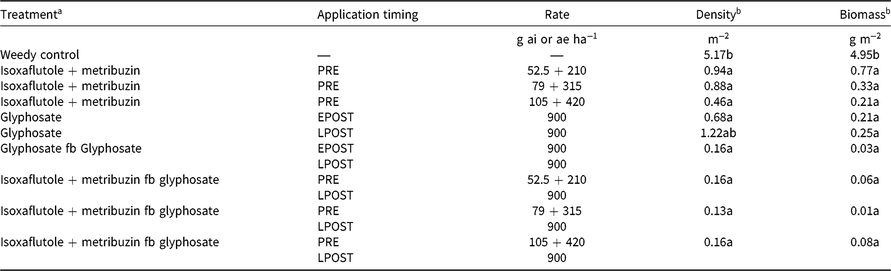
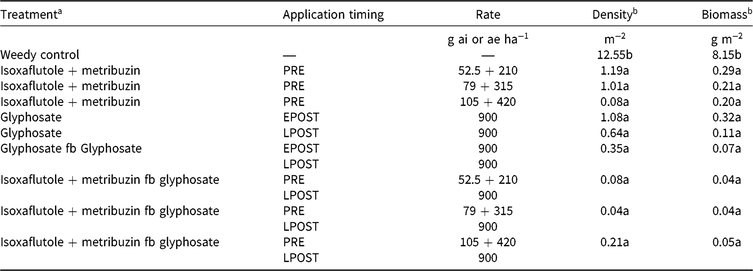
At 4 WAA, the herbicide treatments evaluated reduced witchgrass density and biomass 91% to 99% and 96% to 99%, respectively (Table 18). There was no difference among the herbicide treatments evaluated.
Witchgrass density and biomass data at 4 wk after LPOST application at sites 1,4, and 6 in Ontario, Canada, in 2017 and 2018.

a Abbreviations: —, no data; EPOST, early postemergence; fb, followed by; LPOST, late postemergence.
b Means followed by the same letter within a column are not significantly different according to the Tukey-Kramer multiple range test at P < 0.05.
Soybean Yield
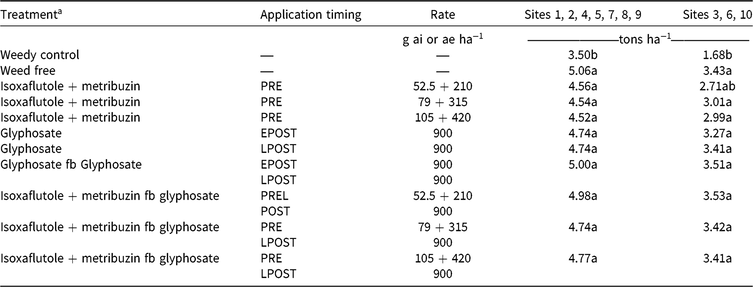
Soybean yield was separated by site because of a significant site-by-treatment interaction (data not shown) by which the corresponding treatments at sites 1, 2, 4, 5, 7, 8, and 9 had 1.32 to 1.85 tons ha−1 higher yields compared with sites 3, 6, and 10 (Table 19). At sites 1, 2, 4, 5, 7, 8, and 9, weed interference reduced soybean yield 31%. Reduced weed interference with all the herbicide treatments resulted in soybean yield that was 1.0 to 1.5 tons ha−1 higher than the weedy control and was similar to the weed-free control. There was no difference in soybean yield among the herbicide treatments evaluated. At sites 3, 6, and 10, weed interference reduced soybean yield 51%. Soybean yield was lower at these sites; however, reduced weed interference with the herbicide treatments evaluated resulted in a yield increase of 1.3 to 1.9 tons ha-1, except at the low rate of isoxaflutole plus metribuzin. The reduction in yield after application of isoxaflutole plus metribuzin at the low rate was likely due to poor weed control during the CWFP. The numerically lower soybean yield at sites 3, 6, and 10 may have been due to several potential factors. For example, site 3 did not receive an activating rainfall after the PRE application, which resulted in reduced weed control. Site 6 had the highest level of injury, which may have affected soybean yield, and site 10 had extremely high densities of foxtail species, pigweed species, and common lambsquarters compared with the other sites, which would compete with soybean and potentially result in lower yield.
Soybean yield from 10 field experiments conducted in Ontario, Canada, in 2017 and 2018.

a Abbreviations: —, no data; EPOST, early postemergence; fb, followed by; LPOST, late postemergence.
b Means followed by the same letter within a column are not significantly different according to the Tukey-Kramer multiple range test at P < 0.05.
In conclusion, isoxaflutole plus metribuzin applied PRE or a single application of glyphosate applied POST provided excellent control of all weeds at some sites. The sequential application of glyphosate applied EPOST fb LPOST or isoxaflutole plus metribuzin applied PRE fb glyphosate applied LPOST provided excellent full-season weed control and resulted in soybean yield that was similar to the weed-free control at all sites. Reduced weed control with isoxaflutole plus metribuzin was correlated with insufficient levels of rainfall to activate the PRE herbicides. In these cases, glyphosate applied LPOST reduced weed interference to the extent that there was no yield loss relative to the weed-free control. Butt et al. (Reference Butts, Norsworthy, Kruger, Sandell, Young, Steckel, Loux, Bradley, Conley, Stotenberg, Arriaga and Davis2016) also found that a PRE fb POST two-pass program was the best weed control strategy. All annual weeds in our study were effectively controlled with a two-pass program consisting of glyphosate applied EPOST and LPOST. Although effective, this application is not recommended, because it increases the selection intensity for glyphosate-resistant weeds.
In the current study, soybean yield was not reduced with a total POST herbicide program. However, relying on POST herbicides for weed control may reduce grain yield if timely applications are missed because of unexpected rain events, windy conditions, or mechanical breakdowns, which may delay herbicide application. In the current study, there was no significant interaction of isoxaflutole plus metribuzin relative to soil characteristics.
Common lambsquarters and common ragweed were the only species for which there was a significant herbicide treatment-by-site interaction. These differences were more closely correlated with variations in rainfall. Rainfall is required to dissolve isoxaflutole and metribuzin in soil water solution so it can be taken up by the developing weed seedling. Moisture was sufficient for weed seed germination; however, there was inadequate rainfall to move and dissolve the soil-applied herbicides in soil water solution to be absorbed by the weeds at concentrations needed to cause toxic effects. The use of isoxaflutole plus metribuzin applied PRE within an integrated weed management program can effectively control many annual weed species when adequate rainfall occurs to dissolve the herbicides in soil water solution; otherwise, a POST application of glyphosate can be used to control weed escapes to provide season-long weed control.
Author ORCIDs
Nader Soltani https://orcid.org/0000-0001-8687-4371
Acknowledgments
The authors gratefully acknowledge Christy Shropshire, Lynette Brown, and Todd Cowan for their technical contributions to this project. Funding for this project was provided in part by the Ontario Centre of Excellence and Bayer CropScience Canada Inc. No conflicts of interest have been declared.