A mudslide is a large mass of wet earth that suddenly flows down a mountain or hill. It is a type of a rapid mass land movement. The primary cause of mudslides is the action of gravity on an over steepened slope. Heavy rainfall, earthquakes of magnitude 4 or greater, and construction of structures on a steep slope are some of the contributing factors that precipitate mudslides. The rapidly moving flow can pick up houses, trees, and other objects on its way. This flow of debris can also cause flooding when bridges are encountered and the path of the flow is obstructed or blocked.Reference Usamah1
Mudslides and other rapid mass land movements occur commonly in the world. In Eastern Uganda, a large landslide occurred in 2010 leading to the death of 400 people and displacement of more than 4000,Reference Atuyambe, Ediau and Orach2 while at least 1126 deaths were reported in a landslide that occurred in the Philippines.3 Other areas that are prone to rapid mass land movements in Africa are the Ruwenzori mountains,Reference Jacobs, Dewitte and Poesen4 Western Cape, Kwa Zulu Natal, and Limpopo provinces of South AfricaReference Forbes, Chiliza and Diop5 and the Niger Delta.Reference Inyang6
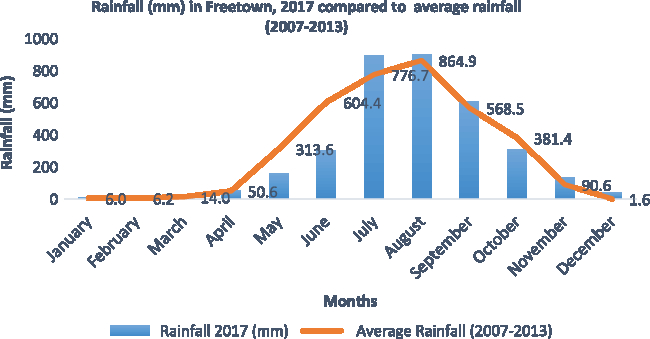
The risk of landslides in Freetown is well documented from previous assessments carried out by the local council. Landslide prone areas are mostly in the southwestern part of Freetown, and landslides occur almost annually during the rainy season. There are reports of massive landslides as early as 1950 in the village of Charlotte.7 Sierra Leone has a tropical climate with a rainy season from April to November. Average annual rainfall in the Freetown area ranges from 2500 to 4500 mm.8 August is the wettest month, and sometimes it can rain continuously for several days. In August 2017, Freetown recorded 902 mm of rainfall,9 and this amount was within the expected range for the time and place8 (Figure 1). An analysis of the causes of mudslides in Sierra Leone indicates that heavy rainfall, deforestation, changes in land use, and natural steepness of hills are the main factors that increase the likelihood of mudslides.Reference Usamah1
Rainfall Pattern, Freetown, Sierra Leone, in 2017 Compared With Monthly Average.

HEALTH CONSEQUENCES OF LANDSLIDES
The immediate effects of mudslides are death, injuries due to blunt trauma, population displacement, and breakdown of infrastructure. Outbreaks of diseases often follow natural disasters primarily due to displacement of a population but also due to changes in the environment and the disease causing agents.Reference Watson, Gayer and Connolly10 Overcrowding, lack of clean drinking water, improper waste disposal, and exposure to vectors increases the risk of diarrheal and vector borne diseases in displaced populations.Reference Kouadio, Aljunid and Kamigaki11 Diarrheal illnesses are the most common infectious diseases affecting displaced populations following both natural and man-made disasters.Reference Watson, Gayer and Connolly10
PUBLIC HEALTH INTERVENTIONS AFTER DISASTERS
Humanitarian response following a natural disaster should focus on the most urgent needs, that is, water, food, sanitation, and shelter.Reference Leaning and Guha-Sapir12 For health agencies, immediate interventions include rescue and treatment of survivors, retrieval and safe burial of dead bodies, re-establishment of health care, provision of clean water and sanitation facilities, and prevention of outbreaks. Lack of coordination in the immediate post disaster period is common and can hamper the effectiveness of the response.
To improve overall response to disasters, the United Nations instituted reforms that defined the roles of various agencies in response to emergencies. Notably, the humanitarian reforms of the Interagency Standing Committee (IASC) adopted a cluster approach to emergency response, where each agency was designated as lead in particular areas. In this approach, the World Health Organization (WHO) was designated as the cluster lead for the global health sector.13 As such, WHO plays a supportive role to member states and is tasked with (1) developing an evidence based health sector response strategy, plan, and appeal; (2) instituting adapted disease surveillance and early warning and response systems; (3) providing up-to-date situational reports; (4) promoting and monitoring the use of standards and best practices; and (5) providing relevant technical expertise to affected member states and all relevant stakeholders.13
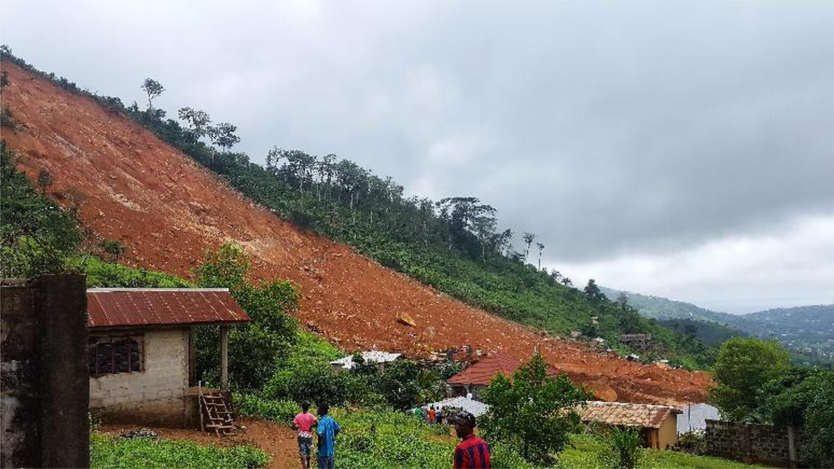
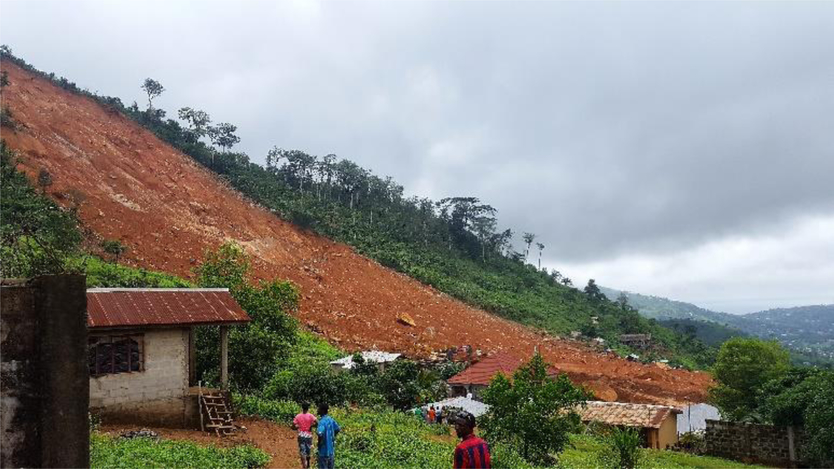
On August 14, 2017, a 6-kilometer mudslide occurred in Regent Area, Western Area District of Sierra Leone following a torrential downpour that lasted 3 days. The affected areas included Kaningo, Pentagon, Kamayama, Juba, and Lumley. More than 300 houses along River Juba were submerged or carried away (Figure 2), and the national water reservoir was damaged, thus cutting off the water supply to most parts of Freetown. At least 1141 people were reported dead or missing, with 501 bodies retrieved for burial.14
Mudslide Site in Sierra Leone, August 2017.
Following the mudslide emergency in Sierra Leone, the WHO Sierra Leone Country Office (WCO) launched a response guided by the Emergency Response Framework (ERF).13 This concept paper presents an analysis of the events following the mudslide, the response, and the lessons learnt from the response.
SITUATION ANALYSIS
During emergencies with public health consequences, WHO has a mandate to provide technical and logistical support to member countries so that they can respond in a coordinated and effective manner.13 Like most natural disasters, the mudslide event had immediate and long-term health implications. To determine the scale and nature of the emergency, 2 officers from WCO joined a team of United Nations (UN) agencies to conduct a rapid situational analysis on August 14th and 15th. As of August 15, 274 survivors were rescued and referred for treatment in 4 local health facilities. Most of the survivors had soft tissue injuries and were treated as outpatients; however, there was no detailed line list of all injury cases treated in the health facilities. In total, 1141 people were finally reported dead or missing. The mortuary at Connaught hospital, that had a capacity of 20 bodies, was overstretched as all bodies recovered from the site were moved there. The mudslide led to the displacement of 5905 people, and 1000 of the displaced were relocated to temporary shelters.
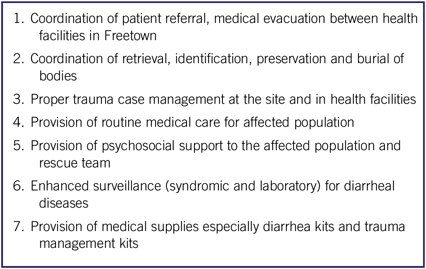
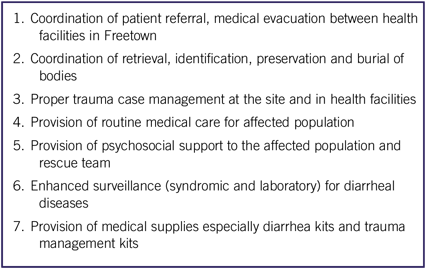
While no health facilities were damaged by the mudslide, hospitals in Freetown were overwhelmed by the large number of casualties seeking treatment, and the only mortuary in Freetown at Connaught Hospital had to process 15 times more bodies than its usual capacity. The number of affected people was expected to increase as rescue efforts continued. There was also a risk of more flooding as the weather forecast predicted heavy rainfall in Freetown for the next 2 weeks. Health sector priorities were identified, thus guiding the initial response activities (Table 1). WCO activated the incident management system for emergency response. WHO staff and resources were immediately repurposed to support response activities.
Health Sector Priorities Identified Through Initial Rapid Assessment
The government of Sierra Leone declared the mudslide a national disaster, requested for international support, and activated its emergency response systems through the Office of the National Security (ONS). To improve coordination of the health sector response, WHO supported the MOHS to activate the Public Health Emergency Operations Center (PHEOC). All health related response activities, including disease surveillance, case management, procurement of medical supplies, and disease prevention activities, were coordinated from the PHEOC.
GRADING OF MUDSLIDE EMERGENCY
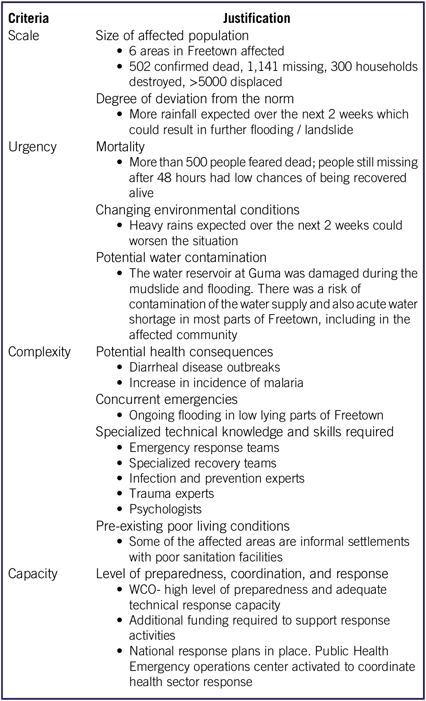
Grading of an emergency is an objective mechanism used by WHO to determine the level of operational response to an emergency required from the 3 WHO levels. Grading is necessary to activate the incident management system in WHO; however, immediate operational responses can be started even before grading is completed. It is recommended that grading must be done within 24 h of the initial assessment. In accordance to these requirements, grading of the mudslide emergency was done through a teleconference on August 16, 2017, and involved staff from all 3 levels of the organization (WCO, WHO regional office, and headquarters). The mudslide emergency was assigned grade 1 status, that is, a single country emergency requiring limited response by WHO but that still exceeds the usual cooperation that the WCO provides to a member state.13 The assigned grade meant that WCO would lead response to the mudslide with limited support from the regional WHO office. Table 2 summarizes the considerations used to assign the mudslide as emergency grade 1 status.
Considerations Used for Grading of Mudslide Emergency, Sierra Leone, 2017
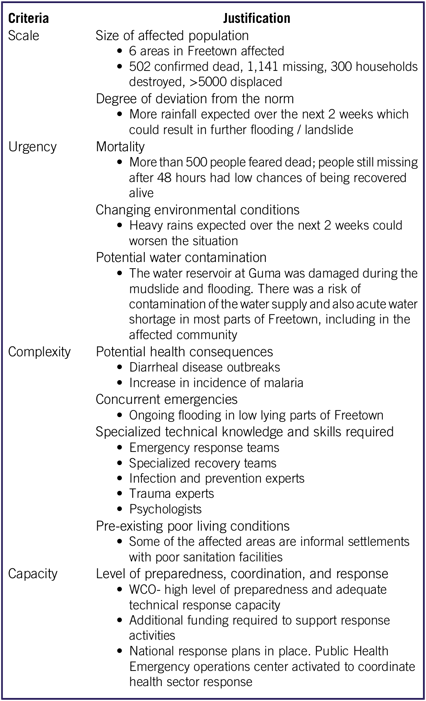
Abbreviation: WCO, World Health Organization Country Office in Sierra Leone.
ACTIVATION OF THE INCIDENT MANAGEMENT SYSTEM
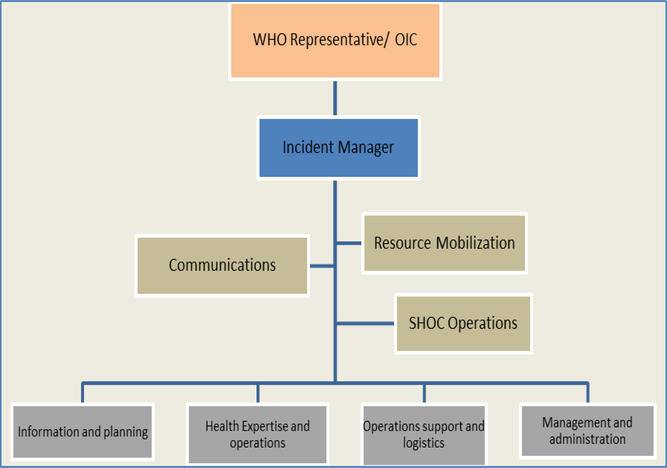
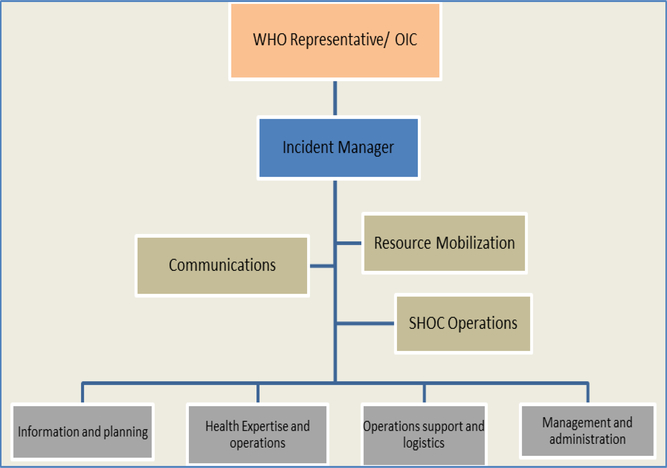
The WHO Incident Management System (IMS) is a standardized, flexible approach used to manage response to all emergencies.13 After assigning the mudslide grade 1 status, the IMS was activated immediately. An incident manager was appointed within WHO to lead emergency response activities. Based on the standardized emergency functions, technical leads for communications, information and planning, resource mobilization, operational support and logistics were incorporated into the Incident Management Team (IMT). The composition of the IMT is flexible depending on staff available in the WCO and the complexity of the emergency. Sierra Leone WCO adopted the IMT structure illustrated in Figure 3.
Incident Management Team Structure, Sierra Leone WCO.
The incident manager led all field operations with oversight from the officer in charge WCO, in accordance to the WHO emergency standard operations procedures. The IMT held daily update and planning meetings to discuss the progress of the response and plan for the next course of action. Selected members of the IMT held weekly teleconference calls with the regional coordinator.
LEADERSHIP AND COORDINATION OF HEALTH PARTNERS
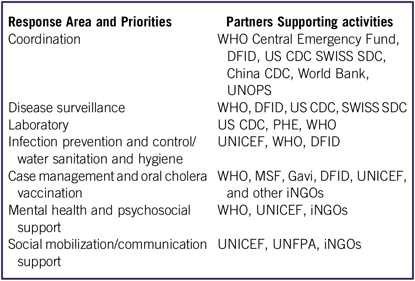
On the second day of the emergency, the PHEOC in the MOHS was designated as the focal point for coordination of health sector response activities. Poor coordination in an emergency often leads to duplication of activities and wastage of resources. To ensure proper coordination of response activities, daily planning and progress review meetings between the MOHS and health sector partners were held at the PHEOC. These meetings provided a forum for joint risk assessments and, thereafter, development of joint response plans. Partners identified their areas of focus, thus avoiding duplication of activities and wastage of resources. The MOHS customized pre-existing emergency preparedness and response strategies from the Ebola outbreak to launch an initial response by quickly re-activating the 7 pillars for health sector response. These were surveillance and laboratory; coordination; case management; safe burial; water, sanitation, and hygiene (WASH); infection prevention and control (IPC); and communications and logistics. Table 3 summarizes the partners involved in response to the emergency, categorized by area of support.
Summary of Health Sector Support of Mudslide Emergency Response Activities, Sierra Leone 2017
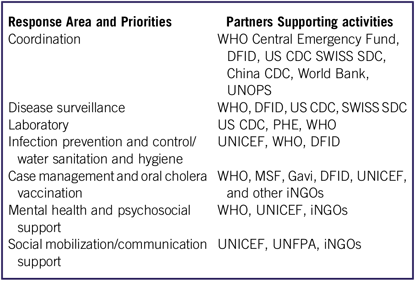
Abbreviations: WHO, World Health Organization; DFID, Department for International Development; US, United States; CDC, Centers for Disease Control and Prevention; UNOPS, United Nations Office for Project Services; SDC, Swiss Agency for Development and Co-operation; PHE, Public Health England; UNICEF, United Nations Children’s Fund; MSF, Médecins Sans Frontières/Doctors Without Borders; Gavi, global Vaccine Alliance; iNGO, international non-governmental organization; UNFPA, United Nations Population Fund.
INFORMATION AND PLANNING
Early Warning and Response
Syndromic surveillance is effective in providing early warning of potential health threats in vulnerable populations such as those affected by a natural disaster.14 Early assessments of the potential public health consequences of the mudslide indicated that the affected population was at risk of diarrheal diseases due to poor access to safe drinking water and fecal contamination of water sources. Pre-empting the possibility of diarrheal diseases in this population, the MOHS supported by WHO sought to enhance weekly reporting of Integrated Disease Surveillance and Response (IDSR) system priority diseases and also establish enhanced daily reporting in 9 health facilities serving the most affected population. The 9 health facilities were required to submit daily reports on 4 health events. These events included (1) diarrhea with severe dehydration in children aged less than 5 years, (2) bloody diarrhea, (3) suspected cholera, and (4) suspected typhoid fever.
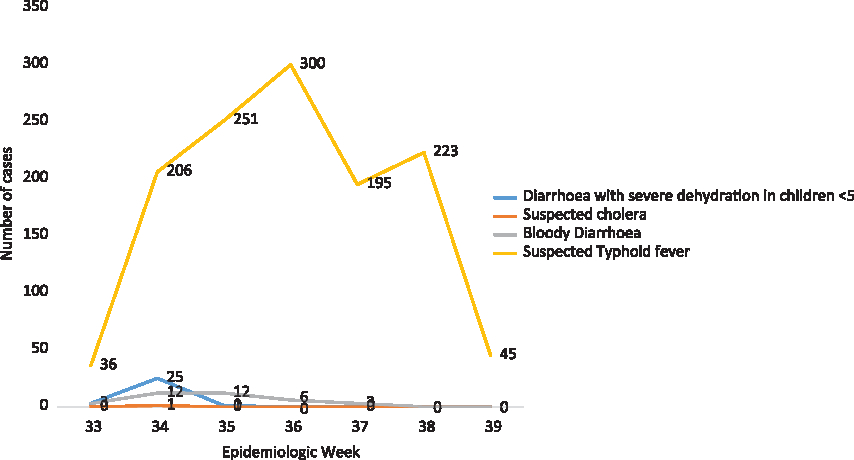
The data obtained from enhanced surveillance were analyzed and shared as daily situational reports during the meetings at the PHEOC and in weekly epidemiological bulletins. Suspected typhoid fever was the most commonly reported condition followed by diarrhea in children aged less than 5 years. One suspected cholera case, with initial rapid diagnostic test positive for cholera, was reported in Western Area (rural) District 1 week after the mudslide. The case was investigated immediately and the sample was culture negative for Vibrio cholera. It is likely that there was incompleteness in reporting through the enhanced surveillance system as the number of cases reported declined markedly over time (Figure 4).
Occurrence of Diarrheal Illnesses Among Mudslide Emergency Survivors, Sierra Leone, 2017.

Facility Based Health Care Provision
It was also observed that some health facilities did not have access to safe drinking water or hand washing facilities, and had inappropriate disposal of medical waste. This posed a risk especially during flooding. The priority health sector interventions identified were provision of essential health services, including reproductive health services, treatment of children less than 5 years of age, provision of human immunodeficiency virus (HIV) and tuberculosis treatment, health facility and community-based surveillance; proper medical waste management, provision of safe drinking water, and improved sanitation.
There was a need to maintain normal clinical services by providing additional support to health facilities serving the affected population. Commodities were rapidly consumed in clinics serving these communities as all individuals registered as affected by the mudslide were able to access free health care, so early stocking and restocking of commodities was a priority. In addition, staff were redeployed by MOHS to these clinics given higher demand, noting some facilities had lost staff or family members of staff in the mudslide. Additional clinics were temporarily established at sites for internally displaced persons, with partners supporting MOHS in delivery of care. All temporary clinics were closed within 3 months as those affected were relocated.
Psychosocial Support
Mental health disorders, such as post-traumatic stress disorders (PTSD), depression, and anxiety are common among survivors of major disasters.Reference Wang, Gruber and Powers15, Reference van Griensven16 Severe injury, death of a close relative, displacement, and pre-existing vulnerabilities increase the likelihood of PTSD.Reference Bromet, Atwoli and Kawakami17 Psychological rehabilitation, therefore, is recognized as an important component of rehabilitation for affected populations following a disaster. Cognizant of this need for rehabilitation, WHO supported 21 mental health nurses to provide psychological first aid and intensive listening forums for survivors, bereaved relatives, mortuary workers, the rescue and burial teams. In total, 1200 affected people and 106 volunteers were counseled. To recognize and support children with distress, 100 teachers in schools serving the affected community were trained.
Use of Performance Standards to Monitor Compliance With WHO Emergency Response Procedures
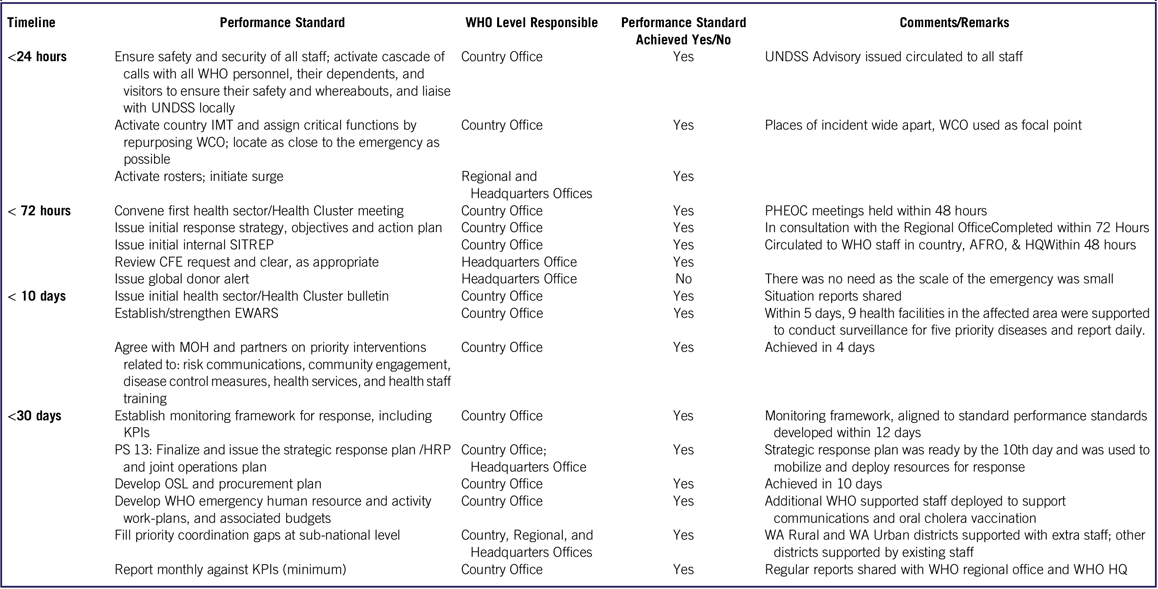
Performance standards for emergency response were used to track response activities and to ensure adherence to set standards.13 The standards provided guidance on timelines and activities to be undertaken in the WCO and the regional office and responsibilities of the international office. Using this tool to respond to an emergency provided a clear roadmap for the response and, at the same time, a mechanism for tracking the response to the mudslide. This way, it was possible for all levels to remain focused on their deliverables and plan ahead. A review of the WCO’s office performance showed that all the performance standards were met, and, in some areas, the WCO exceeded the set expectations (Table 4). There was early activation of internal incident management systems as well as support of coordination of the health sector through existing MOHS emergency response strategies. Other notable achievements were information sharing, enhanced surveillance for priority diseases, and timely logistical support including deployment of surge staff.
Assessment of WCO Sierra Leone Performance in Response to Mudslide, 2017
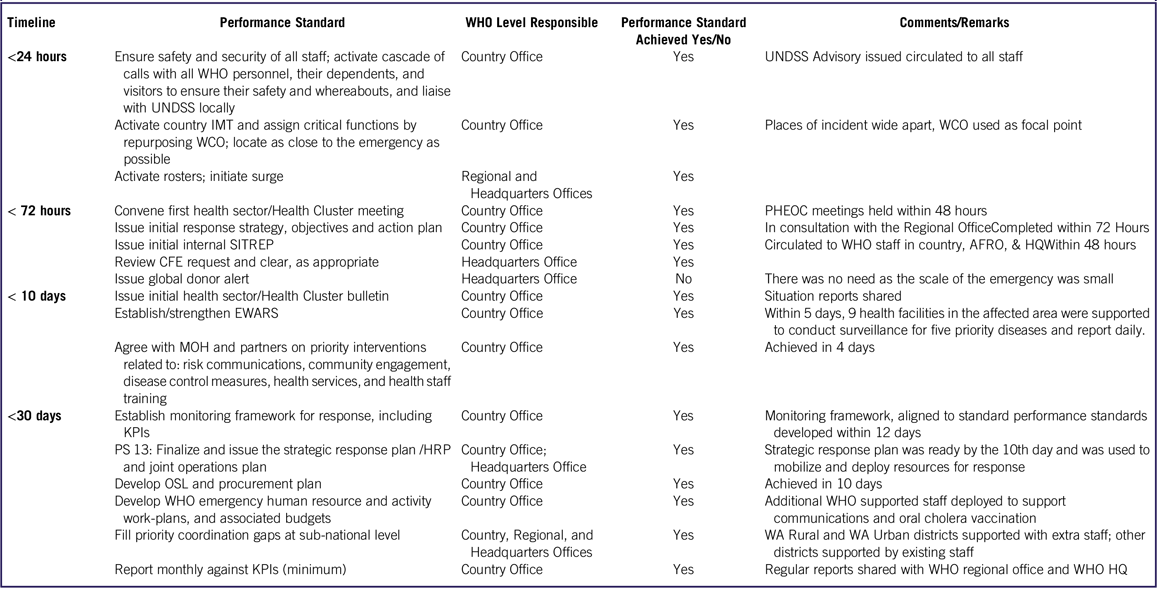
Abbreviations: WHO, World Health Organization; UNDSS, United Nations Department of Safety and Security; IMT, Incident Management Team; WCO, WCO, World Health Organization Country Office in Sierra Leone; PHEOC, Public Health Emergency Operations Center; SITREP, situation report; AFRO, WHO Regional Office for Africa; HQ, headquarters; CFE, Contingency Fund for Emergencies; EWARS, early warning system; MOH, Ministry of Health; KPI, key performance indicator; HRP, Humanitarian Response Plan; OSL, operational support and logistics; WA, Western Area.
WASH and IPC
The Guma water reservoir is the main source of water supply in Freetown. However, residents especially in informal settlements also get water from unprotected, shallow wells. The heavy rains that preceded the mudslide damaged the water reservoir and interrupted water supply to most parts of Freetown for 7 days. The Ministry of Water, in collaboration with other partners provided safe drinking water to the affected populations in the holding centers. Water harvesting was also done to boost the availability of water. Several partners, including WHO, provided water treatment commodities and health education on their proper use.
A team from WHO also supported the MOHS to conduct water quality monitoring at the holding centers as well as in the community. Water samples, from both tap water and community wells, were tested for fecal and non-fecal coliforms as well as residual chlorine levels. None of the samples tested had any residual chlorine, and most samples from community wells were highly contaminated with fecal coliforms. Possible explanations for fecal contamination of water are inadequate treatment, post treatment contamination, or unusually high levels of nutrients in the water, which foster bacterial growth.Reference Gorchev and Ozolins18 Based on these findings, WHO and other partners stepped up provision of household water treatment commodities, health education on water treatment in the community, and continuous water quality monitoring.
Hydrogeological disasters, unlike disasters caused by biological hazards do not pose a direct infectious threat, and bodies recovered are not of significant infection risk. However, routine IPC procedures for handling of injured persons and bodies retrieved from the site are required. The IPC team from WHO provided body bags for transportation of bodies and personal protective equipment for use by the burial team. They also provided guidance on safe burial processes. To reduce the risk of nosocomial infections in health facilities, particularly at a time of increased risk of diarrheal disease transmission, health care workers in affected districts were given additional training in infection prevention and control. Hand hygiene stations were set in health facilities to improve hand hygiene. While there were multiple partners to support IPC activities, there was poor coordination among the partners. This prompted WCO to recommend that the MOHS develop a national IPC plan so as to identify and map partners providing IPC support during future emergencies.
Oral Cholera Vaccine to Prevent Cholera in High Risk Population
Sierra Leone has been identified as 1 of the 5 highest risk countries to target for cholera interventions.Reference Lessler, Moore and Luquero19 Cholera outbreaks of varying magnitude and severity have been reported in Sierra Leone since 1970. A protracted outbreak occurred in 2012 with 22,815 cases reported and a case fatality rate of 1.3%. The outbreak peaked during the rainy season in August and was associated with drinking unsafe water.Reference Von Nguyen, Sreenivasan and Lam20 Moreover, most of the cholera cases were residents of the Western Area District, where the mudslide had occurred. All these factors, compounded by the poor sanitation status and lack of safe drinking water, led MOHS to consider vaccination of affected persons with oral cholera vaccine (OCV) to prevent a potential outbreak of cholera. A successful application to the OCV International Coordinating Group (ICG) was made, and Gavi, a global Vaccine Alliance, agreed to fund the campaign, with vaccines arriving in country within 30 days of the mudslide. Vaccination can be used as an additional measure for cholera prevention in humanitarian emergencies where there is no current cholera outbreak and if the existing infrastructure can support a vaccination campaign.21
Joint planning by MOHS and various partners, such as WHO and United Nations Children’s Fund (UNICEF), ensured that the affected population was well mapped out, strategies for community mobilization were identified, and resources were mobilized to support the campaign. It was projected that the target population was approximately 518,104 persons aged >1 year living in informal settlements, flooded areas, or displaced persons’ camps. The OCV was new in this population, was not part of the routine immunization schedule, and included adults who usually do not get vaccinations. This meant that an intensive social mobilization campaign to sensitize the community was necessary. Thus, WHO supported community health care workers and community leaders to mobilize the community for the campaign. Social mobilization structures used during the Ebola outbreak were also used to pass messages on OCV. Technical staff were always available to answer any queries on the safety of the vaccine.
The vaccination campaigns were conducted on September 15-20 and the second round on October 5-10. Both mobile door to door visits and fixed vaccination strategies in selected health facilities were used. A total of 518,013 doses were administered during both campaigns. A post vaccination survey conducted among 7186 participants showed that while 77.3% had received 1 dose only, 52.3% of them received 2 doses of the vaccine. The most common reason for non-vaccination was being away from home at the time of the campaign.
Operations Support and Logistics, Human Resource, and Surge
WCO sought and obtained additional funds from the WHO regional office to support the response activities. This was in addition to mobilizing support from partners for the priorities identified through the assessments and response plans. The development of the response strategy, the funding requests, and procurement plans were all done before the stipulated time per the ERF guidelines13 (Table 4). This ensured that funds and supplies were available to support response activities.
Health care workers were trained in disease surveillance, cholera case management, IPC, and laboratory diagnosis of cholera. Epidemiologists and community engagement officers working in the WHO district offices were re-deployed temporarily to the mudslide sites to coordinate response activities.
Recovery Planning
After the acute phase of an emergency, there is often a shift toward rehabilitation and recovery for the affected population. As such, the UN agencies in Sierra Leone, including WHO, worked closely with the Government of Sierra Leone to develop a multi-sectorial, strategic, 1-year recovery plan. The team conducted a desktop review of sector specific assessments and multi-agency mapping exercise findings to determine the impact of the mudslide and needs that arose from it. They then identified priority interventions for each sector.
Some of the areas affected by the mudslide were informal settlements with poor access to safe drinking water and improved sanitation facilities. Moreover, women and children are disproportionately affected during natural disasters; hence, the recovery plans included specific interventions for special groups such as women and girls, children, and people living with HIV/acquired immunodeficiency virus. The previous needs assessments conducted after the mudslide identified 6 health facilities that required relocation or repair.
LESSONS LEARNT
The ERF provided an easy to follow guide for the WCO response to the mudslide. Pre-existing generic emergency preparedness and response plans, which were developed during the Ebola virus disease outbreak, enabled the country to respond rapidly to the mudslide emergency. Early and sustained engagement of health sector partners during assessment, planning, and response improved efficiency and effectiveness through better coordination of the response activities. Establishment of a real-time disease surveillance system for epidemic prone diseases provided an early warning and response system for potential disease outbreaks. OCV was administered successfully to vulnerable displaced populations with fair coverage of first dose but significantly lower coverage for second dose. This may have averted a cholera outbreak among the displaced population.
The WCO identified the need to have a comprehensive communication plan, customized for different audiences, to communicate relevant, correct information before, during, and after an incident. Community leaders and health workers are a useful resource in social mobilization during an emergency, and their participation in the response can increase the acceptance of interventions by affected communities. Lack of a functional District Disaster Management Committee in the affected district meant that coordination of the response activities was handled by national MOHS.
RECOMMENDATIONS
We recommend strengthening of operations of the National PHEOC by ensuring that protocols for emergency response are in place, regularly updated, and with roles of different sectors well defined. National departments of health should conduct pre-disaster mapping of all partners involved in response to emergencies. To improve preparedness and response at the district level, District Disaster Management Committees should be described and roles allocated to coordinate district emergency response activities. The MOHS and other ministries should maintain a register of staff trained in emergency response who can respond to emergencies on short notice. Additionally, government departments coordinating the response should maintain a line list of survivors with details of their injuries for better documentation of the distribution of injuries and other adverse health outcomes in the affected population.
Acknowledgments
Ministry of Health and Sanitation, Sierra Leone; Office of National Security, Sierra Leone; United Nations Agencies, Sierra Leone; WHO regional Office, AFRO; WHO Headquarters; Centres for Disease Prevention and Control (CDC); Department for International Development (DFID); Public Health England (PHE).
Conflicts of Interest
The authors have no conflict of interest to declare