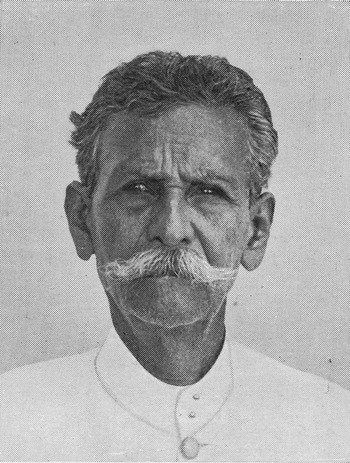
‘For the last four or five months,’ wrote J. Macmillan Brown, the eccentric Scottish-born literary scholar, based in New Zealand, ‘I have been tracking the Caucasian in the hair, features, and physique of the peoples of the Dutch East.’Footnote 1 In 1912, Brown sailed to ‘Kissa’, a droughty and bare island off the coast of East Timor, where he found ‘Europeanism that has not yet melted into the dark ocean’. The dry, unattractive atoll ‘swarmed’ with ‘little blue-eyed girls with golden curls’ and ‘tawny haired white men [who] speak and act like natives’. It was a weird and anomalous racial enclave. ‘Here is a laboratory experiment right at the door of tropical Australia,’ declared Brown.Footnote 2 Some ten years later, John S.C. Elkington, a champion of white settlement in tropical Australia, also visited Kisar, entranced by the ‘romantic tale’ that Brown had woven around it. ‘It was a curious experience,’ Elkington wrote, ‘to see at the landing place these flaxen-haired, fair-skinned, blue-eyed folk, speaking only Malay.’ The Australian director of tropical hygiene agreed that Kisar represented ‘an actual, if unpremeditated, experiment on a fairly extensive scale in white settlement in the tropics’.Footnote 3 When Ernst Rodenwaldt, a German physical anthropologist and specialist in tropical medicine, visited the Kisarese community in Koepang (Kupang), West Timor, a few months later, he was struck by the uncanny whiteness of many of them. ‘A strange sensation, this encounter,’ he recalled. ‘On the street I met a tall, slim old man [Cornelis Caffin] with white hair, a white beard, a white moustache, and an aquiline nose. There was no trait in his facial appearance that reminded me of a native. But when I addressed this European, he did not understand me. He could not speak Dutch or any other European language.’Footnote 4 For Rodenwaldt, too, Kisar came to resemble a racial laboratory, though one more pertinent to the study of the status and stability of mixed-race groups than the eulogising of white racial persistence in the tropics. For him, Kisar became an island of genealogical clarity, ‘far removed from the racial chaos [dem Rassenchaos fern]’ that he thought prevailed elsewhere in the Dutch East Indies.Footnote 5
While Brown and Elkington had read the experiment on Kisar as commentary on the White Australia policy, in terms of white settler nationalism, Rodenwaldt was sensitive to rising Dutch colonial concerns about race mixing in the archipelago. In the 1920s, the descendants of European and Indonesian unions, known as Indo-Europeans or Indos, probably numbered in the hundreds of thousands. Perhaps as many as one-third of the Europeans who married in the Dutch East Indies were choosing local spouses, especially in the eastern part of the archipelago.Footnote 6 The children of these mixed marriages inherited the legal status of the father — even if there had been no formal marriage, the father might adopt his offspring and render them European.Footnote 7 (Indeed, people classed as ‘foreign Oriental’ and ‘Native’ could apply to be accepted as ‘equivalent to European’ in legal status if they spoke Dutch and lived according to European standards and expectations.) Eurasians with light complexion, an advanced education, and a decent job usually passed as European; whereas those who were darker and poorer might be relegated to the category of Native. Most professed Christian faith, though Indonesian mothers frequently transmitted local customs to their offspring. In urban centres, some spoke an Indisch dialect of Dutch, ardently played krontjong songs, and laughed with the Stamboel comic theatre.Footnote 8 The social position of these Indo-Europeans was precarious, teetering, so it seemed, on the edge of the native abyss. Many recently arrived Dutch treated them with contempt, showing little respect for their accomplishments and ridiculing their accents. Colonial authorities repeatedly inquired into the social marginalisation and poverty of Indo-European communities.Footnote 9 As anthropologist Ann Laura Stoler observes: ‘Skin shade was too ambiguous; bank accounts were mercurial; religious belief and education were crucial but never enough.’Footnote 10 Indo-Europeans transgressed and unsettled conventional racial divides and hierarchies, thus constituting a colonial problem. While liminal Indo-Europeans generally favoured and asserted European qualities and accreditation, often attempting to sharpen the boundary between themselves and the ‘natives’, their position in colonial society remained contested and dubious, a source of considerable anxiety.Footnote 11
Cornelius Caffin, Koepang, from Ernst Rodenwaldt, Die Mestizen auf Kisar, vol. 1 (Batavia: Kolff, 1927), facing p. 10.

In this article, we follow Rodenwaldt as he set about making the Mestizos of Kisar crucial to the scientific understanding of race mixing in the twentieth century.Footnote 12 In two volumes, published in 1927, the anthropologist evaluated the results of the ‘crossing’ of European men and Kisarese women, assaying the racial composition and worth of these isolated, impoverished people. In effect, Rodenwaldt was stabilising and mobilising a mixed identity, a racial amalgam, first on the island, then projecting it onto the rest of the archipelago and broadcasting it across the world. In his biopolitical framing, the island laboratory could be scaled up to cover every circumstance; it could be made relevant to any condition of racial confusion or ambiguity. Rodenwaldt's relatively positive assessment of the Mestizos of Kisar gained remarkable currency among physical anthropologists, even as he came to doubt his own findings, opportunistically adapting himself in the 1930s to Nazi race theories. His trajectory as a race theorist is revealing and disturbing.Footnote 13 In becoming enthralled by Nazi racial doctrine, Rodenwaldt, a shrewd professor of hygiene and anthropology at Heidelberg, renounced his earlier optimistic evaluations of race mixing, promoted anti-Semitism, and participated eagerly in German biological warfare.Footnote 14 The racial triumphalism of Germany in the 1930s and 1940s would provide, at least on first hearing, a discordant counterpoint to the perceived harmonies of Kisar in the 1920s.
This is, then, a case study in the ‘epistemic violence’ of colonial racialisation in Island Southeast Asia, a story of the silencing of the colonised and their transformation into rigid, mobile, and thoroughly modern — if ineluctably marginal — identities.Footnote 15 Residents of a few villages on Kisar became legible to the world as model human hybrids. They were made to fit, and fill out, a European racial framework, but in so doing, they caused this conventional structure to shift and adjust, to adapt a little to colonial exigencies and local cultural pressures. As Rodenwaldt learned, his Kisarese subjects could not simply be slotted into one category or another; his encounters in the eastern archipelago caused him to rethink, reluctantly, the nature of human difference and mixture, leading to subtle modification or reconditioning of concepts of race. As for the Kisarese, it is hard from this distance to discern their responses to such intrusions or their perceptions and evaluations of the outsiders’ assertions of ‘true’ Mestizo identity. The inhabitants of Kisar seem to have greeted anthropological inquiries with an uneasy combination of curiosity and indifference — but since their historical presence is recorded only in the foreigners’ notebooks and journals, it is hard to know what they really thought. All the same, it is clear today that many of their descendants have discovered in Rodenwaldt's books some valuable materials with which they can assemble their own genealogies and modern identities.
Discovering the ‘Mestizos’
Early in the 1880s, colonial officials and missionaries began to report on an anomalous blonde community on the island of Kisar, in the far east of the Dutch East Indies. While travelling through the archipelago and along the western coast of New Guinea, the naturalist and anthropologist Adolf Bernhard Meyer heard about the white Kisarese from a Dutch missionary. As a German-Jewish medical graduate, Meyer was intrigued.Footnote 16 He learned that about a dozen European soldiers from the Dutch East India Company (Vereenigde Oostindische Compagnie, VOC) had garrisoned the island more than a century earlier. They came with their wives, probably mostly Dutch, and their descendants tended to intermarry, thus helping to preserve their racial distinction. According to Meyer, this exceptional community, once forgotten, mustered at least 350 people. ‘Among these Mestizos,’ he wrote, ‘one finds, curiously enough, some with blue and brown eyes, light skin, and blond hair. One hears Dutch names ….’Footnote 17 Like his idol the naturalist Alfred Russel Wallace, Meyer found local racial patterns fascinating and puzzling. Naturally, he wondered whether this strange group might be degenerating in the tropics.
The Dutch language is completely unknown to them, most of them do not understand Malay either, just like the other inhabitants [of the island]. Except for their mores, customs, and religion, they are the same as the rest of the population of the island; with respect to laziness, ignorance, and alcoholism they surpass them; and yet, they are very proud of their [last] names.Footnote 18
Intent on getting to New Guinea, Meyer was unable to visit the aberrant Kisarese, but he alerted other German anthropologists to their existence.
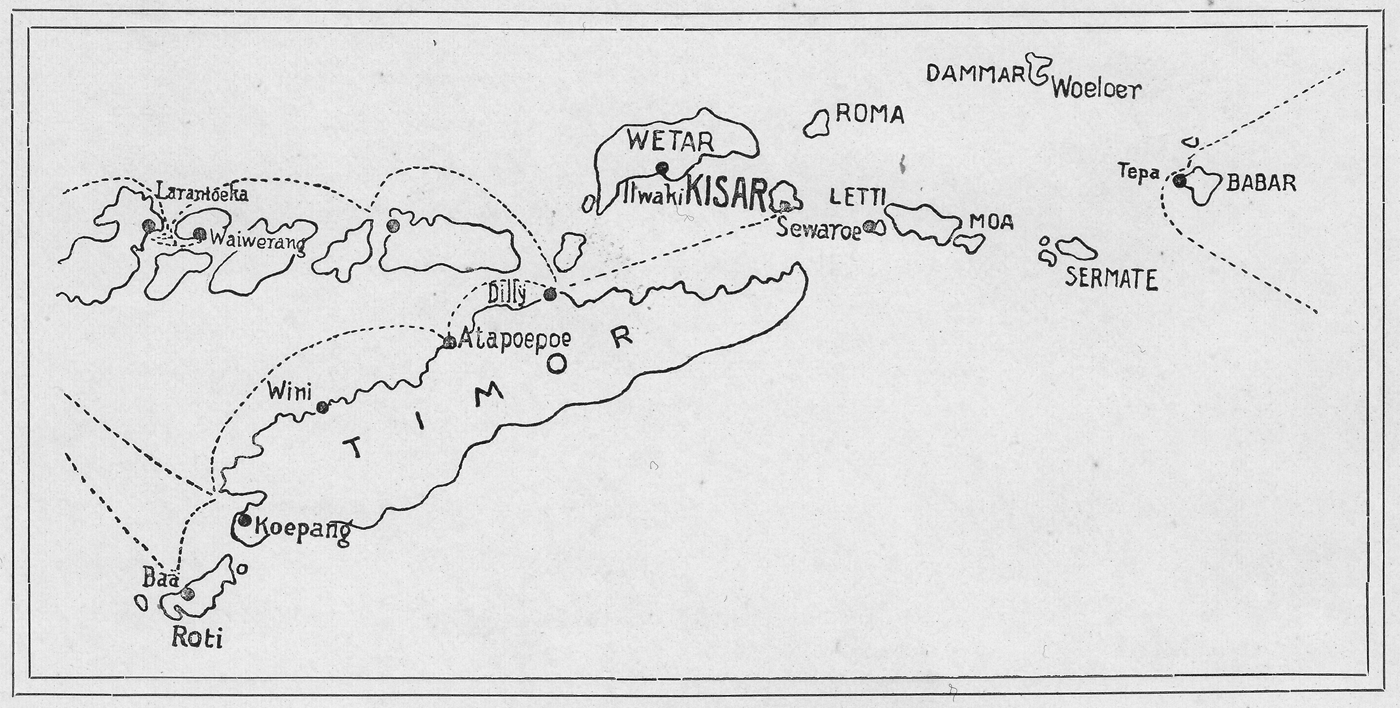
When Macmillan Brown landed on Kisar in 1912, he ‘saw there a pure Dutch colony that has persisted and even kept its blue eyes for two centuries and a half’. He believed that in 1665, eight Dutch soldiers and their wives had settled on ‘this lonely islet’. Regrettably, their inbred descendants ‘kept their Protestantism, but largely abandoned their civilisation’.Footnote 19 They showed no diminution in fertility, however, and hard work on the barren island had made them ‘virile’. The prolific ‘Lerieck’ family, for example, showed some native blood, yet ‘many had fine European faces and light complexions’. Thus it seemed to the aged scholar that ‘work and a hard life are two of the essential conditions of race-permanence and race progress in the tropics’.Footnote 20 According to the officious Elkington, nine Dutch soldiers and their wives were deposited on Kisar between 1783 and 1819 — five wives were Dutch while the other four were ‘more or less tinged with coloured blood’.Footnote 21 The colonial authorities abandoned them in the 1820s, and their offspring continued, totally overlooked, to breed among themselves. In 1921, when he visited the island, Elkington found some 200 descendants, who ‘except for the tenacity with which they kept their marriages within their own community and retained their family names, had practically lost all marks of European civilisation’. Surrounded by some 7,000 ‘Negrito’ Kisarese, this incongruous group showed no signs of physical degeneration, displaying European features and builds, albeit unusually ‘bronzed’.Footnote 22 The Mestizos appeared fairly intelligent too, though Elkington was not equipped to confirm this observation with the Binet-Simon test and the Porteus Maze. He hoped a properly trained physical anthropologist would soon investigate the intriguing white tribe.
Map of the eastern archipelago, from Ernst Rodenwaldt, Die Mestizen auf Kisar, vol. 1 (Batavia: Kolff, 1927), facing p. 16.
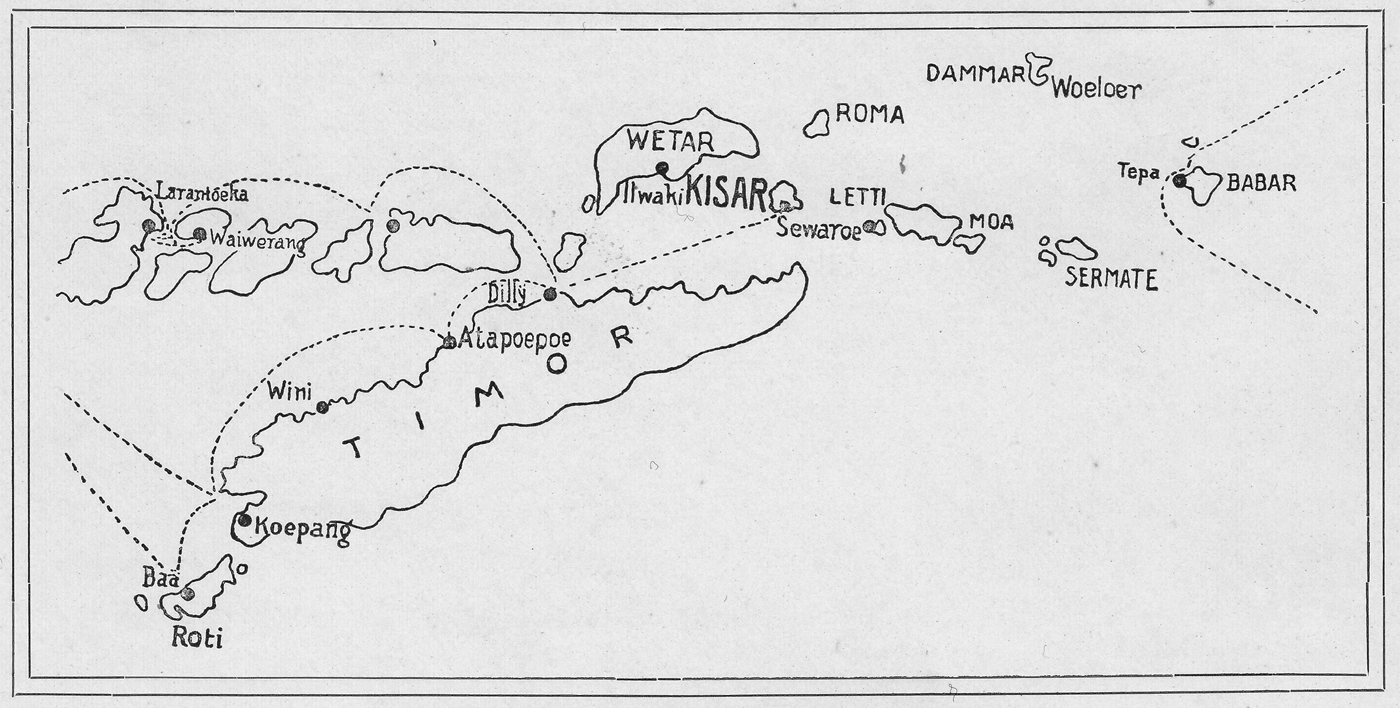
Rodenwaldt arrived on Kisar the following year. The forty-four-year old medical officer, scion of a Prussian military family, was stationed in Surabaya, working as an inspector of the East Indies Civil Health Service, which required him to travel widely in the eastern archipelago. Before the First World War, he had learned tropical medicine at the Hamburg Institute for Tropical and Ship Hygiene, then practised as a German colonial physician in Togo. During the war, he advised the Ottoman Empire, a German ally, on disease control.Footnote 23 Since Germany had been deprived of its colonial possessions after the war, the adventurous tropical physician resorted to the Dutch East Indies, as an empire substitute. Known mostly for his expertise in the management of malaria, Rodenwaldt also developed, under the tutelage of leading anthropologist and eugenicist Eugen Fischer, a commitment to the analysis of racial types. Like Fischer, he assumed the physical features and mental capacities of a race were inherited in a simple Mendelian genetic fashion. He particularly admired Fischer's pre-war studies of mixed-race people in German Southwest Africa (Namibia), which came to the ambivalent conclusion that miscegenation, while it elevated Africans, degraded Europeans.Footnote 24 Having met the alluring white Kisarese in Koepang, Rodenwaldt yearned to visit Kisar, to conduct a corresponding inquiry into the Mischlinge there. When he disembarked on the island in 1922, he looked deeply into the eyes of the first couple he met, without saying a word. ‘They were not bright blue,’ he related, ‘but they were very light; they were not native eyes [Eingeborenenaugen].’Footnote 25 Conversation was unnecessary: Rodenwaldt believed he could see deep into their racial essence. Along with his wife, the anthropologist stayed on Kisar for two months, performing a wide range of physical measurements in the early afternoon and providing medical care in an improvised clinic later in the evening.Footnote 26 It would take him a further five long years to figure all the calculations, often working deep into the night — even while sleeping, he claimed — before his two-volume study, Die Mestizen auf Kisar, appeared in 1927.Footnote 27 In the first volume, Rodenwaldt drily recounted his version of the history of the Mestizos of Kisar and the results of his investigations. Tables of physical measurements, physiological data, family trees, pictures of almost all individual Kisarese, and endless calculations, took up the even more desiccated second volume.
Relating to Kisar
Rodenwaldt's historical account of Kisar was more elaborate and reliable than the perfunctory versions told by Brown and Elkington.Footnote 28 His narration went back to the beginning of Dutch involvement. Established in the early seventeenth century to control the lucrative spice trade in the East Indies, the VOC had focused on the eastern archipelago, especially on the small island of Banda, where nutmeg grew, and the Malaku Islands, the source of pepper and cloves. The Dutch drove out the Portuguese, except from East Timor, and imposed punitive trade agreements on the islanders. When the people of Banda did not adhere to the ‘treaty’, the VOC attempted to kill them all. Kisar, off the coast of East Timor, appealed as a site for a garrison, and for its potential as a slave trading post. In 1665, the VOC erected a fortress on the island, which was largely barren rock, buttressed by 20-metre-high ramparts, with poor anchorage offshore. But at the end of the eighteenth century, the Dutch state took over the bankrupt VOC and concentrated on developing the cultivation system on Java, ignoring the spice trade, which was by then unprofitable. The colonial administration in distant Batavia (Jakarta) lost interest in remote outposts like Kisar. It abandoned the fortress, leaving only the island postmaster as its representative. Every three months a postal boat called in to relieve the monotony. The Kisarese continued to engage in small-scale agriculture and desultory exchanges with neighbouring islands.
Halfway through the seventeenth century, a dozen or so European soldiers, having served out their contracts with the VOC, had decided to settle on Kisar, rather than return to Europe. Their decision was not unusual, since they had little to look forward to back in Europe. The recruiting station of the VOC in Harderwijk — known as Europe's sewer — attracted the poor, destitute, and desperate, those for whom exile was appealing. The Kisar isolates derived from the Netherlands, England, France, and the German states: among the common, and later cherished names, were Bakker, Caffin, Lerrick, Joostensz, Peelman, Wouthyzen, and Ruf. According to Rodenwaldt, these outcaste soldiers married local women, and their descendants, proud of their European ancestry, married one another. They tended to shun other Kisarese, and few opportunities arose to marry Europeans. When the VOC opened its ranks to Indo-Europeans after 1775, the Mestizos found a source of ready income — and an additional reason to keep themselves separate from other Kisarese. But this advantage disappeared in the early-nineteenth century when the British briefly secured the East Indies. Nevertheless, the impoverished Mestizos continued to assert their sense of racial superiority and white privilege.
For most of the nineteenth century, the Mestizos of Kisar were forgotten. In 1885, a visitor investigating possibilities for agriculture and trade in the eastern archipelago observed exceptionally white inhabitants scratching around the ruins of the old VOC fortress. Their presence disturbed him. These people did not speak Dutch and engaged in local customs and habits, but they attended church on Sunday, smoked pipes, and sat at the table while eating instead of squatting on the floor. The combination of European features and Christianity with a largely indigenous mode of life was perplexing and jarring. The colonial agent became incensed when he heard that these remnant Europeans possessed the status of mere natives. Even worse, it seemed the local raja, the ruler of Kisar, treated the Mestizos with contempt, forcing them to perform demeaning manual labour. Returning to Batavia, the affronted visitor recommended that the colonial state intervene to rectify this degradation of Europeans — albeit of diluted stock.Footnote 29 As a result, in the early twentieth century, the Mestizos were permitted to enrol in a European school in Koepang, so they could learn Dutch and receive a basic education, the requirements for coveted European legal status. Their white appearance seemed to demand they acquire, unlike other Kisarese, the cultural and legal trappings that went with being European in the colony. If their genealogies had been less obscure and better registered, then linguistic and educational accomplishments would have been redundant. Now, schooling would serve, in effect, to repatriate and upgrade the community. It also gave many of them a chance to get off Kisar and into infinitely more cosmopolitan West Timor.
Evaluating the Mestizo
For Kisar to function as a Mendelian racial laboratory, Rodenwaldt needed clear and reliable Mestizo genealogies. Unfortunately, the church containing records of marriages and births had been damaged during a typhoon and burned down early in the twentieth century. The genealogical pride of the Mestizos meant they could give him, through an interpreter, plenty of information, but he distrusted many of their claims. Rodenwaldt believed Adriana Bakker, the wife of the current raja, told the most plausible stories, but even so, he wanted confirmation.Footnote 30 The anthropologist turned to Paul Constant Bloys van Treslong Prins, the deputy archivist of the colonial administration in Batavia, a bureaucrat with a keen interest in Indo-European genealogy. They found some records of Kisar in the archives, which helped to piece together the bloodlines of the Mestizos.Footnote 31 According to Rodenwaldt, the founders of this group definitely were racially mixed, but their Mestizo descendants became isolates, breeding with one another. Having reconstructed the family trees, Rodenwaldt could calculate the proportions of European and indigenous blood for all the Mestizos, just as Fischer had done in his study of the Rehoboth.Footnote 32 The value of Rodenwaldt's laboratory consisted in its racial organisation and transparency, distinct from the ‘racial chaos’ supposedly prevailing elsewhere in the archipelago.Footnote 33
In Koepang and on Kisar, Rodenwaldt classified and laboriously measured each Mestizo. He assessed the colour of their skin and eyes, the shape of their nose and ears, and their weight, height and build. The prevalence of red hair impressed him. His anthropometric studies indicated that physical characteristics, such as height and limb length were not inherited independently — if that had been the case then the bodies of the hybrids would have been grotesquely disproportionate and uncoordinated. Their features proved no more variable and discordant than those in ‘pure’ Europeans or Kisarese. Rodenwaldt also took care to evaluate the cultural and social status of the Mestizos. They seemed to display European qualities of intelligence, initiative, and responsibility; the few of them possessing a good education were able to hold positions in the colonial service and commerce. The persistence of native elements might have rendered them better adapted to the tropical climate, allowing them to behave more vigorously in the moist heat. In the Mestizos, the cultural dialectic of European and Native appeared to have achieved a synthesis. They gave their children both a Christian name and an indigenous one, to appease local spirits.Footnote 34 The outward forms of Christianity, including church attendance, were maintained but the community embraced local customs concerning courtship, marriage, birth, and child rearing.Footnote 35 Animism retained an important role in their spirit world. A missionary on Kisar gave Rodenwaldt an account of Mestizo tales of their ancestors, which was ‘superior to any other descriptions in providing direct insight into the daily life of Mestizo families’.Footnote 36 The legends showed the ability of ancestor spirits to cure disease, defy evil, and resist enslavement by hostile tribes. Even so, it was evident to the German that the more European blood an individual could boast, the greater was his propensity to acquire civilised manners and attributes.Footnote 37 Rodenwaldt praised such accomplishments among the Mestizos, though he wondered whether they merely were disguising a deeper, and now ineradicable, indigenous reality.
Rodenwaldt urged restraint in the interpretation of his findings. Although he believed that the Mestizos of Kisar were not physically degenerate, he failed to convince himself that they were thriving culturally. The community was not an ideal test case. They derived, he lamented, from natives whose culture had disintegrated on contact with whites and, on the other hand, men who represented ‘the most pathetic waste from Europe's table’.Footnote 38 This was an important limitation of his largely physical study, especially as ‘almost everything about the alleged adverse effects of race mixing found in the literature refers to the mental domain [das Seelenleben]’.Footnote 39 Thus the verdict was still uncertain. Rodenwaldt hoped that further research in mixed-race communities elsewhere would clarify the matter. The hygienist observed ruefully that while European males were usually eager to have sex with other races, ‘how harsh, one-sided and intolerant [were their] judgments of hybrids [Bastard] as individuals or as a population’.Footnote 40 There was too much emotional race pride involved in these evaluations and not enough science. He deplored especially the ‘devoted and gullible enthusiasts’ who trumpeted their Nordic superiority.Footnote 41 All the same, he queried ‘whether it is possible to extract oneself completely from such sentiments, which reveal the remnants of a fundamental instinct [Urinstinkt] that an inner voice compels us to acknowledge’.Footnote 42 At the time, Rodenwaldt managed to overcome instinct and imply there was nothing particularly degenerate about the Mestizos of Kisar. They appeared to be a model community in the archipelago.
Rodenwaldt sought to enunciate the language of science and reason in the hectic debate over the social position of Indo-Europeans, a colonial cacophony that seemed to him dominated by unruly political tempers. In particular he hoped to convince leading Indo-Europeans that biology was on their side — but few showed much interest. The principal exception was J.C. van Schouwenburg, a retired forest manager and former editor of the Indo-European Association's weekly magazine, Onze Stem (Our Voice), who found, for a while, Rodenwaldt's research captivating. In 1927, van Schouwenburg, Rodenwaldt, and Bloys van Treslong Prins established the Eugenics Association of the Dutch Indies.Footnote 43 A year later, the association started publishing Ons Nageslacht (Our Progeny), a journal largely devoted to Rodenwaldt's studies of human hybridity.Footnote 44 In the opening article, van Schouwenburg praised Rodenwaldt's unbiased and scientific attitude toward racial difference and race mixing, noting that he previously had become used to contrary notions ‘from our German brothers, who are partly caught up in ideas of Nordic races and the Herrenrasse!’Footnote 45 Publicly, Rodenwaldt went about declaring that Indo-Europeans were especially well adjusted to the tropical climate and did not suffer from constitutional weakness — and further biological research could elucidate these advantages.Footnote 46 Rodenwaldt became eager to investigate the effects of acclimatisation and race mixing on the sexual life of women in the Dutch East Indies. But when the Eugenics Association sent out questionnaires containing detailed questions about sexual issues, an outcry resulted.Footnote 47 After Rodenwaldt was invited to participate in the analysis of the 1930 census, he concluded that the collected information was useless for the purposes of biological research. Confronted with ample inadequate data and the refusal of most Indo-Europeans to listen to his views, Rodenwaldt was becoming increasingly disillusioned and frustrated.
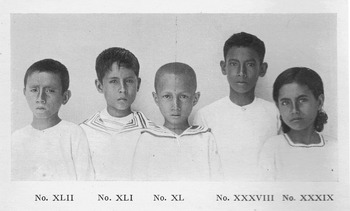
Lerrick children, two with red hair, from Ernst Rodenwaldt, Die Mestizen auf Kisar, vol. 2 (Batavia: Kolff, 1927), table 16, image 2.

In 1930, in an elaborate and somewhat convoluted article in one of the leading eugenic periodicals, the German Archiv für Rassen- und Gesellschaftsbiologie, Rodenwaldt repeated his conclusions: ‘Thus far, no solid observations have supported the assumption of a constitutional weakness in mixed-race individuals [Mischlinge].’Footnote 48 But then he qualified this statement, arguing that the unreliability of family histories and deficiency of records in the Dutch East Indies meant that any scientific research on these matters — even the work he had conducted on Kisar — would be dubious at best. In general, the anthropologist must contend with ‘an inextricable network of crossings of very old and very young bloodlines, with countless back-crossings in both directions’.Footnote 49 Everywhere Rodenwaldt looked he now saw racial chaos. To be sure, many Indo-Europeans could perform the mental labour of Europeans and achieve high positions in colonial administration and the armed forces. But the racial hygienist had become more convinced that there was something seriously amiss in the psychological and behavioural equipment of most of them. Indo-Europeans lived athwart two cultures, conflicted between two different social affiliations. Although some managed to become successful businessmen and leading civil servants who spoke impeccable Dutch, displayed European manners and lifestyle, and appeared almost white, most hybrids embarrassingly revealed their mixed cultural ancestry in appearance, language, and mode of life.Footnote 50 In Rodenwaldt's opinion, all lower-class Indo-Europeans were mere mimics, copying trivial elements from European culture without fully understanding them: ‘the rootlessness of this hybrid world [Mischlingswelt] thus expresses itself in a tragic way’.Footnote 51 He still believed that European prejudice and discrimination, not intrinsic biology, explained the deplorable position of these misfits: ‘their birth in a condition of dreadful ambivalence, in a life-deficit, for which only Europe is responsible’.Footnote 52 But his sympathies increasingly lay with the ‘healthy’ European race instinct that underpinned such distaste.
From mixed futures to Nazi visions
In the early 1930s, Rodenwaldt felt his career was languishing in the tropics. He longed to be reinvigorated through life back in Germany. More and more, as he sweated in Batavia's German Club, colonial hybrids and wandering Jews came to irritate him. Meanwhile, he followed keenly the rising salience of racial thought in German politics, a discourse to which he had much to contribute. In 1932, Rodenwaldt joined the overseas division of the National Socialist German Workers’ Party (NSDAP), the Nazi Party, but he quit the following year, after the Reichstag fire, for reasons unknown.Footnote 53 Rodenwaldt eventually was recalled to Germany in 1934 to take up the chair of public health at the University of Kiel; and within two years he was appointed professor of hygiene in the notoriously pro-Nazi medical school at the University of Heidelberg, where he taught a compulsory course on race hygiene.Footnote 54 The physical anthropologist's thinking on racial difference had hardened during the early 1930s. Although maintaining that race mixing did not inherently lead to physiological and constitutional degeneration, and believing that some mixed individuals could show considerable intelligence and social attainments, Rodenwaldt emphasised the destructive cultural ambivalence of racial hybrids. True German culture could never take root in such conflicted people. Their inability to assimilate into European civilisation and their disaffection and resentment turned them into socially disruptive elements. In the late 1930s, he expatiated on mixed-race defects in several public health manuals and in speculations on how to manage the future German empire.Footnote 55 For Rodenwaldt, miscegenation had come to figure as a major threat to the expansion of Aryan civilisation.
Rodenwaldt chose now to extol what he claimed was the instinctual German revulsion against miscegenation. ‘Our emotional reaction [Gefühl],’ he wrote, ‘speaks so clearly and imposes itself on us time and again, often against our wishes, when we have to live and work with racial hybrids [der Mischling].’Footnote 56 How could one possibly resist this essential discriminating force? Such European fastidiousness, which was natural if unfair, inevitably caused sullenness and enmity among half-castes, giving rise to their ‘lack of mental balance and an aimless search for compensation’.Footnote 57 The mixed race male had become especially scary: ‘He never sleeps, he penetrates into all human relationships by disturbing them and undermines confidence, even within his own family, when his partner is a pure-blood.’Footnote 58 Moreover, these mixed-race individuals often internalised the prejudices the racially pure held against them, leading them to espouse conservative, even reactionary, views. ‘Always and everywhere the crisis-ridden life of the hybrid group has urged, and is urging, an end to their state of mental uncertainty and weakness.’Footnote 59 But the most serious problem, in Rodenwaldt's expert opinion, was the conflict of cultural forms and assumptions within each mixed-race person. He asserted that ‘the new combinations of personality characteristics are of profound importance’ in assessing the stability of hybrids — further research on their mental turmoil and disharmony, seemingly insurmountable, might provide the ‘essential key to the solution of the hybridization problem [Mischlingsproblem]’.Footnote 60 But he was pessimistic: the social disruption of race mixing seemed incompatible with empire. ‘Colonies are ruled [Herrschländer]. Legitimate is what is white; illegitimate that what belongs to the blood of the dominated people.’ The Dutch foolishly had tried to resolve this durable biological and social problem through shifting legal classifications. But, Rodenwaldt now argued, ‘legal equivalence [Gleichstellung] does not change anything about that’.Footnote 61
‘Miscegenation is a risk for every human community,’ Rodenwaldt concluded, ‘from the family to the nation state …. Since no one can estimate its consequences, the mixing of races is irresponsible.’Footnote 62 How far he had come, in a few years, from his praise of the Mestizos of Kisar. How appealing his new views would prove to Nazi patrons. In particular, they appreciated his implicit warning against the intermarriage of Jews and Aryans. But Rodenwaldt's chief concern through the early 1940s was to position himself as the major biological arbiter of future German colonial policy. He insisted that only married German couples should command the revitalised German empire. If hybrid babies inadvertently were born, then they must be classed as natives, not as mixed-race or European — otherwise one would dwell in racial chaos, as in the degenerate Dutch East Indies. Thus Rodenwaldt confidently heralded a third wave of German colonialism, to be guided by critical biological thinking on race mixing.Footnote 63
Rodenwaldt flourished at Heidelberg under the Nazis. His tropical experience had given him valuable knowledge of malaria control, which he used, as a surgeon-general of the army, in drawing up plans to flood the Pontine Marshes in northern Italy toward the end of the war. Naturally, this caused the proliferation of the mosquitos that spread the disease, resulting in tens of thousands of additional deaths. ‘The plan devised by [Erich] Martini and Rodenwaldt,’ Frank M. Snowden observes, ‘was consistent with the punitive tenor of the Wehrmacht occupation strategy.’Footnote 64 In subsequent war trials, Rodenwaldt successfully adduced his colonial sympathy with mixed-race people to assist in his exoneration: he implied that his earlier studies of the Mestizos of Kisar demonstrated a fundamental racial recusancy, the refusal of Nazi doctrine. Like so many others, he insinuated that he had become an opportunistic and insincere Nazi propagandist during the 1930s.Footnote 65 On his release from the internment camp at Windermere, England, and while he remained under investigation, the United States government commissioned him to report on the condition of hygiene, epidemiology, and preventive medicine in postwar Germany.Footnote 66 After his acquittal in 1948 on charges of complicity with the Nazi regime, Rodenwaldt was restored to an academic position at Heidelberg, where he continued to conduct research in geomedicine and disease ecology — and to advise on development programmes. In retirement he took up medical history and wrote a memoir, in which he presented himself as a raffish adventurer.Footnote 67
Conclusion
Convinced that racial biology should determine the course of nation and empire, Rodenwaldt was typical of the generation of scientists who came to maturity and prominence after the First World War. His career followed what many regard as the typical German intellectual trajectory from eugenics to racial hygiene, and from physical anthropology to Rassenkunde.Footnote 68 In the 1930s, his research conformed to the new ‘German spirit’ in scholarship, centred on völkisch nationalism, anti-Semitism, and biological racism.Footnote 69 He had come to believe that racial identity explained one's view of the world. In this he was not alone. The career of Eugen Fischer, Rodenwaldt's role model, traced a similar, if more distinguished, path. Fischer's dedication to racial reductionism grew stronger after the First World War, and his qualified appreciation of race mixing, which had emerged in a colonial setting, soured into contempt back in Germany during the 1920s. Even so, Fischer's relationship with the more fervent Nazi ideologues often was uneasy — and perhaps more troubled than Rodenwaldt's fellow travelling. Until the early 1930s, as director of the Berlin Kaiser Wilhelm Institute for Anthropology, Human Heredity and Eugenics, Fischer frequently expressed reservations concerning National Socialism. Yet, when he was elected rector of Berlin University in 1933, he took care to praise the new government's biological orientation toward social problems. After 1939, he warned of the Jewish threat to Aryan supremacy, and finally joined the NSDAP.Footnote 70 Many other German biologists and physicians charted the same course during this period. They came to see their destiny in racially cleansing the German body politic.
It is tempting at this distance to keep separate the colonial and nationalist personae of Rodenwaldt, but to do so would disguise the continuities in his beliefs and practices across these domains.Footnote 71 To be sure, the anthropologist sympathetic to the Mestizos hardens into the distant and prideful votary of German racial purity, the pietist of blood and soil. But an obsession with framing social problems in terms of racial biology, whether soft or hard, persists. Indeed, one might argue that both Fischer and Rodenwaldt tried out their biological determinism in colonial laboratories before applying it more rigorously — and vaingloriously — in Europe. From the colonies they brought back with them the same concerns with heredity, purity, hybridity, family, civility, degeneration, regulation of sex — only now the biological conceptual apparatus became a vehicle for exclusionary rather than inclusionary population policies, for distancing or extermination rather than incorporation. Rodenwaldt's career as a cosmopolitan racial expert thus connected colonial and national projects. It shows us how worldly race science — and even the people of Kisar — could be made to matter in very different polities, to very different ends.Footnote 72
For at least a decade, the Mestizos of Kisar, having been effaced for more than a century, became a touchstone in worldwide discussions about racial contact and miscegenation.Footnote 73 How frustrating it must have been for Rodenwaldt, in his National Socialist phase, to be known primarily for his relatively positive evaluation of race mixing in what then seemed a far-off archipelago. At Harvard, physical anthropologist Earnest Hooton taught the students in his race-mixing course about the Mestizos of Kisar. His graduate students working on the topic — including Harry L. Shapiro, Carleton S. Coon, and Joseph B. Birdsell — took copious notes on Rodenwaldt's two volumes. They regarded the Kisar work as a model study of the biology of miscegenation. In the derogatory Race crossing in Jamaica (1929), geneticist Charles B. Davenport and anthropologist Morris Steggerda attempted to counter Rodenwaldt's favourable conclusions.Footnote 74 The Anglo-Indian writer Cedric Dover focused on Kisar in his 1937 world survey of mixed-race communities. According to the German anthropologist, Dover wrote, the Mestizos ‘appear to be physically and mentally able, and have even contributed prominent officials to Dutch administration in the East Indies’.Footnote 75 The botanist and eugenicist Reginald Ruggles Gates, a vehement opponent of miscegenation, was sceptical. Gates took pains to reinterpret Rodenwaldt's figures, which he thought unreliable, in order to assert that ‘no phenomena of hybrid vigour were observed’.Footnote 76 Until the Second World War, most of those wanting to talk scientifically about race mixing felt compelled to address the case of the Mestizos of Kisar.Footnote 77 After the war, when miscegenation no longer seemed a valid biological issue, Kisar simply fell off the anthropological map, forgotten again.Footnote 78
Meanwhile, the Mestizos of Kisar continued to disperse, leaving only a few remnant communities on the island. Many settled in Koepang where they could get an education and find jobs. Following Indonesian independence some fled to the Netherlands, especially in the 1950s after the suppression of the short-lived Republic of South Maluku in the eastern archipelago. Whether they remained behind or moved abroad, the Kisarese Mestizos increasingly tended to marry out of the original family groups. They were disappearing as a distinct enclave. During the past twenty years, however, many descendants scattered across the globe have come to embrace the old ‘Indies culture’, rediscovering food, folklore, and customs from the past.
In 2016, we talked with Edwin Lerrick at his Lavalon hostel and bar, perched on the coast in Kupang, in what used to be Kampong Kisar. Tall and thin, his skin light, Lerrick was lamenting the dispersal and fragmentation of his family. Once they called themselves Mestizo, but now mostly they said ‘Indo’. While his parents’ generation still spoke some Dutch, they usually preferred Bahasa Kisar. Proud of their family history, they had kept the two volumes of Rodenwaldt's book for reference, until an aunt borrowed them. They appreciated especially the photographs of ancestors and relatives. Traditions might fray, but Edwin Lerrick could point out, with satisfaction, that mixed-race Kisarese often rose to prominence in the region — indeed, his cousin Chris Lerrick had been mayor of Kupang.Footnote 79 A special sense of mixed heritage persisted. We learned that Rano Lerrick set up a website in the Netherlands dedicated to stories and genealogies of Mestizo ancestors, sometimes relying on his grandparents’ memories, at other times drawing on Rodenwaldt's meticulous studies.Footnote 80 Journalist Ed Caffin referred to his mixed Kisarese background when he founded a website for third-generation Indos in the Netherlands.Footnote 81 As Nonja Peters and Geert Soeller observe, ‘Ernst Rodenwaldt's books became a narrative artefact for the Mestiços with which they proudly prove their European origin.’Footnote 82 When they spoke a few years ago with Thomas Belder on Kisar, he assured them: ‘The books of Ernst Rodenwaldt are our identity.’Footnote 83 Recently, Rano Lerrick became a father. ‘Yes,’ he told us wryly, ‘the little one is blonde with blue eyes — Rodenwaldt would smile.’Footnote 84