Introduction
Researchers of historical and contemporary populations have analysed trends in body height and their various social and economic causative factors (e.g. Czekanowski, Reference Czekanowski1930; Bielicki et al., Reference Bielicki, Szczotka, Górny and Charzewski1981; Bielicki & Welon, Reference Bielicki and Welon1982; Komlos, Reference Komlos1985, Reference Komlos1987; Bielicki, Reference Bielicki1986; Bielicki & Hulanicka, Reference Bielicki and Hulanicka1998; Susanne et al., Reference Susanne, Bodzsar, Bielicki, Hauspie, Hulanicka and Lepage2001; Sanna, Reference Sanna2002; Komlos & Baur, Reference Komlos and Baur2004; Malina Reference Malina2004; Carson, Reference Carson2005, Reference Carson2009, Reference Carson2010; Nowak & Piontek, 2008; Komlos, Reference Komlos2010; Czapla & Liczbińska, Reference Czapla and Liczbińska2014; Liczbińska et al., Reference Liczbińska, Czapla, Nowak and Piontek2016; Czapla et al., Reference Czapla, Liczbińska and Piontek2017; Liczbińska et al., Reference Liczbińska, Czapla, Malina and Piontek2017, Reference Liczbińska, Czapla, Piontek and Malina2018). Although the height of an adult individual results from an interplay of genetic and environmental determinants (Silventoinen, Reference Silventoinen2003; Silventoinen et al., Reference Silventoinen, Sammalisto, Perola, Boomsma, Cornes and Davis2003; Bozzoli et al., Reference Bozzoli, Deaton and Quintana-Domeque2009), it is considered a good indicator of environmental conditions and economic changes in a given place and time (e.g. Bielicki et al., Reference Bielicki, Szczotka, Górny and Charzewski1981; Bielicki & Welon, Reference Bielicki and Welon1982; Bielicki, Reference Bielicki1986; Malina, Reference Malina2004; Komlos, Reference Komlos2010). The gradual improvement in living conditions in Europe after the abolition of feudalism to the advent of industrialization translated into a positive body height trend (e.g. Kopczyński, Reference Kopczyński2006, Reference Kopczyński2007; Czapla & Liczbińska, Reference Czapla and Liczbińska2014; Liczbińska et al., Reference Liczbińska, Czapla, Nowak and Piontek2016; Czapla et al., Reference Czapla, Liczbińska and Piontek2017).
A wide range of socioeconomic (SES) factors modifying body height have been mentioned in the literature, including family size, level of parents’ education, occupational status of parents and size of place of residence (e.g. Bielicki, Reference Bielicki1986; Carson, Reference Carson2012a, Reference Carsonb; Czapla & Liczbińska, Reference Czapla and Liczbińska2014). These factors affect body height jointly. For example, the economic level of a household in which an individual grows and develops is related to the quality and quantity of food and income per family member. Education positively correlates with conscious nutrition and healthy lifestyle. Wealth correlates both with economic conditions and education, and goes hand in hand with access to medical care (Koepke & Baten, Reference Koepke and Baten2005; Kopczyński, Reference Kopczyński2007; Kołodziej et al., Reference Kołodziej, Łopuszańska, Lipowicz, Szklarska and Bielicki2015).
An SES variable that is responsible for body height gradients is ‘family size’, understood as the number of children in a family. Research on contemporary populations has shown that the lower the number of children in the family, the greater the benefits to offspring in terms of parental outlay on their nutrition, health care and education, and vice versa (e.g. Bielicki & Welon, Reference Bielicki and Welon1982; Downey, Reference Downey2001; Kozieł et al., Reference Kozieł, Welon, Bielicki, Szklarska and Ulijaszek2004; Liczbińska et al., Reference Liczbińska, Czapla, Piontek and Malina2018). Investment of parental income in numerous offspring, and parental involvement in their upbringing, translates into the dilution of household resources, and ultimately into a decrease in body height with an increase in number of offspring in a family (Öberg, Reference Öberg2015; Stradford et al., Reference Stradford, van Poppel and Lumey2016). In other words, there seems to be a negative relationship between the number of children in a family and children’s body height. With regard to historical populations, the relationship between sibship size and body height is more complicated and ambiguous than in contemporary ones. A strong negative relationship between the number of children in a family and their body height has been observed in data from Great Britain and Sweden from the 1930s (e.g. Cernerud, Reference Cernerud1993; Mascie-Taylor & Lasker, Reference Mascie-Taylor and Lasker2005; Hatton & Martin Reference Hatton and Martin2010; Öberg, Reference Öberg2015). However, as Öberg (Reference Öberg2015) observed, in the 20th century in both countries this relationship became weaker. The relationship between the number of children in the family and body height is strongly correlated with the level of parents’ education. With increasing civilization, the general level of education of a population rises and the needs of growing children are satisfied better by educated parents than by less-educated ones (Downey, Reference Downey2001). At the same time, the negative relationship between the studied variables weakens, as more educated people have higher income, and this ensures better health care, less exposure to diseases and bigger outlays on better food for children. Because the socioeconomic factor operates comprehensively, families with a low social status have on average more children than families with a high status, which implies a dilution of an already low budget in poorer familes (Öberg, Reference Öberg2015).
At the end of the 18th century, the territory of Poland was divided into three partitioning powers: Austria, Russia and Prussia. This situation lasted until Poland gained independence in 1918. The Polish territories annexed by the three neighbouring countries differed in terms of their economic development. The best economic situation was in the lands under Prussian rule, while the worst was in the lands annexed by the Austro-Hungarian Empire (Kopczyński, Reference Kopczyński2007; Ogórek, Reference Ogórek2015). Polish lands in the Austrian partition (so-called Galicia) had the lowest GDP. The main source of livelihood for 70% of the population was low-income land cultivation. In the 1870s the literacy rate for Galicia was slightly over 10%, while in Germany and Sweden it was 8 times higher (Ogórek, Reference Ogórek2015). At the beginning of the 20th century, annual income per capita was 113US$ in the Prussian sector, while in the Russian and Austrian sectors it was 63 and 3US$, respectively (Chwalba, Reference Chwalba2000). Great differences between regions were also observed in terms of agriculture mechanization and agricultural production. In the second half of the 19th and at the beginning of 20th centuries the annual production of four cereals (rye, wheat, barley and oats) and potatoes was the highest in the Prussian sector and amounted to 653 kg and 1529 kg per person, respectively, while in the region annexed by Austria (Galicia) it was a mere 280 kg and 580 kg per person (Łukasiewicz, Reference Łukasiewicz1988; Budnik & Liczbińska, Reference Budnik and Liczbińska2015). Every year about 50,000 people died of starvation (Szczepanowski, Reference Szczepanowski1888, cited in Kopczyński, Reference Kopczyński2007). An increase in death rate was usually recorded after winter and before the harvest (Polish: przednówek), when food supplies from the previous year’s harvest had been exhausted (Budnik & Liczbińska, Reference Budnik and Liczbińska2015). As late as 1900, almost 77% of the Galician population lived off agriculture (Łukasiewicz, Reference Łukasiewicz1992).
Economic differences were reflected in the level of medical care and health status of residents of the three partitioned lands. In the territory under the Austrian administration, the situation was definitely the worst. Public medical services were underfunded, which was reflected in the small number of hospitals and medical personnel. In 1862 the entire region was served by a mere 265 physicians, which meant one doctor per 18,000 people, and there was only one hospital per 92,000 people. Even at the beginning of the 20th century there were only 29 public hospitals in Galicia with 4700 beds and one doctor per 25,000 people (Fijałek, Reference Fijałek1979; Łukasiewicz, Reference Łukasiewicz1988). In comparison, the Poznań province at the same time had one doctor per 3600 patients (Łukasiewicz, Reference Łukasiewicz1988).
Differences in economic conditions in the three regions of partitioned Poland translated into differences in the body heights of their inhabitants. The tallest ones were those from the lands under the Prussian partition. Here, the mean body heights of the rural and urban population were 167.0 cm and 167.3 cm, respectively (Nowak, Reference Nowak2011). Meanwhile, the population of the Kingdom of Poland (i.e. the territories in the Russian partition) and Galicia were on average 2–3 cm shorter than the inhabitants of Poznań Province and Pomerania (the Prussian partition; Nowak, Reference Nowak2011). Despite the differences in regional economy and level of medical care, researchers have observed an increasing trend in height among the Polish population of that period. The mean body heights of recruits to the Prussian army increased from 165.5 cm in 1869–1870 to 167.3 cm in the last decade of the 19th century (Nowak, Reference Nowak2011). Similarly, an upward trend was recorded in conscripts to the Russian army. Although they were shorter than conscripts to the Prussian army, their mean body height in a similar period increased from over 164 cm to over 165 cm (Kopczyński, Reference Kopczyński2006). The results of the Komlos (Reference Komlos2007) study also showed an upward trend in the mean body height of conscripts in Galicia: from 161.9 cm in 1866 to 165.8 cm in 1908. However, it must be remembered that conscripts in all three annexed regions were already a group selected by doctors working in military services, and body height was a criterion for conscription (Kopczyński, Reference Kopczyński2006; Liczbińska et al., Reference Liczbińska, Czapla, Nowak and Piontek2016).
The aim of this study was to examine the following issues: 1) improved economic conditions as a reason for the secular trend in body height in the civilian population in the area of the Polish lands of the Austrian partition at the turn of the 19th and 20th centuries; 2) the number of children in a family in the local Lemko population as an SES factor influencing the mean heights of men and women.
Methods
Historical background of study population
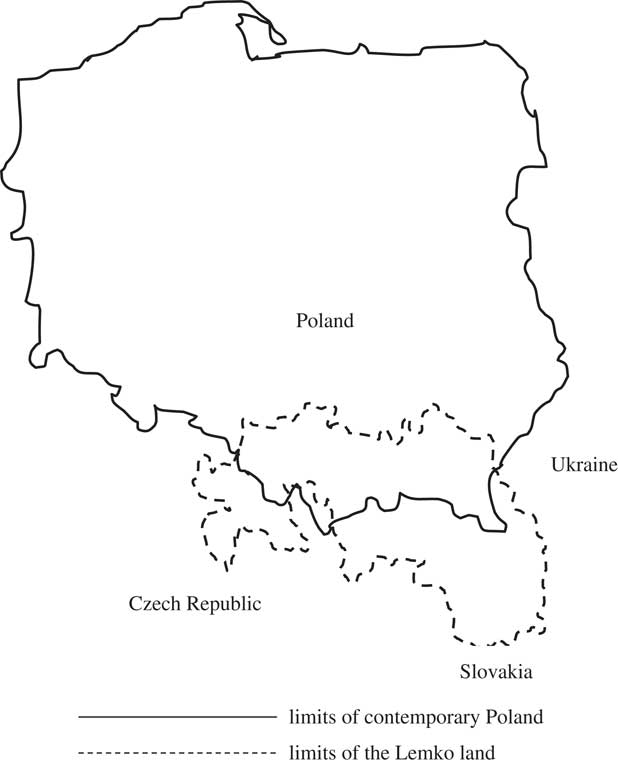
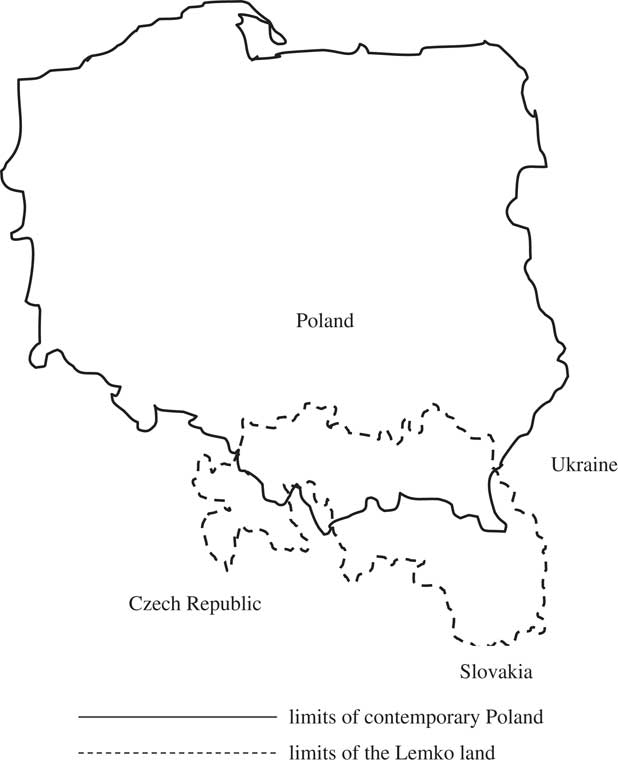
From an ethnographic point of view, the Lemkos constituted a group of East Slavic people living in the Carpathians in the areas of Low Beskids and Beskid Sądecki: from the Poprad River in the west to the sources of the Solinka River in the east (Fig. 1) (Barwiński, Reference Barwiński1999, Reference Barwiński2008, Reference Barwiński2009, Reference Barwiński2010; Nowak, Reference Nowak2003; Moklak, Reference Moklak2013). The origin of the Lemko population is disputed among researchers today. It is still not clear whether the Lemkos were an indigenous group in the Carpathians. Some researchers have suggested that they came with the wave of migrants to the northern Carpathians in the 14th and 16th centuries (Reinfuss, Reference Reinfuss1948, Reference Reinfuss1990; Różbicka, Reference Różbicka1962; Czajkowski, Reference Czajkowski1995; Duć-Fajfer, Reference Duć-Fajfer2004; Barwiński, Reference Barwiński2008, Reference Barwiński2009, Reference Barwiński2010).
Map of the Lemko region in contemporary Poland.
The Lemkos began to form a separate ethnic group in the second half of the 18th century and this did not change until the 1940s. They maintained their ethnic, cultural and economic autonomy (Misiak, Reference Misiak2006; Barwiński, Reference Barwiński2008, Reference Barwiński2009, Reference Barwiński2010). The population usually did not assimilate with neighbouring Poles or German colonists living in the neighborhood (Wokroj, Reference Wokroj1952). The traditional livelihood of the Lemkos involved cultivation of land and animal husbandry: sheep, cattle, goats. They also lived off craftsmanship (Misiak, Reference Misiak2006).
In 1947, a large-scale resettlement action, known as the ‘Vistula’ campaign, led by the Polish communist government and the government of the Ukrainian Soviet Socialist Republic (until 1991 a republic of the Soviet Union), led to irreversible ethnic, political and territorial changes in the Lemko region. During the communist era (1945–1989), the Polish authorities discriminated against the Lemkos and did not recognize their ethnic distinctness, identifying them with the Ukrainian nation (Barwiński, Reference Barwiński2008, Reference Barwiński2009, Reference Barwiński2010).
Characteristics of the study population
The study used material deposited in the archives of the Institute of Anthropology at Adam Mickiewicz University in Poznań. This was collected in the town of Krynica in August 1939 by Professor Franciszek Wokroj, who at that time, worked in the Department of Anthropology and Ethnology at Kazimierz University in Lviv, headed by Professor Jan Czekanowski. After the war he was employed in the Department of Anthropology, Adam Mickiewicz University in Poznań. During that period he conducted anthropological studies of Lemko populations inhabiting villages in the municipalities of Krynica Village, Krynica Zdrój, Muszyna and Przewoźnik. These were part of a broader medical field examination, which included, among other things, chemical–analytical studies of spa water and its physiological impact on patients’ health, and ethnological and botanical studies. The respondents were asked about their ethnicity and mother tongue (in the Lemko language). The present research focused only on those individuals who considered themselves as being Lemkos and who spoke the Lemko language (Wokroj, Reference Wokroj1952).
The research area was located in the western Carpathian Beskids at the altitude of 480–560 m above sea level, in a basin enclosed by wooded hills on all sides. Wokroj’s research was interrupted by the outbreak of World War II (Wokroj, Reference Wokroj1952). The collected material was recorded on measuring cards, and included the body heights of Lemkos born in the period 1860–1922 and aged between 17 and 79 years (mean=39.12 years; SD=11.82) at the time of the survey. A total of 350 individuals were examined by Wokroj, including 65 women and 285 men and all were included in this study. He measured body height to the nearest 0.1 cm with an anthropometer following the protocol of Martin (Reference Martin1928). The record cards also provided data on the date and place of birth of respondents and the number of children in the respondent’s family. All respondents were from the poor agricultural population, and thus had the same socioeconomic status.
Data analysis
The studied individuals were divided into two birth cohorts: those born between 1860 and 1900, and those born between 1901 and 1922. For both cohorts, the arithmetic mean and standard deviation of body height by age were calculated separately for women and men. Mean body height values and standard deviations were also calculated for separate birth cohorts, i.e.: 1) the ‘1880’ cohort included individuals born between 1860 and 1880; 2) the ‘1890’ cohort included those born between 1881 and 1890; 3) the ‘1900’ cohort included individuals born between 1891 and 1900; 4) the ‘1910’ cohort included those born between 1901 and 1910; and 5) ‘1920’ cohort included individuals born between 1911 and 1922.
Linear regression analysis was conducted to assess the changes in body height trend for men and women. Moreover, the arithmetic means and standard deviations were calculated for the number of children in families in 1860–1900 and 1901–1922, separately. Since in the collected data the total number of children in a family ranged from 1 to as high as 20 children, quartile values were used: 2 children constituted the lower quartile, 6 children the central quartile, and 9 children the upper quartile. Hence, the number of children in the family was divided into four categories: (1) 1–2 children, (2) 3–6 children, (3) 7–9 children and (4) ≥10 children.
For the body heights of females and males the arithmetic means and standard deviations by the number of children in their families were also calculated. These analyses were carried out for the whole period under study and separately for individuals born in the second half of the 19th century and at the beginning of the 20th century. Differences in mean body height were tested with ANOVA and Student’s t-test.
Pearson correlation coefficients were calculated between the following variables: year of birth, age, body height and number of children. Differences in the number of children in families in the 19th and early 20th centuries were verified by χ 2 test. Differences in the average number of children in the birth cohorts under study were verified with ANOVA. The influence of independent variables (year of birth, age, body height, number of children) on mean body height was examined using multiple regression analysis. One level of significance, i.e. p=0.05, was adopted. Calculations were performed using the Statistica package (Statistica, 2011).
Results
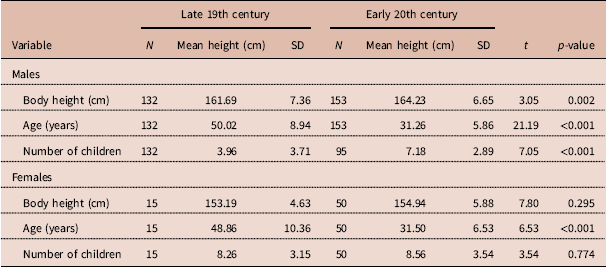
Tables 1 and 2 show the descriptive statistics and comparative analyses of mean body height by age of women and men and the number of children in a family. Men born in the second half of the 19th century were significantly shorter than those born at the beginning of the 20th century: 161.69 cm and 164.23 cm, respectively. The difference was 2.54 cm (p=0.002). Men differed significantly in terms of their average age: 50.02 years and 31.23 years for the 19th and 20th century cohorts, respectively (p<0.001). Statistically significant differences were also noted in the number of children in respondents’ families: 3.96 and 7.18 for the 19th and 20th century cohorts, respectively (p<0.001) (Table 1).
Descriptive statistics for body height, age and number of children in a family by sex and birth cohort, N=350

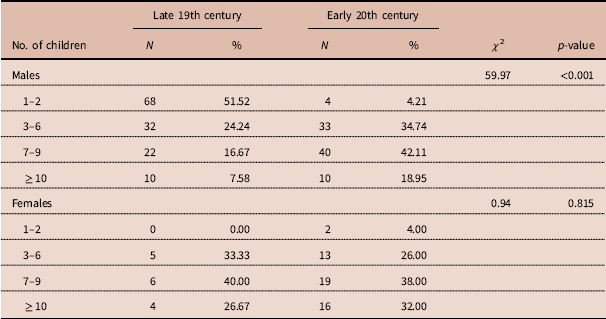
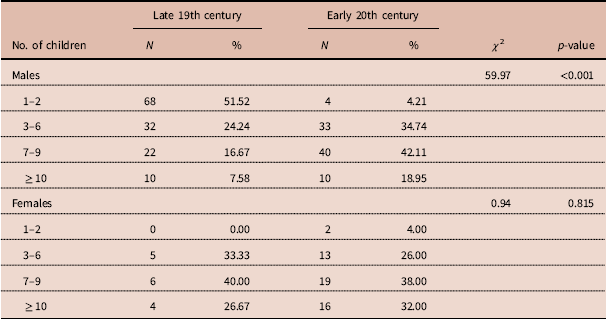
Descriptive statistics for number of children in a family by sex and birth cohort, N=350
Women born in the 19th century were 1.75 cm shorter on average than those born at the beginning of the 20th century (153.19 cm and 154.94 cm, respectively). However, using ANOVA, the difference in height values between the 19th century and beginning of the 20th century cohorts was insignificant. Unlike the surveyed men, women from the two cohorts did not differ in terms of the average number of siblings in the family. The only difference found was that between their age at the time of the study (48.86 years and 31.50 years for the 19th and 20th centuries, respectively, p<0.001) (Table 1).
For the men, a statistically significant relationship was observed in the incidence of low or/and large families (1–2 children, 3–6 children, 7–9 children and ≥10 children) between the birth cohorts 1860–1900 and 1900–1922. These differences were confirmed by using the χ 2 test (χ 2=59.97, p<0.001). Among men born in the 19th century, families with 1–2 children were more common than larger families, constituting 51.5% of the families under study. Meanwhile, at the beginning of the 20th century, only 4.2% of men came from such small families. Men born in the 20th century mainly came from large families: over 42% came from families with 7–9 children and almost 19% from those with ≥10 children. Meanwhile, in the 19th century there were fewer families with 7–9 and ≥10 children than in the 20th century – by 36% and 10%, respectively. In the 20th century, families with ≥10 children accounted for almost 19%, i.e. almost 3 times more than in the 19th century (Table 2).
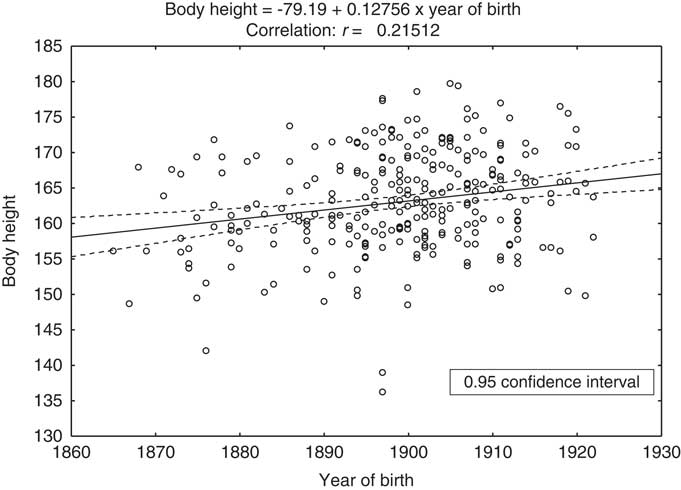
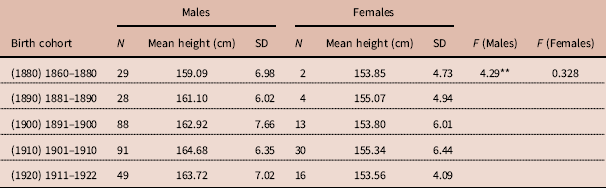
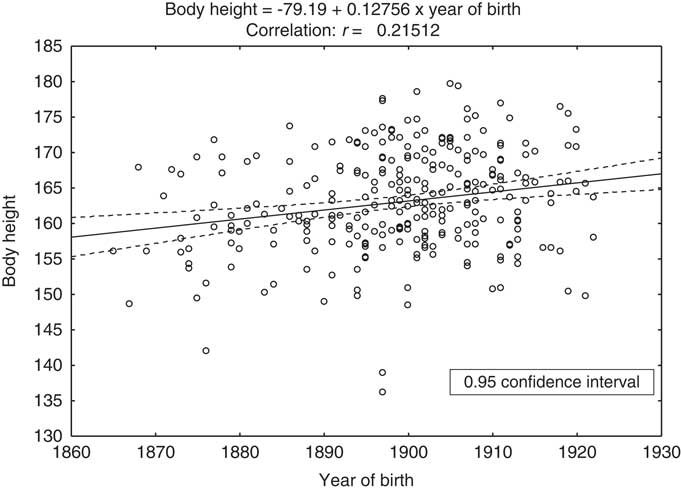
Table 3 shows changes in mean body height in 10-year birth cohorts. Men born in 1860–1880 (the first cohort) were 159.1 cm tall on average, while those born in 1911–1922 (the last cohort) were already 163.7 cm tall on average (a difference of 4.6 cm; p<0.01). There were no such differences between women from the same birth cohorts. The linear regression analysis confirmed the existence of a positive trend in body height change. In the studied period, body height increment amounted to 0.12 cm per year and approximately 1.2 cm per decade (Fig. 2).
Linear regression analysis of the body height trend among Lemko men, 1860–1922.
Means and standard deviations (SDs) of body heights of men and women in the five birth cohorts and results of ANOVA
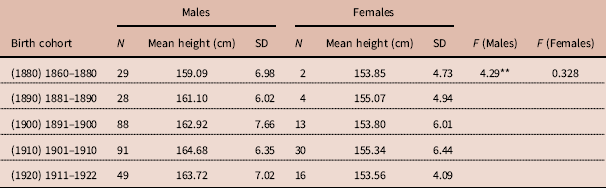
** p<0.01.
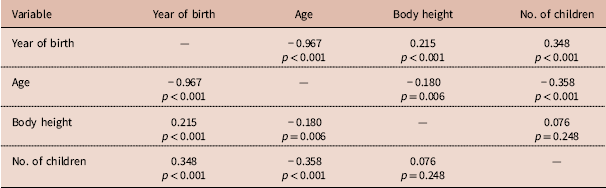
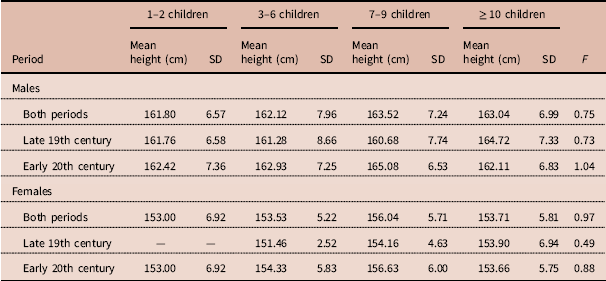
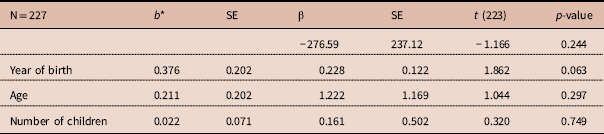
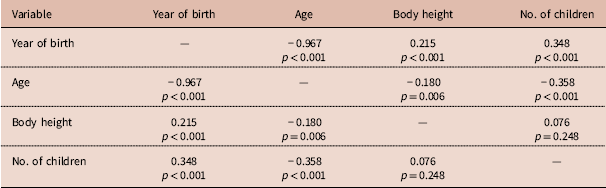
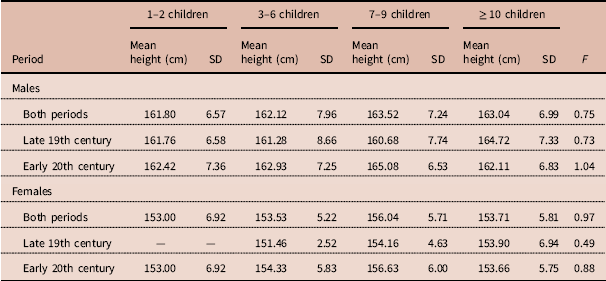
Next, the correlation matrix between body height, year of birth, age and number of children in the family was calculated (Table 4). Body height correlated positively with the year of men’s birth (r=0.21, p<0.001), but correlated negatively with their calendar age (r=−0.18, p=0.006). The year of men’s birth was positively correlated with their total number of siblings (r=0.348, p<0.001). The number of children in a family did not have a significant impact on the average body height of men and women, regardless of the period of their birth (Table 5). Multiple regression analysis confirmed only the effect of birth cohort on body height (regression coefficient, b*=0.3763; p=0.0638) (Table 6).
Correlation coefficients between the analysed variables for men, N=227
Mean (SD) body heights of men and women by number of children in a family and birth cohort, and results of ANOVA
Results of the multiple regression analysis of the relationship between the body height of men and their year of birth, age and number of children in family
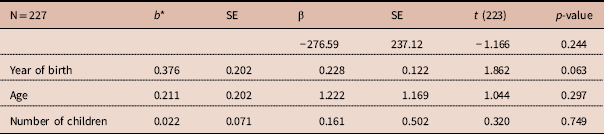
R=0.198, R 2=0.039, Adjusted R 2=0.026, F (3.223)=3.043, p<0.029.
SE, Standard Error of Estimate=7.12.
Discussion
This study observed a positive body height trend among the secular Lemko population in the neglected Polish lands annexed by Austria in the late 19th and early 20th centuries. This trend writes the studied population into the patterns characteristic for wealthier areas of Poland (e.g. Kopczyński, Reference Kopczyński2006; Nowak, Reference Nowak2011). This body height trend was particularly marked in the men, whose mean body height increased by 4.63 cm between 1860 and 1922. Among women, the difference was only 1.75 cm. Although this increase was statistically insignificant, and undoubtedly influenced by the small respondent sample size, it confirmed the existence of a positive trend.
The Lemko region was part of the Austrian sector of historical Poland, colloquially called Galicia. This land belonged to the poorest areas of historical Poland. That is why the term ‘Galician misery’ became very popular. Poverty was also common in the local population of Lemkos. They lived on a barren land that required arduous fertilization and cultivation. The poor mountain soil, combined with the raw mountain climate, were not conducive to agriculture and caused the poor economic condition of the people who lived mainly off small farms. At the beginning of the 20th century the average family had 2 hectares, divided usually into nineteen plots. Livestock farming was also at a fairly low level, and shepherding itself remained in a rudimentary form (Wokroj, Reference Wokroj1952; Nowak, Reference Myrskylä, Silventoinen, Jelenkovic, Tynelius and Rasmussen2003; Barwiński, Reference Barwiński2008, Reference Barwiński2009, Reference Barwiński2010; Moklak, Reference Moklak2013).
This poor environment translated into a low mean body height of the inhabitants of these lands. The Lemko were shorter than the city residents (164.36 cm) and even peasants (164.57 cm) from the Kingdom of Poland (Kopczyński, Reference Kopczyński2011; Czapla & Liczbińska Reference Czapla and Liczbińska2014). They were also significantly shorter than conscripts in the Prussian sector (167.3 cm, Nowak, Reference Nowak2011). It is worth emphasizing that the literature also provides some examples of the impact of the poor economy and poor living conditions on body height in later historical periods, such as the First World War (Ogórek, Reference Ogórek2015, Reference Ogórek2016) and the Second World War (Liczbińska et al., Reference Liczbińska, Czapla, Malina and Piontek2017, 2018).
This poor economic situation in Galicia began to improve gradually. In 1904–1913, the production of cereals increased twofold and that of potatoes by almost six times, in comparison with the first half of the 19th century (Ogórek, Reference Ogórek2015). The development of mechanization in agriculture (e.g. the introduction of the plough) and the introduction of fertilizers led to an increase in the production efficiency of cereals and potatoes. In the 1860s productivity was below 100 kg/ha, but in 1904–1913 it increased to over 110 kg/ha (Kopczyński, Reference Kopczyński2007; Ogórek, Reference Ogórek2015). The increase in food production could have translated into an increase in its consumption, eventually leading to an increase in height. It is well-known from elsewhere that body height is a very good indicator of access to food sources and provides information about diseases suffered in early ontogeny (Steckel, Reference Steckel2009). Studies have shown that poor nutrition and some diseases in early stages of ontogeny cause growth disorders (Silventoinen, Reference Silventoinen2003; Batty et al., Reference Batty, Shipleym, Gunnell, Huxley, Kivimaki and Woodward2009; Davey, Reference Davey2012). Nutrition and diseases act on body height in a synergistic way. Poor health is a result of some diseases, which in turn influences the inhibition of the process of growth (poor diet has a direct impact on bone growth and density) (Silventoinen, Reference Silventoinen2003; Perkins et al., Reference Perkins, Subramanian, Smith and Özaltin2016).
Thus, when the economic conditions in the region improved, the gross domestic product increased from under 1000US$ in 1870 to over 1500US$ in 1920 (Ogórek, Reference Ogórek2015). The values of demographic factors also improved. In 1860 the death rate in Galicia amounted to almost 31 deaths per 1000 population, but 50 years later only 24 deaths per 1000 people occurred (Zamorski, Reference Zamorski1989). The improvement in the economy in the region enhanced the living conditions of the Lemko population. In the first and second decades of the 20th century, villages retained their agricultural character, but in 1900–1910 there was an increase in the fraction of the population living off non-agricultural activity by up to 30% (Łukasiewicz, Reference Łukasiewicz1988). This was due to the development of the timber industry, masonry and trade (Kwilecki, Reference Kwilecki1970). A significant improvement was also recorded in the field of agricultural production. In 1909–1913, the harvest of cereals and legumes per capita was almost 13% higher than in the 1870s. In 1872–1876, the annual harvest of potatoes per capita reached 300 kg, while after 35 years it was almost twice as large (Łukasiewicz, Reference Łukasiewicz1988).
Economic improvement in the Lemko region led to a gradual increase in the body height of its residents. Similar changes in body height in the territories annexed by Austria have been observed by other authors (Komlos, Reference Komlos2007; Nowak & Piontek, 2008).
The Lemkos under study constituted an adult population examined just before the outbreak of World War II. Some of them were born in the second half of the 19th century, i.e. at the time of the survey they were on average 50 years old. The group under study consisted of those born at the beginning of the 20th century, who at the time of the survey conducted by Wokroj’s team were on average about 30 years old. Thus, the cohorts of individuals born in the 19th century encompassed a total period of about 40 years, whereas that consisting of individuals born in the 20th century encompassed a period that was 20 years shorter. This explains the overall negative correlation of body height with the age of individuals.
The second research issue addressed in this work was to check whether the number of children in the family was a SES factor that significantly influenced the mean body height of the Lemkos. The positive body height trend described above could have its source not only in the overall improvement in the economic situation of the region, but could also have resulted from better income distribution within the household. The latter has been emphasized by Steckel (Reference Steckel1995), who found that the distribution of goods in a household was strongly related to the number of children in the family. Thus, the family-size dependence of a household’s economy seems to be quite obvious: more children means a greater dilution of goods among the family members. ‘Resources dilution’ within a household translates into a negative relationship between family size and the height of children (Lawson & Mace, Reference Lawson and Mace2008; Hatton & Martin, Reference Hatton and Martin2010; Öberg, Reference Öberg2015; Stradford et al., Reference Stradford, van Poppel and Lumey2016; Liczbińska et al., 2018b). Becker (Reference Becker1993), in turn, opposed the hypothesis of ‘resources dilution’ along with an increase in family size. According to him, having a large number of children in agricultural families was an advantage. More children meant an increase in the labour force, which brought measurable profits in the form of goods produced on the farm. This point of view was also proposed by Carson (Reference Carson2012a, Reference Carsonb) in his studies of 19th century American agricultural families. In rural areas of the US a large number of children meant an increase in the labour force and thus a rise in agricultural production (Carson, Reference Carson2012a, Reference Carsonb). The role of numerous offspring in raising the household budget has also been emphasized in relation to Polish society in the period of industrialization (Żarnowska, Reference Żarnowska1995, Reference Żarnowska2013). The doubling in the number of children in agricultural families of the Lemkos born in the first two decades of the 19th century may also have resulted from their need to increase the labour force. The growth in the number of children in a Lemko family did not necessarily have to be a factor influencing the dilution of goods in the family. On the contrary, every next-born child in a Lemko family could have contributed to an increase in household productivity and productivity on the farm, which far exceeded the costs (consumption) associated with having a large number of children in a family.
In this work, differences in the number of children in a Lemko family between the 19th and early 20th centuries were not found to affect the positive body height trend in the period under study. This may confirm the significant economic development in villages of the Lemko region and throughout Galicia at the beginning of the 20th century, which facilitated biological development and thus resulted in an increase in body height among those born in this period as compared to the previous century. These changes were so significant that a large number of children in a family did not disturb the positive body height trend.
The results of this research have certain limitations in terms of their interpretation. The first problem is the scarcity of archival data regarding women, which did not allow an assessment of whether the positive body height trend observed in men was also visible in women, and if so, to what extent. The second issue is the lack of information on the birth order of siblings. It is well-known from the literature (Hermanussen et al., Reference Hermanussen, Hermanussen and Burmeister1988, Ghosh & Bandyopadhyay, Reference Ghosh and Bandyopadhyay2006; Myrskylä et al., Reference Myrskylä, Silventoinen, Jelenkovic, Tynelius and Rasmussen2013) that both birth order and average birth order are good indicators of body height. Information about birth order would give a deeper insight into the influence of the number of children on body height. Moreover, lack of information on factors such as maternal and paternal age at the time of birth, diseases suffered in childhood, mother’s nourishment during pregnancy and child’s diet in the early stage of life, impose certain limitations on the interpretation of the results.
In conclusion, significant economic development was observed in the region under study, which was inhabited by the Lemkos in the late 19th and early 20th centuries. Economic factors turned out to be so strong that they led to an increase in the standard of living of the entire population of Galicia, including the Lemko region. This in turn resulted in a mean body height increase among the studied individuals. The number of children in a Lemko family did not affect differences in body height and body height trend over time. It is assumed that each new child in a Lemko family added to an increase in the household’s economy, counteracting the amount of resources he/she consumed.
Acknowledgments
The authors wish to thank the anonymous reviewer for helpful and valuable comments and advice that improved the quality of this paper.
Ethical Approval
The authors assert that all procedures contributing to this work comply with the ethical standards of the relevant national and institutional committees on human experimentation and with the Helsinki Declaration of 1975, as revised in 2008.
Conflicts of Interest
The authors have no conflicts of interest to declare.
Funding
This research received no specific grant from any funding agency, commercial entity or not-for-profit organization.