Introduction
With the availability of technologies such as magnetic resonance imaging (MRI) and data acquisition hardware that can record electrical signals from the heart and respiratory systems, a relatively new research agenda in political science has emerged. Borrowing insights from biology and psychology, political scientists have begun to examine the psychophysiological foundations of political attitudes and behaviors. In other words, researchers can now investigate whether and how certain stable, inheritable traits manifest themselves when individuals encounter the political.
Despite (or perhaps because of) the new availability of the technology used to conduct such research, the theories that should support psychophysiological work have lagged the collection of empirical data. It is not surprising, then, that the research agenda finds itself somewhat fractured. In their seminal study, Oxley et al. (Reference Oxley, Smith, Alford, Hibbing, Miller, Scalora, Hatemi and Hibbing2008) present evidence that individuals who are most sensitive to threat are the most likely to favor socially conservative policies. However, in a series of replication studies, Bakker and colleagues (Reference Bakker, Schumacher, Gothreau and Arceneaux2020) failed to find any evidence that conservatives have stronger responses to threat than liberals. Despite their divergent results, the two studies share expectations of how threat sensitivity ought to operate: through support for policies that protect in-groups from the dangers posed by out-groups. In this article, I argue that this narrow conception of threat can partially explain these failed replications.
Much of the scholarship on threat and threat sensitivity uses racial, ethnic, or national out-groups as the source of the threat (e.g., Abramson et al., Reference Abramson, Aldrich, Rickershauser and Rohde2007; Dodd et al., Reference Dodd, Balzer, Jacobs, Gruszczynski, Smith and Hibbing2012; Hatemi et al., Reference Hatemi, McDermott, Eaves, Kendler and Neale2013; Mustafaj et al., Reference Mustafaj, Madrigal, Roden and Ploger2021; Olsson et al., Reference Olsson, Ebert, Banaji and Phelps2005; Santos et al., Reference Santos, Meyer-Lindenberg and Deruelle2010; Skitka et al., Reference Skitka, Bauman and Mullen2004). However, threat sensitivity is a wide-ranging concept in that individuals may view different groups, phenomena, or institutions as threatening (Stephan & Stephan, Reference Stephan, Stephan and Oskamp2000). While some individuals may indeed fear terrorists or immigrants, others might fear catastrophic climate change or the COVID-19 pandemic. Depending on the source of the threat, threat sensitivity may correlate with either liberal or conservative policy preferences. For example, if one were sensitive to the threat of climate change, we would not expect threat sensitivity to manifest as social conservatism; instead, we would expect the individual to support policies that protect the environment, a position most associated with the left.
In the following sections, I consider a potential source of threat that serves as a useful contrast with out-group threat: the threat of authority. In general, a strong, capable authority is necessary to provide security against many of the perceived dangers featured in the threat sensitivity literature (e.g., immigrants, terrorists, criminals). However, some may view the tools or policies wielded by governments to combat these dangers (e.g., mass deportations, government surveillance, capital punishment) as threats to individual liberty. Depending on whether an individual views out-groups or authority as more threatening, we may expect threat sensitivity to influence political attitudes differently.
I use a combination of survey and physiological data to replicate and extend two of the most influential studies of threat sensitivity’s effect on political attitudes (Hatemi et al., Reference Hatemi, McDermott, Eaves, Kendler and Neale2013; Oxley et al., Reference Oxley, Smith, Alford, Hibbing, Miller, Scalora, Hatemi and Hibbing2008). In the replication analyses, I draw conclusions similar to those of the previous scholarship: general threat sensitivity predicts social conservatism. This article’s main contribution, however, is its examination of whether the perceived source of threat moderates threat sensitivity’s influence on political preferences. I find that those who are more sensitive to threat from others tend to support socially conservative policies, while those who fear authority generally take more libertarian positions. These findings not only highlight the psychophysiological foundations of political predispositions, but also demonstrate the need for scholars working within this research agenda to engage in more robust theorizing about the sources of potential threat.
Psychophysiological traits and political attitudes
Evolutionary biologists claim that certain traits are the result of previous generations adapting to their environments (Darwin, Reference Darwin1872). These genetic adaptations are passed on to their offspring, making survival more likely and causing a species to evolve over time. Though serious study of the heritability of social attitudes has its roots in genetic psychology (Eaves & Eysenck, Reference Eaves and Eysenck1974; Eaves et al., Reference Eaves, Eysenck and Martin1989; Martin et al., Reference Martin, Eaves, Heath, Jardine, Feingold and Eysenck1986), Alford and Hibbing (Reference Alford and Hibbing2004) are often credited with first applying theories of evolutionary biology to questions of politics. Since then, political scientists have conducted an impressive amount of research in the fields of behavior genetics and political neuroscience in a relatively short amount of time. In addition to investigating the genetic basis for political attitudes and ideology (Dodd et al., Reference Dodd, Balzer, Jacobs, Gruszczynski, Smith and Hibbing2012; Hatemi et al., Reference Hatemi, Gillespie, Eaves, Maher, Webb, Heath, Medland, Smyth, Beeby, Gordon, Montgomery, Zhu, Byrne and Martin2011; Hatemi & McDermott, Reference Hatemi and McDermott2012; Hatemi et al., Reference Hatemi, Medland, Klemmensen, Oskarsson, Littvay, Dawes, Verhulst, McDermott, Nørgaard, Klofstad, Christense, Johannesson, Magnusson, Eaves and Martin2014; Hibbing et al., Reference Hibbing, Smith and Alford2014; Mondak, Reference Mondak2010; Mustafaj et al., Reference Mustafaj, Madrigal, Roden and Ploger2021; Oxley et al., Reference Oxley, Smith, Alford, Hibbing, Miller, Scalora, Hatemi and Hibbing2008; Verhulst et al., Reference Verhulst, Eaves and Hatemi2012), scholars have identified certain inheritable traits that correlate with political interest (Arceneaux et al., Reference Arceneaux, Johnson and Maes2012; Weinschenk & Dawes, Reference Weinschenk and Dawes2017) and participation (Blais & St. Vincent, Reference Blais and St. Vincent2011; Dawes et al., Reference Dawes, Cesarini, Fowler, Johannesson, Magnusson and Oskarsson2014; Denny & Doyle, Reference Denny and Doyle2008; Fowler et al., Reference Fowler, Baker and Dawes2008; Gallego & Oberski, Reference Gallego and Oberski2012; Gerber et al., Reference Gerber, Huber, Doherty, Dowling, Raso and Ha2011; Hatemi et al., Reference Hatemi, Medland, Morley, Heath and Martin2007; Loewen & Dawes, Reference Loewen and Dawes2012; Mondak, Reference Mondak2010; Vecchione & Caprara, Reference Vecchione and Caprara2009; Weinschenk & Dawes, Reference Weinschenk and Dawes2018).
One mechanism that evolutionary biologists have identified for the transmission of social attitudes is threat sensitivity. Threat sensitivity is a stable trait that is the result of our ancestors adopting behaviors meant to avoid harm and protect the viability of the in-group (Green & Phillips, Reference Green and Phillips2004; Woody & Szechtman, Reference Woody and Szechtman2011). Physiologically, the amygdala is primarily responsible for interpreting threat (Green & Phillips, Reference Green and Phillips2004). Those who exhibit greater activity in the amygdala experience more acute responses to threat, such as increased heart rate, respiration, and perspiration, and so on. Those with slower or lesser neurological response, on the other hand, experience less of an emotional response to potential threats (Green & Phillips, Reference Green and Phillips2004; Schreiber et al., Reference Schreiber, Fonzo, Simmons, Dawes, Flagan, Fowler and Paulus2013). Because physiological threat sensitivity is an automatic response of the body’s limbic system, it serves as a useful tool when measuring subconscious reactions to (political) stimuli.
Threat sensitivity may manifest as a hostility toward out-groups due to the dangers they pose. Indeed, it is on this insight that scholars have based much of the research on the psychophysiological foundations of political attitudes. Though there are certainly gains to be had by cooperating with an out-group, Alford and Hibbing (Reference Alford and Hibbing2004) identify a “wary cooperation” that keeps the out-group at arm’s length (p. 709). Failure to do so may result in the in-group’s destruction (Barkow et al., Reference Barkow, Cosmides and Tooby1992; Cesario et al., Reference Cesario, Plaks, Hagiwara, Navarrete and Higgins2010; Petersen, Reference Petersen2012; Stephan & Stephan, Reference Stephan, Stephan and Oskamp2000). According to the theories of evolutionary biology, only the wary survive long enough to reproduce, thus passing their inherent distrust of out-groups on to subsequent generations.
Political scientists have used threat sensitivity to investigate how attitudes and behaviors toward out-groups differ from one person to the next. Importantly, the perception of danger can serve as much of a motivating factor as its actual presence (Tybur & Lieberman, Reference Tybur and Lieberman2016). Without perfect information about who would harm the in-group, evolutionary biologists argue, the most prudent approach would be to treat all out-groups as a source of potential danger. This threat sensitivity predisposes individuals to adopt behaviors that avoid, remove, or punish members of the out-group out of fear of the potential harm they pose. Individuals who are most sensitive to threat avoid situations or groups perceived as dangerous, thus making them more likely to survive long enough to reproduce and pass their threat sensitivity on to their offspring. Those who fail to recognize potential danger, on the other hand, would likely die young, thus removing their recklessness from the gene pool.
Oxley et al. (Reference Oxley, Smith, Alford, Hibbing, Miller, Scalora, Hatemi and Hibbing2008) find that individuals with high physiological reactions to sudden noises and threatening visuals show greater support for policies meant to protect from out-groups (specifically, defense spending, capital punishment, patriotism, and the Iraq War). Their study represented the early stages of a research agenda investigating how a persistent sensitivity to threat influences political attitudes. Subsequent research has found correlations between threat sensitivity and anti-gay (Hetherington & Weiler, Reference Hetherington and Weiler2009) and anti-immigrant attitudes (Hatemi et al., Reference Hatemi, McDermott, Eaves, Kendler and Neale2013; Mustafaj et al., Reference Mustafaj, Madrigal, Roden and Ploger2021), support for segregation (Hatemi et al., Reference Hatemi, McDermott, Eaves, Kendler and Neale2013), the curtailment of civil liberties to fight those who would do us harm (Hetherington & Weiler, Reference Hetherington and Weiler2009), the use of military force (Hetherington & Weiler, Reference Hetherington and Weiler2009), economic conservatism (Pedersen et al., Reference Pedersen, Muftuler and Larson2017), Republican Party identification (Dodd et al., Reference Dodd, Balzer, Jacobs, Gruszczynski, Smith and Hibbing2012; Schreiber et al., Reference Schreiber, Fonzo, Simmons, Dawes, Flagan, Fowler and Paulus2013), and elite spending preferences (Arceneaux et al., Reference Arceneaux, Dunaway and Soroka2018). Despite this accumulation of evidence, the debate about the role of threat sensitivity is far from settled. A direct replication of Oxley et al.’s (Reference Oxley, Smith, Alford, Hibbing, Miller, Scalora, Hatemi and Hibbing2008) original study found no relationship between threat sensitivity and socially conservative attitudes (Bakker et al., Reference Bakker, Schumacher, Gothreau and Arceneaux2020), confounding scholars’ understanding of the relationship between the two.
As all the foregoing attitudes are typically associated with policies that are detrimental to non-White and/or non-American groups, these studies explain socially conservative attitudes through the evolutionary biological perspective of protecting the in-group from the out-group. Indeed, most threat sensitivity scholars assume threat sensitivity to have a positive relationship with conservatism and test against that assumption (but see Perrin, Reference Perrin2005; Stenner, Reference Stenner2005). Though Hetherington and Weiler (Reference Hetherington and Weiler2009) challenge the conventional wisdom that threat ought to exacerbate differences between authoritarians (those who view the world in concrete, black-and-white terms) and nonauthoritarians by demonstrating that their policy preferences actually converge during threatening times, it is important to note that they, too, operationalize perceived threat as threat by out-groups (p. 119). In doing so, such studies have inadvertently limited the conception of threat sensitivity to out-group threat. However, it is possible that certain individuals are not threatened by out-groups, even if they are threat sensitive.
The evolutionary mechanisms outlined here represent a sensitivity to realistic threat—threat to the very existence of the in-group (Stephan & Stephan, Reference Stephan, Stephan and Oskamp2000). However, it is important to recognize that other types of threat exist. One is symbolic threat, or that which endangers one’s worldview or way of life (Hetherington & Weiler, Reference Hetherington and Weiler2009; Jardina, Reference Jardina2019; Stephan & Stephan, Reference Stephan, Stephan and Oskamp2000). Evolutionary biology is less able to explain sensitivity to symbolic threat, as such threats are not matters of life and death. Instead, research has shown that a combination of pre-adult socialization and elite primes can contribute to symbolic threat sensitivity (Druckman, & Leeper Reference Druckman and Leeper2012; Gadarian & Albertson, Reference Gadarian and Albertson2014; Kinder & Sanders, Reference Kinder and Sanders1996; Kinder & Sears, Reference Kinder and Sears1981; Mendelberg, Reference Mendelberg2001). In these socialization processes, it is not uncommon for government authority to be cast as a source of threat, and citizens are warned against dangers such as big-government socialist agendas or threats to religious liberty. Individuals’ perceived source of threat, then, can be attributed to either evolutionary or environmental factors, or a combination of the two.
Though fear of authority is well documented in psychological research, it has received less attention than fear of out-groups in political science. Typically considered part of a broader social anxiety in psychology (American Psychiatric Association, 2013, 202–208), political philosophers have long linked fear of authority with distrust in government (e.g., Locke, Reference Locke1690; Madison, Reference Madison1788; Montesquieu, Reference Montesquieu1748; Rousseau, Reference Rousseau1762). Because authoritative governments have the ability to threaten individual liberties, distrust in government is often associated with libertarian attitudes. Indeed, such distrust has been associated with decreased support for immigration enforcement (Chen, Reference Chen2016; Rocha et al., Reference Rocha, Knoll and Wrinkle2015), mass surveillance (Dinev et al., Reference Dinev, Hart and Mullen2008), and the death penalty (Soss et al., Reference Soss, Langbein and Metelko2003).
Because of the relationship between government distrust and liberal policy preferences, the perceived threat of authority makes for a useful comparison with the perceived threat of out-groups (which tends to produce conservative policy preferences). In the following sections, I consider whether the perceived source of threat—out-groups or authority—moderates threat sensitivity’s influence on political attitudes. Specifically, I test whether the source of perceived threat influences how threat sensitivity affects support for increased deportations, mass surveillance, and the death penalty. These issues each feature a different out-group: immigrants, terrorists, and criminals, respectively. Also, each features a possible government threat to individual liberty.
As discussed earlier, previous scholarship has demonstrated that distrust of out-groups and distrust of government produce divergent preferences on these issues, depending on which is viewed as the greater threat (Hatemi et al., Reference Hatemi, McDermott, Eaves, Kendler and Neale2013; Hetherington & Weiler, Reference Hetherington and Weiler2009). Therefore, for each issue domain, I expect threat sensitivity to be associated with conservative attitudes when out-groups are perceived as threatening. Because conservative policies remove, monitor, or punish members of the out-group, I expect those who are most sensitive to the threat posed by out-groups to hold socially conservative policy preferences (i.e., support deportations, mass surveillance, and the death penalty). This produces the article’s first three hypotheses:
H1: Increased threat sensitivity will be associated with support for deportations when out-groups are perceived as a threat.
H2: Increased threat sensitivity will be associated with support for mass government surveillance when out-groups are perceived as a threat.
H3: Increased threat sensitivity will be associated with support for the death penalty when out-groups are perceived as a threat.
However, we should not expect threat sensitivity to produce negative attitudes toward out-groups if out-groups are not perceived as a threat. If an individual fears authority, then it stands to reason that they may support policies that protect the rights of the individual from the threat of government tyranny. If so, then threat-sensitive individuals ought to oppose deportations, mass surveillance, and the death penalty, because such policies represent the capability of a government to infringe on individual liberty. This reasoning produces the next three hypotheses:
H4: Increased threat sensitivity will be associated with opposition for deportations when authority is perceived as a threat.
H5: Increased threat sensitivity will be associated with opposition for mass government surveillance when authority is perceived as a threat.
H6: Increased threat sensitivity will be associated with opposition for the death penalty when authority is perceived as a threat.
I test these hypotheses using a combination of survey and physiological data. The survey analyses consider the effects of fear of out-groups and fear of authority in the same models, allowing us to determine the independent effect of each on policy attitudes. For the physiological analyses, participants identify which they consider the greater threat—out-groups or authority. I then interact the perceived source of threat with a physiological measure of threat sensitivity to determine how threat sensitivity influences attitudes for each potential source of threat.
Survey study
Research design
For the survey study, I recruited American adults in the summer of 2017 using Amazon’s Mechanical Turk (MTurk) platform. MTurk provides “crowdworkers” who are willing to perform “human intelligence tasks” in exchange for a payment specified by the requester. Despite concerns regarding the validity of MTurk samples, replication studies show that such samples perform as well as traditional samples (Berinsky et al., Reference Berinsky, Huber and Lenz2012; Buhrmester et al., Reference Buhrmester, Kwang and Gosling2011; Paolacci et al., Reference Paolacci, Chandler and Ipeirotis2010), and they are more representative of the population than convenience samples of undergraduates (Berinsky et al., Reference Berinsky, Huber and Lenz2012). Any worker who failed to complete the survey or pass an attention check was excluded from analysis, leaving 1,699 individuals in the sample. According to U.S. Census Bureau data, the MTurk sample was whiter, more educated, and more female than the general population; more detailed descriptive statistics are included in the Appendix.
After providing informed consent, survey respondents answered basic demographic questions, including age, race, gender, income, education, and party identification. Participants then indicated their opposition to or support for various political policies; responses to these questions form the basis of the dependent variables for the following analyses. I focus on support for three threat-relevant social policies: prioritizing deportations of illegal immigrants, mass government surveillance, and the death penalty. Respondents indicated their support for each using a 6-point Likert scale, with higher values indicating greater support. The social policy attitudes were summed to create a social conservatism score, which serves as the dependent variable for the following analyses.
To measure individuals’ threat sensitivity, I adopt the approach of Hatemi et al. (Reference Hatemi, McDermott, Eaves, Kendler and Neale2013), who find that individuals with a higher degree of social fear have more negative out-group opinions (p. 286). In that study, the authors adopt the term “phobic-fear anxiety,” which, using Derogatis’s (Reference Derogatis1993) definition, is a persistent fear response to a specific person, place, object, or situation that is irrational or disproportionate to the stimulus and leads to avoidance or escape behavior. Like Hatemi et al. (Reference Hatemi, McDermott, Eaves, Kendler and Neale2013), I measure the amount of anxiety felt in the past 30 days using an abbreviated version of the Revised Symptom Checklist 90 (SCL-90-R) (Derogatis Reference Derogatis1994). This approach allows for a conceptual and methodological replication of Hatemi et al.’s (Reference Hatemi, McDermott, Eaves, Kendler and Neale2013) study that is necessary for understanding the contemporary American context, as previous studies on the topic either analyze data collected in the 1970s (Hatemi et al., Reference Hatemi, McDermott, Eaves, Kendler and Neale2013) or use non-American samples (Hatemi & McDermott, Reference Hatemi and McDermott2020).
Where the present study departs from Hatemi et al. (Reference Hatemi, McDermott, Eaves, Kendler and Neale2013) is in its consideration of different sources of potential threat. To measure perceived threat from different sources, I utilize Marks and Mathews’s (Reference Marks and Mathews1979) Fear Questionnaire (see Van Zuuren, Reference Van Zuuren1988, for a validation). The Fear Questionnaire measures avoidant behaviors, such as avoiding crowded shops or walking alone in busy streets, that stem from different types of fear. Other than accounting for multiple fears, the key difference between the SCL-90-R and the Fear Questionnaire is the timeline: the SCL-90-R measures discomfort felt in the last 30 days, while the Fear Questionnaire is a measure of more persistent fears.
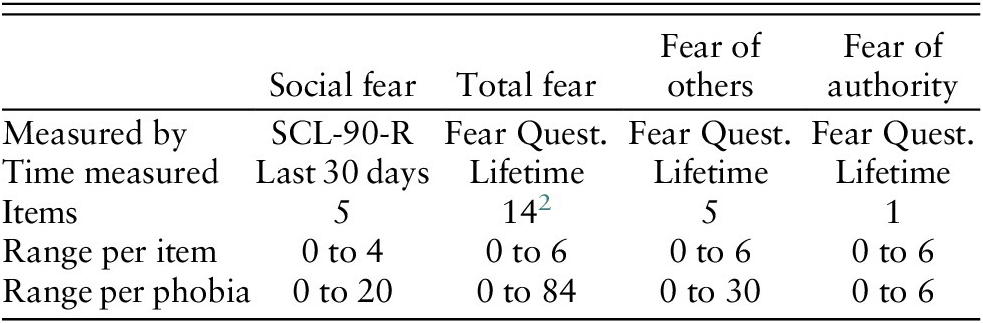
More importantly, however, the Fear Questionnaire includes an item measuring fear of interacting with authority, which serves as a proxy for a general fear of authority in testing the above hypotheses. Rather than a specific fear of government authority, the Fear Questionnaire’s item may also capture fear of many other types of authority (e.g., employers, police, etc.). However, if this general fear of authority question correlates with policy preferences, then we can be relatively confident that government authority is represented by the measure. While both full questionnaires are included in the Appendix, Table 1 summarizes them. Additional information regarding these measures, including intercorrelations and mean scores based on demographic characteristics, can also be found in the Appendix. Generally speaking, however, the measures are positively correlated with one another. Young people, women, African Americans, and those without a college education tend to be the most fearful. Additionally, those who identify strongly with the Republican Party are significantly more fearful of others than their Democratic counterparts, but strong Democrats are significantly more fearful of authority than strong Republican identifiers.Footnote 1
Phobic-fear anxiety measures.

Utilizing four phobic-fear anxiety measures has its benefits. In addition to measuring the threat sensitivity concept in several ways, using multiple measures allows for control of the source of that threat. Indeed, many studies measure threat sensitivity with survey tools that use aggregate measures of phobic-fear anxiety as their independent variables (e.g., Hatemi et al., Reference Hatemi, McDermott, Eaves, Kendler and Neale2013). However, doing so fails to account for the possibility that the source of that threat may influence attitudes in divergent ways. The present research design allows direct tests of the foregoing hypotheses to determine whether the source of threat influences threat sensitivity’s ability to predict conservative attitudes toward immigration, government surveillance, and the death penalty.
Results
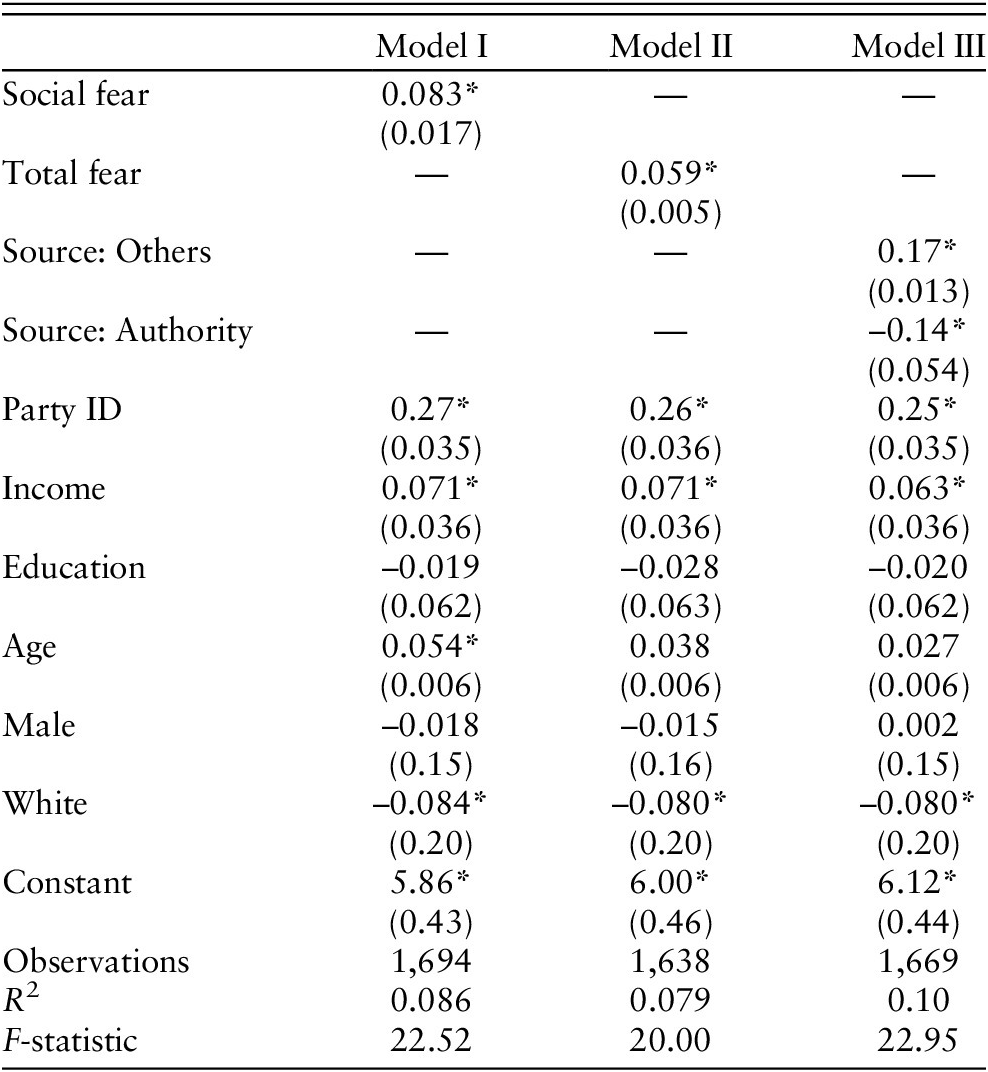
Table 2 shows the results from a series of ordinary least squares (OLS) regressions, using the aggregate social conservatism scores as the dependent variables. I analyze the effects of threat sensitivity using three models of phobic-fear anxiety: the SCL-90-R’s social fear measure (following Hatemi et al., Reference Hatemi, McDermott, Eaves, Kendler and Neale2013), the Fear Questionnaire’s total fear measure, and disaggregated Fear Questionnaire measures of fear others and fear of authority. Because each battery differs in the number of items in the respective indexes, I standardize the coefficients in Table 2 to allow for more direct comparisons between them (Long & Freese, Reference Long and Freese2014; see the Appendix for unstandardized models). I also include control variables for party identification, income, education, age, gender, and race.
Predictors of social conservatism (standardized coefficients).

Notes: Standard errors in parentheses. Coefficients marked with an asterisk (*) are significant at p <.05 (two-tailed). Party identification is measured using a 7-point Likert scale, with higher values indicating stronger identification with the Republican Party.
The purpose of Models I and II (those operationalizing threat sensitivity as social fear and total fear, respectively) is to replicate the conclusions drawn from much of the threat sensitivity literature: increased sensitivity is associated with more conservative attitudes on social issues (Dodd et al., Reference Dodd, Balzer, Jacobs, Gruszczynski, Smith and Hibbing2012; Hatemi et al., Reference Hatemi, McDermott, Eaves, Kendler and Neale2013; Hetherington & Weiler, Reference Hetherington and Weiler2009; Oxley et al., Reference Oxley, Smith, Alford, Hibbing, Miller, Scalora, Hatemi and Hibbing2008; Schreiber et al., Reference Schreiber, Fonzo, Simmons, Dawes, Flagan, Fowler and Paulus2013). This relationship holds even after accounting for control variables such as Republican identification, age, and race. However, these results are based on the implicit assumption that out-groups are the source of that threat. Like much of the previous research on the subject, Models I and II do not consider whether authority can be a perceived source of threat and whether that perception influences attitudes on social issues differently.
Model III, on the other hand, departs from much of the threat sensitivity scholarship by considering the source of threat. Model III includes the Fear Questionnaire’s fear of others and fear of authority measures to estimate the effect of each. Results show the effect of fear of others to be similar to the effects of social fear and total fear found in Models I and II: perceiving others as a threat is associated with more conservative attitudes on social issues. However, despite the positive correlation between fear of others and fear of authority (see the Appendix for multicollinearity analyses), perceiving government as a threat produces the opposite effect: fear of authority is associated with libertarian attitudes on the same social issues. This is an important finding, as much of the scholarship on the role of fear assumes that fear is the result of out-group threat. But, as Model III demonstrates, fear of authority produces liberal attitudes just as fear of others produces conservative policy preferences. Indeed, the standardized effect size of fear of authority is comparable to that of fear of others.
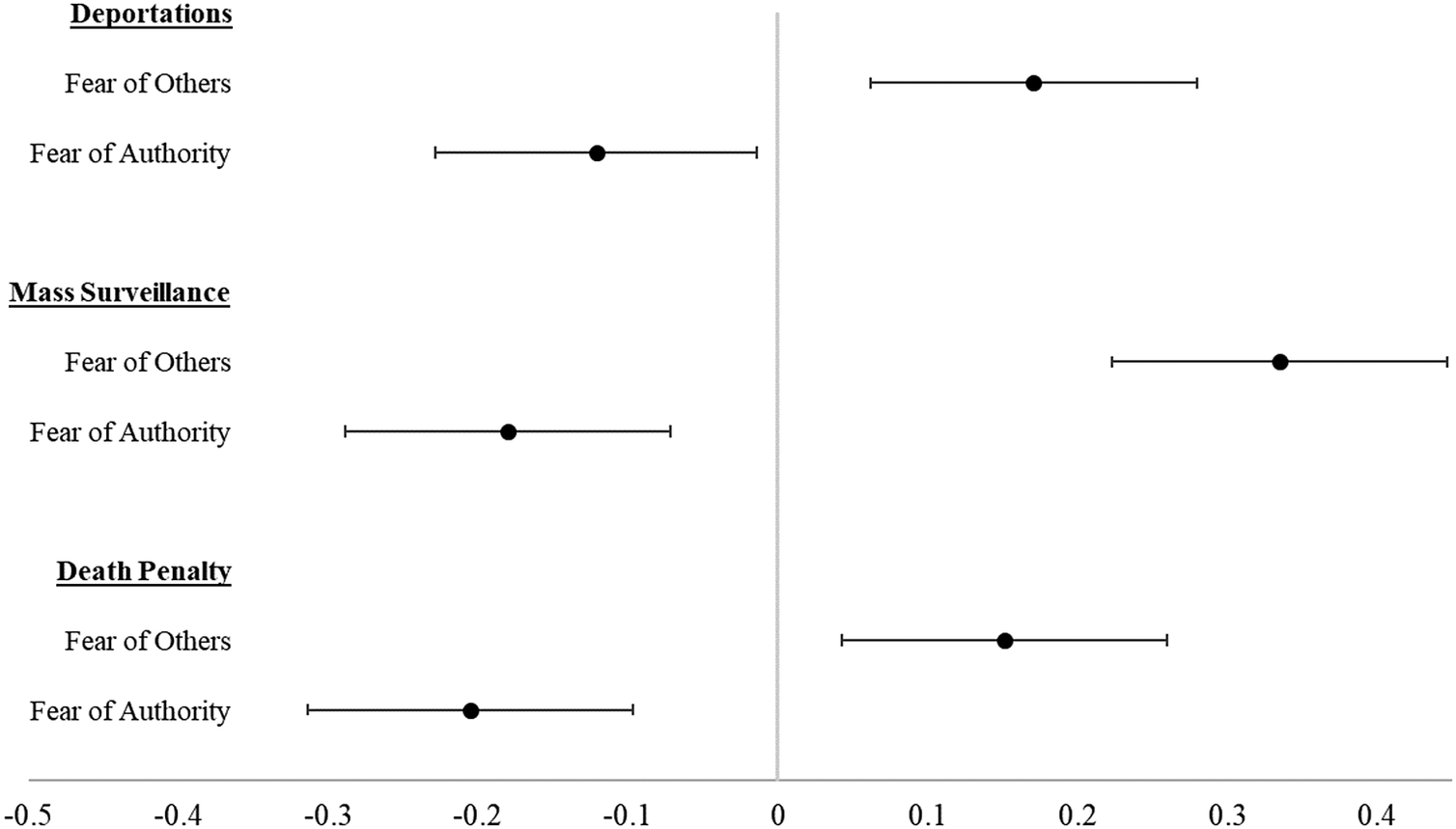
While Model III displays the results for the aggregate measure of social conservatism, the hypotheses articulated earlier are concerned with each issue attitude individually. Figure 1 plots the standardized effect (with 95% confidence intervals) of the Fear Questionnaire’s perceived threat from two different sources—others and authority—on support for deportations, mass surveillance, and the death penalty. Here, we see that the results presented in Model III are not driven by a single issue attitude. Instead, out-group threat produces support for each policy. Specifically, fear of others is associated with support for deportations, support for mass surveillance, and support for the death penalty, thus providing evidence for H1, H2, and H3. Additionally, Figure 1 shows that the fear of authority influences specific policy preferences, but in the opposite direction. Because deportations, mass surveillance, and capital punishment all represent the ability for a government to curtail individual liberties, those who fear authority tend to oppose such policies. That the perception of government as a threat predicts liberal attitudes, rather than conservative, is evidence in support of H4, H5, and H6.
Threat’s effect on support for policy, by source of threat (standardized coefficients).

Lab study
Research design
To supplement the survey measures of threat sensitivity, I also conducted a lab study measuring physiological responses to threatening images, similar to Oxley et al.’s (Reference Oxley, Smith, Alford, Hibbing, Miller, Scalora, Hatemi and Hibbing2008) study. For this lab study, 89 participants from a large research institution in the Northeast were recruited during the fall of 2017. Compared with U.S. Census Bureau data, the lab sample featured subjects who were much younger and still in college compared with the general population. Additionally, African Americans, Asians, women, and Democrats were overrepresented in the sample. Detailed descriptive statistics are reported in the Appendix.
The protocol for the lab study included two parts: a survey and a physiological response measurement exercise. In addition to asking participants the same demographic and issue position information as the survey study, the lab survey included three prompts meant to determine whether participants viewed out-groups or government as the greater potential threat (Table 3). Individuals whose net responses favored government powers to protect citizens against out-groups were coded as perceiving out-groups as threatening, while those who preferred to protect civil liberties were coded as perceiving authority as a potential threat. Descriptive statistics for the sample are included in the Appendix.
Prompts used to determine source of potential threat.

Following the survey, participants were connected to a machine that has the ability to measure minute changes in electrodermal activity (EDA) thousands of times per second. EDA, which is a measure of the sweat present on the skin, is an automatic physiological response to threat.Footnote 3 Because it is an automatic response, EDA is not subject to many of the pitfalls of survey research, such as desirability bias or demand characteristics. Instead, measuring the change in EDA upon presentation of a threatening stimulus allows researchers to determine individuals’ threat sensitivity directly; the greater the change in EDA, the greater the threat sensitivity.
The lab protocol followed the recommendations for psychophysiological research articulated by Settle et al. (Reference Settle, Hibbing, Anspach, Carlson, Coe, Hernandez, Peterson, Stuart and Arceneaux2020). First, electrodes were attached to the index and middle fingers of the participants’ nondominant hand. While connected, participants viewed a series of images meant to elicit different emotional responses. First, participants viewed a blank screen for 10 seconds, used to establish a baseline physiological state by averaging the EDA over those 10 seconds. After the blank screen baseline, the system displayed a randomly selected image for 10 additional seconds, over which I averaged an “aroused” EDA. Subtracting the baseline EDA value from the aroused EDA value gives the physiological response to the stimulus image. This process (a blank screen baseline followed by a stimulus image) was repeated until every image had been displayed.
The threatening images (Figure 2) used in this protocol come from the International Affective Picture System (IAPS), a database of pictures designed to provide a standardized set of pictures for studying psychological and psychophysiological responses (Lang et al., Reference Lang, Bradley and Cuthbert2008). To generate a combined threat sensitivity score, I took the difference in EDA for the three different images and averaged them. In following section, I determine whether and how this threat sensitivity measure interacts with the source of perceived threat (either out-groups or authority) to influence attitudes on social issues.
Threat stimuli.

It is important to note that this study uses some of the same data generated by Bakker et al. (Reference Bakker, Schumacher, Gothreau and Arceneaux2020) in their failed replication of Oxley et al. (Reference Oxley, Smith, Alford, Hibbing, Miller, Scalora, Hatemi and Hibbing2008). However, the protocol described here departs from their replication in two important ways. First, the present study estimates threat sensitivity’s effect on support for specific policies (deportations, mass surveillance, and capital punishment) instead of general social conservatism. Additionally, the following analyses consider the source of perceived threat (Table 3), while the Bakker et al. (Reference Bakker, Schumacher, Gothreau and Arceneaux2020) replication does not—an inclusion that provides valuable insight into how threat sensitivity influences political attitudes.
Results
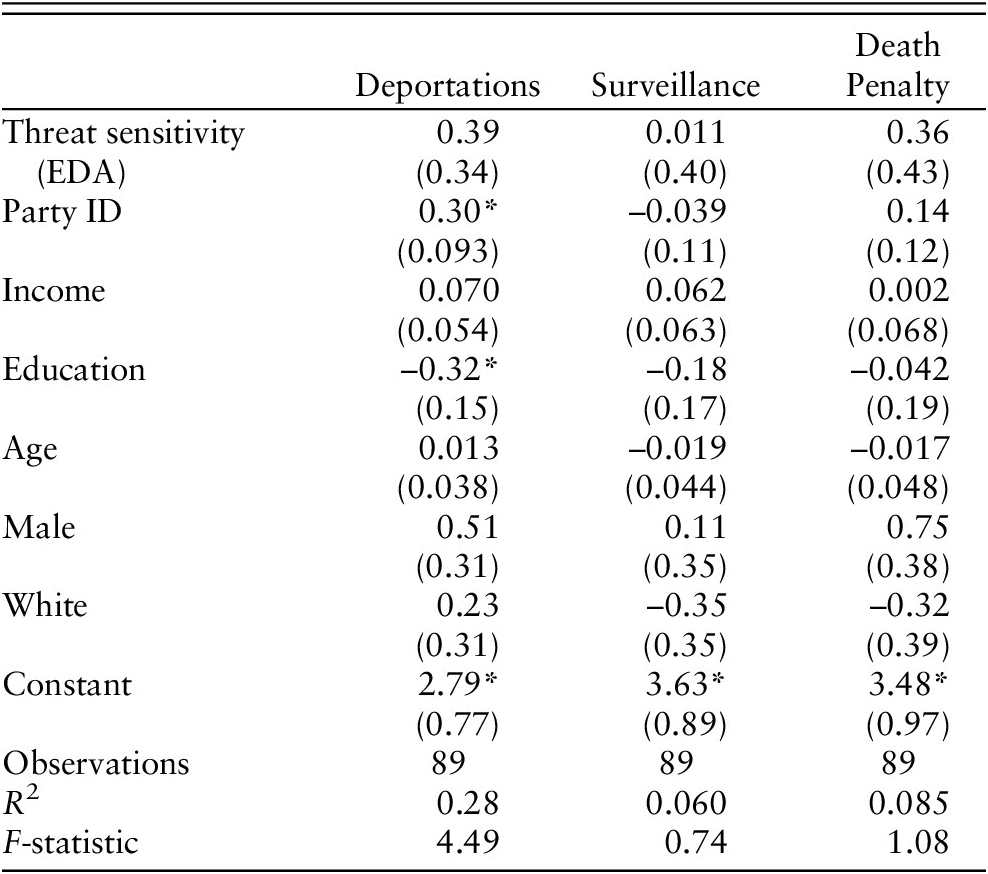
Before investigating whether the source of perceived threat changes threat sensitivity’s effect on social issue attitudes, I first conduct analyses similar to those of Oxley et al. (Reference Oxley, Smith, Alford, Hibbing, Miller, Scalora, Hatemi and Hibbing2008) and Bakker et al. (Reference Bakker, Schumacher, Gothreau and Arceneaux2020). In those analyses, the researchers examine threat sensitivity’s (operationalized as change in EDA) effect on attitudes without accounting for the source of that threat. Table 4 presents the results of three OLS regressions examining threat sensitivity’s effect on support for prioritizing deportations, mass surveillance, and the death penalty, respectively.
Predictors of social conservatism.

Notes: Standard errors in parentheses. Coefficients marked with an asterisk (*) are significant at p < .05 (two-tailed). Party identification is measured using a 7-point Likert scale, with higher values indicating stronger identification with the Republican Party.
The most notable result shown in Table 4 is threat sensitivity’s null effect in all three issue areas. Like Bakker et al. (Reference Bakker, Schumacher, Gothreau and Arceneaux2020), whose analyses included these data, I am unable to replicate Oxley et al.’s (Reference Oxley, Smith, Alford, Hibbing, Miller, Scalora, Hatemi and Hibbing2008) findings: threat sensitivity—without controlling for source of threat—does not influence issue preferences. However, this is not to suggest that threat sensitivity has no true effect on political attitudes. This is unlikely, given the ample evidence that some relationship exists (Arceneaux et al., Reference Arceneaux, Dunaway and Soroka2018; Dodd et al., Reference Dodd, Balzer, Jacobs, Gruszczynski, Smith and Hibbing2012; Hibbing et al., Reference Hibbing, Smith and Alford2014; Oxley et al., Reference Oxley, Smith, Alford, Hibbing, Miller, Scalora, Hatemi and Hibbing2008). Instead, we can turn to the interaction of threat sensitivity and the source of that threat to better understand threat sensitivity’s effects.
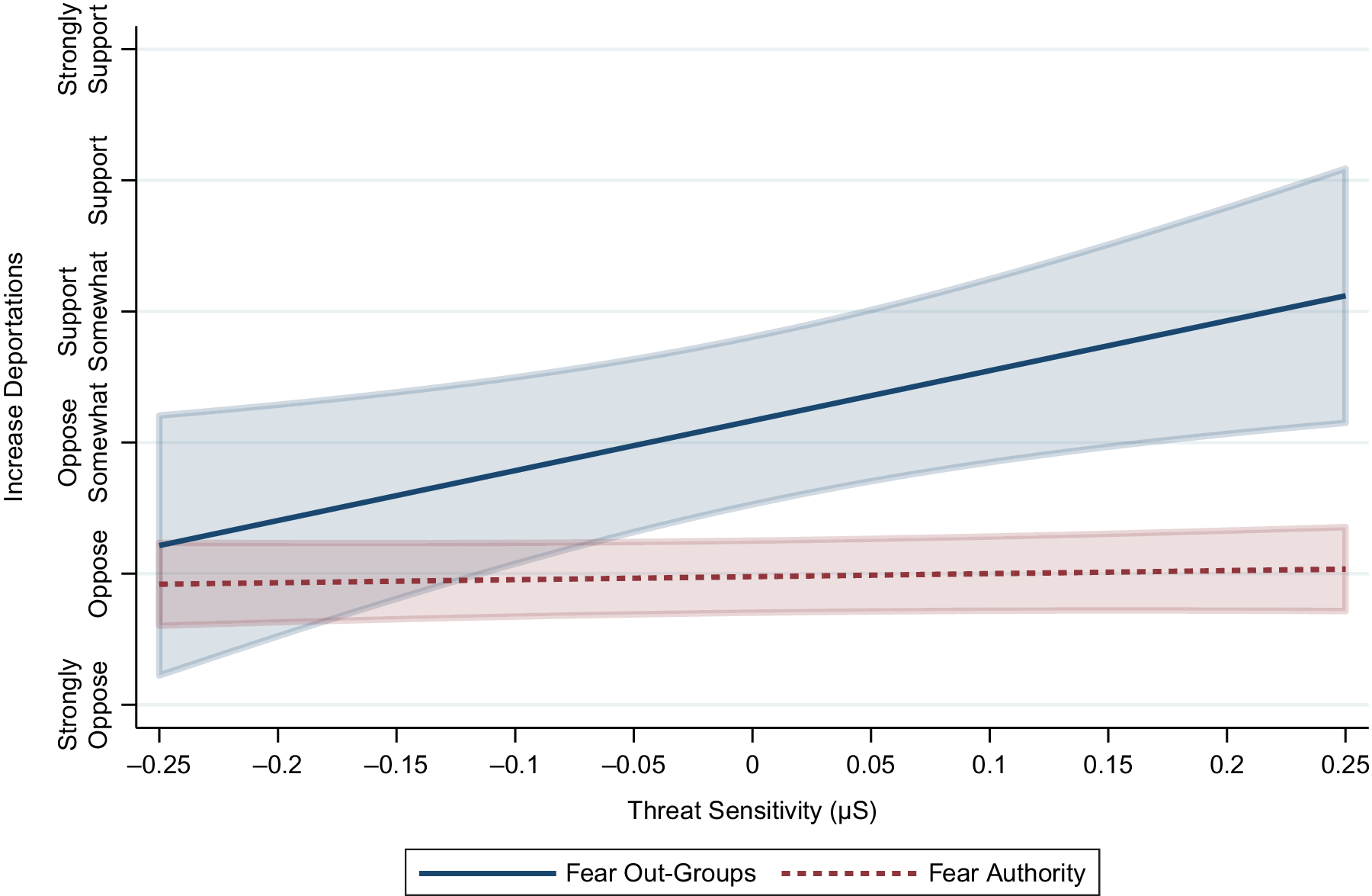
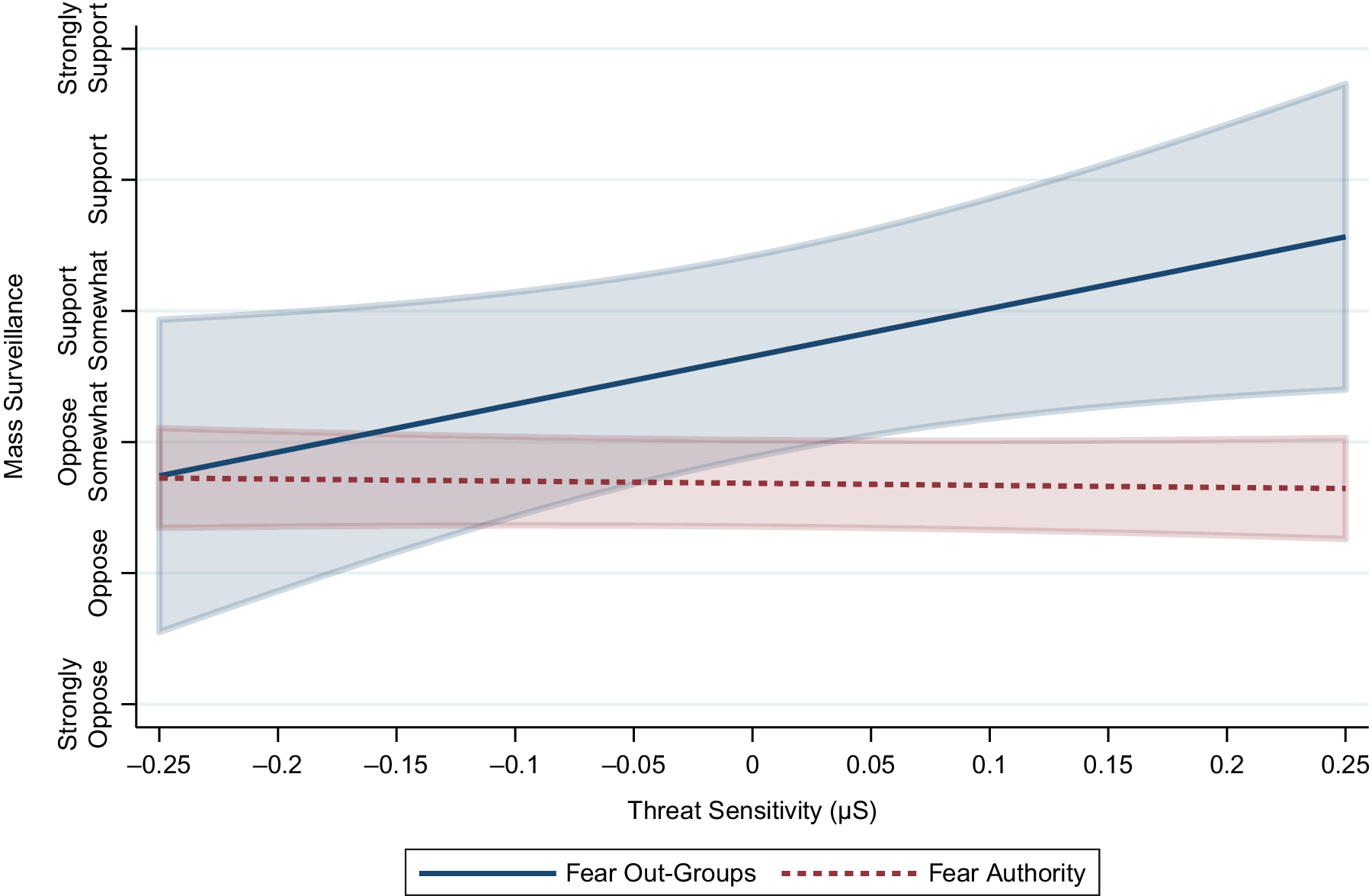
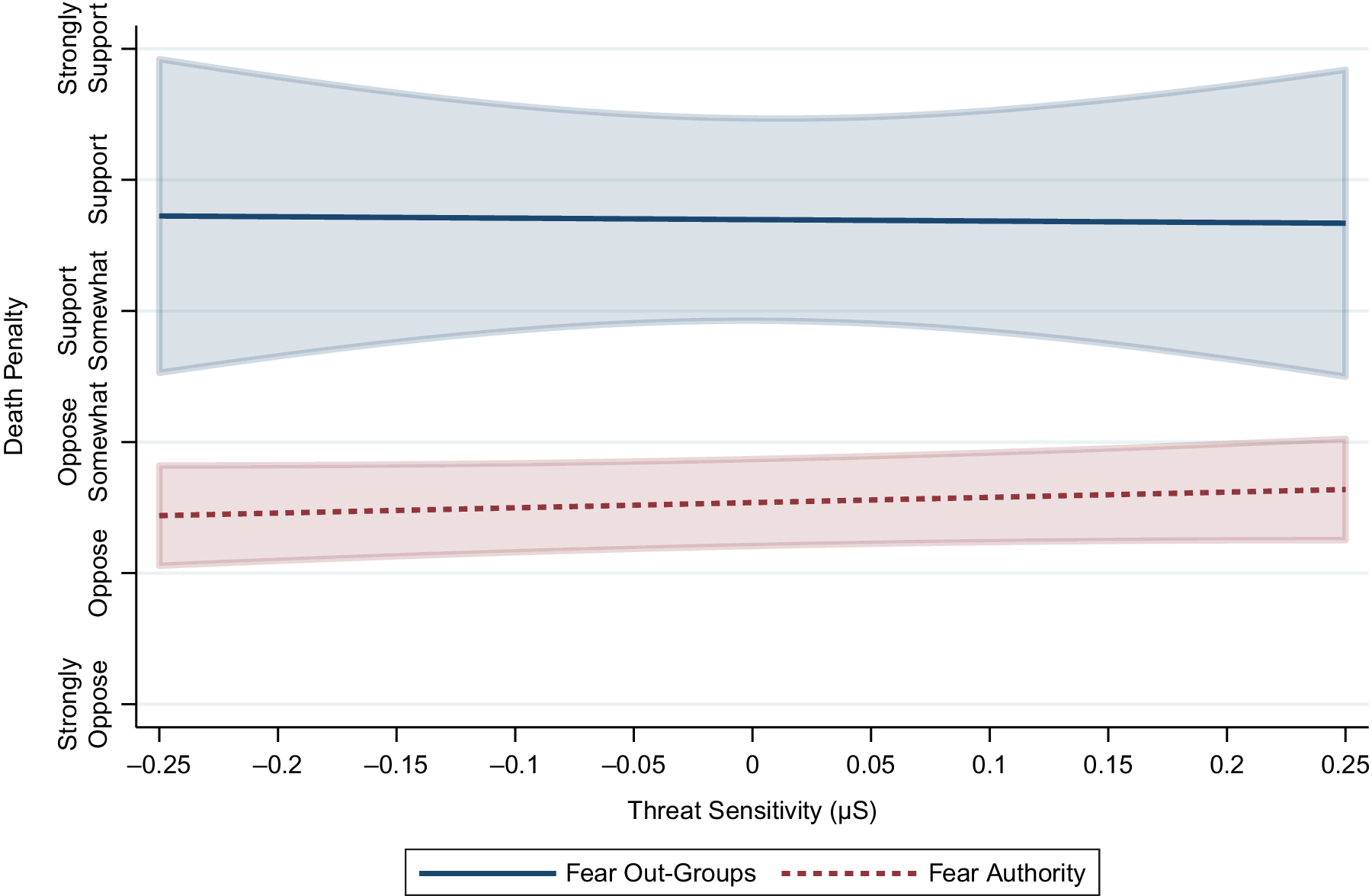
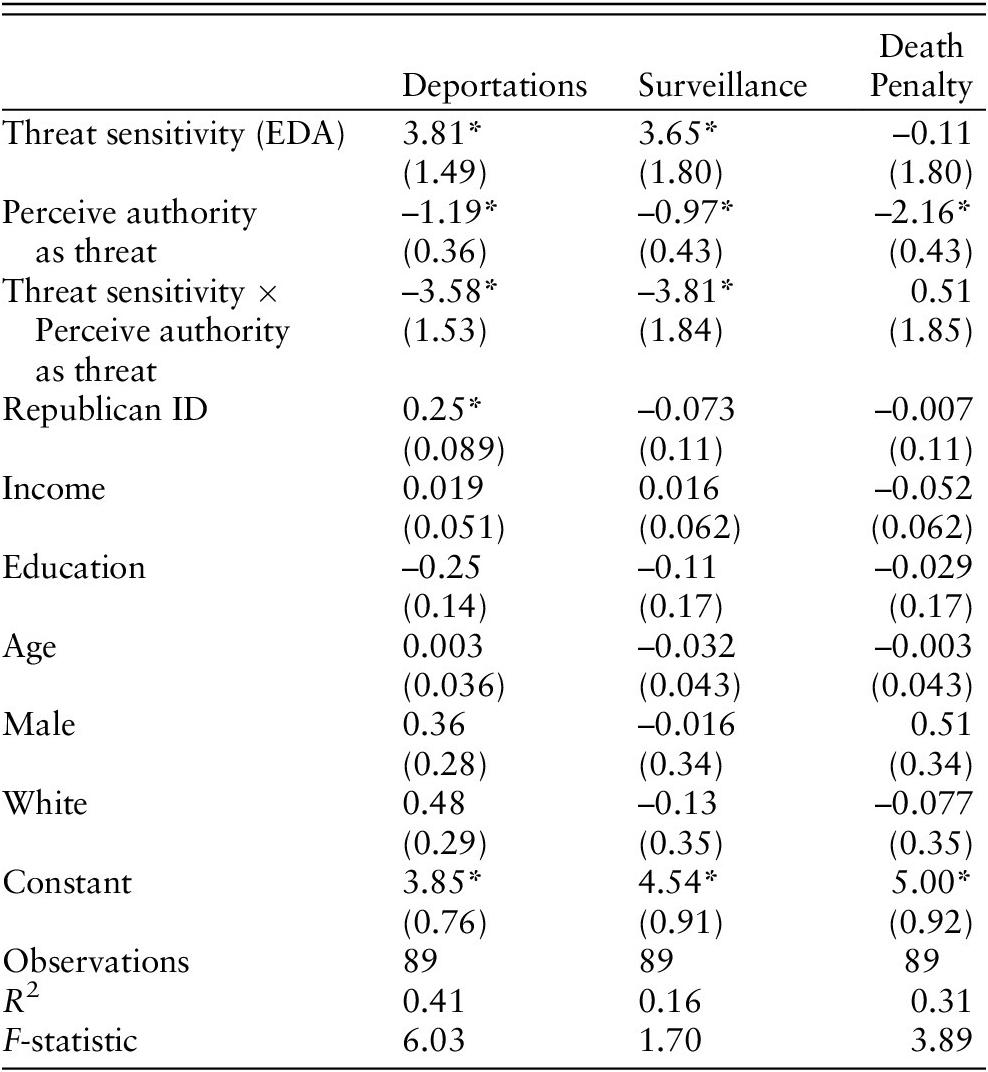
Figures 3, 4, and 5 show the results of three OLS regressions on threat sensitivity’s effect on support for increased deportations, mass surveillance, and the death penalty, respectively (full regression results are reported in Table 5).Footnote 4 Each model controls for whether respondents prefer that government protect individuals from out-group threat or protect individual liberty from potential tyranny. This proxy for perceived source of potential threat allows us to determine whether the source of the threat alters threat sensitivity’s influence on political attitudes.
Threat sensitivity’s effect on support for increased deportations.

Threat sensitivity’s effect on support for mass surveillance.

Threat sensitivity’s effect on support for the death penalty.

OLS regressions for Figures 3, 4, and 5.

Notes: Standard errors in parentheses. Coefficients marked with an asterisk (*) are significant at p < .05 (two-tailed).
Figure 3 shows that for individuals demonstrating low threat sensitivity, there is little difference in deportation attitudes between those who view out-groups as a threat and those who view authority as a threat. However, as threat sensitivity increases, support for deporting illegal immigrants grows, but only for those individuals who view out-groups as the greater threat. For individuals who view government as the greater danger, threat sensitivity’s effect is dampened to the point that it has no statistical effect on deportation preferences, thus providing evidence for H1 but not H4. Though H4 predicted a negative effect for threat sensitivity when one views authority as a potential threat (as was found in the survey study), it is nevertheless important to recognize that not all threat-sensitive individuals perceive out-groups as threatening. Because many threat-sensitive individuals do not view immigrants as a threat, it is a mistake to expect threat sensitivity to always produce anti-immigrant attitudes. Failure to account for this the fact may explain why threat sensitivity scholarship has produced a mix of significant (Oxley et al., Reference Oxley, Smith, Alford, Hibbing, Miller, Scalora, Hatemi and Hibbing2008) and null (Bakker et al., Reference Bakker, Schumacher, Gothreau and Arceneaux2020) results.
Figure 4, which shows threat sensitivity’s effect on support for mass surveillance, reiterates this point. Similar to attitudes toward deportation, threat-insensitive individuals are mostly ambivalent toward mass surveillance, regardless of their perceived source of threat. However, for those who perceive out-groups as a threat, support for mass surveillance increases as threat sensitivity increases, thus providing evidence for H2. Importantly, threat sensitivity’s effect is insignificant for those who perceive authority as the greater threat. The inability of threat sensitivity to influence mass surveillance attitudes when government is perceived as threatening fails to support the expectations of H5. However, threat sensitivity’s insignificance in this context further emphasizes the need for threat sensitivity scholars to consider the perceived source of threat. Threat sensitivity does not necessarily imply a sensitivity to the threat posed by terrorism and failure to account for such may confound research on the subject.
Figure 5 shows that threat sensitivity has no effect on support for the death penalty in either context. Though Figure 5 fails to provide support for H3 and H6, it is still important to note that perceived source of threat helps predict attitudes. Those who perceive authority as a potential threat are less likely to support the death penalty than those who view out-groups as a threat. This is true regardless of threat sensitivity demonstrated by the individual. Though Figure 5 shows threat sensitivity to have no effect on support for the death penalty, it nevertheless illustrates the importance of accounting for source of perceived threat: sensitivity is only one aspect of the threat concept, and that other elements such as source, can influence attitudes as well.
Discussion
In this article, I present evidence that threat sensitivity’s influence on social attitudes varies depending on whether the individual perceives out-groups or authority as a greater potential threat. Though general threat sensitivity survey measures (specifically those measuring general and social fears) are positively correlated with conservative social attitudes, more nuanced psychological measures show that fear of others and fear of authority produce divergent effects. Using these psychological batteries, fear of others is associated with increased support for deporting illegal immigrants, mass surveillance, and the death penalty, but fear of authority decreases support for these policies.
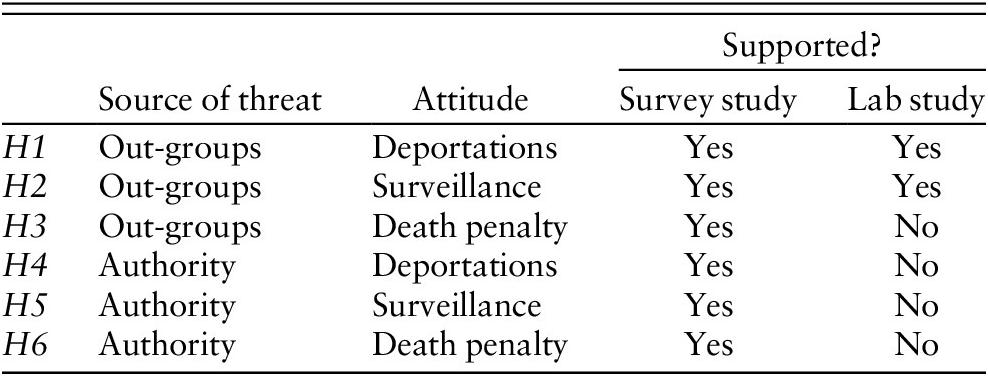
Additional physiological evidence further emphasizes this point. Electrodermal response to threatening stimuli correlates with conservative attitudes differently, depending on the perceived source of threat. Threat sensitivity is associated with greater support for deportations and mass surveillance only for those who perceive out-groups as the greater threat. For those who view authority as the greater danger, threat sensitivity fails to predict political attitudes. Table 6 summarizes the results of the two studies.
Summary of results.

Taken together, these findings serve as an important reminder that scholars investigating the role of threat in attitude formation should consider not only the magnitude of threat sensitivity, but the source of that threat as well. Not every individual who is sensitive to threat perceives out-groups as threatening. Therefore, it is inappropriate to expect threat sensitivity to always produce attitudes that are out-group negative. Indeed, threat sensitivity as measured by Marks and Mathews’s (Reference Marks and Mathews1979) Fear Questionnaire suggests that a fear of authority is associated with classically liberal attitudes. That threat sensitivity may be associated with either conservative or liberal attitudes depending on the source of the threat may account for some of the current confusion in the threat sensitivity literature.
The present study, however, has some limitations. First, the data used in this study were collected in 2017, the first year of Donald Trump’s presidency. Study participants may have associated government authority with the Trump administration, potentially confounding results. Though threat sensitivity scholars generally consider conservatives to be more sensitive to threat (Dodd et al., Reference Dodd, Balzer, Jacobs, Gruszczynski, Smith and Hibbing2012; Schreiber et al., Reference Schreiber, Fonzo, Simmons, Dawes, Flagan, Fowler and Paulus2013), Republican skepticism toward the threat posed by COVID-19 has cast doubt on this conventional wisdom. Clearly, more research considering how threat sensitivity interacts with elite messaging, partisanship, and ideological congruency is warranted.
Additionally, because the studies in this article sought to distinguish between out-group threat and to threat of authority, it was necessary introduce political content into the research designs—content that is largely absent from the protocols of the canonical threat studies (e.g., Oxley et al., Reference Oxley, Smith, Alford, Hibbing, Miller, Scalora, Hatemi and Hibbing2008). By asking participants to identify whether they found out-groups or authority more threatening, the threat sensitivity captured in this study may be operating at a more conscious level than that of the studies using nonpolitical primes. Separating automatic physiological responses from more conscious, contextually driven responses is difficult, but future research in this area can shed light on the ability of the elites or the media to manipulate attitudes at a fundamental level. If external actors can influence how individuals perceive potential threats, then perhaps threat sensitivity is more malleable than previously thought—even at the physiological level.
Finally, threat sensitivity is only one of the many inheritable traits that influence political attitudes, and it is possible that sensitivity is related to other traits such as anxiety or neuroticism. While the phobic measures utilized in the present survey are more precise than the traits included in the five-factor model (see McCrae & Costa, Reference McCrae, Costa, John, Robins and Pervin2008), future research can examine threat sensitivity, personality traits, and source of threat to better understand the effects of each. It may be possible that threat sensitivity loses its predictive power when other personality traits are introduced into the model (see Hatemi & McDermott, Reference Hatemi and McDermott2020).
Since Oxley et al. (Reference Oxley, Smith, Alford, Hibbing, Miller, Scalora, Hatemi and Hibbing2008) found a link between physiological responses to threatening stimuli and conservative attitudes, political scientists have conducted a remarkable amount of research into the relationship between the two. However, recent failed replications of that classic study have called the nature of this relationship into question (Bakker et al., Reference Bakker, Schumacher, Gothreau and Arceneaux2020). Yet, these failed replications do not represent an end of the psychophysiological research agenda, but rather a new beginning. In their conclusion of their failed replications, Bakker and colleagues (Reference Bakker, Schumacher, Gothreau and Arceneaux2020) write, “Whatever the case, we urge more, not less, research at the intersection of neuroscience and politics. It will not be easy, but profitable avenues of research rarely are” (p. 617). By demonstrating that threat sensitivity influences attitudes differently depending on the perceived source of threat, this article represents a small but important step in further understanding the psychophysiological foundations of political attitudes and behaviors.
Supplementary Materials
To view supplementary material for this article, please visit http://doi.org/10.1017/pls.2022.12.
Open Scientific Practices Statement
The materials and data that support the findings of this study and the award of the two open science badges are publicly available at https://doi.org/10.7910/DVN/DLBQBP.