




No CrossRef data available.
Article contents
Three decades of remote sensing subarctic vegetation in northern Russia: A case study in science diplomacy
Published online by Cambridge University Press: 19 October 2022
Abstract
The vegetation at and beyond the northern edge of the world’s boreal forest plays an important though imperfectly understood role in the climate system. This is particularly true within Russia, where only a small proportion of the boreal land area has been studied in depth, and little is known about its recent evolution over time. We describe a long-term collaboration between institutions in Russia and the United Kingdom, aimed at developing a better understanding of high-latitude vegetation in Russia using remote sensing methods. The focus of the collaboration has varied over time; in its most recent form, it is concerned with the dynamics of the Russian boreal forest during the 21st century and its relation to climate change. We discuss the support framework within which it has been developed and reflect on its relationship to science diplomacy. We consider the factors that have contributed to the success of a decades-long international collaboration and make recommendations as to how such joint efforts can be encouraged in future.
Information
- Type
- Commentary
- Information
- Copyright
- © The Author(s), 2022. Published by Cambridge University Press
References
Alekseev, A., Tomppo, E., McRoberts, R. E., & von Gadow, K. (2019). A constructive review of the State Forest Inventory in the Russian Federation. Forest Ecosystems, 6. doi: 10.1186/s40663-019-0165-3
CrossRefGoogle Scholar
Callaghan, T. V., Crawford, R. M. M., Eronen, M., Hofgaard, A., Payette, S., Rees, G., … Werkman, B. (2002). The dynamics of the tundra-taiga boundary: An overview and suggested coordinated and integrated approach to research. Ambio, Special Report, 12, 3–5.Google Scholar
Callaghan, T. V., Johansson, M., Pchelintseva, Y., & Kirpotin, S. N. (2015). Scientific cooperation throughout the Arctic: The INTERACT experience. In Evengård, B., Nymand Larsen, J., & Paasche, Ø. (Eds.), The New Arctic (pp. 269–289). Springer International Publishing. doi: 10.1007/978-3-319-17602-4_20
Google Scholar
Callaghan, T. V., Werkman, B., & Crawford, R. M. M. (2002). The tundra-taiga interface and its dynamics. Ambio, Special Report 12, 6–14.Google Scholar
Diffenbaugh, N. S., & Field, C. B. (2013). Changes in ecologically critical terrestrial climate conditions. Science, 341(6145), 486. doi: 10.1126/science.1237123
CrossRefGoogle ScholarPubMed
Filipchuk, A., Moiseev, B., Malysheva, N., & Strakhov, V. (2018). Russian forests: A new approach to the assessment of carbon stocks and sequestration capacity. Environmental Development, 26, 68–75. doi: 10.1016/j.envdev.2018.03.002
CrossRefGoogle Scholar
Golubeva, E., Hofgaard, A., & Silenchuk, K. (2013). The morphometric structure of the Larix Gmellinii recruitment at the nothern limits of its range in the forest-tundra ecotone. Geography, Environment, Sustainability, 6(3), 86–93.CrossRefGoogle Scholar
Golubeva, E. I., Kapitza, A. P., Kravtsova, V. I., Krasnushkin, A. V., Lurie, I. K., Malyshev, V. B., … Williams, M. (2003). Ecology of the North: Remote Sensing of Ecosystem Disturbance (case study of Kola Peninsula) Moscow: Nauchniy Mir.Google Scholar
Golubeva, E. I., Plyushkyavichyute, Yu. A., Rees, W. G., & Tutubalina, O. V. (2010). Remote sensing methods for phytomass estimation and mapping of tundra vegetation. Geography, Environment, Sustainability, 3(3), 4–13.Google Scholar
Grassi, G., House, J., Kurz, W. A., Cescatti, A., Houghton, R. A., Peters, G. P., … Zaehle, S. (2018). Reconciling global-model estimates and country reporting of anthropogenic forest CO2 sinks. Nature Climate Change, 8(10), 914–920. doi: 10.1038/s41558-018-0283-x
CrossRefGoogle Scholar
Hindshaw, R. S., Mariash, H., Vick-Majors, T. J., Thornton, A. E., Pope, A., Zaika, Y., … Fugmann, G. (2018). A decade of shaping the futures of polar early career researchers: A legacy of the International Polar Year. Polar Record, 54(5–6), 312–323. doi: 10.1017/S0032247418000591
CrossRefGoogle Scholar
Hofgaard, A., Harper, K. A., & Golubeva, E. (2012). The role of the circumarctic forest–tundra ecotone for Arctic biodiversity. Biodiversity, 13(3–4), 174–181. doi: 10.1080/14888386.2012.700560
Google Scholar
Hofgaard, A., Rees, G., Tømmervik, H., Tutubalina, O., Golubeva, E., Lukina, N., … Kharuk, V. (2010). Role of disturbed vegetation in mapping the boreal zone in northern Eurasia. Applied Vegetation Science, 13(4), 460–472. doi: 10.1111/j.1654-109X.2010.01086.x
CrossRefGoogle Scholar
Kapitsa, A. P., Golubeva, E. I., Kravtsova, V. I., Rees, W. G., Spektor, V. A., & Tutubalina, O. V. (1998). Metodi Issledovaniya Sostoyaniya Ekosistem V Noril’skom Promyshlennom Regione [Methods to study the condition of the ecosystem of the Norilsk industrial region]. Third International Symposium on Ecoinformatics Problems, Moscow, 171–174.Google Scholar
Kapitsa, A. P., & Rees, W. G. (2003). Ekologiya severa: Distantsionnye metody izuchenniya narushennykh ekosistem—Na primere Kol’skogo Poluostrova [Ecology of the North: Remote Sensing of ecosystem disturbance—Case study of the Kola Peninsula]: Scientific World.Google Scholar
Koppelman, B., Day, N., Davison, N., Elliott, T., & Wilsdon, J. (2010). New Frontiers in Science Diplomacy: Navigating the Changing Balance of Power. London: The Royal Society.Google Scholar
Lukyanov, F. (n.d.). EU-Russia Relations: What Went Wrong? Retrieved 31 October 2021, from https://russiancouncil.ru/en/analytics-and-comments/comments/eu-russia-relations-what-went-wrong/
Google Scholar
Marshall, G. J., Vignols, R. M., & Rees, W. G. (2016). Climate change in the Kola Peninsula, Arctic Russia, during the Last 50 years from meteorological observations. Journal of Climate, 29(18), 6823–6840. doi: 10.1175/JCLI-D-16-0179.1
CrossRefGoogle Scholar
Mathisen, I. E., Mikheeva, A., Tutubalina, O. V., Aune, S., & Hofgaard, A. (2014). Fifty years of tree line change in the Khibiny Mountains, Russia: Advantages of combined remote sensing and dendroecological approaches. Applied Vegetation Science, 17(1), 6–16. doi: 10.1111/avsc.12038
CrossRefGoogle Scholar
Pitblado, J. R., & Amiro, B. D. (1982). Landsat mapping of the industrially disturbed vegetation communities of Sudbury, Canada. Canadian Journal of Remote Sensing, 8(1), 17–28. doi: 10.1080/07038992.1982.10855020
CrossRefGoogle Scholar
Polar Regions Department, Foreign and Commonwealth Office. (2018). Beyond the Ice: UK Policy Towards the Arctic London: HM Government.Google Scholar
Previdi, M., Janoski, T. P., Chiodo, G., Smith, K. L., & Polvani, L. M. (2020). Arctic amplification: A Rapid response to radiative forcing. Geophysical Research Letters, 47(17), e2020GL089933. doi: 10.1029/2020GL089933
CrossRefGoogle Scholar
Rees, W. G., Hofgaard, A., Boudreau, S., Cairns, D. M., Harper, K., Mamet, , … Tutubalina, O. (2020). Is subarctic forest advance able to keep pace with climate change? Global Change Biology. doi: 10.1111/gcb.15113
CrossRefGoogle ScholarPubMed
Rees, W. G., & Kapitsa, A. P. (1994). Industrial pollution in the Kol’skiy Poluostrov, Russia. Polar Record, 30, 181–188.CrossRefGoogle Scholar
Rees, W. G., Stammler, F. M., Danks, F. S., & Vitebsky, P. (2007). Vulnerability of European reindeer husbandry to global change. Climatic Change, 87(1), 199. doi: 10.1007/s10584-007-9345-1
CrossRefGoogle Scholar
Rees, W. G., & Williams, M. (1997). Monitoring changes in land cover induced by atmospheric pollution in the Kola Peninsula, Russia, using LANDSAT MSS data. International Journal of Remote Sensing, 18, 1703–1723.CrossRefGoogle Scholar
Roop, H. A., Wesche, G., Azinhaga, P. F., Trummel, B., & Xavier, J. C. (2019). Building collaborative networks across disciplines: A review of polar educators international’s first five years. POLAR RECORD, 55(4), 220–226. doi: 10.1017/S003224741800061X
CrossRefGoogle Scholar
Royal Society. (n.d.). Miliband Urges Greater Role for Science in Diplomacy—Science News | Royal Society. Retrieved 14 April 2021, from https://royalsociety.org/news/2010/science-diplomacy/
Google Scholar
Russia, T. of the O. W. of the P. of. (n.d.-a). Leaders Summit on Climate: President of Russia. Retrieved 29 April 2021, from http://en.kremlin.ru/events/president/news/65425
Google Scholar
Russia, T. of the O. W. of the P. of. (n.d.-b). Strategy for Developing the Russian Arctic Zone and Ensuring National Security until 2035 Approved. President of Russia. Retrieved 29 April 2021, from http://en.kremlin.ru/acts/news/64274
Google Scholar
Toutoubalina, O. V., & Rees, W. G. (1999). Remote sensing of industrial impact on Arctic vegetation around Noril€sk, northern Siberia: Preliminary results. International Journal of Remote Sensing, 20, 2979–2990.CrossRefGoogle Scholar
UK COP 26. (2021). Glasgow Leaders’ Declaration on Forests and Land Use. UN Climate Change Conference (COP26) at the SEC – Glasgow 2021. https://ukcop26.org/glasgow-leaders-declaration-on-forests-and-land-use/
Google Scholar
Vikulina, M. A., Vashchalova, T. V., Tutubalina, O. V., Rees, W. G., & Zaika, Y. V. (2021). Moscow University’s field station in the Khibiny Mountains, Russian Arctic: A 70-year history to the present day. Polar Record, 57, e10. doi: 10.1017/S0032247421000012
CrossRefGoogle Scholar
Walton, D., Xavier, J., May, I., & Huffman, L. (2013). Polar educators international—A new initiative for schools. Antarctic Science, 25(4), 473. doi: 10.1017/S0954102013000485
CrossRefGoogle Scholar
Zöckler, C., Miles, L., Fish, L., Wolf, A., Rees, G., & Danks, F. (2008). Potential impact of climate change and reindeer density on tundra indicator species in the Barents Sea region. Climatic Change, 87(1), 119–130. doi: 10.1007/s10584-007-9344-2
CrossRefGoogle Scholar
МИД заявил о глубоком кризисе в отношениях с Великобританией
. (20210325T1224). РИА Новости. https://ria.ru/20210325/krizis-1602784365.html
Google Scholar
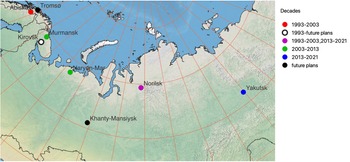
Fig. 1. Location of main field areas, by decade.
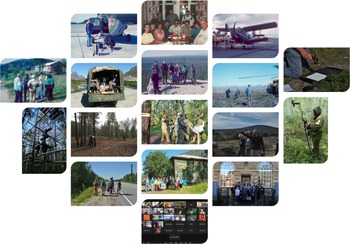
Fig. 2. Montage of activities during three decades of collaborative research.
 You have
Access
- 2
- Cited by
Introduction
The world’s boreal forest, and the transition zone from the boreal forest to the tundra zone to the north of it, has a high importance for biodiversity and in modulating the global carbon and water cycles (Callaghan, Crawford, et al., Reference Callaghan, Crawford, Eronen, Hofgaard, Payette, Rees and Werkman2002; Callaghan, Werkman & Crawford, Reference Callaghan, Werkman and Crawford2002; Hofgaard, Harper & Golubeva, Reference Hofgaard, Harper and Golubeva2012; Rees et al., Reference Rees, Hofgaard, Boudreau, Cairns, Harper, Mamet and Tutubalina2020). This importance is not matched by our current level of knowledge of this extensive zone, and the problem is particularly acute in Russia (Alekseev, Tomppo, McRoberts & von Gadow, Reference Alekseev, Tomppo, McRoberts and von Gadow2019; Filipchuk, Moiseev, Malysheva & Strakhov, Reference Filipchuk, Moiseev, Malysheva and Strakhov2018). Roughly half of the Russian forests were last surveyed more than 25 years ago (Alekseev et al., Reference Alekseev, Tomppo, McRoberts and von Gadow2019), while areas of tundra generally receive less attention than forest Northern high latitudes can be regarded as a “hotspot” of global warming through the phenomenon of “Arctic amplification” (Previdi, Janoski, Chiodo, Smith & Polvani, Reference Previdi, Janoski, Chiodo, Smith and Polvani2020), and vegetation is expected to respond directly to climate change (Diffenbaugh & Field, Reference Diffenbaugh and Field2013) and indirectly through alterations in fire regimes and anthropogenic disturbance (Hofgaard et al., Reference Hofgaard, Rees, Tømmervik, Tutubalina, Golubeva, Lukina and Kharuk2010). However, comprehensive ground-based measurements of characteristics are very difficult to obtain over large areas, and consequently, there is a strong imperative to develop methods based on airborne and spaceborne remote sensing. The development of more widely applicable approaches to forest inventory and other vegetation characteristics is likely improve our knowledge of forest carbon fluxes and hence support the Global Stocktake process of the UN Paris Agreement on Climate Change (Grassi et al., Reference Grassi, House, Kurz, Cescatti, Houghton, Peters and Zaehle2018) and the Glasgow Leaders’ Declaration on forests and land use at the UN Conference of Parties 26 (UK COP 26, 2021). This has been the primary focus of the research in which we have been jointly engaged over the past three decades.
The most recent phase of this joint enterprise was a Russian-United Kingdom (UK) collaboration between two institutions in the UK and three in Russia, active from 2018 to 2021 and built on institutional links that have been developed over nearly 30 years. Here, we will attempt to give an idea of how we began working together in this area so long ago, how we have been supported, why we think it is important for science diplomacy, and how we aim to expand and collaborate more widely.
Institutional structure and modes of support
Our most recent collaborative research project had five institutional partners. It was jointly led by the Scott Polar Research Institute (SPRI) of the University of Cambridge and the Geography Faculty of Moscow State University (GF-MSU). The other UK partner was the British Antarctic Survey (BAS), while the two other Russian partners were institutes of the Russian Academy of Sciences: the Institute of Space Research (IKI) and the Institute of Geography (IGRAS). The origin of this collaboration dates back to a chance meeting at SPRI in 1992 between one of the authors (WGR) and the late professor Andrei Kapitza, then head of the Environmental Management Department at GF-MSU. Rees had been applying techniques from the then relatively young discipline of satellite remote sensing to problems of monitoring glacial environments, and Kapitza had become interested in the question of how the impact of industrial pollution in subarctic environments in Russia, of which there were (to Rees’s understanding) surprisingly many, could be effectively studied. In a single conversation, they recognised the potential of applying satellite monitoring methods to such problems in Russia – they had already begun to be applied in some other locations (Pitblado & Amiro, Reference Pitblado and Amiro1982) – and resolved to investigate it.
Initial support was provided by the Royal Society, through baseline funding from both universities, and personal generosity arising from developing friendships. The research collaboration began in a small way, but a major boost was obtained through a generous grant from the Darwin Initiative (https://www.darwininitiative.org.uk/) in the mid-1990s which permitted relatively extensive fieldwork to be undertaken based at the KESS field station of GF-MSU (Vikulina, Vashchalova, Tutubalina, Rees & Zaika, Reference Vikulina, Vashchalova, Tutubalina, Rees and Zaika2021), on the Kola Peninsula, situated in areas of outstanding natural beauty and wilderness which are nevertheless also directly influenced by major mineral extraction and processing industry. As well as advancing the research programme, this provided a deeper insight into the way in which field training of MSU students could be integrated into scientific research – a tradition that was evidently much stronger in Russia than in the UK.
Joint research between GF-MSU and SPRI into monitoring and assessment of disturbed and undisturbed high-latitude terrestrial ecosystems continued with and without conventional research funding support, due in large part to the personal commitment of the people involved in both institutions (E. I. Golubeva et al., Reference Golubeva, Kapitza, Kravtsova, Krasnushkin, Lurie, Malyshev and Williams2003, Reference Golubeva, Plyushkyavichyute, Rees and Tutubalina2010; Kapitsa et al., Reference Kapitsa, Golubeva, Kravtsova, Rees, Spektor and Tutubalina1998; Kapitsa & Rees, Reference Kapitsa and Rees2003; Rees & Kapitsa, Reference Rees and Kapitsa1994; Rees & Williams, Reference Rees and Williams1997; Toutoubalina & Rees, Reference Toutoubalina and Rees1999). Maintaining some level of collaborative research activity through the Russian economic crisis of 1998 proved especially challenging. Development of teaching programmes proved one particularly effective means of maintaining institutional collaboration. Cambridge had been innovative in creating a new master’s programme that combined the techniques of Geographic Information Systems (GIS) and remote sensing, and two grants from the British Council provided the possibility for a similar course to be created in Moscow. This course had a strong practical and field-based training component which allowed some original scientific research to be carried out at the same time, around Monchegorsk and the Norilsk copper-nickel plants in the Russian Arctic. The city of Noril’sk and its surroundings provided the second major geographical focus for our joint research, and both Noril’sk and the Kola Peninsula have continued to be objects of study at various times. Other sites, including some in Scandinavia, have also been occupied or are under consideration for future studies (Fig. 1).
Location of main field areas, by decade.
From around the year 2000 onwards, the research interests of the SPRI and GF-MSU groups also began to include the response of high-latitude vegetation to primarily climatic influences. A powerful impetus to this aspect of their research came from the adoption by the International Polar Year (IPY)’s steering committee of the agenda set by the Tundra-Taiga Initiative, set up by IASC in 2000, to study the dynamics of the transition region between the boreal forest and the tundra zone (Callaghan, Crawford, et al., Reference Callaghan, Crawford, Eronen, Hofgaard, Payette, Rees and Werkman2002). This became the IPY programme “PPS Arctic” (http://ppsarctic.nina.no/) jointly led by SPRI and by the Norwegian Institute for Nature Research (NINA), and GF-MSU became a research partner with NINA in the Norwegian-funded project BENEFITS (E. Golubeva, Hofgaard & Silenchuk, Reference Golubeva, Hofgaard and Silenchuk2013; Mathisen, Mikheeva, Tutubalina, Aune & Hofgaard, Reference Mathisen, Mikheeva, Tutubalina, Aune and Hofgaard2014). One strong conclusion from our joint research up to this time was that anthropogenic impacts dominate over climate-induced effects on boreal vegetation over a larger area of the Russian arctic than previously thought, leading to a need for ecological “disturbance mapping” (Hofgaard et al., Reference Hofgaard, Rees, Tømmervik, Tutubalina, Golubeva, Lukina and Kharuk2010), and the importance of reindeer as a factor in modulating vegetation-climate interactions has been identified (Rees et al., Reference Rees, Stammler, Danks and Vitebsky2007; Zöckler et al., Reference Zöckler, Miles, Fish, Wolf, Rees and Danks2008). IGRAS joined the partnership around this time, participating in the PPS Arctic programme. Increasing internationalisation of the research programme of PPS Arctic resulted in a number of important publications, summarised by an analysis of the dynamical behaviour of the forest-tundra ecotone across the whole of the subarctic region (Rees et al., Reference Rees, Hofgaard, Boudreau, Cairns, Harper, Mamet and Tutubalina2020). From the mid-2010s, the collaboration between SPRI and GF-MSU was explicitly expanded to include a climatological component, provided through BAS. This was initially supported through the EU-INTERACT-TA scheme (Callaghan, Johansson, Pchelintseva & Kirpotin, Reference Callaghan, Johansson, Pchelintseva, Kirpotin, Evengård, Nymand Larsen and Paasche2015) and has produced some important results, for example that the climate of the Kola Peninsula has become 2˚C warmer over the last 50 years. Springs have become wetter and autumns drier, more or less balancing out (Marshall, Vignols & Rees, Reference Marshall, Vignols and Rees2016). In the late 2010s, the research collaboration between SPRI, GF-MSU and BAS was increasingly aligned with the objectives of the British government regarding UK-Russian science diplomacy. An important mechanism for defining and implementing UK science diplomacy activities was (and remains) through the Science and Innovation Network (SIN: https://www.gov.uk/world/organisations/uk-science-and-innovation-network), run jointly by the Department for Business, Energy and Industrial Strategy and the Foreign, Commonwealth and Development Office (FCDO: formerly Foreign and Commonwealth Office). During this period, interaction with and support from SIN increased, and a bid to the imaginative Institutional Links programme, jointly organised by the British Council and the Russian Federal Ministry for Higher Education, was successful in obtaining support for the present project. The Institute of Geography (IG RAS) and the Space Research Institute (IKI RAS of the Russian Academy of Sciences), both longstanding partners of GF-MSU, were added to the collaboration.
Coinciding with this support for the core science through the Institutional Links programme, a number of successful funding applications to schemes administered by the FCDO allowed the research team to multiply the impact of the research. Activities undertaken with this funding included increased participation of early-career researchers (ECRs) in fieldwork and laboratory-based research (Fig. 2), training of ECRs in fieldwork schools, wider engagement with scientific peers through organisation or and attendance at conferences, and presentations at science festivals in both Cambridge and Moscow.
Montage of activities during three decades of collaborative research.
Discussion
Developing the science
A UK-Russian collaboration that has extended over almost 30 years invites some reflection. How does one build and maintain such a partnership? Clearly, the early steps in building a partnership require getting to know one another – how we think about things, where our particular strengths lie, and what our resources are. This is about mapping the space that we can work in. Before the advent of the SARS-CoV-2 pandemic, this happened by face-to-face meetings. The importance of such exchanges has of course been recognised for many years, and there have been funding schemes, for example from, on the UK side, the Royal Society and the British Council to facilitate them. Such schemes are not particularly expensive to operate but they can act as a powerful stimulant to new ideas. As a result of the pandemic, some of this process of making initial acquaintance necessarily moved online, although it is probably too early to say whether this is an entirely satisfactory alternative to in-person meetings. On the other hand, once an international team has got to know itself perhaps the video conference method is satisfactory for at least some aspects of maintaining communication.
Once a team is in place, it needs to define problems and data to work on together. In the kind of work that we have been engaged in, some of the data have to be obtained through fieldwork that we perform ourselves, though this does not absolutely need to be the case – data can come from remote sensing systems on satellites too, or from datasets like climate measurements that are recorded by others. Here we emphasise the fact, which is perhaps sometimes not fully recognised by non-scientists, that science is a truly creative activity. It is a creative act to recognise what are the important questions to ask and to see what are the best ways of answering them. Creativity needs to be stimulated. In the experience of the authors, there is no good substitute for actually engaging in fieldwork, even if most of one’s research is done at a computer manipulating data.
A successful research project generates momentum. A large set of data, collected by a team that has already worked out what are the interesting questions and at least in outline how they can be addressed, is a resource that can be drawn on for potentially some years afterwards, and this can certainly impart momentum to a project even when external funding is low. This resource binds the team together, and the motivation to continue to mine the resource comes from a focus on outputs such as peer-reviewed publications, which increase the research profiles of individuals and the project team, help their careers to prosper, and increase the probability of obtaining research funding at a later date. These are all powerful motivators.
Possibilities for subsequent expansion of research activity depend on several factors. First, we can note that the more widely interdisciplinary a team is, the more likely it is to identify interesting new directions for scientific expansion. Second, how does one find a wider audience for the research one has been carrying out? There is a simple but fairly helpful model in which collaboration expands over time through a series of domains, beginning at the level of individuals, then their research groups, physically nearby institutions, the national university system, and finally the public domain. Initial collaboration begins at the individual domain, often enough by chance (as in the present case). Expansion to create collaboration between corresponding research groups is a fairly organic process. The next step, in which the collaboration involves more than one institution in each country, though the institutions are physically close to one another, has been in the present case a process driven by a combination of funding opportunity and personal contacts, though it is not hard to see mechanisms to bring institutions together even when the personal contacts do not already exist. Further expansion, joining individual and research groups from other universities and institutes within the two countries, is facilitated by conferences. Having had good experiences of this format, we can point to what we have called “open science” meetings. These are one-day conferences held during a period when our existing UK-Russian collaboration has been meeting to discuss its own project concerns, but made open to all interested people and deliberately widening the terms of reference beyond the underlying project. Their aim is overtly that of information exchange and “matchmaking.” We have found that an attendance of around 30–50 people is an effective size. Somewhat similar in concept is the insertion of a targeted session, again with the intention of facilitating information exchange and soliciting interest in collaboration, within what would otherwise have been a “closed” conference. FCDO support has been hugely beneficial to our own collaboration in arranging such activities. Due to the shift of activities online in 2020–2021 as a result of the SARS-CoV-2 pandemic, we expanded our meetings to collaborative training seminars and conferences in remote sensing of vegetation, funded by FCDO (two conferences and more than ten seminars were held between November 2020 and March 2021). The conferences attracted 100–150 people, while the seminars attracted 15–40 people each time, about half of them early-career scientists. Due to the online mode and simultaneous interpretation (between English and Russian), they have involved participants from universities and research institutions in UK, Russia (including Siberia, Japan, and a number of countries in Europe, SE Asia as well as Canada and Australia).
The ultimate goal in the process as outlined here is to create a self-sustaining network which is much less dependent on the energy of individuals to keep it in operation. Good models for this kind of network are provided by the Association of Polar Early-Career Scientists (Hindshaw et al., Reference Hindshaw, Mariash, Vick-Majors, Thornton, Pope, Zaika and Fugmann2018) and Polar Educators International (Roop, Wesche, Azinhaga, Trummel & Xavier, Reference Roop, Wesche, Azinhaga, Trummel and Xavier2019; Walton, Xavier, May & Huffman, Reference Walton, Xavier, May and Huffman2013), both of which originated during the 2007–2009 International Polar Year. Public engagement is a particularly interesting aspect of the science development process, and one should not underestimate the value of citizen science for enhancing the reach of what “professional” scientists do as well as generating popular support for it. With FCDO support, we have in February 2021 established the research network CHILE with a focus on arctic vegetation-climate interactions. (Note added during revision of the manuscript in Summer 2022: While momentum was difficult to maintain during the pandemic, the Arctic Science Summit Week, held at least in part in person in Tromsø in Spring 2022, provided a good opportunity to re-energise this and other collaborative activities.)
We believe we can draw lessons from our experience for effective support of long-term international collaboration by foreign ministries and funding agencies. Long-term collaboration requires long-term partnership, which is fundamentally driven by personal dedication and energy of the partners but which needs nurturing. Although funding agencies have traditionally been somewhat averse to supporting monitoring projects this is not exactly what we propose, and we specifically recommend that they recognise the value of supporting collaborations or research networks over sustained periods of time (even as long as decades), and of funding long-term, multi-stage projects. A collaboration that also successfully engages with the agenda of science diplomacy will necessarily involve at least one partner working in an unfamiliar place, and local knowledge is of high value. In fact, the nature of our collaboration with its heavy reliance on fieldwork in various parts of Russia has meant that absolutely all partners have at least some of the time been working in unfamiliar places, so this local knowledge component has been absolutely critical. It takes time to build the level of trust and mutual understanding that is necessary for the maintenance of a long and successful partnership, and this points to the desirability of repeated re-engagement by partners and relatively frequent meetings. A realistic model for a multi-stage project could be 3 + 2 + 2 years, that is a three-year start-up and fieldwork phase, followed by a two-year evaluation phase and a final two-year period for developing publications and presenting results. Some other departures from the usual research project funding model could also be desirable. One is support for such “background” tasks as collection of materials, analysis and publication of results. Another is to allow for higher than usual levels of funding for ancillary tasks such as project administration, especially where there is a specific aim of creating and maintaining international networks.
Maintaining a decades-long collaboration involves recognising that researchers will move through different stages of their careers during it and that the energy and expertise that bring it into existence in the first place need to be spread to new generations of researchers. Project leaders can respond to this need by organising specific activities to improve the education and professional orientation of early-career researchers and to promote interactions between researchers at different stages of their careers. These activities are mostly not expensive to create. We can identify in particular seminars (which can be in person or online), on specific topics and new methods. These can give impetus to the formation of new teams and promotes interaction between levels of seniority. Similarly, master classes focussed on solving specific problems with specific examples, and summer field schools – which can in our experience be organised simultaneously with research fieldwork – can give practice in using new research methods, and allow research measurement protocols to be developed and refined. Of course, funding agencies need to be willing to support activities of this type and to encourage the inclusion of early-career researchers (i.e. specifically to recognise the need to bring on the next generation). We also observe that, in considering the current climate change agenda (and this has very strongly informed our ongoing projects), collaborations need increasingly to extend beyond the traditional links between scientists, to include more interdisciplinary activity and indeed enhanced links between scientists and policymakers, both nationally and internationally.
Reflections on science diplomacy
The classical understanding of Science Diplomacy (Koppelman, Day, Davison, Elliott & Wilsdon, Reference Koppelman, Day, Davison, Elliott and Wilsdon2010) identifies three dimensions of interaction between science and international policy: science in diplomacy (SiD), where science informs foreign policy; diplomacy for science (DfS), where foreign policy supports international scientific collaboration; and science for diplomacy (SfD), where scientific engagement between countries improves relations between them. The longstanding scientific collaboration between Moscow and Cambridge described in this paper has been a beneficiary of DfS activity from its beginning, and we earnestly hope that such activity will continue, because of its clear effectiveness in supporting the other two dimensions of science diplomacy. As a consequence of research and teaching activities conducted bilaterally with support through DfS mechanisms, new opportunities have been created for dozens of early-career researchers. Undergraduate students have progressed to master’s level and doctoral studies, and PhD students have developed into independent researchers both within and outside the university systems in the UK and in Russia. Most recently, DfS support has facilitated the creation of a new research consortium which, although international, has a dominant bilateral Russia-UK characteristic. It thus contributes positively to the broader scientific relationship between the two countries, especially since it is linked so strongly to global efforts aimed at understanding the changing Arctic climate and environment.
Both Russia, which is an Arctic state, and the UK, which is not, have explicit policy aims relating to the Arctic, and a strong focus on global climate change and on the development and application of new technologies (Polar Regions Department, Foreign and Commonwealth Office, 2018; Russia, Reference Russian.d.-a, Reference Russian.d.-b). The SiD dimension is thus clearly also present in the work described here, though we can note that the words of David Miliband, who said as UK Foreign Secretary in a speech to the Royal Society in 2010 “The scientific world is fast becoming interdisciplinary, but the biggest interdisciplinary leap needed is across the boundaries of science and politics” (Royal Society, n.d.), are not less true now than then. It remains difficult for most scientists to catch the ear of policymakers, and we feel the need for shorter and more diverse channels of communication. We have found our interactions between scientists and diplomatic services to be hugely beneficial and believe that regular and frequent opportunities to exchange ideas, perhaps through conference or seminar series, or round-table sessions during conferences, would be mutually beneficial. As scientists, we want to be kept up to date with policy priorities and to be able to respond to them if possible, but we also want to feed new ideas into the policymaking process in a forum in which the enthusiasm of an early-career researcher can carry at least as much weight as the experience of a more senior scientist. We also note the potentially very high value of science festivals in bringing new ideas to the attention of policymakers and encourage more international contribution to them, facilitated as part of science diplomacy activity.
However, our strongest impression with regard to science diplomacy relates to the third dimension, that of Science for Diplomacy. Three of the authors (WGR, OVT, EIG) have been involved since the earliest stages of this UK-Russian scientific collaboration, yet none of them was really aware of their quasi-diplomatic role until a few years ago. Relations between Russia and “western” countries are currently very poor (Lukyanov, Reference Lukyanovn.d.; МИД заявил о глубоком кризисе в отношениях с Великобританией, 20210325T1224). The sentence was written in late 2021, since when they have worsened very substantially. But we, the collaborating scientists, have learnt to respect and admire many aspects of one another’s countries, and we believe that this attitude can filter upwards as well as downwards. We therefore conclude by reflecting on the experiences we have gained from collaboration.
Experiences of our collaboration from different perspectives
Although the current project began in 2018, the collaboration on which it is based began almost 30 years ago, in 1993. During the period since then, several dozen Moscow-based students have participated in field training and have had the opportunity to interact with UK-based scientists. This was a major learning outcome for UK-based scientists: the great value of including master’s-level and undergraduate students in field research. Several Moscow students have subsequently studied at Cambridge, at Master’s, Doctoral and Postdoctoral level, and many have continued to academic careers or into industrial or government service. Memories of shared experience during fieldwork expeditions continue to provide a sense of community amongst this group. Some Cambridge-based students and early-career researchers have also participated in fieldwork, and they have gone on to academic or research careers.
The research programme has not been without challenges, some predictable and some surprising. Some of these derive from the fact that this collaboration was built “from the bottom up,” beginning with personal connections, then research groups, and then institutions. Creating an international and interdisciplinary team requires the development of a common language that transcends cultural differences at the personal, disciplinary, institutional and geographical levels. This continues to provide a constructive tension. Aspects of collaboration that might have been expected to present challenges but have not done so in practice include the “language barrier,” where the endless willingness of Russian colleagues to communicate in English has removed most difficulties for non-Russian-speaking colleagues. Fundamentally to the value of scientific diplomacy, scientific collaboration between two countries with significant political differences has not proved intrinsically difficult because of those differences (although we note at the stage of revising this manuscript in summer 2022 that the widespread isolation of Russia since February has now severely impacted opportunities to work together). On the other hand, learning to navigate official bureaucratic systems, and understanding for what activities permits of one kind or another were necessary, proved challenging even when political relations between the two countries were friendlier. Rules relating to security considerations impact the use of GPS receivers, drones, maps and satellite images. Arranging fieldwork is logistically complicated, requiring flexibility and patience, ingenuity in deploying funds and occasionally some creative paperwork. A local agent of some kind, when setting up and conducting remote fieldwork, has often proved extremely valuable. The EU-INTERACT transnational access scheme has been very beneficial in this regard, and we have now joined the Interact Ambassadors scheme to help propagate understanding of its possibilities.
What has been gained from this collaboration at the personal and institutional levels? Growing a research network from the bottom up brings stability and trust (and friendship), which are powerful facilitators of continued effective collaboration. Fieldwork has provided visits to exotic locations within northern Russia, which has been attractive and motivating not just to the British participants. Fieldwork almost always presents challenges as noted earlier, whose overcoming promotes trust and friendship. Both in the field, and during exchange of personnel between institutions in Cambridge (through student exchanges and visits by more senior researchers for planning or for developing results for publication, often simultaneously), ideas and techniques, about research, teaching, and indeed about culture and general way of life, have been exchanged. The status of institutions as trusted partners has naturally deepened.
Conclusions
Our most recently active project represents, we hope, an intermediate step in the continuing development of multilateral research in the Russian North, with a strong and enduring bilateral (Russian-UK) core. The increasing need for future work in this area is scientifically clear, and the existence of a growing network of enthusiastic and skilled young researchers ready to carry it out, with at least initial guidance and encouragement from an older generation of scientists, is favourable for its further growth. The diplomatic need for continued engagement between Russian and non-Russian researchers is also clear. At the time of writing (mid-to-late 2021), political relations between Russia and “the West” had again become colder, and the need for alternative, non-political, channels to strengthen shared values had even by then become correspondingly stronger. The unusually long history of collaboration between Russian and UK scientific research described in this article has shown how effective such joint enterprise can be in fostering understanding and trust at the personal and institutional levels, and the fact that we have been allowed to continue working together over the decades suggests that, in a quiet way, these qualities have indeed been able to percolate upwards. The role of unofficial diplomat is not one that the earliest participants in this collaboration recognised that they were fulfilling, but it is one that has been embraced with enthusiasm in recent years. We propose that such long-term international collaboration can be fostered both by specific activities undertaken by scientific project leaders and by a commitment to supporting network-building and network-maintaining activities by funding agencies. Diplomatic missions of foreign ministries have played and can continue to play an important part in facilitating this activity.
Financial support
This work was supported by an Institutional Links grant no. 352397111. The grant was funded by the British Council and the Ministry of Education and Science of the Russian Federation (Grant Agreement No. 14.616.21.0099 dated 27 February 2018, project RFMEFI61618X0099). Further support has been provided through grants from the UK Foreign, Commonwealth and Development Office under the Global Britain and International Funds. The survey equipment and data processing of UAV optical imagery during the 2018–2021 project were performed under Russian Government Assignment No. AAA-A19-119022190168-8. All data from UAVs were stored and remain stored exclusively at the Institute of Geography of the Russian Academy of Sciences.
Conflict of interest
None.