




No CrossRef data available.
Article contents
- Abstract
- How many adults are there with congenital heart disease?
- Are adults treated as well as children?
- Comparing congenital cardiac disease in children and adults
- Obstacles to expert access
- Centres of excellence and regional centres
- Networking
- Databases
- Adult congenital heart specialists
- The patient
- Transition and transfer
- The providers of care
- Does the specialist in care of adults with congenital heart disease make a difference?
- The need for advocacy
- Research will define our patients' future
- Conclusion
- Footnotes
- References
Improving the care of patients with congenital heart disease: an adult focus
Published online by Cambridge University Press: 20 January 2005
Article contents
- Abstract
- How many adults are there with congenital heart disease?
- Are adults treated as well as children?
- Comparing congenital cardiac disease in children and adults
- Obstacles to expert access
- Centres of excellence and regional centres
- Networking
- Databases
- Adult congenital heart specialists
- The patient
- Transition and transfer
- The providers of care
- Does the specialist in care of adults with congenital heart disease make a difference?
- The need for advocacy
- Research will define our patients' future
- Conclusion
- Footnotes
- References
Abstract
An abstract is not available for this content. As you have access to this content, full HTML content is provided on this page. A PDF of this content is also available in through the ‘Save PDF’ action button.
Information
- Type
- The Edgar Mannheimer Lecture
- Information
- Copyright
- © 2004 Cambridge University Press
It is a great honour to be invited to Amsterdam to deliver the annual Edgar Mannheimer Lecture, here at the 38th Annual Meeting of the Association for European Paediatric Cardiology. Dr Edgar Mannheimer was a Swedish paediatric cardiologist who established better standards for diagnosis through phonocardiography and electrocardiography, and who was the editor of a major early text on cyanotic congenital cardiac disease. Admirably, he spent the last nine years of his life helping his fellow man by working in Africa on behalf of children there.
Being here today is more than just an honour for me. It is a valuable opportunity to discuss some important issues that significantly affect the interests of the patients that we all serve – patients who, regardless of age, are affected by congenital cardiac malformations.
The fact that I, an adult congenital cardiologist, am here today speaking to you demonstrates that the leaders of your association understand that we, cardiologists from both adult and paediatric cardiology with an interest in congenital cardiac malformations, have a joint responsibility to address the needs of these patients. I salute the Association for European Paediatric Cardiology for its leadership in bringing these needs to the forefront today.
I have dedicated much of my professional career to advancing the care of adults with congenital heart defects. Along the way, I have learned a lot from my colleagues, including the team at Toronto General Hospital with whom I have the pleasure of working. And I have gained many insights into the challenges of treating patients from my colleagues at the Hospital for Sick Children in Toronto, most notably Drs Robert Freedom, Andrew Redington, Brian McCrindle, and Bill Williams.
Two years ago, it was my privilege to have co-chaired the 32nd Bethesda Conference of the American College of Cardiology entitled “Care of the Adult with Congenital Heart Disease”. This conference led to the publication of what I believe are landmark papers regarding methods to improve the care available to these patients.1–5 I will refer frequently to concepts that were published in those papers, as I believe they reflect the key principles required to plan the care for adults, or grown-ups, with congenital heart disease now and in the future.
I would like to begin my presentation by stating what, to me, is an obvious fact. Paediatric and adult cardiologists must work together to improve the care of those adults with congenital heart disease considered at medium- and high-risk.
My talk today is dedicated to how we, as cardiologists, can best work together to ensure that as many of these adult patients as possible have access to the care they need. To that end, I will discuss some of the major challenges, and potential solutions, to achieving this objective.
How many adults are there with congenital heart disease?
The answer to this question depends to a great extent on what part of the world we are considering. In many countries with limited resources, only a small percentage of individuals with congenital heart disease receive the care they require. For the purpose of this lecture, I will limit discussion to the care of patients with congenital heart disease in the so-called “developed world”. In many developed countries, the care of these patients was available early and widely, and the number of adults with congenital cardiac lesions now equals or exceeds the number of children with comparable malformations. Other countries achieved progress more slowly. The countries that started delivering care later have a smaller proportion of adult patients.
Those who participated in the 32nd Bethesda Conference conducted an exhaustive analysis in order to estimate the number of adults with differing types and severities of congenital cardiac malformations in the United States of America. Congenital cardiac disease can be segmented by an easily achieved consensus into three segments: simple, moderately complex, to be called moderate, and very complex, or complex. In Tables 1–3, I define the defects considered to fall into each of these three categories. In 2001, there were, in the United States of America, about 117,000 adults with complex disease, and 302,000 with moderate disease. These are the two groups of patients who need expert care. There were also about 370,000 adults with so-called simple lesions, and these are the patients deemed appropriate for follow-up in the community. While I believe these figures to be conservative, this provides a total of almost 800,000 patients in the United States of America alone, more than half of whom should have expert care. In addition, about 20,000 patients a year are said to have surgery or interventional therapy for treatment of congenital cardiac lesions in the United States of America.
Table 1. Types of patients considered to have disease of great complexity, and who should be seen regularly at regional centers, with the procedures or conditions listed alphabetically.

Table 2. Types of adults considered to have lesions with moderate severity, who should be seen periodically at regional centers, with the conditions listed alphabetically.

Table 3. The types of simple lesions that usual permit the patient to be cared for in the community.

I mention these numbers because, with the necessary conversions based on population, they can be considered fairly representative of other nations with a history similar to that of the United States of America for the treatment of these lesions. For example, Canada has a population of about one tenth the size of the United States, and we traditionally divide the American numbers by 10 to produce Canadian estimates. The same process can give you rough figures for most European countries – see Table 4. More accurate estimates require the generation of complex sets of numbers modified by assumptions, and most countries will not have enough accurate data upon which to build reliable national calculations. In fact, I don't think there is much value in trying to develop local numbers in each country or region. Instead, it seems reasonable to adjust the American numbers to the population of your own country, taking into account the history of your country in providing treatment for the congenital cardiac anomalies.
Table 4. Approximate population of adults with congenital cardiac disease in western Europe.

Are adults treated as well as children?
Before moving forward, we need to establish a starting point. We need to review the state of care for patients with congenital cardiac anomalies, both as children and adults. In many countries, children and adolescents with such malformations have been looked after very well. The paradox has been, and continues to be, that there has been little or no preparation or provision for the care of these same patients once they become adults. To some extent, this reflects the perceived mandates of paediatric institutions. It may also reflect an assumption that adults would not need special care, or could get it from the services for routine cardiology. In part, this lapse in service reflects a lack of vision on the part of the past generation of physicians and surgeons, who didn't see the need for, and didn't prepare for, ongoing expert care. In addition, it reflects the priorities of the system for health care for adults, and the fact that congenital heart disease in adults is a relatively minor issue when compared with the burdens of atherosclerosis, heart failure, cancer, and a host of other issues. In any case, the lack of provisions for the care of those adults with congenital heart defects who are at risk is at the root of most of the current challenges we now face. Whatever the realities, our objective should be to do what we can to improve their care.
Comparing congenital cardiac disease in children and adults
Not surprisingly, the care of adults is quite different from the care of children. For example, most surgical and catheter interventions are now performed well before the age of 18, usually very early in life. The proportion of children and adults referred to the congenital heart surgeon, and to congenital interventionalists, might be 85 to 15, with 85% of the procedures being provided in the paediatric unit. An exception to this rule is the insertion of devices to close holes within the oval fossa, or patent oval foramens. Care during childhood focusses on schooling and exercise, and on the parents and the family. Care for the adult focusses on the patient as an adult, with all the inherent challenges and victories that he or she may experience. In some jurisdictions, there are structural problems for adults. In Chile, for example, paediatric cardiologists must give up the care of their patients at age 16. The problem is that there are few, less than five, cardiologists in Chile – a country of over 15 million people – who can care for adults with complex congenital heart disease. There is obviously something wrong with such a situation. Many paediatric cardiologists need to take a greater interest in where their patients will be going once they “graduate” from their care, and in clearly and firmly directing them to the best available facility. Firm and explicit guidance from the paediatric cardiologist can be a powerful engine for the patient finding appropriate care in adulthood. It is important to remember that those of us working in practices concerned with adults having congenital cardiac disease work “a generation behind” those functioning in the paediatric centres. For example, our group in Toronto is only now starting to see patients who have undergone the arterial switch graduate to our care. And we just had our first patient with hypoplasia of the left heart transferred from the Hospital for Sick Children.
Obstacles to expert access
Overall, better access to expert care is needed in many jurisdictions. The obstacles preventing access to the care needed come in many forms. Geographic issues may be foremost in one area, while poverty may dominate in another. In the United States of America, many adults cannot gain access to quality health care because they can't afford it. Health insurance may not be available to them because of clauses in insurance contracts that cite “preexisting conditions”. In many instances, the quality of care is determined by whether or not an insurance plan provides access to an appropriate Centre of Excellence. Another obstacle is that adults with congenital cardiac disease, and their families, may be unaware that they need “expert” care. A strong transition program, which I'll discuss later, would reduce the impact of this type of ignorance. I should emphasize that the patients requiring expert care are those that I would put in the group defined as being at medium-to-high risk in the proceedings of the Bethesda Conference. These patients are at moderate to severe risk of premature mortality, re-operation or re-intervention, and of serious complications resulting from their original congenital cardiovascular problems or their treatments. It is to these patients that our main efforts should be directed.
Centres of excellence and regional centres
While there are Centres of Excellence or “facilities providing full services for adults with congenital heart disease”, as I describe them, in many places, more are needed. It is to these centres that patients should be referred when their problems exceed the capabilities of smaller facilities. The key to determining the viability of such centres is the size of the referral base they serve, and their “capture rate” of this population. It has been suggested that such centres need a minimal referral base of from 5 to 10 million people. Even this is not big enough if the true base for referral is only a fraction of this. In many areas, health care is so fragmented that the capture rate of referrals to such a centre might be one-fifth or even less, meaning that the referral base may need to be 25 million people. The goal of these centres of excellence is to meet all the needs of all the patients with congenital cardiac disease in their own facility. This involves recruiting, and retaining, an interdisciplinary team in the true sense of the word. Only large and busy centres can hope to create such units.
Some countries are fortunate to have a network of regional or national facilities to call upon. For example, in Canada we have 15 regional facilities distributed across 6000 km, serving a population of 31 million. Five of these have been identified as Regional Centres of Excellence. The other 10 facilities contribute to care in their own regions, often very impressively. When the needs of patients exceed their capabilities, they refer the patients to the Regional Centre of Excellence for more specialized care. I believe this “hub and spoke” approach is ideal. Similar structures exist, or are under development, in Switzerland and in the United Kingdom.6 For many countries, however, there is no such infrastructure. In some nations, there are too many regional facilities, each providing care to too few patients. There are often disagreements about which facility should become the regional Centre of Excellence. Unless such choices are made, care will never reach the levels achieved in other places. As always, leadership is needed to drive this process. In other countries, such as the United States of America, the system providing health care does not naturally lend itself to coordination. Care there is seriously fractionated, with seemingly little will to identify and develop regional Centres of Excellence. While we have to accept these differing realities, I believe that steps should be taken to move towards a working model of Centres of Excellence, and supporting regional facilities in every country, or even a world region such as Scandinavia. The goal should be to focus on providing more complex care in the appropriate facilities, with teams capable of handling a full range of problems, and whose competence and broad capabilities will be improved by the large volume of referrals.
Presently, we know that worrying tales are told. Having an adult electrophysiologist try and ablate atrial flutter in a patient with the Fontan circulation is close to preposterous. Having an interventional radiologist occasionally stent a coarctation is dangerous. Having an adult heart surgeon try to operate on a patient with complex congenital cardiac disease is a formula for disaster. I wonder how the occasional practitioner justifies his or her occasional involvement with such complex patients. Systems of regional facilities smaller than the centres of excellence should be created and supported. These facilities do not need as many personnel or resources. They can grow in proportion to their referral base, and can often become reasonably self-sufficient. The fact that they are not able to provide all possible services in no way minimizes their important contributions to the care of their patients. All these facilities need two cardiologists with appropriate credentials, and a strong congenital echo resource to build upon. Wherever possible, the facilities treating adults with congenital heart disease should have an important link to paediatric cardiac units. This offers the opportunity of strengthening the referral base, mutual support, and staff collaboration.
The relevant health authorities responsible for providing a system caring for patients with congenital heart disease must support any efforts. Professionals can only do so much. Ultimately, the funders of the system need to buy into the concept. This often represents a stumbling block, even in Canada. That reasonable concepts have not been supported by health authorities in the past raises the important and often neglected issue of advocacy, a subject to which I will refer later.
Networking
A functioning network has been established in Switzerland through the Swiss WATCH organization. Collaboration amongst German-speaking centres in Zurich, Munich, and Vienna has been fostered, and has produced useful research. In Sweden and Norway, efforts have been made to rationalize delivery of care. Very few centres are strong enough to stand entirely on their own. Almost all of our centres could benefit from collaboration and joint arrangements.
Databases
All Centres of Excellence, and many of the regional facilities, need to establish databases, and to decide on the coding and terminology to be used. Facilities without such resources should consider using coding or database systems that have already proven their value elsewhere. For example, some version of the coding system developed by the Association for European Paediatric Cardiology could be widely acceptable. There is another effort going on at present to standardize nomenclature and coding, which involves several international organizations, including the Association for European Paediatric Cardiology, and representing both cardiology and congenital heart surgery. We use a coding system in Toronto that includes many acquired co-morbidities seen in the adult. Centres beginning such work should look to established programs for a kick-start, rather than trying to re-invent the wheel. We in Toronto use a commercially available database that is in use across Canada, and in several other countries. A little bit of networking by staff in developing centres would go a long way towards making their organization come together more quickly. I also advocate the use of templates for care that can be incorporated into databases to enable long term planning of the care of individual patients. Our group in Toronto uses templates for major diagnostic groups of patients. These provide a column for listing the frequency of visits, as well as a list of diagnostic tests and their frequency for new patients. Templates offer the advantage of a fairly consistent approach to groups of patients, with the option to “change the rules” available at any time. Our database is our most valued resource. It is essential to the care of our patients, facilitates our communications, and is the foundation upon which we build our research efforts.
Adult congenital heart specialists
The greatest resource we have in treating congenital heart defects at any age is our professional human capital. The availability of, and access to, qualified experts is critical to both the present and future of our patients.
In the United States of America, there are presently too few paediatric cardiologists to meet the needs of the patients, especially if some paediatric cardiologists extend their practice to include adults on an ongoing basis. In addition, studies in the United States of America suggest that there are not enough trainees interested in a career in paediatrics to maintain even these numbers in the future. Similar issues exist in other countries. While the Americans may be short-staffed, the number of paediatric cardiologists currently practising in the entire United Kingdom is the same as the number working in the greater Chicago area. Moreover, there are still some countries in Europe that do not recognize the discipline of paediatric cardiology.
The training of cardiologists to provide expert care to adults with congenital heart defects needs to be strengthened. While the numbers of patients are growing steadily, very few cardiologists are being properly trained in this discipline. In Canada, there are only eight cardiologists working in the 15 Canadian facilities providing services for adults with congenital heart disease who have specifically trained in this field. These numbers need to increase substantially if those of us who only had “on the job training” hope to pass on the torch to colleagues of equal or greater value. There has been a serious effort in the United Kingdom, and especially England, to populate regional Centres of Excellence with properly trained cardiologists. I salute these efforts, while at the same time believing that the centres in which they work are still in need of greater support, and more resources. Most countries need to do more planning for the present and the future care of adults with congenital cardiac disease. This fundamental need must be addressed fairly aggressively over the next decade if real progress is to be made. Again, the need for leadership is obvious.
Why do so few young physicians choose to become paediatric cardiologists, or to work with adults with congenital heart defects? Speaking from a North American vantage point, I think this is partly because paediatricians often don't get paid as well as members of other specialist groups. A problem for the aspiring practitioner in congenital heart disease as seen in the adult is that he or she must spend much of the time making a living doing general cardiologic work. In our group, and due to the low rate of reimbursement for care of those with congenital heart disease, our key staff must spend much of their professional lives earning an income elsewhere to enable them to work – almost as volunteers – in our program. Frankly, seeing adult patients with congenital heart disease is one of the worst ways for a cardiologist to make a living in the Canadian system of health care. Another reason so few may want to train in this area is that it is not clear that there will be good jobs for them once they have completed their training, even though there should be. After all, this is a growth area! Adult cardiology leaders need to see the provision of care to adults with congenital cardiac disease as something to plan for. Advocacy will be needed.
The number of well-established programs in the English-speaking world producing cardiologists trained in the treatment of adults with congenital heart disease can be counted on the fingers of one hand, and the numbers of training positions available are much too few. Training programs need to be expanded if current and future needs are to be met. The first step is the identification of good people at the formative phases of their training who might be attracted to train in the arena of congenital cardiac disease. We need to meet and teach our medical students, and create an attractive image of our profession! Program directors in paediatric cardiology should speak with their best trainees to see who might be interested in caring for adults as part of their career planning. Cardiologists working in our discipline should always be ready and willing to speak with a promising trainee who might be open to a career in congenital heart disease. Ours is a challenging and gratifying discipline that has much to recommend it.
In my opinion, the numbers of training positions in paediatric cardiology should be increased in order to allow them, as a group, also to contribute their expertise to the care of adults. Integrated training programs need to be established offering competence in the management of patients with congenital heart disease of all ages. We need to identify and persuade decision makers to recognize and address these serious needs in medical manpower.
While we definitely need more cardiologists with knowledge of congenital heart disease as seen in the adult, I believe that we need fewer congenital heart surgeons. All over the world, surgical volumes have been shrinking as a result of the advances made by interventional cardiologists in treating many of the simpler congenital cardiac anomalies. This leaves surgeons with lower numbers of cases. Those they manage today tend to be very difficult challenges. The problem is compounded by there being too many heart surgeons doing what I consider complex congenital heart surgery on an “occasional” basis. Jaroslav Stark has inspired many of us to take a closer look at outcomes in relation to the number of surgeons, and the volumes of their centers.7 I believe that care is best served by concentrating this work in a few centres that have expert teams dealing with congenital heart disease. While most of the work is currently performed on children, many of these experts should also be operating on adults. Concentration of the surgical workload should be targetted, regardless of institutional or individual aspirations. When surgery is needed, patients should have access to the best surgical and intensive care teams.
While I have focused on cardiologists and surgeons, manpower problems are equally seen for the other members of the team within the Centres of Excellence. More nurses and electrophysiologists with expertise in congenital cardiac malformations, and other members of the team familiar with adults having congenital heart defects, are needed. Potential members need to be identified, trained, and nurtured so that they can take their important places in contributing to care.
The patient
The other key member of the congenital cardiac disease dynamic as seen in the adult is the patient him or herself. Care cannot be provided if patients do not give their caregivers the opportunity to help them. What can we do to ensure that patients are well prepared to do what they must to ensure they receive quality care? Remember, the patient's parents have made decisions for them in childhood, and have often continued to do so into their teenage years. As such, the patient may have learned little or nothing about the nature of their cardiac problem, what treatment they received, and what they can expect in the future. This brings us to the process of transition that I believe needs to be developed in many of our paediatric facilities.8
Transition and transfer
It goes without saying that children ought to be prepared to enter adult life. And the child with congenital cardiac disease needs to be prepared to assume responsibility for his or her own care as a teenager and adult. This preparation is called the transition process. A process that takes a developmental approach beginning at the age of 11 or 12 should achieve better results than a program focused entirely on the simple transfer of care to an adult facility or specialist. The process of transition has a number of elements. The first is education of the patient and family regarding the specific cardiac condition at issue, what was done, what should be expected, what to watch for, and how to plan appropriate surveillance. The second is vocational counselling, which should begin at around 11 years of age, and continue to ensure the patient makes career and educational plans appropriate to his cardiac status and future expectations. A third involves counselling the patient regarding exercise, contraception and family planning, insurance, especially for life and health, and any other relevant issues.
Indeed, transition should be seen as an essential component of high-quality health care. It can be as important for someone with a relatively minor condition to know that he can be considered cured and not in need of care as it is for a patient with a serious problem to be educated about it. Transition is a continuing process, recognizing that a patient can absorb information at a certain rate and of a certain nature. The patient needs to be the key member of the transition team, and should be brought into the process gradually. Again, the papers from the Bethesda Conference offer guidance on this.
At whatever age transfer to care as an adult is mandated or appropriate, certain steps should be followed. The paediatric cardiologist should tell the patient and family whether ongoing specialist care is needed or not. If it is, as it will be for those conditions considered to confer medium- and high-risk, the paediatric cardiologist should refer the patient to a specific facility or professional colleague, specifying when the first consultation should take place. The patient and the new adult specialist should receive needed data concerning the transfer, including demographics, diagnoses, last comprehensive paediatric report, operative reports, and any other relevant information. The adult specialist will need this data. Our group has found that having the paediatric cardiologist tell their patients whom to see, and when, is probably the most important determinant of whether or not the patient transfers successfully to care as an adult. What you as paediatric cardiologists say and do in your last consultations with a young patient can have an impact for the rest of their lives – for better or for worse!
The providers of care
Let's begin the next topic by considering a basic question: should paediatric cardiologists look after adults with congenital heart defects? The answer is a resounding yes, if they have trained in issues relevant to adult medicine, or have had substantial experience with these issues. Should adult-trained cardiologists look after adults with congenital heart defects? The answer again is yes, if they have trained in congenital heart disease, or have had substantial experience with these patients. The type of basic training is not as important as is the fact that the cardiologist is well trained, and is committed to making a difference in the care of adults with congenital cardiac disease. To some extent, certification issues may rear their heads. In most countries, a paediatric cardiologist will probably not be able to care in an adult hospital or clinic for patients not having congenital cardiac anomalies. Colleges and examining boards don't seem to know yet that congenital heart disease is now as much an adult as a paediatric issue. They may not yet know that centres dealing with adults will need to care for these patients, and will need qualified individuals so to do. We need champions to tackle these issues regarding certification and training at the professional and regulatory levels. In the meantime, imaginative solutions must be found.
In my opinion, the “team concept” provides the ideal framework for health care professionals from many backgrounds and disciplines to work effectively together. Each member has defined roles within the team. This requires that the cardiologists are humble enough to acknowledge that others can add to the strength of the team, and help foster a sufficiently nurturing environment in which seeing the development of other team members becomes a source of pride to everyone. Let me give you an example. For the past decade or so I have referred all patients with reproductive issues to colleagues within our group who are involved in this aspect of their care. As a result, they have become more and more authoritative, and have generated important clinical research based on their experiences. I, in turn, now know more because they have taught me. This enables me to hold informed discussions with patients, while being aware that the patient may still benefit from “seeing a real expert”. In my experience, this is also true for many issues regarding electrophysiology, for management of heart failure, for patients with pulmonary hypertension, and those who may require transplantation. I believe such a concept encourages development of team members, and thus leads to better care.
Does the specialist in care of adults with congenital heart disease make a difference?
One of the real or potential challenges to persuading others to support us in creating such expert systems for care has to do with the data we have to support our beliefs. For example, do patients who have previously undergone repair of tetralogy have an advantage for survival, or an advantage in quality of life, when cared for by an expert care that they don't have if cared for in the community? Can they be managed more cost effectively by experts? Can we show that maternal and fetal outcomes are better when expert maternal cardiac care is made available? Do patients who have undergone repair of coarctation measurably benefit from follow-up with an individual who understands the nuances of coarctation? There has been very little effort directed towards trying to develop the data to support our beliefs and attitudes. This is one of the most important challenges facing our discipline, and one that I hope will be taken up by those of you in this room and elsewhere. Can we demonstrate that care in Centres of Excellence improves outcomes? If we can, it would offer much-needed support to political efforts to create these centres, and thus strengthen the systems providing care.
The need for advocacy
One of the common and key problems we face in improving the care of adults with congenital heart disease is a lack of awareness and will on the part of the authorities that provide the funding for health care. Who will lead the political process that will raise awareness, and create the will to fund programs dealing with adults having congenital heart disease? I don't think the paediatric institutions or adult cardiology clinics will do it well. And while medical and surgical leadership will take up the cause in some places, and at some times, we cannot rely on this happening, or on it being effective. So where is this advocacy going to come from? I think it must come from patients and their loved ones, probably supported by organizations such as national heart foundations. The patients and families are the people who have benefited from paediatric cardiac care. They are the ones at risk if appropriate adult care is not provided. They are also voters and, as such, the voices to which the politicians will listen. They also may have family members and friends in influential positions. A critical mass is required, not a mass movement. We should encourage these individuals to take up the cause. Since the problems faced are often universal ones, they should network with each other and share knowledge and resources. I believe that patients hold the most important keys to their future health care! And what could be more appropriate?
Research will define our patients' future
The knowledge generated in the past two generations has been outstanding, and we are now standing on the shoulders of the researchers who provided this knowledge. The need for better and different research now and in the future, nonetheless, is apparent. Within the next few years, we will learn more about the molecular mechanisms of health and disease. We will learn about the genetic basis for many “multifactorial” conditions. We may, as a result, be able to prevent or treat them in a fundamental way. We will learn how well the changes in treatment made for the last generation of children work in adulthood. We stand to make more progress in the next generation than we have in the last 50.
Conclusion
In conclusion, how can we improve the care of adults with congenital heart disease? There are many ways, I have touched on several and will summarize the major ones now.
- Patients need better access to better care. Programs providing care need to be strengthened and publicized almost everywhere.
Many more Centres of Excellence, or full-service facilities serving large populations, need to be built, maintained, and used by a critical mass of patients.
- These Centres of Excellence need strong interdisciplinary teams.
- Regional and national facilities based on the hub-and-spoke principle need to be developed and fostered.
- Funding authorities need to be convinced to support these networks.
- Larger centres need to develop databases to streamline care and facilitate research.
- We need to agree on common systems for terminology and coding, as well as templates for care.
- Training programs must be built or expanded to ensure the supply of the greater number of experts that are needed to care for adults with congenital heart disease.
- Excellent medical students should be encouraged to seek a career in paediatrics and paediatric cardiology.
- Qualified and committed cardiologists with both roots in both paediatric and adult cardiology are needed in the adult programs. Certification issues will need to be addressed.
- Fewer facilities are needed for congenital heart surgery, with a reduced number of surgeons, each doing enough cases to optimize clinical outcomes.
- Paediatric cardiologists need to decide, and tell their graduating patients, where they should go for care, and when.
- Planning of the process of transition must be emphasized to ensure the patient grows able to see his or her personal goals and health care are assured, and that they have a smooth transfer of care from paediatric to adult systems.
- Our patients need to become partners in their own care. They should know more about their health, and take responsibility for it.
- Patients and their loved ones should become the engines for progress in the provision of care. Political activism in this regard is greatly needed.
- We must encourage innovative research. The future of our patients will be determined not only by the improvements we make now, but by the critical new knowledge that will be generated in the next decade and beyond through research.
If all of us here can work together to help ensure progress is made in the majority of these areas, then we will have more than done our part in helping our patients with congenital cardiac malformations achieve their best possible future. If we can do that, then I am sure that Edgar Mannheimer, after whom this lecture is named, would have approved.
Footnotes
Delivered at the 38th Annual Meeting of the Association for European Paediatric Cardiology, Amsterdam, June 2003
References
Warnes CA, Liberthson R, Danielson GK, et al. Task force 1: The changing profile of congenital heart disease in adult life. J Am Coll Cardiol 2001; 37: 1170–1175.Google Scholar
Foster E, Graham TP Jr, Driscoll DJ, et al. Task force 2: Special health care needs of adults with congenital heart disease. J Am Coll Cardiol 2001; 37: 1176–1183.Google Scholar
Child JS, Collins-Nakai RL, Alpert JS, et al. Task force 3: Workforce description and educational requirements for the care of adults with congenital heart disease. J Am Coll Cardiol 2001; 37: 1183–1187.Google Scholar
Landzberg MJ, Murphy DJ Jr, Davidson WR Jr, et al. Task Force 4: Organization of delivery systems for adults with congenital heart disease. J Am Coll Cardiol 2001; 37: 1187–1193.Google Scholar
Skorton DJ, Garson A Jr, Allen HD, et al. Task force 5: Adults with congenital heart disease: access to care. J Am Coll Cardiol 2001; 37: 1193–1198.Google Scholar
Grown-up congenital heart (GUCH) disease: current needs and provision of service for adolescents and adults with congenital heart disease in the UK – Report of the British Cardiac Society Working Party. Heart 2002; 88: i1–i14.
Stark J. Glenn lecture. How to choose a cardiac surgeon. Circulation 1996; 94: II1–II4.Google Scholar
A consensus statement on health care transitions for young adults with special health care needs. Pediatrics 2002; 110: 1304–1335.

Table 1.
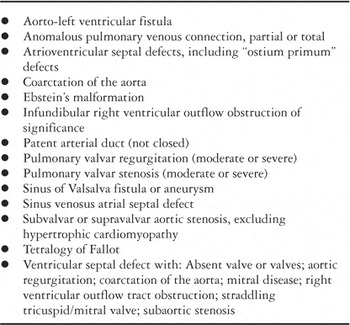
Table 2.
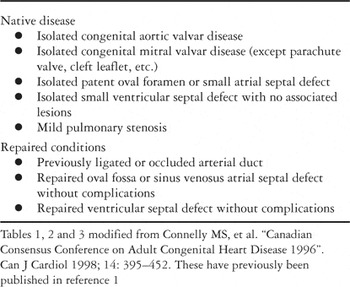
Table 3.
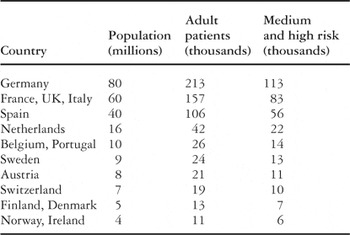
Table 4.
 You have
Access
- 1
- Cited by