





Significant outcomes
-
• Adolescents in residential care with physical neglect showed lower-than-expected performance in several neuropsychological domains, including selective attention, processing speed, working memory, planning, cognitive flexibility, and inhibition.
-
• Poorer cognitive and executive performance was associated with greater use of the non-productive coping style.
-
• The study identifies cognitive and executive performance as relevant correlates of coping in adolescents exposed to physical neglect, contributing to research on adaptation in residential care contexts.
Limitations
-
• The cross-sectional design prevents causal or directional conclusions about the relationship between neuropsychological functioning and coping styles.
-
• The sample size was small and highly specific, limiting the generalisability of the findings to other adolescent populations or care contexts.
-
• The selected subtests and global cognitive performance index may have obscured domain-specific associations between executive processes and coping strategies, while the self-report coping measure may have introduced response bias.
Introduction
Physical neglect constitutes a form of maltreatment characterised by the persistent lack of basic care, supervision, and protection necessary for the child’s well-being, with potential consequences for cognitive, emotional, and psychosocial development (Stoltenborgh et al., Reference Stoltenborgh, Bakermans-Kranenburg and van IJzendoorn2013; Magalhães & Camilo, Reference Magalhães and Camilo2023; Herrero-Roldán & Martín-Rodríguez, Reference Herrero-Roldán and Martín-Rodríguez2025). In adolescents in residential care, this experience is often part of broader trajectories of child protection involvement, marked by material deprivation, instability in caregiving figures, and cumulative exposure to different forms of victimisation (Segura et al., Reference Segura, Pereda, Abad and Guilera2015; Sölva et al., Reference Sölva, Haselgruber and Lueger-Schuster2020; Maneiro et al., Reference Maneiro, Llerena and López-Romero2023). From dimensional models of early adversity, physical neglect is primarily situated along the deprivation dimension, as it reflects the absence of basic conditions of care and stimulation necessary for expected development (McLaughlin et al., Reference McLaughlin, Sheridan and Lambert2014; Sheridan & McLaughlin, Reference Sheridan and McLaughlin2014; McLaughlin et al., Reference McLaughlin, Sheridan and Nelson2017). In this context, deprivation may reduce exposure to stable caregiving, adult guidance, and structured opportunities to learn active or problem-focused coping strategies (Zimmer-Gembeck & Skinner, Reference Zimmer-Gembeck and Skinner2011; Sheridan & McLaughlin, Reference Sheridan and McLaughlin2014; Gruhn & Compas, Reference Gruhn and Compas2020).
During adolescence, cognitive and executive resources play a key role in adaptation to the environment, as increasing academic, social, and emotional demands require a greater capacity for self-regulation, behavioural planning, and flexible adaptation to changing situations (Best & Miller, Reference Best and Miller2010; Crone & Dahl, Reference Crone and Dahl2012; Tervo-Clemmens et al., Reference Tervo-Clemmens, Calabro, Parr, Fedor, Foran and Luna2023). In this regard, available evidence indicates that early adversity, particularly when linked to experiences of neglect or deprivation, is associated with poorer performance on executive tasks related to working memory, inhibitory control, cognitive flexibility, and planning (Lambert et al., Reference Lambert, King, Monahan and McLaughlin2017; Johnson et al., Reference Johnson, Policelli, Li, Dharamsi, Hu, Sheridan, McLaughlin and Wade2021; Clinchard et al., Reference Clinchard, Casas and Kim-Spoon2025; Perevoznikova et al., Reference Perevoznikova, Berger, Grosse Wiesmann, White and Keil2025). Difficulties in attentional and executive processes, as well as in behavioural organisation, have also been described in minors under child protection measures, together with associations between executive functioning and emotional and behavioural adjustment (Camuñas et al., Reference Camuñas, Vaíllo, Mavrou, Brígido and Poole Quintana2020; Moreno-Manso et al., Reference Moreno-Manso, García-Baamonde, Guerrero-Barona, Godoy-Merino, Guerrero-Molina and Barbosa-Torres2021, Reference Moreno-Manso, García-Baamonde, de la Rosa Murillo, Blázquez-Alonso, Guerrero-Barona and García-Gómez2022). These difficulties are especially relevant for stress regulation, since responding adaptively to situations of pressure or uncertainty requires analysing the situation, inhibiting automatic responses, and generating response alternatives adjusted to the context (Compas et al., Reference Compas, Jaser, Bettis, Watson, Gruhn, Dunbar, Williams and Thigpen2017; Reising et al., Reference Reising, Bettis, Dunbar, Watson, Gruhn, Hoskinson and Compas2018).
Against this background, coping is an essential process for understanding the adaptation of adolescents exposed to adversity, as it reflects how they interpret and respond to the challenges of everyday life. This construct refers to the cognitive and behavioural efforts used to manage situations perceived as difficult or overwhelming, and is closely related to emotion regulation and psychological adjustment (Lazarus & Folkman, Reference Lazarus and Folkman1984; Zimmer-Gembeck & Skinner, Reference Zimmer-Gembeck and Skinner2011). Previous literature has indicated that child maltreatment is associated with coping difficulties and with more frequent use of avoidant, passive, or less problem-focused responses (Compas et al., Reference Compas, Jaser, Bettis, Watson, Gruhn, Dunbar, Williams and Thigpen2017; Gruhn & Compas, Reference Gruhn and Compas2020). In adolescents involved with the child protection system, these experiences may also influence the interpretation of stressful situations, perceived control, and the selection of strategies to manage distress and respond to problems (Jackson et al., Reference Jackson, Huffhines, Stone, Fleming and Gabrielli2017; Chiu et al., Reference Chiu, McGuire, Jackson, Stoolmiller and Rodriguez2023).
Although child maltreatment has been linked to coping difficulties and early adversity to alterations in executive functions, evidence on the relationship between cognitive and executive resources and coping styles in adolescents in situations of child protection involvement remains limited (Gruhn & Compas, Reference Gruhn and Compas2020; Johnson et al., Reference Johnson, Policelli, Li, Dharamsi, Hu, Sheridan, McLaughlin and Wade2021; Chiu et al., Reference Chiu, McGuire, Jackson, Stoolmiller and Rodriguez2023). Analysing this association is especially necessary when physical neglect constitutes the predominant type of maltreatment, since conditions of deprivation may hinder both the learning of adaptive responses and the resources needed to implement them (Sheridan & McLaughlin, Reference Sheridan and McLaughlin2014; Miller et al., Reference Miller, Sheridan, Hanson, McLaughlin, Bates, Lansford, Pettit and Dodge2018; Gruhn & Compas, Reference Gruhn and Compas2020; Murgueitio et al., Reference Murgueitio, Sheridan, Bauer and Propper2025). In this context, the objectives of the present study were: (1) to describe coping styles in a sample of adolescents in residential care with physical neglect as the predominant type of maltreatment; (2) to analyse participants’ cognitive performance using cognitive and executive measures; (3) to examine the relationship between cognitive performance and coping styles; and (4) to analyse whether global cognitive performance is associated with coping styles after controlling for sex, age, and polyvictimization.
Material and methods
Participants
This observational, cross-sectional study included 45 adolescents aged between 12 and 16 years in residential care in the Autonomous Community of Extremadura, Spain. The participants represented the total number of adolescents in residential care who presented physical neglect as the predominant type of maltreatment, according to the information recorded by child protection services during the data collection period.
All participants were placed in child protection residential centres due to situations of family-related lack of protection. The identification of maltreatment type was based on the information recorded in child protection files, prepared by social services after the assessment of each case. This classification was extracted by the research team for the purposes of the study. Given that different forms of maltreatment could coexist in some adolescents, the maltreatment type recorded as predominant was used as the selection criterion. In this study, physical neglect was understood as the failure to meet the child’s essential basic physical needs, including food, supervision, hygiene, protection, education, and health care (Erickson & Egeland, Reference Erickson, Egeland, Myers, Berliner, Briere, Hendrix, Jenny and Reid2002; Moreno-Manso et al., Reference Moreno-Manso, García-Baamonde, de la Rosa Murillo, Blázquez-Alonso, Guerrero-Barona and García-Gómez2022).
The inclusion criteria were being between 12 and 16 years of age, being in residential care during the study period, presenting physical neglect as the predominant type of maltreatment, and having sufficient capacity to understand and respond to the assessment instruments. Cases with significant difficulties in language comprehension, intellectual disability, or other neurodevelopmental or clinical conditions that could affect the validity of the assessment were excluded, as were adolescents who were in an emergency situation or undergoing assessment during the data collection period.
Instruments
Adolescent Coping Scale (ACS; Frydenberg & Lewis, Reference Frydenberg and Lewis1993). This instrument is designed for adolescents and assesses the coping strategies used in problematic situations. The ACS includes 18 strategies grouped into three general coping styles: problem-solving coping, non-productive coping, and reference-to-others coping. For the interpretation of the results, scores reflect the frequency with which each strategy is used: values between 30 and 49 indicate that it is used rarely, values between 50 and 69 indicate that it is used sometimes, and values between 70 and 89 indicate that it is used often. Regarding its psychometric properties, the Spanish version has shown adequate reliability indices, with Cronbach’s alpha values of α = 0.75 for the total scale, α = 0.92 for problem-solving coping, α = 0.79 for non-productive coping, and α = 0.80 for reference-to-others coping (Frydenberg & Lewis, Reference Frydenberg and Lewis2000). In our study, internal consistency was α = 0.79 for the total scale, α = 0.84 for problem-solving coping, α = 0.81 for non-productive coping, and α = 0.80 for reference-to-others coping.
Stroop Color and Word Test (SCWT; Golden et al., Reference Golden, Freshwater and Golden1978). This instrument assesses executive and attentional functioning, particularly processing speed, selective attention, inhibitory control, and interference control. The test consists of three conditions: Word reading, Color naming, and a Word-Color interference condition. Performance is obtained from the number of correct responses given within a set time. For the interpretation of the results, T-scores were used, with a normative mean of 50 and a standard deviation of 10; scores equal to or below 45 indicate below-average performance, scores between 46 and 55 indicate performance within the average range, and scores equal to or above 56 indicate above-average performance. Regarding its psychometric properties, the Spanish revised version has shown adequate internal consistency, with values of α = 0.85 for Word, α = 0.81 for Color, α = 0.69 for Word-Color, and α = 0.70 for Interference (Golden, Reference Golden2020). In our study, internal consistency was α = 0.80 for Word, α = 0.77 for Color, α = 0.72 for Word-Color, and α = 0.75 for Interference.
Wechsler Intelligence Scale for Children–Fifth Edition (WISC-V; Wechsler, Reference Wechsler2014). In this study, only the Digit Span and Coding subtests were used. Digit Span mainly assesses working memory, auditory attention, and the manipulation of verbal information through the repetition of number sequences in forward, backward, and sequencing order. Coding assesses processing speed, visual attention, and visuomotor coordination through the association between symbols and numbers within a set time. For the interpretation of the results, scaled scores were used, with a normative mean of 10 and a standard deviation of 3; scores between 5 and 7 indicate below-average performance, scores between 8 and 12 indicate average performance, and scores between 13 and 15 indicate above-average performance. Regarding its psychometric properties, the Spanish version has shown adequate internal consistency, with values of α = 0.90 for Digit Span and α = 0.82 for Coding (Wechsler, Reference Wechsler2015). In our study, internal consistency was α = 0.86 for Digit Span and α = 0.78 for Coding.
Behavioural Assessment of the Dysexecutive Syndrome for Children (BADS-C; Emslie et al., Reference Emslie, Wilson, Burden, Nimmo-Smith and Wilson2003). This battery is designed to assess executive functioning in children and adolescents. In this study, only the Zoo Map and Rule Shift Cards subtests were used. The former assesses planning, organisation, and problem-solving, whereas the latter assesses cognitive flexibility, inhibition, processing speed, and adaptation to new rules. For the interpretation of the results, raw scores are transformed into profile scores ranging from 0 to 4 according to the scoring criteria for each subtest, considering both performance and time penalties. Scores between 0 and 2 indicate lower-than-expected executive performance, whereas scores between 3 and 4 reflect performance within the normal range. Regarding its psychometric properties in the Spanish population, previous research has reported adequate internal consistency for the subtests used, with Cronbach’s alpha values of α = 0.96 for Zoo Map and α = 0.91 for Rule Shift Cards (Moreno-Manso et al., Reference Moreno-Manso, García-Baamonde, Guerrero-Barona, Godoy-Merino, Bueso-Izquierdo and Guerrero-Molina2020). In our study, internal consistency was α = 0.81 for Zoo Map and α = 0.89 for Rule Shift Cards.
Procedure
The study was authorised by the institution responsible for the guardianship of minors in residential care in the Autonomous Community of Extremadura, Spain, acting as their legal representative. For participants under 16 years of age, informed consent to participate in the study was provided by this institution as legal guardian. In addition, all procedures were approved by the Ethics Committee of the University of Extremadura (Ref.: 181/2020) and complied with the principles established in the Helsinki Declaration of 1975, as revised in 2008, or comparable ethical standards. The study also complied with Organic Law 3/2018, of 5 December, on Personal Data Protection and the Guarantee of Digital Rights, ensuring the confidentiality, coding, and secure storage of the information collected.
Before the assessment, all participants were informed about the general aims of the study, the voluntary nature of their participation, and the confidentiality of their responses. All adolescents provided voluntary assent to participate and received no financial compensation for their collaboration. The assessment was conducted individually in the residential care centres where the participants lived. All instruments were administered in a single individual session, lasting approximately 60 minutes per participant. The instruments were administered in their Spanish versions by two evaluators previously trained in the standardised application of the tests and in following the assessment protocol. During administration, the evaluators remained available to answer questions, ensure proper understanding of the instructions, and monitor possible signs of fatigue or comprehension difficulties. No relevant fatigue, comprehension difficulties, or incidents affecting the assessment process were observed.
Data analysis
Data were analysed using IBM SPSS Statistics version 27 for Windows. First, descriptive analyses were conducted for sociodemographic and child protection variables, as well as for ACS scores and the cognitive and executive performance measures assessed using the SCWT, BADS-C, and WISC-V. Measures of central tendency and dispersion, together with frequency distribution analyses, were used. In addition, ACS coping styles were compared using the Friedman test to determine whether significant differences existed between them. When significant differences were found, post hoc comparisons were performed using Wilcoxon signed-rank tests. Second, associations between cognitive and executive performance measures and ACS coping styles were analysed using partial Spearman correlations, controlling for sex, age, and polyvictimization. Polyvictimization was coded as a dichotomous variable, distinguishing between adolescents with physical neglect as the only recorded type of maltreatment and adolescents with physical neglect together with at least one other type of maltreatment. Third, a global cognitive performance index was calculated from the average of the SCWT, BADS-C, and WISC-V scores, previously standardised as z-scores. All scores were oriented so that higher values indicated better performance. This index was used as the main predictor in linear regression analyses to examine its association with ACS coping styles, after controlling for sex, age, and polyvictimization. To control for multiple comparisons and reduce the risk of Type I errors, the Benjamini–Hochberg procedure was applied (Benjamini & Hochberg, Reference Benjamini and Hochberg1995) to the post hoc Wilcoxon pairwise comparisons between coping styles, the partial correlation analyses, and the p values for the global cognitive performance index in the regression models, using a false discovery rate (FDR) of 0.05. Statistical significance was set at p < 0.05.
To justify the sample size, an a priori power analysis was conducted for linear regression models with four predictors, assuming a moderate-to-large effect size according to Cohen’s criteria (Reference Cohen1988), f 2 = 0.30, a significance level of α = 0.05, and a desired statistical power of 1−β = 0.80. The analysis indicated that a sample of approximately 45 participants would be sufficient to detect effects of this magnitude; therefore, the final sample was considered adequate for the main objectives of the study. In addition, the sample size is consistent with previous studies involving children and adolescents in residential care that examine clinical and psychosocial indicators associated with maltreatment and trauma (Collin-Vézina et al., Reference Collin-Vézina, Coleman, Milne, Sell and Daigneault2011; Sölva et al., Reference Sölva, Haselgruber and Lueger-Schuster2020; Farnfield & Onions, Reference Farnfield and Onions2026).
Results
The sample of the present study consisted of 45 adolescents in residential care, all of whom had physical neglect as the predominant type of maltreatment. Age ranged from 12 to 16 years, with a mean age of 14.58 years (SD = 1.45). Of the total sample, 21 were boys (46.7%) and 24 were girls (53.3%). Regarding educational level, most participants were enrolled in compulsory education (n = 41; 91.1%), followed by formal vocational training (n = 3; 6.7%) and post-compulsory secondary education (n = 1; 2.2%). With regard to legal status, guardianship was the most frequent situation (n = 37; 82.2%), followed by custody (n = 6; 13.3%) and emergency temporary guardianship (n = 2; 4.4%). The mean length of stay in residential care was 47.98 months (SD = 37.98), ranging from 5 to 154 months.
In addition, 28 participants (62.2%) had experienced more than one form of maltreatment, including physical neglect. Among polyvictimized adolescents, 25 had experienced two types of maltreatment (89.3%) and 3 had experienced three types of maltreatment (10.7%). The most frequent additional type of maltreatment was emotional neglect (n = 27; 96.4%), followed by sexual abuse (n = 3; 10.7%) and emotional maltreatment (n = 1; 3.6%).
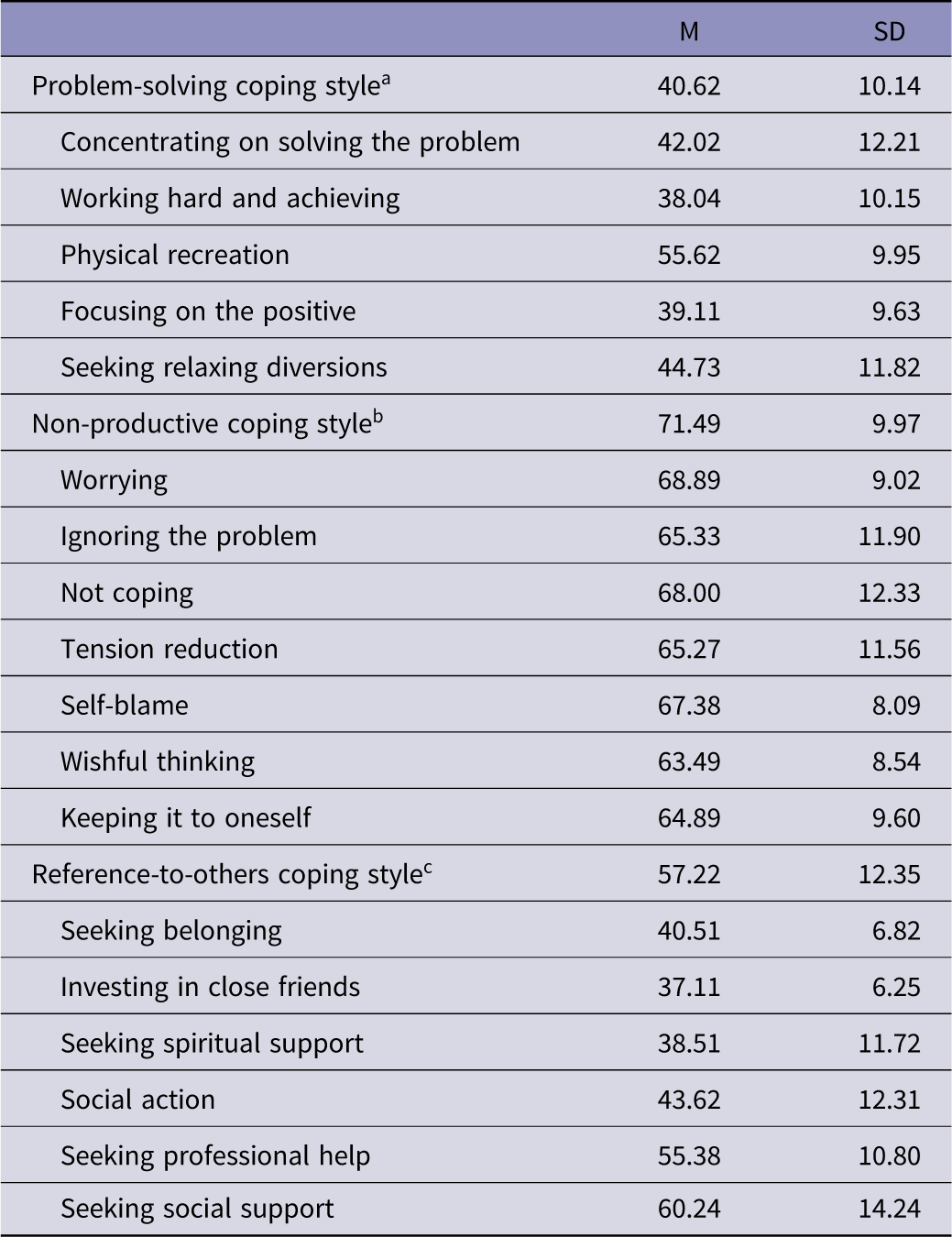
Descriptive statistics for ACS coping styles and strategies are shown in Table 1. The non-productive coping style obtained the highest mean score (M = 71.49; SD = 9.97), falling within the frequent-use range, followed by the reference-to-others coping style (M = 57.22; SD = 12.35), which fell within the occasional-use range. The problem-solving coping style showed the lowest mean score (M = 40.62; SD = 10.14), falling within the infrequent-use range. The strategies with the highest scores belonged to the non-productive coping style, specifically worrying (M = 68.89; SD = 9.02), not coping (M = 68.00; SD = 12.33), self-blame (M = 67.38; SD = 8.09), ignoring the problem (M = 65.33; SD = 11.90), tension reduction (M = 65.27; SD = 11.56), and keeping it to oneself (M = 64.89; SD = 9.60). The Friedman test showed significant differences among the three ACS coping styles, χ2(2) = 68.89, p < 0.001, Kendall’s W = 0.77. Post hoc comparisons using Wilcoxon signed-rank tests with Benjamini–Hochberg correction indicated that the non-productive coping style was significantly higher than both the problem-solving coping style (Z = −5.81, adjusted p < 0.001) and the reference-to-others coping style (Z = −4.24, adjusted p < 0.001). In addition, the reference-to-others coping style was significantly higher than the problem-solving coping style (Z = −5.78, adjusted p < 0.001).
Descriptive statistics for ACS coping styles and strategies

Table 1. Long description
The table presents descriptive statistics for different coping styles and strategies. It has 20 rows and 2 columns. The columns are labeled M and SD. The rows are labeled with different coping styles and strategies. Row 1: Problem-solving coping style, M 40.62, SD 10.14. Row 2: Concentrating on solving the problem, M 42.02, SD 12.21. Row 3: Working hard and achieving, M 38.04, SD 10.15. Row 4: Physical recreation, M 55.62, SD 9.95. Row 5: Focusing on the positive, M 39.11, SD 9.63. Row 6: Seeking relaxing diversions, M 44.73, SD 11.82. Row 7: Non-productive coping style, M 71.49, SD 9.97. Row 8: Worrying, M 68.89, SD 9.02. Row 9: Ignoring the problem, M 65.33, SD 11.90. Row 10: Not coping, M 68.00, SD 12.33. Row 11: Tension reduction, M 65.27, SD 11.56. Row 12: Self-blame, M 67.38, SD 8.09. Row 13: Wishful thinking, M 63.49, SD 8.54. Row 14: Keeping it to oneself, M 64.89, SD 9.60. Row 15: Reference-to-others coping style, M 57.22, SD 12.35. Row 16: Seeking belonging, M 40.51, SD 6.82. Row 17: Investing in close friends, M 37.11, SD 6.25. Row 18: Seeking spiritual support, M 38.51, SD 11.72. Row 19: Social action, M 43.62, SD 12.31. Row 20: Seeking professional help, M 55.38, SD 10.80. Row 21: Seeking social support, M 60.24, SD 14.24.
Note: Different superscript letters indicate significant pairwise differences among ACS coping styles after Benjamini–Hochberg correction.
Friedman test: χ2(2) = 68.89, p < 0.001, Kendall’s W = 0.77.
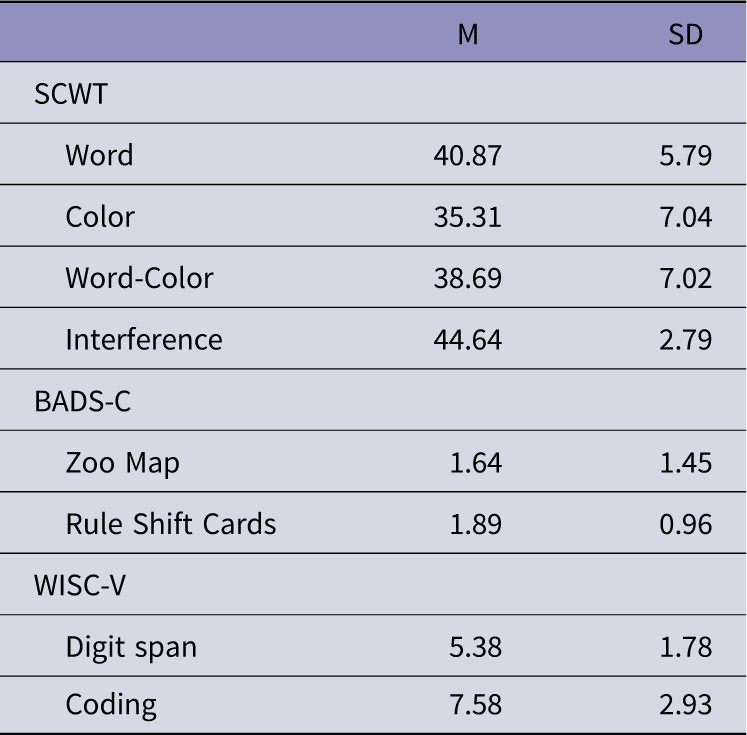
Descriptive statistics for cognitive and executive performance measures are presented in Table 2. In the SCWT, participants showed performance below the expected level for their age and educational level in Word (M = 40.87; SD = 5.79), Color (M = 35.31; SD = 7.04), Word-Color (M = 38.69; SD = 7.02), and Interference (M = 44.64; SD = 2.79). In the BADS-C, mean scores on Zoo Map (M = 1.64; SD = 1.45) and Rule Shift Cards (M = 1.89; SD = 0.96) reflected lower-than-expected performance according to normative criteria. In the WISC-V, scores on Digit Span (M = 5.38; SD = 1.78) and Coding (M = 7.58; SD = 2.93) were below the normative average.
Descriptive statistics for cognitive and executive performance measures

Table 2. Long description
The table presents descriptive statistics for cognitive and executive performance measures. It has 10 rows and 3 columns. The columns are labeled M, SD, and SCWT. The SCWT section includes rows for Word, Color, Word-Color, and Interference. The BADS-C section includes rows for Zoo Map and Rule Shift Cards. The WISC-V section includes rows for Digit Span and Coding. Each row lists the mean (M) and standard deviation (SD) values for the respective tests. The SCWT section shows mean values of 40.87, 35.31, 38.69, and 44.64 with standard deviations of 5.79, 7.04, 7.02, and 2.79 respectively. The BADS-C section shows mean values of 1.64 and 1.89 with standard deviations of 1.45 and 0.96 respectively. The WISC-V section shows mean values of 5.38 and 7.58 with standard deviations of 1.78 and 2.93 respectively.
Note: SCWT, Stroop Color and Word Test; BADS-C, Behavioural Assessment of the Dysexecutive Syndrome for Children; WISC-V, Wechsler Intelligence Scale for Children–Fifth Edition.
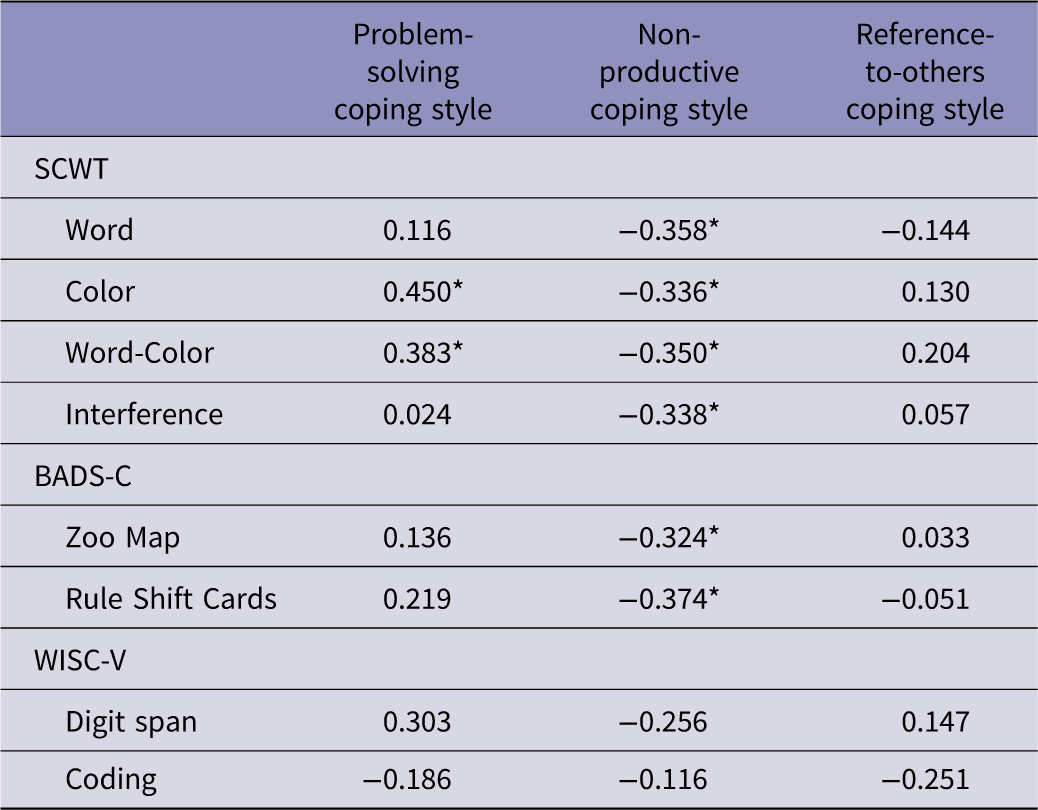
Partial Spearman correlation analyses, controlling for sex, age, and polyvictimization, showed significant associations between several cognitive and executive performance measures and ACS coping styles (Table 3). The most consistent pattern was observed for the non-productive coping style, which was negatively associated with all SCWT scores, specifically Word (r = −0.358; adjusted p = 0.048), Color (r = −0.336; adjusted p = 0.048), Word-Color (r = −0.350; adjusted p = 0.048), and Interference (r = −0.338; adjusted p = 0.048). Likewise, the non-productive coping style was negatively related to BADS-C tasks, specifically Zoo Map (r = −0.324; adjusted p = 0.048) and Rule Shift Cards (r = −0.374; adjusted p = 0.048). Regarding the problem-solving coping style, significant positive associations were found with SCWT scores in Color (r = 0.450; adjusted p = 0.024) and Word-Color (r = 0.383; adjusted p = 0.048).
Partial correlations between cognitive and executive performance measures and coping styles, controlling for sex, age, and polyvictimization

Table 3. Long description
A table with three columns and eight rows. The columns are labeled Problem-solving coping style, Non-productive coping style, and Reference-to-others coping style. The rows are labeled SCWT Word, SCWT Color, SCWT Word-Color, SCWT Interference, BADS-C Zoo Map, BADS-C Rule Shift Cards, WISC-V Digit span, and WISC-V Coding. Each cell contains a correlation value. Notable trends include negative correlations for the non-productive coping style across most measures and positive correlations for the problem-solving coping style in specific SCWT scores.
Note: SCWT, Stroop Color and Word Test; BADS-C, Behavioural Assessment of the Dysexecutive Syndrome for Children; WISC-V, Wechsler Intelligence Scale for Children–Fifth Edition.
Values are partial Spearman correlation coefficients, controlling for sex, age, and polyvictimization. p values were adjusted using the Benjamini–Hochberg procedure; *p < 0.05.
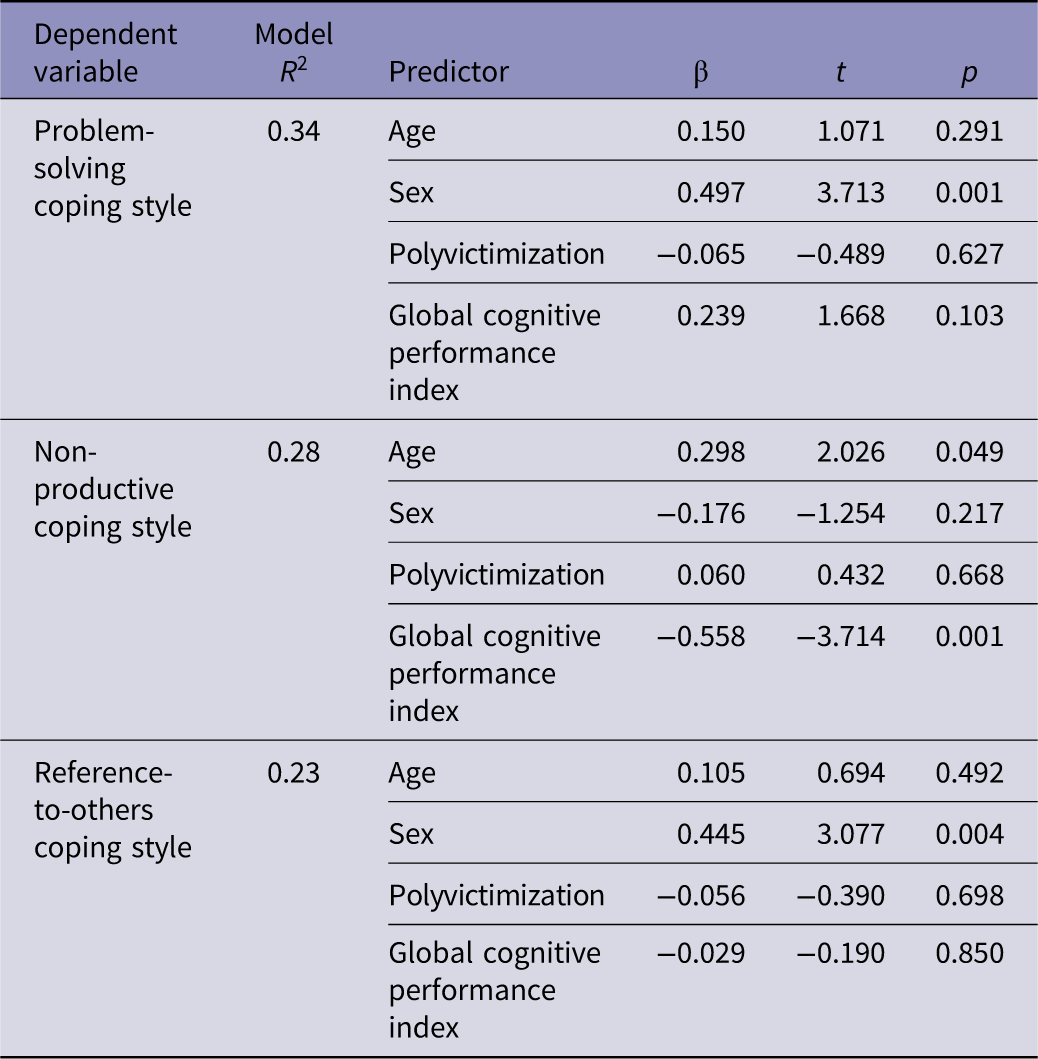
Finally, linear regression analyses showed that the global cognitive performance index was significantly associated with the non-productive coping style after controlling for sex, age, and polyvictimization (Table 4). Specifically, the full model explained 28% of the variance in the non-productive coping style, and the global cognitive performance index showed a significant negative coefficient (β = −0.558; t = −3.714; adjusted p = 0.003). No significant associations were found between the global cognitive performance index and the problem-solving coping style or the reference-to-others coping style after Benjamini–Hochberg adjustment (adjusted p = 0.155 and 0.850, respectively).
Regression analyses of the associations between the global cognitive performance index and coping styles, controlling for sex, age, and polyvictimization

Table 4. Long description
A table with four rows and five columns. The columns are labeled Dependent variable, Model R squared, Predictor, beta, t, and p. The rows are labeled with different predictors: Age, Sex, Poly victimization, and Global cognitive performance index. Each row provides values for the predictors’ beta coefficients, t-values, and p-values for three different coping styles: Problem-solving coping style, Non-productive coping style, and Reference-to-others coping style. The table shows the relationships and significance levels between the global cognitive performance index and various coping styles after controlling for other variables.
Note: R 2 refers to the full regression model for each coping style, including age, sex, polyvictimization, and the global cognitive performance index.
Standardised β coefficients are reported.
Values in the p column are two-tailed and unadjusted. For the global cognitive performance index, Benjamini–Hochberg-adjusted p values were 0.155 for problem-solving coping style, 0.003 for non-productive coping style, and 0.850 for reference-to-others coping style.
Discussion
Adolescents in residential care with experiences of physical neglect often present trajectories of child protection involvement marked by accumulated adversity, instability in care, and conditions of deprivation, which may hinder the organisation of adaptive responses to the demands of everyday life (Collin-Vézina et al., Reference Collin-Vézina, Coleman, Milne, Sell and Daigneault2011; Segura et al., Reference Segura, Pereda, Abad and Guilera2015; Maneiro et al., Reference Maneiro, Llerena and López-Romero2023). These trajectories may be associated both with difficulties in coping with stressful situations and with limitations in the cognitive resources involved in self-regulation, attention, and executive control (McLaughlin et al., Reference McLaughlin, Sheridan and Lambert2014; Johnson et al., Reference Johnson, Policelli, Li, Dharamsi, Hu, Sheridan, McLaughlin and Wade2021; Herrero-Roldán & Martín-Rodríguez, Reference Herrero-Roldán and Martín-Rodríguez2025). However, available evidence on the relationship between these processes in adolescents in situations of child protection involvement remains limited (Gruhn & Compas, Reference Gruhn and Compas2020; Johnson et al., Reference Johnson, Policelli, Li, Dharamsi, Hu, Sheridan, McLaughlin and Wade2021; Chiu et al., Reference Chiu, McGuire, Jackson, Stoolmiller and Rodriguez2023). Within this framework, the present study analysed coping styles and cognitive performance in adolescents in residential care with physical neglect as the predominant type of maltreatment, as well as the relationship between both variables.
The results indicated that the non-productive coping style was predominant among participants, falling within the frequent-use range. This style includes strategies such as worrying, avoidance, self-blame, not coping, and the tendency to keep the problem to oneself. Although these strategies may be less adaptive in the long term, they may also function as short-term attempts to manage distress in adverse or unpredictable environments (Jackson et al., Reference Jackson, Huffhines, Stone, Fleming and Gabrielli2017; VanMeter et al., Reference VanMeter, Handley and Cicchetti2020). In adolescents with experiences of physical neglect, this pattern may be understood as a form of response to difficult or overwhelming situations, associated with trajectories characterised by limited supervision, low stable adult support, and reduced opportunities to learn active and organised coping strategies (Morris et al., Reference Morris, Silk, Steinberg, Myers and Robinson2007; Zimmer-Gembeck & Skinner, Reference Zimmer-Gembeck and Skinner2011; Gruhn & Compas, Reference Gruhn and Compas2020). This finding is consistent with previous studies linking child maltreatment to greater difficulties in coping and emotion regulation processes during childhood and adolescence (Compas et al., Reference Compas, Jaser, Bettis, Watson, Gruhn, Dunbar, Williams and Thigpen2017; Gruhn & Compas, Reference Gruhn and Compas2020). Likewise, research with youth involved in child protection systems has shown that maltreatment is associated with coping patterns that are less oriented toward direct action and more focused on avoidant, indirect, or asocial responses, which may contribute to psychological adjustment problems (Jackson et al., Reference Jackson, Huffhines, Stone, Fleming and Gabrielli2017; Gabrielli et al., Reference Gabrielli, Jackson, Huffhines and Stone2018; VanMeter et al., Reference VanMeter, Handley and Cicchetti2020).
Regarding cognitive performance, participants showed scores below those expected for their age and educational level in tasks related to selective attention, processing speed, and working memory, as well as other executive processes involved in inhibition, resistance to interference, planning, cognitive flexibility, rule following, and behavioural monitoring. Lower performance in these processes is relevant because of their role in behavioural regulation, goal maintenance, and flexible adaptation to everyday demands (Diamond, Reference Diamond2013; Johnson et al., Reference Johnson, Policelli, Li, Dharamsi, Hu, Sheridan, McLaughlin and Wade2021). Moreover, the findings are consistent with studies linking early adversity, and particularly experiences of deprivation, to poorer executive functioning during childhood and adolescence, especially in working memory, inhibitory control, and cognitive flexibility (Miller et al., Reference Miller, Sheridan, Hanson, McLaughlin, Bates, Lansford, Pettit and Dodge2018; Johnson et al., Reference Johnson, Policelli, Li, Dharamsi, Hu, Sheridan, McLaughlin and Wade2021; Moreno-Manso et al., Reference Moreno-Manso, García-Baamonde, Guerrero-Barona, Godoy-Merino, Guerrero-Molina and Barbosa-Torres2021; Perevoznikova et al., Reference Perevoznikova, Berger, Grosse Wiesmann, White and Keil2025). In the case of physical neglect, these difficulties could be related not only to the lack of material care, but also to reduced availability of structured, predictable, and sensitive environments that support the progressive development of attentional, executive, and self-regulatory skills (Sheridan & McLaughlin, Reference Sheridan and McLaughlin2014; Moreno-Manso et al., Reference Moreno-Manso, García-Baamonde, de la Rosa Murillo, Blázquez-Alonso, Guerrero-Barona and García-Gómez2022; Clinchard et al., Reference Clinchard, Casas and Kim-Spoon2025; Herrero-Roldán & Martín-Rodríguez, Reference Herrero-Roldán and Martín-Rodríguez2025).
With respect to the relationship between cognitive performance and coping styles, the results showed that poorer performance was associated with greater use of the non-productive coping style, even after controlling for sex, age, and polyvictimization. This pattern suggests that difficulties in selective attention, inhibitory control, resistance to interference, planning, cognitive flexibility, and rule following may be related to the way adolescents analyse stressful situations, organise a response, and regulate behaviour flexibly (Compas et al., Reference Compas, Jaser, Bettis, Watson, Gruhn, Dunbar, Williams and Thigpen2017; Reising et al., Reference Reising, Bettis, Dunbar, Watson, Gruhn, Hoskinson and Compas2018). In this context, the use of non-productive strategies could be understood as a more likely response when the resources needed to maintain goals, inhibit automatic responses, and generate alternative solutions are limited (Zimmer-Gembeck & Skinner, Reference Zimmer-Gembeck and Skinner2011; Compas et al., Reference Compas, Jaser, Bettis, Watson, Gruhn, Dunbar, Williams and Thigpen2017; Gruhn & Compas, Reference Gruhn and Compas2020). This interpretation is especially relevant in adolescents in residential care, whose trajectories of neglect and deprivation may have reduced opportunities to develop active coping strategies (McLaughlin et al., Reference McLaughlin, Sheridan and Lambert2014; Sheridan & McLaughlin, Reference Sheridan and McLaughlin2014; Jackson et al., Reference Jackson, Huffhines, Stone, Fleming and Gabrielli2017). In addition, regression analyses showed that the global cognitive performance index was significantly associated with the non-productive coping style, but not with the problem-solving coping style or the reference-to-others coping style. The fact that this association remained after controlling for the effect of polyvictimization suggests that global cognitive performance may contribute to understanding the use of non-productive strategies beyond cumulative exposure to different forms of maltreatment (Collin-Vézina et al., Reference Collin-Vézina, Coleman, Milne, Sell and Daigneault2011; Segura et al., Reference Segura, Pereda, Abad and Guilera2015; Sölva et al., Reference Sölva, Haselgruber and Lueger-Schuster2020). In turn, the problem-solving coping style and the reference-to-others coping style may depend to a greater extent on other personal and interpersonal factors, such as perceived control, self-efficacy, trust in adults, availability of support, and the quality of previous relationships (Compas et al., Reference Compas, Jaser, Bettis, Watson, Gruhn, Dunbar, Williams and Thigpen2017; Lou et al., Reference Lou, Taylor and Di Folco2018; Gruhn & Compas, Reference Gruhn and Compas2020). In residential care contexts, this may be especially relevant, as the quality and stability of adult support could help explain whether adolescents seek help and use more active coping strategies or, conversely, rely more on non-productive strategies (Jackson et al., Reference Jackson, Huffhines, Stone, Fleming and Gabrielli2017; Lou et al., Reference Lou, Taylor and Di Folco2018).
This study has made it possible to identify the profile of coping and cognitive performance in adolescents in residential care with physical neglect as the predominant type of maltreatment, as well as to analyse the relationship between both dimensions. Nevertheless, the study has some limitations. First, the cross-sectional design prevents the establishment of causal or directional relationships between cognitive performance and coping styles, as well as the examination of their evolution over time. Second, the sample size was small and consisted of a highly specific sample, which limits the generalisability of the results to other maltreatment profiles, to minors in foster care, or to the general adolescent population. Although the power analysis suggested that the sample was adequate to detect moderate-to-large effects, future studies with larger and more diverse samples would allow the robustness and replicability of the findings to be confirmed. Third, although physical neglect was the predominant maltreatment profile and polyvictimization was statistically controlled, the high proportion of adolescents with additional forms of maltreatment suggests that the findings should not be interpreted as reflecting physical neglect in isolation. Moreover, polyvictimization was coded dichotomously, without considering the severity, duration, chronicity, or developmental timing of adverse experiences, factors that may influence cognitive development, self-regulation, and psychological adjustment in children and adolescents (McLaughlin et al., Reference McLaughlin, Sheridan and Lambert2014; Segura et al., Reference Segura, Pereda, Abad and Guilera2015; Sölva et al., Reference Sölva, Haselgruber and Lueger-Schuster2020). Fourth, due to time constraints, only selected subtests from the WISC-V and BADS-C were administered. These subtests were chosen because they were aligned with the aims of the study, but this limited the assessment of the remaining cognitive and executive domains covered by the full batteries. In addition, coping styles were assessed using a self-report measure, so responses may have been influenced by social desirability, current emotional state, item comprehension, or the residential care context. Finally, although the global cognitive performance index made it possible to reduce the number of predictors and avoid overly complex models, it may also have obscured specific relationships between particular executive domains and concrete coping strategies. Despite these limitations, one strength of the study is its focus on a specific and difficult-to-access sample, composed of adolescents in residential care with experiences of maltreatment and child protection involvement, a particularly vulnerable and heterogeneous population (Collin-Vézina et al., Reference Collin-Vézina, Coleman, Milne, Sell and Daigneault2011; Sölva et al., Reference Sölva, Haselgruber and Lueger-Schuster2020; Maneiro et al., Reference Maneiro, Llerena and López-Romero2023). This study also provides evidence on physical neglect as a specific form of child maltreatment that requires greater empirical attention in adolescent populations (Moreno-Manso et al., Reference Moreno-Manso, García-Baamonde, de la Rosa Murillo, Blázquez-Alonso, Guerrero-Barona and García-Gómez2022; Herrero-Roldán & Martín-Rodríguez, Reference Herrero-Roldán and Martín-Rodríguez2025). In addition, it integrates relevant dimensions for understanding the adaptation of adolescents exposed to adversity, such as coping and cognitive performance, which are often analysed independently (Gruhn & Compas, Reference Gruhn and Compas2020; Johnson et al., Reference Johnson, Policelli, Li, Dharamsi, Hu, Sheridan, McLaughlin and Wade2021). Another methodological strength is that the statistical analyses controlled for sex, age, and polyvictimization, which helps to reduce the possible effect of confounding variables.
Future research should conduct longitudinal studies to analyse the evolution of cognitive performance and coping styles during the stay in residential care and after leaving the placement. It would also be necessary to examine possible mediating or moderating variables, such as post-traumatic symptomatology, emotion regulation, attachment, quality of social support, coping self-efficacy, and the stability of child protection measures. Likewise, future studies could analyse whether interventions aimed at improving executive functions and coping strategies reduce the use of the non-productive coping style and promote better emotional, behavioural, and social adjustment.
In conclusion, this study provides evidence on the relationship between cognitive performance and coping styles in adolescents in residential care with physical neglect as the predominant type of maltreatment. The findings suggest that the non-productive coping style was predominant and negatively associated with cognitive performance, particularly in executive and attentional domains. The global cognitive performance index was also identified as a relevant factor for understanding this coping style after controlling for sex, age, and polyvictimization. Overall, these results highlight the importance of considering coping and cognitive performance together when studying adaptation in adolescents in residential care with experiences of neglect, as well as the potential value of interventions that integrate emotion regulation, executive functions, and problem-solving, with stable adult support in the residential context. Future longitudinal research should confirm the directionality of these associations and examine whether improvements in executive functions contribute to reducing the non-productive coping style and promoting better psychosocial adjustment.
Data availability statement
The datasets generated and/or analysed during the current study are not publicly available due to privacy and ethical restrictions, but may be made available from the corresponding author upon reasonable request.
Acknowledgements
The authors would like to thank the child protection residential centres of Extremadura for their collaboration, as well as all adolescents who participated in the study.
Author contributions
Conceptualisation, A.A.-M. and J.M.M.-M.; methodology, A.A.-M., J.M.M.-M., C.B.-T., C.S.-D., and M.E.G.-B.; formal analysis, A.A.-M., C.B.-T., and J.M.M.-M.; investigation, A.A.-M., C.B.-T., M.E.G.-B., C.S.-D., and J.M.M.-M.; data curation, A.A.-M., C.B.-T., C.S.-D., and J.M.M.-M.; writing – original draft preparation, A.A.-M. and J.M.M.-M.; writing – review and editing, A.A.-M., C.B.-T., M.E.G.-B., C.S.-D., and J.M.M.-M.; supervision, J.M.M.-M. and C.B.-T. All authors revised the manuscript critically for important intellectual content and approved the final version to be published.
Funding statement
This research was co-financed at 85% by the European Union, the European Regional Development Fund (ERDF), and the Regional Government of Extremadura. Managing Authority: Ministry of Finance. Grant file no. GR24004. The funding bodies had no role in the study design, data collection, data analysis, interpretation of the results, or writing of the manuscript.
Competing interests
The authors declare that they have no competing interests.
Ethical standards
The study procedures were approved by the Bioethics and Biosecurity Commission of the University of Extremadura (Ref.: 181/2020). All procedures involving human participants complied with the ethical standards of the University of Extremadura and with the Helsinki Declaration of 1975, as revised in 2008, or comparable ethical standards. For participants under 16 years of age, informed consent was provided by the institution legally responsible for their guardianship, acting as their legal representative. All participants were informed about the study and provided voluntary assent to participate.
Consent for publication
Not applicable.

 Open access

