Introduction
Since the 1970s, India has experienced a steady fall in its fertility, and by 2011 the total fertility rate had reached 2.4 (Office of the Registrar General, 2013). Declines in fertility have occurred in all states, and among all socioeconomic groups. Indeed, among the 20 big states in the country, half had recorded below replacement level fertility in 2011. Population projections suggest that India as a whole will reach replacement level fertility by the middle of this century. A corollary of this fertility transition is that a substantial proportion of young people in India are growing up in smaller families with fewer siblings than earlier generations of young people. Nationally, for example, 15% of young people aged 10–24 were residing in households with no or a single surviving sibling in 2005–06 (calculated from birth history data from the women data file of the National Family Health Survey conducted in 2005–06).
It has been argued that declines in sibship size can result in increased gains in familial and ultimately societal investments in child health and education, with important implications for the life chances of young people, particularly girls (National Research Council & Institute of Medicine, 2005). For example, several empirical studies from both developed and developing countries have shown that a child’s intellectual and educational outcomes are negatively associated with the number of siblings or the number of co-residential siblings, although some studies have observed that this relationship can be the reverse or neutral in countries at low levels of development, at early stages of the demographic transition or in which kin networks share the costs of schooling (Lloyd, Reference Lloyd1994; Kelly, Reference Kelly1996; Pong, Reference Pong1997; Jæger, Reference Jæger2008, Reference Jæger2009; Sen & Clemente, Reference Sen and Clemente2010). This relationship is often attributed to a dilution of parental resources and inputs – economic, material, cultural, social and interpersonal – available for each child in large families (Blake, Reference Blake1981, Reference Blake1985, Reference Blake1989; Downey, Reference Downey1995, Reference Downey2001; Steelman et al., Reference Steelman, Powell, Werum and Carter2002), although some have attributed it to the intellectually immature environment in large families (Zajonc & Markus, Reference Zajonc and Markus1975). Similarly, it has been argued that declines in sibship size along with macro-economic development may free young people up from domestic responsibilities as well as from the need to contribute to family income at a young age or while still a student, although these effects may play out differently for the work roles of boys and girls because of differences in gender roles in the family (National Research Council & Institute of Medicine, 2005). Studies have also observed that young people growing up in small families or in contexts characterized by small family size ideals may inherit family size norms of their parents or other influential adults or what they see in the environment around them (Régnier-Loilier, Reference Régnier-Loilier2002; Goldstein et al., Reference Goldstein, Lutz and Testa2003; Lutz et al., Reference Lutz, Skirbekk and Testa2007).
In India, studies exploring the effects of declines in sibship size are limited, which is not surprising given the persistence of high fertility in most parts of the country until recently. Indeed, studies exploring the associations between declines in sibship size and young people’s life experiences are even more limited. Drawing on data from a sub-nationally representative study of key transitions experienced by young people in India, this paper examines the associations between surviving sibship size and young women’s transitions to adulthood. Specifically, it seeks to: (1) assess the extent to which transitions to adulthood experienced by young women aged 20–24 with fewer siblings differ from those experienced by young women with more siblings; and (2) examine whether the associations between surviving sibship size and young women’s transitions to adulthood are context-specific; that is, whether the associations are similar or different in low-fertility and high-fertility settings in the country. It is hypothesized that sibship size may directly affect the resources that young women acquire during their transitions to adulthood, which in turn may influence the nature of transitions to adulthood that they make.
Study setting
Data were drawn from the Youth in India: Situation and Needs study, a sub-nationally representative study undertaken for the first time in India, of key transitions experienced by young people (IIPS & Population Council, 2010). The study was conducted among representative samples of youth from six Indian states: Andhra Pradesh, Bihar, Jharkhand, Maharashtra, Rajasthan and Tamil Nadu. Together, youth in these states account for 39% of the total youth population (aged 15–24) in the country, and their distributions by age, level of literacy, religion, caste and marital status are similar to those of the youth population nationally.
The six states were purposively selected to reflect the regional diversity within India in terms of the social, economic and demographic characteristics of the population, and thus lie at the extremes of the country’s socioeconomic and cultural spectrums. Demographically, Andhra Pradesh, Maharashtra and Tamil Nadu had reached below replacement level fertility rate in 2011 (total fertility rate of 1.7–1.8); in contrast, the total fertility rate is well above the replacement level in the remaining three states (total fertility rate of 2.9–3.6) (Office of the Registrar General, 2013). Andhra Pradesh, Maharashtra and Tamil Nadu are among the more economically progressive states in the country, accounting for 7–13% each of the national Gross Domestic Product, while Bihar, Jharkhand and Rajasthan are among the least developed states, accounting for 2–4% each (Ministry of Statistics and Programme Implementation, 2008). Maharashtra and Tamil Nadu are among the most urbanized states, with close to a half of their populations living in urban areas. In contrast, Bihar, Jharkhand and Rajasthan are characterized by large rural populations, with just one-tenth to one-quarter of their populations living in urban areas (Office of the Registrar General & Census Commissioner, 2011). Finally, differences are also evident in terms of kinship structure and gender relations: the three northern states represent settings in which family systems are particularly age- and gender-stratified, and women’s agency particularly restricted, while Maharashtra and the two southern states represent settings in which relations are relatively more egalitarian and women have relatively more agency (Dyson & Moore, Reference Dyson and Moore1983).
Methods
Study design
The study comprised three phases: an initial qualitative phase, a survey and subsequent in-depth interviews with survey respondents who had reported certain experiences. Data presented in this paper were drawn from the survey. The survey focused on married and unmarried young women and unmarried young men aged 15–24 and, because of the paucity of married young men of younger age, married young men aged 15–29. The study treated rural and urban areas as independent sampling domains and a systematic, multi-stage sampling design was adopted to draw sample areas independently for each of these two domains. In each primary sampling unit (PSU), households to be interviewed were selected by systematic sampling. Within each selected household, no more than one respondent was interviewed from one category, resulting in a maximum of two interviews (with one married and one unmarried respondent) from any household. In cases where more than one respondent from a single category was found in the household, one respondent was selected randomly, and no replacement of the respondent selected was allowed.
Fieldwork was undertaken in Jharkhand, Maharashtra and Tamil Nadu during 2006–2007 and Andhra Pradesh, Bihar and Rajasthan during 2007–2008. A total of 50,848 young people were successfully interviewed from 174,037 households enumerated in the survey. These included 11,522 unmarried young men, 17,362 unmarried young women, 8052 married young men and 13,912 married young women. Response rates for individual interviews were in the range of 84–90% and less than 1% refused to participate. Data presented in this paper were mainly restricted to 13,690 unmarried and married young women aged 20–24; note, however, that the study drew on the sample of 31,274 unmarried and married young women aged 15–24 to examine the changes in surviving sibship size across ages. The analysis was restricted to those aged 20–24 to ensure that the women in the analytical sample had had the opportunity to experience the key transitions explored in the paper.
The development of the questionnaire was informed by other survey instruments and insights obtained in the pre-survey qualitative phase. The survey instrument was finalized after extensive pre-testing. The individual questionnaire included questions on surviving sibship size and sex composition of surviving siblings, educational attainment and vocational skills training, work experience, agency and gender role attitudes, awareness of sexual and reproductive matters, connectedness and friendship, pre-marital sexual relationships, marriage process and married life, health and health seeking and political and civil society participation.
Variables
Sibship size
Young women who reported no or a single surviving sibling were categorized as those with ‘small surviving sibship size’, indicative of replacement level fertility experiences of parents, and those who reported two or more surviving siblings as those with ‘large surviving sibship size’, indicative of high fertility experiences of parents.
Measures of transitions to adulthood
To operationalize the components of successful transitions to adulthood, the study adapted the conceptual framework presented in the National Research Council and Institute of Medicine (2005) synthesis of what is known about the transition to adulthood in developing countries. This framework argues that young people need to be adequately prepared for five key adult roles: worker, citizen and community participant, spouse, parent and household manager. It further articulates that in order to enable young people to successfully assume these roles, they must be endowed with: (1) good mental and physical health, including reproductive health and the knowledge and means to sustain health; (2) an appropriate stock of human and social capital; (3) the acquisition of prosocial values and the ability to contribute to the collective well-being; (4) the acquisition of a sense of self and a sense of personal competence among others.
Transitions to work, marriage and parenthood among young women aged 20–24 were explored in this study. Two indicators were used to capture young women’s transition to work roles: (1) non-experience of child labour, that is, did not engage in paid or unpaid work before age 15 (those who had never worked were categorized as ‘never engaged in child labour’), and (2) paid employment for the most part of the year preceding the survey, that is, six months or more. Three indicators related to transition to marriage were used: (1) among women who were married, marriage was delayed at least until age 18, (2) young women’s role in the choice of their husband and (3) experience of violence-free marital relations; that is, never experienced physical or sexual violence within marriage. The indicator pertaining to a young woman’s role in the choice of her husband assessed whether she played no role at all and met her husband only on the wedding day, participated along with her parents in marriage-related decisions and had some pre-marital contact with her husband, or made the decision on her own and had considerable pre-marital contact with her husband. Four indicators were used to capture the transition to parenthood: (1) childbearing delayed at least for a year after cohabitation among those who had cohabited for one year or more (those who had never been pregnant were categorized along with those who had their first pregnancy after one year of cohabitation), (2) use of contraception to delay the first pregnancy, (3) institutional delivery for the first birth and (4) desired family size.
To measure resources that enable young women to make the successful transitions to adulthood mentioned above, indicators related to young women’s acquisition of human capital, their agency, their attitudes and perceptions with regard to gender roles and their access to a supportive family environment were included. Specifically, two indicators of acquisition of human capital were used: (1) completion of secondary school, i.e. at least Class 10, and (2) participation in any vocational skills training programme.
Young women’s agency was measured by four indicators: decision-making autonomy, mobility, control over money and self-efficacy. In order to assess young women’s decision-making autonomy, all respondents were asked about their involvement in decisions related to three specific matters: choice of friends, spending one’s own money and buying clothes for self. If young women reported that they independently made these decisions, they were considered to have decision-making autonomy. Mobility was measured by a number of questions relating to whether the respondents were permitted to visit selected places outside their village (rural) or neighbourhood (urban) unescorted. These places included the home of a relative or friend, a movie theatre, video parlour or other places of entertainment, and a community programme. A summary measure was created that indicated the percentage of women who were free to visit at least one location outside their village or neighbourhood unescorted. Control over resources assessed whether young women owned a savings account in a bank or post-office. Finally, self-efficacy assessed young women’s ability to confront a person who had said or done something wrong to them, and to express their opinion to elders in the family; young women who responded affirmatively to both were considered to have self-efficacy.
To measure young women’s gender role attitudes, all respondents were probed about whether they agreed or disagreed with the following four statements: (1) husbands alone should not decide how household money is spent; (2) girls should be allowed to decide when they should marry; (3) women need not obtain their husband’s permission for most of the things; and (4) boys should do as much household work as girls. Young women who agreed to all these four statements were considered to have gender egalitarian norms.
Young women’s access to a supportive family environment during their teenage years was captured by two indicators: (1) experience of gender egalitarian socialization in terms of freedom of movement; that is, young women were given as much freedom to go out as their brothers or male cousins; (2) and experience of gender egalitarian socialization in terms of housework expectations; that is, young women were not expected to do more housework than their brothers or male cousins.
Background characteristics
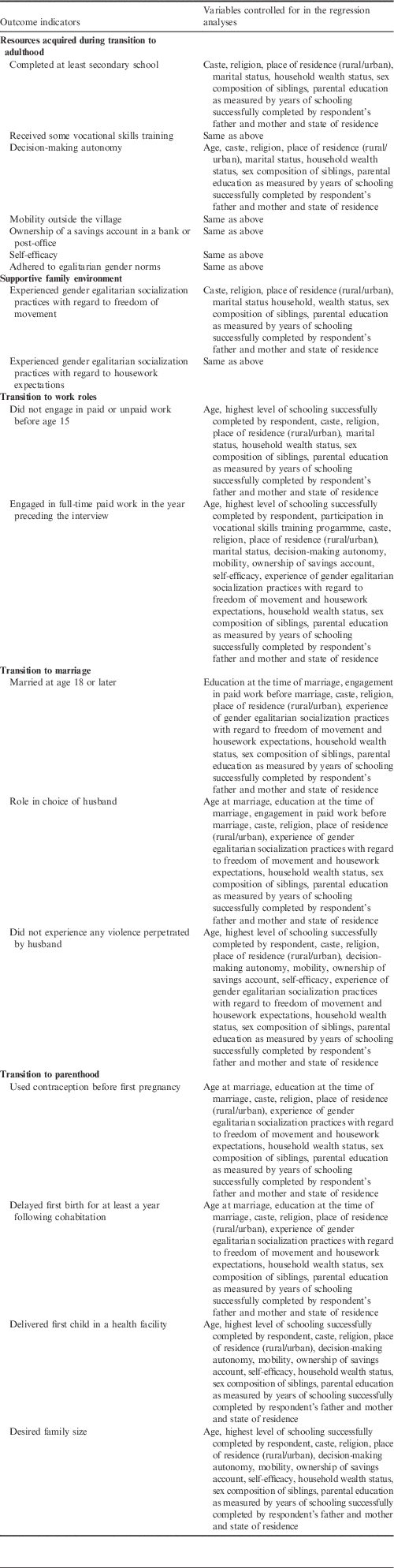
A number of background variables, including respondent’s current age, age at marriage or cohabitation, years of schooling successfully completed at the time of the interview and at the time of marriage, engagement in paid work before marriage, religion, caste, household economic status, marital status, place of residence (rural or urban) and state of residence, as appropriate, were controlled for in the regression analyses (see Table 1). Household wealth was measured using an index based on ownership of selected durable goods (e.g. means of transportation) and amenities (e.g. toilet facilities, cooking fuel); possible scores ranged from 0 to 54 (IIPS & Population Council, 2010). Likewise, the regression analyses controlled for the effects of the sex composition of siblings (no siblings, only brothers, only sisters and both brothers and sisters) and education of parents. Additionally, the effects of participation in vocational skills training programmes, young women’s agency, gender role attitudes and socialization experiences were controlled for in regression analyses pertaining to indicators of transitions to work roles, marriage and parenthood, as appropriate.
Variables controlled for in the regression analyses for each of the outcome indicators

Analysis
The value of each outcome was compared between young women who reported small and large surviving sibship size. Separate multivariate regression analyses were conducted to ascertain the relationship between sibship size and each of the outcome indicators, after adjustment for a number of background characteristics, described above. Given the sharp regional divide described earlier and to test whether the effects of sibship size vary by macro-level contextual factors, analyses were also conducted for the two regions separately, that is, Bihar, Jharkhand and Rajasthan, representing high-fertility settings on the one hand, and Andhra Pradesh, Maharashtra and Tamil Nadu, representing low-fertility settings on the other.
Results
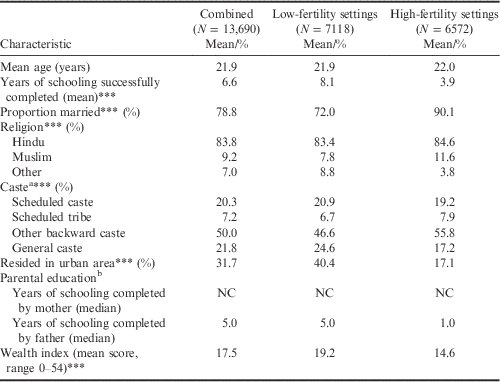
The mean age of young women in the sample was 22 years, with no difference between low-fertility and high-fertility settings (Table 2). Young women had on average completed 7 years of schooling; those from low-fertility settings had completed more years of schooling than those in high-fertility settings (8 years versus 4 years). The majority of women in the sample were married (79%), particularly in high-fertility settings (90% compared with 72% in low-fertility settings). Over 80% of young women belonged to the Hindu religion and three-quarters or more belonged to disadvantaged castes such as scheduled castes, scheduled tribes and other backward castes. One-third of young women were from urban areas; a larger proportion of those from low- than high-fertility settings resided in urban areas (40% versus 17%). Most young women reported that their mother had no formal education, regardless of the settings. However, they reported that their father had on average completed 5 years of schooling, with fathers of young women in low-fertility settings being more educated than those in high-fertility settings (5 years versus 1 year). The majority of young women came from economically disadvantaged households (mean score of 18 on a wealth index scale, which ranged from 0 to 54); young women from low-fertility settings were somewhat better off than their counterparts in high-fertility settings (mean score of 19 versus 15).
Socio-demographic characteristics of young women aged 20–24, India 2006–2008
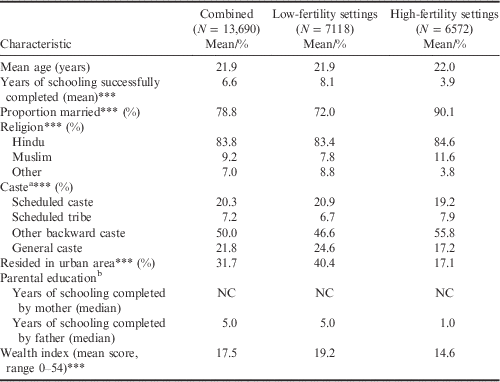
NC: not calculated as more than 50% had no formal education.
aExcluded 63 women with missing information on caste; bexcluded 754 and 169 women with missing information on mother’s and father’s education, respectively.
***Differences between low- and high- fertility settings significant at p≤0.001.
Size and sex composition of surviving sibship
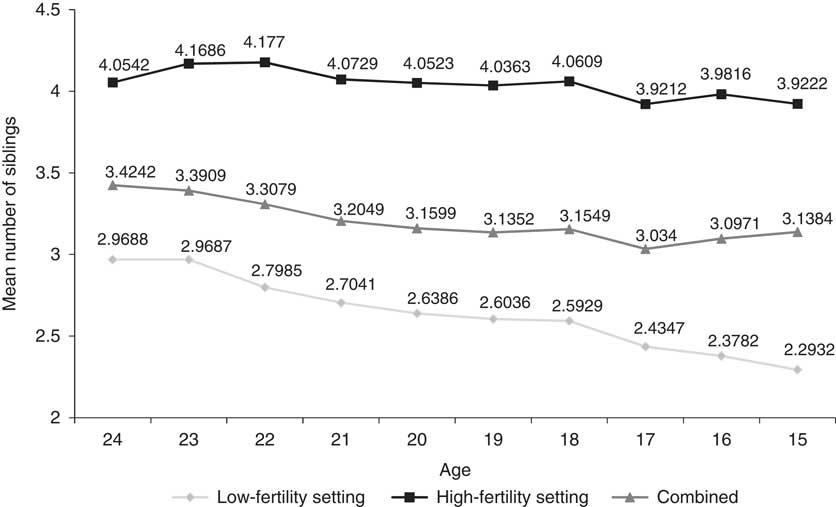
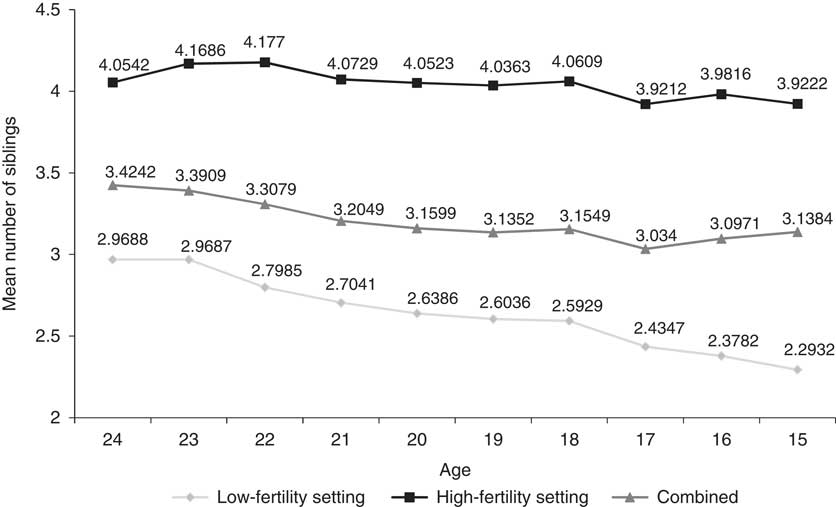
Young women reported on average 3.3 siblings nationally – 2.8 in low-fertility settings and 4.1 in high-fertility settings – reflecting the regional diversity within India in terms of fertility decline (not shown in figures or tables). Nationally, one in seven (15%) young women reported no or a single sibling; this proportion stood at 19% in low-fertility settings and 7% in high-fertility settings (not shown in figures or tables). The findings also show a steady decline in sibship size in low-fertility settings – from 3 among 24-year-olds to 2.3 among 15-year-olds (Fig. 1). However, the declines were slow and erratic nationally and in high-fertility settings.
Surviving sibship size reported by young Indian women aged 15–24 by fertility setting.
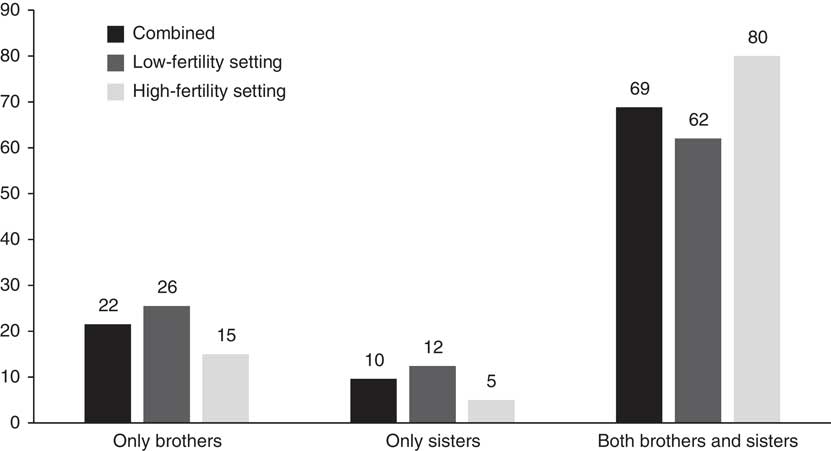
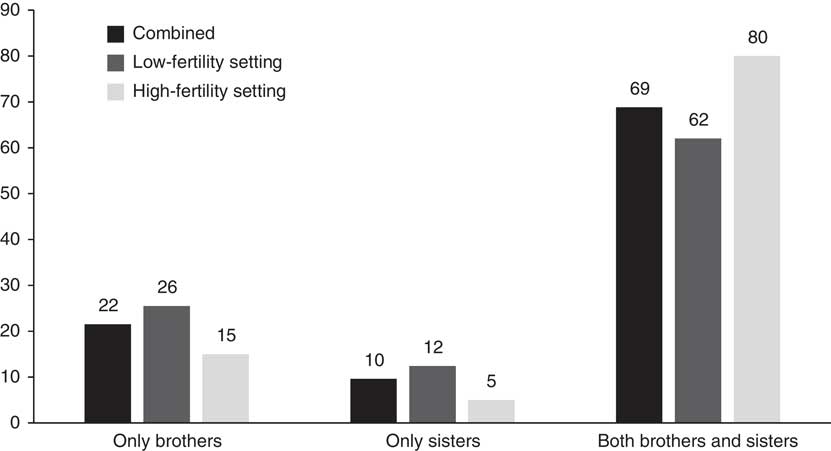
Sex composition of surviving siblings reported by young women with at least one sibling, presented in Fig. 2, shows that two-thirds of young women reported both brothers and sisters nationally; a larger proportion of young women in high-fertility settings than low-fertility settings, not surprisingly, reported siblings of both sexes (80% versus 62%). The findings also show that when siblings of only one sex were reported, it was largely brothers rather than sisters being reported; while 22% of young women reported only brothers, just 10% reported only sisters. The pattern was similar in both low-fertility and high-fertility settings (26% and 12%, respectively, in low-fertility settings; 15% and 5%, respectively, in high-fertility settings).
Sex composition of surviving siblings reported by young Indian women aged 20–24 with at least one sibling by fertility setting.
Nature of young women’s transitions to adulthood
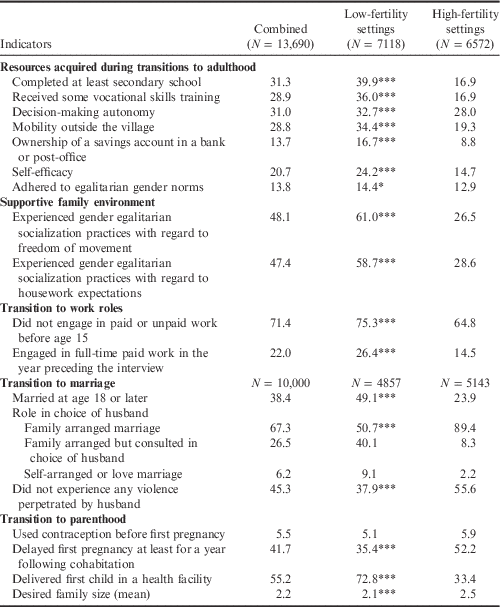
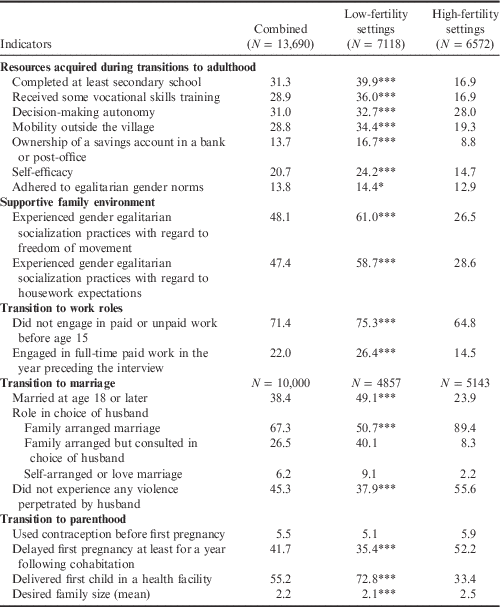
The resources with which young women had transitioned to adulthood and the nature of their transitions to work, marriage and parenthood are summarized in Table 3. The findings show that the vast majority of young women had transitioned to adulthood without adequate resources. Specifically, acquisition of human capital – completion of at least secondary school and receipt of some vocational skills training – was limited; just 31% of young women had completed at least secondary school and 29% had received some vocational skills training. Young women in low-fertility settings were more likely than those in high-fertility settings to have completed secondary education (40% versus 17%) and to have participated in vocational skills training programmes (36% versus 17%).
Proportions (%) of young Indian women aged 20–24 reporting resources acquired during transitions to adulthood, and experiencing various transitions to adulthood, by fertility settings, India 2006–2008
*Differences between low- and high-fertility settings significant at p≤0.05; ***differences between low- and high-fertility settings significant at p≤0.001.
Young women’s agency was generally limited, regardless of the indicator used to capture agency. Specifically, 31% of young women reported decision-making autonomy; just 29% were permitted to visit locations outside their village or neighbourhood unescorted; 14% owned a savings account; and 21% displayed self-efficacy. Young women in low-fertility settings scored better than those from high-fertility settings on all these indicators. The findings also show that adherence to gender egalitarian norms was limited among the study participants; only 13–14% of young women adhered to gender egalitarian norms, regardless of the settings.
With regard to access to a supportive family environment while growing up, the findings show that the family environment while growing up was far from supportive for many young women. Just half of young women reported gender egalitarian socialization experiences during their teenage years with regard to freedom of movement (48%) and housework expectations (47%). Again, young women from low-fertility settings were more likely than others to report egalitarian socialization practices (61% versus 27% with respect to freedom of movement; 59% versus 29% with respect to housework expectations).
Data on the nature of young women’s transitions to adulthood showed that many had not made a successful transition. Specifically, a substantial proportion of young women had transitioned into work roles at a young age; just 71% of young women reported that they did not engage in any work – paid or unpaid – before age 15, with young women in low-fertility settings more likely than others to so report (75% versus 65%). At the same time, only 22% of young women were engaged in full-time paid work in the year preceding the interview, with young women in low-fertility settings being more likely than others to have worked full time (26% versus 15%). Among the married, the majority were married as children; just 38% of young women were married at age 18 or later and young women in low-fertility settings were twice as likely as those in high-fertility settings to have done so (49% versus 24%). Moreover, the vast majority of young women reported a family-arranged marriage and that they met their husband for the first time at the wedding (67%); 27% reported that they were consulted in the selection of their husband and given an opportunity to meet him prior to marriage; and just 6% had selected their husband on their own. Young women in low-fertility settings were more likely to report that they were consulted in the selection of their husband (40% versus 8%) or they had chosen their husband on their own (9% versus 2%). Finally, the findings show that marriage was violence-free for 45% of women; more women in high- than low-fertility settings so reported (56% versus 38%).
When considering the indicators of transition to parenthood, the use of contraception to delay the first pregnancy was rare, regardless of the settings (5–6%). Childbearing in the first year of cohabitation was common; just 42% of young women reported that they had never been pregnant or had their first pregnancy after a year of cohabitation. More women in high- than low-fertility settings so reported, perhaps indicating delayed cohabitation associated with marriages in childhood in the former (52% versus 35%). A little over half of women (55%) had their first child delivered in a health facility; more women in low- than high-fertility settings so reported (73% versus 33%). Finally, reflective of the declines in fertility, most young women reported a preference for small families (2.2 children), with young women in low-fertility settings indicating smaller family size ideals than those in high-fertility settings (2.1 versus 2.5 children).
Association between surviving sibship size and young women’s transitions to adulthood
Both bivariate comparisons and multivariate regression analyses were conducted to examine the association between surviving sibship size and young women’s transitions to adulthood. The findings are summarized in Tables 4 and 5.
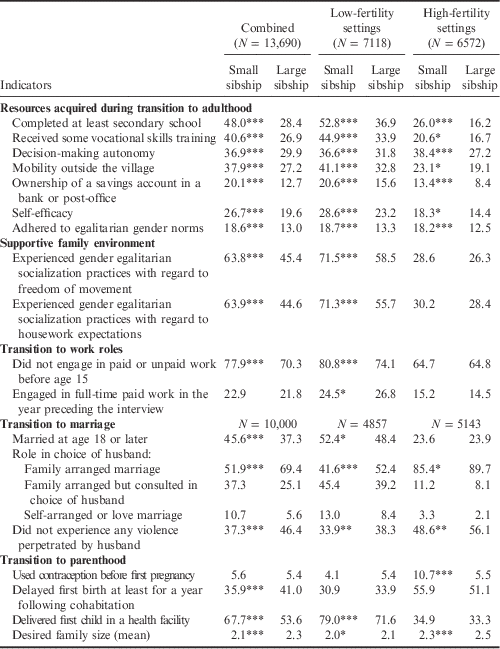
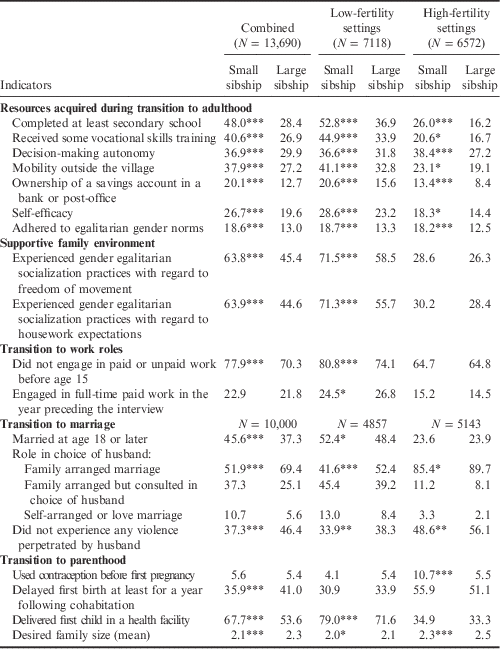
Association between surviving sibship size and transitions to adulthood experienced by young women aged 20–24 using bivariate analysis, India 2006–2008
*Differences between small and large sibship size significant at p≤0.05; **differences between small and large sibship size significant at p≤0.01; ***differences between small and large sibship size significant at p≤0.001.
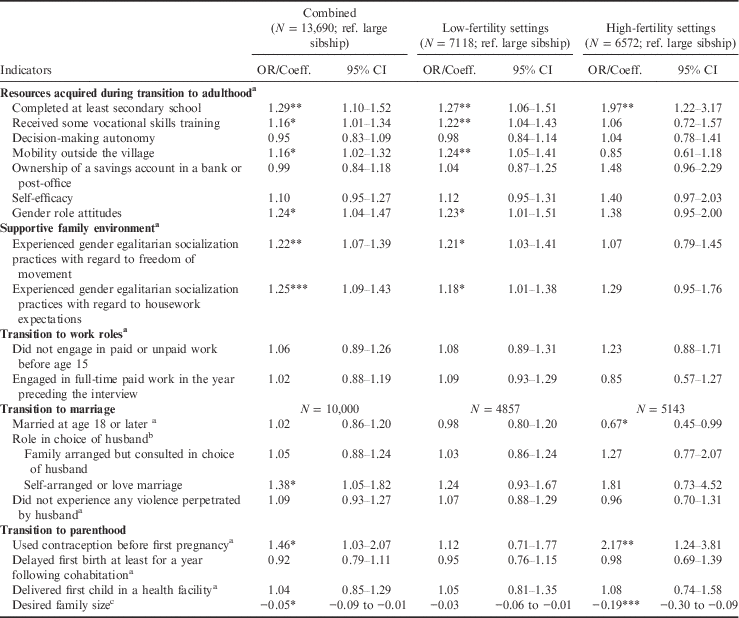
Odds ratios (ORs) and linear regression coefficients from multivariate regression analyses on associations between sibship size and indicators of transitions to adulthood among young women aged 20–24, India 2006–2008

aOdds ratios from logistic regression; bodds ratios from multinomial logistic regression; cBeta coefficients from OLS regression. Reference category: large sibship.
*Differences between small and large sibship size significant at p≤0.05; **differences between small and large sibship size significant at p≤0.01; ***differences between small and large sibship size significant at p≤0.001.
Bivariate results
The findings show that surviving sibship size was inversely correlated with young women’s completion of secondary school, regardless of the settings (Table 4). Nationally, 48% of young women with no or a single sibling had completed secondary school compared with 28% of those with two or more siblings. Similar patterns were observed in both low- and high-fertility settings (53% versus 37% in low-fertility settings; 26% versus 16% in high-fertility settings). Likewise, young women from households with fewer siblings were more likely than others to have received some vocational skills training (41% versus 27%). Similar patterns were observed in both low- and high-fertility settings, although the difference was wider in the former (45% versus 34%) than the latter (21% versus 17%).
Significant differences in young women’s agency by surviving sibship size were apparent in both the combined analysis and the stratified analyses. Young women with fewer siblings scored better than those with more siblings on all indicators of agency: decision-making autonomy (37% versus 30%), mobility outside the village (38% versus 27%), ownership of a savings account (20% versus 13%) and self-efficacy (27% versus 20%). The patterns remained similar in both low- and high-fertility settings. Young women with fewer siblings were, moreover, more likely than others to adhere to egalitarian gender norms, regardless of the settings (18–19% versus 13%).
Young women brought up in households with fewer siblings were more likely than those with more siblings to report a supportive family environment. Specifically, they were more likely to report gender egalitarian socialization experiences in terms of freedom of movement (64% versus 45%) and housework expectations (64% versus 45%). A similar pattern was observed in low-fertility settings (72% versus 59%, and 71% versus 56%, respectively); however, no such associations were observed in high-fertility settings.
Findings were mixed for the associations between young women’s work roles and surviving sibship size in the bivariate analyses, using the combined and stratified samples. Young women with no or a single sibling were more likely than others to report that they had not engaged in child labour in the overall sample (78% versus 70%) as well as in the sample from low-fertility settings (81% versus 74%); however, no such association was observed in high-fertility settings. In contrast, similar proportions of young women with fewer and more siblings were engaged in full-time paid work in the year preceding the interview (22–23%). Patterns were similar in both low- and high-fertility settings.
Most indicators of young women’s transition to marriage were correlated with sibship size in the bivariate analyses. Among the married, young women with fewer siblings were more likely to have delayed their marriage at least until age 18 than those with more siblings (46% versus 37%). While a similar pattern was observed in low- fertility settings (52% versus 48%), no differences were apparent in high-fertility settings (24% each). They were also less likely than others to report that they played no role in the selection of their husband (52% versus 69%), and conversely, more likely to report some say in the selection of their husband – either consulted and given opportunity to interact before marriage (37% versus 25%) or selected on their own (11% versus 6%). While the patterns remained similar in low-fertility settings, no such differences were observed in high-fertility settings. Finally, they were less likely to report that they did not experience any physical or sexual violence within marriage, both in the overall and stratified analyses (37% versus 46% overall; 34% versus 38% low-fertility settings; and 49% versus 56% high-fertility settings).
Three of the four indicators used to capture young women’s transition to parenthood were correlated with sibship size. Specifically, young women with fewer siblings were less likely than others to report that they had never been pregnant or delayed their first pregnancy at least for a year following cohabitation (36% versus 41%), but no such association was observed in the stratified analyses. They were more likely than others to have delivered their first child in a health facility (68% versus 54%). A similar pattern was observed in low-fertility settings (79% versus 72%), but not in high-fertility settings (35% versus 33%). Family size ideals were smaller among those with fewer than those with more siblings, regardless of the settings (2.1 and 2.3 children, respectively). However, sibship size was unrelated with young women’s use of contraception to delay the first pregnancy and institutional delivery for the first birth. A similar proportion of young women with fewer and with more siblings reported use of contraception before the first pregnancy (5% and 6%, respectively). Patterns remained by and large similar in both low- and high-fertility settings, except that in high-fertility settings, young women with fewer siblings were more likely than others to have used contraception before their first pregnancy (11% versus 6%).
Multivariate results
The multivariate analyses showed that the associations between sibship size and young women’s transitions to adulthood observed in the bivariate analyses remained significant for some indicators, even after controlling for potentially confounding background characteristics; however, the relationship was weakened or gained significance for some others. Also, the effects of sibship size on young women’s transitions to adulthood differed between the context in which they lived, and were apparent more often in low- than high-fertility settings.
Specifically, the multivariate analyses showed that young women’ acquisition of human capital was inversely correlated with surviving sibship size, even after controlling for confounding factors. Young women with fewer siblings were more likely than those with more siblings to have completed at least secondary school (OR 1.29) and to have received some vocational skills training (OR 1.16). The effects were by and large apparent in both low- and high-fertility settings (OR 1.27 and 1.97, respectively, in low- and high-fertility settings with respect to completion of secondary education; OR 1.22 with respect to participation in vocational skills training programmes in low-fertility settings).
Of the four indicators of young women’s agency, only one – mobility outside the village – was found to be significantly correlated with sibship size in the multivariate analyses. Young women with fewer siblings were more likely to be allowed to visit locations outside their village unescorted, compared with young women with more siblings (OR 1.16). While this association was found to be significant in low-fertility settings (OR 1.24), no such association was observed in high-fertility settings in the stratified, multivariate analyses. The findings suggest an inverse association between sibship size and adherence to gender egalitarian norms. Compared with young women with more siblings, those with fewer siblings were more likely to adhere to egalitarian norms (OR 1.23–1.24 for the overall sample as well as for the sample in low-fertility settings).
Small sibship size was positively correlated with gender egalitarian socialization practices at home. Young women with fewer siblings were more likely than others to have experienced gender egalitarian socialization practices at home with regard to freedom of movement and housework expectations (OR 1.22 and 1.25, respectively). Similar associations were observed in both low- and high-fertility settings, although these correlations were statistically significant only in low-fertility settings (OR 1.21 and 1.18, respectively).
With regard to transition to work roles, the multivariate analyses showed no effects of sibship size on young women’s delayed transition to work or engagement in full-time work.
Findings were mixed with regard to the effects of sibship size on young women’s transition to marriage. Specifically, sibship size was unrelated to young women’s age at marriage for the overall sample as well as the sample from low-fertility settings; however, in high-fertility settings, young women with fewer siblings were less likely than those with more siblings to have delayed their marriage at least until age 18 (OR 0.67). At the same time, small sibship size was found to be positively associated with young women’s self-selection of their husband in the overall sample (OR 1.38); however, the effect of sibship size was weakened in the stratified analyses. Finally, sibship size was unrelated to young women’s experience of a violence-free marital relationship.
The findings also suggest that small sibship size was associated with use of contraceptives before the first pregnancy (OR 1.46). While a similar pattern was observed in high-fertility settings (OR 2.17), no such association was observed in low-fertility settings. In contrast, sibship size was not associated with either delayed first pregnancy or institutional delivery for the first birth in the overall or stratified analyses. Finally, family size ideals were smaller among young women with fewer siblings compared with those with more siblings. This effect was more apparent in high-fertility settings.
Discussion
The study found that, in line with the declining trends in fertility in India, a sizeable proportion of young Indian women experience transitions to adulthood in households characterized by few siblings. Also, it was found that, although young women had transitioned to adulthood with limited resources and had not typically made successful transitions, small sibship size tends to have a positive influence, in many ways, on young women’s chances of making successful transitions to adulthood.
As has been widely established in the literature (Lloyd, Reference Lloyd1994; Kelly, Reference Kelly1996; Pong, Reference Pong1997; Jæger, Reference Jæger2008, Reference Jæger2009; Sen & Clemente, Reference Sen and Clemente2010), this study showed an inverse association between sibship size and schooling and participation in vocational skills training programmes, which can be attributed to greater access to greater parental resources and inputs by young women’s households with fewer, than those with more, children (Blake, Reference Blake1981, Reference Blake1985, Reference Blake1989; Downey, Reference Downey1995, Reference Downey2001; Steelman et al., Reference Steelman, Powell, Werum and Carter2002). At the same time, sibship size did not appear to have an effect on the work roles of young women, including engagement in child labour; this contradicts the observations of earlier studies, which have shown a significant relationship between family size and patterns of child labour (De Tray, Reference De Tray1983; Jejeebhoy, Reference Jejeebhoy1993; Basu, Reference Basu1995).
The study findings underscore the role of small sibship size in promoting gender egalitarian socialization practices and influencing young women’s attitudes and perceptions about gender roles. Young women with fewer siblings were more likely than those with more siblings to have experienced gender egalitarian socialization practices. The study findings are in line with those of earlier studies on family structures, which have found that as the number of children expands, parents increase the number of rules of conduct and adopt a more authoritarian parenting style (Elder & Bowerman, Reference Elder and Bowerman1963). It is also likely that most large families will consist of a mixture of sons and daughters, and sex of the child may provide a convenient basis for task allocation in large families (Brody & Steelman, Reference Brody and Steelman1985). The study also found that young women with fewer siblings were more likely than others to uphold egalitarian norms, which may be attributed to their greater chances of experiencing egalitarian socialization practices at home while growing up on the one hand, and to their increased accumulation of human capital on the other.
Sibship size was found to be largely unrelated to young women’s current agency. At the same time, it was related to young women’s pre-marital agency, as measured by their role in the choice of their husband; young women with fewer siblings were more likely than others to have self-selected their husband. The authors note that the measures of young women’s current agency reflected their situation at the time of the survey and for large proportions of women in the study this referred to their situation in the marital home; it is likely that traditional cultural norms, values and ideologies passed on to young women in their marital home may offset the effects sibship size can have on young women’s current agency.
Young women’s transitions to marriage and parenthood were by and large unrelated to the surviving sibship size, with some exceptions. As discussed above, it was related to their exercise of choice in the selection of their husband. Additionally and surprisingly, small sibship size was associated with early marriage in high-fertility settings. It is likely that in settings in which early marriage is the norm and most parents feel pressured to conform to the norm, as in the high-fertility settings in the study, fewer children and correspondingly fewer daughters may make it easier for parents to conform to the norm and get their daughters married early as it may be easier to find suitable groom(s) and meet marriage-related expenses for a smaller number of daughters.
Previous studies have observed that young people growing up in small families or in contexts characterized by small family size ideals may inherit family size norms from their parents or other influential adults, or what they see in the environment around them (Goldstein et al., Reference Goldstein, Lutz and Testa2003; Lutz et al., Reference Lutz, Skirbekk and Testa2007; Régnier-Loilier, Reference Régnier-Loilier2002). Corroborating these findings, the present study found that young women with fewer siblings were more likely than others to report small family size preferences.
Finally, it is noted that some of the associations that were not significant in the bivariate analyses became significant in the multivariate analyses. This is because contextual effect of state of residence was not controlled for in the bivariate analyses; once controlled for in the same way as in the multivariate analyses, the association with sibship size became significant. Also, the effects of sibship size on young women’s transitions to adulthood were more apparent in low- than high-fertility settings, highlighting the powerful effect of the local community context on this relationship. This finding corroborates arguments that local community context powerfully shapes the effects of individual- and household-level factors – in this case sibship size – on young people’s transitions to adulthood (National Research Council & Institute of Medicine, 2005). Therefore, in the more gender-stratified, patriarchal and resource-poor contexts characteristic of the high-fertility settings, young women’s transitions to adulthood are less likely to be influenced by declines in sibship size than in the less gender-stratified and resource-rich contexts characteristic of the low-fertility settings.
The study has some limitations. First, the measure of sibship size refers to number of surviving siblings at the time of the interview, and the authors acknowledge that there is a chance that the number of siblings that young women may have had when they experienced several of the outcomes included in the study can differ from the number of surviving siblings. Second, it is acknowledged that an examination of the sex composition of siblings may give a more nuanced understanding of the relationship between sibship and young women’s transitions to adulthood than an analysis of sibship size. Third, because it is a cross-sectional study, it is difficult to always establish causation between surviving sibship size and outcome indicators. Notwithstanding these limitations, the study makes an important contribution to the scant literature on the relationship between sibship size and young people’s transitions to adulthood and underscores a sub-group of young people – young women with more siblings – whom the youth programmes may specially target.