Implications
Altering the fatty-acid (FA) composition of ruminant-derived foods provides the means by which FA consumption in the human population can be aligned with public health policies. Fish oil Ca soap supplementation of ewe diets could be a useful strategy to improve the nutritional quality of their milk fat and consequently suckling ruminant fat depots. Although this can induce a decrease in fat content in the milk, an increase in n-3 FAs and CLA, together with the steady levels of saturated and trans-FA, would justify this approach to enhance the nutritional value of these ruminant products.
Introduction
In many Mediterranean areas, dairy sheep produce suckling lambs that are raised exclusively on maternal milk and slaughtered when they are between 30 and 45 days of age. This suckling lamb meat is popular and considered a high-quality food, although its fatty-acid (FA) profile does not adequately meet nutritional recommendations because of its high content of some saturated fatty acids (SFAs) and their potential hypercholesterolemic effects. Therefore, there is currently much interest in adding value to sucking lamb meat by reducing the SFA content and increasing the levels of some specific FAs, which are thought to be beneficial for human health, such as oleic acid, CLA and n-3 polyunsaturated fatty acids (PUFAs). Moreover, the proportion of some trans-FAs, which result from an incomplete biohydrogenation (BH) of PUFA in the rumen, should be limited owing to their detrimental effects on human health (Shingfield et al., Reference Shingfield, Bonnet and Scollan2013).
As the FA profile of suckling lamb meat tends to reflect the FA profile of their mother’s milk, changing the FA composition of the dam’s milk by dietary means could also change the FA profile of the suckling lamb’s meat, as previously reported (Osorio et al., Reference Osorio, Zumalacárregui, Figueira and Mateo2007). Several nutritional strategies have been studied to improve the FA profile of milk and suckling lamb meat, mostly by including in the ewe diet-unsaturated fats (plant oils, oilseeds, and marine and fish oils (FOs)) (Osorio et al., Reference Osorio, Zumalacárregui, Figueira and Mateo2007; Manso et al., Reference Manso, Bodas, Vieira, Mantecón and Castro2011).
Oleic acid is the major monounsaturated fatty acid (MUFA) in ruminant feeds, and some studies have reported increases in this FA in milk and lamb meat when olive oil (OLI) is added to the diet (Pérez Alba et al., Reference Pérez Alba, De Souza Cavalcanti, Pérez Hernández, Martínez Marín and Fernández Marín1996; Manso et al., Reference Manso, Bodas, Vieira, Mantecón and Castro2011). Adding marine oils to dairy ewe diets has also proven to be an effective nutritional strategy for enhancing the milk content of some bioactive FAs, such as cis-9, trans-11 18:2 (RA), its precursor trans-11 18:1 (VA) and, to a lesser extent, n-3 FAs (Toral et al., Reference Toral, Frutos, Hervás, Gómez-Cortés, Juárez and De la Fuente2010a and Reference Toral, Hervás, Gómez-Cortés, Frutos, Juárez and De la Fuente2010b). Although the transfer efficiency of 20:5 n-3 and 22:6 n-3 to milk fat is low owing to a highly incomplete BH by the ruminal bacteria, some studies have shown that this transfer efficiency to milk fat is greater when oils are fed in a rumen-protected form (Kitessa et al., Reference Kitessa, Peake, Bencini and Williams2003). Conversely, FOs generally cause a shift in the rumen BH pathways, with increases in ruminal outflow of specific trans-FAs (e.g. trans-10 18:1), which leads to a reduction in milk fat synthesis in the mammary gland (Shingfield et al., Reference Shingfield, Reynolds, Hervás, Griinari, Grandison and Beever2006), and to milk production with a low-fat content, which could potentially reduce suckling lamb growth rates.
Feeding animals with FAs in the form of Ca soaps from different oils could prevent, even if only partially, BH of PUFA in the rumen and reduce the proportion of SFAs and trans-FAs in the milk and meat. In this way, the adverse effects on cell wall digestion and organic matter fermentation in the rumen, resulting from the inclusion of PUFA-free lipids, could be avoided (Doreau et al., Reference Doreau, Fievez, Troegeler-Meynadier and Glasser2012). The aim of the present study was to evaluate the effects of different Ca soaps of FAs (CSFAs) of OLI and FO in the diet of Churra ewes on their milk FA profiles and performance, and on the intramuscular and subcutaneous FA composition of their suckling lambs. Because specific studies on the subsequent transfer of FAs from milk to lamb meat are limited, this study has also focused on the transfer efficiency of healthy FAs, such as oleic acid, and n-3 PUFA. Calcium soap of palm oil was used as a control, because it is a saturated fat commonly used in sheep feeding (Gargouri et al., Reference Gargouri, Caja, Casals and Mezghan2006).
Material and methods
Animals and experimental diets
Thirty-six pregnant Churra ewes (mean BW 60.88±1.366 kg) were selected before lambing and fed on the same diet that they would receive during the experimental period, but with no fat added (forage/concentrate ratio was 50 : 50). The ewes were 3 to 5 years old, their parity ranged from 4 to 6 and they had been artificially inseminated. Two days after lambing, each ewe was assigned to one of three experimental diets (12 ewes per treatment) based on their milk production, age, initial BW and parity randomization. The 36 new-born lambs (18 male and 18 female), covered by the protected geographical indication Lechazo de Castilla y León, were housed with their respective mothers all day long and nourished exclusively by suckling for the whole experimental period (from birth until they reached ~11 kg BW).
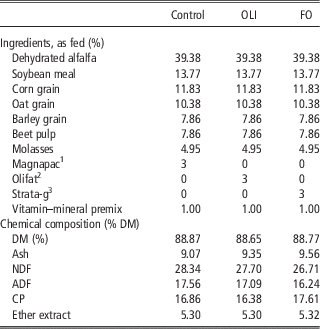
All animal handling practices followed the Directive 2010/63/EU of the European Parliament and the Council on the Protection of Animals used for experimental and other scientific purposes. The three experimental diets, which consisted of a total mixed ration (TMR), were isoenergetic and isonitrogenous, but varied according to the type of supplemented CSFAs (Table 1): Control, with 3% of Ca soap of palm oil (Magnapac®; Norel Animal Nutrition, Madrid, Spain); OLI, with 3% of Ca soap of OLI (Olifat®; Anupal S.L. Zaragoza, Spain); and FO, with 3% of Ca soap of FO (Strata-g Lactation®; Virtus Nutrition LLC., Corcoran, USA). The FA profiles of fat supplements are supplied in Table 1. The CSFA of palm oil was used as a control, because it is commonly used in sheep feeding.
Ingredients and chemical composition of the ewe experimental diets

OLI=olive oil; FO, fish oil; DM, dry matter.
1 Magnapac®=calcium soap of palm oil, fatty-acid composition (%): 14:0, 1.20; 16:0, 46.9, 18:0, 40.7; 18:1, 9.70; 18:2, <0.1; 18:3, <0.1; 20:5, <0.1; 22:6, <0.1.
2 Olifat®=calcium soap of olive oil, fatty-acid composition (%): 14:0, 1.40; 16:0, 8.2, 18:0, 2.90; 18:1, 53.7; 18:2, 15.6; 18:3, 3.10; 20:5, 0.2; 22:6, <0.1.
3 Strata-g®=calcium soap of fish oil, fatty-acid composition (%): 14:0, 2.2; 16:0, 8.1, 18:1, 17.2; 18:2, 4.5; 18:3, 1.5; 20:5, 19.6; 22:6, 9.7.
Each ewe was individually fed and received a total of 34.1 g of TMR per kg BW (on average 2.1 kg dry matter per head per day) of the corresponding experimental diet, plus 210 g of barley straw per head per day and fresh water ad libitum. Each ewe consumed the whole amount of TMR supplied daily.
Samples of diets were taken once a week during the whole experimental period and their chemical composition was determined using the procedures described by the AOAC (2003). There were no statistical differences in chemical composition between experimental diets.
Milk sampling and composition
The ewes were milked once a day in a 2×24 low-line Casse system milking parlour, with 12 milking units and 2 milkers. The milking machines (Alfa-Laval Iberia, S.A., Madrid, Spain) were set to provide 180 pulsations per minute with a 50:50 ratio at a vacuum level of 36 kPa. Milk production was recorded once a week. For this, lambs were separated from their mothers, and ewes were milked twice a day before feeding. In addition, milk samples were taken in milk collection jars. One sub-sample of milk was kept at 4ºC until analysed for fat and protein, according to the International Dairy Federation (2000), using a MilkoScan-400 analyser (Foss Electric, Hillerød, Denmark). Aliquots from weeks 2 and 4 of the experimental period were stored at –80ºC for FA analysis.
Slaughter procedure and carcass sampling
Lambs were weighed twice a week until they reached the intended BW (~11 kg). Hot and cold carcasses were weighed and the dressing percentage was calculated as the ratio of cold carcass weight to slaughter live weight. Fat samples of the Longissimus dorsi muscle (dissected between the 6th and the 13th rib) and subcutaneous dorsal fat (dissected from the rump) were taken and frozen at –80ºC until FA composition determination.
FA analysis
Milk fat was extracted according to Luna et al. (Reference Luna, Bach, Juárez and De la Fuente2008). Intramuscular fat extraction was carried out using Bligh and Dyer (Reference Bligh and Dyer1959) method, and subcutaneous fat was extracted by fusion of individual samples at 60°C in forced air oven. Milk and meat FA composition was determined by gas chromatography after FA methyl ester formation (Luna et al., Reference Luna, Bach, Juárez and De la Fuente2008).
Statistical analysis
Average daily weight gain was estimated as the regression coefficient (slope) of live weight against time using the REG procedure of SAS. Data of milk yield and composition (FAs included) were analysed by repeated measurement analyses using the MIXED procedure, which included the fixed effects of the diet (D), time on diet (T) and their interactions (D×T). The rest of the parameters were statistically analysed by one-way ANOVA using GLM (PROC GLM). All the procedures were from the SAS 9.2. package (SAS Institute Inc., Cary, NC, USA).
Results and discussion
Milk yield and composition
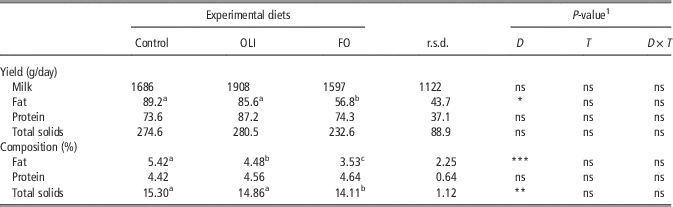
The average daily milk yield and composition are recorded in Table 2. Neither milk yield nor protein yield and content were significantly modified by the dietary treatments (P>0.10). However, milk fat content and total solids were significantly affected by the type of CSFAs included in the diet. OLI and FO supplements significantly decreased (P<0.001) milk fat content, reaching reductions of 17% and 35%, respectively, compared with Control milk. Changes in total solid content varied in accordance with the decreases reported for milk fat. FO Ca soap reduced the percentage of milk solids (P<0.01).
Effect of supplementation of calcium soaps of olive (OLI) or fish (FO) oil and duration of supplementation on ewe milk yield and milk composition

a–c Means within a row with different superscripts differ significantly.
1 Probability of significant effects because of experimental diets (D), time on diet (T) and their interaction (D×T).
*P<0.05, **P<0.01, ***P<0.001.
Previous studies have shown increases in milk yield and reductions in milk protein when sheep diets are supplemented with fat or oil (Pulina et al., Reference Pulina, Nudda, Battacone and Cannas2006). These changes can probably be explained by the greater energy content of the lipid-supplemented diets compared with the non-supplemented ones, and the reduced amino-acid availability in the mammary gland. Because the amount of feed offered to the animals was the same, and the diets assayed in the present experiment were isoenergetic, isonitrogenous and supplemented with some type of CSFA, no changes in milk yield or in protein content were expected. Similar results were previously reported by Manso et al. (Reference Manso, Bodas, Vieira, Mantecón and Castro2011) when supplementation with different oils was compared using isoenergetic experimental rations. Concerning the decrease in milk fat yield and content observed in the FO treatment, the dietary FA profile as well as the rumen and mammary metabolism of these compounds may have played a dominant role, as is more extensively discussed below.
Milk FA composition
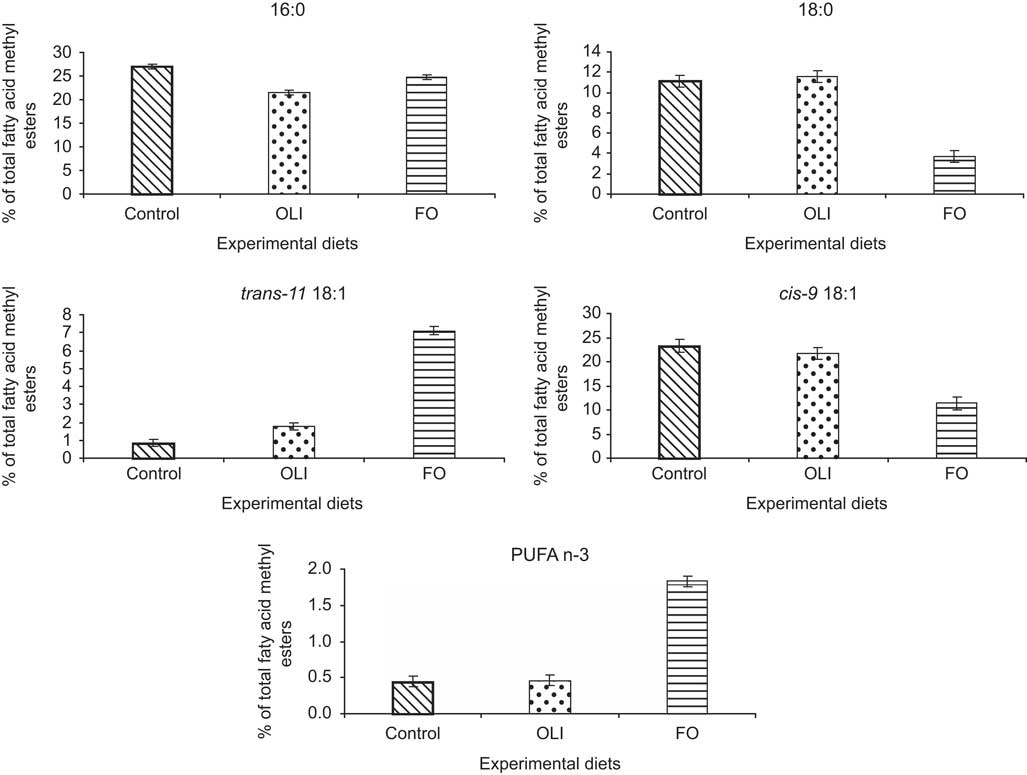
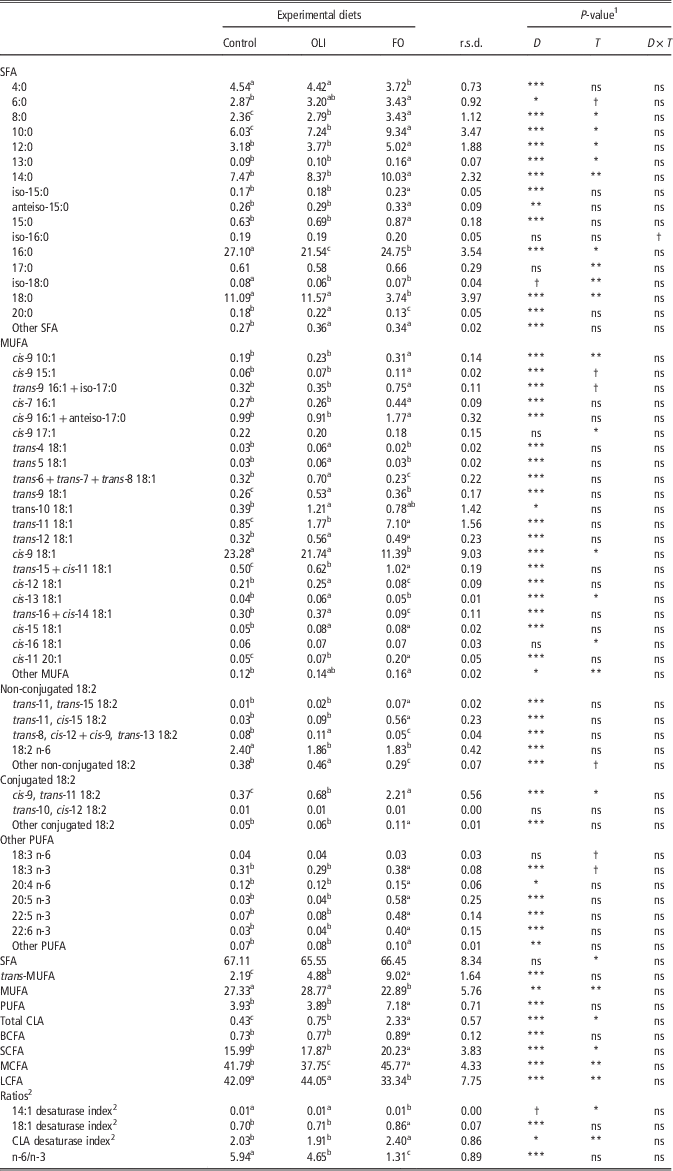
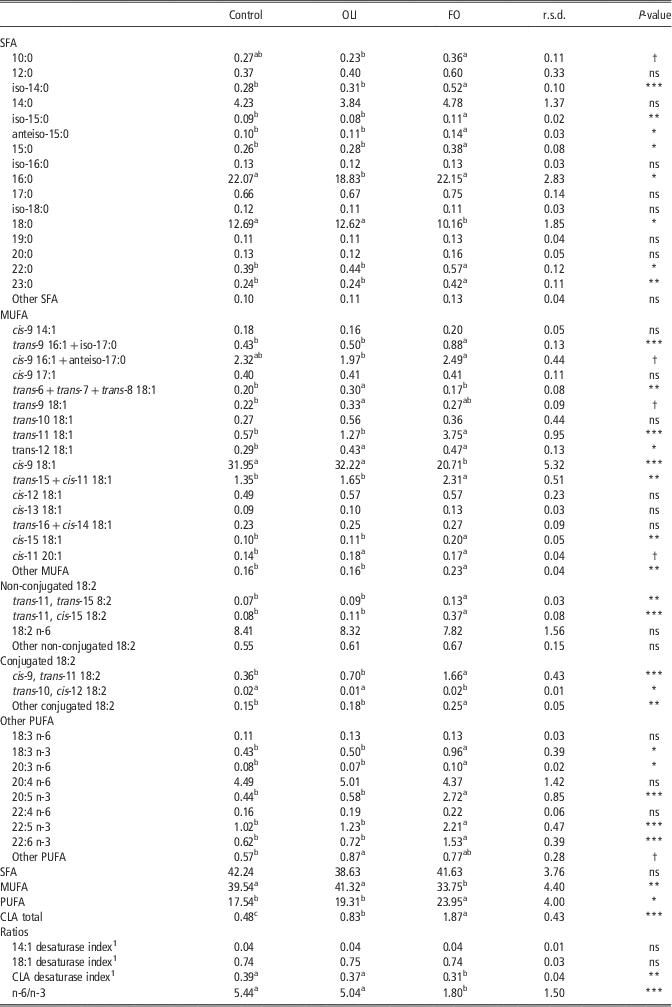
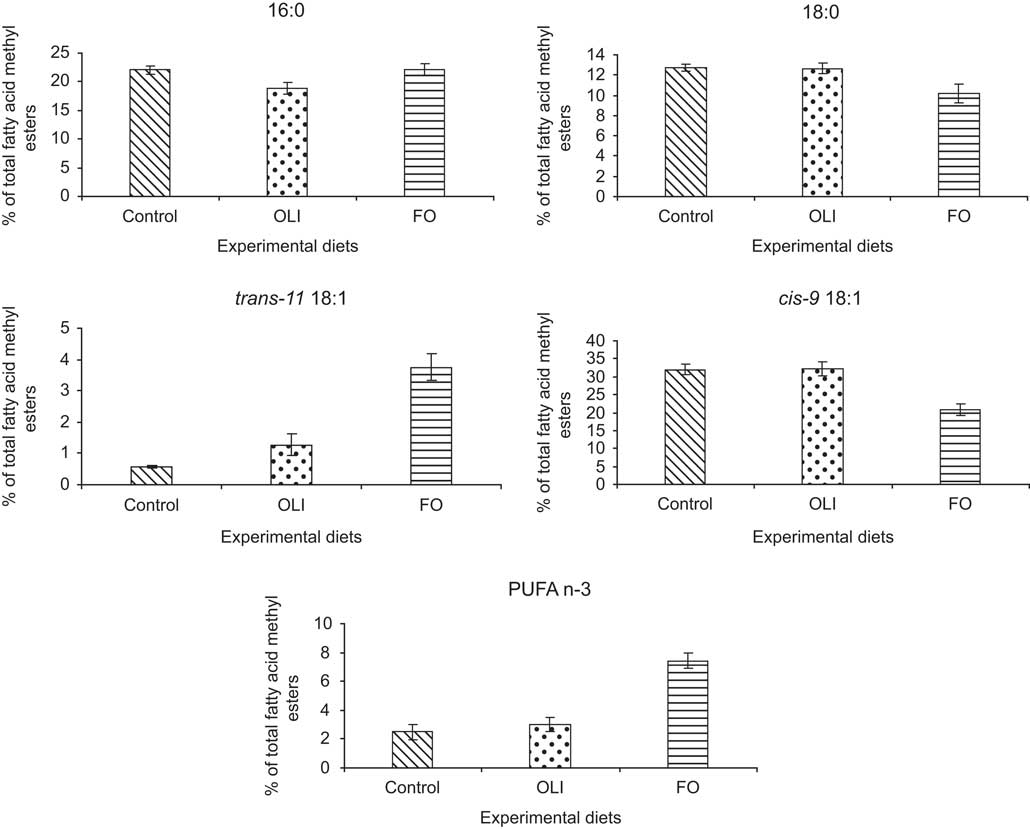
Table 3 shows the FA profile of milk fat from ewes fed with the different experimental diets. There were no differences (P>0.10) in the percentages of total SFAs between treatments, whereas the lowest concentration of MUFAs (P<0.01) and the highest concentration of PUFAs (P<0.001) were observed in FO milk. Although CSFAs of OLI supplementation did not change (P>0.10) the average percentage of some SFAs, such as 12:0, 14:0 and 18:0, it did decrease (P<0.001) the 16:0 proportion compared with Control treatment (Figure 1). Milk from ewes supplemented with FO displayed the highest concentrations of even-numbered carbon SFAs from 6:0 to 14:0 and the lowest percentages for 18:0 (P<0.001) (Figure 1).
Mean values of 16:0, 18:0, cis-9 18:1, trans-11 18:1 and total n-3 fatty acids (18:3+20:5+22:5+22:6) in milk fat of ewes fed three experimental diets (forage/concentrate ratio 50:50), each supplemented with either 3% Ca soap fatty acids of palm (Control), olive (OLI) or fish (FO) oil.

Effect of supplementation of calcium soaps of olive (OLI) or fish (FO) oil and duration of supplementation (T) on ewe milk fatty-acid profiles (% of total fatty acid methyl esters)

SFA=saturated fatty acids; MUFA=monounsaturated fatty acids; PUFA=polyunsaturated fatty acids; BCFA=branched-chain fatty acids; SCFA=short-chain fatty acids; MCFA=medium-chain fatty acids; LCFA=long-chain fatty acids.
a–c Means within a row with different superscripts differ significantly.
1 Probability of significant effects because of experimental diets (D), time on diet (T) and their interaction (D×T).
2 14:1 desaturase index=cis-9 14:1/(14:0+cis-9 14:1); 18:1 desaturase index=cis-9 18:1/(18:0+cis-9 18:1); CLA desaturase índex=cis-9, trans-11 18:2/(cis-9, trans-11 18:2+trans-11 18:1).
†P<0.10, *P<0.05, **P<0.01, ***P<0.001.
The differences in MUFA concentrations were mainly due to changes in the cis-9 18:1 level, which was significantly lower in FO milk than in Control and OLI milk (P<0.001). Supplementation with CSFAs of OLI led to a remarkable increase in a variety of trans-18:1 isomers (P<0.001) in milk. FO ewes produced the milk with the highest concentration of VA, whereas Control ewes showed the lowest values (P<0.001) (Figure 1). In contrast, milk from ewes supplemented with OLI and FO displayed the lowest concentrations of 18:2 n-6 (P<0.001). The cis-9, trans-11 18:2 content in milk from ewes in the OLI group was significantly higher than Control but lower than FO (P<0.001). In addition, FO milk presented the greatest concentration of 18:3 n-3 acid as well as other n-3 PUFAs such as 20:5 n-3, 22:5 n-3 and 22:6 n-3 (P<0.001).
The highest content of 16:0 in Control milk fat can be attributed to the considerable amount of this FA in palm oil, the major FA (Table 1), and to the fact that 16:0 would not suffer changes in the digestive tract. Although Olifat® had the highest level of cis-9 18:1 in its CSFA, the content of this FA in OLI milk fat did not differ from that of Control milk fat (Figure 1). These results could be explained primarily by the abundance of 18:0 in the Control supplement (Table 1), as this FA is partly converted into cis-9 18:1 in the mammary gland via Δ-9 desaturase (Bichi et al., Reference Bichi, Toral, Hervás, Frutos, Gómez-Cortés, Juárez and De la Fuente2012). In contrast, cis-9 18:1 from Olifat® would be susceptible to isomerization in rumen and involve the formation of several isomer trans-monoenes (Mosley et al., Reference Mosley, Powell, Riley and Jenkins2002; Gómez-Cortés et al., Reference Gómez-Cortés, Frutos, Mantecón, Juárez, De la Fuente and Hervás2008). This fact would account for the significant increases in these isomers, mainly trans-10 18:1 and trans-11 18:1, in OLI milk fat (Table 3). Part of the VA in OLI milk fat could also be derived from the partial BH of 18:2 n-6 acid present in Olifat® but lacking in the fat supplement of the Control diet (Table 1).
The high content of trans-11 18:1 in FO milk (7.1%) confirms that calcium soap protection of fat is incomplete (Jenkins and Bridges, Reference Jenkins and Bridges2007; Shingfield et al., Reference Shingfield, Bonnet and Scollan2013). VA accumulation in milk fat reflects the inhibitory action of n-3 PUFAs present in marine oil, mainly 22:6 n-3, on the final BH step of 18 carbon unsaturated FAs (AbuGhazaleh and Jenkins, Reference AbuGhazaleh and Jenkins2004). The strong correlations determined between VA and 20:5 n-3 (r=0.85, P<0.001), 22:5 n-3 (r=0.90, P<0.001), 22:6 n-3 (r=0.88, P<0.001) and total PUFA n-3 (r=0.88, P<0.001) would support this statement. Moreover, VA accumulation in FO milk could explain the drastic reduction of 18:0 in this treatment (3.74 v. 11.09 v. 11.57 for FO, Control and OLI, respectively). Furthermore, this mechanism could also be indirectly responsible for the low percentage of cis-9 18:1 observed in FO milk. The reduction of 18:0 in ruminal outflow would therefore result in a lower contribution of 18:0 to the mammary gland in FO ewes, which in turn would limit the endogenous synthesis of cis-9 18:1 via Δ-9 desaturase, despite the increase in enzymatic activity in FO ewes (Table 3).
It is remarkable that, under the experimental conditions assayed, the trans-10 18:1 content of milk fat from ewes supplemented with Strata-g® did not differ from the other treatments (Table 3). The increase in trans-10 18:1 levels in milk fat has frequently been associated with diets supplemented with linoleic-rich fats and marine lipids, where a shift in linoleic-acid ruminal BH pathways because of disturbances in the rumen environment can occur (Shingfield et al., Reference Shingfield, Reynolds, Hervás, Griinari, Grandison and Beever2006; Or-Rashid et al., Reference Or-Rashid, Kramer, Wood and McBride2008). Furthermore, the low content of trans-10 18:1 in FO milk may be related to the forage/concentrate ratio (50:50) of the basal diet. On low-forage diets or high-concentrate diets containing plant oils or marine lipids, trans-10 18:1 often replaces VA as the major trans-MUFA in milk fat (Shingfield et al., Reference Shingfield, Bonnet and Scollan2013). The degree of protection offered by calcium soaps might help maintain the rumen environment unaltered and thus prevent changes in the ruminal BH pathways.
The increases in RA content achieved with OLI and especially with FO (Table 3) treatment correlated closely with the observed increases in trans-11 18:1 milk fat content (r=0.97; P<0.001). As is the case with other ruminants, this was probably owing to the fact that the RA content in ewe milk fat originates mainly from endogenous synthesis of the trans-11 18:1 produced in the rumen via Δ-9 desaturase in the mammary gland (Bichi et al., Reference Bichi, Toral, Hervás, Frutos, Gómez-Cortés, Juárez and De la Fuente2012). In contrast, the very low concentrations of other CLA isomers detected in the current experiment (Table 3) were the result of dietary PUFA conversion in the rumen.
The inclusion of FO in the ewe diet produced significant increases (P<0.001) in n-3 PUFA content in milk fat (Figure 1), according to previous research in ovine milk (Kitessa et al. Reference Kitessa, Peake, Bencini and Williams2003; Toral et al., Reference Toral, Frutos, Hervás, Gómez-Cortés, Juárez and De la Fuente2010a). Nevertheless, the apparent transfer of these dietary FAs, particularly 22:5 n-3 and 22:6 n-3, into milk was limited and represented an average transfer efficiency of 4% and 5%, respectively. The 22:5 n-3 and 22:6 n-3 levels observed in FO treatment can be attributed to their ruminal BH, despite being supplemented in a protected form. The BH of these PUFAs n-3 can be influenced by the concentration of the FO in the diet (Ashes et al., Reference Ashes, Sieber, Gulati, Cuthberson and Scott1992). Results from a dose–response experiment with FO (Gulati et al., Reference Gulati, Ashes and Scott1999) showed a greater capacity of sheep rumen microorganisms to hydrogenate the 20:5 n-3 and 22:6 n-3 when the concentration of FO was <1 mg/ml of rumen fluid. At this level, the production of trans 18:1 FA was maximum, but at higher concentrations of FO these isomers declined, indicating a potential rumen BH inhibition. Even in the absence of BH in the rumen, the potential to increase 22:5 n-3 and 22:6 n-3 is usually extremely limited. The lower transfer efficiency from the small intestine into milk for these n-3 FAs is thought to arise from the preferential incorporation of absorbed 22:5 n-3 and 22:6 n-3 into plasma phospholipids and cholesterol esters, rather than triacylglycerides of circulating chylomicrons (Kitessa et al., Reference Kitessa, Gulati, Ashes, Fleck, Scott and Nichols2001; Shingfield et al., Reference Shingfield, Bonnet and Scollan2013). This fact would favour an uptake of only low proportions of these n-3 FAs into the mammary gland.
In contrast to OLI treatment, supplementation with CSFAs of FO reduced the oleic acid to approximately half the Control value and increased the 12:0, 14:0 and trans-MUFA content, which might not seem to be positive from a nutritional perspective. However, most trans-MUFA increases were linked to increases in trans-11 18:1, the physiological precursor of cis-9, trans-11 18:2 in tissue. Although the transfer of n-3 PUFA from diet into milk fat was limited, the n-6/n-3 ratio (Table 3) decreased 4.5- and 1.2-fold with FO and OLI diets, respectively, compared with the Control diet. The low n-6/n-3 ratio observed in FO milk would be positive from a nutritional point of view owing to its potential benefits for human health (Simopoulos, Reference Simopoulos2008) and its effect on the fat composition of suckling lamb meat, as explained below.
Milk fat depression (MFD)
The fall in milk fat content shown in Table 2 for the FO diet could be attributed to different causes. For instance, it has been proposed that in ewe, trans-10, cis-12 18:2 could be a milk fat synthesis inhibitor (Sinclair et al., Reference Sinclair, Lock, Early and Bauman2007; Hussein et al., Reference Hussein, Harvatine, Weerasinghe, Sinclair and Bauman2013). However, its percentages in the present study were negligible and no significant differences between treatments were detected (Table 3). Other FAs such as trans-10 18:1 (Shingfield et al., Reference Shingfield, Sæbø, Sæbø, Toivonen and Griinari2009) or trans-9, cis-11 18:2 (Perfield et al., Reference Perfield, Lock, Griinari, Sæbø, Delmonte, Dwyer and Bauman2007) could also be involved in MFD, but their amounts in all diets were low (Table 3), and therefore their roles as milk fat synthesis inhibitors could not be justified. Indeed, there was no significant correlation (P>0.05) between changes in these FAs with diet and milk fat yield or content, and thus mechanisms other than direct inhibition had to be involved.
In this regard, it has been argued that the considerable impact of the maintenance of milk fat fluidity on milk fat secretion (Shingfield et al., Reference Shingfield, Reynolds, Hervás, Griinari, Grandison and Beever2006; Gama et al., Reference Gama, Garnsworthy, Griinari, Leme, Rodrigues, Souza and Lanna2008; Toral et al., Reference Toral, Hervás, Gómez-Cortés, Frutos, Juárez and De la Fuente2010b) related to the incorporation of cis-9 18:1 and short-chain FAs (4:0 to 10:0) into triacylglycerides is the principal means of assuring milk fat liquidity at body temperature. Marine lipid inhibition of trans-18:1 ruminal saturation, thereby reducing the availability of 18:0 for endogenous mammary synthesis of oleic acid and simultaneously increasing trans-11 18:1 level (with a higher melting point than its equivalent cis-isomer) could reduce milk fat fluidity in FO treatment and would detrimentally affect milk fat maintenance. The intensified activity of Δ-9 desaturase in the mammary gland (Table 3) to generate cis-9 18:1 and cis-9, trans-11 18:2, as observed in the FO diet, could be thought as an adaptation to try to maintain and regulate milk fat fluidity for efficient secretion.
The FO treatment increased the milk content of FAs with <16 carbons (i.e. synthesized de novo in the mammary gland), suggesting that there are other mechanisms by which the mammary gland tries to adapt to an altered supply of FAs. Thus, when CSFAs of FO were added to the diet, reduced oleic acid in the milk fat could be partially alleviated by an increase (Table 3) in the secretion of short- and medium-chain SFAs with low melting points. The aforementioned action would be further facilitated by the very low presence of trans isomers (trans-10 18:1, trans-10, cis-12 18:2 and trans-9, cis-11 18:2), generally associated with the inhibition of lipogenesis in the mammary gland.
Lamb performance
Significant differences (P>0.05) were not observed in birth BW (4.01, 4.32 and 4.59 kg for Control, OLI and FO, respectively). The type of CSFAs added to ewe diets did not induce significant differences (P>0.05) in growth (249, 232 and 225 g/animal per day for Control, OLI and FO, respectively), slaughter weight (10.8, 10.3 and 10.5 kg for Control, OLI and FO, respectively) and dressing percentage values (54.1%, 52.2% and 52.5% for Control, OLI and FO, respectively) between lambs of the different treatments, according to previous research (Casals et al., Reference Casals, Caja, Pol, Such, Albanell, Gargouri and Casellas2006; Awawdeh et al., Reference Awawdeh, Obeidat and Kridli2009). Milk yield and composition are the principal factors responsible for suckling lamb growth. According to Gargouri et al. (Reference Gargouri, Caja, Casals and Mezghan2006), differences in protein intake are decisive in the growth of suckling lambs. Therefore, as the lambs in the current experiment were fed exclusively maternal milk, there would be no significant differences in milk protein yield and content. Furthermore, the lack of difference in weight and dressing percentages between lambs of the different treatments could be explained by the fact that the milk yield did not limit lamb growth.
Intramuscular and subcutaneous FA composition
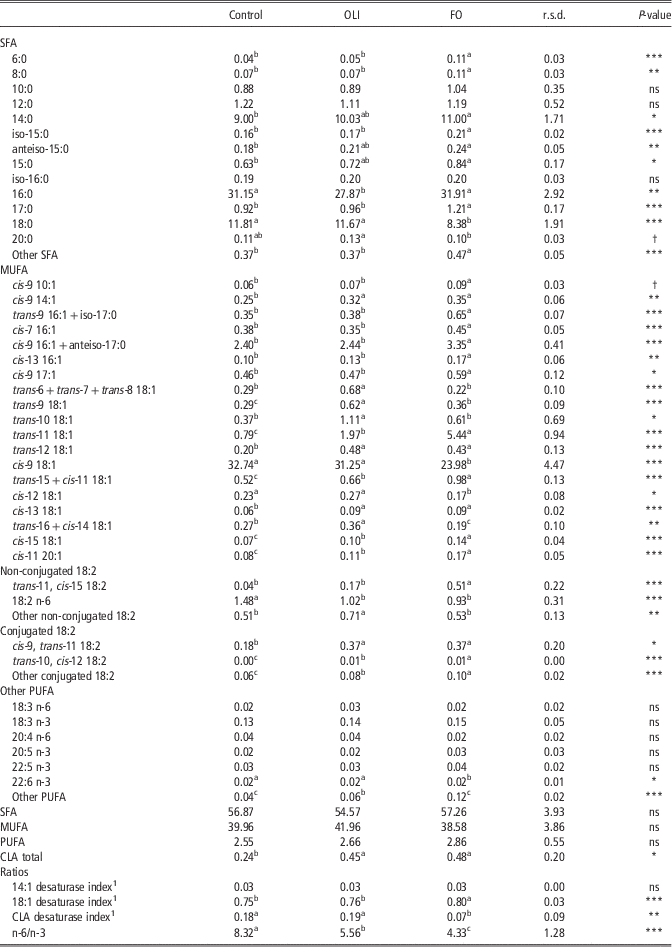
No significant differences (P>0.05) were found in intramuscular fat content (1.35, 1.19 and 1.19 g/100 g muscle for Control, OLI and FO treatment, respectively). Tables 4 and 5 show the FA composition of suckling lamb intramuscular and subcutaneous fats. There were no differences between treatment results for total SFAs in both fat depots of suckling lambs (P>0.10) and dams’ milk (Table 3). Following the same trend, intramuscular fat presented the highest MUFA content in Control and OLI treatments and the lowest in the FO lambs (P<0.01). The FO lambs also had the highest proportion of PUFAs (P<0.05) in their intramuscular fat consistent with the higher levels in FO ewe milk. Conversely, no differences between treatments (P>0.10) were found in the MUFA and PUFA content of subcutaneous fat.
Effect of milk from ewes receiving diets supplemented with Ca soap fatty-acid olive (OLI) and fish (FO) oil on fatty-acid composition (g/100 g of total fatty acid methyl esters) of intramuscular fat from suckling lambs

SFA=saturated fatty acids; MUFA=monounsaturated fatty acids; PUFA=polyunsaturated fatty acids.
a–cMeans within a row with different superscripts differ significantly.
1 14:1 desaturase index=cis-9 14:1/(14:0+cis-9 14:1); 18:1 desaturase index=cis-9 18:1/(18:0+cis-9 18:1); CLA desaturase índex=cis-9, trans-11 18:2/(trans-11 18:1+cis-9, trans-11 18:2).
†P<0.10, *P<0.05, **P<0.01, ***P<0.001.
Effect of milk from ewes receiving diets supplemented with Ca soap fatty-acid olive (OLI) and fish (FO) oil on fatty-acid composition (g/100 g of total fatty acid methyl esters) of subcutaneous fat from suckling lambs

SFA=saturated fatty acids; MUFA=monounsaturated fatty acids; PUFA=polyunsaturated fatty acids.
a–cMeans within a row with different superscripts differ significantly.
1 14:1 desaturase index=cis-9 14:1/(14:0+cis-9 14:1); 18:1 desaturase index=cis-9 18:1/(18:0+cis-9 18:1); CLA desaturase índex=cis-9, trans-11 18:2/(trans-11 18:1+cis-9, trans-11 18:2).
†P<0.10, *P<0.05, **P<0.01, ***P<0.001.
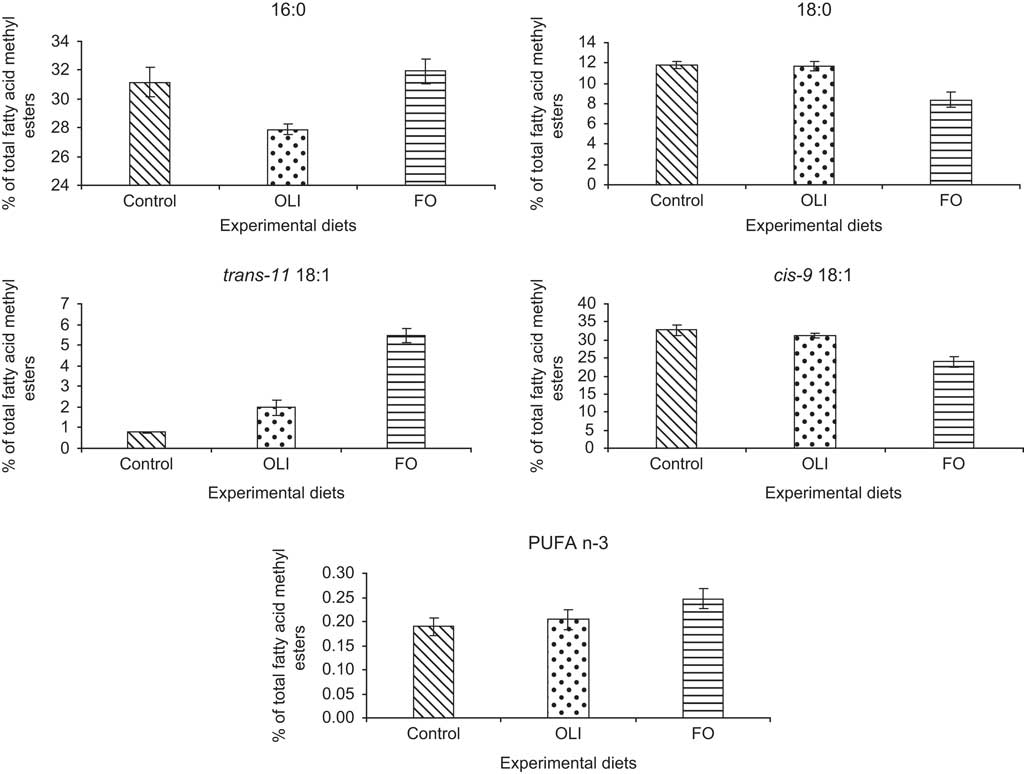
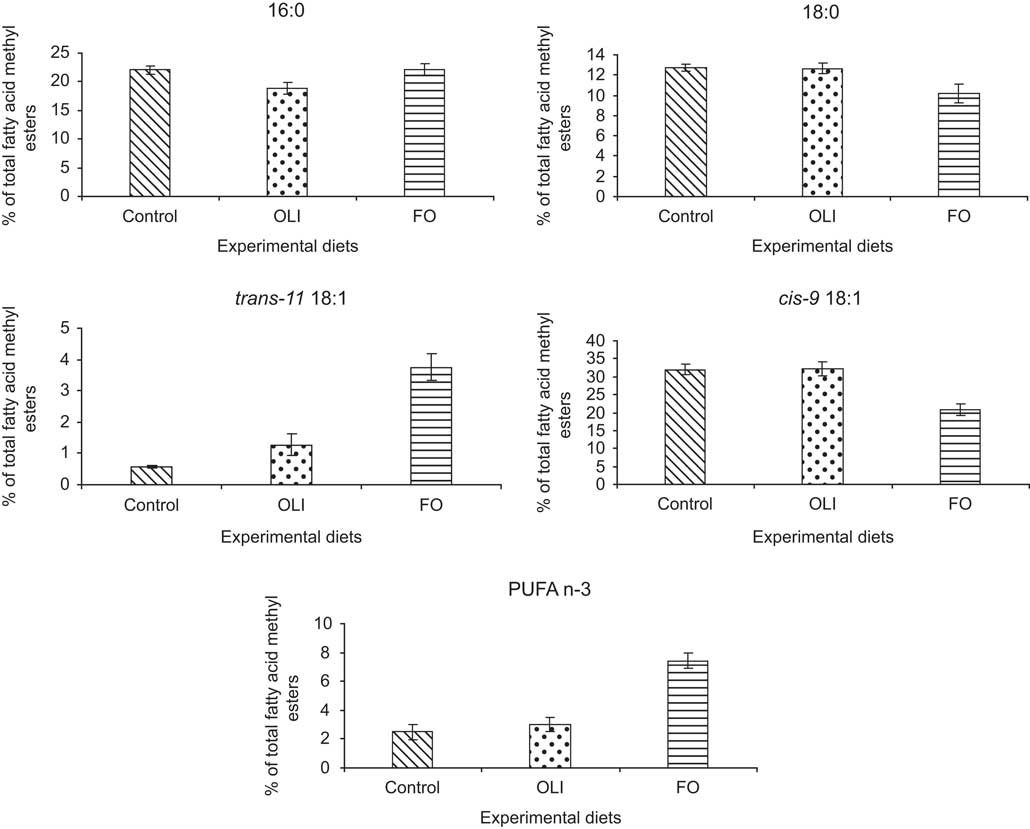
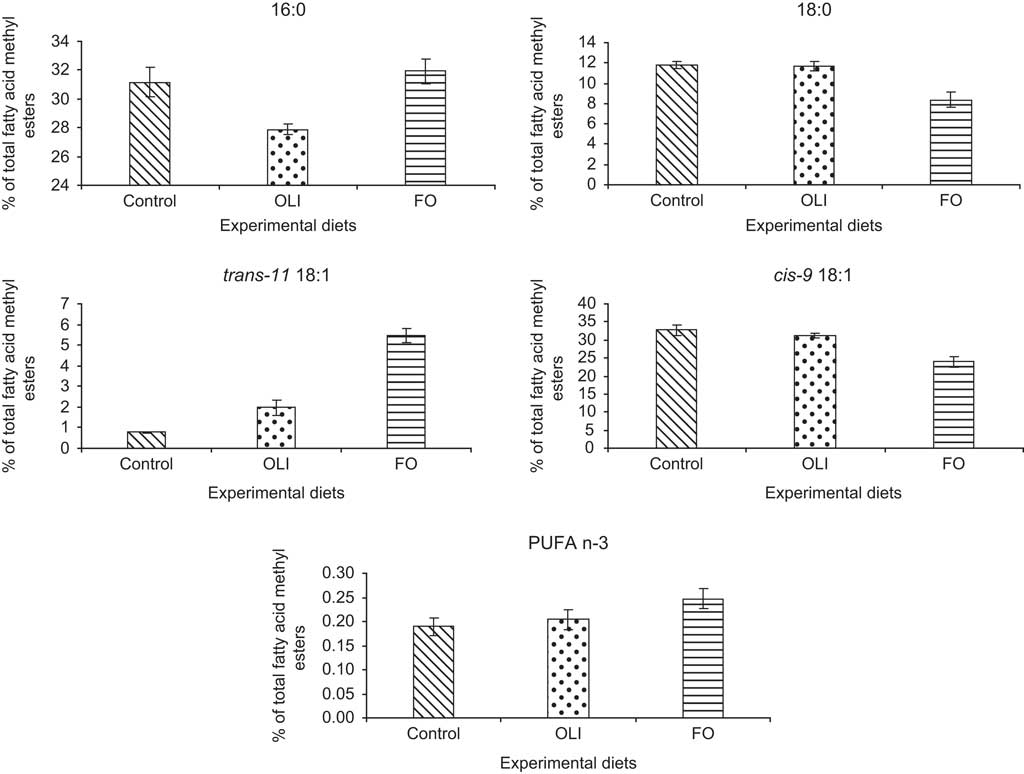
Regarding individual FA content, in general terms the observed differences reflected those found in the mother’s milk, with the exception of the extremely low content of SFAs with <14 carbon atoms characteristic of body fat. These differences could be attributed to the fact that the suckling lambs were fed exclusively on maternal milk until their slaughter, as well as to their digestive physiology, which is similar to monogastrics where the rumen is not functional, and hence no BH of the milk FAs takes place (Osorio et al., Reference Osorio, Zumalacárregui, Figueira and Mateo2007; Scerra et al., Reference Scerra, Caparra, Foti, Galofaro, Sinatra and Scerra2007; Manso et al., Reference Manso, Bodas, Vieira, Mantecón and Castro2011). Thus, OLI treatment resulted in a significant percentage decrease in 16:0 (Figures 2 and 3) and an increase in most trans-18:1 in intramuscular and subcutaneous fats (P<0.05). As in milk fat, the greatest differences in intramuscular fat were observed in the FA profile of FO treatment. In this respect, the observed decreases in 18:0 and cis-9 18:1 content as well as the increases in VA (Figure 2) are noteworthy; similarly, the RA content in both fat depots (P<0.05) and n-3 PUFA in intramuscular fat (P<0.001).
Mean values of 16:0, 18:0, cis-9 18:1, trans-11 18:1 and total n-3 fatty acids (18:3+20:5+22:5+22:6) of intramuscular fat from suckling lambs nourished with ewes milk fed three experimental diets (forage/concentrate ratio 50 : 50), each supplemented with either 3% Ca soap fatty acids of palm (Control), olive (OLI) or fish (FO) oil.
Mean values of 16:0, 18:0, cis-9 18:1, trans-11 18:1 and total n-3 fatty acids (18:3+20:5+22:5+22:6) of subcutaneous fat from suckling lambs nourished with ewes milk fed three experimental diets (forage/concentrate ratio 50:50), each supplemented with either 3% Ca soap fatty acids of palm (Control), olive (OLI) or fish (FO) oil.
Both fat depots presented differences in their FA profiles. Overall, intramuscular fat had a higher percentage of PUFAs together with a lower proportion of SFAs (Tables 4 and 5). Strong coefficients of correlation were established for 20:5 n-3 (r=0.86; P<0.001), 22:5 n-3 (r=0.77; P<0.001), 22:6 n-3 (r=0.77; P<0.001), RA (r=0.81; P<0.001) and trans-11 18:1 (r=0.86; P<0.001) between dam milk and suckling lamb intramuscular fats. Suckling lambs preferentially incorporate PUFAs into muscle rather than storing them in the adipose tissue because of their important metabolic roles. The major presence of PUFAs in intramuscular fat is because of the higher proportion of phospholipids in these depots. Phospholipids are essential constituents of cell membranes and require high levels of PUFAs to maintain membrane properties and physiological functions. Ashes et al. (Reference Ashes, Sieber, Gulati, Cuthberson and Scott1992) showed that neither 20:5 n-3 and 22:6 n-3 were incorporated into the triacylglycerides of the muscle and adipose tissue, but were transferred into the phospholipids in cattle fed with protected supplements of FO.
The intramuscular fat depots obtained from the FO suckling lambs had the highest levels of VA and RA, and a significant positive correlation was observed between both FAs in this tissue (r=0.98, P<0.001). This result was probably because of the dual origin of cis-9, trans-11 18:2 derived both from the diet and by endogenous synthesis from trans-11 18:1. The fact that cis-9, trans-11 18:2 is less abundant in the subcutaneous depot could be partly explained by the greater Δ-9 desaturase activity in the intramuscular tissue (Tables 4 and 5). These results coincide with those of Palmquist et al. (Reference Palmquist, St-Pierre and McClure2004) who reported a higher endogenous synthesis of cis-9, trans-11 18:2 from trans-11 18:1 in the muscle than in the lamb adipose tissue.
Despite being more abundant in Control than in OLI and FO milk, linoleic acid contents were found to be similar (P>0.05) in carcass intramuscular deposits in all treatments (Table 4). These results indicate that diet influenced the muscle content of n-3 FAs more than that of 18:2 n-6, in accordance with previous observations in lamb (Palmquist et al., Reference Palmquist, St-Pierre and McClure2004). Furthermore, Wood et al. (Reference Wood, Enser, Fisher, Nute, Sheard, Richardson, Hughes and Wittington2008) reported that in meat fat, linoleic-acid incorporation in relation to the amount in the diet is greater than for other FAs. However, despite the increase in n-6 FAs, the n-6/n-3 ratio decreased three fold with the FO diet (P<0.001) compared with Control and OLI diets. This value in intramuscular fat (Table 4) is clearly below 4, which would make this fat highly recommendable for consumption (Simopoulos, Reference Simopoulos2008). Intramuscular fat is irreversibly connected with meat and it cannot be removed before human consumption, unlike visible fat, such as subcutaneous fat. In addition, given the higher PUFA and CLA composition and the lower SFA content of intramuscular fat compared with removable depot fat, the relevance of intramuscular fat for the intake of PUFAs and other potential FAs may be greater than expected at first sight.
Conclusions
The supplementation of ewe diets with different CSFAs did modify the FA profile of milk fat. CSFAs of FO produced more important changes than the supplementation of the ewe diet with CSFAs of OLI. While in the assayed conditions the addition of CSFAs of FO decreased the milk fat content, it also significantly increased healthy FAs, such as n-3 PUFAs and RA. Moreover, this took place without a simultaneous increase in either SFAs or trans-FAs such as trans-10 18:1, with potentially negative effects on consumers’ health. This milk FA profile was reflected in the intramuscular and subcutaneous fat of suckling lambs, which would make this nutritional strategy adequate for producing ruminant products with a healthier FA profile.
Acknowledgements
This work was carried out through a collaboration agreement between the Diputación de Palencia and the Universidad de Valladolid and has been subsidized by the Consejería de Educación de la Junta de Castilla y León (Projects VA058A07 and GR158), the Ministerio de Ciencia e Innovación (MICINN; AGL2008-04805 and the Consolider Ingenio 2010 Programme; FUN-C-FOOD CSD2007-063) and the Comunidad Autónoma de Madrid (2009-AGR-1469). The authors thank Mrs M.V. Rodríguez-Pino (CSIC, Madrid, Spain) for her technical assistance in analysing and processing fat samples. Beatriz Gallardo has a PIRTU contract from Consejería de Educación de la Junta de Castilla y León.