Introduction
Townsend's classic study of residential care for older people (Townsend, Reference Townsend1962) was conducted when the British welfare state was only ten years old. His primary concern was the quality of provision in the burgeoning public sector and the apparent failure of the state to cast aside the legacy of the Poor Law. The 1945 Labour government's vision of providing hotel-like accommodation for the working classes was failing to materialise. Indeed, Townsend found that three fifths of older people living in residential care homes were still being accommodated in the former Public Assistance Institutions,Footnote 1 often with staff whose attitudes remained tainted by the Poor Law.
Although the majority of residents included in Townsend's study were living in public sector homes, approximately 10 per cent were accommodated in the 42 privately owned care homes included in the representative sample (of 173 homes) he visited. This article focuses on these private homes and what happened to them following Townsend's visits. Given that his research was not primarily concerned with private sector provision, however, why should we choose now to focus on this part of it?
Unlike 50 years ago, care homes for older people are now, in the UK in the early twenty-first century, provided primarily by the private sector. The erosion of public sector provision alongside the expansion of the private sector has been well documented (see Laing's reviews of private health care: for example, Laing and Buisson, Reference Laing and Buisson2009). Between 1980 and 2001, the proportion of long-term places in the independent sector rose from 18 to 85 per cent (Victor, Reference Victor2005: 316). By 2005, 90 per cent of all residential care home places were in the independent sector (Means et al., Reference Means, Richards and Smith2008: 72). But it was not until the mid 1980s, when the exponential expansion of private care homes began, that researchers became interested in this sector (see, for example, Bird, Reference Bird1984; Weaver et al., Reference Weaver, Willcocks and Kellaher1985a, Reference Weaver, Willcocks and Kellaher1985b; Day and Larder, Reference Day and Larder1986; Judge and Sinclair, Reference Judge and Sinclair1986; Phillips and Vincent, Reference Phillips and Vincent1986; Challis and Bartlett, Reference Challis and Bartlett1987; Holmes and Johnson, Reference Holmes and Johnson1988; Kellaher et al., Reference Kellaher, Peace, Weaver and Willcocks1988; Corden, Reference Corden1992; Phillips, Reference Phillips1992). The 1967 report of the Williams Committee on the staffing of residential homes, for example, referred to a very low response rate to their questionnaire from the private sector, and remarked that it was difficult to estimate the number of private homes (Williams, Reference Williams1967: 44). As Phillips and McCoy (Reference Phillips, McCoy and Parry1990) have commented, there was little reaction in the 1960s to the private sector homes part of The Last Refuge: ‘Private care was not then a live issue’ (1990: 97). Although private sector care did not become a political issue in Britain until the 1980s, they argue that it had in fact been growing faster than the public sector since the 1960s (ibid.) but in a policy vacuum (McCoy, Reference McCoy1985: 11). In the late 1980s, Parker also commented that he had been unable ‘to chart the historical pattern of commercial interests in residential care, partly because of what development there was has not been systematically recorded; most of the time it was assumed to be peripheral’ (Parker, Reference Parker and Sinclair1988: 32; see also Parker, Reference Parker, Sinclair, Parker, Leat and Williams1990: 293, 349–50).
Drawing on Townsend's data, which are deposited in the UK Data Archive at the University of Essex, we revisited Townsend's work (Johnson et al., Reference Johnson, Rolph, Smith, Bernard and Scharf2007, Reference Johnson, Rolph and Smith2010; Rolph et al., Reference Rolph, Johnson and Smith2009). In 2005–06, we traced what became of the 173 homes he visited in England and Wales and revisited a sample of those that remain registered as care homes for older people. In contrast to a cross-sectional design, our methodology has enabled us to describe and explore the process of change over time. As Charlotte Davies has observed: ‘The principal strengths of longitudinal studies of all sorts lie in their greater sensitivity to change, the increased likelihood of being able to distinguish fluctuations from fundamental changes, and the greater depth of ethnographic understanding achieved from the multiple perspectives that such research facilitates’ (Reference Davies1999: 175). By focusing on a particular cohort of homes, we have been able, therefore, to examine care policy for older people through a different lens, one that opens up new insights into the history of residential care for older people. Our overall aims and methodology are discussed in more detail elsewhere (Johnson et al. Reference Johnson, Rolph, Smith, Bernard and Scharf2007, Reference Johnson, Rolph and Smith2010; Johnson, Reference Johnson2008).
In this article, first we describe briefly the 42 private homes Townsend visited in 1958–59. Second we explore why a quarter of them have survived as care homes but the rest have not. Thirdly, we compare the surviving homes then and now. Finally, we draw some conclusions about the contribution of our research to the elusive history of private sector provision of care homes for older people since the early decades of the British welfare state.
The private homes Townsend visited
Townsend conducted a national survey of public, voluntary and private residential care homes in England and Wales in the late 1950s. This revealed that the average private home accommodated 11 residents. Of the 42 he visited, just six accommodated 20 or more residents. The largest was a former hotel on the Hampshire coast, which accommodated 38 people. Indeed, all but one of these larger homes had formerly been seaside hotels. This reflects the role played at the time by some hotels, guest houses and boarding houses in providing accommodation for older people with the means to pay.
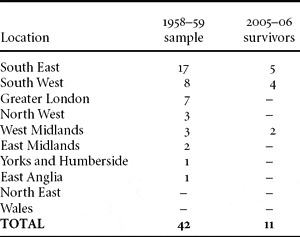
Not only were the private homes small when compared to some of the very large local authority and voluntary homes, but also they were concentrated in particular parts of the country. Indeed, in Wales and some parts of the north and midlands of England there were no private homes. Most were concentrated around London and the southern coastal resorts to which the middle class often retired away from family. As Table 1 shows, the 42 private homes in Townsend's sample reflected this geographical distribution:Footnote 2 76 per cent were in London and the south of England.
Regional distribution of private homes 1958–59 and 2005–06

Unlike the public sector homes, which housed a substantial proportion of (often destitute) men (49.7 per cent), the majority (four-fifths) of the residents in these private homes were (mainly middle-class) women (Townsend, Reference Townsend1962: 56, Table 16). Two-fifths of the homes accommodated women only. Although half the residents had no surviving children, fewer were ‘unmarried or otherwise childless’ than in the public and voluntary sector homes. Furthermore, the residents in the private homes were older: two-thirds of the women (compared to half the men) were over 80 and a fifth were in their nineties. There was also a higher proportion of ‘extremely frail’ residents than in the other types of homes.
Almost all the homes (39 of the 42) were family-run businesses which were managed by the proprietors, providing a home not only for the residents but also for themselves. Nearly two-thirds of these proprietors were women, most of whom were widowed, separated or divorced. A third of them were in their seventies and less than half had any kind of training. They were supported by other family members and what Townsend describes as an ‘odd mixture’ of people who ‘were often content with a small wage’, such as
the male friend who took a month off in London when he felt like it; the woman who had been a children's nanny; the woman whose face was plastered with rouge and lipstick and who was studded with dress jewellery; the Polish refugee from a Nazi concentration camp; mentally subnormal girls on licence from local hospitals and young girls from Spain and Germany. (Townsend, Reference Townsend1962: 187)
Fees in these homes ranged from 3½ to 30 guineas per week (that is, £3 13s 6d to £31 10s 0d, equivalent at 2009 prices to around £60 to £520). The quality of care was likewise extremely varied, ranging, for example, from the former hotel on the south coast of England where all the residents had single rooms, to the end-of-terrace house where the residents were accommodated in tiny shared rooms, with few facilities, no heating, plywood doors, flaking paint and rotten floorboards (Townsend, Reference Townsend1962: 180–1). These findings led Townsend to comment upon the inadequacies of the system of registration and inspection under the National Assistance Act 1948. Overall, he reported considerable variation in registration and inspection practices both within and between different areas, and a low priority being accorded to inspection.
Survival and non-survival
We engaged over 90 locally based older people as volunteer researchers to locate and trace the history of the 173 homes since 1959 (Johnson et al., Reference Johnson, Rolph and Smith2005). Sometimes, they had very little information to go on initially. Nevertheless, all 42 private homes were successfully located. By January 2007, eleven of these homes (just over a quarter) were still registered as care homes for older people. The remaining 31 had closed. Our researchers could not always come up with a full history or the exact reasons for closure, but they did find out when they closed as care homes and in some instances why. Their information derived from a mixture of local records, such as electoral registers, Kelly's directories, planning applications, land registry documents and (very occasionally) council committee minutes and registers, together with local informants who remembered the home and knew something of its history. Tracing the history of these homes when compared with the public and voluntary homes was certainly more difficult due to the scarcity of records.
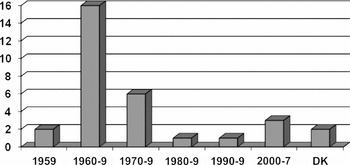
As Figure 1 indicates, just over three quarters of the closures (24) occurred between 1959 and 1979, peaking in the 1960s. In some instances, we know that the owners retired and closed down the business. One, for example, a house in north London, was owned by a Polish couple who took in four residents. They retired in 1968 and the house reverted to being their family home, which they shared with their married daughter, who still lives there. Like this example, ten other owners remained in the home after it was closed as a residential care home and continued to live in it as a private dwelling or as another business, such as a guest house or hotel. The remainder included two where the owner died, seemingly while the homes were still functioning as care homes, and there is no information about what became of their businesses. The rest sold their properties and moved elsewhere. The new owners converted the premises for a variety of uses: flats, hotels, guesthouses, business offices and student accommodation.
Closures of private homes 1959–2007

During the next 20 years (between 1980 and 1999), there were only two closures in these private sector homes. This coincides with the period during which Department for Social Security (DSS) board and lodging payments for people in residential care became a right (1983) and the concomitant expansion in the provision of private residential care for older people. Of the two that closed, one closed before the boom began and the other after it was over. Both were in what had become ‘run-down’ areas of high multiple occupation: one in London and the other on the south coast. The current ownership of the former, which was converted into two flats in 1981, is unknown, but the latter, having specialised in ‘Elderly Mentally Infirm’ care since 1991, was sold to a Housing Association in 1998 and is now general social housing.
After 2000, closures in this sector begin to rise again: three over a period of six years. Of the three that have closed, one has turned into a ‘home care’ service, using the former home as its offices; the other two were sold and converted to private dwellings. These closures reflect the impact: (a) of the NHS and Community Care Act 1990, which ended the availability of central government administered social assistance payments, transferring financial responsibility back on to local authorities and thereby limiting funding streams for people wanting to enter residential care; (b) of the shift away from residential care towards care in the community and thereby reducing demand; (c) of the anticipated consequences of the Care Standards Act 2000, which required homes to meet certain minimum standardsFootnote 3 and which many homes claimed they could not afford to meet, thus putting them out of business; and (d) the introduction of the minimum wage, which interacted with price controls effected through local authority commissioning policies. In summary, the reasons for the rise in closures were financial: the perceived costs of adhering to the new standards; increasing staff costs and difficulties in recruitment; the inadequate level of financial support provided to the two-thirds of residents who were not wholly self-funding; reduced demand and under-occupation; higher costs of care associated with levels of dependency among residents; and changing property values, with homes worth more empty than as a going concern (Dalley et al., Reference Dalley, Unsworth, Keightley, Waller, Davies and Morton2004; Netten et al., Reference Netten, Williams and Darton2005).
So how can we account for why some survived when the majority did not? Turning first to location, Table 1 shows that the only areas in England in which the private homes survived were in the South East, South West and the West Midlands. Five of the 11 were in seaside locations, which are popular retirement areas and have relatively high older populations (Law and Warnes, Reference Law and Warnes1973; Karn, Reference Karn1977). This suggests that the surviving private homes were in areas where demand prior to the 1980s from those with the required means was sufficient to sustain a residential home as a privately run business (Larder et al., Reference Larder, Day and Klein1986).
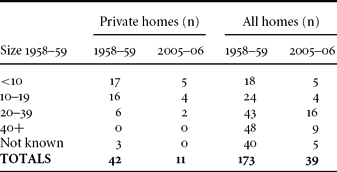
Table 2 shows that, compared with all homes visited by Townsend, the private homes were much smaller (as indicated by the number of people he recorded as being resident at the time of his visit), ranging from six to only 26. One might have expected the larger of these homes to be the more likely to survive (Darton, Reference Darton2004). As Table 2 shows, however, this was not necessarily the case: the very small private homes were just as likely to survive as the larger ones. Of the homes that have survived and that in 1958–59 had fewer than 20 residents, all were private family businesses.
The surviving private homes by number resident in 1958–59 and 2005–06

Over the years, however, all increased in size in order to remain viable: between 1958–59 and 2005–06 their median size more than doubled from 10 to 26. This of course involved substantial building works and improvements, as we discuss later. Some of the homes were described as being very run down when they were acquired by the present owners. Specialisation has been another survival strategy, excluding or alternatively targeting certain categories of people. For example, three of them in 2005–06 specialised in dementia care.
Regarding ownership and management, nine of the 11 survivors remained in the private sector, while ownership of the other two was transferred to voluntary organisations. Five of the remaining private homes were still small family-owned businesses. A further three had been turned into small limited companies. Only one had gone into corporate ownership and had been the subject of several takeovers in recent years – three during the course of our research – involving numerous changes of manager. This home was opened as a private home in 1952 by a missionary returning from China who, with his family of six, had been interned by the Japanese army during the Second World War. One of the residents was his wife's uncle and the home was run very much like a family. It was sold to new family owners in the 1960s and again in the 1970s and in the 1980s, when the new owner set up his own company eventually acquiring 25 homes. In 1997, his company went into receivership and was then bought by Highclear Homes. In 2004, it was bought by Ashbourne and in 2005 by Southern Cross, Britain's largest care homes operator, bringing dramatic changes to the way the home was run. The subsequent fortunes of Southern CrossFootnote 4 suggest that change and instability will have continued.
This story is unusual, however. Unlike some of the homes in our sample, which became part of the private market in later decades – those sold by local authorities to the private sector – the ownership of this group of private homes had on the whole remained remarkably stable. With this one exception, none had changed hands more than twice since 1959 and although none of the owners still lived on the premises, some were still owner managed. One, for example, was sold to the matron of the home who cared for the owner until she died. She sold it to the present owners in 1982, and, at the time of our visit, it was managed by their daughter.
This analysis suggests that this is a distinctive sub-set of homes which is well-characterised by the term ‘cottage industry’ (Johnson, Reference Johnson1983; Peace and Holland, Reference Peace and Holland2001) that has functioned in ways that are modelled upon ordinary family life. Survival, as with ordinary family homes, depends upon the business either being inherited by the younger generation, or being sold to someone else who is also prepared to take on the task of managing a small-scale business. Those that have not survived have most commonly reverted to being private dwellings, either as houses or flats or, where the building was more substantial, converted to commercial businesses, such as hotels, guesthouses or offices. Those that had survived were in areas where there was sufficient demand. This had been met by expansion and improvement of the existing premises, sometimes through the acquisition of an additional property and sometimes through specialising in a niche market. What is interesting is that, despite the expansion, these homes remained by and large small-scale businesses.
So how did they compare in 2005–06 with how Townsend described them nearly 50 years earlier?
Then and now
Of the 173 homes Townsend visited, 37 survived. We revisited a sample of 20 of these homes, which included seven of the 11 surviving private homes. We replicated Townsend's original method of inquiry so that we could compare these homes then and now. This involved visiting the home and, over a period of two or three days, interviewing the manager, touring around the home noting its facilities, interviewing four recently arrived residents, taking photographs and inviting some staff and residents to keep a one-week diary. Also, like Townsend, we asked the manager of each home to provide some basic demographic data on all staff and residents. On the basis of this fieldwork, we, like Townsend, wrote a report on each home and gave it a quality rating. Our analysis of the two data sets focused on themes relating to continuity and change.
When Townsend conducted his research, the only homes to which he was refused access were private homes. Other private homes to which he managed to gain access were not always forthcoming with information and sometimes outright obstructive (Townsend, Reference Townsend1962: 180). In most cases, we received a positive and sometimes enthusiastic response from the private homes we approached. However, like Townsend, we did experience some difficulties in researching this sector. One home refused to participate and another, despite several attempts, did not respond to our letters and phone calls. In addition, the private homes were the only homes where we had difficulty in collecting the demographic data on staff and residents. Two managers never completed the schedules we gave them, one promising to do so, but the other stating frankly that they did not have the time; a third completed the schedule on residents, but not the schedule on staff. It is also of interest that of the four private homes that did return these schedules, some did not complete the column on individual members of staff's wages and none provided information on the manager's salary; evidence perhaps of the continued secrecy of the private sector (Darton, Reference Darton2008).
Despite these limitations, we have a substantial amount of data on the basis of which we are able to draw comparisons, some of which are discussed below.
Physical environment
As mentioned earlier, since 1959 significant changes had taken place to the physical environment of the homes, involving both improvements and expansion. For example, shared bedrooms were the exception rather than the rule; central heating, a rarity in the 1950s, was standard; and shared washing and toilet facilities had largely been replaced by en suite facilities. Three homes had built conservatories in recent years in order to accommodate a dining room for the first time. One, having increased in size from 15 to 23 by building a small flat-roofed extension in the 1960s and converting former staff accommodation, was in 2006 preparing to embark on building a £1 million extension to increase its capacity from 23 to 39 places (including 11 independent living units). Several, however, remained less than appropriate environments for the care needs of an increasingly frail clientele, being housed in the main in large Victorian properties, which have been expensive to adapt, improve and maintain. One, for example, a Grade II listed building, had installed a lift for the first time a year before our visit and even then it could only accommodate a stair lift.
The residents
The private homes always had a relatively low proportion of men when compared to the public and voluntary sector homes and, as a result, the gender profile of these surviving private homes had not changed as dramatically over the years. Nevertheless, there had still been a fall in the proportion of men from about one in four in 1958–59 to one in six in 2005–06.
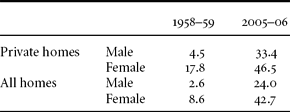
The average age of residents in all sectors had increased, but, as Table 3 shows, in 2005–06, the residents of the private homes were still older than average. The increase in the number of men of great age is particularly striking. Regarding centenarians, there were ten among the 586 residents for whom we collected data in all the homes we revisited, but six of them were living in these private homes. This is more than twice the number we would expect if there were no difference in age distributions.
The percentage of residents aged 90 or more

Regarding the social context of the residents, the picture was complicated by one home, now a voluntary home serving a predominantly religious community of women of whom 40 per cent had never married. This home apart, there were proportionately fewer residents in the former private homes compared with all homes who had never married, had ‘no known relative’ and who had ‘no surviving children’. These differences applied in 1958–59 and still applied in 2005–06.
A further continuity relating to the characteristics of residents in this group of homes is that, as in 1958–59, the residents in the private homes were reported to be less able physically than in the homes overall. Whereas 13.3 per cent of residents in all the homes we visited were reported to go out without assistance, this compared with only 2.9 per cent in the private homes. There are various explanations for this, including the possibility that residents in these private homes were overall less able. Whatever the explanation, these figures indicate that a greater proportion of the residents in these homes were reliant on assistance if they were to get out. Our interviews with residents, who said they would like to get out more, and with managers, who said that they could not afford the staff time for this, suggest that unless residents had friends or relatives able to escort them, there were fewer opportunities for them to get out than in other types of homes. As small private businesses, care staff were paid to attend to the residents’ physical needs in preference to their social needs.
Staff
Given the increased size of the homes, the increased frailty of the residents and their greater need for care, there were, not surprisingly, far more staff in 2005–06 than in the past. As businesses, these homes were no longer the proprietors’ residences, and whereas in the past the small core staff group was resident, by 2005–06 very few of the staff, many of whom worked part time, were resident. One proprietor, however, had converted a wing of the home into his own home, and another former proprietor had built a house in what had been part of the grounds of the home.
As with all the homes we visited, the staff in 2005–06 were more highly differentiated into categories – managers and administrative staff, senior and junior care staff and domestic staff – creating a more hierarchical and institutional structure in these private homes than in the past. It was policy in all the private homes we visited for staff to wear uniforms and, as in hospital settings, different categories of staff were often identified through their different uniforms. Of course, uniformed staff not only contribute to an institutional feel, but also, as Toynbee (Reference Toynbee2003: 58) has observed, provide a veneer of professionalism, whatever the reality beneath them.
Undoubtedly, the managers of the private homes in 2005–06 were better qualified, and were required to be, than in the past. Nevertheless, many of the care staff were without qualifications and, in so far as we have data on this, had fewer qualifications overall than those working in the remaining public sector and voluntary sector homes. Managers were aware that requirements regarding the training of care staff were becoming more stringent, and some identified this as one of their main problems. One manager, for example, complained about the costs of training, and another the resistance of staff, particularly older staff, to having to undertake training. A further issue was that staff with qualifications would have to be paid more. Information we were given on staff wages shows that, as in the past, they were low. At the end of 2006, for example, a senior care worker in one home was paid £6.17 per hour and a kitchen assistant £5.89. In another home, the deputy manager's hourly wage was £9.50. As far as we know, none of these staff belonged to a union.
Low wages, of course, lead to recruitment and retention problems, and some of the homes, particularly those nearer to London, had turned to migrant workers to solve their difficulties. For example, one employed staff from Zimbabwe, South Africa, India, the Czech Republic and Iran. They included trained nurses and student nurses, teachers and university students. Another employed two resident Filipino nurses. Consequently, the staff complement of these homes was more racially and ethnically diverse than 50 years ago (although Townsend had little to say about race and ethnicity). For example, the home referred to earlier, which was set up by a medical missionary, originally accommodated 12 residents; by 2005–06, it accommodated 37. In 1958–59, there were nine members of staff. Six were resident: the proprietor, his wife and sister-in-law (who was given ‘a nominal salary’), a State Registered Nurse and ‘two foreign girls’ who helped with the domestic chores in return for English lessons. In addition, there was a daily cook and two other ‘dailies’. In 2005–06 there were 23 members of staff (17 women and 6 men), including a manager, an administrator and an activities’ organiser, none of whom was resident. The manager, who was Indian, employed a diverse group of care staff: five were non-British black; four Asian or south Asian, including Indian and Thai; eight non-British white, mainly Polish; and four white British. There was one Chinese whose aim was to improve her English, pass her adaptation exam for English nurse training, and then join a big hospital. In fact, she was the only member of staff who was a qualified nurse; four more had lower levels of vocational qualification (NVQs), and the others had undertaken some basic training as carers. The first company to take over ownership of this home in the late 1990s had a policy of recruiting nurses from India, who formed 95 per cent of its staff, and then from the Philippines, who hoped to move on to hospitals and nursing homes after passing their adaptation exams. In 2002, a tabloid newspaper, The Mirror, alleged that the company was obliging these overseas nurses to pay up to £3,500 for their employment and to surrender personal documents so that they could be employed on a low wage with no chance of gaining English nurse registration (Drakeford, Reference Drakeford2006: 938).
Whatever the truth of these allegations, it would appear that in areas where there was competition for labour, homes were relying on cheap migrant labour to sustain their businesses. We also found evidence in one home of racial prejudice and discrimination by white residents and staff against black care workers from Zimbabwe. This resulted in the manager expressing reluctance about employing Zimbabweans in the home.
In summary, although all these private homes were better staffed than in the past, it remained the case that overall, in 2005–06, staff were underpaid and underqualified. In the late 1950s most of these private homes, as Townsend pointed out, had few paid staff. Fifty years later the needs of residents and the legislative requirements regarding the staffing of care homes meant that staff costs were an important issue, particularly for private businesses. Our findings also suggest that the way these businesses were regulated and inspected was still a matter for concern in 2005–06 as it was for Townsend nearly 50 years earlier.
Quality ratings
Drawing on the Commission for Social Care Inspection (CSCI) inspection reports for the surviving private homes (all of which were in England), we were able to give each a quality rating. We also rated all the homes we visited using Townsend's original quality measure. Hence, we could compare quality across time as well as variations in quality among the surviving homes in 2005–06.
Turning first to comparisons across time, Townsend's quality measure included 48 items organised into five aspects of institutional life: physical amenities; staffing and services; means of occupation; freedom of daily life; social provisions (Townsend Reference Townsend1962, Appendix 3, pp. 477–91). Although the scores for the individual homes are not deposited in the archive, Townsend did break down his results by tenure. Comparing his average scores with those for the surviving homes in 2005–06 suggests that the quality of provision in private homes has improved to an extent, mainly in relation to ‘physical amenities’, but barely at all in relation to ‘means of occupation’. However, using this measure tells us more about social and cultural change in expectations and the way quality is represented. For example, residents are no longer expected to share items of furniture such as wardrobes; television sets are commonplace rather than a luxury, while the availability of ‘wireless sets’ has declined in importance.
As mentioned earlier, Townsend found enormous variations in the quality of provision in the private sector homes, ranging from very poor to very good. Interestingly, when we compared the homes with each other in 2005–06 using the CSCI ratings, we found similar variations. And perhaps even more interestingly, we found that it was not, as one might expect, only homes judged by Townsend as good (as indicated in his home report) that have survived.
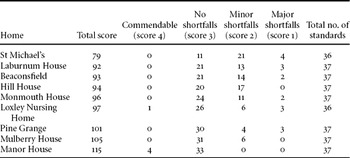
As Table 4 shows, the home with the worst score in 2005–06 was St Michael's,Footnote 5 a small private home in the West Midlands accommodating 15 residents. It opened in 1958 and was visited by a researcher in 1959 when it was reported to house eight women residents. There was one four-bedded room, a three-bedded room and a single bedroom. The home had no central heating. During the visit, five of the residents were ‘sitting up in bed’: three had been in bed for seven or eight months, and another for two months. The matron worked from 6.30 a.m. until midnight with the assistance of two domestic staff and her husband (when he was not working at his job). One resident said she wanted to leave because of matron's very bad temper, adding that ‘nurse carries on something dreadful’. Although birthdays were celebrated, there were no group activities or outings, and none of the residents had any hobbies. Only one resident ever went out and, apart from visiting relatives, there were no callers to the home: chiropodist, hairdresser, occupational therapist, social worker nor clergyman.
CSCI scores for the 1958–59 private homes which in 2005–06 had survived and remained privately owned

Note: Although CSCI inspected homes against 38 standards, none of the homes we visited provided or was inspected against Standard 6 ‘Intermediate care’ (none provided it). In addition, in the case of Loxley Nursing Home, the six inspections between March 2004 and October 2006 did not include Standard 32 ‘Management style’. And in the case of St Michael's, the six inspections between July 2002 and September 2006 did not include Standard 34 ‘Suitable accounting and financial procedures’.
In 2005, the current proprietors had owned the home for 20 years. During the course of our research, they turned their business into a private limited company and then acquired a second home. For some time, one of the proprietors was managing both homes. Although a new manager was appointed to St Michael's towards the end of 2005, the manager post for the second home was still vacant in April 2007. Both homes had been inspected by the same inspector and both had been very poorly rated. St Michael's fully met less than a third of the standards and, at its inspection in April 2006, 26 statutory requirements were laid down in order for it to fully meet the care standards. By way of example, four of the five health and personal care standards had not been fully met. An enforcement order had already been issued by an inspecting pharmacist regarding the administration of medicines. Staff were reported to be keeping inadequate records on a resident whose daily intake of food needed monitoring. They were also criticised by the inspector for failing to observe adequately the privacy and dignity of residents by using inappropriate descriptors in the daily record book such as ‘snappy’, ‘sarcastic’ and ‘in a right paddy’. One member of staff was observed to speak abruptly to a resident during the inspector's visit. Three of the four staffing standards were unmet, and concern was expressed about low levels of training and qualifications, and inadequate checks on new recruits.
In contrast, Manor House (see Table 4) was the only private home to fully meet (and in this case also exceed) all the minimum standards. In 2005–06, it belonged to a family-owned company, which owned several homes in the south of England. According to its brochure, it offered
an exceptionally attractive residence for retired ladies and gentlemen . . . [It] is designed to care for the needs of those who wish to be in pleasant surroundings, with the assurance of high quality cuisine and the attendance of helpful and caring staff during the day and night . . . The regency dining room has a personal table service. Meals are served in the dining room for all residents unless room service is preferred. Family and friends are also welcome to stay for luncheon or afternoon tea in the private dining room. (Brochure, November 2006)
It is clear at what kind of clientele this home was aimed, and the hotel model of care was emphasised. This is another interesting example of continuity. In 1959, it was reported that this home had been run as a private hotel since 1938. In 1955, the owner was obliged to convert it into a residential care home because the majority of his residents had reached an age where they required some personal care. He clearly found Townsend's visit tiresome and was reluctant to identify with residential care: ‘This isn't an institution, you know – not one of those council hospitals, or whatever they call them.’ Another one of Mr C's remarks was ‘We take your social class ones – that's why we're all single rooms here. Your working-class people like to be huddled together.’ ‘We don't take your threes, fours and fives, and we don't want them either’ (Box 36, Peter Townsend Collection, UK Data Archive).
Townsend's report noted that ‘this is the most luxuriously appointed home I have visited in this survey’. Despite his obvious reservations about the owner, he also noted that staff knocked on doors and waited for a response before entering. His concluding paragraph summed up the home as follows:
At fees between 10 and 30 guineas a week there is a waiting list for admission to this Home. Of course the standard of amenities and service – especially nursing care – could not really be bettered, and an old person entering this Home, and able to pay the fees, can remain there even as her health progressively deteriorates. You could hardly call the proprietor a sensitive man – except when it comes to making money, but then he certainly gives value for the fees he charges. I suppose this Home illustrates the truism that if you've got money you can buy anything and even acquire the means of dying with a relative degree of dignity. If you haven't got the money you take Hobson's choice and make the best of it. (ibid.)
According to CSCI, in Manor House money still buys you ‘Dignity in death’ (standard 11, fully met). However, information we gathered on other homes in all sectors showed that in 2005–06 money did not always guarantee the best.
Conclusions
It is important to recognise that the homes described here are only a part of the UK story of private sector provision of care homes for older people. A further eight homes, which were visited by Townsend in 1958–59 and had survived, had been privatised during the last 20 years and had become a part of today's private sector provision. Seven of these were local authority-owned homes in 1958–59 and one had been owned by a voluntary organisation. These homes had a very different profile and history to those discussed in this article, one that should contribute to the history of privatisation (see for example, Challis, Reference Challis and Parry1990; Wilding, Reference Wilding and Parry1990). So, leaving this to one side, what do the findings reported in this paper contribute to our knowledge and understanding of the history of private sector care home provision for older people in the England over the last 50 years?
First, most of the private homes included in Townsend's sample were relatively short-lived. Many may have been on the cusp of the transformation from hotels, boarding houses or guesthouses to residential care homes, where the majority of the existing residents had aged and needed care. Those homes that closed in the 1960s and 1970s were perhaps by and large temporary arrangements, never intended to function as lasting care home businesses.
Secondly, however, one in four of these homes survived, and in January 2007 were still part of today's private sector. Their history tells us how they had so far adapted to the changes in the private market – mainly through expansion and refurbishment. These homes had thus been passed on or sold as viable family businesses, but a small minority had become part of the corporate market in care home provision. Townsend estimated that in January 1960 there were 1,106 private residential care homes in England and Wales providing 11,643 places. Approximately a quarter of his representative sample of these homes had survived, suggesting that in 2005–06 there may have been around 250 homes that, like the ones we followed up, had also survived and had similar histories and prospects.
Thirdly, although there had been changes to these homes in terms of physical plant, their residents and staff, there were also many continuities with the past, both positive and negative. While many of the continuities relate to the enduring features of institutions, they also relate to the individual and unique histories of each home, which help us to understand what they are today and why. With change, there is always a danger of these histories being lost and of a failure by those who are currently part of it to recognise their position in the grander historical picture. Through our research, we were able to engage the interest of some participants in a history of which they had previously been unaware.
Fourthly, it remains the case that researching private sector care home provision can present particular problems regarding access and the quality of information. Now that the private sector is the major provider, this may be even more of a concern than it was in the past. Our research has demonstrated the potential importance of information produced by regulatory bodies such as CSCI (now subsumed into the Care Quality Commission) which, unlike academic researchers, has an automatic right of access to private care homes.
Fifthly, private sector care is by its very nature volatile and, given its current prominence in the provision of care for older people, the need for close regulation and inspection is as important as in the past, if not more so. Judging by our sample of homes, there is no question that the regulation and inspection of care homes are much more exacting than in the past. Nevertheless, in the early twenty-first century, concerns about the quality of care and the safety and security of residents in care homes continue to be raised (Office of Fair Trading, 2005). Although over the last few years CSCI had moved away from a purely inspectorial approach to a more developmental one, this has not, as our research shows, ironed out the kinds of inequalities that Townsend found nearly 50 years earlier. Our examination of inspection reports showed that some standards are often not inspected for several years, and the move towards a lighter touch (CSCI, 2004, 2006) is unlikely to have reversed this. It remains to be seen whether the new enforcement powers,Footnote 6 which will come into effect in 2010, will improve the lives of all older people living in care homes.
Some time ago, Wistow argued that community care in the UK was in danger of going full circle, with older people finding themselves being cared for once again in large institutions (Wistow, Reference Wistow1995). More than a decade later, Mark Drakeford has similarly argued that, through corporatisation, the future of private provision is ‘set to be one of large-scale warehousing, physically located on far fewer premises and offering little by way of choice’ (2006: 936; see also Holden, Reference Holden2002; Scourfield, Reference Scourfield2007). If his prediction is right, the future of the ‘cottage industry homes’ we have described here and of those with similar histories is very much in the balance.
Acknowledgements
The research on which this paper is based was funded by the ESRC from May 2005 to December 2007, grant reference RES-000-23-0995. We would like to thank Robin Darton, Ann Netten and the two anonymous referees for their comments on an earlier draft of this paper.