Introduction
Somatic symptoms are highly prevalent in the general population (Petrie et al. Reference Petrie, Faasse, Crichton and Grey2014; Eliasen et al. Reference Eliasen, Kreiner, Ebstrup, Poulsen, Lau, Skovbjerg, Fink and Jørgensen2016), and up to two-thirds of them remain unexplained (Steinbrecher et al. Reference Steinbrecher, Koerber, Frieser and Hiller2011). Estimations of perceived but medically unexplained health complaintsFootnote †Footnote 1 vary widely, between 4% and 30% in the population and between 10% and as much as 50% in primary-care consultations (Rief et al. Reference Rief, Hessel and Braehler2001; Kroenke et al. Reference Kroenke, Spitzer and Williams2002; Kirmayer et al. Reference Kirmayer, Groleau, Looper and Dao2004; Loengaard et al. Reference Loengaard, Bjorner, Fink, Burr and Rugulies2015; van der Sluijs et al. Reference van der Sluijs, Ten Have, Rijnders, van Marwijk, de Graaf and van der Feltz-Cornelis2015). Of these, respiratory symptomatology with an unclear background varies from approximately 5% to 40% of the cases (Reid et al. Reference Reid, Wessely, Crayford and Hotopf2001; Rief et al. Reference Rief, Hessel and Braehler2001; Nimnuan et al. Reference Nimnuan, Hotopf and Wessely2001). The highly variable prevalence estimates underline the need for a more comprehensive understanding of recurring subjective respiratory-health complaints, in which psychological factors are suggested to play a prominent part (Lehrer et al. Reference Lehrer, Feldman, Giardino, Song and Schmaling2002).
Individuals differ in their attributional styles with regard to somatic symptoms (Robbins & Kirmayer, Reference Robbins and Kirmayer1991; Barsky et al. Reference Barsky, Peekna and Borus2001b; Goodwin & Engstrom, Reference Goodwin and Engstrom2002; Petrie & Weinman, Reference Petrie and Weinman2012). This is related to how accurately both healthy people and patients with respiratory diseases perceive their respiratory symptomatology, and it predicts the outcome of illness (Lehrer et al. Reference Lehrer, Feldman, Giardino, Song and Schmaling2002; Cohen et al. Reference Cohen, Doyle, Turner, Alper and Skoner2003; Hynninen et al. Reference Hynninen, Breitve, Wiborg, Pallesen and Nordhus2005; Nici et al. Reference Nici, Donner, Wouters, Zuwallack, Ambrosino, Bourbeau, Carone, Celli, Engelen and Fahy2006; Janssens et al. Reference Janssens, Verleden, De Peuter, Petersen and Van den Bergh2011). Psychological factors such as a pervasive tendency to experience negative emotions (negative affectivity) have proved to be influential in terms of distorting symptom-perception processes related to respiratory diseases (Lehrer et al. Reference Lehrer, Feldman, Giardino, Song and Schmaling2002). Failure to perceive symptoms results in problems of self-management and the overutilisation of health services (Frostholm et al. Reference Frostholm, Fink, Christensen, Toft, Oernboel, Olesen and Weinman2005; Serrano et al. Reference Serrano, Plaza, Sureda, De Pablo, Picado, Bardagi, Lamela and Sanchis2006; Rhee et al. Reference Rhee, Belyea and Halterman2011). Depression is a risk factor for incident asthma (Brunner et al. Reference Brunner, Schreiner, Sood and Jacobs2014) and its severity (Eisner et al. Reference Eisner, Katz, Lactao and Iribarren2005), and respiratory symptoms are at least as strongly associated with common psychiatric disorders as they are with objective lung-function tests (Katon et al. Reference Katon, Lin and Kroenke2007). Thus, the involvement of psychological and psychiatric factors in symptoms of respiratory diseases is established, but no general population samples have been used to examine whether these factors are related to the perceived respiratory-symptom burden in populations with normal lung functioning.
Studies involving selected patient populations have shown that it is essential to identify the determinants that influence an individual's ability to cope with and adjust to chronic conditions, and thereby to enhance understanding of the prognosis of the disease (Stewart & Yuen, Reference Stewart and Yuen2011; Disler et al. Reference Disler, Gallagher and Davidson2012). Antonovsky's theory of a sense of coherence (SOC) (Antonovsky, Reference Antonovsky1987) conceptualises such an ability: a high SOC is related to the numbers and types of adaptive health-promoting coping strategies and a better health status in the general population as well as in different populations of chronically ill patients (Suominen et al. Reference Suominen, Helenius, Blomberg, Uutela and Koskenvuo2001; Pallant & Lae, Reference Pallant and Lae2002; Eriksson & Lindström, Reference Eriksson and Lindström2005, Reference Eriksson and Lindström2006; Simonsson et al. Reference Simonsson, Nilsson, Leppert and Diwan2008). There is also evidence that a low SOC increases the risk of acquiring new diseases (Poppius et al. Reference Poppius, Tenkanen, Kalimo and Heinsalmi1999; Agardh et al. Reference Agardh, Ahlbom, Andersson, Efendic, Grill, Hallqvist, Norman and Östenson2003), but how it relates to the respiratory-symptom burden remains to be studied.
Alexithymia is also connected to an individual's ability to adjust to chronic conditions, being linked to having difficulty interpreting and expressing somatic sensations related to emotional arousal (Taylor et al. Reference Taylor, Bagby and Parker1999; De Gucht & Heiser, Reference De Gucht and Heiser2003; Waller & Scheidt, Reference Waller and Scheidt2006; Mattila et al. Reference Mattila, Kronholm, Jula, Salminen, Koivisto, Mielonen and Joukamaa2008). This could result in the less effective regulation of somatic conditions and, consequently, play a role in increased subjective health complaints. It has been shown in clinical samples, for example, that alexithymia complicates the optimal management of asthma due to the failure to perceive dyspnoea (Feldman et al. Reference Feldman, Lehrer and Hochron2002; Vazquez et al. Reference Vazquez, Sández, González-Freire, Romero-Frais, Blanco-Aparicio and Verea-Hernando2010; Baiardini et al. Reference Baiardini, Braido, Ferraioli, Menoni, Bruzzone, Conte, Gani, Ridolo, Scordamaglia and Canonica2011), resulting in a larger number of healthcare contacts compared with non-alexithymic patients (Serrano et al. Reference Serrano, Plaza, Sureda, De Pablo, Picado, Bardagi, Lamela and Sanchis2006). According to clinical trials, alexithymia may be detrimental to the perception of respiratory symptoms, but there has been little population-level research based on the objective measurement of pulmonary functioning.
Health anxiety is defined as the fear of having an illness, based on the misinterpretation of general somatic symptoms. It has been shown to indicate attentional bias towards illness-related cues (Owens et al. Reference Owens, Asmundson, Hadjistavropoulos and Owens2004), which results in the increased use of health services (Barsky et al. Reference Barsky, Ettner, Horsky and Bates2001a; Frostholm et al. Reference Frostholm, Fink, Christensen, Toft, Oernboel, Olesen and Weinman2005; Bleichhardt & Hiller, Reference Bleichhardt and Hiller2007; Sunderland et al. Reference Sunderland, Newby and Andrews2013). Health anxiety, measured in terms of self-reported illness worry, is relatively common among patients in primary and secondary care (Robbins & Kirmayer, Reference Robbins and Kirmayer1996; Clarke et al. Reference Clarke, Piterman, Byrne and Austin2008), including those with respiratory complaints (Tyrer et al. Reference Tyrer, Cooper, Crawford, Dupont, Green, Murphy, Salkovskis, Smith, Wang and Bhogal2011). However, its influence on help-seeking behaviour is only partially recognised in the planning of medical treatment for somatic symptoms (Henningsen et al. Reference Henningsen, Zipfel and Herzog2007). A variety of somatic symptoms linked to illness worries appear to associate with a poor prognosis and high healthcare utilisation in a way that cannot be solely attributed to concurrent psychiatric disorders or somatic diseases, for example (Barsky et al. Reference Barsky, Ettner, Horsky and Bates2001a; Creed & Barsky, Reference Creed and Barsky2004). The research thus far has focused on the prevalence of the diagnostic concept of health anxiety and its correlation with the burden of somatic symptoms. The association of dispositional illness worry with objectively measured lung functioning and health complaints nevertheless remains to be explored in the context of respiratory medicine.
Further population-level research is needed to assess the association of a poor SOC, a high level of alexithymia and illness worry with subjective respiratory-health complaints. In the present study, we first determined the prevalence of self-reported respiratory symptoms with no objective signs of impaired lung functioning in the general population. Second, we examined the extent to which a SOC, alexithymia and illness worry associated with subjective respiratory-health complaints, when objective respiratory status was taken into account. Third, given that a high number of somatic symptoms is associated with an impaired health status and high healthcare use in a way that cannot be attributed to concurrent mood disorders or medical illness (Tomenson et al. Reference Tomenson, Essau, Jacobi, Ladwig, Leiknes, Lieb, Meinlschmidt, McBeth, Rosmalen and Rief2013), we sought to determine whether respiratory-health complaints are related to increased healthcare use in the general population, and if so whether psychological factors strengthen the association.
Materials and methods
Design
Sample
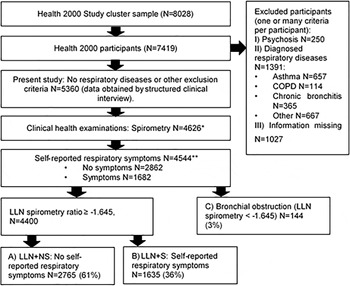
The Health 2000 Survey (BRIF8901) is a nationally representative survey of Finnish adults aged 30 years and over conducted by the National Institute for Health and Welfare. The data were collected in Finland in 2000 and 2001 (see Aromaa & Koskinen (Reference Aromaa and Koskinen2004) for a detailed description of the sampling procedure). The base sample comprised 8028 subjects, of whom 6005 participated in a clinical health examination focusing on lung functioning, and in a structured interview covering respiratory symptomatology and common depressive, anxiety and alcohol-use disorders, in line with the Munich version of the Composite International Diagnostic Interview (CIDI) (WHO, 1993, 1997). The sample analysed for this study included subjects with complete information on lung functioning (N = 4626) and information on self-reported respiratory symptoms (N = 4544). Three exclusion criteria were applied: (1) to subjects with any psychotic disorder (N = 249) as described in Perala et al. (Reference Perala, Suvisaari, Saarni, Kuoppasalmi, Isometsa, Pirkola, Partonen, Tuulio-Henriksson, Hintikka, Kieseppa, Harkanen, Koskinen and Lonnqvist2007); (2) to one participant who was diagnosed after the study sample was modified; and (3) to those who either reported a diagnosed respiratory disease (asthma, COPD, chronic bronchitis, other) or on whom there was missing information on these items. The mean age of the 4544 participants in this sample was 51 (s.d. = 14.13), with a range of 30–94, and 54% of them were female (Table 1). Figure 1 outlines the study flow.
The flow chart of the study population: LLN + NS = group includes participants whose spirometry lower limits of normal (LLN) ratio FEV1/FVC is normal (⩾−1.645) and who do not report respiratory symptoms; LLN + S = group includes participants whose LLN is normal (⩾−1.645) and who report respiratory symptoms; LLN− = group includes participants whose spirometry LLN was low (<−1.645). *Information of spirometry missing N = 734, **information of self-reported respiratory symptoms missing N = 82. Self-reported respiratory symptoms without signs of bronchial obstruction (group B) were present in 36% of the general population when patients with psychosis and those diagnosed with respiratory diseases were excluded (N = 4544). In all of the Health 2000 sample including those with no or missing information on respiratory symptoms, clinical health examinations, respiratory diseases and psychosis (N = 6185), the prevalence of self-reported respiratory symptoms without signs of bronchial obstruction was 26%.

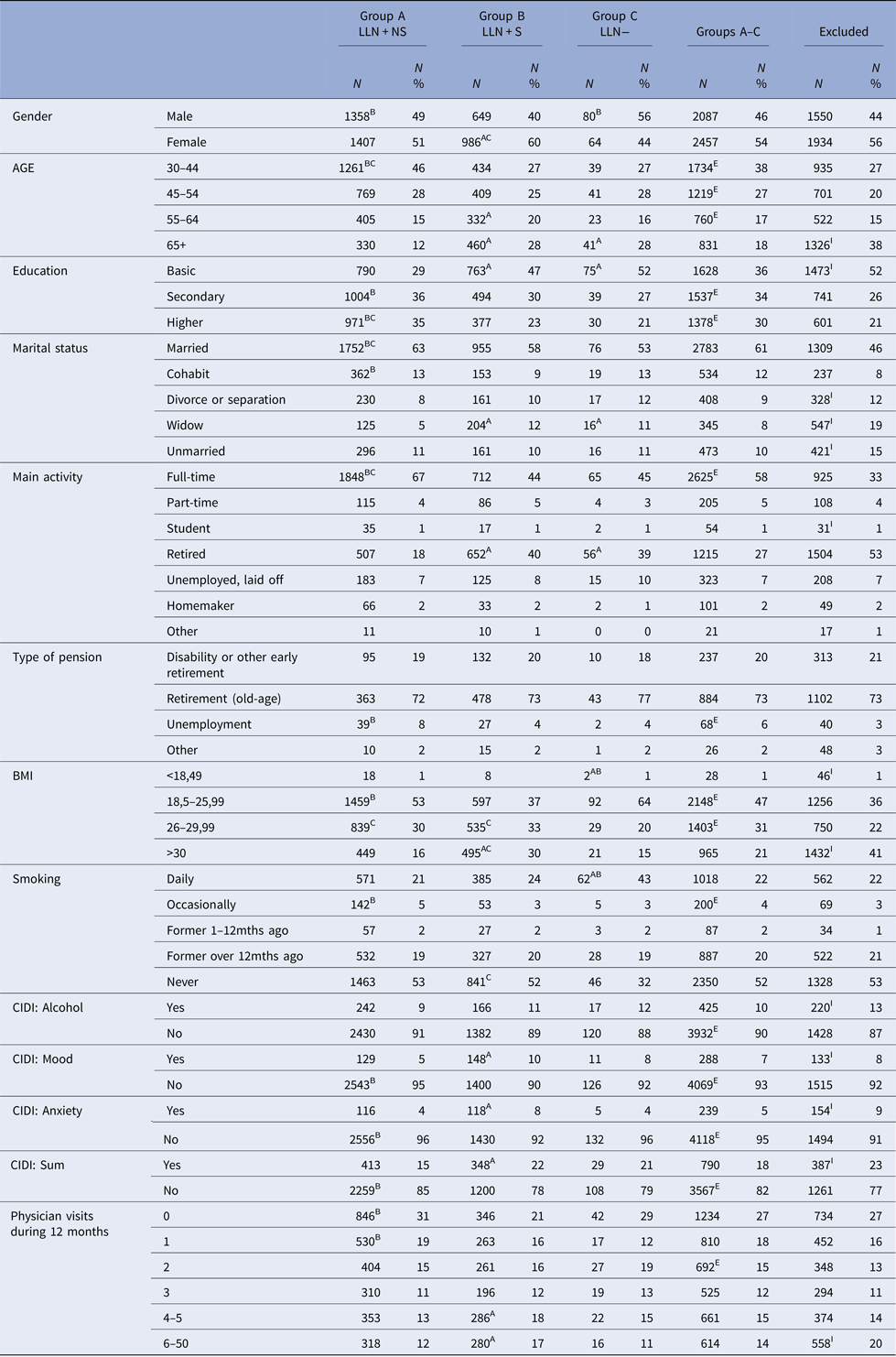
Baseline characteristics of the study population and comparison between included and excluded participants

LLN + NS, group includes participants whose spirometry lower limits of normal (LLN) ratio FEV1/FVC is normal (⩾−1.645) and who do not report respiratory symptoms; LLN + S, participants whose LLN is normal (⩾−1.645) and who report respiratory symptoms; LLN−, participants whose LLN is low (<−1.645). Excluded were participants (N = 3484) with diagnosed respiratory disease (N = 1391), psychosis (N = 250), or information on self-reported respiratory symptoms (N = 1027) or primary outcomes missing (N = 816). BMI, body mass index; CIDI Alcohol, alcohol-related disorders by Mental Health Composite International Diagnostic Interview (CIDI); CIDI Mood, mood disorders; CIDI Anxiety, anxiety disorders; CIDI sum, the number of participants with one or more mental-health diagnoses. Column proportions are compared by Z-tests, the results are based on two-sided tests with Bonferroni correction, p < 0.05. For each significant pair, the key of the category with the smaller column proportion appears in the category with the larger column proportion; comparisons between included and excluded participant groups are based on Pearson's χ2 tests, p < 0.05.
Measures
Lung functioning and symptoms
Spirometry is the most efficient tool for diagnosing bronchial obstruction. A Vitalograph bellow spirometer (Vitalograpf Ltd. Buckingham, UK) model was used in this survey. The lower limit of normal (LLN) for the FEV1/FVC ratio [the proportion of their vital capacity that people can expire: the forced expiratory volume in 1 s (FEV1) and the forced vital capacity (FVC) of 6 s duration] were used as airflow-obstruction criteria in the study. The LLN is defined as the value that identifies the lower fifth percentile of a population. It is calculated by subtracting 1.645 times the standard deviation from the mean, that is, the expected value, and it is age-corrected: a value below −1.645 predicts bronchial obstruction (Quanjer et al. Reference Quanjer, Stanojevic, Cole, Baur, Hall, Culver, Enright, Hankinson, Ip and Zheng2012). Acceptable spirometry results were obtained from 2087 males (57% of the base sample) and 2457 females (56% of the base sample) included in this study who had not been diagnosed with a respiratory disease.
Self-reported respiratory symptoms were assessed in line with WHO-recommended sets of relevant questions (Fletcher et al. Reference Fletcher, Elmes, Fairbairn and Wood1959; Rose & Blackburn, Reference Rose and Blackburn1968): ‘Do you cough or bring up phlegm on most days?’ ‘Do you become short of breath when you are hurrying on ground level or walking up a slight hill?’ ‘Do you feel breathless when walking with people of the same age on the level, or do you have to stop for breath when walking at your own pace on the level?’ The subjects gave dichotomous (yes–no) responses to each question, and if they answered ‘yes’ to one or more, they were classified as having self-reported respiratory symptoms. (online Supplementary 1: complete symptom questionnaire).
For the categorical analyses, we divided the participants into three groups based on the spirometry values and the self-reported respiratory symptoms. Group A (LLN + NS) includes those with a spirometry LLN FEV1/FVC ratio ⩾−1.645 who did not report respiratory symptoms (N = 2765); group B (LLN + S) includes those with a spirometry LLN ⩾−1.645 who reported respiratory symptoms (N = 1635); group C (LLN−) includes those with a LLN spirometry ratio FEV1/FVC of below −1.645 (N = 144) (Fig. 1).
Sense of coherence: SOC scale
SOC was assessed on 12 items of the Finnish SOC-13 scale compiled from the original SOC-29 scale (Antonovsky, Reference Antonovsky1987; Bernabe et al. Reference Bernabe, Tsakos, Watt, Suominen-Taipale, Uutela, Vahtera and Kivimaki2009). Item 9 was not included in the final questionnaire of the Health 2000 Survey. The subjects gave their responses on seven-point semantic-differential scales with two opposite anchoring phrases (1 = very often and 7 = very seldom or never, sum-score range 12–84; a high score indicates a strong SOC). The scores for the five negatively keyed items (4, 5, 6, 16 and 25 from the original scale) were reversed. The Cronbach's α for the total scale was 0.85 in this study population. The psychometric properties of the SOC have proved to be good, and the measurements have been validated both in normal populations and in several clinical populations (Eriksson & Lindström, Reference Eriksson and Lindström2005).
Alexithymia: Toronto Alexithymia Scale-20
Alexithymia was assessed on the Finnish version of the Toronto Alexithymia Scale-20 (TAS-20) (Bagby et al. Reference Bagby, Parker and Taylor1994a; Joukamaa et al. Reference Joukamaa, Miettunen, Kokkonen, Koskinen, Julkunen, Kauhanen, Jokelainen, Veijola, Laksy and Jarvelin2001). The subjects indicated their responses on five-point semantic-differential scales with two opposite anchoring phrases (1 = strongly disagree and 5 = strongly agree). The scores for the five negatively keyed items (4, 5, 10, 18 and 19) were reversed. The score is the sum score of responses to all 20 items, and a high score indicates alexithymic characteristics. A Cronbach's α coefficient of 0.85 was obtained for TAS-20 in a study based on the Health 2000 sample (Mattila et al. Reference Mattila, Kronholm, Jula, Salminen, Koivisto, Mielonen and Joukamaa2008). The psychometric properties of the Finnish version of TAS-20 have proved to be good (Bagby et al. Reference Bagby, Parker and Taylor1994a, Reference Bagby, Taylor and Parkerb; Joukamaa et al. Reference Joukamaa, Miettunen, Kokkonen, Koskinen, Julkunen, Kauhanen, Jokelainen, Veijola, Laksy and Jarvelin2001), and this measurement has been validated in the general population and in several patient populations (Joukamaa et al. Reference Joukamaa, Miettunen, Kokkonen, Koskinen, Julkunen, Kauhanen, Jokelainen, Veijola, Laksy and Jarvelin2001; Feldman et al. Reference Feldman, Lehrer and Hochron2002; Waller & Scheidt, Reference Waller and Scheidt2006; Vazquez et al. Reference Vazquez, Sández, González-Freire, Romero-Frais, Blanco-Aparicio and Verea-Hernando2010; Baiardini et al. Reference Baiardini, Braido, Ferraioli, Menoni, Bruzzone, Conte, Gani, Ridolo, Scordamaglia and Canonica2011).
Health anxiety: the Whiteley Index
The Whiteley Index (WI) is an instrument that is widely used for measuring health anxiety in the form of hypochondriac worries, and beliefs and convictions about illness, for example. In this study, we used a seven-item measure rated on a five-point Likert scale (Whiteley-7, range 7–35) (Fink et al. Reference Fink, Ewald, Jensen, Sørensen, Engberg, Holm and Munk-Jørgensen1999), adapted from the original 20-item WI (Pilowsky, Reference Pilowsky1967). A high score indicates a tendency towards health anxiety. The scale has proved to be reliable and to have high internal consistency (Speckens et al. Reference Speckens, Spinhoven, Sloekers, Bolk and van Hemert1996). In this study, the Cronbach's α coefficient was 0.77 for the seven-item scale.
To make these three scales comparable, we standardised the sum scores in the analysis to a mean of zero and a standard deviation of one.
Demographic variables
We categorised age into four classes for the descriptive data analysis (30–44, 45–54, 55–64 and 65–100 years), and used it as a standardised value in the main analysis. Marital status was broken down into five categories: single, married, cohabiting, divorced/separated and widowed. The information related to socioeconomic position concerned education and main activity. The education variable comprised three levels (basic, secondary and higher education), and main activity was divided into full-time employed, part-time employed, unemployed or laid off, retired, homemaker, student and other. Among the retired, the alternative grounds for the retirement were old age, disability, unemployment and other. Table 1 shows the demographics of the participants.
Other covariates
In further analyses, we used the standardised body mass index (BMI), spirometry LLN FEV1/FVC ratio, and the maximum hand-grip strength of the dominating hand to measure physical condition, and C-reactive protein (CRP) as a measure of acute inflammation served as a continuous explanatory variable. The categorical variables were gender and smoking, the latter categorised as non-smoker or former smoker (stopped over 12 months previously) and current smoker (daily, occasionally or stopped in the preceding 12 months). The most common diagnosis for depressive, anxiety and alcohol-use disorders obtained from the CIDI interview was used as a categorical explanatory variable (three groups separately and one sum score: no diagnosis–diagnosis) (Pirkola et al. Reference Pirkola, Isometsä, Suvisaari, Aro, Joukamaa, Poikolainen, Koskinen, Aromaa and Lönnqvist2005).
Statistical analysis
First, Z-testing was used to compare the proportional differences in the descriptive data between the three groups (A: LLN + NS; B: LLN + S; C: LLN−). Bonferroni adjustment was used to account for multiple testing, the results being based on two-sided tests with p < 0.05. Second, analyses of covariance were conducted to compare the groups in terms of psychological factors (TAS, SOC and WI), controlled for gender and age. The results are presented as standardised values, including the confidence intervals (CIs) of the standard error of the means.
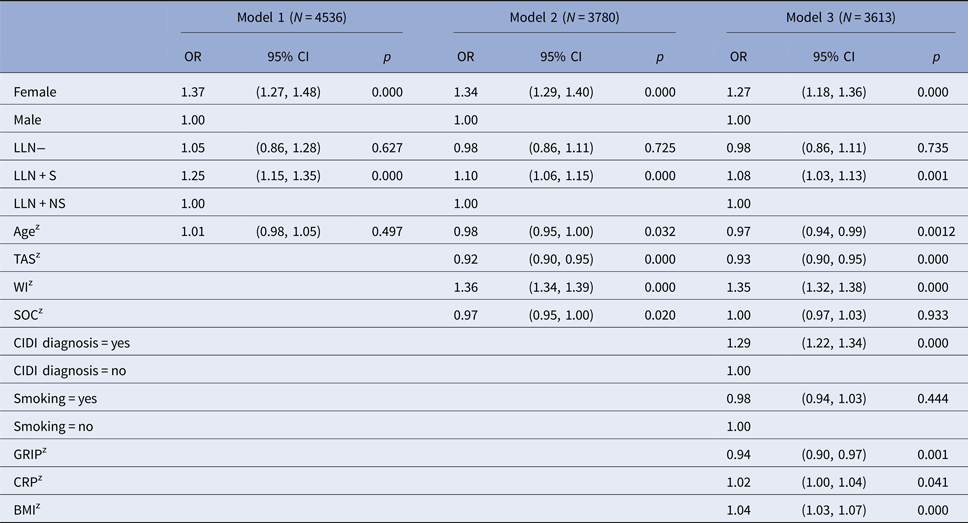
Third, binary logistic regression was used to estimate the influence of psychological factors on the reporting of respiratory symptoms (no symptoms–symptoms) (model 1). The results are presented as odds ratios (ORs), including 95% CIs and p values. Given their potential clinical significance, the analyses were adjusted for gender, age, spirometry LLN, CIDI diagnosis, smoking, BMI, grip strength and CRP (model 2). CIDI diagnoses were tested separately in the model, but because the results remained the same, only the sum score is shown. The dependent variables were self-reported respiratory symptoms (0 = no symptoms, 1 = symptoms). Fourth, a separate binary logistic regression analysis was conducted, with self-reported symptoms as the dependent variable and in separate models SOC, WI and TAS-20, with gender, age and spirometry LLN values as explanatory variables. The interactions between the psychological factors and gender, age and LLN were added to the models separately to estimate the possible interactions between the factors and the covariates (3 × 3 models). Both CIDI diagnosis and smoking status were controlled for in the analyses together (nine models) and separately (nine models). Fifth, Poisson regression was run to predict the number of physician visits during the previous 12 months as a dependent variable based on gender, age and study group (model 1), psychological factors (model 2) and other markers (model 3) as independent variables. Again, CIDI diagnoses were adjusted for separately in the model, but because the association did not change, only the sum score is shown. The results are presented with OR including 95% CIs and p values, and cover the subjects who had no missing values in the variables. IBM-SPSS 22.0 for Windows (SPSS Illinois, Chicago, Illinois, USA) software was used for the statistical analyses.
Results
Participant characteristics and the presence of respiratory symptoms in the population in relation to objective findings
Our primary study sample comprised 4544 individuals from the population-based Health 2000 Study, and excluded self-reported respiratory disease diagnosed by a medical doctor as well as participants with psychosis. Thirty-six per cent of the subjects experienced frequent respiratory symptoms with no objective signs of bronchial obstruction (LLN + S group). Three per cent had a bronchial obstruction (LLN−), and the majority (61%) had no respiratory symptoms or objective signs of bronchial obstruction (LLN + NS) (Fig. 1). The prevalence of self-reported respiratory symptoms without signs of bronchial obstruction in the whole Health 2000 sample (with available information on respiratory symptoms, spirometry, respiratory diseases and severe psychiatric disorders; N = 6185) was 26%. Females were significantly over-represented in the LLN + S group compared with the other two groups, whereas LLN + NS was the youngest group. Being married, highly educated and in full-time work were significantly more frequent in the LLN + NS compared with the other two groups. Of the health-related factors, severe overweight was significantly more frequent in the LLN + S group than in the other two, whereas daily smoking was significantly more infrequent in the LLN + NS group. Compared with the members of the LLN + NS group, those in the LLN + S group had more depression and anxiety-disorder diagnoses, and reported significantly more frequent physician visits. Compared with the excluded participants, being 64 years old or younger, married, highly educated and in full-time work were significantly more frequent in the included participants, who also had fewer overall CIDI diagnoses. Physician visits were also more frequent among the excluded participants, which closer analysis showed was attributable to the presence of respiratory diseases (data not shown) (Table 1).
Psychological factors related to respiratory symptoms
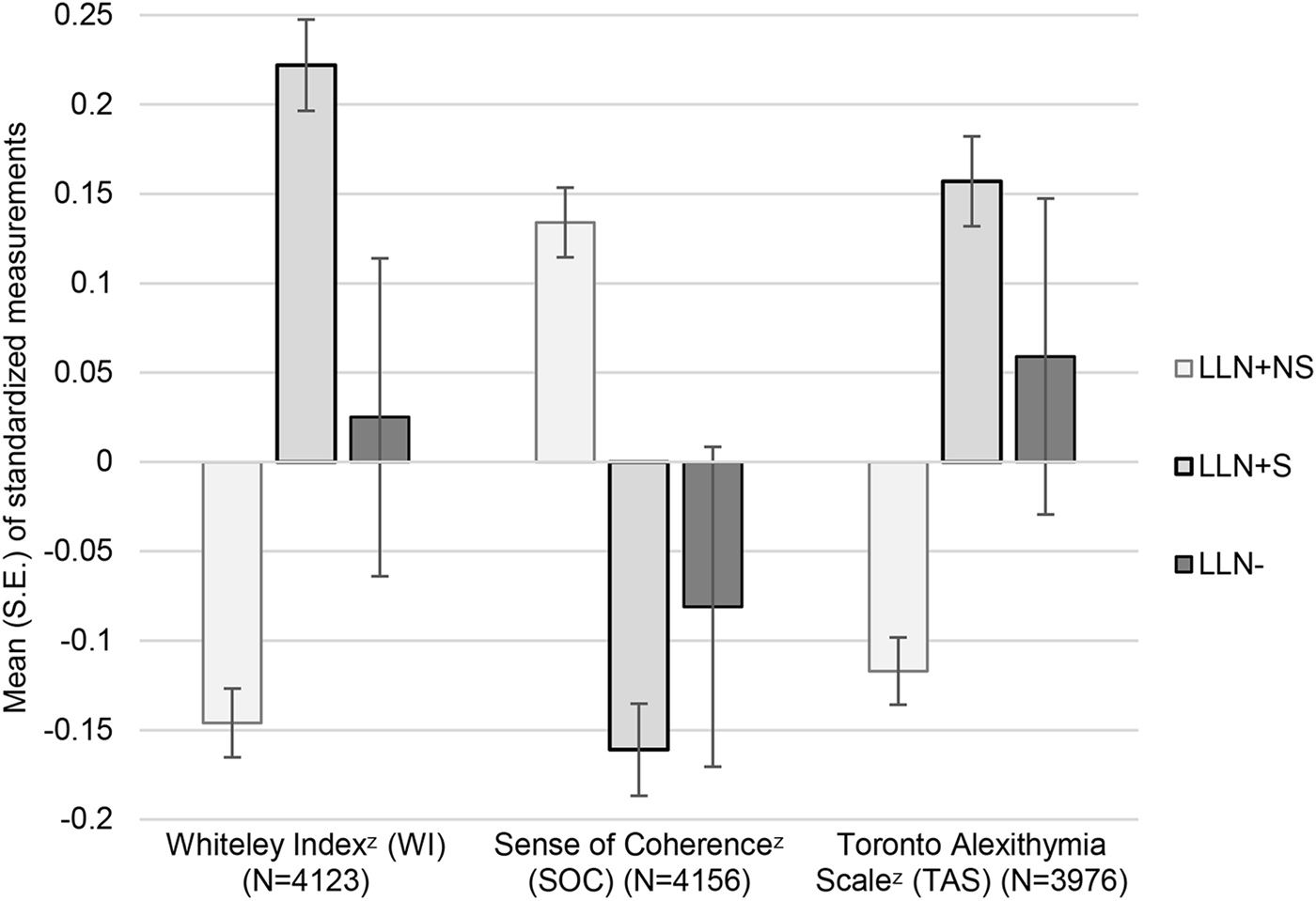
There were significant differences on the WI [F (2, 4118) = 64.11, p < 0.0001], the TAS-20 [F (2, 4974) = 37.29, p < 0.0001] and the SOC scale [F (2, 4151) = 40.86, p < 0.0001]: the LLN + NS group reported higher SOC, fewer alexithymic characteristics and less health anxiety than the other groups (Fig. 2).
Means and standard errors (s.e.) standardised (Z) measurements between the groups. Age and gender were controlled for in the analysis. The LLN + NS group includes participants who do not report respiratory symptoms with a normal spirometry results [lower-than-normal (LLN) spirometry ratio FEV1/FVC ⩾−1.645]; the LLN + S group includes participants who do report respiratory symptoms with a normal spirometry results (LLN ratio FEV1/FVC ⩾−1.645); the LLN− group includes participants with low spirometry (LLN ratio FEV1/FVC <−1.645).

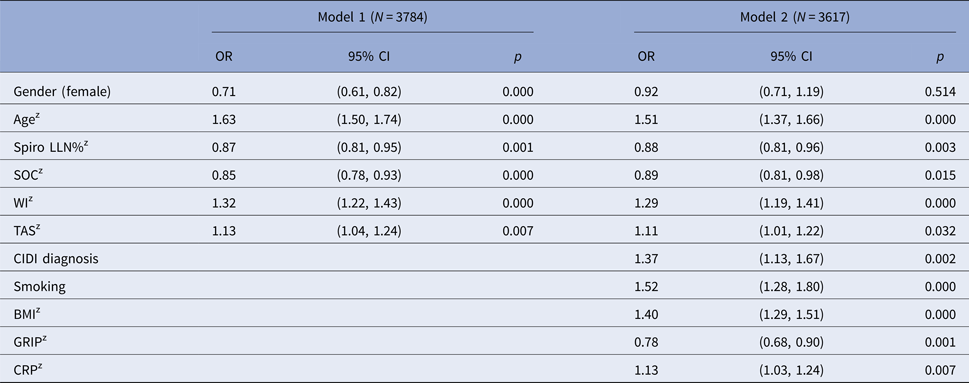
A high SOC was associated with a decrease in the odds of self-reported respiratory symptoms, and scoring high on the WI or TAS-20 was associated with an increase in self-reported symptoms even following adjustment for age, gender and the spirometry LLN FEV% value (Table 2, model 1). Adjusted for all the covariates, health anxiety was related to an increase in self-reported symptoms even when the covariates were accounted for (OR = 1.29, p < 0.0001). High alexithymia (OR = 1.11, p = 0.032) and a low SOC (OR = 0.89, p = 0.015) were significantly associated with an increase in respiratory symptoms, although to a lesser extent.
Predictors of self-reported respiratory symptoms: the results obtained from the binary logistic regression

Spiro LLN %, spirometry lower limits of normal (LLN) ratio FEV1/FVC; SOC, sense of coherence; WI, Whiteley Index; TAS 20, Toronto Alexhithymia Scale; CIDI, categorical predictor according to the Mental Health Composite International Diagnostic Interview diagnosis, no diagnosis as a reference category; Smoking, categorical predictor based on self-reported smoking, never or no smoking for more than 12 months as the reference category; BMI, body mass index; GRIP, maximum hand-grip strength; CRP, C-reactive protein; predictors with z are used as standardised values. In model 1, R 2 = .084 (Hosmer and Lemeshow), 0.139 (Nagelkerke); in model 2, R 2 = .277 (Hosmer and Lemeshow), 0.180 (Nagelkerke).
There were no interactions linking gender, age or spirometry LLN FEV% with alexithymia or SOC (p < 0.05) when predicting subjective respiratory-health complaints as a dependent variable. The WI interacted significantly with the spirometry LLN FEV% value (OR = 1.10, 95% CI 1.02–1.20, p = 0.017) even following adjustment for CIDI diagnoses, smoking or both. Online Supplementary Figs S3 and S4 show the interaction for males and females separately.
Healthcare usage
Members of the LLN + S study group reported 1.25 (95% CI 1.15–1.35, p < 0.0001) times more physician visits than those in the reference group LLN + NS (Table 3, model 1). The difference between the LLN + S and LLN + NS groups attenuated by 42.7% (from 1.25 to 1.10) following adjustment for psychological factors. The direction of the difference between the groups remained the same when the rest of the variables were added in model 3. However, no statistically significant result for SOC emerged in model 3.
Predictors of physician visits during the previous 12 months: the results obtained from the Poisson regression

The LLN + S group includes participants with lower spirometry limits than normal (LLN) ratio FEV1/FVC ⩾−1.645 and who report respiratory symptoms; the LLN + NS group includes participants whose spirometry LLN ⩾−1.645 and who do not report respiratory symptoms; the LLN− group includes participants whose spirometry LLN<−1.645; SOC, sense of coherence; WI, Whiteley Index; TAS 20, Toronto Alexhithymia Scale; CIDI, categorical predictor according to the Mental Health Composite International Diagnostic Interview diagnosis; Smoking, categorical predictor based on self-reported smoking; no, never or no smoking for more than 12 months; yes, Current smoker or stopped during the previous 12 months; BMI, body mass index; GRIP, maximum hand-grip strength; CRP, C-reactive protein; predictors with z are used as standardised values. Model 1 deviance = 1 521 657 (df = 4531, χ2 = 3,36) and BIC = 2 493 716; in model 2, deviance = 1 166 556 (df = 3772, χ2 = 3,09) and BIC = 1 976 686; and in model 3, deviance = 1 098 372 (df = 3600, χ2 = 3.05) and BIC = 1 880 254.
Discussion
Subjective respiratory-health complaints without objective signs of impaired respiratory function were very common in this national sample of Finnish adults, with a prevalence estimate of 26% in the general population and 36% excluding cases of respiratory or severe psychiatric disease. Subjective respiratory symptoms were significantly related to the measures of SOC, alexithymia and illness worry, indicating that these specific psychological traits may enhance the perceived burden of the symptoms. The individuals concerned were more likely to visit a physician, and their psychological profile explained 42.7% of this association.
These results are in line with those of previous studies showing that perceived symptomatology has an influence on healthcare utilisation (Kolk et al. Reference Kolk, Hanewald, Schagen and van Wijk2002; Burton, Reference Burton2003; Tomenson et al. Reference Tomenson, Essau, Jacobi, Ladwig, Leiknes, Lieb, Meinlschmidt, McBeth, Rosmalen and Rief2013), with a focus on the respiratory system. We found that the difference in the numbers of physician visits between the participants with no signs of impaired lung functioning but with or without respiratory symptoms diminished following adjustment for psychological factors. In fact, SOC, alexithymia and illness worry even contributed independently to perceived symptoms when indicators of poor physical-health and mental-health diagnoses were accounted for. These findings suggesting the presence of a functional component in the symptomatology reflect the extent of various psychological variables linked to subjective health complaints. Our results are compatible with those reported in earlier experimental studies on symptom perception in patients with respiratory disease. It has been shown, for example, that a distressing context reduces the accuracy of symptom perception among people who are prone to negative affectivity: they rely more on environmental cues than on their own physiological responses in such situations (Bogaerts et al. Reference Bogaerts, Notebaert, Van Diest, Devriese, De Peuter and Van den Bergh2005; Janssens et al. Reference Janssens, Verleden, De Peuter, Petersen and Van den Bergh2011). Thus, the presence of an underlying functional component appears to affect somatic perception, even on the population level, and could strongly affect overall subjective health complaints.
A higher SOC is considered to have health-promoting effects against somatic complaints (Eriksson & Lindström, Reference Eriksson and Lindström2005; Gallagher et al. Reference Gallagher, Donoghue, Chenoweth and Stein-Parbury2008; Stewart & Yuen, Reference Stewart and Yuen2011). Somewhat surprisingly, even though the predictive validity of SOC has proved to be good in several studies, its predictive power remained modest across the analyses. Kivimäki et al. (Reference Kivimäki, Feldt, Vahtera and Nurmi2000) found that a low SOC predicted significantly more adverse health problems than a high SOC, and concluded that the low rather than the high end of the SOC continuum was relevant in terms of health maintenance. Given these results, it would be worth evaluating the discriminant validity between high and low SOC scores.
Our findings imply that alexithymic characteristics are risk factors for the prevalence of somatic symptoms without a clear organic explanation (Deary et al. Reference Deary, Scott and Wilson1997; Bailey & Henry, Reference Bailey and Henry2007; Mattila et al. Reference Mattila, Kronholm, Jula, Salminen, Koivisto, Mielonen and Joukamaa2008), although the association between alexithymia and increased physician visits was modest. It has been suggested that the constitutive dimensions of alexithymia relate differently to self-perceived symptoms, and that separate factors have greater discriminant validity than general alexithymia measured on the TAS-20 (Lundh & Simonsson-Sarnecki, Reference Lundh and Simonsson-Sarnecki2001; De Gucht & Heiser, Reference De Gucht and Heiser2003). Further analyses should evaluate the discriminant validity of its factor structure (Kooiman et al. Reference Kooiman, Bolk, Rooijmans and Trijsburg2004) in comparison with an SOC continuum.
The results on illness worry merit closer attention in that its predictive power remained the most stable across the analyses independently of a large body of adjustments. As a diagnostic concept, high health anxiety reflects the risk of high somatic-symptom counts, and predicts increased healthcare utilisation (Barsky et al. Reference Barsky, Ettner, Horsky and Bates2001a; Jyväsjärvi et al. Reference Jyväsjärvi, Joukamaa, Väisänen, Larivaara, Kivelä and Keinänen-Kiukaanniemi2001). It has also been found to have prognostic power in the course of hypochondriasis (olde Hartman et al. Reference olde Hartman, Borghuis, Lucassen, van de Laar, Speckens and van Weel2009). Thus, one may well argue that illness worry as a phenomenon only occurs simultaneously with poor self-perceived health, which is shown to associate with numerous somatic symptoms (Eliasen et al. Reference Eliasen, Kreiner, Ebstrup, Poulsen, Lau, Skovbjerg, Fink and Jørgensen2016). Frostholm et al. (Reference Frostholm, Oernboel, Christensen, Toft, Olesen, Weinman and Fink2007) even showed that illness perceptions were more strongly associated with mental-health problems than poor physical health. We used several covariates to counter these arguments, including facets of poor physical and mental health. The fact that our results remained significant after these adjustments implies that patients’ perceived health complaints reflect psychological vulnerability related to health behaviour, and not only disease severity from a biomedical perspective (Frostholm et al. Reference Frostholm, Fink, Christensen, Toft, Oernboel, Olesen and Weinman2005). This is also supported by the interaction we found between illness worry and the spirometry results: high illness worry increased the probability of self-reported symptoms regardless of the spirometry results, whereas the association with symptoms was stronger at low levels of illness worry. Thus, high illness worry seems to have an impact on self-reported symptoms, and should therefore be targeted in treatment planning [see also (Petrie & Weinman, Reference Petrie and Weinman2012)].
Psychiatric disorders are associated with somatic symptoms without a clear medical explanation, and depression, anxiety and somatisation have been shown largely to overlap (Barsky & Borus, Reference Barsky and Borus1999; Henningsen et al. Reference Henningsen, Zimmermann and Sattel2003; Haug et al. Reference Haug, Mykletun and Dahl2004; Löwe et al. Reference Löwe, Spitzer, Williams, Mussell, Schellberg and Kroenke2008). In some cases, such as chest tightness among patients with asthma, psychiatric disorders may explain more of the variance in disease-specific symptoms than the specific disease (Lehrer et al. Reference Lehrer, Feldman, Giardino, Song and Schmaling2002; Barsky et al. Reference Barsky, Orav and Bates2005; Katon et al. Reference Katon, Lin and Kroenke2007). We also found that depression and anxiety disorders were more prevalent in the self-reported symptoms than in the no-self-reported symptoms study group. Psychological distress is also strongly associated with the prevalence of somatic symptoms (Simon et al. Reference Simon, Gater, Kisely and Piccinelli1996; Katon & Walker, Reference Katon and Walker1998), and even after adjustment for psychiatric disorders, our results indicate that psychological distress should be considered separately from a psychiatric diagnosis in symptom evaluations. It is further suggested in previous studies that measurements of SOC, alexithymia and illness worry could facilitate recognition of psychological distress and non-adaptive health behaviour (Speckens et al. Reference Speckens, Spinhoven, Sloekers, Bolk and van Hemert1996; Joukamaa et al. Reference Joukamaa, Miettunen, Kokkonen, Koskinen, Julkunen, Kauhanen, Jokelainen, Veijola, Laksy and Jarvelin2001; Eriksson & Lindström, Reference Eriksson and Lindström2005). Thus, our findings support the need to further investigate the pragmatic value to clinicians, in terms of clinical standards or cut-off scores for diagnostic evaluation, of assessing precisely these factors as markers of non-adaptive health behaviour.
Our study has several strengths, including the large sample size and the generalisability to populations with several data sources (self-reported measures, interviewer-based diagnostic interviews and objective laboratory data). We adjusted for smoking, as well as for the spirometry value, to control for possible non-diagnosed respiratory disorders that might affect perceived respiratory-health complaints. It has been shown that attributing somatic symptoms to lifestyle factors such as smoking behaviour or alcohol consumption decreases the probability of reporting self-perceived health complaints (Nimnuan et al. Reference Nimnuan, Hotopf and Wessely2001). Thus, we also adjusted for indicators of poor physical condition and acute inflammation, which have been associated with worsened somatic conditions including respiratory symptomatology. Finally, we adjusted for psychiatric disorders, which are comorbid with a high number of somatic symptoms and somatisation (Creed & Barsky, Reference Creed and Barsky2004; Löwe et al. Reference Löwe, Spitzer, Williams, Mussell, Schellberg and Kroenke2008). The results were consistent across the analyses even following adjustment for these factors.
The study has its limitations. First, when we compared the study groups and the excluded participants in terms of demographics, we noted some differences. Hence, the findings are likely to be particularly valid for a population under 65 years old with no respiratory diseases, but not necessarily generalisable to elderly populations. Symptoms were identified via validated questionnaires focusing on current and recent (during the previous 12 months) symptoms, whereas information on respiratory diseases was retrospective and self-reported. Thus, although we controlled for diagnosed chronic respiratory diseases, the study population may have included individuals with rare forms of the disease that spirometry cannot recognise, and who might have been misclassified as healthy. This could reduce the value of the information on the presence/absence of excluded respiratory diseases, even though we controlled for poor physical health-related factors affecting perceived respiratory symptomatology. Moreover, comorbid medical disorders explain high somatic-symptom counts only to a limited extent (Kroenke & Spitzer, Reference Kroenke and Spitzer1998), and symptoms that are considered ‘disease-specific’ are almost as prevalent in patients without the specific disease (Michael et al. Reference Michael, Callahan, Counsell, Westmoreland, Stump and Kroenke2005). In adjusting for psychiatric diagnoses, we also controlled for comorbidities that have been shown to frequently co-occur with proneness to somatisation (Löwe et al. Reference Löwe, Spitzer, Williams, Mussell, Schellberg and Kroenke2008).
Another potential limitation of our study is that the Health 2000 data may slightly underestimate the true frequency of physician visits, again especially in older age groups: it has been shown in previous studies that a long recall period may cause underestimation of self-reported yearly healthcare utilisation (Bhandari & Wagner, Reference Bhandari and Wagner2006; Short et al. Reference Short, Goetzel, Pei, Tabrizi, Ozminkowski, Gibson, DeJoy and Wilson2009). Moreover, although the psychological factors included in this study are reportedly stable traits (Eriksson & Lindström, Reference Eriksson and Lindström2005; Hiirola et al. Reference Hiirola, Pirkola, Karukivi, Markkula, Bagby, Joukamaa, Jula, Kronholm, Saarijärvi and Salminen2017), we could not control for dispositional personality factors such as negative affectivity. This might correlate with our measurements. Indeed, it has been shown to moderate the number of subjective health complaints even in the absence of medical problems (Watson & Pennebaker, Reference Watson and Pennebaker1989; Bogaerts et al. Reference Bogaerts, Notebaert, Van Diest, Devriese, De Peuter and Van den Bergh2005, Bogaerts et al. Reference Bogaerts, Van Eylen, Li, Bresseleers, Van Diest, De Peuter, Stans, Decramer and Van den Bergh2010) and to influence the progression of the illness (Suominen et al. Reference Suominen, Helenius, Blomberg, Uutela and Koskenvuo2001; Hynninen et al. Reference Hynninen, Breitve, Wiborg, Pallesen and Nordhus2005): this may limit the generalisability of our results. A longitudinal study design would allow researchers to evaluate the extent to which psychological factors also influence the incidence of a new disease, as previous studies imply (Poppius et al. Reference Poppius, Tenkanen, Kalimo and Heinsalmi1999; Agardh et al. Reference Agardh, Ahlbom, Andersson, Efendic, Grill, Hallqvist, Norman and Östenson2003; olde Hartman et al. Reference olde Hartman, Borghuis, Lucassen, van de Laar, Speckens and van Weel2009).
In sum, our results clearly show that self-perceived respiratory-health complaints are highly prevalent in the general population, and they are not attributable to common mood, anxiety, substance-use or psychotic and respiratory disorders. The findings from our objective clinical data clearly emphasise the independent contribution of psychological factors to such complaints, and their associations with on the medical burden, independently of psychiatric and physical comorbidities. The subjective symptoms are important in themselves in that they constitute the basis of compliance with medical treatment, regardless of the diagnostic information they may hold (Barsky et al. Reference Barsky, Peekna and Borus2001b; Petrie & Weinman, Reference Petrie and Weinman2012). According to our results, intrinsic psychological vulnerability may independently explain a large proportion of the tendency to suffer from somatic distress. Thus, one would need to optimise the treatment of medically unexplained respiratory complaints by facilitating individual coping with symptoms as an integral part of individual symptom management, as recommended for the management of respiratory diseases (Nici et al. Reference Nici, Donner, Wouters, Zuwallack, Ambrosino, Bourbeau, Carone, Celli, Engelen and Fahy2006; Yorke et al. Reference Yorke, Fleming and Shuldham2007). The multifactorial background of the symptom experience should be considered an essential aspect in the diagnosis and treatment of respiratory symptoms.
Supplementary material
The supplementary material for this article can be found at https://doi.org/10.1017/S0033291718000582
Acknowledgements
SS is grateful to the Ida Montini Foundation and the Foundation of Non-Institutional Care, which funded the work. MJ is funded by the Academy of Finland (grant 311578).
Conflicts of interest
None.
Ethical approval
The approval of the Ethics Committee of Epidemiology and Public Health in the Hospital District of Helsinki and Uusimaa was obtained for the Health 2000 Study (31.005.2000).