Introduction
Spiritual care is an important dimension of palliative care. Spirituality is an aspect of humanity through which people seek meaning, purpose, and transcendence, and experience relationship to self, family, others, and the significant or sacred (Puchalski et al., Reference Puchalski, Vitillo and Hull2014); thus spiritual care has broad components. In good death studies in both Western and Asian culture, many spiritual elements were included in the concept of quality of life (QOL) of terminally ill patients. Japanese patients particularly described feelings of “physical and psychological comfort,” “living with hope,” “good relationship with medical staff,” and the like (Miyashita et al., Reference Miyashita, Sanjo and Morita2007; Steinhauser et al., Reference Steinhauser, Clipp and McNeilly2000).
Recent research demonstrated that spiritual interventions focusing on meaning, dignity, and existential concerns improved QOL at the end of life (Breitbart et al., Reference Breitbart, Poppito and Rosenfeld2012; Chochinov et al., Reference Chochinov, Kristjanson and Breitbart2011; Steinhauser et al., Reference Steinhauser, Alexander and Olsen2017). These studies revealed positive effects of each intervention on patient spiritual well-being, but the providers of such interventions were limited to psychotherapists. The presence of a psychotherapist might not be possible in the context of usual clinical practice, however.
To provide spiritual care for terminally ill patients, we believe it is necessary to develop an intervention that can be available in daily practice for all healthcare providers (van de Geer et al., Reference van de Geer, Groot and Andela2016; Yang et al., Reference Yang, Tan and Cheung2016), especially nurses. Nurses, being at the forefront of patient care, spend the longest time with patients (Baird, Reference Baird, Ferrell, Coyle and Paice2015). Recent studies demonstrated that nurses can provide spiritual interventions effectively (Keall et al., Reference Keall, Butow and Steinhauser2013; Pok-Ja & Kim, Reference Pok-Ja Oand Kim2014).
Before this study, we developed the Spiritual Pain Assessment Sheet (SpiPas) to assess spiritual pain as a clinical tool for nurses. This was subsequently used to develop a care plan, based on findings from observational studies conducted with terminally ill patients, families, and spiritual care professionals in Japanese (Morita, Reference Morita2004; Morita et al., Reference Morita, Sakaguchi and Hirai2004: Murata et al., Reference Murata and Morita2006; Tamura et al., Reference Tamura, Ichihara and Maetaki2006). In the development phase, we defined spiritual pain as pain caused by extinction of the being and the meaning of self. We argued that spiritual pain is caused by the loss of essential components that compose the meaning of human beings: loss of relationships with others, loss of autonomy, and loss of future because of approaching death (Murata, Reference Murata2003: Murata et al., Reference Murata and Morita2006). Spiritual assessment and care could thus have the role of clarifying these mechanisms of existence that cause spiritual pain in patients with terminal cancer. The feasibility and usefulness of SpiPas for nurses was shown in a pilot study of 253 hospice inpatients (Ichihara et al., Reference Ichihara, Meataki and Tamura2009; Tamura et al., Reference Tamura, Ichihara and Maetaki2006, Reference Tamura, Ichihara and Maetaki2009). Furthermore, a nurse education program using the SpiPas demonstrated increased nurse confidence and self-reported practice in caring for patients with terminal cancer (Morita et al., Reference Morita, Murata and Kishi2009, Reference Morita, Tamura and Kawa2014).
No clinical trials have been performed to clarify whether intervention using the SpiPas was beneficial for patients themselves, however. The primary aim of this pilot study was thus to explore the effects of intervention using the SpiPas on patient spiritual well-being. The ultimate aim was to obtain preliminary information to design a further randomized controlled trial to clarify the effects of spiritual care using SpiPas.
Methods
The study was designed as a nonrandomized controlled trial. Advanced cancer patients were allocated to either control group or in the intervention group. Each patient was enrolled according to his or her date of admission, and the intervention group after the measurement of the control group was completed to prevent contamination of the SpiPas. Outcomes were obtained at baseline, 2 weeks, and 3 weeks after enrollment. This study was conducted between January 2015 and July 2015. The institutional review board of Kyoto University Graduate School of Medicine and Hospital approved the scientific and ethical validity of this study (approval number C1087).
Participants and setting
The study took place in a hematology and oncology ward (Kyoto University Hospital) and two palliative care units (Takarazuka City Hospital, Garatia Hospital).
The inclusion criteria of patients were: (1) having a diagnosis of incurable advanced cancer, undergoing treatment in palliative care units or medical oncology ward; (2) being older than 20 years of age; and (3) able to communicate in Japanese. The exclusion criteria were: (1) severe pain or physical symptoms or (2) cognitive impairment such as dementia or consciousness disturbance. Before enrollment, attending physicians and nurses introduced the study to patients, and then research nurses (authors K.I., S.O., S.O., and F.K.) explained the aim, procedure, and potential benefits/harms of the study in details after patients expressed interest in participating the study. Each patient was first assessed for physical and psychological dimensions after admission, and treatment for physical symptoms was given priority; 5.4 days were needed to obtain their consent.
Intervention
Control group
The control group received usual care. This included basic care for psychosocial and spiritual problems in palliative care (i.e., listening, consulting with psychotherapist or chaplain as needed).
Intervention group
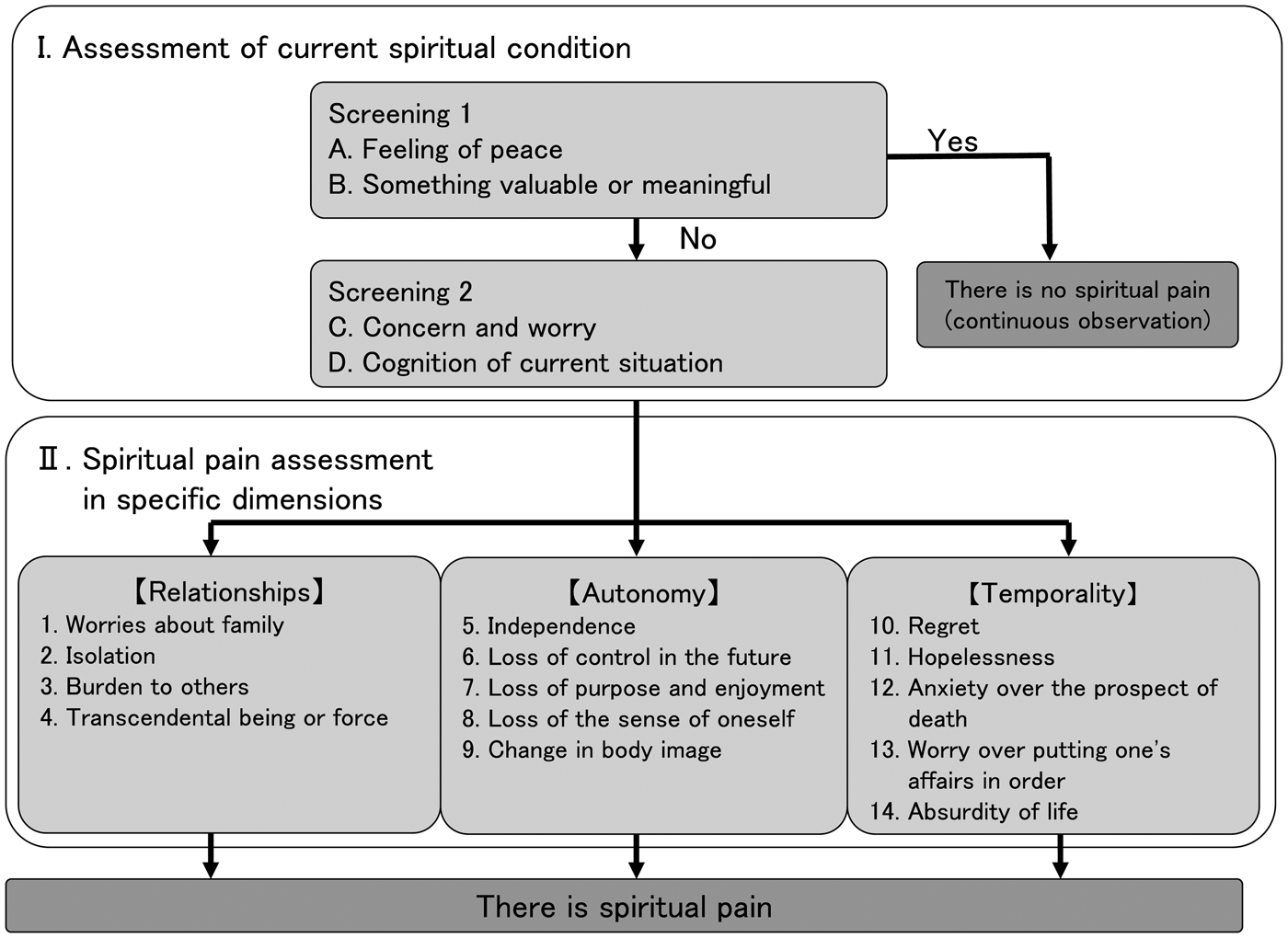
The intervention group provided spiritual care using SpiPas in addition to usual care. The SpiPas is a structured assessment tool that assesses spiritual pain of advanced cancer patients (Figure 1). The SpiPas comprises two phase assessments: assessment of (current) spiritual status and, subsequently, spiritual pain assessment incorporating specific dimensions. The first phase consists of a total of four screening questions. The second phase includes 14 open-ended spiritual pain questions and requires about 30 minutes to complete. In the first phase, nurses screen patients using four questions: (screening 1) “Are you at peace?” and “What do you feel is valuable or meaningful from now on?” If patients screened positive for spiritual pain, they are considered candidates for the interventions. At screening 2, patients respond to two further questions: “What is your worry now?” and “How do you feel about your situation or what do you think is happening to yourself?” In the second phase, if a nurse evaluates that a patient has spiritual pain in screening 2, the nurse continues the interview assessing three dimensions: relationship, autonomy, and temporality. Each dimension is subdivided into spiritual pain. The total of 14 spiritual pain includes isolation, burden, dependency, loss of control in the future, hopelessness, and anxiety over the prospect of death. The questions of spiritual pain related to relationship are “Do you have any concerns about your important persons (family and friends)?”, “Do you feel isolated?”, “Do you feel distressed that you might be a burden to somebody or feel guilty that you might cause them trouble?” The questions of spiritual pain related to autonomy are “Are you able to take care of yourself?”, “Do you worry about what will happen with your disease and your future?”, “Do you think that your lifestyle and important beliefs are respected?” The questions related to temporality are “What do you have regret about?”, “Do you sometimes think about death or postdeath?”, “What things are you most disappointed about?” Trained nurses complete the interview by SpiPas and assessment of spiritual pain after baseline measurement, and then the multidisciplinary team develops a spiritual care plan within a week. A manual for nursing has been developed that addresses each dimension (Tamura et al., Reference Tamura, Kawa and Morita2017), to support nurses in assessing spiritual pain and developing a nursing care plan. The nursing care plan includes spiritual care goals, care content, and evaluation.
Spiritual Pain Assessment Sheet (SpiPas).

Nine nurses (five, three, and one in each setting, respectively) competed the nurse education program based on the SpiPas (Morita et al., Reference Morita, Tamura and Kawa2014). Four of the nine nurses (authors K.I., S.O., S.O., and F.K.) were lecturers and facilitators of the education program. Four nurses demonstrated leadership to introduce SpiPas to each setting and practiced spiritual care using SpiPas with other trained nurses and ward nurses. The education program consisted of a total of 9 sessions over 2 days (10.5 hours). The nine sessions included lectures, group work, and role plays. The program comprises 163 pages of text. The multidisciplinary team that developed SpiPas delivered all the education sessions.
Outcome measures
Primary outcome
The primary outcome was patient-reported spiritual well-being. We chose the Functional Assessment of Chronic Illness Therapy-Spiritual (FACIT-Sp) scale (Peterman et al., Reference Peterman, Fichett and Brady2002). The validity and reliability of the Japanese version of FACIT-Sp has been established (Noguchi et al., Reference Noguchi, Ono and Morita2004). FACIT-Sp includes 12 items that are scored on 5-point Likert-type scale from 0 “strongly disagree” to 4 “strongly agree.” The total scores range from 0 to 48 and are divided into 2 subscales: “Sense of meaning and peace” (scores 0–32) and “Faith” (scores 0–16). High scores indicate a greater spiritual well-being.
Secondary outcome
Secondary outcomes included anxiety and depression and a quality-of-life inventory. We considered those outcomes to be concepts related to spirituality. Their relevance has been supported by research evidence from a Japanese study on patient's spirituality of Japanese population (Ando et al., Reference Ando, Morita and Akechi2010; Miyashita et al., Reference Miyashita, Wada and Morita2015).
The Japanese version of the Hospital Anxiety and Depression Scale (HADS) comprises seven questions for anxiety and seven questions for depression, which are scored on a 4-point scale (range, 0–3) and its validity and reliability is secured. HADS total scores range from 0 to 42 (Kugaya et al., Reference Kugaya, Akechi and Okamura1998; Zimond & Snaith, Reference Zimond and Snaith1983).
To explore the effects of SpiPas on patient-perceived QOL, we used the Comprehensive Quality of Life Outcome (CoQoLo) inventory (short version) (Miyashita et al., Reference Miyashita, Wada and Morita2015). The CoQoLo has reliability and validity for patients with advanced cancer in Japan. Its short version includes an 18-item questionnaire with 10 core subscales and 8 optional subscales. The CoQoLo core subscales include physical and psychological comfort, maintaining hope and experiencing pleasure, good relationship with medical staff, not being a burden to others, having a good relationship with family, and independence, for example. The CoQoLo optional subscales include receiving sufficient treatment, freely expressing thoughts to loved ones, knowing what to expect in regard to future condition, not exposing physical and mental weakness to others, feeling that life is worth living, and supported by religious entities and beliefs, for example. The CoQoLo is scored using a 7-point Likert scale from 1 “absolutely disagree” to 7 “absolutely agree,” with total scores ranging from 18 to 126. High scores indicate a higher QOL.
Statistical analysis
This study was exploratory and did not have a formal sample size calculation. To calculate the percentages of the patients who completed questionnaire, assuming 75% of an index of feasibility with 95% confidence intervals of 25%, the target number of patients was 46.
For feasibility, the percentages of the patients who completed questionnaire at 2 and 3 weeks were calculated. Participant backgrounds were compared between groups using the chi-square test (Fisher exact test) or the unpaired Student t test, where appropriate. General trends of total scores of outcome measures were plotted on figures with 95% confidence intervals. Changes in total and subscale scores of the FACIT-Sp, HADS, and CoQoLo were compared between the groups using the unpaired Student t test. Multiple regression analysis was then used in statistical adjustment of gender, living arrangements, and religions, which may have significantly influenced differences between groups. In all the analyses, the significance level was set at P < 0.05, and the tests were conducted with SPSS Statistics, version 23 (Japanese version) software for Windows (SPSS Inc., Chicago, IL, 2006).
Results
Sample characteristics
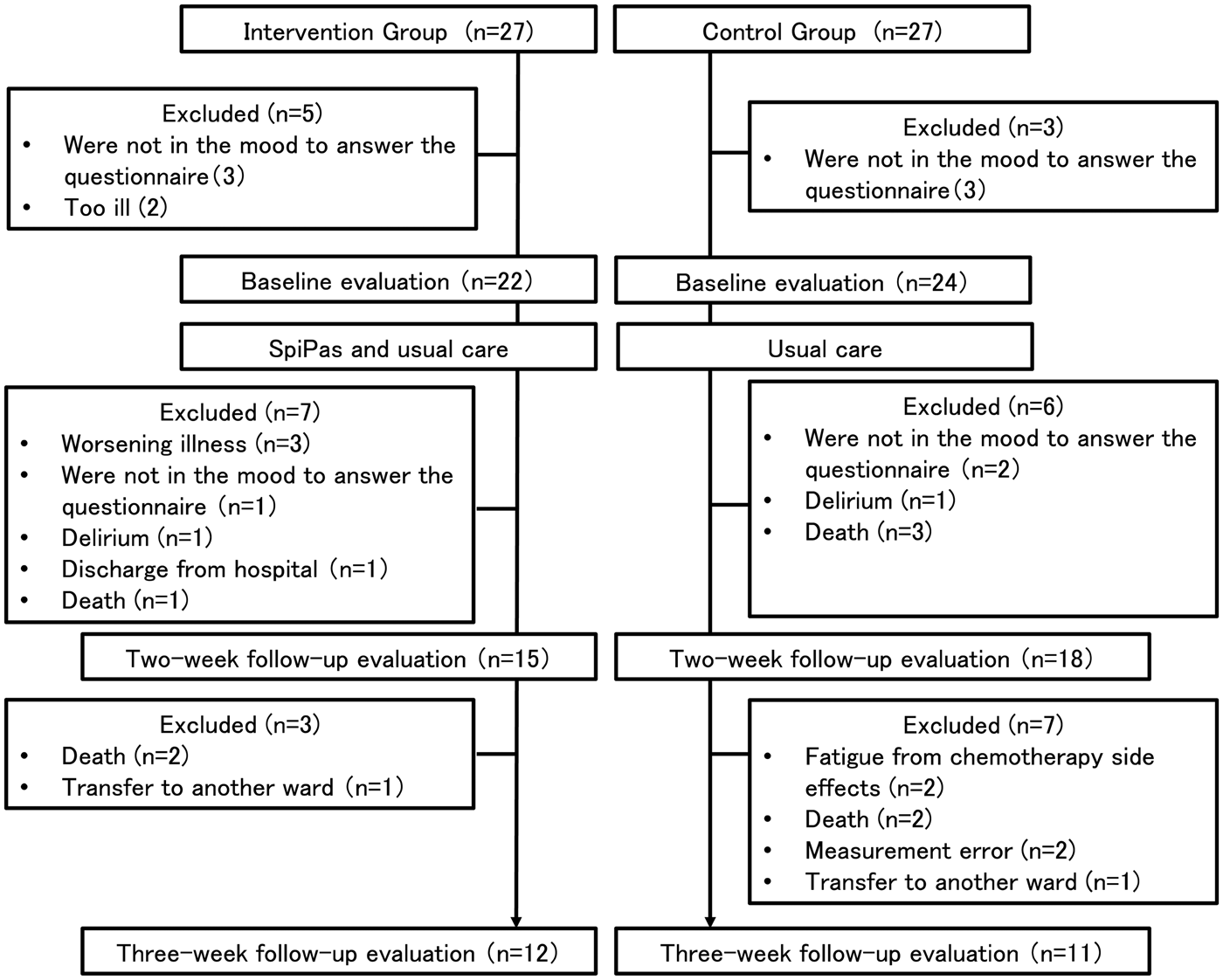
During the study period, 54 eligible patients were identified. Among them, 8 patients refused to participate because they were reluctant to answer the questionnaire (n = 6) or were too ill (n = 2). Forty-six patients were therefore recruited: 24 in the control group and 22 in the intervention group. A total of 33 (72%) and 23 (50%) patients completed 2- and 3-week follow-up evaluations, respectively. Reasons for dropping out included death (n = 8), worsening illness (n = 3), delirium (n = 2), fatigue (n = 2), transfer to another ward (n = 2), discharge from hospital (n = 1), or patient withdrawal (n = 3) (Figure 2).
Study flowchart.

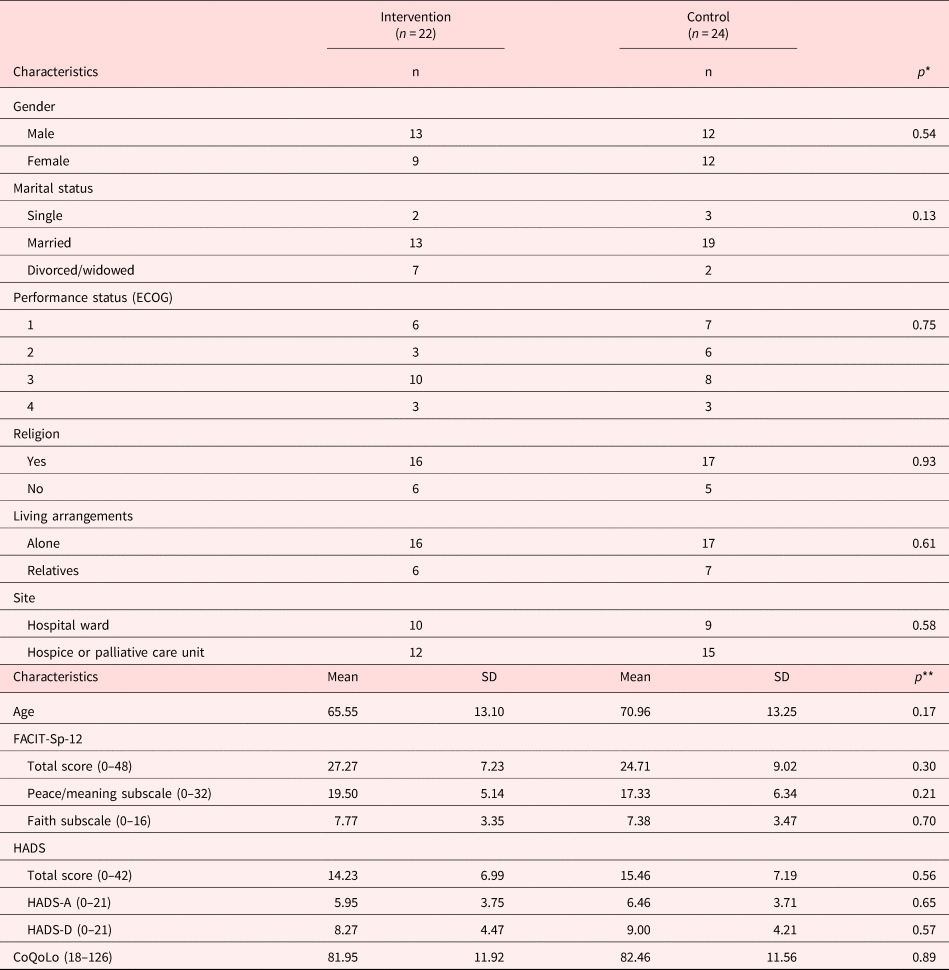
There were no significant differences in patient characteristics between the groups. The mean age of the 46 enrolled participants was 65.8 years (standard deviation = 13.3), mostly married, performance status 2-3, living with someone, and declaring no religion (Table 1).
Baseline Characteristics and Group Comparisons

CoQoLo, Comprehensive Quality of Life Outcome; ECOG, Eastern Cooperative Oncology Group; FACIT-Sp, Functional Assessment of Chronic Illness Therapy-Spiritual; HADS, Hospital Anxiety and Depression Scale; SD, standard deviation.
*Chi-square test.
**t test.
There were no baseline differences in marriage, religion, FACIT-Sp, HADS, or CoQoLo of patients who completed this study and those who did not (data not shown). Patients who did not complete the study were mostly male (P = 0.38), living alone (P = 0.16), and declaring no religion (P = 0.36) compared with patients who completed it.
Longitudinal trends of primary and secondary outcomes
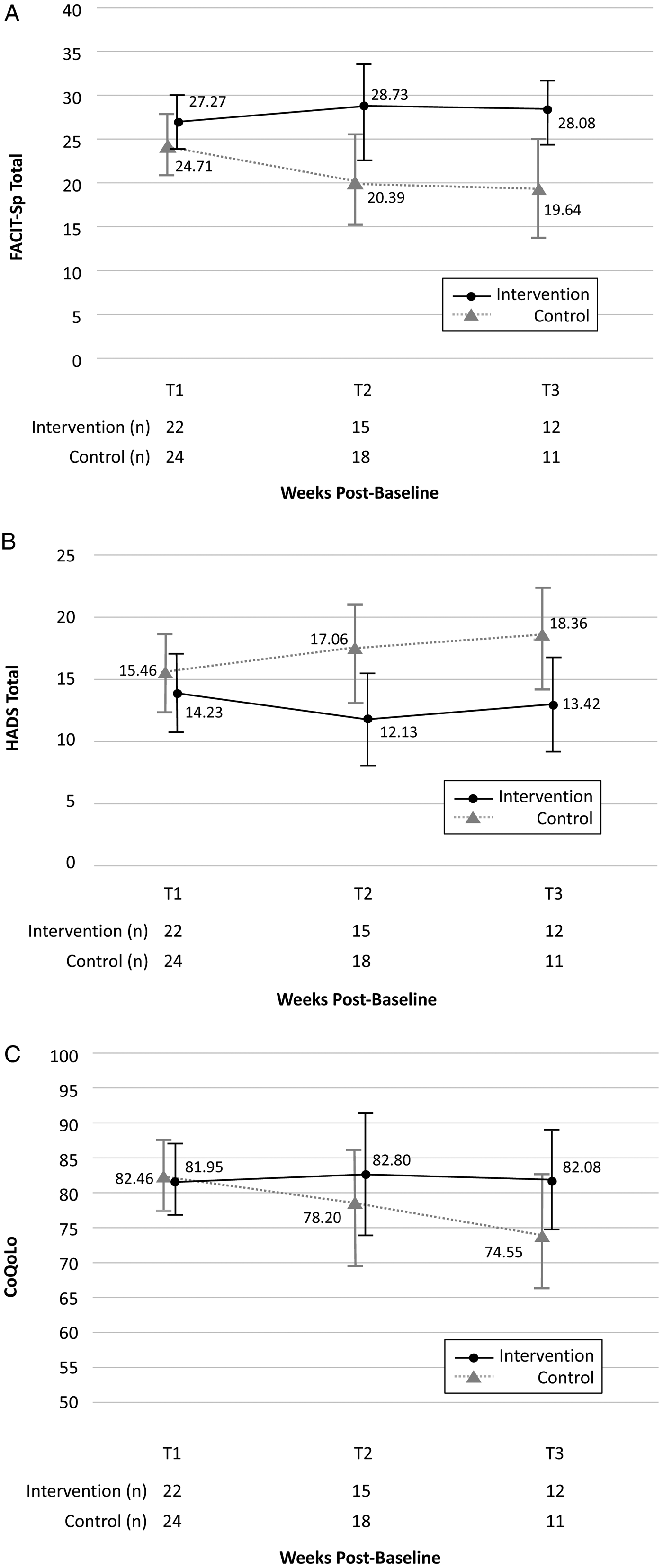
As shown in Figure 3, different overall trends were revealed between the two groups. The intervention group maintained or improved in total scores of the FACIT-Sp, HADS, and CoQoLo, whereas the control group's scores worsened during the study periods. Specifically, spiritual wellbeing and QOL improved for the intervention group, whereas depression and anxiety were reduced. In contrast, the control group's QOL and spiritual wellbeing was reported to worsen, whereas anxiety and depression scores increased.
Trend of means at baseline and each follow-up, with corresponding 95% confidence intervals. A, Functional Assessment of Chronic Illness Therapy-Spiritual total; B, Hospital Anxiety and Depression Scale total; C, Comprehensive Quality of Life Outcome; T1, baseline; T2, 2 weeks; T3, 3 weeks.

End-points after 2 weeks
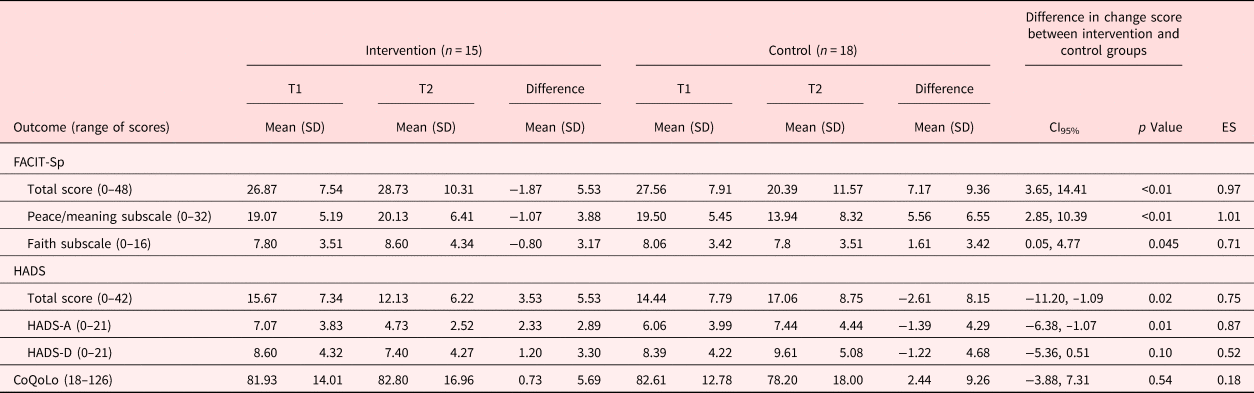
The total FACIT-Sp was maintained in the intervention group and worsened in the control group, and the difference between the two groups was significant (Table 2). Group differences were observed in both peace/meaning and faith subscales. Moreover, the total HADS score was significantly improved in the intervention group compared with the control group (Table 2). The anxiety subscale also improved significantly. No significant changes were observed in the depression subscale and the total CoQoLo score (Table 2). After adjustment for gender, living arrangements, and religious influence using multiple regression analysis, the significant difference was maintained.
Difference in change in FACIT-Sp, HADS, and CoQoLo scores after 2 weeks

CI, confidence interval; CoQoLo, Comprehensive Quality of Life Outcome; FACIT-Sp, Functional Assessment of Chronic Illness Therapy-Spiritual; HADS, Hospital Anxiety and Depression Scale; SD, standard deviation; T1, baseline; T2, 2 weeks.
Discussion
This study was the first attempt to evaluate spiritual care using SpiPas for patients with advanced cancer. This study was feasible (i.e., 72% of the patients completed the 2-week follow-up), and there was a tendency of maintenance or improvement of spiritual and psychological well-being in the patients receiving care using the SpiPas. Our study confirms similar findings from a previous study conducted in Japan, which used a short-term life-review interview (Ando et al., Reference Ando, Morita and Akechi2010).
This study demonstrated that spiritual care using SpiPas is feasible if 2 weeks is adopted as the timing of evaluation. The dropout rate was 28% by the 2-week follow-up, and 50% by the 3-week follow-up. High attrition is often documented in palliative care clinical trials, with a rate of 50% being considered common (Palmer, Reference Palmer2004; Preston et al., Reference Preston, Fayers and Walters2013). In this study, the main causes included worsening of illness and patient deaths. Attrition was also affected by side effects of chemotherapy, discharge from hospital, and transfer to another ward. In future studies, we could perhaps obtain outcome data within this 2-week period, and assessment and care using SpiPas after hospitalization may benefit patients.
There are a number of possible reasons that could explain the effectiveness of this intervention. Patients were given the opportunity to notice their own spirituality; namely, something valuable or meaningful through SpiPas assessment items. In addition, that nurses dedicated time to discuss SpiPas questions in daily care might have an effect on patient outcome. Indeed, basic spiritual care in nursing includes active and compassionate listening and being present with patients (Taylor, Reference Taylor2001). Patients’ spiritual well-being might have been maintained because of daily contact with trained nurses and communication triggered by the SpiPas assessment items.
Also, SpiPas seems to lead to a significant reduction of total HADS score, especially the anxiety subscale end-points after 2 weeks. We believe that the calming of the patients’ spiritual state led to a reduction in anxiety; however, the changes in the depression subscale score did not reach significance, and the total CoQoLo score did not show any significant change. A potential interpretation is that the SpiPas can deal with current spiritual pain, especially anxiety, but less with depression. There may be potential ceiling effects of the CoQoLo, and QOL may not be the optimal measure because it includes multiple elements that may not change in the short-term. The difficulty of showing impact on QOL was reported with other assessment tools in different studies (Vermandere et al., Reference Vermandere, Warmenhoven and Severen2016: Yang et al., Reference Yang, Tan and Cheung2016).
This was a pilot study and had some limitations. We did not randomize participants. The nurses caring for the intervention group were particularly experienced in spiritual care and were facilitators of the SpiPas educational program; therefore, there is a possibility that the skill and experience of the nurses overestimated the true effects. It remains uncertain whether the positive effect of the interventions is due to the novel intervention of the SpiPas or simply active involvement of the skilled nurses. In addition, some authors had a clinical role as trained nurses to implement the intervention and provide direct patient care; this may have influenced the results.
In conclusion, we were able to obtain important preliminary information that will benefit future studies. Spiritual care using the SpiPas might be useful in improving patient spiritual well-being, and future clinical trials are promising if outcomes are obtained within 2 weeks.
Conclusions
Spiritual care is an important part of palliative care. This study delivered an intervention of spiritual care to a group of patients with advanced cancer using SpiPas by trained nurses, and explored the effects on the patients’ spiritual well-being. The findings suggest that this spiritual care might help advanced cancer patients to maintain a calm spirit. To minimize attrition rates, outcome measures should be obtained within 2 weeks after enrollment. To use SpiPas, the skills and attitudes of trained nurses are important. We plan to provide a suitable education program for novice nurses about using SpiPas and subsequently conduct a clinical trial that could be performed and a future clinical trial is promising if outcomes are obtained within 2 weeks.
Acknowledgments
The authors express their gratitude and respect to the patients who participated in the study. Our gratitude also goes to Shimizu Kanako, RN, Masumi Kawato, RN, and Kayoko Moriyama, RN (Kyoto University Hospital); Juri Nimura, RN, and Kana Hashizume, RN (Takarazuka Municipal Hospital); and Yoshinobu Matsuda, MD (Ashiya Municipal Hospital).
This research was supported by JSPS KAKENHI Grant Number 716170600084.
Conflicts of interests
No competing financial interests exist.