



1. Introduction
Let E be a holomorphic vector bundle over a complex manifold X. A (possibly) singular hermitian metric h on E is defined as a measurable mapping from X to the space of hermitian forms on the fiber spaces of E with
 $0<\det h <+\infty $
almost everywhere. We endow E with a singular hermitian metric h. In [Reference de Cataldo3], de Cataldo defined the multiplier submodule sheaf
 $\mathcal {E}(h)$
of
 $(E,h)$
to be a subsheaf of
 $\mathcal {O}(E)$
with stalks
 $$ \begin{align*}\mathcal{E}(h)_x=\{ f\in \mathcal{O}(E)_x : |f|^2_h \text{ is integrable in some neighborhood of } x \}.\end{align*} $$
When E is a line bundle, the sheaf
 $\mathcal {E}(h)$
is just
 $\mathcal {O}(E)\otimes \mathcal {I}(h)$
, where
 $\mathcal {I}(h)$
is the multiplier ideal sheaf associated with the singular metric h.
In [Reference Nadel11], Nadel showed that the multiplier ideal sheaf
 $\mathcal {I}(h)$
is coherent by solving
 $ \overline {\partial } $
-equation with
 $L^2$
estimate of Hörmander type, if the local weight
 $\varphi :=-\log h$
of h is (quasi-)psh. Using this idea, Inayama [Reference Inayama8] proves the coherence of
 $\mathcal {E}(h)$
under the assumption that h satisfies a stronger positivity, Nakano positivity, which is a combination of Griffiths positivity and solving
 $ \overline {\partial } $
-equation; see [Reference de Cataldo3], [Reference Hosono6], [Reference Hosono and Inayama7], [Reference Iwai10] and so on for other answers in different settings. This raises the natural question of whether the coherence is valid when h has a weaker positivity. Inayama proposes that Griffiths positivity is sufficient.
Conjecture 1.1 [Reference Inayama9]
The sheaf
 $\mathcal {E}(h)$
is coherent when h is Griffiths semi-positive.
This conjecture has been affirmatively answered in certain special cases. Let
 $\det h$
denote the induced metric on the determinate line bundle
 $\det E$
by the singular hermitian metric h on E. The conjecture is confirmed by Inayama [Reference Inayama9] for cases where the unbounded locus of
 $\det h$
is discrete, and by Y. Zou [Reference Zou15] for cases where the induced metric
 $\det h$
has analytic singularities.
This paper provides an affirmative answer to the conjecture when the base manifold is a generic complex torus.
Theorem 1.2. Let
 $(E,h)$
be a Griffiths semi-positive holomorphic vector bundle on a generic compact complex torus T. Then
 $\mathcal {E}(h)$
is coherent.
A compact complex torus T is called generic if T has no nontrivial subtori,
 ${H^{1,1}(T)\cap H^2(T, { \mathbb {Z} } )=0}$
and
 $H^{2,2}(T)\cap H^4(T, { \mathbb {Z} } )=0$
. Here “generic” means that the set of non-generic compact torus is a zero-measure set in the moduli space of compact tori. It is well-known that a generic complex torus has no nontrivial complex subvarieties. The readers are referred to [Reference Verbitsky14] for details of generic complex tori.
In some literatures, the generic complex torus is defined to be a torus T satisfying the cohomology conditions
 $$ \begin{align*}H^{p,p}(T) \cap H^{2p}(T, { \mathbb{Z} } )=0,~~~~ \textrm{for}~ 0<p<\dim T.\end{align*} $$
It is easy to see that the cohomology conditions imply that T has no nontrivial integral
 $(p,p)$
-cycles and hence all proper subvarieties of T are finite sets of points. Therefore the former definition is weaker than the cohomology conditions. In fact, the absence of nontrivial complex subvarieties is sufficient to deduce the coherence thanks to the following stronger version.
Theorem 1.3. Let
 $(E,h)$
be a Griffiths semi-positive holomorphic vector bundle on a complex manifold X. If the set A of non-integrable points of
 $(\det h)^2$
is a discrete set, then
 $\mathcal {E}(h)$
is coherent.
Notice that A is actually the zero variety of multiplier ideal sheaf
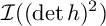 $\mathcal {I}((\det h)^2)$
and hence A is always a proper analytic variety on X, the barrier can be naturally removed on some special manifolds which have no nontrivial proper analytic varieties such as generic complex tori. Hence Theorem 1.3 implies Theorem 1.2. Obviously the coherence is still valid on any manifold without nontrivial subvarieties. Besides generic complex tori, there are other manifolds satisfying the conditions we do not involve here. It is worth mentioning that the setting of tori is necessary in the case of compact 3-fold. In [Reference Campana, Demailly and Verbitsky2], it is shown that any compact Kähler 3-manifold without nontrivial subvarieties must be a torus.
Our result is different from those of Inayama [Reference Inayama9] and Y. Zou [Reference Zou15], because there exists a metric h such that the non-integrable locus A is discrete while
 $\det h$
is neither of analytic singularities nor locally bounded outside an analytic set; see Example 3.2.
The idea is to deduce the coherence from Hörmander’s
 $L^2$
estimate of
 $ \overline {\partial } $
-equation by following Nadel. An observation is that we can solve
 $ \overline {\partial } $
-equation for
 $h\otimes \det h$
if h is Griffiths semi-positive, which is a key in our proof. The
 $L^2$
estimate of
 $ \overline {\partial } $
-equation for
 $h\otimes \det h$
is obtained by Demailly–Skoda [Reference Demailly and Skoda5] for smooth cases and Inamaya [Reference Inayama8] for singular cases.
To solve the
 $ \overline {\partial } $
-equation, we require the integrability of
 $h \otimes \det h$
. Using the decomposition
 $$ \begin{align*}h=(h\otimes \det h^*)\otimes \det h,\end{align*} $$
we rewrite
 $$ \begin{align*}h\otimes \det h=(h\otimes \det h^*)\otimes (\det h)^2,\end{align*} $$
where the metric
 $h\otimes \det h^*$
is actually Griffiths semi-negative on
 $E\otimes \det E^*$
and hence is locally bounded from above. So the integrability of
 $h\otimes \det h$
is reduced to the integrability of
 $(\det h)^2$
. That is the reason why we introduce the technique assumption on
 $(\det h)^2$
in Theorem 1.3.
2. Preliminaries
We firstly recall the notion of positivity of smooth metrics on hermitian holomorphic vector bundles. We refer to [Reference Demailly4] as a basic reference. Let h be a smooth hermitian metric on holomorphic vector bundle E of rank r. There exists the unique hermitian connection
 $D_h=D'+D"$
with the (0,1)-part
 $D"= \overline {\partial } $
, which is called Chern connection. The Chern curvature is the curvature of the Chern connection
 $\Theta (h):=(D_h)^2$
.
Let
 $(e_1, ... , e_r)$
be a smooth orthonormal frame of E over a coordinate patch
 $U\subset X$
with complex coordinates
 $(z_1, ... , z_n)$
. On U the Chern curvature tensor can be written as
 $$ \begin{align*}\mathrm{i } \Theta(h) = \mathrm{i } \sum_{jk\lambda\mu} c_{jk\lambda\mu} dz_j\wedge d \bar z_k\otimes e^*_\lambda\otimes e_\mu\end{align*} $$
for some coefficients
 $c_{jk\lambda \mu }\in { \mathbb {C} } $
. The hermitian property of
 $ \mathrm {i } \Theta (h)$
means that
 $\bar c_{jk\lambda \mu } = c_{kj\mu \lambda }$
. The corresponding hermitian form on
 $TX\otimes E$
is defined as, for
 $u=\sum _{j\lambda }u_{j\lambda }\frac { {\partial } }{ {\partial } z_j}\otimes e_\lambda $
,
 $$ \begin{align*}\theta(u,u)=\sum_{jk\lambda\mu} c_{jk\lambda\mu}u_{j\lambda}\bar u_{k\mu}. \end{align*} $$
Definition 2.1. The Chern curvature
 $ \Theta (h)$
is called Griffiths positive
 $($
resp, semi-positive, negative, semi-negative
 $)$
if for any non-zero
 $\xi \in T_xX, \eta \in E_x$
 $$ \begin{align*}\theta(\xi\otimes \eta, \xi\otimes \eta)>0~~ (\mathrm{resp},~ \ge 0, <0, \le 0).\end{align*} $$
We say a smooth hermitian metric h is Griffiths positive (resp, negative) if its Chern curvature
 $\Theta (h)$
is Griffiths positive (resp, negative). The Griffiths semi-positivity/semi-negativity are defined similarly.
Especially, when the bundle
 $(E,h)$
is the holomorphic tangent bundle on a Kähler manifold
 $(X,\omega )$
where h is induced by the metric
 $\omega $
, then the Griffiths positivity of
 $(E,h)$
just coincides with the positivity of holomorphic bisectional curvature of
 $(X,\omega )$
. So the Griffiths positivity can be regarded as a generation of that of holomorphic bisectional curvature.
The Griffiths positivity and negativity enjoy the following property.
Proposition 2.2 [Reference Berndtsson and Păun1],[Reference Raufi13],[Reference Păun and Takayama12]
Let h be a smooth hermitian metric on a holomorphic vector bundle E. Let
 $E^*$
be the dual vector bundle of E and
 $h^*$
the dual metric of h. Then the following assertions are equivalent.
-
(1)
 $(E,h)$
is Griffiths semi-positive;
-
(2)
$(E^*,h^*)$
is Griffiths semi-negative; -
(3) For any non-zero local holomorphic section u of
$E^*$
,
$|u|^2_{h^*}$
is a plurisubharmonic function; -
(4) For any non-zero local holomorphic section u of
$E^*$
,
$\log |u|^2_{h^*}$
is a plurisubharmonic function.


The readers are refer to the discussion in [Reference Raufi13] for a detailed proof of the proposition. Such equivalent characteristic of Griffiths positivity immediately gives a definition of positivity of curvature in singular setting.
Definition 2.3 [Reference Berndtsson and Păun1],[Reference Raufi13],[Reference Păun and Takayama12]
Let h be a singular hermitian metric on a holomorphic vector bundle E. We say h is Griffiths semi-negative, if
 $\log |u|^2_h$
is plurisubharmonic function for any local holomorphic section u of E; say h Griffiths semi-positive, if its dual metric
 $h^*$
is Griffiths semi-negative on
 $E^*$
.
Griffiths positive metrics have the following fundamental properties.
Proposition 2.4 [Reference Berndtsson and Păun1],[Reference Raufi13]
Assume h is singular Griffiths semi-positive, then
-
(1) h locally has a positive lower bound, that is, on any compact set K, there exists a constant C such that
$h\ge C \mathrm {Id} _E$
. Consequently, the metric
$h\otimes \det h^*$
on
$E\otimes \det E^*$
locally has a upper bound. -
(2) h can be locally approximated by an increasing sequence of smooth Griffiths positive metrics
$\{h_v\}$
, that is, for any open set U with
$E|_U$
being trivial, there exist smooth Griffiths positive hermitian metrics
$\{h_v\}$
such that
$|u|^2_{h_v}$
increasingly converges to
$|u|^2_h$
for any local section u of E. Especially, locally the weight
$ {\varphi } =-\log \det h$
of h under some holomorphic frame, is a plurisubharmonic function.






A result of Demailly–Skoda [Reference Demailly and Skoda5] tells us that if h is smooth Griffiths semi-positive, then
 $h\otimes \det h$
is smooth Nakano semi-positive and hence is of optimal
 $L^2$
-estimate. Here we say that h is of optimal
 $L^2$
-estimate if
-
• for any Stein coordinate D in X and any Kähler metric
$\omega $
on D, -
• for any smooth strictly plurisubharmonic function
$\psi $
on D, -
• for any
$ \overline {\partial } $
-closed
$(n,1)$
-form
$f\in L^2_{n,1}(D, E, h, \omega )$
with the finite norm
$$ \begin{align*}I_f:=\int_D \langle B_{\psi,\omega}^{-1} f, f\rangle_{h,\omega}e^{-\psi}dV_\omega<+\infty,\end{align*} $$




there exists a solution
 $u \in L^2_{n,0}(D, E, h, \omega )$
to
 $ \overline {\partial } u=f$
with the estimate
 $$ \begin{align*}\int_D |u|^2_{h,\omega} e^{-\psi}dV_\omega \le I_f,\end{align*} $$
where
 $B_{\psi ,\omega }=[ \mathrm {i } {\partial } \overline {\partial } \psi \otimes \mathrm {Id} _E, \Lambda _\omega ]$
and
 $L^2_{p,q}(D, E, h, \omega )$
is the space of all
 $(p,q)$
-forms f taking values in
 $E|_D$
such that
 $\int _D |f|^2_{h,\omega }dV_\omega <+\infty $
.
In fact, the singular version is still valid.
Lemma 2.5 [Reference Inayama8]
Let h be a Griffiths semi-positive singular hermitian metric on E, then
 $h\otimes \det h$
is of optimal
 $L^2$
-estimate on
 $E\otimes \det E$
.
Proof. By Proposition 2.4, locally there exists a smooth increasing approximation sequence
 $h_v$
of Griffiths positive metrics. By Demailly–Skoda, the new metric
 $h_v\otimes \det h_v$
is smooth Nakano semi-positive, and hence is of optimal
 $L^2$
-estimate. Let v tend to infinity, then we obtain
 $h\otimes \det h$
is also of optimal
 $L^2$
-estimate by a standard limitation argument.
In our proof, we also need the following algebraic result, which can be deduced by the well-known Nakayama’s lemma.
Lemma 2.6 (Krull lemma)
Let R be a noetherian local ring with maximal ideal
 $\mathfrak {m}$
. Let F be a finitely generated R-module and let G be a submodule. Then
 $$ \begin{align*}\bigcap_{k\ge 0} (G+\mathfrak{m}^k F)=G.\end{align*} $$
3. Proofs of main results
A breakthrough on the coherence of multiplier ideal sheaves is the celebrate work of Nadel [Reference Nadel11]. He actually proved that
 $L^2$
existence theorem can deduce the coherence. For highlighting the idea, we introduce a non-standard, technique definition, saying
 $(E,h)$
satisfies the local
 $L^2$
-existence condition, if for any point
 $x_0$
, there exists a small open neighborhood D of
 $x_0$
, such that for any point
 $x\in D$
, for any smooth
 $ \overline {\partial } $
-closed
 $g\in \Lambda ^{n,1}T^*D\otimes E$
with
 $ {\mathrm {Supp}}\ g \Subset D\setminus \{x,x_0\}$
and
 $$ \begin{align*}\int_D |g|^2_{h}e^{-(n+k)\log|z-x|^2}dV_\omega<+\infty,\end{align*} $$
there exists a solution
 $f=f_k\in \Lambda ^{n,0}T^*D\otimes E$
to the equation
 $ \overline {\partial } f=g$
with
 $$ \begin{align*}\int_D |f|^2_{h}e^{-(n+k)\log|z-x|^2}dV_\omega <+\infty.\end{align*} $$
It is remarkable here that these integrations do not depend on the choices of the metric
 $\omega $
; see [Reference Demailly4]. The canonical line bundle is trivial on the small open set D, so the above definition is equivalent to solving
 $ \overline {\partial } $
-equation for
 $(0,1)$
-forms. The following observation is essentially attributed to Nadel [Reference Nadel11]; see Hosono [Reference Hosono6], Inayama [Reference Inayama8] and so on for the case of vector bundles.
Theorem 3.1 [Reference Nadel11]
Let E be holomorphic vector bundle endowed with a singular hermitian metric h. Assume
 $(E,h)$
satisfies the local
 $L^2$
-existence condition. Then the multiplier submodule sheaf
 $\mathcal {E}(h)$
is coherent.
Proof. For any
 $x_0\in X$
, let D be as above. It suffices to prove
 $\mathcal {E}(h)|_D$
is coherent. The result is local, we may assume D is just the unit ball in
 $ { \mathbb {C} } ^n$
and E is trivial. We take
 $\omega $
to be the Euclidean metric on
 $ { \mathbb {C} } ^n$
.
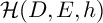
Now consider the Hilbert space
 $$ \begin{align*}\mathcal{H}(D,E,h)=\{ f\in \mathcal{O}_D(E): \int_D |f|^2_{h}dV_\omega<+\infty\}.\end{align*} $$
By the strong noetherian property of coherent sheaves, the family of sheaves generated by finite subsets of
 $\mathcal {H}(D,E,h)$
has a maximal element on each compact subset of D, hence
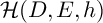 $\mathcal {H}(D,E,h)$
generates a coherent submodule sheaf
 $\mathcal {J}\subset \mathcal {O}(E)$
. Obviously
 $\mathcal {J}\subset \mathcal {E}(h)$
. To get the equality
 $\mathcal {J}= \mathcal {E}(h)$
, we need to check the inclusion
 $$ \begin{align*}\mathcal{E}(h)_x \subset \mathcal{J}_x+\mathfrak{m}_x^k \mathcal{O}(E)_x\end{align*} $$
for every positive integer k, in view of the Krull lemma 2.6, where
 $\mathfrak {m}_x$
is the maximal ideal of
 $\mathcal {O}_{D,x}$
.
Take any
 $(f,x)\in \mathcal {E}(h)_x$
, then
 $$ \begin{align*}\int_{B_x(r)}|f|^2_hdV_\omega<+\infty\end{align*} $$
for small
 $r>0$
. Set
 $\psi =(n+k)\log |z-x|^2$
. We choose small
 $r>0$
such that
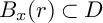 $B_x(r)\subset D$
. If
 $x_0\not =x$
, we additionally require
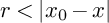 $r<|x_0-x|$
. Let
 $0\le \rho \le 1$
be a smooth function on D satisfying that
 $\rho \equiv 1$
on
 $B_x(r/3)$
and
 $\rho \equiv 0$
outside
 $B_x(r/2)$
. Then
 $v= \overline {\partial } (\rho f)=f \overline {\partial } \rho $
is a smooth
 $ \overline {\partial } $
-closed
 $(0,1)$
-form on D. Notice that
 $ \overline {\partial } \rho $
is supported on
 $r/3\le |z-x|\le r/2$
and then
 $$ \begin{align*}\int_D |v|^2_{h}e^{-\psi}dV_\omega \le \int_{B_x(r)} |f|^2_{h} | \overline{\partial} \rho |^2e^{-\psi}dV_\omega <+\infty, \end{align*} $$
since
 $| \overline {\partial } \rho |^2e^{-\psi }$
is bounded on D.
By definition of local
 $L^2$
existence condition, using
 $ {\mathrm {Supp}}\ v\Subset D\setminus \{x,x_0\}$
, we have a solution u to equation
 $ \overline {\partial } u=v$
with the estimate
 $$ \begin{align*}\int_D |u|^2_{h}e^{-\psi} dV_\omega<+\infty.\end{align*} $$
Hence
 $u\in L^2(D,E,h)$
and let
 $F=\rho f-u$
, then F is a holomorphic section on D. Notice that
 $\rho f$
also belongs to
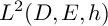 $ L^2(D, E,h)$
then
 $F\in \mathcal {H}(D,E,h)$
, hence
 $F_x\in \mathcal {J}_x$
. Moreover, u is also holomorphic near x since
 $\rho \equiv 1$
near x. In addition, due to
 $e^{-\psi }=|z-x|^{-2(n+k)}$
, we get that
 $u\in \mathfrak {m}_x^{k+1}\mathcal {O}(E)_x$
. So
 $$ \begin{align*}f_x=F_x+u_x\in \mathcal{J}_x+\mathfrak{m}_x^{k+1}\mathcal{O}(E)_x,\end{align*} $$
which implies
 $$ \begin{align*}\mathcal{E}(h)_x\subset \mathcal{J}_x+\mathfrak{m}_x^{k+1}\mathcal{O}(E)_x.\end{align*} $$
Applying Krull lemma 2.6 to
 $R= \mathcal {O}_{D,x}, F= \mathcal {O}(E)_x, G= \mathcal {J}_x $
and
 $\mathfrak {m}=\mathfrak {m}_x$
, we obtain
 $$ \begin{align*}\bigcap_{k\ge0}\big(\mathcal{J}_x+\mathfrak{m}_x^{k+1}\mathcal{O}(E)_x\big)=\mathcal{J}_x.\end{align*} $$
So
 $\mathcal {E}(h)$
equals to
 $\mathcal {J}$
and hence is coherent.
If the determinate line bundle
 $\det E$
is a trivial bundle, then
 $\det h$
is indeed a globally defined function for any fixed frame of
 $\det E$
, hence in this case
 $h\otimes \det h=h\cdot \det h$
, viewed as a new metric on E, is also of optimal
 $L^2$
-estimate. Due to this, we give a proof of Theorem 1.3.
Proof of Theorem 1.3
We only need to check
 $(E,h)$
satisfies the local
 $L^2$
-existence condition in view of Theorem 3.1.
For any
 $x_0\in X$
, let D be a small ball with center at
 $x_0$
, such that E is trivial on D and
 $D\cap A \subset \{x_0\}$
due to the discreteness of A. Then by Proposition 2.4-(2),
 $\varphi =-\log \det h$
is a well-defined plurisubharmonic function on D which is bounded from above.
Take any smooth
 $ \overline {\partial } $
-closed
 $g\in \Lambda ^{n,1}T^*D\otimes E$
with
 $ {\mathrm {Supp}}\ g\Subset D\setminus \{x,x_0\}$
and
 $$ \begin{align*}\int_D |g|^2_{h}e^{-\psi}dV_\omega<+\infty,\end{align*} $$
where
 $\psi =(n+k)\log |z-x|^2$
.
By assumption,
 $(\det h)^2$
is locally integrable outside A. Note that
 $ {\mathrm {Supp}}\ g\Subset A^c$
and
 $\frac {h}{\det h}$
is bounded from above on D by Proposition 2.4-(1), and we obtain that
 $$ \begin{align*}|g|^2_{h\det h}e^{-\psi} =|g|^2_{\frac{h}{\det h}}e^{-\psi}(\det h)^2\end{align*} $$
is integrable on D since
 $|g|^2_{\frac {h}{\det h}}e^{-\psi }$
is bounded on D. Therefore we get that
 $$ \begin{align*}\int_D |g|^2_{h\det h}e^{-\psi-|z|^2}dV_\omega<+\infty. \end{align*} $$
Noticing that
 $h\otimes \det h=he^{- {\varphi } }$
is of optimal
 $L^2$
-estimate by Lemma 2.5, we have a solution
 $f=f_k$
to the equation
 $ \overline {\partial } f=g$
with the estimate
 $$ \begin{align*}\int_D |f|^2_{h\det h} e^{-\psi-|z|^2}dV_\omega \le \int_D |g|^2_{h\det h} e^{-\psi-|z|^2}dV_\omega.\end{align*} $$
Because
 $\det h$
and
 $e^{-|z|^2}$
both have positive lower bounds on D, we obtain
 $$ \begin{align*}\int_D |f|^2_{h}e^{-\psi} dV_\omega <+\infty.\end{align*} $$
This completes the proof.
Now we can show Theorem 1.2.
Proof of Theorem 1.2
Due to Griffiths positivity of h, we get that locally
 ${ {\varphi } =-\log \det h}$
is a plurisubharmonic function by Proposition 2.4-(2). So the set A of points at which
 $(\det h)^2$
is not integrable, is actually the nontrivial locus of the multiplier ideal sheaf
 $\mathcal I(e^{-2 {\varphi } })=\mathcal I((\det h)^2)$
, equivalently, the set of such x at which
 $\mathcal I(e^{-2 {\varphi } })_x\not =\mathcal O_{X,x}$
. Note that such sheaf
 $\mathcal I(e^{-2 {\varphi } })$
is a coherent analytic sheaf, and we obtain that the set
 $A= {\mathrm {Supp}}\ (\mathcal O_X/\mathcal I(e^{-2 {\varphi } }))$
is a proper analytic subset. Since the compact torus X is generic, A must be a set of finite points. Using Theorem 1.3, we obtain the coherence of
 $\mathcal E(h)$
.
We construct an example of the metric h such that
 $(\det h)^2$
is locally integrable but h is unbounded everywhere and also has no analytic singularities.
Example 3.2. Let X be the unit disc on the complex plane. Take a countable dense subset
 $\{a_j\}_{j=1}^\infty $
of X, and consider the psh function
 $$ \begin{align*}\psi :=-\sum_{j=1}^\infty 2^{-j} \log\log(\frac{3}{|z-a_j|}). \end{align*} $$
Endow the trivial line bundle
 $L:=X\times { \mathbb {C} } $
on X with the metric
 $h=e^{-\psi }$
. Then the unbounded locus of h is the whole space X. We shall show that
 $e^{-p\psi }$
is integrable over X for any positive number p. Utilizing Hölder’s inequality, for any positive integer N, we have
 $$ \begin{align*}\int_X e^{p\sum_{j=1}^N 2^{-j} \log\log(\frac{3}{|z-a_j|})}dV \le \prod_{j=1}^N \big(\int_X e^{p\log\log(\frac{3}{|z-a_j|})}dV\big)^{2^{-j}} \mathrm{Vol}(X)^{2^{-N}}.\end{align*} $$
Therefore the left hand term is less than
 $$ \begin{align*}\big(\int_{|z|\le 2} e^{p\log\log(\frac{3}{|z|})}dV\big)^{1-2^{-N}} \mathrm{Vol}(X)^{2^{-N}} \end{align*} $$
and is bounded by a constant which is independent of N. Here we use the fact that the Lelong number of the psh function
 $-\log \log (3/|z|)$
on
 $\{|z|<3\}$
is zero everywhere. By Fatou’s lemma, the integration of
 $e^{-p\psi }$
over X is convergent.
Data availability statement
Data sharing not applicable to this article as no datasets were generated or analyzed during the current study.



