Introduction
This research provides empirical evidence of adoption capacity of small-scale farmers for aquaponic systems, a promising sustainable farming technology. Information was gathered through interviews in São Carlos, State of São Paulo, Brazil with small farmers, NGOs and restaurant owners. The São Carlos context will serve as a case study that can be drawn upon with potential application for other cities that seek to develop their local food production. The location was chosen due to familiarity with the local research institutions, including a demonstration aquaponics installation, and the knowledge of attempts by the municipality of Sao Carlos to increase the ‘agricultura familiar’ (small family owned farms) produce being bought for its social programs such as school cafeterias.
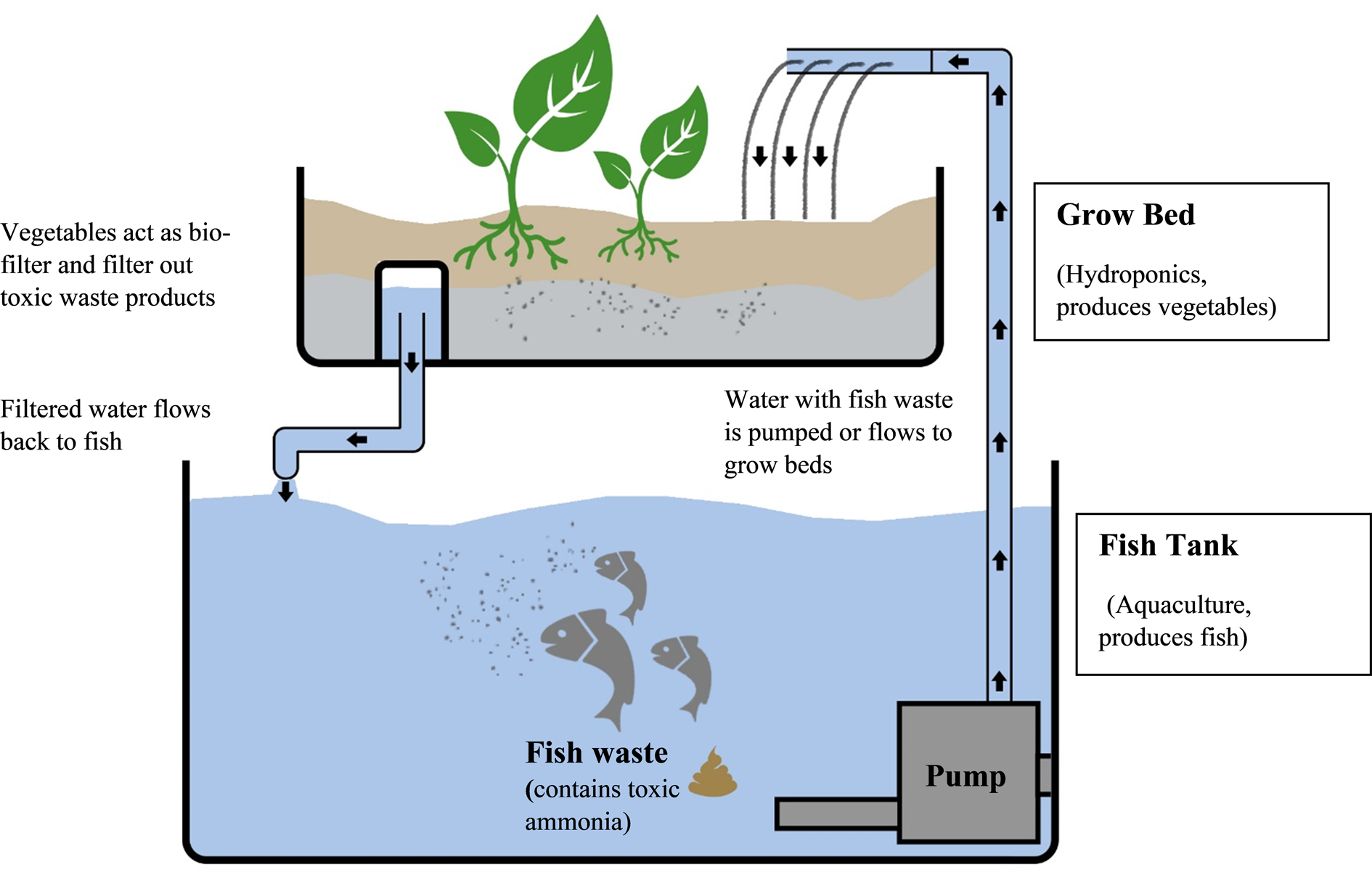
Although an ancient technology, scholars and practitioners have recently studied aquaponics as a potential solution to global food insecurity (Goddek et al., Reference Goddek, Delaide, Mankasingh, Ragnarsdottir, Jijakli and Thorarinsdottir2015). Aquaponics is a technology that allows fish production and vegetable production to occur simultaneously (see Fig. 1). It is the combination of hydroponics, the process of growing vegetables in water without soil, with aquaculture, fish raising (Turcios and Papenbrock, Reference Turcios and Papenbrock2014; Kloas et al., Reference Kloas, Groß, Baganz, Graupner, Monsees, Schmidt, Staaks, Suhl, Tschirner, Wittstock, Wuertz, Sikova and Rennert2015). This combination allows the production of both food products while minimizing water consumption, fertilizer use and the environmental hazards associated with waste loading to local streams (Kloas et al., Reference Kloas, Groß, Baganz, Graupner, Monsees, Schmidt, Staaks, Suhl, Tschirner, Wittstock, Wuertz, Sikova and Rennert2015; Amosu et al., Reference Amosu, Robertson-Andersson, Kean, Maneveldt and Cyster2016).
Diagram of an aquaponics system. The plants function as a biofilter, allowing water to be recirculated and reducing environmental pressures associated with loading aquaculture waste into local streams.

The potential benefits of aquaponics have been documented in the academic literature. Various authors point the environmental benefits of circulating nutrient rich water between the two production systems. It has been suggested that the systems can improve agricultural profitability (Borg et al., Reference Borg, Little, Telfer and Price2014; Goddek et al., Reference Goddek, Delaide, Mankasingh, Ragnarsdottir, Jijakli and Thorarinsdottir2015), with the scale of the systems being a high determinant for this benefit (Greenfeld et al., Reference Greenfeld, Becker, McIlwain, Fotedar and Bornman2019). The reuse of water and its efficient land use makes the systems useful for dry areas and developing economies (Somerville et al., Reference Somerville, Cohen, Pantanella, Stankus and Lovatelli2014). In the context of Brazil, it has been shown that these systems can increase food security in semi-arid regions (e Silva and Van Passel, Reference Finizola e Silva and Van Passel2020). Aquaponics systems can fit into these contexts to provide fresh, locally produced protein and vegetable sources and create new jobs in cities (dos Santos, Reference dos Santos2016). Aquaponic systems are highly scalable and flexible (dos Santos, Reference dos Santos2016); they can be designed for a variety of indoor and outdoor environments and scaled to fit individual production needs. This flexibility could be particularly beneficial when applied to small holder farms, urban and peri-urban contexts and informal settlements.
Despite the perceived and documented positive benefits of aquaponics, much of the current literature on the system focuses on technical aspects, such as system design, nutrient and water requirements, and on-going maintenance needs (Turcios and Papenbrock, Reference Turcios and Papenbrock2014) as well as economic performance (Laidlaw and Magee, Reference Laidlaw and Magee2014; Greenfeld et al., Reference Greenfeld, Becker, McIlwain, Fotedar and Bornman2019). There is currently a lack of research focused on the social dimensions of this emerging sustainable technology, including an assessment of barriers that may exist for local farmers to engage with aquaponics systems (Laidlaw and Magee, Reference Laidlaw and Magee2014). Through understanding present capacity by small-scale farmers in engaging in aquaponics, local governments can be informed on how to best work with these farmers to promote the use of aquaponics and local food production.
Section ‘Background’ presents the background of agriculture setting of Brazil and São Carlos specifically. Section ‘Methods’ provides the methods and framework analysis for the interviews conducted. The results are then presented in Section ‘Results and discussion’. The final section presents conclusions and recommendations.
Background
Brazil is one of the world's leading exporters of agricultural products (FAO, 2015). It is currently the world's largest sugar cane producer, with current projections for Brazil to replace India as the top global exporter of beef and to replace the USA as the top exporter of soy beans (FAO, 2015). Agribusiness, including farming, processing and agro-services accounted for 21.6% of the total Brazilian Gross Domestic Product in 2017 (CENTRO DE ESTUDOS AVANÇADOS EM ECONOMIA APLICADA (CEPEA) E CONFEDERAÇÃO NACIONAL DA AGRICULTURA EPECUÁRIA (CNA), 2019), and nearly 50% of the country's total exports (Decerega, Reference Decerega2017). Some Brazilian farm lobbyists are even attributing the stabilization of the Brazilian currency, reais, to the growth of the agricultural sector (Mano and Boadle, Reference Mano and Boadle2017).
Despite the economic benefits of production, agriculture can only exist if the ecosystems and natural resources that support these processes are used sustainably. Cultivated land currently accounts for 10.3% of the country's total land (FAO, 2015), with expansion every year. In 2010, agriculture was also responsible for 60% of the country's total water withdrawal (FAO, 2015) and one-third of the national greenhouse gas emissions (Russell and Parsons, Reference Russell and Parsons2014). Large, typically monoculture, farms are also a major driver of land-use change as forests are cleared to increase arable land availability. While deforestation rates have decreased, forest loss still accounts for 22% of Brazil's carbon emissions (Russell and Parsons, Reference Russell and Parsons2014).
In recent years, scholars and development organizations have argued that small-scale agriculture, production that occurs on small plots of land, typically without the use of ‘advanced’ farming technologies, could help reduce some of the environmental pressures attributed to larger, typically monoculture, farms (Marizin et al., Reference Marizin, Bonnet, Bessaoud and Ton-Nu2016; FAO and IFAD, 2019). Small farms often exist within or on the periphery of urban areas and sell to local markets. The relatively smaller area of cultivation and support of local business can be more sustainable than their large-scale counterparts in a variety of ways. Small local farms can promote food security, reduce carbon emissions associated with large machinery, large-scale tilling and reduce water use and loss through evaporation (FAO and IFAD, 2019). Furthermore, their products are often consumed by the farmers themselves, creating household food security as well as providing an income for multiple families (Rapsomanikis, Reference Rapsomanikis2015; Marizin et al., Reference Marizin, Bonnet, Bessaoud and Ton-Nu2016). These farms are critical to 7 out of the 17 United Nations Sustainable Development goals (Marizin et al., Reference Marizin, Bonnet, Bessaoud and Ton-Nu2016).
Due to the perceived sustainable benefits of small-scale agriculture, there has been a push from development organizations to increase the growth and efficiency of these smaller farms to continue production while maintaining environmental sustainability. The Food and Agriculture Organization estimates that 50% of the required increase in food production by 2050 will have to come from smallholder farms (International Fund for Agricultural Development, 2011), and organizations worldwide are seeking to determine the best, most efficient, practices for these farmers.
Small-scale agriculture in the context of this study
One can identify two types of small-scale agriculture in the context of this study, ‘agriculturas familiares’ (which translates to ‘familial agriculture’) and ‘assentamentos’ (Portuguese for settlements). Agriculturas familiares refers to farms that are owned and managed by a few individuals, typically one person and a close family member, such as a spouse, child, sibling or parent (IBGE, 2017). According to Brazilian national law 11.326/2006, agriculturas familiares must be less than four fiscal modules. The size of each fiscal module is determined by each municipality and is set as 12 ha for São Carlos (Embrapa, 2020). Less than 15% of total farms in the state of São Paolo are considered agriculturas familiares (IBGE, 2017).
Settlements are typically comprised of a group of individuals that work on the same property. These properties are often former agricultural fields that have been abandoned and rendered unproductive by the National Government. Article 184 of the Brazilian Constitution of 1988 states that ‘unused farmland should be expropriated and used for redistribution’ (Constitution of the Federal Republic of Brazil, 1988). Supported by this article, the Landless Workers Movement (MST, Movimento dos Trabalhadores Rurais Sem Terra, in Portuguese) has led nearly 400,000 families to occupy, work and earn the right to live on over 20 million acres of land. By law, if the families are able to have productive use of the land for 6 yr, they are granted rights to continue living and working on the land by INCRA, the national land reform institute (Instituto Nacional de Colonização e Reforma Agrária). It is often difficult to make the land productive, which contributed to the original abandonment of the properties.
Small-scale agriculture efforts in São Carlos
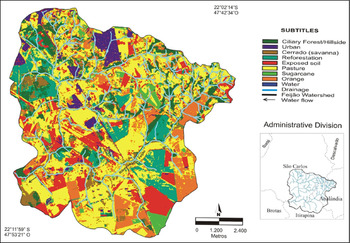
São Carlos, Brazil is a town of 221,950 inhabitants (IBGE, 2010) located ~240 km northwest of the city of São Paulo. It is the largest city located within the Feijão River watershed. All farmers interviewed drew their water from this watershed. Land use in this watershed can be seen in Figure 2, which illustrates that the São Carlos economy is predominately supported by agriculture and cattle raising.
Land use of the Feijão River watershed. The Feijão River supplies the water of the city of São Carlos and the watershed provided water to all farmers interviewed. Created from ALOS satellite imagery November 2006. Adapted from Machado et al. (2016).

Currently most of the land use surrounding São Carlos is dedicated to large-scale sugarcane, cattle raising and citrus production. In the municipality of São Carlos, there are 319 properties classified as agricultura familiar (IBGE, 2017). Conversations with the municipality resulted in the estimation of 60 of these farms within the vicinity of São Carlos urban area, which are the focus of this paper.
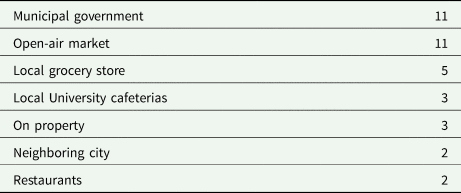
According to visits of the research team and discussions with the municipality, several farmers already engage in aquaculture on their properties, noting that the high-value protein products produced in a small area without relying on soil quality can dramatically increase the profitability of their land. In addition to selling to the city for the municipal program, farmers also sell their products at open-air markets, to local grocery stores, and others (see Table 1).
Markets for small-scale farmers in São Carlos

Results are taken from the 21 farmers interviewed in response to the question, ‘Where do you sell your products?’.
The push to support small-scale farmers and take advantage of their possible benefits is occurring on the local level as well. A semi-structured interview with the municipal Secretary of Agriculture of São Carlos revealed that the city government is working with agriculturas familiares to determine the ways in which the city can support them to increase local food production and provide a source of local food for municipal programs.
The municipality manages social programs which include the provision of meals for schools and elderly care facilities. By contracting with the owners of small-scale farms and settlements, the city can request specific products for these programs, while farmers are benefitted by having a reliable buyer and stable income. The municipality has contracted with these small-scale farmers to support the city programs, local economy and farmer livelihood.
The farmers that sell to the city currently provide fresh citrus fruits, vegetables and milk. However, the Secretary of Agriculture has a stated interest in expanding the program and procuring more locally produced protein sources. Due to its flexibility and scalability, aquaponics could be implemented on these small-scale farms and be used to provide for these programs. In this process, the farmers would also expand the diversity of their products by producing protein and vegetable products simultaneously.
Methods
This research used structured interviews with local small-scale farmers in Sao Carlos Brazil to understand adoption capacity of small-scale farmers for aquaponic systems. The interviews touched on different social, technical, economic, physical and environmental factors of the farm that can influence farmers adoption of aquaponics. Interviews were complemented with literature review of academic and gray literature, and semi-structured discussions with local government officials, local environmental non-profit owners and members affiliated with the food supply chain in the region, including a farm-to-table restaurant, local farms and two of the main settlements surrounding São Carlos.
As the total number of small-scale farmers in the vicinity is limited (estimated at 60), the sample size is small (n = 21) and may not be statistically representative. However, the results provide valuable insight into the opportunities for aquaponics to be included in small-scale agriculture. While not achieving a high power number with the sample size, this type of study can still provide rich insights and support the understanding of an emerging technology (Villarroel et al., Reference Villarroel, Junge, Komives, König, Plaza, Bittsánszky and Agnès2016).
The study population included individuals that worked on small-scale farms within 30 km of the city of São Carlos. Efforts were made to interview every farmer that sold their products in the city. All open-air markets that occurred within a one-week period in São Carlos were visited and every farmer selling products was asked to voluntarily participate in the interview. In addition, farmers were chosen based on their partnership with the city and Secretary of Agriculture. These farmers were either interviewed in the office of Secretary of Agriculture or visited and interviewed on their farms. These methods are similar to Graber et al. (Reference Graber, Narayanan, Alfaro and Palit2018) in which known local contacts, events and meetings were used to communicate with a broader set of respondents.
A total of 21 interviews were completed with the owners of agriculturas familiares. Farmers were asked questions that assessed the major social, technical, economic, physical and environmental factors involved in engaging in sustainable agriculture and aquaponics systems in São Carlos, Brazil.
The interview was originally written in English and translated into Portuguese with help from the interview team comprised of Brazilian students at the University of São Paulo. The interview instrument was first piloted with a local farmer on their property in São Carlos, and their responses or requests for clarification were used to revise the instrument. The English version of the interview questions can be found in Appendix I, with the translated and administered Portuguese version in Appendix II. All interviews were conducted in Portuguese with responses translated back into English for the purposes of analysis.
Initial interview questions assessed the characteristics of the farm and prior knowledge of aquaponics. When farmers had no knowledge of aquaponics, a short description of the system was provided. The farmers were then asked a series of questions concerning the technical, environmental, social, economic, and physical factors that would incentivize or inhibit their engagement with aquaponics systems. The interview concluded with a series of open-ended questions the gauged barriers to aquaponics, knowledge and use of a farming technology to increase the productivity of the farm, and knowledge and use of technologies to protect the environment.
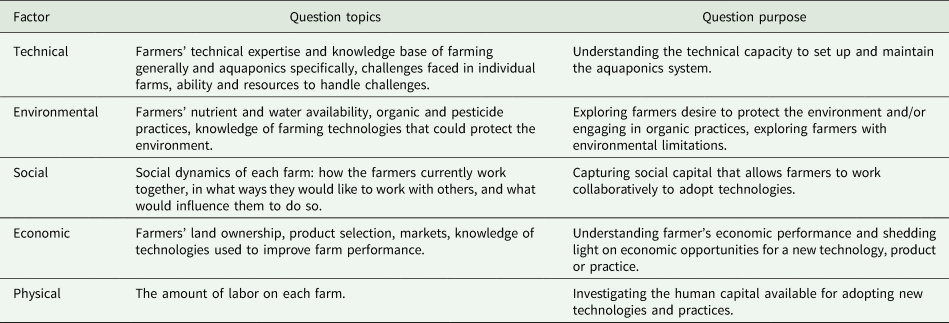
The description of each factor and the types of questions that were used to assess it are listed in Table 2.
Factors explored in interviews

This table lists the factors of interest in the interview, topics included in the questions and the purpose of including those topics in the interview.
Results and discussion
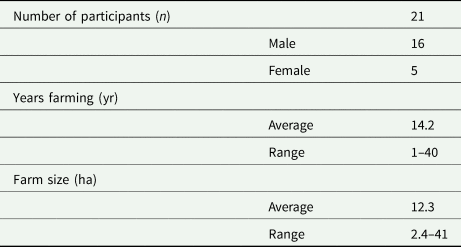
Ownership was common among the farmers interviewed, with 80% of farmers either owning the land or being members of the family that did. This includes settlement owners who owned the rights to work on the land. Less than 10% of those interviewed were employees of the farm only, without any ownership rights or familial ties to the land. Those interviewed worked on farms with a size ranging from 2.4 to 41 ha (6–101 acres) with an average size of 12.3 ha (30 acres). These farms had on average three employees, including the interviewee. The ‘employees’ or farm workers always included family members, often a spouse and child or parent.
Of the 21 farmers interviewed, 16 were male and 5 female, with an age range of 26–62 yr old. Table 3 summarizes the demographics of the participants.
Survey participants summary of demographics

Technical factors
Of the farmers interviewed, 91% had not heard of aquaponics prior to the interview. Despite this, respondents were highly interested in either learning more about, or implementing the systems. This was after providing them with descriptions of the system and pictures of the local demonstration established at Sitio São Joao, a local small farm engaged with outreach and environmental efforts. Forty-seven percent of farmers did not think that the systems would be complicated to operate, but that their largest barrier would be the time and finances required to set up the system. When asked what would influence them to engage in aquaponics, 38% (8 of 21) responded that they would set up the systems if they could see examples that it would be successful and profitable. Others noted the need for more time, finances for purchasing equipment, or ownership of the land in order to modify the property. Two farmers were incentivized by the system's water efficiency and its ability to produce its own fertilizer.
The farmers were asked about the general challenges that they face on their farm in order to understand the feasibility of initializing and maintaining the aquaponics systems in the face of these challenges. The top difficulty, mentioned by 30% of farmers, was water access, with water scarcity increasing during the dry season. Total costs of production were mentioned by 24% of respondents. Aquaponics could be a solution to both these challenges through its efficient use of water and ability to increase the productivity of land area. Two farmers also mentioned pests and fungi as being challenging, especially given that they had opted to eliminate pesticide use. While pests may still exist on an aquaponics system, one farmer stated that they had begun aquaculture specifically with the intent for the fish to reduce mosquito reproduction.
The interviewees were asked how many years they had worked on the farm to gauge the extent of their agricultural knowledge. These responses were varied, ranging from 1 to 40 yr with an average of 14.2 yr of farming experience. The farmers that were younger with fewer years of experience were often the children of parents that had owned and worked the land for generations, suggesting that the agricultural knowledge base would still exist on the property and a lack of knowledge would not be a barrier. Additionally, two farmers had previously worked with aquaponics, three farmers were currently engaged in aquaculture, and nearly half of the respondents were ‘very knowledgeable’ of hydroponics either having their own hydroponics system or knowing someone with a system. The extensive knowledge of farming, aquaculture and hydroponics that exists throughout the São Carlos farming community could facilitate farmer engagement with aquaponics.
Though the farmers were not familiar with aquaponics, most were highly interested after a brief explanation of the system and did not believe that they would be difficult to operate. The farmers also had extensive agricultural knowledge, as evident through the respondents having an average of over 14 yr of farming experience. Most farmers had already implemented organic practices as discussed below. The extensive knowledge base of organics, hydroponics and agriculture, as well as interest in aquaponics provides a good base for facilitation of adoption.
Environmental factors
Sustainable farming technologies
When asked, ‘are you familiar with any environmentally friendly farming technique or technology?’ 30% of farmers discussed organic practices and how they have already implemented them. Fifteen percent of farmers had also implemented agroforestry and permaculture practices, and several had active reforestation projects and vegetative waterway buffers on their properties. These practices illustrate a concern for the environment and these considerations could positively influence the farmers to engage with environmentally friendly aquaponics systems.
Water access and availability
Farmers received their water from a well (57%), a river (20%) or a reservoir (14%), and all farmers lived within the Feijão River watershed. The average distance between the water source and the farm was 300 m. Despite 30% of farmers mentioning water access and quantity as a main challenge, all farmers not living in settlements reported having enough water for their crops. Some farmers did note the need to conserve water during the dry season.
This might again point to the need to have special considerations with settlement farmers. One respondent mentioned that there was only one well in her settlement and ‘all families use it, so it is not enough.’ Another mentioned that she uses ‘less water so that my neighbor can have more available for her leafy greens.’
Since settlements occur on land that was originally abandoned due to challenges including soil acidity and a lack of water, challenges with reliable water sources on settlements will likely always be a barrier to any productive use of the land. Settlement owners also often had to ‘fix’ the soil through the addition of minerals that reduced its acidity. The low-quality soils present special financial and environmental challenges to settlements that should be taken into consideration when working with these farming communities. Aquaponics' low water consumption and soil-less nature makes it a perfect fit for these farmers.
Additionally, many farmers expressed the need to protect the watershed and their water resources through the use of permaculture and vegetative buffers that reduce soil erosion. The interview results surrounding environmental factors illustrate that there is a desire in the community to promote healthy products, communities and ecosystems. Aquaponics systems' ability to reduce fertilizer inputs, naturally conserve and filter water should incentivize many farmers to engage in these systems.
Nutrient availability
Of the farmers interviewed, 72% (15 of 21) used fertilizer, with fertilizer accounting for on average 15% of the farmer's total expenses. The remaining farmers expressed they use manure or did not identify the use of any fertilizer. Nearly all farmers felt that they had enough fertilizer or were able to buy more or use the manure from their farm to meet their needs. Aquaponics may pose an attractive option that reduces the fertilizer consumption of the farmers.
Organic practices
Conversations with the farmers show that they value organic practices. Of the 21 farmers interviewed, 14 have already engaged in environmentally-friendly practices, reduced their pesticide use or have implemented organic practices. Most farmers spoke of their desire to have as healthy and as high-quality products as possible, and so used synthetic pesticides only when necessary, if at all. All farmers said that they consumed the food that they grew at nearly every meal, so organic practices and pesticide reduction was an important consideration to their personal health as well as the health of the community. One farmer mentioned he does not ‘want people to have to eat pesticides or worry about that.’
Sixty-two percent of farmers stated that their farm is completely organic, but this was their own judgement and does not reflect certification. They mostly refer to the elimination of pesticides and fossil-based fertilizers. Nearly all farmers stated that they try to be ‘as organic as possible’. Since aquaponics systems recirculate water through fishponds, it is essential that the entire system is organic to prevent any adverse toxic effects to the fish. With organics being a known priority to these farmers, the aquaponics systems would fit well into their current farming techniques and the need for the systems to be organic should not be a barrier. These trends are also seen around Brazil, with ‘22.5 percent of Brazilian municipalities already engaging in some sort of organic production’ (Decerega, Reference Decerega2017).
Social factors
A significant consideration in adopting aquaponics is the upfront cost of equipment and effort in constructing and initiating the system. Financing these costs could be a problem with one respondent mentioning ‘a friend has been waiting for 2 years to finance his small farm’. Coordinating farmers to work together may represent an opportunity to reduce costs, increase efficiency and achieve economies of scale, or even achieving better credit opportunities. This is a typical experience when dealing with cooperatives which help farmers aggregate and share equipment and other resources. When asked how likely they were to work with others on a scale from 1 to 10 with 10 being the most likely, the average response was 8. One respondent mentioned he would like to work together with others ‘because it can make safer profits.’
When asked in what way they would like to work together, most were interested in a co-operative that allowed farmers to meet and share technics, methods, knowledge and experiences. Many also expressed interest in a partnership where products were exchanged so that each individual farmer could have a larger variety to sell when they went to the market without having to grow each product themselves. On respondent said ‘this used to be common but not anymore.’ At least two respondents mentioned the preference for informal capacity building and exchange of information over actual formal work arrangements. One respondent mentioned that his settlement has an association that ‘includes 328 lots and has workshops where they discuss techniques and helps others bring products to [market].’
However, a majority of the farmers (62%) foresaw issues in working with other farmers. One respondent mentioned that ‘rural people are not always united, they should be.’ Of that subset, 54% felt that the largest barrier to working together was that each farmer had ‘cabeças diferentes,’ which translates to different ways of thinking and strong opinions about the ways that a farm should be managed and operated, making it difficult, if not impossible, for the same farmers to work together on the same land. Another barrier that was often mentioned was time; the farmers did not feel that they could meet the demands of their property while also working with others.
These results point to a significant barrier to adoption; achieving the appropriate scale for profitability as individual famers may not reach a large enough production and there are mixed feelings about cooperation opportunities. This is supported by at least one study which found that larger systems are economically superior (Greenfeld et al., Reference Greenfeld, Becker, McIlwain, Fotedar and Bornman2019).
Economic factors
Product selection
The interviewees were asked about the types of products that they grow on their farm and why they selected these products. While there was a large variety of products (Appendix V), nearly 72% of those interviewed already grow ‘leafy vegetables’ including lettuce and cabbage, vegetables traditionally grown in many hydroponics and aquaponics systems. Other popular products included various citrus fruits, broccoli and milk. Most respondents selected their products based on market demand; they grew and sold products that were known to sell reliably. Sometimes farmers would select products that could be sold at a premium price because they were either processed products (such as cheese) or they were less common and unique from their competitors. Other times the farmer was limited in their product selection, because of the climate, poor soil quality or a lack of a workforce required to grow other products.
Market
All farmers interviewed, except one, considered their farm to be commercial, meaning that they sold their farm products for a profit. However, the farmers also relied heavily on their farm for their own sustenance, with every respondent saying that they consumed the food that they grew for nearly every meal.
Everyone interviewed sold their products locally, either to the city, at open markets, or to local grocery stores directly (see Table 1). The distance that farmers traveled ranged from 0 (on their property) to 100 km, with an average distance traveled of 24 km. When asked why they sold their products locally, they noted that selling local was easiest and cheapest for them in terms of transportation. There is also a demand at the local level, so they could grow products specific to meet the demand of individual customers and their contracts with the city. Table 1 illustrates that the local farmers heavily rely on the municipality and the open-air markets for an outlet of their products, while only a few sell directly to grocery stores or restaurants.
It is important to point out that a large majority of the farmers sell their products through contract with the municipal government by participating in the program mentioned earlier for the supply of products to social interest programs. Many farmers in this study noted that selling first to the city allowed them to reliably increase their income to expand their production and sell to other markets. The contracts with the city enabled farmers to ensure that they would have a buyer and make a profit on the products that they sold. The farmers then have been able to grow more products with their excess income and expand their sales to open-air markets and local grocery stores. Through the creation of contracts with the farmers, the municipality has provided a livelihood to the farmers, successfully increased local procurement of products for their city and improved the local economy. One farmer responded that after struggling to sell initially, they ‘were invited by the secretary of agriculture to sell locally and now they sell to the city, at an open market, and at both local universities, USP and UFSCAR.’
These contracts are an important part of the strategy by the municipality to source healthy food to local schools and place of social benefit, according to interviews with municipality officials. The contracts also show the ability of the municipality to influence the product choice of the farmers and to support a change towards different technologies like aquaponics. For example, one respondent mentioned that the reason they picked their products is because ‘the municipality said if you produce [it], we will buy’ and another saying that it is because ‘the secretary of agriculture uses these for school lunches, hospitals, and prisons.’
Five of the 21 farmers interviewed were part of settlements and mentioned transportation issues during the rainy season. With their properties being located on a dirt road, they are often unable to drive to town to sell their products when roadways are washed out by seasonal rains. This is not a problem that is unique to settlement workers, and transportation logistics are a large barrier known to the city of São Carlos and to farmers throughout Brazil, especially those located in inland regions. The lack of reliable roadways and transportation impacts the livelihood of all Brazilians and the productivity of the entire agricultural sector. The challenging road infrastructure system throughout the inland regions of Brazil has been a known concern for farmers for many years (Ray and Schaffer, Reference Ray and Schaffer2015). However, the Brazilian government launched an infrastructure investment program, known as a Growth Acceleration Program (PAC) in 2007 that should help to alleviate these issues (Amann et al., Reference Amann, Baer and Lora2016; Jonas et al., Reference Jonas, Da, Humberto, De, Martins and Dantas2016; Rodrigues, Santos and Faroni, Reference Rodrigues, Santos and Faroni2018). Further, non-settlement farmers did not mention road infrastructure as an issue. Special considerations may be necessary for settlement farmers to reach appropriate markets.
Product expansion
Every farmer interviewed was interested in expanding their production, either through producing more or having equipment to produce more and create value added, but most noted that they were limited by their lack of workforce. More than half of the farmers noted they were interested in a technology for improving the performance of their farm, with aquaculture and energy technologies being mentioned repeatedly. These energy technologies included using biodigesters to use farm waste to create energy or implementing a water wheel to irrigate crops and save time, money and energy.
Labor
The farmers indicated that one of their largest challenges on the farm was their lack of workforce. While they felt confident in their ability to complete their daily tasks on their own, they also discussed the desire to expand production, which was limited by their capacity of physical labor. While all farmers responded that they have sufficient labor to meet their needs on average they worked 11 h every day. Comments indicate that they can be required to work up to 14 h nearly daily, including weekends when they sell at open-air markets. In one case a farmer commented that he switched his production to sugar cane, which can be mechanized because ‘no one wants to work in a rural area.’
These physical factors are a potential major barrier to farmer engagement in emerging agricultural technologies and particularly aquaponics. While in the long run, aquaponics may save time for farmers by growing two products in one system and limiting the need for irrigation and fertilization, initial set up and understanding of the system will require time and labor that the farmers may not have available.
Conclusion
Aquaponics is a potential viable solution to increasing food security and promoting local economies throughout the world (Laidlaw and Magee, Reference Laidlaw and Magee2014; Somerville et al., Reference Somerville, Cohen, Pantanella, Stankus and Lovatelli2014; Goddek et al., Reference Goddek, Delaide, Mankasingh, Ragnarsdottir, Jijakli and Thorarinsdottir2015; Wu et al., Reference Wu, Ghamkhar, Ashton and Hicks2019; e Silva and Van Passel, Reference Finizola e Silva and Van Passel2020). However, barriers and incentives will always exist when adopting any new technology. Efforts should be made to understand the barriers within each community to these changes, and how the local government or businesses can respond to these challenges with solutions. Empirical evidence presented here shows that small-holder farmers in São Carlos, Brazil, have a high capacity for adopting aquaponics. This is supported by the farmers expressed desire for sustainable technologies, moves towards organic practices, and expressed interest in the technology. Water concerns and reduction of fertilizers present factors that the farmers would consider when adopting a technology. Farmers reticence to embark on collaborative projects and their lack of extra time represent significant barriers to the adoption of aquaponics and other new technologies.
Small-scale farmers in the area typically own their properties and can modify them to adopt new technologies and grow products in demand. Their flexibility and ability to meet demand has been demonstrated repeatedly through the successful programs and city contracts initialized by the municipal Secretary of Agriculture. The same programs could be used as an incentive to adopt aquaponics.
Contracts with the city reduce the barrier of the farmers not knowing initially if their products will be profitable, reducing perceived risks by the farmer to initializing new products. Once the farmers can comfortably produce and sell to the city, they can then develop the capacity to sell their fish and vegetables to local consumers directly.
Additionally, every farm presents unique challenges. Settlement properties should be of particular concern. In these farms, low-quality soils and dirt roads present special financial and environmental challenges that should be taken into consideration when working with these farming communities.
Future studies should attempt to interview a larger population to ensure a more statistically representative sample. However, literature shows that these small sample studies are important in understanding the opportunities for this emerging technology (Villarroel et al., Reference Villarroel, Junge, Komives, König, Plaza, Bittsánszky and Agnès2016).
Supplementary material
The supplementary material for this article can be found at https://doi.org/10.1017/S174217052000040X.