Introduction
Tonsillectomy, like any other surgical procedure, has its own complications, of which bleeding and pain are the most challenging, for the surgeon and the patient. Haemorrhage is the main early complication. Bleeding post-tonsillectomy is divided into two groups according to the time of its occurrence. When it occurs within 24 hours of surgery, it is known as immediate or primary haemorrhage. When it occurs after 24 hours, during the phase of tonsillar bed healing, it is known as delayed or secondary haemorrhage. Bleeding rates of up to 2–5 per cent are considered acceptable, although the reported rates for post-operative bleeding vary widely. This wide variation in rates may be a result of variations in technique and surgeon experience. Post-operative pain, while variable in intensity and duration, typically lasts for 7–10 days after surgery, and is moderate to severe.Reference McKerrow, Clarke and Gleeson1,Reference Irakli and Fedor2
Over the years, a number of methods have been suggested to prevent post-operative bleeding and decrease post-tonsillectomy pain, but practice and clinical studies have revealed limitations to their success. Although newer modalities of surgery, using electrocautery, coblation, laser or power instruments, have been developed, reports in the medical literature have shown conflicting results regarding whether they have any positive effect on post-tonsillectomy bleeding and pain compared to the classic dissection technique.Reference Irakli and Fedor2
Platelet-rich plasma is defined as a portion of the plasma fraction of autologous blood that has a platelet concentration above baseline. Platelet-rich plasma is also referred to as platelet-enriched plasma, platelet-rich concentrate, autologous platelet gel and platelet releasate. Platelet releasates have been used to treat wounds since the 1980s. Platelet-rich plasma serves as a growth factor agonist, and has both mitogenic and chemotactic properties. It contains a high level of platelets, and a full complement of clotting and growth factors. In addition to its use in treating chronic skin and soft tissue ulcerations, platelet-rich plasma use has also been reported in periodontal and oral surgery, maxillofacial surgery, orthopaedic and trauma surgery, cosmetic and plastic surgery, spinal surgery, heart bypass surgery, and burns treatment.Reference Lacci and Dardik3
Platelet-rich plasma functions as a tissue sealant and drug delivery system, with the platelets initiating wound repair by releasing locally acting growth factors via the degranulation of α-granules. The secretory proteins contained in the α-granules of platelets include: platelet-derived growth factor transforming growth factor-β, platelet factor-4, interleukin-1, platelet-derived angiogenesis factor, vascular endothelial growth factor, epidermal growth factor, epithelial cell growth factor, insulin-like growth factor, osteocalcin, fibrinogen, vitronectin, fibronectin and thrombospondin-1. These growth factors aid healing by attracting un-differentiated cells in the newly formed matrix and by triggering cell division.
Platelet-rich plasma may suppress cytokine release and limit inflammation. It also interacts with macrophages to improve tissue healing and regeneration. In addition, it promotes new capillary growth and accelerates epithelialisation in wounds. Platelets in platelet-rich plasma also play a role in the host defence mechanism at the wound site by producing signalling proteins that attract macrophages. Platelet-rich plasma may contain a small number of leukocytes that synthesise interleukins as part of a non-specific immune response. Previous studies of platelet-rich plasma have demonstrated antimicrobial activity against Escherichia coli, Staphylococcus aureus including methicillin-resistant S aureus, Candida albicans, and Cryptococcus neoformans.Reference Lacci and Dardik3
In this study, autologous platelet-rich plasma prepared prior to surgery was used to layer the tonsillar bed immediately after the surgery. Patients were then evaluated at pre-determined time periods to assess post-tonsillectomy pain and haemorrhage, using a visual analogue scale (VAS) and a pre-defined grading scale respectively. The (pre-existing) standard protocol for post-operative patient care was followed, including the use of analgesics.
Platelet-rich plasma was prepared using a two-step process.Reference Sonnleitner, Huemer and Sullivan4 Whole blood is collected from the patient under aseptic precautions in a citrate dextrose vial. This is first centrifuged to separate the plasma from packed red blood cells. The sample is then further centrifuged to separate platelet-rich plasma from platelet-poor plasma. The concentrate thus obtained is activated in vivo with the addition of calcium, resulting in a gelatinous platelet gel. The preparation was made in the immediate pre-operative hour in the Department of Immunohaematology and Blood Transfusion. Clinically valuable platelet-rich plasma contains at least one million platelets per microlitre. Lesser concentrations cannot be relied on to enhance wound healing, and greater concentrations have not been shown to increase wound healing.Reference Lacci and Dardik3
The use of an autologous source of platelet-rich plasma does not expose the patient to risk of transmission of any blood borne infections. The chance of hypersensitivity and antigenic reactions is negligible, and is more readily acceptable to the patient.
This study was undertaken to evaluate the potential benefit of this newer treatment. It attempts to establish platelet-rich plasma as an efficacious treatment modality for post-tonsillectomy pain and haemorrhage, and promotes further application of this simple technique.
Materials and methods
A prospective single-blinded experimental study was conducted for a period of two calendar years. The study comprised patients undergoing tonsillectomy in the otorhinolaryngology department during the study period, in the unit where the principal investigator was posted.
Regarding the inclusion criteria, the study included patients undergoing tonsillectomy under general anaesthesia who gave their consent. For minors, informed consent was obtained from parents and via assent from patients.
Patients were excluded if they: were undergoing tonsillectomy for confirmed malignancy of the tonsils or styloid process excision; were undergoing adenotonsillectomy; had a bleeding disorder or thrombocytopenia; experienced prolonged bleeding and/or clotting time; or were being operated on by a junior resident acting as the chief surgeon.
The study variables examined were post-operative pain and haemorrhage, on both tonsillar fossa sides. Pain on each side of the tonsillar area was graded on a 1–10 point VAS. Post-operative bleeding was graded according to bleeding severity on each side: grade 1 – no manipulation required (spontaneous cessation of bleeding); grade 2 – manipulation under infiltration anaesthesia required; grade 3 – treatment under general anaesthesia required; grade 4 – ligation of the external carotid artery required; and grade 5 – a lethal outcome.Reference Irakli and Fedor2
Procedure
The experimental study involved three important steps: preparation of platelet-rich plasma, layering one side of the tonsillar bed with the prepared platelet-rich plasma, and assessment of the parameters.
Platelet-rich plasma preparation
The autologous platelet-rich plasma was prepared using a two-stage centrifugation technique.Reference Sonnleitner, Huemer and Sullivan4 Venous blood (10 ml) was collected (using aseptic techniques) into a citrate dextrose vacutainer, using a 10 cc syringe, from the antecubital vein in the upper arm. This was done on the morning of the proposed tonsillectomy, after taking proper informed consent. The blood was transported to the Department of Immunohaematology and Blood Transfusion of the Regional Institute of Medical Sciences, Imphal, India, and centrifuged using a standard general purpose laboratory centrifuge.
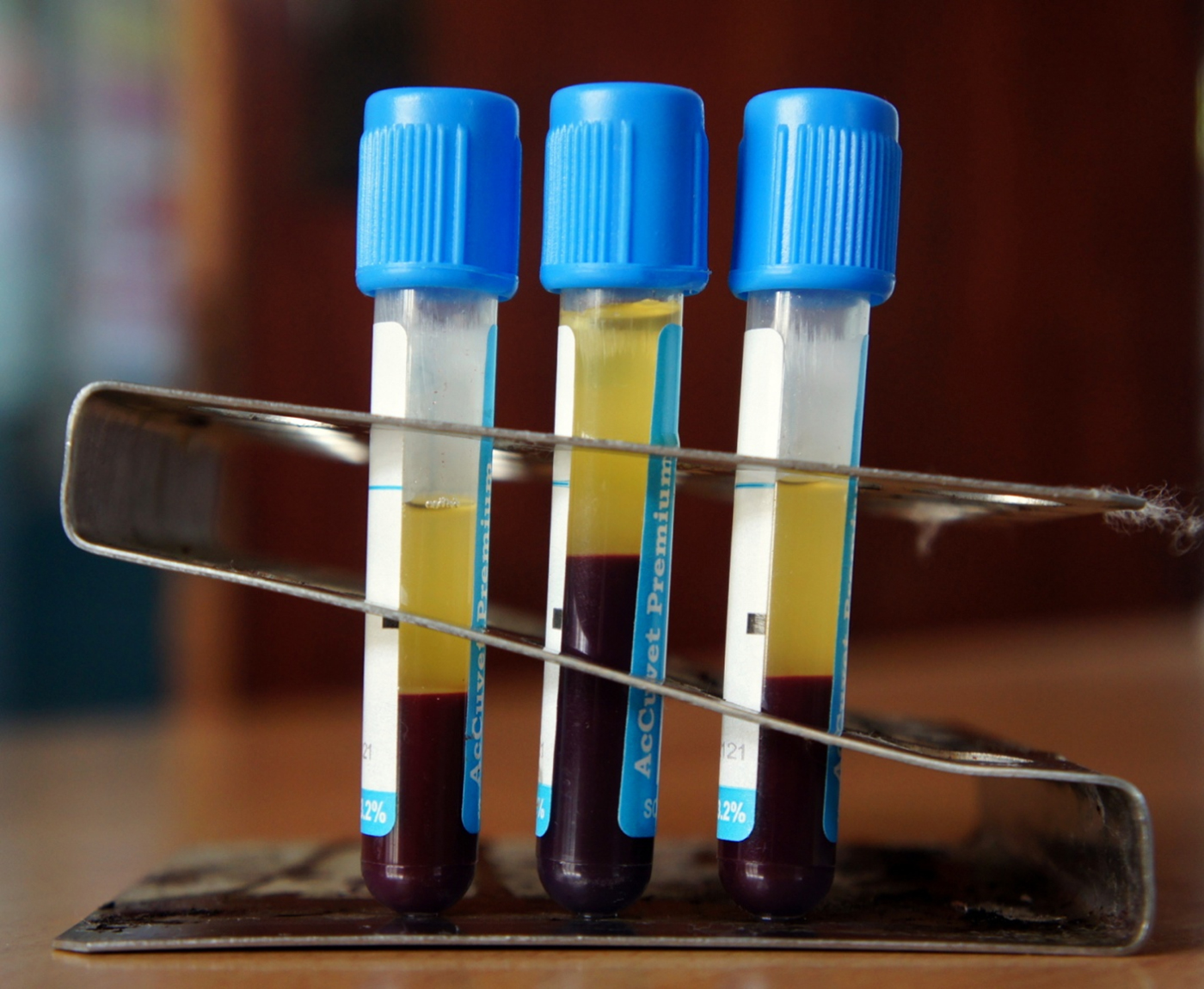
The first soft spin of 700 revolutions per minute (rpm) for 20 minutes separates the blood into three layers (Figure 1). At the bottom of the tube, a pellet of erythrocytes and leukocytes is formed. This occupies 55 per cent of the total. At the surface of the tube, a cell-free plasma layer is formed. This is low in platelets and is known as platelet-poor plasma. This layer occupies 40 per cent of the whole. In the middle layer, the concentration of platelets and fibrinogen is greatly increased. It comprises only 5 per cent of the total volume and has a characteristic whitish buffy appearance. This layer is known as the buffy coat and is important for further processing.
Showing the layers after the first stage of centrifugation.

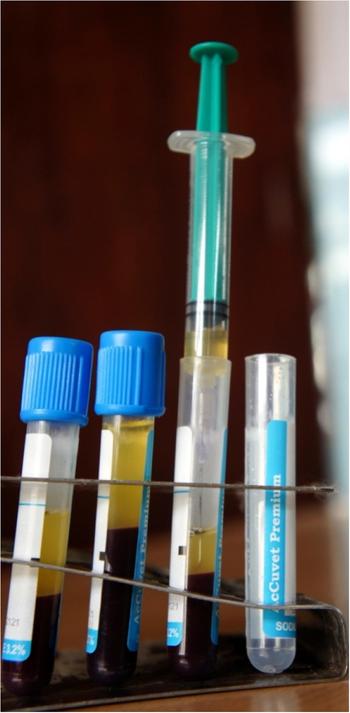
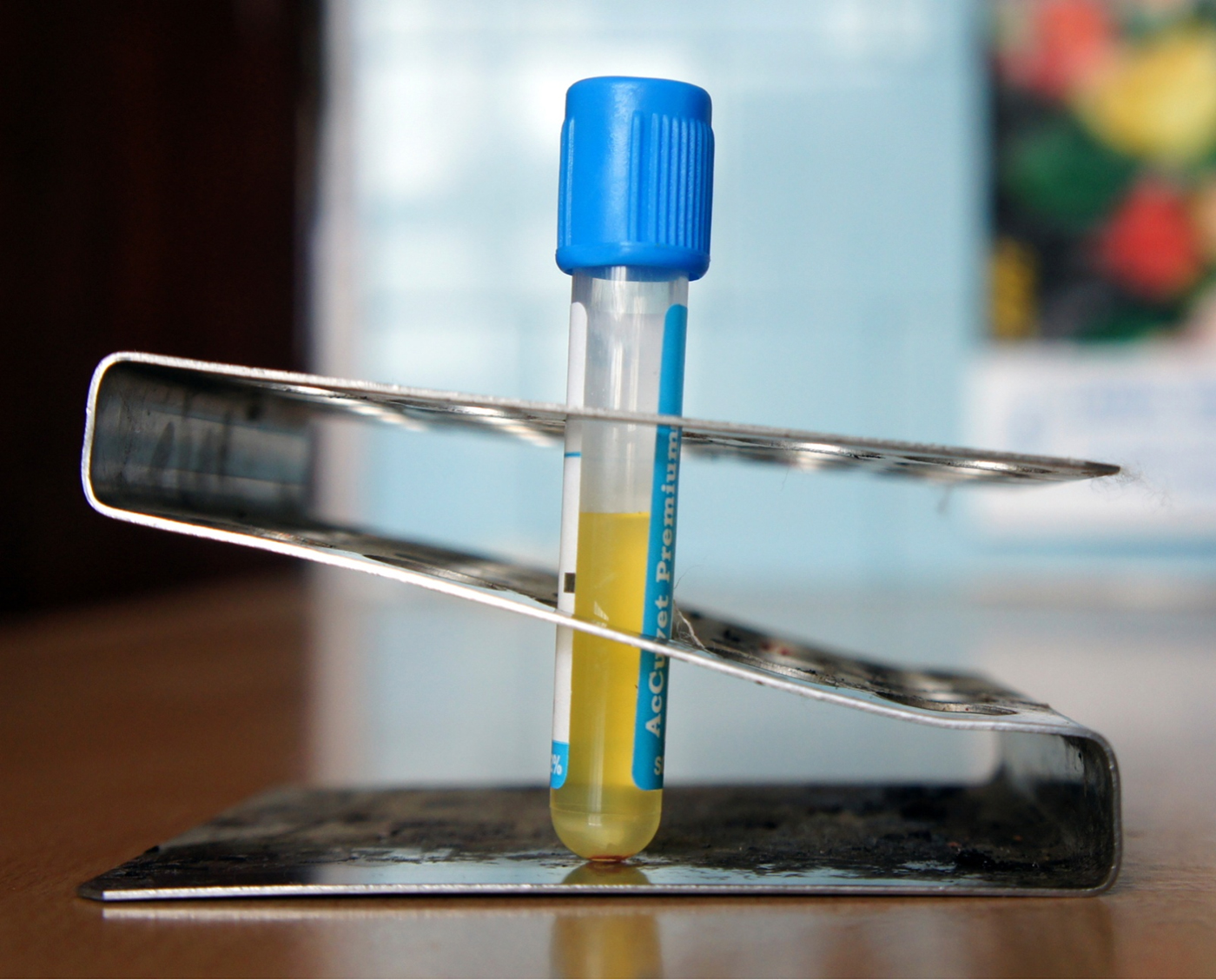
This middle layer is withdrawn carefully by inserting a sterile needle into the layers, and is transferred to another plain vacutainer (Figure 2). This vacutainer is spun on a hard cycle, at 1750 rpm, for 15 minutes. The platelet concentrate that forms (Figure 3) is withdrawn using another sterile syringe, and is taken to the operating theatre for application.
Separating the layers after the first stage of centrifugation.

Showing the layers after the second stage of centrifugation.

Platelet-rich plasma application
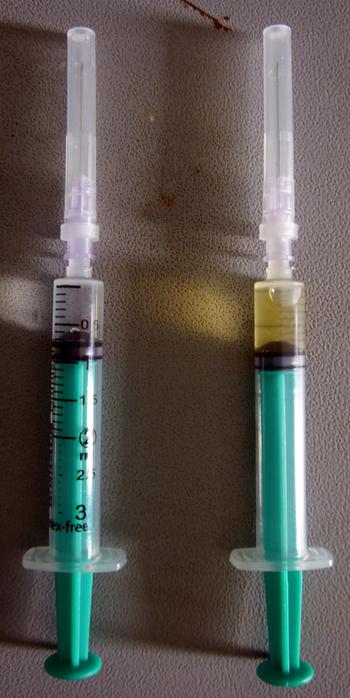
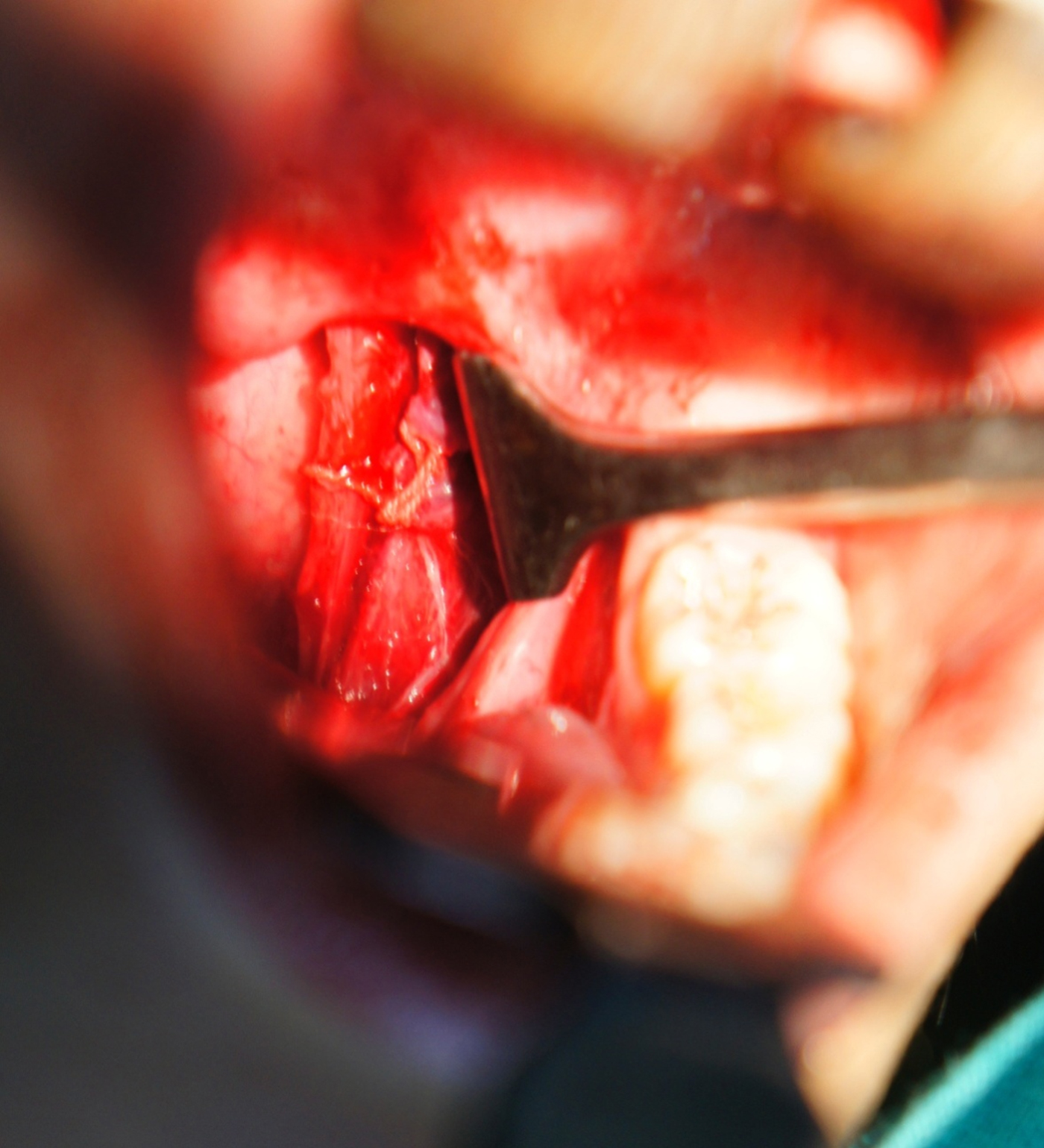
Tonsillectomy is performed under general anaesthesia using a standard procedure. At the end of the operation, after extubating the patient, one side of the tonsillar bed is randomly chosen to be the test side. The prepared platelet-rich plasma is then mixed with an equal volume of calcium gluconate (Figure 4) and applied over the bed (Figure 5). It is then held in place with mild pressure for 5 minutes. Rinsing of the mouth with hydrogen peroxide is delayed for at least 6 hours. No other special precautions are taken.
Showing the prepared platelet-rich plasma and calcium gluconate in two different syringes prior to application.

Tonsillar bed following application.

Parameter assessment
The parameters examined were post-operative bleeding and pain (Figure 6). Pain was assessed using a VAS: this was a 10 cm long line, wherein the extreme left side indicated no pain and the extreme right side indicated severe pain. The patient was asked to mark on the line the place that most closely reflects their pain level. This was first assessed immediately after the patient regained consciousness and started responding to commands in the post-anaesthesia recovery room. It was subsequently re-assessed at 2 hours, 4 hours and 6 hours on the 1st day. On the following day, it was assessed in the morning, at midday and in the evening. Pain responses were recorded in the pre-defined format (Figure 6). The patients were blind as to which side the platelet-rich plasma had been applied. If haemorrhages were present, they were graded accordingly at the specified time points. All findings were tabulated and analysed to check for statistical significance.
Data collection format.

Data collection method
Patient data were collected in a prescribed format prior to the operation, via a brief history and thorough examination. Post-operative pain was recorded after the patient regained consciousness and had started responding to commands in the post-anaesthesia recovery room. Pain was assessed using a 10 cm (0–10 point) VAS, the instructions for which had been previously explained to the patient. Repeat recordings were taken after 2 hours, 4 hours and 6 hours on the 1st post-operative day, and thrice the next day. Each side of the tonsillar bed was evaluated separately. Post-tonsillectomy haemorrhage was assessed under direct vision using a light source and a Lack's tongue depressor.
The pain perception and haemostasis data were tabulated, and the control side was compared with the test side. The results obtained were tested for statistical significance.
Ethical approval
Informed consent was taken from the subjects prior to participation. Consent for paediatric cases was obtained from the parents. Requisite Institutional Ethics Committee approval was obtained before starting the study. No patient-identifying data have been released in this study.
Results
The study comprised 36 subjects (20 (55.6 per cent) male and 16 (44.4 per cent) female; male-to-female ratio of 5:4), with a mean age (± standard deviation) of 19.08 ± 7.173 years (range, 7–35 years).
Tonsillar fossa side selection was randomised, with blinding of the principal investigator who collected the data. The test side was on the right in 18 cases (50 per cent) and on the left in 18 cases (50 per cent).
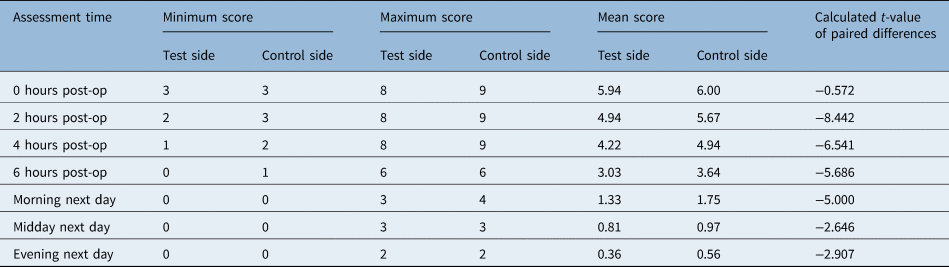
The mean pain scores for the test side were 5.94, 4.94, 4.22, 3.03, 1.33, 0.81 and 0.36 at the respective assessment time points (at 0, 2, 4 and 6 hours post-operatively, and in the morning, midday and evening of the next day, respectively). The pain scores for the control side were higher, at 6.00, 5.67, 4.94, 3.64, 1.75, 0.97 and 0.56, respectively (Table 1).
Pain scores

Post-op = post-operatively
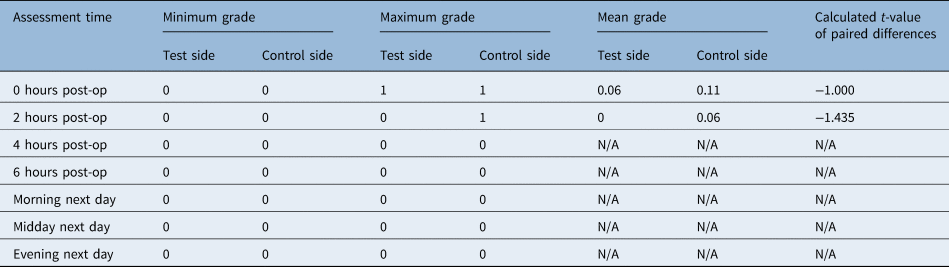
The mean haemorrhage grade on the test side was 0.06 at 0 hours post-operatively, and was null thereafter. On the control side, it was 0.11 at 0 hours and 0.06 at 2 hours post-operatively (Table 2).
Haemorrhage grades

Post-op = post-operatively; N/A = not applicable
Statistical analysis was performed using the student's t-test. The degree of freedom was 70 and the critical region for the one-tail test was t < 1.65 (tabulated value). Where the calculated t-value was less than 1.65, the null hypothesis was rejected at a 5 per cent (0.05) level of significance. All the t-values in the study are less than 1.65; hence, all value comparisons are statistically significant.
Discussion
Surgeons and researchers alike are in search of an ideal wound dressing substance that can accelerate healing, and reduce pain and morbidity, and which has great patient acceptability in terms of preparation, with minimal cost and no risk to the patients or surgeon. The use of autologous platelet-rich plasma and similar platelet-rich concentrates has recently evoked much interest in various fields of surgery. There have been various studies on the use of this platelet-rich plasma concentrate in various fields, such as dentistry, oral and maxillofacial surgery, orthopaedic surgery, and ophthalmology. Various methods of preparation have been described, with each striving for an easier, less time-consuming and better concentrated product. Various studies have described the various mechanisms of action of the concentrate, up to the molecular level. This study describes an easy method of preparing and applying autologous platelet-rich plasma in the field of otorhinolaryngology and head and neck surgery.
Tonsillectomy is a commonly performed procedure in our specialty, accounting for approximately 10–15 per cent of all major surgical procedures. Pain and haemorrhage are the chief areas of concern for the patient and the surgeon respectively. The post-tonsillectomy wound differs substantially from other post-surgical cases as the wound here is open and exposed. Furthermore, the oropharyngeal cavity environment is a contaminated area and the wound has to heal by secondary intention, with respiration, the eating of food and swallowing movements hindering the process considerably.
The choice of using autologous over homologous platelet concentrate in the study is a result of the safety it assures, which is of paramount importance. It eliminates concerns regarding transmissible diseases such as human immunodeficiency virus, hepatitis, West Nile fever and Creutzfeldt–Jacok disease. It also does not require any special consideration relating to antibody formation. This effectively prevents the risk of graft versus host disease. Using one's own blood for preparation is also associated with cost-effectiveness and represents an economical use of resources, as screening and cross-matching tests are not needed. These factors led to a high acceptance rate (100 per cent) of the technique by the patients in the study. Most previous studies have used autologous sources; however, some researchers (e.g. Dominijanni et al.Reference Dominijanni, Cristofaro, Brescia and Giudice5) used a common type O blood, homologous donor, with no reported side effects of such sources.
The platelet-rich plasma was prepared in the Department of Immunohaematology and Blood Transfusion of the Regional Institute of Medical Sciences, Imphal, India. Gardner et al.,Reference Gardner, Demetrakopoulos, Paul and Pekka6 Bernuzzi et al.Reference Bernuzzi, Tardito, Bussolati, Adorni, Cantarelli and Fagnoni7 and various other researchers used a whole unit (350 ml) of pre-donated blood. Larger-scale surgery requires a larger amount of product, requiring a whole unit of blood to prepare the same. A whole unit of blood is required if a cell processor is used to separate the platelet-rich plasma, as the cell separator cannot process a smaller amount. The remaining components of the blood can be transfused back to the patient as an autologous, packed red cell transfusion. Our study is in line with other studies (such as that by Irakli and Fedor,Reference Irakli and Fedor2 which involved the tonsillar bed, and investigations by Sunitha et al.Reference Sunitha and Naide8 and Martinez-Gonzalez et al.,Reference Martinez-Gonzalez, Cano-Sanchez, Gonzalo-Lafuente, Campo-Trapero, Esparza-Gomez and Seoane9 which involved smaller volume surgery), which similarly utilised only 10–15 ml of blood, drawn on the day of surgery. Our method of preparing platelet-rich plasma by a two-stage centrifugation process, using a standard laboratory, electronically controlled centrifuge, is simple and less time-consuming, but effective. All blood was collected and centrifuged in closed containers, using proper aseptic techniques to maintain sterility until application in the operating theatre.
After application of the platelet-rich plasma on one randomly chosen side of the tonsillar bed, post-operative pain and haemorrhage were assessed. Self-reporting is the most reliable measure of pain, with healthcare professionals tending to underestimate severity.Reference Prkachin, Solomon and Ross10 We utilised a 0–10 point VAS for recording and analysing pain, as in studies by Irakli and Fedor,Reference Irakli and Fedor2 and Semenov and Iakobashvili.Reference Semenov and Iakobashvili11 Similar to the findings of those authors,Reference Irakli and Fedor2,Reference Semenov and Iakobashvili11 our study showed a decrease in the pain rating for the test side following platelet-rich plasma application. The mean averages of all seven recordings were statistically significantly lower on the test side compared to the control side.
Another study investigating platelet-rich plasma in tonsillectomy, by Sidman et al.,Reference Sidman, Lander and Finkelstein12 utilised the Faces® pain rating scale and a numbered pain scale. Interestingly, in contrast to the other studies, Sidman et al.Reference Sidman, Lander and Finkelstein12 reported negative results for platelet-rich plasma. The authors explained this by stating that mucosal wound healing is different from other wound healing, and that platelet-rich plasma has no role in a contaminated oral cavity environment. Their patient groups comprised patients aged less than 15 years. The Faces pain rating scale used by Sidman et al.Reference Sidman, Lander and Finkelstein12 is less reliable, and any grading is less reliable with a lower age group. Additionally, in their study, the test and control conditions were conducted on different sets of patients.
Our study sample can be considered more representative, as the patient group is well distributed. Although other pain variables were not controlled, the pain on the test and control sides was assessed within a single patient, as in the study by Irakli and FedorReference Irakli and Fedor2 (and in contrast to the two groups employed by Sidman et al.Reference Sidman, Lander and Finkelstein12). Having the test and control conditions within the same individual helps to minimise confounding factors. The findings of this study provide further positive evidence that the use of platelet-rich plasma post-operatively helps to control pain.
Haemorrhage was another factor assessed following the use of platelet-rich plasma. Irakli and Fedor,Reference Irakli and Fedor2 and Semenov and Iakobashvili,Reference Semenov and Iakobashvili11 studied the haemostatic effect of platelet-rich plasma, in addition to analgesia. (Sidman et al.Reference Sidman, Lander and Finkelstein12 only evaluated the analgesic effect.) Our study utilised the grading system for haemorrhage employed by Irakli and Fedor,Reference Irakli and Fedor2 to evaluate haemostasis. None of our patients presented with severe haemorrhage, and all recorded cases of haemorrhage were grade 1.
The haemorrhage rates in our study were much lower than those reported in the literature (2.78 per cent on the test side vs 11.12 per cent on the control side but mostly grade 1). This may be because we only assessed the patients for 36 hours following surgery. Some patients did have late reactionary haemorrhage, but they were outside the purview of our study. On the test side, haemorrhage was grade 1 in a few cases, whereas it was grade 0 after 2 hours. On the control side, haemorrhage was grade 0 after 4 hours. The differences for both the 0 hour and 2 hours values were statistically significant. After 4 hours onwards, the values were all null; hence, the correlation and t-values could not be calculated as the difference of the error of mean was 0. The low haemorrhage rate in our study could also be attributed to the meticulous and tidy dissection method, which caused less trauma to underlying musculature. We followed the standard technique of ligation to the lower pole of the tonsils in all the cases.
• Platelet-rich plasma application is an easy and simple method for controlling pain and haemorrhage
• This method is cost-effective and risk-free
• This study reports statistically significant positive results for its use post-tonsillectomy, paving the way for a promising new technology
• This paper describes a pilot study conducted on tonsillectomy patients in India
Overall, the findings of our study are quite optimistic. They are in line with current research taking place in the field of platelet concentrates. Pain attenuation and haemorrhage control using a simple, effective method, like the one described here, will be a boon for surgeons and a blessing for patients alike.
Conclusion
Tonsillectomy is an important otorhinolaryngology surgical procedure. Pain and haemorrhage following surgery are bothersome for both the patient and surgeon. Platelet-rich plasma is a promising material for controlling pain and haemorrhage. Its use also accelerates wound healing. The cost of preparing platelet-rich plasma by our method roughly translates as less than £10 GBP (less than ₹1000 INR). The overall surgical cost increase is less than 5 per cent of the total surgical cost with our setup. In this study, we tried to find an easy and cost-effective method of preparing autologous platelet-rich plasma, and analysed its effect on the post-tonsillectomy wound. Both pain and haemorrhage were found to be reduced with autologous platelet-rich plasma application, and the findings were statistically significant.
Although there is a lack of widespread and multicentre studies, this modality is showing great promise, not only in our field but in other fields such as dentistry, orthopaedics, general surgery and ophthalmology, to name a few. If further studies are conducted on a larger scale and on a molecular level, it is possible that the material can be used in a daily routine fashion for the benefit of surgeons and patients, a boon for the former and blessing for the latter.
Acknowledgement
Partly funded by a research grant financed by the Department of Biotechnology, School of Science and Technology, Tezpur University, India.
Competing interests
None declared