The coronavirus disease 2019 (COVID-19) pandemic has rapidly expanded around the globe. Latest figures from February 2021 show that more than 111 million cases and more than 2.5 million deaths have been officially reported worldwide. 1,2 Infections have been detected in every human group, affecting men and women from all ages, being more lethal for elderly people and those with previous health conditions, such as cardiac problems, diabetes, obesity, and other preconditions. Reference Adams, Katz and Grandpre3 Based on the worldwide reported cases of all countries, current evidence indicates that the primary mode of transmission of COVID-19 is through direct contact through respiratory droplets that can be projected at varying distances, COVID-19 begins to be distributed mainly by contacts of 1 person to another by aerosols, and potentially by touching contaminated surfaces (ie, fomites). Reference Ong, Tan and Chia4 This infection travels by air, forming droplets with an estimated diameter of 5 to 10 micrometers (µm), and also through droplet nuclei, whose diameter is less than 5 µm. 5,Reference Smieszek, Lazzari and Salathé6 As larger droplets are pulled to the ground rapidly by gravity, transmission of the droplets requires close physical proximity between infected and susceptible individuals, whereas aerosol transmission can occur over greater distances and does not necessarily require that individuals infected as well as susceptible ones are in the same place in the same environment and places like hospitals.
Studies have demonstrated that respiratory droplets can be projected up to 2 meters. Reference Schneider, Bermingham and Pebody7 In 1 study, droplets were found on the floor up to 4 meters from a patient. Reference Guo, Wang and Zhang8 A systematic review of studies evaluating the horizontal distance traveled by respiratory droplets found that droplets could travel over 2 meters and up to 8 meters. Reference Bahl, Doolan and de Silva9 Environmental exposures, such as sunlight, can have significant effects on the viability of severe acute respiratory syndrome coronavirus 2 (SARS-CoV-2). In a rotating drum experiment similar to other studies on the viability of SARS-CoV-2, simulated sunlight (UVA/UVB) was applied to an aerosolized virus through a window of the drum. Results indicated that 90% of viruses are inactivated within 20 min in indoor settings, which poses a higher risk of transmission. Reference Schuit, Ratnesar-Shumate and Yolitz10
Epidemiological studies on the transmission of COVID-19 to thousands of secondary contacts in households have determined infection rates ranging from 7 to 23%. For close contacts outside the household, secondary infection rates are less than 1%. Reference Bi, Wu and Mei11–Reference Wang, Tian and Zhang13 The transmission limited to contact outside the household suggests that the mode of transmission of COVID19 is not by air. The reproduction rate (R0) is less suggestive of airborne spread, because airborne infections tend to have a higher R0. For example, in a systematic review, Reference Guerra, Bolotin and Lim14 The R0 for measles before vaccination was 6.1 to 27.0, compared with the range of R0 (2 to 3) reported for COVID-19. Reference Park, Cook and Lim15
In Ecuador, the official patient zero of COVID-19 appeared in February 2020 and created a first hotspot and a rapid contamination of a high amount of people with corresponding high death rate in Guayaquil and the corresponding province of Guayas, due to a variety of social and political circumstances. Since then, the mortality rate dramatically increased initially at the end of March, although a strict lockdown was imposed by the governmental authorities on March 16. Due to the difficult economic situation even prior the declaration of the pandemic, due to low oil prices, fatal policies, as well as consequences of a variety of past natural disasters, a stepwise revocation of the lockdown on May 4, allowed local migration and business activities, which inflated once again the virus-spreading situations in urban and rural areas. Reference Anderson16–Reference Schodt21 (REF). Therefore, Ecuador officially has had the highest death rate by far in South America when compared with deaths per million citizens up to end of June 2020. Additionally, the number of some 6000 fatalities representing around 370 deaths per million citizens, may be most likely much worse, as various media reported of a surplus of 25 thousands fatalities for the same period of time (March-August 2020). 22–26 This would result for approximately 1765 deaths per million citizens, having to be unofficially the highest rate worldwide for that period of time. Sincethen, the death toll continued, but not at the same acceleration as previously to spring-summer of 2020 (Table 1). 1,2,27

Therefore, by such circumstances given by the mortality rate in Ecuador, the calculated contagion amount is much higher than the official numbers realized by the national Ministry of health. If the excess mortality has reached more than 45,000 citizens for the period between March 2020 and March 2021, while the official mortality by COVID-19 has been slightly less than 17,000 by end of March 2021, than we assume that the contagion is also much higher than the officially stated around 310,000 for the same period of time. When taking into account that in all official worldwide statistics, there has been a contagion/mortality rate of 2.18%, then the calculated amount of contagion persons in Ecuador will be of at least 2.228 million citizens by the end of March 2021. This corresponds more than 12.4% of the total population of the country. Additionally, based on these calculations of the excess mortality, the deaths per 1 million citizens would reach a rate of approximately 2720, being hereby slightly lower than the top country of Gibraltar in this official statistic with a rate of 2791 (Figure 1). 1,2 Based on such calculations and the aforementioned circumstances of different ways of contagion, it is a matter of simple arithmetic before a nationwide successful vaccination, to preview, that the health of the entire country´s population will be compromised in a variety of degrees.
Comparison of official COVID mortality and excess mortality in Ecuador from February 2020 up to March 2021.

Taken the aforementioned into consideration, it is of the outermost priority to establish which parts of the general population may be most certain affected and hereby strongly confronted by a potential infection by COVID-19. Generally, as demonstrated statistically by a variety of studies, persons who most likely got infected with this virus have been having previous health conditions, such as those with cardiac or diabetic issues, pulmonary weaknesses, obese persons, smokers, and elderly persons. Among people with several other similar fragilities or debilities, having with respect to COVID-19 a higher infection and death rate, will be those parts of the population who will need to be in the first priority to be protected based on their high vulnerability.
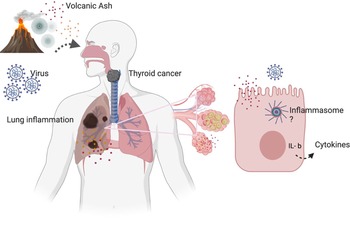
One of the most underestimated respirable natural hazards is the emission of volcaniclastic material in the form of fine-grained volcanic ash. While the precipitation of such material does not necessarily lead to direct death, death can occur in masses caused by asphyxiation or to physical damage due to roof collapse. Reference Cronin, Stewart and Zernack28–Reference Bourne, Abbott and Albert30 Volcanic ash is known to provoke severe pulmonary problems, such as bronchitis and asthma (Figure 2), and usually minor health issues, such as ocular, nasal, throat, and skin irritation. Reference Beck, Brain and Bohannon31–Reference Gudmundsson37 In addition to pulmonary issues, evidence shows that the emission of volcanic ash generates a higher rate of thyroid cancer. Reference Arnbjörnsson, Arnbjörnsson and Ólafsson38–Reference Russo, Malandrino and Addario40 In this respect, compared with other countries around the planet in general and those with volcanic activity in particular, Ecuador, which has a strong volcanic activity in its territory, has the worldwide highest rate of thyroid cancer Reference Sierra, Soerjomataram and Forman41,Reference Salazar-Vega, Ortiz-Prado and Solis-Pazmino42 (Figure 2). This finding is evidence that the presence of volcanic ash leads to a variety of pulmonary and thyroid weaknesses, making affected people more prone to a higher than regular vulnerability toward COVID-19 infections.
Activation of the inflammatory protein complex in lung cells due to infection with the SARS-CoV-2 virus and possible complications from inhalation of volcanic ash in lung cells and secretion of cytokines that cause inflammation.

Consequently, the current study will allow a new focus on the projection of so far unknown weaknesses of a great part of the Ecuadorian population who lives in areas, which are susceptible to COVID-19, as there an essential part of the population who has been diagnosed with or highly vulnerable to thyroid cancer, a disease that is related to chronic respiratory diseases, which itself is most likely related to the function of the precipitation of volcanic ash. Therefore, we will identify areas, and the corresponding living populations within that are highly exposed to the emissions and fallout of fine-grained volcanic material. People in these areas are, therefore, more likely to be susceptible to and preferentially affected by the SARS-CoV-2 virus. Once such areas are detected, then more detailed and specific preventive measures should be implemented and with particular epidemiological monitoring.
Results and Discussion
Worldwide Evolution of COVID-19
The SARS-CoV-2 causing COVID-19 has reached pandemic levels since March 2020. Reference Cucinotta and Vanelli43 In the absence of vaccines or curative medical treatment, COVID-19 exerts a huge global impact on public health and health-care delivery. SARS-CoV-2 not only causes viral pneumonia but has major implications for the cardiovascular CV system. Reference Zheng, Ma and Zhang44 Patients with CV risk factors, including male sex, advanced age, diabetes, hypertension, and obesity, as well as patients with established CV and cerebrovascular disease, have been identified as particularly vulnerable populations with increased morbidity and mortality when suffering from COVID-19. Reference Driggin, Madhavan and Bikdeli45
Viral respiratory infections represent a very significant part of the morbidity observed in the patient and remain the main cause of death from infectious agents. This route of transmission remains a major source of global pandemics due to rapid human-to-human transmission through the respiratory tract. Reference Lina46 The myocardial damage by means of the receptor for the angiotensin converting enzyme 2 (ACE2), which cardiomyocytes express in a significant amount. This could be the cause of true myocarditis; according to Ruan et al., Reference Ruan, Yang and Wang47 the SARS-CoV viral RNA was detected in 35% of human hearts autopsied during the SARS epidemic. This shows that SARS-CoV can cause ACE2-dependent myocardial infarction.
ACE2 is an enzyme of the renin angiotensin system (RAS) that is expressed on the cell surface of many tissues including brain, heart, kidney, and type 2 alveolar epithelial cells in the lungs. It is defined as the receptor for the SARS-CoV-2 spike protein, and affect to host cells, however, the affinity of SARS-CoV-2 for ACE2 is 10- to 20-fold higher than that of SARS-CoV, and induce a high transmissibility. Reference Hoffmann, Kleine-Weber and Schroeder48
ACE2 converts angiotensin II (Ang II) into Ang-1 to -7, that lowers blood pressure with vasodilation and by promoting kidney sodium and water excretion. Reference South, Shaltout and Washburn49 ACE2 shares approximately 60% homology with ACE. ACE converts Ang I into Ang II, which acts at the type 1 angiotensin receptor (AT1R) by increasing blood pressure and inducing vasoconstriction, increasing kidney reabsorption of sodium and water, and increasing oxidative stress to promote inflammation and fibrosis. Reference Sparks, Crowley and Gurley50
Although clinical manifestations are dominated by respiratory symptoms up to acute respiratory distress syndrome (ARDS), the virus has a double cardiovascular impact: on the one hand, the infection will be more intense if the host has comorbidities (cardiovascular disease) and, on the other hand, the virus can by itself cause life-threatening cardiovascular damage. Several data had shown that Middle East respiratory syndrome coronavirus (MERS-CoV) could be the cause of acute myocarditis. Reference Alhogbani51 Data obtained from patients infected with SARS-CoV and monitored over a 12-y period argue in favor of a deregulation of lipid metabolism induced by the virus, which could be at the origin of an increase in events long-term cardiovascular disease in survivors without the mechanism being identified at this time. Reference Wu, Zhou and Sun52
People with diabetes have impaired immune-response to infection both in relation to cytokine profile and to changes in immune-responses, including T-cell and macrophage activation, Reference Ferlita, Yegiazaryan and Noori53 and are at increased risk of infections, including influenza, and for related complications, such as secondary bacterial pneumonia, many patients with diabetes can be in poor metabolic control when infected by COVID-19. Poor glycemic control impairs many aspects of the immune response to viral infection that lead to infection in the lungs. Reference Critchley, Carey and Harris54 In most cases, diabetes is associated with obesity that is a risk factor for severe infection. Reference Huttunen and Syrjänen55 During the influenza A H1N1 epidemic in 2009, the disease was more critical and had a 2-fold longer duration in the patients with obesity who were then treated in intensive care units compared with the background population. Reference Honce and Schultz-Cherry56 People with obesity also have mechanical respiratory problems, with reduced ventilation of the basal lung sections increasing the risk of pneumonia as well as reduced oxygen saturation of blood. Reference Dixon and Peters57
Diabetic complications, such as ischemic heart disease and diabetic kidney disease, may complicate the situation for people with diabetes, cuasing an increase of the severity of COVID-19 disease and the need for special care such as acute dialysis. Some studies show that COVID-19 could induce acute cardiac injury with heart failure, leading to deterioration of systemic circulation. Reference Li, Yang and Zhao58
Furthermore, inflammation plays a critical role in the progression of crystal-caused disease and can be seen in patients with particle-induced lung disease. Reference Mossman and Glenn59 A study from Dostert et al. has shown that exogenous particles such as asbestos (asbestosis) or crystalline silica (silicosis), activate the NLRP3 inflammasome. Reference Dostert, Petrilli and Van Bruggen60 The NLRP3 inflammasome detects crystalline warning signs that can occur during autoinflammatory diseases, and environmental diseases, such as silicosis or asbestosis. Reference Hornung, Bauernfeind and Halle61 Interleukin (IL) -1 cytokines are potent mediators of innate immunity in response to exposure to crystalline silica Reference Driscoll and Maurer62 and have been implicated in the pathophysiology of human and experimental diseases. Reference Huaux63
Damby demonstrated the propensity of volcanic cristobalite to activate the NLRP3 inflammasome, following a series of conclusive toxicological investigations of ash from recent major eruptions. The NLRP3 inflammasome has become a central mechanism in mediating cellular responses to various endogenous and exogenous signals and particles related to environmental and lifestyle diseases, given the established danger posed by respirable crystalline silica in occupational settings, the ability of volcanic ash to stimulate the release of IL-1β by macrophages in vitro, and the observation that the instigation of chronic crystalline silica disease depends on NLRP3. Reference Mossman and Glenn59,Reference Damby, Horwell and Baxter64
The researchers demonstrate that SARS-CoV-2 causes severe lung pathology by inducing pyroptosis, Reference Yang65 a highly inflammatory form of programmed cell death. Reference Cookson and Brennan66 This type of cell death is carried out by macrophages and other immune cells of the immune system causing symptoms such as lymphopenia Reference Panesar67 that blocks an effective immune response to the virus.
As the molecular biology of SARS-CoV-2 is still being studied, inflammatory mechanisms similar to SARS-CoV-1 are known. A viral protein encoded by ORF8b interacts directly with the inflamasome NLRP3 (leucine-rich repeat of the nucleotide binding domain [NLR] and receptor 3 containing the pyrin domain), Reference Shi, Nabar and Huang68 which activates the adapter protein ASC and caspases 4, 5, and 11. Simultaneously, it induces proinflammatory cytokines (eg, IL-1β and IL-18), Reference Man, Karki and Kanneganti69 Therefore, it is necessary to inhibit pyroptosis by acting on NLRP3 in the lungs. The mechanisms of inhibition of NLRP3 have been studied, Reference Zahid, Li and Kombe70 and melatonin acts as an inflammasome inhibitor of NLRP3. Reference Ma, Chen and Feng71 In the bacterial pneumonia model, lipopolysaccharide (LPS) -induced mouse model, melatonin was shown to successfully inhibit pneumonia by interfering with the NLRP3 inflammasome, protecting macrophages from pyroptosis. Reference Zhang, Li and Grailer72 Other publications also demonstrate that melatonin can be an effective inhibitor of pyroptosis and associated pathologies. Reference Wang, Bian and Zhang73
Chong-Shan Shi et al. demonstrate that SARS-CoV can activate the NLRP3 inflammasome in macrophages through ORF8b. Although SARS-CoV abortively infects macrophages/monocytes, there may be enough ORF8b to affect the integrity of the lysosome, autophagy pathways, and NLRP3 inflammasomes. Unlike macrophages, SARS-CoV productively replicates in lung epithelial cells. These cells also express NLRP3 and can assemble NLRP3 inflammasomes. In humans infected with SARS-CoV, the full impact of ORF-8b on the pathways we delineated in this study is likely on the pulmonary epithelium. ORF8b may contribute to cytokine storm and inflammation activation that occurs during severe SARS-CoV infection. Reference Shi, Nabar and Huang74 In the future, live virus clearance studies are required to assess the effects of ORF8b-mediated intracellular aggregates and ORF8b-mediated activation of NLRP3. However, here we identify novel mechanisms through which ORF8b can contribute to the pathogenesis of SARS.
In general, SARS-CoV-2 infection can be transmitted through respiratory droplets, which are 5-10 microns (µm) in diameter. 5 According to the available data, the COVID-19 virus is transmitted mainly through contact with respiratory droplets Reference Liu, Liao and Qian75 from a person with respiratory symptoms (eg, cough or sneeze), the droplets gaining access through mucous membranes (mouth and nose) or conjunctiva (eyes). In addition, transmission can occur through fomites droplets in the immediate environment of a person infected. Reference Ng, Lee and Yang76 Airborne transmission of the COVID-19 virus may be possible in specific circumstances and locations where procedures are performed or treatments that can generate aerosols, such as endotracheal intubation, bronchoscopy, open aspiration, administration of a drug by nebulization, manual ventilation before intubation. However, there has been some evidence that the COVID-19 virus can cause intestinal infection and be present in feces, Reference Zhang, Chen and Zhu77 although no fecal-oral transmission has been reported.
Measures to avoid a contagion involve the following: correct, frequent hand washing with soap and water or with an alcohol-based hand sanitizer of at least 70%; keeping a distance of at least 2 meters (6 feet) from other persons, especially those who cough, sneeze, and have a fever; and disinfecting inanimate surfaces with disinfectants as often as possible.
The World Health Organization (WHO) has received reports of the existence of variants of SARS-CoV-2 that cause changes in transmissibility, clinical presentation, and severity, causing concern as to if there is an impact on the diagnosis, therapeutics, and protection from vaccines. Reports mentioning virus variants from the Kingdom of Denmark, the United Kingdom of Great Britain and Northern Ireland, and the Republic of South Africa have raised interest and concern about the impact of viral changes (Table 2).
Variants of the SARS-CoV-2 virus

These 4 variants share a specific mutation called D614G. Reference Korber, Fischer and Gnanakaran78,Reference Zhang, Jackson and Mou79 This mutation provides the variants the ability to spread more rapidly than the prevailing viruses. Reference Zhou, Thao and Hoffmann80,Reference Volz, Hill and McCrone81 As of December 30, 2020, variations have been reported in another 31 countries. Therefore, it is important that genomic surveillance be conducted to identify and characterize the variants of the virus and how these variants influence the severity of COVID 19 cases and the efficacy of vaccines and treatments. This is still being evaluated by the scientific community. Reference Hartley, Tillett and AuCoin82–Reference Quéromès, Destras and Bal84
Volcanism and the Distribution of Volcanic Ash in Ecuador
Ecuador is a country with an extremely high density of volcanoes in its continental as well as insular territory. Reference Toulkeridis85–Reference Toulkeridis and Angermeyer87 The Galapagos archipelago, as a result of hot spot geodynamics, possesses more than 3000 mostly extinct volcanoes, while the Ecuadorian mainland has more than 250 volcanoes due to the subduction of the Nazca Plate below the South American continent. Reference Toulkeridis85,Reference Toulkeridis86 From the Galapagos, an aseismic ridge of extinct volcanoes, called Carnegie, is transported above the oceanic Nazca Plate toward the continent, where its subduction gives rise to the striking NNE-SSW volcanic chains of Ecuador. Reference Lonsdale88–Reference Coltorti and Ollier90 In both environments, only a minor amount of the existing volcanoes are active, but their activity contemplates with a variety of volcanic hazards, including the massive emission of fine-grained volcanic ash, among other threats. Reference Toulkeridis, Buchwald and Addison91–Reference Echegaray-Aveiga, Rodríguez and Toulkeridis101 In continental Ecuador, there are 19 active volcanoes, of which 5 have been erupting in several occasions during the past 22 y. 102 (Smithsonian Institution Global Volcanism Program, 2021). These 5 erupting volcanoes have been Sangay, Tungurahua, Guagua Pichincha, Reventador, and Cotopaxi (Figure 3). Sangay has a permanent activity with higher intensities in 2004-2011, 2013, and 2016 as well as strong intensities in 2018-2021. 103 Tungurahua erupted after 80 y of tranquility in 1999 and continued erupting with minor interruptions until 2016. 104 Guagua Pichincha has been occasionally erupting between 1999 and 2001 and again in 2009. 105 The Reventador volcano erupted in 1976 and 2002 and continued with major interruptions until 2021, while Cotopaxi has been very active only in 2015. 106,107
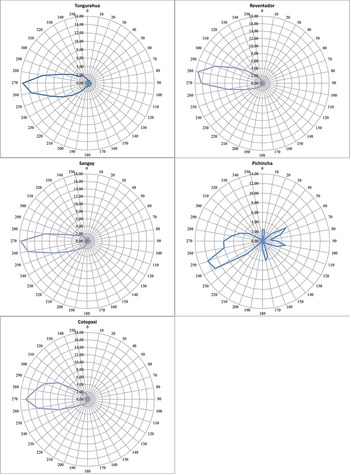
Main direction of volcanic ash distribution within a rose-diagram of the volcanoes Tungurahua (4412 satellite images), Reventador (2744), Sangay (1641), Cotopaxi (151), and Guagua Pichincha (31). All data are normalized to 100%, for each evaluated volcano.

In all these periods, all 5 volcanoes have emitted fine-grained volcanic ash in a variety of amounts and reach. Reference Vaca Mora, Arroyo Rodriguez and Debut97,Reference Toulkeridis and Zach98,Reference Toulkeridis, Seqqat and Torres108,Reference Aviles-Campoverde, Chunga and Ortiz-Hernández109 Since September 1999, these eruptive phases have been observed from space due to the satellite imagery of the Satellite Services Division of the National Environmental Satellite, Data, and Information Service (NESDIS). Using the available data, the distribution of the volcanic ash has been traced in the corresponding areas of Ecuador, allowing evaluation of the areas experiencing the fallout of this volcanic hazard. Some 8703 satellite images gathered between September 1999 and January of 2021 have been evaluated, allowing characterization of the areas influenced by the volcanic ash precipitation. It is well known that vocanic ash fallout is the cause of a high amount of previously described health vulnerabilities and damage or interruptions of strategic infrastructure. Reference Toulkeridis and Zach98,Reference Echegaray-Aveiga, Rodríguez and Toulkeridis101,Reference Toulkeridis, Seqqat and Torres108,Reference Aguilera, Viteri and Seqqat110
Such fine-grained volcanic materials have a wide range of composition as well as morphologies due to a variety of processes during the rise of the magma and its subsequent fractionalization prior eruption. Reference Eichelberger111–Reference Karbowska and Zembrzuski113 We have taken samples at different, regular time periods of all active volcanoes of which some results have been published elsewhere. Reference Toulkeridis, Arroyo and Cruz D’Howitt95,Reference Vaca Mora, Arroyo Rodriguez and Debut97,Reference Aguilera, Viteri and Seqqat110
A field emission gun scanning electron microscope (FEG-SEM), brand TESCAN model MIRA3, was used to characterize all the samples. Chemical analysis was performed using the EDX technique with a BRUKER detector XFlash 6130, resolution 123 eV for Mn alpha. This was done using a double adhesive layer of carbon tape on SEM stubs. To ensure conductivity of the samples, morphology analysis was done applying a gold coating of around 20 nanometers using the sputter coater QUORUM Q150R. The main elements analyzed were Na, Mg, Al, Si, P, K, Ca, Ti, Mn, Fe. Other elements are present but at lower than the limit of detection. The compositions of ashes of Pichincha, Cotopaxi, Reventador, Sangay, and Tungurahua volcanoes are listed in Table 3. The elements Ti, P, and Mn have a percentage weight concentration lower than 1.5%.
Average weight percentages of each analyzed element in wt %, of all ash samples of the studied active volcanoes (Mn<1%, Ti and P<1.5%)

All of the volcanic ashes had an Si composition greater than 40% wt; Si is an aggressive element for human lungs. SEM pictures showed that ashes are quite inhomogeneous in their morphology. The size of the particle determines the distance it travels, and the particles sampled ranged in size from nanometers to millimeters. As an example, from the most recent Cotopaxi eruption, particles ranged in size from 10 nm to 300 µm at 20 km distance from the crater, and a mean size 113.5 µm. Except of the Cotopaxi volcano, all other fine-grained pyroclastic material have been juvenile. The 101 days in 2015 of expulsion of volcanic ash from the Cotopaxi volcano has been exclusively of reworked material due to the fact that it has been originated by hydrothermal processes. Reference Toulkeridis, Arroyo and Cruz D’Howitt95,Reference Vaca Mora, Arroyo Rodriguez and Debut97 Therefore, the reworked fine-grained pyroclastic material of the Cotopaxi volcano was of angular to sub-angular morphologies, while the predominant material of Sangay, Reventador, Guagua Pichincha, and Tungurahua volcanoes has been varied from rounded to sub-angular shapes.
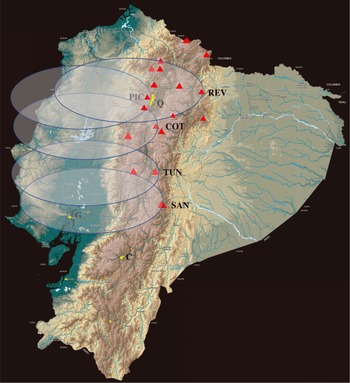
The continental volcanoes of Ecuador are oriented perpendicular to the subduction zone along 4 NNE-SSW arcs, within the western volcanic cordillera, the Interandean Valley, the Cordillera Real, and the Subandean Basin. The evaluation of the distribution of fine-grained volcanic material of the 5 active volcanoes, based on 8979 satellite images (September 1999 – March 2021), indicates the predominant direction of travel to be mainly toward the west from their crater. Hereby, the predominant angle with above 60% of all possible directions of the ash distribution has been between 250 and 290 degrees (Figure 3). All other directions occur as well, but obviously to a minor degree, with the eastern directions being the very least of all. Volcanic ash fallout in southern regions and cities, such as Cuenca and Loja, or coastal cities, such as Guayaquil, occur occasionally, but less frequently; therefore, the areas are affected to a lesser extent (Figure 4).
Main direction and predominant reach of volcanic ashes (light gray colors) in Ecuador based on the activity of the volcanoes Tungurahua (TUN), Reventador (REV), Sangay (SAN), Cotopaxi (COT), and Guagua Pichincha (PIC), with the 3 most populated cities Quito (Q), Guayaquil (G), and Cuenca (C). Red triangles are further active volcanoes.

Not every contact with a coronavirus infected person leads to an infection, although the risk of transmitting the virus or its mutants, or even becoming infected, may vary due to a variety of situations. However, the dominant factor is the dose of the virus and certainly the closeness and time in contact with the an infected person. Reference Ortiz-Prado, Simbaña-Rivera and Gomez-Barreno114 Therefore, it is a simple matter of time when in an area like Ecuador with very little or almost no preventive measures an increasing number of persons will be infected the coronavirus and its mutants. During a second or even third infection wave, the most vulnerable persons will have less and less opportunities to avoid contagions. The risk is particularly high if measures to reduce or limit the outbreak have been abandoned too early, due to countermeasures to avoid the increasing economic crisis as is occurring in Ecuador. Reference Adams-Prassl, Boneva and Golin115,Reference Friedman, Friedman and Johnson116 Infection rates increase also because of a variety of reasons, such as fatigue, social and economic backgrounds, and a false sense of security among, many others. This phenomenon has been observed and documented worldwide. Reference Dubey, Biswas and Ghosh117–Reference Islam, Bodrud-Doza and Khan119 Another fundamental aspect is based on the unsolved technical and economic issues in hospitals and their intensive care units, especially in Latin America. Such problems existed before the pandemic and have worsened since. Reference Remuzzi and Remuzzi120–Reference Sasangohar, Jones and Masud122
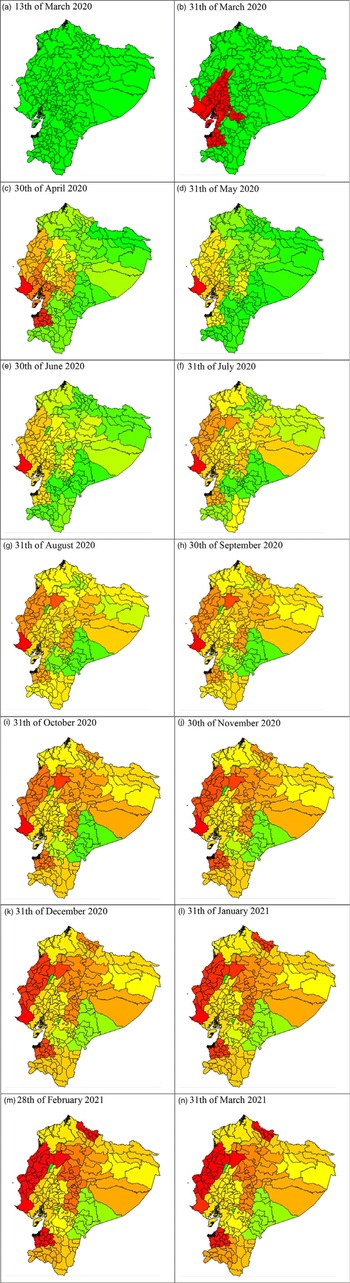
Based on the aforementioned data, a worsening of public health in areas in and close to volcanic ash emissions may be compared with that reported for air contaminated areas, which also increase vulnerability to the coronavirus. Reference Wu, Nethery and Sabath123–Reference Urrutia-Pereira, Mello-da-Silva and Solé125 The most affected Ecuadorian population, however, will be the persons who are living and working in the shadow of the ash fallout westward of the main concentration of the active volcanoes, being within the Highlands, the Inter-Andean Valley, and the coastal regions, as indicated in the current study (Figures 3-5). For those persons, it is imperative to protect them fromCOVID-19, even more so than people in areas with less contamination due to the absence of volcanic ash emissions.
The maps represent the monthly death rates per 100,000 inhabitants that have been standardized taking the official data of deaths published as of March 13, and the population data taken from the projections to the year 2019-2021 made by the INEC, using data from the Census of Population and Housing in 2010. The lowest mortality rates are represented in green and the highest in red, with yellow representing the average values according to the color code of the traffic light adopted by the Ecuadorian authorities.

Conclusions
SARS-CoV-2, which is transmitted in a variety of forms, is a deadly virus with a death rate of some 2.18% in respect to the infected amount of people.
Ecuador has been so far the second most affected country worldwide by the global COVID-19 pandemic, when counting deaths per million citizens based on the calculated excess mortality rates.
The precipitation of volcanic ash is responsible for a variety of health issues, particularly those involving the lungs and thyroid, areas that are preferentially affected by SARS-CoV-2 and the corresponding mutants.
Based on the evaluation of the geospatial distribution of the fine-grained volcanic ash, the continuous spreading wave of the virus and its mutants will most likely affect vulnerable persons westwards of the active volcanoes, within the Highlands, the Inter-Andean Valley, and the coastal regions of Ecuador. Therefore, based on this finding and forecast, a variety of preventive measures need to be implemented to protect this specific group of the total population.