Congenital heart disease affects 4–13 liveborn infants per 1000.Reference Warnes, Libethson and Danielson 1 – Reference Rahim, Ebadi, Saki and Remazani 5 Significant advances in diagnostics, pharmacological treatment, surgical repair, and intensive care over the past few decades have resulted in a survival rate of approximately 85% of infants with congenital cardiac defect to adulthood. Thus, a new and increasing patient population has evolved, that is, adults with congenital heart disease with a prevalence of 3.9–4.0 per 1000.Reference Marelli, Mackie, Ionescu-Ittu, Rahme and Pilote 6 , Reference Shiina, Toyoda and Kawasoe 7 Congenital heart disease varies from minor defects, for example ventricular septal defect, that may self-correct spontaneously to severe, potentially life-threatening defects, for example single ventricle. Despite improvements in life expectancy, many adults with congenital heart disease may still experience serious cardiac complications, for example arrhythmia, may require re-operation for various reasons, for example outgrowing implants, and lifelong medical follow-ups.Reference Warnes, Libethson and Danielson 1 , Reference Hoffman, Kaplan and Liberthson 4 , Reference Marelli, Mackie, Ionescu-Ittu, Rahme and Pilote 6 , Reference Webb, Jenkins and Karpawich 8 – Reference Warnes 10 Importantly, a repaired congenital defect is not necessarily indicative of a “normal” heart.
In particular, it should be considered that health issues in adults with congenital heart disease increase with ageing because of the natural survival patterns, residue and sequelae of previous treatments, and acquired disorders of the cardiovascular system and non-cardiac problems that may coexist.Reference Warnes, Libethson and Danielson 1 , Reference Webb, Jenkins and Karpawich 8 , Reference Warnes 10 , Reference Perloff 11 Often, adults with congenital heart disease have poor knowledge of their cardiac defects and malfunctions.Reference Kantoch, Collins-Nakai, Medwid, Ungstad and Taylor 12 , Reference Moons, De Volder and Budts 13 However, in early adulthood the main concerns are education, work issues, and family planning.Reference Simko, McGinnis and Schembri 14
In low- and middle-income countries, for example Mozambique, most repairing operations occur in adolescence and adulthood. If socio-economic factors, limited facilities, and lack of skilled personnel are not an obstacle, surgical treatment with a low mortality and morbidity may provide a feeling of well-being for adolescents and adults with congenital heart disease.Reference Edwin, Sereboe and Tettey 15 , Reference Mocumbi, Lameira, Yaksh, Paul, Ferreira and Sidi 16
The number of adults with congenital heart disease in Iran is unknown, although a recent study indicates a prevalence of 12.3 liveborn infants per 1000 in Ahvaz, the capital of Khuzestan province.Reference Rahim, Ebadi, Saki and Remazani 5
In contrast to the advances in medical care of patients with congenital heart disease, there is a shortage of professionals trained to care for adults with this condition.Footnote * Furthermore, there is a lack of information concerning the socio-demographic, lifestyle, and clinical characteristics of adults with congenital heart disease, as well as gender differences regarding these aspects. Most published studies concerning demographics/socio-economics, lifestyle, and health of adults with congenital heart disease are from Western and other high-income countries.Reference Kamphius, Vogels, Ottenkamp, Van der Wall, Verloove-Vanhorick and Vliegen 17 – Reference Crossland, Jackson, Lyall, Burn and O'sullivan 20 The lack of such data in low- and middle-income countries, particularly Iran, may be an obstacle for providing relevant social and medical services to meet the needs of patients with congenital heart disease. Therefore, the aim of this study was to describe gender differences in the socio-economic, lifestyle, and clinical characteristics of adults with congenital heart disease in Tehran (Iran).
Materials and methods
Setting and population
This research was conducted at the Tehran Heart Centre in collaboration with the Shahid Rajaee hospital, which are two major public and university-affiliated heart hospitals in Tehran. The sample comprised female and male adults, in the age group of 18–64 years, with congenital heart disease meeting the following criteria: (a) admission to the above-mentioned hospitals during the period 2002–2010; (b) subjected to surgery or intervention for congenital heart disease; (c) not suffering from Marfan syndrome; (d) not mentally impaired, for example Down's syndrome; (e) still alive; (f) living in Tehran; (g) able to read/write Persian; and (h) willing to participate in the study. We excluded 61 patients suffering from isolated bicuspid aortic valve, isolated dextrocardia, isolated patent foramen ovale, common atrium, malformation of coronary arteries, malformation of the cardiac septum, aortopulmonary fistula, arteriovenous fistula, partial anomalous pulmonary venous connection, small ventricular septal defect, hypertrophic cardiomyopathy, or primary pulmonary hypertension. In all, 853 adults with congenital heart disease were available. Of these patients, 480 could not be accessed because of wrong addresses/telephone numbers or had moved to other places without leaving their new contact information – several efforts were made to reach these patients without success – and 26 refused to participate. The final sample of adults with congenital heart disease consisted of 181 women and 166 men (response rate of 93%).
Measures
This study is part of a larger investigation addressing the psychosocial situation of adults with congenital heart disease in Iran. The patients completed a 19-page questionnaire covering various areas, for example mental health, but the focus of this study was on gender differences in the demographic, socio-economic, lifestyle, and clinical characteristics of adults with congenital heart disease.
Clinical characteristics were assessed with questions concerning the type and number of congenital heart disease, number of surgical operations/angiographies, cause/number of hospitalisations, type/number of medications used, time/place of congenital heart disease diagnosis, the presence of other diseases than congenital heart disease, the presence of congenital heart disease in the family/relatives, outpatient visit intervals, type of specialist responsible for the patients’ health and activity limitation due to congenital heart disease. Physical activity was considered limited if patients reported moderate to considerable limitation. Except for the type and number of congenital heart defects – obtained from hospital records – all other clinical characteristics were self-reported by means of a questionnaire.
To determine whether patients had knowledge regarding their congenital cardiac defect, we provided a list of Latin and Persian names of different types of congenital heart disease in the questionnaire. Thereafter, we asked them to tick one or several alternatives. In case those patients could not find the name of their disease, they could write it down or explain it with their own words.
Demographic/socio-economic status was assessed with reference to age, gender, marital status, having children, employment, profession, annual income, level of education, housing, cohabitation, and financial strain. Lifestyle was assessed by asking about physical activity, substance use – that is, cigarette smoking, tobacco smoking by water-pipe, alcohol use, opium use – and dietary patterns. In addition, a Body Mass Index, based on self-reported height and weight, was computed for each patient using the standard formula, weight/height square (kilogram per square metre).
Design and procedure
This study used an analytic cross-sectional design. The study protocol was approved by the Tehran Heart Center Ethics Committee. Thereafter, a list of patients hospitalised for congenital heart disease during 2002–2010 and aged between 18 and 64 years at the time of the study was obtained from the above-mentioned hospitals. The patients were subsequently contacted, given detailed information about the purpose of the study, and asked whether they wish to participate. If they were interested in participating, an appointment was made for a trained researcher to visit them at home. They received complementary oral and written information during these appointments. If they still wanted to participate, they were given the questionnaire and consent form. The participants could keep the questionnaire for 4–7 days in order to answer the questions. At the end of the first meeting, a new appointment was made to collect the questionnaires. In all contacts with the participants, confidentiality and anonymity were emphasised. All of the questionnaires were anonymous and distinguishable only by code. The names and codes were kept separately. All patients signed the written informed consent.
Classification of disease
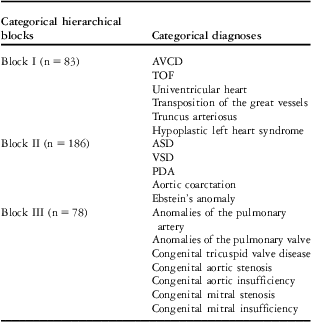
Owing to the diversity in the severity of congenital heart disease and the limited number of patients in each cardiac defect category, we classified patients in three hierarchical blocks inspired by Marelli et alReference Marelli, Mackie, Ionescu-Ittu, Rahme and Pilote 6 (Table 1).
Categorisation of adults with congenital heart disease by defect type (n = 347).

ASD = atrial septal defect; AVCD = atrio-ventricular canal defect; PDA = patent ductus arteriosus; TOF = tetralogy of Fallot; VSD = ventricular septal defect
Statistical analysis
The data were analysed with the Predictive Analytics Software statistic package 18.0 (IBM/SPSS Incorporation, Chicago, Illinois, United States of America). Continuous variables were described in terms of mean plus or minus standard deviation and compared using Student's t-test or one-way analyses of variance across the groups defined by defect category. The categorical variables were summarised by absolute frequencies/percentages and compared using chi-square test or Fisher's exact test, as required. The significance level for all analyses was set at p-value less than or equal to 0.05.
Results
Demographic/socio-economic characteristics
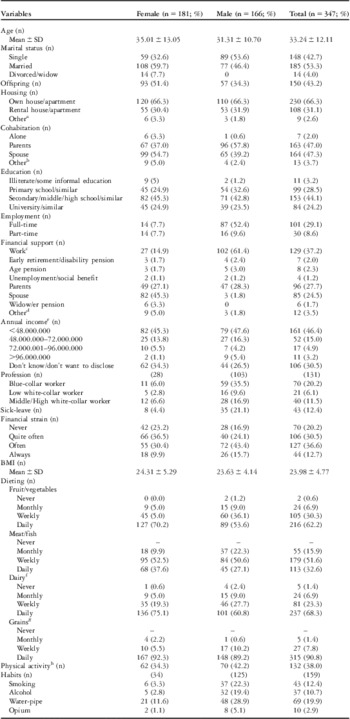
As shown in Table 2, of the 347 adults with congenital heart disease – mean age, 33.24 plus or minus 12.11 years – enrolled in this study, 52.2% were women. Women were older than men – mean age, 35.01 plus or minus 13.05 versus 31.31 plus or minus 10.70 years, and this difference was significant (t(435) = 2.87, p = 0.04).
Demographic/socio-economic and lifestyle characteristics of adults with congenital heart disease by sex.

SD = standard deviation
aFor example, governmental housing
bFor example, friends
cOne female and one male patients were working after retirement, but the main source of their financial support was age pension
dFor example, children/siblings
eIranian Rial (1.00 Iranian Rial = 0.0000905367 United States Dollar)
fFor example, milk, cheese
gFor example, rice, wheat
hFor example, walking, swimming
Compared with men, women were more often married (χ2(2) = 24.673, p < 0.001). The number of women who had children was higher (χ2(1) = 10.249, p = 0.001); but the mean number of children was similar (2.52 versus 2.39). In all, four women and one man reported the presence of congenital heart disease in their children.
Educational level and annual income were similar between the two groups, whereas the source of financial support differed. The main source of financial support for men was work, whereas women were financially supported by spouses (χ2(7) = 125.44, p < 0.001).
Employment rate was higher among men than among women (χ2(1) = 79.940, p < 0.001). The mean working hours per week was higher among men than among women (54.39 versus 37.00), and this difference was significant (t(129) = −4.25, p < 0.001). Compared with women, men more often had blue-collar and low/middle/high white-collar professional positions (χ2(4) = 83.68, p < 0.001), more often had been on sick leave during the past year (χ2(2) = 80.14, p < 0.001), and experienced greater financial strain (χ2(3) = 12.28, p = 0.006). Finally, among highly educated patients, there were more women in employment than men (χ2(3) = 15.38, p = 0.002).
Lifestyle characteristics
As shown in Table 2, more men than women smoked (χ2(1) = 28.71, p < 0.001) and used water-pipe (χ2(1) = 16.29, p < 0.001) and alcohol (χ2(1) = 25.00, p < 0.001). The Fisher exact test showed a trend towards higher opium use among men than among women (p = 0.051).
Women used more fruit/vegetables (χ2(3) = 11.70, p = 0.008), meat/fish (χ2(2) = 11.29, p = 0.004), and dairy (χ2(3) = 9.33, p = 0.025) in their diet compared with men. There were no other significant differences.
Body mass index was similar across the two genders. However, it was lower in patients with high education levels (F(3, 343) = 4.25, p = 0.006), particularly women (F(3, 177) = 6.92, p < 0.001). Finally, body mass index was lower in blue-collar workers (F(3, 343) = 3.24, p = 0.022).
Clinical characteristics
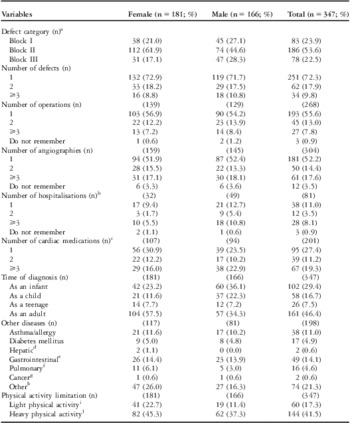
As shown in Table 3, there were more men in disease blocks I and III (χ2(2) = 11.01, p = 0.004). Patients in block II were older than those in blocks I and III (F(2, 344) = 14.46, p < 0.001). Body mass index was lower among patients in block I than among patients in blocks II and III (F(2, 344) = 9.36, p < 0.001).
Clinical characteristics of adults with congenital heart disease by sex.

aFor description see Table 1
bDue to the cardiac problems – for example arrhythmia
cFor example, beta-blockers
dFor example, hepatitis
eFor example, peptic ulcer
fFor example, chronic obstructive lung disease
gFor example, breast/prostate
hFor example, arthritis
iFor example, walking
jFor example, volleyball
Employment rate was significantly higher among men in block II than among men in blocks I or III (χ2(2) = 6.96, p = 0.031), whereas the employment rate of women was similar across the defect categories.
The number of hospitalisations due to cardiac problems, for example arrhythmia, was higher among men than among women, with a borderline statistical significance (χ2(4) = 9.26, p = 0.055). The number of cardiac defects, performed cardiac operations and angiographies, medication use and the number of medications were similar in all groups.
The mean age for congenital heart disease diagnosis was 17.79 plus or minus 16.75 years. Compared with women, the congenital heart disease diagnoses of men were more likely to have been made during infancy and childhood (χ2(3) = 22.43, p < 0.001). Congenital heart disease was diagnosed mostly at hospital (57.4%, either cardiology or paediatric wards) followed by other places (28.8%, for example, in school during annual visit) and primary care (13.8%). Most medical care was provided by cardiologists (65.1%) followed by general physicians (11.8%), cardiovascular surgeons (6.6%), paediatricians (1.7%), and other specialists such as internist (1.4%). About 11.5% of patients were not given regular clinical follow-ups and the situation was unknown for 1.7% of the study population.
Outpatient visits occurred once a month for 8.6% of patients, four times a year for 11.8%, twice a year for 33.5%, once a year for 33.5%, and either every 2–5 years or as needed for 12.5%, without any difference between women and men.
Of all patients, 50.1% had knowledge about their type of cardiac defect, 17.6% lacked correct information about their type of defect, and 32.3% had no idea about it. There were no differences between women and men. About 15.5% of women and 14.5% of men reported the presence of congenital heart disease either in their families – other than their children – or relatives, which was similar between both groups.
There were no statistical differences between women and men with regard to the presence of comorbidities other than congenital heart disease, for example asthma/allergy, diabetes mellitus, except for “other” diseases, for example arthritis, where there was an excess of women (χ2(1) = 4.86, p = 0.028).
Regarding physical activity limitation due to cardiac problems, women reported more “moderate” to “considerable” limitation in light activities (χ2(1) = 7.60, p = 0.006). However, women and men experienced similar “moderate” to “considerable” limitation in heavy activities. Patients in block I reported significantly greater limitation in heavy activities than patients in blocks II and III (χ2(2) = 18.36, p < 0.001).
Discussion
Typically, congenital heart disease is detected and diagnosed early. Wren and O'SullivanReference Wren and O'Sullivan 9 reported that the overwhelming majority of cases were diagnosed in infancy (74% ), whereas less than 30% of our cases were diagnosed at infancy. Most of our patients were diagnosed between 12 and 17 years and older than the age of 18 years (53.5%). Our figures also differ somewhat from other developing countries.Reference Mocumbi, Lameira, Yaksh, Paul, Ferreira and Sidi 16
Demographic, socio-economic situation and severity of the congenital heart disease
Half of our patients were married, which is in line with figures from Canada, lower than those reported from the Netherlands, and higher than in Belgium and in the United States.Reference Moons, De Volder and Budts 13 , Reference Simko, McGinnis and Schembri 14 , Reference Van Rijen, Utens and Roos-Hesselink 19 , Reference Vigl, Niggemeyer, Hager, Schwedler, Kropf and Bauer 21 Similar to the findings of Nieminen et al,Reference Nieminen, Sairanen and Tikanoja 22 women in our study were more often married than men, but contrary to a study by Somerville,Reference Somerville 23 which reported a higher divorce rate among women. Interestingly, in our study divorce occurred only among women. When multiple hospitalisations occur and problems with pregnancy arise, particularly among women with cyanotic defects, men tend to leave them.Reference Somerville 23
About 43% of our patients were single. Most of the singles, regardless of gender, lived with their parents and were financially dependent on them. This supports previous studies showing a low level of independence among adults with congenital heart disease,Reference Simko, McGinnis and Schembri 14 , Reference Utens, Verhulst and Erdman 24 , Reference Kokkonen and Paavilainen 25 a finding that is contrary to that of Van Rijen et al.Reference Van Rijen, Utens and Roos-Hesselink 19 In our case, the findings could be age related, as patients living with their parents were younger than those who were married and/or lived alone. In addition, there were more single than married patients in block I (more complex defect), which is in accordance with the findings from Balon et alReference Balon, Then, Rankin and Fung 26 and contrary to those of Simko et al.Reference Simko, McGinnis and Schembri 14 One could, for instance, speculate that the complexity of the disease could lead to overprotection from parents. Whether this is the case in the present sample is hard to say, as most of the patients were financially dependent on their parents.
About 43% of our patients had children, which is a higher percentage than that found in other countries.Reference Simko, McGinnis and Schembri 14 , Reference Van Rijen, Utens and Roos-Hesselink 19 Similar to our findings, Nieminen et alReference Nieminen, Sairanen and Tikanoja 22 have shown that more women than men experience parenthood. Although becoming a parent was less common among women and men in block I – more complex congenital heart disease – this was evident only among women. Horner et al,Reference Horner, Liberthson and Jellinek 27 for example, have reported that women with complex congenital heart disease experience significant worries during pregnancy, for example afraid of passing on heart defect to their child. The high number of parents in our sample might be due to the fact that the disease diagnosis was established in adult age in nearly half of the patients. Thus, they may not have experienced the same worries as patients from other countries who choose not to have children. It is also possible that these women were aware of the problems of pregnancy, but conformed to cultural norms that a married woman should give birth. Another explanation might be lack of knowledge about the risk of pregnancy. However, most of the women with children belonged to block II – simpler cardiac defects. In addition, women with more complex congenital heart disease in our sample had fewer children, indicating that they might be aware of the risks of pregnancy and therefore chose to remain childless.
Education and employment, providing financial security, are important determinants of health, quality of life, and well-being.Reference Vigl, Niggemeyer, Hager, Schwedler, Kropf and Bauer 21 , Reference Balon, Then, Rankin and Fung 26 The employment rate among our patients was considerably lower than rates reported in previous studies among both women and men.Reference Simko, McGinnis and Schembri 14 , Reference Kamphius, Vogels, Ottenkamp, Van der Wall, Verloove-Vanhorick and Vliegen 17 , Reference Van Rijen, Utens and Roos-Hesselink 19 , Reference Nieminen, Sairanen and Tikanoja 22 , Reference Balon, Then, Rankin and Fung 26 , Reference Moons, De Bleser and Budts 28 Further, the unemployment rate among our patients was also higher than that reported in the general Iranian population (14.6%). 29
Some studies have shown that being employed is not related to the severity of the disease, or that employment rate is quite high among patients who survived a severe disease.Reference Crossland, Jackson, Lyall, Burn and O'sullivan 20 , Reference Moons, De Bleser and Budts 28 With regard to congenital heart disease, studies indicate that patients with mild disease are often employed. Having complex congenital heart defect and only a primary education increases the risk of unemployment independent of the gender, and over half of the patients with congenital heart disease feel restricted in their choice of jobs because of their cardiac defect.Reference Kamphius, Vogels, Ottenkamp, Van der Wall, Verloove-Vanhorick and Vliegen 17 , Reference Popelova, Slavik and Skovranek 30 , Reference Kamphius, Verloove-Venhorick, Vogels, Ottenkamp and Vliegen 31 Among our patients, employment was related to the defect category only in men, and patients worked in a broad variety of occupations, which is similar to the findings reported by Horner et al.Reference Horner, Liberthson and Jellinek 27 In the current study, being employed was related to high educational levels among women. However, only half of the women with a university level education were employed.
In our patients, higher educational levels was more common than that observed in previous studies.Reference Van Rijen, Utens and Roos-Hesselink 19 , Reference Nieminen, Sairanen and Tikanoja 22 , Reference Kokkonen and Paavilainen 25 Women and men had similar educational levels in our sample, whereas a Finnish studyReference Nieminen, Sairanen and Tikanoja 22 reported that women more often had university education than men. Consistent with other studies,Reference Van Rijen, Utens and Roos-Hesselink 19 , Reference Balon, Then, Rankin and Fung 26 with a few exceptions,Reference Popelova, Slavik and Skovranek 30 there was no significant difference between the educational levels and severity of the disease in our patients. Although patients with congenital heart disease face difficulties during education, for example absence from school owing to the illness complications, only 3.2% of our patients had no formal education. The reason for this might be that our sample was selected from an urban area with easier access to higher education, or could be due to the fact that nearly half of our patients were not diagnosed at young age and therefore did not restrict themselves. It is also possible that focusing on studying and achieving a high educational level to find a good job was a coping strategy to deal with restrictions related to the disease.Reference Horner, Liberthson and Jellinek 27
The annual income of our patients was lower than that of the general population living in Tehran province, 32 which is at odds with a study from the Netherlands.Reference Van Rijen, Utens and Roos-Hesselink 19 More men than women reported financial strain in our sample. As more women were married, being unemployed and financially dependent on the spouses might be a possible explanation.
Lifestyle and severity of disease
Almost 40% of patients in the present study were involved in physical activities, which is lower than the figures reported in a previous study.Reference Moons, De Bleser and Budts 28 It is recommended that patients with congenital heart disease should adopt an active lifestyle,Reference Thaulow and Fredriksen 33 but our patients reported more limitation in light physical activity than western sample,Reference Nieminen, Sairanen and Tikanoja 22 which might be due to, for instance, their poor awareness. Similar to western findings, limitation in heavy physical activity was higher in patients with more complex congenital heart disease.
Body mass index was normal – less than 25 – and similar among women and men, but lower compared with the general Iranian population.Reference Maddah, Eshraghian, Djazayery and Mirdamadi 34 Higher educated women had a lower body mass index than men and patients with more complex congenital heart disease.
In the present study, the number of current smokers was higher than figures reported in the European Heart Survey.Reference Engelfriet, Drenthen and Pieper 35 Surprisingly, as smoking may increase mortality among certain patients with congenital heart disease, compared with non-diseased residents of Tehran, smoking was slightly higher among both male and female patients.Reference Fotouhi, Khabazkhoob, Hashemi and Mohammad 36 There was no difference across genders between being a smoker and disease severity. Fewer women smoked cigarettes compared with men, as also reported by others,Reference Engelfriet, Drenthen and Pieper 35 , Reference Engelfriet and Mulder 37 although the number of women using water-pipe was considerable. It is hard to find an explanation to these findings; however, one might speculate that smoking might be due to lack of knowledge about its negative effects (see “Patient education” below). It is also possible that smoking might be a strategy for denying congenital heart disease, or might also be a strategy for overcoming the stress of the disease itself or life difficulties, for example unemployment. For example, Moons et alReference Moons, De Volder and Budts 13 reported that patients with congenital heart disease have a poor understanding of the risks of smoking.
SomervilleReference Somerville 23 reported that 15% of patients had used recreational drugs, mostly cannabis. Horner et alReference Horner, Liberthson and Jellinek 27 reported that 17% of patients with congenital heart disease had high-risk behaviours. In our sample, 10.7% of patients used alcohol and 2.9% used opium, which may pertain to poor awareness of its adverse effects on the cardiovascular system and to the fact that it can be addictive.
Patient education
Patient education is an important task for health-care providers. Moons et alReference Moons, De Volder and Budts 13 have shown that 96.8% of patients were satisfied with the information given about their disease, but others 32 have reported that nearly one-fifth to two-thirds of patients felt insufficiently informed. In our sample, only 50.1% of patients were able to name or describe their cardiac defect, although medical care was mostly provided by cardiologists and outpatient visits performed at least once a year for most of patients. Men were more knowledgeable than women about congenital heart disease as reported by Moons et al,Reference Moons, De Volder and Budts 13 although levels of knowledge were similar across genders in our patients. Patients with a higher educational level were more knowledgeable of their disease than others in our sample. Thus, although proving information about the cardiac defect is elementary in congenital heart disease intervention, it appears that our patients did not receive enough information. As is obvious from the above data on smoking, patient education should be considered more seriously by health-care providers, not least in Iran. Patients need two-way communication with a simple and clear language.Reference Rönning, Nielsen, Swahn and Strömberg 38 The education must be started as soon as possible, should cover the current needs of the patients, and be given regularly.
Clinical characteristics
A total of 304 (87.6%) of our patients underwent diagnostic procedures and 268 (77.2%) experienced cardiac operations, with no differences between the genders. This is at odds with the findings reported by Engelfriet and Muler,Reference Engelfriet and Mulder 37 where men underwent diagnostic procedures more frequently than women. Horner et alReference Horner, Liberthson and Jellinek 27 reported that 24% of the patients with complex congenital heart disease had no experience of cardiac operation; whereas only 15.7% of our patients with more complex congenital heart disease had no surgery. About 55% underwent cardiac surgery once and roughly 20% had an experience of re-operation, the latter percentage was lower than that shown in a report from the Mayo clinic.Reference Warnes, Libethson and Danielson 1
As shown by Horner et al,Reference Horner, Liberthson and Jellinek 27 86% of patients with congenital heart disease experienced one major cardiac complication during adulthood. In the present study, only 23% of patients were hospitalised because of congenital heart disease complications, for example arrhythmia, which was more frequent among men than women.
In the present study, half of the patients experienced different types of disease other than congenital heart disease and cardiovascular problems. As suggested earlier, patients with congenital heart disease need multidisciplinary facilities to provide a wide range of medical services with expertise in cardiac and non-cardiac diseases.Reference Webb, Jenkins and Karpawich 8 , Reference Perloff 11 On the other hand, in the present study, medical care was provided by different types of professionals, for example cardiologists. Whether these professionals were trained in adult congenital heart disease remains a question that cannot be answered by the present study.
This study has several limitations. First, our sample was selected from two major heart hospitals in Tehran, implying that this patient population may not necessarily represent the entire population of adults with congenital heart disease in Iran. Second, the data were solely dependent on the patients’ subjective assessments and no objective measures were incorporated to corroborate their responses. A general and/or differential misclassification may thus have occurred.
Third, the cross-sectional character of the data does not allow establishing firm causal links, which would require another type of design, for example longitudinal repeated-measures design. Fourth, as there is no register of patients with congenital heart disease in Iran, locating them was difficult, which may have influenced the size of the sample. We could not make contact with nearly 480 patients.
To the best of our knowledge, this is the first study addressing gender differences in adults with congenital heart disease within the context of a developing country. Gender differences exist in the socio-economic and life-style characteristics of adults with congenital heart disease, in some cases related to the disease severity. Employment is a great concern calling for more attention from job policymakers. Providing appropriate jobs, vocational training, and career counselling may help patients to be more productive. Patient education and counselling should be provided as soon as possible to address the present needs of the patients. Our findings also point to the need of interventions to increase patients’ knowledge about, and use of, healthier lifestyle behaviours, irrespectively of gender. Further investigations with larger sample size and considering both rural and urban areas are needed.
Acknowledgements
We gratefully acknowledge the cooperation of patients who participated in this study. We thank Dr Abbasali Karimi for his support. In addition, we express our thanks to Dr Mahmood Sheikh Fathollahi for his assistance in reviewing the statistical analysis. This study was financially supported by Tehran Heart Center, Tehran, Iran.