

Abandoned mines are everywhere. Around the world, thousands of them are left behind where mining has ceased. Abandoned mines are not just spots made of holes in the ground. They can be open pits of immense proportions, with waste deposits on such a scale that new landforms emerge and with associated remains of derelict buildings and disused infrastructures. Mines affect entire regions. Communities have formed around them. Abandoning a mine often means emptying a village or a town.
Leaving extraction is a process worthy of study in its own right. Still, we know comparatively little about it. We know that mining is a huge planetary activity, and every new mine is prepared for years with prospecting, planning, anticipation, investment, and building, followed by the period of production. We also know that mining in the Anthropocene is a massive, geo-anthropological and geo-social undertaking, a formidable network of mines and supply chains and financial institutions, indeed a “planetary mine” (Arboleda, Reference Arboleda2020; Sörlin, Reference Sörlin and Sörlin2023, see Chapter 1). Extractive industries massively affect geopolitics and global sustainability. They are a super emitter and – polluter. Abandoning mines is, consequently, an equally vast enterprise, albeit much less known. If the goal is sustainability, the process of re-purposing and re-orienting mining geographies should be a priority for further reflection and research. The Arctic is no exception.
Much of the impact that mines have is environmental, which is the focus of this chapter. Over the last hundred years, mining has left increasingly large-scale wounds in the landscape, with polluted soil, water, and air, and affected plant and animal life. The mining industry is one of the largest producers of industrial waste in the world. In Sweden, the sector produced between 77 percent and 82 percent of all industrial waste in the country in the period 2010–2016 (Naturvårdsverket, 2018). Large socio-technical systems for mining, not least infrastructures for transport and energy, may affect other land users negatively (Avango, Reference Avango2020). Environmental impacts of mining have been at the center of a critical debate about metal demand in society and the interests of the mining industry, pitted against the goal of protecting natural environments (e.g., Müller, Reference Müller2014). To reverse the amount of degraded land, ecosystem restoration has been acknowledged as an important and necessary activity over the last decade (Benayas et al., Reference Benayas, Newton, Diaz and Bullock2009; CBD, 2010; Comín, Reference Comín and Comín2010; Bullock et al., Reference Bullock, Aronson, Newton, Pywell and Rey Benayas2011; Aasetre, Hagen, & Bye, Reference Aasetre, Hagen and Bye2021). In general rewilding, large-scale ecosystems are restored (Houlston & Shepherd, Reference Houlston and Shepherd2016), returning a landscape to the condition it was in before humans modified it. However, rewilding projects have different goals, tools, and methods depending on starting points and angles of approach (Jørgensen, Reference Jørgensen2015; Aasetre et al., Reference Aasetre, Hagen and Bye2021). This is underlined by a large and diverse body of literature dealing with adaptive reuse of brownfield sites, including political and economic issues (Hula, Reese, & Jackson-Elmoore, Reference Hula, Reese and Jackson-Elmoore2016), contamination (e.g., Hollander, Kirkwood, & Gold, Reference Hollander, Kirkwood and Gold2010), social aspects (Kühne, Reference Kühne and Kühne2019), legal issues (e.g., Guariglia, Ford, & Darosa, Reference Guariglia, Ford and Darosa2002; Thornton et al., Reference Thornton, Franz, Edwards, Phalen and Nathanail2007), and questions of historic preservation (e.g., Baker, Moncaster, & Al-Tabbaa, Reference Avango, Lépy, Brännström, Heikkinen, Komu, Pashkevich, Österlin and Sörlin2017).
Research in the hard sciences is of utmost importance for tackling environmental impacts from the extractive industries that are rapidly expanding the “planetary mine.” In this chapter, however, we will argue that the scope of environmental remediation research should be widened beyond the confines of the engineering- and natural sciences, to encompass the humanities and social sciences. The aim of the chapter is to show that environmental remediation is not only a matter of finding effective technologies for dealing with toxic waste. The success or failure of environmental remediation of former mines can be just as much a societal issue as a technological one. The European Arctic serves in fact as an excellent lens for exploring societal dimensions of environmental remediation processes, because of relatively dense population and the wide range of societal actors and interests in the region, and the severity of the impacts.
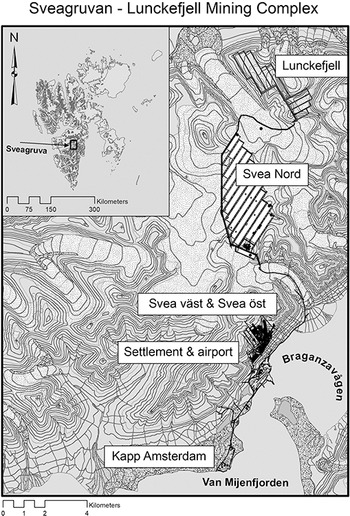
We will home in on the social and environmental history of two restoration projects – the former mines in Nautanen in Norrbotten, Sweden, and the Lunckefjell and Sveagruva mines on Svalbard. Environmental remediation on these sites has taken shape in very different contexts. At Lunckefjell it was initiated in accordance with the environmental law for Svalbard, with a mining concession that required the complete removal of all traces of the mining past. When the mine closed in 2016 the owner – the Norwegian government – not only remediated Lunckefjell but it also decided to eradicate all remnants of a much larger mining system of which Lunckefjell was part – the Sveagruva mine. The clean-up- and transformation project was launched as one of the most ambitious environmental projects ever to happen in Norway, already selling itself as a global environmental leader (Anker, Reference Anker2020). The industrial landscape was to be restored into a natural landscape, leaving only a few traces from the former industrial activity, legally protected as cultural heritage (Hagen et al., Reference Hagen, Erikstad, Flyen, Hanssen, Moe, Lie Olsen and Veiberg2018) and incorporated into an existing National Park surrounding the site. What were the Norwegian motives? To protect the environment but also to safeguard Norwegian sovereignty at Svalbard.
The second mine, at Nautanen, was closed in 1908 after having been in operation for only a few years. At the time of closure there were no laws requiring environmental remediation of former mining sites. Nautanen was simply abandoned, although not forgotten. Unknown to most people, the remains of the mine continuously polluted the environment through the release of heavy metals into the water system. This became clear only in 1993 and triggered a number of investigations and environmental remediation efforts extending over more than two decades. Both state and corporate actors were involved. After millions in state investments and large-scale removal of waste rocks from the area, the environmental remediation of Nautanen came to a halt in 2017. The residues from mining and smelting remained, however, and still pollute the environment today.
Why did these two environmental remediation projects turn out so differently? Why has it been possible to remove every trace of former mining at the extremely remote Lunckefjell-Sveagruva location in the high Arctic (Figures 9.1 and 9.2), while it has proven impossible to do the same at the much more accessible site in Nautanen? Our answer to those questions will rest on the archives of actors who were involved, as well as from interviews and industrial-archaeological fieldwork. We need to know: Who held a stake in the future of the former mines at Lunckefjell-Sveagruvan and Nautanen? What were their interests? How did they realize them and what was the outcome? By answering these questions, we will show that environmental remediation is a game set to satisfy the interests of actors competing over the future of the region. The stories we tell are also about the wider question: Who can determine the post-extraction future of Arctic mines and why?
The Lunckefjell mine with its access road in August 2016. The mine and the road have since then been removed, as part of the environmental remediation.

Previous Research on Environmental Remediation
Despite a huge body of literature from different disciplines dealing with adaptive reuse of brownfield sites, a focus on potential, emerging, and ongoing mining industries is the general tendency in existing academic literature. The closure of mines and their transformation and afterlives has been less described and discussed (Hojem, Reference Hojem2014). Mining in the European Arctic has been going on since at least the seventeenth century, and the majority of the mining sites from this history have already been abandoned, some with significant amounts of toxic waste deposited in the environment (Avango & Rosqvist, Reference Avango, Rosqvist and Nord2021). Most of these sites do not create new detectable industrial values. Environmental historians Arn Keeling and John Sandlos have named them “zombie mines” – dead, but continuing to affect the environment with their toxic legacy (Keeling & Sandlos, Reference Keeling, Sandlos, Martin and Bocking2017).
Techniques for remediation of mine waste span a wide range depending on, for example, the type of polluting substance and environmental setting. For instance, acid mine drainage is formed from sulfidic mine waste exposed to air and water and is usually spread through hydrological pathways. Combustion fumes from processing the ore can also contain high levels of sulfur dioxide that later falls as atmospheric deposition and acidifies soils and freshwater systems. Depending on proximity to settlements or sensitive environments (a drinking water supply resource, nature reserve etc.) and economic capacity, the remediation strategy might differ substantially. Research on remediation strategies has included costly and monitoring-heavy active treatment (e.g., liming the water, adding chemicals) but also passive and semi-passive treatment (e.g., utilizing natural microorganisms in wetlands or bioreactors) with the goal to reduce the mobility of metals and keep them from spreading to the surrounding environment (Gong, Zhao, & Wang, Reference Gong, Zhao and Wang2018). Mine waste remediation in colder climates has to consider lower temperatures (i.e., substance degradation is low) and a strong seasonal variability in spreading pathways. Most passive (and more sustainable) remediation techniques for colder climates are still only at the laboratory scale, although some studies show successful metal retention even at temperatures down to 3°C (e.g., Nielsen et al., Reference Nielsen, Janin, Coudert, Blais and Mercier2018).
Within landscape- and natural science, restoration and rewilding involves contributing to the restoration of an area that has been destroyed or disturbed, so that nature values and ecosystems can be preserved (Lammerant et al., Reference Lammerant, Peters, Snethlage, Delbaere, Dickie and Whiteley2013). In the past, restoration projects tried to recreate “original” nature. Recent projects instead respond to the fact that nature is dynamic, and that climate and other conditions affect the landscape. Today’s focus in restoration projects is therefore restoring or facilitating ecological processes and functions enabling ecosystem services and habitats for species to remain resilient in the long term (Hagen et al., Reference Hagen, Erikstad, Flyen, Hanssen, Moe, Lie Olsen and Veiberg2018). According to Díaz et al. (Reference Díaz, Settele, Brondízio, Ngo, Agard, Arneth, Balvanera, Brauman, Butchart, Chan, Garibaldi, Ichii, Liu, Subramanian, Midgley, Miloslavich, Molnár, Obura, Pfaff and Zayas2019) the largest global threats to biodiversity and ecosystems are caused by anthropogenic degradation of landscapes. Presently, a substantial amount of scientific literature on restoring landscapes and nature exists (e.g., Dilly et al., Reference Dilly, Nii-Annang, Schrautzer, Schwartze, Breuer, Pfeiffer, Gerwin, Schaaf, Freese, Veste, Hüttl, Müller, Baessler, Schubert and Klotz2010; Borišev et al., Reference Borišev, Pajević, Nikolić, Pilipović, Arsenov, Župunski, Prasad and de Campos Favas2018; Díaz et al., Reference Díaz, Settele, Brondízio, Ngo, Agard, Arneth, Balvanera, Brauman, Butchart, Chan, Garibaldi, Ichii, Liu, Subramanian, Midgley, Miloslavich, Molnár, Obura, Pfaff and Zayas2019; Evju et al., Reference Evju, Hagen, Kyrkjeeide and Köhler2020; Hancock et al., Reference Hancock, Martín Duque and Willgoose2020). Also, the European Commission is currently working on a new legally binding restoration law as part of the Biodiversity Strategy for 2030 and the European Green Deal (SER Europe, 2021). Golub, Mahoney, and Harlow (Reference Golub, Mahoney and Harlow2013) maintain that the emerging science of sustainability emphasizes interdisciplinary understandings and solutions of complex problems that are challenging human-ecological systems. According to Lorimer et al. (Reference Lorimer, Sandom, Jepson, Doughty, Barua and Kirby2015), rewilding projects also raise a series of political, social, and ethical concerns, conflicting with more established forms of environmental management, and requiring a rich conversation across the various disciplines of both the natural and social sciences. Restoration of industrial landscapes respecting pollution, natural, and cultural heritage aspects is nevertheless sparsely reported.
Sveagruva-Lunckefjell, Svalbard
Our first case, Sveagruva, has a long history characterized by two drivers of change – on the one hand fluctuations in the world market, and on the other changing geopolitical priorities, both triggering closures and reopenings. A British company were first to claim the area for coal mining in 1906, but it was Swedish companies, financed by the Swedish iron and steel industry, that from 1910 developed coal mining there – AB Isfjorden-Belsund. The steel industry had economic interests in Spitsbergen coal, but the company was also acting on behalf of the Swedish government to strengthen Sweden’s influence on the legal status of Spitsbergen, which Sweden, Russia, Norway, the United States, and other states were negotiating at the time. During the First World War, when prices of coal ran high, Swedish investors formed a new company – AB Spetsbergens Svenska Kolfält – which constructed and started the mine and the mining town Sveagruvan in the summer of 1917. In 1921, a severe international economic recession led to sharp price drops for coal. Consequently, the owners restructured the mining company, while the Swedish state financed investments in more effective production systems. These efforts eventually failed when the mine caught fire in 1925. The company decided to stop mining operations, and nine years later sold it to the Norwegian company Store Norske Spitsbergen Kulkompani A/S (SNSK), in which the Norwegian State was the largest owner. SNSK wanted to buy it for geopolitical reasons – to ensure that the Swedish company would not sell it to the Soviet Union (Avango, Reference Avango2005).
SNSK did not open any mining operations at the site until after the Second World War, however. Starting in 1946, the company constructed an entirely new mining town – now named Sveagruva – since the German military had leveled the old Swedish mining settlement in 1944. SNSK did not mine for long, however, closing it down again after only five years. The company started operations again in 1970, with the intent to eventually scale up production at the site. In 1987, however, after a decline in world market coal prices, they closed Sveagruva again (Avango & Brugmans, Reference Avango and Brugmans2018).
In the late 1990s, after the Norwegian state had made it possible for SNSK to produce at a much larger scale than before, SNSK again developed plans to re-open Sveagruva. In 2001, the company opened a new coal mine they named Svea nord – the largest coal deposit operated on Svalbard to date. To enable it, the company greatly expanded the infrastructure by building a road across a glacier and a conveyor belt tunnel through an entire mountain. The company also increased the capacity of the Sveagruva settlement. The re-opening coincided with rising world market prices for coal, and when SNSK reached full production capacity at Svea nord, the company was able to make real economic profits for the first time in its history.
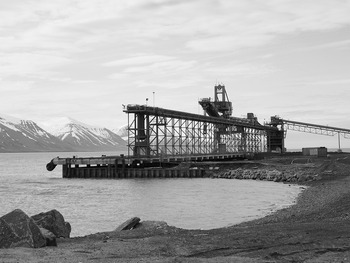
Building on this success, in 2013, SNSK opened yet another mine – Lunckefjell – which they connected to Sveagruva by new tunnels and a second glacier road through high alpine environments. By this time, however, world market prices for coal started to drop at a rapid pace, and in April 2016, SNSK placed mining operations on hold to avoid further economic loss. When coal prices eventually started to rise again, SNSK applied for permission to re-start the mine. By this time, however, political forces put a stop to further mining. In 2017, the Norwegian Storting decided to shut down all mining activity in Svea, and the mines were permanently closed in 2018 (Avango & Brugmans, Reference Avango and Brugmans2018). With this a 100-year mining history ended (Figure 9.3).

With the closure of the Svea mine, Store Norske was obliged to remove all traces of modern mining operations. This was anchored in the start-up permission of the Lunckefjell mines and in the Svalbard Environmental Act. An enormous clean-up and transformation project was launched, aiming to be fulfilled in 2023. After the Norwegian government placed the Lunckefjell coal mine on hold, a two-year period followed during which the future of the Lunckefjell-Sveagruva mine was up for discussion. Different actors envisioned different futures for the former mining area. Many people, typically current and former employees of SNSK, hoped that the government would decide to re-start mining at Lunckefjell and thereby save the massive investment the mining company had made in preparing it for extraction. Others ascribed additional values to the area – values that could be realized with or without re-starting the Lunckefjell mine. Actors within SNSK saw possibilities to re-use the mining settlement and infrastructure for industrial-related research, for example, developing cold climate technology for shipping and mining, and for practicing environmental cleanup operations such as oil spills on ice.
By offering the Sveagruva-Lunckefjell system to companies interested in conducting such research, SNSK would be able to generate new income. The idea of making Sveagruva-Lunckefjell into a research site was also shared by actors at the University center of Svalbard and Norsk Polarinstitutt, but they held other visions about the purpose of the research. They envisioned that Sveagruva could become a hub for geological research in an area of Svalbard that geologists tend to visit more seldom because of the distance from the university, which is located in Longyearbyen. In addition to research, Sveagruva could be used to house students and labs during field-based courses in various disciplines at the University Centre in Svalbard (Anonymous, interview by Avango in Longyearbyen, August, 2016). There was also considerable interest in Sveagruva among tourism companies active on Svalbard. Tour operators based in Longyearbyen saw the mining settlement as a potential hub for snowmobile-based groups, which could use the housing available there to stay for a couple of days, making excursions into spectacular surrounding landscapes that are difficult to access from Longyearbyen. There were also entrepreneurs who saw the possibility of opening a guest house with a restaurant at Sveagruva on a seasonal basis. All tourism companies also saw potential in the material remains from the history of Sveagruva, which they could use as anchor points for narrating the dramatic history of the mine to tourists (Anonymous, interview by Avango in Longyearbyen, August, 2016).
The Governor of Svalbard’s department for environmental protection, tasked with cultural heritage protection of the islands, shared the tourism entrepreneurs’ evaluation of the remains from mining, but from a legal perspective. According to environmental law on Svalbard, all remains from human activity that pre-date 1946 are automatically defined as cultural heritage and protected as such for posterity (Marstrander, Reference Marstrander and Wråkberg1999). None of these ideas for repurposing were new on Svalbard, where several former mining towns and prospecting camps had been successfully repurposed for tourism, research, and education. Despite this fact, the Norwegian government decided in 2018 to remove all traces of the Lunckefjell-Sveagruva mining system. This included remains of all mines, the entire settlement with housing and service buildings, technical service facilities, an airport, roads and conveyor belts, washing and dressing plants, and an entire export harbor facility at Kap Amsterdam. Sveagruvan-Lunckefjell was to be literally wiped out, with the exception of a few remains from the Swedish mining period and the early Norwegian period prior to 1946, which are legally protected as cultural heritage.
The Environmental Remediation of Sveagruva-Lunckefjell
The overall goal of Norway’s Svalbard policy has been to maintain sovereignty. This has required Norwegian presence on the archipelago. No other industry has delivered as much Norwegian presence on Svalbard as mining over the last 100 years (Pedersen, Reference Pedersen2016). Pedersen (Reference Pedersen2017) argues that the closure of the mines at Svalbard will mean fewer Norwegian inhabitants and ultimately lead to misperceptions about the legal status of Svalbard. Further, this may pose new foreign and security policy challenges to Norway.
The Norwegian Parliament decision to terminate the mining activity in Svea and Lunckefjell (Ministry of Trade, Industry and Fisheries, 2017) must be understood against this background but also in the context of the Svalbard Environmental Protection Act (Ministry of Climate and Environment, 2001). The act states, in §64, that when industry or other activity at Svalbard ends, the owner is responsible for removing remaining installations and infrastructure and restoring the area to its original appearance. The Ministry of Justice further specified that infrastructure and buildings should be removed. With this decision, the range of different visions on how to reuse the Sveagruva-Lunckefjell system became impossible to consider. They all ultimately depended on a functional settlement with infrastructure and buildings, which would instead be removed.
On behalf of the Ministry of Trade, Industry and Fisheries, Store Norske launched a thorough process planning the transformation of Svea. Their point of departure was clear. Unlike other closed mining sites at Svalbard, Sveagruva should be transformed into a place that as much as possible resembles the original state of the landscape, with the remains older than 1946 being the only exception. Environmental toxins were assumed to be the overarching problem in the transformation process. However, transforming the industrial landscape into nature and upholding heritage values in the remaining historic structures proved to be far more complex and intricate processes. The time schedule given by the Ministry was tight, and the planning process concerning the physical transformation started long before all decisions relating to the process were taken.
The remediation work started with the Lunckefjell mine in 2018 and has proceeded at a rapid pace since then, with the successive removal of the rest of the mines, the airport, the power plant, the deep-water quay, the mining settlement with over sixty buildings, huge industrial structures, and many kilometers of road (Figure 9.4). Tons of pulp will be removed and rearranged, while toxic spills will be removed or encapsulated. The reason why the Sveagruva-Lunckefjell mining area became subject to such a radical environmental remediation, despite the unprecedented high costs, was the need to fulfill the requirements of the Svalbard Environmental Act. There are, however, reasons to also consider other driving forces behind this huge and costly project – the geopolitics of mining at Svalbard.
The Norwegian government and SNSK have a history of proactively supporting Norwegian state influence that extends back to the formation of the company in 1916 and its active involvement in securing Norwegian sovereignty over Svalbard through the Treaty concerning Spitsbergen in 1920 (Mathisen, Reference Mathisen1954; Østreng, Reference Østreng1971). Until the mid-1920s, the Norwegian government supported even highly unprofitable mining operations at Svalbard (Johannessen, Reference Johannessen1996). After the Soviet Union had established several mining towns on Svalbard in the late 1920s and early 1930s, SNSK and the Norwegian state bought up mining properties from foreign companies that had seized their operations. The purpose was to ensure that Norway and Norwegian actors would control most of the lands on the archipelago and avoid increased Soviet presence on the islands (Avango & Roberts, Reference Avango, Roberts, Körber, MacKenzie and Westerståhl Stenport2017).
Sveagruva was a part of this geopolitics of mining right from the beginning, when SNSK bought the mine from Swedes to make sure that the newly formed Soviet company Trust Arktikugol would not be able to acquire it (Avango, Reference Avango2005). Since the 1930s, the mines in Svea have hardly been economically sustainable, except during the recent global mining boom after the millennium. Supporting Longyearbyen, with more than 400 jobs at its peak, Svea was the most important tool for maintaining Norwegian settlement – and sovereignty. To close the mine obviously posed some security policy challenges (Pedersen, Reference Pedersen2016). In 2016, the state bought the 218 square meters privately owned former coal mine of Hiorthhamn for 300 million Norwegian krone (35 million US Dollar) to avoid the risk that state-supported foreign actors, including China, would acquire it. Against this background, it is not far-fetched to consider the possibility that the removal of infrastructure and buildings would dramatically increase the cost for a company from China or Russia to restart mining at Sveagruva-Lunckefjell. Moreover, the Norwegian authorities plan to include the Sveagruva-Lunckefjell area in the Nordenskjöld land national park after the environmental remediation is finalized, which would make it very difficult to gain a concession for mining there.
Nautanen, Norrbotten
The Nautanen copper mine was established in 1902. The company, Nautanens Kopparfält AB, established it in order to profit from an increasing demand for copper, driven by industrialization in general and electrification, in particular. Another context working in favor of the mine was the expanding large-scale sociotechnical system for mining in the Swedish Arctic, built for mining iron ore at Malmberget and Kiruna. The company connected its copper mines and settlement to this system through an aerial ropeway, connecting the mine with the railway system at Koskuskulle (Avango & Rosqvist, Reference Avango, Rosqvist and Nord2021).
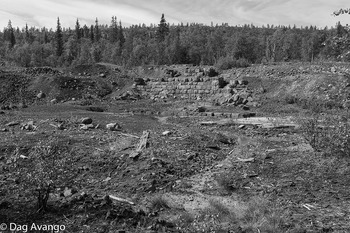
Nautanen became short-lived. In 1908, the company shut it down. During its six years of operation, the company had mined 72,000 tons of ore, or 2,000 tons of copper. After closing their mines and clearing the settlement of its more than 400 inhabitants, the bankrupt company sold off the buildings and infrastructures (Ollikainen, Reference Ollikainen2002). With the exception of one building, the only visible traces of Nautanen were the remains of house foundations, roads, mines, waste rock piles, tailings, and metallurgical slags. The latter contained sulfidic materials and were spread out across the landscape around the former processing plants and mines, on the ground and in lakes (Figure 9.5).

Over much of the twentieth century, Nautanen was an abandoned mining site. In the decades following closure, former workers and their labor organizations organized excursions to the site, using it for political mobilization against the capitalist system and for social reforms. From the 1970s, the site was reinterpreted as a cultural heritage site, in the beginning an unofficial cultural heritage defined by actors in the labor movement, and from the 1990s an official cultural heritage with a basic level of protection under Swedish heritage institutions.
From 1993, Nautanen became an object for concern regarding the state of the local environment at the site. In that year the County Administrative Board of Norrbotten, Sweden’s northernmost county, issued an inventory of abandoned mine waste. The inventory, performed with Luleå Technical University, found Nautanen, the second largest historical sulfide mine in Norrbotten, to have high copper concentrations in its discharging surface water (Larborn, Reference Larborn1993). A year later, further investigations detailed the findings (Länsstyrelsen i Norrbotten, 2002). The issue of toxic waste at Nautanen remained dormant for years. In 1999, the Swedish government implemented a new Environmental Code (Ebbesson, Reference Ebbesson2015: 52) and set aside funds for environmental remediation of polluted areas. From the early 2000s, the funding was put to use in Nautanen. The Swedish Environmental Protection Agency granted the funding to the County Administrative Board as part of its regional program for polluted areas (Doc. 1). The challenge for the environmental remediation effort was not only about determining the extent of the contamination but also the responsibility for carrying out the remediation. The County Administrative Board examined this issue in 2002, concluding that no active party could be held responsible for the pollution, since mining company Nautanen Kopparfält AB had ceased to exist (Bothniakonsult, 2002).
With funding from the environmental protection agency, Gällivare Municipality launched a comprehensive investigation at Nautanen, including waste characterization, surface and groundwater samples, lake sediment records, and biological investigations. The final report was completed in 2002 with a risk assessment concluding that Nautanen reached the second highest risk class (MIFO risk class 2) of contaminated sites in Sweden, posing a substantial threat to aquatic ecosystems. The metal leakage mostly originated from concentration plant sands and waste rock piles that were in contact with surface water (Figure 9.6). The report recommended remediation by assembling and covering waste, and installing technology picking up toxic substances downstream from Nautanen (Botniakonsult, 2002).
Another suggestion was to re-process some of the waste rock with the highest ore grade at the mining company Boliden’s nearby copper mine Aitik and overrule the protection they had as cultural heritage. In 2005 and 2008, the company transported the waste rock by trucks and fed it into their concentration plant at Aitik, extracting copper, gold, and zinc (Botniakonsult, 2002). This project was not purely motivated by environmental considerations. Boliden had the resources and the economic incentive to do it. In 2009, the consultancy Hifab conducted an environmental impact assessment on behalf of Gällivare municipality, planning for removal of the contaminants remaining after Boliden’s removal of waste rock. The main plan was to redirect water streams running through the former concentration plant and smelter area, where tailings leached out metals (Hifab, 2009). Gällivare Municipality also launched an investigation examining whether Boliden’s removal of waste rock had any effect on water quality, which found little or no effect from this effort (Golder Associates AB, 2015).
Simultaneously with the planning for a continuation of the environmental remediation, a new challenge for the project appeared – a conflict with the landowner. The forest company Sveaskog had entered a formal agreement with the municipality back in 2006 to take on some of the remediation work, provided that the state would fund it. When the funding eventually came through, the agreement had already ceased. Now, Sveaskog no longer agreed to take responsibility for maintaining and monitoring the re-directed water streams at the site. They wanted to strictly limit their commitment to managing environmental data collecting devices and keep entrances to water tunnels free. For this reason, Gällivare municipality decided in 2014 to cancel the entire environmental remediation project at Nautanen, citing the excessive costs, and the fact that Gällivare municipality did not own the land – Sveaskog did (Doc. 2; Golder Associates AB, 2015).
In 2017, researchers from REXSAC conducted field research at Nautanen. Hydrological sampling in the area (Fischer et al., Reference Fischer, Rosqvist, Chalov and Jarsjö2020) revealed that the surface water system remains highly polluted. Synthesizing the available water quality measurements at Nautanen during the previous twenty-five-year period shows that Nautanen has reached a “steady-state” in terms of metal leakage: it will likely not decrease or increase in the future but has enough waste to keep polluting the area for centuries to come.
Extracted Places with Contested Futures
Different institutional framings explain the ways the two remediation projects developed. In Sveagruva-Lunckefjell, the mining company SNSK acted in accordance with the environmental law of Svalbard, which requires companies to restore the environment to its pre-mining state. In Sweden there are similar legal requirements, but those were not in place when AB Nautanens kopparfält closed their mine in the early 1900s. Although the responsibility for remediating mining sites can be transferred to new landowners under current Swedish environmental law, the present landowner, Sveaskog, managed to avoid that by buying the forest land one day before this environmental law came into effect. Therefore, the lack of legal tools is an important part of the explanation as to why the remediation of Nautanen has failed so far, while the remediation of Sveagruva has not.
A second important difference is ownership. SNSK is still an active mining company, with a physical presence in Svalbard and a wide portfolio of economic activities in Svalbard, while AB Nautanens Kopparfält has been gone since 1908. In the Nautanen case, there is no company around to cover the costs and the hard work of remediation. The history of Arctic mining is full of similar examples, for example, the Giant mine in the Northwest Territories in Canada, where gold mining between 1948 and 2004 generated employment and wealth but also a toxic legacy consisting of more than 200,000 tons of arsenic. The mining company has seized to exist, leaving Canadian taxpayers to cover the costs of remediating the mining site (Sandlos & Keeling, Reference Sandlos and Keeling2016). There are similar examples from the recent history of mining in the Swedish north (Müller, Reference Müller2014).
A third difference that also put the spotlight on the societal dimension of environmental remediation are the importance of interests of the actors involved for the outcome of the remediation process. In Svalbard, environmental remediation happened because a powerful actor – the Norwegian state – wanted it to happen. The state, owner of SNSK, acted in accordance with the law but also had geopolitical interests that are likely to have played a contributing role to the decision to order the complete eradication of the largest system for mining on the entire archipelago, for a price that by far exceeds any of the original estimations of the costs for remediation. It is most probable that an ambition to hinder agents of foreign powers from acquiring new land for mining in Svalbard, contributed to the willingness of the Norwegian government to act in this way, no matter the costs. In the future, when all that remains of Sveagruva-Lunckefjell are house foundations and shabby barracks protected as cultural heritage, the investment costs for starting a new mine are likely so high that it would be difficult, if not impossible, to acquire economic returns that would justify investment – at least for a company that needs to make a profit. Moreover, a company wanting to re-open mining at Sveagruva-Lunckefjell in the future would need to acquire a permit for mining in a national park. The chances that the Norwegian authorities would approve such an application seem slim.
The Norwegian policy on this matter can be interpreted in the context of Norwegian Svalbard policy over the last decade. Grydehøj et al. (Reference Grydehøj, Grydehøj and Ackrén2012) has pointed out that Norway’s top-down governance of Svalbard through the Governor of Svalbard and by supporting unprofitable mining companies for the sake of maintaining active populated settlement has been complicated in recent years. Growing economic diversity in the wake of mine closures and a growing tourism sector has brought multinationalism and local democracy to the archipelago. At the same time a new competing power on Svalbard and in the Arctic at large has emerged beside Russia – China. The Norwegian policy on the Sveagruva-Lunckefjell environmental remediation can be interpreted as a response to this new situation. Norway’s policy on climate change also contributes – large scale coal mining in a sensitive environment in the Arctic is an increasingly hard sell to voters in Norway.
In the case of Nautanen, it was the conflicting interests between the actors involved that stopped environmental remediation from happening – despite the relatively low costs involved (compared to the Svalbard case). On one side was the Swedish Environmental Protection Agency, the County administrative board of Norrbotten, and the Gällivare municipality, who all wanted the remediation project to happen. Their interest, and ultimately the Swedish government’s, was to serve public interest and to meet policy goals for environmental protection and restoration of contaminated environments. The mining company Boliden also took responsibility for restoring the environment. Their interest was to create goodwill in a municipality where their company has large-scale mining operations running. Boliden’s interest was probably also to make a profit from re-mining the waste. The company had no legal responsibility to restore the environment as a whole, and therefore took out only what they wanted and left the rest for others to take care of.
What stopped the environmental remediation project from materializing was the fact that the landowner – the state-owned forest company Sveaskog – expressed no interest in contributing to stopping the leakage of substantial amounts of heavy metals and other toxic substances from their lands into the ecosystems in their forests. The forest company had found a way to avoid taking responsibility for toxic waste on their lands and utilized it, leaving the costs for environmental remediation of their lands to an economically weak municipality with no ownership responsibility for the land at all.
Conclusions
The cases indicate that it may be difficult to predict what post-extraction histories we can expect in current and future Arctic mines, which calls for caution when planning and giving permission to extractive mega-projects. Even if it is possible to mitigate and even undo environmental damage from a technological point of view, it may be hindered by unfavorable societal contexts and actors with competing interests.
Closed mines are a challenge, not only from an environmental point of view but also from a social one. When mines are closed, settlements, towns, and regions that depended on them are in need of new income opportunities, as well as opportunities enabling the preservation of societal services and quality of life that can disappear with the mine. Social challenges post-extraction can be particularly severe in sparsely populated areas. Nautanen and Laver (Avango et al., Reference Baker, Moncaster and Al-Tabbaa2023, see Chapter 10) are instructive examples. As we show elsewhere in this volume (Avango et al., Reference Baker, Moncaster and Al-Tabbaa2023, see Chapter 10; Malmgren et al., Reference Malmgren, Avango, Persson, Nilsson, Rodon and Sörlin2023, see Chapter 11), de-industrialized mining settlements can gain new values that sustain them beyond the end of extraction, through new economic activities, heritage making, or by reopening mining. At Sveagruva, actors in the mining industry, tourism, and science envisioned such futures but were unable to realize them. The same is true in Nautanen, where local actors in Gällivare as well as official Swedish heritage protection wanted to protect remains of mining as heritage. Unfavorable institutions, the interests of powerful actors, and global economic and political trends stood in their way.
A challenge to take on for research and development on environmental remediation in the future is to find ways to harmonize needs for remediation with possibilities to create new values. In recent years, companies in the mining sector and associated research environments have worked on this issue. How can processes for mine decommissioning and rehabilitation be designed in a way that allows for the creation of new values? How can the ambitions and voices of local communities in the vicinity of the former mines be taken into account when the future of their local environments is to be determined? To consider value creation in the decommissioning process of mines, in close dialogue with affected communities, may provide tools to harmonize sustainability goals that may otherwise be in conflict.


 Open access