1. Introduction
The debate concerning the relationship between theory and experiment has a long history in the literature of philosophy of science. The reason why this debate has been so long-lived can be traced to its philosophical implications that pertain to epistemological and methodological issues such as theory-testing and theory-construction, as well as to perennial debates such as the realism-empiricism debate. During the first three quarters of the twentieth century, scientific methodologies changed radically, whereas the conception of scientific experimentation remained essentially unchanged. Pierre Duhem was the first to scrutinize the relations between theory and experiment in his The Aim and Structure of Scientific Theory (Duhem 1954). The different roles Duhem ascribed to experimentation are ones that are subordinated to scientific theorizing. Duhem recognized only two types of experimentation; namely, “experiment of application” and “experiment of testing.” In Duhem's view, an experiment of application “does not aim at discovering whether accepted theories are accurate or not; it merely intends to draw on these theories” (ibid, 184). In contrast, an experiment of testing is intended to show whether a particular prediction holds true or not. However, he famously argued that the prediction of a particular phenomenon requires a whole theoretical group and that no experiment can refute an isolated hypothesis:
The only thing the experiment teaches us is that among the propositions used to predict the phenomenon and to establish whether it would be produced, there is at least one error; but where this error lies is just what it does not tell us. (Ibid., 185)
Duhem's theory-dominated conception of scientific experimentation survived in the logical positivist tradition; even though, in sharp contrast to Duhem's holism, the logical positivist philosophy of science acknowledged experimentation as one of the conventional ways of theory testing in accordance with their method of verification. By contrast, in his Logic of Scientific Discovery, Karl Popper rejected verificationism and instead defended falsificationism as the proper methodological framework for the appraisal of scientific theories (Popper Reference Popper1959). Even though there existed a clear distinction between Popper's view of scientific method and that of logical positivists, this distinction did not bring about any essential difference between their standpoints concerning the role of experimentation in scientific practice. Like logical positivists, Popper subordinated experimentation to theorizing and acknowledged its purpose as being guided by theoretical commitments alone. In Popper's view:
The theoretician puts certain definite questions to the experimenter, and the latter, by his experiments, tries to elicit a decisive answer to these questions, and to no others . . . . Theory dominates the experimental work from its initial planning up to the finishing touches in the laboratory. (Ibid., 107)
During the post-positivist era, the theory-dominated conception of scientific experimentation almost remained unchanged; but it was used as an argument to defend relativism in science against its positivist conceptions. During this period, the emphasis was mainly given to the relationships between theoretical commitments and sense perception. After its suggestion by Norwood Russell Hanson in his Patterns of Scientific Discovery, the thesis of theory-ladenness of observationFootnote 1 became a slogan under which the dominance of theory – or more generally, of theoretical concepts – over sense experience was highlighted (Hanson Reference Hanson1958).Footnote 2 One natural extension of the thesis of theory-ladenness of observation to experimentation has been the thesis of theory-ladenness of experimentation (TLE). In his The Structure of Scientific Revolutions, Kuhn construed TLE as “paradigm-ladenness” and argued that experimentation is always guided by theoretical commitments that belong to the paradigm of a particular science (Kuhn Reference Kuhn1970).
Until the early 1980s, the philosophy of experimentation had been framed by TLE, and this theory-dominated view had been largely accepted as the standard view of scientific experimentation, according to which experimentation is always guided by well-defined theoretical accounts and is solely intended to ascertain the conclusions of those accounts. Ian Hacking's rejection of the standard view in the early 1980s opened the door to a new conception of scientific experimentation. In his Representing and Intervening, Hacking argued that it would be wrong to subordinate experiment to theory (Hacking Reference Hacking1983). Unlike the proponents of the standard view, Hacking conceived of experimentation as being by itself capable of producing genuine knowledge of the world. Hacking's conception of scientific experimentation started a new movement in the philosophy of science, often referred to as New Experimentalism,Footnote 3 which suggested that experimentation should be studied for its own sake, and not merely as subordinate to scientific theorizing.Footnote 4
It is to be noted that Hacking's discussion of the relationship between theory and experiment in some parts of Representing and Intervening is ambiguous. While he admits that he “make[s] no claim that experimental work could exist independently of theory,” he claims that “much truly fundamental research precedes any relevant theory whatsoever” (ibid., 158). In a later work, Hacking seems to be much more precise and makes a three-fold distinction among theories used in experimentation (Hacking Reference Hacking and Pickering1992). According to this distinction, what Hacking calls “systematic theories” are high-level theories and do not necessarily have experimental consequences on their own. On the other hand, what he calls “topical hypotheses” are relatively low-level empirical generalizations and serve to connect the systematic theory to the phenomena of interest. And, as a third category, Hacking notes theories that concern the design and the workings of the apparatus and instruments used during the course of experimentation.
In the vein of Hacking's famous dictum that “experimentation has many lives of its own” (Hacking Reference Hacking1983, 165), Peter Galison rejected any reductive hierarchy between theory and experiment, and he instead offered a model of “intercalated periodization” that characterizes the relationships between theorizing, experimentation, and instrumentation as exhibiting diverse levels of interaction each of which has its own “partial autonomy” (Galison Reference Galison1997, chap. 9). Moreover, what is more interesting for the purpose of the present paper is the distinction Galison draws between what he calls long, medium, and short term constraints of experimental inquiry (Galison Reference Galison1987, chap. 5). According to this distinction, for example, the idea of unification of fundamental interactions of nature constitutes a long-term constraint for the experimental activities in the field of particle physics. However, gauge theories, different models, and phenomenological laws used in particle physics constitute respectively medium and short-term constraints for the same field (ibid., 254).
The above discussion indicates that even though both Hacking and Galison draw various distinctions between different kinds of theoretical commitments involved in experimentation, they do not deal with the philosophical implications of this categorization for the notion of TLE. If experimentation involves various kinds of theoretical commitments, then it is epistemologically of interest to ask whether this brings about varying senses of TLE. In this paper, I shall address this issue in the context of experiments from the history of high-energy particle physics (HEP).
2. Recent Perspectives in the Philosophy of Scientific Experimentation
The theory-dominated view of scientific experimentation suggests that experiments are performed solely to ascertain the conclusions of scientific theories. Therefore, in this view, different aspects of experimentation and of the relation of theory to experiment remain undifferentiated. This in turn fosters a conception of TLE that is too coarse-grained to accurately describe the scientific practice. In more recent years, however, the relation between theory and experiment has been examined in somewhat more detail with regard to TLE. Friedrich Steinle has argued that the conception of TLE as conceived in the theory-dominated view falls short in capturing both the complexity and diversity of scientific experimentation (Steinle Reference Steinle1997, Reference Steinle2002). Steinle has reached this conclusion in the light of a contrast he has introduced between two types of experimentation, namely, “theory-driven” and “exploratory” experiments.Footnote 5 In his view, theory-driven experimentation exhibits features that conform to the standard view of scientific experimentation; namely, it is “done with a well-formed theory in mind, from the very-first idea, via the specific design and the execution, to the evaluation” (Steinle Reference Steinle1997, 69). Theory-driven experiments can also serve other purposes, such as the determination of a numerical parameter, or the use of theories as a heuristic tool within the search for a new effect (ibid., 69–70). By contrast, what Steinle calls exploratory experimentation “typically takes place in those periods of scientific development in which – for whatever reasons – no well-formed theory or even no conceptual framework is available or regarded as reliable” (ibid., 70). However, in Steinle's view, “despite its independence from specific theories, the experimental activity [in exploratory experimentation] may well be highly systematic and driven by typical guidelines” (ibid.). Steinle's paradigmatic examples of exploratory experimentation are from the early history of electromagnetism and include experiments on static electricity performed by Charles Dufay, André-Marie Ampère, and Michael Faraday. Here, it is to be noted that what Steinle means by “new research field” is a research domain in which there yet exists no well-defined and well-established theoretical framework.
According to Steinle, “exploratory experimentation is not one specific and well-defined procedure, but includes a whole bundle of different experimental strategies” (ibid., 73). Steinle identifies some of those exploratory strategies as follows:
• Varying a large number of different experimental parameters,
• determining which of the different experimental conditions are indispensable, which are only modifying,
• looking for stable empirical rules;
• finding appropriate representations by means of which those rules can be formulated,
• forming experimental arrangements which involve only the indispensable conditions, thus presenting the rule in particular clarity. (Ibid., 70)
Moreover, Steinle argues that the findings of exploratory experiments might have significant implications on our understanding of existing theoretical concepts, in that the attempt to formulate the regularities suggested by exploratory experiments might require “the revision of existing concepts and categories, and the formation of new ones, which allow a stable and general formulation of the experimental results” (Steinle Reference Steinle2002, 419).
Steinle's work has triggered a whole new debate centering on the possibility of theory-free experimentation. Michael Heidelberger has distinguished between different levels of experimentation, namely, that “experimentation at the causal level, where instrumental manipulation is distinguished, and experimentation taking place at the theoretical level, where the results at the causal level are represented in a theoretical structure” (Heidelberger Reference Heidelberger and Radder2003, 145). Heidelberger has argued that in domains occupied by well-established theories the two levels of experimentation are inextricably connected to each other, and thus experimentation proceeds at both levels. However, argues Heidelberger, if a new domain is explored, experimentation proceeds only at the causal level and is theory-free. As the foregoing discussion indicates, there exist parallels between the views of Heidelberger and Steinle concerning scientific experimentation; however, Steinle does not argue against TLE and does not seem to deny the role of background theories in the case of exploratory experiments. As a result, unlike Heidelberger, he does not suggest the possibility of theory-free experimentation.
In contrast to Heidelberger, Martin Carrier has argued that “performing experiments and measuring physical quantities rely on overarching observation theories” (Carrier Reference Carrier, Heidelberger and Steinle1998, 182). Carrier has distinguished observation theories that are involved in experimental processes from what he has called explanatory theories that account for the phenomena under consideration. According to Carrier's distinction, the difference between observation and explanatory theories is not of a fundamental nature, but rather concerns a mode of usage. That is, the experimental context determines which theory is to be used as an observation theory and which one as an explanatory theory. While a theory is used as an observation theory in a certain experimental context, it can as well be used as an explanatory theory in another context (ibid., 183). This in turn means that observation theories can be as high-level and systematic as explanatory theories. Note that this view of Carrier's clearly stands at odds with that of Hacking, who maintains that systematic high-level theories typically do not play a substantive role in experimentation.
In contrast to the possibility of theory-free experimentation, Hans Radder has argued that “materially realizing a stable correlation and knowing what can be learned about the objects from inspecting the apparatus depends on theoretical insights about the experimental system and its environment” (Radder Reference Radder and Radder2003, 165). In Radder's view, the establishment of a stable correlation between some feature of the phenomena being examined and some feature of the experimental set up is always constitutive of scientific experimentation. Unlike Carrier, however, Radder attributes a broader role to theory in scientific experimentation by arguing that “the immediate or later significance of experiments is affected by the theoretical context [in which they are situated]” (ibid., 164).
The preceding discussion indicates that a significant portion of the recent literature on scientific experimentation has been devoted to the possibility of theory-free experimentation. However, what is more interesting for the aim of the present paper are the parallels between the approaches of Hacking, Carrier, and Radder. Notwithstanding the existing differences between their accounts, they all make distinctions among theories involved in experimental processes. While Hacking makes distinctions among what he calls systematic theories, topical hypotheses, and theories of instrumentation, Carrier distinguishes between observation and explanatory theories. And, Radder distinguishes theories used in instrumentation from those used in interpreting experimental findings.Footnote 6
In this paper, I shall follow an approach similar to those of the above-mentioned studies. In the next section, I shall categorize the theories of HEP into three main types: namely, background theory, model theory, and phenomenological model. I shall argue that each category here bears a different set of relationships to experimentation and thus gives rise to a different set of theoretical commitments in experimental research in HEP. In the ensuing sections of the present paper, I shall explore the philosophical implications of the above categorization of the theories of HEP for the notion of TLE. To this end, in contrast to the undifferentiated notion of TLE underlying the theory-dominated view of scientific experimentation, I shall characterize and distinguish between the “weak” and “strong” senses of the notion of TLE. I shall use the term “theory-drivenness of experimentation” (TDE) to characterize the strong sense of TLE. I shall take TDE to denote the form of theory-ladenness underlying the theory-driven type of experimentation. In the same spirit as Steinle, I shall characterize theory-driven experimentation as a specific type of experimentation that is performed under the continuous guidance of some theoretical account typically with the aim of ascertaining the conclusions of the same account. That is to say, in theory-driven type of experiments, all successive stages of experimentation, from planning and design up to data-analysis and data-interpretation, are performed by appealing to the theoretical accounts of the target phenomena. By contrast, I shall characterize the weak sense of TLE as being due to the utilization of theoretical considerations that have no guiding power on the progress of the experimental process.
3. A Three-Fold Distinction in Theorizing in HEP: Background Theories, Model Theories, and Phenomenological Models
The distinction between what are called “background theories” and “phenomenological models” of science is held for a quite long time by philosophers of science – most prominently by Nancy Cartwright, Mary Morgan, and Margaret Morrison. In her How the Laws of Physics Lie, Cartwright has famously argued that the description of natural phenomena is generally provided not by our “fundamental theories,” but rather by phenomenological models obtained from fundamental laws through approximations and emendations that are not dictated by those fundamental laws (Cartwright Reference Cartwright1983). In a later work, Cartwright and her collaborators have argued that the methods and aims of phenomenological model building enjoy a great deal of independence from fundamental theory (Cartwright, Shomar, and Suarez Reference Cartwright, Shomar, Suarez, Herfel, Krajewski, Niiniluoto and Wojcicki1995). In a similar vein, Morgan and Morrison have stressed the importance of and the need for model building in scientific practice and argued that in many cases the explanation and prediction of the particular features of natural phenomena are provided by models that are constructed by supplementing the fundamental theory with further structural and conceptual elements outside of its theoretical framework (Morgan and Morrison Reference Morgan, Morrison, Morgan and Morrison1999). On this basis, they have argued that models embody an element of independence from both theory and data. Morrison has given careful consideration to phenomenological model building and argued that phenomenological models function independently of theory, and yet this independence is only partial; because the construction of phenomenological models and their applicability to natural phenomena can be reliant on some important features of the fundamental theory (Morrison Reference Morrison, Morgan and Morrison1999).Footnote 7 In what follows, I shall take my cue from the above discussion and draw a three-fold distinction among the theories of HEP.
HEP is primarily concerned with the fundamental constituents of matter and their mutual interactions. In nature, there are known to exist four fundamental interactions: namely, electromagnetic, weak, strong, and gravitational interactions. The electromagnetic interaction is long-range and acts between electrically charged particles. The weak interaction is short-range and acts between all types of elementary particles. The strong interaction is also short-range and acts only between particles called “hadrons,” e.g., nucleons (protons or neutrons). Since the magnitude of the gravitational interaction is very weak as compared to those of other types of fundamental interactions, any possible gravitational effects are typically neglected in HEP calculations. Most of the interactions between sub-atomic particles do not occur under normal circumstances in nature; but they are created and detected during very energetic collisions, as are done in particle accelerators. Since the quantum mechanical effects dominate over the classical ones at sub-atomic domains, the interactions between sub-atomic particles are properly treated by various theories and models that conform to the basic postulates of the quantum mechanics (QM).Footnote 8 In HEP, what I shall call “background theories” are those theories that provide the basic rules and principles that govern the major aspects of fundamental interactions. However, since fundamental interactions exhibit features that are quite distinct from each other, these rules and principles fall short in explaining and predicting the interaction-specific features of sub-atomic phenomena.Footnote 9 In HEP, what I shall call a “model theory” is a theory that is constructed under the theoretical framework of a background theory with the aim of explaining the specific features of the fundamental interactions. As compared to background theories, model theories can be said to be more elaborate, in that their theoretical frameworks accommodate a relatively greater number of conceptual and structural elements that involve interaction-specific principles, hypotheses, and mechanisms that background theories do not typically possess. By virtue of these structural and conceptual elements, model theories are able to relate to their target phenomena and provide explanations as well as experimentally testable predictions about sub-atomic phenomena. In the ensuing discussion, I shall illustrate the distinction of background and model theories by considering quantum field theory (QFT) in relation to gauge theories of particle physics, namely, quantum electrodynamics (QED), electro-weak theory (EWT), and quantum chromo-dynamics (QCD).
QFT is the underlying theory of all types of interactions between sub-atomic particles. It is a relativistic field theory that provides rules – such as “canonical quantization” – to quantize fundamental interactions, as well as mathematical techniques – such as “renormalization” – to extract experimentally ascertainable quantities – such as “binding energy” and “scattering cross section” – from theoretical calculations.Footnote 10 Each aforementioned gauge theory is a specific quantum field theory that draws on the formalism of QFT and that applies to a particular type of interaction. While QED concerns electromagnetic interactions between electrically charged particles, QCD concerns strong interactions; and EWT provides a unified description of weak and electromagnetic interactions. The above discussion suggests that, in HEP, even though all fundamental interactions are treated as being quantized fields in accordance with QFT, their interaction specific features are accounted for by different quantum field theories.
In QFT, the Lagrangian density function (or simply the Lagrangian) is taken to be the basic dynamical quantity that is used to calculate the field equations governing the dynamics of the fundamental interactions and their associated physical quantities such as energy and momentum values. Since QFT does not single out any specific type of fundamental interaction, it does not impose any specific mathematical form for the Lagrangian.Footnote 11 Rather, it provides the mathematical formalism necessary for a dynamical analysis of the fundamental interactions. Given an interaction-specific Lagrangian, QFT provides rules and techniques as to how to carry out theoretical calculations as well as to extract experimentally ascertainable consequences from these calculations. Whereas, in QED, EWT, and QCD, the exact mathematical form of the Lagrangian is fixed. Since these theories describe different types of interactions, they adopt Lagrangians of different mathematical forms for the explanation of their target phenomena. In addition, these theories possess different symmetries; while QED and EWT exhibit respectively U(1) and SU(2)×U(1) gauge symmetries, QCD exhibits SU(3) gauge symmetry. In each of these theories, the underlying symmetry principle is represented as the invariance of the Lagrangian under a symmetry transformation. It is to be noted that neither of these symmetries is dictated by QFT itself. Rather, in each case, the incorporation of the symmetry formalism into the theoretical structure of the theory is guided by an additional symmetry argument stating the conservation of a particular physical quantity. In QFT, the term “conserved current” signifies the conservation of a physical quantity during the course of an interaction, thereby indicating the existence of a particular symmetry principle. For instance, in QED, the electromagnetic current and the electric charge respectively represent the conserved current and the associated conserved quantity.
Moreover, both EWT and QCD explain their target phenomena by appealing to certain specialized mechanisms that are again not dictated by QFT itself. In EWT, the way how the intermediate vector bosons – i.e., the mediators of the weak interaction– acquire their mass is accounted for by the “Higgs mechanism.”Footnote 12 And, in QCD, the motions of quarks within the nucleons are accounted for through a mechanism called “asymptotic freedom.”Footnote 13 It is to be noted that these mechanisms are not directly derivable from QFT. Rather, their construction and incorporation into the theoretical structure of their corresponding theories require further theoretical considerations that are not readily available in the theoretical framework of QFT.
My discussion so far has suggested that even though the construction of QED, EWT, and QCD largely depends upon QFT for the quantization of the fundamental interaction fields, their theoretical frameworks accommodate interaction-specific conceptual and structural elements in the form of hypotheses – such as symmetry principles – and mechanisms that QFT does not readily offer. It is by virtue of these conceptual and structural elements that these theories are capable of accounting for the dynamics of the fundamental interactions. Therefore, I categorize QED, EWT, and QCD as interaction-specific quantum field theories and call them “model theories” of QFT.
An important inadequacy of the model theories of HEP is that even though they account for the very essential features of their target phenomena, they fail to capture their various underlying complexities. As a result, experiments in HEP are typically conducted by appealing to those models that are often referred to as “phenomenological models.”Footnote 14 Just as model theories are constructed by supplementing background theories of HEP to explain the basic features of elementary particles and to understand their mutual interactions, phenomenological models are constructed by supplementing model theories to evaluate their theoretical findings against experimental data as well as to work them out for their experimentally ascertainable consequences.Footnote 15 The essential differences between model theories of HEP and their various phenomenological models lie in the hypotheses, techniques, and mechanisms used and the assumptions made with regard to the phenomena of interest. All these theoretical ingredients are more detailed and phenomena-specific in phenomenological models than in model theories. As a result, unlike model theories, phenomenological models are specific enough to offer predictions that are directly testable in particle physics experiments. And also, they are much more tractable for the analysis of experimental data as well as for the design of the experimental set up. On the other hand, theoretical elements accommodated by phenomenological models are applicable for a relatively narrow domain of phenomena, and thus serve the specific purpose of decoding model theories for their observable consequences only in this relatively narrow domain. Thus, one can say that phenomenological models have a relatively narrower range of applicability as compared to model theories of HEP.
To sum up, in this section, I have drawn a three-fold distinction in theorizing in HEP. The discussion suggests that in the context of HEP the term “theory” is used in a broad sense, so as to denote not just background theories and model theories but also phenomenological models. This is also compatible with the high-energy physicists’ use of the term “theory.” Another lesson this section suggests is that the above mentioned types of theories and models bring qualitatively distinct commitments in particle physics experiments, as they account for different aspects of sub-atomic phenomena in varying detail and scope. In the ensuing sections of the present paper, I shall discuss the philosophical implications of the above categorization of the theories of HEP for the notion of TLE. In the next section, I shall introduce the scattering-matrix research program (SMRP) which has been influential in HEP in the 1960s. Within the scope of this research program, I shall discuss the appropriateness of the above-mentioned categorization.
4. The Scattering-Matrix Approach to the Physics of Strong Interactions
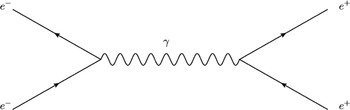
In the terminology of HEP, the term “total scattering cross section” is essentially defined to be the measure of the scattering rate of the particles impinging on a target particle in terms of the scattering angle. One of the main tasks in HEP is to measure the total scattering cross section of the interactions between sub-atomic particles; as this provides a means of obtaining information about various features of sub-atomic phenomena. During the period following World War II, the theoretical tool typically used by particle physicists for the cross section calculations was the Feynman diagram method invented by the American physicist Richard Feynman.Footnote 16 This method employs what is called the perturbative approach of QFT that consists of a set of approximation techniques to calculate the scattering cross section. Each term in the perturbation expansion of the scattering amplitude, which characterizes the probability of scattering in a given direction, corresponds to one of the intermediate states associated with the interaction under consideration. Each intermediate state is schematically represented by a diagram in which the straight lines and vertices signify the world lines of the particles and their mutual interactions, respectively. For instance, the Feynman diagram shown in fig. 1 represents a scattering process between the electron (e −) and the positron (e +), where a virtual photon (γ) is exchanged.
The Feynman diagram of electron-positron scattering. (This diagram was drawn by using JaxoDraw; see Binosi and Theussl Reference Binosi and Theussl2004.)

In order to calculate the total scattering cross section for a certain nuclear process, one needs to sum up the amplitudes of all the possible intermediate states. By the mid-1950s, the Feynman diagram method had been very successful in the framework of QED. However, QFT's perturbative approach was not valid for performing cross section calculations associated with hadrons, which are distinguished by their strong interactions. In those cases, due to the fact that the coupling constantFootnote 17 of the strong interaction is large, perturbation expansion yielded divergent terms, and no technique was available to extract observable quantities from the infinite results of the perturbation calculations, amounting to the commonly called “renormalization problem.”Footnote 18
From the mid-1950s onwards, physicists’ interest gradually shifted from QFT to the Scattering Matrix Theory (SMT), which had been proposed by Werner Heisenberg in his seminal 1943 papers (Heisenberg Reference Heisenberg1943a, Reference Heisenberg1943b).Footnote 19 In constructing SMT as an alternative theory of QFT, Heisenberg had a simple motivation that can be summarized as follows. In QFT, the basic entities are fields, rather than particles. Yet, fields are not directly detectable quantities. On the other hand, experiments in HEP are essentially scattering experiments where only particles can be detected. Heisenberg suggested that only those quantities that are experimentally ascertainable should enter the theories of HEP. Accordingly, he considered the scattering-matrix (S-matrix)Footnote 20 – the components of which are directly related to experimentally detectable quantities – as the fundamental dynamical quantity, rather than the Lagrangian. If one knows the S-matrix associated with a nuclear interaction, one can calculate almost all of its properties that can be tested by experimentation. However, in its form originally proposed by Heisenberg, SMT did not prove very useful for the study of strong interactions, as the S-matrix equations gave rise to an infinite set of coupled differential equations that were yet to be solved exactly.
The situation in HEP at the end of the 1950s was very desperate as far as the physics of strong interactions was concerned. Both QFT and SMT were beset by technical difficulties that seemed insurmountable.Footnote 21 In the early 1960s, a challenging proposal came from the Berkeley physicist Geoffrey Chew who was a strong adherent of SMT. Chew suggested that QFT was completely useless for the study of strong interactions and that it should be abandoned and replaced by SMT. In contrast to the hierarchical taxonomic approach of QFT, Chew suggested that each strongly interacting particle should be treated equally. To this end, Chew and his collaborator Steven Frautschi proposed to supplement SMT by what they called the “bootstrap hypothesis”Footnote 22 that suggested a mutual generation mechanism for all particles interacting via the strong interaction– namely, the “bootstrap mechanism” (Chew and Frautschi Reference Chew and Frautschi1961a). According to this mechanism, no particle was considered “elementary”; rather each strongly interacting particle was conceived of as a composite (or bound state) of all the other strongly interacting particles. In Chew and his collaborators’ words:
The strongly interacting particles are all dynamical structures that owe their existence to the same forces through which they mutually interact. In short, the strongly interacting particles are the creatures of the strong interaction. We refer to this as the “bootstrap” hypothesis. (Chew, Gell-Mann, and Rosenfeld Reference Chew, Jacob and Chew1964, 93)
According to the bootstrap hypothesis, all strongly interacting particles are taken to be on the same footing in the sense that they bootstrap each other, which in turn enables them to generate themselves. Since the bootstrap mechanism demanded the equal treatment of all strongly interacting particles, Chew called this approach to the physics of strong interactions “nuclear democracy” (Chew Reference Chew, Gell-Mann and Rosenfeld1964).Footnote 23
SMT as developed by Chew and his collaborators was basically a theory of strong interactions. This new form of SMT, referred to as the analytic SMT, was free of some of the technical difficulties besetting its original formulation by Heisenberg.Footnote 24 Yet, the analytic SMT was still far from offering experimentally testable predictions. Nor was it amenable to the analysis of experimental data. The next task in the SMRP was to apply the analytic SMT to scattering experiments. To this end, Chew and his collaborators Steven Frautschi and Stanley Mandelstam considered a mathematical technique previously proposed by the Italian theoretical physicist Tullio Regge (Regge Reference Regge1959, Reference Regge1960). The basic idea of the Regge technique is that the scattering amplitude in a scattering process is a complex-valued analytic function of the angular momentum.Footnote 25 Accordingly, the Regge technique suggests that scattering calculations should be performed in terms of energy and momentum variables on the complex plane,Footnote 26 instead of momentum transferFootnote 27 values.Footnote 28 In the non-relativistic regime, this technique enabled establishing certain bounds on the asymptotic behaviors of the elastic scattering amplitudes for large momentum transfer values.Footnote 29 The Regge technique was imported by Chew and his collaborators into the relativistic regime and incorporated into the bootstrap mechanism as a boundary condition at small momentum transfer values corresponding to small scattering angles (Chew and Frautschi Reference Chew and Frautschi1961b; Chew, Frautschi, and Mandelstam Reference Chew1962).
This further elaboration rescued the analytic SMT from some of the technical difficulties it previously faced, especially from the ones encountered in solving the bootstrap equations. More importantly, for the future of the SMRP, this new form of the analytic SMT – typically referred to as the “Regge theory or model” in the physics literature (see, e.g., Collins Reference Collins1977) – was able to yield experimentally testable predictions about hadron-hadron scatterings. The key prediction of the Regge theory was that at high energies and small scattering angles the hadron-hadron scattering cross section would fall rapidly with the increase of the momentum transfer during scattering (Chew and Frautschi Reference Chew and Frautschi1961a; Frautschi, Gell-Mann, and Zachariasen Reference Frautschi, Gell-Mann and Zachariasen1962). This meant that the scattering cross section would be low at large scattering angles. By the mid-1960s, the Regge theory proved very useful in the experimental studies of hadronic interactions. As shall be seen in sec. 6.1, the match between the predictions of the Regge theory and the results of the various experiments played an important role in its wide acceptance within the HEP community.
Before I close this section, I shall look at the SMRP through the categorization of the theories of HEP that I brought up in the previous section. The following might be helpful to see how the original SMT and the analytic SMT stand to each other. SMT, as originally proposed by Heisenberg, is a quantum theory of scattering phenomena. Its theoretical framework involves rules and principles that enable the construction of more elaborate theories of HEP. The analytic SMT was constructed in this framework as a theory of strong interactions. In this sense, the original SMT can be said to play the role of a background theory in the SMRP – as does QFT in the context of gauge theories of particle physics. However, unlike the original SMT, the analytic SMT is able to account for how sub-atomic particles interact via the strong interaction. It does this by invoking the principle of nuclear democracy as a guiding principle, and more importantly by appealing to the bootstrap mechanism that is exclusively applicable to its target phenomena, i.e., strong interactions. Therefore, I identify the original SMT as the background theory of the SMRP and the analytic SMT as the model theory of strong interactions in this research program.
As we have seen above, the analytic SMT by itself does not offer experimentally testable predictions about its target phenomena, i.e., strong interactions. Consequently, in the SMRP, theoretical considerations are involved in experimentation largely through the Regge theory. As I have mentioned earlier, the successful predictions of the Regge theory concerning hadronic processes expedited the establishment of the SMRP. The Regge theory is an elaboration of the analytic SMT in the sense that it was constructed by supplementing the latter with the Regge technique. Much of the predictive power of the Regge theory is due to this technique, which governs the asymptotic behavior of the elastic scattering amplitude at high energies. However, this advantage comes with a price. The Regge theory has a relatively narrow range of applicability as compared to the analytic SMT; for the Regge technique works only for elastic types of scattering phenomena. Recall that, in the previous section, in drawing the distinction between model theories of HEP and their phenomenological models, I have maintained the view that the latter are constructed primarily for the purpose of extracting testable predictions from model theories which, when taken all by themselves, do not typically offer testable predictions about their target phenomena. Also, I have argued that as compared to their corresponding model theories, phenomenological models have a narrower range of applicability; as their structural elements – which come in the form of mechanisms, hypotheses, and techniques – apply only to the sub-domains of the target phenomena of their model theories. Summing up, it is clear that both the way the Regge theory was constructed on the basis of the analytic SMT and the role it played in the SMRP perfectly illustrate the distinction I have previously drawn between model theories of HEP and their phenomenological models. This in turn suggests the Regge theory as a phenomenological model of the analytic SMT in the context of the SMRP.
The success of the Regge theory in the description of hadron-hadron scattering processes hindered the study of backward scattering region – corresponding to large momentum transfer regime – for other types of interactions, such as electron-proton scatterings. Until the mid 1960s, the analytic S-matrix theory and its phenomenological application, namely the Regge theory, gradually became accepted as the dominant view within the HEP community.Footnote 30 The first challenge against this dominant view came from the quark model, which I shall consider in the next section.
5. The Quark Model and the Current Algebra Approach to the Physics of Strong Interactions
Using the conceptual tools of QFT, the American physicist Murray Gell-Mann proposed an alternative approach to the physics of strong interactions that is now referred to as “current algebra” in the literature of HEP (Gell-Mann Reference Gell-Mann1962). Strongly interacting particles, namely hadrons, also undergo electromagnetic and weak interactions. The current algebra approach is concerned with those interactions of strongly interacting particles, and it is based on symmetry considerations, which had been previously applied to the domain of weak and electromagnetic interactions.Footnote 31 Gell-Mann suggested that, like electromagnetic and weak interactions, strong interactions could be modeled on the basis of a symmetry principle. He thereby proposed that strong interactions could be described by using the SU(3) algebra (ibid.).Footnote 32
Subsequently, in a two-page article, Gell-Mann proposed a model of hadrons that illustrated the essential features of the current algebra approach, which he had previously developed for strong interactions (Gell-Mann Reference Gell-Mann1964).Footnote 33 In the same year, the Russian-born American physicist George Zweig independently proposed a similar model (Zweig Reference Zweig1964a, Reference Zweig, Lichtenberg and Rosen1964b). According to those models, hadrons were composed of more fundamental particles, which Gell-Mann called “quarks” and Zweig “aces.”Footnote 34 Both physicists suggested that the constituent particles were of three distinct types, namely, what are today referred to as “up,” “down,” and “strange” quarks; each carrying a spin of  $\frac{1}{2}$, and fractional charge of respectively
 $\frac{{2e}}{3}$, −
 $\frac{{e}}{3}$, and −$\frac{{e}}{3}$, where e denotes the electric charge of the electron.Footnote 35 It is worth noting that the proposal of fractional charges was in great opposition with the dominant scientific belief of that time, the root of which dated back to Robert Millikan's oil drop experiments,Footnote 36 which had demonstrated that electric charges existed in nature as integral multiples of the charge of the electron.Footnote 37
The quark model posed a real challenge to the HEP community that was highly satisfied by the success of the Regge theory in the description of strong interactions. The quark proposal brought back again the idea that some particles were more “fundamental” than others. Obviously, this was an idea to which the proponents of the SMT, who subscribed to the view of “nuclear democracy,” were highly opposed. Yet, the quark model was successful in solving some symmetry problems (in the physics of strong interactions) that the analytic SMT could not account for.Footnote 38
The first real reaction of the HEP community towards the quark model was to look for particles of fractional charge in accelerator experiments. The second alternative was to look for quarks in cosmic rays. And, the third option was to perform more elaborate versions of Millikan's oil drop experiments in order to search for fractional electric charges. However, none of these options produced any evidence for the existence of quarks.Footnote 39 The lack of empirical evidence was an important reason behind the reluctance of the HEP community towards the acceptance of the quark model. Apart from the lack of empirical evidence, it is noteworthy that, as pointed out by both Kendall (Kendall Reference Karaca1991, 599) and Bjorken (personal communication, March 20, 2012), at the time the quark proposal was put forward the concept of “integer charge” was very prevalent among the HEP community, greatly precluding the acceptance of quarks as real particles.Footnote 40
An historical extension of the current algebra approach was the construction of “sum rules.”Footnote 41 On the basis of Gell-Mann's current algebra, the American physicist Stephen Adler derived a sum rule for the inelastic neutrinoFootnote 42 scattering from nucleon (Adler Reference Adler1966). By drawing on the sum rule derived by Adler and the current algebra technique, the Stanford theorist James Bjorken derived a lower bound for backward inelastic electron-nucleon scattering that suggested a large amount of cross section at high momentum transfer.Footnote 43 Based upon this result and current algebra, Bjorken concluded that “the total backward scattering at fixed large [momentum transfer squared was] predicted to be at least as great as that from a point Dirac particle with charge ± $\frac{{e}}{2}$” (Bjorken Reference Bjorken1967d, Reference Bjorken and Berman1767). At the Varenna International School of Physics (Varenna, July 17–29, 1967), Bjorken interpreted the same result as suggesting that backward inelastic electron-nucleon “scattering is the sum of the scattering from the Dirac moments of the point spin-½ constituents (if they exist)” (Bjorken Reference Bjorken1967b, 72).Footnote 44
6. A Closer Look at the Theory-Experiment Relationships in the Physics of Strong Interactions in the 1960s
I have previously suggested a categorization of the theories of HEP. But, I have not yet discussed the philosophical implications of this categorization for scientific experimentation. To this end, in this section, I shall examine experiments from the history of HEP in terms of theory-experiment relationship. My discussion is also intended to highlight some major theoretical developments that went together with experimentation. In contrast to an undifferentiated theory-experiment relationship suggested by the theory-dominated view of scientific experimentation, I shall seek to argue that the aforementioned categorization of the theories of HEP indicates that theory and experiment may interact in different ways and that this in turn brings about the existence of different senses of TLE in the practice of HEP.
6.1. The Elastic Proton-Proton Scattering Experiments
As mentioned earlier, the Regge theory offers experimentally testable predictions about strong interactions. According to this theory, the high energy behavior of the elastic hadron-hadron differential scattering cross section  $\frac{{d\sigma }}{{d{\rm \Omega }}}$ – whose integration over the entire solid angle Ω yields the total scattering cross section σ – obeys the following mathematical expression:
 $({\frac{1}{k_2}})\frac{{d\sigma }}{{d{\rm \Omega}}} \approx F(t)({\frac{S}{{2M^2 }}})^{2L(t) - 2}$, where t=−2k 2(1−cos θ) is the negative of the square of the four-momentum transfer, k is the wave number; θ is the scattering angle; S denotes the square of the center of mass energy; L(t) represents angular momentum; and M stands for the hadron mass. F(t) denotes the scattering amplitude, and at high energies, it is an exponentially decreasing function of t, which is always negative in the physical region, and L(t) is taken to be less than 1. The Regge theory makes the following predictions for elastic hadron-hadron scattering cross section: (1) the scattering cross section should decrease exponentially with increasing momentum transfer in a scattering process; and (2) the width of the forward scattering peak should shrink logarithmically with increasing scattering energy (see Chew and Frautschi Reference Chew1961a; Frautschi, Gell-Mann, and Zachariasen Reference Frautschi, Gell-Mann and Zachariasen1962).Footnote 45 These two predictions of the Regge theory concern two different aspects of the hadron-hadron scattering cross section. The first prediction indicates that the rate of the scattered particles would diminish as the momentum transfer between the scattered particles and the target increases. The second prediction indicates that the rate of the scattered particles would also diminish as the energy at which the particles scatter from the target increases. Soon after the formulation of the Regge theory, a number of elastic proton-proton scattering experimentsFootnote 46 were launched with the aim of testing the above predictions of the Regge theory. This was also clearly pointed out in the publications of the experimental groups that performed those experiments, as the passage below exemplifies:
This experiment is part of a program to study basic strong interactions in the energy range . . . ~10–20 BeV. These measurements are of great current interest due to the striking predictions made by Regge pole theory and allow a critical evaluation of the theory. If the energy is sufficiently high . . . one would expect – as predicted by Chew and Frautschi and others – a shrinkage of [the scattering cross section] corresponding at low [momentum transfer]. (Foley et al. Reference Foley1963, 376)
At this point, I shall note that the fact that the proton-proton scattering experiments were planned and launched by taking into account the predictions of the Regge theory is not enough to conclude that these experiments are theory-laden in the sense of TDE. It is to be recalled that TDE, as I have defined in the preceding discussion, requires also other stages of the experimental process – such as experimental design, data acquisition, data analysis, as well as data interpretation – to be carried out in a theory-regulated way. Now, let us see how the stages of experimental design and data acquisition were carried out in the elastic proton-proton scattering experiments. First, it is to be noted that the fact that these experiments were aimed at testing the predictions of the Regge theory had a significant impact on the selection of the phenomena to be scrutinized. Only the forward scattering region, which corresponds to elastic scatterings, was probed in the proton-proton scattering experiments; so that data were only taken in this region. It is also to be noted that the forward scattering region was the only region that was relevant to the predictions of the Regge theory. As a result, the backward scattering region that corresponds to the inelastic scatterings of protons was disregarded. This points out that the instrumental arrangement and the data acquisition process in the proton-proton scattering experiments were specific to the phenomena relevant to the testing of the Regge theory. Therefore, I conclude, both the experimental design and the data-taking procedures in the elastic proton-proton scattering experiments were arranged specifically to test the aforementioned predictions of the Regge theory.
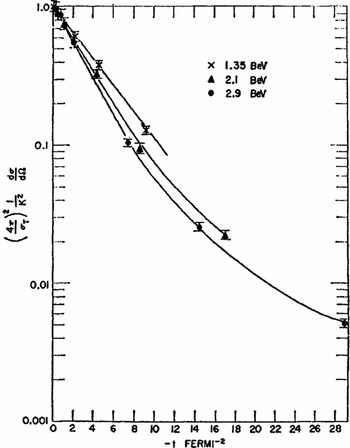
The impact of the Regge theory on the elastic proton-proton scattering experiments is also manifest in the way the collected data were analyzed. The data analysis was aimed at extracting the information that would enable drawing conclusions about the predictions of the Regge theory. More specifically, as indicated in fig. 2, the collected cross section data were plotted against the momentum transfer at different energy values. It was found that the width of the forward scattering peak decreased with increasing energy, and that its tail fell off exponentially with increasing momentum transfer. That is, the results of the elastic proton-proton scattering experiments were found to be compatible with the predictions of the Regge theory.
The differential scattering cross section as a function of momentum transfer in the elastic proton-proton scattering at energies 1.35, 2.1, and 2.9 BeV. Reprinted with permission from Fujii et al., Physical Review, vol. 128, pp.1836–1841, fig. 5, 1962. Copyright 1962 by the American Physical Society.

Moreover, the collected data were also used to determine the numerical values of the function F(t) at different momentum transfer values. Note that F(t) is a mathematical function that represents the high energy behavior of the scattering cross section. In this sense, its numerical determination requires the mathematical formalism of the Regge theory that connects it to the cross section, energy, and momentum values, which are directly measurable physical quantities in a scattering experiment. The numerical results of the function F(t) were found to exhibit an exponentially decaying behavior with increasing momentum transfer t, while remaining virtually independent of energy values (see, e.g., Fujii et al. Reference Fujii1962, fig. 6). This result was also compatible with the theoretical framework of the Regge theory, in which F(t) was defined to be only a function of the momentum transfer t. The elastic proton-proton scattering experiments ended with the conclusion that the elastic proton-proton scattering cross section exhibited a behavior as predicted by the Regge theory. My conclusion regarding the data analysis in these experiments is that it was not aimed at detecting unforeseen effects that might be hidden in the elastic scattering data, but rather solely at testing the predictions of the Regge theory.
The above discussion indicates that the successive stages of the elastic proton-proton scattering experiments were carried out by appealing to the theoretical framework of the Regge theory. In other words, the Regge theory can be said to have provided a definite road map for the elastic proton-proton scattering experiments to proceed from their initial design up to their final stage. This conclusion allows me to call these experiments theory-laden in the strong sense of TLE, i.e., TDE.
6.2. The Deep-Inelastic Electron-Proton Scattering Experiments
In this subsection, I shall examine the deep-inelastic electron-proton scattering (DIS) experiments that were performed at the Stanford Linear Accelerator Center (SLAC) between the years 1967 and 1973.Footnote 47 At the outset, I shall give a brief overview of the earlier developments in experimental HEP. The elastic scattering of electrons from nucleons (protons or neutrons) was first studied in the 1950s by a group of physicists led by Robert Hofstadter from Stanford University. The data obtained at the end of a series of experiments (see Hofstadter and McAllister Reference Hofstadter and McAllister1955; Hofstadter Reference Hofstadter1956) showed that the elastic scattering cross section decreased sharply with increasing momentum transfer. This strengthened the belief that the proton had an extended internal structure. The data also revealed that the size of the nucleons was roughly 10−13 cm. These experimental findings marked the beginning of a new era for the search of the inner structure of the proton, while bringing Hofstadter the Nobel Prize in 1961. It is to be noted that the electron beam energies at that time were still too low to be able to study the inelastic scattering of electrons from nucleons.Footnote 48 This was the future research direction in experimental HEP towards the mid-1960s. But, the HEP community was urgently in need of a better accelerator technology that would allow the study of the inelastic scattering of electrons from nucleons.
In 1961, the U.S. Congress approved the proposal of Stanford University to construct a linear accelerator that could accelerate electrons up to 22 GeV. The construction of the linear accelerator at the SLAC was completed in 1966.Footnote 49 Soon after, in early 1967, the collaboration consisting of physicists from SLAC, Massachusetts Institute of Technology (MIT), and California Institute of Technology (Caltech) embarked on a project primarily aiming at the analysis of the inelastic electron-proton scattering. Jerome Friedman (MIT)Footnote 50 was one of the co-leaders of this project and summarized the intended scope of this project as follows in his Nobel Lecture of December 8, 1990:
The main purpose of the inelastic program was to study the electroproduction of resonances[Footnote 51] as a function of momentum transfer. It was thought that higher-mass resonances might become more prominent when excited with virtual photons, and it was our intent to search for these at the very highest masses that could be reached. (Friedman Reference Friedman1991, 615)
As a first step, the Caltech-MIT-SLAC collaboration studied the elastic scattering of electrons from the proton target. The data obtained showed that the scattering cross section fell off rapidly as the momentum transfer during the scattering increased.Footnote 52 This result was compatible with the expectation of the collaboration. According to the project-proposal, the next step was to study the inelastic scattering of electrons from the proton target. At this stage of the project, the Caltech group dropped out of the collaboration, thinking that the planned inelastic electron-proton scattering experiments would merely duplicate the known outcomes of the previous elastic electron-proton scattering experiments.Footnote 53
As a result, the inelastic part of the project was undertaken by the MIT-SLAC collaboration. “For completeness [the collaboration] also wanted to look at the inelastic continuum, since this was a new energy region which had not been previously explored” (Friedman Reference Friedman1991, 615).Footnote 54 For the collaboration, even though the inelastic continuum, i.e., deep-inelastic scattering region,Footnote 55 was a novel scattering region to explore, their expectation was that the DIS experiments would not yield results that would challenge the widely held belief that “the nucleon was the extended object found in elastic electron scattering but with the diffuse internal structure seen in . . . proton scattering” (Kendall Reference Karaca1991, 597). As pointed out by Friedman “the general point of view was that hadrons did not have elementary constituents, namely point-like constituents that were described by a field theory. A consequence of this picture was that hadrons would have diffuse substructures and no elementary building blocks” (Friedman Reference Friedman2012, 470). This more or less, standard view of the nucleon was not suggested to the experimentalist group by a well-established theoretical account. However, the group had good reasons for their commitment to that view of nucleon structure. First, it was suggested by the previous elastic electron-proton scattering experiments (Hofstadter and McAllister Reference Hofstadter and McAllister1955). On the theoretical side, it was only challenged by the quark proposal that had not received any support from experiments. The foregoing commitment led the experimentalist group to the supposition that the proton's inner structure could not serve to scatter the impinging electrons at large angles. This was also pointed out by Friedman in his Nobel Lecture as follows:
When the experiment was planned, there was no clear theoretical picture of what to expect. The observations of Hofstadter (McAllister and Hofstadter Reference Hofstadter1956) in his pioneering studies of elastic electron scattering from the proton showed that the proton had a size of about 10−13 cm and a smooth charge distribution. This result, plus the theoretical framework that was most widely accepted at the time, suggested to our group when the experiment was planned that the deep-inelastic electron-proton cross sections would fall rapidly with increasing [momentum transfer squared during the scattering]. (Friedman Reference Friedman1991, 616)
When the inelastic program began in September of 1967, the theoretical landscape in the physics of strong interactions was quite unsettled. The Regge theory was considered to be the mainstream approach to the study of hadron-hadron scattering processes. This was largely due to its predictions that were confirmed in the elastic hadron-hadron scattering experiments. But, an important shortcoming of the Regge theory was that it was not able to account for inelastic scattering processes between hadrons.Footnote 56 Furthermore, QFT's perturbative approach to strong interactions was beset by the problem of renormalization, which hindered the study of hadronic processes. The only theoretical result concerning backward electron-proton inelastic scattering was the lower bound obtained by Bjorken on the basis of current algebra just before the inelastic part of the SLAC project began. As we have previously seen, this result was suggestive of a pointlike structure of the nucleon. At this point, it is worth pointing out that at the time the SLAC project was underway, Bjorken was working in the theory-division of the SLAC. As the following passage from Friedman's Nobel Lecture indicates, the members of the MIT-SLAC collaboration apparently heard about Bjorken's work on electron-proton scattering prior to the inelastic part of the project; however, they did not take Bjorken's result into account when they began the DIS experiments:
Bjorken's result made little impression on us at the time. Perhaps it was because these results were based on current algebra, which we found highly esoteric, or perhaps it was that we were very much steeped in the physics of the time, which suggested that hadrons were extended objects with diffuse substructures. (Friedman Reference Friedman1991, 618)
Friedman's words suggest that two factors directly contributed to the dismissal of Bjorken's proposal by the MIT-SLAC collaboration. First, the members of the collaboration did not understand current algebra well enough to be able to judge and recognize the significance and the implications of Bjorken's proposal. Second, Bjorken's proposal was in opposition with the common thinking among the HEP community about the inner structure of hadrons to which the group members were strongly committed, thereby disinclining them to consider Bjorken's proposal. Thus, it would be correct to say, as Kendall also remarked in his Nobel Prize Lecture of December 8, 1990, “there was no consideration that possible point-like substructure of the nucleon might be observable in electron scattering during the planning and design of the electron scattering facility” (Kendall Reference Kendall1991, 600). In a private communication, Friedman expressed a similar view:
Our initial experiment was planned and carried out without regard to any predictions from the world of theory. It was meant to be an exploratory investigation of electro-production of nucleon resonances and of highly inelastic scattering from the nucleon in a new energy range.We had hoped that such a study might shed some light on the structure of the nucleon. It was really a fishing expedition. (J. I. Friedman, personal communication, October 4, 2007)
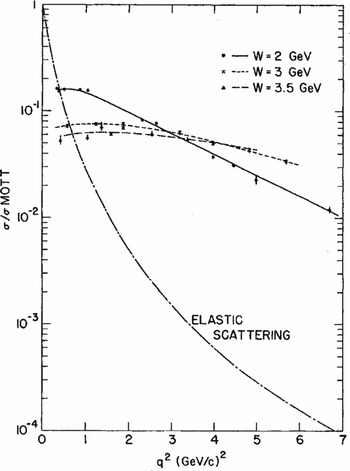
The DIS experiments were carried out by the MIT-SLAC collaboration led by Richard Taylor (from MIT), and Jerome Friedman and Henry Kendall (from SLAC). In contrast to the expectation of the group, in the deep-inelastic scattering region corresponding to large scattering angles and high energies, the scattering cross sections were found not to change considerably and remained close to those at small angles. In other words, the inelastic scattering data revealed that the dependence of inelastic scattering cross section on momentum transfer was rather weak (Bloom et al. Reference Bloom1969). Fig. 3 depicts this feature of electron-proton inelastic scattering spectrum obtained at the DIS experiments.
The SLAC inelastic electron-proton scattering cross sections (σ) as a function of momentum transfer squared (q 2). The upper three curves represent inelastic cross section measurements at W: 2, 3, and 3.5 GeV, and the lowest curve represents the data from elastic scattering. Reprinted with permission from Breidenbach et al., Physical Review Letters, vol. 23, pp. 935–939, fig. 1, 1969. Copyright 1969 by the American Physical Society.

The historical context in which the DIS experiments were launched indicates that the MIT-SLAC collaboration did not take into account Bjorken's Reference Bjorken and Steinberger1967 result (concerning the backward electron-proton inelastic scattering) that was the only theoretical result relevant to the aims of the DIS experiments. Therefore, it would be correct to conclude that the stages of planning, design, and data acquisition of the DIS experiments were carried out without recourse to the guidance of any workable theory or phenomenological model with regard to the scattering processes under scrutiny. Rather, those stages were geared towards the exploration of the forward scattering region as well as the backward region, which had not been probed in previous scattering experiments. Here, what I mean by “exploration” can be understood as systematically looking for patterns of regularities in the scattering cross section spectrum and extracting from them the information as to the dependence of inelastic scattering cross section on momentum transfer. It is to be noted that the fact that the experimentalist group did not have recourse to the guidance of any theoretical account as to what the scattering of electrons from the proton target would yield suggests that the DIS experiments were not driven by any theory or model in the sense of TDE. This was also manifest in the design of these experiments. Unlike the case of the earlier elastic proton-proton scattering experiments examined in the previous sub-section, the experimental design of the DIS experiments was not specific to any theory. Even though the experimentalist group had a clear expectation about the outcome of these experiments, namely that scattering cross section would be relatively low in backward scattering region, their expectation was not decisive in the instrumental arrangement. It is to be noted that the instrumental arrangement in the DIS experiments was not intended to solely serve the expectation of the experimentalist group; but rather it enabled probing the backward scattering region which was previously considered by the majority of the HEP community to be an uninteresting region for scattering experiments.
In order to understand how the data analysis was carried out in the DIS experiments, let us have a closer look at how the collected cross section data were processed in these experiments. The first unexpected feature of the cross section data was discovered when they were plotted as a function of the square of the four-momentum transfer, i.e., q 2=2EE′(1−cos θ), for constant values of the invariant mass of the recoiling target system defined as  $W = \sqrt {2M\left( {E - E^\prime} \right) + M^2 - q^2}$, where E is the energy of the incident electron, E′ is the energy of the scattered electron, θ is the scattering angle, and M is the mass of the proton. It was found that as W increases, the q 2 dependence of cross section appeared to decrease, as indicated in fig. 3. It is to be noted that no theoretical prediction of what the scattering cross section data would look like as a function of q 2 and W was considered prior to the data acquisition stage of the DIS experiments. In this sense, the above finding of the MIT-SLAC collaboration should be regarded as an experimental discovery rather than an experimental test of a previously stated theoretical result. This suggests that, unlike the case of the earlier elastic proton-proton scattering experiments, the data analysis in the DIS experiments was not intended to verify or disprove any theory whatsoever. Nor was it directed towards discovering further empirical consequences of an existing theory. This discussion suggests that, like the earlier stages, the data analysis stage concerning the weak momentum transfer dependence of cross section data was carried out without having recourse to the guidance of any workable theory or phenomenological model.
Another unexpected and exciting feature of the inelastic electron-proton scattering data was understood by following a suggestion made by Bjorken. In 1964, Sidney Drell and John Walecka from Stanford University provided a formulation of the inelastic electron-proton scattering cross section by using the concept of “structure function.”Footnote 57 In this formulation, the total cross section is taken to be a function of the structure functions W 1 and W 2 that are in turn functions of the variables q 2 and ν representing the momentum transfer squared and the energy lost of the electron during the scattering, respectively (Drell and Walecka Reference Drell and Walecka1964). Bjorken elaborated on this formalism and suggested what is now referred to as the “Bjorken scaling” of the electron-proton deep-inelastic scattering; namely, in the deep-inelastic scattering region where both q 2 and ν become sufficiently large, W 1 and the product νW 2 depend only on the ratio  $\omega = \frac{{M\nu }}{{q^2 }}$, where M stands for the proton mass, and ω is the dimensionless scaling variable, rather than q 2 and ν independently (Bjorken 1968, Reference Bjorken1969).Footnote 58 During the analysis of the inelastic scattering cross section data, Bjorken suggested, through dialogue with Kendall, to the experimentalist group that they analyze the scattering cross section data to check the scaling hypothesis.Footnote 59 Upon this suggestion, the experimentalist group plotted W 1 and νW 2 as a function of ω and determined that the scattering cross section data, to a good approximation, exhibited scaling behavior in the way predicted by Bjorken.Footnote 60 It is to be noted here that since the scaling variable ω is dimensionless, the scaling behavior of the deep-inelastic electron-proton scattering cross section data just described indicates that there is no absolute length or energy scale characterizing the scattering process; thereby suggesting that, in the deep-inelastic scattering regime, electrons can scatter off the proton target also at large scattering angles corresponding to higher momentum transfer values.
I shall close this sub-section with a brief discussion of the role of theoretical considerations in the DIS experiments. At this point, the following quotation from Friedman is worth mentioning:
The comparison [of the cross section data] with scaling was really an afterthought. None of us understood what the physical significance of scaling was at that time. (J. I. Friedman, personal communication, October 4, 2007).
Friedman's words suggest that Bjorken's explanation of scaling, like his inequality for the inelastic electron-proton scattering cross section, was not taken into account by the MIT-SLAC collaboration until the cross section data were acquired and analyzed, and its weak momentum transfer dependence was observed. Therefore, one can conclude that in the DIS experiments Bjorken's account was appealed to only in the later part of the data analysis and interpretation stage that revealed the scaling feature of the experimental data.Footnote 61 It is to be remembered that TDE, as I have previously defined, requires all successive stages of experimentation to be guided by the theoretical accounts of the target phenomena. Therefore, the fact that the scaling feature of the cross section data was discovered following Bjorken's suggestion does not render the DIS experiments theory-laden in the sense of TDE. It is also to be noted that a variety of other theoretical considerations were also relied upon to carry out these experiments. First, since these are scattering experiments, detectors were used to detect and determine the number of scattered electrons per scattering angle. In this way, the ratio of the flux of the scattered electrons to the flux of the incident electrons was calculated. Experimenters identified this ratio as the total scattering cross section of the interaction between incident electrons and the proton target. Given that in QM the term scattering cross section denotes the probability that a particular nuclear reaction will take place, the interpretation of the flux ratio of the electrons in a scattering process as the differential scattering cross section requires an appeal to the theoretical framework of QM at a very fundamental level.Footnote 62
Moreover, the data analysis in the DIS experiments was accomplished by performing “radiative corrections”on the cross section data.Footnote 63 Since the radiative effects would contribute to the measured cross section at a fixed energy and angle, in scattering experiments involving charged particles radiative corrections must be made in order to eliminate the effects of the radiation of photons by electrons. In the case of the DIS experiments, radiative corrections were performed by taking into account different ways in which an electron might emit and absorb photons during its interaction with proton. To this effect, by appealing to QED, the Feynman diagrams were drawn for each case, and by using these diagrams, contributions coming from the interaction of the electron with photon were calculated. In light of these contributions, the measured cross section data were revised so as to yield only the contribution coming from the interaction of electron with proton.Footnote 64
Therefore, it is clear that both the data acquisition stage and the data analysis stage in the DIS experiments at SLAC were performed by making use of various theoretical considerations from the various theories of HEP.Footnote 65 However, since these theoretical considerations were restricted to individual stages of experimentation, like the consideration of Bjorken's scaling hypothesis, they did not continuously regulate the successive stages of the DIS experiments so as to render the experimental process theory-driven in the sense of TDE.
6.3. The Aftermath of the Early DIS Experiments: Feynman's Parton Model, Asymptotic Freedom, and the Emergence of QCD
The early DIS experiments at SLAC ended up with a puzzling situation, pointing to both the weak momentum transfer dependence and the scaling of the deep-inelastic electron-proton scattering cross section. The preliminary results were presented at the 14th International Conference on High Energy Physics (Vienna, August 28-September 5, 1968). In a plenary session of this conference, in his rapporteur's talk, Wolfgang Panofsky, the director of the SLAC at that time,Footnote 66 mentioned the scaling feature of the experimental data and suggested that “theoretical speculations [were] focused on the possibility that [deep-inelastic electron-proton scattering] data might give evidence on the behavior of point like, charged structures within the nucleon” (Panofsky Reference Panofsky, Prentki and Steinberger1968, 30). However, this was not the official view of the MIT-SLAC collaboration; as no one in the collaboration at that time had a clear explanation regarding their findings. In his Nobel Lecture, Friedman quotes the above words of Panofsky and states that the view expressed by him “was not the prevailing point of view. Even if one had proposed a constituent model at that time it was not clear that there were reasonable candidates for the constituents” (Friedman Reference Friedman1991, 616).Footnote 67 Furthermore, the following words of Friedman clearly demonstrate that at the time of the conference the MIT-SLAC collaboration had not yet come to any definite conclusion about the findings of the DIS experiments:
I gave the first presentation of our results [(Bloom et al. Reference Bloom1968)] at the International High Energy Conference in Vienna in 1968 . . . and our group had a long debate before I left about what I should say. I was instructed that under no circumstances should I talk about the possibility of pointlike structure within the proton. The general consensus was that this was too bizarre an idea to discuss in public. So I didn't. I showed all the data [about the scaling feature and weak momentum transfer dependence of cross section] . . . but never said a word about the possibility of pointlike constituents.
Wolfgang Panofsky gave the plenary talk for that session. He said that there was experimental evidence that suggested the possibility of pointlike structure in the proton. He said it in about two sentences. But the audience appeared to pay little attention to it. The community was totally unreceptive to the idea of pointlike structure in any hadron and “Nuclear Democracy” was well entrenched in those days. (Friedman Reference Friedman2012, 477)
In addition to the indecisiveness of the MIT-SLAC collaboration, the above passage also indicates that, at the time of the Vienna Conference, the HEP community was not ready yet to break away from the view that suggested that the nucleon had a diffuse internal structure. In what follows, I shall outline the attempts by the theoretical HEP community to account for the puzzling results of the DIS experiments, as well as the responses of the MIT-SLAC collaboration to these attempts.
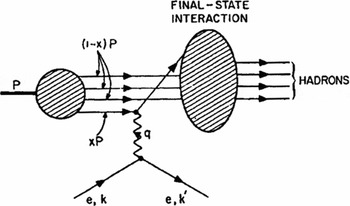
In the late August of 1968, the Nobel Prize winner Caltech physicist Richard Feynman, who had been trying to understand hadron-hadron interactions since the mid-1960s, made a visit to the SLAC. At that time, Feynman held the belief that hadrons were composed of what he called “partons” which he conceived of as point-like structures. The inelastic electron-proton scattering data strengthened his belief in regard to the existence of partons, in the sense that in his view both the weak momentum transfer dependence and scaling observed in the DIS experiments could be explained by appealing to constituents which he called partons. Feynman conjectured that high energy hadronic collisions took place between point-like partons and that the interactions among partons were negligibly small; meaning that partons were envisaged to act as independent entities during the deep-inelastic scattering of electrons from the proton target (Feynman Reference Feynman1969a, Reference Feynman and Yang1969b).
The deep-inelastic electron-proton scattering in the parton model. k and k′ represent the incident and final momentum of the electron, respectively, q stands for the photon exchanged during the scattering, and x is a certain fraction of the proton's momentum (P). Reprinted with permission from Bjorken and Paschos, Physical Review, vol. 185, pp. 1975–1982, fig. 1, 1969. Copyright 1969 by the American Physical Society.

Within the framework of his parton model, Feynman found a plausible way of explaining both the scaling and the weak momentum transfer dependence of the deep-inelastic electron-proton scattering cross section data. Feynman regarded the scattering of electron from proton as a process during which the incoming electron emits a photon which then interacts with one of the individual partons inside the proton. Feynman's explanation of the weak momentum transfer dependence rested on an analogy that he drew from the electron-electron scattering. Due to their point-like structures, electrons typically scatter from each other at large angles. According to Feynman's view, during the scattering between the incoming electrons and the proton target the actual scattering occurs between the individual electrons and partons which were thought to be point-like structures inside the proton. Therefore, according to Feynman's parton model, electron-parton scattering had to take place at large angles, thereby explaining why at large scattering angles, scattering cross section did not fall off rapidly in the deep inelastic electron-proton scattering. In addition, Feynman showed that when each parton was regarded as the carrier of a fraction of the total momentum of the proton, i.e., P parton = x P proton, as depicted in fig. 4, then x here could be identified as  $x = \frac{1}{\omega }$, where ω is the scaling parameter in Bjorken scaling.Footnote 68 Thus, the phenomenon of scaling observed in inelastic scattering of electrons from protons was shown to be a natural consequence of conceiving of protons as being composed of point-like structures and carriers of the total momentum of the proton.Footnote 69 In this way, it was understood that the scaling and weak momentum dependencies of the deep-inelastic electron-proton scattering data were essentially the same phenomenon and occurred as a result of the scattering of electrons with point-like particles inside the proton.Footnote 70
At around the same time, drawing on Bjorken's formulation of scaling, in a jointly written paper, Curtis Callan and David Gross showed that for large momentum transfer the ratio  $R = \frac{{\sigma _L }}{{\sigma _T}}$, where σL and σT represent respectively the cross sections for longitudinal and transverse polarized virtual photons exchanged between partons and electrons, depended heavily on the spin of the constituents of the nucleons (Callan and Gross Reference Callan and Gross1969). Moreover, they showed that the vanishing of R in the limit where both q 2 and ν become sufficiently large, i.e., in the deep-inelastic scattering region, would imply that the nucleon was composed of spin-½ particles as suggested by the quark model; whereas the non-vanishing of R in the same limit would imply that the constituents of the nucleon included spin-0 or spin-1 particles. Upon this result, Jeffrey Mandula specified the kinematic variation of R that was required by the scaling hypothesis; he showed that R should diminish like
 $\frac{1}{v}$ in the deep-inelastic scattering region (Mandula Reference Mandula1973). The experimental confirmation of these theoretical predictions arrived quickly. At the15th International Conference on High-Energy Physics (Kiev, August 26-September 4, 1970), the MIT-SLAC collaboration presented the data showing that R=0.18±0.05 (Bloom et al. Reference Bloom1970).Footnote 71 As we learn from Friedman's Nobel Lecture, “[b]y the time of the [Kiev Conference the members of the MIT-SLAC collaboration] were reasonably convinced that [they] were seeing constituent structure in [their] experimental results” (Friedman Reference Friedman1991, 623). In the subsequent experiments, R was measured over a larger kinematic range and its accuracy was sufficiently improved by decreasing the errors (Miller et al. Reference Miller1972; Riordan et al. Reference Riordan1974). Furthermore, it was shown that, for w≤5, the kinematic variation of R was consistent with scaling, i.e., it behaved as $\frac{1}{v}$ in the deep-inelastic scattering region as previously predicted by Mandula. The MIT-SLAC collaboration interpreted these results as indicative of spin-½ constituents in a parton model of the proton (Riordan et al. Reference Riordan1974, 561).Footnote 72
The experimental results that came from the improved DIS experiments urged the theoretical HEP community to study more closely the scaling hypothesis in relation to the possibility that the nucleon consisted of spin-½ point-like constituents as previously proposed by Gell-Mann and Zweig. A key step in this endeavor was the mechanism of “asymptotic freedom” that was proposed jointly by Gross and his doctoral student Franz Wilczek at Princeton University and independently by David Politzer at Harvard University (Gross and Wilczek Reference Gross and Wilczek1973; Politzer Reference Politzer1973). According to this mechanism, at high energies the interactions between the constituents of nucleons, which are today referred to as “quarks,” become weak at short distances. The mechanism of asymptotic freedom was able to account for why the interactions between the constituents of protons were negligible, a feature that had been left unexplained in Feynman's parton model. The hypothesis of asymptotic freedom opened the door to the development of a more comprehensive theory of strong interactions, namely QCD, that would subsequently replace the SMT.Footnote 73
7. Conclusions: The Exploratory Character of Experimentation
In this paper, I have introduced a categorization of the theories of HEP – as background theory, model theory, and phenomenological model – based on the ways in which they relate to sub-atomic phenomena. Drawing on this categorization, I have contrasted the distinct roles played by theoretical considerations and distinguished between the weak and strong senses of TLE in the context of two cases of experimentation from the history of HEP: namely, the elastic proton-proton scattering experiments of the first half of the 1960s and the DIS experiments at SLAC between the years 1967 and 1973. I have argued that in the former case each stage of experimentation, from initial planning and design up to data analysis and interpretation, was carried out by appealing to a particular phenomenological model of HEP, namely the Regge theory, for the sole purpose of testing the conclusions of this theory. I have argued that this case illustrates the strong sense of TLE, which I have previously called TDE. Note that the latter reflects what the theory-dominated view of scientific experimentation suggests as the only type of relationship between theory and experiment in scientific practice. Here, I by no means draw a necessary link between theory-driven experimentation and phenomenological models of HEP such that all theory-driven experiments in HEP are carried out by means of phenomenological models. But, I suggest that given their capability of offering more detailed accounts of sub-atomic phenomena as well as directly testable predictions, it is typical that theory-driven experiments in HEP are carried out by means of phenomenological models. By contrast, in the case of the DIS experiments at SLAC, experimentation lacked the guidance of any phenomenological model of the target phenomena. As a result, the experimental stages were not continuously regulated under the guidance of any theoretical account, indicating that experimentation was carried out to a great extent autonomously. Even though certain theories were relied upon during experimentation, the influence of these theories on the overall progress of experimentation remained local and minimal, in that their use was limited to certain stages of experimentation and provided only the most basic instrumental and conceptual requirements to perform experimentation in HEP. These included relying on QM and Maxwell's electrodynamics to build and use particle detectors to carry out scattering cross section measurements, as well as relying on QED to perform radiative corrections to the measured scattering cross section data. Therefore, I conclude that the DIS experiments at SLAC illustrate what I have previously called the weak sense of TLE.
The theory-dominated view of scientific experimentation acknowledges the testing of the conclusions of scientific theories and hypotheses as the only role experimentation can play in scientific practice. However, in the case of the DIS experiments, this view is far less plausible. Even though Bjorken's prediction of a large scattering cross section for backward inelastic scattering of electrons from nucleons was available prior to these experiments, the experimentalists’ narratives suggest that, for the reasons I have stated in the preceding discussion, the testing of Bjorken's result was not originally part of their agenda. Therefore, the fact that there exists a theoretical account of the phenomena to be studied in an experiment does not entail that it would be taken into account by the experimentalists. In the end, it is the experimentalists’ considerations and decisions that shape the scope and content of the agenda to be pursued in an experiment, suggesting that it would be descriptively inaccurate to simply assume that the theorists point out to the experimentalists what phenomena to study in an experiment. These considerations show how experiments actually get their own life as previously suggested by Hacking, and they lend support to the view that experimentation enjoys a certain amount of autonomy from theory, as earlier suggested by Galison.
The above discussion suggests that even though in both historical cases I have analyzed in this paper experimentation is theory-laden, the senses of TLE that are at work are qualitatively different. Therefore, in the history of HEP theory plays qualitatively different roles in experimentation and this in turn calls for a differentiation of different degrees, and thus different senses, of TLE. From this, I draw the conclusion that TLE should be understood as an umbrella concept that has varying senses. This conclusion stands in contrast with the theory-dominated view of scientific experimentation that takes the concept of TLE undifferentiated and that treats all relations of theorizing and experimentation on a par, namely, that experiments in science are performed solely to ascertain the conclusions of scientific theories or hypotheses.
If the DIS experiments do not play the role of testing, what other role do they suggest for experimentation in the history of HEP? I shall argue that these experiments illustrate an exploratory use of experimentation in the practice of HEP and thereby suggest the role of exploration for experimentation. Here, in a similar vein to Steinle, I use the term “exploratory” to characterize the type of experimentation that is performed without having recourse to any theoretical account of its target phenomena. I shall characterize the exploratory character of the DIS experiments in terms of the following aspects: the general aim of experimental inquiry; the experimental methods or strategies used; and the involvement of theoretical considerations in experimentation. In what follows, I shall consider these aspects of the DIS experiments and argue that it was the combination of those aspects that lent the DIS experiments their exploratory character.Footnote 74
To this end, I shall first note that the DIS experiments were carried out with an explorative aim, in that they undertook to probe a scattering region that had not yet been probed by previous experiments and about which there was no well-defined and well-established theoretical framework.Footnote 75 In this respect, the DIS experiments were carried out not to test any theoretical account, but rather to advance the understanding of the inner structure of the nucleon through the study of an as-yet-unexplored scattering region. With respect to the experimental method used in the DIS experiments, I shall note that the finding of the weak momentum transfer dependence of the deep-inelastic electron-proton scattering cross section was obtained not through the guidance of a particular theory or model but rather as a result of the decision of the systematic investigation of an as-yet-unexplored scattering region. This led to the success of the DIS experiments; if only the forward scattering region had been probed in these experiments, none of their findings would have been obtained. The experimental strategy adopted in the DIS experiments was to systematically vary the experimental parameters so as to allow the probing of both the forward and backward scattering regions.Footnote 76 More specifically, the scattering cross section was measured at different scattering angles (corresponding to different momentum transfer values) at different energies, as indicated in fig. 3. Note that this experimental strategy allows searching for any possible regularities that might exist in the scattering spectrum, as opposed to only one specific effect already predicted by some theoretical account. In this respect, the experimental strategy adopted in the DIS experiments was not biased towards or against the detection of a previously predicted effect. Lastly, with respect to the involvement of theoretical considerations in experimentation, I shall note that the DIS experiments were performed in a way largely autonomous from theory, as I have previously argued. Thus, the above considerations point to the exploratory character of the DIS experiments in that they were performed to fulfill an exploratory objective by adopting a suitable exploratory strategy that was implemented in a way largely autonomous from theory. Note that this last point suggests that the exploratory character of the DIS experiments is closely linked to their autonomy from theory. This also receives support from the following quotation by Gross:
Early scattering experiments concentrated, for obvious reasons, on the events that had the largest rates. In the case of the strong interactions, this meant searching for resonant bumps or probing near forward scattering, where the cross section was largest. It was not at all realized by theorists that the secret of hadronic dynamics could be revealed by experiments at large momentum transfer that probed the short distance structure of hadrons . . . . Therefore theorists concluded that Regge behavior must be very important and forward scattering experiments were deemed to be the major tool of discovery. Regge theory was soon incorporated into the bootstrap program as a boundary condition. In response to this theoretical enthusiasm, the interest of experimentalists in forward scattering was enhanced. Opportunities to probe the less easily accessible domains of large momentum transfer were ignored. Only much later, after the impact of the deep-inelastic scattering experiments that had been ridiculed by many as unpromising, was it understood that the most informative experiments were those at large momentum transfers that probe short . . . distances. (Gross Reference Gross2004, 197–198)
When evaluated in terms of their outcomes, the DIS experiments can be said to have had significant impact on the development of the subsequent research agenda in theoretical HEP. Particularly, the findings of the DIS experiments (namely, the weak momentum transfer dependence and scaling of the scattering cross section data) were in conflict with the widely held view of the inner structure of the nucleon; namely that nucleons had a diffuse inner structure and could not serve to diffract impinging electrons at large angles corresponding to large momentum transfer during scattering. The findings of the DIS experiments put this view of the nucleon into question and thus lent great impetus to the theoretical study of the short-distance behavior of the nucleon that was previously largely neglected by physicists due to their commitments to a particular view. Although Bjorken put forward the scaling hypothesis before the DIS experiments, only after it was used in the formulation of the weak momentum transfer dependence of the SLAC deep-inelastic scattering cross section data did the scaling hypothesis become thoroughly discussed and appreciated within the HEP community. As the following passage indicates, even Bjorken himself felt precarious about the validity of the scaling hypothesis during the period before all the deep inelastic scattering cross section data were available:
[Prior to the DIS experiments] I had a pretty good idea of the scaling hypothesis and its connection with a pointlike-constituent interpretation. But what comes through with less clarity was my lack of confidence in its correctness. It was one of several options regarding how the experiments would turn out. And I did not fully commit to the pointlike-constituent view until all the returns were in (J. D. Bjorken, personal communication, March 20, 2012).
In the early seventies, as the results of the DIS experiments started to gain the trust of the HEP community, the scaling hypothesis started to attract the attention of the theoretical high-energy physicists, as it was the only theoretical account that explained the results of the DIS experiments. The following quotation by Gross exemplifies the impact of the results of the DIS experiments on the works of the theoretical physicists who had been trying to understand the inner structure of the nucleon:
SLAC deep-inelastic scattering experiments had a profound impact on me. They clearly showed that the proton behaved, when observed over short times, as if it was made out of pointlike objects of spin one-half. (Gross Reference Gross2004, 199)
As we have previously seen, the mechanism of asymptotic freedom was soon proposed to provide the concept of scaling with a quantum-field theoretic description, which was missing in Feynman's parton model.Footnote 77 The above discussion indicates that the DIS experiments not only triggered but also constituted the driving force behind the historical process through which novel concepts of the inner structure of the nucleon and novel accounts based on those concepts were developed.
This conclusion also lends support to Steinle's claim that exploratory experimentation has the potential not only to bring about the revision of the existing concepts and theoretical frameworks, but also to contribute to the formation of novel theoretical frameworks in which novel concepts can be used. Moreover, the explanation of weak momentum transfer dependence of the deep-inelastic electron-proton scattering cross section through the concept of scaling in Feynman's parton model and the fact that the scaling behavior of the inelastic cross section data was experimentally discovered following Bjorken's scaling hypothesis indicate that theoretical considerations are essential for interpreting experimental data as well as for situating the experimental results in a theoretical context. All these considerations point to a time period of mutual interaction and cooperation between theory and experiment, where the question of which one comes first turns out to be ill-posed.
Consequently, the present case study on the DIS experiments suggests the lesson that there is room for experimentation to be exploratory while being at the same time theory-laden due to the theoretical context provided by well-established theories occupying the research domain of interest. Hence, the exploratory character of scientific experimentation and the epistemic appropriateness of the term “exploratory experimentation” are not restricted to research fields lacking a well-established theoretical framework – such as the ones discussed previously by Steinle and others – but they are also valid in research domains–such as HEP– which are occupied by well-established theories, or so to speak, mature theories of science. Another important difference between the present case study and Steinle's case studies concerns the “division of labor” in scientific research. In Steinle's case studies, the experimentalists who conducted exploratory experiments were also the ones who developed novel concepts to account for the findings of these experiments. However, in the present case study, there is a clear distinction between the group of experimentalists and the group of theorists who formulated the experimental findings on the basis of novel concepts. Therefore, the difference between the present case study and Steinle's case studies stems from the fact that while the latter concern the early period of a research domain, namely static electricity, where there was yet no professional specialization, the former concerns a research domain, namely HEP, that achieved a high degree of professional specialization that resulted in a separation among the groups of experimentalists and theorists. I take the last point to indicate the changing face of exploratory experimentation in the practice of science.
Acknowledgments
This work would not have been possible without the guidance and encouragement of Jutta Schickore. I am highly indebted to her for introducing me to the history and philosophy of scientific experimentation. I would also like to thank James Bjorken, Jerome Friedman, Hans Radder, Friedrich Steinle, Christian Zeitnitz as well as two anonymous referees and the editors of this journal for reading and providing helpful suggestions on earlier versions of this paper. I also benefited from discussions with Arianna Borrelli, Jordi Cat, Allan Franklin, Amit Hagar, Efe Yazgan, and the audiences at The First Conference on Integrated History and Philosophy of Science (University of Pittsburgh, 11–14 October 2007) and The 24th Boulder Conference in History and Philosophy of Science (University of Colorado, October 10–12, 2008), where earlier versions of this paper were presented. Special thanks are due to the American Physical Society, and the Niels Bohr Library, Center for History of Physics, at the American Institute of Physics for granting permission to use material from their publications.