1. Introduction
Crop production in many low-income countries such as in Sub-Saharan Africa is typically very low, despite significant biophysical potential. Increasing production is essential to meet the challenges posed by population growth, climate change and land degradation (World Bank, 2008, 2010; FAO, 2010, 2011). The purpose of this paper is to increase our understanding of the determinants of agricultural productivity by integrating models and methods from economics and soil science.
Agronomic studies have contributed to our understanding of the biophysical factors in agricultural production (see, for example, Gruhn et al., Reference Gruhn, Goletti and Yudelman2000; Hartemink et al., Reference Hartemink, Buresh, van Bodegom, Braun, Jama and Janssen2000; Graham and Vance, Reference Graham and Vance2003; Mureithi et al., Reference Mureithi, Gachene and Ojiem2003; Lal, Reference Lal2006; Vitousek et al., Reference Vitousek, Naylor and Crews2009). However, these types of studies generally do not explain the role of economic factors or farmers’ preconditions and preferences (Barrett et al., Reference Barrett, Pell and Mbugua2004; Duflo et al., Reference Duflo, Kremer and Robinson2008). The analyses are usually based on repeated field trials on controlled research plots and exclude capital, labor and other vital production factors. While they give many insights into what is technically feasible, key issues such as the relationships between labor productivity, conservation investments in soil, and fertilizers are rarely estimated (Evenson and Gollin, Reference Evenson and Gollin2003; Duflo et al., Reference Duflo, Kremer and Robinson2008). Naturally controlled field experiments have only limited similarity to real agriculture.
The vast majority of economic studies, on the other hand, focus on labor, capital and technology, possible adding fertilizer and some other inputs (e.g., pesticides), but little more (see, for example, Deolalikar and Vijverberg, Reference Deolalikar and Vijverberg1987; Carrasco-Tauber and Moffitt, Reference Carrasco-Tauber and Moffitt1992; Fulginiti and Perrin, Reference Fulginiti and Perrin1998; Widawsky et al., Reference Widawsky, Rozelle, Jin and Huang1998; Gerdin, Reference Gerdin2002). Certainly, there are exceptions. Sherlund et al. (Reference Sherlund, Barrett and Adesina2002), for instance, include a set of environmental variables, and Nkonya et al. (Reference Nkonya, Pender, Jagger, Sserunkuuma, Kaizzi and Ssali2004) use data from Uganda to identify determinants of soil nutrient balances in small-scale crop production. The fact remains that there are few economic studies that include detailed nutrient data.
These issues are particularly relevant for Kenya in East Africa, where poverty and land degradation are widespread and agricultural development has been modest. Productivity for key crops, such as coffee and millet, has actually decreased over time, and maize productivity has increased only marginally. Due largely to a very high average population growth, 3.2 per cent per year in 1961–2008, and poor performance in the agricultural sector, food production per capita has actually declined over this period. Several economic studies have attempted to explain Kenya's agricultural performance (see, for example, Gerdin, Reference Gerdin2002; Duflo et al., Reference Duflo, Kremer and Robinson2008), but they typically have little information on land degradation despite the fact that soil is a key asset in agricultural production and erosion is significant (Cohen et al., Reference Cohen, Brown and Shepherd2006).
In short, using alternative specifications of a stochastic production frontier, which controls for technical inefficiency and its sources, we show that soil capital has a significant impact on agricultural yield. Regression results specifically show that phosphorus in soil has negative output elasticity, indicating that farmers in the highlands of Kenya may be applying the wrong fertilizer mix. Our findings have important policy implications on strengthening agricultural extension services which help farmers to use the appropriate mix of productivity-enhancing inputs such as fertilizer.
The paper is organized as follows. Section 2 presents the economic model. Section 3 presents the field study area as well as data. Section 4 discusses the econometric results, and section 5 draws some policy conclusions.
2. Choice of model
In our model, we assume that farmers produce output (Q) using a specific choice of traditional economic production factors (Z) and other variables including soil capital variables (S). As indicated in equation (1) below, we assume a generalized stochastic Cobb–Douglas production frontier and use the modeling approach of Battese and Coelli (Reference Battese and Coelli1995) in which the individual farm's distance to the frontier also depends systematically on some individual factors, as in (2):
 $$\ln \lpar Q\rpar = \alpha +\sum \beta_i \ln \lpar Z_i\rpar + \sum \delta_l \ln \lpar S_l\rpar + v_i +u_i{}^1$$
 $$u_i = \theta_i H_i + e_i$$
where the error terms are assumed to satisfy (3–4)
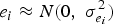 $$e_i \approx N\lpar 0\comma \; \sigma _{e_i}^2\rpar$$
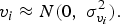 $$v_i \approx N\lpar 0\comma \; \sigma _{v_i }^2\rpar.$$
The first term in (1) describes a standard Cobb–Douglas function with traditional economic variables Z (including labor (L), fertilizers (F), manure (M) and agricultural land (K)). We have expanded this by including other relevant variables and most notably soil capital (S). α, βi and δl are the coefficients to be estimated. The notations and v i and u i are the random error and inefficiency terms, respectively. As indicated in equation (2), the inefficiency term u i is assumed to be determined by a set of variables, H i, which have a vector of coefficients θ. Thus, the distance of each farm to the frontier has a random and a systematic part. The latter is explained by household variables, H, which in our case are age, education and gender of the head of household. The elegance of the Battese and Coelli approach is that parameters in (1) and (2) can be estimated simultaneously using a method of maximum likelihood.
S is a vector of variables pertaining to soil conservation investments, access to public infrastructure, tree capital and selected soil properties. The factors represented by S are typically fixed in the short run and we have therefore chosen to make Z and S separable. To shed light on the importance of combining economic and biophysical variables, we compare three models. Model 1 is a very restrictive model including only the bare minimum of ‘traditional’ economic variables, namely agricultural labor, fertilizers, manure and land. The second model (model 2) includes some more biophysical and geographical variables, namely the quality of soil conservation terraces, green manure, distance to coffee factory and tree capital. The third model (model 3) includes a comprehensive set of variables including all the above as well as soil quality variables believed to explain agricultural output. One feature that distinguishes this paper from many other economic analyses is that we actually took field-level soil samples and include soil chemistry variables such as content of nitrogen, potassium and phosphorous (see, for example, Jacoby, Reference Jacoby1992, Reference Jacoby1993; Gerdin, Reference Gerdin2002; Obare et al., Reference Obare, Omamo and Williams2003). We used a likelihood ratio test (LRT) to test the restricted model 1 and model 2 against the full model. The definition of each variable is more thoroughly explained in section 3.
3. Study area, data and definition of variables
The study area is located in the Muranga District, which is part of the fertile agricultural areas in Kenya's central highlands. It is located at around 1,500 m above sea level, south of Mount Kenya and southeast of the Aberdares forest reserve, which form a large watershed of the Indian Ocean. It has two rainy seasons with a mean annual precipitation of 1,560 mm (Ovuka and Lindqvist, Reference Ovuka and Lindqvist2000). The location of farms in the study area is too concentrated geographically to allow for any variation in temperature or rainfall or for creating climate-related dummies that could separate farms into different groups or classes. Since all farms share the same rainfall and temperature pattern, the data set does not include farm-specific observations of rainfall or temperature. Furthermore, the study area shares many demographic, socioeconomic and biophysical features with other districts in the central highlands. Given the area's importance for Kenya's total employment and food production, understanding agricultural production in this area has broad policy relevance.
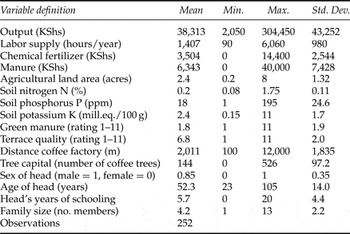
The mean value agricultural output of each household amounts to around KSh 38,000 (US$422)Footnote 2; see table 1. Farmers living in the area are poor by international standards: a majority live on less than US$2 per capita per day, and 30–40 per cent of the population are below the poverty line (<US$1 per capita per day). The level of technology is very low (usually only a hoe and panga Footnote 3 for tilling), but the average farm still spends around KSh 10,000 (US$111) on chemical fertilizers and manure. Although most manure used on each farm is also produced on it, manure is also sold and bought in local markets. The mean land area used for agricultural production by each household is only 2.4 acres,Footnote 4 cultivated by slightly more than four family members on average.
Descriptive statistics

Source: Survey data for 252 farms.
Due to subdivision, the farms in the area are distributed in narrow strips sloping downwards from sharp ridges. Each farm is legally one plot and is a narrow strip down the slope to the valley bottom until it reaches the river. The slopes are steep with mean farm gradients ranging from 20 to 60 per cent. The homestead is typically located at the crest, and garden fruits and vegetables are cultivated around it. Given these similarities, it is not warranted to perform separate estimations across farms showing differences in farm slope or slope length. The largest share of the agricultural land is allocated to food crops, such as maize, beans, potatoes, kale and bananas. Minor food crops include yams, sorghum and cassava. Tree crops grown and sold include papayas, avocados, macadamia nuts and mangoes. A sizeable share of the farm area is allocated for cash crop production, which implies mono-cultivation of coffee (Arabica) on bench terraces. Around the homestead, fruits and vegetables (e.g., lemons, limes, oranges, mangoes, tomatoes, cabbage and lettuce) are cultivated.
Although most of the agricultural activities are carried out by women, 70 per cent of the households are headed by older men (mean age 55 years). The level of formal education is low. Around half of the adults cannot read or write and have an average of less than 6 years of schooling. Most households possess some livestock capital (mean KSh 24,000 or US$267), usually a cow, one or two goats and some poultry. The distance to public infrastructure is far. For instance, the nearest coffee factory is on average more than 2 km away, via characteristic hilly and slippery rural foot trails. Coffee (like most crops) is carried to the factories (or the local market) as head loads in sacks. Even though the major source of income is on-farm agriculture, many of the households also obtain income from on-farm non-agricultural work or off-farm work.Footnote 5 The soils in the area are generally categorized as fertile, but are prone to heavy leaching and erosion, which reduce fertility considerably (Sombroek et al., Reference Sombroek, Braun and van der Pouw1982). The main soil type cultivated in the area is a reddish clay (humic nitisol) from weathered volcanic rock.
Data and definition of variables
The data used in our analysis was obtained from a household survey collected in 1998.Footnote 6 Based on a random sample, 252 small-scale farm households were identified for the survey and interviews took place from June to August 1998. The interviewed farmers hold approximately 20 per cent of the total number of farms in the study area. Below we define and present the variables used in the empirical analysis.
Output (Q)
The farmers in the area produce approximately 30 different crops on farms of various sizes, averaging six crops per farm. Output is aggregated using local market prices. The value of agricultural output produced by each household (Q) is derived by multiplying each household's physical production of crop i (q i) by the local market price (p i), Q = ∑ p iq i. Coffee is the main cash crop. Maize, beans, potatoes, kale and bananas are the key food or subsistence crops. Output from agro-forestry or tree crops (mangoes, avocados, lemons, papayas and macadamia nuts, etc.) is included in the aggregate value of output.
Labor, fertilizer, manure and land
Agricultural labor (L) includes all labor for agricultural production activities, such as preparing the seed bed, sowing, weeding, thinning and harvesting. The variable is measured in hours worked during the last year of cultivation, covering two growing seasons. It includes adult family labor and hired labor. The local community has a very low level of stratification and specialization. Most people work on their own farms. Hired labor is a rather marginal phenomenon. The reason for this is that hiring of labor is mainly motivated by special circumstances so that farmers may employ family members of neighboring farms in times of stress – few if any specialize in selling their labor. Our definition excludes non-agricultural work and also labor allocated to soil conservation investments (e.g., digging cut-off drains or maintaining terraces) because soil conservation is a long-term effort with inter-temporal impacts picked up by S. Farmers use inorganic fertilizers, which are available on the market in different brands, chemical compositions and physical units. Farmers also use farmyard manure from poultry or livestock in their cultivation. All of this is not purchased, but there is a vibrant local manure market in the study area, where some farmers buy and others sell manure. Hence, the value of the manure farmers reported that they had used in their production corresponds with the local market price of that manure. Generally, due to heterogeneity in physical units and types, production factors (fertilizers and manure) and output are aggregated by the local market prices. These prices are not fixed but vary across the seasons and with quality. As an approximation we have used the average value reported by the interviewed farmers.
Soil capital (S 1–S 3)
Data on soil capital was obtained from physical composite soil samples collected during the same period from all farms. The soil samples were taken at a 0–15 cm depth from the topsoil, based on three replicates in each farm field (shamba).Footnote 7 Places where mulch, manure and chemical fertilizer were visible were avoided for soil sampling. The soil samples were air dried and analyzed at the University of Nairobi's Department of Soil Science (DSS).Footnote 8 Although our data set includes several other soil properties, we have focused our analysis on the key macro nutrients (S 1–S 3) nitrogen, phosphorus and potassium.
Soil conservation (S 4, S 5)
Our variables to pick up the impact of soil conservation on crop production include green manure (S 4) and terraces (S 5). Based on expert assessment made by district agricultural extension officers at each farm, the quality (capacity) of each technology to prevent soil loss and promote soil fertility is measured. The quality variable is rated on a scale from 1 to 11, where 1 is the lowest quality and 11 the highest. Green manure is a form of conservation tillage, i.e., a productivity-enhancing biological conservation technology. More exactly, it is a soil capital investment that – if properly done – builds up the soil's physical, chemical, structural and biological properties. Specifically, it implies planting cover crops (e.g., legumes or grasses) for the combined purpose of reducing the soil's erodibility, increasing organic matter content, building up the soil's physical structure, maintaining soil moisture and improving the soil's fertility. Thus, it has the potential to boost yields and conserve soil (Mureithi et al., Reference Mureithi, Gachene and Ojiem2003). Green manure is usually practiced as part of an integrated nutrient management system (Woomer et al., Reference Woomer, Karanja and Okalebo1999).
In Kenya, soil conservation terraces (S 5) are typically excavated, backward-sloping bench terraces created by throwing soil uphill (fanya juu) or downhill (fanya chini) to form soil bunds (ridges) along the contour. As the soil erodes, they gradually develop into full terraces. Commonly, grasses of various typesFootnote 9 are cultivated on top of the terrace embankment to stabilize the terrace edges and reduce soil loss (Thomas, Reference Thomas1997).
Access to public infrastructure (S 6)
Information, transportation and transaction costs may be important but elusive factors for agricultural production, since they affect farmers’ production decisions and conditions including, for example, crop composition, marketing opportunities, availability of inputs and access to advice and information (Obare et al., Reference Obare, Omamo and Williams2003). As a proxy we used ‘distance to nearest coffee factory’ (measured in meters), since the coffee factories are important in their own right (e.g., delivery station for the coffee produce, supplier of coffee, employer, etc.) and often provide other services as well.
Tree capital (S 7)
All farmers in the sample possess little capital and investments are required to accumulate capital. Coffee trees represent a major capital asset in their farming system and were included in the model as a proxy for capital as it is an important and easily measurable form of capital. The direct effect of tree capital is coffee production, but it also has biophysical effects on other aspects of productivity (e.g., provision of shade, rainfall protection, soil stabilization, maintenance of soil moisture, etc.).
Household characteristics (H 1–3)
We use three household variables that we believe may be relevant for the systematic inefficiency of the individual farm in relation to the frontier. The first of these is the gender of the household head. Typically, the household head is a man (H1 = 1). If the household head is a woman (H1 = 0), it is often due to the death, absence or inability of the husband or, in rare cases, divorce. In the context of Sub-Saharan Africa, women are often discriminated against, deprived of rights, and less empowered in formal relations to suppliers and formal institutions (Saito et al., Reference Saito, Mekonen and Spurling1994; Udry et al., Reference Udry, Hoddinott, Alderman and Haddad1995; Ogunlela and Mukhtar, Reference Ogunlela and Mukhtar2009; Kinkingninhoun-Mêdagbé et al., Reference Kinkingninhoun-Mêdagbé, Diagne, Simtowe, Agboh-Noameshie and Adegbola2010). Hence we expect that female-headed households would be quite detrimental to farm efficiency. The other two variables are age of the household head and his/her level of education measured in number of years of school attendance.
4. Results
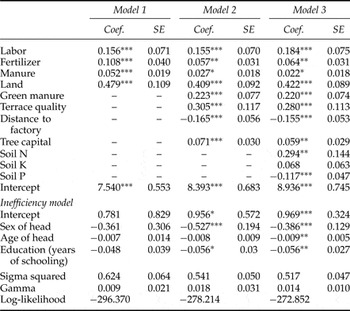
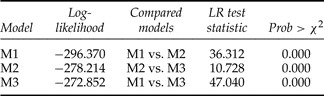
Table 2 presents the three versions of the stochastic frontier and inefficiency models which were estimated using the FRONTIER41 program developed by Coelli (Reference Coelli1996). The estimates of agricultural production reveal some interesting results.Footnote 10 First, that the full model (model 3), which includes agricultural, soil and conservation investment variables, etc., fits the data significantly better than the restricted models 1 and 2. This is shown by the likelihood ratio test in table 3, which indicates that the ‘traditional’ economic models (1 and 2) can be rejected compared to model 3. We therefore focus our attention on the contributions from the full model (model 3).
Stochastic frontier estimates

Log-likelihood ratio tests

Starting with the inefficiency equation, we find, as expected, that female-headed households are more inefficient. We also find that age has a positive effect on efficiency, where older farmers are less inefficient (more efficient) than younger farmers. Similarly, education has a positive effect on efficiency (farmers with more years of formal schooling are less inefficient). None of these results is particularly surprising but adds credibility to the overall picture. The fact that both experience (age) and education are positive is perhaps an indication of how difficult farming can be to farmers with lower levels of these variables.
Turning to the frontier, we find that the traditional factors – labor, fertilizer, land and manure – have positive output elasticities of reasonable magnitudes. It is clear that fertilizer and manure are important but their elasticities fall when other soil and agricultural variables are included. Turning to the elasticities for the additional soil and other contextual variables, these turn out to be very important.
Soil conservation terraces, tree capital and green manure
The output elasticities show that high-quality soil conservation terraces, green manure and tree capital are all positively and significantly associated with crop output. This positive relationship is intuitive and corresponds with other results from the region (see, e.g., Kilewe, Reference Kilewe1987; Gachene, Reference Gachene1995; Pagiola, Reference Pagiola, Sanders, Huszar, Sombatpanit and Enters1999; Stephens and Hess, Reference Stephens and Hess1999).
Access to public infrastructure
Table 2 shows that a shorter distance to market and infrastructure (distance to ‘factory’) promotes agricultural output.Footnote 11 The result that closer distance to a coffee factory is associated with higher output is plausibly explained by the following factors: coffee factories provide essential crop management advice and other information to farmersFootnote 12; coffee factories sell inputs (insecticides and fertilizers) and offer credits of various types; and closer access may induce farmers to change crop composition in favor of higher value crops. Due to the opportunity cost of time for transport, closer factories provide advice and inputs more cheaply to nearby farmers, hence the importance of closer coffee factories. This may be a sign that farmers need better infrastructure and extension advice as well as lower transport costs in rural areas (Obare et al., Reference Obare, Omamo and Williams2003).
Soil capital
The inclusion of soil capital variables shows, as expected, strongly significant and positive elasticities for nitrogen. For potassium it is positive but insignificant. However, counter to our expectations, the output elasticity of phosphorus is significant and negative. We tried numerous other specifications, but this result was robust and potentially quite important. Offering a full explanation for this result is difficult within the scope and level of detail of our study. Low soil pH, as in our study area (mean pH = 5.6), does reduce the availability and uptake of phosphorus in plants due to fixation, which in turn reduces crop output (Gachene and Kimaru, Reference Gachene and Kimaru2003), and this might offer some part of the explanation for our result. Finding further explanations might require more site-specific soil sample data and analysis as well as a more detailed investigation.Footnote 13 However, from a policy perspective it seems worth exploring whether there is such a widespread surplus application of phosphorus as it seems. Applying a composition of macro nutrients which sustainably increases crop production is a major challenge to any farmer. In rich countries it is common practice to test soils and choose a fertilizer as a function of soil and crop planted (Stafford and Werner, Reference Stafford and Werner2003). Yet in our study area and in similar settings in developing countries, farmers do not have access to the requisite knowledge or tools. Arguably, the negative phosphorus elasticity points to a typical information problem associated with poverty (Enyong et al., Reference Enyong, Debrah and Bationo1999; Atemken et al., Reference Atemken, Muki, Park and Jifon2011; Odendo et al., Reference Odendo, Obare, Salasya, Bationo, Waswa, Okeyo, Maina and Kihara2011).
In contrast to farmers in developed countries, the farmers in our study area are deprived of three kinds of services. First, they have no access to appropriate soil analysis and specific information on the status of their soil capital (nutrient levels, requirements for specific crops, etc.). Second, the farmers do not have a wide choice of fertilizers appropriate to their farm-specific agro-ecological conditions. The local fertilizer market offers only a few varieties with fixed proportions of the key nutrients. The farmers’ ability to choose among many varieties of fertilizers and fine-tune choices to fit their individual crop-specific requirements is severely limited. The most common types of chemical fertilizer used in the study area are di-ammonium phosphate with the typical NPK distributionFootnote 14 of 20:20:0, calcium (Ca) ammonium nitrate with the typical NPKCa distribution of 20:20:0:13, and to a lesser extent NPK 17:17:17. All of these fertilizers have a relatively high phosphorus content and some are very low in potassium. Consequently, the farmers contribute to lower soil pH, which is already low (acidic), hence impeding rather than promoting plant growth. Third, our results should be seen in light of the fact that the farmers are deprived of good extension advice. Besides neighbors and relatives, the farmers primarily obtain advice on agriculture and land use from two sources – local suppliers and government extension agents. The extension agents, who seldom visit the farmers, are typically not equipped with the latest research knowledge and hence do not convey high-quality information on yield-enhancing farming and land management techniques or strategies. The suppliers usually have a local monopoly in supplying agricultural physical inputs. According to the farmers and suppliers in the study area, the suppliers frequently give advice on how and when to use their products (e.g., chemical fertilizers) even if they have no specific knowledge of an individual farmer's soil and agro-ecological conditions.
Although government extension agents can and should provide more reliable information than the suppliers, they too lack specific information on which fertilizers would be appropriate for the individual farmer. Due to limited geographical coverage, infrequent visits and lack of farm-specific information (from soil sample analysis, for example), the extension advice tends to be rather general. Given these obstacles, the farmers cannot optimize their fertilizer input and crop composition as in modern agriculture. The fact that all farmers in the study used inorganic fertilizers (which lower pH) is an indication of their lack of information about enhanced soil management and/or access to other inputs (e.g., lime) to improve soil fertility.
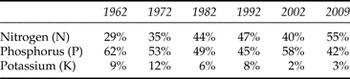
An assessment of Kenya's fertilizer consumption across time indicates that fertilizer use has increased. In 2009, Kenya's fertilizer use intensity (defined as kilograms of NPK fertilizer applied per hectare cultivated to annual and permanent crops) was only 32.4 kg on average (World Bank, 2011). However, the figure has increased by approximately 200 per cent since 1970 and by 33 per cent since 1990. As presented in table 4, the percentage shares of nitrogen, phosphorus and potassium have been relatively stable. The percentage share of phosphorus as part of total fertilizer consumption is very large (around 50 per cent). Conversely, the share of potassium has remained at a low level (5–10 per cent). In 2009 it was only 3 per cent. The relatively low share of potassium and the relatively high share of phosphorus are surprising and could be somewhat worrying if our negative elasticity of phosphorus were representative for Kenya.
Fertilizer consumption in Kenya, 1962–2009 (% share of total NPK consumption)

In view of our findings from the stochastic frontier estimates and the increasing use of inorganic fertilizers in KenyaFootnote 15 on soils that, at least in Muranga, are already heavily acidic, it is essential that Kenya's fertilizer use and soil nutrient–output relationships be addressed in a comprehensive policy analysis. It is also noticeable that very few farmers reported use of buffering fertilizers, such as rock phosphate or lime, despite the potential to ameliorate acidic soils and increase crop production (Rutunga et al., Reference Rutunga, Steiner, Karanja, Gachene and Nzabonihankuye1998). It seems possible that the farmers’ lack of knowledge, combined with poverty and lack of information, has led them to adopt a fertilizer composition that is not suited for their soils, which may in fact be damaging both their economy and the long-run fertility of their soils.
5. Summary and conclusions
Our study provides methodological, empirical, and policy results. Starting with methodological results, we have shown that integrating traditional economics and soil science is valuable in this area of research. Omitting key biophysical variables in economic analysis, such as measures of soil capital, can cause omitted-variables bias since farmers’ choices of inputs depend both on the quality and status of the soil capital and on other economic conditions, such as the availability and cost of labor, fertilizers and other inputs.
Major soil nutrients are important explanatory factors: In our study, nitrogen increases output significantly whereas higher phosphorus levels appear detrimental to output. These results emphasize the importance of (i) careful site-specific assessment, (ii) ensuring adequate fertilizer policies that are adjusted to local biophysical conditions, and (iii) access to a wide choice of fertilizers in local markets.
Another interesting result is that soil conservation technologies, such as terraces and green manure, contribute to increased agricultural output even in models that also include soil properties and chemical fertilizers. Given the policy debate on the impact (and usefulness) of government subsidies on soil conservation, our results suggest that soil conservation investments do actually contribute to increasing farmers’ output. Consequently, government support for appropriate soil conservation investments (green manure and terraces) both helps to arrest soil erosion and helps farmers increase food production and reduce food insecurity. A final result is that, since the biophysical variables are important in explaining agricultural output, traditional economic analyses need to reconsider the opportunities associated with greater integration of soil capital and investments in land, among the explanatory variables.
Two central policy conclusions arise from this study. First, while fertilizers generally benefit crop production and there is a general need to increase fertilizer use in Sub-Saharan Africa (Evenson and Gollin, Reference Evenson and Gollin2003), their application is a complex art, and more is not necessarily better for the individual farmer. Today, there is a large disconnect between governments’ fertilizer recommendations, best-practice applications in farm research stations, and real-world applications of fertilizers among poor small-scale farmers (Duflo et al., Reference Duflo, Kremer and Robinson2008). Thus, there is a need to enhance our understanding of the causes of these differences and identify solutions that enhance farmers’ performance within their constraints. In modern agriculture, it is standard practice to test soil properties on individual plots in order to select the appropriate fertilizer in appropriate amounts and proportions. This practice would be truly beneficial to Kenya's agricultural production as well. Although farmers in many instances possess vast local soil knowledge (Winklerprins, Reference Winklerprins1999), they need to be able to combine it with scientific information on soil capital and have better access to research-based agricultural extension services as well as better access to appropriate (fertilizer) inputs.
Second, farmers and extension agents currently lack the means and specific knowledge necessary to pursue agriculture that is highly productive and profitable and maintains soil capital across time. There is a need to strengthen the links to the applied research and to increase the use of integrated soil and land-use assessment based on farmers’ knowledge, experiences, needs, preferences and scientific knowledge. Relevant research-based services that could be offered to farmers include formal soil-sample analysis, expert judgment on high-yielding farming systems and land use, farm-specific soil mapping, and plant-tissue analysis. We argue that the government has a special responsibility to provide these opportunities in rural areas. One might argue, too, that if yields can be increased or risk of crop failure reduced by better use of soil testing (and thus better informed fertilizer selection), then the market should start offering such services – soil testing combined with increased fertilizer supply and extension advice.
Currently, however, these services are not offered by any institution at a significant level due to a combination of factors. The technical issues are complex and difficult to communicate to farmers. There is asymmetric information between farmers and the private sector, which potentially could offer soil and land-management services. Markets that offer farm-specific services are often thin and characterized by suppliers with virtual input monopolies at the local level and high investment risks for private companies.
From the farmers’ point of view, demand for soil sample analysis does not occur naturally, arguably due to poverty, lack of information, risk aversion and high discount rates (Stafford and Werner, Reference Stafford and Werner2003). Since chemical analyses have become cheaper, it would arguably be useful to increase the quality of extension advice and base it to a larger degree on science-based soil sample analysis. This could be done, inter alia, through regular soil testing combined with farmers’ own knowledge and perceptions. It seems that farmers would benefit if the government could, at least initially, take the lead in this area by speeding up provision of farm-specific soil assessment and services for enhanced soil management, and facilitate the development of markets for it as well as the necessary information and capacity building. However, one always needs to be cognizant of the costs of such programs. It is not sufficient that the program be beneficial – the advantages must also outweigh the costs of supplying them. A carefully designed and properly evaluated but still small-scale project could clearly be motivated in order to learn more about the costs and benefits of such a program.