

Introduction
Mutations along with recombination are the major factors affecting the genetic differences between breeds and populations of chicken (Weigend, Romanov and Rath, Reference Weigend, Romanov and Rath2004). Lush (Reference Lush, Chapman, Shrode and Crow1994) reported that in the course of domestication of livestock, humans have isolated and selected animals for favourable traits. These resulted in the development of breeds and also strains within a breed. The chicken breeds in the developing countries comprise mostly of indigenous breeds and in many countries they make up around 70–80 percent of the total chicken population (Guéye, Reference Guéye2005; Pym, Guerne Bleich and Hoffmann, Reference Pym, Guerne Bleich and Hoffmann2006). Hoffmann, Siewerdt and Manzella (Reference Hoffmann, Siewerdt and Manzella2004) further reported that the hobby/fancy breeds of chickens look very different from one another, but do not necessarily mean that they are genetically quite diverse. The same is true even for indigenous breeds in the developing countries (Pym, Guerne Bleich and Hoffmann, Reference Pym, Guerne Bleich and Hoffmann2006).
However, in the recent times it has been of concern that there is a loss in farm animal biodiversity at a global scale. In Latin America and the Caribbean, it is estimated that 81 percent of avian breeds are classified as being of unknown risk status, while the assessment for Africa was 60 percent (FAO, Reference Rischkowsky and Pilling2007). Reduction in the local avian populations may be attributed to panmectic nature of breeding of the native chickens with various exotic chicken breeds, which have been introduced in the region by different agencies under poverty alleviation schemes. Similar observations have also been reported by Bhuiyan, Bhuiyan and Deb (Reference Bhuiyan, Bhuiyan and Deb2005), Nidup et al. (Reference Nidup, Dorji, Gurung, Arasta and Moran2005) and Hussein et al. (2000), Fathi and Galal (Reference Hussein, Fathi and Galal2000). Thus, in order to initiate an efficient conservation programme, reliable data pertaining to the genetic differences between individuals, populations and breeds are required. Phenotypic variation within a species can provide a baseline data for the assessment of genetic diversity of the species (Moiseyeva et al., Reference Moiseyeva, Volokhovich, Tolokonnikova and Altukhov1984). Weigend, Romanov and Rath (Reference Weigend, Romanov and Rath2004) observed that the identification and characterization of any livestock species require the assessment of its population structure and traits that have evolved due to specific genotype by environmental interactions.
The phenotypic variation can be further divided into discrete/qualitative (e.g. morphological traits) and continuous/quantitative (e.g. production traits and body measurements) characters that are helpful in assessing genetic characters and phylogenetic relationship between breeds/ecotypes. The preliminary results so obtained can then be further validated using modern molecular tools.
Horst (Reference Horst1987) observed that the native chickens are able to adapt to adverse conditions, hence, they can be used for further development under small holder farming conditions. The phenotypic variations in the chickens reared in the States of West Bengal and Sikkim indicate a wide range of genetic variations among the fowl genotypes, which can be a potential source for the development of new breeds suitable for tropical regions of Asia and Africa.
The genetic characterization of the fowls can be ascribed due to both qualitative and quantitative genes. The former can be in the form of comb-type, skin and shank colour, while the latter can be in the form of body weight and other economically important traits. The agrarian societies in the developing world are also concerned about the cultural significance of the livestock. The Bhutia, Lepcha and Nepali communities of North and West districts of Sikkim and Darjeeling district of West Bengal consider that the chickens with fibromelanin wade away evil eye, hence they are in high demand by the sorcerers, locally known as “Jhakris”. Nanukan chickens are used for religious rituals by the people living in Tarakan islands of Indonesia (Sartika et al., Reference Sartika, Iskander, Sopiyana, Susanti, Saefudin and Yusnandar2007), while Kapung chickens are sacrificed in religious ceremonies by the members of ethnic groups from Jawa islands (Sidadolog, Reference Sidadolog, Diwyanto and Prijono2007). Surono (Reference Surono1997) reported that Cemani chickens of Indonesia are specifically reared for mystic purposes and the meat is not liked by the people; hence it is not sold in the supermarkets. It has also been observed that in certain regions of West Bengal people purposively rear the rumpless birds as they are believed to escape predators easily and perform better under scavenging conditions, while some farmers prefer birds with creeper gene as they look unique, can fend for themselves under the granaries which cannot be reached by the chickens with normal (long) shank. The spilled grains otherwise would have attracted rodents around the granaries.
The indigenous fowls of India by and large have a panmectic existence. However, some fanciers in the past have developed breeds such as Aseel (used for cock fighting). There also have been instances were further selection within the Aseel breed itself and mating with local ecotypes have given rise to specific strains e.g. Hyderabad, Lucknow and Rampur Aseel's. These strains can be identified by their feather colours and body sizes. It is unfortunate that most of the ecotypes described (in this paper) are yet to find their place in the Domestic Animal Diversity Information System (DAD-IS) of the FAO (derived from FAO, 2008a), in which only a few ecotypes of native fowls from India have been mentioned, indicating that there is scanty data available on native chicken genetic resources of the region and there is a wide gap between what is there in the country and what is known to the scientific community. The States of West Bengal (21°38′ to 27°10′N, latitude and 85°50′ to 89°50′E, longitude) and Sikkim (27°4′ to 28°7′N, latitude and 88°00′58″ to 88°55′25″E, longitude) are located on the eastern region of India. The study area of West Bengal and Sikkim is situated within the breeding tract of red jungle fowl (Gallus gallus) (Crawford, Reference Crawford and Crawford1990; Banglapedia, 2006; Anonymous, 2011). Dastagiri (Reference Dastagiri2004) reported that the State of West Bengal has the highest number of native fowls in India (33 984 × 103 during 2003 census) with an annual growth rate between 1997 and 2003 as 28.67 percent, while the number of native fowls in Sikkim was estimated to be 214 × 103, with an annual growth of 4.05 percent between 1997 and 2003. The forests of West Bengal and Sikkim still abound with red jungle fowls. However, recent data pertaining to district level on the number of native fowls are unavailable, as large-scale culling occurred in the study area because of repeated outbreaks of avian influenza in the past few years.
The present study was carried out to describe the phenotypic attributes and zoometric variations in different populations of the native fowls in West Bengal and Sikkim.
Materials and methods
The study included some potentially useful qualitative and quantitative traits of the chickens. Purposive sampling was carried out to identify households rearing only native fowls. The owners of the flocks were interviewed regarding the status of their flocks. In West Bengal, majority of the owners belonged to the minority community and/or Hindus with lower socio-economic strata. In case where there was history of exotic birds being reared in the immediate neighbouring households, the family was dropped from the survey; this was done because of panmectic mating among the village fowls. However, this grossly limited the number of households surveyed; hence, additional villages were accommodated to get a sizable flock recording. Although in Sikkim, the survey indicated that majority of the rearers had native fowls and exotic breeds were rarely distributed in the area, thus sampling was carried out in all the households of the villages selected.
There are specific names by which the fowls can be easily identified in their localities, for example the frizzled fowl is commonly called as “dum chi” in Sikkim, whereas the same is known by the name “Dum Shay” in Bhutan (Nidup et al., Reference Nidup, Dorji, Gurung, Arasta and Moran2005) or Sojaru murgi in West Bengal (Banerjee, Reference Banerjee2007; Banerjee et al., Reference Banerjee, Roy, Sengupta and Sadana2008). In this paper local names have been used as were provided by the rearers of the ecotypes and their possible English names have been derived.
Description of the study area
The study locations are situated at various agro-climates, such as 2 m above the mean sea level (mamsl) (Joynagar Mazilpur) to 3 000 mamsl (Lachung). The study area comprised rearers from various ethnicities and cultures, each having their own preferences and selection criteria. The study was conducted in six districts of West Bengal, namely Midnapur (East), 24 Parganas (South), 24 Parganas (North), Nadia, Murshidabad and Jalpaiguri as well as two districts of Sikkim (North and West).
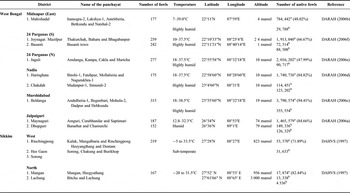
The villages within the districts were selected in a way that there was homogeneity in production system. The samplings of the households were carried out using the stepwise selection method. The districts were purposively selected taking into account their elevations. The locations within a district were also selected purposively keeping in mind the proximity from the all weather road and also the information received from the key informants of the area. Although the villages within a location were selected purposively taking into account the population of native birds within the villages. The villages were selected based on the rapid survey conducted in all the villages within the vicinity of the location, only those villages with maximum native birds were finally selected. The ecological and demographic features of the locations from where the samplings were carried out are presented in Table 1.
The location, latitude, longitude, fowl number and the ethnicity of the rearers within the study area.

Note: aNumber of native fowls in the district. The values in parenthesis indicate the percentage of the native fowl's vis-à-vis total chicken population in the study area. bEstimated native chickens in the panchayats studied; Mamsl: metres above mean sea level; DARAH: Directorate of Animal Resources and Animal Health, Government of West Bengal; DAHVS: Department of Animal husbandry and Veterinary Sciences, Government of Sikkim.
Data collection and analysis
The morphological data distribution were based on colour of egg shell, skin, shank, comb, earlobe and feather as well as the presence of feathers on the neck, shank and tail. The data pertains to 2170 fowls of both sexes. The comb types of the birds were recorded according to the description provided by Somes (Reference Somes and Crawford1990). The morphological traits were recorded as threshold binary numbers (0 as absent and 1 as present). The shank length of a bird was assessed using the methodology as suggested by Maciejowski and Zieba (Reference Maciejowski and Zieba.1982). The body weight of a bird was taken individually on a digital balance with an error margin of ±5 g. The egg shell colour was recorded by visual observation and individual eggs were weighed on a digital balance with an error margin of ±0.5 g.
The data obtained were analysed statistically using SPSS v-12 for Windows (SPSS, 2003), non-parametric test (χ2) was used for analysing the data of the qualitative traits (colour of feather, shank, comb, skin, ear lobe and egg, type of comb), whereas Duncan's multiple range test was used to compare the means of the quantitative variables, i.e. body or egg weight. The variables were compared between locations; the effect of sex was also taken as a variable. However, the effect of age was not considered as a variable due to lack of reliable recording.
Results and discussion
The special features of chicken phenotypes reared in each of the districts along with production and marketing systems are presented in the following sections.
General husbandry practices
The backyard system of rearing is more or less similar to what is practiced in other developing countries. Chickens usually fend for themselves but are sometimes provided with broken rice and other kitchen leftovers. The average flock structure was estimated to be 3.5 adult hens and 1.25 cocks per household. The fowls are mostly kept indoors during the night either under a bamboo basket or on the bare floor or sometimes with old rags to protect them against cold or damp. Jute bags are mostly used to protect the birds against cold (83 percent). Sometimes wooden houses are also made for chickens (8 percent) and only some of the respondents (4 percent) had specially constructed brick houses for chickens. It was observed that 5 percent of the respondents (in West Bengal) protect chicks against predators and harmful insects by rearing them under mosquito nets. The broody hen and hens with chicks are reared separately. The grains (for the chickens) are usually scattered on the floor. Some farmers, however, provide feeders made of clay pot or hollow of a bamboo/tree. Chickens are provided water in discarded clay or metallic pots. The feeders and waterers are usually dirty and hence potential sources of disease transmission.
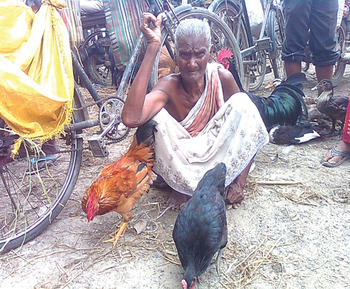
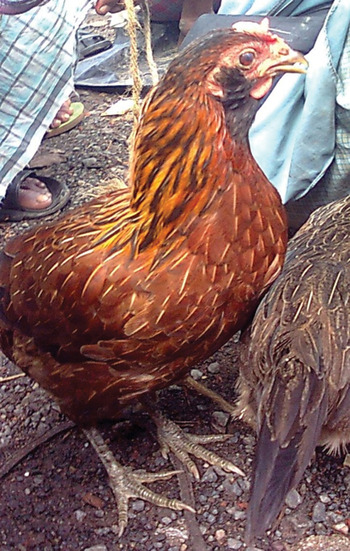
Chickens and eggs are mostly traded by local collectors; money obtained by the sale of eggs is usually retained by the women to procure items for day to day kitchen activities. These observations are similar to the findings of Iqbal and Pampori (Reference Iqbal and Pampori2008). It is estimated that on average the price of one egg received by the rearers is Rs 1.25–1.75 (US$2 = Rs 51.00), while it is sold at Rs 4.50 ± 0.5 to consumers. The price of the eggs from native chickens is usually higher by Re 1 ± 0.5 compared with those from commercial layers. The cocks fetch a higher price than the hens primarily because of their larger body size. Hens with chicks are usually not sold by the rearers except under a highly distress condition or when there is an outbreak of diseases. Due to high mortality of the chicks, their sale is highly restricted and the replacement stock at times may even not be available. Farmers may have to borrow some chicks from their neighbours/relatives/friends to replenish their stock. Sometimes the chickens are sold by the rearers directly in the weekly local livestock market known as “haat” (Figure 1). The chickens are traded by their size with only visual estimation to fix their price followed by bargaining between the seller and the buyer. The external appearance, agility and plumage colour are the major criteria selected in accordance to the preference for both sexes. In some parts of West Bengal, especially in tracts where the majority of the residents are followers of Islam religion, caponization of the cocks is practiced. The castrated males are locally known as “khasi murgi”. Thus, selection for economic attributes such as egg and body weights within the native chickens can help the economically challenged members of the society to catapult out of the vicious cycle of poverty.
An old woman selling her chickens at the village market.

The results for the number of eggs laid per hen did not give a consistent figure, however, the estimates obtained through questionnaires indicated that it varied between 50 and 80 eggs per hen on an annual basis, averaging around 57 ± 5.3 eggs. The observations are in agreement with the reports of Yoshimura et al. (Reference Yoshimura, Barua, Heryanto, Olira and Zheng1997), Haque and Assaduzzaman (Reference Haque and Assaduzzaman1990) and Iqbal and Pampori (Reference Iqbal and Pampori2008). Reports from Government of India (GOI, 2006) indicate that the average annual egg production of a native fowl in India to be 98.34 eggs.
The mortality pattern indicates that only around 29.75 percent of the chicks attained adulthood. The predominant causes of losses in the flock as indicated by the respondents are due to outbreaks of Newcastle disease (80 percent), predators (7 percent), theft (5 percent) and other causes such as internal parasites, snakes and other diseases (8 percent). These findings are in consonance with the results obtained by Bhuiyan, Bhuiyan and Deb (Reference Bhuiyan, Bhuiyan and Deb2005). Outbreak of avian influenza in the recent past has led to mass culling among all the reared avian species in the region, thus adding to the woes of the farming communities.
Morphological traits of the different phenotypes of chickens reared in West Bengal and Sikkim
Naked neck fowl
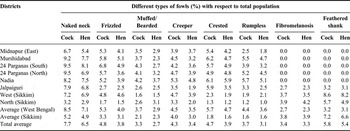
The naked neck fowls (Figure 2), locally known as Gola kata murgi (Bengali) or Khurley (Nepali), are found in all the locations studied. The results from Table 2 indicate that the population of naked neck chickens ranks the second only to the desi chickens (native feathered chicken) in the study area. The presence of these birds in middle altitude regions of Sikkim may indicate its ability to adapt to moderately cold conditions. The findings are in consonance with the observations of Grobbelaar, Sutherland and Molalakgotla (Reference Grobbelaar, Sutherland and Molalakgotla2010). The mixed feather colours predominate over any single feather colour. The feather colours occur in similar frequencies among both sexes. Similar observations were reported by Bhuiyan, Bhuiyan and Deb (Reference Bhuiyan, Bhuiyan and Deb2005) and Faruque et al. (Reference Faruque, Siddiquee, Afroz and Islam2010) from Bangladesh, Nidup et al. (Reference Nidup, Dorji, Gurung, Arasta and Moran2005) from Bhutan, Rajkumar et al. (Reference Rajkumar, Sharma, Rajaravindra, Niranjan, Reddy, Bhattacharya and Chatterjee2009) from India and Dana et al. (Reference Dana, Dessie, van der Waaji and van Arendonk2010) from Ethiopia. The body weight of the naked neck chickens (Table 3) is higher than that of the feathered chickens; similar results were also presented by Galal (Reference Galal2000), Patra et al. (Reference Patra, Bais, Prasad and Singh2002), Bhuiyan, Bhuiyan and Deb (Reference Bhuiyan, Bhuiyan and Deb2005) and Nidup et al. (Reference Nidup, Dorji, Gurung, Arasta and Moran2005), supporting their adaptation to the hot and humid climate of the region. The results of Banerjee and Banerjee (Reference Banerjee and Banerjee2000) indicated that the dressing percentage of the naked neck chickens was higher than the feathered chickens; similar observations were also obtained by Bordas, Monnet and Mérat (Reference Bordas, Monnet and Mérat1980), Mérat (Reference Mérat and Crawford1990) and Deeb and Cahaner (Reference Deeb and Cahaner1994). The exposed skin colour of the neck in these fowls varies from pink to bright red. The shank length (irrespective of the feather colours and sexes) was 9.50 ± 0.50 cm. Most of these chickens (83 percent) had a yellow skin colour and a single comb. The earlobe colour was predominantly white (83 percent) (Tables 4 and 5). The sexual dimorphism was also observed with the cocks having a higher body weight compared with the hens, the observations being in harmony with the observations of Yakubu, Kuje and Okpeku (Reference Yakubu, Kuje and Okpeku2009). The body weight of the naked neck fowls reared in West Bengal is higher than those in Sikkim, which may be attributed to loss of body heat in the hilly climate of the region; the observations are in accordance with the study of Hussein, Fathi and Galal (Reference Hussein, Fathi and Galal2000) and Galal (Reference Galal2000). The egg-shell colour was brown (Table 6), which is similar to the observation of Bhuiyan, Bhuiyan and Deb (Reference Bhuiyan, Bhuiyan and Deb2005). The average egg weight (Table 6) was higher than those of the desi chicken, which may be attributed to their better adaptability and heat dissipation, the findings are in agreement with the assessment of Yoshimura et al. (Reference Yoshimura, Barua, Heryanto, Olira and Zheng1997) and Mathur (Reference Mathur, Muir and Aggrey2003). The study also revealed that the naked neck chickens are not favoured by many of the consumers for chicken meat because of the red skin colour in its bare neck; hence there is an indirect selection against the trait. The observations are in accordance with the findings of Aklilu (Reference Aklilu2007).
Naked neck fowls.

Percentages of different phenotypes of chickens in the study area of West Bengal and Sikkim.

Body weight of different phenotypes observed in the districts in West Bengal and Sikkim.

Note: a,b,c,dValues with different subscripts across rows differ significantly at P < 0.05.
Plumage colour of the fowls in the study area.

Note: a,b,c,dValues with different subscripts across rows differ significantly at P < 0.05.
Morphological variations in fowls (%) as observed in the study.

Note: a,b,c,dValues with different subscripts across rows differ significantly at P < 0.05. 1Red and white or red and yellow colour or vice versa.
Egg weight and egg shell colour of different phenotypes of fowls in different districts of West Bengal and Sikkim.

a,b,c,d Values with different subscripts across rows differ significantly at P < 0.05.
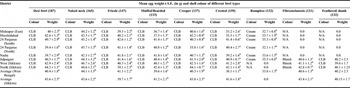
Note: Shell colour: cream to light brown (CLB), values in parenthesis indicate the number of eggs examined.
Frizzled fowl
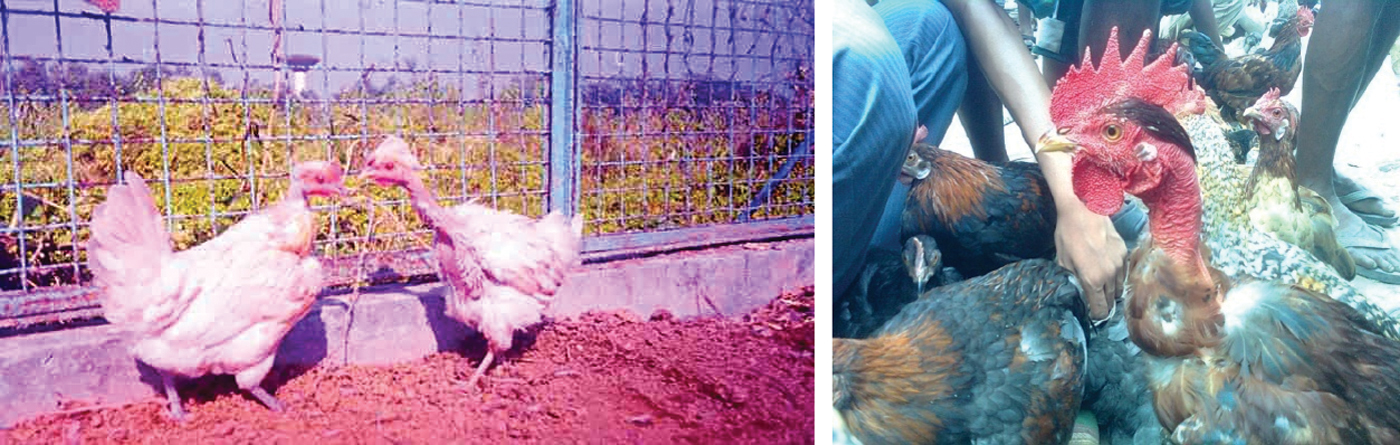
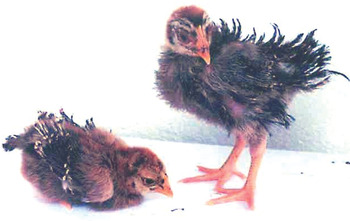
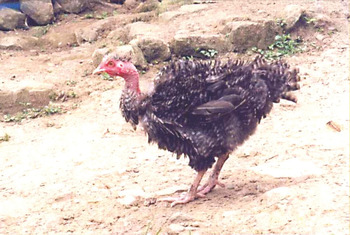
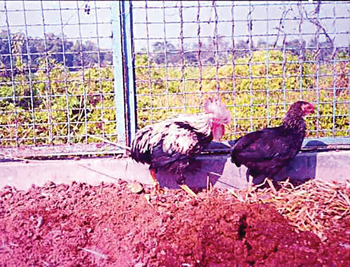
The frizzled fowls (Figure 3) are observed in all the districts studied. These birds are locally known as Sojaru murgi (in Bengali), while the same is known as Pulom and also Dum-shay in Bhutan (Nidup et al., Reference Nidup, Dorji, Gurung, Arasta and Moran2005) or as Dum Chi in Sikkim. The results from Table 2 indicate that the population of frizzled fowl is higher in West Bengal compared with Sikkim. This may be attributed to the feather pattern, which provides poor insulation in the cold climate of the region. It has been reported by Yunis and Cahaner (Reference Yunis and Cahaner1999), Garcês, Casey and Horst (Reference Garcês, Casey and Horst2001) and Sharifi, Horst and Simianer (Reference Sharifi, Horst and Simianer2010) that under a high ambient temperature the frizzled genes provide an advantage by dissipating the body heat, whereas under cold climate the reverse is true, hence the birds have disadvantages over the normal feathered chickens. Most of the chickens had mixed feather colours. The shank colour is similar to that of the naked neck fowls, i.e. yellow and blue colours in equal proportions followed by white-coloured shank. The average shank length of these chickens was 10.20 ± 1.50 cm. White colour of skin, single comb and white ear lobe were predominant among the population studied. The egg weight of the frizzled fowl was higher than that of the normal feathered chicken but lower than that of the naked neck fowl (in West Bengal). These findings are in consonance with that of Garcês, Casey and Horst (Reference Garcês, Casey and Horst2001). However, in Sikkim the egg weight of the frizzled fowl was lower than that of both normal feathered and naked neck chickens. Oke (Reference Oke2011) reported a slightly higher egg weight in frizzled fowls compared with the naked neck chickens in Nigeria. During the present study chickens with both frizzled and naked neck genotypes (double heterozygous genotype as reported by Horst, Reference Horst1987; Manner, Reference Manner, Horst and Mathur1992; Pech-Waffenschmidt, Reference Pech-Waffenschmidt1992) were observed only in west Sikkim (Figure 4).
Chicks of frizzled fowls.

Fowl showing both naked neck and fizzled genes.

Muffed/bearded fowl
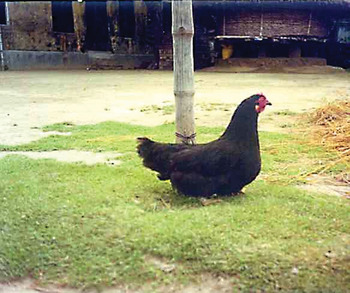
The muffed/bearded feathering conditions in fowls (Figure 5) have not been reported so far from India. They are locally known as Dariwala murgi (in Bengali). The results indicated that muffed/bearded chickens were distributed in West Bengal and Sikkim (Table 2). The feather colour was mixed in most of the chickens; however, the colour of the muff/beard was mostly black (92.5 percent) but some of them had also mixed colours of the beard/muff. The size of the wattles was reduced in the muffed/bearded chickens. The shank colour was predominantly blue followed by yellow and white, while the white skin was observed in most of the birds studied. Almost all the birds were single combed and the ear lobe colour was white. The body weight of the muffed/bearded fowl (Table 3) was higher than that of the normal feathered, naked neck and frizzled chickens, while the egg weight (Table 6) was lower than that of the other above-mentioned phenotypes of fowls. The average shank length of the muffed/bearded chicken was 9.75 ± 0.25 cm.
Muffed/bearded fowl.

Creeper fowl
Creeper chickens (Figure 6), locally known as Bête murgi (in Bengali), were observed in all the locations (Table 2). The existence of creeper fowls have also been reported from Bangladesh by Uddin et al. (Reference Uddin, Ali, Akter and Khatun2011) and Bhutan by Nidup et al. (Reference Nidup, Dorji, Gurung, Arasta and Moran2005). In Bhutan, they are locally known as “Baylaitey”. The results of the study indicate that predominant feather colour is mixed followed by black and mahogany colour of the feathers, similar to the observations of Nidup et al. (Reference Nidup, Dorji, Gurung, Arasta and Moran2005). The shank colour of most of the creeper chickens was blue followed by yellow, while the skin colour was observed to be mostly white with a few chickens having yellow colour. Almost all the birds surveyed were single combed, the earlobe colour was observed to be mostly white (76.3 percent), while the rest being red. The average shank length varied from 3.25 to 4.47 cm with an average of 3.75 ± 0.75 cm. The cocks had longer shanks than the hens. The average body weight of the creeper cocks was lower in West Bengal when compared with those reared in Sikkim, whereas the reverse was true for the hens. The average body weight of the creeper fowls was higher than that of the naked neck and frizzled fowls but lower than that of the desi fowls. The results from Table 6 were indicative that the average weight of the eggs from these fowls was similar to that of the desi fowls. Due to their short shank length the creeper fowl was unable to escape easily from the predators, they were therefore mostly reared under confinement and were allowed to scavenge under the granaries to eat any fallen grains, thus preventing the attraction of rodents.
Creeper fowl.

Crested fowls
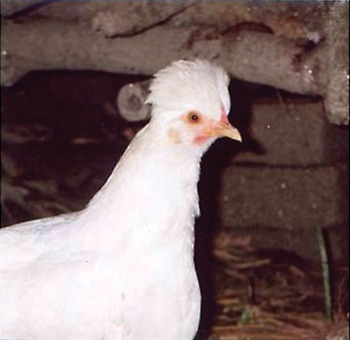
Crested fowls (Figure 7), locally known as Khopa murgi, were also observed in all the locations, with a higher number in West Bengal when compared with Sikkim (Table 2). However, in most cases the crest was slight to moderate which was indicated by the presence of comb, whereas only 25.7 percent of the chickens were fully crested (indicated by rudimentary comb), similar to the results obtained by Somes (Reference Somes and Crawford1990). The presence of crested fowls has also been reported by Nidup et al. (Reference Nidup, Dorji, Gurung, Arasta and Moran2005) from Bhutan where these chickens are commonly known as “Belochem”. These chickens also have varied feather colours; the mixed feather colour predominated in the studied population followed by brown, mahogany, white and black feather colours. The shank colour in the studied birds was predominantly blue followed by yellow and white. The colours of the skin and earlobe were white in majority of the crested chickens. These findings were in agreement with the assessment of Nidup et al. (Reference Nidup, Dorji, Gurung, Arasta and Moran2005). The average shank length of the crested chickens was 8.79 ± 1.20 cm for both sexes, with higher values observed in the cocks than hens. The body weight of the crested chickens (for both sexes) was lower than that of the creeper, normal desi, naked neck, bearded and frizzled fowls. Similar trend was also observed for the egg weight (Table 6).
Crested fowl.

Rumpless fowl
The rumpless fowls (Figure 8) were locally known as Bocha murgi and characterized by the absence of sickle feathers in both sexes. The rumpless chickens were mostly localized in Nadia district and adjoining regions of Murshidabad district; however, true rumpless fowls were quite rare, and the study did not find the presence of the rumpless chickens in Jalpaiguri district and in Sikkim State. However, there is lack of information about the presence of such chickens in India. The presence of rumpless chickens has been reported by Badubi, Rakereng and Marumo (Reference Badubi, Rakereng and Marumo2006) from Botswana. The common feather colour was observed to be of mixed type followed by black, mahogany and brown. Most of these chickens had blue shank colour followed by yellow and white, while the skin colour and earlobe colour in most of the rumpless chickens were white. The average shank length was 8.25 ± 0.25 cm. The average body weight of the rumpless chickens (irrespective of sexes) was the lowest among all the phenotypes observed in the present study. The egg weight (Table 6) was also the least when compared with all other phenotypes. Low egg weight may lead to low hatchability (34 percent) as reported by the rearers of this type of chickens. The observations were similar with the assessment of Landauer (Reference Landauer1945). This type of chickens, however, is able to escape predators easily because of the lack of tail feathers and small body size.
Rumpless fowl.

Feathered shank fowl
The fowls with feathered shank were quite common in Sikkim (Figure 9) and were also found in some parts of Jalpaiguri district of West Bengal, especially in regions adjacent to Bhutan. However, true feathered shank chickens were seldom seen in other studied areas. Some chickens with a few strands of hair have been encountered in all the locations but they were not included in the feathered shank category. Mixed feather colours were observed in most of these chickens, followed by brown, black, mahogany and white. The predominant shank colour was blue followed by yellow and white, while the skin colour was mostly white. Majority of the chickens were single combed and had a white ear lobe. The body and egg weights of the feathered shank chickens were higher only than the rumpless fowls. It was also observed that the pattern of the shank feathering was not consistent with some chickens having feathers in the inner toes (15.6 percent), while the rest of them feathering in the outer toes. The average shank length was 9.25 ± 1.50 cm, being higher in cocks than hens.
Feathered shank fowl.

Fibromelanosis fowl
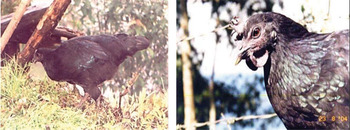
The presence of fibromelanin in chickens has been reported in Kadaknath breed of chickens in Jhabua and Dhar districts of Madhya Pradesh and adjoining region or Gujarat and Rajasthan States in India (Chatterjee et al., Reference Chatterjee, Niranjan, Sharma, Dange and Bhattacharya2010). Thakur, Parmar and Pillai (Reference Thakur, Parmar and Pillai2006) reported that the pure Kadaknath fowls are rare in the breeding tract due to indiscriminate introduction of exotic chicken breeds, especially the Rhode Island Red. The reports pertaining to the presence of fowl ecotypes having fibromelanosis is by and large lacking from other parts of India. This study indicated that the fibromelanosis fowls were reared by the members of the Bhutia ethnicity in the West and North districts of Sikkim (Figure 10). These fowls are locally known as “Phia naku”, whereas individual cocks are called “Phiaku naku” and hens are called “Phia niam”. The word “niam” denotes the black colour of the fowl. Similar variants were also found in Bhutan and they were locally prized for the medicinal value of meat, known as “Yubjha naap” (Nidup et al., Reference Nidup, Dorji, Gurung, Arasta and Moran2005). These fowls were used for religious ceremonies and hence demanded a very high price. Bhasin (Reference Bhasin2002) reported that majority of the Bhutia inhabitants of Sikkim are immigrants from Tibet and Bhutan during the 17th century. It is probable that these fowls were brought to Sikkim with them. Sarkar and Ray (Reference Sarkar and Ray2006) reported that during the 19th century caravans from Tibet carried merchandise through Bhutan to plains of Bengal; large-scale trading of commodities including livestock took place in the region. This possibly explained the existence of similar chickens in areas adjoining the Bhutan in Jalpaiguri district of West Bengal. Gao et al. (Reference Gao, Tu, Tong, Wang, Tang and Chen2008) also reported the presence of several such chicken breeds in China, where these chickens were an important part of the traditional faunal medicine. The cultural/religious significance of black-coloured chickens among different tribal societies of central India (the breeding tract of Kadaknath chicken) has been reported by Crooke (Reference Crooke1896) and among people of Nepali ethnicity by Subba (Reference Subba2009). Smyth (Reference Smyth and Crawford1990) reported that the levels of melanin in the skin and even in the feathers were responsible for the difference in feather colours of the fowls. The presence of melanin in certain breeds also leads to dark colour of combs in certain types of chickens. Variation in the skin colour may also be a resultant of the presence or absence of xanthophylls in the feed consumed by the birds; however, the assimilation of the pigments in the skin was also a genetic trait as reported by Eriksson et al. (Reference Eriksson, Larsen, Gunnarsson, Bed'hom, Tixier-Boichard, Stromstedt, Wright, Jungerius, Vereijken, Randi, Jensen and Andersson2007). The colours of skin, shank, earlobe and feather of these chickens were greyish to black; all the birds had a single comb. Some birds which were crosses of Phia naku had varying degrees of black coloration. Average body weight of the Phia naku was lower than the desi fowls. The egg-shell colour was bluish black, while the weight was similar to that of the desi chickens. The average shank length was 9.15 ± 1.75 cm, being higher in cocks than hens.
Fowls with fibromelanosis.

Morphological variations between sexes and in different regions
The results from Table 2 indicate that the naked neck was the most common phenotype followed by feathered shank, frizzled, crested, creeper, rumpless, muffed/bearded and fibromelanosis in cocks. In case of the hens the most common phenotype observed was the naked neck, followed by feathered shank, crested, frizzled, creeper, fibromelanosis, rumpless and muffed/bearded. The study further indicates that some phenotypes were localized in specific agro-climates such as feathered shank and fibromelanosis chickens were localized in Sikkim and Jalpaiguri district of West Bengal, while most of the rumpless chickens were found in Nadia and Murshidabad districts of West Bengal.
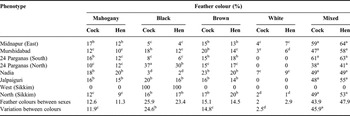
The results from Table 4 indicate the distribution of different feather colours in the chicken populations of the different regions. The results as tabulated indicate that the chickens in the populations studied had multiple variants in their feather colours, similar to the observations of Badubi, Rakereng and Marumo (Reference Badubi, Rakereng and Marumo2006), Bhuiyan, Bhuiyan and Deb (Reference Bhuiyan, Bhuiyan and Deb2005), Mandal, Khandekar and Khandekar (Reference Mandal, Khandekar and Khandekar2006), Halima et al. (Reference Halima, Neser, van Marle-Köster and de Kock2007), Nidup et al. (Reference Nidup, Dorji, Gurung, Arasta and Moran2005), Faruque et al. (Reference Faruque, Siddiquee, Afroz and Islam2010), Dana et al. (2010) and Uddin et al. (Reference Uddin, Ali, Akter and Khatun2011). The observed variation in feather colour as assessed by Bhuiyan, Bhuiyan and Deb (Reference Bhuiyan, Bhuiyan and Deb2005) may be attributed to genetic dilutions in native chickens. Mixed feather colour was the most common in all the locations and sexes except for Phia naku, which had a characteristic black plumage in both sexes. Halima et al. (Reference Halima, Neser, van Marle-Köster and de Kock2007) and Dana et al. (2010) reported that the variations in feather colour may also be attributed to selection by the rearers for cultural purposes and faunal medicine. The results of this study indicated that the white feather colour was the least preferred among the rearers, due to the fact that chickens with such feather colour were easily spotted by predators as they were unable to blend with natural vegetation. The findings are in consonance with the assessment of Ayele (Reference Ayele2011) who observed that the farmers in Amhara region of Ethiopia did not prefer white-feathered chickens because of their inability to camouflage in the surroundings. Al-Yousef (Reference Al-Yousef2007) also reported that white feather colour was the least preferred in Baladi chickens of Saudi Arabia. There are also reports that certain feather colours are associated with aggressiveness of the cocks and such birds fetch higher prices, especially among the fanciers of cock fighting. The results from Table 5 denote that the most common shank colour was blue, followed by yellow and white. The results are in accordance with the observations of Bhuiyan, Bhuiyan and Deb (Reference Bhuiyan, Bhuiyan and Deb2005), Ahmed and Ali (Reference Ahmed and Ali2007) and Iqbal and Pampori (Reference Iqbal and Pampori2008), but differed from the observations of Faruque et al. (Reference Faruque, Siddiquee, Afroz and Islam2010). The predominant skin colour was white. It is distantly in accordance with the observations of Bhuiyan, Bhuiyan and Deb (Reference Bhuiyan, Bhuiyan and Deb2005), Iqbal and Pampori (Reference Iqbal and Pampori2008) and Faruque et al. (Reference Faruque, Siddiquee, Afroz and Islam2010). Smyth (Reference Smyth and Crawford1990) and Eriksson et al. (Reference Eriksson, Larsen, Gunnarsson, Bed'hom, Tixier-Boichard, Stromstedt, Wright, Jungerius, Vereijken, Randi, Jensen and Andersson2007) indicated that the yellow pigmentation of the skin is a genetic trait correlated with carotenoid pigments in the skin of the birds and also associated with its nutrition, adaptive fitness and health. The average body weights of the cocks and hens vary between populations (Table 3), which may be attributed to both genotype and environment in which the chickens are reared. The body weight for cocks varied between 963 g (rumpless in Murshidabad) and 1 575 g (naked neck in Midnapur), while the values for hens ranged between 885 g (rumpless in Nadia) and 1 236 g (frizzled in Midnapur). These differences in body weight can also be attributed to the nutrition available to the birds and also to the age, similar to the observations of Dana et al. (2010). The results from Table 6 indicate that the egg-shell colour varied from cream to light brown with various intermediate shades, which are in consonance with the reports of Bhuiyan, Bhuiyan and Deb (Reference Bhuiyan, Bhuiyan and Deb2005), Faruque et al. (Reference Faruque, Siddiquee, Afroz and Islam2010) and Uddin et al. (Reference Uddin, Ali, Akter and Khatun2011). However, Parmar et al. (Reference Parmar, Thakur, Tomar and Pillai2006) reported that the egg-shell colour of Kadaknath breed varied from brown to light brown, whereas the egg-shell colour of Phia naku was bluish black tinge. Nidup et al. (Reference Nidup, Dorji, Gurung, Arasta and Moran2005) also reported similar colour of egg shell in Yubjha naap chickens of Bhutan. The feathers of the cocks were shiny when compared with the hens.
Population and conservation efforts
The outbreaks of avian influenza in West Bengal and Sikkim during 2007 and 2008 and again in 2011 (in Nadia district) had led to culling of all the domesticated avian species in the area of West Bengal included in this study (Ahuja et al., Reference Ahuja, Dhawan, Punjabi, Maarse and Pan2009). The official figures of culled birds in the studied districts were 1 532 464 heads and 77 830 eggs (Ahuja et al., Reference Ahuja, Dhawan, Punjabi, Maarse and Pan2009). The majority of the culled flocks were native fowls. The restocking in the region was carried out by distributing the chicks of Kruilor (a synthetic strain developed from several exotic chicken breeds) and also Rhode Island Red. The purposeful introduction of such stock has severely minimized the population of the indigenous fowls in the region and the resultant effect would lead to elimination and dilution of the native breeds of fowls in the region. Hence, it is feared that the potentially useful genotypes of the fowls as mentioned in the study may be lost forever if immediate steps are not taken for the conservation.
Conclusions
The present study indicates that the chickens in West Bengal and Sikkim had multiple variations in feather colour and physical traits. Certain physical features that were common among the phenotypes studied were yet divergent in some of the other physical characters, e.g. naked neck chickens, rumpless chickens, etc., while some phenotypes were localized in certain areas only such as the feathered shank and fibromelanosis chickens in Sikkim and Jalpaiguri district of West Bengal. Some phenotypes are known to have a better adaptability to tropical climates such as naked neck and frizzled fowls. Similarly, some interesting criteria of selection by the farmers were documented such as those for creeper and rumpless fowls. The present study is one of the first steps taken to document the chicken genotypes in the region. However, conservation efforts need to be immediately undertaken especially when restocking was carried out by introducing the exotic and synthetic strains of chickens.
Acknowledgements
The author acknowledges the inspiration received from Mr Gyasuddin Mondol, Mr Sadesh Ranjan Bhowmick and other farmers who provided the inputs for the data on fowls. The encouragement received from Lt.Col. (Retd.) M.K. Banerjee and Mrs Gopa Banerjee, Dr (Mrs) Soma Banerjee and Ms Shristi Banerjee, Directors and staff of BioDiverse Farming Pvt. Ltd, Kolkata, India and colleagues of School of Animal and Range Sciences, Hawassa University, Ethiopia is also acknowledged.