1. INTRODUCTION
Tudela, which was the main urban settlement of the Merindad de la Ribera throughout the Middle Ages, housed the largest Mudejar, Moorish or Muslim community, of the Kingdom of Navarre for over four centuries.Footnote 1 In early 1119, the Navarrese–Aragonese kingdom of Alfonso I, also known as ‘the Warrior King’, regained the Navarrese bank of the Ebro for Christianity.Footnote 2 However, the Moors would not leave these lands until 1516 when Navarre, four years after uniting with Castile, finally adopted the 1502 Castilian law which ruled that Moorish communities had to convert to Christianity or else go into exile. During the four centuries between 1119 and 1502, the vast majority of the Mudejar community remained in Tudela's Moorish quarter (Morería de Tudela) as an urban population but, according to primary source documents, there were also other Muslim districts in the rural areas of southern Navarre. These groups existed in the villages of Mosquera, Albea, Ablitas, Ribaforda, Pedrizas, Urzante, Cortes, Valtierra and Murillo de las Limas. There were, therefore, in addition to the urban Mudejar community in Tudela, sizeable agricultural Muslim settlements in the fertile valleys of the Merindad de la Ribera where farming was relatively prosperous.
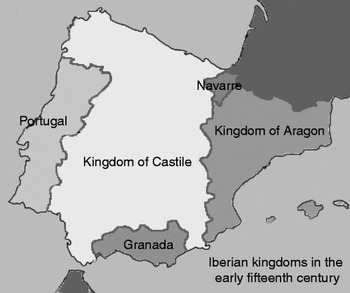
The Muslim communities of Navarre have historically attracted less critical attention than those in the bigger kingdoms of the Iberian peninsula (see Figure 1). However, the social, legal and economic peculiarities of the Mudejars in the Ribera of Navarre merit further study because of their unusual relationship with the Christian authority. Akio Ozaki was the first to explore Mudejar taxation in Navarre, collating a number of documents from the Municipal Archive of Tudela and from the Archive of Protocols.Footnote 3 Scholars such as Juan Carrasco have done an invaluable job when it comes to studying medieval taxation in Navarre. Some of Carrasco's works offer a comprehensive picture of Tudela's financial regime in the fifteenth century, which included the Moorish contribution to the economy of the Merindad de La Ribera.Footnote 4 Previously, Mercedes García Arenal had been the first modern scholar to adopt a global approach to the late medieval religious minorities in Navarre, covering social aspects of both the Jewish and Muslim communities.Footnote 5 However, in order to offer a wider perspective on what life as a religious minority would have been like for the Muslim population, we need to place this minority in context by asking several questions. Why did they stay in Navarre as religious outcasts for four centuries? How did they interact with their Christian and Jewish neighbours? What was their relationship with the monarchy and their legal status? Did they interact with other Muslim communities in the Iberian Peninsula, even with Al Andalus, the region of the peninsula governed by the Moors? Finally, and most importantly, what did they do for employment? Answering these questions will allow us to understand to what extent the Muslims were a well-integrated minority in Navarre. It will also reflect whether their expulsion in 1516 was a consequence of any real social unrest, or if it was part of an ideological agenda of the Catholic Monarchs which had little to do with day-to-day life in that area of the Iberian Peninsula.
Iberian kingdoms in the early fifteenth century. (Source: Seph Nesbit.)

The presence of the Mudejar community is well documented in the General Archive of Navarre, and also in the Municipal Archive of Tudela. This article aims to answer the above questions in the context of the period 1387 to 1479, which encompassed the reigns of Carlos III and Blanca of Navarre, the turbulent period under Juan II of Navarre–Aragon, the time of influence of Carlos of Viana and the regency of Leonor of Navarre.Footnote 6 Despite being a minority group, the role of the Mudejar community, both as a group and as individuals, was key in fifteenth-century Navarre for many reasons, ranging from their generous contribution to the coffers of the kingdom to the way they dominated the arts, crafts and liberal professions. Their location in La Ribera, near a belligerent Castile and in a place of great strategic importance for the economic wealth of the area as well as for its political stability, was also important. The Merindad de la Ribera was loyal to Juan II during the mid-fifteenth-century civil wars and Tudela was also the Kingdom of Navarre's only navigable port allowing access to the Mediterranean.Footnote 7
2. CONTINUITY AND STABILITY: FROM 1119 TO THE REIGN OF CARLOS III (1387–1425)
From the year 1119 up to the first years of Carlos III's reign the situation of the Mudejar community in Navarre was relatively stable in terms of its geographical distribution, demography and its position as a minority in a kingdom that also had large Jewish communities. It can be argued that the main difference between the Moorish and Jewish groups in Navarre was that the Moors had a collective identity and were organised as a community, having their own institutions; while the Jews, on the other hand, were mostly scattered over Navarrese cities and had less cohesion as an autonomous minority.Footnote 8 In the decades before 1119 and the Christian Reconquest of La Ribera, the Muslims of Tudela had a certain measure of autonomy in the form of a taifa, an independent Muslim principality.Footnote 9 The structural strength of their small taifa remained intact even when they were conquered by the Christians. In fact, the Moorish population of Tudela did not decrease with the Christian Reconquest, as might have been expected, but rather increased considerably, since the number of exiles was largely offset by the arrival of Mudejar people from Northern areas of the Navarrese territory and also by other Moors coming from Castile and even Portugal.Footnote 10 This phenomenon can be explained by the advantageous capitulation signed in 1119: it secured not only the right for Tudela's Muslim community to stay where it was, but also validated the community's way of life, property rights, legal status and religious practices.Footnote 11
The Mudejar inhabitants of Tudela maintained their privileges until the end of the fifteenth century, as evidenced by the documentation in the General Archive of Navarre's Chamber of Accounts, which relates to their work activities, transactions and the fluidity of their relations with the monarchy. In fact, the only restriction imposed by the 1119 capitulation was that Muslims should live only in the Moorish quarter of Puerta de Velilla, and this was gradually relaxed when it became necessary for the purposes of everyday life. In the fifteenth century itself, a significant proportion of the Mudejar population in the tax region of Tudela was living in the buenas villas of the Ebro valley, well beyond the margins of the urban Moorish quarter.
The Moors of Tudela paid the same taxes imposed on Christians and Jews for the same kind of commercial activity. However, the overall tax burden on the Mudejars was greater than that on either the Christians or the Jews because, as the relevant documents in the Municipal Archive of Tudela reveal, they had to maintain their own Muslim legal and judicial systems, which meant that payments had to be made not only to the inspector of accounts of the Crown (oidor de comptos), the tax collector of the Merindad (recogedor de la merindad) and the Tudela Attorney General (justicia de Tudela), but also to the Ulama (alfaquí), the local Muslim religious and legal leaders, in order to finance their own administration.Footnote 12 To illustrate the relatively advantageous status of the Mudejars on Navarrese soil until the fifteenth century, it can be noted that in 1309, on the occasion of the overall reform of the kingdom's administration, the combined Muslim and Jewish community (aljama) of Tudela was granted a tax exemption for many taxable activities on payment of an affordable annual collection of 280 Navarrese pounds, libras sanchetas.Footnote 13 For most of the fourteenth century, the Crown had applied a not very onerous fiscal regime to the Mudejar community, given the obvious economic benefits that their presence generated in terms of ordinary income and trade.Footnote 14 This scheme included a total exemption from tolls and measurements taxes in 1357 in order to boost business and trade, mainly with Al Andalus.Footnote 15 Coexistence on a relatively equal footing with the Christians in the area was reflected in the fact that, according to archival documents from 1382, the Christians and Moors of Tudela both paid the same rates for using the king's mill.Footnote 16
By Carlos III's reign in the fifteenth century there was a firmly rooted and well-established Mudejar community in the Kingdom of Navarre. It is clear that the Navarrese Crown's attitude in bringing the Reconquest to a close could not be completely detached from the monarchy's perception of their own Muslim communities. Although demographic documentation of the period shows that unconverted Moors made up just over 3 per cent of the entire population in the kingdom, that 3 per cent was of vital economic importance to the Crown's coffers.Footnote 17 As an illustration of Carlos III's dubious levels of commitment to the final campaigns of the Reconquest it is interesting to look at a fragment of a confidential letter, signed on 6 June 1404, that the Navarrese king sent to the Nazari Sultan Abü'Abd Allah Muhammad VII. Luis Suárez Fernández, Emilio Mitre, Rachel Arié and Enrique Pérez Boyero have already pointed to the existence of this confidential document in the General Archive of Simancas.Footnote 18 This is my translated summary of its second paragraph:
Carlos, by God's grace King of Navarre, to my brother, the King of Granada. I send you all my best wishes, as friends do … This is to let you know that I am sending as ambassador the chamberlain of my wife the Queen … to make you aware of some news … that my brother the King of Castile is coming to Logroño to meet the King of Aragon as well as myself and my wife, and you should know that he is coming in order to plot against you. Hence I advise you to defend your castles and fortresses, as I am being asked to collaborate in an attack against you, which I would never do, as he would plot against me as well, if he could. You know that his will is to conquer every Kingdom around him. Let me know if you need anything from me, as I am intending to send 300 crossbowmen to your aid and three boats full of wheat and many other goods … My ambassador will be disguised as a merchant pretending to be on a mission to buy silk for my wife the Queen.Footnote 19
It is difficult to verify the authenticity of the letter because the document filed in Simancas is a reproduction of a lost original. The actual document was intercepted by Alfonso Fernández de Córdoba, Governor of Alcalá la Real, and revealed to the court of Enrique III in Castile.Footnote 20 Nevertheless, the contents of this letter seem plausible. It is no surprise that the conquest of Granada was not a priority for Carlos III, who was much more concerned about Castilian expansionism. It is clear that the Reconquest of Granada was more of a threat than an opportunity for keeping the territory of Navarre intact. Moreover, Carlos III's familiarity with the King of Granada and his pro-Muslim bias in case of conflict also revealed that the Navarrese monarch no longer saw Islam as an immediate threat to his kingdom, just as his thriving Mudejar community of Tudela was also seen in a positive light. Whatever we make of it, this document seems to confirm that the policy of cooperation and friendship between Navarre and Castile during the reign of Carlos III was not always as strong and sincere as it has sometimes been understood to be.Footnote 21
3. THE NAVARRESE MONARCHY AND ITS MUSLIM WORKFORCE: PROFILES AND PRAGMATISMS
Accounts documents concerning the relationship between the aljama of Tudela and the Crown of Navarre during the reigns of both Carlos III and Juan II show that the understanding between the Navarrese monarchy of the fifteenth century and their Mudejar subjects was constant, with a few exceptions, across the entire century, at least until 1492. The Moors took on a wide variety of occupations related to the court, some of which were not strictly undertaken at court. Doctors, squires, architects, musicians, porters, concierges and horsemen would undertake their occupation at court. Others, such as attorneys, shoemakers, wax salesmen, merchants, blacksmiths, carpenters, cuirassiers or lenders would live in the aljama of Tudela and the court would be their main customer. For the remaining rural jobs, they would be in the ‘buenas villas’, again with the court as one of their main customers.Footnote 22 Individual cases, taken from relevant documents from the General Archive of Navarre's Chamber of Accounts, can assist in forming a better understanding of what kind of links the Mudejar community had with the court.
One of the main economic strengths of the Moorish population was that some lived in the villages on the fertile banks of the Ebro. This allowed them to dominate trade between the agricultural villages and the court, which was the Mudejars' main customer. For example, some documents dated between 25 February 1422 and 24 March 1434 mention Alí el Castellano (Ali the Castilian), also referred to as a moro de Tudela (a Moor from Tudela) in the files. He was trumpet player to Martín de Lacarra, a rich landowner, but in addition received a number of bonus payments from Carlos III's warden of the exchequer, as he was also in charge of organising the purchase of crops and products from the Muslim farms of southern Navarre.Footnote 23 Shortly afterwards, on 1 December 1425, Mahoma de Valencia and Farach, two brothers from the town of Borja, were recorded in various documents as business partners of a certain Roberto, a Christian mercer from Pamplona. This work group was responsible for the provision of wax and cheese for the royal family.Footnote 24 Exploitation of livestock in the Southern villages of the Merindad was a very popular activity amongst the rural Mudejar population. There is abundant documentation about Moors selling ‘dead meat’, especially lamb and mutton, but also, in some cases, cattle and goats.Footnote 25 This had obvious implications for urban trades, such as leather manufacture and shoemaking. The Moors also bought and sold live animals in livestock markets of the Merindad. One of the aspects that explained the vibrancy of the Mudejar rural community in Navarre is the fact that, in Castile, Muslims were banned from selling food to Christians, unless this was in the form of live animals.Footnote 26 Clearly, this type of impediment did not exist in Navarre, at least in the fifteenth century.
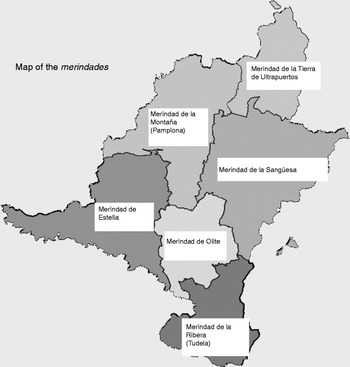
Between 15 November 1432 and the early months of 1450, Lope Barbicano, another man referred to as a ‘moro de Tudela’, was the master carpenter for all royal works, receiving his salary directly from the tax collector of Tudela. Barbicano must have been a key figure for at least 18 years when he was the principal architect during the works that took place to renew and rebuild the castles of Tudela and Corella.Footnote 27 Barbicano worked with Amet Madraz, Muza Alpelmi and Mahoma de Burgos, a group of local Mudejar artists, on the restoration and reconstruction of these two castles. However, he fell from grace in 1450, when Juan II ordered his arrest. He was taken prisoner and replaced by another Mudejar architect, Amet Rabanid.Footnote 28 Eight years after his arrest, in 1458, Barbicano reappeared in Tudela, back in his former role as a royal architect and carpenter. Both blacksmithing and woodwork were popular amongst the Moors of Tudela. The scope of their activity went beyond the Moorish quarter and even beyond the limits of their Merindad, since there are many documents that speak of Moorish carpenters working not only on the castles of Corella and Tudela, but also in the neighbouring Merindad of Olite (see Figure 2). Lope Barbicano, meanwhile, alternated directing works on large castles for the Crown with other minor carpentry-related jobs in private mills, stables, kilns and domestic rooms. He often collaborated on these minor jobs with small work teams of local Moors. One of the most striking team members was a certain Mahoma Madaico. With the title of ‘master of fixing and making boats’ Madaico specialised in rigging boats and worked alongside other Moors in Puente la Reina, again, far from La Ribera.Footnote 29
Navarre in the fifteenth century. (Source: Seph Nesbit.)

The Moors also played an important role in the fruit and vegetable trade. For instance, on 15 October 1434, Amet el Deutón was greengrocer to Diego Gómez de Sandoval, Count of Castro, and Queen Blanca. He received a number of bonus payments from the tax collector of Tudela as a special consideration from the queen.Footnote 30 Cultivation of the lands of La Ribera was dominated by the Mudejar community. According to the village charters for some of the settlements, crops included beans, grapes and olives.Footnote 31 Much of the produce was for domestic consumption; hence taxation in the rural areas was not as high as it was for town-dwelling professionals. Irrigation, incidentally, was one of the most interesting factors in the success of the Mudejar rural activity, since it is known that they were not charged any taxes on water usage. The process of extracting water from three different sources in the villages of La Ribera was recorded in Arabic characters, demonstrating that such practices followed Muslim technology and tradition and showed Mudejar mastery of the art of natural irrigation, in which Al Andalus particularly excelled.Footnote 32
In 1434, Muza Alburet was the governor of the Moorish quarter of Tudela.Footnote 33 This alcadí, who signed and wrote in Arabic characters, had made a loan of 75 pounds to the Navarrese Crown in 1433; this loan was returned to the Moors on 31 May 1434. Undoubtedly the Moors of Tudela were an invaluable source of funding for the king. The loan of 75 Navarrese pounds amounted to approximately 25 per cent of Tudela's total annual taxation.Footnote 34 How were the Mudejars able to lend such amounts of money? The main source of income for the Mudejar community during this period came from blacksmithing.Footnote 35 They monopolised this business and the Crown was their main customer. For instance, in 1435, Carlos of Viana's servants bought 2 iron torches, 300 cramp irons, a hammer and many other items from Tudela's Moorish forges.
Approaching the mid-fifteenth century, most of the population of Tudela's aljama was Muslim. However the city did have two predominantly Jewish quarters, and there were many cases of commercial cooperation between the two religious communities. In 1435, three of the Moorish citizens of the aljama, Jayel Cortobí, Amet el Benamí and Ibrahim Alcanello acted as a link between Juan II's chamber and Tudela's Jewish community when the royal family purchased 58 measures of red straw and 34 manufactured chamois surcoats.Footnote 36 The urban and commercial environment of Tudela did not prevent many of its inhabitants from earning a living through the primary sector of the kingdom's economy, breaking the stereotype of the exclusively urban aljama. Such urban trades provided work for about three-quarters of the Mudejar population, but their role cannot be fully understood without taking account of the presence of the rural communities. Livestock, for instance, was not only sold (or rented) to ordinary Christian and Jewish citizens, but also to the king's household. As an example of this, on 9 April 1437 Queen Blanca's horsemen, Beltrán Labets and Juan de Sevilla, rented mules and donkeys from the aljama of Tudela for use by the queen's entourage.Footnote 37
When it comes to their social status, however, it is impossible to depict the Mudejar community as a whole. Their social mobility in Navarre could, indeed, be remarkable, as the case of Lope Barbicano shows. On 20 January 1436, Mahoma el Culebro was lawyer to nobleman Juan Sarmiento and also squire to King Juan II. His official payment was 100 florins per month and he signed his receipts in Arabic characters.Footnote 38 Lope Barbicano and Mahoma Culebro were by no means the only privileged Moors of this decade. Perhaps the most remarkable Mudejar of this period in Navarre was Muza al Cortobí. From 18 December 1439, at the latest, he was Queen Blanca's personal doctor and physician.Footnote 39 His annual pension was worth 200 Navarrese pounds, which made him one of the highest-paid courtiers of the whole kingdom, well above most of the Christian nobility.Footnote 40 Al Cortobí had also been King Juan II's personal doctor from October 1436.Footnote 41 This Mudejar doctor wrote and signed all his documents using romance characters. Generally, rural Moors and those from the lowest social strata wrote and signed using Arabic characters. On the other hand, and with the only known exception of Mahoma Culebro, Moors of a higher socio-cultural level, such as doctors or architects, signed and wrote using romance characters: their Christian nicknames and their generalised use of Spanish indicate some degree of acculturation. A couple of years later, in 1441, Muza Al Cortobí also became governor of the Moorish quarter, whilst keeping his job as doctor not only to the king and queen but also to Carlos of Viana.Footnote 42
In 1439 there was evidence that gave a new twist to our understanding of how Muslims and Christians interacted in Navarre. Zalema Amet Margoáin was a Mudejar blacksmith and gold trader from Tudela who worked for both Blanca of Navarre and Carlos of Viana and appeared on the warden of the exchequer's payroll.Footnote 43 One of his jobs was to gild Carlos of Viana's cross and sword immediately before his wedding to Agnes of Cleves. Moors such as Margoáin (who had a Navarrese surname and was presumably the son of a mixed marriage) showed that the mix of Muslim and Navarrese lineages was evident and fairly widespread in Tudela. They were obviously not a majority but there is sufficient archival evidence not to consider his case an anomaly. Margoáin also worked in partnership with Amet Abenaví and Mahoma Alí in the provision of steel crossbows for Carlos of Viana's entourage; all three Muslims also worked permanently for Blanca of Navarre's chamber. The vast majority of the Mudejar families working for both Blanca and her son Carlos had previously served Carlos III. This was the legitimate line of succession to the Kingdom of Navarre, and the Prince of Viana, who received his education from his grandfather Carlos III in the castle of Olite, inherited many of the staff that had worked for him, including his Mudejar subjects and their descendants.
Therefore, amongst the Navarrese monarchy, Carlos of Viana had the closest relationship with the Mudejar community of Tudela, particularly with the blacksmiths. Mahoma Alucería and Juce Almunia were two of his suppliers in 1442.Footnote 44 They sold golden coffers and luxury chains for Carlos of Viana's hunting dogs. Alucería and Almunia belonged to the large contingent of skilled Muslim blacksmiths that worked from Tudela for the royal family. In this category we include all those who were defined not only as blacksmiths, but also with such specific job descriptions as cuirassiers, suit of armour manufacturers, locksmiths, caretakers (in charge of fixing broken items) and weapon manufacturers (who supplied everything from crossbows to cannons). The Muslim blacksmiths of Tudela who produced suits of armour even specialised in specific parts such as spears, axes, grids, harnesses, revebraces (arm protection) and vambraces (wrist protection), gauntlets (hand protection), bascinets (open-faced helmets), pauldrons (shoulder protection), gussets (joint protection), faulds (decorated abdomen protection) or plackarts (chest protection).Footnote 45 The royal armies were their main customers, giving them some very lucrative business and a very close relationship with knights, nobility and members of the royal family, in particular with Prince Carlos of Viana.
However, relations between the prince and the Mudejar community were by no means restricted to blacksmithing; in fact, they were not even restricted to the Navarrese Muslim aljama. There is evidence of a certain Valencian Mudejar, Impit, who brought sweets, marshmallows and fine desserts from Valencia and from Al Andalus to Tudela, following specific requests from the prince.Footnote 46 As it was his family's custom, Carlos of Viana also inherited his mother Blanca's personal doctor, Muza al Cortobí. He appointed him as his personal physician on 6 April 1442, after his mother's death, with a 50 per cent increase in his annual salary, from 200 to 300 Navarrese pounds.Footnote 47 According to the document, this increase was a bonus in gratitude for his services to Queen Blanca in her final months. Viana was particularly generous with his Mudejar servants, as shown by the countless documents reflecting special donations from the prince to the Moors, some of whom worked in his chamber. At least three of them were Viana's horsemen in 1443, when the prince bought several surcoats, capes and other pieces of clothing and equipment for them.Footnote 48 In 1444, Viana bought 900 iron sabatons, a piece of armour for the foot, from Mudejar blacksmiths Mahoma el Alí and Ibrahim Alcanit. Apart from this, there was also a healthy trade between the Navarrese aljama and other Mudejar settlements of the Iberian Peninsula.
During the 1440s, Navarrese Moors, including Juce de Ayn and Mahoma Berraguera, imported large amounts of cereal from the aljama of Zaragoza, part of which they then exported to Al Andalus. At the same time these two merchants imported jewellery from Valencia for the Navarrese queen.Footnote 49 As we have seen, the Navarrese Moors were able to import cereal with ease from their co-religionists in Aragon and controlled much of Navarre's wheat, barley and oats production, most of which was cultivated in La Ribera.Footnote 50 The much-reduced Al Andalus of the fifteenth century, isolated in the Iberian peninsula's dry South, lacked these basic products which increasingly resulted in their Muslim settlements becoming bankrupt. The Navarrese authorities used this to their advantage, exporting cereal crops to the Muslim South from a very advantageous position and taxing their Mudejar community for this very profitable business. Carlos III, as noted earlier, aware of Al Andalus's increasing failure to supply itself with grain, had promised the King of Granada ‘boats of cereal’ in his confidential letter of 1404.Footnote 51
Although the Prince of Viana had the closest relationship with Tudela's Mudejar community, King Juan II and his second wife Juana Enríquez also had Muslim servants. The Castilian Enríquez, in particular, had a personal porter, called Juce el Catalán, in charge of transporting her luggage from Zaragoza to Tudela and Estella on 23 October 1450.Footnote 52 In the 1450s, the Ulama of Tudela was Jayel Thari, who appeared in several documents lending funds to the Crown.Footnote 53 These funds were usually returned within a year, although this was not always the case.Footnote 54 Remarkably, Navarre's external policy changed dramatically once Juan II and Juana Enríquez took power in both Navarre and Aragon. This change, of course, also affected Navarre's policy towards Al Andalus, which became much more belligerent.Footnote 55 A few months before Alfonso V's death, Juan II was already managing Aragonese affairs before his coronation in 1458. Around 1457, for instance, several villages of the Merindad de la Ribera, which included the aljamas of Tudela and the banks of the Ebro, were paying special taxes for the ‘war against the Moors’; taxes which the Mudejar population also paid.Footnote 56
This does not seem to have been problematic for a community that saw itself as subject both to their Ulama and to the King of Navarre. In fact, the Navarrese–Aragonese army had plenty of Mudejar foot soldiers in its ranks. In the late 1450s, it is obvious that the final stages of the Reconquest were not a holy war for the Navarrese–Aragonese Crown but rather a proxy war with Castile for domination of the Iberian Peninsula. In this context, the Navarrese Moors were not seen as enemies; they were subjects who played a very important strategic role in both financial and military terms. As was the case in other Iberian kingdoms, Mudejar subjects were involved in military action.Footnote 57 However, there were times such as immediately after the capitulation of Tudela, when members of the Muslim communities did not have direct military obligations, although evidence suggests that even during these periods Moors were still recruited as mercenaries.Footnote 58 Moreover, Navarrese Moors referred to as ‘maestro ballestero del Rey’ (master crossbowman of the king) and ‘maestro de artillería’ (master of artillery) were not just blacksmiths but were, in fact, military engineers building all sorts of weapons, even cannons, for the Christian army.Footnote 59
4. COLLECTIVE TAXATION: THE KING AND THE ULAMA
One of the best ways to analyse the evolution of the Mudejars as a group in Navarre from 1119 to 1516 is to consider how they collectively paid taxes. Documents suggest that stability was the common denominator for centuries: the Moors of La Ribera were subject to a relatively flexible tax regime. This partly explains the large numbers of Moorish citizens from other regions arriving in Tudela in the four centuries following 1119. However, internal taxation (that is, taxes paid to the Ulama, not the Crown's tax collector) was always an extra burden for the Moorish community. Evidence of this can be found in the Municipal Archive of Tudela and also in the Tudela Archive of Protocols, as payment of internal taxation did not involve the kingdom's central administration.Footnote 60 Tudela's fourteenth-century census enumerated 30 occupations and goods subject to tax by the royal court of Navarre, which was normally in Pamplona.Footnote 61 In Tudela itself occupations included butchers, blacksmiths, shoemakers or wicker workers, and goods as disparate as ovens, ornaments, sawbuck packsaddles, tree gratings and textiles.Footnote 62 In the rural areas Muslims paid taxes on their rented lands, vineyards, mills and hunting areas.Footnote 63 Some of them also paid rent on their houses. Other sources of income for the Crown were fines received and loans from the Muslims; these loans were interest free and the Christian king often decided if they were repaid. We do know that the Mudejars enjoyed the same community facilities as their Christian neighbours in Tudela, both in the fourteenth and fifteenth centuries.Footnote 64 These included, for instance, four Turkish baths that were shared by the whole population and not subject to any extra tax, as they were in Valencia.Footnote 65 This relaxed practice was unthinkable in other areas of the Iberian Peninsula, including Castile and Al Andalus.
Nevertheless, it is of interest here to evaluate the Mudejars' overall contribution to Navarrese coffers with evidence from documents held in the General Archive of Navarre. Perhaps the most revealing of those documents is a paper dated 10 April 1421, in which Muslim taxes were listed by type.Footnote 66 According to this receipt, the annual contribution of the whole Muslim aljama of La Ribera (including both Tudela and the rural villages) was 375 Navarrese pounds; 300 levied from Tudela and 75 from the villages, giving a very clear representation of the relative weight of the Mudejar urban and rural economies. Obviously, the larger part of their gross economic profit came from trade in the city, but that a fifth of that profit came from the primary sector was significant and partly explains the buoyancy of their trade.
During the final years of Carlos III's reign, in the 1420s, the global Mudejar tax in Navarre (pecha de los moros) included tolls, weights and measures. These had been eliminated in the fourteenth century as a result of the Black Death and the subsequent loss of population, but they were reintroduced in this period of relative stability.Footnote 67 In 1422, the tax collector for the Mudejar aljama was Godofre, Count of Cortes, natural son of King Carlos III. In that same year the Crown exempted the blacksmiths Ibrahim Madexa and Mahoma el Halí from all taxes and the whole Muslim community saw a cut of one-third in overall taxation.Footnote 68 This document also explains how royal architect Lope Barbicano and members of his family (a son and a grandson) were also exempted from paying any taxes.Footnote 69 Even though the Mudejar population remained relatively stable, these documents also allow glimpses of possible movement of people between different settlements and different environments.Footnote 70 During the period from the late 14th century to the late 15th century, the urban areas of Tudela seemed to grow in economic activity; while, at the same time, certain villages slowly lost Moorish inhabitants as, for example, in the case of Monteagudo. In 1423, after Pedro de Uncastillo, then tax collector of La Ribera, informed him that the Muslim population of Monteagudo was now too small to pay the full amount of their taxes, King Carlos III instructed the treasury that the Moors of Monteagudo did not need to pay any taxes for their production of wheat and barley and that all the rents they were paying were to be halved.Footnote 71
Following Juan II and Blanca of Navarre's accession to the Navarrese throne, the situation remained fairly advantageous for the Mudejar community, at least in the early years of their reign. Soon after his coronation, Juan II ordered the tax collectors of La Ribera to respect and implement the 29 pounds remission on the 1429 fiscal year granted to the Moors of Ablitas, after military skirmishes caused damage to their village.Footnote 72 Perhaps more interestingly, Muslims and Christians in the rural south of Navarre appear to have suffered similar difficulties in the 1430s and, remarkably, they reacted together. On 26 November 1433, for example, as a result of a Muslim and Christian lawsuit against Martín de Lacarra, referred to in the records as ‘ricohombre’ (a rich man, possibly a landowner of a large estate), Juan II ruled that both Muslims and Christians from Cortes had the right of passage and the right to work in the Monte del Rey estate.Footnote 73
During the years of border instability that followed Juan II's arrival in Navarre, it was fairly common for Moors who lived outside the walls of Tudela to suffer the consequences of occasional battles against Castile. This explained much of the noticeable decrease in population (both Muslim and Christian) in certain rural areas. For this reason, Juan II exempted the Mudejar communities of Valtierra and Murillo de las Limas from paying half of their annual taxation for 1434. In addition, in 1435, the king forgave all the clergy, laymen, Christians and Moors the 100 Navarrese pounds they owed from previous years as a consequence of both the troubles caused by Castilian troops and a hailstorm which had ruined a significant proportion of their crops.Footnote 74 Already in the 1440s, and under the stewardship of alcadí Muza al Cortobí, the annual taxation for the Moors of Tudela was still 300 Navarrese pounds, the same as decades before under the reign of Carlos III.Footnote 75 All other taxes rose during the same period and there is no evidence of a decrease in the population of Tudela at the time. Therefore, this could be understood as a rather favourable tax policy. Indeed, the king took care to make sure that taxes for his Muslim communities were fair: on 7 September 1444, Juan II, ruling against the tax collector of Ablitas, who was found to be corrupt, reminded him that he should not charge the Mudejar community of Ablitas for taxes that they did not have to pay.Footnote 76
Inevitably, the clashes between Juan II and Carlos of Viana were also to bring consequences in terms of the tax burden, not only for the Mudejars but for the whole of Navarre, as the population of La Ribera and that of the rest of the merindades had to pay taxes to both Juan and Carlos during the civil wars. In 1449, just before hostilities began. La Ribera and the South remained loyal to Juan II. An important document of 4 February 1449 explains how Jaime Díaz de Aux, one of Viana's men, received the aljama's 300 Navarrese pounds annual contribution in compensation for losing the castle of Corella to Juan de Beamont, Chancellor of the Beamont party who supported Viana.Footnote 77 In the 1450s further tax exemptions applied in rural Mudejar areas. The most significant was in 1457, when Juan II decided that the Muslim contingent of Cortes should not pay any taxes because of their poor harvest.Footnote 78 The situation, however, worsened during the 1460s and 1470s, under the regency of Leonor of Navarre. Some rural communities accumulated substantial debts to the Crown, and on 8 April 1476, it demanded that both the Christians and Muslims of Cortes pay at least half of what they owed with immediate effect.Footnote 79
5. CRIME AND SOCIAL UNREST: AN ARTIFICIAL END TO FOUR CENTURIES OF PEACE
Documents that illustrate the Mudejar contribution to Navarre's economy as well as their professional activities have so far been analysed, but in order fully to understand how the community evolved and became part of everyday life amongst the general population of the kingdom, it is important to consider crime and social unrest. Were the three religious groups able to coexist peacefully? The General Archive of Navarre holds only a handful of sentences and rulings referring to conflicts between Muslims. This is because, following legal customs dating from the twelfth century, the Mudejar community applied its own law in cases where the conflict only involved Muslims. The Ulama sometimes appealed to the Merindad's Attorney General, or even to the Crown's authority, for arbitration but this did not happen very often.Footnote 80 Documents recording the rulings concerning conflicts between Moors are mostly held today in the Municipal Archive in Tudela.
Such rulings reveal clear, pragmatic links between Mudejar institutions and Christian authorities: the two structures were complementary. Throughout the entire fifteenth century, no more than 15 trials between Moors and Christians were reported. Records of many more trials can be found in the Tudela Municipal Archive and Archive of Protocols, the vast majority of which relate to conflicts between Muslims and disputes between Muslims and Jews.Footnote 81 When it comes to sentences involving Mudejar subjects, therefore, both victim and perpetrator often belonged to the same religious community.Footnote 82 Instances of attacks by the Christian majority against the Muslim minority were virtually non-existent. Judicial documents from both the fourteenth and fifteenth centuries show that the most common crime amongst Christians was homicide, with debt and blasphemy most frequent amongst the Jews and domestic violence (normally perpetrated by men but against both men and women) amongst the Muslims.Footnote 83 Very few homicides occurred in the Mudejar community in the fifteenth century. Homicide was punished with a fine of 25 Navarrese pounds, if it were committed outside the walls of the city and 50 Navarrese pounds if the crime were committed within the walls.Footnote 84 The full amount was very rarely paid, and most sentences are followed by the phrase ‘because he is poor and would not be able to pay the fine for this homicide’.Footnote 85 In the fourteenth century, under Navarrese law, homicide was punishable by death but, in view of the low incidence of this particular crime within the Muslim community, royal authority allowed the Ulama to pass sentence.Footnote 86 Therefore, there were no death sentences against Muslims passed by either the royal authority or the Attorney General of Tudela throughout the entire fifteenth century. The Ulama, on the other hand, applied very strict Islamic law and meted out very severe sentences including the death penalty, particularly in punishment for sexual crimes.
The cases of conflict between Moors and Christians were few and far between. For example, on 26 February 1423, the court ruled against the wife of Amet de Ruillar, a Moor from Valtierra, for insulting Sancha, the wife of Gonzalo, a Christian miller.Footnote 87 Such a ruling is rare because it was normally Mudejar men who were involved in this kind of conflict.Footnote 88 In order to illustrate the equal standing between Christians and Moors when it came to judicial sentences, the Court's judges punished crimes perpetrated by Muslims with the same fines as those imposed on crimes committed by Christians.Footnote 89 On 22 September 1433, for instance, the justicia de Tudela condemned Christian Pedro González, from Cascante, for throwing a stone at Juce de Gali, a Moor from Monteagudo, and making him bleed.Footnote 90 González was fined 67 salarios and 6 dineros. The fine was always the same for the same violent act, whether it was between Muslims, whether it involved a Muslim striking a Christian or vice versa, or whether it was an act of violence between men or women. The same fine was paid for assaulting a priest or a representative of the king's authority. When the Christian governor of Valtierra was punched in the face by a Mudejar, the latter was given exactly the same fine as Pedro González: 67 salarios and 6 dineros. Again in 1433, there was also a very interesting joint sentence passed down from both the Christian and Islamic courts when a Christian subject from Ablitas, Miguel de Villamayor, was fined by both the court prosecutor and by Juce Granada, Ulama of Tudela.Footnote 91 It is noteworthy that most court rulings involving Mudejars were from rural areas. Clearly, the alfaquí was perfectly able to control the self-contained urban environment of the aljama in Puerta de Velilla, but when conflicts occurred outside the walls of the city, he sometimes had to rely on central administration to help him enforce the law.
There were a few examples of convictions dictated by the court's attorney within the aljama, such as one on 11 March 1441, in which Mudejar Armiseu, from Tudela, was condemned to pay a fine of 7 Navarrese pounds and 10 salarios, for wounding Pedro el Bueno, his Christian neighbour. In the following file, Pedro el Bueno was fined the same amount for wounding Armiseu.Footnote 92 Throughout the century, the Christian authorities very rarely became involved in conflicts between Muslims, and virtually every time this happened, the incident took place outside the limits of the Merindad de la Ribera. On 15 March 1441, for example, Zalema Roldán paid a fine after a fight against his fellow Mudejar Alpament, which had taken place in Olite, outside the Ulama's jurisdiction.Footnote 93
The number of trials involving Moors corresponded almost perfectly with the percentage of Moors in the population.Footnote 94 There were more fights and quarrels between Moors and Jews, however. In 1441 alone there were several rulings against Mudejar people for causing bodily harm to Jews in fights.Footnote 95 Mahoma Goalit paid three florins for wounding Alamanet, a Jew from Tudela's Jewry, without causing any bleeding. On the same day, 10 March 1441, Zalema Roldán, a Mudejar, was convicted of wounding Cabanillas, a Jew. A few months later, Muza Milartes, a Muslim blacksmith from Tudela, wounded Judas Levi, a Jew. On the same day, Mahoma Atorrelli was fined for assaulting Moisés Lobo, another Jew from Tudela.
Documents concerning violence against women and sexual crimes are, however, the most significant, without a doubt because they show a cultural clash between both legal systems. The Christian authorities rarely became involved in other types of dispute between Muslims, but they did so quite frequently when it came to domestic violence. A sentence from 18 November 1441 fined Mudejar Ibrahim Atorrelli for assaulting his sister, Genti Atorrelli.Footnote 96 Both the Christian authorities and the Ulama signed death sentences for rape and sexual deviation, including a case of bestiality (‘en fazer quemar a un moro el qual fue sentenciado porque cohabitó con una asna’, which in English translates to ‘to burn a Moor condemned for having slept with a donkey’) and one of sodomy (‘Moro que fue quemado en Arguedas por razón de que yacía con otros’, which in English translates to ‘a Moor was burnt in Arguedas because he slept with others’).Footnote 97 Adulterous relationships, however, were punished relatively lightly, with fines of 60 salarios (significantly less than those for physical assaults). There are cases (although very rare) of Muslim women who had adulterous relations with Christian men. The fines for this type of activity were negligible (about 30 salarios), although in the fourteenth century, a Christian prostitute had been burned at the stake after being convicted of offering her services in the Moorish community.Footnote 98
Sexual crimes, although extremely rare, caused more social concern than murder, which was rarely punished with the death penalty, the culprit being most often imprisoned, exiled or fined. As far as can be documented, serious crimes were rare in the fifteenth century, to such an extent that only one or two cases of murder or rape per decade could be identified in the records. Another peculiarity of the relations between the two parallel justice systems had to do with the fact that the Christian authorities were sometimes used as a court of appeal when a convict felt that the punishment meted out by the Ulama had been excessive. On 18 May 1452, the Court's attorney decreed there should be a pardon awarded in the case of three Moors (Amet, Muza Sevilla and Mahoma Xeteví) who had been fined by the Ulama following a fight.Footnote 99 The file highlights that the pardon was granted through the intercession of the queen: two of the Moors were Juana's porters.
All in all, the documents consulted appear to show that the Mudejar community of Navarre was, indeed, a very stable and well-integrated minority. The professional activity they undertook was profitable both for themselves and for the Crown, and their varied profiles and skills meant that the kingdom had a very valuable workforce to exploit the fertile lands on the banks of the Ebro, and a dynamic group of people who were an asset in terms of internal and external trade and manufacturing. The aljama was a constant source of income for the Navarrese monarchy, and the rate of social unrest was constantly low throughout the centuries, even when, under Juan II, Navarre actively engaged in the Reconquest. Both Carlos III and Carlos of Viana had a very close relationship with their Moorish subjects, and the fact that neither of them was willing to support Castile in the culmination of the Granada campaigns should be counted as further evidence. Even under Juan II, the Mudejar community was valued and respected, received tax exemptions and was generally treated fairly and with a more advantageous autonomy than that accorded to other minorities in different parts of the Iberian Peninsula. The overall picture between 1119 and the expulsion of the Navarrese Moors in 1516 was one of stability, continuity, mutual respect and collaboration.Footnote 100 This was a picture that would change abruptly in 1516, when four centuries of peaceful coexistence were discarded.
ACKNOWLEDGEMENTS
Thanks are owed to Seph Nesbit for his help in producing the maps.