Introduction
Seed germination and seedling emergence failure are two of the biggest problems facing large-scale native seed-based restoration efforts in Australia (Whalley et al., Reference Whalley, Friend, Sanford and Mitchell2005, Reference Whalley, Chivers and Waters2013; Merrit et al., Reference Merritt, Turner, Clarke and Dixon2007). For many native Poaceae species globally, seed to seedling success can be as little as 10% (James et al., Reference James, Svejcar and Rinella2011; Merrit and Dickson, Reference Merritt and Dixon2011; Larson et al., Reference Larson, Sheley, Hardegree, Doescher and James2015). Although significant research has been undertaken in the past years to broaden the knowledge on Australian seed biology (Commander et al., Reference Commander, Golos, Miller and Merritt2017; Erickson et al., Reference Erickson, Muñoz-Rojas, Kildisheva, Stokes, White, Heyes, Dalziell, Lewandrowski, James and Madsen2017; Lewandrowski et al., Reference Erickson, Muñoz-Rojas, Kildisheva, Stokes, White, Heyes, Dalziell, Lewandrowski, James and Madsen2017; Merino-Martin et al., Reference Merino-Martín, Courtauld, Commander, Turner, Lewandrowski and Stevens2017), the seed biology and germination requirements are often not considered for many native species commonly used for restoration purposes in Australia (Hopkins et al., Reference Hopkins, Koch, Ward, Asher and Bell2000; Merritt and Rokich, Reference Merritt, Rokich, Sweedman and Merritt2006; Commander et al., Reference Commander, Merritt, Rokich and Dixon2009; Bradbeer, Reference Bradbeer2013). Understanding seed biology to identify optimum environmental conditions for germination, together with an understanding of dormancy mechanisms, is important to facilitate rapid and complete germination in restoration projects (Erickson et al., Reference Erickson, Muñoz-Rojas, Kildisheva, Stokes, White, Heyes, Dalziell, Lewandrowski, James and Madsen2017). Dormancy present in Australian native seeds is considered to be one of the most important limiting factors preventing successful germination (Merritt et al., Reference Merritt, Turner, Clarke and Dixon2007). Although dormancy is favourable for seeds in their natural environment, it can be a problem when using them for restoration work.
For most native species used in restoration, it is essential to enhance their germination percentage as well as speed it up and allow for uniform emergence, so that seedlings can compete with weeds (Hopkins et al., Reference Hopkins, Koch, Ward, Asher and Bell2000). Seed enhancement technologies (SETs) can overcome a variety of limitations that restrict successful plant recruitment (Kildisheva et al., Reference Kildisheva, Erickson, Merritt and Dixon2016). Various SETs can broaden the environmental limits in which germination will occur (Wagner et al., Reference Wagner, Pywell, Knopp, Bullock and Heard2011) and provide a better environment for seedling establishment. They can be defined as treatments applied to seeds prior to planting, with the purpose of enhancing germination and improving seedling emergence and survival (Taylor et al., Reference Taylor, Allen, Bennett, Bradford, Burris and Misra1998; Kildisheva et al., Reference Kildisheva, Erickson, Merritt and Dixon2016; Madsen et al., Reference Madsen, Davies, Boyd, Kerby and Svejcar2016; Erickson et al., Reference Erickson, Munoz-Rojas, Guzzomi, Masarei, Ling, Bateman, Kildisheva, Ritchie, Turner, Parsons, Chester, Webster, Wishart, James, Madsen, Abella, Merritt, Fourie and Tibbett2019).
Seed enhancement technologies can be used to promote different plant life stages. They can be combined with dormancy pre-treatments to overcome dormancy and/or promote germination at the seed stage (Erickson et al., Reference Erickson, Muñoz-Rojas, Kildisheva, Stokes, White, Heyes, Dalziell, Lewandrowski, James and Madsen2017). To lead the development of successful dormancy breaking-treatments, it is crucial that seed dormancy is correctly classified first (Baskin and Baskin, Reference Baskin and Baskin2004). Germination-enhancing chemicals (GECs) can be used to overcome dormancy and/or stimulate germination. These include chemicals such as smoke water (SW) and potassium nitrate (KNO3). KNO3 may act as a metabolic switch in various respiration pathways (Adkins et al., Reference Adkins, Simpson and Naylor1984), and smoke derived from burning plants has been reported to stimulate germination in many Australian (Roche, Reference Roche1994; Dixon et al., Reference Dixon, Roche and Pate1995), North American, and South African native species (Brown and Van Staden, Reference Brown and Van Staden1997). Seed enhancement technologies can also act at the seedling stage, by providing the newly emerging seedlings with access to nutrients and water for growth and survival. Moreover, SETs can be used as a combination of treatments, to act at both life stages (the seed stage and then later the seedling stage).
Seed enhancement technologies can allow for the physical modification of seed shape, which facilitates planting, or can be combined with GECs to overcome dormancy, to improve germination and enhance seedling emergence. Three forms of SET that could be used to improve the success of native seed-based restoration are seed priming, seed coating and seed cookies. Seed priming (soaking seeds in a priming solution and then drying) is the most commonly used approach and acts to prepare the seeds for germination prior to sowing by activating certain metabolic processes involved in germination (Bewley et al., Reference Bewley, Bradford, Hilhorst and Nonogaki2013; Merritt et al., Reference Merritt, Golos, Erickson, Erickson, Barrett, Merritt and Dixon2016). In contrast, seed coating involves covering the seeds with one of a range of mineral or inert ingredients that can make mechanical seed dispersal easier (Turner et al., Reference Turner, Pearce, Rokich, Dunn, Merritt, Majer and Dixon2006) or to incorporate the GECs (Richardson et al., Reference Richardson, Badrakh, Roundy, Aanderud, Petersen, Allen, Whitaker and Madsen2019; Taylor et al., Reference Taylor, Cass, Armond, Madsen, Pearson and St. Clair2020). In a further step, seeds can be conglomerated by creating seed cookies, similar to seed pods (Madsen et al., Reference Madsen, Svejcar, Radke and Hulet2018), seed pellets (Gornish et al., Reference Gornish, Arnold and Fehmi2019) and seed bombs/balls. Agglomerating seeds can improve seed handling and broadcasting in the field (Gornish et al., Reference Gornish, Arnold and Fehmi2019; Hoose et al., Reference Hoose, Call, Bates, Anderson, Roundy and Madsen2019). Madsen et al. (Reference Madsen, Davies, Williams and Svejcar2012a) showed that seedling emergence can be improved in agglomerated seeds as they can generate a higher emerging force to help thrust through the soil. These kinds of SET approaches are commonly used in a wide range of agricultural circumstances (Turner et al., Reference Turner, Pearce, Rokich, Dunn, Merritt, Majer and Dixon2006), and in recent years, they have received increasing interest for their potential to improve native seed-based restoration (Merritt et al., Reference Merritt, Golos, Erickson, Erickson, Barrett, Merritt and Dixon2016). Coatings can buffer seeds against drought periods, controlling the timing of their germination and enhancing seed coverage to facilitate the broadcasting process of small seeds (Madsen et al., Reference Madsen, Davies, Boyd, Kerby, Carter, Svejcar, Michalk, Millar, Badgery and Broadfoot2013). Information on the use of GECs to help overcome seed dormancy and promote germination has rapidly increased in recent years for the Australian flora (Commander et al., Reference Commander, Golos, Miller and Merritt2017; Erickson et al., Reference Erickson, Muñoz-Rojas, Kildisheva, Stokes, White, Heyes, Dalziell, Lewandrowski, James and Madsen2017; Erickson et al., Reference Erickson, Munoz-Rojas, Guzzomi, Masarei, Ling, Bateman, Kildisheva, Ritchie, Turner, Parsons, Chester, Webster, Wishart, James, Madsen, Abella, Merritt, Fourie and Tibbett2019).
This study investigated the germination biology of three Australian native Poaceae species to interpret how different GECs and SET approaches could influence seedling emergence. The effects of seed treatments were investigated in two contrasting soil types. The objectives were to assess the (1) baseline germination of untreated seeds of three Poaceae species native to Australia across a range of temperature and light conditions suitable for the species, (2) efficacy of three GECs (SW, KNO3 or their combination) to improve seed germination and seedling emergence, (3) efficacy of three SETs (seed priming, seed cookies or seed coating) as methods to deliver the GECs and (4) influence of two contrasting soil types on the efficacy of the GECs and/or SETs. The species of Australian native Poaceae were selected for this study as they are frequently used in seed-based restoration projects, but are often present with low seed fill, viability and/or dormancy impediments (Adkins et al., Reference Adkins, Bellairs and Loch2002; Farley et al., Reference Farley, Bellairs and Adkins2013; Bellairs and Caswell, Reference Bellairs and Caswell2016).
Materials and methods
Seed material
Three Australian warm-season native Poaceae species (Table 1) were used in this study: Bothriochloa bladhii (Retz.) S.T. Blake, Cymbopogon refractus (R.Br) A. Camus and Capillipedium spicigerum S.T. Blake. The three species grow naturally in south-east Queensland and are commonly used in restoration projects in this area. In addition, all three often suffer from innate low germination (unpublished data), which is due to poor floret fill, low seed viability or the presence of dormancy. In both experiments, whole florets were used, consisting of the hulled caryopsis (seed, pericarp, lemma and palea), hereafter referred to as seeds. Seeds were provided by Native Seeds and Land Repair (Maleny, Queensland, Australia) and were collected under a State collection permit. Seeds were stored in a seed store (15 ± 1°C and 15 ± 3% relative humidity) until used. Before experimentation, the 100-seed weight for each seed lot was measured using an analytical balance, averaging the results of five replications. Seed fill was determined using an X-ray machine (Faxitron MX-20 Imaging System, Lincolnshire, IL, USA). Six replicates of 25 seeds each were exposed to 18 Kv for 20 s, and the images were captured using the Bioptics software.
Seed lot information for Cymbopogon refractus, Capillipedium spicigerum and Bothriochloa bladhii, together with their restoration characteristics, floret fill, 100-floret weight and the mechanism(s) of dormancy described in the literature

PD, physiological dormancy.
a First number corresponds to seed germination biology study, and second to seedling emergence study.
Experiment 1: seed germination biology
All seeds were surface sterilized by shaking in 2% (v/v) sodium hypochlorite (NaOCl) solution (White King Bleach, Melbourne, Victoria, Australia) for 10 min (Merrit, Reference Merrit, Sweedman and Merritt2006) containing two drops of Tween 20 (Labchem, Zelienople, PA, USA) added as a surfactant. Seeds were then washed four times with sterile distilled water and blotted dry. Twenty-five seeds in three replicates were placed into each Petri dish (plastic, 9 cm diameter) lined with two layers of Whatman No. 1 filter paper and moistened with 5 ml of sterile distilled water. The Petri dishes containing seeds were then sealed with parafilm to reduce water loss and placed in ten insulated chambers on a thermogradient bar (Lindner and May Pty. Ltd, Windsor, Brisbane, Australia), providing incubation temperatures of 7.3, 11.1, 14.2, 17.3, 19.5, 22.5, 25.0, 27.5, 29.9 and 32.7 ± 0.5°C. The ambient temperature inside each of the chambers was monitored hourly using 10 data loggers (Tinytags, TGP 4017, Hastings Data Loggers, Port Macquarie, New South Wales, Australia). Within each chamber, Petri dishes containing the imbibed seeds were either exposed to light (approximately 100 μmol m−2 s−1, cool white fluorescent light, with a 12/12-h day/night photoperiod) or kept in darkness by wrapping dishes with two layers of aluminium foil. The position of the dishes in the chamber was randomized every 2 days. The findings from Experiment 1 were used to drive Experiment 2.
Experiment 2: the effect of GEC, SET and soil type in seedling emergence
Soil treatment
Two soil types were used, a sodosol (sodic soil) and black vertisol (high clay content; Table 2), selected to represent two common but contrasting restoration scenarios in south-east Queensland. The sodosol was obtained from Old Hidden Vale, Grandchester, Queensland, Australia. This site was extensively grazed by cattle (Bos taurus, Linnaeus, 1758) for around 100 years, has extremely eroded soil and supports little biodiversity. The black vertisol was obtained from agricultural land in Gatton, Queensland, Australia, which had been used for crop production for >50 years. After collection, both soils were air-dried for 1 week and then ground to approximately 5-mm diameter particle size. Four kilograms of one soil were placed into each pot (20 cm diameter and 19 cm height). Pots were then drip-irrigated daily to maintain adequate soil moisture. Throughout the experiment, the average daytime temperature was approximately 20–25°C (optimum germination temperature determined in Experiment 1).
Soil analysis for the two soil types used in this study (five random samples were taken from a depth of 0–20 cm and then bulked to create a single composite sample): sodosol and black vertisol

OC, organic carbon; TN, total nitrogen; S, sulphur; OM, organic matter; K, Colwell potassium; P, Colwell phosphorus; Ca, calcium; CEC, cation exchange capacity.
Seeds of each species were treated separately with one of three SETs (seed priming, seed coating or seed cookies), in combination with the following GEC treatments (solutions of all chemicals were made fresh, refrigerated and then used within 1 week after preparation): SW (Regen 2000 Smokemaster, batch no. 11957R, Tecnica, Bayswater, Victoria, Australia) diluted to 100 ml l−1 (Read and Bellairs, Reference Read and Bellairs1999), KNO3 (AnalaR, ≥ 99.0%) at 200 mM (unpublished data) and a combination of both chemicals (SW 100 ml l−1 + KNO3 200 mM).
Seed coating
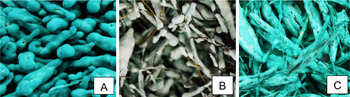
Seeds were coated using a rotary seed coating machine (Innovative Seed Coating Solutions Pty. Ltd, Coopers Plains, Queensland, Australia). The apparatus consisted of a vertical stationary cylinder with an internal rotating disk at the base. Seed lots were coated separately; seeds were placed within the coater, onto the rotating disk operating at a medium speed (approximately 90 rpm) until a uniform seed flow was created. To achieve the atomization of the liquid polymer, an atomizing disk was inserted into and mounted by a bracket to the top of the stationary cylinder. Air was constantly added from the under-side of the stationary cylinder to help seeds move uniformly. Once a uniform flow of seeds was created, small drops of the binding polymer (Acropol 63-075, Nuplex Industries Australia Pty Ltd, Botany 2019) with the GEC were discharged from a syringe onto the atomizing disk, and then calcium carbonate powder (CaCO3; Omyacarb 10 BA, Omya Australia Pty Ltd, Lindfield, New South Wales, Australia) was applied consecutively (Table 3). The GECs were added during the first step of binder addition to ensure direct contact with the seeds. These steps were undertaken until a uniform coating layer was created surrounding the outermost layer of the seed. Later, the coated seed batches were placed into a dryer which had a constant flow of air at 35°C for approximately 20 min. Coated seeds were stored in the seed store until used approximately 1 week later (Fig. 1).
Coated seeds of (A) Cymbopogon refractus, (B) Bothriochloa bladhii and (C) Capillipedium spicigerum. The seed coating consisted of calcium carbonate, a binding polymer and germination-enhancing chemicals.

Ingredients used to make seed coatings, the amount used per species and their function. As seeds from different species had different sizes and shapes, the quantity of ingredients and chemicals used varied

GEC, germination-enhancing chemical.
Seed cookies
Seed cookies (Fig. 2) were made using CaCO3 (Omyacarb 10 BA), the binding polymer and GECs (Table 4). First, tap water and the binding polymer were added. This was mixed with a mixmaster (Sunbeam Mixmaster Stand Mixer, MX5950) with beaters at a medium speed (speed setting 4) for 5 min, and then different pigments (Dye Manufacturers of Australia, Enoggera, Queensland, Australia) were added to visually differentiate between the GECs. The pigments had been tested prior to experimentation to ensure they did not affect seed germination (unpublished data). Then, the bentonite (powder <45 μm diameter; sodium bentonite fine powder grade, JNJ Resources, Willowbank, Queensland, Australia), CaCO3 and a potting media (composed of plant mulch, controlled-release fertilizer, re-wetting granules, trace elements and peat moss; Searles Premium Potting mix) were added. Afterwards, the cookie mix was divided into four (for each of the GEC treatments). The GEC treatments were added respectively and mixed uniformly. Finally, seeds were added (288 filled seed per GEC treatment) and mixed in, with each cookie containing an average of 6.0 ± 1.5 seeds. Once the mix was ready, small quantities were piped out using a cookie dispenser (Marcato 8300, Atlas Classic Biscuit Maker), with a tip opening of 13 mm, and placed onto a dryer. Seed cookies were left to dry at 28°C for 4 h and then stored in plastic bags. This was repeated for each of the three species.
Seed cookies created by mixing calcium carbonate, a binding polymer, bentonite, potting media and germination-enhancing chemicals. Each seed cookie had an average of 6.0 ± 1.5 Poaceae seeds, approximately 3 cm in diameter and 1.5 cm height.

Ingredients used to make seed cookies: tap water, binding polymer, bentonite, calcium carbonate (CaCO3), potting media and germination-enhancing chemical (GEC)

Seed priming
Seeds were imbibed in one of the different GEC solutions (KNO3, SW or KNO3 + SW) for 18 h prior to drying. This priming duration for imbibition had been determined in a preliminary study designed to calculate the time of physical water uptake before radical protrusion was initiated. After completing the 18 h of seed priming, the seeds were taken out of the solution, washed with distilled water and partly air-dried for 6 h (unpublished data), then sown into the respective soils at a 0.5-cm depth. Control seeds (no SET or GEC treatments) were directly sown into pots, also at a 0.5-cm depth. The experiment was organized in a randomized complete block design with 24 treatments and six replications. Six filled seeds from each species, each with their corresponding GEC and SET treatments, were hand sown into the same pot (18 seeds per pot). Seed cookies were placed on top of the soil in each pot. Each pot received three seed cookies, one for each species (each cookie containing 6.0 ± 1.5 filled seeds). The three species were sown in the same pot as they commonly grow together in restoration projects. Each pot was split into thirds to keep each species separate (for identification purposes).
Data collection and analysis
Seed germination
Germination was recorded over 28 days (Baskin and Baskin, Reference Baskin and Baskin2014), firstly every 2 days, then every 3 days (namely 3, 5, 7, 9, 11, 15, 18, 21, 24 and 27 days). Germinated seeds were counted and then removed from the Petri dishes. Germination was considered to have occurred when seeds had a radicle protrusion of ≥2 mm. Seeds germinated under darkness were observed in a darkened room under a green safety light (Lion 24 LED magnetic work lamp, covered with a green plastic sheet). After completing the 28-day germination experiments, the remaining ungerminated seeds were X-rayed to determine their seed fill/viability status. Filled, but ungerminated seeds were considered to be viable, but dormant, while partially filled and unfilled seeds were considered to be dead. The final germination percentage (equation 1; below) was calculated for each treatment. As the seed fill rate was <50% for all species, the final germination percentage was corrected by the proportion of seed fill, by using a modified version of the viability-adjusted germination (VAG; Merritt and Rokich, Reference Merritt, Rokich, Sweedman and Merritt2006; equation (2), below). Data for both experiments were analysed using R version 3.5.3 (R Development Core Team 2019). To analyse final germination data, general linear models (GLMs) fitted with a Poisson error distribution and processed with a quadratic function were used for each species.
Equation (1): Percentage germination (%G; Wang et al., Reference Wang, Jiang, Han and Liu2013)
 $$\percnt \hbox{G} = \displaystyle{{\hbox{Total seeds germinated}} \over {\hbox{Total seeds in Petri dish}}}\;\ast\; 100$$
Equation (2)*: Total germination adjusted by filled seed (Merritt and Rokich, Reference Merritt, Rokich, Sweedman and Merritt2006):
 $$\hbox{AG} = \displaystyle{{\percnt \hbox{G}} \over {\percnt \,\hbox{\,filled seed}}}\;\ast \;100$$
*Equation modified from VAG (Merritt and Rokich, Reference Merritt, Rokich, Sweedman and Merritt2006).
Seedling emergence
The pot experiment was carried out for 105 days. Seedling emergence was measured twice a week for the first 30 days, then once a week afterwards. For each species, the emergence percentage was recorded as the number of emerged seedlings (shoot growth ≥1 cm) per pot, per species. Seedling emergence data were arcsine transformed prior to analysis to meet model assumptions. A three-way factorial ANOVA was done comparing soil type, GEC and SET, with Tukey's Honest Significant Differences (Tukey's HSD) test carried out post hoc for mean separation. The ANOVA was done for each species for each week since sowing, until significant differences were identified between treatments in comparison to the control. An ANOVA was also done after 28 days (the time after which seedlings would be expected to have emerged) and at the end of the experiment (after 105 days).
Results
Experiment 1: seed germination biology
Without germination stimulation, all three species studied gave only moderate germination (<50%; Fig. 3). All species germinated over a similar range of temperatures with the optimum germination around 20°C for C. spicigerum and B. bladhii (43 and 45% total germination in light, respectively) and 25°C for C. refractus (40% germination in light and darkness). C. spicigerum (Fig. 3B) had a significantly higher (P ≤ 0.01) final germination percentage under light, as compared to darkness, (maximum germination of 43% in light as compared to 10% in darkness at 20°C). Likewise, for B. bladhii (Fig. 3C), germination under light was considerably higher (more than double; P ≤ 0.001) than under darkness.
GLMs showing final germination percentages (adjusted by seed fill) for (A) Cymbopogon refractus, (B) Capillipedium spicigerum and (C) Bothriochloa bladhii incubated at temperatures from 7 to 33°C, in the dark (closed circles) or the light (closed triangles). Vertical bars are ± SEM of three replications of 25 seeds. Letters show significance between light and dark curves (P ≤ 0.05).

Experiment 2: the effect of GEC, SET and soil type in seedling emergence
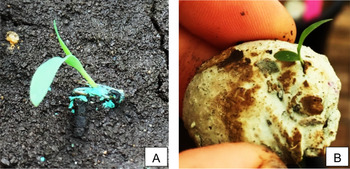
Treatments in general acted to speed up seedling emergence for the three species studied. Cumulative seedling emergence was higher (P < 0.05), as compared to the control, for seeds that had been treated with at least one GEC, and had been primed or coated (Fig. 4A), and this was true on both soil types (Fig. 5). On the other hand, seed cookies (Fig. 4B) had significantly lower cumulative seedling emergence (<15% for all species and treatments), and no significant differences were found between GEC or soil treatments (P < 0.001). Due to the low seedling emergence results for seed cookies, data are not displayed. Significant differences for C. refractus and C. spicigerum (P ≤ 0.001) between GEC, SET and their interaction occurred from the first 7 days after sowing (Fig. 5A, B). In B. bladhii on the other hand, no significant differences occurred between GEC treatments and the control until 35 days after sowing, but significant differences were observed during the first 7 days after sowing between SET and the interaction of SET and GEC (P ≤ 0.001; Fig. 5C).
Cymbopogon refractus seedling emerging from (A) a coated seed and (B) a seed cookie.

(A) Cymbopogon refractus, (B) Capillipedium spicigerum and (C) Bothriochloa bladhii seedling emergence for three seed enhancement technologies: seed priming, seed coating and seed cookies; on two soil types: sodosol and black vertisol. Germination-enhancing chemicals were smoke water (SW, 100 ml l−1), potassium nitrate (KNO3, 200 mM) and their combination (SW + KNO3). Results show the averaged seedling emergence of six replicates of six seeds per treatment per species. Mean ± SEM.

C. refractus and C. spicigerum (Fig. 5A, B) had higher seedling emergence rates for primed and coated seeds when treated with KNO3 + SW. Likewise, KNO3 generally produced significantly higher cumulative seedling emergence for C. spicigerum. SW showed variability in its effect on seedling emergence when applied through the various SETs, with significantly higher seedling emergence rates in seed priming than seed coating or seed cookies for C. refractus and C. spicigerum (P < 0.05). In B. bladhii, the SW treatment did not vary significantly to the control (P > 0.05), but KNO3 had significantly higher cumulative seedling emergence for primed seeds and KNO3 + SW for coated seeds (Fig. 5C).
At 28 days after sowing, in C. refractus, seedling emergence was >40% for the three different GECs on both soil types and for both seed priming and seed coating, except for coated seeds with SW on the sodosol soil which was lower (approximately 6% emergence). For seeds without GEC treatments, emergence was significantly lower (≤25%; P ≤ 0.05) for both soil types and most SETs. In C. spicigerum, seedling emergence for primed seeds with GEC was between approximately 28 ± 7 and 39 ± 7%. On the other hand, for untreated seeds, it was significantly lower (approximately 23%; P ≤ 0.05) for both soil types and all SETs. For seed coating, SW produced a lower seedling emergence on both soil types (8 ± 6% in the sodosol and 17 ± 6% in the vertisol) as compared to the other two GECs (≥28%). Finally, in B. bladhii, primed seeds with KNO3 showed significantly higher emergence (>27%) when compared to untreated seeds (<6%; P ≤ 0.002). The effect of KNO3 in primed seeds was significantly higher than in coated seeds (P ≤ 0.001; emergence >25% for seed priming as compared to <6% in seed coating).
At the end of the experiment (105 days), no significant differences (P ≥ 0.05) were seen in seedling emergence between the different GECs applied by seed coating or by seed priming in either C. refractus (44–72%) or C. spicigerum (≤50%) and on both soil types (Fig. 5A, B). Seed cookies on the other had significantly lower (P ≤ 0.05) seedling emergence (≤3% for C. refractus and ≤15% for C. spicigerum). In B. bladhii, significant differences in final seedling emergence percentage were observed between the interaction of SETs and GECs for seeds treated with KNO3 (P ≤ 0.001; Fig. 5C). For primed seeds, KNO3 treatment had significantly higher emergence percentages (36 ± 9%) when compared to the control (<9%). Emergence was also significantly higher (P ≤ 0.001) for primed seeds in comparison to seed coating for KNO3 treatment (<9%). After this period, seed cookies had very low seedling emergence (≤9%).
Discussion
If warm-season native Poaceae species are to be used for restoration purposes, then their seed germination and seedling emergence need to be high, rapid and uniform. In this study, the germination of the three species studied was low and seedling emergence very slow; however, various seed pre-treatments undertaken prior to sowing could improve this. There is limited information on the effects that GECs and SETs can have on improving seed-based restoration using warm-season Poaceae species native to Australia. This present study shows that temperature and light conditions can affect the success of seed germination, and that by combining GECs together with SETs, seedling emergence rates and total seedling emergence can be significantly improved.
Native species in Australia will usually germinate when temperatures related to the rainfall season are present in their natural environment (Bell, Reference Bell1999), and the optimum temperatures identified in Experiment 1 (approximately 20–25°C) relate to the beginning of the wet season in south-east Queensland (springtime). Even at the optimum temperature, all three species gave a relatively low final germination percentage (<50%). These low total germination percentages relate to the presence of dormancy in the seeds. Physiological dormancy (PD) in Australian native Poaceae species has been reported before and is a critical issue when using native seeds for restoration (Gibson-Roy and Delpratt, Reference Gibson-Roy and Delpratt2006; Wagner et al., Reference Wagner, Pywell, Knopp, Bullock and Heard2011; Erickson et al., Reference Erickson, Shackelford, Dixon, Turner and Merritt2016; Vening et al., Reference Vening, Guja, Spooner and Price2018). PD could be related to the various structures surrounding the seed (palea and lemma) and within the seed (pericarp/testa), also present within the embryo (Adkins et al., Reference Adkins, Bellairs and Loch2002; Farley et al., Reference Farley, Bellairs and Adkins2013). The promotion of germination by light in C. spicigerum and B. bladhii could be related to their small-sized seeds (<4 mm long). Light is known to trigger germination in many species, especially small-seeded species (Milberg et al., Reference Milberg, Andersson and Thompson2000; Pons, Reference Pons and Fenner2000). Light requirements will therefore be an important factor to consider when using seed coating/cookies on C. spicigerum and B. bladhii, as they could presumably block light from reaching the seed.
Seed priming and seed coating together with GEC treatments were able to significantly increase the emergence rates of native Poaceae seedlings, with the best treatments raising early emergence to 60% (Fig. 5). Germination speed can be a crucial functional trait in providing the emerging seedling advantage over competitors (Jiménez-Alfaro et al., Reference Jiménez-Alfaro, Silveira, Fidelis, Poschlod and Commander2016). The slower seedling emergence for control seeds suggests that dormancy mechanisms and more constrained germination might have been presented in the seeds at the time of sowing, which is consistent with the incubation results obtained, and is a major limitation for seed-based restoration with Australian native species (Merritt et al., Reference Merritt, Turner, Clarke and Dixon2007). Madsen et al. (Reference Madsen, Svejcar, Radke and Hulet2018) obtained faster germination and seedling emergence when priming cool-season Poaceae seeds. They used a solid matrix priming, which they included when planting the seeds, to create extruded seed pods. They suggest that the extruded seed pots might improve the microsite adjacent to the seed.
While the results in this study were obtained from pot trials under glasshouse conditions, they corroborate the previous field experiment undertaken using seed coatings (Turner et al., Reference Turner, Pearce, Rokich, Dunn, Merritt, Majer and Dixon2006; Erickson et al., Reference Erickson, Muñoz-Rojas, Kildisheva, Stokes, White, Heyes, Dalziell, Lewandrowski, James and Madsen2017). In their study, Turner et al. (Reference Turner, Pearce, Rokich, Dunn, Merritt, Majer and Dixon2006) could increase seedling emergence in the field by 17–55% by using polymer seed coating in in situ trials when compared with uncoated seeds. They propose that seed coating benefits could relate to reduced seed removal by washing, wind blowing and animal removal. Similarly, Erickson et al. (Reference Erickson, Muñoz-Rojas, Kildisheva, Stokes, White, Heyes, Dalziell, Lewandrowski, James and Madsen2017) saw increased emergence (approximately 0–40%) in Triodia pungens R.Br. (soft spinifex) when hydropriming and coating de-hulled seeds. This indicates that our results may have relevance in the field, although further testing in this environment is needed. Turner et al. (Reference Turner, Pearce, Rokich, Dunn, Merritt, Majer and Dixon2006) also related their results to less amount of light reaching the seeds. But in our study, reduced light reaching the seed did not affect seed germination. C. spicigerum and B. bladhii had their germination significantly reduced by darkness in the laboratory experiment, but coating these seeds did not inhibit germination in comparison to primed seeds (no seed coverage) in the pot experiment.
The fact that seed priming and coating with KNO3 + SW gave the highest cumulative seedling emergence suggests that the delivery method may be of lesser importance when combining KNO3 with SW. On the other hand, when using SW or KNO3 alone, seed priming seems to be most effective. For B. bladhii, KNO3 only performed when applied by seed priming. When seed priming is undertaken, seeds are thought to have completed the first step of germination (Bruggink, Reference Bruggink, Mc Donald and Kwong2005; Bewley et al., Reference Bewley, Bradford, Hilhorst and Nonogaki2013), which could promote certain metabolic activities within the seed that will later help to provide a faster and more uniform germination upon re-imbibition. If the imbibing GECs can also overcome dormancy, when sowing seeds in the field, the seeds will not only go through the early steps of germination more rapidly and uniformly, but also germinate as dormancy has been overcome.
The promotion of germination of C. refractus and C. spicigerum by seed priming with SW suggests that both species are responsive to SW imbibition prior to sowing, but not when coated. Turner and Merritt (Reference Turner, Merritt, Offord and Meagher2009) suggest that the best technique to apply SW was to soak for between 24 and 48 h before removing the source and continuing germination in water in Petri dishes. Differences in seed priming and seed coating could be explained because the promotion of germination by SW was dependent on the initial uptake of the active component and, most likely, on the presence of this component becoming available to the embryonic axis (Light et al., Reference Light, Gardner, Jäger and Van Staden2002). The results for C. refractus differ with the findings obtained by Read and Bellairs (Reference Read and Bellairs1999), as SW did not enhance the germination rate or final germination of C. refractus in their experiments. For B. bladhii, SW varied in its effects on enhancing germination, and more experiments are now needed to draw conclusions, as other studies have shown that Bothriochloa species are, in general, responsive to SW treatments (Read and Bellairs, Reference Read and Bellairs1999). The ‘smoke’ reaction in seeds is thought to be complex, with seed sensitivity to SW being an important variable (Merritt et al., Reference Merritt, Turner, Clarke and Dixon2007). Dormancy mechanisms and responses to fire cues can differ between populations of the same species (Groves et al., Reference Groves, Hagon and Ramakrishnan1982). Moreover, the smoke response can be dependent on its dormancy status (Long et al., Reference Long, Stevens, Griffiths, Adamek, Gorecki, Powles and Merritt2011).
KNO3 generally gave higher cumulative seedling emergence than the control for seed priming and seed coating in C. refractus and C. spicigerum. In contrast, in B. bladhii, it only enhanced emergence rates when seeds were primed. Some studies report KNO3 to enhance germination by a fertilization effect (Fenner and Thompson, Reference Fenner and Thompson2005). Besides acting as a nutrient to plants, in other studies, a role for nitrogen compounds in overcoming dormancy has been proposed (Adkins et al., Reference Adkins, Simpson and Naylor1984; Alboresi et al., Reference Alboresi, Gestin, Leydecker, Bedu, Meyer and Truong2005). It is proposed that KNO3 may stimulate seeds to overcome dormancy by promoting the use of an alternative pathway of respiration, which modifies ATP content and releases the seed from dormancy (Adkins et al., Reference Adkins, Simpson and Naylor1984). Similarly, Alboresi et al. (Reference Alboresi, Gestin, Leydecker, Bedu, Meyer and Truong2005) also propose that nitrate can stimulate the germinaiton of dormant seeds. They found that nitrate acts as a signalling molecule, and nitrate accumulation in Arabidopsis seeds was related to lower dormancy.
GECs might have helped overcome PD in the seeds. PD is commonly present in Poaceae species, which inhibits germination right after shedding (Wagner et al., Reference Wagner, Pywell, Knopp, Bullock and Heard2011). Over time, this PD is lost gradually (Baskin and Baskin, Reference Baskin and Baskin2014). It is possible that once the chemicals reached the embryo tissues, this dormancy loss process was hastened. This could explain why B. bladhii had its total emergence significantly higher when treated with GEC, as in the laboratory experiments it had a high proportion of dormant seeds. Furthermore, in this study, no treatments were used to remove the seed covering structures (lemma and palea), as the focus of the research was to develop a simple, field applicable approach. De-hulling C. refractus seed has been shown to overcome dormancy (Read and Bellairs, Reference Read and Bellairs1999). De-hulling treatments could be studied before applying GEC and SET treatments to the seeds. Removing seed florets and/or subjecting seeds to smoke treatments has also been shown to promote germination (Erickson et al., Reference Erickson, Shackelford, Dixon, Turner and Merritt2016). Although, Read and Bellairs (Reference Read and Bellairs1999) observed that the enhancing effects of smoke were not prevented when grass seeds remained with their covering structures in any of the species they tested.
In contrast with other findings which have studied seed agglomerations (Madsen et al., Reference Madsen, Davies, Williams and Svejcar2012a, Reference Madsen, Kostka, Inouye and Zvirzdin2012b, Reference Madsen, Davies, Boyd, Kerby, Carter, Svejcar, Michalk, Millar, Badgery and Broadfoot2013, Reference Madsen, Petersen and Taylor2017; Hoose et al., Reference Hoose, Call, Bates, Anderson, Roundy and Madsen2019), seed cookies had low total seedling emergence (<15%) in all GECs and both soil types. This could be explained by the mechanical restriction the seed cookies provided to seed expansion during germination. The inability of the constricted seed to imbibe enough water for germination is also possible, which would then lead to the inhibition of the germination process. Moreover, it is possible that the seed cookies lost contact with the soil surface as they lost moisture, which was observed by Madsen et al. (Reference Madsen, Svejcar, Radke and Hulet2018) when using seed pods. It is also possible that insufficient GECs were washed from the seed cookie and then imbibed by the seed to promote germination. Follow-up experiments could include modifying the proportion of the binding polymer and GECs in the seed cookie, to create seed cookies that will persist for longer but that at the same time can improve moisture availability to the seeds. Dormant seeds could also be treated (e.g. by priming, stratifying or after-ripening) before being incorporated into the cookies.
Conclusions
As seed research has increased considerably in recent years in the seed-based restoration field, innovative seed enhancement technologies have been developed to increase native seed performance. Results from this study show that by combining SET with an understanding of the environmental conditions needed for seed germination, seedling establishment of warm-season Poaceae species can be significantly improved. The three Poaceae species studied had low total germination when incubated under different temperatures without treatment. Optimum temperatures were greater than 20°C, and two of the species had reduced germination in darkness.
By incorporating GECs into seed enhancement treatments prior to sowing, either by seed priming or by seed coating, earlier and faster seedling emergence could be achieved in the three species. Moreover, B. bladhii had its final emergence percentage increased when using GECs in both seed priming and seed coating. SW performed significantly better when applied by seed priming rather than by seed coating for C. refractus and C. spicigerum. In B. bladhii, KNO3 performed better when incorporated by seed priming rather than by seed coating. On the other hand, seed cookies did not perform as expected, with low emergence throughout all GEC, probably related to a mechanical restriction and low moisture content. Soil type did not influence GEC and SET performance on seedling emergence, suggesting that these technologies could work on a variety of soil types. Results suggest that to increase field performance of the Poaceae species studied, primed or coated seeds with both KNO3 and SW should be sown during springtime. Further work is needed to understand the species-specific mechanisms involved when using GECs and SETs, and future studies should consider using different GEC concentrations, combining more than one SET together and testing these technologies in the field.
Acknowledgements
We thank Ian Kalms of Innovative Seed Coating Solutions, Brisbane, for his support and guidance; and Clayton Stokoe of Native Seeds and Land Repair, Maleny, for their seed provision and guidance. This research received no specific grant from any funding agency, commercial or not-for-profit sectors.