1 INTRODUCTION: EMERGING TECHNOLOGIES AND LAW
There is no general consensus or a list of what one means when referring to the term emerging technologies. Emerging technologies, subject to ongoing academic and policy debate, are defined here as novel technologies with rapid growth potential and significant socio-economic impact. These technologies exhibit radical novelty, coherence over time, and uncertain future impacts. According to Rotolo, Hicks et al. (2015):Footnote 1
“An emerging technology as a radically novel and relatively fast-growing technology characterised by a certain degree of coherence persisting over time and with the potential to exert a considerable impact on the socio-economic domain(s) which is observed in terms of the composition of actors, institutions and patterns of interactions among those, along with the associated knowledge production processes. Its most prominent impact, however, lies in the future and so in the emergence phase is still somewhat uncertain and ambiguous.”
Indeed, emerging technologies include a variety of technologies such as educational technology, machine learning, information technology, nanotechnology, biotechnology, robotics and artificial intelligence (AI). While these technologies bring many positive socio-economic and security aspects there are also many disturbing aspects. Governing these technologies, therefore, is of importance, to mitigate their negative effects and exploit the positive ones. For this research, we scope emerging technologies to include a variety of technologies such as educational technology, information technology, nanotechnology, biotechnology, robotics, Internet of things (IoT), Virtual Reality (VR) and artificial intelligence (AI).
This article contributes to the ongoing research on the impact of emerging technologies on the lawyer’s role and the challenges they face when they are giving advice on these technologies to their clients. Indeed, it aims to assist lawyers in providing a better and higher quality of service to the public, clients, and their organisations, especially in this digital era.
The law has always faced challenges in keeping up with technological advancements (Drechsler and Kostakis 2014).Footnote 2 The development and application of new technologies of knowledge across various fields are essential for societal progress globally. These advancements play a pivotal role in international economic and social convergence. However, the legal and regulatory aspects of these technologies require attention in every country’s legal system. To ensure equality and to protect individual rights, legal systems need to address the challenges presented by new technologies. This, for example, includes considerations such as blockchain technology in contracts, big data management and safeguarding personal data privacy. Additionally, as people increasingly depend on new technologies, issues like the right to digital disconnection and the right to be forgotten become relevant for personal life. Therefore, legal frameworks should adapt to address these evolving challenges (Salmerón-Manzano 2021).Footnote 3
Further, the speed of technological development has exceeded the ability of the law to adapt. While regulations are updated to adjust to the frequent and continual advancements in technology, issues often arise due to the law’s inability to keep pace with the rapid evolution of technology (Regard and Matzen 2008).Footnote 4 Attorneys should recognise the lengthy process involved in amending rules and regulations, thus they require a thorough understanding of current rules. Recent decisions highlight the need for attorneys to be cautious of the potential pitfalls and ethical concerns posed by electronic communication methods (Hornberger 2011).Footnote 5 These considerations are particularly pertinent in the context of contemporary legal conflicts surrounding emerging technologies, which encompass concerns about privacy and contractual obligations. Future legal disputes are anticipated to encompass intellectual property rights, particularly given the evolving landscape of new technologies, challenging traditional patent law assumptions regarding inventorship, invention location, and infringement methods, and necessitating legal clarification on patent eligibility for virtual inventions and acknowledging the growing involvement of artificial intelligence in innovation (Robinson and Smith 2018).Footnote 6
To understand the legal and ethical challenges faced by lawyers in keeping up with the evolving legal landscape of emerging technologies, we conducted a two-stage study. We used a mixed-methods approach, starting with qualitative interviews with 26 in-house lawyers from various sectors to understand challenges with emerging technologies. The outcomes of the qualitative study informed the development of quantitative online surveys for Australian lawyers in the second stage. This two-stage approach offered a balanced perspective on the challenges in the legal landscape of emerging technologies. While our focus was lawyers in Australia, we believe that many of our findings would generalise to other jurisdictions.
To better understand the legal and ethical challenges faced by lawyers in keeping up with the evolving legal landscape of emerging technologies, we developed the following research questions:
Q.1. How do lawyers respond to the risks and opportunities of emerging digital technologies?
Q.2. How could they respond more effectively and what are the gaps in their knowledge and practices preventing this?
Q.3. What kinds of training and education would assist lawyers in being well-equipped with the required skills for legal, ethical and technological challenges of emerging technology?
To address these research questions, we conducted a two-stage study. We used a mixed-methods approach, starting with qualitative interviews with 26 in-house lawyers from various sectors to understand challenges with emerging technologies. The outcomes of the qualitative study informed the development of a survey instrument that was used to collect empirical data from lawyers online.
These insights guided the development of quantitative online surveys for Australian lawyers in the second stage, providing a comprehensive view of the issues. This two-stage approach offered a balanced perspective on the challenges in the legal landscape of emerging technologies. Sections 3-6 outline the three main challenges that lawyers are facing when advising about emerging technologies. In each section, we provide recommendations to support lawyers to overcome these challenges. The findings, along with the recommendations below, aim to address these challenges.
2 METHODOLOGY
This research study used an exploratory sequential mixed methods approach, combining qualitative research methods with quantitative surveys to gain a comprehensive understanding of the challenges faced by lawyers in dealing with emerging technologies. An exploratory sequential design is a two-phase research method. It places the qualitative method before the quantitative phase for data collection process (Creswell and Clark 2007).Footnote 7 In the first stage, a phenomenological qualitative approach was employed through semi-structured one-hour-long interviews with 26 in-house lawyers from diverse sectors, who all had experience providing legal advice about emerging technology. There was a purposeful selection of participants in order to best help the researcher better explore the research problems (Padilla-Diaz 2015).Footnote 8
Participants were selected from various industries including hospitals, banks, cybersecurity firms, law firms, insurance companies, telecommunications, research institutes, law enforcement agencies, business groups and social enterprises. The number of interviewees was adequate, as in a phenomenological study design, it helps the researcher reach data saturation. This may be achieved with as few as six interviews. However, instead of focusing on the sample size, the interviews were conducted until data saturation was reached, meaning no new data or coding emerged (Fusch and Lawrence 2015).Footnote 9 The objective of this stage was to explore extensively into the challenges encountered by lawyers when dealing with emerging technologies.
The data were collected from July 2022 until Jan 2023, and the interviews were recorded. The audio recordings were transcribed into Microsoft Word files. Data analysis software NVivo was used to identify the primary codes and themes from the transcripts. In qualitative research, the data analysis process begins with an inductive function, starting with a substantial amount of information and progressively refining it into smaller, more distinct sets of key data and themes.
For this research study, we utilised Clark Moustakas’Footnote 10 adaptation of the Paul F Colaizzi-KeenFootnote 11 method. This involved identifying significant statements from each transcript as codes. An inductive approach was then taken to derive codes into clusters, which were further organised into emergent themes. These themes were explained and developed. In qualitative research, the data analysis process begins with an inductive function, starting with a substantial amount of information and progressively refining it into smaller, more distinct sets of key data and themes. This approach helped us gain a comprehensive understanding of the challenges lawyers face when dealing with emerging technologies.
The second stage involved the development of online questionnaires (surveys) using the Qualtrics platform. These surveys were tailored to collect quantitative data from lawyers in Australia working either as in-house counsels or in law firms. The surveys were designed to complement the qualitative findings and provide a quantitative representation of the issues discussed in the interviews. The sampling method used in this stage was non-probability convenience sampling with a sampling frame to strengthen the statistical analysis (Tansey 2007).Footnote 12 The surveys were collected from mid-August 2023 until mid-October 2023. Descriptive analysis methods were used to analyse the survey data, offering a more comprehensive understanding of the challenges faced by legal professionals in the realm of emerging technologies (Leedy and Ormrod 2005).Footnote 13
The surveys were collected from lawyers who had experience providing legal advice about emerging technology. Straightforward descriptive analysis methods were employed to provide a quantitative representation of the findings. In total, 33 surveys were collected, allowing for a more comprehensive understanding of the issues discussed in the qualitative interviews. Finally, based on both qualitative and quantitative data, the key findings from this project were identified and recommendations were provided, which are discussed in the following section. Our key findings fall into three categories:
Finding 1: Legal challenge of lack of clarity in laws and regulations regarding emerging technology. The finding identifies the legal challenges that lawyers encounter with new emerging technologies as a result of absence of clear regulatory frameworks and uncertainties in existing laws.
Finding 2: Ethical risks in emerging technology advice for lawyers. This finding discovers the range of ethical complexities and considerations that lawyers contemplate when facing new emerging technologies.
Finding 3: Technological challenges in legal practice for lawyers. These findings highlight and explore the specialised skills, knowledge, and training that lawyers need to overcome the challenges presented by emerging technologies.
In the following three sections, we explore these findings and present recommendations to overcome them.
3 LEGAL CHALLENGES OF LACK OF CLARITY IN LAWS AND REGULATIONS REGARDING EMERGING TECHNOLOGY
One of the foremost challenges encountered in the domain of emerging technologies is the absence of clear and comprehensive regulatory frameworks, paired with significant uncertainties in existing laws. To support and assist lawyers to effectively address these complex legal issues, it is essential to identify and understand the key challenges relating to regulatory burden that lawyers are experiencing in emerging technologies.
3.1 Challenges
The data analysis, from both the interviews and surveys, revealed that the legal challenges faced by lawyers can be categorised into two primary groups, as follows.
3.1.1 Complexity of legislation
Our interview data indicated that in-house lawyers in Australia are challenged by the diverse and complex nature of regulations governing emerging technologies in the country. These regulations encompass a wide range of legal and regulatory aspects, rules and factors, yet are often drafted without emerging technologies in mind, and therefore lack clear directives. Lawyers face the task of interpreting and applying an array of domestic standards in fields like data protection, privacy and cybersecurity to new technologies, in the absence of specific legislative guidance.
Furthermore, emerging technologies often operate across borders, adding another layer of complexity. Lawyers must deal with the intricacies of international regulations and standards, which can vary significantly from one jurisdiction to another. This includes tasks such as ensuring compliance and safeguarding data protection across various international legal landscapes. This legal landscape for emerging technologies is then further complicated by the inconsistencies between state laws within a single country, requiring lawyers to advise on risk mitigation across the various landscapes while ensuring compliance with multiple, sometimes conflicting, legal frameworks.
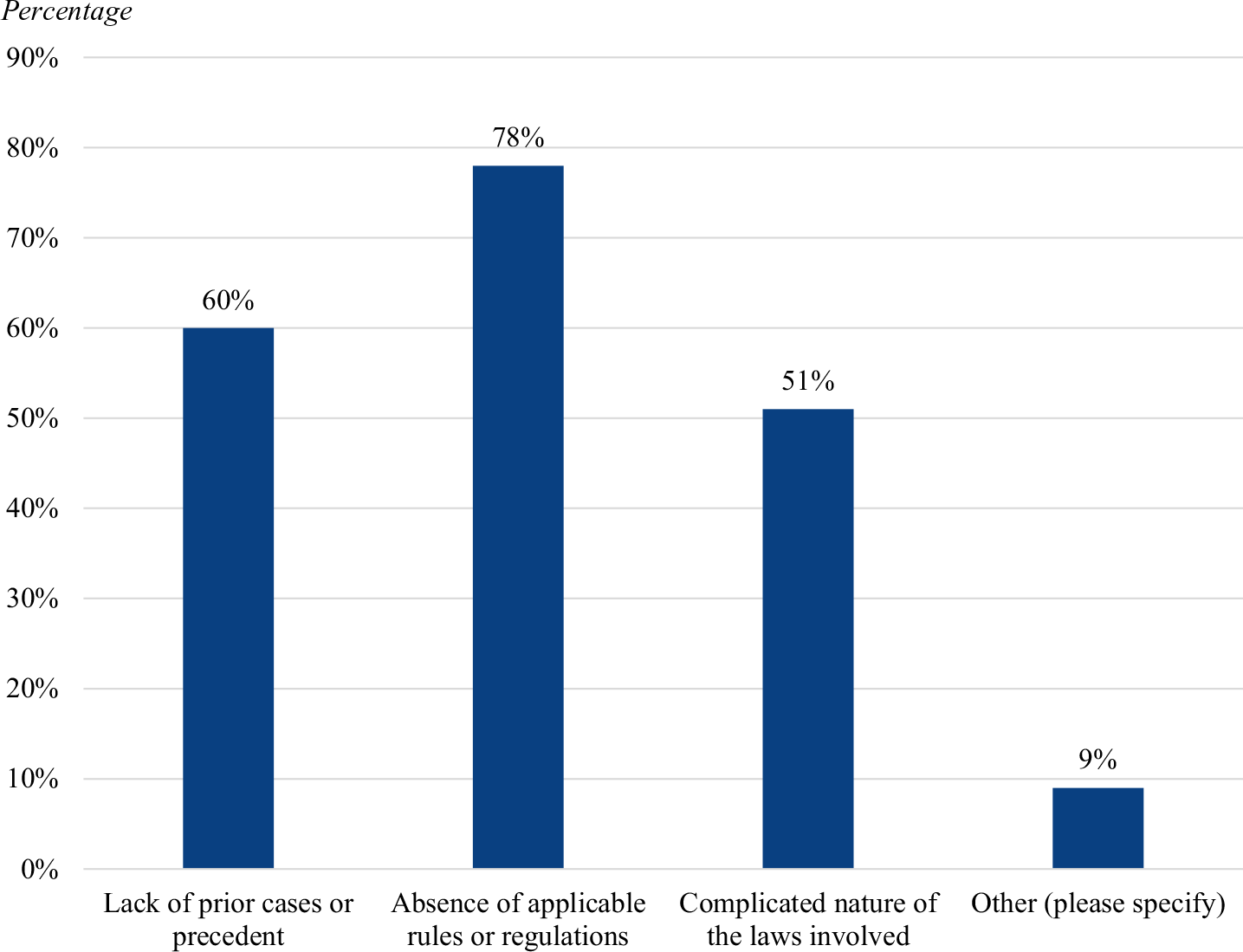
Figure 1 displays the responses to our survey question on addressing legal concerns encountered when advising clients on emerging technologies. Respondents could choose multiple responses, in appreciation of the diverse nature of legal challenges in this context. Notably, 78% of respondents indicated that their most significant legal concern relates to the absence of applicable rules or regulations when providing advice on emerging technologies.
Legal concerns encountered when advising clients on emerging technologies

3.1.2 Absence of precedent and relevant laws in Australia
It was identified that lawyers in Australia face a lack of precedents and specific laws for emerging technologies, particularly in areas like data privacy, liability and human rights implications. This legal gap becomes more apparent in situations such as virtual healthcare, where privacy and duty of care issues are new and undefined. Moreover, lawyers face difficulties in addressing human rights concerns, including surveillance and potential discrimination in AI algorithms, due to unclear legal frameworks. The absence of concrete legal guidance compels these professionals to depend on their own expertise, research abilities, and broad understanding of relevant laws to navigate these uncharted and complex technological areas.
As portrayed in Figure 1 above, the survey revealed that 60% of respondents expressed concerns over the absence of prior cases or legal precedents in the realm of emerging technologies, underscoring the reality that legal professionals often operate without established legal guidance in these areas.
3.2 Recommendation: Strengthening legal infrastructure via progressive development of legal frameworks and regulatory proficiency
Based on insights from both qualitative interviews and quantitative survey data, we put forward a set of recommendations termed ‘Strengthening Legal Infrastructure via Progressive Development of Legal Frameworks and Regulatory Proficiency’, to assist lawyers in addressing the complex legal challenges posed by emerging technologies.
These recommendations advocate for the development and enhancement of legal infrastructure and the acquisition of necessary skills to navigate it effectively. This involves improving legal systems to better accommodate the rapid evolution and integration of new technologies. It encompasses the creation and refinement of laws and regulations that strike a balance between flexibility and strength to effectively govern complex technological advancements, such as artificial intelligence, blockchain and biotechnology. Continuous learning is also essential to enable lawyers to effectively address the unique challenges posed by these technologies and to stay current with regulatory changes and the evolving legal system in response to new societal and technological challenges.
The recommendations also comprise interconnected actions that collectively contribute to legal clarity and regulatory proficiency:
R.1 Advocate for Clear Regulatory Frameworks: Establish specialised legal groups comprising experts in law, technology and policy to proactively address legal gaps posed by emerging technologies. These groups can work collaboratively to draft guidelines, propose legislation, and develop clear legal frameworks around privacy, liability and human rights concerns related with technology.
R.2 Enhance International Regulatory Expertise: Strengthen legal knowledge regarding international regulations and cross-border complexities. Given the global nature of technology, a deep understanding of international laws is essential.
R.3 Promote Consistency in State Laws: Guide clients to align technology initiatives with state-level regulations, ensuring consistency and mitigating jurisdictional risks.
R.4 Facilitate Case Studies and Knowledge-Sharing: Promote the sharing of successful case studies and legal strategies for tackling emerging technology challenges through legal publications, webinars and conferences to disseminate knowledge within the legal community.
R.5 Strengthen Government Engagement: Collaborate with government bodies and agencies to provide input on the development of technology-related policies and regulations, shaping legal frameworks for emerging technology challenges.
4 ETHICAL RISKS IN EMERGING TECHNOLOGY ADVICE FOR LAWYERS
Data from the interviews and surveys unveiled a complex landscape for lawyers advising on the ethics of emerging technologies. There are a range of ethical considerations that lawyers must contemplate, from data handling and privacy concerns to maintaining professional integrity while aligning with business objectives.
4.1 Challenges
The identified challenges can be categorised into two distinct groups: (1) ‘big data’ ethics; and (2) the balancing of professional ethics with business compliance.
4.1.1 Challenge of big data ethics
In-house lawyers face significant challenges when advising organisations on ethical issues related to data collection, analysis and use. They must navigate the ethical implications of accessing and using large data sets, ensuring adherence to principles like informed consent, transparency and responsible usage. Additionally, lawyers are tasked with aligning organisational data practices with human rights laws, addressing concerns such as privacy, non-discrimination and freedom of expression. Some participants highlighted that big data often contains sensitive and personal information, leading to concerns relating to privacy and confidentiality. Organisations must address these concerns proactively to minimise data breaches, unauthorised access and violations of trust. These challenges underscore the critical role of lawyers and legal guidance in managing the ethical complexities inherent in big data within organisations.
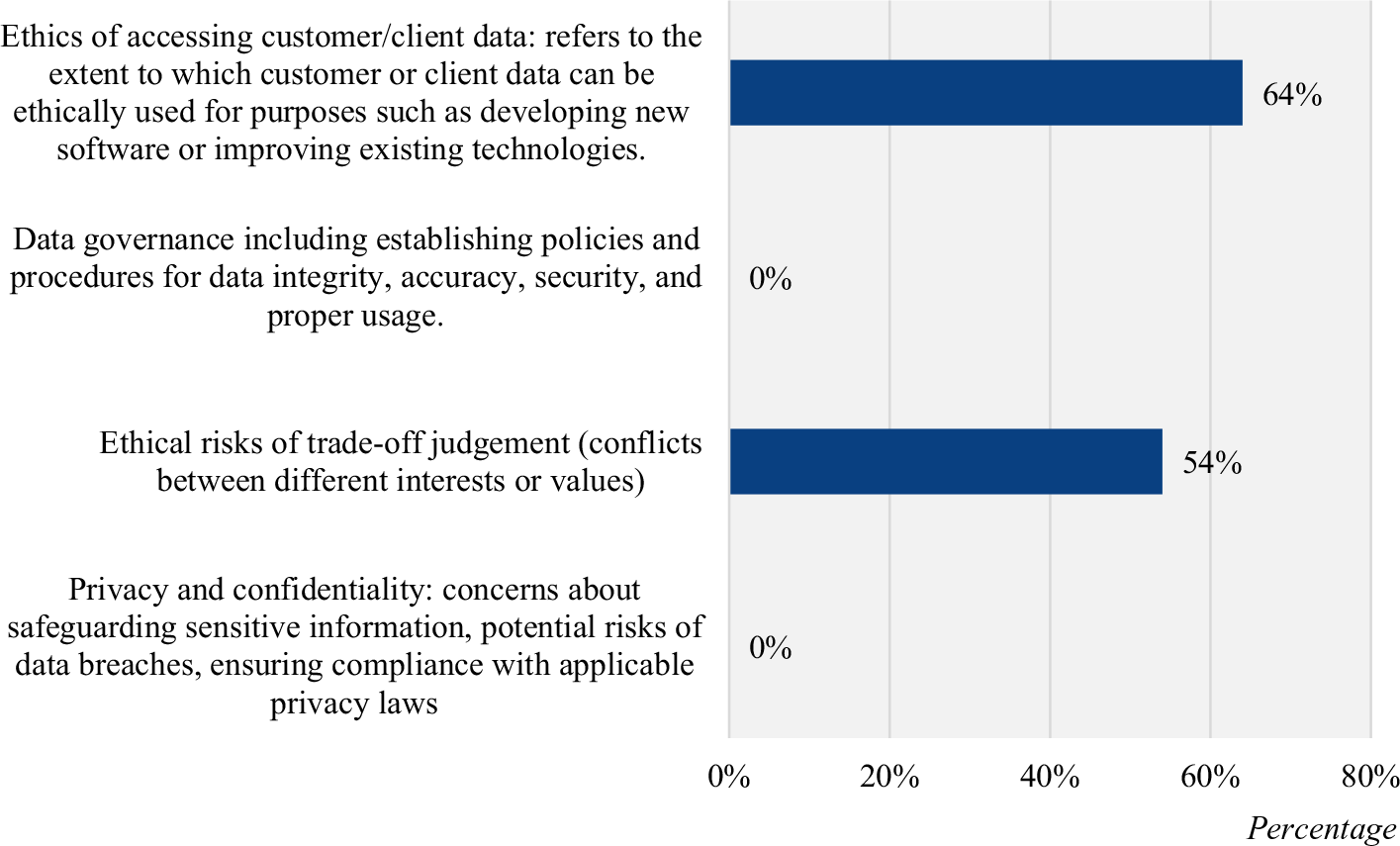
From the surveys, the predominant ethical concern reported by respondents was around issues relating to accessing customer or client data (64%). This suggests that many legal professionals are dealing with ethical questions regarding data usage for purposes like software development or technology improvement. These findings are presented in Figure 2 below, with respondents, once again, able to select multiple responses. It is surprising that there are 0% responses for governance and privacy. This divergence prompts a need for hypothesis to explain this discrepancy. It is plausible that both governance and privacy concerns might be encompassed within the other two answers.
Ethical concerns encountered when advising clients on emerging technologies

4.1.2 Ethical challenge in balancing professional ethics and business compliance
Lawyers are navigating ethical dilemmas when advising organisations on legal matters that intersect with business practices. Based on the data, it appears lawyers face challenges in addressing situations where business practices may be seen as unethical or potentially illegal, like deceptive marketing, especially in the context of emerging technologies. They need to strike a balance between promoting ethical, compliant business practices and supporting the organisation’s goals. They also face scenarios where their organisation’s goals clash with their own ethical duties and professional obligations, which can require them to advocate for ethical conduct and guide the organisation towards legal and ethical compliance.
As also shown in Figure 2 above, 54% of those surveyed indicated the ethical risks of trade-off judgement as a major ethical challenge. This highlights the complexity of ethical decisions when balancing different interests or values in the context of emerging technologies.
4.2 Recommendation: promoting ethical awareness and accountability in professional practices
In this section, we introduce a set of recommendations on ‘Promoting Ethical Awareness and Accountability in Professional Practices’. We consider these essential for today’s rapidly evolving tech landscape, where lawyers often face ethical dilemmas that are not fully addressed by existing legal frameworks. The recommendations encompass a series of interconnected actions, such as the need for ethical awareness, data governance, and ethical considerations throughout the technology adoption process. Additionally, they highlight the role of lawyers in fostering an ethical decision-making culture within organisations and encourage their active participation in shaping ethical frameworks.
R.1 Develop Awareness of Ethical Issues in Emerging Technology: Cultivate awareness among lawyers of the ethical challenges in emerging technology. This awareness is crucial for making informed decisions that align with both legal and moral standards.
R.2 Promote Ethical Data Governance: Ensure due diligence on ethical aspects, data protection, and tech-law expertise in technology projects to uphold ethical standards.
R.3 Emphasise Ethical Considerations: Prioritise due diligence on ethical aspects, data protection, and technology-law expertise in technology-driven projects to uphold ethical standards.
R.4 Fostering a Culture of Ethical Decision-making: Encourage lawyers to resolve conflicts between business goals and ethics, upholding both legal and ethical standards to foster an ethical organisational culture. By achieving this, technology adoption can then align with ethical norms.
R.5 Encourage Ethics Committee Participation: Advocate for legal professionals to actively participate in ethics committees within their organisations to help shape ethical frameworks for technology adoption. Their legal expertise and ethical awareness make them valuable contributors to the development of guidelines that promote responsible and ethical technology practices within the organisation.
5 TECHNOLOGICAL CHALLENGES IN LEGAL PRACTICE FOR LAWYERS
The findings highlight the need for specialised skills, knowledge and training in navigating the challenges presented by emerging technologies. It is clear that identifying these skills and creating a capability framework is crucial. Lawyers could achieve this through targeted training and workshops, essential for enhancing skills and promoting professional development. This approach would enable them to provide well-informed advice in a technology landscape that is constantly changing. The lack of these specialist skills and knowledge has been significantly noted, underscoring their importance.
5.1 Challenges
5.1.1 Challenges due to inadequate technological literacy in legal practice
The paramount importance of in-house lawyers possessing technological literacy when advising organisations on emerging technologies is evident and is a common theme in the interview data. Findings revealed a lack of consistent understanding of emerging technologies among lawyers, highlighting varied interpretations and the rapid evolution of tech categories. Lawyers also face difficulties in understanding the complex nature of technologies like AI, biotech and quantum computing, with their distinct challenges and legal implications. The rapid speed of technological change, such as the shift from novelty to norm with cloud technology, demands that lawyers continuously adapt their knowledge. Participants reported that generational and educational disparities can further complicate their ability to stay abreast of these advances, stressing the need for enhanced tech literacy within the legal profession to provide informed advice to navigate these complexities effectively.
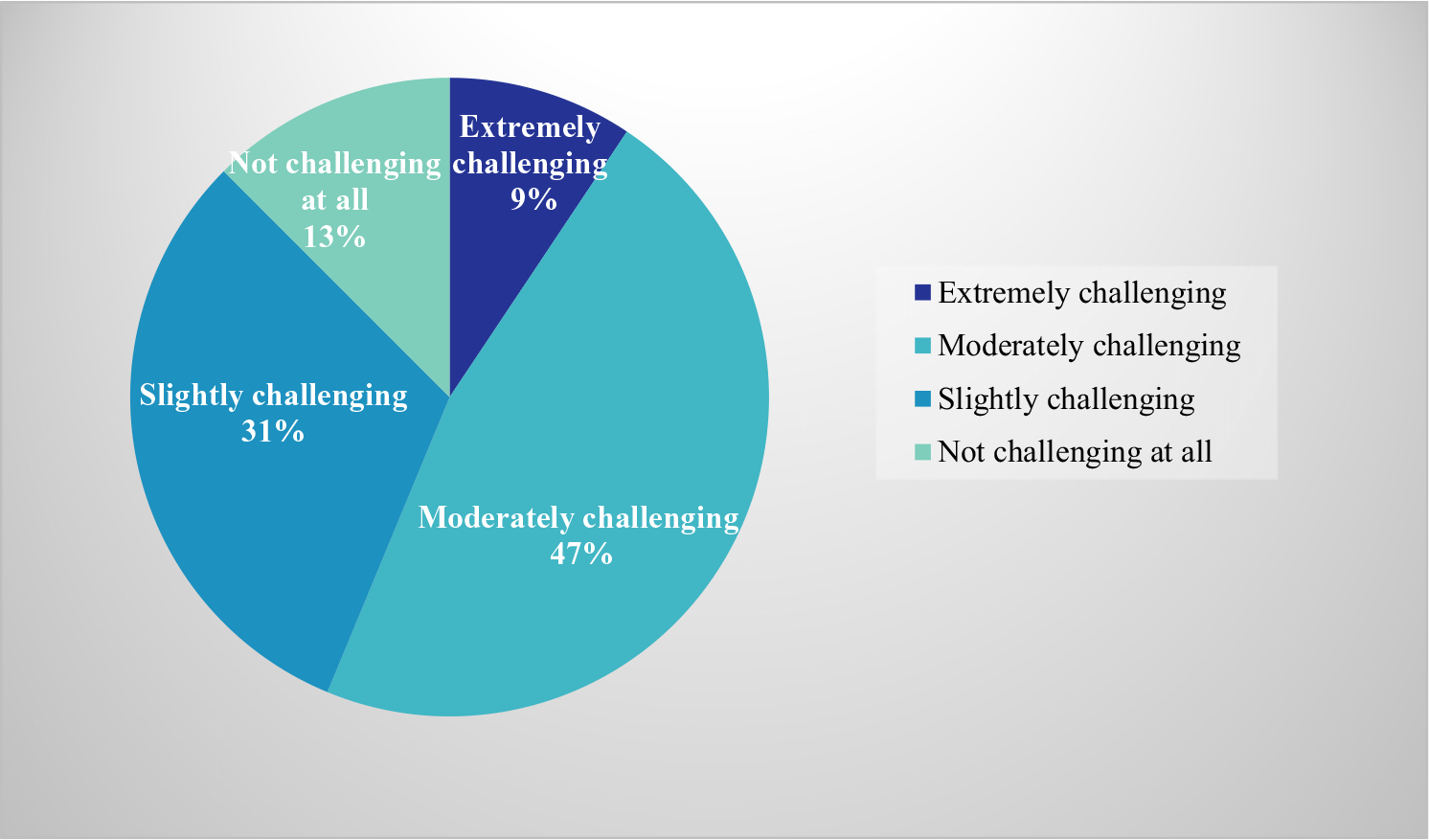
Chart 1 below illustrates the challenges lawyers face when trying to understand emerging technologies. A substantial 47% of lawyers find this challenge to be moderate, indicating that it’s a widespread issue in the legal field. In total, approximately 86% of lawyers encounter challenges, whether slight, moderate or extreme. Only 13% of lawyers reported having no major difficulties. These results emphasise the challenges lawyers encounter in understanding new emerging technologies. There is clearly a pressing need for enhanced educational resources and training in emerging technologies for legal professionals.
Challenges in understanding emerging technology

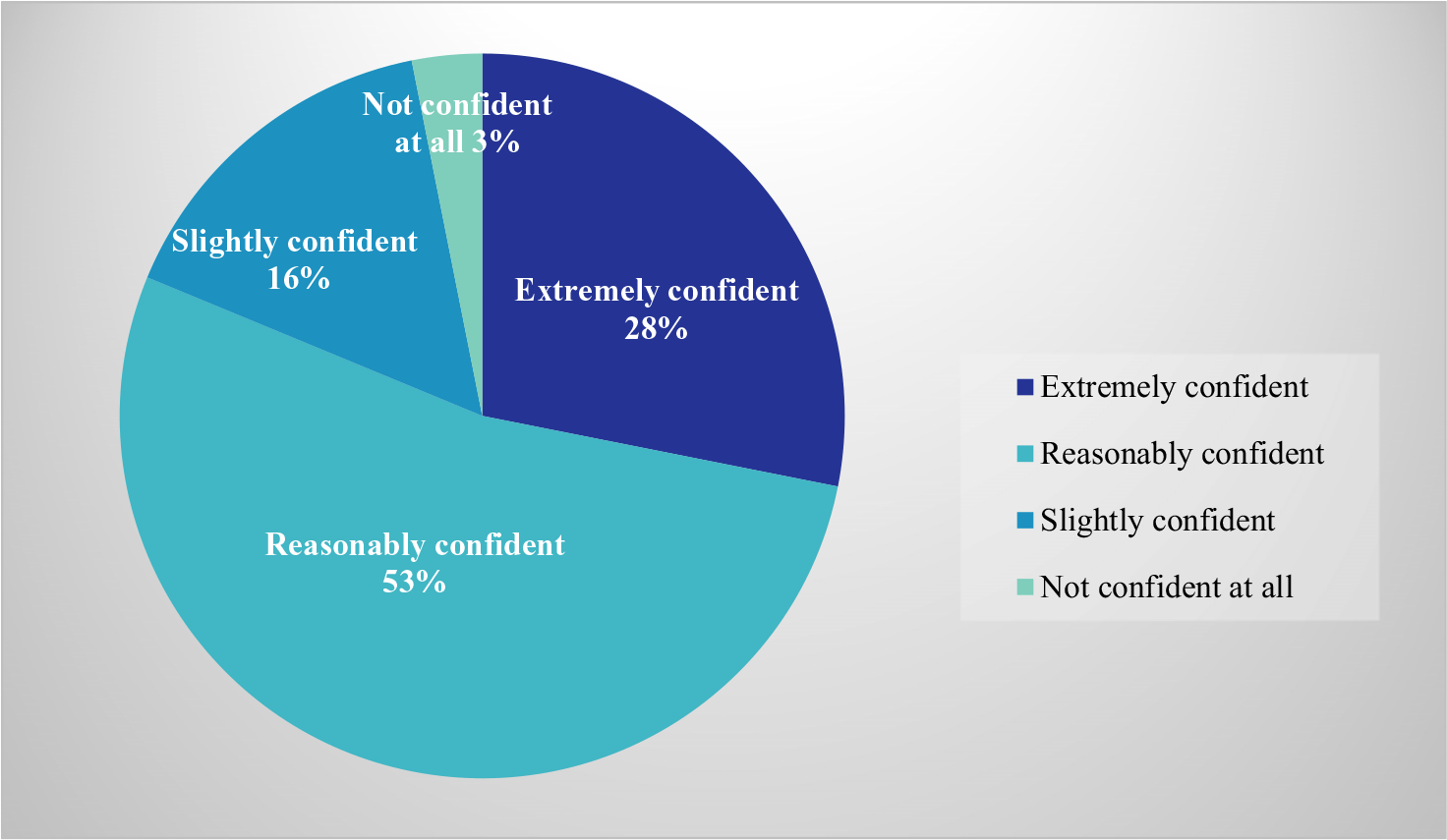
Confidence in advising clients on emerging technologies

Inadequate tech literacy not only impedes collaboration but also limits lawyers’ abilities to foresee ethical and legal implications of technologies such as AI, potentially leading to data privacy issues, technology misuse, and reduced value creation from lawyers. Moreover, the unpredictability of future technical capabilities demands that lawyers remain adaptable, ready to address unexpected legal challenges posed by technologies failing to meet objectives or operating beyond their anticipated scope.
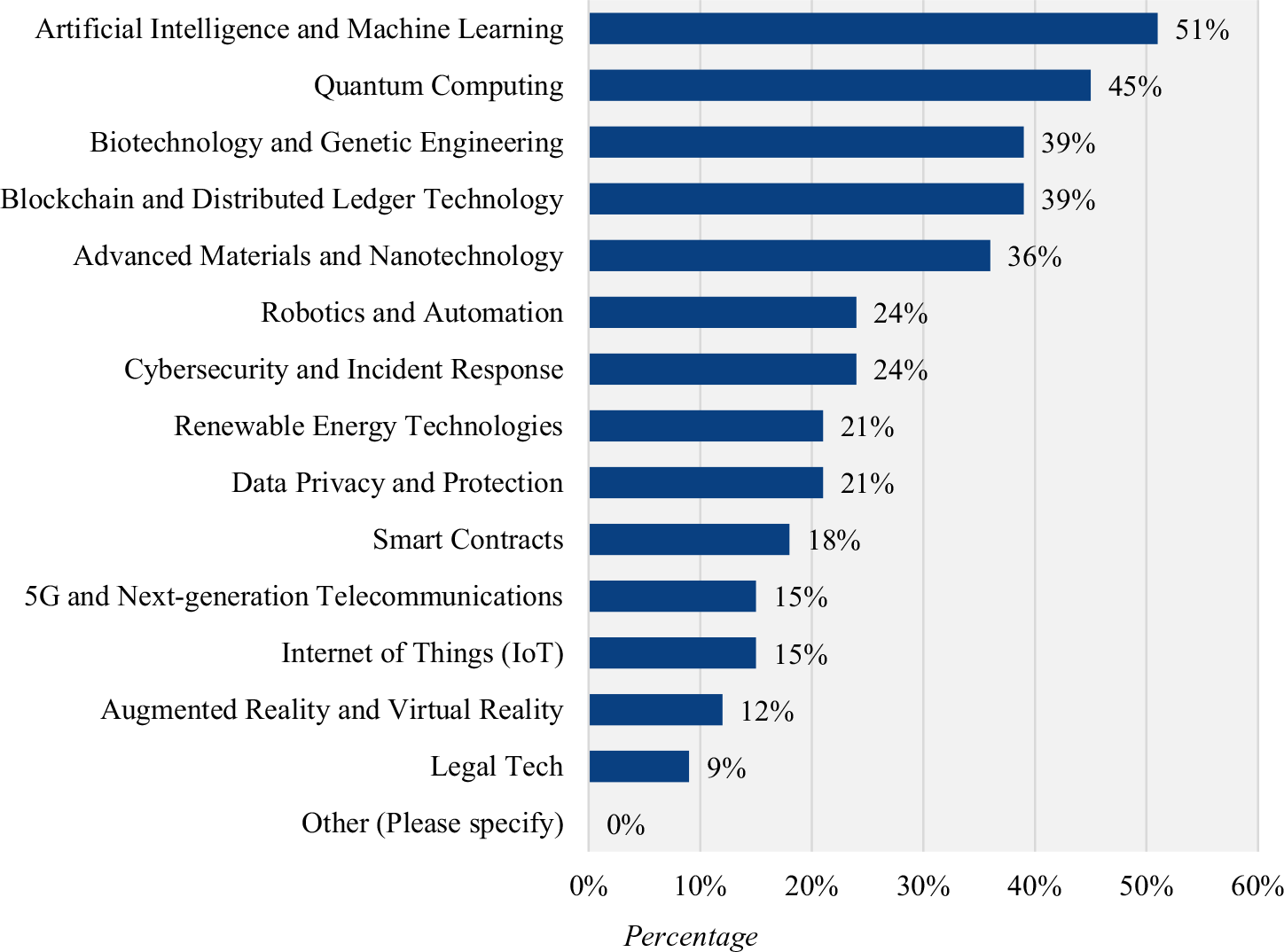
Figure 3 below shows that, when asked about the most challenging aspects of emerging technologies, the highest proportion of responses (51%) indicated that understanding AI and machine learning is particularly difficult. Close behind, 45% of respondents reported quantum computing as challenging.
Challenging aspects of emerging technology

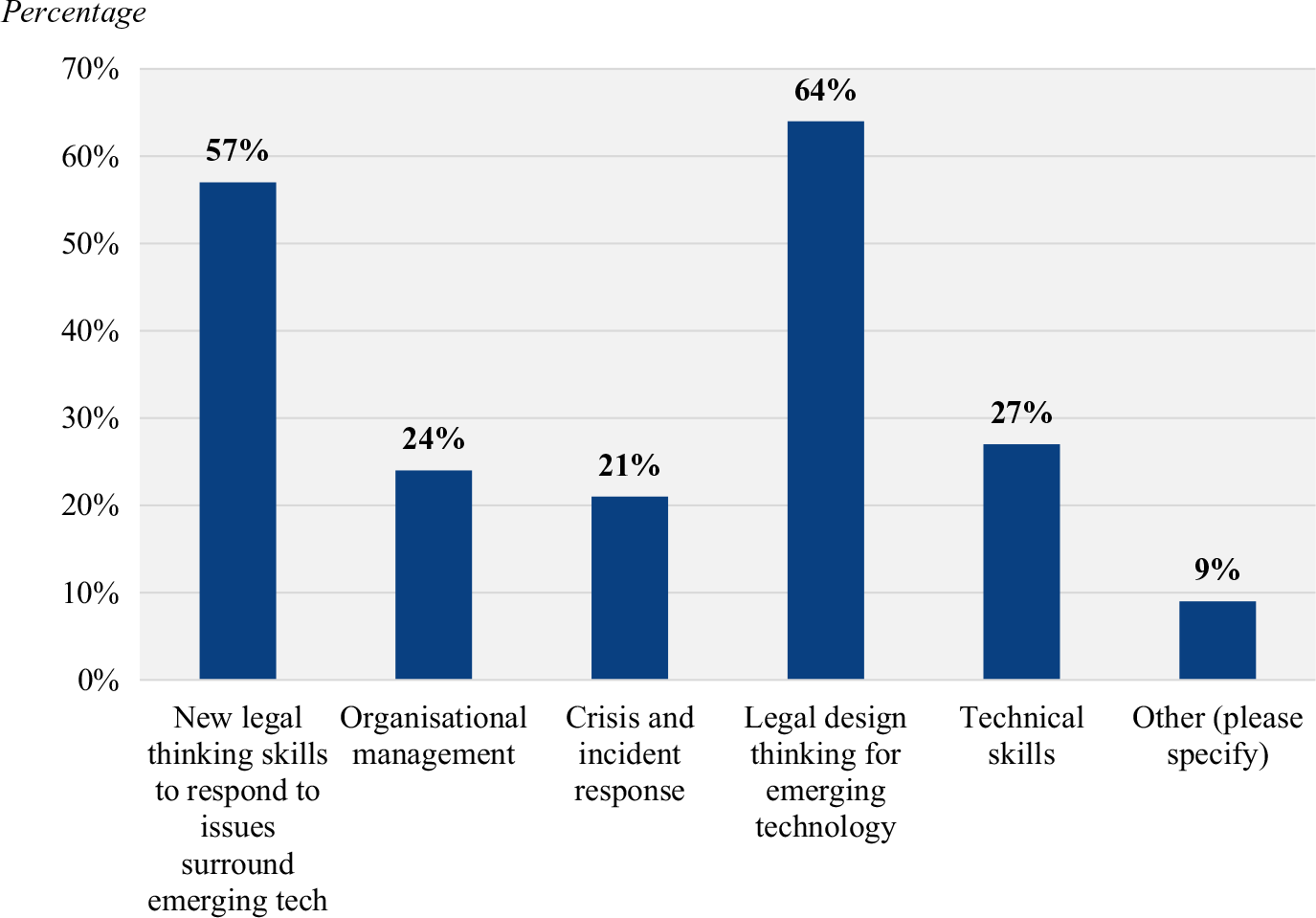
Factors enhancing effective responses to legal challenges in emerging technologies

Overall, these responses underscore the breadth of challenges faced by lawyers, especially in the realms of artificial intelligence and machine learning.
Further, participants reported that the integration of emerging technologies into legal practice presents significant challenges, necessitating lawyers to extend their expertise beyond conventional legal issues to include technological competencies. Significantly, the findings indicate that a lack of self-confidence in handling tech-related legal issues, emerging from insufficient tech understanding, can lead to a reactive approach in legal counsel. Lawyers must be confident in their ability to identify and address potential legal issues arising from technology, highlighting the importance of continuous skill development and adaptation in the legal profession.
The data also revealed a trend: as lawyers gain a deeper understanding of emerging technologies, their confidence in providing advice in these areas tends to increase. Despite most respondents specialising in Technology Law, as shown in Chart 2, only 28% report feeling extremely confident in their advisory capacity. This finding points to a significant confidence gap, even among specialists, and underscores the pressing need for comprehensive tech education within the legal sector.
In summary, the need to enhance self-confidence in managing tech-related legal issues, which often arises from inadequate tech understanding, has the potential to result in a more proactive approach to legal counsel. Focused educational initiatives are essential for arming lawyers with the requisite expertise to excel in technology law, thereby addressing the complexities and potential risks linked to emerging technology challenges.
5.1.2 Limited availability of learning strategies
Our findings reveal a shortfall in effective learning strategies for lawyers to be able to address the complexities of emerging technologies, posing a challenge to maintain expertise in a technology-driven legal environment. A significant gap seems to be the lack of access to practical simulation exercises, essential for hands-on learning in this field, but often unavailable due to limited specialised training and resources. The absence of specialised academic programmes in law schools focusing on emerging technologies further hinders the skill development for both new and practicing lawyers, creating a knowledge gap in technology-related legal matters. Panel discussions on emerging technologies, while insightful, are not universally accessible and require significant time and effort, reducing their impact on the wider legal community.
Moreover, many participants reported that this lack of practical industry experience is due to limited opportunities for hands-on involvement, mentorship or industry-specific workshops. For instance, a lawyer specialising in cybersecurity greatly benefits from direct interaction with IT security teams, participating in incident response drills, attending relevant conferences, and engaging with experienced mentors. Such immersive experiences are crucial for effectively handling legal issues specific to certain industries and staying abreast of emerging challenges.
The surveys asked lawyers about the factors that contribute to effective responses to legal challenges in emerging technologies. The leading choices for enhancing capabilities to address legal challenges related to emerging technology were legal design thinking (64%) and new legal thinking skills (57%). These skills emphasise the innovative approaches and design thinking principles needed by lawyers to navigate emerging technology challenges.
The need for specialised training in technology-related legal matters is also clear. Legal design thinking involves using design principles to create user-centred and effective solutions to legal issues. New legal thinking skills refer to adopting fresh perspectives and approaches to address complex legal matters posed by emerging technologies. This reflects a shift towards more creative and strategic problem-solving in the legal field, aligning with the dynamic nature of technology advancements.
5.2 Recommendation: Strategic innovation and futuristic technological proficiency
The recommended strategic initiative, ‘Strategic innovation and futuristic technological proficiency’, is designed to enhance the technological proficiency and advisory capabilities of legal professionals in the evolving landscape of emerging technologies. Central to this recommendation are the following key measures:
R.1 Prioritise Ongoing Technological Education: This prioritisation is crucial to ensure lawyers stay updated on new technologies and their legal ramifications.
R.2 Foster Self-confidence and Issue Identification: Improving data competence skills and building expertise in areas such as AI and cybersecurity can empower legal professionals to confidently address technology-related legal challenges. This involves not only technical knowledge, but also an understanding of how technology interacts with people and society, and the ethical and legal considerations in the tech space.
R.3 Establish Specialised Training Programmes and Workshops: Create programmes that are specifically tailored to lawyers’ needs, covering topics such as IT competency, critical thinking, crisis management, and ethical considerations in relation to legal issues involving technology. Exercises that simulate real-world situations for practical readiness should be included to ensure lawyers can apply their knowledge effectively.
R.4 Implement Standardised Competency Baseline: Establish a baseline competency, including technology certifications and regulatory knowledge, to ensure legal professionals are well-equipped and prepared for this rapidly changing area. This can involve industry-recognised certifications and ongoing assessments to maintain competency.
R.5 Mandatory Technology Training: Implement mandatory technology training programmes for all legal professionals, ensuring that everyone possesses a foundational understanding of technology and its legal implications. This includes ensuring that all lawyers have a basic understanding of emerging technologies such as AI. Recent incidents where lawyers mistakenly used tools like ChatGPT for precedents highlight the importance of this training, as such errors can significantly impact their careers. Additionally, lawyers advising on emerging technologies should undergo more advanced training to effectively navigate the legal landscape of these innovations.
R.6 Establishing Legal Tech Hackathons: Organising legal tech hackathons to bring together legal professionals, technologists, and other external stakeholders such as startups or university students. During these hackathons, teams can work on solving real legal challenges using technology. This would help foster a culture of innovation and encourage lawyers to think creatively and collaboratively to develop practical solutions to emerging technology-related legal issues. It could also lead to the development of new tools or approaches to enhance the legal department’s efficiency and effectiveness. Additionally, it provides an opportunity for legal professionals to engage with the broader tech community, promoting knowledge exchange and fresh perspectives on legal tech solutions.
6 LIMITATIONS OF THE STUDY
During the data gathering process, several challenges and limitations emerged, particularly in the recruitment of in-house lawyers for interviews. One significant hurdle was identifying willing participants, as their demanding roles often made them reluctant to commit time to research. Additionally, finding interviewees with a solid understanding of emerging technologies and a willingness to discuss these topics confidently proved challenging. Encouraging open dialogue was crucial, especially when discussions revealed tensions between in-house legal counsel and other stakeholders within their firms. Overcoming time constraints was another obstacle, with lawyers’ busy schedules and reluctance to participate in surveys due to competing priorities. Ensuring diverse representation and addressing technological barriers were further challenges. Moreover, the sample size and nature of the participants in the surveys had implications for the generalisability of the quantitative findings. The total of 33 respondents may not fully represent the diverse population of lawyers.
However, the reason for the small size was intentional, as we focused on interviewing / surveying only lawyers with tech experience, resulting in a reasonably small sample size in the survey. Despite these challenges, the research team employed strategies such as personalised outreach, incentives and clear communication to enhance participation and data quality. These efforts ultimately allowed us to gather valuable insights into the evolving role of in-house legal counsels amidst emerging technologies.
7 CONCLUSION
Technologies offer a comprehensive and enlightening perspective on the current landscape in which lawyers operate within organisations, particularly in dealing with the myriad challenges and opportunities presented by emerging technologies. Through a mixed-methods approach involving interviews, surveys, and in-depth analysis, the project uncovered valuable insights leading to key findings that are significant for reshaping the legal profession in the digital age.
Emerging technologies inevitably bring forth complex ethical and legal questions, ranging from data privacy and cybersecurity to intellectual property rights and liability concerns. In this context, lawyers assume an important role in addressing these multifaceted challenges to ensure organisations navigate the technology landscape responsibly and within the legal boundaries. However, the unfortunate reality is that lawyers appear to be ill-equipped to face these challenges. Lawyers themselves encounter a series of challenges, including a lack of specialised skills and knowledge in technology-related legal matters, with limited access to training and resources, and a pervasive perception that they may not fully comprehend the complexities of emerging technologies. These challenges often hamper their ability to proactively engage and contribute effectively to technology adoption initiatives.
Furthermore, the research brings to the forefront the crucial importance of lawyers in addressing the ethical and legal challenges that emerge alongside technological advancements. This project promotes a vision in which lawyers act as watchful guardians, diligently staying informed about technological progress, ensuring compliance with legal regulations, and actively promoting ethical and legal considerations in technology adoption.
Building a capacity for interdisciplinary collaboration between lawyers, technologists, policymakers and others, is paramount, as it facilitates effective communication and the seamless integration of legal and ethical dimensions into technology projects. Lawyers are instrumental in mitigating risks, safeguarding organisations from legal disputes and reputational damage, and through education and advocacy, they can actively contribute to responsible and ethical technology adoption, thereby helping to shape the future of innovation.
Offering specialised training programmes and actively encouraging knowledge-sharing within the legal profession can equip lawyers with the skills and knowledge needed to excel in the dynamic and ever-evolving realm of emerging technologies. By addressing the identified challenges and implementing the recommendations, lawyers can unlock their full potential and create a more collaborative and innovative environment within the legal profession. This approach not only enhances the integration of emerging technologies but also contributes significantly to responsible and ethical technology adoption in the legal field and society at large. It signifies a pivotal step toward a future where lawyers play a central and transformative role in shaping the ethical and legal dimensions of technology-driven progress.
STATEMENTS AND DECLARATIONS
None
Competing interests
The author(s) declare none
Funding
This study is part of a project that was funded by the Menzies Foundation under the Ninian Stephen Law Program’s ‘New Legal Thinking for Emerging Technologies’ project.
Ethics approval
All procedures conducted in studies involving human participants adhered to the highest ethical standards and were approved by the Office of Research Ethics and Integrity (OREI) of the University of Melbourne. These procedures were conducted in strict accordance with the Australian Code for the Responsible Conduct of Research, ensuring the utmost integrity throughout the research process.
Consent to participate
All participants were informed and gave their consent to participate in the study.
Consent for Publication
All participants provided their consent to publish the data collected in the surveys related to their participation in the study. All data have been anonymised, and no personal information will be published to ensure the confidentiality of the participants.