Introduction
Medically assisted reproduction (MAR) has undergone a marked evolution over the past decades. Initially, in the seventies it was only considered an experimental procedure. Currently, MAR plays a major role in mainstream medicine and has facilitated the conception and delivery of more than nine million babies (Steptoe and Edwards, Reference Steptoe and Edwards1978; Bulletti et al., Reference Bulletti, Jasonni, Lubicz, Flamigni and Gurpide1986, Reference Bulletti, Jasonni, Martinelli, Govoni, Tabanelli, Ciotti and Flamigni1987, Reference Bulletti, Jasonni, Ciotti, Tabanelli, Naldi and Flamigni1988a, Reference Bulletti, Jasonni, Tabanelli, Gianaroli, Ciotti, Ferraretti and Flamigni1988b; Palermo et al., Reference Palermo, Joris, Devroey and Van Steirteghem1992; Thoma et al., Reference Thoma, McLain, Louis, King, Trumble, Sundaram and Buck Louis2013; Suzuki, Reference Suzuki2014; Brännström et al., Reference Brännström, Johannesson, Bokström, Kvarnström, Mölne, Dahm-Kähler, Enskog, Milenkovic, Ekberg, Diaz-Garcia, Gäbel, Hanafy, Hagberg, Olausson and Nilsson2015; De Geyter et al., Reference De Geyter, Wyns, Calhaz-Jorge, De Mouzon, Ferraretti, Kupka, Nyboe Andersen, Nygren and Goossens2020; Roseboom and Eriksson, Reference Roseboom and Eriksson2021). However, there are still many unresolved concerns associated with uterine anomalies, as well as other aspects of reproductive dysfunction. Critical aspects correlated with preterm delivery (World Health Organization, 2017), premature uterine removal, and discrepancies between a given genetic state and the psychological desire for procreation are among the most common causes of infertility. Similarly, ethical, religious, social, and economic conditions, as well as the region-specific legal status of MAR technologies, contribute to the increased pain experienced by couples who remain unable to conceive. Ectogenesis has been presented as a potential solution for many of these concerns, allowing women who are currently incapable of supporting full gestation to have children and become biological parents. Therefore, the purpose of this narrative review is to present an overview of recent developments in ectogenesis and to explain how this practice might circumvent problems associated with uterine dysfunction. The study will also examine the main ethical considerations associated with ectogenesis and how they might be resolved. The goals of this study include:
-
Identification of methods that might be used to prolong human embryo culture.
-
Exploration of the possibility of preserving and monitoring premature fetuses (<24 weeks) with a survival system that involves a fluid-to-fluid computer-controlled connection that promotes their development and maturation.
-
Evaluation of the pros and cons of supporting an excised donor-provided uterus to support a complete pregnancy up to delivery by the use of external vascular connections rather than internal transplantation.
-
Development of a physical system that can be used to support full ectogenesis.
Materials and methods
The main aim of the current review was to focus on the question of whether it will be possible shortly to perform human ectogenesis. To achieve this goal, a literature search was performed analyzing the PubMed and Google Scholar beta databases, aiming to identify the animal and human studies of experiments and devices applied in the ectogenesis procedure. Inclusion criteria were experimental studies published in English on in vitro embryos culture, implantation, differentiation and development, artificial uterus, ectogenesis, ectogestation, preterm birth, uterine abnormalities, liquid-to-liquid fetal oxygenation, uterus transplantation, extracorporeal perfusion of the human uterus and animal models. Exclusion criteria were publications in other languages and without clear and reproducible methods included. The papers selected were critically assessed, and the results were interpreted and synthesized to design a prospective strategy to be used towards the further development of this novel technology. Therefore, the studies mentioned in the current review are based on reports of the extracorporeal development of an embryo/fetus for any length of time and include experiments carried out in human and animal models. Our search specifically targeted reports of extracorporeal time-lapse pregnancy in various species. The outcomes of interest were successful support of the embryo/fetus from implantation through birth as well as any intermediate results. No statistical analysis has been carried out, as the specific topic does not require such analysis.
Results
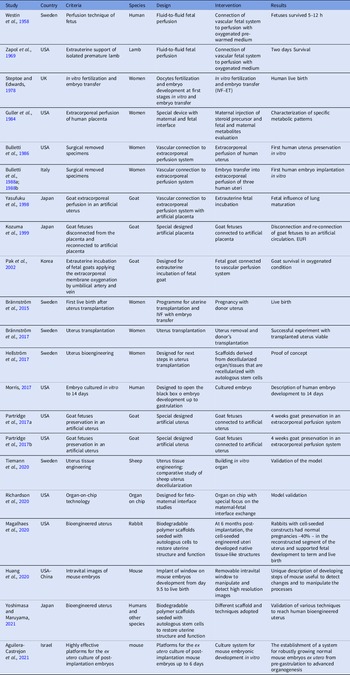
The results from the literature showed limited published articles on the topic of ectogenesis. We have identified 21 manuscripts, illustrated in Table 1, that were appropriate for the pursuit of this goal.
Characteristics of included studies for country, criteria of inclusion, experimental animal species, design, intervention and results

Artificial endometrium
Since the world’s first ‘test-tube’ baby was born in 1978 (Steptoe and Edwards, Reference Steptoe and Edwards1978), the use of human embryos in research has become highly controversial ethically and therefore created a significant challenge for scientists working in the field. A main object of debate is ‘the 14-day rule’, which prohibits culturing human embryos in vitro beyond 14 days or the onset of the primitive streak, and was proposed over 40 years ago. This regulation has become a widely accepted bioethical norm and has been introduced into guidelines worldwide. However, recent scientific advancements and policy debates have put this rule under increasing strain. It has been suggested that it would be technically feasible to extend the lifespan of in vitro human embryo culture beyond the current 14-day limit (Morris, Reference Morris2017). However, there is the need to obtain specific ethical approval to do so (Warnock, Reference Warnock1985). The current 14-day rule on human embryo culture was based on our understanding of development during the post-implantation period. This time point marks the end of the period of full developmental potential and the beginning of gastrulation, when the embryonic cells begin to differentiate and generate pre-neural cells, potentially enabling the embryo to experience painful stimuli. Therefore, this time point is considered the completion of the pre-embryonic stage and the development of the fetus into a single human being (Warnock, Reference Warnock1985; Hurlbut et al., Reference Hurlbut, Hyun, Levine, Lovell-Badge, Lunshof, Matthews, Mills, Murdoch, Pera, Scott, Tizzard, Warnock, Zernicka-Goetz, Zhou and Zoloth2017). As stated earlier, Morris and colleagues and more recently Hyun and co-authors reported the successful culture of human embryos for a period that approached the 14-day limit (Morris, Reference Morris2017). These results suggest that this culture period might be successfully prolonged. The authors noted that an extension of the culture period to 20 or 28 days would permit further investigations into our understanding of early fetal development. An artificial endometrium is essentially epithelial endometrial cells cultured on an artificial three-dimensional support matrix (e.g. Matrigel®). The support matrix enables critical processes to occur in the same three-dimensional orientation as would be encountered in vivo. This goal has already been achieved by others (Figure 1). Liu described an artificial uterus, which was essentially a culture of epithelial and stromal cells (Liu, Reference Liu, Diao, Huang, Li, Zeng and Kwak-Kim2017). Similar endometrial cultures and their responses to steroid hormones have been reported previously by several research groups (Tseng et al., Reference Tseng, Mazella and Tseng1981; Schatz et al., Reference Schatz, Markiewicz and Gurpide1984, Reference Schatz, Papp, Toth-Pal, Cudemo, Hausknecht, Krikun, Markiewicz, Gavi, Wang and Feygin1994). Epithelial cells exhibit spontaneous orientation and therefore may be used to study maternal–embryo interactions (Figures 1 and 2). Ectopic pregnancies (Figure 3) also provide evidence for the implantation and development of embryos/fetuses in unusual contexts. These observations may be used to direct additional research. Of note, while preimplantation mammalian embryos can be cultured in vitro (Bedzhov and Zernicka-Goetz, Reference Bedzhov and Zernicka-Goetz2014), there are no validated procedures that can be used to culture post-implantation embryos to study differentiation and organogenesis (Huang et al., Reference Huang, Cohen, Alsina, Devlin, Garrett, McKey, Havlik, Rakhilin, Wang, Xiang, Mathews, Wang, Bock, Ruthig, Wang, Negrete, Wong, Murthy and Zhang2020). Therefore, the molecular events that promote the transformation from pre-gastrulation to organogenesis remain to be elucidated. Towards this end, a recent study published by Aguilera-Castrejon and colleagues (Aguilera-Castrejon et al., Reference Aguilera-Castrejon, Oldak, Shani, Ghanem, Itzkovich, Slomovich, Tarazi, Bayerl, Chugaeva, Ayyash, Ashouokhi, Sheban, Livnat, Lasman, Viukov, Zerbib, Addadi, Rais and Cheng2021) provided the first illustration of the development of post-implantation mouse embryos outside the uterine environment. In this study, the authors developed an effective platform that supported the growth of mouse embryos until day 11. This culture system monitored the concentrations of CO2 and O2 and also applied a specific atmospheric pressure, a factor known to be important for effective oxygen delivery to tissues and therefore appropriate regulation of cell growth (Ueda et al., Reference Ueda, Kimura-Yoshida, Mochida, Tsume, Kameo, Adachi, Lefebvre, Hiramatsu and Matsuo2020; Nagamatsu et al., Reference Nagamatsu, Shimamoto, Hamazaki, Nishimura and Hayashi2019). Using a combined static and rotating three-dimensional culture system, the authors elegantly delineated the stages of embryo development from early gastrulation (day 5.5) to late gastrulation (day 7.5) and onwards through hindlimb formation (day 11) (Aguilera-Castrejon et al., Reference Aguilera-Castrejon, Oldak, Shani, Ghanem, Itzkovich, Slomovich, Tarazi, Bayerl, Chugaeva, Ayyash, Ashouokhi, Sheban, Livnat, Lasman, Viukov, Zerbib, Addadi, Rais and Cheng2021).
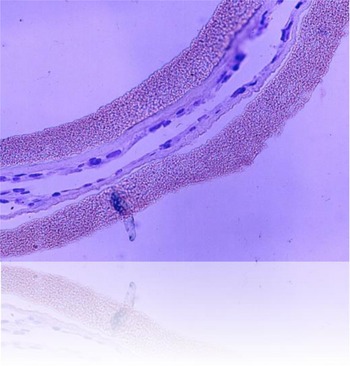
Endometrial epithelial cells that are connected and appropriately oriented after incubation with a Matrigel platform. The endometrial cells can be cultured on this matrix when connected to a maternal blood supply by extracorporeal perfusion.

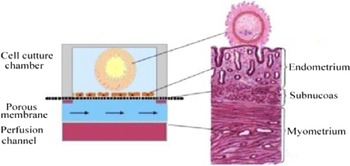
Embryo–mother interaction at implantation both in vitro and in vivo.

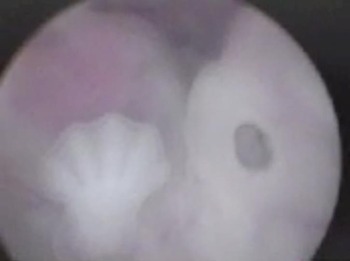
An ectopic (tubal) pregnancy at 9 weeks of development. Fetal survival at this stage suggests that implantation in different substrates other than the endometrium may lead to successful gestation. Ectopic pregnancies typically result in weakness and rupture of the tubal wall in response to the aggressive proteolytic activity of the developing trophoblast.

Uterine transplantation
After several preliminary attempts performed by several authors (Kisu et al., Reference Kisu, Banno, Mihara, Suganuma and Aoki2013; Unno et al., Reference Unno, Kuwabara, Okai, Kido, Nakayama, Kikuchi, Narumiya, Kozuma, Taketani and Tamura1993; Kozuma et al., Reference Kozuma, Nishina, Unno, Kagawa, Kikuchi, Fujii, Baba, Okai, Kuwabara and Taketani1999; Johannesson and Järvholm, Reference Johannesson and Järvholm2016), Brännström and collaborators reported successful uterine transplantation that resulted in fully successful live births (Brännström et al., Reference Brännström, Johannesson, Bokström, Kvarnström, Mölne, Dahm-Kähler, Enskog, Milenkovic, Ekberg, Diaz-Garcia, Gäbel, Hanafy, Hagberg, Olausson and Nilsson2015). The process involved the transplant of a uterus that was surgically excised from a donor with specific vascular characteristics. After delivery, the transplanted organ was removed. While ultimately successful and suggested as adequate treatment for a specific subgroup of infertile women, this was a very complex and expensive procedure.
The extracorporeal perfused human uterus
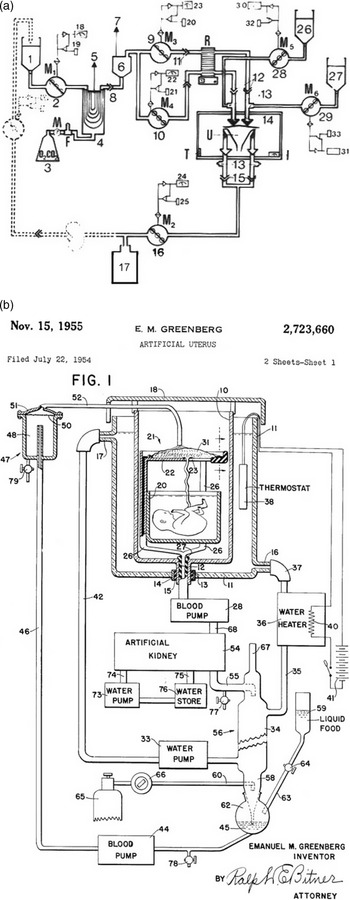
Methods to be used to provide extracorporeal perfusion of a surgically isolated animal fetus were entirely described in 2016 (Ejzenberg et al., Reference Ejzenberg, Mendes, Haddad, Baracat, D’Albuquerque and Andraus2016), while that for the human uterus was first described in 1982 (Bulletti et al., Reference Bulletti, Jasonni, Lubicz, Flamigni and Gurpide1986; Figure 4a). Later studies focused on steroid hormone metabolism (Bulletti et al., Reference Bulletti, Jasonni, Ciotti, Tabanelli, Naldi and Flamigni1988a) and prolonged preservation of uterine tissue (Bulletti et al., Reference Bulletti, Jasonni, Martinelli, Govoni, Tabanelli, Ciotti and Flamigni1987). Interestingly, Greenberg (Reference Greenberg1954) designed an original perfusion system in 1954. No publications are available regarding that document and the devices used in the system, most likely because there was not sufficient technology available at that time (Figure 4b). Human embryos were first implanted into an extracorporeal perfused human uterus in 1988 (Bulletti et al., Reference Bulletti, Jasonni, Ciotti, Tabanelli, Naldi and Flamigni1988a; Reference Bulletti, Jasonni, Tabanelli, Gianaroli, Ciotti, Ferraretti and Flamigni1988b). An extracorporeally perfused human uterus was also used for studies focusing on the electromechanical assessment of myometrial activity in response to ovarian steroid administration (Bulletti et al., Reference Bulletti, Prefetto, Bazzocchi, Romero, Mimmi, Polli, Lanfranchi, Labate and Flamigni1993), aiming to establish the first uterine pass effect of radioactive hormones administered trans-vaginally (Bulletti et al., Reference Bulletti, de Ziegler, Flamigni, Giacomucci, Polli, Bolelli and Franceschetti1997). All of these experiments demonstrated that extracorporeal perfusion was able to maintain uterine growth and viability (Figures 2, 4, 5, 6). Oxygenation through fluid connection and supplementation might be used to sustain a uterus for as long as 4 weeks (Bulletti et al., Reference Bulletti, Jasonni, Lubicz, Flamigni and Gurpide1986; Partridge et al., Reference Partridge, Davey, Hornick, McGovern, Mejaddam, Vrecenak, Mesas-Burgos, Olive, Caskey, Weiland, Han, Schupper, Connelly, Dysart, Rychik, Hedrick, Peranteau and Flake2017a). Therefore, the aim of this research was to determine from the current literature, methods to support a surgically excised uterus by extracorporeal perfusion with the mother’s blood. This would be preferable to a transplantation procedure, as most of the risk associated with the mother would be avoided. It might also be easier to separate the vascular connections for complications. Experimental test procedures in other species will be required to test this new promising design.
(a) The uterine perfusion system developed by Bulletti and colleagues (Bulletti et al., Reference Bulletti, Jasonni, Lubicz, Flamigni and Gurpide1986) includes a reservoir of warmed and oxygenated medium that was forced into the uterine artery lines by a roller pump. (b) The design of an original perfusion system by Emmanuel M. Greenberg (22 July 1954).

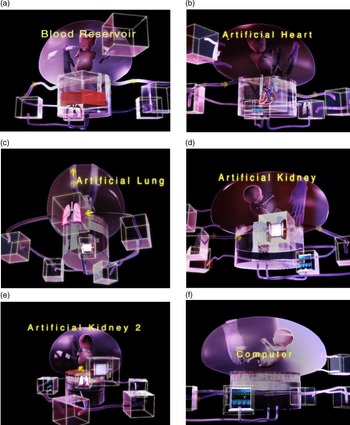
(a–e) A glass container that protects against ultraviolet light contains maternal epithelial endometrial cells in culture with a supporting matrix separated from the blood supply by a porous membrane (Bulletti et al., Reference Bulletti, Jasonni, Martinelli, Govoni, Tabanelli, Ciotti and Flamigni1987). Circulation of maternal blood from a reservoir (a) is promoted by an artificial heart (b). Blood provides nutrition to the implantation side after its oxygenation and filtration by artificial lungs (c) and kidneys (d), respectively. A second artificial kidney (e) provides the fluid needed to support the filtration process. A computer (f) provides real-time analysis of biochemical (e.g. pH, pO2 consumption, and pCO2 production) and biophysical (e.g. pressures, and heart rate) parameters. Hand ports are provided to facilitate the manipulation of the embryo/fetus. Video attachment: https://studio.youtube.com/video/mLKb7X2ceVI/edit

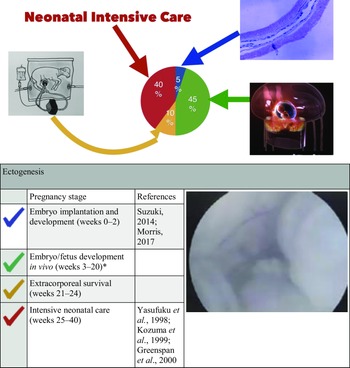
Schematic view of potential embryo/fetal development ex vivo. While there is significant experience with the ex vivo development of both animal and human embryos, the path to successful gestation and birth (3–20 weeks) remains to be completed. This effort will require suitably designed systems and additional experience with animals of a size and complexity comparable with humans.

Animal and human studies of ectogestation
The literature search revealed that Kuwabara and co-authors managed to preserve a developing goat fetus for 3 weeks in an incubator that reproduced the uterus with a placenta, amniotic fluid, and blood supply. Several additional publications have described encouraging results focusing on efforts to support goat fetus growth with extracorporeal perfusion (Yasufuku et al., Reference Yasufuku, Hisano, Sakata and Okada1998; Kozuma et al., Reference Kozuma, Nishina, Unno, Kagawa, Kikuchi, Fujii, Baba, Okai, Kuwabara and Taketani1999; Greenspan et al., Reference Greenspan, Wolfson and Shaffer2000). Early studies on ectogenesis were performed in the 1950s by Westin and colleagues, who reported attempts to support fetus growth and development for several animal species using an artificial womb (Westin et al., Reference Westin, Nyberg and Enhörning1958). Recently, Partridge and colleagues have reported the successful preservation of a live lamb fetus for 4 weeks by extracorporeal perfusion in a simple sterile container that replicates the physiological conditions found in the womb (Partridge et al., Reference Partridge, Davey, Hornick, McGovern, Mejaddam, Vrecenak, Mesas-Burgos, Olive, Caskey, Weiland, Han, Schupper, Connelly, Dysart, Rychik, Hedrick, Peranteau and Flake2017a, supplementary information). The container named a ‘biobag’ was made from a transparent, elastic polyethylene film that facilitated regular monitoring and observation of the fetus. In this study, infant lambs were delivered by caesarean section when they reached a level of lung maturity that was comparable with that of an extremely premature human baby (i.e. 22–23 weeks of gestation). The in vitro system provided artificial intravenous nutrition and included a pump-free oxygenation circuit connected to the fetus that provided stable hemodynamic, blood gas and oxygenation parameters. Using this artificial platform, eight of 13 lambs were maintained in a viable state for 20–28 days (Partridge et al., Reference Partridge, Davey, Hornick and Flake2017b). This compelling study outlines the parameters of a compelling system that could be used for partial ectogenesis (i.e. ectogestation), as it is capable of supporting this phase of pregnancy outside the mother’s body. This technology might be used to support extremely premature human infants to improve overall clinical outcomes. At this time, despite the availability of intensive care technology, preterm infants still exhibit elevated mortality rates compared with their full-term counterparts (Patel, Reference Patel2016). In the near future, one or more ectogestation systems might be available to support extremely premature infants. These infants could then undergo extended growth and development in an artificial womb to improve their long-term health outcomes.
The placenta
Goat and human placental tissue preserved with extracorporeal perfusion (Zapol et al., Reference Zapol, Kolobow, Pierce Jevurek and Bowman1969) were used to study hormone metabolism (Guller et al., Reference Guller, Bulletti, Biener and Gurpide1984), as a source of components to support fetal life, as well as to filter maternal components, including immunoreactive agents (Unno et al., Reference Unno, Kuwabara, Okai, Kido, Nakayama, Kikuchi, Narumiya, Kozuma, Taketani and Tamura1993). A human placenta may continue to supply nutrients and dispose of waste products if the artificial uterus surrounding a perfused explanted uterus remains connected to the mother (Unno et al., Reference Unno, Kuwabara, Okai, Kido, Nakayama, Kikuchi, Narumiya, Kozuma, Taketani and Tamura1993, Reference Unno, Kuwabara, Okai, Kozuma, Nakayama, Takechi, Masuda, Ogami, Tsushima, Ryo, Sakai, Kido, Kikuchi and Taketani1998; Kozuma et al., Reference Kozuma, Nishina, Unno, Kagawa, Kikuchi, Fujii, Baba, Okai, Kuwabara and Taketani1999; Ochiai, Reference Ochiai2000; Westin et al., Reference Westin, Nyberg and Enhörning1958).
Discussion
Candidates for ectogenesis include women who no longer have a uterus, women diagnosed with major anatomical abnormalities of the reproductive tract, including Asherman’s syndrome, and women with a history of recurrent preterm birth. The group also includes couples who are considering surrogacy programmes and those who decide to undergo uterine transplantation (Brännström et al., Reference Brännström, Johannesson, Bokström, Kvarnström, Mölne, Dahm-Kähler, Enskog, Milenkovic, Ekberg, Diaz-Garcia, Gäbel, Hanafy, Hagberg, Olausson and Nilsson2015). This intervention might also benefit women who have chronic diseases associated with a high risk of fetal malformation or death, and those who abuse alcohol or drugs. The architects of this project should include a large collection of scientists, including those who are familiar with studies carried out on animals and humans. However, currently, ectogenesis is still in the making. It is important to note that 62 out of 65 countries with reliable epidemiological investigations have announced an increase in preterm birth and mortality over the past 20 years. In addition, >90% of the extremely preterm infants were born in low-income countries, compared with <10% born in high-income settings. New approaches to preterm birth are strongly requested to improve their survival; fluid-to-fluid support may be the solution and the developing strategy to reach full ectogenesis. As often happens with technological development, it is believed that the future validation of ectogenesis and its application worldwide would be of huge economic interest, especially in those remote countries of Asia and sub-Saharan Africa (Andres and Day, Reference Andres and Day2000; Hendler et al., Reference Hendler, Goldenberg, Mercer, Iams, Meis, Moawad, MacPherson, Caritis, Miodovnik, Menard, Thurnau and Sorokin2005; Delbaere et al., Reference Delbaere, Verstraelen, Goetgeluk, Martens, De Backer and Temmerman2007; Di Renzo et al., Reference Di Renzo, Giardina, Rosati, Clerici, Torricelli and Petraglia2011; Uzan et al. Reference Uzan, Carbonnel, Piconne, Asmar and Ayoubi2011; World Health Organization and the March of Dimes, 2012; Blencowe et al., Reference Blencowe, Cousens, Chou, Oestergaard, Say, Moller, Kinney and Lawn2013; American College of Obstetricians and Gynecologists, 2017; Partridge et al., Reference Partridge, Davey, Hornick, McGovern, Mejaddam, Vrecenak, Mesas-Burgos, Olive, Caskey, Weiland, Han, Schupper, Connelly, Dysart, Rychik, Hedrick, Peranteau and Flake2017a; World Health Organization, 2017; Goldenberg et al., Reference Goldenberg, Culhane, Iams and Romero2008; National Health Service, online; Preeclampsia Foundation, online). The main question arising from this review focuses on the need for systems to support fetal growth outside the maternal womb. To answer this question, one must first recognize the marked success of modern reproductive technologies, including in vitro fertilization techniques introduced in the 1970s by Edwards (Steptoe and Edwards, Reference Steptoe and Edwards1978), uterus preservation outside the human body (Bulletti et al., Reference Bulletti, Jasonni, Lubicz, Flamigni and Gurpide1986, Reference Bulletti, Jasonni, Martinelli, Govoni, Tabanelli, Ciotti and Flamigni1987, Reference Bulletti, Jasonni, Ciotti, Tabanelli, Naldi and Flamigni1988a), human embryo implantation in an extracorporeally perfused human uterus (Bulletti et al. Reference Bulletti, Jasonni, Tabanelli, Gianaroli, Ciotti, Ferraretti and Flamigni1988b), intracytoplasmic sperm injection (Palermo et al., Reference Palermo, Joris, Devroey and Van Steirteghem1992), and successful human pregnancy and infant birth after human uterus transplantation (Brännström et al., Reference Brännström, Johannesson, Bokström, Kvarnström, Mölne, Dahm-Kähler, Enskog, Milenkovic, Ekberg, Diaz-Garcia, Gäbel, Hanafy, Hagberg, Olausson and Nilsson2015), and the increased rates of survival of babies born prematurely. However, currently, several aspects of reproductive dysfunction remain still unresolved, such as uterine abnormalities. Approximately 1 in 500 women suffer from absolute uterine infertility (Johannesson and Järvholm, Reference Johannesson and Järvholm2016). Presently, it is not possible for women that lack a uterus to have biological children without the assistance of a third person (Brännström et al., Reference Brännström, Johannesson, Bokström, Kvarnström, Mölne, Dahm-Kähler, Enskog, Milenkovic, Ekberg, Diaz-Garcia, Gäbel, Hanafy, Hagberg, Olausson and Nilsson2015; Suzuki, Reference Suzuki2014). Other options currently available include adoption, gestational surrogacy, or uterine transplantation. The latter scenario requires two major surgical procedures (i.e., uterus transplantation with in vitro fertilization; followed by removal of the donor uterus after completion of the pregnancy), together with immunosuppressive treatments and strict bed rest and observation during the pregnancy. The ethical, religious, social, and economic concerns of the family, as well as the laws of different countries, contribute to the limited number of solutions currently available to solve these problems. Surrogate motherhood is not permitted in many countries (Kisu et al., Reference Kisu, Banno, Mihara, Suganuma and Aoki2013) and is prohibitively expensive in others. While uterine transplantation provides an alternative to gestational surrogacy, the programme and procedures involved are complex and quite onerous. Live donor surgery requires more than 10 h and relies on a critical need for immunosuppressive therapy to prevent uterine rejection. Immunosuppression is associated with significant adverse events, including nephrotoxicity, increased risk of serious infections, and diabetes (Knight, Reference Knight2002; Kisu et al., Reference Kisu, Banno, Mihara, Suganuma and Aoki2013; Ejzenberg et al., Reference Ejzenberg, Mendes, Haddad, Baracat, D’Albuquerque and Andraus2016; Hellström et al., Reference Hellström, Bandstein and Brännström2017). However, two concepts can be taken from the single published experience using this methodology (Brännström et al., Reference Brännström, Johannesson, Bokström, Kvarnström, Mölne, Dahm-Kähler, Enskog, Milenkovic, Ekberg, Diaz-Garcia, Gäbel, Hanafy, Hagberg, Olausson and Nilsson2015): (1) a postmenopausal uterus may be used in this procedure, and (2) embryo implantation rates after IVF and transfer of the embryo into the transplanted uterus are encouraging (Palermo et al., Reference Palermo, Joris, Devroey and Van Steirteghem1992). A detailed proposal in support of this effort was first introduced in 1986 (Steptoe and Edwards, Reference Steptoe and Edwards1978) and again in subsequent years (Bulletti et al., Reference Bulletti, Jasonni, Lubicz, Flamigni and Gurpide1986, Reference Bulletti, Jasonni, Martinelli, Govoni, Tabanelli, Ciotti and Flamigni1987, Reference Bulletti, Jasonni, Ciotti, Tabanelli, Naldi and Flamigni1988a). The most recent proposal included more sophisticated strategies that focused on the design and construction of a bioengineered uterus that could be used for transplantation without risky donor surgery or the need for immunosuppression (Palermo et al., Reference Palermo, Joris, Devroey and Van Steirteghem1992).
As physicians, we should progress and try to focus on solutions to avoid the tragedy of premature birth and death. Fifteen million infants are born prematurely each year, which is the equivalent of 29 premature infants every minute (Warnock, Reference Warnock1985). Among these, regrettably, ∼3.1 million newborn infants die each year (Hurlbut et al., Reference Hurlbut, Hyun, Levine, Lovell-Badge, Lunshof, Matthews, Mills, Murdoch, Pera, Scott, Tizzard, Warnock, Zernicka-Goetz, Zhou and Zoloth2017). Additionally, premature birth can also have serious long-term consequences for health and well-being (Morris, Reference Morris2017), including impaired vision and hearing, neurodevelopmental disabilities, as well as a long-term increased risks of cardiovascular, lung, and other non-communicable diseases. There are many causes of preterm birth, including multiple births (e.g. 60% of twins are born prematurely) (Tseng et al., Reference Tseng, Mazella and Tseng1981; Schatz et al., Reference Schatz, Markiewicz and Gurpide1984, Reference Schatz, Papp, Toth-Pal, Cudemo, Hausknecht, Krikun, Markiewicz, Gavi, Wang and Feygin1994; Bedzhov and Zernicka-Goetz, Reference Bedzhov and Zernicka-Goetz2014; Johannesson and Järvholm, Reference Johannesson and Järvholm2016; Liu, Reference Liu, Diao, Huang, Li, Zeng and Kwak-Kim2017; Nagamatsu et al., Reference Nagamatsu, Shimamoto, Hamazaki, Nishimura and Hayashi2019; Huang et al., Reference Huang, Cohen, Alsina, Devlin, Garrett, McKey, Havlik, Rakhilin, Wang, Xiang, Mathews, Wang, Bock, Ruthig, Wang, Negrete, Wong, Murthy and Zhang2020; Ueda et al., Reference Ueda, Kimura-Yoshida, Mochida, Tsume, Kameo, Adachi, Lefebvre, Hiramatsu and Matsuo2020; Aguilera-Castrejon et al., Reference Aguilera-Castrejon, Oldak, Shani, Ghanem, Itzkovich, Slomovich, Tarazi, Bayerl, Chugaeva, Ayyash, Ashouokhi, Sheban, Livnat, Lasman, Viukov, Zerbib, Addadi, Rais and Cheng2021). At this time, research goals in the field of reproductive medicine are largely directed at improving our understanding of the causes of preterm birth, finding solutions to preeclampsia, and exploring how changes in vaginal microflora might be associated with preterm labour. However, the medical community does not yet have the tools needed to reverse this phenomenon. The design of systems that support ectogenesis is based on several previous advances, including:
-
(1) in vitro fertilization (Steptoe and Edwards, Reference Steptoe and Edwards1978);
-
(2) human embryo implantation in an extracorporeally perfused uterus (Bulletti et al., Reference Bulletti, Jasonni, Ciotti, Tabanelli, Naldi and Flamigni1988a; Reference Bulletti, Jasonni, Tabanelli, Gianaroli, Ciotti, Ferraretti and Flamigni1988b);
-
(3) perfusion of a human placenta (Zapol et al., Reference Zapol, Kolobow, Pierce Jevurek and Bowman1969; Guller et al., Reference Guller, Bulletti, Biener and Gurpide1984; Unno et al., Reference Unno, Kuwabara, Okai, Kido, Nakayama, Kikuchi, Narumiya, Kozuma, Taketani and Tamura1993; Unno et al., Reference Unno, Kuwabara, Okai, Kozuma, Nakayama, Takechi, Masuda, Ogami, Tsushima, Ryo, Sakai, Kido, Kikuchi and Taketani1998);
-
(4) the development of an artificial endometrium (Tseng et al., Reference Tseng, Mazella and Tseng1981; Schatz et al., Reference Schatz, Markiewicz and Gurpide1984, Reference Schatz, Papp, Toth-Pal, Cudemo, Hausknecht, Krikun, Markiewicz, Gavi, Wang and Feygin1994; Liu, Reference Liu, Diao, Huang, Li, Zeng and Kwak-Kim2017);
-
(5) sustained pregnancy in a transplanted uterus (Brännström et al., Reference Brännström, Johannesson, Bokström, Kvarnström, Mölne, Dahm-Kähler, Enskog, Milenkovic, Ekberg, Diaz-Garcia, Gäbel, Hanafy, Hagberg, Olausson and Nilsson2015);
-
(6) intensive care provided to premature babies and intense ongoing effort to improve survival and health outcomes (Unno et al. Reference Unno, Kuwabara, Okai, Kido, Nakayama, Kikuchi, Narumiya, Kozuma, Taketani and Tamura1993; Partridge et al., Reference Partridge, Davey, Hornick, McGovern, Mejaddam, Vrecenak, Mesas-Burgos, Olive, Caskey, Weiland, Han, Schupper, Connelly, Dysart, Rychik, Hedrick, Peranteau and Flake2017a);
-
(7) preliminary experiments on different animal species aimed at evaluating the survival of premature fetuses through their extracorporeal perfusion in a sterile container (Partridge et al., Reference Partridge, Davey, Hornick, McGovern, Mejaddam, Vrecenak, Mesas-Burgos, Olive, Caskey, Weiland, Han, Schupper, Connelly, Dysart, Rychik, Hedrick, Peranteau and Flake2017a; Figures 5 and 6).
Recently, autologous somatic and stem cells have been used to proliferate decellularized organs/tissues, notably in support of uterine tissue engineering, to sustain propulsive perfusion and an artificial lung oxygenates filtered blood. (Deane et al., Reference Deane, Gualano and Gargett2013; Alawadhi et al., Reference Alawadhi, Du, Cakmak and Taylor2014; Cervelló et al., Reference Cervelló, Santamaría, Miyazaki, Maruyama and Simón2015).
Two main approaches are included that can be used for physical manipulation of the uterus (Figure 5, Video 1). Based on a previous successful application in humans and other animal species, it should be possible to maintain embryos/fetuses using this method for as long as 22 weeks of the full 40 weeks of pregnancy (Figure 6). The design of a new extracorporeal perfusion system that will accept and promote the development of an embryo/fetus from implantation to delivery (Figure 5, Video 1), would provide support for the remaining 18 weeks of development, thereby completing ectogenesis (Figure 6). The main indication for future ectogenesis procedures is candidacy for surrogacy and uterine transplantation. By current estimates, up to 15% of the reproductive-aged population is infertile; 3–5% of all cases of infertility are the result of some form of uterine dysfunction (Lindenman et al., Reference Lindenman, Shepard and Pescovitz1997; Aittomäki et al., Reference Aittomäki, Eroila and Kajanoja2001; Brinsden, Reference Brinsden2003; Bagnoli et al., Reference Bagnoli, Fonseca, Fassolas, Arie, Arie and Baracat2010; Dempsey, Reference Dempsey2013; Practice Committee of the American Society for Reproductive Medicine, & Practice Committee of Society for Assisted Reproductive Technology, 2015). Uterine malformations are diagnosed in 5% of the infertile population, with uterine agenesis (diagnosed in 1 in 4500 women) and hypoplasia identified as the most frequent causes. Müllerian aplasia, including the congenital absence of the uterus (i.e. Mayer–Rokitansky–Kuster–Hauser syndrome) is relatively rare with an incidence of 1 per 4000–5000 newborn girls (Lindenman et al., Reference Lindenman, Shepard and Pescovitz1997; Aittomäki et al., Reference Aittomäki, Eroila and Kajanoja2001; Brinsden, Reference Brinsden2003; Bagnoli et al., Reference Bagnoli, Fonseca, Fassolas, Arie, Arie and Baracat2010; Dempsey, Reference Dempsey2013; Practice Committee of the American Society for Reproductive Medicine, & Practice Committee of Society for Assisted Reproductive Technology, 2015). Hysterectomies represent an additional cause of suffering. The uterus may need to be removed to excise myomas and to treat abnormal uterine bleeding, adenomyosis, postpartum haemorrhage, and uterine cancer. Surrogacy might also be considered for women diagnosed with severe medical conditions (e.g., cardiovascular and renal diseases), which might render a pregnancy life-threatening (Lindenman et al., Reference Lindenman, Shepard and Pescovitz1997; Aittomäki et al., Reference Aittomäki, Eroila and Kajanoja2001; Brinsden, Reference Brinsden2003; Bagnoli et al., Reference Bagnoli, Fonseca, Fassolas, Arie, Arie and Baracat2010; Dempsey, Reference Dempsey2013; Practice Committee of the American Society for Reproductive Medicine, & Practice Committee of Society for Assisted Reproductive Technology, 2015). One further indication is the biological inability to conceive or bear a child, which applies to same-sex male couples or single men (Dempsey, Reference Dempsey2013). In some countries, gestational carriers may also be considered in cases of unidentified endometrial factors, for example couples with repeated unexplained IVF failures despite the development and replacement of high-quality embryos (Practice Committee of the American Society for Reproductive Medicine, & Practice Committee of Society for Assisted Reproductive Technology, 2015). The presence of pollutants and the use of alcohol or other drugs might also limit the ability to sustain a healthy pregnancy to term (Practice Committee of the American Society for Reproductive Medicine, & Practice Committee of Society for Assisted Reproductive Technology, 2015). A successful artificial uterus might overcome the need for surrogate mothers for these patients. Finally, in the near future, once the procedure has been properly standardized, infants born prematurely will be the primary beneficiaries of ectogenesis.
Ethical concerns
There are many controversies and ethical concerns surrounding ectogenesis and the use of artificial wombs, as well as the entire process of uterine transplantation. One of the main questions is the financial aspect. Ectogenesis and womb graft are very expensive procedures that might not be necessary if a successful pregnancy might be achieved using alternative procedures that might be cheaper and also less invasive. The approaches described in this review might be chosen when no other options are available, such as in women who have been diagnosed with severe uterine anomalies, including Asherman’s syndrome, and women with a history of recurrent preterm birth. Although surrogacy might be considered as a valid alternative, it is important to note that this practice is prohibited in many countries, including Arab countries, and it is also unavailable in other regions due to a ban on providing payment (Samuels, Reference Samuels2020). Similarly, while surrogacy has recently become accessible in India (Blazier and Janssens, Reference Blazier and Janssens2020; Smietana et al., Reference Smietana, Rudrappa and Weis2021), this might be unacceptable to many women due to cultural, moral, religious, or personal factors. In these cases, the use of an artificial womb may be the only route available to women who prefer to have their own offspring.
Ectogenesis might be associated with several advantages for both parents and offspring. This might be a particularly attractive alternative to elective abortion and/or for those who present with a high risk of fetal damage during pregnancy (e.g., drug addiction). In these cases, ectogenesis could provide compelling advantages to the fetus by providing superior conditions for sustained development, including ideally calibrated temperature, oxygenation, and nutrition in a toxin-free environment.
One of the main concerns discussed regarding the use of an artificial uterus would be the moral status of the early embryo. Surely, the debate on this aspect will continue to grow in the future. It is worth noting that the legal and moral status of embryos and fetuses has not been universally established, therefore, the application of ectogenesis generates numerous controversies and tensions allied to the early stages of human life. There are numerous opinions as to whether it is appropriate to provide support to human embryos outside the mother’s body. Some individuals believe that the human embryo needs full protection starting from the very early stages following fertilization. Those with actively ‘pro-life’ visions argue that the early embryo/fetus has full moral status and is considered a full person. These individuals most frequently find ectogenesis to be ethically unacceptable, as it is seen as analogous to the termination of a pregnancy. Another, more gradualist vision considers that the embryo has some moral standing and that its legitimacy increases with further development during the pregnancy. From this standpoint, the embryo/fetus has no sensibility or consciousness and therefore might not be considered as a full human. Individuals maintaining this viewpoint are typically those who believe that research can be performed on human embryos until day 14 (Warnock, Reference Warnock1985). By contrast, individuals who are fully ‘pro-choice’ typically perceive the fetus as lacking moral status and believe that embryos might be provisionally created and used for research purposes (Bredenoord et al., Reference Bredenoord, Pennings, Smeets and de Wert2008; Steinbock, Reference Steinbock2011; Dyer, Reference Dyer2012). Disagreement regarding the use of novel reproductive technologies methods, such as ectogenesis, largely mirrors the ongoing debate on abortion rights and regulation. Particular attention must be focused on social and public communication to prevent the dissemination of imprecise or incorrect information that can lead to confusion and unrealistic expectations.
Conclusion
Ectogenesis involving the development of a human embryo in vitro up and including live birth remains to be realized. Strong experimental evidence suggests that this may be the only solution that will relieve the suffering of women who are unable to undergo a normal pregnancy to term. Current scientific progress supports 22 to 40 weeks of pregnancy outside the human body. Advances on the path to ectogenesis are moving quickly. The development of innovative technologies leads us to believe that it may be possible to provide external support for a full 40 weeks of pregnancy within a single decade from now. The use of this technology will present dramatic changes in legal, social, and ethical evaluations of the entire reproductive process.
Acknowledgements
We thank the great scientist and unforgettable man, Erlio Gurpide, who believed strongly in this project and included extracorporeal perfusion of a human uterus among his projects at Mount Sinai Medical Center.
Author contribution
FMB contributed to the conception and designed the manuscript including the PubMed search. RS and CB wrote sections of the manuscript. AP researched the literature on preterm birth and fluid-to-fluid oxygenation system. All authors have read and agreed to the published version of the manuscript.
Institutional review board statement
All procedures performed in studies involving human participants were in accordance with the ethical standards of the institution and with the 1964 Helsinki Declaration and its later amendments.
Financial support
This research received no specific grant from any funding agency, commercial or not-for-profit sectors.
Competing interests
The author(s) declare none.