INTRODUCTION
Mangroves are among the most productive environments in the world and are of great economic and ecological importance (Kristensen, Reference Kristensen2008; Alongi, Reference Alongi2009; Giri et al., Reference Giri, Ochieng, Tieszen, Zhu, Singh, Loveland, Masek and Duke2011). However, tropical estuarine ecosystems are being globally affected by pressure caused by human activities. According to Duke et al. (Reference Duke, Meynecke, Dittmann, Ellison, Anger, Berger, Cannicci, Diele, Ewel, Field, Koedam, Lee, Marchand, Nordhaus and Dahdouh-Guebas2007), 1–2% of mangrove forests is lost per year, a rate greater than or equal to the reduction of adjacent highly threatened coral reef or tropical rainforest systems.
Coastal eutrophication is one of the most important phenomena to threaten estuarine environments. This is the result of excessive nutrient inputs, especially nitrogen and phosphorus (Nixon, Reference Nixon1995; Cloern, Reference Cloern2001). Increased levels of nutrients stimulate the production of dissolved and particulate organic matter and lead to reduced oxygen concentration due to intense bacterial activity decomposing organic matter in the water (Gray et al., Reference Gray, Wu and Ying2002). Responses to low oxygen concentration include the escape or mortality of demersal fish and benthic organisms, and a subsequent loss of biodiversity (Gray, Reference Gray, Columbo, Ferrari, Ceccherelli and Rossi1992; Cloern, Reference Cloern2001).
Organic compounds in sediment are the main energy source for benthic organisms. Besides being food for higher trophic levels, benthic organisms also influence biogeochemical cycles through bioturbation (Danovaro et al., Reference Danovaro, Marrale, Della Croce, Parodi and Fabiano1999; Pearson, Reference Pearson2001). Phytopigment concentrations in the sediment are tracers of the amount of organic matter produced by photosynthesis, so chlorophyll-a (Chl-a) is frequently used as a descriptor of the trophic state and productivity of estuarine systems (Cahoon & Cooke, Reference Cahoon and Cooke1992; de Jong & de Jonge, Reference de Jong and de Jonge1995; Lucas et al., Reference Lucas, Widdows, Brinsley, Salkeld and Herman2000; Manini et al., Reference Manini, Fabiano and Danovaro2001).
The trophic state of marine ecosystems is usually assessed through measures of chemical variables (e.g. nitrogen and phosphorus) and the amount of algal biomass in the water column (Stefanou et al., Reference Stefanou, Tsirsis and Karydis2000). However, these variables can fail to detect the effects of nutrient increase on benthic systems (Dell'Anno et al., Reference Dell'Anno, Mei, Pusceddu and Danovaro2002). Recently, it has been shown that the trophic state of the benthos in marine systems is a function not only of organic carbon quantity, but also of its biochemical composition and bioavailability (Pusceddu et al., Reference Pusceddu, Dell'Anno, Fabiano and Danovaro2009). In fact, due to the conservative nature of the sedimentary organic carbon, changes in the trophic state of sediments can be more evident in terms of organic matter composition (e.g. ratio of proteins to carbohydrates) than in terms of the concentration of organic matter (Fabiano et al., Reference Fabiano, Danovaro and Fraschetti1995; Danovaro et al., Reference Danovaro, Marrale, Della Croce, Parodi and Fabiano1999).
In impacted areas, nutrient increase can result in large amounts of protein-rich organic material entering the benthic system (Dell'Anno et al., Reference Dell'Anno, Mei, Pusceddu and Danovaro2002). Proteins are more labile and represent the most important nitrogen source for benthic organisms, whereas the carbohydrate pool consists mostly of refractory compounds characterized by low degradation rates (Vezzulli & Fabiano, Reference Vezzulli and Fabiano2006). Thus, sediments with high protein concentrations in relation to carbohydrates may indicate eutrophic conditions, while low protein and high carbohydrate concentrations suggest oligotrophic environments (Dell'Anno et al., Reference Dell'Anno, Mei, Pusceddu and Danovaro2002; Vezzulli & Fabiano, Reference Vezzulli and Fabiano2006). This relationship has been used in the literature as a tool for assessing the environmental quality of subtropical and temperate estuaries, where protein to carbohydrate ratio values greater than 1 are common in eutrophic areas, and values less than 1 are typical of meso-oligotrophic areas (Dell'Anno et al., Reference Dell'Anno, Mei, Pusceddu and Danovaro2002; Pusceddu et al., Reference Pusceddu, Dell'Anno, Danovaro, Manini, Sarà and Fabiano2003, Reference Pusceddu, Patrona and Beliaeff2011; Vezzulli & Fabiano, Reference Vezzulli and Fabiano2006; Signorini et al., Reference Signorini, Massini, Migliore, Tosoni, Varrone and Izzo2008; Garcia-Rodriguez et al., Reference Garcia-Rodriguez, del Puerto, Venturini, Pita, Brugnoli, Burone and Muniz2011; Muniz et al., Reference Muniz, Venturini, Hutton, Kandratavicius, Pita, Brugnoli, Burone and García-Rodríguez2011; Venturini et al., Reference Venturini, Pita, Brugnoli, García-Rodríguez, Burone, Kandratavicius, Hutton and Muniz2012).
Despite being legally protected areas along the coast of Brazil, mangroves are the coastal environments most affected by anthropogenic influence, as they are close to urban centres. Along the coastline of Pernambuco (north-eastern Brazil), the removal of native mangrove forests and dredging of rivers to allow the construction of port complexes and for land use for sugar cane plantations, the establishment of different industries (textile, metallurgy, food, soap, paper, among others) in nearby estuaries and the drainage of agricultural and domestic effluents untreated into the shoreline are the most frequent estuarine threats (CPRH, 2006).
Nevertheless, in tropical areas, few studies have assessed the environmental quality of estuarine systems, and no studies exist that use protein and carbohydrates concentrations to assess the trophic state. Considering that those responsible for managing and protecting the environment require scientifically based information to assist in decision making and to help in defining strategies for management and conservation, the present study aims (1) to assess the benthic trophic state of six estuaries in north-eastern Brazil, using for the first time the quantity and biochemical composition of organic matter in tropical sediments and (2) to evaluate if the biochemical composition of the sedimentary organic matter, as well as the benthic trophic status, reflect the different levels of human impact in the studied estuaries.
MATERIALS AND METHODS
Study areas and sampling
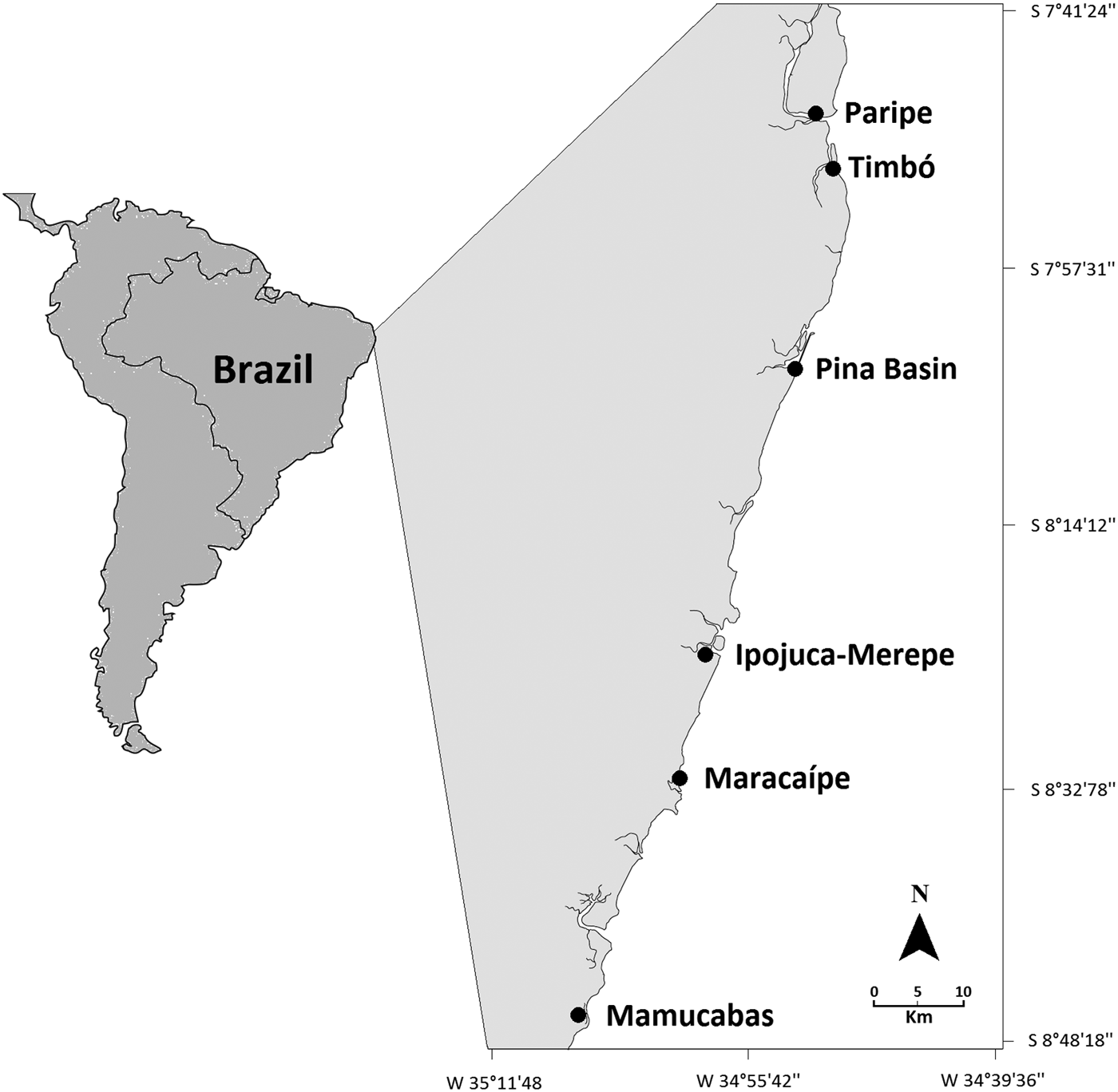
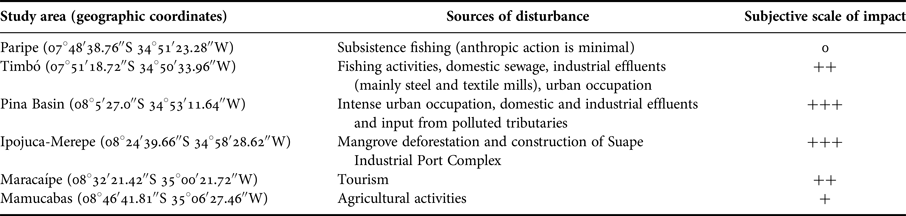
Samples were collected monthly during spring low tide from August 2011 to July 2012, in the mid-littoral of six estuarine areas along the north-eastern Brazilian coast (Figure 1). The selected areas are subjected to different pollution sources (Table 1) based on monitoring reports of estuaries in the state of Pernambuco (CPRH, 2006).
Location of areas studied along coastline of Pernambuco, north-east Brazil.

Study area and summary of their main disturbance sources (CPRH, 2006).

0, null impact; +, minimal impact; ++, moderate impact; +++, high impact.
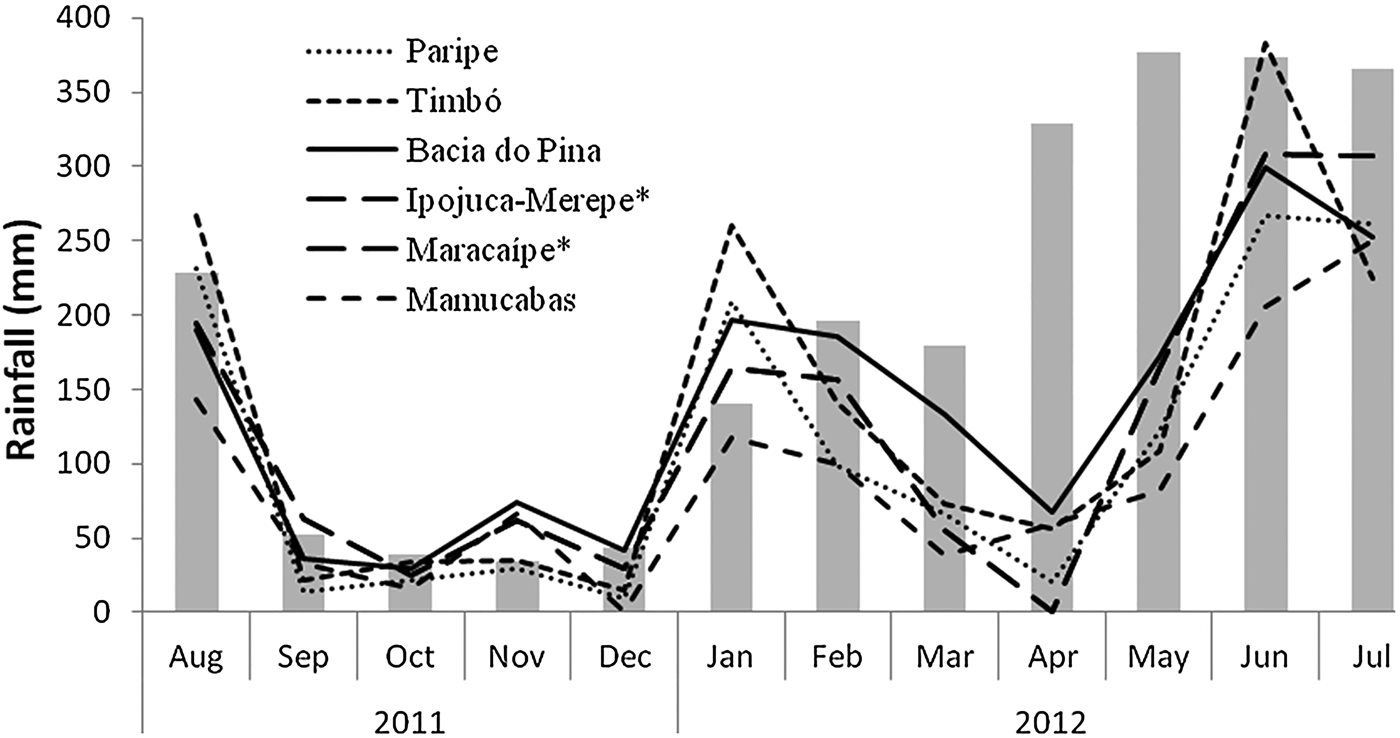
The climatic characterization of north-eastern Brazil is complex, with large spatial and temporal variability of precipitation (Braga et al., Reference Braga, Macedo, Siva and Braga2012). According to Molion & Bernardo (Reference Molion and Bernardo2002), the climate of the north-eastern Brazilian coast is hot and humid with total rainfall ranging from 600 to 3000 mm. The annual cycle of precipitation shows a distinct rainy season that generally occurs from March to July, with peak rainfall in May (Marques et al., Reference Marques, Rao and Molion1983; Molion & Bernardo, Reference Molion and Bernardo2002). In this study the rainfall peak occurred in June and July of 2012 with a lower peak in January and February of the same year (Figure 2).
Monthly rainfall (mm) in the six areas studied. (*) Values of the rainfall monitoring station are the same for both areas. The grey bars indicate historical precipitation.

Sedimentary variables, parameters and analytical methods
Three replicates for proteins and carbohydrates analysis were collected from the top 2 cm of the sediment with a cylindrical corer and sampled twice during the study (December 2011, which is among the months with lower rainfall and June 2012 which is the month with the highest precipitation level). Total organic matter and phytopigment content were also collected in three replicates in the top 2 cm of the sediment, but were sampled monthly throughout the study period.
Total organic matter (TOM) was determined as the difference between the dry weight (60°C, 24 h) of the sediment and the weight of the residue after combustion (495°C, 5 h) according to Wetzel & Likens (Reference Wetzel and Likens1990). Phytopigment concentration of the sediments (Chl-a and phaeopigments) determination followed the method described by Colijn & Dijkema (Reference Colijn and Dijkema1981) with modifications, and the calculations were performed using the equations of Lorenzen (Reference Lorenzen1967). Pigments were extracted with 90% acetone (24 h in the dark at 4°C). The supernatant was used to determine the functional Chl-a and acidified with 0.1 N HCl to estimate the amount of phaeopigments (Phaeo).
Sediment protein was solubilized using an ultrasonic homogenizer and then centrifuged (4000 rpm, 30 min). Protein (PRT) analyses followed the BCA method (Smith et al., Reference Smith, Krohn, Hermanson, Mallia, Gartner, Provenzano, Fujimoto, Goeke, Olson and Klenk1985), modified from the Lowry method, and concentrations were reported as albumin equivalent. Carbohydrates (CHO) were analysed according to Gerchacov & Hatcher (Reference Gerchacov and Hatcher1972) and expressed as glucose equivalents. The method is based on the same principle as the widely used method of Dubois et al. (Reference Dubois, Gilles, Hamilton, Rebers and Smith1956), but is specifically adapted for carbohydrate determination in sediments. The determination of the quality of the organic matter in the sampled areas was based mainly on the protein to carbohydrates ratio: eutrophic areas were considered those with a ratio of PRT/CHO > 1, and meso-oligotrophic areas were those with PRT/CHO < 1. The phytopigment concentration of the sediments and relevant data from literature on the areas were also used to support the assessment of the trophic state of the areas studied.
Redox potentials (Eh) were measured with an oxidation–reduction potential (ORP) platinum electrode at 2 and 10 cm in the sediment. Final readings were corrected by adding the potential of a calomel reference electrode (+244 mV). Dissolved oxygen (measured with portable oximeter), interstitial salinity (measured with refractometer) and temperature were measured in situ. Granulometric composition (silt and clay percentage) was determined according to Suguio (Reference Suguio1973) and precipitation rates were obtained from the Laboratório de Meteorologia de Pernambuco (LAMEPE).
Statistical analysis
The Friedman test, equivalent to the non-parametric two-factor ANOVA, was used (since variances were heteroscedastic even after transformation) to test differences in the concentrations of Chl-a and phaeopigments among the six areas during the 12 months of collection. The non-parametric Kruskal–Wallis test, equivalent to the one-factor ANOVA, was used to test statistical differences in the total organic matter (TOM) among the six areas and the Dunn's post-hoc test compared the differences between each pair of areas.
RESULTS
Abiotic variables
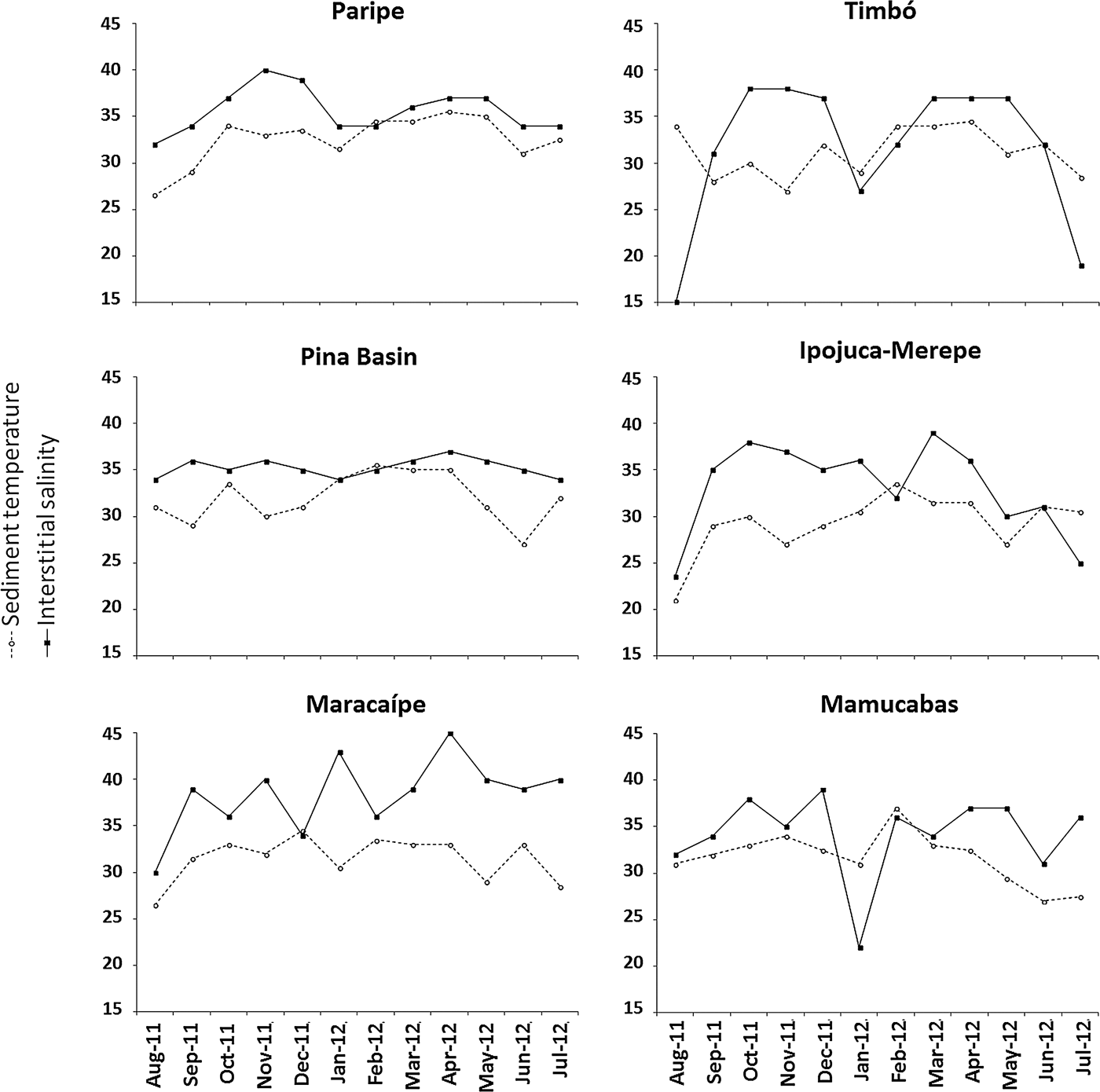
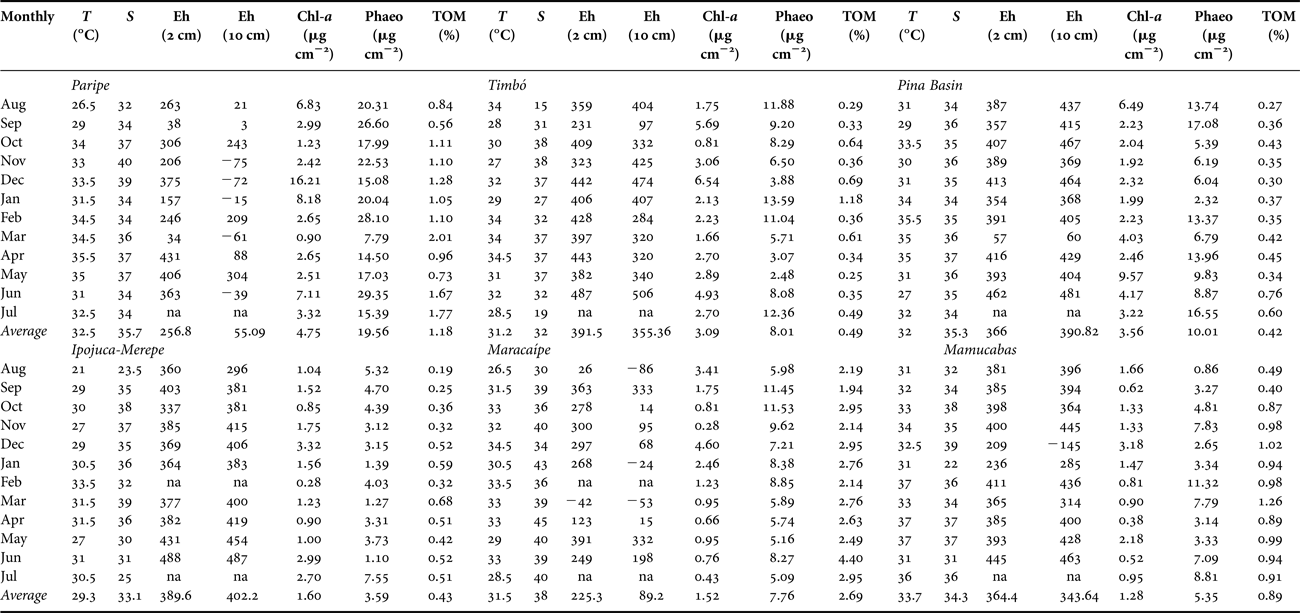
Sediment temperature and interstitial salinity varied little throughout the collection period (Figure 3, Table 2). The annual average redox potential ranged from 225 mV in Maracaípe to 391 mV in Timbó at 2 cm depth. At 10 cm depth redox potential ranged from 55 mV in Paripe to 402 mV in Ipojuca-Merepe (Table 2). Dissolved oxygen was very low in the Pina Basin (2.83 ± 2.39 mg l−1), but was higher than 5 mg l−1 in the remaining areas: 5.13 ± 1.41 mg l−1 in Timbó, 5.2 ± 0.72 mg l−1 in Ipojuca-Merepe, 6.6 ± 1.45 mg l−1 in Mamucabas, 6.7 ± 1.08 mg l−1 in Maracaípe and 7.03 ± 2.17 mg l−1 in Paripe river (these values represent the mean ± standard deviation of May, June and July 2012).
Temporal variation of interstitial salinity and sediment temperature throughout the study period in the six areas collected.

Monthly variation in average of the parameters measured in the sediment in each study area.

T, temperature; Eh, redox potential; Chl-a, Chlorophyll-a; Phaeo, phaeopigments; TOM, total organic matter; na, not available.
Overall, low proportions of silt and clay were found (1.5% in Ipojuca-Merepe, 2.1% in Timbó, 3.1% in the Pina Basin, 3.2% in Mamucabas and 4.8% in Paripe river), except in Maracaípe which reached 15.5% of silt and clay.
Composition of organic matter in sediment
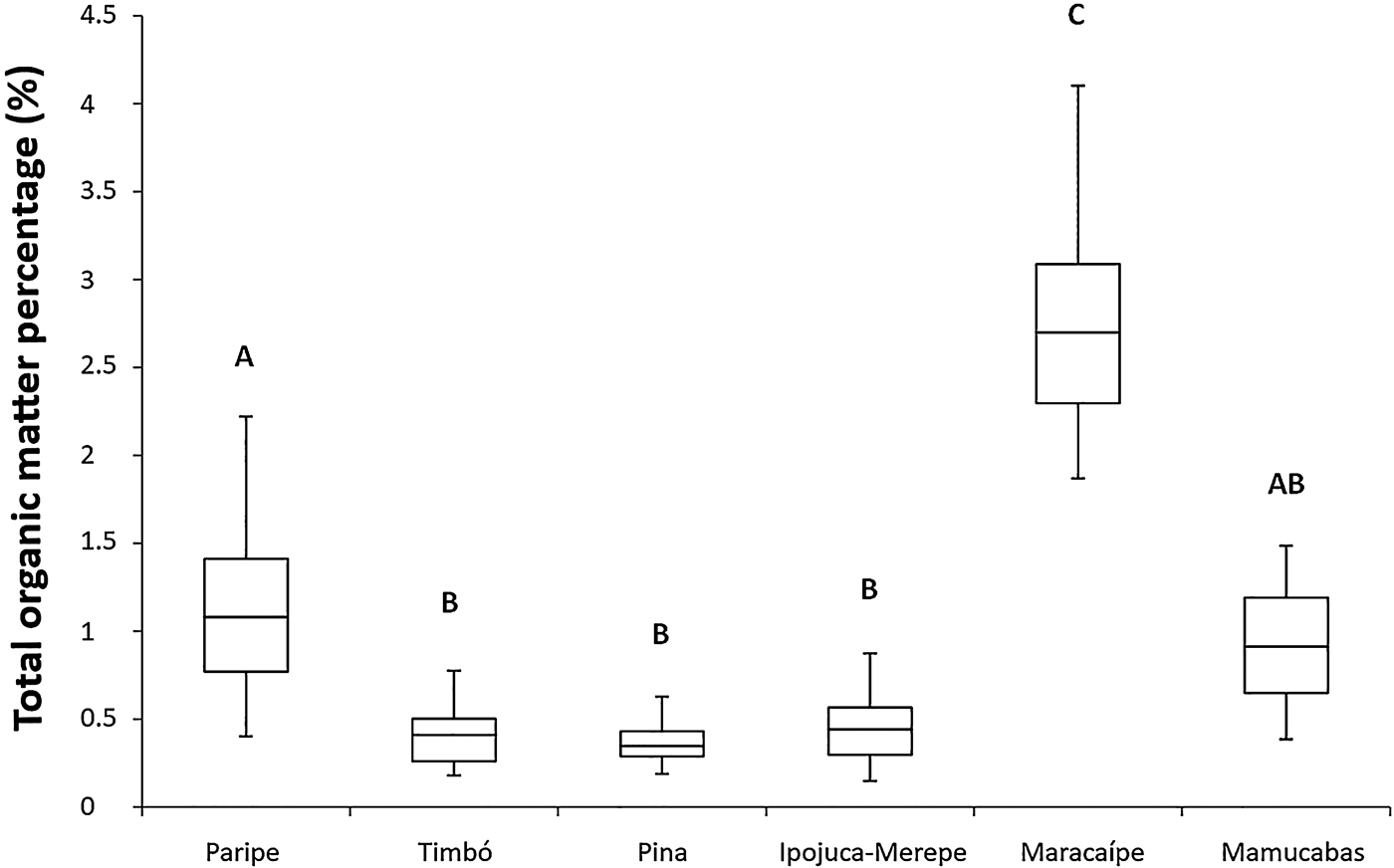
The annual average proportion of total organic matter (TOM) was significantly different among the estuaries (Kruskal–Wallis, H (5) = 148.97; P < 0.001), with significantly higher values in the Maracaípe river (2.74 ± 0.62%) compared with other studied areas. In Paripe the second highest percentage of TOM (1.17 ± 0.43%) was found, significantly higher than all other estuaries, except of the Mamucabas (0.89 ± 0.23%) and the aforementioned Maracaípe. Timbó (0.50 ± 0.25%), Ipojuca-Merepe (0.44 ± 0.14%), Pina Basin (0.42 ± 0.13%) and Mamucabas did not present statistically significant differences between them (Figure 4).
Box-plot showing the annual organic matter concentrations among studied areas. Different letters indicate statistically significant differences.

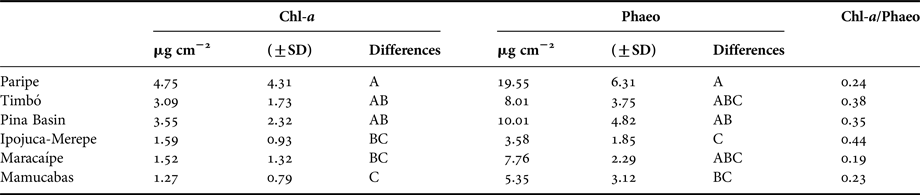
Chl-a concentrations (annual average) were significantly different (Fr(5) = 28.94; P < 0.05) among rivers (Table 3). Phaeopigment concentrations also showed significant differences (Fr(5) = 36.89; P < 0.05) among rivers with Paripe, Timbo and Pina Basin showing higher concentrations of both chl-a and phaeopigments. The annual Chla-a/Phaeo ratio varied little among estuaries with Maracaípe presenting the lowest value and Ipojuca-Merepe presenting the highest value (Table 3).
A posteriori test among the studied areas showing the differences in phaeopigment and chlorophyll-a concentrations (±SD).

Different letters indicate statistically significant differences.
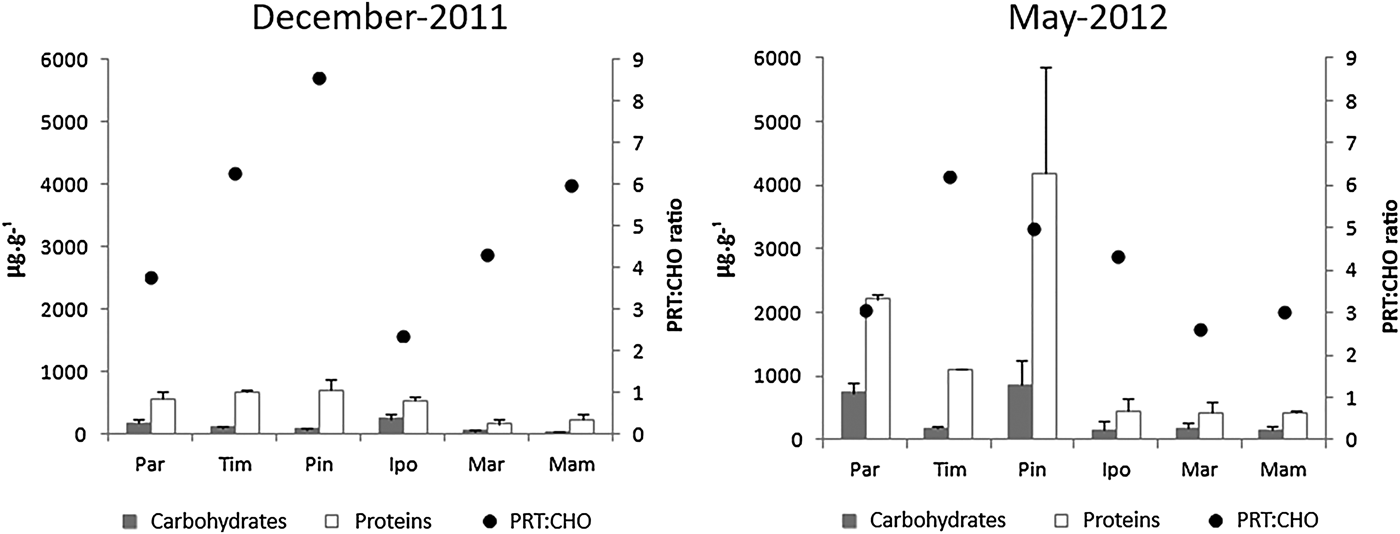
Protein total (PRT) concentrations ranged from 429.3 ± 24.7 µg g−1 in Mamucabas to 4195.2 ± 1161.1 µg g−1 in the Pina Basin, in June 2012. In December 2011, protein concentrations varied little along the estuaries, with the highest value found in the Pina Basin (699.5 ± 182.4 µg g−1) and the lowest in Maracaípe (155.5 ± 78.5 µg g−1). The carbohydrate (CHO) concentration was also highest in the Pina Basin (858.7 ± 382.6 µg g−1), but the lowest concentration was found in Ipojuca-Merepe (158.5 ± 148.1 µg g−1) in June 2012. In December 2011, Ipojuca-Merepe showed the highest concentration of carbohydrates (243.49 ± 83.46 µg g−1), and Mamucabas had the lowest concentration (39.62 ± 7.89 µg g−1). In both sampling dates, all studied areas had a PRT/CHO ratio >1. The total concentrations of proteins and carbohydrates were higher in June 2012 compared with December 2011 in most areas, except for Ipojuca-Merepe, which showed slightly higher values in December 2011 (Figure 5).
Protein and carbohydrates concentrations in the sediments along the studied areas in December 2011 and May 2012.

DISCUSSION
Despite the fact that estuaries are generally characterized by highly variable salinities, due to the mixing of seawater and fresh water, the collection areas were predominantly characterized as euhaline zones. The average annual values of Eh obtained in this study were always positive, both at 10 and 2 cm depth, indicating oxidative conditions. According to Araújo et al. (Reference Araújo, Otero, Marques, Nóbrega, Silva and Ferreira2012), values of Eh ~ 100 mV indicate suboxic conditions while Eh values < 50 mV indicate anoxic conditions. Redox potential can be influenced by the grain size, soil aeration and amount of organic matter (Brady, Reference Brady1990; Grizzle & Penniman, Reference Grizzle and Penniman1991). Thus, the high levels of TOM and small grain size in Paripe, and especially in Maracaípe, may be responsible for lower values of redox potential in these estuaries.
In most areas (except the Pina Basin), dissolved oxygen levels were found within normal limits for Brazilian estuaries (>5 mg l−1), suggesting poor water quality in the Pina Basin estuarine area. Low dissolved oxygen is a critical factor that affects marine organisms (Gray et al., Reference Gray, Wu and Ying2002). Low oxygen values are common in urbanized areas subjected to organic enrichment and may represent a good indicator of stressful levels of eutrophication (Gray et al., Reference Gray, Wu and Ying2002; CPRH, 2006; Pinckney, Reference Pinckney, Kromkamp, Brouwer, Blanchard, Forster and Creách2006), however they are not a good indicator of early stages of eutrophication.
The use of indices based on chemical properties and organic enrichment of the sediment to assess the environmental quality of estuaries has increased in recent years (Angelidis & Aloupi, Reference Angelidis and Aloupi2001; Peterson, Reference Peterson2001; Dell'Anno et al., Reference Dell'Anno, Mei, Pusceddu and Danovaro2002; Kucuksezgin et al., Reference Kucuksezgin, Kontas, Altay, Uluturhan and Darilmaz2006). The biochemical composition of the sediment can be considered a simple and efficient tool to classify the trophic state of coastal and marine systems and has been widely used in the coasts of Italy (Dell'Anno et al., Reference Dell'Anno, Mei, Pusceddu and Danovaro2002; Vezzulli & Fabiano, Reference Vezzulli and Fabiano2006; Signorini et al., Reference Signorini, Massini, Migliore, Tosoni, Varrone and Izzo2008), Spain (Cotano & Villate, Reference Cotano and Villate2006), Uruguay (Garcia-Rodriguez et al., Reference Garcia-Rodriguez, del Puerto, Venturini, Pita, Brugnoli, Burone and Muniz2011; Muniz et al., Reference Muniz, Venturini, Hutton, Kandratavicius, Pita, Brugnoli, Burone and García-Rodríguez2011; Venturini et al., Reference Venturini, Pita, Brugnoli, García-Rodríguez, Burone, Kandratavicius, Hutton and Muniz2012), New Caledonia (Pusceddu et al., Reference Pusceddu, Patrona and Beliaeff2011) and in the Mediterranean Sea (Pusceddu et al., Reference Pusceddu, Dell'Anno, Danovaro, Manini, Sarà and Fabiano2003).
In our study the concentrations of organic matter and its biochemical composition indicated the trophic state of the coastal benthic sediment reflecting some degree of anthropogenic pressure. PRT : CHO ratios >1 were observed in all studied areas suggesting hypertrophic or eutrophic conditions. The phytodetritus accumulation and anthropogenic waste associated with smaller organic nitrogen degradation rates may contribute to the prevalence of PRT on the environment and contribute to high values of this ratio (Vezzulli & Fabiano, Reference Vezzulli and Fabiano2006; Venturini et al., Reference Venturini, Pita, Brugnoli, García-Rodríguez, Burone, Kandratavicius, Hutton and Muniz2012). However, it is also common to ascribe values of PRT : CHO > 1 to deposition of fresh materials of recent formation or of autochthonous origin (Danovaro et al., Reference Danovaro, Fabiano and Della Croce1993).
Timbo and Pina Basin were the areas with the highest ratios of PRT : CHO in both December 2011 and June 2012, suggesting eutrophic conditions. These estuaries are known to be subjected to considerable anthropogenic pressure, are included in a metropolitan area and have suffered a serious distortion of the landscape over time (Cabral et al., Reference Cabral, Sassi and Costa2006; CPRH, 2006). According to Somerfield et al. (Reference Somerfield, Genevois, Rodrigues, Castro and Santos2003), Pina Basin is considered hypereutrophic and organically polluted, corroborating our findings. The tributaries of the Pina basin flow through urban areas without sanitation carryng a range of pollutants, especially high levels of nutrients from domestic wastewater. Valença & Santos (Reference Valença and Santos2012) assessing the environmental quality of the same areas using the AZTI Marine Biotic Index (AMBI) found similar results (conditions ‘moderately disturbed’ in the Pina Basin and ‘slightly disturbed’ in Timbó).
The Paripe and Maracaípe are always among the three estuaries with lower values of PRT : CHO ratio, although this value is still >1, indicating a beginning of the eutrophication process. These estuaries are far from urban centres and agricultural activities, and human impact on this area is basically fishing and tourism (CPRH, 2006). However, in recent years the Maracaraípe is experiencing a strong process of real estate expansion and tourism, getting more and more domestic effluents and solid waste, beyond the landfill of mangroves (Vila Nova & Torres, Reference Vila Nova and Torres2012). The high input of organic matter and debris associated with an increase in the discharge of domestic sewage in Maracaípe probably determined the ratio PRT : CHO > 1 and consequently its eutrophication state, since this process is mainly due to the volume of inputs of nitrogen and phosphate compounds derived from domestic and industrial effluents and agricultural activities. Paripe, on the other hand, is an area with minimal human intervention with well-preserved mangroves (Monteiro & Coelho-Filho, Reference Monteiro and Coelho-Filho2004), which explains one of the lowest values of PRT : CHO ratio among the studied areas. It is likely that this ratio is influenced by the natural input of organic matter and mangrove debris, since this area also has the highest levels of TOM and Chl-a. Natural eutrophication occurs very slowly, through inputs of nutrients brought by rain, surface water and resuspension processes. Valença & Santos (Reference Valença and Santos2012) classified Paripe as an ‘Undisturbed’ estuary, but classified Maracaípe as ‘moderately disturbed’ through the AMBI, highlighting the limitation of the index in ecosystems where the organic matter of the sediment is naturally high, as is the case in Maracaípe.
Ipojuca-Merepe is an area subjected to heavy anthropogenic pressure, according to CPRH (2006) reports. This river receives a high volume of pollutants of agribusiness activities (power plants, distilleries and sugarcane) and its estuarine area suffered severe changes in recent years due to the installation of the Port Industrial Complex. Moreover, the dredging and channels construction, common in ports construction, represent a significant source of suspended sediment, which can promote phytoplankton growth and increased turbidity, leading to reductions in light penetration (Erftemeijer & Lewis, Reference Erftemeijer and Lewis2006; de Jonge, Reference de Jonge2011). Thus the PRT : CHO ratio >1 in Ipojuca-Merepe river may be the result primarily of the contribution of allochthonous substances from the dredging activities. Corroborating our findings, Valença & Santos (Reference Valença and Santos2012) using the AMBI, classified Ipojuca-Merepe as a ‘heavily disturbed’ estuary. In this case, the agro-industrial pollution, besides the eutrophication process, may have had an important role in the quality of the local macrofauna, making this one of the most disturbed estuaries according to the AMBI.
Mamucabas is considered a quasi-pristine estuary (CPRH, 2006), with few human interventions along its route. However, the PRT : CHO ratio suggests that Mamucabas is also an area with eutrophic conditions. There are no previous studies that assess environmental quality indicators (e.g. concentration of Chl-a) in this estuary, except for Valença & Santos (Reference Valença and Santos2012) who used the AMBI to classify this estuary as ‘heavily disturbed’. However, the authors also discuss the fragility of AMBI in the assessment of areas with low salinity (Borja & Muxika, Reference Borja and Muxika2005) as was the case in the study area at the time/area that they conducted their collections. It is possible that the Mamucabas is still at an early stage of eutrophication, especially because among the studied areas, it has the lowest concentrations of Chl-a and phaeopigments.
High Chl-a and phaeopigment concentrations in the benthic compartment are commonly found in eutrophic systems under human influence with high primary production levels (Muniz et al., Reference Muniz, Venturini, Hutton, Kandratavicius, Pita, Brugnoli, Burone and García-Rodríguez2011; Venturini et al., Reference Venturini, Pita, Brugnoli, García-Rodríguez, Burone, Kandratavicius, Hutton and Muniz2012). Nevertheless, in the present study a clear pattern was not observed in the phytopigments concentrations related to the level of human pressure exerted on the studied areas. For instance, in both Pina Basin (an area with high human pressure) and Paripe (an area with low human pressure) high Chl-a and phaeopigments concentrations were found compared with other studied estuaries. These variations are probably related to the natural productivity and conditions of each area. In addition to Chl-a, Paripe also showed high levels of carbohydrates, proteins and TOM, which leads us to believe that this is a naturally highly productive estuary. In Timbo, Chl-a concentrations similar to Pina basin were found. These high values are possibly associated with high levels of anthropogenic impact in both estuaries. Spatial and temporal distribution of microphytobenthos is generally controlled by light penetration, nutrient availability, foraging pressure (Bianchi & Rice, Reference Bianchi and Rice1988), turbidity (Lehman, Reference Lehman1992) and sediment type (Colijn & Dijkema, Reference Colijn and Dijkema1981; Davis & McIntyre, Reference Davis and McIntyre1983).
The Chl-a/Phaeo ratio <1 could indicate the prevalence of detritus in the sediments (Venturini et al., Reference Venturini, Pita, Brugnoli, García-Rodríguez, Burone, Kandratavicius, Hutton and Muniz2012). The predominance of phaeopigments may be attributed to high water columm turbidity, chemical contamination or any other factor affecting the photosynthetic potential (Bhadauria et al., Reference Bhadauria, Sengar, Mitaal and Bhattacharjee1992; Dell'Anno et al., Reference Dell'Anno, Mei, Pusceddu and Danovaro2002). This ratio is currently used as an indicator of the ecosystem trophic state (Dell'Anno et al., Reference Dell'Anno, Mei, Pusceddu and Danovaro2002; Muniz et al., Reference Muniz, Venturini, Hutton, Kandratavicius, Pita, Brugnoli, Burone and García-Rodríguez2011; Pusceddu et al., Reference Pusceddu, Patrona and Beliaeff2011), nevertheless, it may also reflect both the physiological condition of the algae and/or the input of detritus and partially degraded organic matter (Cadée & Hegeman, Reference Cadée and Hegeman1974). The Chl-a/Phaeo ratio was lower than 1 in all studied areas. Despite the ratio varying little, it is observed that these values were lower in estuaries with less human impact, such as the Mamucabas, Maracaípe and even the Paripe which showed high concentrations of Chl-a. Low values of the Chl-a/Phaeo ratio may be related to natural low productivity or to anthropogenic impacts on the estuary (Muniz et al., Reference Muniz, Venturini, Hutton, Kandratavicius, Pita, Brugnoli, Burone and García-Rodríguez2011). Is also possible that little productive or meso-oligotrophic estuaries present a low ratio of Chl-a/Phaeo due to low amounts of Chl-a. Besides, the limitation of light penetration by turbidity has been frequently regarded as a factor controlling primary production in estuaries (Lehman, Reference Lehman1992).
According to Dell'Anno et al. (Reference Dell'Anno, Mei, Pusceddu and Danovaro2002), protein concentrations were sufficient to identify differences in the trophic state of the studied areas. Furthermore, Dell'Anno et al. (Reference Dell'Anno, Mei, Pusceddu and Danovaro2002) proposed the use of trophic thresholds, which have already been used in the assessment of the trophic state of estuarine areas (Vezzulli & Fabiano, Reference Vezzulli and Fabiano2006; Garcia-Rodriguez et al., Reference Garcia-Rodriguez, del Puerto, Venturini, Pita, Brugnoli, Burone and Muniz2011; Muniz et al., Reference Muniz, Venturini, Hutton, Kandratavicius, Pita, Brugnoli, Burone and García-Rodríguez2011; Venturini et al., Reference Venturini, Pita, Brugnoli, García-Rodríguez, Burone, Kandratavicius, Hutton and Muniz2012), on the basis of both protein and carbohydrates concentrations: hypertrophic (PRT > 4.0 mg g−1; CHO > 7.0 mg g−1) eutrophic (PRT = 1.5–4.0 mg g−1; CHO = 5.0–7.0 mg g−1) and meso-oligotrophic (PRT < 1.5 mg g−1; CHO < 5.0 mg g−1). However, the total protein and carbohydrates concentrations in the present study were well below the values proposed by Dell'Anno et al. (Reference Dell'Anno, Mei, Pusceddu and Danovaro2002), and would classify all estuaries in meso-oligotrophic levels. In general, Chl-a and phaeopigment concentrations were also very low, in relation to the aforementioned works and to other works carried out in the north-east of Brazil (Murolo et al., Reference Murolo, Carvalho, Botter-Carvalho, Souza-Santos and Santos2006). These results suggest that Chl-a/Phaeo and PRT/CHO ratios could be used as ecological indicators of environmental quality instead of isolated concentrations, to allow for the influence of system functioning differences. Pusceddu et al. (Reference Pusceddu, Gambi, Manini and Danovaro2007) also concluded that the assessment of the environmental quality of transitional ecosystems cannot be achieved using a single indicator.
Generally, distribution patterns of organic matter in sediments and biochemical compounds are influenced by granulometric composition (Naidu, Reference Naidu1982; Cotano & Villate, Reference Cotano and Villate2006). Organic compounds in the sediment are usually related to small particle size due to the high adsorption capacity of organic molecules by fine particles (Naidu, Reference Naidu1982). In the present study, the sediment was predominantly sandy (with low silt and clay content), whereas in previous studies (Murolo et al., Reference Murolo, Carvalho, Botter-Carvalho, Souza-Santos and Santos2006; Garcia-Rodriguez et al., Reference Garcia-Rodriguez, del Puerto, Venturini, Pita, Brugnoli, Burone and Muniz2011; Muniz et al., Reference Muniz, Venturini, Hutton, Kandratavicius, Pita, Brugnoli, Burone and García-Rodríguez2011; Venturini et al., Reference Venturini, Pita, Brugnoli, García-Rodríguez, Burone, Kandratavicius, Hutton and Muniz2012), silt and clay represented at least 50% of the total granulometric composition. Those results support the low concentrations of proteins, carbohydrates and also of phytopigments content in the present study and suggest the need for using concentration ratios.
Detecting anthropogenic impact in estuarine environments is complex, mainly because of the large natural variability of such ecosystems (Elliott & Quintino, Reference Elliott and Quintino2007; Borja et al., Reference Borja, Dauer, Díaz, Llansó, Muxika, Rodríguez and Schaffner2008). The need to combine multiple tools for impact assessment is increasingly evident, but even then the interpretation of the results still requires a minimum of subjectivity, as considered in the ‘estuarine quality paradox’ discussion (Elliott & Quintino, Reference Elliott and Quintino2007; Dauvin & Ruellet, Reference Dauvin and Ruellet2009). The PRT/CHO ratio in this study showed consistent results as an indicator of the health of the environment and was effective in assessing the trophic state of tropical estuaries, mainly when combined with the literature about the environmental quality of these areas, like the AMBI results (Valença & Santos, Reference Valença and Santos2012), CPRH (2006) reports and Chl-a and phaeopigments concentrations. Nevertheless, more studies are required on the use of biochemical indicators (mainly proteins and carbohydrates) to assess the environmental quality of tropical estuaries in other regions and to allow a comparative assessment and, if appropriate, an adaptation of the thresholds proposed by Dell'Anno et al. (Reference Dell'Anno, Mei, Pusceddu and Danovaro2002). Furthermore, considering the natural variability of estuarine systems, holistic studies which use multiple and integrative approaches of environmental quality assessment are needed to circumvent these limitations.
Despite all the studied estuaries showing eutrophic conditions with PRT/CHO ratios always >1, spatial differences in this ratio were clearly associated with the level of disturbance of each area. This trophic threshold together with both AMBI results (Valença & Santos, Reference Valença and Santos2012) and monitoring reports (CPRH, 2006), allowed more consistent conclusions about the environmental quality of these areas. Phytopigment concentrations were partly related to the level of anthropogenic pressure exerted on studied areas. The low Chl-a/Phaeo ratio reflected well the estuarine eutrophication status according to what was found in the PRT/CHO ratio. However the small variations of this ratio among the areas are probably influenced by the natural productivity and prevalence of mangrove detritus in the sediments. More studies focusing on the biochemical composition of sediment organic matter in tropical estuarine areas are needed in order to allow direct comparisons and a possible adaptation of the threshold values previously proposed by Dell'Anno et al. (Reference Dell'Anno, Mei, Pusceddu and Danovaro2002). In summary, the results of the present study confirm that the biochemical approach can be successfully used to assess the trophic state of the tropical estuarine areas.
ACKNOWLEDGEMENTS
We are grateful to the staff of the Laboratório de Dinâmica de Populações de Invertebrados Bentônicos of the Universidade Federal de Pernambuco for assistance in fieldwork and to Mr James A. Young for English revision.
FINANCIAL SUPPORT
This work was supported by a graduate grant (IBPG-0369-2.04/10) for Fred B. Silva from Fundação de Amparo à Ciência e Tecnologia do Estado de Pernambuco (FACEPE) and by a research fellowship (507274/2010-5) to Paulo J. P. Santos from Conselho Nacional de Desenvolvimento Científico e Tecnológico (CNPq).