1. Introduction
Scientists often claim to have identified patterns in the world. In this article, I will argue that these patterns are often explanatory in biology, and I will argue that their roles in explanation are distinct from the respective roles normally posited for operations and generalizations in discussion of mechanistic explanation. Operations are types of causal interactions between the parts of a mechanism, described qualitatively. Generalizations are quantitative descriptions of regularities, which normally are taken to involve (at least) two distinct properties in addition to the quantitative relationship. First is scope: applicability to a range of cases. Second is domain of invariance: insensitivity to manipulations of variables other than those named in the generalization (Woodward Reference Woodward2010).
Theorists have almost universally equated patterns and regularities, and thus supposed that the explanatory roles of patterns are equivalent to those played by generalizations. For instance, Craver and Kaiser (Reference Craver and Kaiser2013) claim that regularities are “statistical patterns of dependence and independence among magnitudes” (128) and that generalizations describe regularities. Dennett (Reference Dennett1991), in his seminal discussion of patterns, calls them a “variety of regularity” (40). Woodward (Reference Woodward2010) says that causal relationships are “patterns of dependency” that are “stable or invariant” (291). Most of the literature has followed a similar assumption.
I claim that the explanatory role of patterns is distinct from those of operations and generalizations, and thus that patterns should be considered as their own explanatory category. Patterns, for current purposes, are typeable variations within or between quantities. When biologists cite patterns, they say that a quantity of type X exhibits a particular type of quantitative variation or that the variations of quantity X stand in a certain type of relation to variations of quantity Y.Footnote 1 I will mainly focus on interquantity relations here. Often it is important that these relationships occur across conditions or over time—examples include two variations being proportional to each other or in phase with one another. I will discuss instances of explanation that employ these kinds of relationships, which I have elsewhere (Burnston Reference Burnston2016) called “explanatory relations.” The patterns cited in explaining with these relations are distinct from operations, since they consist in quantitative rather than qualitative types, and since knowledge of the patterns is not fully specified by knowledge of operations. But they are also explanatorily distinct from generalizations, since their explanatory role does not depend on any specific facts about the scope or domain of invariance of the relationships instantiating the pattern.
The initial payoff is simply descriptive adequacy: keeping distinct explanatory categories distinct. I also have a larger target in mind, however. There is currently a considerable amount of debate about whether operations or generalizations are explanatorily fundamental (i.e., does one explain the other), or vice versa. “Generalizationists” cite, among other considerations, the need for regular quantitative relationships to hold before one can call something an operation (Leuridan Reference Leuridan2010). “Operationists” cite the need for qualitative descriptions of types of relationships in explaining why regularities hold (Machamer Reference Machamer2004; Andersen Reference Andersen2011). I think the fundamentality question is, in general, a bad one (e.g., Tabery Reference Tabery2004). In showing that patterns play a distinct role from either operations or generalizations, I hope to suggest that no category is fundamental. This results in a variety of contextualism about explanation.
My strategy is as follows. I first (sec. 2) discuss several cases in which biologists explain by representing patterns. In section 3.1, I argue that this aspect of explanation is distinct from representing operations. I then (sec. 3.2) take up a thread in the dialectic between operationists and generalizationists to show that patterns are distinct from generalizations. Some operationists have argued that generalizations are not fundamental for explanation, since we often want to explain in singular or statistically unlikely cases, which involve highly restricted scope and domain of invariance. I will argue that even in cases like these, biologists still need to represent patterns. Hence, operationists are wrong to exclude patterns on the grounds of rarity, and generalizationists are wrong to insist that patterns explain in virtue of having a particular scope or domain of invariance. In both cases, the error is due to equating the explanatory role of patterns and generalizations. I then close (sec. 4) by suggesting that which explanatory category is most important depends on explanatory context and, thus, that there is no fundamentality between them. As should be clear, my focus is primarily on epistemic concerns. While the debates about fundamentality discussed above often address both the metaphysics and epistemology of mechanisms, it is productive to keep analysis of these issues separate (Levy Reference Levy2013), as I show below.
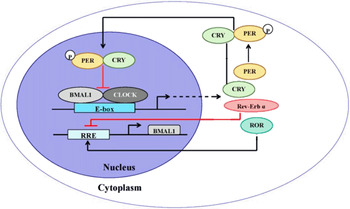
I draw my examples from mammalian chronobiology. Chronobiologists study circadian rhythms—roughly 24 hour, endogenously produced physiological rhythms that regulate a large number of processes in the body, ranging from sleep and cognitive abilities, to feeding behaviors, to gene expression. Many organisms have biological “clock” mechanisms within individual cells, which operate on the principle of negative feedback in gene regulation networks. In mammals, the intracellular clock consists in gene regulation between a “negative” loop consisting of the genes Per and Cry and their respective products (mRNAs and proteins) and a “positive” loop consisting of Bmal1 and Clock and their respective products. In outline, it works as follows. Positive loop proteins bind to E-box promoters on the negative loop genes, activating their transcription. After translation outside of the nucleus, the negative loop proteins dimerize and are translocated back into the nucleus, where they bind to the positive loop genes on their own promoters, thus inhibiting their own transcription. As the negative loop proteins degrade, this inhibition is released and the cycle can begin again. With the right rates of transcription, translation, and degradation, these oscillations can occur over a roughly 24-hour period, hence providing a clock signal that can regulate other physiological processes. The clock mechanism is represented in figure 1.
Mammalian intracellular clock mechanism. Modified from Wang et al. (Reference Wang, Zhang, Xu and Tischkau2014).

In the mechanism, the important parts include the genes and their assorted promoter regions, gene products, the nuclear membrane, and so on. The key operations include the activation and inhibition of transcription via selective binding. There is a variety of more complex aspects to the clock mechanism. The products of the positive loop gene Bmal1 also oscillate, due to a subsidiary feedback loop mediated by Rev-erb and Ror products. In addition, there are more genes and gene products involved that play support roles, and there are more types of promoters. Particularly, D-box and RRE (Rev-erb response element) promoters serve as binding sites for a variety of proteins, and each of the promoters can regulate several different genes. Finally, several of the clock genes have paralogs—structurally similar genes that serve related functions in the clock.
While the canonical mechanism schema for the mammalian clock, including the parts and operations, has been largely agreed on since the early 2000s (Zhang and Kay Reference Zhang and Kay2010), investigation into the mechanism has continued—to a significant extent, investigators have turned toward discovering quantitative relationships within the mechanism. In the cases discussed below, I argue that the representation of quantitative patterns over time and across conditions is necessary for explaining certain circadian phenomena. In particular, I focus on temporal patterns regarding phase relationships and proportional responses in gene networks underlying compensation.
2. Patterns in Explanation
2.1. Phase Relationships
While the mechanistic picture given above is necessary for explaining rhythmicity, it is not sufficient. Several subsequent investigations have shown that it is not only that the mechanism operates according to the schema above that is important, but also that key quantities in the mechanism bear particular temporal relationships to each other. Looking for these relationships involved measuring and conceptualizing data in certain ways not entailed just by knowing the mechanistic organization.
One such important relationship was discovered by Ueda et al. (Reference Ueda, Hayashi, Chen, Sano, Machida, Shigeyoshi, Iino and Hashimoto2005), who decided to look at the temporal relationships between the activations of gene promoter types as such—meaning, regardless of the particular genes that they regulated. Since each type of promoter occurs on multiple distinct genes, analysis of promoters had generally taken a back seat to the study of the genes themselves. However, Ueda et al. showed that the particular patterns of activity for each promoter type are important for explaining how an entire cell can oscillate in the quantities of its gene products. They first noticed that all of the different activators of a particular promoter type tended to hit their peak expression at similar times, and the same for its repressors. Moreover, for each promoter type—E-boxes, D-boxes, and RREs—there is a distinct phase relationship between their activators and inhibitors. This suggested two ideas to the researchers: (i) that each promoter of a given type is activated in phase with other promoters of the same type, even if they regulate different genes, and (ii) that each type of promoter should have a particular phase of peak activation. This is indeed what they found—E-boxes are most active in the morning, D-boxes during the day, and RREs in the evening.
Ueda et al. claimed a functional import for these relationships—they produce “an integrated network of regulatory loops” (Reference Ueda, Hayashi, Chen, Sano, Machida, Shigeyoshi, Iino and Hashimoto2005, 187) within which many distinct regulatory components can operate on a coherent schedule. For current purposes, however, the explanatory import of the patterns is most clear in a subsequent study by Ukai-Tadenuma et al. (Reference Ukai-Tadenuma, Yamada, Xu, Ripperger, Liu and Ueda2011). They noted that Cry1 expression, known to be mediated by the E-box, is delayed relative to other E-box-mediated genes; moreover, without this delay, the cell will not produce coherent rhythms. This prompted biochemical investigation that discovered D-box and RRE elements on the Cry1 gene. These regulatory elements both perform the same operation—delaying Cry1 expression relative to other E-box-mediated genes. But they exert their peak influence at different times, as per the story given by Ueda et al., and their combined influence produces a specific delay in Cry1 expression. By manipulating these elements on the gene, Ukai-Tadenuma et al. showed that a precise temporal delay of Cry1 expression is necessary for cellular rhythmicity: too little delay and no rhythm occurs; too much delay and the rhythm has a period distinct from wild type. So, Cry1 phase delay is important for rhythmicity, and that delay is the product of the combined relative phases of the promoter regions on the Cry1 gene.
Importantly, the goal in Ukai-Tadenuma et al.’s study was not primarily to manipulate parts or operations but to manipulate phase delay. They showed that not only must the particular parts, operations, and causal organization of the mechanism be in place for it to work, but it must also have these elements coordinated according to the appropriate temporal patterns. Put simply, if the mechanism did not exhibit this particular set of temporal relations between its promoters, it would not oscillate as normal, and learning this fact was an important addition to the explanation, beyond the standard mechanism schema given in the clock model.
What, then, is the explanatory role being played by the pattern? I suggest that it is adverbial (Burnston Reference Burnston2016). A mechanistic description shows what the operations are and shows the causal organization of their interactions. The representation of patterns shows how these interactions are coordinated in their levels and timing to produce quantitative phenomena like rhythmicity. The next example will further illustrate this role.
2.2. Proportionality and Compensation
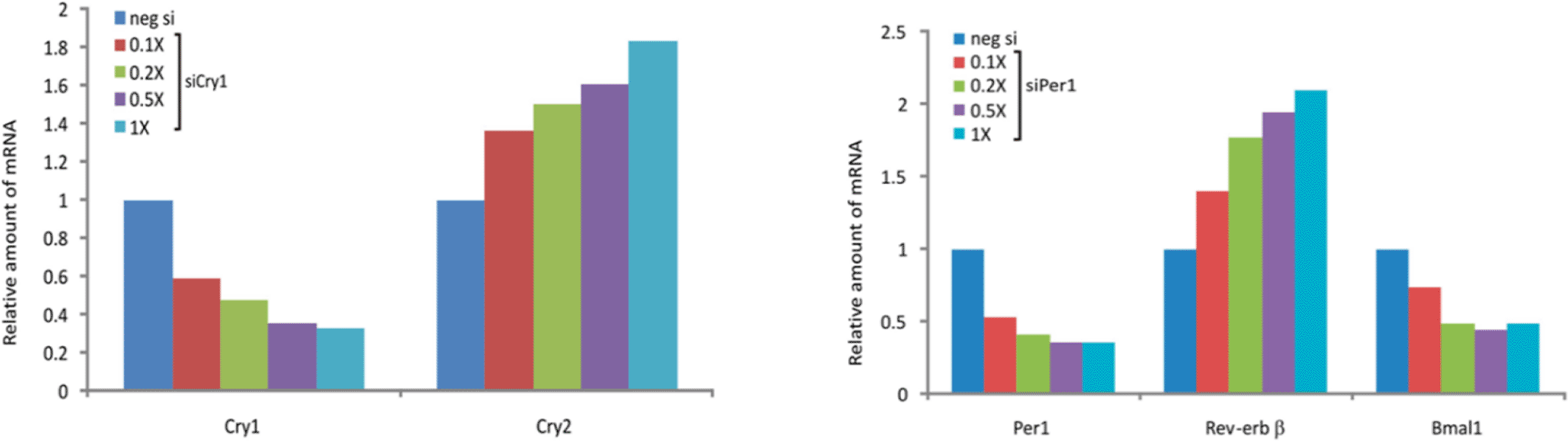
Baggs et al. (Reference Baggs, Price, DiTacchio, Panda, Fitzgerald and Hogenesch2009) sought to study an important phenomenon related to molecular clocks, namely, that of compensation. In noisy molecular networks, shifts above and below normal quantities of key components are common, but they can also be problematic—as shown above, for instance, the clock requires precise temporal coordination of gene product levels in the mechanism, which can be interrupted by fluctuations in gene product levels. Baggs et al. showed that compensation in clock mechanisms relies both on their particular mechanistic organization and on the particular patterns of change in quantities of particular gene products as the quantities of other products vary. Their manipulations consisted in insertion of small interfering RNA (siRNA) into cells in vitro, targeted to specific mRNAs. SiRNA knocks down its targeted mRNAs in a dose-dependent fashion, thus allowing for the comparison of responses in varying levels of knockdown. Baggs et al. represented their results in a variety of bar graphs, taken to show the types of responses that were important in implementing compensation. Two are shown in figure 2.
Proportionality patterns in knockdown conditions. From Baggs et al. (Reference Baggs, Price, DiTacchio, Panda, Fitzgerald and Hogenesch2009).

The left panel of figure 2 shows that, with increasing levels of knockdown for Cry1 mRNA, Cry2 mRNA increases. But not only does it increase, it does so proportionally—the greater the knockdown of mCry1, the greater the increase of mCry2. Since Cry2 is the paralog of Cry1, its products perform similar operations at similar targets. So, as mCry1 is depleted, the rising mCry2 level results in the overall level of Cry influence at its targets remaining the same, thus allowing for the cell’s overall pattern of rhythmic gene interactions to continue. Proportional responses are also important in nonparalogous compensation. The right panel of figure 2 shows the effect of mPer1 knockdown on mRev-erbß and mBmal1. Rev-erbß is activated by PER proteins, and the proteins it codes for inhibit Bmal1. When mPer1 levels go down, mRev-erbß levels go up proportionally. This in turn produces a proportional decrease in mBmal1. The fact that knockdown of mPer1 should cause mRev-erb levels to go up, and that increasing mRev-erb levels should subsequently cause Bmal1 transcription to decrease, makes sense given the known operations performed by each part: PER inhibits Rev-erb, whose products in turn inhibit Bmal1. However, the discovery that each relationship is proportional is presented by Baggs et al. as an important further fact in explaining compensation.
It is important for compensation for the following reason: the clock relies on precise interacting levels of inhibition and excitation between the positive and negative loops. Having the levels of one abnormally higher than the levels of the other would wreak havoc on the necessary interplay of inhibition and excitation. As is evident in the right panel of figure 2, the combined proportional interactions result in a balance between the levels of mBmal1 (positive loop) and mPer1 (negative loop), hence keeping the interaction between loops functioning as normal. Knockdowns of other components are compensated for according to similar principles, inducing no loss of rhythmicity elsewhere in the clock.
Proportional relationships, as revealed in the bar graphs, are inherently patterns of quantitative responses across knockdown conditions. And, as with the case above, one must represent these patterns in addition to the mechanistic organization to understand how compensation comes about. As Baggs et al. summarize: “the clock network combines these activator and repressor modules with various forms of proportionality to construct relays that generate complex gene expression responses to single gene perturbations” (Reference Baggs, Price, DiTacchio, Panda, Fitzgerald and Hogenesch2009, 570). So, it is not only the operations performed by entities (“activator and repressor modules”) but also the particular quantitative patterns in which they interact (“forms of proportionality”) that explain compensation. This in turn helps explain how functioning rhythms at the cellular level can be maintained despite noisy conditions.
3. Patterns as Their Own Category
3.1. Patterns Are Distinct from Operations
A category is explanatory when representing it shows, perhaps in part, how the phenomenon of interest comes about. In previous work (Burnston Reference Burnston2016), I argued in detail that the explanatory role played by representations of patterns is dissociable from that played by representations of operations (e.g., in a mechanism diagram). I will only summarize these arguments here, before moving on to discuss the relationship between patterns and generalizations. The key point to note is that in each of Ueda et al. and Baggs et al. studies above, the parts, operations, and causal organization of the mechanism were already known—neither study extends, revises, or modifies the known mechanistic organization. In each case, however, the researchers discovered and represented a set of relationships between quantities in the system at specific times or across specific conditions. As such, knowing the relevant facts about parts and operations constrains, but does not determine, all of the relevant facts about the patterns. For instance, in discussing the Baggs et al. case I only focused on linear proportional patterns of responses, but these are not the only possible ones. Baggs et al. also explore several other types, including proportional relationships with fractional coefficients and nonlinear responses, which play roles in compensation for other knockdowns. The point is this: these distinct patterns of relationships are all (epistemically) possible even given the known operations performed by each part and the targets they perform them on. So, specifying the parts and operations does not give us all of the information we need to explain. We must also represent quantitative patterns.
3.2. Patterns Are Distinct from Generalizations
Those who are inspired to consider generalizations as fundamental in explanation often note that mechanisms comprise causal relations of a certain sort, namely, ones that are “stable” or “robust” (Leuridan Reference Leuridan2010; Woodward Reference Woodward2010). A mechanism, the intuition runs, is one that exhibits a stable organization that can produce “regular changes” (Machamer, Darden, and Craver Reference Machamer, Darden and Craver2000) in its environment. Hence, mechanisms depend on generalizations instantiated among their parts. Those who consider operations fundamental often point to the shortcomings of generalizations for explaining causal relationships between particulars. It is the activities of particulars, the intuition goes, that have effects on other particulars, not whether they instantiate some generalization. These relationships can hold even in statistically unlikely or rare cases—in extreme cases, we could want to explain singular events, which only happen once. Bogen (Reference Bogen2005) and Craver and Kaiser (Reference Craver and Kaiser2013) take this argument to show that explanations do not depend on relationships with a significant domain of invariance or scope and, thus, that generalizations only play subsidiary epistemic roles, which help us to access the operations that actually explain.
Patterns of the type I have described, however, are explanatorily distinct from generalizations. The argument for this involves two claims, one against the generalizationists and one against the operationists. Against the operationists: representing patterns is necessary for explanation even in cases of minimal scope or domain of invariance. Against the generalizationists: it is the specific pattern in the relationship, not any specific facts about its domain of invariance or scope, that is important for explanation. Presumably, if it were really the case that the explanatory role of a pattern depended on its status as a generalization, then that role would be closely related to how wide a scope the pattern has or how broad its domain of invariance is. The following two simple thought experiments show this not to be the case. The first assesses domain of invariance, and the second assesses scope.
The Fragile Oscillator
Suppose that we have a system that exhibits the patterns of phase relationships shown in the Ueda et al. study, that is, oscillations among the gene products in its molecular clock. But it is highly fragile, meaning that there is an extremely specific set of conditions that has to hold in order for it to oscillate. Perhaps the constituent proteins are easily broken apart, or the environment is highly volatile, so that even slight variations in (say) temperature or PH will modify transcription and degradation rates, interrupting the needed patterns and preventing oscillation within the system. One could dress up the example until arriving at a case in which the patterns have a minimum domain of invariance—that is, in which there is only one set of conditions in which the mechanism will oscillate. In this case wiggling any variable other than the ones mentioned in the pattern will prevent the pattern from occurring. If the explanatory role of patterns were based on their having some specific domain of invariance, then they should play a lesser or different explanatory role in this case than in a case in which their domain of invariance is broader. This, I submit, is not the case. When we go to explain how this system works, we will need to mention both its mechanistic organization and the phase relationships between promoters, just as Ueda et al. see fit to do. But if the explanatory role played by representations of the phase relationships is the same in either case, then that role does not depend on its domain of invariance.
The Lonely Compensator
It is important to emphasize here that domain of invariance is distinct from scope. Even if the conditions needed were maximally specific, they could occur in many different instances. To address scope specifically, imagine an opposite case from that above, namely, an oscillator that was so stable, and existed in such an amenable environment, that there were virtually no instances in which its gene product quantities varied significantly from their normal (oscillating) values. Now suppose that some cosmically unlikely event occurred, whose only effect was to knock mPer1 quantities away from their normal level. As a matter of historical fact, this has only occurred once, but when it did the system compensated, according to the explanation given by Baggs et al. When giving the explanation for what occurred in this system, if Baggs et al. are right, we will need to posit proportional patterns of the type I described above (along, of course, with the standard mechanism schema). Here, ex hypothesi, we have a phenomenon that occurs only once, thus having minimal scope, and yet we still need the representation of patterns in the same explanatory role as in our world where compensation is common. So, the explanatory import of patterns does not depend on facts about their scope.
Both generalizationists and operationists have erred in conflating patterns and generalizations. Against the generalizationists, the explanatory role of patterns does not depend on their having scope or domain of invariance. Against the operationists, they must be represented even in highly specific or unlikely cases. There are likely to be objections from each side. First, generalizationists might insist that, in the thought experiments I have discussed, the patterns do have a domain of invariance and a scope; it is just that these are at the theoretical minimum. Hence, they are still generalizations. Operationists, for their part, are likely to suggest that these patterns only “specify key quantities” (to use Bogen’s phrase) and that since they do not themselves describe the causal relationships at work, they rely on more fundamental descriptions of operations.
The response to each of these objections is the same: they may make sense as metaphysical claims, but they do not tell against the epistemic thesis I am advocating here. I have argued for a particular explanatory role for patterns. The cases above show that this explanatory role of patterns remains the same regardless of any specific facts about scope or domain of invariance. If a generalizationist wishes to insist that any pattern must be a regularity on metaphysical grounds, and is willing to bite the bullet of calling the relationships discussed in the thought experiments regularities, this does nothing to undermine an explanatory distinction between patterns and generalizations. As for the operationist’s response, the discussion in section 2 showed that knowing the relevant facts about parts and operations simply does not exhaust the explanation. There is a particular role to be played in representing patterns, and this role must be pursued in addition to listing the parts, operations, and organization. If the explanatory roles are distinct and both necessary, then there is no in principle epistemic priority between them (Burnston Reference Burnston2016). If operationists wish to pursue the fundamentality claim as a metaphysical one, I have no quarrel with them, so long as distinct explanatory roles are kept distinct.
Finally, generalizationists are likely to note that I have leaned on counterfactual reasoning in discussing the role of patterns (i.e., if the patterns were not instantiated, then the phenomenon would not come about). While generalizations are often thought of as grounding counterfactuals, this is different from saying that the explanatory role of a pattern depends on its status as a generalization. As I have shown above, we could make the same counterfactual claim regardless of any facts about scope or domain of invariance. For instance, the very same counterfactual relating proportional responses to compensation holds in the lonely compensator case as holds in the real world where the scope of proportional relationships is much greater. Again, so long as we are talking about the epistemology of explanation, the role of patterns should be kept distinct.
4. Conclusion: Contextualism and Explanation
I think that the right lesson to draw from the foregoing is that we should distinguish among (i) describing the mechanistic organization of a system, (ii) explaining how a phenomenon comes about, and (iii) generalizing either (i) or (ii). In science, each of these projects is pursued, and they are often pursued in tandem; hence, they are often run together.Footnote 2 Keeping them distinct, however, allows us to overcome the question of fundamentality by describing the relative roles of operations, patterns, and generalizations in explanation. Aspect (i), obviously, involves discovery and representation of parts and operations. Aspect (ii) often involves aspect (i) plus the representation of key quantitative patterns. The thought experiments above show that, while aspects (i) and (ii) can be extended to ask questions about generalization, they needn’t be.
When we do turn to generalization, we do so with specific goals and questions in mind. For instance, how widespread phylogenetically is the set of parts, operations, and patterns that implements oscillation? Are other organizations and patterns exhibited elsewhere? At least in terms of mechanistic organization, interacting positive and negative feedback loops between genes is extremely common (although the particular components differ) across a wide range of phyla. This fact about scope is an extremely interesting generalization, since it clues us in to the central importance of circadian timekeeping for all organisms. Equally important, however, is learning the limits of these generalizations. One of the major discoveries in chronobiology in the last 15 years is that molecular clocks in cyanobacteria operate on a posttranslational mechanism, rather than on interlocking feedback loops of gene regulation (Nakajima et al. Reference Nakajima, Imai, Ito, Nishiwaki, Murayama, Iwasaki, Oyama and Kondo2005), and hence that the scope of the dual-loop model is limited. Similarly, we could want to know about domain of invariance. For instance, what are the conditions for having a well-functioning clock, and how are they compromised in shift-work disorder, familial advanced sleep phase syndrome, jet lag, and other circadian interruptions? One hypothesis is that jet lag is due to disrupted phase relationships between cellular clocks in two parts of the mammalian suprachiasmatic nucleus (Davidson et al. Reference Davidson, Castanon-Cervantes, Leise, Molyneux and Harrington2009); hence, in odd lighting conditions the normal phase patterns break down and cannot instantiate wild type behavioral rhythms. These are inherently questions that rely on the generalizations surrounding circadian mechanisms, but the importance of these questions does not support the fundamentality of any particular category in giving explanations.
What I want to suggest is that there are simply distinct explanatory contexts, and which category comes to the forefront depends on the kinds of questions we are asking. For instance, if we are asking what kind of causal relationship we are analyzing (what parts interact, whether they do so directly, what the results of those interactions are, etc.) this predisposes the explanation to invoke operations. When we are interested in how phenomena arise from the operations of a mechanism, attention turns to the interplay of quantities in the mechanism, and thus to patterns and explanatory relations. If we are interested in the robustness of relationships, then scope and domain of invariance, and hence generalizations, come to the fore. This is a distant cousin of contextualisms about explanation that have been advanced before (Van Fraassen Reference van Fraassen1980), and while it is not currently a popular way of thinking, I suggest that contextualism is the best way to make sense of the relationship between distinct categories and their relative explanatory roles.