Belfast City Hall's corridors are lined with portraits of its mayors and lord mayors, and prominent in its grounds are free standing public statues to the same subjects, the providers of Belfast's civic culture. According to Marcia Pointon: ‘objects like paintings which symbolize the ownership of a particular class or institution, enshrining the sense of identity of that group, tend to have a longer and less disturbed life than other kinds of household objects. And this is particularly true of portraits.’Footnote 1 Belfast's civic memorials provide an unbroken narrative of the city's civic identity dating back to the second half of the nineteenth century, apparently ‘marking continuity in a world of discontinuity’.Footnote 2 Their layers of meaning can be understood within the context of the social, political and cultural concerns of the period in which they were produced and presented. These are complex and coded works of art, and an exploration of them is revealing about aspects of Victorian Belfast's intricate political landscape, its tensions and personalities.
Belfast initially made its fortune from linen, but in the latter half of the nineteenth century shipbuilding was the dominant industry and, in combination with the import and export business of the town, the source of its fortune. The town's population rose rapidly, from 87,000 in 1851 to 349,000 in 1901, to meet the needs of the shipyards and the factories filling the townscape. Belfast had a corporation since 1613, when the town received its charter. It was significantly reformed in 1840, and after that sat for the first time in 1842, occupying a building in Victoria Square. In 1871 Belfast Town Hall opened in nearby Victoria Street. In the period in which the portraits considered in this article were commissioned and presented to the council the Conservatives dominated the local political scene in Belfast. Indeed, apart from a brief resurgence by the Liberals in the 1860s which peaked with the election of Edward Coey as mayor in 1861, Belfast was a Conservative town. The extension of the franchise in 1868 may have brought in a new body of Belfast voters in the form of skilled workers, but this did not alter the town's political landscape. These workers, who in England may have supported the Liberals, ‘in Belfast espoused Toryism or a populist Orangeism – working class, democratic and sectarian – which opposed a Liberalism that embraced Catholic voters’.Footnote 3 In a rapidly expanding town, granted city status in 1888, the town hall was soon considered too modest for the citizens of Belfast and more significantly for its municipal fathers.Footnote 4 They began to plan for the creation of a new and grander municipal home, which culminated in 1906 in the opening of Belfast City Hall in Donegall Square.Footnote 5 The expansion of Belfast was further evidenced in the 1890s, with Queen Victoria conferring the title of lord mayor on the mayor of Belfast in 1892, and the boundary of the city being significantly extended in 1896.
The symbolic ownership of the town's new civic spaces rested with the middle-class elite who built them; it is predominantly the images of local notables which fill their corridors and grounds, in the form of paintings, busts and statues. As Kate Hill has argued: ‘Members of the middle-class male elite used civic institutions as an extension of their own social arena, for mutual appreciation and convenience, and to consolidate their own class or group identity.’Footnote 6 In common with other industrial urban centres such as Liverpool, Birmingham, Manchester and Leeds, these civic buildings gave Belfast's political elite the opportunity to stage civic ceremonials, secular rituals, with formal procedures, speeches, formal dress and dinners, all reported in the local press.Footnote 7 Such civic rituals were concerned with performativity, making authority in the industrial city publicly visible.Footnote 8
Belfast Town and City Halls, linked as they were by pragmatic function, shared the position of fora for the symbolic expression, in the form of civic portraiture and statuary, of Belfast's political elite. These architectural developments were part of the physical embodiment of civic pride evidenced in ‘the improvement of public health, the demolition of slums, the acquisition of public utilities, the promotion of new civic buildings and the provision of libraries and museums’.Footnote 9 Progress was literally apparent at street level in Belfast. In addition to the creation of new streets there were improvements in the surface of the roads and footpaths of the town which, while often the subject of complaints to the local papers, was an ongoing process. As Gerard Slater observes, ‘a prospering commercial and industrial centre, supplying a substantial hinterland and extensively engaged in exporting and importing could no longer function efficiently with a labyrinth of narrow and congested streets’.Footnote 10 The Act of 1845 allowed for the widening of streets, improved lighting and management of livestock in the town.Footnote 11 By the 1840s street lighting in the town was being fuelled by Belfast's own gas. This made the town centre an aesthetically more pleasing place, and one in which the genteel citizen would feel more comfortable shopping and promenading. In the second half of the nineteenth century the issue of cleanliness dominated in Belfast, and focused on the foul smelling Blackstaff River (known as the ‘Blackstaff nuisance’) and the town's overworked and underperforming sewers. Under the Act of 1878 this problem was addressed, and Ormeau Avenue and Donegall Square were completed. Under the Act of 1884 Queen's Bridge was widened, St George's Market enlarged and improved and Arthur Square, Rosemary Street, North Street, University Road and Stranmillis Road improved. Almost 857 private streets were handed over to be sewered and paved between 1878 and 1896. As Bill Maguire has described it: ‘This fury of paving and sewering continued into the 1890s as more and more houses were built and as action on the grounds of public health became ever more necessary and unavoidable.’Footnote 12
This drive to create a more aesthetically pleasing urban centre was articulated most prominently in Belfast with the construction of Royal Avenue in the 1880s, and later in the civic pride expressed through the building of the Free Public Library (1888) and the city hall (1906). These urban developments required labour, and Belfast had plenty of willing hands. Drawn by the employment opportunities offered in the linen industry, shipbuilding and trading, the influx of rural inhabitants to the urban centre was impressive. Belfast's population quadrupled between 1800 and 1851, from 20,000 to 87,000. That rate of increase did not slow down as the century progressed, and by 1901 Belfast's population stood at 349,000. According to John Beckett it was this combination of ‘commercial and manufacturing greatness as well as [population] size and municipal achievement’ which Belfast councillors used to support their argument that the town should be granted city status in the late 1880s.Footnote 13
Belfast's local government in the mid-nineteenth century was marked by controversy, and not merely the infamous Chancery case of 1855. In the years which followed the municipal reforms of the 1840s the council was characterized by ‘one-party dominance and a penchant for corrupt practices’.Footnote 14 With many of the leading industrialists and merchant princes viewing the council as corrupt, and choosing to serve instead on the Harbour Board or Chamber of Commerce there was a clear need publicly to reinforce, albeit symbolically, the legitimacy of the council to govern.Footnote 15
Civic portraiture contributed to efforts by the council to make their authority visible and create the impression of local government as constituting a united respectable political body. There are few earlier portraits or portraits of earlier Belfast mayors.Footnote 16 The majority of those sitters who were mayors in the 1860s had their portraits presented to the council in the late 1880s; for instance, Sir William Ewart's was presented in October 1886 and (three times mayor) John Lytle's in December 1887, some twenty years after he held the office of mayor, and sixteen years after his death.Footnote 17 Collectively these portraits argued for civic continuity. Their presentation was arguably part of the campaign gaining momentum in the mid-1880s for Belfast to be granted city status, reminding the audience of the town's civic heritage and lineage.Footnote 18
This article is particularly concerned with those civic portraits presented to the town council in the 1870s, most notably the portraits of William Mullan, Philip Johnston and Sir Robert Boag. In most urban centres the mayoralty played a significant role in the civic landscape as the focus of ‘almost every public ritual from “mayoral Sunday” . . . to grand civic events’.Footnote 19 Mayoral portraits were particularly important, representing not merely the individual, but the council and indeed the town itself. The article also reflects on the significance of the siting of these civic memorials. There was, for instance, an evolution in the presentation of portraits in Belfast in terms of the public and the private spheres. In October 1874 former mayor William Mullan's portrait was presented to his wife at home; two months later Philip Johnston's portrait was presented to the corporation, for display in the council chamber.Footnote 20 Marcia Pointon has argued that ‘the ordering of civic spaces could also be achieved at a symbolic level via the strategic placing of portraits’.Footnote 21 Thus Johnston's portrait was hung in a prestigious position in the chamber, over the mayoral chair, in full view of all who sat in the council chamber. The importance of the placing of Belfast's civic portraits in the council chamber was highlighted in the Belfast Street Directory of 1884, which described the position of the portraits of Philip Johnston (hung at the top of the chamber), James Alex Henderson (at the north end), Dr Samuel Browne (on the east wall), Sir Robert Boag (left of the main entrance) and Sir John Savage (right of the main entrance).Footnote 22 By 1895 there were fifteen civic portraits in the town hall, but not all could be accommodated in the council chamber, and were instead displayed on the walls of the principal hall and staircase.Footnote 23
According to Simon Gunn ‘the drama of civic ritual contained within it, simultaneously the imaginary constitution of a united urban community and a symbolic claim to authority over that community on the part of a civic leadership’.Footnote 24 From the mid-1850s to the 1870s Belfast's local government was riven by conflict in the course and aftermath of the Chancery suit. In 1855 John Rea, a Liberal solicitor, brought a case against Belfast town council ostensibly over the misuse of funds, naming as special respondents the town clerk John Bates, the treasurer and 16 leading councillors.Footnote 25 ‘The Corporation, and Bates in particular, were accused of borrowing more than had been permitted by the Acts between 1845 and 1850; of buying the May's Fields instead of the gasworks; and of fraudulently borrowing £84,000.’Footnote 26 After the original hearing, the case was found against the town council and all the named respondents. Both the town clerk and treasurer resigned. However, following an enquiry by a Royal Commission, which reported in 1859, the corporation was absolved of many of the original charges against it. However, the special respondents were still held personally responsible for £273,000.Footnote 27 Rea had chosen the respondents ‘on the basis of long service to the council – those who had been on the council from 1846 to 1854’.Footnote 28 The question of the special respondents continued to be debated, as the Conservatives tried to have them cleared through several indemnity bills into the early 1860s. This context should be borne in mind in any reading of the portraits of William Mullan and Philip Johnston, the former who acted as a witness to the Royal Commission, and the latter who was named as a special respondent.
The subjects of the 1870s mayoral portraits are universally male, Protestant and wealthy.Footnote 29 When its corporation was reformed in 1841 Belfast was a Protestant town whose government was dominated by a Conservative elite. This was not however a monolithic Protestant identity but one which was marked by some fluidity. For instance, Belfast's first reformed town council consisted of 18 Presbyterians, 15 Episcopalians, 6 Methodists and a Quaker.Footnote 30 One can further reveal this complexity through a brief examination of the religion of Belfast's mayors in the 1870s. Philip Johnston was a Methodist (although born into the Church of Ireland and brought up a Moravian), Sir John Savage was a Presbyterian (although previously a Methodist), James A. Henderson Episcopalian, Thomas Lindsay Methodist, Robert Boag Presbyterian, Sir John Preston Church of Ireland and John Browne was Presbyterian.Footnote 31 Thus, while the Conservatives dominated local government, the religious identity of the political elite in Belfast was characterized by a degree of movement within Protestantism rather than fixity.
The 1870s portraits represent men in the latter stages of their municipal careers, the position of mayor a reward for past civic duty. In their iconography the portraits represent aspects of the town's civic culture, and symbolize the dominance of Belfast's merchant class.Footnote 32 They were nearly all presented by the subjects' ‘friends’, and all while the subjects were living. These portraits hung originally in the town hall in Victoria Street. Such works of art thus can be said to ‘define the history of the institution which they decorate and have both a material and an historical presence, depicting the people who once worked within the walls on which their portraits hang’.Footnote 33 As Pointon has argued it is not only ‘what is possessed that is significant but where and how it is made visible’.Footnote 34
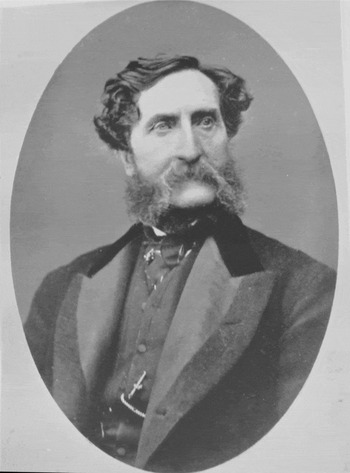
Sir Robert Boag, mayor of Belfast, 1876, reproduced from James Dewar, A History of Elmwood Presbyterian Church. With Biographical Sketches of its Pastors and Founders (Belfast, 1900)

These seven 1870s portraits portray the fathers and capitalists who formed the first town council in Belfast following the opening of the new municipal home and who were hailed as those who had improved Belfast as a town.Footnote 35 The first two portraits were presented to William Mullan who had overseen the creation of Belfast's first town hall and Philip Johnston who was the first mayor to preside in it. Johnston was a Methodist, born in Ballinderry in 1804, and the Belfast Newsletter in paying tribute to him when he died made reference to his civic portrait: ‘his was one of the first of the handsome portraits which now contribute towards making our Council Chamber one of the finest in the United Kingdom’.Footnote 36 While all were councillors and mayors of Belfast, it appears that not all Belfast mayors in the 1870s had their portrait presented to the council.Footnote 37 The majority of these portraits were by Richard Hooke, a native of County Down who moved to Manchester in the 1850s ‘where he established a considerable reputation, painting many of [that] city's leading figures’.Footnote 38 Two portraits, those of James Alex Henderson and Robert Boag, differ from the rest being full length and by Sir Thomas A. Jones.Footnote 39 The rest of the portraits are of the head and shoulders. Two of the portraits are of individuals still well known to those interested in the history of Belfast, James Alex Henderson, proprietor of the Belfast Newsletter, and Dr Samuel Browne, who became Belfast's first medical superintendent officer of health.Footnote 40 All were principally members of the mercantile class; John Browne, for instance, was a timber merchant, an importer and property owner.Footnote 41 Of the others several were connected to linen, which had continued to expand as an industry into the 1870s.Footnote 42 One of the main subjects of this article, Robert Boag was a linen merchant.Footnote 43 Born in Scotland, the son of the Congregationalist minister and lexicographer John Boag (1775–1863), he moved to Belfast in the first half of the nineteenth century. Thus the social and economic power in the first decade of the new town hall in Belfast rested both literally and symbolically with the merchant class. However, the subjects of these civic portraits derived their fame and their enduring part of the memory of Belfast from their civic office, rather than from their personal accomplishments.
The ex-mayor, the knighthood and the perceived snub to Belfast
Civic portraits not only acknowledged the subject, but reinforced the institution they worked in and for, those involved in the presentation and the council in general. In making claims for the legitimacy of the local political elite to rule, such portraits underlined and elevated the civic trappings of the mayoral office; John Browne's (1879–80) portrait, for instance, depicts him holding paper, an icon of civic work, or learning, and represents the symbols of office, with the mace on the table and the robes of office on a chair. Philip Johnston (1871) is represented wearing the mayoral robe and chain, reflecting the dignity of his office, and also holding paper. Some portraits drew attention to Belfast's civic progress, and thus embodied the civic pride of the town. In 1872 Belfast Council had taken powers to purchase the gas undertakings and Sir John Savage (1872), as chairman of the gas committee, was a leading figure in this enterprise; his portrait thus represents him with his hand on the Journal of Gas Lighting.Footnote 44 James Alex Henderson's (1873–74) portrait represents him in the robes of his office, wearing the new mayoral chain created during his tenure as mayor. On a table near him, in addition to the two maces, is a copy of the corporation Gas Bill as well as the report of the British Association for the Advancement of Science of 1874, which held its conference in Belfast that year.Footnote 45 Only one of the portraits indicates the subject's occupation outside of the civic sphere, that is Dr Samuel Browne's (1870) which represents him with his hand on a book entitled Sanitary Science indicating both his medical profession as well as alluding to the attempts at improving the sanitation of the town which continued throughout the latter half of the nineteenth century and into the twentieth.
While civic portraits thus make reference to the individual, the biographical is not the full scope of their reference. In one reading, the portrait of Sir Robert Boag represented a Scottish merchant, a leading member of his Presbyterian church, and a philanthropist. Robert Boag came to Belfast in 1834, and (like other immigrant entrepreneurs) established his own business, the Albion Cloth Company. He was civically minded and philanthropically inclined.Footnote 46 A Belfast councillor for 23 years, his central philanthropic work was on behalf of the Belfast Society for the Prevention of Cruelty to Animals. However, principally, Boag's portrait represented a member of the town's government, who had attained the highest civic office of mayor. Significantly, to a contemporary audience it also spoke to the political controversy which marked the closing years of his civic career. This portrait then came to symbolize the fractious and often sectarian nature of Belfast's political sphere. Relations between Presbyterians and Episcopalians in the town were historically tense; in the pre-famine period ‘relations between [them] were soured by disagreements over national education, the Scottish Church and Presbyterian marriages’.Footnote 47 In the period under discussion, there remained a deeply held belief among many Presbyterians that Conservatives failed to defend their interests when it was believed that they conflicted with those of Episcopalians.
Civic portraits were primarily meant to reflect the sitters' status as local government officials. The majority are dressed in dark colours reflecting civic rectitude rather than any display of personal wealth or fame. Despite the wealth of these men there are generally no economic signifiers (warehouses, trading ships, factories) behind them.Footnote 48 While this indicates the primacy of the message – that the viewer should focus on the serious civic worthies – it also pragmatically indicates a restraint in the cost of the portrait. Belfast's Council was expanding its role in the 1860s. In a town where periodic civil unrest was a feature, where partisan (and at times corrupt) politics had been prominently before the public, borough officials needed to express and represent their authority, and did so increasingly in a symbolic form. The creation of a new town hall presented the opportunity for new manifestations of civic pride, providing a dedicated forum for civic ritual and was both a symbol and locus of civic legitimacy. This increased emphasis on civic authority and continuity was symbolized in 1874 by the creation of a new mayoral chain, featuring the arms and crests of former mayors, highlighting the lineage and pedigree of the highest civic office.Footnote 49 1874 was additionally the year in which the first civic portrait was presented to an ex-mayor, Philip Johnston, for display in the council chamber.Footnote 50
While significant, this portrait was not the first civic portrait of a Belfast mayor to be commissioned. In October 1874 former mayor William Mullan's wife was presented with his portrait in their home at Willowfield. Eighty ‘leading inhabitants and merchants of Belfast’ gathered for the presentation of the portrait executed by Philip R. Morris. Mullan is represented sitting in the mayor's office, wearing the chain and robes of the mayoralty ‘transacting business’.Footnote 51 A committee to collect subscriptions for the portrait was chaired by Sir John Savage (mayor himself in 1872). At the presentation Savage explained: ‘It was felt that the time had come when service, long and faithful, given to the town should receive some fitting and adequate recognition.’Footnote 52 Significantly, although not the first mayor in the new town hall, William Mullan chaired the committee which had overseen its erection.Footnote 53 In addition to his ‘integrity and honour’ as a merchant, his ‘impartiality, forbearance and dignity’ as a magistrate, and his ‘usefulness and activity’ as a member of the town council and Harbour Board, Mullan was praised for his role in the 1855 Chancery suit. It was this damaging episode in Belfast's civic history which was the focal point of Savage's presentation speech, and provides a context in which to interpret the Mullan portrait.
In June 1855, Liberal solicitor John Rea took action in Chancery against the council to prove a variety of charges including over-borrowing and misapplication of funds. As Frank Wright has argued, ‘over the next eight years, from 1855 to 1864, the Chancery suit, as it became known, hung over the affairs of the corporation’.Footnote 54 While William Mullan was not a named special respondent in the Chancery suit, his civic role was bound up with it. A prominent merchant and Liberal, he was elected to the corporation in 1856 as part of the efforts by the Conservatives to reach a compromise with the Liberals over the Chancery case.Footnote 55 He became alderman for St Anne's in one of the Conservative's failed attempts to have the case settled, in which they ‘were willing to loosen their grip on the corporation’ and make concessions to the Liberals.Footnote 56 Despite such efforts the Liberals did not manage to maintain a presence on the corporation, although Edward Coey (a Liberal) and Mullan were elected mayor for 1861 and 1866 respectively.Footnote 57 A ‘Whig ally of the Conservatives’ he ‘was one of the first to align himself with the Conservatives on the generality of municipal questions’ and failed in 1857 to secure the passage of an indemnity bill.Footnote 58 Moreover, he gave evidence to the Royal Commission in 1859, when he deemed Rea's 1855 suit against the town council as ‘a piratical exercise’.Footnote 59 At the presentation of his portrait Sir John Savage described how Mullan had thrown ‘himself heart and soul into the breach, and many a valuable hour was given and many a long journey undertaken, to promote a settlement of that unhappy business’.Footnote 60 More generally, Mullan was acknowledged as being a good public servant to Belfast, and the subscribers were described as being of ‘all shades of politics, and of all sects . . . in religion – of Conservatives and Liberals, of Protestants and Catholics alike’.Footnote 61 The presentation of this portrait was a means of symbolically uniting the civic body in a public way against the background of the divisive case. Mullan was the first of the 1860s mayors to be honoured with a portrait, and the manner in which his was subscribed to and presented was repeated throughout the following decades. What differentiated Mullan's from the others was that it was presented with the intention of being displayed in a private space, not in the new town hall.Footnote 62 That honour went to Philip Johnston, whose portrait symbolized the move in Belfast's civic space from the private to the public sphere.
Like Mullan's, Johnston's portrait also spoke to the drama of the Chancery controversy. James Alex Henderson, proprietor of the Belfast Newsletter and Belfast's mayor at the time, told the assembly at Johnston's presentation that Johnston had been one of ‘that small band, who were so much harassed by proceedings’ which the mayor said he would say no more about. Johnston was one of the named special respondents in the Chancery case. Concluding his speech James Alex Henderson said: ‘I am sure no matter how many portraits may afterwards be placed in this building to none more worthy can a position be assigned.’ Presented by his ‘many friends’ the portrait was placed in the ‘place d'honneur in the council chamber; it rests immediately behind and above the civic chair’. In response Johnston looked to the future when he hoped Henderson's portrait, and those of future mayors, would adorn the walls. It was because he was the new town hall's first mayor that he was so honoured, he claimed modestly, rather than any personal achievement as mayor. He chose to use this speech to defend his erstwhile colleagues against John Rea's claims:
I may be permitted to say that my connection with the corporation commenced in 1845, the second election after it was a corporate body. Nearly all those who composed the Council at that time have passed away. Whatever mistakes they may have made I fearlessly assert that they had the well-being of Belfast deeply at heart (Hear, hear).Footnote 63
One of the claims in the Chancery case had been that the council had borrowed money to buy the gasworks, but instead had bought May's Fields, situated along the quayside of the town. Johnston stood behind this development of Belfast's markets, an area previously known as the ‘dingy swamp’.Footnote 64 There was a sense then in this portrait presentation of old scores being settled. The spate of mayoral portraits was part of a much needed effort to draw attention to the dignity and respect due to (and legitimacy of) the municipal government and the growth of a more respectable civic identity. It was also intended to draw a line under the matter finally. These early portraits were clearly also partisan attempts to endorse publicly those perceived to have been wronged, or who had supported the Conservatives, in the long-running Chancery case.
An examination of the issues and history which surrounded the person and civic portrait of Robert Boag reveal more about the complex civic identity of Belfast. It speaks of the power struggles in the town's municipal forum and how they were presented to a wider audience, largely through the town's newspapers. Belfast in the latter half of the nineteenth century gained a reputation for serious sectarian civil disturbances among the working-class population.Footnote 65 Sectarianism was also clearly present in local government. On one level what Boag's portrait revealed was the sectarianism which continued to exist between Episcopalians and Presbyterians in Belfast. Here again, with Boag as the subject, civic portraiture was utilized as a symbolic umbrella under which dissenting political factions could gather, united as the civic body in the face of controversy. According to Richard McMinn, despite the economic and numerical strength of Presbyterians in Ulster indicated by the 1871 census, they were commensurately underrepresented in terms of political power and social status.Footnote 66 It was widely held that the Church of Ireland was favoured by the government in terms of appointments, in particular the magistracy and various public bodies. Although high office was beyond the reach of the majority of Presbyterians, failure to attain such positions was seen as symbolic of general discrimination against them, and went with a feeling that Ulster Presbyterians were not adequately represented at Westminster.Footnote 67 The controversy surrounding the knighting of Boag brought all of these tensions firmly into the public sphere.
On 3 January 1876 Robert Boag succeeded Thomas G. Lindsay as mayor, who presented him with the two mayoral chains. Boag reflected on the expansion of Belfast and laid out his aspirations for his term of office, including the opening of public baths and a public library.Footnote 68 One year on he handed over the mantle to John Preston, JP, ‘one of the old Conservative leaders’ and also a linen merchant.Footnote 69 The vote of thanks to Boag was made by the Belfast Newsletter's James Alex Henderson, who indicated Belfast's continuing experience of civil unrest:
[Boag showed] that, while he could sustain the dignity and honour of the Mayor of Belfast, he could also uphold the position of the Chief Magistrate of the borough. (Hear, hear) He was indefatigable in his exertions to restore peace to the town, and it must be satisfactory to him to know that through those endeavours peace was, to a large extent, kept, and not a single life was lost during the disturbances which did unhappily arise. (Hear, hear).Footnote 70
Henderson was referring to the disorder which occurred around Lady's Day as Catholics paraded to Hannahstown and returned to the town that evening.Footnote 71 Henderson's Belfast Newsletter praised Boag as ‘a useful citizen’ with zeal ‘for the promotion of local benevolent institutions’.Footnote 72 The adjectives used in relation to him were ‘useful’, ‘unobtrusive’ and ‘worthy’; Boag could thus not be said to have been a remarkable mayor.Footnote 73
The background to Boag's infamy was a perceived snub by the lord lieutenant. At the duke of Abercorn's farewell levee in Dublin in December 1876 the lord mayor of Dublin, and the mayors of Cork and Derry were knighted.Footnote 74 Such a ceremony was not unusual. What made it so was that, despite being present, Robert Boag was not knighted, and this was perceived by many in the north-east as a snub not only to the mayor himself, but to Belfast and its Presbyterian community.Footnote 75 The Boag testimonial committee was formed in response to the perceived snub to Boag and by extension the town, uniting ‘a large and influential section of the inhabitants of Belfast’.Footnote 76 Two high-profile civic leaders, major employers and men of influence, headed the testimonial committee. Edward Harland, director of the shipbuilders Harland and Wolff, acted as chair, James Alex Henderson, proprietor of the Belfast Newsletter, as treasurer.Footnote 77 As an indication of the episode's significance, seven years after Boag's death the Belfast Street Directory drew particular attention to the ‘powerful deputation [who] waited on the Council’ on 1 February 1877 to ask permission to place his portrait in the Council Hall.Footnote 78 Harland, speaking on behalf of the deputation, said that they wished to ‘testify their high appreciation of the long-continued public services of Alderman Sir Robert Boag’.Footnote 79 Replying, Sir John Savage (for the mayor) assured the deputation that their proposal to present a portrait of Boag to the town ‘would meet with the hearty and unanimous consent of the Council’.Footnote 80 As Louise Purbrick has argued: ‘Personal loyalty and political partisanship might motivate portrait presentation but acceptance should be by the council as a whole. The ceremony, then, had a unifying function and its content became more elaborate and formal, indeed more ritualistic, with time.’Footnote 81 The procedural acceptance of portraits at a council meeting ‘was a secular ritual which ensured that its subject was officially acknowledged’.Footnote 82 This was particularly important on this occasion. In the address to Boag at the presentation of his portrait to the town council in the summer of 1877, Robert McGeagh articulated the unifying aspect of the ritual:
with the unanimous concurrence of the Town Council, we are met this day, under the presidency of your successor in the civic chair, and in the presence of a representative assemblage of your fellow-citizens, to unveil your ‘counterfeit presentment’, so faithfully portrayed in this life-like painting by the distinguished artist and our countryman, the President of the Royal Hibernian Academy.Footnote 83
That at least two of the men involved in this civic ritual had themselves been honoured with civic portraits hints at the element of self-congratulation in the presentation of civic portraits. But the overriding message symbolized by this portrait was of the unifying of civic leaders in the face of internal dissent in the council and a perceived insult to Belfast from the lord lieutenant and Dublin Castle.
The Witness characterized the mistreatment of Presbyterians in Belfast: ‘These parties [Episcopalians] have always been ready to stroke down Presbyterians when they could use them for their own purposes, but when they have as invariably showed that in their hearts they regarded them as only fit to be their hewers of wood and drawers of water.’Footnote 84 The leading Conservative newspaper, the Belfast Newsletter, agreed that Belfast's own MPs had not pressed Boag's claims to an honour strongly enough when it was suspected that he would be passed over. For The Witness a Conservative government had never ‘conferred any such dignity [knighthood] on any one of the long line of Conservative Presbyterian mayors, who have occupied our Chief Magistrate's chair’.Footnote 85The Witness placed the blame squarely on ‘a small knot of bigoted Episcopalians, who assume the reins of Government in Belfast’.Footnote 86 As McMinn has argued the economic and numerical power of Presbyterians in Ulster was not matched by political power: ‘the feeling still persisted until the beginning of the twentieth century that Presbyterianism implied second class citizenship’. Despite the disestablishment of the Church of Ireland in 1869 there was still much Presbyterian hostility ‘towards the government and the “anglican ascendancy” which allegedly still dominated the “castle”’.Footnote 87 Although high office and honours were of relevance only to a few, the slight to Boag was seen as symbolic of the discrimination felt by Presbyterians more generally.
The insult of the December levee was compounded for Boag and his supporters at a special council meeting in January 1877 convened to decide who would attend upon the new lord lieutenant at his first levee.Footnote 88 There was disagreement among the councillors as to the composition of the deputation which would wait upon the lord lieutenant. While some wished to have Boag included in this deputation, some did not. The debate was played out in the public sphere of the local press, with the Weekly Northern Whig arguing that sectarianism lay at the heart of the matter:
The very members of the deputation, with Mr Elias H. Thompson at their head, who sought to exclude the Ex-Mayor from their number on the ground that he might not be personally acceptable to the Lord Lieutenant, and, if we understand the meaning of words, not ‘respectable’ enough for them, have come to witness the honour conferred on their fellow-townsman. And what are we to say for Mr J.P. Corry, M.P., who would take no part in pressing Alderman Boag's claims, because he might, in doing so, offend some of his Methodist and Protestant Episcopalian supporters, and who allowed a respected Presbyterian thus to be slighted.Footnote 89
As well as being a Conservative MP, James Corry (later knighted himself) was a leading shipowner, and a member of Boag's Elmwood Presbyterian church.Footnote 90 Elias Hughes Thompson, JP, was a linen merchant and Quaker, and a ‘strong supporter of Conservative principles’.Footnote 91 Thompson held a powerful position on the town council as chairman of the finance committee, and it was he who led the vote to exclude Boag from attending the lord lieutenant's levee.Footnote 92 After several amendments, and a vote, ‘on the suggestion of Alderman Alexander Alderman Boag's name was added to the resolution as one of the Deputation and so resolution as amended was then put and carried unanimously’.Footnote 93 Boag thus attended as part of the deputation, and was knighted by the lord lieutenant in Dublin. The entire episode revealed publicly, and in a high-profile way, the rifts which continued to characterize Belfast's local government into the 1870s, fractures which ran deeply and at times bitterly along religious dividing lines.
The portrait presentation
By the summer of 1877 there was an opportunity for Belfast's town council to present a united face at the presentation of Boag's civic portrait which took place on 21 July 1877.Footnote 94 Many of those attending had been, or would be, honoured with a civic portrait themselves, although none with the contentious history which attached to Boag's. The Boag portrait was high profile, full length and in oil. It showed him with glove in one hand, and hat in the other, these accoutrements signifying his gentility. While the previous portraits presented to the council noted that they were presented by ‘friends’ the inscription on Boag's frame recorded that the portrait was presented to the municipality ‘by his fellow citizens’.Footnote 95 An elaborate epergne (a silver dining table centre piece) was also presented to him engraved with his family crest and the arms of Belfast.Footnote 96 Edward Harland, the driving force behind the Boag testimonial committee, presented the portrait to the mayor, John Preston, saying that there should ‘be some enduring token left of his [Boag's] worth and merit to future generations’.Footnote 97 Boag, according to Harland, was being honoured for his work as a philanthropist, as a councillor and as mayor; there was predictably no mention of the knighthood controversy. After a vote of thanks to the mayor, John Preston replied that he wished all occasions were ‘so agreeable and so pleasant . . . that perhaps would be too much to expect in a town like this’.Footnote 98 Replying to a toast of thanks, Robert McGeagh said that ‘he felt that all along there had been a genuine kindness and warmth generally displayed that showed him that, after all, apart from politics and religion, the people of Belfast could unite together upon a kindlier and a better platform’.Footnote 99 The symbolic representation of the unity of the civic body was thus an important factor in the presentation of the Boag portrait, although given the depths of the fissures within local politics between the different religious groups, and between the major parties, this was a superficial veneer of harmony.
All Belfast's newspapers reported this civic ritual, and all (apart from the Belfast Newsletter) commented on the circumstances and relived the controversy surrounding it in their editorials. The Newsletter referred to it as a ‘spontaneous offering of respect and esteem’ to Boag, from his fellow-citizens.Footnote 100 For the Belfast Morning News the failure of the duke of Abercorn to bestow a knighthood on Boag ‘elicited loud protests, and led up, in a great measure, to the tribute on Saturday’.Footnote 101 The Northern Whig was less restrained, referring to the ‘unpretending’ and ‘meritorious’ Boag being ‘invidiously passed over without the least recognition’. This, the paper reminded its readers, despite Boag being a civic leader and philanthropist and, moreover, having entertained the lord lieutenant in May 1876 some months before his retirement levee.Footnote 102 While the paper characterized Belfast as marked by ‘ungenerous political sectarianism’, the denial of an honour to Boag was deemed ‘a most undeserved slight to the town’.Footnote 103 When the Boag testimonial committee was formed, the Northern Whig's editorial explained, ‘it was not expected that the worthy Alderman would receive the tardy honour’; the impressive portrait ‘was originally intended to compensate him for the loss of this honour’.Footnote 104 In the end of course, he received both knighthood and testimonial.
Sir Robert Boag was clearly a sick man in July 1877; he had to be helped into the council chamber on the arm of James Alex Henderson and was unable to take the chair at the champagne lunch. He died on 7 November 1877. The moderator of the Presbyterian church officiated at his graveside at the end of an impressive civic funeral attended by members of the town council, and other prominent Belfast citizens. ‘The funeral today’, the Belfast Evening Telegraph reported, ‘evinced the high estimation in which Sir Robert Boag, who has now passed from amongst us, was held by his fellow-townsmen.’Footnote 105 Thus these two civic rituals, the presentation of Boag's portrait and his impressive civic funeral, provided Belfast's ruling elite with the opportunity to present, at least symbolically, a united public face against the background of previous divisive controversy.
In common with many other industrial urban centres, the memorialization of local political elites in Victorian Belfast was manifested in civic portraits and later in portrait statuary. As James Vernon argues: ‘Then as now, the civic landscape represented the town to itself through public buildings and amenities, street names, statues, and memorials – it articulated not only the competing narratives of the community's historical purpose and destiny, but also the roles of the different individuals and groups within those narratives.’Footnote 106 Portraiture ‘is a form of power, a practice of confirming it, celebrating it and eliciting admiration for its holder’.Footnote 107 These acts of commemoration can be effectively related to ongoing local political tensions in Belfast, revealing the enduring and detrimental legacy of the 1855 Chancery suit and the level of sectarianism which continued to be manifested in the town in the 1870s between the Presbyterian and Episcopalian communities. More broadly, through celebrations of local individuals who had achieved the highest civic honour of mayor the civic body was legitimized in a symbolic way. In the mechanisms which surrounded the commissioning and presentation of these memorials members of the local government could be seen uniting for a common cause which ostensibly raised them above party politics. This was often, as in the cases of Mullan, Johnston and Boag, against the background of perceived attacks upon the council or serious dissent within it. Such portraits aimed at representing civically minded individuals who could unite cross party and religion, in a town where politics had a distinctly sectarian hue and where cross party harmony was not a major feature of the political sphere.Footnote 108 Significantly, in terms of the siting of the memorials, the Mullan, Johnston and Boag portraits represent the move from the private sphere to the public sphere, once the town hall was completed in Victoria Street. Through its civic portraits the aspirations, values and agendas of Belfast's local political elites in the second half of the nineteenth century can be understood in a more nuanced and complex way. As much as the creation of Belfast's new municipal home, these portraits both embodied civic pride and were materially part of the process of expressing it.