Introduction
Abiotic stress impairs the productivity of livestock and poultry by a complex mechanism involving the oxidative defence mechanisms, the immune-endocrine systems and the host-gut microbiome interactions. Exposure to stress has negative effects on feed intake (FI), body weight (BW) and feed conversion ratio (FCR). Amongst the stressors, heat stress (HS) causes significant economic losses in the chicken industry globally (Wasti et al., Reference Wasti, Sah and Mishra2020). Acute (a short and rapid increase in temperature) or chronic (extended exposure to moderately high temperature) HS results in oxidative damage to the intestinal mucosa (Mujahid et al., Reference Mujahid, Yoshiki, Akiba and Toyomizu2005; Quinteiro-Filho et al., Reference Quinteiro-Filho, Ribeiro, Ferraz-de-Paula, Pinheiro, Sakai, Sá, Ferreira and Palermo-Neto2010) and changes the small intestinal microbiota composition. High metabolic rates in the fast-growing broiler chickens further exacerbate the negative impact of HS (Varasteh et al., Reference Varasteh, Braber, Akbari, Garssen and Fink-Gremmels2015) even in an environmentally controlled (EC) housing system. In the open-sided chicken houses (OH), the microclimate surrounding the chickens varies with ambient temperature and relative humidity (RH), and the impact of the HS becomes higher than that in the EC houses. Therefore, any nutritional and/or management strategies to reduce HS-induced physical and physiological changes should enhance overall productivity in chickens.
Γ-aminobutyric acid (GABA) is an inhibitory neurotransmitter and is one of the major components of the stress alleviation mechanisms in living organisms (Glaser and Kiecolt-Glaser, Reference Glaser and Kiecolt-Glaser2005). GABA is used by the host and bacterial community residing in the gastrointestinal tract (GIT) to communicate with the central and enteric nervous systems (Strandwitz, Reference Strandwitz2018). In broiler chickens and laying hens dietary supplementation of GABA reportedly negates the effects of corticosterone (CORT) induced by administration (Zhang et al., Reference Zhang, Liu, Wu, Xu, Tao, Duan, Cao and Dong2012; Al Wakeel et al., Reference Al-Wakeel, Shukry, Abdel, Mahmoud and Saad2017; Jeong et al., Reference Jeong, Kim, Lee, Kim, Moon, Chang, Choi and Lee2020) and sustains FI by modulating the synthesis of the satiety-controlling neuropeptides (El-Naggar et al., Reference El-Naggar, El-Kassas, Abdo and Kirrella2019). GABA, synthesised by bacteria like Lactobacillus, Bifidobacterium and Bacteroides in the chicken gut (Strandwitz et al., Reference Strandwitz, Kim, Terekhova, Liu, Sharma, Levering, McDonald, Dietrich, Ramadhar, Lekbua and Mroue2019), may contribute to their probiotic properties by virtue of its neuroinhibitory properties. The inhibitory property of GABA blocks the transmission of pro-inflammatory signals, making it an ideal candidate for use as a functional feed supplement for poultry exposed to HS.
In the present experiment, it was hypothesized that increasing dietary concentrations of GABA should improve the performance of broiler chickens in a dose-dependent manner regardless of the stressor stimulus. Moreover, the response to supplemental GABA should vary with ambient conditions and the sex of the birds, with the males being more responsive due to their faster growth and higher metabolic rates. The study aimed to evaluate the responses of male and female broiler chickens reared under EC and OH conditions to incremental dietary levels of exogenous GABA. It was further evaluated if the expression of key genes responsible for immune and oxidative defence functions varies with the dose of GABA in diet and how these changes were correlated with performance variables.
Materials and methods
Outline of experiment
A feeding trial of 1–42 days duration was conducted with a flock of 600 straight-run Ven Cobb 430Y chicks, which were procured from a commercial hatchery and were distributed following a randomized block design into one of the 6 treatment groups according to a 2 (housing conditions) × 2 (sex, male or female) × 3 (0, 60 and 120 mg GABA per kg diet) factorial arrangement. The birds were blocked according to the experimental houses, OH or EC. In the OH, environmental temperature and RH were allowed to vary naturally. In the EC, temperature was maintained between 32–34 oC during the first 10 days and then at around 26 oC for the remainder period with the help of cooling pads and a tunnel ventilation system. Figure 1a suggests that in the OH, the maximum ambient temperature varied between 29 and 38 °C, while the minimum temperature varied within a short range of 28–30 °C. On the other hand, the temperature in the EC was more consistent and decreased gradually over the period of time from approximately 34 °C at the beginning to 28 °C towards the end of the study. The RH varied more widely in the OH from 60 to 90 %, whereas in the EC, the RH gradually increased from 80 to 90 % (Figure 1b), indicating a more consistent change in RH with the latter. The chicks in both the OH and EC houses were fed with a diet containing 0 (GABA 0), 60 mg/kg (GABA 60) or 120 mg/kg (GABA 120) of a synthetic GABA (Amino GABA having a functional GABA concentration of 200 mg/kg, CP Bio, Zhumadian Huazhong Chia Tai Co. Ltd., China). There were 10 replications/treatments and 10 birds/replicates at the beginning of the experiment (n = 100 per treatment). The males and the females were segregated by feather sexing to maintain a 50:50 male-to-female ratio with 5 replications constituted by the males and the rest 5 by the females. Therefore, apart from the house, the birds were further blocked according to their sex in each of the houses to get a house*sex* GABA dose interaction.
(a) Temperature (°C) of the open house and the environmentally controlled house during 1–42 days. (b) Relative humidity (%) of the open house and the environmentally controlled house during 1–42 days. The following symbols were used.

Bird husbandry and measurement of performance traits
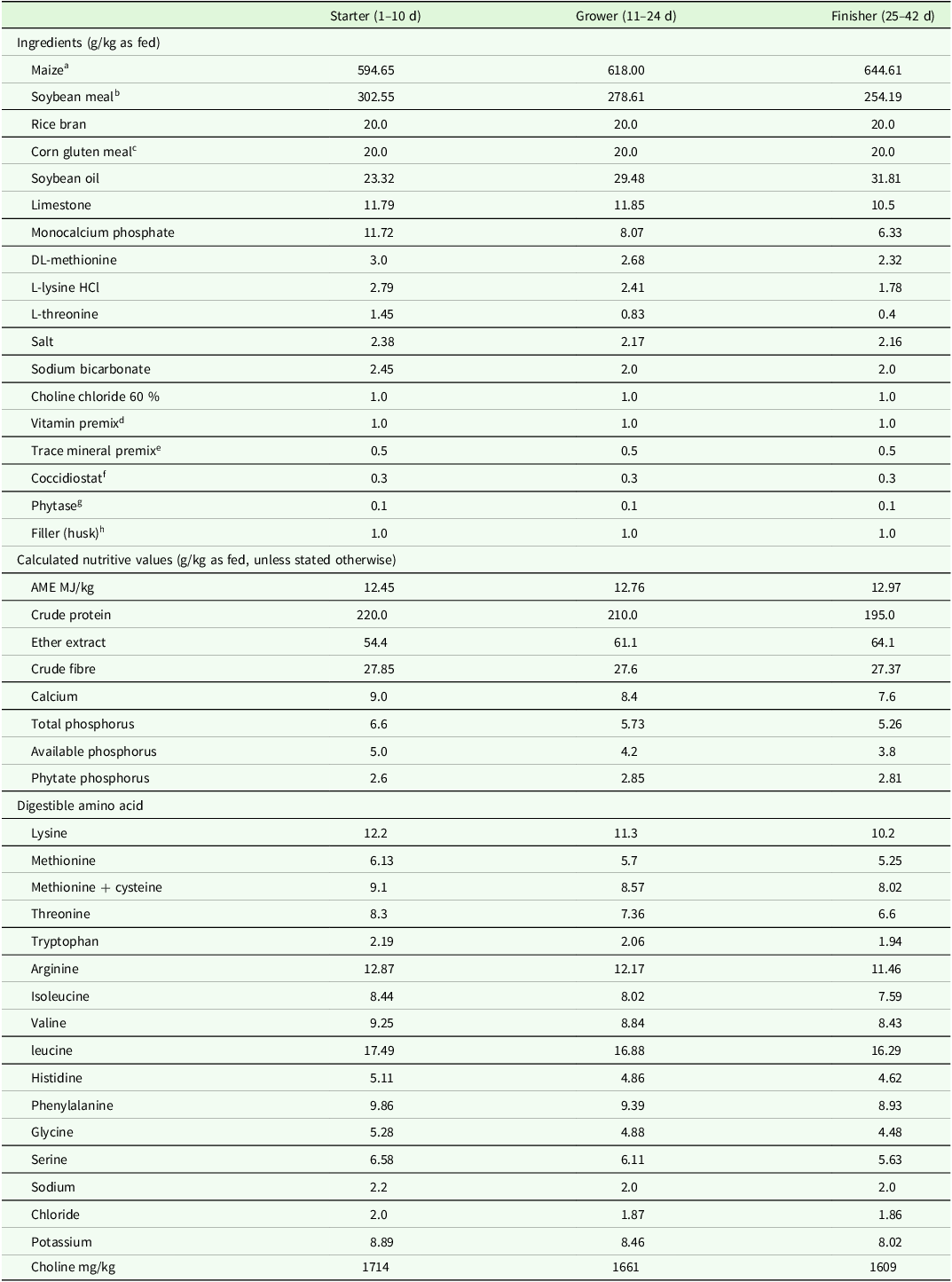
The chicks (mean BW of 47.4 g) were sex-separated by feather sexing upon arrival and distributed equally in the OH and the EC at a 50:50 ratio. The treatments had equal distribution in both houses, and there were 10 replications under a single treatment (n = 10 chicks/replication at the beginning). The male:female ratio in each of the treatments was equal (five of them consisting of males and the rest five with females). Each pen measured 1.2 m × 1.2 m and had wood shavings as litter material. A starter (1–10 days) crumble and a grower (11–24 days) and a finisher (25–42 days) pellet diet (Table 1) were fed to the birds. The diet was formulated according to the prevailing industry standards. For each of the feeding phases, the diet was prepared as a single basal lot, which was then divided into three equal parts, followed by the mixing of a premix containing GABA at the desired concentrations of 0, 60 and 120 mg/kg. The birds had ad libitum access to feed and drinking water from 12 h post-hatch till harvesting. Vaccination was done against infectious bronchitis (0 days), Newcastle disease (5 and 20 days) and infectious bursal disease (12 days). BW was recorded pen-wise at 10, 24 and 42 days (around 0800 h) without any fasting. A measured quantity of feed was offered daily to each of the pens in two equal divisions, and FI was calculated at 10, 24 and 42 days by subtracting the quantity of feed left in each pen from the total quantity offered during the preceding period. Average daily BW gain (ADG), average daily FI (ADFI) and FCR (ADFI/ADG) were calculated during 1–10, 11–24, 25–42 and 1–42 days. The number of culled, dead and sacrificed birds was recorded to calculate the mortality-corrected FCR. European Productivity Index (EPI) during 1–42 days was calculated as EPI = [(100 – mortality) × (mean BW (kg)/age) × 100]/FCR.
Ingredients and calculated nutrient composition of the basal diets

a Actual crude protein content was 49.6 %;
b contained 60.2 % crude protein;
c contained (per kg) vitamin E 100 g, vitamin A 26000000 IU; vitamin D3 8000000 IU, pantothenic acid 30 g, vitamin K3 6 g, vitamin B1 6 g, vitamin B2 18 g, vitamin B6 10 g, vitamin B12 0.044 g, biotin 0.3 g, folic acid 4 g, niacin 120 g (Rovimix Poultry Feed Supplement, DSM Nutritional Products India Ltd.);
d contained (per kg) manganese 60 g as yeast protein chelate, zinc 60 g as yeast protein chelate, iron 30 g as yeast protein chelate, copper 10 g as yeast protein chelate, selenium 0.6 g as yeast protein chelate, iodine 4 g as sodium iodide;
e chromium 1 g as yeast protein chelate;
f diclazuril 0.5 %;
g declared phytase activity 5000 FTU/g (Quantum Blue, AB Vista, Marlborough, UK);
h the filler material was replaced with amino GABA on a volume-to-volume basis.
Collection and analysis of blood
At 24 days, after recording the BW, 10 birds (1 from each of the replicates, 5 males and 5 females) were selected randomly. Whole blood was collected from the right brachial vein in vacutainer tubes without any anticoagulant. The tubes were kept at room temperature to clot the blood, and the serum thus harvested was separated from the cells by centrifugation at 2500 × g for 10 min, transferred to polystyrene tubes and stored at −20 °C until analysed for CORT, glutathione peroxidase (GSH-Px) and malonaldehyde (MDA) by enzyme-linked immune assay in a microplate reader (Biotek ELX 800 TS ELISA reader) using chicken-specific ELISA kits (Bioassay Technology Laboratory, Shanghai, China, and DRG Instruments GmbH, Germany). Another blood sample was collected from the left brachial vein into vacutainer tubes containing heparin as an anticoagulant for analysis of partial pressure of oxygen (pO2) and carbon dioxide (pCO2) and concentrations of sodium, potassium, chloride, total haemoglobin (tHb), bicarbonate ions and pH in venous blood using a blood gas analyser (OPTI Medical System, USA) calibrated for chicken blood parameters.
mRNA expression analysis in hepatic and splenic tissues
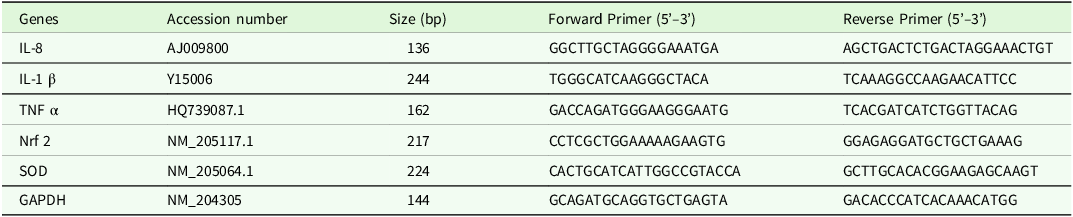
The birds selected at 24 days for the collection of blood samples were killed humanely by mechanical stunning followed by exsanguination. The spleen and liver were eviscerated, washed with phosphate buffered saline, and approximately 100 mg of tissue sample from both organs was excised for mRNA expression analysis of interleukin 1 (IL-1β), interleukin 8 (IL-8) and tumour necrosis factor-α (TNF-α) in the spleen and nuclear factor erythroid-2 related factor-2 (Nrf-2) and superoxide dismutase (SOD) genes in the liver. Total RNA from the tissues was extracted using TRIzol (Ambion, Thermo Fisher Scientific, Massachusetts, USA), and complementary DNA (cDNA) was synthesized using a cDNA reverse transcription kit (QuantiTect Reverse Transcription Kit, Qiagen Inc., Hilden, Germany). The primers (Table 2) for the target genes were designed using Primer3 Plus software. Gene expression analysis and differentiation were quantified by real-time RT-PCR. The assay was carried out using iTaq Universal SYBR Green Supermix (Bio-Rad Laboratories Inc., Hercules, California, USA) on a Bio-Rad CFX-96 real-time PCR instrument (Bio-Rad Laboratories Inc., Hercules, California, USA). The process involved initial denaturation at 95 °C for 3 min, followed by running 40 cycles at 95 °C for 30 s and then repeating the same at 60 °C for 1 min. Gene expression analysis was performed by the 2-ΔΔCt method (Livak and Schmittgen, Reference Livak and Schmittgen2001), in which the absolute and relative abundance of the target gene was expressed as the cycle threshold (Ct) and fold chain increment (2−ΔΔCt) in the expression of that gene in the treatment groups (GABA 0, GABA 60 and GABA 120 in OH and the GABA 60 and GABA 120 groups in the EC) relative to the reference group (GABA 0 in EC, for both sexes). The latter was assigned a unit value of 1 (or 100 %), and the values obtained with the other treatment groups were expressed relative to this unit value. The mean of qRT-PCR for a single biological replicate was the average of three technical replicates, and the mean was used as a single data point for calculation.
List of primers used for mRNA expression analysis

Microbiome analysis of ileo-caecal digesta contents
Microbiome analysis of the caecal digesta was performed on 42 days for the male birds only, and hence, the sex effect was not included in the model while analysing the data. Caecal digesta, collected from 3 randomly selected male birds from each treatment, were homogenized, followed by extraction of microbial DNA, which was eluted in nuclease-free water. The purity, quantity and integrity of the DNA were determined by a Nanodrop One microvolume UV-Vis spectrophotometer (Thermo Scientific, Massachusetts, USA) at 260 and 280 nm. Sequencing was performed on an Illumina Novaseq 6000 platform, and functional profiling of the filtered data set was carried out. The internal alpha diversity (variation of microbes in a single sample) of the samples was measured through observed operational taxonomic units and Shannon indices (diversity analysis). The beta diversity, or the Principle of Coordinate Analysis (PCoA), was performed to identify the variation in the microbial community structure between different samples. The GABA 0 group in the EC was considered as the reference against which the responses in the treatment groups (GABA 0, GABA 60 and GABA 120 in the OH and GABA 60 and GABA 120 in the EC) were gauged.
Chemical analysis of diet
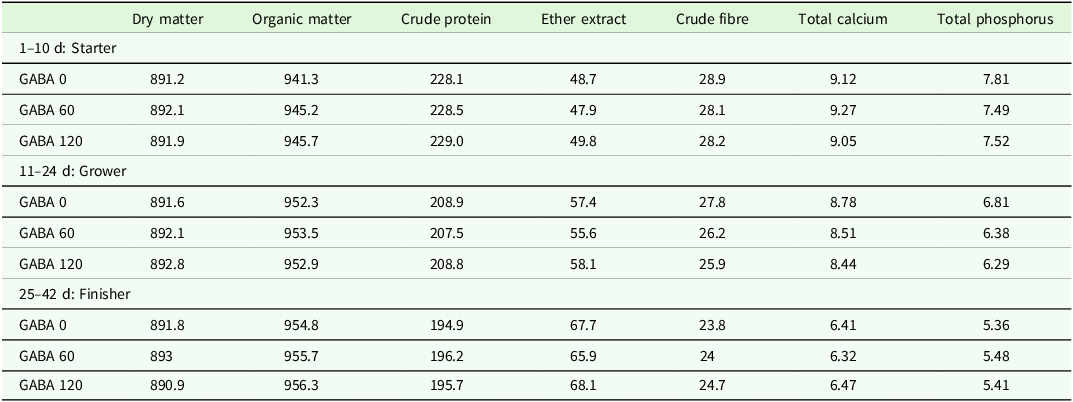
Samples of diets from each of the treatment groups were analysed (Table 3) for dry matter (DM, method number 934.01), nitrogen and crude protein (CP, method number 954.01), ether extract (method number 920.39), crude fibre (CF, method number 962.09/AOAC 978.10), total ash (AOAC 942.05-2012) and organic matter (OM, method number 942.05) and calcium and total phosphorus (AOAC 927.02-1990 and AOAC 965.17-1966).
Chemical composition of the experimental diets (all values on g/kg as fed basis)a

a Analysed values: dry matter (DM, method number 934.01), nitrogen and crude protein (CP, method number 954.01), ether extract (EE, method number 920.39), crude fibre (CF, method number 962.09/ AOAC 978.10), total ash (AOAC 942.05-2012) and organic matter (OM, method number 942.05) and calcium and total phosphorus (AOAC 927.02-1990 and AOAC 965.17- 1966).
Statistical analysis
The normality of data was checked with a quantile-quantile plot before being analysed according to a 2 × 2 × 3 factorial design in the PROC GLM of SAS (2012), where the houses, the sex of the birds and the inclusion level of GABA were considered as the blocking factors. The following statistical model was used for analysing the data:
 $$\rm Yijk = \mu+\alpha i+\beta j+\gamma k+\alpha i \ \beta j+\alpha i\ \gamma k+\alpha i\beta j \gamma k$$
where Yijk is the effect of the ith dose in the kth block on jth sex, μ is the mean, α is the inclusion level of GABA in diet, β is the type of housing (block) and γ is the sex of the birds. For all performance data, the replicates were considered the experimental units, while for the rest of the parameters, the individual observations served as the experimental units. The main effects of house, sex and treatments were determined. Interaction effects between house*dose of GABA, sex of birds*dose of GABA and house*sex*GABA dose interactions were determined. Probability values of P < 0.05 were described as statistically significant, and those of P < 0.1 were described as trends. The means were separated by Tukey’s B test whenever significant differences were observed.
Results
Performance traits
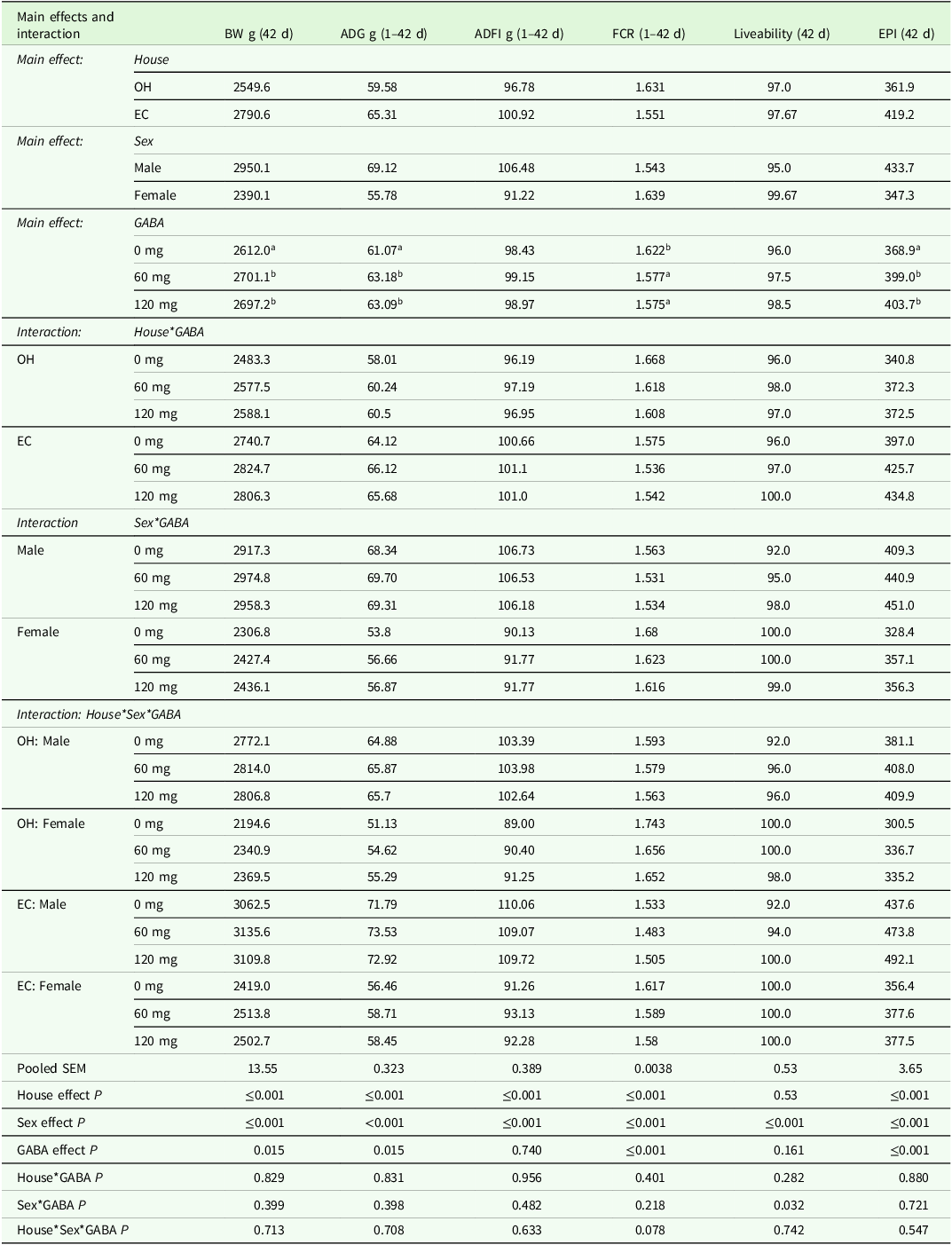
The final performance data of the experimental birds under the influence of supplemental GABA are presented in Table 4. The effects of the sex of the birds and those of the housing conditions are also present there.
Effects of varying dietary concentrations of GABA on performance traits: main effects and interactionsa

a Means represent n = 10 replicate pens in each treatment (there were 10 chicks in each replicate at the beginning of the experiment). OH = open house; EC = environmentally controlled house.
House effect
The birds in the EC house had better BW at 42 days. ADG during 1–10 days (P < 0.001) and 25–42 days (P < 0.001) was higher in the EC house, leading to a better overall (1–42 days) ADG in the EC (P < 0.001). ADFI (1–42 days) was higher (P < 0.001), and a better overall (1–42 days) FCR (P < 0.001) was recorded under the EC. Housing conditions had a non-significant effect on liveability (P = 0.53), although as a function of BW and FCR, EPI was better in the EC than that in the OH (P < 0.01).
Sex effect
The males were heavier and had higher ADFI (P <0.001) compared to the females. The females had poorer FCR (P < 0.01) although their liveability was better (P < 0.001). The males, with their better BW and FCR, had superior EPI than the females (P < 0.001).
Effect of GABA
Supplementation of GABA resulted in a better BW at 42 days (P = 0.015) and improved ADG during 1–42 days (P = 0.015). FCR (1–42 days) was also improved due to GABA supplementation by 4.5 points as compared to the unsupplemented groups. Dietary GABA concentration had a non-significant effect on liveability (P = 0.161), although EPI improved by GABA supplementation irrespective of the housing condition and sex of the birds (P = 0.001). However, varying the dose of GABA had an insignificant effect (P > 0.05).
Interaction effects
GABA had similar effects on BW and ADG in both the OH and the EC (house*GABA interaction P > 0.05). The males and the females responded similarly to supplemental GABA (sex*GABA P > 0.05), and the house*sex*GABA interactions were not significant (P > 0.05). Doses of GABA had similar effects on ADFI (1–42 days) in both OH and EC (house*GABA P > 0.05) or the sex of the birds (sex*GABA P > 0.05). Housing condition and sex of the birds had insignificant (P > 0.05) effects on FCR of the birds too. A closer scrutiny of the data revealed that the GABA-supplemented males in the EC tended to have better FCR during 1–42 days (P = 0.078). The positive effects of GABA on liveability were more conspicuous with the females (sex*GABA P = 0.032). EPI did not vary due to supplementation of GAB, housing condition or sex of the birds (house*GABA P > 0.05) and sex of the birds (Sex*GABA P > 0.05).
Circulatory biomarkers
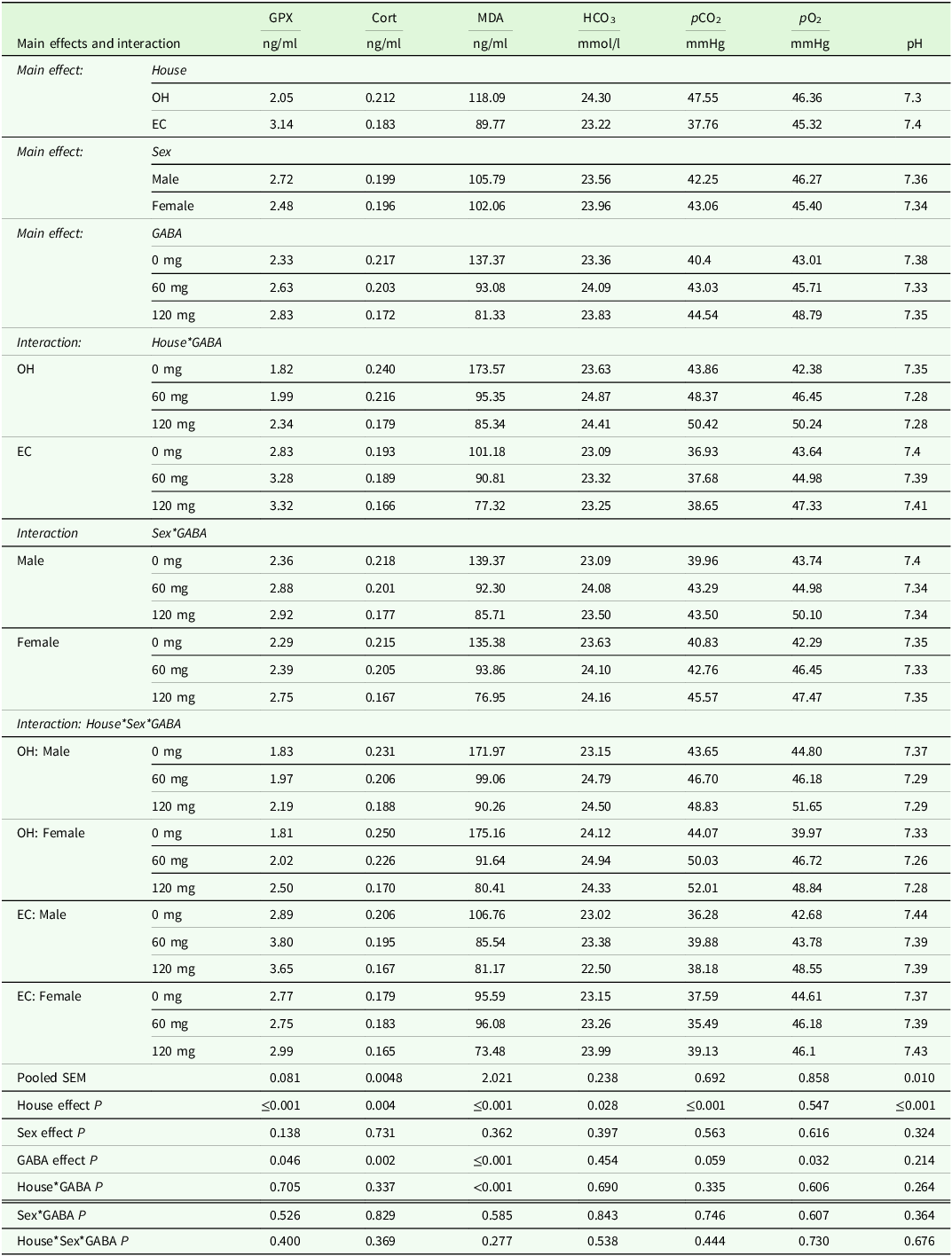
The concentrations of stress biomarkers (GPX, CORT, MDA and HCO3) in serum, the partial pressure of CO2 and O2 in venous blood and its pH are presented in Table 5.
Effects of dietary supplementation of GABA at different levels on circulatory stress biomarker concentrations and arterial blood gas properties at 24 days: main effects and interactionsa

a Means represent n = 10 per treatment (one male bird and one female bird were selected randomly from each of the replicate pens). OH = open house; EC = environmentally controlled house.
House effect
The activity of GPX was higher in the birds reared in the EC as compared to those in the OH (P < 0.001). The concentration of CORT (P = 0.004) and activity of MDA (P < 0.001) decreased when the birds were reared in the EC. Concentration of HCO3 (P = 0.028) and partial pressure of CO2 (P < 0.001) were lower, and pH was higher in the blood of the birds reared in EC (P < 0.0001).
Sex effect
Activity and concentration of the stress biomarkers did not vary with sex (P > 0.05). The partial pressures of HCO3 and that of O2 in venous blood as well as blood pH were also identical (P > 0.05) in both the sexes.
Effect of GABA
GABA increased the activity of GPX (P = 0.046) and decreased CORT concentration (P = 0.002) and activity of MDA (P < 0.0001) in serum. The partial pressure of O2 in blood increased by 120 mg/kg GABA in diet (P = 0.032) and that of CO2 tended to increase with the dose of GABA in diet (P = 0.059).
Interaction effects
GABA decreased circulatory MDA activity more effectively in the OH than in the EC (house*GABA P < 0.0001). The effect of GABA on serum stress biomarker activities and arterial blood gas concentrations did not vary with the sex of the birds (sex*GABA interaction P > 0.05) or with the housing condition (house*sex*GABA P > 0.05).
mRNA expression of immune modulatory and antioxidant genes
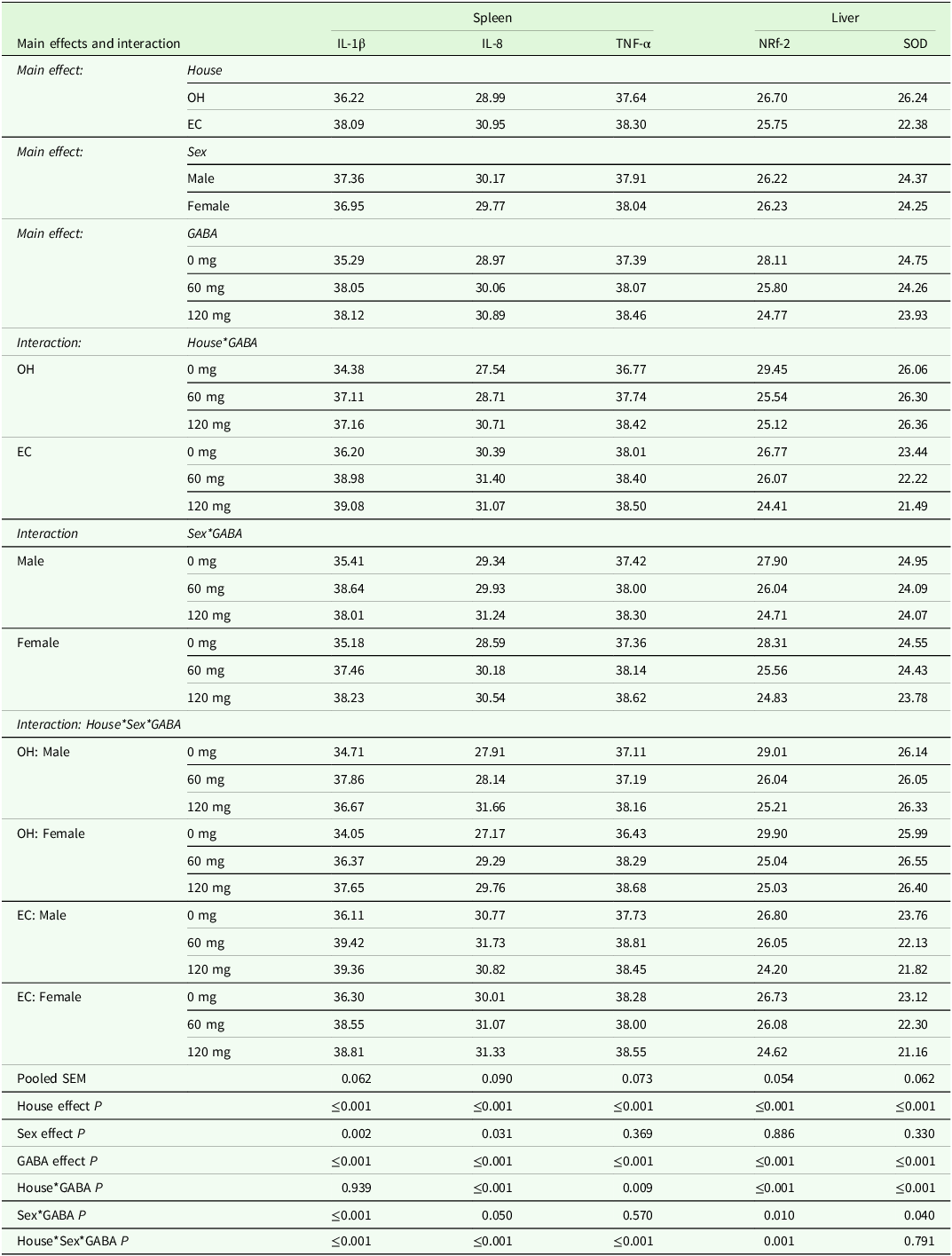
The expression of mRNA (CtGene) and the relative fold change (2−ΔΔCt) for the inflammatory and antioxidant genes in the spleen and liver measured are presented in Table 6 and in Figures 2 and 3, respectively.
Effects of dietary GABA supplementation on mRNA expression (Ct-gene) of inflammatory cytokines and antioxidant genes at 24 days: main effects and interactionsa

a Means represent n = 10 per treatment (one male bird and one female bird were selected randomly from each of the replicate pens). OH = open house; EC = environmentally controlled house.
Relative mRNA expression (2−ΔΔCt) of immunomodulatory genes in splenic tissues at 24 days of age using the expression of the respective genes in the male and female birds reared in the environmentally controlled (EC) house and open house (OH) without supplemental GABA as the reference (bars represent mean +SEM)1,2. (a) Interleukin-1β. (b) Interleukin-8. (c) Tumour Necrosis factor-α. 1Represents the mRNA expression of each of the immune modulatory genes observed in both the male and female birds reared under the environmentally controlled house without any supplemental GABA in diet was assigned a unitary value relative to which the expression of the respective genes in the other groups was measured.2 The data is represented as the House*Sex*GABA interaction effects.
House*GABA interaction: Interleukin-1 P < 0.0001; interleukin-8 P = 0.001; tumour necrosis factor-α P < 0.0001.
Sex*GABA interaction: Interleukin-1 P < 0.026; interleukin-8 P = 0.079; tumour necrosis factor-α P = 0.389.
House*Sex*GABA interaction: Interleukin-1 P = 0.107; interleukin-8 P = 0.017; tumour necrosis factor-α P = 0.344.

Relative mRNA expression (2-ΔΔCt) of antioxidative genes in hepatic tissues at 42 days of age using the expression of the respective genes in the male birds reared in the environmentally controlled (EC) house and open house (OH) without supplemental GABA as the reference (bars represent mean + SEM)1,2. (a) Nrf-2 (nuclear factor erythroid 2-related factor 2) (b) SOD (superoxide dismutase).1 The mRNA expression of the Nrf-2 and SOD genes observed in both the male and female birds reared under the environmentally controlled house without any supplemental GABA in diet was assigned a unitary value relative to which the expression of the respective genes in the other groups was measured.2 The data is represented as the House*Sex*GABA interaction effects.
House*GABA interaction: Nrf-2 P = 0.51; SOD P < 0.0001.
Sex*GABA interaction: Nrf-2 P = 0.226; SOD P = 0.621.
House*Sex*GABA interaction: Nrf-2 = 0.106; SOD P = 0.547.

House effect
The CtGene for IL-1β, IL-8 and TNF-α in the spleen were higher (P < 0.001) with the birds in the EC and those of Nrf-2 (P < 0.05) and SOD (P < 0.001) in the liver were higher in the birds under the OH.
Sex effect
The CtGene for IL-1β (P = 0.002) and IL-8 (P = 0.031) in the spleen was higher in the males, irrespective of the housing condition. However, CtGene for TNF-α in the splenic tissues and those of the Nrf-2 and SOD in the hepatic tissues did not vary with the sex of the birds (P > 0.05).
Effect of GABA
The CtGene for IL-1β, IL-8 and TNF-α in the spleen was increased by GABA (P < 0.0001). On the contrary, the CtGene for Nrf-2 and SOD in the hepatic tissues decreased due to supplementation of GABA (P < 0.0001), although this effect was independent of the inclusion level of GABA in the diet.
Interaction effect
The 2-ΔΔCt of IL-1β, IL-8 and TNF-α was higher in the OH group than in the EC group of birds, irrespective of their sex. The 2−ΔΔCt of all the aforementioned genes decreased with the dose of GABA in the diet (Figure 2a, b, c). For IL-1β (Figure 2a), IL-8 (Figure 2b) and TNF-α (Figure 2c), 2−ΔΔCt was higher in the OH as compared to that in the EC (house*GABA, P < 0.0001). The relative fold change due to GABA supplementation was greater in the males for IL-1β (sex*GABA, P = 0.026) and IL-8 (sex*GABA, P = 0.079). For IL-8, the 2-ΔΔCt in the females of the OH was with 60 mg/kg GABA in diet, which did not match with the general trend leading to a significant house*sex*GABA interaction (P = 0.017). The 2-ΔΔCt of Nrf-2 and SOD in hepatic tissues decreased in the OH compared to that in the EC irrespective of the sex of birds (Figure 3a and b, respectively). The 2-ΔΔCt of Nrf-2 was upregulated with the dose of GABA in diet, and the effect was independent of sex (sex*GABA, P > 0.05) and housing condition (house*GABA, P > 0.05; house*sex*GABA, P > 0.05). For SOD, the 2-ΔΔCt was greater in the EC (house*GABA, P < 0.0001) irrespective of the sex and housing condition (sex*GABA, P > 0.05; house*sex*GABA, P > 0.05).
Caecal microbiome analysis
The metagenomic analysis revealed that at the phylum level, three bacterial phyla, Bacteroidetes, Firmicutes and Proteobacteria, were most abundant in the caeca, accounting for more than 98 % of the total microbial population across the dietary treatments.
House effect
The clustering tendency with the EC varied from that in the OH (P < 0.05), which can be understood from the PCoA (Figure 4). The relative abundance of Alistipes, Odoribacter, Flavonifractor, Butyricimonas and Pseudoflavonifractor was relatively higher in the EC, while in the OH, Bacteroides, Parabacteroides, Phocaeicola, Tidjanibacter, Helicobacter, Rikinella, Desulfovibrio and Flavonifractor were more abundant.
Principle of Coordinate Analysis for the caecal microbiome analysis performed on 42 days of age under environmentally controlled (EC) house and open house (OH) conditions. ■ GABA 0 mg/kg diet (EC) ■ GABA 60 mg/kg diet (EC) ■ GABA 120 mg/kg diet (EC) ■ GABA 0 mg/kg diet (OH) ■ GABA 60 mg/kg diet (OH) ■ GABA 120 mg/kg diet (OH).

Effect of GABA
GABA increased the relative abundance of Phocaeicola, Alistipes, Odoribacter, Bacteroides, Tidjanibacter and Massilicoli in the EC and that of Parabacteroides, Butyricimonas, Pseudoflavonifractor and Flavonifractor in the OH (P < 0.05).
Interaction effects
Figures 5, 6 and 7 showed that the bacterial clusters varied with the level of supplemental GABA in the diet as well as with the ambient temperature of the experimental house (house*GABA, P < 0.01). The relative abundance of the phylum Bacteroidetes (Figures 5 and 7), which mostly comprised of genera Alistipes, Phocaeicola, Barnesiella, Butyricimonas, Coprobacter, Odoribacter, Parabacteroides, Rikenella, Tannerella and Tidjanibacter, was higher in the birds reared under EC with a 60 mg GABA/kg diet (89 %) (Figures 5b, 7c) as compared to those fed diets without GABA (81 %) (Figures 5a, 7a) and 120 mg/kg GABA (84 %) (Figures 5c, 7e). The relative abundance of Bacteroidetes in the OH changed with dietary GABA concentration (Figures 6, 7), with the 120 mg/kg group showing a higher abundance (81 %) (Figures 6c, 7f) than the groups with 0 (Figures 6a, 7b) and 60 mg/kg GABA (78 %) (Figures 6b, 7d). Predominantly 26 genera represented the phylum Firmicutes (Agathobaculum, Anaerofilum, Anaerotruncus, Angelakisella, Blautia, Butyricicoccus, Clostridiales, Clostridium, Ruminococcus, Flavonifractor, Dysosmobacter, Enterococcus, Eubacterium, Faecalibacterium, Fournierella, Gemmiger, Intestimonas, Lachnoclostridium, Lactobacillus, Massilicoli, Merdimonas, Oscillibacter, Pseudoflavonifractor, Mediterraneibacter, Ruminococcus and Subdoligranulum), and the relative abundance of this phylum (Figures 5 and 7) under EC was lower with the 60 mg/kg GABA (9.85 %) (Figures 5b and 7c) as compared to the 0 (15.56 %) (Figures 5a, 7a) and 120 mg/kg (13.66 %) GABA groups (Figures 5c and 7e). The respective paired controls in the OH group exhibited a comparatively higher relative abundance of Firmicutes (Figure 6a, b and c). Proteobacteria was the other phylum that represented around 2–4 % of the total cecal bacterial population across the treatments (Figure 7) and was represented mainly by Bilophila, Burkholderiales, Campylobacter, Desulfovibrio, Escherichia, Klebsiella and Shigella. The relative abundance of these bacteria was less in the EC irrespective of the level of GABA in diet, although in the OH their number increased with the dose of GABA in diet (0.26, 1.48 and 2.37 %, respectively, in the 0, 60 and 120 mg/kg GABA groups), indicating a significant house*GABA interaction (P < 0.05). The Bacteroidetes to Firmicutes ratio in the EC was 5.2, 9 and 6.12 in the 0, 60 and 120 mg/kg GABA-supplemented groups, respectively, and the ratios were 5.02, 4.62 and 5.61 in the corresponding dietary groups, respectively, in the OH.
Relative abundance of major phyla in the caecal microbiome of male broiler chickens supplemented with GABA at varied levels of dietary inclusions: EC*#. (a) GABA 0 mg/kg diet. (b) GABA 60 mg/kg diet. (c) GABA 120 mg/kg diet. * Represents samples that were collected from three randomly selected chickens at the end of the feeding trial on 42 days; # represents samples that were collected from the birds reared under an environmentally controlled (EC) condition. ■ Bacteroidetes ■ Firmicutes ■ Proteobacteria ■ Others.

Relative abundance of major phyla in the caecal microbiome of male broiler chickens supplemented with GABA at varied levels of dietary inclusions: OH*#. (a) GABA 0 mg/kg diet. (b) GABA 600 mg/kg diet. (c) GABA 120 mg/kg diet. * Represents samples that were collected from three randomly selected chickens at the end of the feeding trial on 42 days; # represents samples that were collected from the birds reared under an environmentally controlled (OH) condition. ■ Bacteroidetes ■ Firmicutes ■ Proteobacteria ■ Others.

(a) Relative abundance of major bacterial genera in the caecal microbiome of broiler chickens at 42 days without any supplemental GABA in diet: EC*#. (b) Relative abundance of major bacterial genera in the caecal microbiome of broiler chickens at 42 days without any supplemental GABA in diet: OH*#. (c) Relative abundance of major bacterial genera in the caecal microbiome of broiler chickens at 42 days supplemented with 60 mg/kg GABA in diet: EC*#. (d) Relative abundance of major bacterial genera in the caecal microbiome of broiler chickens at 42 days supplemented with 60 mg/kg GABA in diet: OH*#. (e) Relative abundance of major bacterial genera in the caecal microbiome of broiler chickens at 42 days supplemented with 120 mg/kg GABA in diet: EC*#. (f) Relative abundance of major bacterial genera in the caecal microbiome of broiler chickens at 42 days supplemented with 120 mg/kg GABA in diet: OH*#. * Represents samples that were collected from three randomly selected chickens at the end of the feeding trial on 42 days; # represents samples that were collected from the birds reared under either an environmentally controlled (EC) or open housing condition (OH) with variable ambient temperature and relative humidity.

Discussion
The birds in the OH were confronted with wider temperature and RH fluctuations than those in the EC. Unlike the EC, transient upward shifts in ambient temperature above 35°C were observed in the OH between 7–9, 12–16, 20–25, 34–36 days and on the day of harvesting, which plausibly contributed to the performance differences between the OH and EC groups of birds. Microclimate is considered to be a key factor influencing the performance of chickens (Sahin et al., Reference Sahin, Sahin and Kucuk2003; Dai et al., Reference Dai, Gao, Zhang, Song, Xu and Zhou2011; Park et al., Reference Park, Oh, Joo and Han2023; Hamiyanti et al., Reference Hamiyanti, Nurgiartiningsih, Muharlien and Suyadi2023), and better performance in the EC house was expected. Temperature in the OH for the first 6 days was indeed inadequate, leading to a lower growth rate of the birds during the first 10 days. Irrespective of the sex, the birds in the OH had almost 15 % lower BW than those in the EC. This difference might be attributed to an inadequate brooding temperature since no attempt was made to rectify this thermal inadequacy in order to capture the effects of temperature variations. On the contrary, the higher ambient temperatures during the later growth phase in the OH had an adverse effect on FI, leading to inadequate ADG and poorer FCR. Stressor stimuli may decrease the number of GABA receptors in the chicken brain and concentration of GABA in circulation (Fluck et al., Reference Fluck, Hogg, Jones, Bourne and File1997; Jonaidi et al., Reference Jonaidi, Babapour and Denbow2002), a phenomenon that explains why dietary supplementation of GABA restores FI and sustains FCR (Dai et al., Reference Dai, Gao, Zhang, Song, Xu and Zhou2011; Chand et al., Reference Chand, Muhammad, Khan, Alhidary and Rehman2016; El-Naggar et al., Reference El-Naggar, El-Kassas, Abdo and Kirrella2019). Intriguingly, GABA supplementation had a subtle effect on FI in the present study, and so the beneficial effects of GABA on BW might be due to mechanisms unrelated to FI. This apparent aberration from the general postulation was due to the relative insensitivity of the hypothalamic GABA receptors in chickens (Jonaidi et al., Reference Jonaidi, Babapour and Denbow2002). Due to this insensitivity, the hypothalamic satiety centre did not respond to the exogenous GABA, and hence, FI in the experimental chickens did not change with dietary GABA supplementation.
The beneficial effects of exogenous GABA in chickens exposed to variable stressor stimuli are available in the literature. However, the present study differed from many of the earlier studies because in this case, performance improvement occurred similarly under the thermoneutral and variable temperature regimens. The better FCR in the male birds managed in the EC house was due to the better BW they had with a plane of FI similar to that in the rest of the dietary treatments. Earlier, a 10.1 % increment in FCR due to a 7.4 % increment in BW of male broiler chickens supplemented with GABA was reported (Park et al., Reference Park, Oh, Joo and Han2023). In that experiment, FI was not affected by GABA supplementation. The female chickens in the present experiment managed in the OH had 8 % better BW and almost 5 % improvement in FCR compared to the unsupplemented birds in the OH. However, ADFI was increased by only 2 % in these birds across the levels of GABA supplementation. The males in the OH had only 1.5 % improvement in BW that resulted in FCR improvement by about 2 % with practically no change in ADFI. The difference between the male and female chickens with regard to BW change may be attributed to the faster growth rate and heavier BW of the former, which left little room for further improvement. The performance improvement of the female chickens under the OH was substantial from a commercial point of view. In the EC house, the magnitude of improvement in BW and FCR in both the sexes was within 2 %. This data suggests that with stress of lesser magnitude, the scope of improvement in performance traits under the influence of GABA may become limited compared to a situation when high-intensity stressors like intense HS are operational.
Unlike most of the earlier studies, which focused mostly on the changes in the orexigenic behaviour of chickens following GABA supplementation, in the present study, an attempt was made to correlate the performance of the heat-stressed chickens with their oxidative defence mechanisms in the absence or presence of GABA in the diet. Fathi et al. (Reference Fathi, Tanha and Saeedyan2022) reported that supplementation of GABA upregulated SOD, CAT and GPX activities in serum while downregulating the MDA activity in hepatic tissues of Ross 308 broiler chickens subjected to a stress induced by administration of dexamethasone. This partially aligns with the present study, where GABA supplementation decreased circulatory CORT and MDA concentrations and increased GPX activity in serum, regardless of the presence of HS. When reared in the OH, GABA supplementation increased GPX activity by 12–38 % in females and 8–20 % in the males. In the EC, the GPX activity in the males increased by as high as 30 %, while in the females, only an 8 % increment in the same was observed when the dietary concentration of GABA was increased up to 120 mg/kg. The CORT concentration in serum decreased by 10–32 % in the females and by 10–18 % in the males reared in the OH. In the EC, circulatory CORT in the males decreased by 5–19 %, while the females showed an 8 % decrease with 120 mg/kg GABA in their diet. These data suggest that the effects of GABA were more consistent with the female chickens managed in the OH, and more discernible effects were obtained at a dietary GABA concentration of 120 mg/kg. This logic goes well with the performance improvement observed with the female birds under the OH and further corroborates the earlier studies suggesting beneficial effects of GABA supplementation under conditions of intense stress.
An upregulated corticosteroid activity is one of the most conspicuous consequences of HS in broiler chickens (Chrousos and Gold, Reference Chrousos and Gold1992) that pushes the birds more towards catabolism (Virden and Kidd, Reference Virden and Kidd2009). The consequences are reduced energy supply to growing tissues, decreased nutrient digestibility, increased feed passage (Puvadolpirod and Thaxton, Reference Puvadolpirod and Thaxton2000) and performance loss. The CORT-mediated stress responses are rooted in oxidative stress caused by overproduction of reactive oxygen species (ROS) during HS, which the antioxidant defence system of the host animal cannot neutralize (Zmrhal et al., Reference Zmrhal, Svoradova, Venusova and Slama2023; Pizzino et al., Reference Pizzino, Irrera, Cucinotta, Pallio, Mannino, Arcoraci, Squadrito, Altavilla and Bitto2017). One of the most likely consequences of prolonged exposure to HS is an overt manifestation of GPX and SOD activities to scavenge the ROS (Surai et al., Reference Surai, Kochish, Fisinin and Kidd2019). Nrf-2 is the master gene controlling synthesis of GPX and SOD (Ma, Reference Ma2013). In the present study, GABA supplementation upregulated the transcription of the Nrf-2 gene in both male and female chickens, irrespective of the ambient temperature. This indicates that GABA has a positive effect on the antioxidant defence system, as evidenced by the significantly higher GPX activity across the GABA-supplemented groups and significantly lower serum MDA concentrations. Both these observations align with earlier findings (Al Wakeel et al., Reference Al-Wakeel, Shukry, Abdel, Mahmoud and Saad2017; Chand et al., Reference Chand, Muhammad, Khan, Alhidary and Rehman2016) and are indicative of lower peroxidative damage at the tissue level. Furthermore, the significant house*GABA interaction indicated towards the beneficial effects of GABA in sequestering or reverting the process of oxidative damage in the birds upon exposure to HS. The hepatoprotective effect of GABA through improved antioxidant defence functionality has been reported in pigs exposed to transportation stress (Bi et al., Reference Bi, Yin, Yang, Shi and Shan2020), which also corroborates the present findings, albeit under a different stressor stimulus. It is intriguing to note that the relative upregulation of the Nrf-2 transcription was more pronounced in the birds reared in the EC than those in the OH, which suggested that the effects of supplemental GABA were mediated more through the GPX activity under the EC while SOD was the predominant pathway to scavenge the ROS in the OH and the beneficial effects of GABA supplementation, whatsoever, was mediated through mitigation of the possible oxidative damages post exposure to HS.
Stress-induced overproduction of ROS is associated with the overt activation of proinflammatory cytokines (Jang et al., Reference Jang, Ko, Moon and Sohn2014) because ROS causes tissue damage and stimulates the innate immune system to induce inflammation (Chen et al., Reference Chen, Tang, Sun and Xie2013). CORT alleviates such inflammatory processes and restores homeostasis (Busillo et al., Reference Busillo, Azzam and Cidlowski2011). GABA also possesses anti-inflammatory properties (Duthey et al., Reference Duthey, Hübner, Diehl, Boehncke, Pfeffer and Boehncke2010) and promotes proliferation of T-cells, inhibits apoptosis in β-cells, decreases synthesis of inflammatory mediators like IL-1β, TNF-α, IFN-γ and IL-12 and increases production of the anti-inflammatory mediator TGF-β1 (Soltani et al., Reference Soltani, Qiu, Aleksic, Glinka, Zhao, Liu, Li, Zhang, Chakrabarti, Ng, Jin, Zhang, Lu, Feng, Prud¢homme and Wang2011; Wang et al., Reference Wang, Sun, Zhu, Jiao, Zhong, Guo, Zha, Han, Yang and Li2018; Zheng et al., Reference Zheng, Lu, Yang, Zou, Zeng, Xiong, Cao and Zhou2023). In this way, GABA acts as a natural “braking system” for the inflammatory processes (Tian and Kaufman, Reference Tian and Kaufman2023). The activity of lipopolysaccharide-induced TNF-α and inflammatory cytokines (IL-1β, IL-6) in serum decreased significantly by exogenous GABA under beak-trimming stress (Xie et al., Reference Xie, Hou, Yan, Sun, Han and Kang2013). An overt immune or inflammatory response is negatively correlated with BW and FCR in chickens because it diverts nutrients that could otherwise be utilized for growth (Yu et al., Reference Yu, Choi and Yun2021). In the present study, the mRNA expression of all three proinflammatory cytokines decreased linearly as the dose of GABA in the diet increased. Moreover, the response was significantly better in birds reared in the OH compared to those in the EC. The upregulation in the transcription of the Nrf-2 gene with a concomitant downregulation of the immune modulatory genes due to GABA supplementation suggested that the inflammatory responses were blunted off and there was less oxidative stress when the birds received GABA as a supplement in their diets. It is true that the magnitude of transcriptional downregulation of the proinflammatory genes did not translate proportionately into BW and FCR improvements. However, it becomes evident from the present data that GABA supplementation mitigated the immune-inflammatory reactions to a great extent, which improved BW and FCR of the chickens, especially in the OH, where HS was more severe.
Stressors like HS modulate the gut microbiome in such a way that the host animal can adapt itself to the stress condition through modulation of their immune responses (Rea et al., Reference Rea, Dinan and Cryan2016; Cholewińska et al., Reference Cholewińska, Górniak and Wojnarowski2021). Exposure to HS alters the normal microbiome composition and modifies the epithelial structures of the small intestinal mucosal membrane. As a result, the possibility of colonization by pathogens increases (Burkholder et al., Reference Burkholder, Thompson, Einstein, Applegate and Patterson2008). In this study, the abundance of Lactobacillus was lower, while that of Clostridium was higher in the birds reared in the OH. Almost similar were the findings of Song et al. (Reference Song, Xiao, Ke, Jiao, Hu, Diao, Shi and Zou2014). The PCoA revealed that the structure of the microbial communities in the GABA-supplemented birds reared under the EC was different from that of the birds reared in the OH. Apparently, the microbiome structure of the GABA-supplemented birds in the OH was identical to that of the birds reared under the EC without dietary GABA supplementation. Within the EC, supplementation of GABA altered the microbiome structure. It is evident from these data that both HS and GABA supplementation altered the microbial community, although it is difficult to state if these alterations were sufficient to influence the performance of the birds. At a concentration of 60 mg/kg in diet, GABA widened the Bacteroidetes to Firmicutes ratio in the EC only. So, at this concentration, GABA supplementation might have improved the gut microbiome composition, leading to a ‘healthier gut’ (Jasirwan et al., Reference Jasirwan, Muradi, Hasan, Simadibrata and Rinaldi2021). Despite the apparent inconspicuous effect of GABA on the gut microbiome composition of the birds under the OH, the genus-level analysis revealed a higher abundance of Barnesiella in these birds when the GABA concentration in the diet was 60 mg/kg. Barnesiella possesses immunomodulatory properties (Ubeda et al., Reference Ubeda, Bucci, Caballero, Djukovi, Toussaint, Equinda, Lipuma, Ling, Gobourne, No, Taur, Jeng, van den Brink, Xavier and Pamer2013) and plays positive roles in preventing the colonization of pathogens in the intestine. Plausibly, the immune modulatory effects of GABA were routed through changes in gut microbiome composition by shifting them more towards probiotics. However, the present experimental model is not robust enough to conclude definitely in this regard.
Conclusions
It was concluded from the experiment that dietary supplementation of GABA at a concentration of 60 mg/kg may improve performance of broiler chickens, and the effect is likely to be more pronounced in the presence of HS. It is possible to augment the oxidative defence mechanism of broiler chickens with a dietary GABA concentration of 120 mg/kg. Supplementation of GABA at a dietary concentration of as low as 60 mg/kg may widen the Bacteroidetes to Firmicutes ratio in the caecal microbiome and contribute towards the performance improvement of chickens. Finally, the study concluded that supplementation of GABA may be considered as a dietary tool to improve the performance of broiler chickens. Although a dietary concentration of 60 mg/kg may be sufficient to improve performance traits to a great extent, to extract further benefit, especially under conditions of HS, a higher dose of 120 mg/kg diet, which augments the oxidative defence mechanism, may be necessary.
Author contributions
SH: conceptualization, data analysis and data interpretation. SSA: laboratory analysis and interpretation of results. AD: manuscript preparation. ALD: technical execution.
Funding statement
This research received no specific grant from any funding agency, commercial or not-for-profit sectors.
Competing interests
The authors declare there are no conflicts of interest.
Ethical standards
The protocol was reviewed by the Internal Animal Ethics Committee of Agrivet Research and Advisory P Ltd. to ensure that the stipulations of the Committee for the Purpose of Control and Supervision of Experiments on Animals, Ministry of Fisheries, Animal Husbandry and Dairying, Department of Animal Husbandry and Dairying, Government of India, in the CPCSEA Guidelines for Poultry/Bird Facility (2020), were followed (organizational ethical approval number: ARAPL/IAEC/007/24-25).