Healthcare formed a critical part of ancient lifeways, whether provided by immediate family members or administered by highly trained specialists. People in the past assembled diverse plants into pharmacopoeias and transformed them into materia medica—the basic materials of medical practice. In spite of the ubiquity and prominence of apothecary craft, identifying such practices in the past remains a persistent problem, especially where written documents are scarce or non-existent. Although we know people in the deep past valued healthcare very highly, we face the relatively low visibility of identifiable medical residues in the archaeological record. Furthermore, palaeoethnobotanical studies have tended to focus on questions related to subsistence and environmental relationships rather than medicinal activities, while the study of medicinal practice has tended to focus on bioarchaeological and textual datasets (see Arnott Reference Arnott2002; Diamandopoulos Reference Diamandopoulos and Michaelides2014) instead of botanical residues.
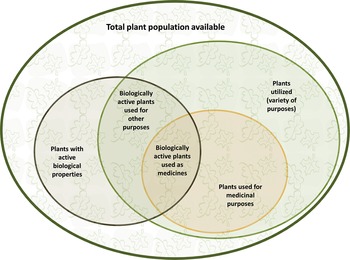
Another difficulty in pinpointing specific medicinal practices stems from the tendency for people to incorporate individual plants into a number of different lifeways. Though a single plant taxon could factor into multiple overlapping activities, it might be categorized in scholarly studies under a single domain of use, further masking archaeological visibility of medicinal practices. For a given set of plant taxa, ancient people may have identified ingredients particular only to medicines (spiritually or biologically active), and/or subject to preparations particular only to medicines (processing), and/or used in quantities particular only to medicines (dosage), and/or involving artefacts used only for medicines (toolkits and sacred objects), and/or involving settings particular only to medicinal practices (loci). It may even be temporality alone that marks a plant as ‘medicine’, if the plant is incorporated at a particular moment outside the common daily schedule. Furthermore, medicinal plants and related medical tools are sometimes found in the same contexts as grooming materials and other types of assemblages (e.g. Derham Reference Derham and Arnott2002), and are blended into concoctions with faunal and mineral ingredients, muddying identification of apothecary practice and ingredients. Although some taxa lists (e.g. Lentz Reference Lentz and White1999) notate multiple uses for a single plant, other methods of tabulation leave us with sharp divisions between domains of ethnobotanical practice that probably overlapped. Moreover, in a given population of biologically active plant components that includes fruits, seeds, leaves, bark and roots, practitioners selected some taxa to transform into culturally utilized medicines, while other measurably bioactive plants remained unutilized for medicinal purposes (see Figure 1).
Venn diagram of total plant population, plants utilized, plants used specifically for medicinal purposes, plants with measurably active biological properties, biologically active plants not used as medicines and biologically active plants used as medicines.

Furthermore, in contemporary literature we find no sharp divide between therapeutic and preventative medicine, and people world-wide do not simply associate plants with Western science-based allopathic treatments. Instead, there is a great deal of overlap between what modern Western allopathic approaches have divided into ‘food’ and ‘medicine’ (Anderson [1988] Reference Anderson, Counihan and Van Esterik1997, 81; Etkin Reference Etkin2008; Etkin & Ross Reference Etkin, Ross and Etkin1994; Fischler Reference Fischler1988, 280; Jennings et al. Reference Jennings, Merrell, Thompson and Heinrich2015; Pieroni & Price Reference Pieroni and Price2006; Reyes-García Reference Reyes-García2006; Shaw & Sykes Reference Shaw and Sykes2018; Tan et al. Reference Tan, Chen, Tan, Ma and Peng2017; Totelin Reference Totelin2015). Pungent, sensory qualities frequently unite food and medicinal plants, given human preferences for pungent materials in medicinal practices and food flavourings (Hastorf & Bruno Reference Hastorf and Bruno2020; Sutton Reference Sutton2010). Medicinal plants and food plants are not perfectly exclusive categories (Jennings et al. Reference Jennings, Merrell, Thompson and Heinrich2015; Pieroni & Price Reference Pieroni and Price2006; Shaw & Sykes Reference Shaw and Sykes2018, 366; Tan et al. Reference Tan, Chen, Tan, Ma and Peng2017; Totelin Reference Totelin2015; Wilson & Hurst Reference Wilson and Hurst2012). All foods necessarily emerge within a specific cultural situation (Barthes [1961] Reference Barthes, Counihan and Van Esterik2013; Hastorf Reference Hastorf2017) that differentiates the emergence of food concepts and the reception of food substances. Medicinal practice may nudge foodways, as well as the reverse (Jennings et al. Reference Jennings, Merrell, Thompson and Heinrich2015).
Spiritual practice may also overlap greatly with food and medicine (Carlson Reference Carlson and Maffi2001; Freedman Reference Freedman2015; Lo et al. Reference Lo, Kadetz, Datiles and Heinrich2015; Zucconi Reference Zucconi2019). The appetite of a possessing spirit might be fed as though it is that of the human patient (Shack [1971] Reference Shack, Counihan and Van Esterik1997) and the food that nourishes one person may cause sickness in another (Meigs Reference Meigs1987). Healthcare practitioners may derive medicines from plants with no known ‘active ingredients’ (Lentz et al. Reference Lentz, Clark and Hufford1998), that instead carry psychological or spiritual potency (similarly to descriptions by Insoll Reference Insoll2011, 192; Lo et al. Reference Lo, Kadetz, Datiles and Heinrich2015; Totelin Reference Totelin2016; Van der Veen & Morales Reference Van der Veen and Morales2015; Zucconi Reference Zucconi2019). That is to say, not all plants used as medicine have significant phytochemical potency, or have efficacy solely through chemically based pharmacological interactions.
The application of various medical treatments is dependent on many factors, including the bodily learning of such practices as decoction-making and salve application (Kunow Reference Kunow2003; Totelin Reference Totelin and Totelin2009, 298; Reference Totelin2016). The transmission of apothecary practices is negotiated between skill levels, execution and ‘success’ of reception (Etkin Reference Etkin, Van der Geest and Whyte1988; Hopkins et al. Reference Hopkins, Stepp, McCarty and Gordon2015; Lo et al. Reference Lo, Kadetz, Datiles and Heinrich2015; Totelin Reference Totelin2016; similarly to de Certeau Reference de Certeau, de Certeau and Rendall1984, 57 and Giddens Reference Giddens1979, 40). Apothecary skills, like other practices, retain some fixity as they are passed along and learned, but may also be transformed and innovated over multiple iterations or during a single performance of medical practice (Carlson Reference Carlson and Maffi2001; Kunow Reference Kunow2003; Hopkins et al. Reference Hopkins, Stepp, McCarty and Gordon2015; Totelin Reference Totelin and Totelin2009; Reference Totelin2016; similarly to Butler Reference Butler1988). Apprentices, learning medicinal recipes or plant-harvesting practices, may be sources of unintentional innovation—not simply producers of ‘imperfect copies’. Yet other novel practices may be imparted by dreams, to apprentices and established healers alike (Kunow Reference Kunow2003). However fluidity was introduced, the ongoing process of learning medical practices (similarly to Lave Reference Lave and Illeris2009) can eventually lead to permanent transformations in medical canon. In the past, such shifts are probably marked by differences in suites of plants with medicinal applications recovered from different time periods.
Given the potential leeway in apothecary practice, quality control in the past—as much as the present—would be an ongoing issue. Ultimate ‘intelligibility’ of medical treatments is dictated by the skilful execution of a medical act, and the degree to which it confers particular meanings or experiences to the subject—not only quantitative measures of biological health (Hopkins et al. Reference Hopkins, Stepp, McCarty and Gordon2015; Lo et al. Reference Lo, Kadetz, Datiles and Heinrich2015; Totelin Reference Totelin2016). That is, the severity of the malady and the belief in the efficacy of the treatment affect the reception of the medicine, not only the skill and competency of the medical practitioner who prepared it.
In the following passages, I suggest how people in ancient northwestern Honduras may have used plant taxa in 38+ families and 35+ genera for treatments, general maintenance of well-being, specific preventative measures and palliative care. The array of practices represented by these palaeoethnobotanical traces does not easily cleave plant taxa into mutually exclusive categories such as ‘food’, ‘fuel’ and ‘medicine’. People frequently incorporated a single plant into a multitude of ethnobotanical activities including food processing, construction, fuel use, and ritualized practice—along with medicinal craft. For these reasons, rather than relying on traditional divisions such as ‘domesticate versus weed’ to define both biological qualities and economic uses of plants, in my interpretations I associate a single botanical taxon with multiple practices, and a single practice with multiple taxa.
Here, I take a diverse set of recovered botanical residues from the Ulúa Valley in Honduras and compare these rich data with prior studies of ethnobotanical practice, both ancient and modern. I begin by considering the sources of utilized plants and modes of procurement, conceptualizing the landscape as pharmacy. I then address spiritual and physical aspects of well-being, with an eye towards the ways that ethnobotanical healthcare emerges from both routine and specialized activities. I postulate specific remedies and treatments as people may have prepared them in the past, and address discrete ethnobotanical activities that may overlap in a single taxon. Finally, I consider apothecary craft and potential ways of training and learning in ancient Honduras. In some cases, this apothecary craft persists alongside other traditions in contemporary medical practice.
Mesoamerica: landscape as pharmacy, medicine as spiritual practice
The contemporary landscape of southeastern Mesoamerica is blanketed by a rich trove of plants with medicinal properties (Lentz Reference Lentz1986; Reference Lentz1993), whether these properties are biologically implicated, culturally constituted, or both. Scholars have pursued multiple routes to understand ethnomedical practice in ancient Mesoamerica, including study of iconographic representations, use of analogues from ethnohistoric documents and analysis of actual physical remains of minerals, animals and plants. Plant residues at archaeological sites appear as relict forests, carbonized remains, phytoliths, pollen, fossil impressions and landforms, among other common indices used in palaeoethnobotany (Hastorf Reference Hastorf1999; Reference Hastorf and Drooker2001; Pearsall Reference Pearsall2008). However, palaeoethnobotanical studies in Mesoamerica, as in other regions of the world, are directed more toward environmental interactions and subsistence patterns than medicinal practices. The study of medicinal practice, in turn, usually relies on imagery and bioarchaeological evidence (see Schnell & Reference Schnell and SchererScherer in press), and occasionally specialized features or buildings (e.g. Child Reference Child2006), in place of medicinal residues and implements. In the following passages, I link specific botanical residues to healing practices, making inferences from similar activities found in the ethnographic and ethnohistoric records of Mesoamerica (e.g. Anderson Reference Anderson, Fedick and Taube1995; Roys [1799] Reference Roys1965), as well as from biological properties of still-extant plants (e.g. Lentz et al. Reference Lentz, Clark and Hufford1998).
The landscape of southeastern Mesoamerica presented a pharmacopoeia to ancient practitioners, through both cultivated and gathered materials (Abramiuk et al. Reference Abramiuk, Dunham, Cummings, Yost and Pesek2011; Kunow Reference Kunow2003; Stepp Reference Stepp2018). Medicinal plants currently thrive across diverse ecologies with long histories of anthropogenic intervention, and grow in environments that run the gamut from lightly transformed to highly managed (following Anderson Reference Anderson, Fedick and Taube1995; Fedick Reference Fedick and Fedick1996; Ford & Nigh Reference Ford, Nigh, Morris, Jones, Awe, Thompson and Badillo2010; McNeil Reference McNeil2012; McNeil et al. Reference McNeil, Burney and Burney2010; Stepp Reference Stepp2018; author's personal observation).
Scholars working in Mesoamerica have long outlined the prominent role of domesticated and non-domesticated species alike in ethnomedical practice. During the Colonial Period, Friar Diego de Landa described the uses of various species for medicinal, edible, ornamental and ceremonial purposes and included details of both planting and tending practices ([1566] Reference de Landa and Gates1978, 101–7). In the modern era, William Hanks (Reference Hanks1990, 316), Eugene Anderson (Reference Anderson, Fedick and Taube1995) and Robert Redfield (Reference Redfield1950, 172) have all recorded economic species planted and tended in contemporary Maya communities, including many plants with medicinal uses. Hanks has described how various products such as firewood, food, and medicine are acquired from the forest (Reference Hanks1990, 108). Some parts of the forest may be set aside as reserves that include medicinal plants, while others are selectively logged and reforested (Anderson Reference Anderson, Fedick and Taube1995, 141). Closer to home, medicinally used plants found in milpas and home gardens can include both protected wild trees and deliberately planted orchards (Anderson Reference Anderson, Fedick and Taube1995, 142; Kunow Reference Kunow2003; Stepp Reference Stepp2018). Cultivated milpas (maize fields) contain pachpakal areas that are zones where ‘a wide variety of crops and medicinal herbs is planted’ (Anderson Reference Anderson, Fedick and Taube1995, 142). Anderson lists at least 20 species of medicinal herbs deliberately left in the milpa, and in one case, an herbal healer had 50 medicinal species growing in his milpa and home garden.
In spite of the wide range of potential medicines accessible in a given ecological niche, people do not use availability and chemical properties alone to determine which plants to incorporate into therapeutic practices. As Lentz et al. note in their study of antimicrobial properties of 92 common medicinal plants, ‘bioactivity could be detected in [only] 35% of the Honduran medicinal plants tested’ (Reference Lentz, Clark and Hufford1998, 262). Yet they also posit that ‘the investigation of ethnobotanically used plants will reveal a substantial [additional] number of positive responses to in vitro screens.’ Such empirically based studies, in conjunction with ethnographic and ethnohistoric research, provide a compelling basis for us to a) investigate multiple loci of individual taxa prior to assigning them to a single category, and b) categorize plants under multiple subsets of human activity instead of a single discrete classification. In this way, we can consider plants such as those in the sunflower family (Asteraceae) as both home garden denizens and fallow field occupants, while similarly categorizing them as condiments, ornamentals and medicines.
In ancient Mesoamerica, we would thus not expect medicinal practice to have been completely divorced from other aspects of lifeways such as foodways and spirituality (Anderson Reference Anderson, Fedick and Taube1995; Benítez et al. Reference Benítez, March-Salas and Villa-Kamel2018; Katz Reference Katz and Jordan1993; Kunow Reference Kunow2003; Roys [1779] Reference Roys1965). We would also anticipate that people would have associated a given plant with a myriad of practices—grown and collected; used as condiment and medicine; prepared in different kinds of spaces; found in different contexts; and processed with different artefacts. As I detail below, botanical residues from northwestern Honduras have borne out many of these expectations.
Archaeological sites and analytical methods
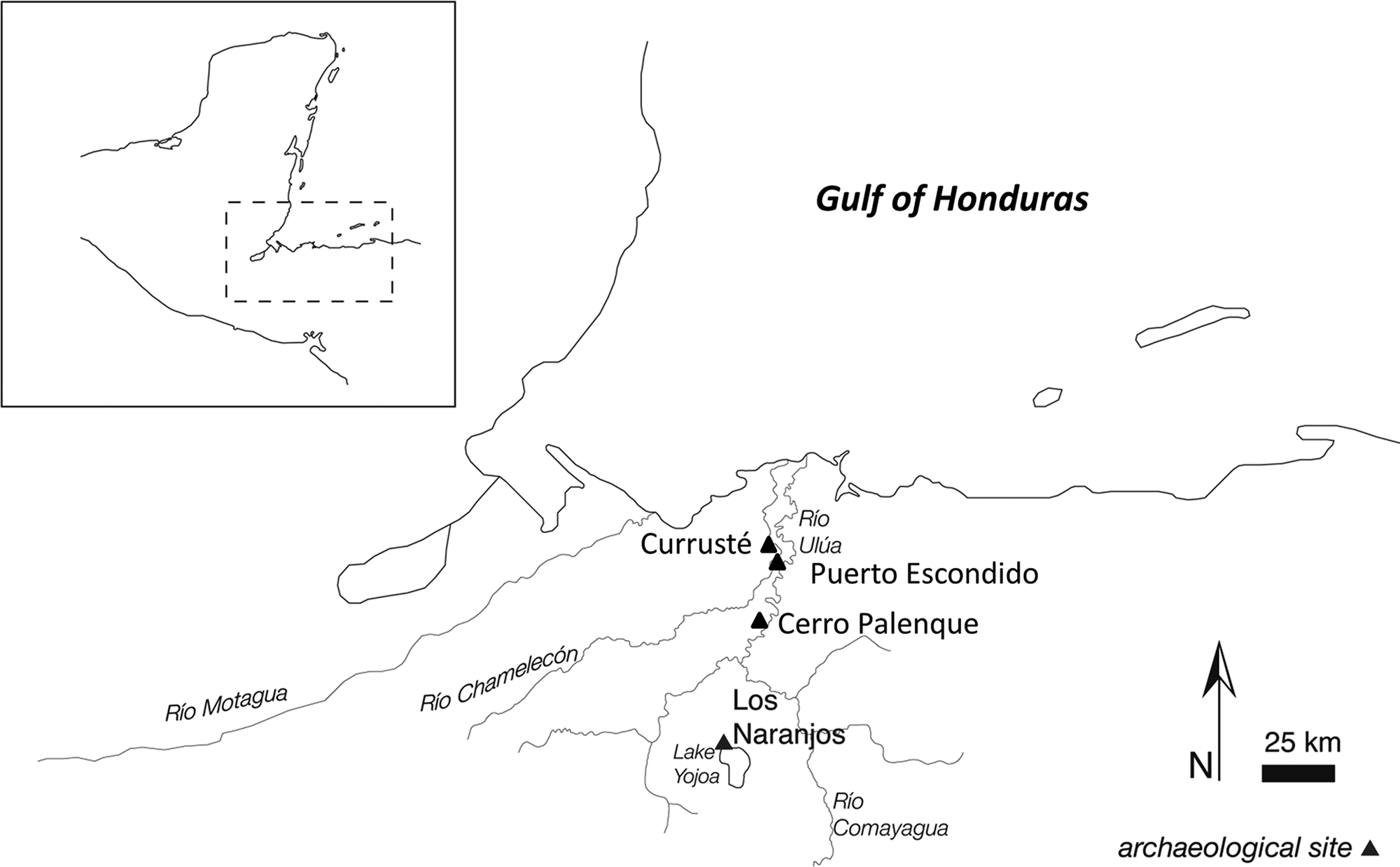
The four ancient communities of my study are located near the Ulúa Valley in the northwestern region of modern-day Honduras, and are archaeologically designated as the sites of Cerro Palenque, Los Naranjos, Puerto Escondido and Currusté (Fig. 2). People occupied these sites from the Middle Formative period (1400–1100 bc) through the Terminal Classic period (ad 500–1000) (Joyce & Henderson Reference Joyce and Henderson2007, table 1), most recently by ancestors of modern Lenca people (Sheptak Reference Sheptak, Pezzarossi and Sheptak2019). Archaeological research in the region has been carried out for several decades under the direction of Rosemary Joyce, Julia Hendon, Jeanne Lopiparo and John Henderson. The focus of these studies has included daily lifeways such as ceramic production and transformations in architectural practices, as well as specialized activities such as the use of cacao in ritualized practice (Henderson & Joyce Reference Henderson and Joyce1998; Reference Henderson, Joyce and Rubén Ávalos2004; Henderson et al. Reference Henderson, Joyce, Hall, Hurst and McGovern2007; Hendon Reference Hendon2010; Hendon et al. Reference Hendon, Joyce and Lopiparo2014; Joyce Reference Joyce2004; Reference Joyce2009; Joyce & Henderson Reference Joyce and Henderson2001; Reference Joyce and Henderson2002; Reference Joyce and Henderson2007; Joyce et al. Reference Joyce, Hendon, Lopiparo, Bowser and Zedeño2009; Lopiparo Reference Lopiparo2008; Lopiparo & Hendon Reference Lopiparo, Hendon, Halperin, Faust, Taube and Giguet2009).
Map of four sites in northwestern Honduras mentioned in the text.

Beginning in 2005, I engaged in microbotanical analysis of starches and phytoliths from artefacts and sediments and macrobotanical analysis of seeds and pericarps from excavated flotation samples, incorporating results of a previous macrobotanical analysis at the site of Puerto Escondido by Rachel Cane (Reference Cane2001). Flotation to recover macroremains was carried out using a flotation machine at Currusté (modified from the Shell Mound Archaeological Project (SMAP) model detailed in Watson Reference Watson1976), and bucket flotation at the other three sites (further detailed in Morell-Hart Reference Morell-Hart2011). I include only carbonized remains in this study, as all non-carbonized remains were designated as modern given the general rate of decay in semi-tropical environments. I recovered microremains from artefacts using a series of three washes in the laboratory, the third using sonication in the form of a hand-held 30kHz device (further detailed in Morell-Hart Reference Morell-Hart2011). I also recovered phytoliths from 200 g sediment samples, using a series of chemical digestions and heavy liquid flotation (following Piperno Reference Piperno2006; further detailed in Morell-Hart Reference Morell-Hart2011). In total, I analysed 52 microbotanical samples (from 21 artefacts and 26 200 g sediment samples), and 117 macrobotanical samples (floated from 794 litres of sediment), recovered from 18 different types of contexts (Morell-Hart Reference Morell-Hart2019, 235, table 1).
The combined methods of artefact residue analysis, phytolith analysis of sediments and macrobotanical analysis of bulk flotation samples yielded results that were in some cases complementary (where different techniques identified unique plant taxa) and in other cases corroborative (where different techniques overlapped to support identification of a single taxon) (detailed in Morell-Hart Reference Morell-Hart2019). Combining these various data-sets helps to widen our general understanding of the diverse plants used by ancient people and broadens the ‘vocabulary’ of ethnobotanical practice in ancient southeastern Mesoamerica (Morell-Hart Reference Morell-Hart2011; Morell-Hart et al. Reference Morell-Hart, Joyce and Henderson2014; Reference Morell-Hart, Joyce, Henderson and Cane2019). In the following passages, I investigate the subset of these taxa that is potentially associated with medicinal use, exploring how most of these plants—traditionally divided into mutually exclusive categories of foods, ornamentals, weeds and ‘wild’ plants—might actually fall into multiple and overlapping realms of practice.
Ancient pharmacopoeias
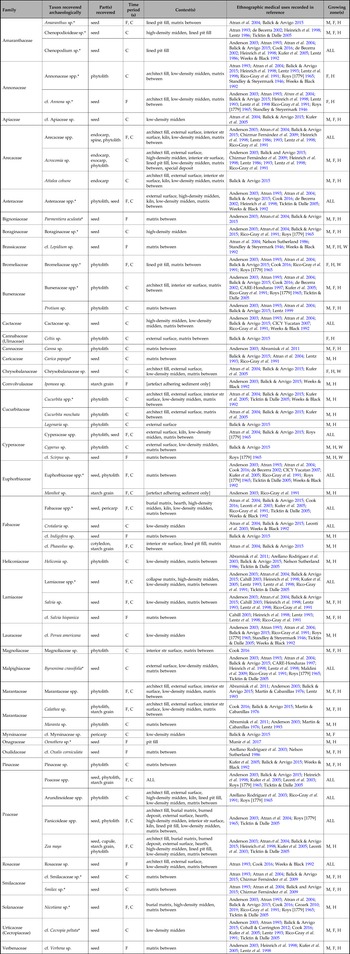
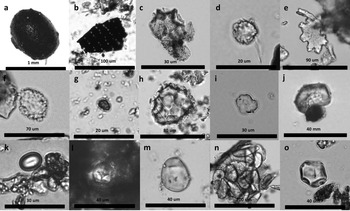
A model of overlapping practice is supported by the cross-section of plants I recovered from the four archaeological sites in northwestern Honduras (Table 1; Fig. 3). In these ancient communities, people rarely partitioned particular botanical practices into discrete contexts or sequestered artefacts for particular botanical tasks (Morell-Hart Reference Morell-Hart2011). This pattern may indicate that healthcare practitioners incorporated treatments into daily practices across spaces and prepared medicinal plants using a variety of artefacts. People in these communities would have devised specific treatments within broad social and ecological contexts that encompassed trade item availability, cosmological understandings and plant habitats. Their treatments would also have fitted within a local context of immediate afflictions and familial conceptions of health (similarly to Jennings et al. Reference Jennings, Merrell, Thompson and Heinrich2015; Kunow Reference Kunow2003; Lo et al. Reference Lo, Kadetz, Datiles and Heinrich2015).
Botanical taxa recovered from northwestern Honduran sites and ethnographic references corresponding to their use. Each entry includes the family name; the smallest identified clade for the taxon; which parts were archaeologically recovered in this study; which time period(s) correspond with the taxon in this study: Formative period or Classic period; which archaeological context(s) correspond with the taxon in this study; where medical uses are recorded for this taxon in the ethnographic literature; and from which zone(s) of the landscape these plants could have been obtained: Milpa field (cultivated or fallow), Forest, Home garden, or Wetlands. Asterisk (*) next to taxon denotes measurable bioactivity by Cohall and Carrington (Reference Cohall and Carrington2012); Lentz et al. (Reference Lentz, Clark and Hufford1998); Munir et al. (Reference Munir, Semmar, Farman and Ahmad2017); and/or Atran et al. (Reference Atran, Lois and Ek’2004). This subset of taxa is distilled from analyses of 52 microbotanical samples (from 21 artefact extractions and 26 sediment samples of 200 g) and 117 macrobotanical samples, representing 18 different types of contexts.

Selection of botanical residues recovered from flotation samples, sediments, and artefacts. (a) Cf. Salvia hispanica seed; (b) Asteraceae phytolith; (c) Annonaceae phytolith; (d) Marantaceae phytolith; (e) Celtis sp. phytolith; (f) Acrocomia sp. phytolith; (g) Arecaceae phytolith; (h) Cucurbita sp. phytolith; (i) Cyperaceae phytolith; (j) Fabaceae starch grain; (k) Capsicum sp. starch grain; (l) Zea mays starch grain; (m) Maranta sp. starch grain; (n) Calathea sp. starch grain cluster; (o) Ipomoea batatas starch grain.

In Table 1, I list the subset of botanical taxa archaeologically recovered from northwestern Honduran sites, note ethnographic references corresponding to their use and mark contemporary locations of growth. For each taxon, I also identify the botanical elements represented in the archaeological samples and presence/absence across two time periods and various types of deposits. Some plants were uniquely recovered from Formative period deposits, others uniquely from Classic period deposits, and some taxa cross-cut time periods.
The sampled deposits are primarily secondary (e.g. sweepings off building platforms), tertiary (e.g. midden deposits re-used as architectural fills) and quaternary (e.g. erosion-transported architectural fills that originally came from midden deposits). The overall lack of primary deposits available to sample meant that I was unlikely to identify a primary locus of medicinal activity. Furthermore, the recovered plant parts correspond primarily with deliberately unused and discarded elements (e.g. squash-rind phytoliths, maize-cob phytoliths, seeds from plants with medicinal leaves or resins). In contrast, the ethnographic record primarily catalogues the uses of plant parts that do not preserve well macrobotanically (e.g. leaves and resins) and/or the uses of plant parts that are consumed or otherwise obliterated (e.g. boiled into teas and drunk, mashed and used as poultices). For these reasons, the archaeological plant residues represented in this study conform more to discarded trimmings and deposits of unused parts, that I use as an index of potential acquisition and use.
At least 11 taxa (including Ipomoea, Oenothera and Parmentiera) were recovered from only Formative period deposits, while at least 30 taxa (including Acrocomia, Byrsonima, Carica, Celtis and Pinus) were recovered from only Classic period deposits. At least 17 taxa (including Amaranthus, Salvia, Calathea and Manihot) were recovered from both time periods, indicating some continuity of use. There appears to be no general pattern over time in terms of plant parts used (since many plants left only one type of diagnostic residue), locations of harvesting (e.g. milpa-grown or forest-collected), or contexts (as most came from a variety of secondary contexts).
The residues of plants used at the four sites near the Ulúa Valley also index uses and manipulations of the landscape by ancient site occupants. The medicinal plants I identified were harvested from a range of sometimes overlapping locations, ranging from more ‘cultivated’ to more ‘wild’. The elevations of the four archaeological sites fall within 300–900 m above sea level, and all lie within a region of Tropical Rainforest and Wet Tropical Highlands (Marshall Reference Marshall2007). The riverine areas are marked by highly agriculturally productive soils, similar to those of the lower Usumacinta in Guatemala, and the region is marked by a fairly broad range of habitats (Pope Reference Pope and Robinson1987). The geographic location of the four sites—all within reach of hilltop, lacustrine, riverine, valley and plateau areas—means ancient inhabitants were well positioned to obtain many if not all of their own materials from a number of zones. Ancient medical practitioners could have harvested most plant taxa (19) from a combination of milpa areas (fallow or cultivated), forests and home gardens, followed by a high number (13 taxa) that likely came from a combination of milpas and home gardens. But people could have harvested many identified taxa (14) from any of the four defined zones. Ancient people thus seemed to use a variety of locations to harvest medicinal plants, with inter- and intracommunity trade also being an option to obtain materia medica. The movement of other types of materials such as obsidian indicates that plants from outside these zones could have been traded in, although all of the plants represented in the archaeological assemblage are native, naturalized or currently cultivated in the region.
Most plants (46 taxa) were recovered from matrices between well-defined surfaces and a combination of other secondary contexts that included such matrices, indicating primarily sweeping zones, re-use of deposits and similar activities. There are only nine exceptions. Bottle gourd (Lagenaria) came solely from an external surface, a Boraginaceae family taxon solely from a high-density midden, Chenopodium solely from lined pit fill, Oenothera solely from regular pit fills, and five taxa (cf. Apiaceae, cf. Cecropia peltata, cf. Myrsinaceae, cf. Persea americana, Crotalaria) solely from low-density middens. Given these contexts, it is likely that most plant residues were moved around and re-used as much as surrounding sediments, and thus were found in sweeping zones, accumulated detritus and architectural fills more frequently than formal surfaces or middens.
Medicines, remedies, treatments
At the level of actual medicines, remedies and treatments in ancient southeastern Mesoamerica, fine-grained visibility is difficult, if not impossible. Incorporating multiple lines of evidence aids us in broadly identifying plants, but does not necessarily pinpoint their use. Moreover, mixtures of plant remains may result from either depositional factors or deliberate combinations of materials that people mixed together. Even with careful stratigraphic reconstructions during excavation, we have extremely limited ability to discern single episodes of pharmaceutical concoction and administration (even in a Pompeii-like scenario, as described by Ciaraldi Reference Ciaraldi2000; Reference Ciaraldi2002). Using broad brush-strokes, however, we can begin to paint a picture of medicinal plant use, scattered across a variety of spaces and contexts at the four Honduran sites.
Within Honduras, scholars have documented numerous plant parts prepared for both internal ingestion and external application (Lentz Reference Lentz1986; Reference Lentz1993; Lentz et al. Reference Lentz, Clark and Hufford1998; Nelson Sutherland Reference Nelson Sutherland1986; Standley & Steyermark Reference Standley and Steyermark1946). Some percentage between 4 per cent and 28 per cent of the 92 medicinally used Honduran species surveyed by Lentz et al. (Reference Lentz, Clark and Hufford1998) were identified in my study. This percentage is fluid due to the number of taxa (20+) recovered from the archaeological samples that could not be identified even to family level, and these taxa are not a part of this study. Other taxa were identified as simply belonging to a particular family containing species noted to be medicinally used in contemporary Honduras. Some of these taxa are distinguishable from each other as separate species (e.g. various Asteraceae spp.), but not identifiable given poor preservation and/or reference material availability.
Of the 19 significantly antimicrobial taxa Lentz et al. (Reference Lentz, Clark and Hufford1998) identified, only one (Annona) was definitively recovered in my analysis, while seven others were potentially recovered as unspecified taxa in the Asteraceae, Euphorbiaceae and Lamiaceae families. Although only a broad clade is identifiable in some cases (e.g. Euphorbiaceae sp.), there are still strong indications from ethnographic and ethnohistoric work that many of the plants people used in other activities also collectively formed a pharmacopoeia of medical treatments. I highlight a selection of these plants below, describing the overlapping uses of plants as medicines, ornamentals and ritual components; the overlapping views of non-cultivated plants as both ‘weeds’ and medicine; and the overlapping consumption of plants as food and medicine. I cluster plants into these categories because they represent common divisions in ethnobotanical studies, not because the plants are easily cleaved into separate domains of practice. We instead find a great deal of overlap in how people used these plants, incorporating the same species into multiple kinds of activities dependent on their needs.
Overlap between garden ornamentals, ritual components and medicinal plants
Plants that commonly grow in home gardens fit into a number of uses: shade, ornament, scent and ritualized practice, among others. The wide variety of spaces where such species are found sometimes indicates adventitious growth in home garden and disposal areas, and in other cases deliberate use and disposal near the home.
First, there was a surprisingly high ubiquity of false pennyroyal (Hedeoma) in the archaeological samples. People use taxa in this genus medicinally and/or as flavouring elsewhere in the world (http://powo.science.kew.org/?q=hedeoma), although there are no specific recorded uses in Mesoamerica. One cf. Verbena seed was recovered from construction fills in this study. Although there are no recorded medicinal uses specific to Honduras for taxa in this pungent genus, other scholars in Mesoamerica have noted the use of these plants for a variety of maladies (Anderson Reference Anderson2003; Heinrich et al. Reference Heinrich, Ankli, Frei, Weimann and Sticher1998; Kufer et al. Reference Kufer, Forther, Poll and Heinrich2005; Lentz et al. Reference Lentz, Clark and Hufford1998). Another species in the verbena family, Duranta repens, is invoked in an incantation in the Ritual of the Bacabs for a ‘worm in the tooth’, while Vitex gaumeri is used physically for asthma, malaria, ulcers and abscesses (Roys [1779] Reference Roys1965).
In terms of plants traditionally categorized purely as ornamentals, heliconias (Heliconia spp.) are the only taxa recovered that fit this designation. The distinctive phytoliths of heliconia species were found in a midden as well as in fills between floor surfaces. In modern home gardens, people favour the striking flowers of heliconia plants. But various heliconia species have also been used in general medicinal practice (Arellano Rodríguez et al. Reference Arellano Rodríguez, Flores Guido, Tun Garrido and Cruz Bojorquez2003) while the roots, specifically, have been targeted for use in diuretics (Nelson Sutherland Reference Nelson Sutherland1986). Magnolia family (Magnoliaceae) species, prized for their flowers, also appear ethnographically (Cook Reference Cook2016) and in Aztec codices (de la Cruz & Badiano Reference de la Cruz, Badiano and Gates2000; de Sahagún Reference de Sahagún, Dibble and Anderson2012) as medicinal plants.
Tobacco (Nicotiana) is more commonly associated with ritualized practices (Groark Reference Groark2010), yet seeds of this taxon were recovered from high-density middens outside a household patio group and in between two structures, in addition to burial fills inside of a structure. In The Ritual of the Bacabs, tobacco has been noted in physical treatments for almost every ailment: asthma, bites and stings, bowel complaints, chills, fever, seizures, sore eyes, skin diseases and urinary complaints, and is frequently invoked in incantations (Roys [1779] Reference Roys1965). Colonial period Aztec codices document the use of tobacco species for a variety of maladies, including fever, gout and fatigue (de la Cruz & Badiano Reference de la Cruz, Badiano and Gates2000; de Sahagún Reference de Sahagún, Dibble and Anderson2012). In contemporary practice, people smoke tobacco, rub it on clothing to ward off snakes and mix it with water to treat ticks and colmoyote worm (Atran Reference Atran1993).
Copal (Protium sp.) epidermal phytoliths were also recovered adjacent to a structure. Apart from common use in Mesoamerican religious ceremonies, in medicinal treatments copal resin is burned or heated for rheumatism and toothache (Atran Reference Atran1993). Other indeterminate Burseraceae family species were recovered from a variety of locations. Potential uses for plants in the broader Burseraceae family, like gumbo limbo (Bursera simaruba), include the bark as a remedy for chechem (Metopium spp.) irritation and the leaves and resin for fever and acne (Atran Reference Atran1993; Rico-Gray et al. Reference Rico-Gray, Chemás and Mandujano1991). In the Ritual of the Bacabs, Burseraceae species were cited as medicinally valuable when applied externally or internally ‘for many complaints’, while also invoked in incantations for a variety of maladies (Roys [1779] Reference Roys1965) and referenced in Aztec codices as used for ‘calming’ (de la Cruz & Badiano Reference de la Cruz, Badiano and Gates2000; de Sahagún Reference de Sahagún, Dibble and Anderson2012). Similarly, resinous pine family (Pinaceae) leaf phytoliths were also recovered from fills in several locations. Resin of various pines is burned as incense in ritualized practice (Atran Reference Atran1993; Dussol et al. Reference Dussol, Elliott, Pereira and Michelet2016; Morehart et al. Reference Morehart, Lentz and Prufer2005), while the sap of has been applied to the skin by Paya people to kill worms (Lentz Reference Lentz1993).
Overlap between non-cultivated taxa, ‘weeds’ and medicinal plants
‘Weeds’ are difficult to define, as some authors categorize them according to ecological niche (e.g. grasses growing in human-disturbed areas associated with crops or cleared sites) and other authors according to lack of perceived human use or detriment to human activity (e.g. dandelions growing in sidewalk cracks). Following either of these definitions, the most common ‘weedy’ species in the Honduran study include members of the grass, sunflower, oxalis and spurge families.
Residues from the grass family (Poaceae) included maize (Zea mays, detailed below), and multiple other species potentially used in thatching, bedding, tinder and for medicinal purposes. Grass species were recovered in the form of phytoliths, starch grains and seeds, from virtually every context and space across the four sites. Arundinoid grasses, found in multiple locations, may include Arundo spp. and Phragmites spp., used to treat kidney pains, wounds, inflammations and general pain (Arellano Rodríguez et al. Reference Arellano Rodríguez, Flores Guido, Tun Garrido and Cruz Bojorquez2003; Atran Reference Atran1993; Nelson Sutherland Reference Nelson Sutherland1986; Rico-Gray et al. Reference Rico-Gray, Chemás and Mandujano1991). In the Ritual of the Bacabs, these genera have also been noted in treatments for phthisis, fainting, dysentery, retention of urine and hiccups, and invoked in incantations to fight tarantula-eruption, tarantula-seizure and ulcers (Roys [1779] Reference Roys1965). Panicoid grass phytoliths were highly ubiquitous, found in association with almost every type of archaeological context. As noted in the Ritual of the Bacabs, the Panicoid grass Imperata contracta has been used as medicine for various internal and skin complaints, as well as invoked in incantations for asthma (Roys [1779] Reference Roys1965).
Sunflower family (Asteraceae) species were recovered as both microremains and macroremains from middens, detritus between defined surfaces and adjacent to structures in lined pit fills. Many sunflower family species were recovered, some distinguishable from each other as separate species but not identifiable given preservation conditions and/or reference material availability. Several Asteraceae taxa were noted by Lentz et al. (Reference Lentz, Clark and Hufford1998) as having measurable bioactive properties, and uses of other species cover a wide variety of maladies in contemporary Mesoamerica (Anderson Reference Anderson2003; Atran Reference Atran1993; Atran et al. Reference Atran, Lois and Ek’2004; Balick & Arvigo Reference Balick and Arvigo2015; Cook Reference Cook2016; de Becerra Reference de Becerra2002; Heinrich et al. Reference Heinrich, Ankli, Frei, Weimann and Sticher1998; Ticktin & Dalle Reference Ticktin and Dalle2005) and in the Colonial Period (de la Cruz & Badiano Reference de la Cruz, Badiano and Gates2000; de Sahagún Reference de Sahagún, Dibble and Anderson2012).
Cf. Lepidium seeds (Brassicaceae), recovered from fills between structures, may have also been used in a wide array of medicinal treatments (Atran et al. Reference Atran, Lois and Ek’2004; Nelson Sutherland Reference Nelson Sutherland1986; Standley & Steyermark Reference Standley and Steyermark1946). People have used plants in the Oxalis genus (Oxalidaceae) for varied uses, including O. yucatanensis as a snakebite antidote, for scab-forming and in infusions to treat wounds and diabetes, and O. latifolia as a medicine to treat childhood ailments and as tea for digestive problems (Arellano Rodríguez et al. Reference Arellano Rodríguez, Flores Guido, Tun Garrido and Cruz Bojorquez2003). Oxalis corniculata, one seed of which was recovered from trash between two structures, has been cited by Nelson Sutherland (Reference Nelson Sutherland1986) as used in medicine for mouth sores. Three Smilax seeds (Smilacaceae) were recovered from locations inside and outside house structures. Smilax spinosa is used medicinally as a diuretic, for rheumatism, skin conditions and respiratory issues (Chizmar Fernández et al. Reference Chizmar Fernández, Correa A. and Vargas2009), and the vine of one Smilax species can be cut, boiled and drunk as medicine treatment for ‘bad’ urine and blood (Atran Reference Atran1993). Species from Euphorbiaceae (spurge family) have a wide variety of general uses, from construction to medicine to common foodstuff, so it is no surprise that several species of this family were recovered from fills and garbage heaps. Genera in this family have been used for spider bites, cold sores and many other maladies (Anderson Reference Anderson2003; Atran Reference Atran1993; Atran et al. Reference Atran, Lois and Ek’2004; Cook Reference Cook2016; de Becerra Reference de Becerra2002; Kufer et al. Reference Kufer, Forther, Poll and Heinrich2005; Roys [1779] Reference Roys1965; Ticktin & Dalle Reference Ticktin and Dalle2005). Two of these species, Jatropha curcas and Acalypha arvensis, have been noted as having measurable antimicrobial properties (Lentz et al. Reference Lentz, Clark and Hufford1998).
Many of the aforementioned herbaceous taxa, found growing adventitiously in modern home gardens and fallow fields, are traditionally categorized as ‘weeds’. However, the frequent recovery of these plants in association with settlement, including the interiors of structures, indicates activities that complicate their designation purely as weedy species.
Alongside plants commonly considered (detrimental) weeds, there are other plants with documented utility that may not have been deliberately cultivated. Various recovered non-domesticated and non-cultivated taxa conform to the traditional category of ‘wild’ (though not necessarily ‘weed’) species. People currently use non-domesticated bean family (Fabaceae) trees, shrubs and herbaceous species in just about every way imaginable, from construction to food, in addition to various medicinal applications (Atran et al. Reference Atran, Lois and Ek’2004; Balick & Arvigo Reference Balick and Arvigo2015; Cook Reference Cook2016; Leonti et al. Reference Leonti, Sticher and Heinrich2003; Kufer et al. Reference Kufer, Forther, Poll and Heinrich2005; Ticktin & Dalle Reference Ticktin and Dalle2005). Cited medicinal applications include consuming the juice from fresh Cassia grandis legumes to strengthen the blood and boiling leaves of Gliricidia sepium in water to bathe the scalp for lice infestations (Lentz Reference Lentz1993). Bean family species are also mentioned for various medicinal uses in Aztec codices (de la Cruz & Badiano Reference de la Cruz, Badiano and Gates2000; de Sahagún Reference de Sahagún, Dibble and Anderson2012).
Trumpet tree (Cecropia sp.) seeds were discarded in a midden next to a household. These trees are cited as having multiple medicinal uses (Anderson Reference Anderson2003; Atran Reference Atran1993; Balick & Arvigo Reference Balick and Arvigo2015; Cook Reference Cook2016; Kufer et al. Reference Kufer, Forther, Poll and Heinrich2005; Lentz Reference Lentz1993; Ticktin & Dalle Reference Ticktin and Dalle2005). Lentz (Reference Lentz1993) noted that women ingested a tea made from C. peltata to ease the pain of childbirth, while Atran (Reference Atran1993) recorded how people used C. obtusifolia leaves for diabetes, wounds and bone fractures.
Bromeliad family (Bromeliaceae) phytoliths were found in both sediments and artefacts from various locations. People have used at least two species in this family (Bromelia karatas and B. plumierii) medicinally (Atran Reference Atran1993; Rico-Gray et al. Reference Rico-Gray, Chemás and Mandujano1991), while another species, the epiphyte Tillandsia, has been used physically to relieve headaches and other issues, as well as in incantations against seizures (Roys [1779] Reference Roys1965).
Overlap between staple foods, flavourings, and medicine
Ethnographers have documented a multitude of plant species in Mesoamerica that overlap as both food and medicine. At the four ancient communities in this study, people potentially used 12 key species for dual culinary and medicinal roles. In terms of root and tuber crops, I recovered various arrowroot family (Marantaceae) species, primarily as starch grains and phytoliths. Some arrowroot family species have been used as foods for invalids (Atran Reference Atran1993), while arrowroot (Maranta) and lerén (Calathea) species have been utilized as medicine to treat a number of ailments (Abramiuk et al. Reference Abramiuk, Dunham, Cummings, Yost and Pesek2011; Anderson Reference Anderson2003; Balick & Arvigo Reference Balick and Arvigo2015; Martin & Cabanillas Reference Martin and Cabanillas1976; Lentz Reference Lentz1993). Manioc (Manihot esculenta), recovered as starch grains, has also been ethnographically documented to have some medicinal use (Anderson Reference Anderson2003; Rico-Gray et al. Reference Rico-Gray, Chemás and Mandujano1991), while plants in the sweet potato genus (Ipomoea) appear in Aztec codices as medicines (de la Cruz & Badiano Reference de la Cruz, Badiano and Gates2000; de Sahagún Reference de Sahagún, Dibble and Anderson2012). In the Cannaceae family, achira (Canna) roots have been used as a vermicide (personal observation), as well as a remedy for nervous pains and spider bites (Roys [1779] Reference Roys1965).
Various commonly consumed grains and herbs have also taken on a medicinal role. Ethnobotanists have recorded goosefoot (Chenopodium) species as vermifuge treatments (Atran Reference Atran1993; Lentz Reference Lentz1993) and used in poultices for infection (Standley & Steyermark Reference Standley and Steyermark1946). Contemporary people use epazote (C. ambrosioides), in particular, for a wide array of physical complaints (Anderson Reference Anderson2003; Atran Reference Atran1993; Atran et al. Reference Atran, Lois and Ek’2004; Balick & Arvigo Reference Balick and Arvigo2015; Cook Reference Cook2016; de Becerra Reference de Becerra2002; Heinrich et al. Reference Heinrich, Ankli, Frei, Weimann and Sticher1998; Kufer et al. Reference Kufer, Forther, Poll and Heinrich2005; Lentz Reference Lentz1986). Further afield, Colonial Period Aztec practitioners identified amaranth (Amaranthus spp.) as a medicinal ingredient in both the Florentine (de Sahagún Reference de Sahagún, Dibble and Anderson2012) and the de la Cruz-Badianus (de la Cruz & Badiano Reference de la Cruz, Badiano and Gates2000) codices. In the northwestern Honduras samples, chia (Salvia hispanica) and cf. Salvia seeds were found next to structures and in middens. According to Cahill (Reference Cahill2003), people use all parts of this plant in Mexico for maladies from kidney issues to sprains, and frequently in infusions to ‘overcome resistance to uptake of medication’ (Reference Cahill2003, 607).
Residues of edible fruit species appeared in a variety of archaeological contexts. Cocoyol palm (Acrocomia) and papaya (Carica papaya) have both been noted across Mesoamerica as having multiple medicinal uses (Anderson Reference Anderson2003; Balick & Arvigo Reference Balick and Arvigo2015; Chizmar Fernández Reference Chizmar Fernández, Correa A. and Vargas2009; Heinrich et al. Reference Heinrich, Ankli, Frei, Weimann and Sticher1998; Lentz Reference Lentz1986; Reference Lentz1993; Lentz et al. Reference Lentz, Clark and Hufford1998). Atran (Reference Atran1993) cited the squash family species (Cucurbita spp.) as useful in fighting cutaneous infections and lice. Over the past hundred years, various custard apple (Annona) species have been noted to counter the evil eye, in body rubs for fevers and headaches (Atran Reference Atran1993), to kill lice (Standley & Steyermark Reference Standley and Steyermark1946), and for snake bites, diarrhea, cramps and unspecified ‘certain eruptions’ in the Ritual of the Bacabs (Roys [1779] Reference Roys1965). Lentz et al. (Reference Lentz, Clark and Hufford1998) cited A. purpurea specifically as a commonly used medicinal species with antimicrobial properties. People have used nance fruits (Byrsonima crassifolia) as decoctions for skin eruptions (Atran Reference Atran1993; Rico-Gray et al. Reference Rico-Gray, Chemás and Mandujano1991), dysentery, blood-vomit and yellow fever (Roys [1779] Reference Roys1965). Seeds of these fruits were found in many locations near structures, in middens and patios. Various parts of the avocado (Persea spp.) may have been used medicinally—people use decoctions of avocado leaves for kidney medicines (Atran Reference Atran1993), the rind as a vermifuge and the seeds for poisoning vermin (Standley & Steyermark Reference Standley and Steyermark1946). The avocado has also been prescribed for diarrhoea, bladder complaints and skin eruptions, as referenced in the Ritual of the Bacabs (Roys [1799] Reference Roys1965).
Pungent herbaceous species of southeastern Mesoamerica recorded in contemporary times as condiments and flavourings are also regularly recorded as components of medical practices. In this Honduran study, genera in the mint family (Lamiaceae) and the verbena family (Verbenaceae) were recovered across archaeological contexts, and mint family seeds especially were quite common across the four ancient communities. Herbs in the mint family are commonly used as condiments, medicines and scents, and noted by the Centro de Investigación Científica de Yucatán (CICY) Jardín Botánico as used for digestive medicines and as tranquillizers. Lentz et al. (Reference Lentz, Clark and Hufford1998) found several Hyptis species in the mint family to have significant antimicrobial activity, while Lentz's earlier work in a Jicaque community revealed that people used Hyptis verticillata in a beverage for stomach pains (Lentz Reference Lentz1986).
Apothecary craft
Contemporary people use specific medicinal plants in highly varied ways, as documented in the ethnographic and ethnohistoric literature of contemporary Honduras (Lentz Reference Lentz1986; Reference Lentz1993; Lentz et al. Reference Lentz, Clark and Hufford1998; Nelson Sutherland Reference Nelson Sutherland1986; Standley & Steyermark Reference Standley and Steyermark1946), and prepare medicines from these species in equally diverse ways. Plant parts and resins may be applied directly or transformed into special concoctions and medicinal vapours. Practitioners combine some plants with others, use some plants alone, and use yet other plants sequentially (e.g. alternating cleansing decoctions with pain-relieving salves on a wound).
In ancient northwestern Honduras, it is likely that people incorporated medicine into daily and spiritual life in a variety of ways, involving the skill sets of highly trained specialists as well as the common everyday knowledge of non-specialists. There was probably no single paradigm of plant medicines, as specialist knowledge may have been kept secret and individual families may have manufactured their own remedies (similarly to Abramiuk et al. Reference Abramiuk, Dunham, Cummings, Yost and Pesek2011; Benítez et al. Reference Benítez, March-Salas and Villa-Kamel2018; Carlson Reference Carlson and Maffi2001; Insoll Reference Insoll2011; Jennings et al. Reference Jennings, Merrell, Thompson and Heinrich2015; Lo et al. Reference Lo, Kadetz, Datiles and Heinrich2015; Stepp Reference Stepp2018; Totelin Reference Totelin2015; Zucconi Reference Zucconi2019). The resultant variation from household to household, and community to community, is probably evidenced by different types of medicinal plants recovered from different household areas, as presented in this archaeological study.
Moreover, when spatially situating their activities, practitioners may have had some sense of hazard in medicinal plant preparation, in terms of spiritual as well as physical harm. Similarly to the work of Mary Douglas in Purity and Danger ([1966] Reference Douglas1984, echoed in Fischler Reference Fischler1988 and Hamann Reference Hamann2008), some plants may have constituted ‘matter out of place’ in certain contexts or under certain conditions. People may have prepared or even grown certain plants in areas less accessible to children, given their toxic or spiritual potency. Highly toxic oleander family (Apocynaceae) plants have utility for toothaches and are also common garden ornamentals in modern Maya communities. In contrast, chechem trees (Metopium browneii) are never left to grow in contemporary house gardens, due to the strong alkaline irritants in the resin—a resin also paradoxically used in medicinal eye treatments. Apart from taxa with obvious chemical toxicity danger, it is difficult to say which plants people may have considered dangerous due to misplacement during ritualized practice, or considered contaminated through transgression of expected norms. For example, would the re-use of Tillandsia plants after placement on a ceremonial altar (Chapman Reference Chapman1985) have been transgressive and even health-threatening? Did people strongly associate certain plants with death and therefore use them only in funerary practices? For these and similar reasons, preparations and disposals of certain plants may have required special measures to avoid illness (similarly to Insoll Reference Insoll2011).
Such spatial questions pivot us toward the actual sites of apothecary craft. Medicinal taxa were recovered from the full range of spaces and contexts at the four Honduran sites, representing a wide array of locations where people harvested these plants, then processed them and disposed of their residues. The presence of medicinal plant residues at every type of location may indicate that people also administered apothecary treatments across the same range of locations, although it is unlikely that most of the recovered plant residues represent in situ detritus of apothecary activity.
The modes and sequences of processing during apothecary practice also have implications for archaeological visibility and interpretation. Archaeological visibility of some plants and plant parts is much lower in cases where, for biological reasons, some taxa preserve less well than others (e.g. phytolith-rich Asteraceae plants versus phytolith-poor Rosaceae plants: see Morell-Hart Reference Morell-Hart2019). Furthermore, the unused parts of plants that are discarded (e.g. palm endocarps) generally have higher archaeological visibility than the consumed parts that are processed and consumed (e.g. palm endosperm).
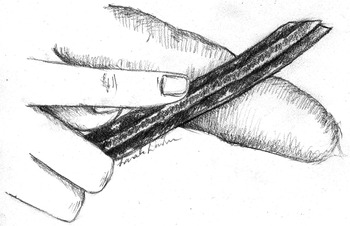
We must consider similar possibilities and pitfalls with regard to the implements that practitioners used in medicinal activities. In southeastern Mesoamerica, we have no evidence thus far of cached artefacts directly associated with medicinal preparations, and indeed there are few such finds world-wide (see examples in Arnott Reference Arnott2002; Ciaraldi Reference Ciaraldi2000; Derham Reference Derham and Arnott2002; Diamandopoulos Reference Diamandopoulos and Michaelides2014). Although I recovered potentially medicinal plant residues primarily from obsidian blade fragments, it is likely that the common Mesoamerican obsidian blade was frequently used to prepare plants for apothecary treatments as well as daily foodstuffs (such as tubers in the arrowroot family: Fig. 4). Such preparations involved transforming plants into teas, poultices, salves and decoctions through cutting and slicing. It is possible that people kept special implements segregated from everyday activities, depending on use for biologically active or spiritually dangerous materials. In this study, however, only discarded obsidian blade fragments were identified as potential tools of medical practice, and these artefacts were recovered only from refuse deposits and secondary fills.
Use of a prismatic obsidian blade to prepare lerén (Calathea) tuber. (Illustration by Sarah Davidson.)

Regardless of specific locations or implements related to medical practice, the wide distribution of diverse plants at these ancient Honduran communities indicates some measure of shared knowledge about their growing habits and uses. Given ethnographic and ethnohistoric documentation (as reviewed previously), it is likely that people with varying degrees of specialization practised apothecary crafts widely in ancient times, using different methods and diverse tools in a variety of locations. The array of medicinal plant residues recovered from artefacts and sediments in ancient Honduras—distributed across households and communities—hints at medical practitioners active in their communities. Some of these practitioners were specialists, some were apprentices, and some were non-specialists simply maintaining everyday health.
Conclusions
Identifying individual decoctions or general recipes for medicines in the archaeological record will never be a perfect endeavour. Ancient healthcare practices have some archaeological visibility, but identifying them requires that we use hybridized ways of looking at ancient plant residues. The diverse plants represented in these northwestern Honduran sites index medicinal products (and potential maladies) alongside other ethnobotanical practices. Common paradigms of plant use—such as ‘medicine’, ‘food’, ‘ornament’, ‘herb’—overlap in complex ways, much as common paradigms of places—such as ‘field’, ‘forest’, ‘home garden’—overlap in the types of economic plants they contain. Recognizing this overlap between categories is critical, as people may classify a single plant in multiple ways as weed, fallow plant, deer fodder, construction material, condiment and medicine. Moreover, as described previously, people may use a single plant for many different maladies, and a single malady may have many treatments, sometimes related to multiple symptoms.
The archaeological visibility of healthcare can also be amplified through new analytical methods. As with other domains of practice, such as foodways, we can enhance and optimize our data-set by incorporating complementary palaeoethnobotanical approaches. Some plant species are visible only through one type of index, whether starch grain, phytolith, seed, chemical signature or pollen grain (Morell-Hart Reference Morell-Hart2019), so multiple methods are needed to identify the full range of medicinal taxa. In other cases, we can strengthen tentative identifications by using multiple types of residues to pinpoint a single medicinal taxon. Whether used complementarily or corroboratively, combining multiple analytical methods fortifies and significantly expands our findings of medicinal plant use. Moving forward, there is a great deal of potential to this multi-pronged approach when investigating apothecary practice at other ancient sites.
As with studies of ecological sustainability, understanding human activities in the past has potential application to contemporary practice. Palaeoethnobotanical studies can help us to recover evidence of materia medica and even modes of processing, potentially amplifying current available treatments (similar to Abramiuk et al. Reference Abramiuk, Dunham, Cummings, Yost and Pesek2011; Carlson Reference Carlson and Maffi2001; Lo et al. Reference Lo, Kadetz, Datiles and Heinrich2015; Stepp Reference Stepp2018; Tu Reference Tu2011; Valle et al. Reference Valle, Meza and Tabora2018; Wilson & Hurst Reference Wilson and Hurst2012). The persistence in the use of certain taxa over time can indicate pharmacological efficacy, as plants identified in archaeological contexts may have been used by practitioners over the long term due to demonstrable healing properties (following Lentz et al. Reference Lentz, Clark and Hufford1998). The potential of such plants in modern healthcare should be taken into consideration by policy-makers seeking to maintain biodiversity and promote local plant use in communities across the globe.
Residues of botanical medicines become incorporated into the archaeobotanical record through complicated means, preserve differentially, and are subject to a dizzying array of taphonomic processes. By incorporating complementary lines of palaeoethnobotanical evidence, and making careful use of ethnographic and ethnohistoric analogues, we may come a bit nearer to illuminating apothecary practices and pharmacopoeias of ancient peoples. Analysis of botanical residues—in combination with osteological studies and other types of evidence—reveals a clearer picture of ancient pathologies and spiritual practices, alongside medical crafts. Such efforts help us to understand health and healthcare in the past, as well as map potential healthcare routes for the future.
Acknowledgements
First and foremost, I would like to thank the project directors at the four sites of my study: Rosemary Joyce, Julia Hendon, Jeanne Lopiparo and John Henderson. I would also like to thank the very many seasonal staff, volunteers and students at each of these projects. Some are participants I never had the opportunity to meet, but their labours laid all the groundwork for the research presented in this article. Rachel Cane provided early tutelage and contributed a portion of the macrobotanical dataset from Puerto Escondido. Christopher Morehart provided key information about Aztec medicinal plants and granted access to his collaboratively produced Comparative Ethnobotanical Database of Mesoamerica and the Greater Southwest, hosted at the School of Human Evolution and Social Change at Arizona State University. I would also like to give my general thanks to archaeologists in Mesoamerica who have been pursuing research projects that actively incorporate botanical evidence. These efforts are amplifying our knowledge of ancient lifeways as well as expanding possibilities for new research directions.