Introduction
Environmental parasitology is a recent discipline dealing with the interactions between parasites and pollutants in the environment (Goater et al., Reference Goater, Goater and Esch2013; Sures et al., Reference Sures, Nachev, Selbach, David and Marcogliese2017). In this discipline, the use of endohelminth parasites of fish (digenean trematodes, cestodes, nematodes and acanthocephalans) as sentinel organisms to elucidate metal pollution in aquatic ecosystems has received widespread attention (Sures, Reference Sures2003; Sures et al., Reference Sures, Nachev, Selbach, David and Marcogliese2017). These helminths have a high capacity to accumulate pollutants, such as toxic metals, which are found in very low concentrations in the environment, and to make them more detectable by analytical techniques (Sures et al., Reference Sures, Nachev, Selbach, David and Marcogliese2017). Acanthocephalans and cestodes exhibit the highest accumulation rates compared to other endohelminth parasites (Sures, Reference Sures2004; Nachev et al., Reference Nachev, Schertzinger and Sures2013; Sures et al., Reference Sures, Nachev, Selbach, David and Marcogliese2017). Most studies in this field, i.e. using fish helminth parasites as bioindicators for heavy-metal pollution in aquatic ecosystems, were carried out from 1990 to 2017, and mainly focused on host–parasite systems in freshwater ecosystems, but those in marine ecosystems remain little studied (Mazhar et al., Reference Mazhar, Shazili and Harrison2014; Nachev & Sures, Reference Nachev and Sures2016). Also, such studies in the Red Sea region are very rare and, so far, only two studies are known from this region; Bayoumy et al. (Reference Bayoumy, Osman, El-Bana and Hassanain2008) and Hassan et al. (Reference Hassan, Al-Zanbagi and Al-Nabati2016) concluded that five monogenean species and four nematode species, respectively, from Red Sea fishes were useful bioindicators for heavy-metal pollution.
The siganid fish Siganus rivulatus in the northern Red Sea is parasitized by two acanthocephalan species, Sclerocollum rubrimaris and S. saudii (Acanthocephala: Cavisomidae) (see Schmidt & Paperna, Reference Schmidt and Paperna1978; Diamant, Reference Diamant1989; Hassanine & Al-Jahdali, Reference Hassanine and Al-Jahdali2007; Al-Jahdali et al., Reference Al-Jahdali, Hassanine and Touliabah2015). In the present study, this fish was found to be permanently resident and parasitized with S. saudii in a seriously polluted, small lagoon named Sharm-Elmaya Bay, at Sharm El-Sheikh, South Sinai, Egypt, so the authors took the opportunity to determine cadmium (Cd) and lead (Pb) concentrations in this host–parasite system to determine its usefulness as a bioindicator for heavy-metal pollution in the Red Sea. Generally, this study is the first attempt to determine heavy-metal bioaccumulation using a fish–acanthocephalan system from the Red Sea.
Materials and methods
Sampling and sample preparation
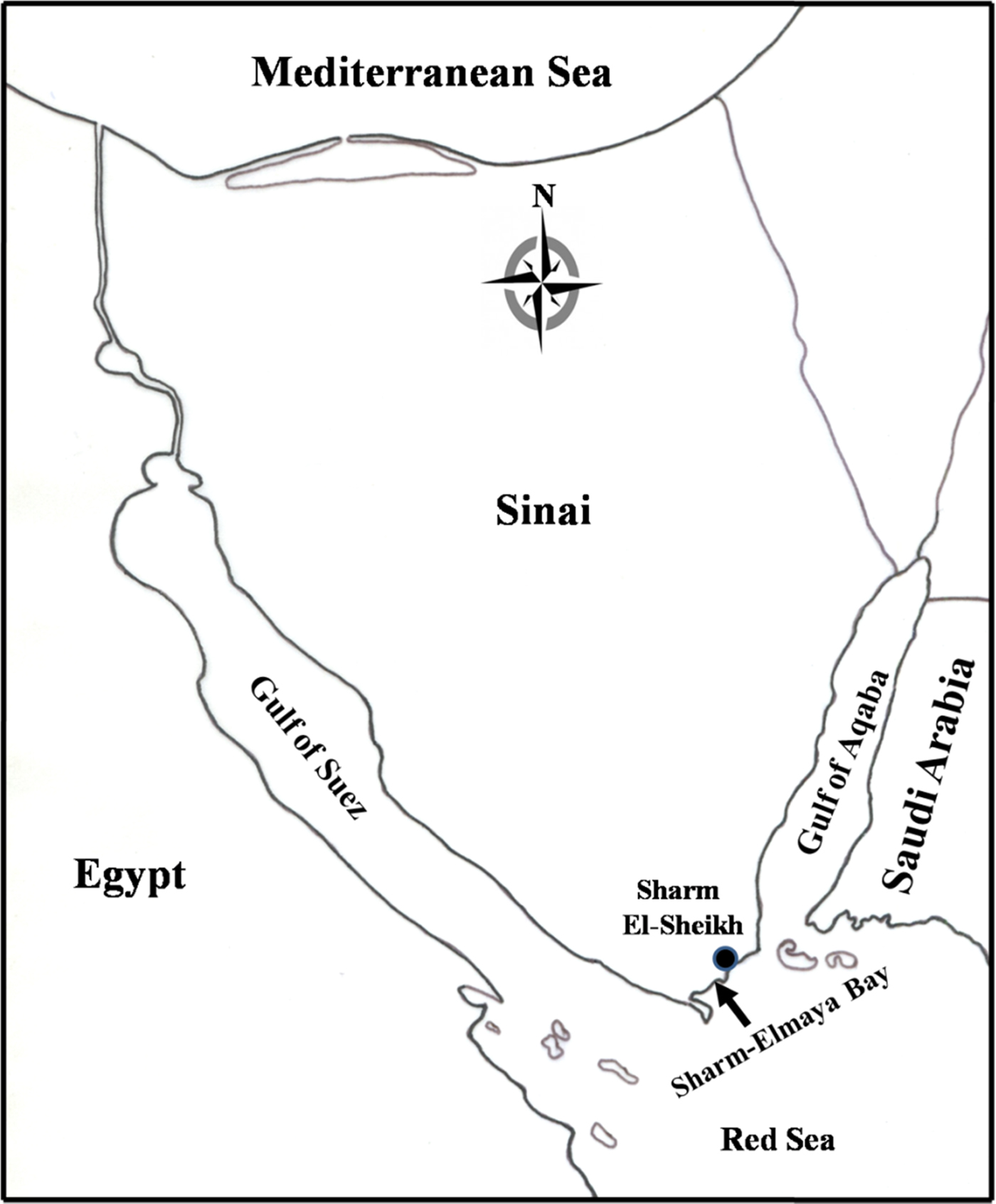
During March 2017, a sample of 34 specimens of the fish S. rivulatus (Teleostei, Siganidae), of nearly the same size (12–15 cm in fork length), were caught by hand net (by scuba-diving) in the Red Sea, from a small lagoon (c. 400 m in diameter and 3–6 m in depth) known as Sharm-Elmaya Bay (27°51.234′N, 34°17.605′E), at Sharm El-Sheikh, South Sinai, Egypt (fig. 1). Water and sediment samples were also taken from six different sites in this bay, which is seriously polluted due to massive tourism, the fleet of motorized boats that occupy the bay and evacuate their waste directly into its water, the antifouling paints used during boat maintenance, and many other maritime and anthropogenic activities (Egyptian Environmental Affairs Agency (EEAA), 2003).
Map of the Sinai Peninsula, Egypt, showing the location of Sharm-Elmaya Bay.

From each fish, samples of dorsal muscle, middle intestine and liver were taken, and kept frozen at –30°C until further processing for metal analysis. The infrapopulation (all individual worms) of S. saudii (Acanthocephala: Cavisomidae) found in the intestine of each infected fish was carefully teased out and counted; ten worms were taken randomly from each infrapopulation as a representative sample, thoroughly homogenized into a composite and kept frozen at –30°C until further processing for metal analysis. To minimize sample contamination, all the basic precautions (such as using sterilized stainless-steel dissection instruments, clean plastic vials with lids for preservation of tissue samples and sterile vessels for tissue digestion) were taken during the collection and treatment of samples.
Metal analysis
Water samples were filtered through a 0.4-μm membrane filter and acidified with suprapure nitric acid (HNO3) to pH less than 2, then analysed directly for the heavy metals (Cd and Pb) in an inductively coupled plasma mass spectrometer (ICP-MS; ELAN6100, Perkin Elmer, Concord, Ontario, Canada). Standards and blanks were treated similarly. Metal concentrations in water samples are expressed as μg l−1.
Sediment samples were analysed according to the method of Oregioni & Aston (Reference Oregioni and Aston1984). In this method, samples were dried in an oven at 110°C for 6 h, and then ground in an agate mortar. One gram of homogenized sample, sieved through a 0.75-mm sieve, was digested by a mixture of concentrated acids (nitric/perchloric/hydrofluoric acids (HNO3/HClO4/HF) = 3/2/1). The residue was finally dissolved in 3% hydrochloric acid (HCl; v/v) and its volume made up to 50 ml in a volumetric flask, and then analysed for the heavy metals in the aforementioned instrument. Blank digestions were treated in the same way. Metal concentrations in sediments are expressed as mg kg–1 dry weight.
Fish and parasite tissue samples were analysed according to the methods of Zimmermann et al. (Reference Zimmermann, Menzel, Berner, Eckhardt, Stüben, Alt, Messerschmidt, Taraschewski and Sures2001) and Nachev (Reference Nachev2010). After thawing, 300 mg (wet weight) of the homogenized fish tissues, or 150 mg of parasites, was placed into a 150-ml perfluoralkoxy vessel. A mixture of 2 ml HNO3 (65%, suprapure) and 2.5 ml hydrogen peroxide (H2O2, 30%, suprapure) was added and the vessel was heated for 90 min at about 170°C in a microwave digestion system. After digestion, the resulting clear sample solution was diluted to 5 ml with deionized water in a volumetric glass flask, and then analysed for the heavy metals in the aforementioned instrument. Standards and blanks were treated similarly. Metal concentrations in tissues are expressed as mg kg–1 wet weight.
The quality of analytical procedures was tested using three standard reference materials: (1) CRM–NIST 1640-Trace Elements in NaturalWater, National Institute of Standards and Technology, USA, (2) HISS-1-Marine Sediments, National Research Council, Canada; and (3) Dogfish muscle-DORM2, National Research Council, Canada). Analytical blanks were prepared to determine the detection limits.
Data analysis
Linear regression analyses were used to determine possible relationships between metal concentrations in the different organs of each fish and its acanthocephalan parasite. The statistical package SPSS software (version 19.0 for Windows; SPSS Inc., Chicago, Illinois, USA) was used for data analyses. The bioconcentration factor (BCF) or the ratio of metal concentration in the parasite and the host tissue (C [parasite]/C [host tissue]) was calculated according to Sures et al. (Reference Sures, Siddall and Taraschewski1999).
Results
Of the 34 S. rivulatus examined, 12 (35.3%) were free from any intestinal helminth parasites, while the other 22 (64.7%) were slightly or heavily parasitized by S. saudii Al-Jahdali, 2010 (Acanthocephala: Cavisomidae); no other helminth parasites were found in the intestine of these hosts. Accordingly, 22 S. saudii infrapopulations, ranging from 26 to 245 individuals, were collected from the infected fish, with a mean intensity of 112.3 (SD: ± 66.0) worms/host. Because fish individuals were nearly equal in size (12–15 cm in fork length), no significant relationship was found between fish size and size of S. saudii infrapopulation (R 2= 0.0283, slope = 7.236, P > 0.713).
The concentrations of Cd and Pb recovered from standard reference materials, accuracy and detection limits of each element are given in table 1.
The concentrations of Cd and Pb in certified reference materials, accuracy and detection limits determined by ICP-MS analyses.

Metal (Cd and Pb) concentrations in the bay water and sediments
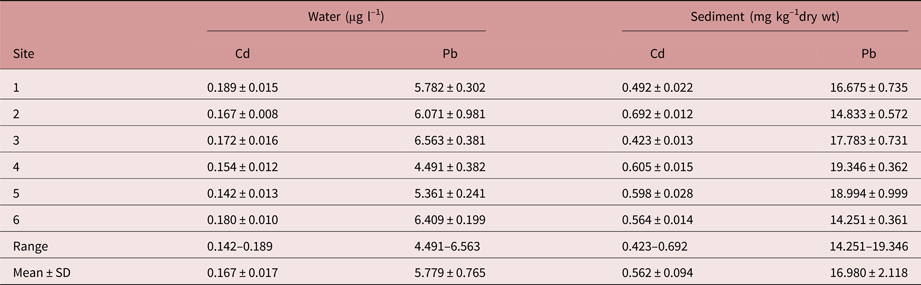
In all sampling sites, both Cd and Pb concentrations in the sediments were significantly higher than those in the water (table 2), and concentrations of Pb were consistently higher than those of Cd.
Mean concentrations of Cd and Pb in the water and sediments of Sharm-Elmaya Bay (Red Sea), Sharm El-Sheikh, South Sinai, Egypt.

Metal (Cd and Pb) concentrations in tissues of non-infected and infected fish
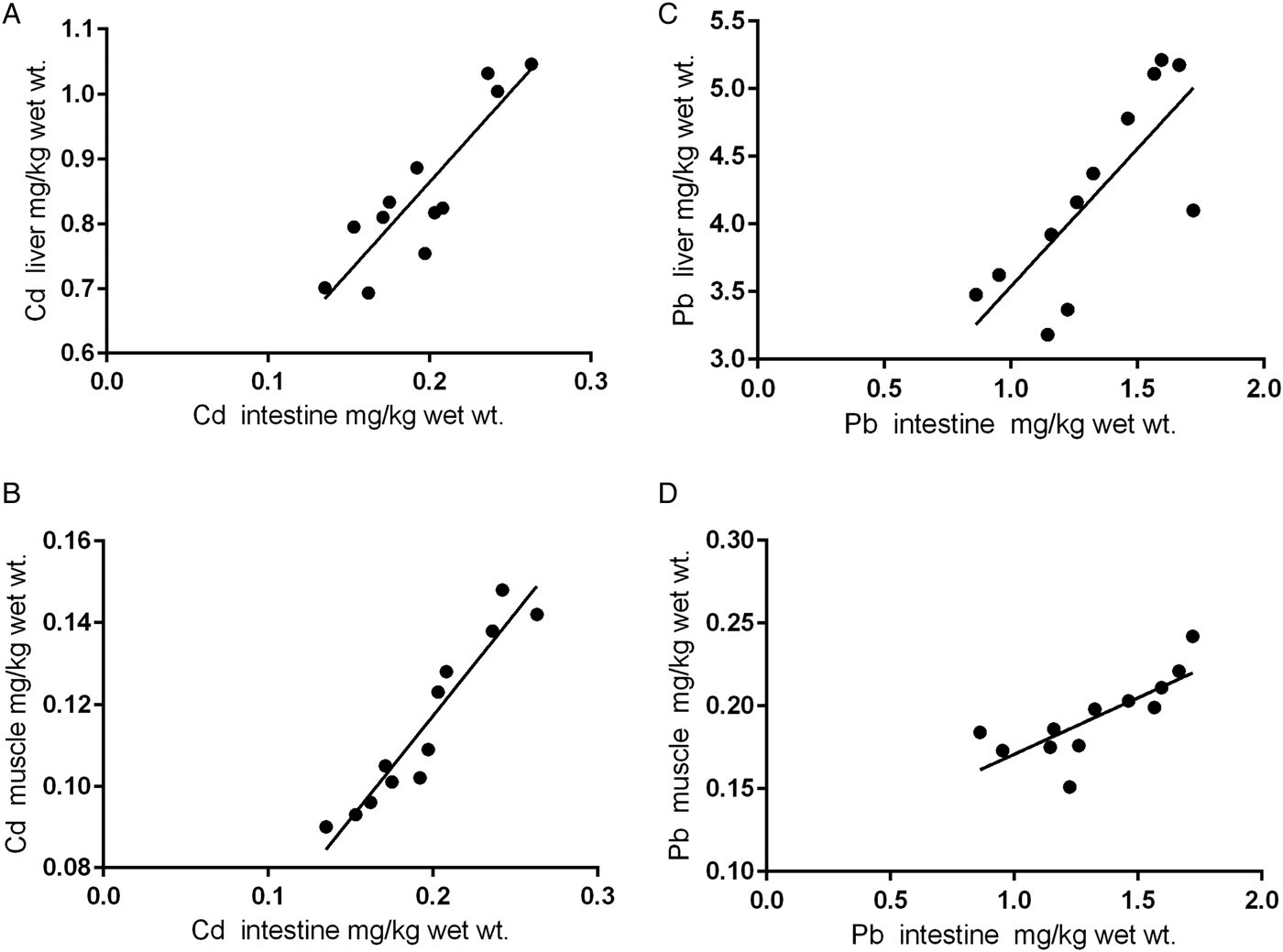
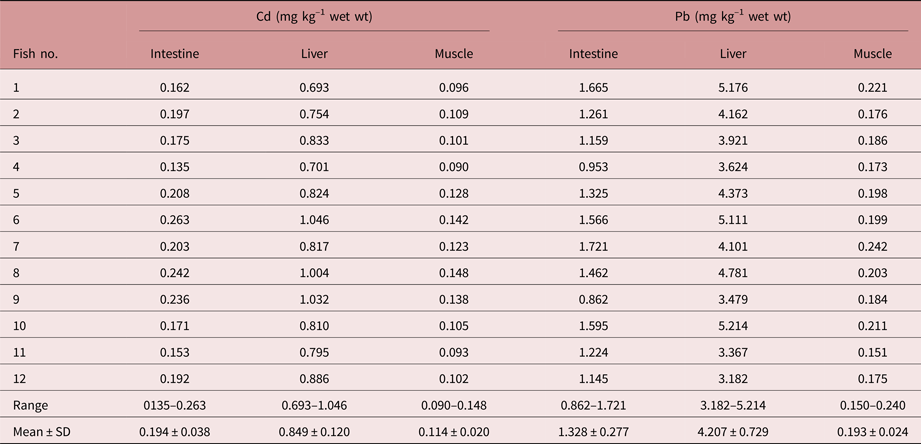
The Cd and Pb concentrations in the intestine, liver and muscle of 12 non-infected fish are recorded in table 3. In all these tissues, concentrations of Pb were significantly higher than those of Cd, and both decreased in the order: liver > intestine > muscle. There were strong positive relationships between Cd concentrations in fish intestines and its concentrations in both liver and muscle (R 2= 0.7803, slope = 2.771, P < 0.0001; R 2= 0.9042, slope= 0.5041, P < 0.0001, respectively) (fig. 2A, B). Similarly, there were significant positive relationships between Pb concentrations in fish intestines and its concentrations in both liver and muscle (R 2= 0.6024, slope = 2.037, P = 0.003; R 2 = 0.6010, slope = 0.0682, P = 0.003, respectively) (fig. 2C, D). That is, as Cd and Pb concentrations in the intestines of non-infected fish increased, their concentrations in the liver and muscle increased.
The relationships between metal concentrations in the intestine and their concentrations in the liver and muscle of non-infected fish. (A) Cd concentrations in intestine vs. its concentrations in liver; (B) Cd concentrations in intestine vs. its concentrations in muscle; (C) Pb concentrations in intestine vs. its concentrations in liver; and (D) Pb concentrations in intestine vs. its concentrations in muscle.

Concentrations of Cd and Pb in the selected tissues of 12 non-infected individuals of Siganus rivulatus.

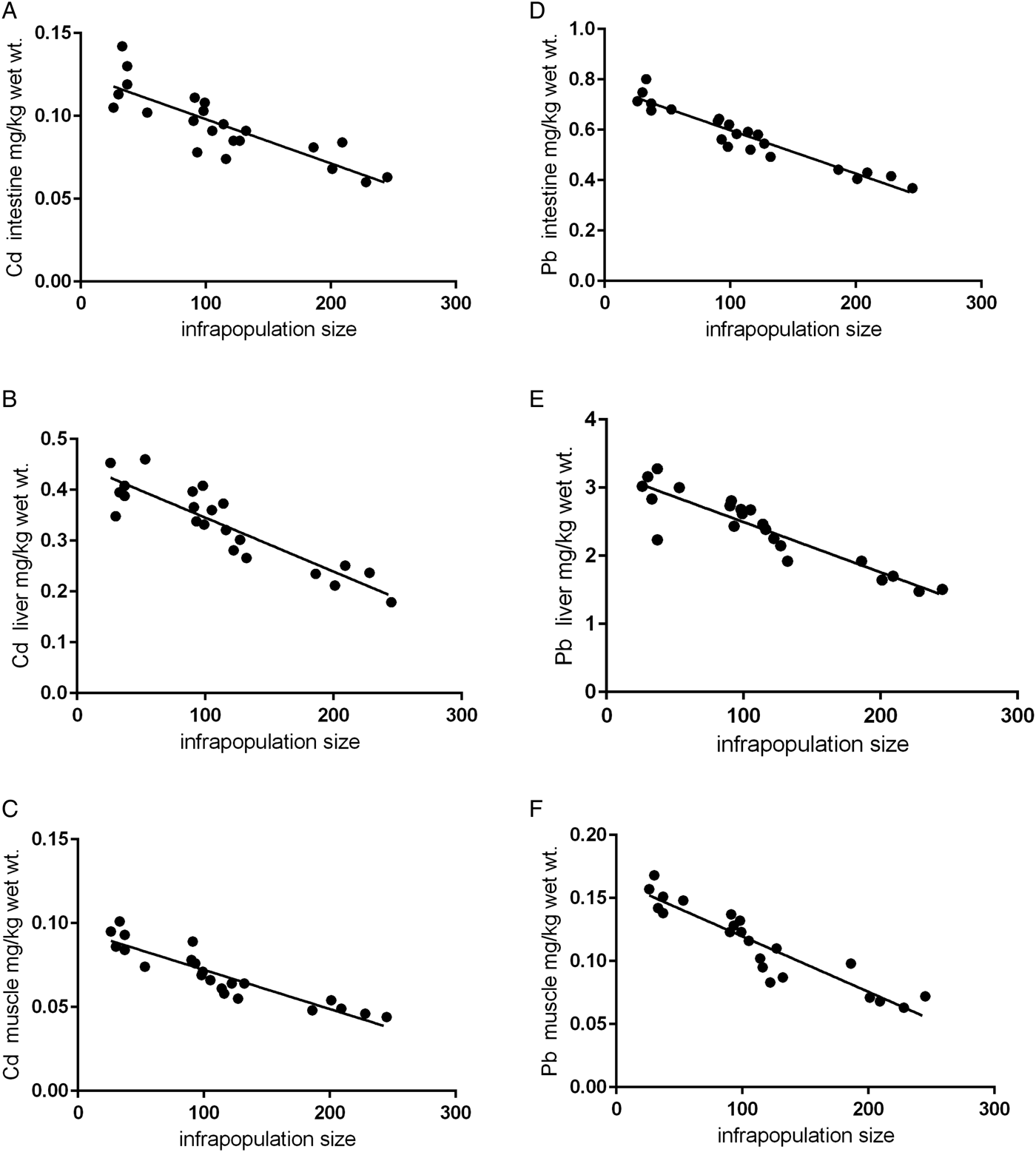
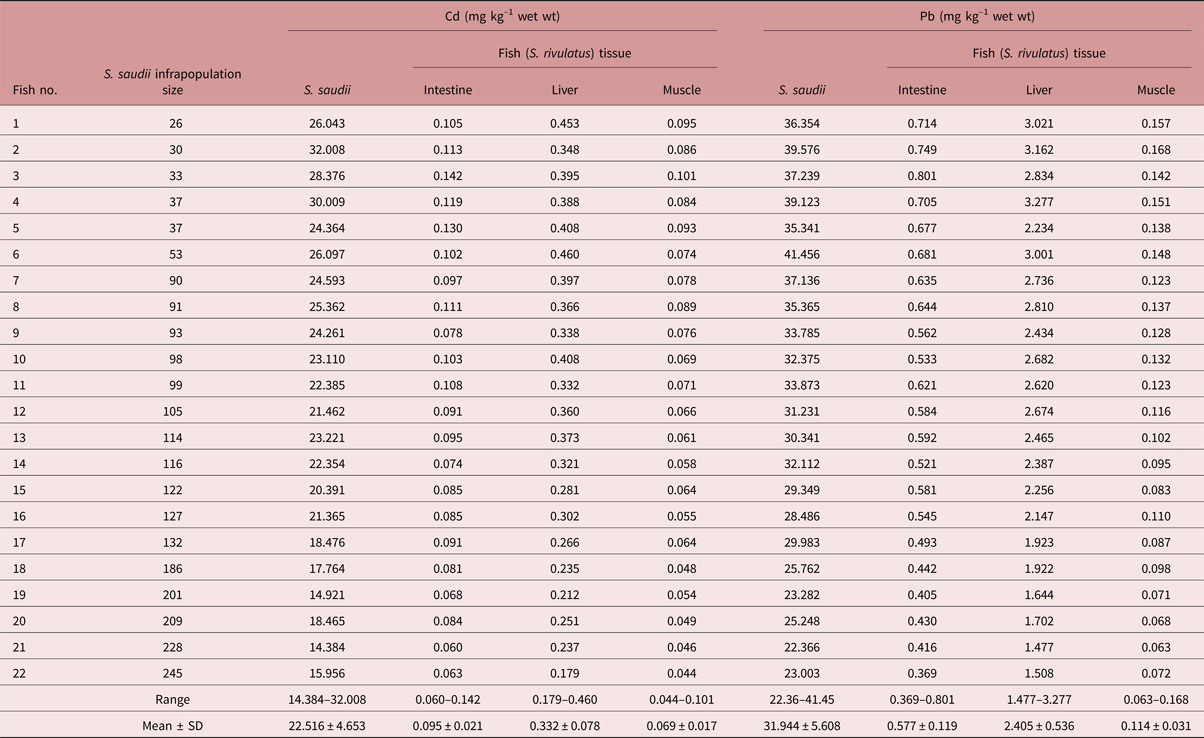
Cadmium and Pb concentrations in the tissues of infected fish (table 4) were significantly lower than those in non-infected fish, but the pattern of their accumulation was the same, where Pb concentrations in all tissues were significantly higher than those of Cd, and both were significantly decreased in the order: liver > intestine > muscle. The ranges of Cd concentrations in intestine, liver and muscle of non-infected fish were 0135–0.263, 0.693–1.046 and 0.090–0.148 mg kg–1 wet wt, respectively, but in infected fish these values were drastically reduced to 0.060–0.142, 0.179–0.460 and 0.044–0.101 mg kg–1 wet wt, respectively. Similarly, the ranges of Pb concentrations were 0.862–1.721, 3.182–5.214 and 0.150–0.240 mg kg–1wet wt in the tissues of non-infected fish and were reduced to 0.369–0.801, 1.477–3.277 and 0.063–0.168 mg kg–1wet wt in the tissues of infected fish. There were strong negative relationships between Cd concentrations in fish intestine, liver and muscle and S. saudii infrapopulation size (R 2 = 0.7067, slope = −0.00034, P < 0.0001; R 2 = 0.7996, slope = −0.0013, P < 0.0001; R 2 = 0.8317, slope = −0.0003, P < 0.0001, respectively) (fig. 3A–C). Similarly, there were strong negative relationships between Pb concentrations in these tissues and infrapopulation size (R 2 = 0.9098, slope = −0.0017, P < 0.0001; R 2 = 0.8237, slope = −0.0074, P < 0.0001; R 2 = 0.8565, slope = −0.00044, P < 0.0001, respectively) (fig. 3D–F). That is, as the infrapopulation size increases, the concentrations of both Cd and Pb in these tissues significantly decrease. Combination of these results strongly suggests competition between the fish host and its acanthocephalan parasites for absorption of these metals.
The relationships between metal concentrations in tissues of infected fish and S. saudii infrapopulation size in the fish intestine. (A) Cd concentrations in fish intestine vs. infrapopulation size; (B) Cd concentrations in fish liver vs. infrapopulation size; (C) Cd concentrations in fish muscle vs. infrapopulation size; (D) Pb concentrations in fish intestine vs. infrapopulation size; (E) Pb concentrations in fish liver vs. infrapopulation size; and (F) Pb concentrations in fish muscle vs. infrapopulation size.

Concentrations of Cd and Pb in 22 infrapopulations of Sclerocollum saudii and in the selected tissues of their fish hosts (Siganus rivulatus).

Metal (Cd and Pb) concentrations in the acanthocephalan parasite
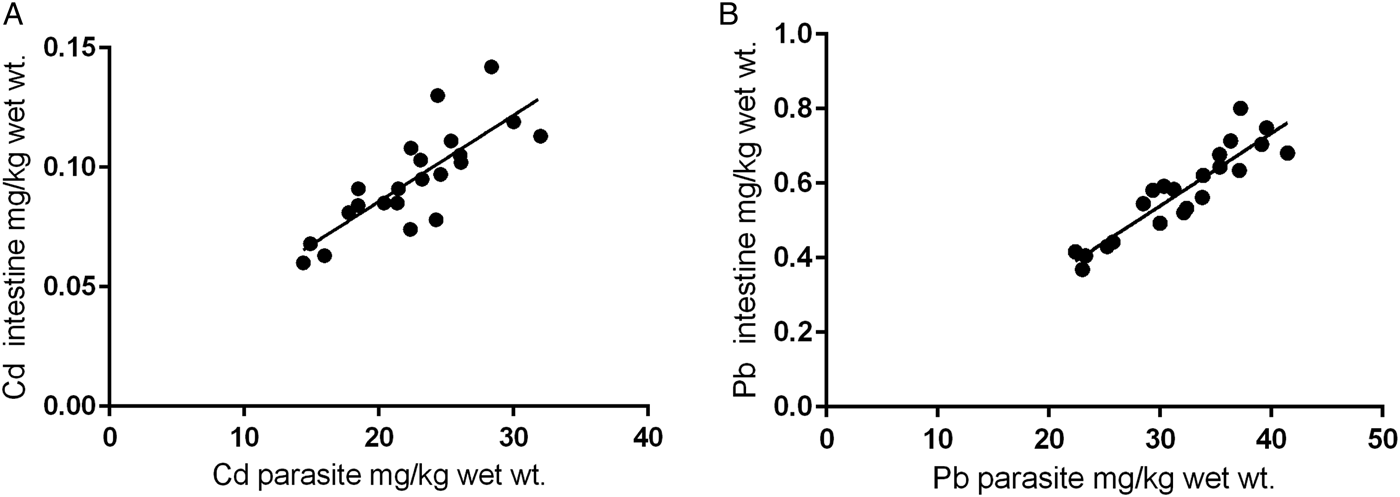
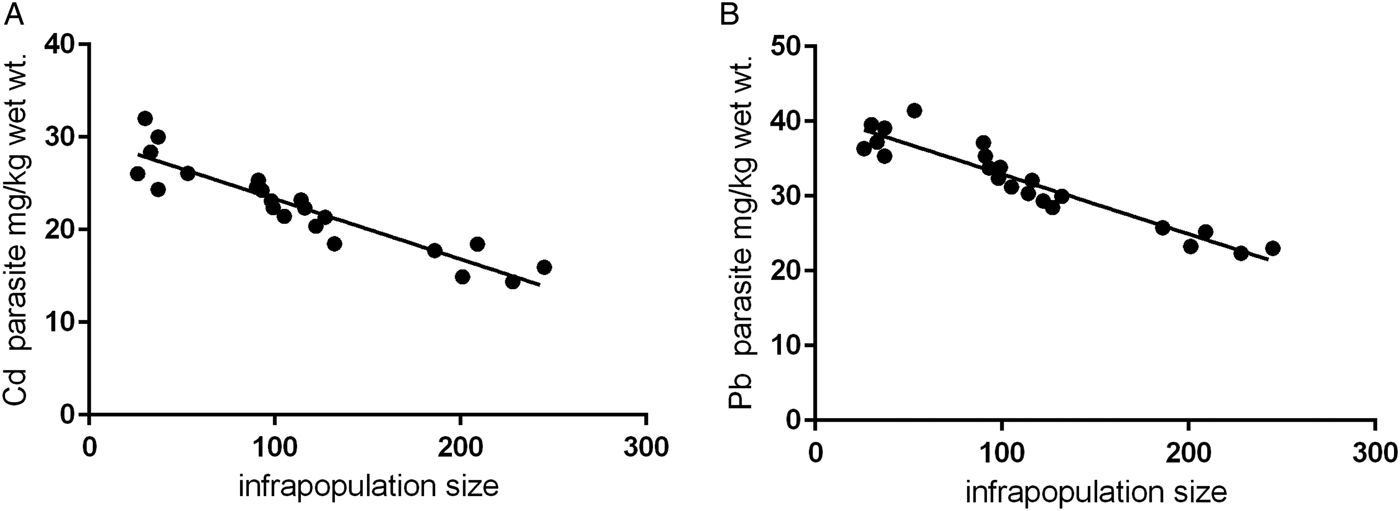
Mean Cd and Pb concentrations were calculated for 22 infrapopulations of S. saudii (table 4). These concentrations were much higher than those in the tissues of the fish host, since Cd and Pb concentrations in this acanthocephalan ranged from 14.384 to 32.008 and from 22.36 to 41.450 mg kg–1 wet wt, respectively. The relationships between Cd or Pb concentrations in the body of S. saudii and their concentrations in the fish intestine were clearly positive (R 2 = 0.6418, slope = −0.00235, P < 0.0001; R 2 = 0.8402, slope = −0.01964, P < 0.0001, respectively) (fig. 4A, B), i.e. as the Cd and Pb concentrations in the fish intestine increased, so their concentrations in parasite bodies increased. Controversially, the relationships between Cd or Pb concentrations in S. saudii and its infrapopulation size were clearly negative (R 2 = 0.8508, slope = –0.0777, P < 0.0001; R 2 = 0.6625, slope = −0.0604, P < 0.0001, respectively) (fig. 5A, B), i.e. as the infrapopulation size increased the concentration of both Cd and Pb in its individuals significantly decreased. Thus, metal concentrations in this parasite seem largely dependent on those in the host intestine and on its infrapopulation size. Combination of these results strongly suggests intraspecific competition among parasite individuals for absorption of these metals.
The relationships between metal concentrations in the fish intestine and their concentrations in the parasite (S. saudii). (A) Cd concentrations in the fish intestine vs. its concentrations in the parasite; and (B) Pb concentrations in the fish intestine vs. its concentrations in the parasite.

The relationships between metal concentrations in the parasite (S. saudii) and its infrapopulation size in fish intestines. (A) Cd concentrations in parasite vs. its infrapopulation size; and (B) Pb concentrations in parasite vs. its infrapopulation size.

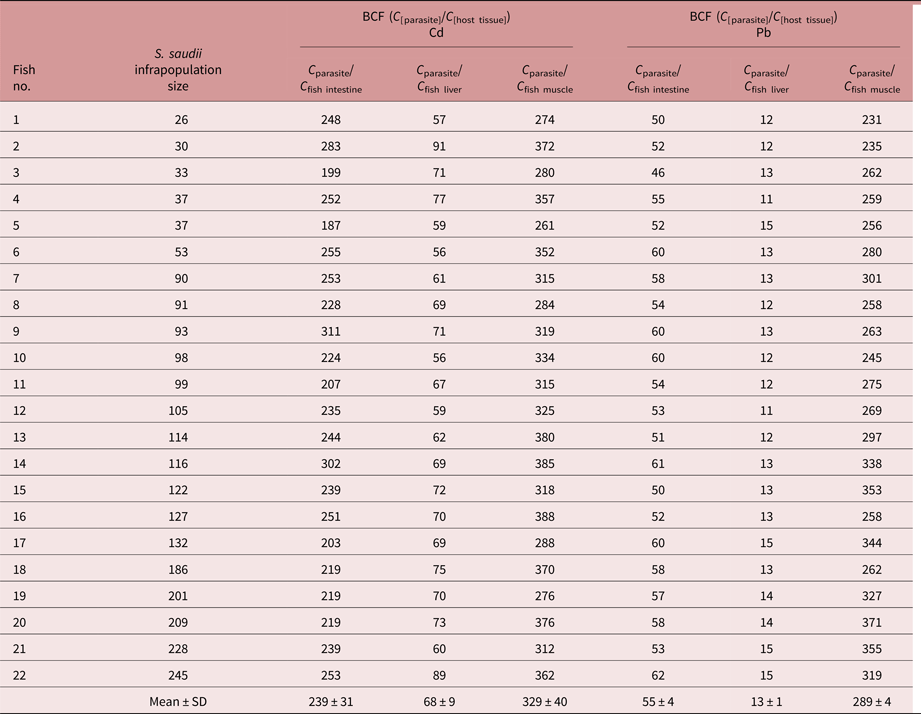
Concentrations of Cd and Pb in S. saudii were significantly higher than those in the tissues of its fish host (table 4). Thus, bioconcentration factors were relatively high (table 5) and seemed to be highly significant, since the Cd concentration in S. saudii was at least about 187-, 56- and 261-fold higher than in fish intestine, liver and muscle, respectively, while the Pb concentration in S. saudii was at least about 46-, 11- and 231-fold higher than in these tissues, respectively.
Bioconcentration factors – BCF (= C [parasite]/C [host tissue]) – for Cd and Pb in 22 infrapopulations of Sclerocollum saudii, calculated with respect to the selected host tissues.

Discussion
As expected, high concentrations of Cd and Pb were recorded in the acanthocephalan S. saudii compared to the tissues of its fish host. However, tissues of fish infected with this parasite contained significantly lower concentrations of these metals than those of non-infected ones (see below).
In the present study, the accuracy of analytical techniques ranged from 93 to 98%, which can be considered a reliable analysis.
Various anthropogenic sources (see Egyptian Environmental Affairs Agency (EEAA), 2003) contribute to the serious pollution of Sharm-Elmaya Bay, where Cd and Pb concentrations in the sediments were significantly higher than those in water. High concentrations in sediments may be due to the strong affinity of these metals for particles of bottom sediment or particles of suspended matter that settle on the bottom and build up the bottom sediments (Luorna, Reference Luorna, Furness and Rainbow1990; Dauvalter, Reference Dauvalter1998; Tekin-Ozan & Kir, Reference Tekin-Ozan and Kir2008). Compared to those of the sediment, low metal concentrations in water may be due to the sediment particles and aquatic organisms that accumulate heavy metals from the water column (Karadede & Ünlü, Reference Karadede and Ünlü2000; Al-Saadi et al., Reference Al-Saadi, Al-Lami, Hassan and Aldulymi2002; Tekin-Ozan & Kir, Reference Tekin-Ozan and Kir2008).
Our results revealed that Pb concentrations in tissues of non-infected and infected fish were significantly higher than those of Cd, and both metal concentrations decreased in the order: liver > intestine > muscle. Thus, hepatic tissue tends to accumulate higher levels of Cd and Pb than intestinal tissue, while muscle tissue tends to accumulate relatively low metal levels. High concentrations of metals in the liver may be due to their essential role in the synthesis of metallothioneins (metal-binding proteins) that have strong affinities for heavy metals, and concentrate and regulate them in the liver (Buckley et al., Reference Buckley, Roch, McCarter, Rendell and Matheson1982; Carpene & Vašák, Reference Carpene and Vašák1989; Al-Yousuf et al., Reference Al-Yousuf, El-Shahawi and Al-Ghais2000; Yousafzai et al., Reference Yousafzai, Khan and Shakoori2009), detoxifying the metal ions (Kojima & Kagi, Reference Kojima and Kagi1978). Similarly, intestinal tissue is metabolically active and can accumulate heavy metals in high concentrations, as recorded in many fish species (Marzouk, Reference Marzouk1994; Deb & Fukushima, Reference Deb and Fukushima1999; Khalil & Faragallah, Reference Khalil and Faragallah2008; Eneji et al., Reference Eneji, Ato and Annune2011). Controversially, muscular tissue is less active for heavy metal accumulation (Carpene & Vašák, Reference Carpene and Vašák1989; Kargin & Erdem, Reference Kargin and Erdem1991; Karadede & Ünlü, Reference Karadede and Ünlü1998, Reference Karadede and Ünlü2000; Karadede et al., Reference Karadede, Oymak and Ünlü2004; Eneji et al., Reference Eneji, Ato and Annune2011).
In the present study, metal concentrations in the tissues of fish infected with the acanthocephalan S. saudii were significantly lower than those in non-infected conspecifics. Such a decrease in metal concentration in the tissues of acanthocephalan-infected fish, due to metal uptake by acanthocephalans, has been reported in several studies (e.g. Sures & Siddall, Reference Sures and Siddall1999; Sures et al., Reference Sures, Siddall and Taraschewski1999, Reference Sures, Dezfuli and Krug2003; Eira et al., Reference Eira, Torres, Miquel, Vaqueiro, Soares and Vingada2009; Brázová et al., Reference Brázová, Hanzelová, Miklisová, Šalamún and Vidal-Martínez2015; Torres et al., Reference Torres, Eira, Miquel, Ferrer-Maza, Delgado and Casadevall2015; Paller et al., Reference Paller, Resurreccion, de la Cruz and Bandal2016). However, our study revealed strong negative relationships between metal (Cd or Pb) concentration in tissues of infected fish (intestine, liver, muscle) and S. saudii infrapopulation size, i.e. as the infrapopulation size increases, the concentrations of both Cd and Pb in these tissues significantly decrease. Heavy metals in the aquatic environment are mostly bound to suspended or sediment particles, and only tiny proportions of them are found as free (hydrated) ions and biologically available, i.e. able to be absorbed directly from water by organisms. Biological availability of metals is greatly affected by some environmental factors, such as temperature, salinity, water pH and water hardness (Merian, Reference Merian2004). Heavy metals can be taken up into fish either through the direct absorption from water by gills or through the ingestion of contaminated food and water, and metal-laden particles, via the alimentary tract, where metal-laden particles are likely to release formerly bound metals due to the lower pH in the intestine (Nachev & Sures, Reference Nachev and Sures2016). According to several authors (Grahl, Reference Grahl1990; Hofer & Lackner, Reference Hofer and Lackner1995; Sures & Siddall, Reference Sures and Siddall1999), metals absorbed through the gills or intestinal wall of the fish are carried by blood to different organs in the body. In the liver, most metals are removed from the blood to form organometallic complexes that then flow through the bile duct into the small intestine, where they can be re-absorbed by the intestinal wall to enter the hepatic-intestinal cycle or excreted with the fish faeces. In acanthocephalan-infected fish, the parasites interrupt the hepatic-intestinal cycle of metals by absorbing organometallic or bile complexes via their tegument with a higher efficiency than the intestinal wall of the fish host. So, the amount of organometallic complexes that are usually re-absorbed by the intestinal wall is markedly reduced in infected fish compared to non-infected conspecifics. Metal uptake through this route by acanthocephalans, and the ability of these worms to reduce metal concentrations in the intestinal wall of their fish hosts, are clear signs of competition between the fish host and its acanthocephalan parasites (Sures, Reference Sures2002). Bile may play vital roles in the development of acanthocephalans within the fish intestine; it activates the hatching of cystacanths (the infective stage of Acanthocephala) and enhances the absorption of some metals and fatty acids into the acanthocephalan body from the fish intestine (acanthocephalans cannot synthesize their own fatty acids) (Kennedy et al., Reference Kennedy, Broughton and Hine1978; Nickol, Reference Nickol, Crompton and Nickol1985; Starling, Reference Starling, Crompton and Nickol1985; Sures, Reference Sures2003).
Concentrations of Cd and Pb in S. saudii were much higher than those in the tissues of its fish host. The relationships between the concentrations of these metals in fish intestines and their concentrations in S. saudii were clearly positive, i.e. as Cd and Pb concentrations in fish intestine increased, their concentrations in this acanthocephalan increased. Controversially, the relationships between Cd and Pb concentrations in S. saudii and its infrapopulation size in fish intestine were clearly negative, i.e. as the infrapopulation size increased, the concentration of both Cd and Pb in its individuals significantly decreased. Decreasing metal concentrations with increasing infrapopulation size strongly suggests intraspecific competition among parasite individuals for absorption of the available metals in the fish intestine (Sures, Reference Sures2002). Thus, metal concentrations in S. saudii seem to be largely dependent on their concentrations in fish intestines and on the parasite infrapopulation size. Intraspecific competition for host resources is common in acanthocephalan infrapopulations in fish (e.g. Sasal et al., Reference Sasal, Jobet, Faliex and Morand2000; Kennedy, Reference Kennedy2006; Poulin, Reference Poulin2006; Al-Jahdali & Hassanine, Reference Al-Jahdali and Hassanine2012).
Currently, different fish helminth parasites (digeneans, cestodes, nematodes and acanthocephalans) are regarded as sentinel organisms for the elucidation of metal pollution in aquatic ecosystems (Sures, Reference Sures2003; Sures et al., Reference Sures, Nachev, Selbach, David and Marcogliese2017). These helminths have a high ability to accumulate pollutants, such as toxic metals that are found in very low concentrations in the environment, and make them more detectable during analytical analysis (Sures et al., Reference Sures, Nachev, Selbach, David and Marcogliese2017). Acanthocephalans and cestodes exhibit the highest accumulation rates (Sures, Reference Sures2004; Nachev et al., Reference Nachev, Schertzinger and Sures2013; Sures et al., Reference Sures, Nachev, Selbach, David and Marcogliese2017). In the most well-known example from a freshwater environment, the mean concentrations of Cd and Pb were 400 and 2700 times higher in the acanthocephalan Pomphorhynchus laevis than in the muscle tissue of its fish host (Leuciscus cephalus), and 27,000 and 11,000 times higher than in the water (Sures et al., Reference Sures, Taraschewski and Jackwerth1994; Sures & Taraschewski, Reference Sures and Taraschewski1995). In the present study, mean Cd concentrations in the acanthocephalan S. saudii were 239, 68 and 329 times higher than those in the intestine, liver and muscle tissues, respectively, of its fish host. Also, mean Pb concentrations were 55, 13 and 289 times higher than those in these tissues. Such bioconcentration factors are relatively high and seemed to be highly significant, since in marine ecosystems only tiny proportions of trace metals are found as free (hydrated) ions, and hence these metals are biologically less available for uptake by the intestinal parasites compared with freshwater ecosystems, as the concentration of hydrated ions decreases with increasing salinity (Merian, Reference Merian2004).
Generally, the present host–parasite system seems promising for biomonitoring of metal pollution in the Red Sea. However, S. saudii markedly reduced the mean concentrations of Cd and Pb in the muscle tissue of its fish host from 0.114 and 0.193 mg kg–1 wet wt in non-infected fish to 0.069 and 0.114 mg kg–1 wet wt in infected fish. Such a reduction is certainly of benefit for both fish and humans, since it lowers the toxic effects of these metals in fish muscle and makes muscle less contaminated when eaten by a human, since muscle is the most edible part of the fish.
Some worms of S. saudii were dead and seen hanging out of the anus of many fish. According to Al-Jahdali et al. (Reference Al-Jahdali, Hassanine and Touliabah2015), the life span of this acanthocephalan in the intestine of its fish host, S. rivulatus, ranges from 42 to 52 days. Thus, during this period, S. saudii individuals absorb some heavy metals from the intestine of their fish host, and then die and pass out through the anus. Their subsequent degeneration in water releases the metals, which then re-enter the aquatic environment.
Acknowledgements
We should like to extend our appreciation to the staff of Ras-Mohamed National Park, South Sinai, Egypt, for their help during the collection of the material.
Financial support
We are very grateful to King Abdulaziz University, Saudi Arabia, for continued encouragement and support.
Conflict of interest
None.
Ethical standards
The sampling reported in this paper complied with the current laws and animal ethics regulations of Egypt.