




No CrossRef data available.
Article contents
Genetic variation in the mitochondrial cytochrome c oxidase subunit 1 within three species of Progamotaenia (Cestoda: Anoplocephalidae) from macropodid marsupials
Published online by Cambridge University Press: 13 December 2004
Abstract
Sequence variation within 3 morphologically defined species of the anoplocephalid cestode genus Progamotaenia (P. ewersi, P. macropodis and P. zschokkei) was investigated using the cytochrome c oxidase subunit 1 gene. The magnitude of genetic variation detected within each morphospecies suggests that, in each instance, several cryptic species are present. Within P. ewersi, 5 genetically distict groups of cestodes were detected, 1 shared by Macropus robustus and M. parryi in Queensland, 1 in M. agilis from Queensland, 1 in Petrogale assimilis from Queensland, 1 in Macropus fuliginosus from South Australia and 1 in Wallabia bicolor from Victoria. In P. macropodis, cestodes from M. robustus from Queensland, Western Australia and the Northern Territory, M. parryi from Queensland and M. eugenii from South Australia were genetically distinct from those in Wallabia bicolor from Queensland and Victoria and from M. fuliginosus from South Australia. P. zschokkei consisted of a number of genetically distinct groups of cestodes, 1 in Lagorchestes conspicillatus and L. hirsutus from Queensland and the Northern Territory respectively, 1 in Petrogale herberti, P. assimilis and M. dorsalis from Queensland, 1 in Onychogalea fraenata from Queensland, 1 in M. agilis from Queensland and 1 in Thylogale stigmatica and T. thetis from Queensland. In general, genetic groups within each morphospecies were host specific and occurred predominantly in a particular macropodid host clade. Comparison of genetic relationships of cestodes with the phylogeny of their hosts revealed examples of colonization (P. zschokkei in M. agilis) and of host switching (P. zschokkei in M. dorsalis).
Keywords
Information
- Type
- Research Article
- Information
- Copyright
- © 2004 Cambridge University Press
INTRODUCTION
Genetic studies of speciation in cestodes, usually involving cryptic species, have suggested that both the host and geographical isolation can be significant factors. For example, studies of the cestodes of lemmings in the Arctic, using both molecular and morphometric data, have demonstrated the importance of host isolation during periods of glaciation as well as the colonization of unrelated hosts as being important in the evolution of cestode species (Haukisalmi et al. 2001; Wickström et al. 2001, 2003). In the case of the economically and medically important cestode Echinococcus granulosus, which consists of cryptic and as yet un-named species represented by the ‘sheep’, ‘horse’, ‘cervid’, ‘camel’ and ‘pig’ strains (Lymbery, 1995), the intermediate host species appears to have been a major factor in cestode speciation (Thompson & McManus, 2002).
An allozyme study of the anoplocephalid cestode Progamotaenia festiva, occurring in the bile ducts of marsupials (Baverstock, Adams & Beveridge, 1985), suggested not only that at least 10 cryptic species are present but, more significantly, that host and parasite evolution were not congruent in most instances. This degree of diversity of cryptic species is currently un-paralleled in other cestodes and suggests that the anoplocephalid cestodes of kangaroos represent a useful model for studying speciation in cestodes.
Progamotaenia is the dominant genus of anoplocephalid in kangaroos and wallabies (family Macropodidae). Currently, the 21 species of Progamotaenia recorded (Beveridge & Turni, 2003) from 47 species of host (Beveridge & Chilton, 2001) have been defined exclusively on the basis of morphological characteristics. A number of the species presently recognized are parasites of a single host species, such as P. aepyprymni found only in the rufous bettong, Aepyprymnus rufescens, or P. villosa, found exclusively in the spectacled hare wallaby, Lagorchestes conspicillatus. Others occur in 2 closely related host species, such as P. bancrofti, found in the nail-tailed wallabies Onychogalea fraenata and O. unguifera (see Beveridge, 1976, 1980). In contrast, other species, such as P. festiva, P. ewersi, P. macropodis and P. zschokkei, occur in a wide range of macropodids and exhibit considerable morphological variability (Beveridge, 1976, 1980).
Species of Progamotaenia occurring in a range of host species and exhibiting morphological variation may consist of a number of distinct genetic forms rather than a single species, as reported previously for P. festiva (see Baverstock et al. 1985). Examination of the relationships of several species complexes within Progamotaenia which use the same range of hosts could provide insights into the significance of the host in cestode speciation. In the present paper, genetic variability was investigated within P. ewersi, P. macropodis and P. zschokkei which occur in a wide range of host species and also exhibit a high degree of morphological variability. Given that mitochondrial (mt) DNA sequence data sets have been shown to be informative for investigating the systematic relationships of platyhelminths (e.g. Bowles, Blair & McManus, 1992; Bowles & McManus, 1993; Okamoto et al. 1995; Scott et al. 1997; Zhang et al. 1998, 1999; Wickström et al. 2003), the cytochrome c oxidase subunit 1 (cox1) gene was employed in the study.
MATERIALS AND METHODS
Collection of cestodes
Cestodes were collected opportunistically from fresh, road-killed kangaroos and wallabies, from ‘road-kills’ which had been frozen prior to examination for parasites or from macropods shot commercially. Cestodes were also obtained from wallabies trapped and killed primarily to obtain parasites for study. Cestodes from freshly killed animals or from defrosted carcases were washed in distilled water or saline and were frozen either at −20 °C or in liquid nitrogen. They were subsequently stored at −70 °C until used. For some specimens of P. ewersi and P. macropodis, samples were collected and frozen from the anterior, mid and posterior regions of the strobila. Parts of each of the cestodes used for molecular studies were also fixed in AFA (alcohol, formalin, acetic acid) (Pritchard & Kruse, 1982), stained with Celestine blue and mounted in Canada balsam. Voucher slides of individual specimens used in the study have been deposited in the South Australian Museum, Adelaide (SAM). Collection localities and coordinates, dates of collection, hosts and voucher registration numbers are given in Table 1.
Table 1. Origin of specimens used in the study of pcox1 of specimens of Progamotaenia ewersi, P. macropodis and P. zschokkei from kangaroos and wallabies (Localities cited are the nearest town, lake or mountain. More precise identification of the collection locality is provided by the latitudes and longitudes listed.)

Isolation of genomic DNA and enzymatic amplification
Total genomic DNA was isolated from ~5 mm portions from individual cestodes by sodium dodecyl-sulphate/proteinase K digestion (37 °C for 12 h) (Gasser et al. 1993), purified over a spin column (Wizard™ DNA CleanUp, Promega) and eluted in 30 μl of H2O. A portion of the mt cytochrome c oxidase subunit 1 gene (pcox1; ~450 bp) was amplified by PCR from 10–20 ng of genomic DNA using primers JB3 (forward: 5′-TTTTTTGGGCATCCTGAGGTTTAT-3′) and JB4.5 (reverse: 5′-TAAAGAAAGAACATAATGAAAATG-3′) (Bowles et al. 1992), known to be conserved for platyhelminths (Garey & Wolstenholme, 1989). The PCR was performed in 50 μl volumes using 50 pmol of each primer, 250 μM of each dNTP, 4 mM MgCl2 and 1 U Taq polymerase (Promega) under the following conditions: after an initial denaturation at 94 °C for 5 min, reactions were subjected to 30 cycles of 94 °C for 30 s (denaturation), 50 °C for 30 s (annealing) and 72 °C for 30 s (extension), followed by a final extension at 72 °C for 5 min in a 480 thermocycler (Perkin Elmer Cetus). Control samples without DNA were included in each PCR run. Host DNA is known not to amplify using the present PCR protocol (unpublished finding).
Single-strand conformation polymorphism (SSCP) analysis
After thermocycling, 10 μl of each amplicon (shown to represent a single band on an agarose gel) were mixed with an equal volume of loading buffer (10 mM NaOH, 95% formamide, 0·05% of both bromophenol blue and xylene cyanole). After denaturation at 94 °C for 15 min and snap-cooling on a freeze block (−20 °C), individual samples (12 μl) were loaded into the wells of pre-cast GMA™ gels (96×261 mm; product no. 3548; Elchrom Scientific) and subjected to electrophoresis for 14 h at 72 V and 7·2 °C (constant) in a horizontal SEA2000 apparatus (Elchrom Scientific) connected to a MultiTemp III (Pharmacia) cooling system. After electrophoresis, gels were stained for 15 min with ethidium bromide (5 mg/ml), de-stained in water for the same time and then photographed (using 667 film, Polaroid, Cambridge) upon ultraviolet trans-illumination.
DNA sequencing and phylogenetic analyses
An amplicon representing each distinct SSCP profile was purified over a spin-column (Wizard™ PCR Prep, Promega), eluted in 30 μl of H2O and then subjected to automated sequencing. Selected amplicons were column-purified and subjected to sequencing (BigDye® chemistry, Applied Biosystems), using primers JB3 and JB4.5, and some internal ones (CoX1F: 5′-GGTTTAGATGTTAAGACTGC-3′ and CoX1R: 5′-CCAATAATCATAGTAACAGA-3′). Nucleotide sequence data have been deposited in the EMBL, GenBank™ and DDJB databases under the accession numbers AJ 716020-45.
Phylogenetic analyses of the pcox1 nucleotide sequence data were conducted using PAUP* 4.0b10 (Swofford, 1999). The neighbor-joining method was used to construct trees from distance data. Pairwise comparisons of sequence differences (D) were made using the formula D=1−(M/L) (Chilton et al. 1995), where M is the number of alignment positions at which the two sequences have a base in common, and L is the total number of alignment positions over which the two sequences are compared. The maximum parsimony method, based on character state analysis, was also used. Characters were treated as unordered and were equally weighted; alignment gaps were treated as ‘missing’ in all analyses. Exhaustive searches with TBR branch-swapping were used to infer the shortest trees. The length, consistency index, excluding uninformative characters, and the retention indices of each most parsimonious tree were recorded. Bootstrap analyses (1000 replicates) were conducted using heuristic searches and TBR branch-swapping, with the MulTrees option, to determine the relative support for clades in the consensus trees. Although no previous phylogenetic studies had been carried out for the genus Progamotaenia based on morphological data sets, the genus is divisible into two groups (Schmidt, 1986), those with a simple velum and those with a scalloped or fimbriated velum. On the basis of outgroup comparisons, the simple velum is plesiomorphic (Beveridge & Spratt, 1996). Consequently, for the phylogenetic analysis of DNA sequences for P. zschokkei, with a complex velum, P. johnsoni (with a simple velum) was utilized as the outgroup, whereas for both P. ewersi and P. macropodis, P. queenslandensis (a species with a fimbriated velum) was used.
The parsimony analysis of each species of Progamotaenia was compared with a phylogeny of the hosts. Only host species from which cestodes were obtained were included in the analysis. While no well-resolved phylogeny for the Macropodidae exists currently, 4 major clades are recognized in all morphological and molecular studies of the hosts (for details see Beveridge & Chilton, 2001). The conservative phylogeny used by Beveridge & Chilton (2001) has also been employed in the current analysis, excluding the clade represented by the genera Dorcopsis and Dorcopsulus (scrub wallabies from New Guinea) from which no cestode specimens were obtained. Consequently, discussion is limited to differences among host clades.
RESULTS
No variation in size was detectable on agarose gels among the pcox1 amplicons from all 60 specimens of Progamotaenia examined. Based on SSCP analysis of all individuals, 26 samples representing the entire spectrum of profile variation for all host species and geographical origins were selected for sequencing. For these samples, 26 distinct pcox1 sequence haplotypes (396 bp in length, except for sample E29 having a 402 bp sequence; 30·3–36·4% G+C) were defined (Table 2), with 6, 10 and 10 haplotypes representing P. ewersi, P. macropodis and P. zschokkei, respectively.
Table 2. Nucleotide variation among 26 pcox1 haplotypes representing different species of Progamotaenia, including P. ewersi (E), P. macropodis (M) and P. zschokkei (Z) from kangaroos and wallabies (A dot indicates an identical base compared with sample E1.)

Alignment of all 26 haplotypes revealed nucleotide variation (75 purine transitions and 96 transversions) at 181 alignment positions (Table 2). The majority of the nucleotide variability (n=110; 60·8%) was at the third codon position, whereas the remainder (n=71; 39·2%) was at the first or second codon position. Pairwise comparisons among the 26 haplotypes revealed sequence variation ranging from 0·5–23·1% (Table 3). Sequence variation of 2–14·9%, 0·8–11·6% and 0·8–19·9% was recorded within P. ewersi, P. macropodis and P. zschokkei, respectively. Sequence differences between species ranged from 11·4–20·9% (P. ewersi vs P. macropodis), from 12·9–19·7% (P. macropodis vs P. zschokkei) and from 13·1–23·1% (P. ewersi vs P. zschokkei) (Table 3).

In order to exclude the possibility that any of the sequences obtained represented pseudogenes, all 26 DNA sequences were conceptually translated into pCOX1 amino acid sequences. The length of all of the predicted amino acid sequences was 132 residues, except for specimen E29 which was 2 amino acids longer. Comparison among amino acid sequences revealed 57 substitutions which were randomly distributed across the sequences and were primarily hydrophobic residues. Of the 57 substitutions, 9 were between isoleucine and methionine, 3 were between isoleucine and valine (Table 4). Within a morphospecies, amino acid sequence variation was 0–18·7% (P. ewersi), 0–10·8% (P. macropodis), 0–13·6% (P. zschokkei) (Table 5). There were no amino acid differences between samples E1 and E6, between M18 and M26, or between Z8 and Z51 (Tables 4 and 5). Sequence differences of 3·8–19·4% (P. ewersi vs P. macropodis), 6·1–21·5% (P. ewersi vs P. zschokkei) and 5·3–14·4% (P. macropodis vs P. zschokkei) were recorded between species (Table 5), and there was no unequivocal amino acid difference in the pCOX1 sequence between the morphospecies. Overall, the magnitude of variation in the pCOX1 sequence representing all haplotypes was 0–21·5%.
Table 4. Amino acid variability among the pCOX1 protein sequences inferred from the 26 pcox1 haplotypes representing Progamotaenia ewersi (E), P. macropodis (M) and P. zschokkei (Z) from kangaroos and wallabies. (A dot indicates an identical amino acid compared with sample E1 a dash indicates a deletion in relation to sample E29.)


Neighbor-joining trees for specimens representing each morphospecies (Fig. 1) demonstrated that much of the nucleotide variation detected was related to the host species from which the parasite was collected, with genetically similar cestode specimens occurring in the same or closely related host species. No nucleotide sequence variation was detected among the anterior, middle and posterior regions of 1 specimen of P. ewersi or among 3 specimens of P. macropodis. Similarly, for samples collected from the same host individual, no nucleotide sequence variation was detected among 4 specimens of P. ewersi (represented by E18) from W. bicolor, 3 specimens of P. zschokkei (represented by Z13) from Lagorchestes conspicillatus and 2 specimens of P. zschokkei (represented by Z48) from Macropus agilis. Genetic variation was detected within P. macropodis from individual hosts. There was ~5% difference between specimens representing M6 (n=5) and M12 (n=2) of P. macropodis from M. robustus, whereas the difference (0·8%) was considerably lower between specimens representing M18 (n=2) and M26 (n=5) from W. bicolor (Table 3). Low levels ([les ]2%) of genetic variation were detected between cestodes collected from different host individuals in the same geographical region, such as specimens E6 and E11 (2%; P. ewersi in M. parryi from Queensland) or specimens Z45 and Z48 (2%; P. zschokkei in M. agilis from Queensland). Relatively high levels of genetic variation (5·3%) were detected between specimens collected from the same host species in geographically remote localities, such as specimens M18 and M30 of P. macropodis from W. bicolor in Victoria and Queensland, separated by a distance of 2000 km. For P. macropodis (codes M12, M15 and M33) from M. robustus, genetic differences of 2·8–3·8% were detected among specimens examined from three different subspecies of host collected up to 3300 km apart. The extent of genetic variation among cestodes collected from closely related host species ranged from 5·6% (P. zschokkei from L. conspicillatus and L. hirsutus) to 12·1% (P. zschokkei from T. stigmatica and T. thetis) (Table 1).

Fig. 1. Neighbor-joining trees depicting the relationships between specimens of each Progamotaenia ewersi, P. macropodis and P. zschokkei from different species of macropodid hosts based on analyses of pcox1 nucleotide sequence data. Numerals above the branches represent bootstrap values. Numbers in parentheses represent the numbers of cestodes examined. Sample codes are given in Table 1. Abbreviations of host generic names are: Lagorchestes (L); Macropus (M); Onychogalea (O); Petrogale (P); Thylogale (T); Wallabia (W). Where samples were identical (E1 with E11, Z27 with Z31), only one is shown.
Despite some variation in bootstrap values, there was concordance in the topologies of the phylogenetic trees obtained for the pcox1 data set for Progamotaenia using the two different algorithms (cf. Figs 1 and 2). Comparison of the topologies of the parsimony tree based on the nucleotide sequence data for Progamotaenia spp. with that of the hosts revealed 3 distinct patterns (Fig. 2). Samples of P. macropodis occurred only in members of the Macropus (Macropus+Wallabia) host clade, and their relationships were generally congruent with the phylogeny of the hosts. Samples of P. ewersi were restricted largely to members of the Macropus clade. However, the phylogeny of the cestode parasites was only partly congruent with that of the hosts (Fig. 2). A single genetically distinct specimen (code E29) occurred in the Petrogale+Thylogale clade. Samples of P. zschokkei occurred primarily in members of the Petrogale+Thylogale clade as well as in the Lagorchestes+Onychogalea clade. Progamotaenia zschokkei with a distinct haplotype was detected in M. agilis, and a single specimen (code Z50) of P. zschokkei from M. dorsalis was very similar (99·5%) to those (code Z8) from Pe. assimilis.

Fig. 2. Cladograms depicting genetic relationships of specimens of Progamotaenia ewersi, P. macropodis and P. zschokkei from macropodid hosts, based on analyses of pcox1 nucleotide sequence data, compared with host phylogeny. Numerals above the branches represent bootstrap values. Sample codes are given in Table 1. Abbreviations of host generic names are: Lagorchestes (L); Macropus (M); Onychogalea (O); Petrogale (P); Thylogale (T); Wallabia (W). Abbreviations for subgenera of Macropus: Macropus (M); Notamacropus (N); Osphranter (O).
DISCUSSION
Analysis of the pcox1 mt DNA sequences representing 3 morphologically defined species of Progamotaenia revealed substantial levels of genetic variation within each nominal taxon. There was no genetic variation among samples taken from different regions of the strobila of the same individual cestode, and in most instances in which multiple cestodes were examined from the same host individual they were identical genetically. In only 2 of 14 instances were genetic differences detected in a series of cestodes from the same host individual. Specimens of P. macropodis from a single W. bicolor collected in Queensland (codes M18 and M26) differed at 0·8% of 396 nucleotide positions while specimens of the same species collected from a single M. robustus (codes M6 and M12), also from Queensland, differed at 5% of the positions. Differences between the cestodes in W. bicolor were not considered significant as there were no differences in the amino acid sequences between the 2 samples, and no morphological differences were detectable. The differences between the cestodes from M. robustus are considered in greater detail below.
Low levels ([les ]2%) of genetic variation were detected between samples collected from different host individuals of the same species obtained in the same geographical region. Such was the case for samples of P. ewersi from M. parryi in Queensland (codes E6 and E11), P. zschokkei from M. agilis in the Townsville region of Queensland (codes Z45 and Z48) and P. zschokkei from T. stigmatica in northern Queensland (codes Z27 and Z31). This information suggests that little genetic variation, as measured using sequence data from cox1, occurred within populations of cestodes. There were no amino acid differences between specimens of P. ewersi (codes E6 and E11). In some instances, similarly low levels of genetic variation were detected between cestode samples from very closely related host species, such as in P. zschokkei (codes Z8 and Z51) from the closely related rock wallaby hosts Pe. assimilis and Pe. herberti. The data presented therefore suggest that in the case of the 3 species examined, there was little or no genetic variation within individual cestodes, between cestodes within the same host individual, in different individuals from the same region and in 1 instance between cestodes from very closely related host species. The opportunity to compare the magnitude of genetic variation between cestodes occurring in the same host species and subspecies of host across a substantial geographical distance was presented by samples (M18 and M30) of P. macropodis from W. bicolor collected in Victoria and Queensland some 2000 km apart, which differed at 5·3% in nucleotide sequence. By contrast, much higher levels of genetic variation (>12%) were detected between samples of each of the 3 cestodes from different host species. The findings indicate that genetic variation within hosts and within populations is low and suggest that each cestode morphospecies comprises a number of cryptic species, although the current data do not permit the precise number of species to be defined.
In the case of P. zschokkei, samples from all known Australian hosts were examined (Spratt et al. 1991; Beveridge et al. 1998). There appear to be 5 distinct genetic groups within this complex, each infecting a different host genus, Macropus, Lagorchestes, Onychogalea, Petrogale and Thylogale. Genetic differences of 12·1% between cestodes from Thylogale stigmatica and T. thetis (codes Z27 and Z44) and of 5·6% between samples from Lagorchestes conspicillatus and L. hirsutus (codes Z13 and Z19) may reflect differences among populations in different host species but may also reflect geographical variation, since the samples were collected 1500 and 700 km apart, respectively. More extensive sampling would be needed to test these two possible hypotheses.
The pcox1 sequence of the single specimen of P. zschokkei (Z50) obtained from M. dorsalis was very similar (98·2%) to that (Z8) from the rock wallaby, Petrogale assimilis. P. zschokkei has not been found previously in M. dorsalis, in spite of extensive sampling (Beveridge et al. 1998; Beveridge & Turni, 2003). However, the M. dorsalis individual was collected in close proximity to colonies of rock wallabies. Thus, the occurrence of P. zschokkei in M. dorsalis probably represents a case of host switching. P. zschokkei is moderately prevalent (8%) in M. agilis (see Speare et al. 1983), is reported here for the first time in M. dorsalis but has not yet been found in any other species of Macropus, despite extensive sampling (Spratt et al. 1991).
In the case of P. ewersi and P. macropodis, it was not possible to collect Progamotaenia from every species of known host (see Beveridge, 1976). For P. ewersi, samples from M. agilis (code E14), W. bicolor (code E18) and Pe. assimilis (code E29) differed markedly (14·6–18·9%) in the pcox1 nucleotide sequence and thus represented distinctive genetic forms. In contrast, samples from M. parryi and M. robustus were similar genetically. These 2 host species overlap in habitat and may share parasites (Beveridge et al. 1998). The sample from M. fuliginosus from South Australia probably represents a fifth genetic group, but more extensive sampling of other species of Macropus from southern Australia is needed to confirm its distinctiveness.
Within P. macropodis, 3 distinct genetic groupings were detected. The sample from M. fuliginosus was the most distinctive genetically, while the samples from W. bicolor from Queensland and Victoria formed a single clade. The third clade represented samples from 3 subspecies of M. robustus collected at localities up to 3000 km apart, and from M. parryi and M. eugenii, again from geographically distant localities. This clade was poorly resolved, and additional samples from other host species, and geographical localities are required to better define its genetic structure. The finding of 2 distinct genetic groups of cestode in M. r. robustus at a single locality in Queensland could indicate a high level of genetic variation within the species or suggest that 2 distinct species occur at this locality. Re-examination of the voucher specimens for this sample revealed no obvious morphological differences. The current data parallel those of Baverstock et al. (1985) who showed that P. festiva from the same host and locality consisted of 2 distinct genetic groups.
The currently defined cestode morphospecies P. ewersi appears to comprise at least 4 distinct genetic groups, compared with at least 3 within P. macropodis and 5 within P. zschokkei. The molecular evidence presented here suggests that they represent separate species, but additional molecular and morphological data are required to support this proposal.
Comparison of the different genetic groups of cestodes of the genus Progamotaenia with the evolutionary relationships of the hosts has significant limitations, as no comprehensive, well-resolved phylogeny exists for the Macropodidae. The phylogeny used herein, based on morphological, immunological and sequence data, is highly conservative (see Beveridge & Chilton, 2001 for details) and is essentially that of Flannery (1989). As a consequence, comparisons are largely restricted to the level of host clade.
The genetic subgroups of cestodes within P. macropodis were all restricted to members of a single (i.e. the Macropus) clade of hosts and may be evolving in parallel with the hosts. Those of P. ewersi were found mainly in members of the Macropus clade, with a single sample (code E29) in a host belonging to the Petrogale+Thylogale clade. In this morphospecies of cestode, not all of the genetic groups found in members of the Macropus clade had co-evolved, with the basal sample being from M. agilis. The sample in Pe. assimilis is probably a distinct species, given the high level of genetic differentiation from other samples, and therefore represents an instance of colonization of the Petrogale+Thylogale clade.
Among genetic subgroups of P. zschokkei, the most basal group (represented by samples Z27 and Z44) was restricted to the genus Thylogale, considered to be the basal representatives of the Petrogale+Thylogale clade, whereas other genetic subgroups were distributed either within the same clade (in Petrogale species), in the Lagorchestes+Onychogalea clade, with only a single subgroup being in the Macropus clade. The data, particularly the occurrence of a highly distinctive clade in a single species of Macropus suggest that this is an example of colonization of the Macropus clade by cestodes which are parasitic predominantly in a related clade.
Therefore, the findings suggest that genetic differentiation has been occurring primarily within particular host clades but that colonization of hosts in related clades can occur. The single specimen of P. zschokkei found in M. dorsalis also indicates that host-switching can sometimes occur. There was no congruence between the patterns of genetic differentiation of the 3 species of cestode which might be expected in the event that each had evolved in parallel. Furthermore, the spectrum of hosts differed significantly between the 3 cestode taxa. Although the number of specimens of Progamotaenia included in this study is relatively small, the findings suggest a mixture of incipient co-speciation with host, of colonization of different host clades and, in one case, host switching. Additional studies would, however, be needed to confirm these hypotheses including more extensive sampling of hosts over wide geographical ranges and the inclusion of more species of hosts.
The present study suggests that cryptic species may occur within a number of the currently recognized species of Progamotaenia. If this were the case, it would provide a parallel situation with the cloacinid nematodes of kangaroos (Beveridge & Chilton, 2001). The reasons for this phenomenon may relate to a diverse, recently evolved host group with ample opportunity for both co-speciation and colonization of related hosts provided by grazing animals occurring in sympatry and acquiring their parasites by ingestion (Beveridge & Spratt, 1996). More detailed parallel studies of both cestodes and nematodes inhabiting the same host species may thus prove informative for investigating patterns of evolution in parasites.
This work was supported financially by the Australian Biological Resources Study and the Australian Research Council. Marsupials were collected under the following state-issued research permits: Northern Territory: 15747; Queensland: T00436, T00759, T00943, T1131, C6/000184/01/SAA; South Australia: EO 7358, G24351; Victoria: RP-90-052.
References
REFERENCES
BAVERSTOCK, P. R.,
ADAMS, M. &
BEVERIDGE, I. (
1985).
Biochemical differentiation in bile duct cestodes and their marsupial hosts.
Molecular Biology and Evolution
2,
321–337.Google Scholar
BEVERIDGE, I. (
1976).
A taxonomic revision of the Anoplocephalidae (Cestoda: Cyclophyllidea) of Australian marsupials.
Australian Journal of Zoology, Supplementary Series
44,
1–110.CrossRefGoogle Scholar
BEVERIDGE, I. (
1980).
Progamotaenia Nybelin (Cestoda: Anoplocephalidae): new species, redescriptions and new host records.
Transactions of the Royal Society of South Australia
104,
67–79.Google Scholar
BEVERIDGE, I. &
CHILTON, N. B. (
2001).
Co-evolutionary relationships between the nematode subfamily Cloacininae and its macropodid marsupial hosts.
International Journal for Parasitology
31,
976–996.CrossRefGoogle Scholar
BEVERIDGE, I.,
CHILTON, N. B.,
JOHNSON, P. M.,
SMALES, L. R.,
SPEARE, R. &
SPRATT, D. M. (
1998).
Helminth parasite communities of kangaroos and wallabies (Macropus spp. and Wallabia bicolor) from north and central Queensland.
Australian Journal of Zoology
46,
473–495.Google Scholar
BEVERIDGE, I. &
SPRATT, D. M. (
1996).
The helminth fauna of Australasian marsupials: origins and evolutionary biology.
Advances in Parasitology
37,
135–254.CrossRefGoogle Scholar
BEVERIDGE, I. &
TURNI, C. (
2003).
Progamotaenia capricorniensis sp. nov. (Cestoda: Anoplocephalidae) from wallabies (Marsupialia: Macropodidae) from Queensland, Australia.
Parasite
10,
309–315.Google Scholar
BOWLES, J.,
BLAIR, D. &
McMANUS, D. P. (
1992).
Genetic variants within the genus Echinococcus identified by mitochondrial DNA sequencing.
Molecular and Biochemical Parasitology
54,
165–173.CrossRefGoogle Scholar
BOWLES, J. &
McMANUS, D. P. (
1993).
NADH dehydrogenase 1 gene sequences compared for species and strains of the genus Echinococcus.
International Journal for Parasitology
23,
969–972.CrossRefGoogle Scholar
BOWLES, J. &
McMANUS, D. P. (
1994).
Genetic characterization of the Asian Taenia, a newly described taeniid cestode of humans.
American Journal of Tropical Medicine and Hygiene
50,
33–44.CrossRefGoogle Scholar
CHILTON, N. B.,
GASSER, R. B. &
BEVERIDGE, I. (
1995).
Differences in a ribosomal DNA sequence of morphologically indistinguishable species within the Hypodontus macropi complex (Nematoda: Strongyloidea).
International Journal for Parasitology
25,
647–651.CrossRefGoogle Scholar
FLANNERY, T. F. (
1989).
Phylogeny of the Macropodoidea; a study in convergence. In Kangaroos, Wallabies and Rat-kangaroos
(ed. Grigg, G., Jarman, P. & Hume, I.), pp.
1–64.
Surrey Beatty & Sons,
New South Wales.
GAREY, J. R. &
WOSTENHOLME, D. R. (
1989).
Platyhelminth mitochondrial DNA: evidence for early evolutionary origin of a tRNASer AGN that contains a dihyrdouridine arm replacement loop, and of serine-specifying AGA and AGG codons.
Journal of Molecular Evolution
28,
374–387.CrossRefGoogle Scholar
GASSER, R. B.,
CHILTON, N. B.,
HOSTE, H. &
BEVERIDGE, I. (
1993).
Rapid sequencing of rDNA from single worms and eggs of parasitic helminths.
Nucleic Acids Research
21,
2525–2526.CrossRefGoogle Scholar
HAUKISALMI, V.,
WICKSTRÖM, L. M.,
HANTULA, J. &
HENTTONEN, H. (
2001).
Taxonomy, genetic differentiation and Holarctic biogeography of Paranoplocephala spp. (Cestoda: Anoplocephalidae) in collared lemmings (Dicrostonyx; Arvicolinae).
Biological Journal of the Linnean Society
74,
171–196.Google Scholar
LYMBERY, A. J. (
1995).
Genetic diversity, genetic differentiation and speciation in the genus Echinococcus Rudolphi, 1801. In
Echinococcus and Hydatid Disease
(ed. Thompson, R. C. A. & Lymbery, A. J.), pp.
51–87.
CAB International,
Wallingford,
UK.
OKAMOTO, M.,
BESSHO, Y.,
KAMIYA, M.,
KUROSAWA, T. &
HORII, T. (
1995).
Phylogenetic relationships within Taenia taeniaeformis variants and other taeniid cestodes inferred from the nucleotide sequence of the cytochrome c oxidase subunit I gene.
Parasitology Research
81,
451–458.CrossRefGoogle Scholar
PRITCHARD, M.-L. &
KRUSE, G. O. W. (
1982).
The Collection and Preservation of Animal Parasites.
University of Nebraska Press,
Lincoln,
USA.
SCHMIDT, G. D.
1986.
Handbook of Tapeworm Identification.
CRC Press,
Boca Raton, pp.
675.
SCOTT, J. C.,
STEFANIAK, J.,
PAWLOWSKI, Z. S. &
McMANUS, D. P. (
1997).
Molecular genetic analysis of human cystic hydatid cases from Poland: identification of a new genotypic group (G9) of Echinococcus granulosus.
Parasitology
114,
37–43.CrossRefGoogle Scholar
SPEARE, R.,
BEVERIDGE, I.,
JOHNSON, P. M. &
CORNER, L. A. (
1983).
Parasites of the agile wallaby, Macropus agilis (Marsupialia).
Australian Wildlife Research
10,
89–96.CrossRefGoogle Scholar
SPRATT, D. M.,
BEVERIDGE, I. &
WALTER, E. L. (
1991).
A catalogue of Australasian montremes and marsupials and their recorded helminth parasites.
Records of the South Australian Museum, Monograph Series No. 1, pp. 1–105.
SWOFFORD, D. L. (
1999).
PAUP*4.0b10.
Sunderland:
Sinauer Associates.
THOMPSON, R. C. A. &
McMANUS, D. P. (
2002).
Towards a taxonomic revision of the genus Echinococcus.
Trends in Parasitology
18,
452–457.CrossRefGoogle Scholar
WICKSTRÖM, L. M.,
HANTULA, J.,
HAUKISALMI, V. &
HENTTONEN, H. (
2001).
Genetic and morphometric variation in the Holarctic helminth parasite Andrya arctica (Cestoda: Anoplocephalidae) in relation to the divergence of its lemming hosts (Dicrostomyx spp.).
Zoological Journal of the Linnean Society
131,
443–457.CrossRefGoogle Scholar
WICKSTRÖM, L. M.,
HAUKISALMI, V.,
VARIS, S.,
HANTULA, J.,
FEDOROV, V. B. &
HENTTONEN, H. (
2003).
Phylogeography of the circumpolar Paranoplocephala arctica species complex (Cestoda: Anoplocephalidae) parasitizing collared lemmings (Dicrostonyx spp.).
Molecular Ecology
12,
3359–3371.CrossRefGoogle Scholar
ZHANG, L. H.,
CHAI, J. J.,
JIAO, W.,
OSMAN, Y. &
McMANUS, D. P. (
1998).
Mitochondrial genomic markers confirm the presence of the camel strain (G6 genotype) of Echinococcus granulosus in north-western China.
Parasitology
116,
29–33.CrossRefGoogle Scholar
ZHANG, L. H.,
GASSER, R. B.,
ZHU, X. Q. &
McMANUS, D. P. (
1999).
Screening for different genotypes of Echinococcus granulosus within China and Argentina by SSCP-sequencing.
Transactions of the Royal Society for Tropical Medicine and Hygiene
93,
1–6.Google Scholar

Table 1. Origin of specimens used in the study of pcox1 of specimens of Progamotaenia ewersi, P. macropodis and P. zschokkei from kangaroos and wallabies

Table 2. Nucleotide variation among 26 pcox1 haplotypes representing different species of Progamotaenia, including P. ewersi (E), P. macropodis (M) and P. zschokkei (Z) from kangaroos and wallabies

Table 3. Pairwise differences (%) in the pcox1 sequence among individuals representing Progamotaenia ewersi (E), P. macropodis (M) and P. zschokkei (Z) from kangaroos and wallabies
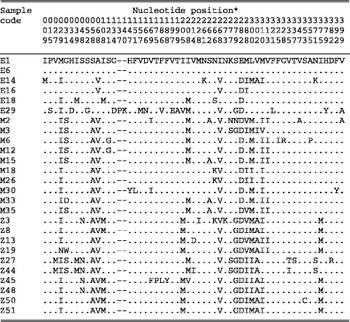
Table 4. Amino acid variability among the pCOX1 protein sequences inferred from the 26 pcox1 haplotypes representing Progamotaenia ewersi (E), P. macropodis (M) and P. zschokkei (Z) from kangaroos and wallabies.
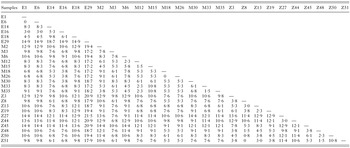
Table 5. Pairwise differences (%) in inferred pCOX1 protein sequence among individuals representing Progamotaenia ewersi (E), P. macropodis (M) and P. zschokkei (Z) from kangaroos and wallabies

Fig. 1. Neighbor-joining trees depicting the relationships between specimens of each Progamotaenia ewersi, P. macropodis and P. zschokkei from different species of macropodid hosts based on analyses of pcox1 nucleotide sequence data. Numerals above the branches represent bootstrap values. Numbers in parentheses represent the numbers of cestodes examined. Sample codes are given in Table 1. Abbreviations of host generic names are: Lagorchestes (L); Macropus (M); Onychogalea (O); Petrogale (P); Thylogale (T); Wallabia (W). Where samples were identical (E1 with E11, Z27 with Z31), only one is shown.
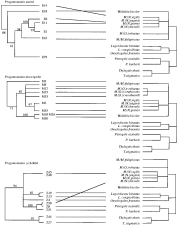
Fig. 2. Cladograms depicting genetic relationships of specimens of Progamotaenia ewersi, P. macropodis and P. zschokkei from macropodid hosts, based on analyses of pcox1 nucleotide sequence data, compared with host phylogeny. Numerals above the branches represent bootstrap values. Sample codes are given in Table 1. Abbreviations of host generic names are: Lagorchestes (L); Macropus (M); Onychogalea (O); Petrogale (P); Thylogale (T); Wallabia (W). Abbreviations for subgenera of Macropus: Macropus (M); Notamacropus (N); Osphranter (O).
 You have
Access
- 34
- Cited by