

Introduction
Although several reviews summarize findings regarding the importance of early-life conditions and adult health in high-income countries,Reference Elo and Preston1–Reference Osmond and Barker4 there have been no comprehensive reviews regarding associations between early-life conditions and older adult health (50 years and older) in low- and middle-income countries. This is partially due to the paucity of cohort data tracing individuals who have not yet reached older adult ages,Reference Stein, Wang and Martorell5, 6 thus limiting the examination of early-life conditions to younger adults in these settings.Reference Martorell, Stein and Schroeder7–Reference Gurven, Kaplan and Winking14 These studies of younger adults, in some instances, have produced evidence of the importance of early-life conditions on adult health and will be invaluable as individuals reach older adulthood. They do not yet provide answers to questions regarding how early-life conditions are associated with adult health (chronic conditions, cognition and longevity) at much older ages. Although economic historians have produced several studies regarding early-life conditions and older adult health in the developed world based on the collection of extensive historical census or registration systems,Reference Bengtsson and Lindstrom15, Reference Gagnon and Mazan16 these types of data are not often readily available in the developing world with some exceptions.Reference Campbell and Lee17
There are, however, recent and numerous population-based surveys of older adults,Footnote a which provide the opportunity to examine not only mortality but also morbidity. They have stimulated interest from the field of demography and population health resulting in several studies on early-life conditions and older adult health from the developed world and, more recently, from the developing world. Demographers and population health researchers have become increasingly interested not only in the social and behavioral but also in the biological mechanisms of early-life health. Much of their work is relevant to the developmental origins of disease framework.
Studies based on population surveys of older adults have focused on several mechanisms to explain early-life conditions and older adult health. These include direct mechanisms such as scarring (in utero/infancy, infectious diseases of childhood), acquired immunity, selection of the biologically robust and indirect mechanisms operating through adult socioeconomic conditions and lifestyle.Reference Preston, Hill and Drevenstedt18 How these mechanisms play out is closely related to socioeconomic conditions during early life. Socioeconomic conditions encompass the ability to provide proper nourishment and sanitary conditions, regular access to good medical care, educational opportunities and establish family norms and behavior, which set the foundation for good health over the life course.Reference Elo and Preston1, Reference Almond and Currie19–Reference Wadsworth and Kuh25
Abundant evidence for those born in the late 19th or early 20th century in the developed world suggests that strong associations exist between early life and older adult health beginning before or at conception, continuing in utero/early infancy and extending through childhood.Reference Elo and Preston1, Reference Bengtsson and Lindstrom15, Reference Preston, Hill and Drevenstedt18–Reference Forsdahl21, Reference Lundberg23–Reference van den Berg, Doblhammer and Christensen36 The critical timing of nutritional insults in utero or early infancy may contribute to the risk of adult chronic conditions such as heart disease, diabetes and hypertension,Reference Barker27, Reference Gluckman and Hanson32 which are strongly associated with functionality/disability, disability and mortality.Reference Kuh and Ben-Shlomo35 Inflammation in utero may also have long term negative consequences for adult health.Reference Finch and Crimmins31 Biological gender differences in utero may place boys more at risk than girls.Reference Eriksson, Kajantie, Osmond, Thornburg and Barker37 Undernutrition in early life is also associated with poor adult cognition.Reference Abbott, White and Ross38, Reference Beeri, Davidson and Silverman39 It increases the risk of infectionReference Scrimshaw40 leading to poor childhood health, which can have substantial impacts on adult health.Reference Elo and Preston1, Reference Lundberg23–Reference Wadsworth and Kuh25 Rheumatic fever, respiratory diseases and severe bouts of diarrhea during early infancy or childhood are clearly tied to older adult health such as heart disease, adult respiratory disease and cognition.Reference Elo and Preston1 Childhood socioeconomic status (SES) can influence early growth and development and can have independent effects on later health and mortality.Reference Davey Smith and Lynch20, Reference Forsdahl21, Reference Lundberg23 The formation of behaviors such as smoking, drinking and diet begin in early childhood, any of which may lead to greater risk of poor adult health.Reference Elo and Preston1, Reference Popkin, Horton and Kim41 Family preferences for males may lead to differences in resource allocation in early life with long term consequences on older adult health.Reference Coale and Banister42
Clearly not all variation in older adult health originates from poor environmental conditions in utero, infancy or childhood. Older adult health can be an accumulation of adverse events or poor SES across the life course. Lower SES during childhood can translate into lower adult SES, which is associated with poor adult health.Reference Davey Smith and Lynch20 Other intervening variables related to social environment may explain adult health.Reference Harper, Lynch and Davey Smith22 Strain during childhood to early adulthood (e.g. disease, poverty, low education or stressful working environment) increases the risk of early occurrence of chronic disease (e.g. cardiovascular disease), which in turn increases the risk of premature disability and mortality.Reference Kuh and Ben-Shlomo35, Reference Coale and Banister42, Reference Pickles, Maughan and Wadsworth43 Diet and exercise alone can dramatically reduce the risk of adult chronic conditions.Reference Popkin, Horton and Kim41 Genetic predispositions and gene–environment interactions may determine adult health.Footnote b Macro factors such as economic growth, healthcare systems and policy reforms can also affect health.Reference van den Berg, Doblhammer and Christensen36 Interventions before the age of 5 to improve nutrition and household income can modify the effects of poor early-life conditions during the life courseReference Almond and Currie19 and social factors may also reduce the negative factors of poor early-life conditions.Reference Wilkinson and Marmot44 Educational and economic opportunity during young adulthood can help mediate the effects of poor early-life conditions.Reference Hayward and Gorman34, Reference Davey Smith, Hart, Blane and Hole45, Reference Elo, Martikainen and Myrskylä46
Findings on the importance of early-life exposures have particular significance in low- and middle-income countries not only for understanding the present but also making inferences about the future health of older adults who, on average, may have been more impacted by their early environments than their counterparts in high-income countries. Low- and middle-income countries are projected to experience large increases in the older adult populationReference Kinsella and He47, Reference Kinsella and Velkoff48 resulting in an increasing burden of disease in chronic conditions such as heart disease and diabetes.Reference Murray and Lopez49–Reference Monteiro, Conde, Lu and Popkin55 In many instances, increases will occur mostly in the context of lower standards of living and fragile institutional support.Reference Klinsberg56–Reference Mesa-Lago58 As a result, there are important ramifications for public policy.
The overwhelming poverty of most of the population in low- and middle-income countries during the early 20th century makes them different from the developed world of the early 20th century with its higher standard of living and economic growth. Much of the population experienced poor nutritional environments in early life followed by rapid changes in nutritional environment during adulthood, adopting a more Western diet high in saturated fat content.Reference Popkin, Horton and Kim41 It is yet unclear how differences in environmental exposures, cohorts and culture may change the magnitude of the relationships in the developing world. The hypothesis of critical timing of nutritional insults in utero or early infancy becomes particularly relevant because the combination of poor early-life nutrition and later-life overnutrition may place older adults in low- and middle-income countries at higher risk of chronic conditions such as heart disease and diabetes.Reference Bateson, Barker and Clutton-Brock59 Certain cohorts may also have greater susceptibility to the effects of poor early-life conditions at older ages,Reference Palloni, McEniry, Wong and Peláez60 and cultural differences in Western and non-Western populations may produce different patterns of older adult health.
Population-based data present an opportunity to examine early-life hypotheses and older adult health in the developing world. Survey data from population-based studies cover different aspects of the life course. However, recently published studies using population-based data in low- and middle-income countries are too diverse in outcomes, exposure and measures to, as of yet, make meaningful cross-national comparisons regarding specific effects of childhood conditions. The focus of this review is thus to examine broad patterns across countries and regions. The question of interest is in regards to how early-life conditions are associated with older adult health in low- and middle-income countries and what the associations may mean in regards to the literature on early-life conditions from the developed world. The review examines empirical evidence for any of the following early-life effects associated with adult chronic conditions, functionality/disability, cognition or mortality: (1) poor nutrition or undernutrition; (2) specific or groups of childhood illnesses; or (3) childhood SES. In reviewing the evidence, particular attention is paid to evidence pointing to attenuation of early life effects by adult conditions and lifestyle, critical periods and cumulative effects, gender differences in the manifestation of the effects of early-life conditions, the effects of undernutrition in early life with overnutrition in later life and cohort differences in the importance of childhood conditions in later life.
Methods
Criteria for selection and databases searched
An initial list of 14 published studies examining early-life conditions and older adults using major studies on aging in low- and middle-income countries was compiled from known work presented at demography, social science and public health conferences and then subsequently published.Footnote c Two unpublished studies presented at these conferences were included because they were deemed sufficiently important to the review. To complement this list, a systematic review of PubMed was conducted limiting the search to empirical studies and adults 45 years and older. An initial search using the key words ‘early life conditions’ and ‘older adult health’ produced a listing of 426 studies and similar searches with variations of these words produced a total list of 1257 potential studies relating to early-life conditions and older adult health. When duplicates across searches and from the original list of identified studies were eliminated, the total number of potential empirical studies was reduced to 1079. We also conducted a review of the Public Library of Science's (PLoS) online access publication PLoS ONE using similar key words and found an additional 62 potential empirical studies. Thus, there were a total of 1141 potential empirical studies on the general topic of early-life conditions and older adult health.
We selected studies from the list of potential studies that met the following criteria: (1) population-based or community study or birth cohort of adults in low- and middle-income countries as defined by the World Bank;61 (2) adults at least 50 years and older at the time of the survey who were born in the 20th century; (3) study whose main purpose was to examine early-life conditions and older adult health; (4) study that examined any of the following adult health outcomes: chronic conditions (heart disease, diabetes and hypertension), functionality/disability, cognition and mortality;Footnote d (5) study that presented a viewpoint of demography and population sciences; (6) study published within the last 10 years; and (7) study published in English. From this review we found four additional relevant studies, which met the search criteria resulting in a total of 20 studies reflecting seven major population-based or community surveys and one birth cohort study of older adults. All studies were conducted in low- and middle-income countries with the exception of studies conducted in Puerto Rico, which was included because its setting shares many of the characteristics of low- and middle-income countries during the early 20th century.
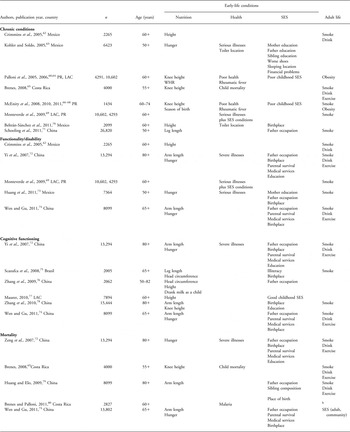
Selected studies
The 20 selected studies (shown in Table 1) were carried out in China and Latin America (Mexico, Costa Rica, Puerto Rico, Brazil and major cities).Reference Palloni, McEniry, Wong and Peláez60, Reference Crimmins, Soldo, Kim and Alley62–Reference Brenes-Camacho and Palloni80 Most studies were nationally or regionally representative of older adults with some exceptions. The data from major Latin American and Caribbean (LAC) cities are representative of older adults 60 years and older in major cities of LAC. The Brazilian studyReference Scazufca, Menezes and Araya75 is based on a selection of elderly respondents from a low-income community setting in the city of Sao Paulo and two birth cohort studies from China.Reference Schooling, Jiang and Lam71, Reference Zhang, Plassman and Xu76 Chinese data were longitudinal surveys with more than two waves as compared with data from the Latin American region. The large sample sizes from China (8000–26,000) as compared with the smaller sample sizes obtained in Latin America reflect the larger population of China. The cohorts examined differ in that, in several Chinese studies, those selected were born in the very early 20th century or before, whereas the Latin America studies have a larger number born during the late 1920s and early 1940s.
Selected studies according to adult (50 years and older) health outcomesFootnote a

SES, socioeconomic status; PR, Puerto Rico; LAC, Latin American and Caribbean major cities; WHR, waist–hip ratio.
a The above studies are based on eight major studies on aging populations in low- and middle-income countries: Chinese Longitudinal Healthy Longevity Survey (CLHLS)Reference Yi, Gu and Land72, Reference Wen and Gu74, Reference Zhang, Gu and Hayward78, Reference Huang and Elo79; Costa Rican Study of Longevity and Healthy Aging (CRELES)Reference Brenes65, Reference Brenes-Camacho and Palloni80; Mexican Health and Aging Study (MHAS)Reference Crimmins, Soldo, Kim and Alley62, Reference Kohler and Soldo63, Reference Beltrán-Sánchez, Crimmins, Teruel and Thomas70, Reference Huang, Soldo and Elo73; Study of Aging Survey on Health and Well Being of Elders (SABE)Reference Palloni, McEniry, Wong and Peláez60, Reference Monteverde, Norhonha and Palloni69, Reference Maurer77; Puerto Rican Elderly: Health Conditions (PREHCO)Reference Palloni, McEniry, Dávila and García Gurucharri64, Reference McEniry, Palloni, Dávila and García66–Reference McEniry68; Guangzhou Biobank Cohort Study (GBCS)Reference Schooling, Jiang and Lam71; the Sao Paulo Ageing & Health Study (SPAH)Reference Scazufca, Menezes and Araya75; and a birth cohort from Peking Union Medical College Hospital (PUMCH)Reference Zhang, Plassman and Xu76.
b Brenes and PalloniReference Brenes-Camacho and Palloni80 did not control for adult lifestyle but did control for several adult variables related to income, health insurance and baseline prevalence of certain health conditions.
Adult health outcomes included chronic conditions (heart disease, diabetes and hypertension), risk factors for cardiovascular disease, functionality/disability, cognition and adult mortality. Health outcomes were identified through respondent self-reports (heart disease and diabetes) or measured risk factors (blood pressure and cardiovascular risk factors), responses to a battery of questions (functionality/disability and cognition) or survey data in some cases combined with administrative records (mortality).
The selected studies incorporated to varying degrees measures of early life reflecting nutrition, childhood health and childhood SES, which were not necessarily comparable across all countries. Most studies used some measure of early-life nutrition (anthropometric measures, retrospective questions regarding experiencing hunger during childhood and/or season of birth) and early childhood measures of health. In the LAC region, self-reported malaria and rheumatic fever in childhood and groups of serious childhood illnesses were examined along with indicators of infectious disease load during the first year of life or during childhood (infant and child mortality rates). A few studies from LAC used a more generalized question asking respondents to rate their childhood health. Most studies used early-life measures of early childhood socioeconomic conditions or community setting. Some studies used multiple questions to reflect early life SES such as father occupation, birthplace, medical services, parental financial problems, wearing shoes as a child and sleeping arrangements. One study from China used family composition defined by sibling sex-composition as an indicator of family resource allocation. Studies from China used parental death as a measure of financial and emotional adversity in early childhood.
The studies differed in the inclusion of adult lifestyle and adult community setting. While all studies included adult SES, several controlled for adult lifestyle including self-reported smoking, drinking and exercise, although not all reported their effects. Obesity was included in model estimation only in studies from the LAC region.
Risk of bias
The selected studies were reviewed to ascertain how they addressed attrition, missing values, validation of measures of early-life conditions and underestimation of self-reported health outcomes. Attrition in mortality data was examined in a couple of ways in China and Costa Rica. Statistical testing was conducted to examine how the exclusion of Chinese respondents lost to follow-up influenced results.Reference Huang and Elo79 Study deaths in Costa Rica were verified using a death index in addition to next of kin questionnairesReference Brenes-Camacho and Palloni80 and statistical analyses of data were conducted on data quality.Reference Yi, Gu and Land72 Studies in China, Puerto Rico and MexicoReference McEniry, Palloni, Dávila and García66–Reference McEniry68, Reference Yi, Gu and Land72, Reference Huang, Soldo and Elo73, Reference Zhang, Gu and Hayward78 used imputation methods to address the presence of missing data from survey responses.Reference Rubin81
Validation of early-life measures especially retrospective measures in population surveys in low- and middle-income countries is difficult. Obtaining a record of episodes of illnesses throughout childhood during the early 20th century is almost impossible for a large majority of older adults born in low- and middle-income countries due to the absence of quality medical records. Most of the studies reviewed did not test the validity of early-life measures with a couple of exceptions. The content and predictive validity of parental death in China was examined by testing its association with seated adult height and a delayed 10-word recall score.Reference Schooling, Jiang and Lam71 In Puerto Rico the validity of season of birth was examined by comparing the prevalence of heart disease and diabetes across season in urban and rural areas and the validity of the retrospective rating childhood health was examined using respondent-identified childhood illnesses.Reference McEniry, Palloni, Dávila and García66
Most studies justified the use of early-life measures based on studies conducted in the developed world. Adult height has been associated with height at early ages in the developed worldReference Stein, Wang and Martorell5, Reference Schmidt, Jorgensen and Michaelsen82 and has thus been used as a marker of early life net nutritional status, although the degree to which height reflects childhood or in utero exposures remains unclear especially among stunted populations.Reference Deaton83 There are also no clearly accepted international reference standards for adult height in low- and middle-income countries. Arm length, used in the China surveys, is believed to be a good marker of early-life nutritional environment.Reference Mitchell and Lipschitz84–Reference Brown, Feng and Knapp87 Waist–hip ratio is a risk factor for several metabolic disorders but the exact mechanism of influence is obscure. It may be affected by early-life malnutritionReference Schroeder, Martorell and Flores8 but it may also be a measure of current adiposity. Season of birth is a potentially viable broad indicator of early-life exposures and is easily obtained in most population studies of older adults. It has been shown to be a good indicator for early-life conditions in utero and early infancy that precipitates poor adult health in the developed world.Reference Moore, Cole and Collinson11, Reference Costa29, Reference Doblhammer30, Reference Gavrilov and Gavrilova88–Reference Prentice and Cole91 It has also been shown to be independent of other life course factors such as socioeconomic conditions.Reference Doblhammer30
Retrospective measures of early childhood health have shown certain validity in the developed world as self-rating of childhood health by adult respondents has been associated with indicators of in utero growth.Reference Haas92 Other measures such as asking older adults if they ever went hungry as a child or household characteristics have not been thoroughly validated. Retrospective questions asked in surveys regarding parental SES have proven to have certain strong validityReference Hauser, Tsai and Sewell93 but early SES measured by broad measures categorizing parents into agricultural v. non-agricultural occupations or asking respondents to rate their early SES do not permit a more granular understanding of the occupational status of their parents, which may be important in the agricultural societies of the early 20th century in low- and middle-income countries. Urban or rural residence may not be sufficiently precise to indicate SES differences because urban areas may have been worse than rural areas in terms of disease environment during certain periods.Reference Campbell94
Adult functionality/disability was measured using well-recognized measures of functionality/disability such as activities of daily living (ADLs)Reference Katz and Akpom95 and the NagiReference Nagi96 functionality/disability items. Functionality measures were tested to ensure they were culturally relevant for China.Reference Yi, Gu and Land72 Studies of adult cognition used recognized measures of cognition,Reference Folstein, Folstein and McHugh97 adapting them to reflect cultural and socioeconomic conditions relevant to Chinese and Latin American older adults.Reference Yi, Gu and Land72, Reference Zhang, Plassman and Xu76, Reference Zhang, Gu and Hayward78 The Brazilian study used a battery of validated cognitive assessment tools, which were combined to identify respondents with dementia.Reference Scazufca, Menezes and Araya75 Self-reported questions for chronic conditions (heart disease and diabetes) were based on whether the respondent was diagnosed by a medical professional. Although chronic conditions may be underestimated and only one study used biomarkers to test the validity of self-reported chronic conditions,Reference Brenes65 there is evidence that self-reports do in some circumstances show good validity with more objective measures such as biomarkers,Reference Banks, Marmot, Oldfield and Smith98, Reference Goldman, Weinstein and Chang99 even in the context of a developing country.Reference Brenes65
Analysis
Studies were reviewed and summarized according to adult health outcome using the most complete model estimation reported. The net effects of childhood nutrition, health and SES were identified, showing where feasible the effects of adult lifestyle (exercise, smoking, drinking and leisure activities). Variables used as controls in model estimation are not shown but in some instances described in the table notes. Results are described by health outcome and then according to country-specific results in relation to early-life nutrition, childhood health and childhood SES.
Results
Chronic conditions
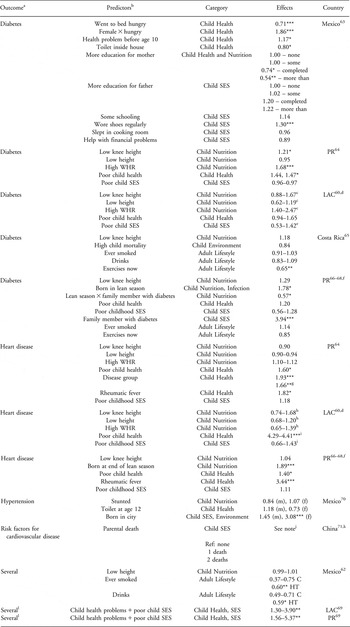
Studies reporting results for early-life conditions and chronic conditions came from the LAC region with the exception of one study from China reporting on cardiovascular risk factors.Reference Schooling, Jiang and Lam71 The results were mixed using anthropometric measures of early-life nutrition. Being in the lowest quartile of knee height increased the odds of adult diabetes by about 20% in Puerto Ricans.Reference Palloni, McEniry, Dávila and García Gurucharri64 Yet, there was no association with knee height and adult diabetes in older adult Costa RicansReference Brenes65 or in most major cities of the LAC region nor was there an association with knee height and adult heart disease in the LAC region and in Puerto Rico.Reference Palloni, McEniry, Wong and Peláez60, Reference Palloni, McEniry, Dávila and García Gurucharri64 There was also no association between being stunted and reporting hypertension in Mexico,Reference Beltrán-Sánchez, Crimmins, Teruel and Thomas70 or being taller and having hypertension or reporting heart disease, diabetes, stroke or cancer in Mexico.Reference Crimmins, Soldo, Kim and Alley62 There were very strong associations between waist–hip ratio and diabetes in LAC and Puerto Rico. Being in the highest quartile of waist–hip ratio increased the odds of diabetes by almost 2.5 in some instances as compared with those in lower quartiles.Reference Palloni, McEniry, Wong and Peláez60, Reference Palloni, McEniry, Dávila and García Gurucharri64
The effects of season of birth on older adult Puerto Rican health were remarkably strong, robust and in the expected direction, especially for heart disease.Reference McEniry, Palloni, Dávila and García66–Reference McEniry68 Being born at the end of the lean season increased the odds of adult heart disease by almost 90% and being born during the lean season increased the odds of adult diabetes by about 80%.Reference McEniry, Palloni, Dávila and García66 Season of birth was not associated with any other predictor variable (e.g. childhood health, childhood SES, low knee height, low height, education, age or gender), nor did competing hypotheses appear to explain the results (e.g. family planning, breast feeding or timing of mother working). Strong effects of season of birth on adult health appeared in a related study and appeared strong even after controlling for adult smoking (results not shown).Reference McEniry and Palloni67 The risk of onset of heart disease was 65% higher among those born during the lean season as compared with those born during the harvest, controlling for other childhood and adult conditions (results not shown).Reference McEniry68
Having had rheumatic fever as a child increased the odds of adult heart disease by about 2–3 times in the LAC region and Puerto Rico.Reference Palloni, McEniry, Wong and Peláez60, Reference Palloni, McEniry, Dávila and García Gurucharri64, Reference McEniry, Palloni, Dávila and García66–Reference McEniry68 Reporting poor childhood health increased the odds of adult heart disease among Puerto Ricans by 40%.Reference McEniry, Palloni, Dávila and García66 The combination of poor childhood health (hepatitis, tuberculosis, rheumatic fever, chronic bronchitis, nephritis, hepatitis, typhus fever, polio, malaria, dengue, pneumonia and/or asthma) and poor childhood SES was associated with a higher prevalence of chronic conditions in adulthood in LAC.Reference Palloni, McEniry, Wong and Peláez60 A similar question among Mexicans showed that those who had a serious health problem before the age of 10 had a 17% higher odds of diabetes than those who did not have such a problem.Reference Kohler and Soldo63 Having a toilet inside the house as a child decreased the odds of diabetes by about 20% among some Mexican older adultsReference Kohler and Soldo63 but was not significant among another group of older adult Mexicans.Reference Beltrán-Sánchez, Crimmins, Teruel and Thomas70 Going to bed hungry increased the odds of diabetes by almost 90% among Mexican females.Reference Kohler and Soldo63
A general question rating childhood SES produced no significant effects in the LAC region or Puerto Rico.Reference Palloni, McEniry, Wong and Peláez60, Reference Palloni, McEniry, Dávila and García Gurucharri64, Reference McEniry, Palloni, Dávila and García66–Reference McEniry68 Overall, there were no significant effects between having been born in a region with high child mortality and diabetes for older adults in Costa Rica.Reference Brenes65 The effects of being born in the lean season were very strong for Puerto Ricans with heart disease and diabetes and born in a year when infant mortality (IMR) was lower but there were no significant effects for those born in a year when IMR was higher suggesting that season of birth is a meaningful measure of early-life exposure under restricted conditions (results not shown).Reference McEniry68
Other measures of early life SES such as place of birth, going to bed hungry and having a toilet in the home during childhood showed mixed or puzzling results as in the case of Mexico where wearing shoes as a child increased the odds of diabetes by almost 30%.Reference Kohler and Soldo63 In a study from China, emotional adversity in childhood using parental death during childhood was negatively associated with cardiovascular risk factors such as blood pressure, fasting glucose and cholesterol in older adults, particularly in men.Reference Schooling, Jiang and Lam71 Having a family member with diabetes increased the odds of diabetes more than four times as compared with those without a family member with diabetes,Reference McEniry, Palloni, Dávila and García66–Reference McEniry68 although it is not possible to identify the exact social or genetic mechanisms.
Smoking and drinking were not significant predictors of chronic conditions in Costa RicaReference Brenes65 and Puerto RicoReference McEniry, Palloni, Dávila and García66–Reference McEniry68 but they reduced the odds of hypertension by about 40% in Mexico.Reference Crimmins, Soldo, Kim and Alley62 However, there were no significant associations between smoking and hypertension in other studies from Latin America.Reference Crimmins, Soldo, Kim and Alley62, Reference Brenes65–Reference McEniry68 Exercising as an adult decreased the odds of diabetes by about 35% in Costa Rica but not in Puerto RicoReference Brenes65 (Table 2).
Effects of early-life conditions on adult chronic conditions

×, interaction between two variables; SES, socioeconomic status; None, no formal education; Some, 1–5 years of education; Completed, 6 years of education; More than, completed 7 years or more of education; PR, Puerto Rico; WHR, waist–hip ratio; LAC, Latin American and Caribbean major cities; Separate models for gender noted by: m, males; f, females; C, chronic conditions such as heart disease, diabetes, stroke, cancer; HT, hypertension; LDL, low-density lipoprotein; HDL, high-density lipoprotein.
Notes: Shown are odds ratios that reflect net effects after controlling for covariates, which varied from study to study but in most instances included age, gender and education. Two studiesReference Monteverde, Norhonha and Palloni69, Reference Schooling, Jiang and Lam71 controlled for adult lifestyle but did not report the results.
aDiabetes and heart disease are based on self-reported survey questions asking if the respondent was ever diagnosed with these conditions. Hypertension was based on measured blood pressure or if the respondent reported taking medication for blood pressure. Risk factors for cardiovascular disease included in Schooling et al. Reference Schooling, Jiang and Lam71 were blood pressure, LDL-cholesterol, HDL-cholesterol, fasting glucose, triglycerides and adiposity and inflammation.
bMeasures for nutrition, health, SES and lifestyle were defined slightly differently from country to country.
Measures of childhood nutrition were defined in the following manner: (1) low knee height (lowest quartile);Reference Palloni, McEniry, Wong and Peláez60, Reference Palloni, McEniry, Dávila and García Gurucharri64, Reference Brenes65, Reference McEniry, Palloni, Dávila and García66–Reference McEniry68 (2) low height [continuous (cm)];Reference Palloni, McEniry, Wong and Peláez60, Reference Crimmins, Soldo, Kim and Alley62, Reference Palloni, McEniry, Dávila and García Gurucharri64 (3) WHR (highest quartile);Reference Palloni, McEniry, Wong and Peláez60, Reference Palloni, McEniry, Dávila and García Gurucharri64 (4) season of birth (reference group was harvest season for diabetes and fourth quarter for heart disease);Reference McEniry, Palloni, Dávila and García66–Reference McEniry68 (5) stunting [yes (no) using US NHANES cutoff point];Reference Beltrán-Sánchez, Crimmins, Teruel and Thomas70 and (5) being born in the lean season and having a family member with diabetes.Reference McEniry, Palloni, Dávila and García66–Reference McEniry68
Measures of childhood health were self-reported and defined in the following manner: (1) poor childhood health [yes (no)];Reference Palloni, McEniry, Wong and Peláez60, Reference Palloni, McEniry, Dávila and García Gurucharri64, Reference McEniry, Palloni, Dávila and García66–Reference McEniry68 (2) childhood health problems including poor general childhood health, hepatitis, tuberculosis, rheumatic fever, chronic bronchitis and nephritis + poor childhood SES [yes (no)];Reference Monteverde, Norhonha and Palloni69 (3) went to bed hungry as a child [yes (no)];Reference Kohler and Soldo63 (4) female and going hungry as a child;Reference Kohler and Soldo63 (5) had a health problem before the age of 10 [yes (no)];Reference Kohler and Soldo63 (6) disease group including typhoid, hepatitis, tuberculosis, polio and/or rheumatic fever [yes (no)];Reference Palloni, McEniry, Dávila and García Gurucharri64 (7) rheumatic fever [yes (no)];Reference Palloni, McEniry, Dávila and García Gurucharri64 (8) toilet inside the house [yes (no)];Reference Kohler and Soldo63, Reference Beltrán-Sánchez, Crimmins, Teruel and Thomas70 and (9) mother's education [no school (reference group), some elementary, completed elementary, more than elementary].Reference Kohler and Soldo63 Some of these measures can be interpreted as measures of childhood SES (e.g. went to bed hungry and toilet inside the house). For example, MexicoReference Beltrán-Sánchez, Crimmins, Teruel and Thomas70 viewed having a toilet at the age of 12 as both an indicator of childhood SES and exposure to disease in childhood.
Measures of childhood SES were self-reported and defined in the following manner: (1) poor childhood SES [yes (no)];Reference Palloni, McEniry, Wong and Peláez60, Reference Palloni, McEniry, Dávila and García Gurucharri64, Reference McEniry, Palloni, Dávila and García66–Reference McEniry68 (2) family member with diabetes [yes (no)];Reference McEniry, Palloni, Dávila and García66–Reference McEniry68 (3) father's education [no school (reference group), some elementary, completed elementary, more than elementary];Reference Kohler and Soldo63 (4) some education (respondent or sibling dropped out of school because of financial problems) [yes (no)];Reference Kohler and Soldo63 (5) wore shoes regularly [yes (no)];Reference Kohler and Soldo63 (6) slept in the same room as was used for cooking [yes (no)];Reference Kohler and Soldo63 (7) received financial help [yes (no)];Reference Kohler and Soldo63 (8) was born in a city [yes (no)];Reference Beltrán-Sánchez, Crimmins, Teruel and Thomas70 and (9) parental death [no deaths (reference group), one death, two deaths].Reference Schooling, Jiang and Lam71 Some measures shown in the table can also be interpreted as measures of childhood health but are shown here because the authors of the studies identified them as being indicators of childhood SES.
Measures of early-life environment were defined in the following manner: (1) child mortality (ln child mortality index).Reference Brenes65
Measures of adult lifestyle were defined in the following manner: (1) smoking: current smoker [yes (no)];Reference Crimmins, Soldo, Kim and Alley62 never smoked (reference group), former smoker, current smoker;Reference Brenes65, Reference McEniry68 ever smoked;Reference McEniry and Palloni67 (2) drinking: heavy drinker (reports 5+ drinks per day in the past year);Reference Crimmins, Soldo, Kim and Alley62 never drank (reference group), past alcoholic drinker, current alcoholic drinker;Reference Brenes65 and (3) exercising (exercises regularly [yes (no)].Reference Brenes65, Reference McEniry and Palloni67, Reference McEniry68
cHeight was not significant across all countries, though it was marginally significant in Brazil [0.62 (P = 0.090)]. Knee height was significant in Chile (OR 1.67*) and Mexico (OR 1.51*). WHR was significant in 5 of the 6 countries: Barbados (OR 2.47***), Brazil (OR 2.40***), Cuba (OR 1.60*), Mexico (OR 1.50*) and Uruguay (OR 1.72*).
dCountry-specific models were estimated to examine the association between markers of nutritional status, childhood health and childhood SES with adult diabetes and heart disease controlling for age, gender, education and obesity.
eChildhood SES had a curiously protective effect on diabetes in Uruguay (OR 0.56* controlling for height, OR 0.53* controlling for knee height, OR 0.57* controlling for WHR). In Brazil, childhood SES was marginally significant [OR 1.39 (P = 0.077) controlling for height, OR 1.42 (P = 0.060) controlling for knee height].
fFor early-life conditions PR results are shown for McEniry et al. 2008Reference McEniry, Palloni, Dávila and García66 and these results were similar to results obtained in related studies.Reference McEniry and Palloni67, Reference McEniry68 Adult lifestyle effects come from related studies.Reference McEniry and Palloni67, Reference McEniry68
gThe OR 1.93 occurred when the disease group included rheumatic fever. When rheumatic fever was removed, the OR decreased to 1.66.
hHeight was not significant across all countries, though it was marginally significant in Cuba [0.68 (P = 0.085)]. Knee height was only marginally significant in Mexico [OR 1.68 (P = 0.070)]. WHR was only marginally significant in Brazil [OR 1.39 (P = 0.062)] and Chile [OR 0.65 (P = 0.070)].
iThe effects of childhood health on adult health was significant only in the case of Mexico. These effects were very strong and are reported in the table. Childhood health was marginally significant in Brazil [OR 0.47 (P = 0.074) when controlling for height, OR 0.47 (P = 0.69) when controlling for knee height, OR 0.48 (P = 0.082) when controlling for WHR] and Chile [OR 1.66 (P = 0.078) when controlling for height, OR 1.69 (P = 0.071) when controlling for knee height]. Childhood SES was only marginally significant in Barbados [OR 0.66 (P = 0.079) when controlling for height] and Brazil [OR 1.43 (P = 0.052) when controlling for height, OR 1.42 (P = 0.060) when controlling for knee height, OR 1.40 (P = 0.070) when controlling for WHR].
jSpace does not permit showing the numerous results showing associations between cardiovascular risk factors (systolic/diastolic blood pressure, fasting plasma, cholesterol, triglycerides, body mass index, WHR, white blood cell count, seated height and delayed 10-word recall) and parental death. Significant negative associations were obtained between parental death and triglycerides, body mass index, delayed 10-word recall score and seated height.
kSchooling et al. Reference Schooling, Jiang and Lam71 controlled for leg length but its effects were not reported.
lChildhood health and several chronic conditions were examined in LACReference Monteverde, Norhonha and Palloni69 including poor general childhood health, hepatitis, tuberculosis, rheumatic fever, chronic bronchitis or nephritis, and in PRReference Monteverde, Norhonha and Palloni69 including poor general childhood health, was often sick or often had activities restricted, hepatitis, tuberculosis, rheumatic fever, chronic bronchitis, typhus fever, polio, malaria, dengue, pneumonia or asthma.
*P < 0.05; **P < 0.01; ***P < 0.001.
Functionality/disability
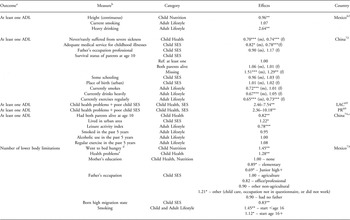
In Mexico taller height was associated with less functional difficulty.Reference Crimmins, Soldo, Kim and Alley62 Going to bed hungry increased the odds of poor adult functionality/disability by almost 50% among older adult Mexicans. Having at least one identified serious health problem (tuberculosis, rheumatic fever, polio, typhoid fever or a serious blow to the head that made the respondent faint) during childhood increased the odds of problems with functionality/disability in adulthood by almost 30% in Mexico.Reference Huang, Soldo and Elo73 Mother's educational level was a strong predictor of poor health at older ages. Having a mother with an elementary school education or higher reduced the odds of having functional limitations as an adult by about 10–30%.Reference Huang, Soldo and Elo73 Being born in a high migration state to the United States reduced the odds of difficulty with functionality/disability by about 17%Reference Huang, Soldo and Elo73 implying that the family benefited from remittances and work in the United States improved their economic conditions. The effects of going to bed hungry is greatly attenuated after adding adult lifestyle but the effects of serious health problems and being born in a high migration state remain strong.Reference Huang, Soldo and Elo73 In another study from Mexico,Reference Crimmins, Soldo, Kim and Alley62 the effects of height on adult functionality/disability remain even after controlling for adult lifestyle. Having ever smoked increased the odds of difficulty with functionality/disability in Mexico by about 12–45%.Reference Huang, Soldo and Elo73 Heavy drinking increased the odds of poor functionality/disability in Mexico by almost three times.Reference Crimmins, Soldo, Kim and Alley62
In the major cities of LAC, older adults reporting both poor childhood health and childhood SES showed high odds of having difficulty with at least one ADL for musculoskeletal and mental categories of disease although those reporting good early conditions curiously also showed strong odds of poor functionality/disability across several categories of disease (results not shown).Reference Monteverde, Norhonha and Palloni69
Those Chinese respondents who reported parental death (associated with poorer health) had very high odds of problems with functionality/disability in adulthood.Reference Yi, Gu and Land72 Exercise in both male and female Chinese respondents reduced the odds of difficulty with functionality/disability by about 27–35%.Reference Yi, Gu and Land72 The effects of early-life conditions (father's occupation, birthplace, survival status of parents and education of respondent) disappear after adult lifestyle is added in China.Reference Yi, Gu and Land72 However, survival status of parents, health problems and health services in childhood remain strong predictors of adult functionality/disability. Curiously, there were strong protective effects of smoking on adult functionality/disability for Chinese men.Reference Yi, Gu and Land72 Heavy drinking had a protective effect in Chinese males, reducing the odds by about 30%.Reference Yi, Gu and Land72 Having both parents alive at age 10 reduced the odds of functionality/disability difficulties by almost 20%, whereas living in an urban area during childhood increased the odds by 22%.Reference Wen and Gu74 Participation in leisure activities reduced the odds by about 22% and there were no significant effects from adult smoking or drinking behavior (Table 3).
Effects of early-life conditions on adult functionality/disability

ADL, activities of daily living; Gender models noted by: m, males; f, females; SES, socioeconomic status; LAC, Latin American and Caribbean major cities; PR, Puerto Rico.
Notes: Shown are odds ratios that reflect net effects after controlling for covariates that varied from study to study but in most instances included age, gender and education. One studyReference Monteverde, Norhonha and Palloni69controlled for adult lifestyle but did not report the results.
aFunctionality was defined using either ADLsReference Katz and Akpom95 or the NagiReference Nagi96 items.
Huang et al. Reference Huang, Soldo and Elo73 included eight Nagi items to measure functional performance: difficulty with running a mile, walking several blocks, walking one block, climbing several flights of stairs, climbing one flight of stairs, sitting for two hours, getting up from a chair after sitting for long periods and stooping, kneeling and crouching.
Studies that used ADLs to define functionality differed slightly in the items that comprised ADLs. The Yi et al. Reference Yi, Gu and Land72 measured functionality using eating, dressing, indoor transferring, using the toilet, bathing and incontinence. Wen and GuReference Wen and Gu74 measured functionality using bathing, dressing, eating, indoor transferring, toileting and incontinence. The LACReference Monteverde, Norhonha and Palloni69 measured functionally using going across the room, dressing, bathing, eating, getting up and laying down in bed and going to the bathroom.
bMeasures for nutrition, health, SES and lifestyle were defined slightly differently from country to country.
Measures of childhood nutrition were defined in the following manner: (1) height [continuous (cm)];Reference Crimmins, Soldo, Kim and Alley62 and (2) went to bed hungry [yes (no)].Reference Huang, Soldo and Elo73
Measures of childhood health were defined in the following manner: (1) childhood health problems + poor childhood SES [yes (no)];Reference Monteverde, Norhonha and Palloni69 (2) health problems [yes (no)];Reference Huang, Soldo and Elo73 (3) never/rarely suffered from a severe illness [yes (no)];Reference Yi, Gu and Land72 and (4) mother's education [no school (reference group), some elementary, completed elementary, more than elementary].Reference Huang, Soldo and Elo73
Measures of childhood SES were defined in the following manner: (1) poor childhood SES [yes (no)];Reference Monteverde, Norhonha and Palloni69 (2) adequate medical service for childhood illnesses [yes (no)];Reference Yi, Gu and Land72 (3) father's occupation professional [yes (no)];Reference Yi, Gu and Land72 (4) father's occupation [agricultural (reference group), professional, other non-agricultural, housework/other];Reference Huang, Soldo and Elo73 (5) survival status of parents at respondent's age 10 [at least one parent died (reference group), both living, missing];Reference Yi, Gu and Land72 (6) had both parents alive at age 10 [yes (no)];Reference Wen and Gu74 (7) some schooling [yes (no)];Reference Yi, Gu and Land72 (8) place of birth – urban [yes (no)];Reference Yi, Gu and Land72, Reference Wen and Gu74 and (9) born in high migration state [yes (no)].Reference Huang, Soldo and Elo73
Measures of adult lifestyle were defined in the following manner: (1) smoking: current smoker [yes (no)];Reference Crimmins, Soldo, Kim and Alley62, Reference Yi, Gu and Land72 never smoked (reference group), started smoking before age 16, started smoking at age 16 or older;Reference Huang, Soldo and Elo73 smoked in the past 5 years [yes (no)];Reference Wen and Gu74 (2) drinking: heavy drinker (reports 5+ drinks per day in the past year);Reference Crimmins, Soldo, Kim and Alley62 drinks heavily [defined as 400 g of beer per day (yes (no))];Reference Yi, Gu and Land72 drank in the past 5 years [yes (no)];Reference Wen and Gu74 (3) exercising: exercises regularly [yes (no)];Reference Yi, Gu and Land72 regularly exercised in the past 5 years [yes (no)];Reference Wen and Gu74 and (4) leisure activity index (an index developed to encompass a range of activities shown to impact health conditions at older ages including gardening, raising pets, outdoor activities, reading, playing cards, listening to radio, watching television and social activities).Reference Wen and Gu74
cOnly select variables were included from Wen and GuReference Wen and Gu74 due to space constraints.
dSome measures shown in the table can also be interpreted as measures of childhood SES. MexicoReference Huang, Soldo and Elo73 interpreted health problems and went to bed hungry as indicators of childhood nutritional deprivation and poor health.
eHealth problems in Huang et al. Reference Huang, Soldo and Elo73 included at least one of the following: tuberculosis, rheumatic fever, polio, typhoid fever or a serious blow to the head that made the respondent faint.
*P < 0.05; **P < 0.01; ***P < 0.001.
Cognition
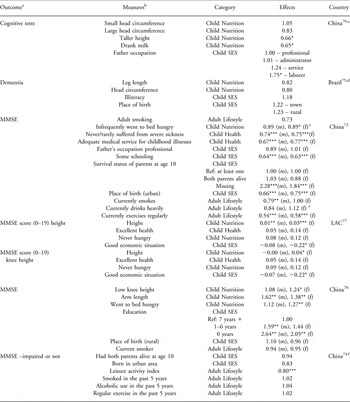
Taller older adults living in the major cities of LAC showed better cognition in both men and women, whereas taller knee height was associated with better adult cognition in women.Reference Maurer77 In contrast, being in excellent health and never being hungry were not associated with adult cognition, whereas being in a good economic situation was marginally associated with poor adult cognition in women.Reference Maurer77 In Brazil, longer leg length and larger head circumference reduced the odds of adult dementia by over 25% in baseline models (results not shown) and did not mediate the association between poor early SES and dementia.Reference Scazufca, Menezes and Araya75 In contrast, in the same study being illiterate increased the odds of dementia by about 64–83% (results not shown) and these associations were partially mediated by adult SES. The prevalence of dementia was strongly associated with increasing number of unfavorable risks factors across the life course.
In China, being in the lowest 10th percentile of arm length increased the odds of poor adult cognition by 62% for males and 38% for females among the same age group.Reference Zhang, Gu and Hayward78 Being in the lowest 10th percentile of knee height in China increased the odds of problems with cognition in women by 24%.Reference Zhang, Gu and Hayward78 Survival status of parents, health problems and health services in childhood remain strong predictors of adult cognition even after adding adult lifestyle. Going to bed hungry, low knee height, arm length and education all remain important predictors of adult cognition after adjusting for adult lifestyle, which did not show strong associations with adult cognition.Reference Zhang, Gu and Hayward78 In another study from China,Reference Yi, Gu and Land72 infrequently going to bed hungry decreased the odds of poor cognition by 11% for females but not for males. Those who did not report parental death (missing) had very high odds of poor cognition in adulthood. Exercise reduced the odds of cognitive impairment in both males and females by 42–46%. Curiously, there were strong protective effects of smoking on cognition for Chinese men. Participation in leisure activities decreased the odds of poor cognition by 20%.Reference Wen and Gu74 In another study from China prenatal factors reflected by head circumference, ponderal index, placental weight, birth order and maternal age at birth were significant in unadjusted models but the effects disappeared after adding adult factors (results not shown).Reference Zhang, Plassman and Xu76 In contrast, early life SES factors such as better father occupation, drinking milk in childhood and being taller were associated with better adult cognition even after controlling for adult factors (Table 4).
Effects of early-life conditions on adult cognition

SES, socioeconomic status; MMSE, Mini Mental State Examination; Gender models noted by: m, males; f, females.
Notes: Shown are odds ratios with the exception of Maurer and HeightReference Maurer77 from the LAC region, which are results from linear regressions. The numbers reported reflect net effects after controlling for covariates, which varied from study to study but in most instances included age, gender and education along with other covariates.
aIn several studies, cognitive impairment was defined using the MMSE.Reference Folstein, Folstein and McHugh97 Higher numbers indicate better cognition.
Yi et al. Reference Yi, Gu and Land72 used the Chinese version of the MMSE; it tests orientation, registration, attention, calculation, recall and language. Any respondent scoring between 24 and 30 (a perfect score) has ‘normal cognitive functioning’ and anything below 24 is considered ‘impaired’.
Zhang et al. Reference Zhang, Gu and Hayward78 used the Chinese version of the MMSE; it tests orientation, calculation, recall and language. A perfect score is 30 and lower scores indicate poor cognitive ability.
MaurerReference Maurer77 used an abbreviated MMSE exam and minimized low literacy bias and measured cognition based on a series of orientation, memory and executive functioning tests. The resulting MMSE score ranged from 0–19 points, and tended to be left-skewed.
Wen and GuReference Wen and Gu74 used the Chinese version of the MMSE; it tests orientation, registration, copy and design, calculation, recall, naming and language.
Scazufca et al. and Zhang et al. Reference Scazufca, Menezes and Araya75, Reference Zhang, Plassman and Xu76 used a battery of validated assessments of cognitive functioning.
bMeasures for nutrition, health, SES and lifestyle were defined slightly differently from country to country.
Measures of childhood nutrition were defined in the following manner: (1) low knee height (lowest 10th percentile);Reference Zhang, Gu and Hayward78 (2) height [continuous (cm)];Reference Maurer77 (3) height (m), taller (⩾1 sd);Reference Zhang, Plassman and Xu76 (4) arm length (lowest 10th percentile);Reference Zhang, Gu and Hayward78 (5) leg length [continuous (cm)];Reference Scazufca, Menezes and Araya75 (6) head circumference: (cm), small (<1 sd), large (⩾1 sd);Reference Zhang, Plassman and Xu76 continuous (cm);Reference Scazufca, Menezes and Araya75 (7) went to bed hungry [yes (no)];Reference Yi, Gu and Land72, Reference Zhang, Gu and Hayward78 (8) never hungry [time of lack of food resulting in hunger (yes (no))];Reference Maurer77 and (9) drinking milk daily in childhood [yes (no)].Reference Zhang, Plassman and Xu76 Some measures shown in the table can also be interpreted as measures of childhood SES such as went to bed hungry.
Measures of childhood health were defined in the following manner: (1) excellent health [yes (no)];Reference Maurer77 (2) never/rarely suffered from a severe sickness [yes (no)];Reference Yi, Gu and Land72 and (3) adequate medical for childhood illnesses [yes (no)].Reference Yi, Gu and Land72
Measures of childhood SES were defined in the following manner: (1) father's occupation [professional (reference group), laborer, administrator, service];Reference Zhang, Plassman and Xu76 (2) father's occupation professional [yes (no)];Reference Yi, Gu and Land72 (3) some schooling [yes (no)];Reference Yi, Gu and Land72 (4) education [7+ years (reference group), 1–6 years, 0 years];Reference Zhang, Gu and Hayward78 (5) literacy [yes (no)];Reference Scazufca, Menezes and Araya75 (6) survival status of parents at the age of 10 [at least one parent died (reference group), both living, missing];Reference Yi, Gu and Land72 (7) had both parents alive at age 10 [yes (no)];Reference Wen and Gu74 (8) good economic situation [good economic circumstances of the family (good (average/poor))];Reference Maurer77 and (9) birthplace: place of birth – urban [yes (no)];Reference Yi, Gu and Land72, Reference Wen and Gu74 place of birth – rural [yes (no)];Reference Zhang, Gu and Hayward78 place of birth [city (reference group), town, rural].Reference Scazufca, Menezes and Araya75
Measures of adult lifestyle were defined in the following manner: (1) smoking: current smoker [yes (no)];Reference Yi, Gu and Land72, Reference Zhang, Gu and Hayward78 smoked in the past 5 years [yes (no)];Reference Wen and Gu74 ever smoked [no (yes)];Reference Scazufca, Menezes and Araya75 (2) drinking: drinks heavily [defined as 400 g of beer per day (yes (no))];Reference Yi, Gu and Land72 drank in the past 5 years [yes (no)];Reference Wen and Gu74 (3) exercising: exercises regularly [yes (no)];Reference Yi, Gu and Land72 regularly exercised in the past 5 years [yes (no)];Reference Wen and Gu74 and (4) leisure activity index (an index developed to encompass a range of activities shown to impact health conditions at older ages including gardening, raising pets, outdoor activities, reading, playing cards, listening to radio, watching television and social activities).Reference Wen and Gu74
cThe significance levels reflect the reporting of 95% confidence intervals. The full models reported in this study included other prenatal factors but did not report their effects in the full model.
dIn baseline models (results not shown), the effects of leg length and head circumference were significant. In the final model reported in the table these effects disappear. In a model with exposure adjusted for age and gender, the effects of leg length and head circumference remain strong even after adjusting for adult SES and lifestyle.
eYi et al.Reference Yi, Gu and Land72 reported effects that were of marginal significance (P < 0.10). The odds ratios for males who infrequently went to bed hungry as well as that for females who currently drink heavily were marginally significant.
fOnly select variables were included from Wen and GuReference Wen and Gu74 due to space constraints.
*P < 0.05; **P < 0.01; ***P < 0.001.
Mortality (overall and cause specific)
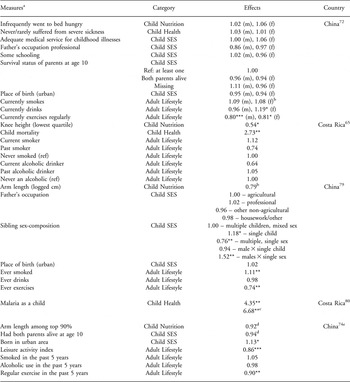
There were strong effects of poor early-life conditions on adult mortality in Costa Rica even after controlling for adult lifestyle, economic conditions and health. Being a childhood malaria survivor increased the hazard of dying due to stroke by over 4–7 times.Reference Brenes-Camacho and Palloni80 Older adults born in regions with high child mortality in Costa Rica had almost three times greater risk of dying at younger ages, and curiously Costa Rican older adults with lower knee height lived longer than taller adults as the relative risk of dying decreased by more than 50% for those in the lowest quartile of knee height.Reference Brenes65
In the case of China, longer arm length reduced the relative mortality hazard by about 21% among Chinese respondents 80 years and old but became marginally significant after adding adult lifestyle,Reference Huang and Elo79 and in another study from China reduced it by about 11–15% (results not shown), which then disappeared after controlling for previous health conditions.Reference Wen and Gu74 Never or rarely having suffered from severe sickness in childhood decreased the odds of problems with adult functionality/disability and cognition by almost 30% but had no effect on adult mortality suggesting that functionality/disability or cognition may mediate the effects of early-life conditions.Reference Yi, Gu and Land72 Father's occupation did not appear to be largely associated with older adult health, although it is marginally significant in baseline models predicting old-age mortality among Chinese 80 years and older (results not shown).Reference Yi, Gu and Land72, Reference Huang and Elo79 Being a single child increased the hazard of dying by 18% in Chinese 80 years and older possibly reflecting the consequences of illness or death of a parent.Reference Huang and Elo79 Being male living in a household with all male siblings increased the hazard of dying by 52% possibly reflecting increased competition for resources among all male siblings.Reference Huang and Elo79 While adult lifestyle (smoking, drinking and exercise) showed strong effects on adult health, in some instances it did not attenuate the effects of early-life conditions. Exercise reduced the odds of dying by about 26% and having ever smoked increased the odds of mortality by about 11%. However, the effects of arm length became marginal after adding adult smoking, drinking and exercise, while the effects of family composition remained strong.Reference Huang and Elo79 The significant effects of early-life conditions (father's occupation, birthplace, survival status of parents and education of respondent) in baseline models disappear after adult lifestyle is added.Reference Yi, Gu and Land72 Participation in leisure activities reduced the odds by about 14% but has little effect on the importance of having economic independence in adulthood, which reduces the hazard of dyingReference Wen and Gu74 (Table 5).
Effects of early-life conditions on adult mortality

SES, socioeconomic status; Gender models noted by: m, males; f, females; ADL, activities of daily living.
Notes: Numbers shown are relative hazard ratios reflecting net effects after controlling for covariates, which varied from study to study but in most instances included age, gender and education.
aMeasures for nutrition, health, SES and lifestyle were defined slightly differently from country to country.
Measures of childhood nutrition were defined in the following manner: (1) knee height (quartiles and reference group was the third quartile);Reference Brenes65 (2) arm length [logged (cm)];Reference Huang and Elo79 (3) arm length (90th percentile);Reference Wen and Gu74 and (4) infrequently went to bed hungry [yes (no)].Reference Yi, Gu and Land72
Measures of childhood health were defined in the following manner: (1) never/rarely suffered from a severe illness [(yes (no)];Reference Yi, Gu and Land72 (2) malaria as a child [yes (no)];Reference Brenes-Camacho and Palloni80 and (3) child mortality (ln index).Reference Brenes65
Measures of childhood SES were defined in the following manner: (1) adequate medical services for childhood illnesses [yes (no)];Reference Yi, Gu and Land72 (2) father's occupation professional [yes (no)];Reference Yi, Gu and Land72 (3) father's occupation [agricultural (reference group), professional, other non-agricultural, housework/other];Reference Huang and Elo79 (4) some schooling [yes (no)];Reference Yi, Gu and Land72 (5) survival status of parents at age 10 [at least one dead (reference group), both living, missing];Reference Yi, Gu and Land72 (6) sibling sex-composition [multiple children, mixed sex (reference group); single child; multiple children, single sex; male, single child; male, single sex];Reference Huang and Elo79 (7) place of birth – urban [yes (no)];Reference Yi, Gu and Land72, Reference Wen and Gu74, Reference Huang and Elo79 and (8) had both parents alive at age 10.Reference Wen and Gu74
Measures of adult lifestyle were defined in the following manner: (1) smoking: never smoked (reference group), former smoker, current smoker;Reference Brenes65 current smoker [yes (no)];Reference Yi, Gu and Land72 smoked in the past 5 years [yes (no)];Reference Wen and Gu74 never smoked (reference group), ever smoked;Reference Huang and Elo79 (2) drinking: never drank (reference group), past alcoholic drinker, current alcoholic drinker;Reference Brenes65 drinks heavily [defined as 400 g of beer per day (yes (no))];Reference Yi, Gu and Land72 drank in the past 5 years [yes (no)];Reference Wen and Gu74 never drank (reference group), ever drinks;Reference Huang and Elo79 (3) exercising: exercises regularly [yes (no)];Reference Yi, Gu and Land72, Reference Huang and Elo79 regularly exercised in the past 5 years [yes (no)];Reference Wen and Gu74 and (4) leisure activity index (an index developed to encompass a range of activities shown to impact health conditions at older ages including gardening, raising pets, outdoor activities, reading, playing cards, listening to radio, watching television, and social activities).Reference Wen and Gu74
bYi et al. and HuangReference Yi, Gu and Land72, Reference Huang and Elo79 reported effects that were marginally significant (P < 0.10). The odds ratio for males who currently smoke in Yi et al. Reference Yi, Gu and Land72 and the odds ratio for arm length in HuangReference Huang and Elo79 were marginally significant.
cBrenes and PalloniReference Brenes-Camacho and Palloni80 used both a simple (HR 4.35**) and complex (HR 6.68**) equation. The simple equation had only malaria as a covariate. The complex equation included the following covariates: sex, place of residence, education, living alone status, income, self-reported financial situation, health insurance, public subsidies, and baseline prevalence of hypertension, hypercholesterolemia, diabetes mellitus, lung disease, heart attack, cancer, osteoporosis, arthritis and geriatric falls.
dBoth arm length and having both parents alive at age 10 were found to be significant in baseline models but significant effects disappeared when adding if respondent had cognitive impairment, ADL disability or poor self-rated health in 2002.
eOnly select variables were included from Wen and GuReference Wen and Gu74 due to space constraints.
*P < 0.05; **P < 0.01; ***P < 0.001
Discussion
Twenty articles reviewed from major population-based studies of aging in low- and middle-income countries showed strong associations between early-life conditions and adult health outcomes such as chronic conditions, functionality/disability, cognition and mortality. Strong associations emerged: (1) in utero/early infancy exposures (independent of other early life and adult conditions) and adult heart disease and diabetes; (2) poor nutrition during childhood and adult mortality, difficulties in adult cognition and diabetes; (3) specific childhood illnesses such as rheumatic fever in childhood and adult heart disease, and malaria and adult mortality due to stroke; (4) serious childhood illnesses and adult functionality/disability and chronic disease; (5) poor childhood SES and adult mortality, functionality/disability and cognition; and (6) parental survival during childhood and adult functionality/disability and cognition. There was a very clear pattern that exercise had a protective effect on older adult health as exercising decreased the odds of several health outcomes by about 20–46%.
The results are specific to a handful of countries, cities or communities (China, Costa Rica, Mexico, Puerto Rico, Brazil and major cities in the LAC region). However, taken as a whole the results confirm previous studies from the developed world as to the importance of early-life conditions across several adult health outcomes.Reference Elo and Preston1, Reference Bengtsson and Lindstrom15, Reference Preston, Hill and Drevenstedt18–Reference Forsdahl21, Reference Lundberg23–Reference van den Berg, Doblhammer and Christensen36 There is evidence to support the importance of a critical period in utero/early infancy in adult heart disease and diabetes but there is also evidence to support the idea of a cumulative effect of adversity on conditions such as adult dementia. Yet, there is insufficient information to understand the reasons why in some settings the effects of early life on older adult health have a similar magnitude as adult lifestyle with little attenuation of effects after adding adult lifestyle and community settings but in other settings the effects of early life disappear or weaken as adult lifestyle is added. Differences between males and females appeared but there is insufficient information to understand the differences. There were no studies that explicitly tested the degree to which undernutrition in early life is compounded by overnutrition in later life to produce disease but differences in older adult health due to cohort or cultural differences in at least one study point to the importance of examining more carefully the possibility that such differences exist.
To some degree, cross-national comparisons obscure the richness and comprehensive nature of the published studies. Until better data on early-life conditions become available, different measures and modeling approaches make comparability regarding effects of specific childhood conditions across countries difficult. The reviewed studies are thus better viewed as interesting case studies from which associations between early-life conditions and older adult health have emerged not only for adult mortality but also for different aspects of adult morbidity.
Nevertheless, many questions remain. The puzzling results of height and knee height, unexpected patterns of associations (e.g. wearing shoes associated with adult health in Mexico, the protective effect of smoking in China or drinking in Mexico) or mixed results from similar measures such as going to bed hungry requires more examination as does the meaning of waist–hip ratio as a potential measure of early-life nutrition. There are differences between adult diabetes and heart disease in terms of the importance of early nutrition but the measures of nutrition are too broad to discern the differences. The very strong association between having a family member with diabetes and being diagnosed with diabetes may reflect genetics or family background and behavior but there is insufficient information to disentangle its meaning. Childhood malaria, rheumatic fever and serious health problems or illness in childhood are associated with adult health although it is not possible to tease apart effects of individual illnesses. There are strong associations between country-specific child mortality and adult mortality but having household child mortality would provide a more direct tie with respondent's early-life conditions. Gender differences may exist in early life as shown by the results of family composition and older adult health in China but more information on early life family environment is needed to fully understand them. The generality of the question on parental SES in relation to the mostly agricultural societies of the 20th century may explain the reason why parental SES is not significant in many cases.
Admittedly, the measures of early-life conditions are broad and imprecise and exact mechanisms cannot be determined. Measures of childhood health are largely untested and not validated and rely on retrospective questions asked of older adults. Reference standards for anthropometric measures are based mostly on the developed world and in some instances may not be appropriate for low- and middle-income countries. The number of countries examined is too small to discern the uniqueness of the findings for particular countries and the need for more data harmonization for more meaningful cross-national comparisons is apparent. Events between early life and older adult health often cannot often be bridged with available survey data. Linking other types of data (administrative, historical censuses, vital statistics or information on nutritional conditions) with survey data to address the data limitations of surveys of older adult health holds promise in complementing older adult surveys to enhance analyses of early-life conditions. Although this approach is feasible in the developed world,Reference Almond, Bleakly, Ferrie, Mazumder, Rolf and Troesken100 it is often not a realistic option given the quality of data sources in low- and middle-income countries in the early 20th century. It is not yet possible to discern the conditions under which the results are observed. Questions remain such as the interaction between early life and older adult health and differences between cohort and the degree the determinants of adult heart disease differs between Western and non-Western countries.
In spite of these limitations, the topic of health determinants for older adults in these settings continues to be one of recognized importance for public health and those studying aging populations in these settings.Reference Kinsella and He47, 101, 102 One may question the wisdom of recreating dose in terms of using season of birth as an indicator of in utero/early infancy exposures or using retrospective questions asked of older adults regarding their childhood. However, given the paucity of cohort data from the developing world to examine hypotheses of early-life conditions and older adult health, population-based studies are relevant in providing a broad perspective on the origins of adult health. Understanding the determinants of older adult health will lead to better interventions and more effective health policy for older adults in low- and middle-income countries, although knowing how to best translate research on early-life exposures and older adult health into relevant public policy guidelines in low- and middle-income countries remains a challenge.
Demographers and population researchers are already working with biomedical researchers as they incorporate more biomarkers into population surveys.Reference Crimmins, Kim and Vasunilashorn103 There are relevant instances of this collaboration between social science and biomedical researchers in the developing world.Reference Gurven, Kaplan and Winking14, Reference Brenes65 Biomarkers will improve the measurement of adult health outcomes in population studies and address concerns regarding the underestimation of adult chronic conditions using self-reported measures. Improving the measurement of early-life conditions in population-based studies in low- and middle-income countries will be a difficult task especially for older adults born in the early to mid-20th century. However, just as demographers are in the position to interpret social and behavioral aspects discovered in population-based studies, biomedical researchers hold the key to illuminating their biological aspects and to understanding different environmental settings and population-specific risk factors. More collaborative research efforts within the framework of the developmental origins of life combining population-based surveys with biomedical research approaches has the potential to more fully illuminate the complexity of how early-life conditions impact older adult health.
Acknowledgements
This research was supported by National Institute on Aging Grant K25 AG027239 and by a NICHD center grant to the Population Studies Center at the University of Michigan (R24 HD041028). Many thanks to Sarah Moen.