INTRODUCTION
This assessment of the origins and development of the Museum of Safety in New York in the early twentieth century reveals how the hazards faced by industrial workers and the wider public were used by campaigners within the city to reform the populace. Inaugurated in 1908 by leading social and religious reformers, the Museum of Safety offered a vision of a progressive institution whose objective was to inform and educate individuals on the latest mechanical and practical principles of safety in order to prevent accidents, to conserve life and limb and to ensure the competitiveness of industry. Therefore, in an era of political, social and ethnic tensions, the Museum of Safety worked to build a cohesive society through a “consciousness of risk.”Footnote 1 The development of this “safety consciousness” and the formation of a “risk society” has been referred to by scholars as marking the advent of the “modern age” as the effects of mass industrialization produced a “future-oriented” culture.Footnote 2 The Museum of Safety demonstrates this alteration as it attempted to guide the progression of society in New York and the wider United States by shaping attitudes towards awareness, responsibility and identity.
However, despite its assistance with a number of national, corporate and municipal initiatives, the institution became marginalized from its once-prominent role as the ability of the museum to represent ideas of progress was questioned.Footnote 3 This reflects wider tensions regarding the role of museums, libraries and galleries in “modernizing” American society from the late nineteenth century.Footnote 4 As a tool of reform or as a means of asserting tradition, the relationship between museums and the modern age reveals how institutions in this era placed themselves at the cusp of change as urbanization and industrialization accelerated the nation into the future.Footnote 5 As such, some museums could become focal points within American cities but some could also disappear as they failed to address the concerns of their visitors and patrons in a rapidly developing society.Footnote 6 In effect, the speed of the modern age could render institutions irrelevant. The Museum of Safety demonstrates this process; the museum's board members sought to promote safety awareness to reshape society but within two decades the institution was redundant as a concern for safety in New York was institutionalized by the city authorities. Whilst the organization had successfully raised the profile of health and safety, the use of a museum to guide this aspect of the future proved inappropriate for its subject matter; the museum with a modern mission was undermined by the same processes of modernity.
The history of the Museum of Safety supports the development of an alternative perspective on the “Progressive Era” politics and culture of the United States which worked to reform New York and its institutions from the late nineteenth century to the early twentieth century.Footnote 7 Whilst the term and its meanings have been revised by scholars since the 1960s, the “Progressive Era” has maintained a central place in the redemptive narrative of American history that moves from “Gilded Age” excess to enlightened modernity.Footnote 8 However, recent studies have moved beyond these restrictive periodizations to assess how this era of dramatic technological, scientific and social change marked a period of complex negotiation.Footnote 9 In this manner, the roles and responsibilities of government, corporations and individuals are redefined and reinforced as the shape of the present and the possible future of society is demarcated.Footnote 10 It is in this process of controlling and projecting onto the imminent that the “Progressive Era” can be accurately assessed.Footnote 11 The Museum of Safety serves as a microcosm of this alteration as its founders developed an institution to respond to the public and private risks in the city to improve the metropolis. However, in this process of defining the future, the Museum of Safety was cast as irrelevant as it failed in asserting its vision of the modern world.
NEW YORK AND A MUSEUM OF “SOCIAL ECONOMY”
New York had become plagued by the consequences of its unrestricted development by the latter half of the nineteenth century. As the city had expanded as a centre of industry, manufacturing trade and finance, its population had grown from 515,547 in 1850 to 3,437,202 by 1900 through mass migration.Footnote 12 With this economic expansion and the rise in population, individuals were increasingly exposed to an array of dangers within the metropolis as they entered into the modern age.Footnote 13 Citizens were at risk from domestic fires or contagion spread by low-quality, unsanitary housing conditions; mutilation or death from poorly maintained sweatshops, factories and labour yards; or injury from the carriages, omnibuses, trams and subways which traversed the city. Indeed, by the yhear 1900 a total of 3,012 accidental deaths were recorded in the metropolis; a figure which had increased to 3,811 merely a year later.Footnote 14 The city's corporations were increasingly troubled by this situation as they faced financially damaging lawsuits. The court cases in New York between 1890 and 1900, dealing with injuries sustained in the workplace, rose from just over twenty a year to over a hundred annual hearings by the end of the century.Footnote 15 Businesses could also find themselves involved with potentially highly damaging court cases regarding their liability for the deaths and injuries of citizens. Indeed, the Brooklyn Rapid Transit Authority was prosecuted for the recovery of $100,000 for one incident in the year 1900 when a young woman was killed by a trolley car near Coney Island.Footnote 16
The increasing dangers posed by the modern age were occurring whilst reformers in the city sought a greater degree of involvement in the lives of the residents of New York to improve housing, education and sanitation.Footnote 17 Safety was a key feature in this movement as it emphasized personal responsibility to ensure collective well-being.Footnote 18 In a diverse city with extremes of poverty and wealth, emphasizing “safety” could also bring stability and progress to New York.Footnote 19 Through a concern for “risk,” a new “modern” relationship between individuals, corporations and society was forwarded as the rise in accidents was perceived by reformers as evidence of a break in the social contract within the metropolis.Footnote 20 The preacher Josiah Strong (1847–1916) was one of the most prominent voices in this campaign. Strong had settled in the city in the late 1880s, after his work founding and coordinating the “Evangelical Alliance” in promoting Christian reform of American society.Footnote 21 Strong railed against New York for its exploitative capitalism and mass immigration in his widely read treatise Our Country (1885).Footnote 22
For Strong, in this new era of change, the “Social Gospel” movement would transform New Yorkers through notions of awareness and responsibility.Footnote 23 The concept of the Social Gospel sought to instil a sense of Christian charity and to encourage a greater sense of duty, perseverance, chastity and temperance from the individual.Footnote 24 Strong developed a variety of associations with other like-minded politicians, reformers and Protestant clergymen in New York who similarly damned the city for its disparity of wealth and forwarded concepts of intervention to ensure political stability.Footnote 25 With this backing, Strong initiated the League for Social Service to further the cause of reform and renewal, both spiritual and temporal, in 1898. This New York organization attracted supporters as an educational service, designed to collect, analyse and disseminate information on social and industrial conditions.Footnote 26 The league began issuing periodicals and pamphlets to support alterations in housing, labour, education and health within the metropolis to secure public safety.Footnote 27 However, the organization was increasingly drawn to displays and exhibitions through which they could inform and instruct the populace.Footnote 28
American museums in the late nineteenth century offered alternative practices in the design and formation of their displays.Footnote 29 However, from the enriching arrangement of “high culture” to the ordered knowledge of natural history, institutions used exhibition space to define class, gender and race.Footnote 30 This mode of exhibiting was also present in the curiosity shows, world fairs, expositions and the department stores of the Gilded Age.Footnote 31 For commerce, entertainment, education or enlightenment, the exhibition served as an ideal form through which American society could be reformed, reimagined or reasserted with the developments of nineteenth-century society.Footnote 32 Indeed, in New York, exhibitions and displays in the public museums were fashioned with the intention of defining class roles as well as encouraging the betterment of citizens through cultural or educational awareness.Footnote 33 Whilst exhibitions in the department stores of the city asserted notions of taste and distinction, displays organized by reform groups cultivated charity and progressive values.Footnote 34 For example, the highly influential Tenement House Exhibition of 1899 had demonstrated the power of the display format in promoting reform agendas.Footnote 35 On this basis, the use of expositions and fairs had been forwarded by Strong as a means through which the league could shape society.Footnote 36 To develop this work, Strong appointed the reformer and social scientist William Tolman (1861–1958) director in 1898.Footnote 37
Through donations from individuals and corporations, Tolman assembled an exhibition of lantern slides on the condition of cities across the United States and specifically New York.Footnote 38 This exhibition was first unveiled to the city's political, industrial and religious elite during March 1900 in the Manhattan home of the socialite and philanthropist Helen Miller Gould Shephard (1868–1938).Footnote 39 The success of this endeavour led to the commission by the United States government to transfer the display to the Exposition universelle in Paris from April 1900.Footnote 40 This venue, replete with scientific, cultural and industrial displays from across the world, offered a demonstration of how the organization could move forward with its agenda through exhibitions.Footnote 41 Tolman was also inspired by the work of the Musée social in Paris.Footnote 42 From 1894, the musée was developed to promote the notion of the “social economy” to improve urban society.Footnote 43 An array of materials on housing, health and industrial conditions were displayed in the musée’s exhibition hall near the Seine.Footnote 44 The musée’s goal of social reform through the use of exhibitions was shared across late nineteenth-century museums of labour, science and technology in Europe.Footnote 45 These institutions, sponsored by wealthy industrialists, businesses or governments, focussed upon asserting class roles and responsibilities to avoid the social discontent which could be fostered by injuries or deaths in the workplace.Footnote 46
It was this use of exhibitions by German industrial museums, who also exhibited at the Exposition universelle, that gave direction to Tolman and Strong.Footnote 47 Tolman was also encouraged by the work of the Scottish urban planner Sir Patrick Geddes (1854–1932). Geddes had used exhibitions in Edinburgh as a means to inform and educate the public on industrial reform in the 1890s.Footnote 48 In Paris, Geddes remarked upon the accessible modes of engagement that exhibition space afforded.Footnote 49 Strong and Tolman subsequently wrote to Geddes seeking advice for what they hoped would be a “Social Museum” or a “Museum of Social Economy” in New York.Footnote 50 The proposed museum was envisioned as the centre of a grand reforming movement:
Fully set forth in print and picture would be shown what is being done in the matter of industrial betterment. What the wealthy employer is doing to improve the morals and intelligence of his workers, the most approved methods of hygiene in factories, the beautifying of the working man's home, the progress of the movement for social betterment by the churches of all denominations, and the philanthropic societies … and what municipalities are doing along the same lines with parks, playgrounds, and open-air gymnasia.Footnote 51
To advance this programme, Tolman took the leading role towards founding a museum under their new name, the American Institute of Social Service.
THE MUSEUM OF SAFETY
Tolman began promoting the need for the museum by highlighting the problems facing society in the modern era and the need for “safety” as a concern to ameliorate the potential for dissent and disintegration.Footnote 52 This work was principally undertaken within the field of industry and the organization gained prominence with their International Exposition of Safety Devices and Industrial Hygiene in New York during January and February 1907. The exhibition was housed within the American Museum of Natural History with a variety of safety devices and information from over three hundred global companies and industries contained within display cases and tableaus.Footnote 53 The venue in one of the most prestigious museums in the city was organized by Tolman as a means of demonstrating the importance of an institution devoted to the preservation of life.Footnote 54 Tolman stated,
The object of this exposition is to direct the awakening of public opinion to the necessity of active steps toward lessening the causes of accidents endangering the life and safety of the American workingman, and by means of a permanent museum of security, where all problems of such safeguarding can be studied in working detail, to effect permanent industrial betterment.Footnote 55
The event garnered the support of New York State governor Charles Hughes (1862–1948), who spoke at the gala dinner at the Waldorf-Astoria of the need for a reforming institution to educate the diverse populace on how to protect themselves.Footnote 56 To demonstrate this, during the exhibition, Tolman spoke of the scale of death within American industries each year.Footnote 57 The exposition was successful, providing the impetus for the creation of the American Museum of Safety Devices and Industrial Hygiene in April 1907.Footnote 58 The museum was incorporated with Tolman as president; an advisory board of honorary vice presidents from politics and industry; working committees; a ladies’ committee; and, courtesy of the periodical Scientific American, a medal to be awarded by the museum to the inventor of the best safety device.Footnote 59 With the trappings of an established and venerable institution, the museum was based near Times Square on 239 W. Thirty-Ninth Street, renting the third floor from the McGraw Realty Company.Footnote 60 In these new surroundings, a smaller second Exposition of Safety Devices was held between May and June 1908.Footnote 61 With the support of prominent businessmen, industrialists, politicians and reformers, Tolman forward a programme of exhibitions to alter the morals, behaviours and ideas of the populace:
The exhibits will consist of devices for safeguarding the lives and limbs of workmen and preventing accidents under the ordinary conditions to which the general public is exposed. The museum will display, as far as possible, “live exhibits,” that is, machines or devices in operation, models of actual or reduced size, and photographs.Footnote 62
A similar initiative of using exhibitions to inform society on issues of safety and well-being was also being pioneered with the installation in 1909 of a public-health department within the American Museum of Natural History.Footnote 63 In this context, Tolman and the vice presidents renamed the institution the “Museum of Safety and Sanitation” and relocated in early 1910 to 29 W. Thirty-Ninth Street, where it was housed within the United Engineering Societies’ Building. This structure, built through a donation by the industrialist Andrew Carnegie (1835–1919), was designed to bring together the offices and interests of manufacturing and engineering societies in the city.Footnote 64 These premises were well appointed; libraries, lecture rooms, galleries and private chambers were provided to organizations to further their aims and objectives. The Carnegie Corporation also began financially supporting the museum with an annual sum of $5,000 being paid between 1911 and 1919.Footnote 65 This patronage enabled the museum to develop as new expositions were held on safety devices, regular meetings and talks were convened, and guest lecturers from across the world were hosted, whilst pamphlets and booklets were printed and distributed from the museum's new headquarters.Footnote 66 In 1909, the bulletin Safety was launched by the museum to disseminate the latest information on the safety agenda across the United States. To indicate this new status, the museum's board was reformed from prominent members of the city's industrial, economic and political classes, whilst the institution developed subdepartments concerned with the protection of life in transportation, mining, textiles, building trades and the chemical and agricultural industries.Footnote 67 With its financial and political backing from the Carnegie Corporation, the stress on social stability and individual responsibility were paramount in exhibitions and leaflets as the museum's concern for “social engineering” rather than “social economy” was reflected in another name change in late 1910: the American Museum of Safety.Footnote 68
The significance of this new agenda was demonstrated in the designation of the museum as a corporation by the New York State Senate in 1911.Footnote 69 This enabled the museum's board to raise funds through membership fees which were charged for individuals (five dollars), businesses (10 dollars) and industries (twenty-five dollars). The museum was unparalleled within the metropolis, as it provided advice and guidance in a city that appeared to be beset with dangers. During 1910 and 1911, New York and its surrounding area witnessed four major accidents which appeared to justify the museum's remit: the Newark Factory Fire of 25 November 1910 (twenty-five fatalities), the Grand Central Station Explosion in Manhattan of 19 December 1910 (ten fatalities), the Communipaw Explosion near Jersey City of 1 February 1911 (thirty fatalities) and the Shirtwaist Triangle Factory Fire in Manhattan of 25 March 1911 (146 fatalities).Footnote 70 Tolman positioned the museum as the centre for reform and safety in the wake of these disasters.Footnote 71 Indeed, Tolman testified in front of the Factory Investigating Commission, set up in the aftermath of the Triangle Factory Fire, that museum displays could take a leading role in workplace safety.Footnote 72 Though its exhibitions, the museum was promoted as the advocate for the workingman, the aid to corporations and the assistant to politicians – an increasingly difficult remit with the rise of trade union activism and the suspicion of socialist radicals in the city.Footnote 73 To counter dissent and to preserve the role of industry and capital, the museum's materials focussed upon reforming the character of the individual; sobriety, education, exercise were all featured as the museum demanded a new sense of responsibility within society.Footnote 74
To address a broad audience, temporary exhibitions and displays on maintaining safety were held in the United Engineering Societies’ Building. For example, an exhibition on fire safety in the workplace and in the home was highly prominent in the museum after May 1911 and coordinated with the former chief of the New York Fire Department, Edward F. Croker (1863–1951).Footnote 75 The instructive nature of this information was significant; it emphasized personal responsibility rather than corporate liability. As part of this approach, the museum launched another International Exposition in Grand Central Palace in midtown Manhattan during early December 1913. The event provided displays of all the advances in safety and welfare that had been achieved across the United States within the premier venue of the city. Protective devices for workers, educational films, safety guards for cutting machines, sanitation procedures to prevent typhoid and illuminated plans for buildings and offices were exhibited as the museum encouraged companies to demonstrate their engagement with the growing national movement of “safety first.”Footnote 76 This development was shaped by the concern that laissez-faire attitudes to workers’ health and safety damaged profits, reduced productivity and potentially led to the increase in support for trade unions and socialist groups. The exposition in Grand Central Palace promoted a collective goal of safety as a means of social and political cohesion.Footnote 77 The event was certainly a success with an average daily attendance during its ten-day period of over ten thousand people.Footnote 78 Through this exhibition, the museum was able to disseminate the idea that safety provisions were a public service and a subject of concern for all residents of the metropolis.Footnote 79
The use of this “risk consciousness” to reform society was also present in the museum's programme of work with the city's educational institutions. By March 1913, after Tolman successfully petitioned New York's Department of Education, a children's “Safety Day” was initiated.Footnote 80 The event was coordinated across the city's public schools so that at two o'clock on 4 April all teachers read a prepared lecture by the museum entitled “Safety and Caution.”Footnote 81 The lecture, addressed to over 700,000 schoolchildren, contained practical advice on how to behave on the city's streets to avoid accidents caused by automobiles, trains and trolleys.Footnote 82 In encouraging attendance and participation at the museum, it served as a means of inculcating behaviour and values into the youth of the metropolis.Footnote 83 The organization's work in this field was supported by the railroad operator, the Brooklyn Rapid Transit Authority, who provided leaflets, badges and buttons to children who signed up to the principles of “safety and caution.” The museum also initiated a “Safety League” for boys from the upper grades, who were tasked with guiding younger children across roads and trolley crossings as well as observing safety rules during playtime.Footnote 84 In this attempt to encourage the next generation to “safeguard humanity,” the museum also published a series of instructional children's stories on how to play safely on the city streets.Footnote 85
The museum's association with industry was further strengthened during this era as, alongside its Scientific American medal, further awards were gifted to the institution by 1913 to award to businesses for their low accident reports or for their development of safety devices. The E. H. Harriman Memorial Medal, named for the railroad entrepreneur and donated by his widow, was to be awarded to the steam railroad company for the best safety record for workers and passengers. This award would be supplemented in 1914 by the Anthony N. Brady medals which acknowledged the safety and hygiene measures of electric street railways. The Rathenau Gold Medal, named after the German industrialist and reformer Emil Rathenau (1838–1915), was awarded for the best electrical device that safeguarded workers. The Seaman Medal, named after the noted United States Army surgeon, Louis Livingston Seaman (1851–1932), was awarded for advances in surgical procedures that saved lives. Finally, the Travellers Insurance Company's Gold Medal was awarded to the individual or company that had undertaken the most work to ensure the safety of employees, customers or the wider public.Footnote 86
As Tolman provided the museum with a wider role, it was seen as central in the city's development in the modern era. Speaking in December 1913, Manhattan Borough president George McAneny (1869–1953) gave voice to these sentiments:
The relation of the City to this museum should not be far different from that which it holds to the Museum of Natural History; it should not be different from the relation which it holds to the Museum of Art; and our relation to many other institutions that have to do with the education of the people.Footnote 87
The importance of the museum was demonstrated in the research disseminated in Safety, which by 1913 was being published every month. Such was the success of this periodical that the museum applied for copyright of the name in 1914 to protect it from unlicensed usage by unscrupulous and unsafe firms.Footnote 88 The rapidity with which the museum had established itself was significant. In the summer of 1914, the city's press marvelled at how the previous decade had seen the growth of interest in safety across the entire country, and they highlighted the museum as the centre.Footnote 89 Museums of safety had been instituted or planned in San Francisco, Boston and Toronto on the New York model whilst a bill introduced to Congress in July 1914 forwarded the idea of a “National Museum of Safety” in Washington, DC.Footnote 90
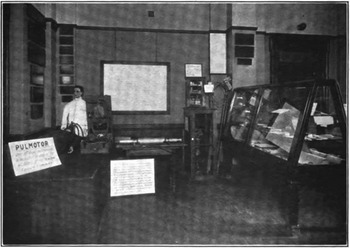
This status was demonstrated in the decision by the New York Senate to amend the Greater New York Charter in April 1914 (Chapter 466). The Board of Estimate and Apportionment, the governing financial body of the city of New York, were thereby enabled to award to the museum an annual sum of up to $50,000 if the institution maintained free entry, education programmes and research work for individuals, businesses and the city authorities.Footnote 91 Subsequently, the directors of the museum appealed in September 1914 for a grant of $7,250 to cover expenses of rent and the employment of staff members.Footnote 92 This appeal was ultimately fruitless with no record of any payment in the city's budget.Footnote 93 The museum's remit of safety in society was also not as immediately recognizable to the Board of Estimate and Apportionment as a public benefit in comparison to the Metropolitan Museum of Art and the Museum of Natural History, who both received generous public funds.Footnote 94 Despite these financial constraints, the museum expanded their exhibitions, including objects and diagrams from companies who were eager to demonstrate the new technologies of the era. For example, the New York Edison Company's safety work in electrical engineering was the subject of a prominent display from July 1914 which detailed the work undertaken for the “safety and welfare” of its employees. This exhibit included protective apparatus for workers, insulating and earthing equipment for electrical wiring and the documents used to inform labourers of their roles and responsibilities for preventing and reporting accidents (Figure 1).Footnote 95
General view of the New York Edison Company's exhibit at the American Museum of Safety. Image from anon., “How the New York Edison Company Provides for the Safety of Its Employees,” Safety, 2, 7 (1914), 158.

Undeterred by the lack of public funds, Tolman organized another safety exposition in Grand Central Palace in December 1914. This event attracted large crowds who witnessed the advances in fire prevention, safety management and health controls.Footnote 96 The event was overshadowed by the outbreak of war in Europe in August 1914, but the conflict also inspired discussions and displays on safety equipment on the battlefield. Indeed, Garrett A. Morgan (1877–1963) displayed to great acclaim his “safety helmet” designed to filter noxious fumes for the wearer.Footnote 97 The broader appeal to the protection of human life was also present in the expansion of the museum's concern beyond the confines of the industrial and educational sector. Under Tolman's direction, the museum's staff began working with the municipal authorities to provide instructional manuals for pedestrians to deal with the array of potential threats on the road and on the pavements.Footnote 98 The museum's role as an educator across society was thereby reaffirmed; the museum's objective was to reform the behaviour of its customers, its visitors and its wider community. Frederick R. Hutton (1853–1916), vice president of the Museum of Safety and professor of mechanics at Columbia University, praised this capacity of the institution; its exhibitions, collections, models and reports were all a “means to this educational end.”Footnote 99
A NEW HOME FOR THE MUSEUM
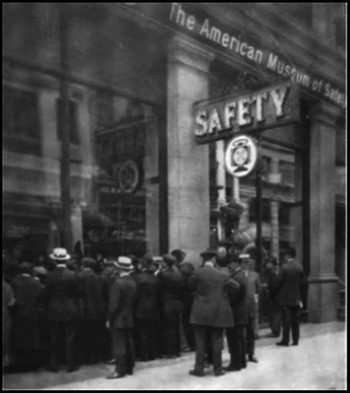
The Museum of Safety was not alone in its promotion of responsibility as a means of modernizing the nation. The National Safety Council (initially named the National Council for Industrial Safety) had been formed in Chicago during 1913 and had established links with industry and government to promote safety at home, at work and in public.Footnote 100 Whilst the two collaborated, the board of the Museum of Safety sought to demonstrate its own method of exhibitions, displays and engagement as the most appropriate approach. The work of the museum in this regard was further enabled by the renting of new premises for the institution from February 1915 at 14–18 W. Twenty-Fourth Street. This Renaissance-style building, constructed in 1904, offered the institution a means to integrate itself within the lives of individual workers. Situated in the garment district of the city, the museum was now placed on the ground level, with wide storefront windows to display to the public, and used prominent signage to ensure it could engage with the “man in the street” (Figure 2).Footnote 101 From March 1915, the museum began holding monthly displays of devices or dioramas in the windows, donated by companies to demonstrate new procedures or to “excite” and educate the passer-by.Footnote 102 The new location also provided the museum with an opportunity to encourage a wider membership and to reformulate the workings of the institution. Whilst Tolman remained as director, Arthur Williams (1868–1937) and A. A. Hopkins (1869–1939), both full-time employees of prominent New York companies, took upon influential roles within the museum. Through the engagement of these members, the museum began to focus more upon the principles of self-reliance and improvement for the individual as a means of adjusting to the modern age.Footnote 103
Museum of Safety, exhibition windows, 14–18 W. Twenty-Fourth Street. Image from anon., “Promoting Safety by Means of Window Displays,” Safety 3, 6 (1915), 145.

Whilst the museum's new location demonstrated its commitment to displays and exhibitions, an increasing use of film was made by the museum to engage with its audiences. The development of motion pictures featuring workplace, domestic or street accidents provided a new medium in which to inform and educate the populace.Footnote 104 Productions such as Steve Hill's Awakening (1914), The Locked Door (1914) and An American in the Making (1913) highlighted the dangers wrought by poor safety procedures in the workplace as well as the significance of appropriate behaviour for American workers.Footnote 105 This focus on patriotic values was significant because, despite the officially neutral stance, the tensions in Europe had brought issues of allegiance and identity to the fore within New York and the wider United States.Footnote 106 The Preparedness Movement, which originated in the metropolis from within the city's financial and political institutions, supported the Entente and the development of the nation's military, and a patriotic dedication to the state which was encapsulated in the programme of “Americanization.” This posed significant issues especially to the German and Irish Americans, who were the two largest ethnic groups in the city in the 1900 census with over 300,000 and 275,000 individuals born in Germany and Ireland respectively.Footnote 107 As a means of forging responsible citizens for this agenda, the Museum of Safety utilized its position to promote loyalty to the nation in a statement published in its journal.Footnote 108
By 1916, Arthur Williams had oriented the museum to be a strong proponent of the Preparedness Movement and advocated an investment in safety to ensure the health of the population who might be called upon to serve their country.Footnote 109 Williams also echoed the increasing anti-German sentiment within the city by drawing comparisons to the ruins of institutions of learning caused by an advancing German army in France and Belgium, with the possible destruction that would be visited upon the Museum of Natural History, the Metropolitan Museum of Art or the Museum of Safety in the event of a German invasion.Footnote 110 In this context, the third exposition of sanitation and safety devices, held in Grand Central Palace during May 1916, was dominated by displays of military hygiene and camp sanitation.Footnote 111 This dedication to the nation was undertaken during a shift in the control of the museum which saw, in November 1916, the ousting as director of Tolman, whose German connections dating back to the Paris Exposition cast him as suspicious in the febrile atmosphere of the time.Footnote 112 By January 1917, the museum had appointed Arthur H. Young, formerly of the National Safety Council, as the new director. Young, as a former safety inspector of the Illinois Steel Company in Chicago, had been concerned with the “safety first” movement not as a means of education and reform through exhibition but as a means by which productivity could be maintained.Footnote 113
Under the new directorship, the Museum of Safety continued in its work but the focus of its concern began to shift away from exhibitions and displays, which were seen as inefficient and outdated. Increasingly, public talks, films and reports were utilized as the primary mode of engagement as the museum's income from memberships began to stagnate as new patrons within industry and private individuals were not forthcoming.Footnote 114 Whilst earning over $20,000 annually from subscriptions, the museum operated as a nonprofit organization with no investments made from its earnings.Footnote 115 In such straitened circumstances, Safety, the chief publication of the museum, began to be issued in bimonthly editions or go unpublished during the summer months. The museum, nevertheless, continued to support the war effort, offering the use of its facilities and staff after the declaration of war against Germany in April 1917.Footnote 116 However, the declining prestige of the institution was evident in the necessity of the National Safety Council to cosponsor the exposition of safety devices at Grand Central Palace in September 1917.Footnote 117 This event enabled the stark difference in the fortunes of these two organizations to be observed, as the National Safety Council's national prestige and annual budget of over $100,000 ensured its dominance over its collaborator in promoting safety issues.Footnote 118
By the summer of 1918, the museum's board sought to end the organization's problems by applying to occupy the Arsenal Building on Fifth Avenue and Sixty-Fourth Street in Central Park as their permanent home. The location was significant; Central Park linked the two great institutions of learning within New York, the Metropolitan Museum of Art and the Natural History Museum. The application was received favourably by the Board of Estimate and Apportionment, who were desirous of removing the cost of the care and renovation of the Arsenal from the city's budget. However, the plans were criticized in the city's press as an “invasion” of Central Park; the museum appeared not to represent the qualities sought to warrant a home in such an exalted position.Footnote 119 The acquisition of support and the drawing up of a lease by the Board of Estimate and Apportionment in the summer of 1918 brought further assessment of the museum's actual role and value within the city.Footnote 120 This appraisal saw the ending of the tenure of Arthur H. Young as director in July 1918 and a successful application by the museum's board members to rename the museum the Safety Institute of America in November 1918.Footnote 121 The change was undertaken to assert their role in “modern” social engagement, which the appellation “museum” did not apparently afford: “While the old name appealed to numerous friends … nevertheless the title led to misconceptions on the part of many others who thought of the Museum as a repository of historical objects and not as a modern and progressive economic movement.”Footnote 122 A museum dedicated to safety was not modern enough; exhibitions and displays were seemingly unsuited to the progressive ideals of responsibility and awareness. In their new guise, the Safety Institute continued to hold lectures and seminars in early 1919 as part of their public remit.Footnote 123 However, the problems in securing the museum's permanent home meant that these lectures were held in the offices of the Metropolitan Life Building. The institute had been forced to vacate the property at 14–18 W. Twenty-Ninth Street in April 1919 in the expectation that it would take up residency at the Central Park Arsenal. However, despite a favourable court decision in July 1919, on appeal in June 1920 the decision of the Board of Estimate and Apportionment was rejected and the institute was refused permission to occupy the Arsenal.Footnote 124 In this judgement, the institute's proposals were regarded as lacking in their ability to maintain a lasting contribution to the park and the city, and, quite damningly, the institute's objectives were described as failing “to accomplish its corporate purpose.”Footnote 125 The organization had failed to demonstrate its reforming, modernizing objectives as an ongoing concern for the wider metropolis. The institute was rendered homeless with this decision and was forced to rent offices at 261 Madison Avenue and disperse the collections built up as a museum because of the absence of storage.Footnote 126 The death of Carnegie in 1919 had also brought a reduction in income as the Carnegie Corporation began to focus upon scientific programmes, which the new institute was not regarded as fulfilling. The institute was eventually incorporated into the wider role of the National Safety Council, as the operation of safety initiatives within the city was undertaken as a joint initiative.Footnote 127 With an ever-decreasing publication of Safety and a declining role within the metropolis, the institute had failed to convince individuals, corporations and the city authorities of its relevance.
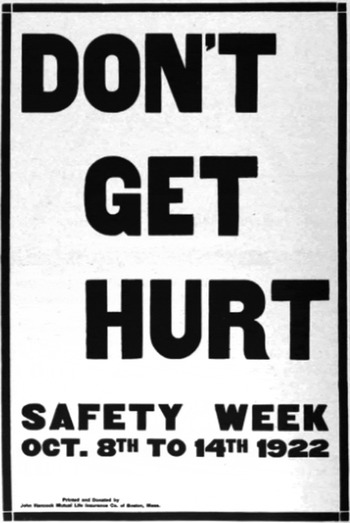
The decline in the institution's fortunes did not entail an absence of concern for safety in the metropolis. Indeed, with ever-increasing numbers of automobiles within New York, from 71,000 licensed vehicles in 1915 to 213,000 in 1920, a new wave of engagement concerning the protection of children from car accidents emerged during the early 1920s.Footnote 128 Nationally, fatalities in connection with automobiles were increasing at a rapid rate, from 9.4 per 100,000 deaths in 1919 to 10.4 in 1920.Footnote 129 In New York, over seven hundred deaths a year caused by automobiles were being reported by 1920.Footnote 130 The cause of traffic safety, one which exercised the interests of the city and national media, offered a means by which the directors of the institute would potentially restate its utility and status.Footnote 131 With this cause in mind, in January 1922 the institute's bulletin Safety was relaunched with a commitment to monthly editions, and a move was made to resurrect the “American Museum of Safety.” This was undertaken with the appointment of the new director, Laurence Vail Coleman (1893–1982), who, as a former employee of the Museum of Natural History, had led on its public health exhibitions. Coleman was a keen advocate of the educational value of exhibitions.Footnote 132 Under this guidance, the organization's displays were revitalized, objects were loaned and exhibits were bought as new rented premises were found in 141 E. Twenty-Ninth Street. Foremost in this activity was the subject of street accidents, and during the summer of 1922 plans were set in place to organize a citywide “Safety Week” to draw attention to the threats in the modern metropolis (Figure 3).Footnote 133 This event, designed to encourage awareness, was also intended as a demonstration of the role of the Museum of Safety:
the value of the museum as a “totem” must not be overlooked. By standing as a visible monument to an abstraction it will be a rallying point for safety workers and a source of conviction to the uninitiated who give no thought to what they cannot see. The future of the museum is therefore both a local and a national concern.Footnote 134
Under the directorship of Coleman, the museum's “Safety Week” was planned as a grand event, with parades, speeches, monuments and the founder of US Steel, E. H. Gary (1846–1927), as chairman of the planning committee.Footnote 135 From 9 to 13 October, the city was enthralled with declarations of the significance of installing an appreciation of safety into the schools, factories, offices and homes of all residents of New York.Footnote 136 These five days raised safety as an agenda within the city, as the threat to life, the cost of injury and the waste caused by accidents was debated within the metropolis. However, rather than resulting in the expected drive for the reinstallation of the museum, the effect was to encourage the formation of a Bureau of Public Safety within the city's police department to enforce ordinances and regulations regarding health and welfare.Footnote 137 The public clamour to ensure safety in the city was met not with exhibitions and displays to educate but through an extra level of policing and control. Whilst the institute formally reverted its name back to the American Museum of Safety in 1923, the organization had ceased to operate as a functional service and was reduced to a small collection of photographs and a library housed in an office on 60 E. Forty-Second Street by 1926.Footnote 138
Poster from Safety Week, Museum of Safety (1922), anon., “Literature of the Campaign,” Safety, 9, 10–11 (1922), 244.

The potential municipal role of the museum was further undermined by the development of the Center for Safety Education at New York University during the 1920s and 1930s. This educational facility provided reports on the physical welfare provisions of industries across the city and the wider nation whilst also providing courses on the prevention of accidents and the implementation of safety procedures. The “Museum of Safety” continued in some form until the 1970s, but its decline represented the distinct shift in how New York and wider society across the United States would modernize in response to social, industrial or technological innovations. An institution born out of a desire to reform had used exhibitions and displays to inform and educate the populace on the principle of safety and responsibility. It sought to fashion individuals with the knowledge to preserve life and limb and secure the social contract between citizens, corporations and government. However, this means of engaging the public on points of health and safety through a museum appeared increasingly inappropriate as the twentieth century progressed. The concern of safety in the city did not diminish; the energy and ideals of the safety movement were not lost as the museum faded from relevance. Rather, the museum failed to adapt sufficiently for its subject matter and for its visitors. In the schemes of institutions which sought to shape American life from the 1880s onwards, the forces of modernization could render museums, libraries and galleries to the periphery. In this manner, a museum founded in the “Progressive Era” and oriented towards the future became irrelevant and anachronistic.
CONCLUSIONS
At the outset of the twentieth century, New York was beset by problems of health and safety that threatened not only the lives of citizens but also the democratic structures of the metropolis as the apparent absence of responsibility amongst individuals, industries and government was regarded as a potential cause of political radicalism and discontent. This provided the background for the development of the Museum of Safety in New York which intended to reform society through a greater regard for responsibility and awareness. Indeed, the institution attempted to direct the formation of a “modern” agenda within the city and the wider nation. Forward-looking and based on social stability, the museum aimed to reshape society for the future. Whilst initially successful in its objectives after its creation in 1908, the museum struggled to attract the same level of recognition afforded to the institutions which dominated the cultural life of the metropolis. Nevertheless, the international expositions, reports, awards and displays that the Museum of Safety produced or promoted served to inform and inculcate standardized and appropriate behaviours within industrial contexts to ensure the well-being of individuals.
However, the role of the institution as a “museum” ensured that its board members faced continuing difficulties in demonstrating the progressive purpose and outlook of the organization. Increasingly, other means of engagement, including lectures and films, were used to disseminate the message of the institution. As a museum, it functioned as a tool to encourage and govern behaviour, but with a matter so entwined with progression and advancement, displays and exhibitions could not provide an appropriate setting. This is evident in that the concern for implementing safety procedures after the museum's decline fell to the municipal authorities and educational institutions. It was these modes of control and communication which provided a means by which the safety agenda could be implemented. As the concept of safety and risk management signifies a concern for the future, a “museum” of safety could not adequately reflect the social and industrial alterations which had called for its creation. The Museum of Safety, its creation and its failure, represented the changes present with the advent of the modern age in early twentieth-century American society.