





Management Implications
Aquatic weed managers working with Salvinia molesta (giant salvinia) can implement maintenance control using monthly monitoring intervals and a 25% cover threshold without increasing herbicide inputs relative to less intensive approaches. Salvinia weevils can be introduced as part of an integrated program combining herbicide and biological control treatments. Weevil addition reduced cumulative herbicide volume by 37% across sites and years, a meaningful reduction for programs where herbicide costs or environmental concerns are a limiting factor.
Beyond S. molesta specifically, maintenance control provides a practical framework for programs looking to integrate multiple management tools. Economic injury thresholds are difficult to define in natural systems, and this has historically made integrated pest management (IPM) hard to implement and evaluate in these contexts. Maintenance control addresses this by anchoring decisions to explicit cover thresholds and measurable inputs, making it possible to quantify the contribution of individual tools like biological control even when no single tool achieves complete control on its own.
Introduction
Maintenance control is a management strategy in which invasive plant populations are maintained at low densities through frequent monitoring and small, targeted interventions (UF/IFAS 2025). The concept originated from aquatic weed management programs targeting water hyacinth [Eichhornia crassipes (Mart.) Solms], where repeated low-volume herbicide applications were used to suppress plant populations before they formed dense surface mats that impeded navigation and water use (Joyce Reference Joyce1985; Langeland Reference Langeland1987). Experimental mesocosm work demonstrated that maintaining low E. crassipes densities through frequent herbicide applications resulted in higher dissolved oxygen concentrations in the water column, reduced sediment accumulation, and lower total herbicide use compared with allowing dense infestations to develop before treatment (Joyce Reference Joyce1985).
Maintenance control has since been adopted as a key component in the state of Florida’s (USA) centralized management plan for E. crassipes, resulting in an approximate 99.4% decrease in estimated coverage between the 1960s and 2000 (UF/IFAS 2025). Though not always described in the same terms, similar long-term suppression strategies have been used in other invasive species management programs. The cheatgrass (Bromus tectorum L.) management handbook (Mealor et al. Reference Mealor, Mealor, Kelley, Bergman, Burnett, Decker, Fowers, Herget, Noseworthy, Richards, Brown, Beck and Fernandez-Gimenez2013) recommends varying levels of management intensity to curb and then mitigate B. tectorum infestations under long-term management programs. In Scotland, a maintenance control–style approach for invasive American mink (Neogale vison; syn.: Mustela vison) has been implemented to mitigate their impact on the threatened water vole (Arvicola amphibius) (Bryce et al. Reference Bryce, Oliver, Davies, Gray, Urquhart and Lambin2011; Harrington et al. Reference Harrington, Harrington, Moorhouse, Gelling, Bonesi and Macdonald2009). Similarly, a history of sea lamprey (Petromyzon marinus) suppression in the upper Great Lakes has allowed for the reestablishment of fish stocks and recreational fisheries (Smith and Tibbles Reference Smith and Tibbles1980). Despite the operational success of maintenance control strategies for multiple invasive species, including E. crassipes, the concept is not widely adopted for other invasive aquatic weed management programs.
Integrated pest management (IPM) is a decision-based pest management approach that integrates multiple control tactics to suppress pest populations while minimizing economic, environmental, and social impacts (FAO 2024). Traditionally, IPM is based on the use of economic injury thresholds that provide a decision framework balancing management costs with the economic losses caused by pest populations (Pedigo et al. Reference Pedigo, Rice and Krell2021). Implementation of IPM in natural systems has historically been challenging where the relationship between economic thresholds and ecosystem services cannot be easily quantified (Panetta and James Reference Panetta and James1999). As a result, invasive plant management in natural areas often relies on impact-based thresholds that aim to maintain populations below levels at which ecological damage occurs; however, these impact thresholds can be difficult to determine, and translating them into operational management strategies remains challenging (Panetta and Gooden Reference Panetta and Gooden2017). Maintenance control may offer a useful framework for aquatic weed management programs by shifting the focus away from ecosystem service valuation toward a more operationally tractable relationship between management inputs and outcomes, one that aligns with the mission-driven objectives such as flood control, navigation, recreation, and water supply that motivate most aquatic weed management programs.
The invasive floating aquatic fern, giant salvinia (Salvinia molesta Mitchell), poses many of the same challenges as E. crassipes, with infestations that can rapidly develop into dense mats that interfere with water use and ecosystem function (McFarland et al. Reference McFarland, Nelson, Grodowitz, Smart and Owens2004). A range of effective herbicides are available for S. molesta (Mudge et al. Reference Mudge, Perret and Winslow2016) and biological control with the salvinia weevil (Cyrtobagous salviniae) has also been a powerful tool for managing S. molesta in the southeastern United States (Tipping et al. Reference Tipping, Martin, Center and Davern2008). The effectiveness of these tools can be constrained by environmental conditions that slow development or eliminate weevil populations (Mukherjee et al. Reference Mukherjee, Knutson, Hahn and Heinz2014), and structural features that create untreated refugia (Sartain and Mudge Reference Sartain and Mudge2018).
Previous work has demonstrated that foliar-applied herbicides and biological control are largely compatible for S. molesta control (Howell et al. Reference Howell, Haug, Everman, Leon and Richardson2023; Mudge et al. Reference Mudge, Harms and Nachtrieb2013; Wahl et al. Reference Wahl, Mudge and Diaz2018). A strong motivation for integrating these tools is that their use could result in equivalent control outcomes despite decreased inputs (Cozad et al. Reference Cozad, Mudge and Diaz2019). Additionally, maintenance control of S. molesta has already been investigated at the mesocosm scale, with the finding that lower treatment thresholds resulted in reduced herbicide inputs and sediment accumulation (Mudge et al. Reference Mudge, Howell, Sperry, Prinsloo, Knight and Sexton2026). These characteristics make S. molesta management well suited for evaluating maintenance control as a practical IPM framework with direct application to operational aquatic weed management programs.
To evaluate maintenance control as a practical management strategy for S. molesta, we conducted a field experiment combining maintenance-style herbicide treatment thresholds with biological control. Specifically, we tested whether (1) the treatment threshold influenced seasonal cover, herbicide application frequency, and cumulative herbicide inputs; (2) the addition of the salvinia weevil contributed to maintaining low infestation levels; and (3) the two tools interacted within this management framework. Together, these objectives were designed to assess the utility of maintenance control as a basis for IPM of S. molesta in natural systems.
Materials and Methods
Salvinia molesta and Salvinia Weevil Cultures
Weevil-free S. molesta was cultured in 1136-liter outdoor tanks located at the Louisiana State University (LSU) AgCenter Aquaculture Research Facility in Baton Rouge, Louisiana and at the U.S. Army Engineer Research and Development Center (ERDC) in Vicksburg, MS. Tanks were filled with local pond (LSU) or city water (ERDC) (approximate pH 8.5) and amended with sphagnum peat moss to lower the pH < 7.0. Cultures were amended every two weeks with 10 mg L−1 of fertilizer (LSU: Miracle-Gro® 24-8-16; ERDC: Osmocote® Plus; both from Scotts, Marysville, OH, USA). Separate plant cultures containing weevils were also maintained at each location using the same methods, periodically supplementing weevil-free plants. Weevils released in this study were live extracted from S. molesta with Berlese funnels following the methods described in Wahl et al. (Reference Wahl, Mudge and Diaz2018). Weevil-free S. molesta used for re-inoculation was kept physically separate from weevil cultures (>70 m between tanks), and test extractions were run before every sample date to confirm the tank was weevil free.
Study Sites
Field trials were conducted at three sites in the southern United States: Iatt Lake near Colfax, LA (31.5669°N, 92.6496°W), George W. Maxwell (GWM) Reservoir near Devers, TX (29.9812°N, 94.6437°W), and Black Bayou Lake National Wildlife Refuge (NWR) near Monroe, LA (32.6035°N, 92.0521°W; Research and Monitoring Special Use Permit No. 42651-24-5). Water depth was recorded at plot establishment and at each sample date. Depth varied among sites and seasonally. Water depths at Iatt Lake varied greatly, corresponding with drawdowns for vegetation management and ranged approximately 3 to 6 m during the duration of the study; however, drawdowns had no meaningful impact on the structure of the plots. GWM Reservoir depth was the least variable, starting at 1-m deep and dropping to a minimum depth of approximately 30 cm, but water also remained on the site until drawn down in October 2024. Black Bayou plots were between approximately 60- and 100-cm deep when plots were established and on the first sample date; however, water had dropped to between 8 and 45 cm by July. By August, standing water remained in only 2 plots (2.5 and 30 cm), though at the time of sampling, the substrate remained moist and the S. molesta was still green. Black Bayou plots were completely dry by September 2024. In April 2025, the plots from GWM Reservoir and Black Bayou Lake NWR were relocated and consolidated at Iatt Lake. Consolidating plots to one location in Year 2 of the research allowed replication to be maintained while reducing site-specific variation and logistical constraints observed during the first year.
At each site, eight plots consisted of floating containment booms 15.2 m in circumference (approximately 18.5-m2 surface area) that enclosed patches of S. molesta. Booms were positioned in open-water areas containing established S. molesta infestations. Spacing of plots varied by site, but was no less than 15 m (GWM Reservoir) and no greater than 84 m (Iatt Lake) between plots. Salvinia molesta was locally abundant at all sites in 2024, and during establishment, each plot was inoculated with 2.0% cover (0.37 m2) of locally sourced plants collected from nearby populations of S. molesta within the same water body. Samples of S. molesta used for initial inoculation in 2024 from each site were returned to the lab and extracted with Berlese funnels to confirm absence of weevils. In 2025, plots were established using weevil-free S. molesta from the LSU culture. Transport of salvinia weevils and S. molesta samples to ERDC facilities in Vicksburg, MS, was conducted under USDA-APHIS permit PPQ 526 (Permit No. 526-24-177-75949).
Experimental Design
This study was originally designed in 2024 as a full factorial replicated across three sites. In 2025, the factorial design was the same, with three replicates at a single site. There were two treatment factors: maintenance control with herbicide application thresholds and weevil introduction. Four application thresholds where plots were treated when S. molesta coverage within the plot reached 5%, 25%, 50%, or 100% cover were tested (see Joyce Reference Joyce1985; Mudge et al. Reference Mudge, Howell, Sperry, Prinsloo, Knight and Sexton2026). No negative or unmanaged control plots (see Mudge et al. Reference Mudge, Howell, Sperry, Prinsloo, Knight and Sexton2026) were included in this design, because the study was not intended to evaluate whether herbicide treatment was effective, but rather to characterize the relationship between treatment threshold and management outcomes under active maintenance control. The efficacy of herbicide treatment for S. molesta is well established (Mudge et al. Reference Mudge, Perret and Winslow2016), and unmanaged plots would have rapidly developed into dense infestations inconsistent with a maintenance control framework. Weevil treatments consisted of either an untreated control or a release of 50 adult weevils per plot, live extracted from the cultures described earlier. Weevils released at Black Bayou were from a population cultured at ERDC, while all other releases were made from the LSU population. Releases in 2024 were made following sampling in June. Releases in 2025 occurred following sampling in May.
Sites were visited monthly (approximately 30-d interval) from May through October during each study year. Additionally, plots at Black Bayou Lake (Black Bayou) dried completely during late summer, and sampling at this site ceased after August. During each visit, percent S. molesta coverage was visually estimated for each plot. Once plots reached an estimated cover equal to or greater than their assigned treatment threshold of 5%, 25%, 50%, or 100%, plants were treated with a tank mix of glyphosate (Roundup Custom®, Bayer Crop Science, St Louis, MO, USA) and flumioxazin (Clipper™ SC, Nufarm, Alsip, IL, USA) at rates of 3364.1 g ai ha−1 and 71.5 g ai ha−1, respectively, plus 0.25% v/v nonionic surfactant (Alligare® 90, Alligare, Opelika, AL, USA). Treatments were applied with a CO2-powered backpack sprayer (Bellspray, Opelousas, LA, USA) fit with a 56-cm spray gun (AA43 GunJet, TeeJet® Technologies, Glendale Heights, IL, USA) and a D10 hardened stainless steel orifice disk. Application was made from a boat at Iatt Lake, from shore at GWM Reservoir, and on foot in waders at Black Bayou. Following herbicide treatments, or if estimated S. molesta cover was less than 2%, an additional 2% cover of weevil-free S. molesta from the LSU culture was added to the plot to maintain a baseline level of 2% at all times and serve as proxy for reinoculation.
In 2025, plant samples were collected during monitoring visits to quantify weevil densities. Samples consisted of filling a 0.95-L plastic bag with S. molesta from the plot. Salvinia molesta was collected using an aquarium net, pulling from different areas within the plot when possible, until the bag was full. Samples were drained of excess water, wet biomass of the samples was recorded, and samples were extracted in Berlese funnels into 70% EtOH. Adult and immature weevils were enumerated from the extract. Weevil counts are reported as a function of density per wet weight (kg) of S. molesta. No weevil samples were collected when estimated plot cover was less than 2%.
Statistical Analysis
All statistical analyses were conducted using SAS Enterprise Guide (v. 8.5, SAS Institute, Cary, NC, USA). Salvinia molesta cover responses were evaluated using the seasonal mean percent cover calculated for each plot using cover estimates from monthly visits conducted between May and August 2024 and 2025. Later sampling months were excluded to ensure a consistent observation window across sites and years and to avoid confounding effects of late-season drying and treatment timing. Seasonal mean plant cover was analyzed using linear mixed models (PROC MIXED) with restricted maximum likelihood estimation and Kenward-Roger denominator degrees of freedom. Herbicide treatment threshold, weevil release treatment, and year were included as fixed effects, and site nested within year was included as a random effect. This random effects structure was used to account for the change in experimental unit between years, in which sites served as replicates in 2024 and plots within a single site served as replicates in 2025. Model diagnostics were examined to confirm that assumptions of the fitted models were met. Pairwise comparisons of least-squares means were conducted using Tukey’s honestly significant difference (HSD) adjustment.
Management effort was evaluated using two metrics: cumulative spray frequency and cumulative applied spray solution volume per plot. These metrics were calculated for each plot using a primary endpoint defined as cumulative values through September. If September observations were unavailable for a plot-year, the most recent observation before September was used. Sensitivity analyses were also conducted using cumulative values through the final in-season sampling date for each plot. Spray frequency was analyzed using Poisson generalized linear mixed models (PROC GLIMMIX) with herbicide threshold, weevil treatment, and year included as fixed effects and site nested within year included as a random effect. Cumulative spray volume was analyzed using linear mixed models (PROC MIXED) with the same fixed and random effects structure. Residual diagnostics were examined to confirm that model assumptions were met.
Weevil abundance was evaluated as the density of adults or larvae per gram of wet biomass from samples collected from plots during sampling visits. Results are reported as density per kilogram of wet biomass. Densities were strongly right-skewed and included a large proportion of zeros, so response variables were log-transformed [log(x + 0.001)] before analysis to improve normality and stabilize variance. Densities were only calculated when biomass was present. Weevil densities were analyzed using linear mixed models (PROC MIXED) and restricted maximum likelihood estimation, with sampling month and weevil release treatment as fixed effects and plot included as a random effect to account for repeated observations through time.
Results and Discussion
Results
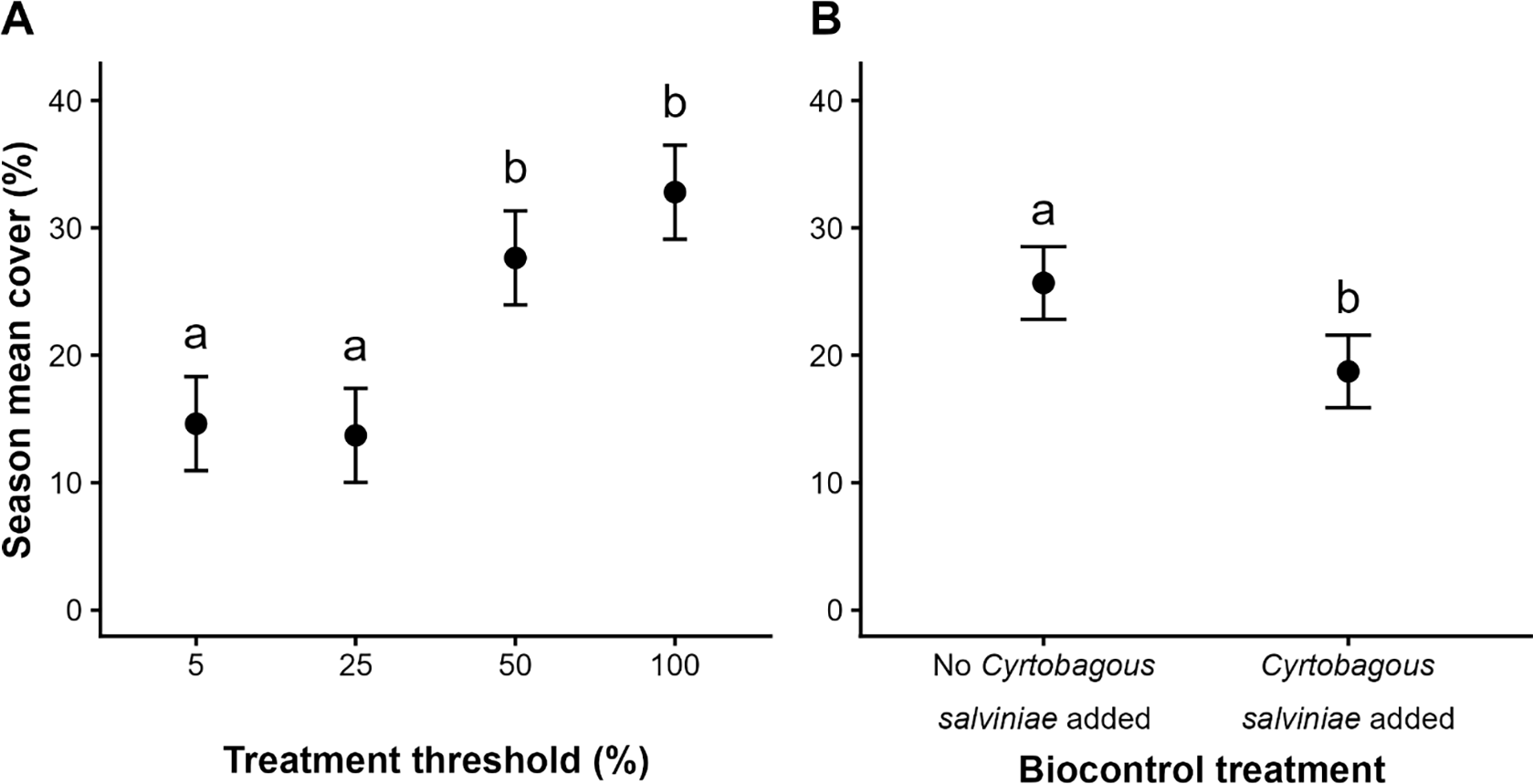
Seasonal mean S. molesta cover differed significantly among herbicide treatment thresholds (F = 8.27; df = 3, 30; P = 0.0004), increasing as treatment thresholds increased (Figure 1A). Mean seasonal cover was lowest in the 5% (14.6 ± 3.7%) and 25% (13.7 ± 3.7%) threshold treatments, with the 50% (27.6 ± 3.7%) and 100% (32.8 ± 3.7%) treatments producing higher cover (Figure 1A). Weevil addition reduced seasonal mean plant cover (F = 4.39; df = 1, 30; P = 0.0446), with weevil plots averaging 18.7 ± 2.9% compared with 25.7 ± 2.9% cover in plots without weevils (Figure 1B). Herbicide threshold and weevil addition did not interact (F = 0.76; df = 3, 30; P = 0.5237).
Effects of herbicide treatment threshold and salvinia weevil (Cyrtobagous salviniae) release on seasonal mean Salvinia molesta cover across all study sites and years. (A) Seasonal mean S. molesta cover (%) across herbicide treatment thresholds (5%, 25%, 50%, and 100%). (B) Seasonal mean S. molesta cover (%) in plots with and without salvinia weevils. Values represent least-squares means ± SE from mixed-model analyses. Within subfigures, means designated with similar letters are not significantly different (Tukey’s honestly significant difference [HSD], α = 0.05). Figure generated in R (v4.5.1). Code was written with assistance from AI tools (Claude, Anthropic, San Francisco, CA).

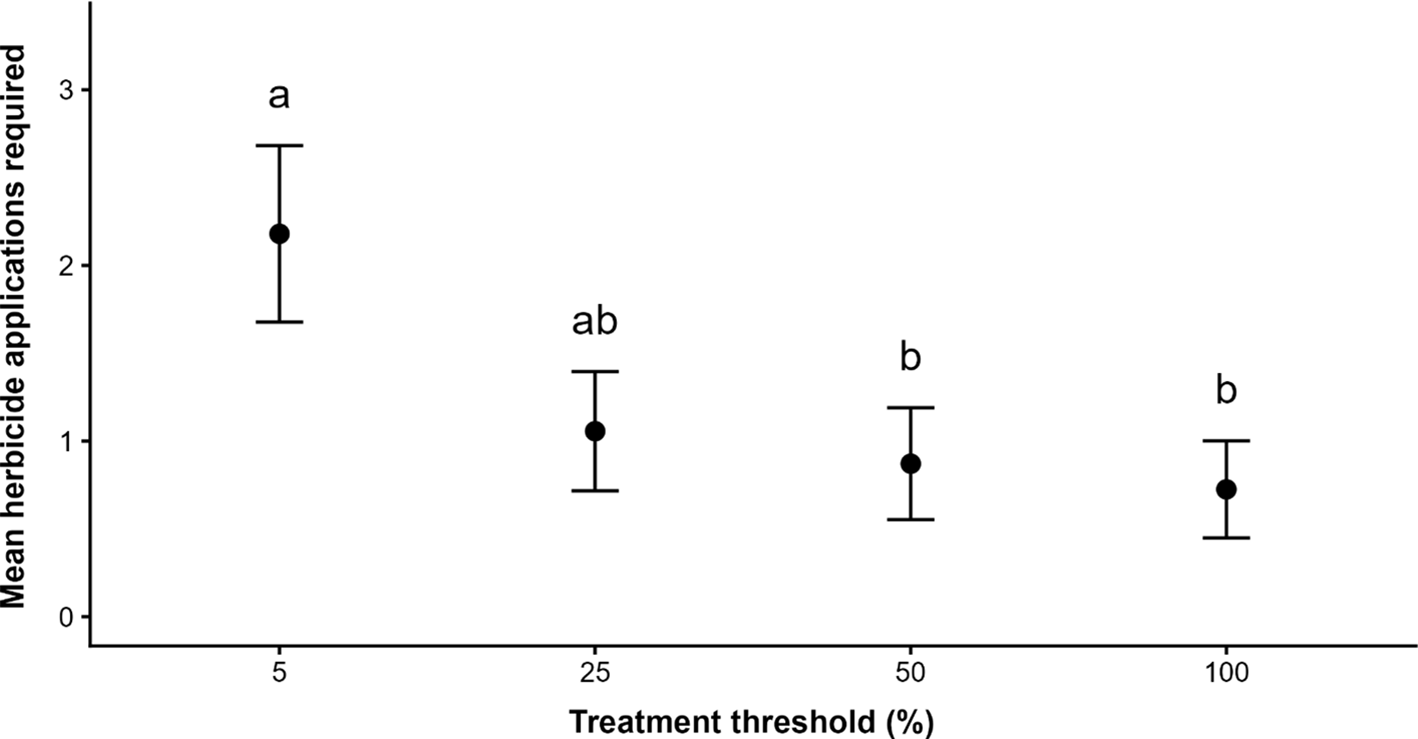
Herbicide treatment threshold significantly influenced the number of herbicide applications per plot (F = 3.75; df = 3, 30; P = 0.0213) (Figure 2). Plots managed under the 5% threshold required the most frequent herbicide applications (2.63 ± 0.54 events), while higher thresholds resulted in fewer treatments, with mean values of 1.40 ± 0.38, 1.28 ± 0.35, and 1.03 ± 0.32 applications at the 25%, 50%, and 100% thresholds, respectively. Weevil addition did not significantly influence spray frequency (F = 2.73; df = 1, 30; P = 0.1088), and no significant interaction between herbicide threshold and weevil treatment was detected (F = 0.24; df = 3, 30; P = 0.8691).
Mean number of herbicide applications per plot under four Salvinia molesta cover treatment thresholds (5%, 25%, 50%, and 100%) across all sites and years. Values represent least-squares means ± SE from Poisson generalized linear mixed models. Means designated with similar letters are not significantly different (Tukey’s honestly significant difference [HSD], α = 0.05). Figure generated in R (v4.5.1). Code was written with assistance from AI tools (Claude, Anthropic, San Francisco, CA).

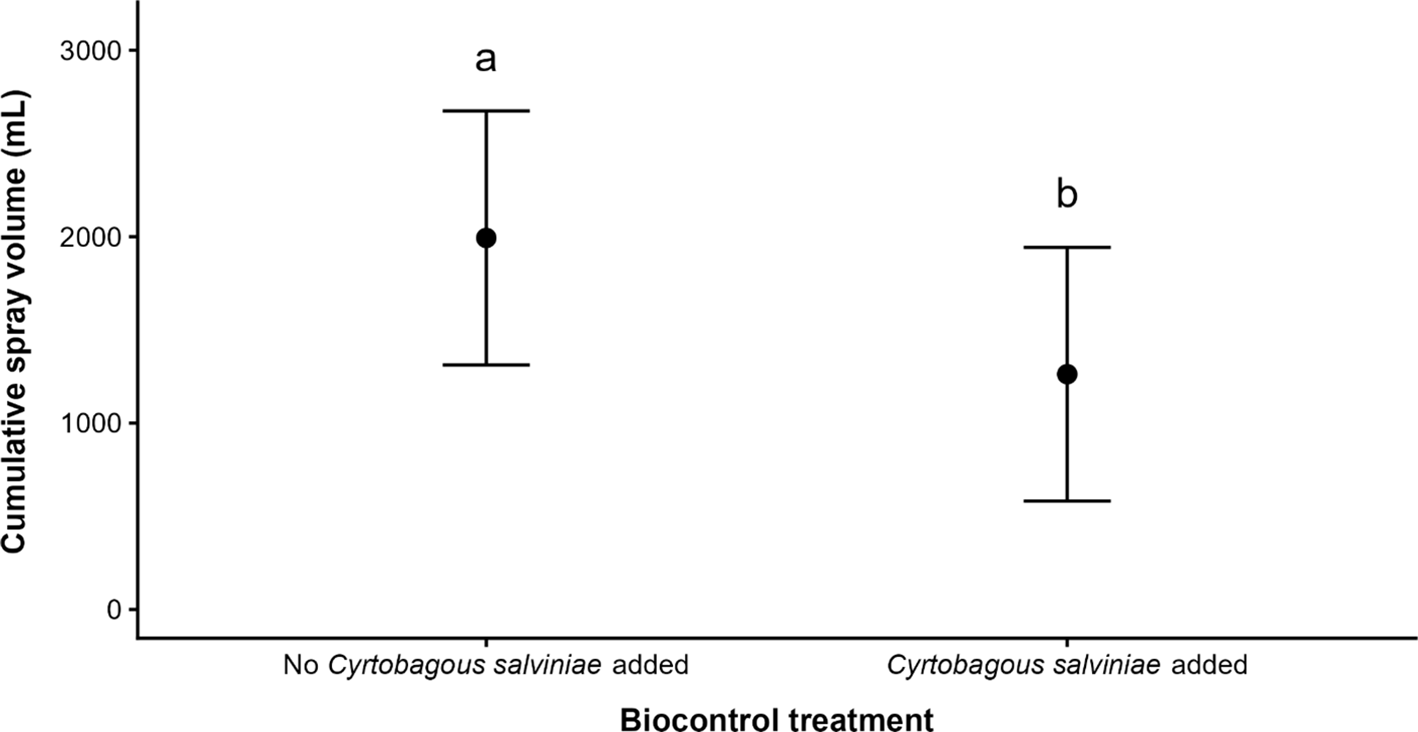
Cumulative herbicide volume applied per plot was significantly reduced in plots where weevils were added (F = 13.56; df = 1, 30; P = 0.0009). Mean cumulative spray volume of glyphosate + flumioxazin in plots without weevils was 1,993 ± 682 ml compared with 1,262 ± 680 ml in plots where weevils were released (Figure 3), representing an approximate 37% reduction in herbicide use over the growing season. Herbicide treatment threshold did not significantly affect cumulative spray volume (F = 1.42; df = 3, 30; P = 0.2557), and no interaction between threshold and weevil addition was observed (F = 0.49; df = 3, 30; P = 0.6922).
Cumulative herbicide spray volume applied per plot in treatments with and without salvinia weevil (Cyrtobagous salviniae) across all sites and years. Values represent least-squares means ± SE from linear mixed models. Means designated with similar letters are not significantly different (Tukey’s honestly significant difference [HSD], α = 0.05). Figure generated in R (v4.5.1). Code was written with assistance from AI tools (Claude, Anthropic, San Francisco, CA).

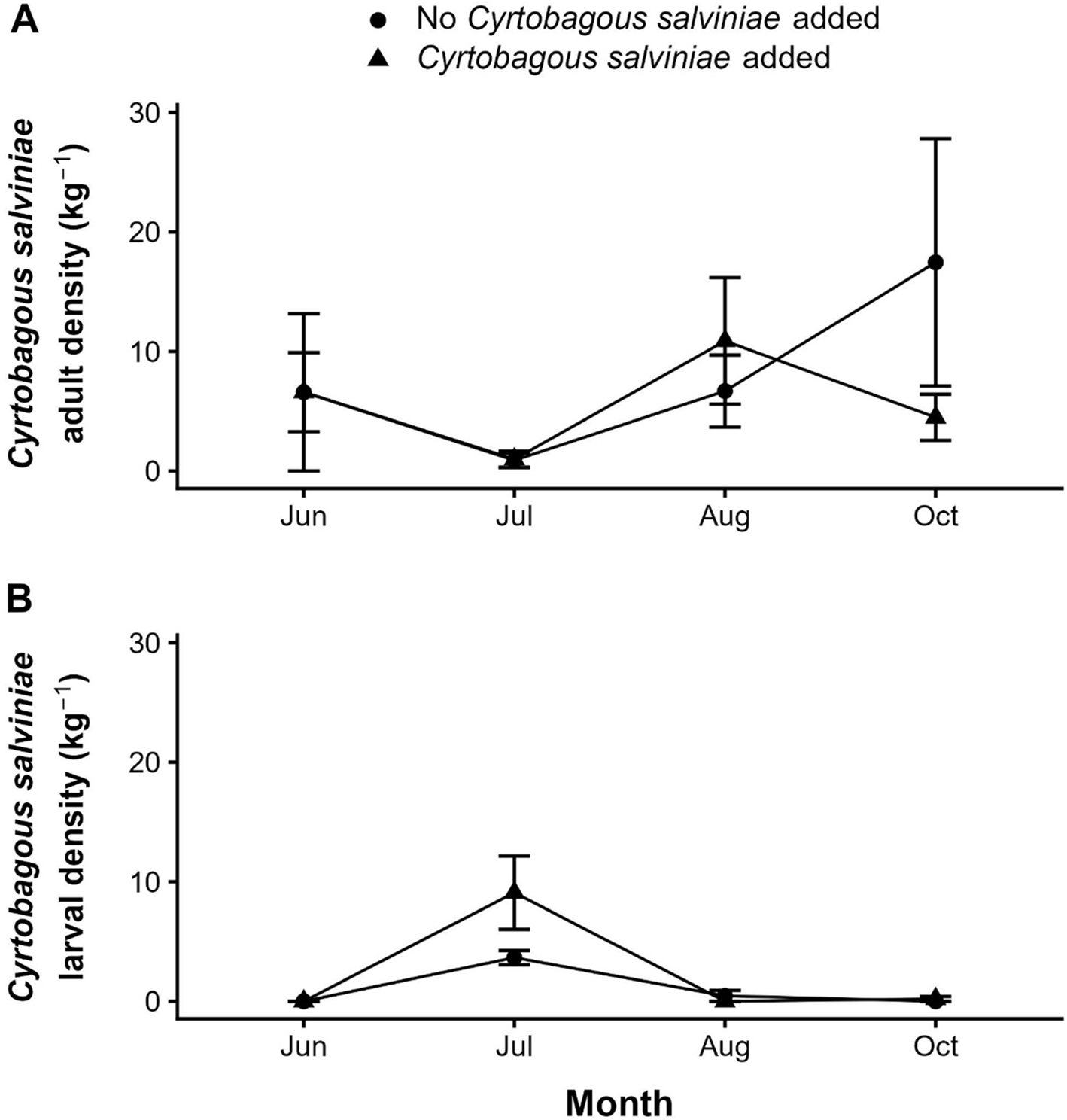
Mean adult weevil densities were 7.0 ± 2.1 adults kg−1, and no significant effect of weevil treatment (F = 0.01; df = 1, 30.4; P = 0.917), sampling month (F = 2.55; df = 3, 42.3; P = 0.068), or their interaction (F = 0.47; df = 3, 42.6; P = 0.705) was observed. Mean larval weevil densities were 0.69 ± 0.36 larvae kg−1 and peaked significantly in July (F = 28.67; df = 3, 32.1; P < 0.001), but were otherwise low, and no significant effect of weevil treatment (F = 0.37; df = 1, 29.9; P = 0.55) or interaction (F = 1.26; df = 3, 32.5; P = 0.306) were observed (Figure 4).
Mean densities of salvinia weevil (Cyrtobagous salviniae) in Salvinia molesta samples collected during 2025 monitoring visits at Iatt Lake, LA. (A) Adult salvinia weevil density (individuals kg⁻¹ wet S. molesta biomass). (B) Larval salvinia weevil density (individuals kg⁻¹ wet S. molesta biomass) by sampling month. Values represent means ± SE. Figure generated in R (v4.5.1). Code was written with assistance from AI tools (Claude, Anthropic, San Francisco, CA).

Discussion
The results of this field trial have important implications for how S. molesta is managed. The fact that seasonal mean cover (SMC) was lower in treatments with lower thresholds (e.g., 5% cover) for intervention is obvious, but increasing S. molesta cover is associated with reductions in epilithic algae abundance and diversity, macroinvertebrate abundance and richness, dissolved oxygen, and water clarity (Motitsoe et al. Reference Motitsoe, Coetzee, Hill and Hill2020; Wahl et al. Reference Wahl, Diaz and Ortiz-Zayas2020). While these metrics were not measured in the current study, they illustrate the ecological value of maintaining low plant cover relative to crisis-response management.
An expected concomitant reduction in total herbicide volume as a function of treatment threshold was not observed in this study. While not statistically compared in their study, Joyce (Reference Joyce1985) reported reduced herbicide usage under decreasing maintenance control thresholds; a drop in cumulative herbicide use at lower treatment thresholds was similarly demonstrated by Mudge et al. (Reference Mudge, Howell, Sperry, Prinsloo, Knight and Sexton2026) in mesocosms. There is no clear reason for the lack of any significant change in cumulative herbicide use as plant cover increased. It may be that plot-level studies are insufficient to capture the full benefits of maintenance control, as operational-scale programs in Florida suggest that herbicide use efficiency may actually increase at larger scales (Langeland Reference Langeland1987; UF/IFAS 2025). Alternatively, monitoring intervals are likely a contributing factor. Sampling frequency is a critical but understudied component of IPM, with these decisions being largely arbitrary and constrained by other factors (Cousens Reference Cousens1987). In practice, operational programs develop monitoring intervals informed by experience and system-specific constraints, with applicators learning to efficiently target refugia and source areas such that detection and treatment often occur simultaneously (Langeland Reference Langeland1987; UF/IFAS 2025; B Sperry, personal communication). Automated detection tools have reduced the labor required for intensive insect monitoring. Camera-equipped traps paired with image recognition software can count captured individuals and transmit those data remotely, replacing repeated manual trap inspections (López et al. Reference López, Rach, Migallon, Malumbres, Bonastre and Serrano2012). Sensor-based traps that detect insects in real time can shorten the interval between detection and management action from weeks to days (Schellhorn and Jones Reference Schellhorn, Jones, Hendrichs, Pereira and Vreysen2021). Comparable tools are not currently used for aquatic weed management in this way, but these examples illustrate how technology can offset the monitoring burden associated with maintenance control.
Though not tested in this study or specifically addressed in the literature, plant assessments were conducted every 2 wk in both Joyce (Reference Joyce1985) and Mudge et al. (Reference Mudge, Howell, Sperry, Prinsloo, Knight and Sexton2026), while the current research visited the water bodies approximately every 4 to 5 wk. Depending on how an operational maintenance control program is implemented, a biweekly monitoring regime may be unfeasible. A better understanding of how monitoring interval affects maintenance control, as well as additional monitoring tools, could be valuable for improving S. molesta management. The increase in application frequency with decreasing treatment threshold was expected. However, the lower SMC values at thresholds ≤25%, coupled with the absence of significant differences in cumulative herbicide volume among thresholds, suggest that monthly monitoring intervals may be sufficient to reduce seasonal mean S. molesta cover without increasing total herbicide inputs. Our inference space in this study is the plot scale. The treatment thresholds served as a proxy for management intensity rather than as operational cover targets, and percent cover within a contained plot does not translate directly to percent cover across a whole water body. However, this result still implies that more frequent monitoring may not be necessary to maintain moderate suppression levels, although shorter intervals may be required where lower cover thresholds are desired or when plant growth is more rapid during the summer months.
The integration of maintenance control has been investigated previously for E. crassipes in Florida. Center et al. (Reference Center, Dray, Allen, Jubinsky and Grodowitz1999) noted that E. crassipes populations under maintenance control using 2,4-D generally harbored fewer weevils (Neochetina spp.) vis-à-vis the reduced overall E. crassipes cover; however, regrowth of herbicide treated plants, resulted in improved reproductive vigor of the weevils on plants under maintenance control. In S. molesta, weevils respond positively to both increased nutrients and regrowth stimulated through feeding (Room and Thomas Reference Room and Thomas1985). Host quality of S. molesta in untreated refugia may increase in response to nutrient flush from the decomposition of treated S. molesta (e.g., Schwantes et al. Reference Schwantes, Gonçalves, Schiller, Manfrin, Campagnolo and Veiga2019), while simultaneously serving as a sink for weevils displaced from treated S. molesta. Previous work demonstrating minimal direct impacts of herbicides on salvinia weevils (Cozad et al. Reference Cozad, Mudge and Diaz2019; Mudge et al. Reference Mudge, Harms and Nachtrieb2013; Wahl et al. Reference Wahl, Mudge and Diaz2018) suggests S. molesta may benefit from a similar integrated approach.
In the present study, addition of weevils to the plots reduced not only seasonal mean S. molesta cover, but the overall volume of herbicide applied. The lack of differences in observed weevil densities across treatments complicates that conclusion; however, these density estimates should be interpreted cautiously. Weevil density was quantified in a single season, from one sample per plot, and only where sufficient biomass was present. Given the patchy distribution of salvinia weevils, particularly during population establishment (Tipping et al. Reference Tipping, Martin, Center and Davern2008), these samples provide only a coarse index of abundance and are unlikely to resolve fine differences among treatments.
Additionally, weevils in the release plots were intentionally established earlier in the season. Damage from salvinia weevils accrues over time, with adults and feeding damage on the congener common salvinia (Salvinia minima Baker) not recorded until more than 2 mo after release (Parys and Johnson Reference Parys and Johnson2013), suggesting non–weevil treated plots had not had time for sufficient weevil impacts to accumulate. Additionally, adult weevils will crawl to nontreated S. molesta following herbicide applications (IAK, unpublished data), which likely served as refugia, supplemented by the addition of weevil-free inoculum following each herbicide treatment. Micinski et al. (Reference Micinski, Fitzpatrick, Ferro, Johnson, Johnson and Williams2016) also observed that flight occurs continuously during warm periods. While it the extent to which herbicides affected this behavior is unknown, this likely contributed to the near ubiquitous distribution of weevils among plots regardless of treatment, confounding the relationship between observed weevil densities and the observed impacts of the weevil treatment.
Collectively, these results add to the growing body of literature supporting maintenance control and IPM as viable approaches for S. molesta management. More broadly, they illustrate how maintenance control can provide a useful framework for evaluating IPM strategies in aquatic systems. Important questions remain regarding how maintenance control can be implemented most effectively at operational scales, how its performance should be evaluated under those conditions, and how outcomes should be documented. Nevertheless, this study aligns with other maintenance or suppression-based programs that emphasize systematically mitigating infestations rather than responding only after severe outbreaks occur. In this context, maintenance control provides an opportunity to explore how multiple management tools interact, such as biological control with herbicide programs, as well as other approaches including mechanical harvesting and lake drawdowns where applicable. A better understanding of how environmental and operational factors such as climate, nutrient availability, and monitoring interval interact with treatment thresholds may further improve recommendations for operational S. molesta management. Growing evidence supports maintenance control and integrated approaches for improving S. molesta management, and future work should focus on how best to implement and evaluate these strategies at operational scales.
Acknowledgments
The use of trade, product, or firm names in this report is for descriptive purposes only and does not imply endorsement by the U.S. Government. The tests described and the resulting data presented herein, unless otherwise noted, were obtained from research conducted under the Aquatic Plant Control Research Program (APCRP) of the United States Army Corps of Engineers (USACE), Engineer Research and Development Center (ERDC). The findings of this report are not to be construed as an official Department of the Army position unless so designated by other authorized documents. Appreciation is extended to the Lower Neches Valley Authority (Jonathan Beavers, Mike Foster, and Terry Corbett), U.S. Fish and Wildlife Service (Gypsy Hanks and Erin Bellavia), Louisiana Department of Wildlife and Fisheries (Wesley Maddox and Kane Finkbeiner), and the USACE Fort Worth District (Cody Turner and Dean Attaway) for helping with field site logistics and technical support. We thank David Sexton, Melissa Rucker, and Jamarion Johnson for technical support in the field. We also thank Nathan Harms and Benjamin Sperry for their internal reviews of this article. AI tools disclosure: Large language model assistance (Claude, Anthropic, San Francisco, CA) was used in manuscript preparation, including text editing, revision, and assistance with code used to produce figures.
Funding statement
This work was supported by the Aquatic Plant Control Research Program (APCRP) of the U.S. Army Corps of Engineers, Engineer Research and Development Center.
Competing interests
The authors declare no conflicts of interest.

 Open access

