Implications
Nutritional strategies and feeding management during pre-calving and post-calving periods impact health, productivity and fertility of high-producing dairy cows. Formulating diets to meet requirements of the cows but avoid over-consumption of energy may improve outcomes of the transition period and lead to improved fertility. Management to improve cow comfort and ensure good intake of the ration is pivotal for success. Impacts of the transition program should be evaluated in a holistic way that considers disease occurrence, productivity and fertility.
Introduction
Reproductive success is critical to the profitability and sustainability of dairy farms using confined total mixed ration (TMR)-based systems. Successful reproduction depends on a coordinated series of physiological events, including resumption of ovarian cyclicity postpartum, development and ovulation of a viable oocyte, fertilization, restoration of the uterus, embryo development and implantation, and maintenance of pregnancy until fetal maturation (Butler, Reference Butler2003; Garnsworthy et al., Reference Garnsworthy, Sinclair and Webb2008). Dietary formulation and feeding management during the dry period, peripartal period, and early postpartum (fresh) period may facilitate or interrupt many of these steps before pregnancy is established and maintained (Butler, Reference Butler2003; Garnsworthy et al., Reference Garnsworthy, Sinclair and Webb2008; Thatcher et al., Reference Thatcher, Santos and Staples2011). In high-producing dairy cows, conception rates for normally cycling cows are high (>70%) but many cows (>50%) undergo early embryonic loss and fail to maintain the pregnancy (Diskin and Morris, Reference Diskin and Morris2008). A major point of emphasis in relating nutrition and reproduction in dairy cows is the extent and duration of negative nutrient status and negative energy balance (NEB) in early lactation, which is influenced heavily by nutritional and environmental management during the period of transition from pregnancy to lactation.
The 6 to 8-week period centered on parturition, known as the transition or periparturient period, is critical in determining welfare and profitability of individual cows during the subsequent lactation (Drackley et al., Reference Drackley, Dann, Douglas, Janovick Guretzky, Litherland, Underwood and Loor2005). Suboptimal transition management programs lead to a high rate of production disease in dairy herds (Mulligan and Doherty, Reference Mulligan and Doherty2008). Disturbances of metabolism during the transition may have direct or indirect influences on fertility, and difficult transitions have negative impacts on subsequent reproduction (Chapinal et al., Reference Chapinal, Leblanc, Carson, Leslie, Godden, Capel, Santos, Overton and Duffield2012). A variety of nutritional strategies to facilitate the metabolic and physiological adaptations from gestation to lactation have been proposed (Friggens et al., Reference Friggens, Andersen, Larsen, Aaes and Dewhurst2004; Roche et al., Reference Roche, Bell, Overton and Loor2013).
The objectives of this paper are to review the causes of NEB and its resulting metabolic disturbances, to relate how these outcomes influence reproduction, and to consider how different nutritional strategies prepartum and postpartum may affect NEB and adequacy of other nutrients. Our central theme is that prepartum and postpartum management that promotes high dry matter intake (DMI) of properly balanced diets after calving is the unifying factor between transition success and reproductive success. Because of space limitations we emphasize energy intake, with the recognition that adequacy or balance of many other nutrients can modulate fertility. Our review will focus on newer information relating to the roles of nutrition and inflammation during the transition.
Fertility, milk yield and peripartal health problems
A widespread assumption is that fertility of modern dairy cows is decreasing, particularly for Holstein–Friesen genetics, at least in part because of unintended consequences of continued selection for high milk production. This assumption has been challenged recently (LeBlanc, Reference LeBlanc2010; Bello et al., Reference Bello, Stevenson and Tempelman2012). There is a wide distribution of reproductive success both within and among herds. For example, within five California herds encompassing 6396 cows, cows in the lowest quartile for milk yield in the first 90 days postpartum (32.1 kg/day) were less likely to have resumed estrous cycles by 65 days postpartum than cows in quartiles two (39.1 kg/day), three (43.6 kg/day) or four (50.0 kg/day); milk production did not affect risk for pregnancy (Santos et al., Reference Santos, Rutigliano and Sa Filho2009). Changes in management systems and inadequacies in management may be more limiting for fertility of modern dairy cows than their genetics per se.
Dairy cows are susceptible to production disorders and diseases during the peripartal period and early lactation (Mulligan et al., Reference Mulligan, O’Grady, Rice and Doherty2006; Ingvartsen and Moyes, Reference Ingvartsen and Moyes2013; Roche et al., Reference Roche, Bell, Overton and Loor2013). There is little evidence that milk yield per se contributes to greater disease occurrence. However, peak disease incidence (shortly after parturition) corresponds with the time of greatest NEB, the peak in blood concentrations of non-esterified fatty acids (NEFA), and the greatest acceleration of milk yield (Ingvartsen et al., Reference Ingvartsen, Dewhurst and Friggens2003). Peak milk yield occurs several weeks later. Disorders associated with postpartum NEB also are related to impaired reproductive performance, including fatty liver (Rukkwamsuk et al., Reference Rukkwamsuk, Wensing and Kruip1999; Jorritsma et al., Reference Jorritsma, Wensing, Kruip, Vos and Noordhuizen2003) and ketosis (Walsh et al., Reference Walsh, Walton, Kelton, LeBlanc, Leslie and Duffield2007; McArt et al., Reference McArt, Nydam and Oetzel2012). Cows that lost >1 body condition score (BCS) unit (1 to 5 scale) had greater incidence of metritis, retained placenta, and metabolic disorders (displaced abomasum, milk fever, ketosis) as well as a longer interval to first breeding than cows that lost <1 BCS unit during the transition (Kim and Suh, Reference Kim and Suh2003).
Indicators of NEB are highly correlated with lost milk production, increased disease and decreased fertility (Ospina et al., Reference Ospina, Nydam, Stokol and Overton2010; Chapinal et al., Reference Chapinal, Leblanc, Carson, Leslie, Godden, Capel, Santos, Overton and Duffield2012). However, the extent to which NEB is causative for peripartal health problems rather than just a correlated phenomenon must be examined critically (Roche et al., Reference Roche, Bell, Overton and Loor2013). For example, in transition cows inflammatory responses may decrease DMI, cause alterations in metabolism, and predispose cows to greater NEB or increased disease (Bertoni et al., Reference Bertoni, Trevisi, Han and Bionaz2008; Graugnard et al., Reference Graugnard, Bionaz, Trevisi, Moyes, Salak-Johnson, Wallace, Drackley, Bertoni and Loor2012 and Reference Graugnard, Moyes, Trevisi, Khan, Keisler, Drackley, Bertoni and Loor2013; Ingvartsen and Moyes, Reference Ingvartsen and Moyes2013). Inducing a degree of calculated NEB in mid-lactation cows similar to what periparturient cows often encounter does not result in marked increases in ketogenesis or other processes associated with peripartal disease (Moyes et al., Reference Moyes, Drackley, Salak-Johnson, Morin, Hope and Loor2009). Nevertheless, early postpartal increases in NEFA and decreases in glucose concentrations were strongly associated with pregnancy at first insemination in a timed artificial insemination (TAI) program (Garverick et al., Reference Garverick, Harris, Vogel-Bluel, Sampson, Bader, Lamberson, Spain, Lucy and Youngquist2013). Although concentrations of NEFA and glucose were not different between cows that ovulated or did not before TAI, probability of pregnancy decreased with greater NEFA and increased with greater glucose concentrations at day 3 postpartum (Garverick et al., Reference Garverick, Harris, Vogel-Bluel, Sampson, Bader, Lamberson, Spain, Lucy and Youngquist2013). In support of these findings, early occurrence of subclinical ketosis is more likely to decrease milk yield and compromise fertility. McArt et al. (Reference McArt, Nydam and Oetzel2012) found that cows with subclinical ketosis detected between 3 and 7 days after calving were 0.7 times as likely to conceive to first service and 4.5 times more likely to be removed from the herd within the first 30 days in milk compared with cows that developed ketosis at 8 days or later.
Cows that successfully adapt to lactation (Jorritsma et al., Reference Jorritsma, Wensing, Kruip, Vos and Noordhuizen2003) and can avoid metabolic (Ingvartsen et al., Reference Ingvartsen, Dewhurst and Friggens2003) or physiological imbalance (Ingvartsen and Moyes, Reference Ingvartsen and Moyes2013) are able to support both high milk production and successful reproduction while remaining healthy. Decreased fertility in the face of increasing milk production may be attributable to greater severity of postpartal NEB resulting from inadequate transition management or increased rates of disease. Competition for nutrients between the divergent outcomes of early lactation and subsequent pregnancy will delay reproductive function. Because NEB interrupts reproduction in most species, including humans, inappropriate nutritional management may predispose cows to both metabolic disturbances and impaired reproduction. Cows must make ‘metabolic decisions’ about where to direct scarce resources, and in early lactation nutrients will be directed to milk production rather than to the next pregnancy (Friggens, Reference Friggens2003).
NEB and impaired fertility
Cows cannot consume sufficient energy-yielding nutrients from voluntary DMI after calving to meet energetic requirements for milk production. Consequently, NEB occurs for a period of days to weeks during early lactation. Although studies have demonstrated a weak and variable relationship between the degree of NEB and impaired fertility, the time to NEB nadir and the direction and/or rate of change in NEB appear to be stronger indicators (Whitaker et al., Reference Whitaker, Smith, da Rosa and Kelly1993; Butler, Reference Butler2003; Reist et al., Reference Reist, Erdin, von Euw, Tschümperlin, Leuenberger, Hammon, Morel, Philipona, Zbinden, Künzi and Blum2003). Possible mechanisms for detrimental effects of NEB on reproduction include (1) delayed resumption of ovarian cyclicity, through effects on hypothalamic, pituitary and ovarian function, (2) impacts on oocyte or corpus luteum (CL) ‘quality’, viability, or function, sometimes referred to as ‘follicular memory’ and (3) development of fatty liver (hepatic lipidosis).
In general, fertility is greater in cows that ovulate sooner after parturition (Butler, Reference Butler2003; Bossaert et al., Reference Bossaert, Leroy, De Vliegher and Opsomer2008; Galvão et al., Reference Galvão, Frajblat, Butler, Brittin, Guard and Gilbert2010b). During early postpartum NEB, the pulse frequency of LH release, the size and development rate of follicles, concentrations of estrogen and progesterone, and size of the CL all are decreased (Jorritsma et al., Reference Jorritsma, Wensing, Kruip, Vos and Noordhuizen2003; Garnsworthy et al., Reference Garnsworthy, Sinclair and Webb2008). Successful ovulation depends on estrogen production by the dominant follicle, restoration of pulsatile LH secretion, and responsiveness of the ovary to LH. The state of postpartum NEB is associated negatively with reproductive performance in part because it interrupts these three factors (Butler, Reference Butler2003). Insulin, concentrations of which generally reflect energy status and dietary adequacy, may be a primary link between the metabolic and reproductive systems. Insulin is necessary to increase synthesis of IGF-1 in the liver in response to elevated concentrations of somatotopin (growth hormone; GH), to increase oestrodiol production by the dominant follicle and to increase LH receptors for ovulation and CL development (Lucy, Reference Lucy2000; Garnsworthy et al., Reference Garnsworthy, Sinclair and Webb2008). Lower insulin and IGF-1 during periods of NEB thus may be related to eventual increases in days to first ovulation, first estrus and conception, and decreased rates of conception and pregnancy. For example, cows with low postpartum progesterone, indicating lack of reproductive cyclicity, had lower DMI, insulin and IGF-1 than cows with elevated progesterone (Pushpakumara et al., Reference Pushpakumara, Gardner, Reynolds, Beever and Wathes2003). Moreover, cows that failed to conceive had lower concentrations of IGF-1 than cows that became pregnant (Pushpakumara et al., Reference Pushpakumara, Gardner, Reynolds, Beever and Wathes2003).
Extreme NEB also may negatively impact oocyte or CL quality or viability due to reduced concentrations of progesterone and, most likely, low concentrations of IGF-1. Low concentrations of insulin and IGF-1 have been linked to poor quality of oocytes and CL (Jorritsma et al., Reference Jorritsma, Wensing, Kruip, Vos and Noordhuizen2003). Blood-borne metabolites that directly result from responses to NEB, including NEFA and β-hydroxybutyrate (BHBA), also may negatively affect oocytes and CL because these metabolites are elevated in follicular fluid of dominant follicles during NEB (Leroy et al., Reference Leroy, Vanholder, Delanghe, Opsomer, Van Soom, Bols, Dewulf and de Kruif2004). However, NEFA and BHBA may only be detrimental in the presence of low follicular concentrations of glucose (Leroy et al., Reference Leroy, Vanholder, Opsomer, Van Soom and de Kruif2006). In contrast to the beneficial effects of insulin on first ovulation, high insulin (reflecting positive energy balance) at the time of breeding may be detrimental to oocyte quality (Garnsworthy et al., Reference Garnsworthy, Sinclair and Webb2008).
Fatty liver is negatively associated with fertility (Rukkwamsuk et al., Reference Rukkwamsuk, Wensing and Kruip1999), which may be an indirect effect of the extreme NEB in these cows. However, there also may be direct negative effects of hepatic lipid infiltration on reproduction. Blood flow through the liver may be altered by fat accumulation expanding cell volume and compressing hepatic sinusoids. Alternately, lipid accumulation may decrease the normal ability of hepatocytes to metabolize or clear reproductive and metabolic hormones (Sangsritavong et al., Reference Sangsritavong, Combs, Sartori, Armentano and Wiltbank2002; Reynolds et al., Reference Reynolds, Aikman, Lupoli, Humphries and Beever2003; Lemley et al., Reference Lemley, Butler, Butler and Wilson2008), thus altering the normal signaling to reproductive tissues and pituitary. A number of vital functions of the liver are affected negatively by early postpartum ketosis and hepatic lipid accumulation (Loor et al., Reference Loor, Everts, Bionaz, Dann, Morin, Oliveira, Rodriguez-Zas, Drackley and Lewin2007). An example is increased apoptosis, identified through microarray analysis of liver (Loor et al., Reference Loor, Everts, Bionaz, Dann, Morin, Oliveira, Rodriguez-Zas, Drackley and Lewin2007) and recently through more direct functional assays (Tharwat et al., Reference Tharwat, Takamizawa, Hosaka, Endoh and Oikawa2012).
Metabolic and physiological adaptations from gestation to lactation
The classical homeorhetic adaptations in physiology and metabolism that cows must negotiate to make successful transitions from late pregnancy to early lactation have been thoroughly described in previous reviews (Drackley et al., Reference Drackley, Overton and Douglas2001 and Reference Drackley, Dann, Douglas, Janovick Guretzky, Litherland, Underwood and Loor2005; Ingvartsen Reference Ingvartsen2006; Loor, Reference Loor2010; Contreras and Sordillo, Reference Contreras and Sordillo2011; Roche et al., Reference Roche, Bell, Overton and Loor2013) and are only summarized here in relation to subsequent fertility.
Endocrine adaptations
Changes in the endocrine and neuroendocrine systems drive the altered partitioning of nutrients from foetal maturation to milk synthesis between late pregnancy and early lactation (Ingvartsen, Reference Ingvartsen2006). During the dry period, concentrations of insulin and leptin reflect energy balance and generally are higher than in late lactation (Janovick et al., Reference Janovick, Boisclair and Drackley2011). These hormones promote and respond to, respectively, energy storage in adipose tissue. During the last 3 weeks of pregnancy, nutrient demands by the foetal calf and placenta are at their greatest (Bell et al., Reference Bell, Burhans and Overton2000). Cows should be able to meet these requirements from the diet, although DMI may be decreased by 10% to 30% compared with intake during the early dry period. Although stressors and severe limitations in DMI can lead to NEB before calving, the degree is much less than what occurs following parturition.
Secretion of GH increases near parturition, with the timing of increase dependent on nutrient status (Grum et al., Reference Grum, Drackley, Younker, LaCount and Veenhuizen1996). In the face of decreasing concentrations of insulin prepartum, GH promotes mobilization of stored nutrients (primarily fat from adipose tissue) to support milk production (Lucy, Reference Lucy2000). Marked decreases in the primary GH receptor in liver (GHR-1A) lead to sharply decreased hepatic secretion of IGF-1. This ‘uncoupling’ of the somatotropic axis prevents feedback inhibition of GH secretion by IGF-1, thereby maintaining elevated concentrations of GH (Lucy, Reference Lucy2000).
Lipid metabolism
The profile of low insulin and high GH concentrations orients the adipose tissues toward mobilization of stored triacylglycerols (TAG). Lipogenesis is almost completely inhibited, which decreases re-esterification of NEFA within adipocytes. Decreased insulin also removes an important anti-lipolytic influence on adipose tissue. Sensitivity and response to catecholamines in adipose tissue is increased by GH, resulting in greater lipolysis of TAG (Drackley et al., Reference Drackley, Overton and Douglas2001 and Reference Drackley, Dann, Douglas, Janovick Guretzky, Litherland, Underwood and Loor2005; Roche et al., Reference Roche, Bell, Overton and Loor2013). In addition, other factors secreted in response to infection, stress or trauma, most likely the cytokines (tumor necrosis factor-α (TNFα), interleukin-1 and interleukin-6, among others) result in increased concentrations of NEFA in blood and TAG in liver (Contreras and Sordillo, Reference Contreras and Sordillo2011). Consequently, stressors and poor nutritional management that decrease voluntary DMI will result in large increases in TAG mobilization and consequently NEFA concentrations immediately after calving. Increased ketogenesis, which occurs when glucose supply is limited during NEB, can result in ketosis (Drackley et al., Reference Drackley, Overton and Douglas2001). Fatty acids taken up in excess of what can be oxidized to CO2 or ketone bodies are re-converted to TAG. Because ruminant animals are unable to effectively export TAG from the liver as very low density lipoproteins, TAG can accumulate and cause fatty liver (Drackley et al., Reference Drackley, Overton and Douglas2001).
Glucose and protein metabolism
Dairy cows rely extensively on hepatic gluconeogenesis from propionate to meet their glucose requirements. Limited DMI after calving limits the supply of propionate for glucose synthesis, and therefore increase conversion of amino acids from the diet or from skeletal muscle, particularly alanine and glutamine, and glycerol from mobilized adipose TAG to glucose. Gluconeogenic activity of liver tissue increases around and after calving to help maintain supply of glucose to the mammary gland and prevent hypoglycoemia (Drackley et al., Reference Drackley, Dann, Douglas, Janovick Guretzky, Litherland, Underwood and Loor2005).
Limited protein reserves exist in dairy cows, primarily in the form of skeletal muscle protein. Muscle protein mobilization, as estimated by plasma concentrations of 3-methyl-histidine, is increased during the first week after calving compared with prepartum values (van der Drift et al., Reference Van der Drift, Houweling, Schonewille, Tielens and Jorritsma2012). Loss of muscle mass may begin before calving and before the initiation of fat mobilization (van der Drift et al., Reference Van der Drift, Houweling, Schonewille, Tielens and Jorritsma2012). Maintenance of maternal stores of protein is important for long-term health, productivity and reproduction (Bell et al., Reference Bell, Burhans and Overton2000). Deficiency in metabolizable protein supply may be linked to ketosis (van der Drift et al., Reference Van der Drift, Houweling, Schonewille, Tielens and Jorritsma2012; Lean et al., Reference Lean, Van Saun and Degaris2013a) and other peripartal diseases (Roche et al., Reference Roche, Bell, Overton and Loor2013), which in turn may decrease fertility.
Immune system function
Function of the immune system is depressed during the transition period (Ingvartsen and Moyes, Reference Ingvartsen and Moyes2013). Decreased ability of the immune system to respond to infectious challenges likely is responsible for the high incidence of environmental mastitis around calving, as well as the high incidence of metritis. Retained placenta also has been linked to failure of the immune system to recognize the placenta as a foreign tissue (Kimura et al., Reference Kimura, Goff, Kehrli and Reinhardt2002). Reasons for the decreased immune function are not clear. Vitamins A and E as well as trace minerals (selenium, copper, zinc) play a role in immune function. Cows that seem to be the most stressed by nutrition and environmental factors, as judged by excessive loss of BCS, are the most likely to become ill. Negative balances of energy or metabolizable protein may be a major contributing factor (Ingvartsen and Moyes, Reference Ingvartsen and Moyes2013). Galvão et al. (Reference Galvão, Flaminio, Brittin, Sper, Fraga, Caixeta, Ricci, Guard, Butler and Gilbert2010a) found that glycogen content of neutrophils (reserve of glucose, the main fuel for neutrophil functions) was lower in early postpartum cows, and was associated with decreased functions of those cells. An inadequate supply of metabolizable protein has been related to impaired function of the immune system (Houdijk et al., Reference Houdijk, Jessop and Kyriazakis2001).
Calcium metabolism
The sudden onset of milk synthesis results in a tremendous demand for calcium. As a result, concentrations of calcium in blood can drop precipitously at calving, leading to milk fever. Subclinical hypocalcaemia is more common, with more than 40% of cows entering the second or greater lactation affected (Reinhardt et al., Reference Reinhardt, Lippolis, McCluskey, Goff and Horst2011). Subclinical hypocalcaemia contributes to disorders such as displaced abomasum and ketosis by decreasing smooth muscle function critical for normal function of the digestive tract (Horst et al., Reference Horst, Goff, Reinhardt and Buxton1997), which can result in decreased DMI. Hypocalcaemia may compromise function of immune cells (Kimura et al., Reference Kimura, Reinhardt and Goff2006). Until the ability of the digestive tract to absorb calcium can increase, calcium must be obtained from bone resorption. Metabolic acidosis caused by a negative dietary cation-anion difference (DCAD) favors mobilization of calcium from bone, whereas high dietary potassium concentrations and positive DCAD suppress mobilization (Horst et al., Reference Horst, Goff, Reinhardt and Buxton1997; Lean et al., Reference Lean, Van Saun and Degaris2013b). Magnesium participates in the regulation of bone resorption (Horst et al., Reference Horst, Goff, Reinhardt and Buxton1997).
Nutritional intervention to help prevent hypocalcaemia likely must be instituted at least 14 days before calving to be effective (Horst et al., Reference Horst, Goff, Reinhardt and Buxton1997). DeGaris et al. (Reference DeGaris, Lean, Rabiee and Heur2010) reported that increasing the number of days cows consumed a close-up diet before calving increased pregnancy rates in two of three commercial herds, and tended to increase the proportion of cows pregnant at 6 weeks and 21 weeks after beginning the insemination period.
Nutritional management to control NEB and optimize fertility
Postpartal NEB results from initiation of milk synthesis, but the degree of NEB in individual cows is poorly related to milk production or milk energy secretion. The depth and duration of NEB are highly related to DMI (Zurek et al., Reference Zurek, Foxcroft and Kennelly1995; Drackley et al., Reference Drackley, Dann, Douglas, Janovick Guretzky, Litherland, Underwood and Loor2005). Consequently, feeding and management strategies for dry cows, transition cows and fresh cows should seek to meet nutrient requirements but promote appetite and vigorous DMI after calving (Grummer et al., Reference Grummer, Mashek and Hayirli2004). In TMR systems, a diet must be formulated to meet the nutrient needs of most cows within the group rather than allotting amounts of concentrate based on milk production. Proper nutritional formulation of the diet is essential to ensure that supply of all nutrients will be in balance.
Some important factors to promote good appetites and high DMI after calving include (1) minimizing environmental stressors and keeping cows comfortable, (2) avoiding excessive BCS, (3) preventing over-consumption of energy relative to requirements during the dry period, (4) ensuring adequate intake of forage effective fiber and avoiding excessive intakes of rapidly fermentable starch in the post-calving diet, (5) reducing the DCAD before calving but increasing it in the fresh cow diet and (6) nutritional support of the immune system (see earlier section). Nutritional strategies proposed to assist cows in making these adaptations have been reviewed (Friggens et al., Reference Friggens, Andersen, Larsen, Aaes and Dewhurst2004; Beever, Reference Beever2006; Ingvartsen, Reference Ingvartsen2006; Drackley and Dann, Reference Drackley and Dann2008; Lean et al., Reference Lean, Van Saun and Degaris2013a and Reference Lean, Van Saun and Degaris2013b; Roche et al., Reference Roche, Bell, Overton and Loor2013). Selected aspects are discussed in the following sections.
Maximize cow comfort and minimize stressors
Non-nutritional management that maximizes cow comfort and welfare plays a huge role in transition success. Bach et al. (Reference Bach, Valls, Solans and Torrent2008) found that non-nutritional management accounted for >50% of the variation in mean milk production (20.6 to 33.8 kg/day) among 47 herds fed exactly the same TMR. Although not demonstrated directly in dairy cows, a common feature of environmental or behavioral stress in other animals is disruption of barrier function of the gastrointestinal epithelia, which may allow translocation of endotoxins and cause systemic inflammation (Pearce et al., Reference Pearce, Mani, Weber, Rhoads, Patience, Baumgard and Gabler2013). Ametaj et al. (Reference Ametaj, Bradford, Bobe, Nafikov, Lu, Young and Beitz2005) found a strong relationship between blood indicators of inflammation (acute phase proteins, TNFα) and hepatic lipid accumulation in dairy cows. Emmanuel et al. (Reference Emmanuel, Madsen, Churchill, Dunn and Ametaj2007 and Reference Emmanuel, Dunn and Ametaj2008) demonstrated that increasing amounts of barley grain increased concentrations of endotoxin in rumen fluid, and at low rumen pH the transfer of endotoxin across the rumen epithelium was increased. Intermittent administration of endotoxin triggered metabolic and inflammatory responses typically associated with displaced abomasum and retained placenta (Zebeli et al., Reference Zebeli, Sivaraman, Dunn and Ametaj2011). These findings raise the fascinating prospect that at least some periparturient diseases result from adverse ruminal conditions caused by excessive grain in the precalving or fresh cow diet, perhaps aggravated by overcrowding, heat stress or other stressors. Others also have implicated inflammatory responses in alterations of metabolism, occurrence of health problems and impaired reproduction (Bertoni et al., Reference Bertoni, Trevisi, Han and Bionaz2008; Graugnard et al., Reference Graugnard, Bionaz, Trevisi, Moyes, Salak-Johnson, Wallace, Drackley, Bertoni and Loor2012).
Non-nutritional stressors may decrease DMI and predispose cows to postpartum health problems. Cows that developed metritis (Hammon et al., Reference Hammon, Evjen, Dhiman, Goff and Walters2006; Huzzy et al., Reference Huzzey, Veira, Weary and von Keyserlingk2007) or ketosis (Goldhawk et al., Reference Goldhawk, Chapinal, Veira, Weary and von Keyserlingk2009) after calving had lower DMI or reduced feeding behavior before calving. Lower prepartum DMI per se likely is not causative, because individually fed cows restricted to 80% of their energy requirements (fed in two meals daily) did not have greater occurrence of metritis or ketosis (Dann et al., Reference Dann, Morin, Murphy, Bollero and Drackley2005 and Reference Dann, Litherland, Underwood, Bionaz, D’Angelo, McFadden and Drackley2006; Douglas et al., Reference Douglas, Overton, Bateman, Dann and Drackley2006; Janovick et al., Reference Janovick, Boisclair and Drackley2011).
Optimize BCS
The role of excessive BCS in contributing to transition problems and impaired subsequent reproduction is well established and has been discussed by many authors (Drackley et al., Reference Drackley, Dann, Douglas, Janovick Guretzky, Litherland, Underwood and Loor2005; Garnsworthy et al., Reference Garnsworthy, Sinclair and Webb2008; Roche et al., Reference Roche, Bell, Overton and Loor2013). Cows with excessive body lipid reserves mobilize more of that lipid around calving, have poorer appetites and DMI before and after calving, have impaired immune function, have increased indicators of inflammation in blood and may be more subjected to oxidative stress (Contreras and Sordillo, Reference Contreras and Sordillo2011). What constitutes ‘excessive’ BCS relative to the cow’s biological target remains controversial. Garnsworthy (Reference Garnsworthy2007) argued that the average optimal BCS has decreased over time with increased genetic selection for milk yield, perhaps related to correlated changes in body protein metabolism. Recommendations for optimal BCS at calving have trended downward over the last two decades, and in the authors’ opinion a score of about 3.0 (1 to 5 scale) represents a good goal at present. Adjustment of average BCS should be a longstanding project and should not be undertaken during the dry period.
Prevent over-mobilization of body lipid
Health disorders related to excessive mobilization of body TAG stores have been studied for many years but remain a problem in many dairy herds. Such problems actually are more relevant in modern TMR-fed dairy herds, particularly with the increasing reliance on corn (maize) silage as a primary forage in many areas of the world. For example, in four large commercial herds (over 10 000 cows sampled), McArt et al. (Reference McArt, Nydam and Oetzel2012) found that peak incidence and prevalence of subclinical ketosis (blood BHBA 1.2 to 2.9 mmol/l) was at 5 days postpartum, suggesting that problems in transition may be highly involved in etiology. High concentrations of NEFA before and after calving can decrease DMI, lead to hepatic lipid accumulation and ketosis, negatively affect the immune system, lead to oxidative stress and inflammation, and are negatively associated with return to reproductive function (Bosseart et al., Reference Bossaert, Leroy, De Vliegher and Opsomer2008; Contreras and Sordillo, Reference Contreras and Sordillo2011). In addition to management-related stressors and excessive BCS, dietary energy management during the dry period and prepartum period is important.
While use of ‘steam-up’ or ‘close-up’ diets before calving has been widely recommended for many years, there is an almost uniform lack of positive effects on health, production or reproduction in the literature. The simplest and most easily defended principle of nutrition for dairy cows during the dry period and transition is to feed to meet but not greatly exceed requirements (Drackley and Dann, Reference Drackley and Dann2008). Although not new, this concept has been incorporated into practical systems suitable for modern dairy management practices on both small and large dairies.
Manage pre-calving energy intake
Our research group has shown that controlling energy intake during the dry period to near calculated requirements leads to better transition success (Grum et al., Reference Grum, Drackley, Younker, LaCount and Veenhuizen1996; Dann et al., Reference Dann, Morin, Murphy, Bollero and Drackley2005 and Reference Dann, Litherland, Underwood, Bionaz, D’Angelo, McFadden and Drackley2006; Douglas et al., Reference Douglas, Overton, Bateman, Dann and Drackley2006; Janovick et al., Reference Janovick, Boisclair and Drackley2011; Graugnard et al., Reference Graugnard, Bionaz, Trevisi, Moyes, Salak-Johnson, Wallace, Drackley, Bertoni and Loor2012 and Reference Graugnard, Moyes, Trevisi, Khan, Keisler, Drackley, Bertoni and Loor2013; Ji et al., Reference Ji, Osorio, Drackley and Loor2012). Our research drew from earlier reports that limiting nutrient intakes to requirements of the cows was preferable to over-consumption of energy (e.g. Kunz et al., Reference Kunz, Blum, Hart, Bickel and Landis1985). Cows fed even moderate-energy diets (1.50 to 1.60 Mcal NEL/kg DM) will easily consume 40% to 80% more net energy for lactation (NEL) than required during both far-off and close-up periods (Dann et al., Reference Dann, Morin, Murphy, Bollero and Drackley2005 and Reference Dann, Litherland, Underwood, Bionaz, D’Angelo, McFadden and Drackley2006; Douglas et al., Reference Douglas, Overton, Bateman, Dann and Drackley2006; Janovick and Drackley, Reference Janovick and Drackley2010). Cows in these studies were all <3.5 BCS (1 to 5 scale) at dry-off, and were fed individually TMR based on corn silage, alfalfa silage and alfalfa hay with some concentrate supplementation. We have no evidence that the extra energy and nutrient intake was beneficial in any way. More importantly, our data indicate that allowing cows to over-consume energy even to this degree may predispose them to health problems during the transition period if they face stressors or challenges that limit DMI.
Our studies indicate that prolonged over-consumption of energy during the dry period can decrease post-calving DMI (Dann et al., Reference Dann, Litherland, Underwood, Bionaz, D’Angelo, McFadden and Drackley2006; Douglas et al., Reference Douglas, Overton, Bateman, Dann and Drackley2006; Janovick and Drackley, Reference Janovick and Drackley2010). Over-consuming energy results in negative responses of metabolic indicators, such as higher NEFA and BHBA in blood and more TAG in the liver after calving (Douglas et al., Reference Douglas, Overton, Bateman, Dann and Drackley2006; Janovick et al., Reference Janovick, Boisclair and Drackley2011). Alterations in cellular and gene-level responses in liver (Loor et al., Reference Loor, Dann, Janovick Guretzky, Everts, Oliveira, Green, Litherland, Rodriguez-Zas, Lewin and Drackley2006 and Reference Loor, Everts, Bionaz, Dann, Morin, Oliveira, Rodriguez-Zas, Drackley and Lewin2007) and adipose tissue (Ji et al., Reference Ji, Osorio, Drackley and Loor2012) potentially explain many of the changes at cow level. Over-consumption of energy during the close-up period increases the enzymatic ‘machinery’ in adipose tissue for TAG mobilization after calving, with transcriptional changes leading to decreased lipogenesis, increased lipolysis and decreased ability of insulin to inhibit lipolysis (Ji et al., Reference Ji, Osorio, Drackley and Loor2012). Controlling energy intake during the dry period also improved neutrophil function postpartum (Graugnard et al., Reference Graugnard, Bionaz, Trevisi, Moyes, Salak-Johnson, Wallace, Drackley, Bertoni and Loor2012) and so may lead to better immune function.
Our data demonstrate that allowing dry cows to consume more energy than required, even if cows do not become noticeably over-conditioned, results in responses that would be typical of overly fat cows. Because energy that cows consume in excess of their requirements must either be dissipated as heat or stored as fat, we speculated that the excess is accumulated preferentially in internal adipose tissue depots in some cows. Moderate over-consumption of energy by non-lactating cows for 57 days led to greater deposition of fat in abdominal adipose tissues (omental, mesenteric, and perirenal) than in cows fed a high-bulk diet to control energy intake to near requirements (Drackley et al., Reference Drackley, Wallace, Graugnard, Vasquez, Richards and Loor2014). The NEFA and signaling molecules released by visceral adipose tissues travel directly to the liver, which may cause fatty liver, subclinical ketosis and secondary problems with liver function.
Data from our studies support field observations that controlled-energy dry cow programs decrease health problems (Beever, Reference Beever2006). Other research groups (Rukkwamsuk et al., Reference Rukkwamsuk, Wensing and Geelen1998; Holcomb et al., Reference Holcomb, Van Horn, Head, Hall and Wilcox2001; Holtenius et al., Reference Holtenius, Agenäs, Delavaud and Chilliard2003; Vickers et al., Reference Vickers, Weary, Veira and von Keyserlingk2013) have reached similar conclusions about controlling energy intake during the dry period, although not all studies have shown benefits (Winkleman et al., Reference Winkleman, Elsasser and Reynolds2008). Application of these principles can be through controlled limit-feeding of moderate energy diets or ad libitum feeding of high-bulk, low-energy rations (Janovick and Drackley, Reference Janovick and Drackley2010; Janovick et al., Reference Janovick, Boisclair and Drackley2011; Ji et al., Reference Ji, Osorio, Drackley and Loor2012) as proposed by others (Beever, Reference Beever2006).
Effects of controlling prepartum energy intake on fertility
Individual studies such as these lack statistical power to accurately determine effects of diet on milk production, disease incidence and reproductive success. Therefore, Cardoso et al. (Reference Cardoso, LeBlanc, Murphy and Drackley2013) conducted a pooled statistical analysis of seven studies (cow was the experimental unit) at the University of Illinois to investigate associations between prepartum energy feeding regimen and reproductive performance. Days to pregnancy (DTP) was the dependent variable to assess reproductive performance. Individual data for 408 cows (354 multiparous and 54 primiparous) were included in the analysis. The NEL intake (NELI) was calculated from each cow’s respective dietary NEL density and average DMI. Nutritional treatments applied prepartum were classified as either controlled energy (CE; median NELI=13.7 Mcal/day) or high energy (HE; median NELI=22.1 Mcal/day) diets fed during the far-off (FO) or close-up (CU) dry periods.
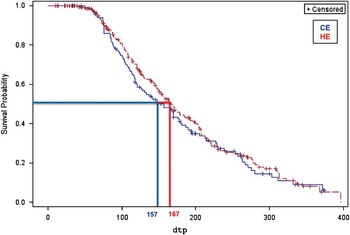
The Cox proportional hazard model revealed a significant difference in DTP between HE and CE during the CU period (median=167 and 157 days; hazard ratio=0.696; Figure 1). Cows fed HE diets during the last 4 weeks prepartum lost more BCS (1 to 5 scale) in the first 6 weeks postpartum than those fed CE (−0.43 and −0.30, respectively). Cows fed CE during the FO period had lower concentration of NEFA in weeks 1, 2 and 3 of lactation compared with cows fed HE. Higher NEFA concentration in week 1 postpartum was associated with a greater probability of diseases (n=251; odds ratio=1.176). Cows that were fed HE during the dry period had greater odds of experiencing displaced abomasum or ketosis than cows that received CE.
Survival function curves for days to pregnancy (DTP) for 332 Holstein cows fed either controlled energy (CE=blue) or high energy (HE=red) during the last 4 weeks before calving. Blue and red lines represent median values for DTP when 50% of the cows were pregnant. Drawn from data in Cardoso et al. (Reference Cardoso, LeBlanc, Murphy and Drackley2013).

Cows fed the CE regimen during the FO period had greater concentrations of glucose in plasma during weeks 1 and 3 after calving than HE cows. In the first 2 weeks after calving, cows that received HE in the FO period had higher concentrations of total lipids and TAG and greater TAG : glycogen in liver than CE. The positive effect of CE during the CU to decrease DTP may be explained by increased NEL intake during the first 4 weeks postpartum and lower incidence of peripartal diseases. In addition, lower BCS loss during the first 6 weeks postpartum and slightly higher glucose concentration at week 3 likely contributed to improved reproductive performance.
Our current working hypothesis to explain these results is that cows over-consuming energy (especially from starch) begin to display metabolic characteristics similar to human type II diabetes or metabolic syndrome (Janovick et al., Reference Janovick, Boisclair and Drackley2011). Cows were in moderate to low BCS, but their metabolic profiles resembled those seen in over-conditioned cows. Cows that over-consumed during the first 5 weeks of the dry period had similar blood glucose but greatly elevated insulin (indirectly suggesting insulin resistance), and during the close-up period had greater concentrations of NEFA and BHBA than cows fed restricted amounts of the same diet or a bulky low-energy diet (Dann et al., Reference Dann, Litherland, Underwood, Bionaz, D’Angelo, McFadden and Drackley2006). Although insulin receptor function in adipose tissue was not impaired, insulin’s anti-lipolytic signals were down-regulated so that there was less suppression of TAG lipolysis (Ji et al., Reference Ji, Osorio, Drackley and Loor2012). Along with increased lipolytic gene expression (Ji et al., Reference Ji, Osorio, Drackley and Loor2012), this would lead to increased NEFA and then to decreased DMI according to the hepatic oxidation theory of intake control (Allen et al., Reference Allen, Bradford and Oba2009). Others have provided evidence of insulin resistance due to over-consumption of energy during the dry period (Holtenius et al., Reference Holtenius, Agenäs, Delavaud and Chilliard2003). Schoenberg and Overton (Reference Schoenberg and Overton2011) demonstrated that cows fed to slightly above requirements had greater decreases in plasma NEFA in response to a glucose challenge compared with cows that over-consumed energy, which agrees with our in vitro metabolic data (Ji et al., Reference Ji, Osorio, Drackley and Loor2012). We are currently following up on several aspects related to these phenomena.
Management of CE diets
It is important to note that nutritionally complete diets must be fed and that the TMR must be processed appropriately so that cows do not sort the bulkier ingredients (Janovick and Drackley, Reference Janovick and Drackley2010). Feeding bulky forage separately from a partial TMR or improper forage processing will lead to variable intake among cows, with some consuming too much energy and some too little. Underfeeding relative to requirements, where nutrient balance also is likely limiting, leads to increased incidence of retained placenta and metritis (Mulligan et al., Reference Mulligan, O’Grady, Rice and Doherty2006). Merely adding a quantity of straw to a diet is not the key principle; rather, the diet must be formulated to limit the intake of energy (~1.3 Mcal NEL/kg DM, to limit intake to about 15 Mcal/day for typical Holstein cows, or 9 MJ ME/kg DM to limit intake to about 100 MJ/day) but meet the requirements for protein, minerals and vitamins. Reports of increased transition health problems or poor reproductive success (Whitaker et al., Reference Whitaker, Smith, da Rosa and Kelly1993) with ‘low-energy’ dry cow diets must be examined carefully to discern whether nutrient intakes were adequate.
Postpartum (fresh cow) dietary considerations
Less is known about diet formulation for the immediate postpartum period to optimize transition success and subsequent reproduction. Increased research is needed in this area. Proper dietary formulation during the dry period or close-up period will maintain or enable rumen adaptation to higher grain diets after calving. Failure to do so may compromise early lactation productivity. For example, Silva-del-Rio et al. (Reference Silva-del-Rio, Fricke and Grummer2010) attempted to duplicate the dietary strategy of Dann et al. (Reference Dann, Litherland, Underwood, Bionaz, D’Angelo, McFadden and Drackley2006) by feeding either a low-energy far-off diet for 5 weeks followed by a higher-energy diet for the last 3 weeks before parturition, or by feeding the higher-energy diet for the entire 8-week dry period. They found that cows fed the higher-energy diet for only 3 weeks before parturition produced less milk than cows fed the diet for 8 weeks (43.8 v. 48.5 kg/day). However, the far-off dry period diet contained 55.1% alfalfa silage and 38.5% wheat straw but no corn silage. In comparison, the higher-energy dry period diet and the early lactation diet both contained 35% corn silage. Ruminal adaptation likely was insufficient for cows fed the higher energy diet for only 3 weeks.
A major area of concern in the fresh cow period is sudden increase in dietary energy density leading to subacute ruminal acidosis (SARA), which can decrease DMI and digestibility of nutrients (Mulligan and Doherty, Reference Mulligan and Doherty2008). Adequate physical form of the diet, derived either from ingredients or mixing strategy, must be present to stimulate ruminal activity and chewing behavior (Zebeli and Metzler-Zebeli, Reference Zebeli and Metzler-Zebeli2012), although good methods to quantify ‘adequacy’ remain elusive. Dietary starch content and fermentability likely interact with forage characteristics and ration physical form. Dann and Nelson (Reference Dann and Nelson2011) compared three dietary starch contents (primarily from corn starch) in the fresh cow period for cows fed a CE-type ration in the dry period. Milk production was greatest when starch content was moderate (23.2% of DM) or low (21.0% of DM) in the fresh cow diet compared with high (25.5% of DM). If SARA decreases DMI and nutrient availability to the cow, NEFA mobilization and increased ketogenesis may follow. In addition, rapid starch fermentation in the presence of NEFA mobilization leads to bursts of propionate reaching the liver, which may decrease feeding activity and DMI according the hepatic oxidation theory (Allen et al., Reference Allen, Bradford and Oba2009). A moderate starch content (ca. 23% to 25% of DM) with starch of moderate fermentability (e.g. ground dry corn rather than high-moisture corn or ground barley) along with adequate effective forage fiber may be the best strategy for fresh cows. Recent research also has demonstrated that high grain diets can lead to greater numbers of gram-negative bacteria such as Escherichia coli with resulting increases in endotoxin present in the rumen, which may decrease barrier function and inflammatory responses in the cow (Zebeli and Metzler-Zebeli, Reference Zebeli and Metzler-Zebeli2012).
As discussed in a previous section, insulin enhances ovarian follicle development but may impair oocyte quality and development. Garnsworthy et al. (Reference Garnsworthy, Sinclair and Webb2008) proposed that feeding a glucogenic diet (higher in starch) until cows resumed ovarian cyclicity followed by a higher fat (lipogenic) diet during the breeding period would improve reproductive success. In subsequent research, the number of cows pregnant at 120 days was greater for cows fed a glucogenic (high-starch) diet that increased insulin early postpartum followed by the lipogenic diet (higher fat) during the breeding period (Garnsworthy et al., Reference Garnsworthy, Fouladi-Nashta, Mann, Sinclair and Webb2009). More recent studies have not confirmed this effect (Dyck et al., Reference Dyck, Colaz, Ambrose, Dyck and Doepel2011; Gilmore et al., Reference Gilmore, Young, Patterson, Wylie, Law, Kilpatrick, Elliott and Mayne2011) although diets and experimental conditions differed and cow numbers were limited. The aim to increase early postpartum insulin by feeding higher starch diets must be tempered by the need to maintain optimal rumen health and digestion.
Supplemental fats have been widely investigated as a way to increase dietary energy intake and improve reproduction (Thatcher et al., Reference Thatcher, Santos and Staples2011). A novel strategy to use polyunsaturated fatty acid (PUFA) supplements to improve reproduction has been reported (Silvestre et al., Reference Silvestre, Carvalho, Francisco, Santos, Staples, Jenkins and Thatcher2011). Cows fed calcium salts of safflower oil from 30 days before to 30 days after calving, followed by calcium salts of fish oil to 160 days postpartum, had greater pregnancy rates and higher milk production. The mechanism is believed to be provision of greater amounts of linoleic acid (n-6 PUFA) until early postpartum, which improves uterine health, followed by greater amounts of n-3 PUFA from fish oil to decrease early embryonic loss (Thatcher et al., Reference Thatcher, Santos and Staples2011).
The effects of turbulent transitions on reproduction are established early postpartum, likely during the first 10 days to 2 weeks postpartum (Butler, Reference Butler2003; McArt et al., Reference McArt, Nydam and Oetzel2012; Garverick et al., Reference Garverick, Harris, Vogel-Bluel, Sampson, Bader, Lamberson, Spain, Lucy and Youngquist2013). By 8 weeks postpartum, >95% of cows should be at or above energy balance (Sutter and Beever, Reference Sutter and Beever2000). Use of targeted prepartum and postpartum strategies may minimize health problems and lessen NEB, and thereby improve subsequent fertility. Combinations of strategies such as the glucogenic-lipogenic concept and the n-6/n-3 concept seem especially intriguing and worthy of continued investigation.
Conclusion
In TMR systems, formulation and delivery of appropriate diets that limit total energy intake to requirements but also provide proper intakes of all other nutrients before calving can help lessen the extent of NEB after calving. Effects of such diets on indicators of metabolism are generally positive, suggesting the potential to lessen effects of periparturient diseases on fertility. Strategies for diet formulation to improve DMI and lessen NEB of fresh cows are less well researched, but the balance between adequate physically effective fiber and starch fermentability is critical. Continued development of innovative strategies such as manipulation of glucogenic to lipogenic nutrients and essential fatty acid supply should pay dividends to fertility.
Acknowledgements
The authors acknowledge the support of the USDA-CSREES system in preparation of this article.