





LEARNING OBJECTIVES
After reading this article you will be able to:
-
• recognise the clinical features and risk factors that should prompt consideration of bipolar spectrum disorders in patients presenting with apparent TRD
-
• understand the evidence that antidepressant non-response, mixed features and antidepressant-associated mood destabilisation may indicate underlying bipolarity, while recognising the limitations of the available evidence
-
• apply an evidence-informed approach to the differential diagnosis and management of individuals with apparent TRD, including the appropriate use of mood stabilisers, selected second-generation antipsychotics and neuromodulation where indicated.
Treatment-resistant depression (TRD) is commonly defined as failure to achieve a clinically meaningful response or remission after at least two adequate antidepressant trials of sufficient dose and duration during a depressive episode (Gaynes Reference Gaynes, Lux and Gartlehner2020). In practice, however, persistent depressive symptoms may reflect pseudo-resistance caused by factors such as inadequate treatment, non-adherence, comorbid substance use, medical illness or diagnostic error. An important diagnostic consideration is unrecognised bipolar spectrum illness presenting predominantly with depression.
The concept of bipolar spectrum disorder extends beyond the categorical diagnoses of bipolar I and bipolar II disorder and remains an evolving clinical construct rather than a universally accepted diagnostic entity. The aim is therefore to identify clinical situations in which reassessment for bipolar spectrum illness may improve diagnostic accuracy and treatment selection rather than reclassifying apparent TRD as bipolar disorder.
Misdiagnosis: the evidence base
Evidence suggests that a proportion of patients labelled as having TRD may subsequently be identified as having bipolar disorder. In a specialist tertiary referral cohort, Sharma et al (Reference Sharma, Khan and Smith2005) found that 59% of individuals initially classified as having unipolar TRD met criteria for bipolar disorder at follow-up, including 52% of those originally diagnosed with major depressive disorder. These figures are substantially higher than those reported in community populations, where conversion from unipolar depression to bipolar disorder typically ranges from 1 to 5% per year (Musliner Reference Musliner and Østergaard2018), highlighting the influence of referral bias. Nevertheless, the findings emphasise the value of reassessing bipolarity before antidepressant escalation or device-based interventions.
Misdiagnosis of bipolar disorder, particularly bipolar II disorder and subthreshold presentations, as unipolar major depressive disorder is also common. One review reported a mean diagnostic delay of approximately 10 years, with more than 60% of patients receiving alternative diagnoses, most commonly major depressive disorder, before bipolar disorder was recognised (Girardi Reference Girardi, Sani and Koukopoulos2013). One reason is that hypomanic episodes are often brief or subtle and may not meet DSM duration thresholds despite being clinically meaningful, requiring careful longitudinal assessment and collateral history for detection (Akiskal Reference Akiskal, Benazzi and Perugi2005). This challenge may be especially relevant in younger patients; a Swedish population-based cohort found that adolescents with major depression were less likely than adults to receive a bipolar diagnosis within 3 years, despite greater out-patient contact, suggesting missed opportunities for earlier recognition (Desai Boström Reference Desai Boström, Cars and Hellner2024).
Longitudinal studies further support the importance of considering bipolarity in selected patients with depression. In a Danish register-based cohort of more than 91 000 individuals with unipolar depression, 4.3% converted to bipolar disorder over a median follow-up of approximately 7 years, with younger age at onset, psychotic features and family history among the strongest predictors (Musliner Reference Musliner and Østergaard2018).
Taken together, these findings suggest that, although most patients with TRD do not have underlying bipolar disorder, systematic reassessment for bipolar spectrum features may be particularly valuable in higher-risk and specialist referral populations.
A practical focus on the problem
This article builds on previous work describing depression before bipolar disorder diagnosis, but its focus is more practical. It considers patients who are already labelled as having apparent TRD and asks when non-response should lead to structured reassessment before further antidepressant, augmentation or neuromodulation escalation. This article does not suggest that lithium response, family history, suicidality or antidepressant-associated activation (see Box 1) alone prove bipolar disorder. Rather, these features are presented as clinical signals that may justify closer longitudinal review and bipolar-informed treatment planning.
Terminology used for activation, switching and mood instability in relation to bipolarity
Antidepressant-associated activation:
In this article, this is the preferred term for ‘antidepressant activation’, ‘antidepressant-induced activation’ and ‘mood activation’. It refers to new or worsening agitation, anxiety, irritability, insomnia, impulsivity or subthreshold hypomanic symptoms arising after an antidepressant is started or its dose is increased. It does not require the presence of a full hypomanic or manic episode and does not, by itself, establish bipolar disorder or prove that the antidepressant caused the symptoms (Pacchiarotti Reference Pacchiarotti, Bond and Baldessarini2013; Yatham Reference Yatham, Kennedy and Parikh2018).
Affective switch or mood switch:
These terms refer to a transition from depression to a syndromal hypomanic, manic or mixed state. Antidepressant-associated switching and antidepressant-induced switching refer to such a switch occurring during antidepressant treatment. The more neutral term ‘treatment-emergent affective switch’ is preferred because spontaneous switching can also occur as part of the natural course of bipolar disorder (Tondo Reference Tondo, Vázquez and Baldessarini2010; Pacchiarotti Reference Pacchiarotti, Bond and Baldessarini2013).
Mood instability:
This refers to a broader longitudinal pattern of marked mood fluctuation, recurrent episodes or rapid cycling. It may occur independently of antidepressant treatment and is therefore not synonymous with antidepressant-associated activation or an affective switch (Carvalho Reference Carvalho, Baune and Takwoingi2014; El-Mallakh Reference El-Mallakh, Gao and Roberts2015).
Mood destabilisation:
This is used as a broad descriptive term for worsening of the illness course, which may include antidepressant-associated activation, mixed symptoms, an affective switch or increased cycling. It is not a separate diagnostic category (Pacchiarotti Reference Pacchiarotti, Bond and Baldessarini2013; Yatham Reference Yatham, Kennedy and Parikh2018). Throughout this article, the term ‘associated’ indicates a temporal clinical association and does not necessarily imply causation.
Beyond categorical criteria: mixed features and subthreshold hypomania
A particularly important phenotype within the bipolar spectrum is depression with mixed features, in which a depressive episode is accompanied by manic symptoms such as racing thoughts, psychomotor agitation, irritability, impulsivity, distractibility or increased energy, without meeting full criteria for mania or hypomania. DSM-5 introduced a mixed features specifier for major depressive episodes, requiring at least three concurrent manic symptoms; however, broader definitions emphasising irritability and psychomotor agitation identify substantially higher rates, approaching 50% of depressive episodes in some clinical samples (Koukopoulos Reference Koukopoulos and Sani2014).
Mixed features also have important clinical implications. Depressive episodes accompanied by even mild manic symptoms are associated with higher rates of suicidal ideation and suicide attempts than non-mixed depression. One analysis reported an approximately five-fold increase in suicidal ideation risk and a three-fold increase in suicide attempt risk in major depressive disorder with mixed features (Schroeder Reference Schroeder2020). However, these estimates are derived from a non-randomised clinical review and should therefore be interpreted with appropriate caution. Accordingly, the presence of marked irritability, psychomotor agitation, mood lability, distractibility, racing thoughts or impulsive behaviour during a depressive episode should prompt diagnostic review for bipolar spectrum illness.
Differential diagnosis in apparent TRD
Differential diagnoses commonly confused with mixed bipolar states
Several psychiatric conditions may resemble mixed bipolar states or treatment-resistant depressive presentations. Because bipolar spectrum disorders share phenomenological features with anxiety disorders, obsessive–compulsive disorder (OCD) and personality disorders, diagnosis should be guided by longitudinal assessment, illness course and episodic symptom patterns rather than cross-sectional symptom counts alone.
Anxiety disorders, particularly generalised anxiety disorder (GAD) and panic disorder, are common alternative diagnoses in patients later found to have bipolar spectrum illness. In bipolar disorder, anxiety symptoms often fluctuate with mood episodes and may intensify during mixed states, whereas primary anxiety disorders typically follow a more persistent course independent of mood changes (Girardi Reference Girardi, Sani and Koukopoulos2013).
OCD is another important differential diagnosis. Obsessive–compulsive symptoms in bipolar disorder are often state-dependent and may improve with mood stabilisation rather than serotonergic antidepressant treatment (Amerio Reference Amerio, Costanza and Aguglia2020). Furthermore, high-dose selective serotonin reuptake inhibitors (SSRIs) used for OCD can precipitate hypomania, mixed states or rapid cycling in susceptible individuals, highlighting the importance of diagnostic accuracy before treatment escalation (Pacchiarotti Reference Pacchiarotti, Bond and Baldessarini2013).
Borderline personality disorder (BPD) is among the most challenging differentials. Bipolar disorder is characterised by episodic mood disturbances with periods of relative euthymia, whereas BPD involves more pervasive affective instability and interpersonal reactivity. The two conditions may coexist, making longitudinal assessment essential for diagnostic differentiation (Ghaemi Reference Ghaemi2013). Accurate identification of BPD is equally important because it enables access to evidence-based treatments such as dialectical behaviour therapy. The goal is not to favour a diagnosis of bipolar disorder over BPD, but to determine which diagnosis best accounts for the patient’s longitudinal clinical course (Ghaemi Reference Ghaemi2013).
Clinical implications
Overall, these diagnostic challenges underscore the importance of course-based assessment in patients with apparent TRD, while recognising that overlooking alternative diagnoses such as BPD or OCD may delay appropriate evidence-based treatment (O’Donovan Reference O’Donovan and Alda2020).
At the same time, clinicians should avoid overdiagnosing bipolar disorder. Chronic affective instability, trauma-related symptoms, primary anxiety disorders, OCD, attention-deficit hyperactivity disorder, substance use, medical illness and personality disorder can all mimic aspects of bipolarity. Correct diagnosis of these conditions is important because it leads to specific treatments, such as dialectical behaviour therapy for BPD, exposure-based and serotonergic strategies for OCD, and targeted treatment for substance use or medical contributors.
Clinical clues that apparent TRD may reflect bipolar spectrum disorder
Several clinical features, derived from observational and longitudinal studies as well as guideline recommendations, may increase the likelihood that depressive episodes are part of a bipolar spectrum disorder. These indicators are not diagnostic in isolation; instead, diagnostic judgement should rely on the overall longitudinal course, episodicity, family history and presence of mixed features (Yatham Reference Yatham, Kennedy and Parikh2018; O’Donovan Reference O’Donovan and Alda2020; Fogelson Reference Fogelson and Kagan2022).
Neither individual risk factors (e.g. family history) nor treatment response (e.g. lithium responsiveness) should be considered diagnostic on their own. Instead, they should be interpreted within the broader clinical context, integrating illness trajectory, collateral history and symptom patterns over time.
The strength of evidence supporting individual indicators varies, with some findings derived from prospective cohort studies and others from observational data or expert consensus.
Suicidality
Suicidality should be interpreted with caution in diagnostic reasoning. A past suicide attempt is not diagnostic of bipolar disorder and should not be used as a stand-alone clue, as severe unipolar depression also carries substantial suicide risk. However, in patients with recurrent depression or apparent TRD, serious or repeated suicide attempts may increase concern for bipolar spectrum illness when they occur together with mixed features, agitation, impulsivity, antidepressant-associated activation, early onset, or family history of bipolar disorder or suicide (Guillaume Reference Guillaume, Jaussent and Jollant2010; Xu Reference Xu, Chen and Hu2022; Peyre Reference Peyre, Hoertel and Pignon2024). In addition, suicide attempts are highly prevalent in bipolar disorder, further supporting the need for careful diagnostic reassessment when suicidality occurs alongside other suggestive clinical features rather than in isolation (Dong Reference Dong, Lu and Zhang2019). In this context, suicidality is best understood as a contextual risk marker that should prompt structured bipolar reassessment and careful safety planning, not as a diagnostic criterion (Guillaume Reference Guillaume, Jaussent and Jollant2010; Peyre Reference Peyre, Hoertel and Pignon2024).
Antidepressant response patterns suggestive of bipolar spectrum illness
Antidepressant-induced agitation or mood instability (e.g. irritability, anxiety or emergence of hypomanic/manic symptoms) may indicate an underlying bipolar diathesis. Such activation is less characteristic of straightforward unipolar depression and should prompt structured reassessment, particularly when it occurs with mixed features, recurrent depressive episodes, early onset or family history of bipolar disorder (Pacchiarotti Reference Pacchiarotti, Bond and Baldessarini2013; Yatham Reference Yatham, Kennedy and Parikh2018; Fogelson Reference Fogelson and Kagan2022).
Similarly, an initial antidepressant response followed by early relapse or loss of efficacy may reflect underlying mood instability rather than true treatment resistance. Although non-specific, this pattern should raise suspicion of bipolar spectrum illness when occurring alongside other indicators such as mixed symptoms, family history or episodic mood elevation (O’Donovan Reference O’Donovan and Alda2020; Fogelson Reference Fogelson and Kagan2022).
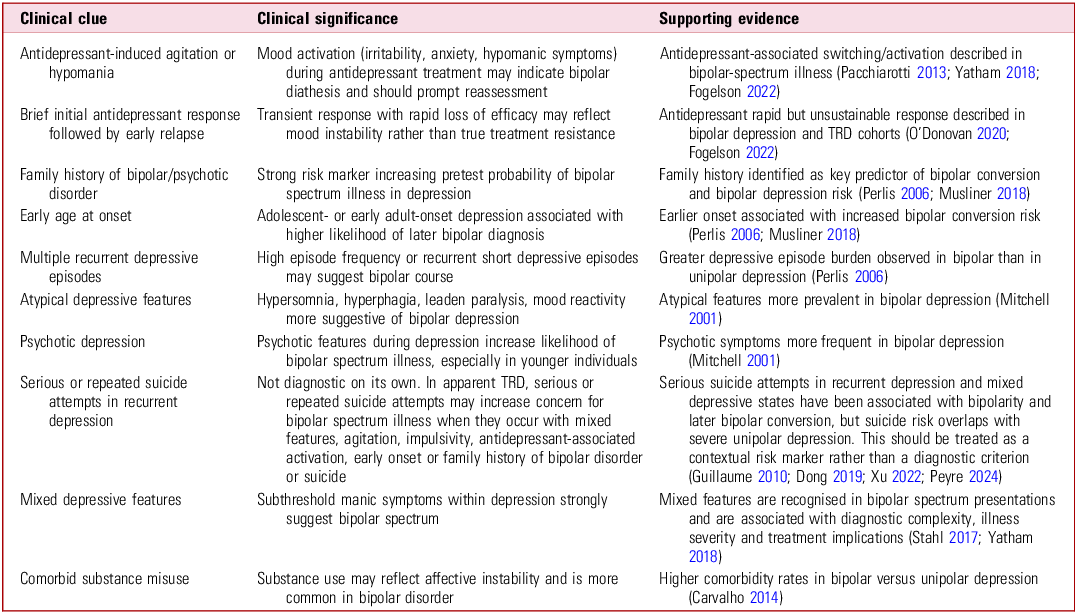
Table 1 summarises common clinical indicators, alongside the supporting evidence base, some of which are explored in the following list.
-
• Family history of bipolar or psychotic disorders: a first-degree relative with bipolar disorder is a well-established risk factor for bipolar spectrum illness and subsequent diagnostic conversion from unipolar depression to bipolar disorder (Correa Reference Correa, Akiskal and Gilmer2010; Musliner Reference Musliner and Østergaard2018).
-
• Multiple recurrent or brief depressive episodes: such episodes may increase suspicion for bipolar spectrum illness and have been associated with an increased likelihood of later bipolar diagnosis (Musliner Reference Musliner and Østergaard2018; O’Donovan Reference O’Donovan and Alda2020).
-
• Atypical depressive features: hypersomnia, increased appetite or weight gain, leaden paralysis and mood reactivity have been reported more frequently in bipolar than in unipolar depression (Mitchell Reference Mitchell, Wilhelm and Parker2001).
-
• Psychotic depression or very severe episodes: psychotic features during depression are more frequently associated with bipolar disorder. Similarly, very severe depressive episodes or postpartum depressive episodes should also raise suspicion.
-
• Early age at onset: onset of mood symptoms during adolescence or early adulthood is associated with bipolar spectrum disorders and may predict future diagnostic conversion among patients initially diagnosed with major depressive disorder (Perlis Reference Perlis, Ostacher and Patel2006; Desai Boström Reference Desai Boström, Cars and Hellner2024).
-
• History of brief hypomanic symptoms: such episodes may indicate clinically meaningful bipolar spectrum illness even when they fall below DSM duration thresholds and may have important treatment implications (Akiskal Reference Akiskal, Benazzi and Perugi2005; Fogelson Reference Fogelson and Kagan2022).
-
• Mixed features: the presence of irritability, racing thoughts, impulsivity or psychomotor agitation during depression should prompt diagnostic review for bipolar spectrum illness, as mixed presentations are associated with greater illness severity and increased likelihood of bipolarity (Stahl Reference Stahl, Morrissette and Faedda2017; Yatham Reference Yatham, Kennedy and Parikh2018).
-
• Substance use to self-medicate mood instability: comorbid substance misuse is common in bipolar disorder and should prompt consideration of underlying bipolar spectrum illness in individuals with apparent TRD (Rowland Reference Rowland and Marwaha2018; O’Donovan Reference O’Donovan and Alda2020).
Clinical clues suggesting bipolar spectrum disorder in treatment-resistant depression (TRD)

TABLE 1 Long description
A table with three columns and ten rows. The columns are labeled Clinical clue, Clinical significance, and Supporting evidence. The rows are as follows: Row 1: Clinical clue, Antidepressant-induced agitation or hypomania; Clinical significance, Mood activation (irritability, anxiety, hypomanic symptoms) during antidepressant treatment may indicate bipolar diathesis and should prompt reassessment; Supporting evidence, Antidepressant-associated switching/activation described in bipolar-spectrum illness (Pacchiarotti 2013; Yatham 2018; Fogelson 2022). Row 2: Clinical clue, A034 initial antidepressant response followed by early relapse; Clinical significance, Transient response with rapid loss of efficacy may reflect mood instability rather than true treatment resistance; Supporting evidence, Antidepressant response instability described in bipolar depression and TRD cohorts (O’Donovan 2020; Fogelson 2022). Row 3: Clinical clue, Family history of bipolar/psychotic disorder; Clinical significance, Strong risk marker increasing pretest probability of bipolar spectrum illness in depression; Supporting evidence, Family history identified as key predictor of bipolar conversion and bipolar depression risk (Perlis 2006; Musliner 2018). Row 4: Clinical clue, Early age at onset; Clinical significance, Adolescent- or early adult-onset depression associated with higher likelihood of later bipolar diagnosis; Supporting evidence, Earlier onset associated with increased bipolar conversion risk (Perlis 2006; Musliner 2018). Row 5: Clinical clue, Multiple recurrent depressive episodes; Clinical significance, High episode frequency or recurrent short depressive episodes may suggest bipolar course; Supporting evidence, Greater depressive episode burden observed in bipolar than in unipolar depression (Perlis 2006). Row 6: Clinical clue, Atypical depressive features; Clinical significance, Hypersomnia, hyperphagia, leaden paralysis, mood reactivity more suggestive of bipolar depression; Supporting evidence, Atypical features more prevalent in bipolar depression (Mitchell 2001). Row 7: Clinical clue, Psychotic depression; Clinical significance, Psychotic features during depression increase likelihood of bipolar spectrum illness, especially in younger individuals; Supporting evidence, Psychotic symptoms more frequent in bipolar depression (Mitchell 2001). Row 8: Clinical clue, Serious or repeated suicide attempts in recurrent depression; Clinical significance, Not diagnostic on its own. In apparent TRD, serious or repeated suicide attempts may increase concern for bipolar spectrum illness when they occur with mixed features, agitation, impulsivity, antidepressant-associated activation, early onset or family history of bipolar disorder or suicide; Supporting evidence, Serious suicide attempts in recurrent depression and mixed depressive states have been associated with bipolarity and later bipolar conversion, but suicide risk overlaps with severe unipolar depression. This should be treated as a contextual risk marker rather than a diagnostic criterion (Guillaume 2010; Dong 2019; Xu 2022; Peyre 2024). Row 9: Clinical clue, Mixed depressive features; Clinical significance, Subthreshold manic symptoms within depression strongly suggest bipolar spectrum; Supporting evidence, Mixed features are recognized in bipolar spectrum presentations and are associated with diagnostic complexity, illness severity and treatment implications (Stahl 2017; Yatham 2018). Row 10: Clinical clue, Comorbid substance misuse; Clinical significance, Substance use may reflect affective instability and is more common in bipolar disorder; Supporting evidence, Higher comorbidity rates in bipolar versus unipolar depression (Carvalho 2014).
Making use of clinical indicators in practice
The clinical indicators described above are largely derived from observational, cross-sectional and consensus-based evidence rather than prospective controlled studies. They should therefore be used to support structured clinical reasoning rather than as diagnostic algorithms. Contemporary longitudinal and population-based research increasingly supports a dimensional model of bipolarity, in which many patients presenting initially with recurrent depression may demonstrate subthreshold bipolar features years before a formal bipolar diagnosis is made. Accordingly, the primary value of these indicators is in identifying individuals who require closer longitudinal follow-up and repeated diagnostic review rather than in establishing diagnosis independently (Musliner Reference Musliner and Østergaard2018; O’Donovan Reference O’Donovan and Alda2020; Desai Boström Reference Desai Boström, Cars and Hellner2024). Supporting this, the multicentre Italian IMPROVE study reported that 57.4% of patients with apparent TRD screened positive for lifetime hypomanic symptoms, reinforcing the utility of structured bipolar-spectrum screening in TRD populations (Moro Reference Moro, Pinna and Acciaro2014).
Antidepressants in bipolar spectrum disorder: when ‘non-response’ should prompt diagnostic reassessment
Accurate identification of bipolar spectrum presentations is essential because treatment strategies differ substantially from those used in unipolar depression. When bipolar depression is misclassified as TRD, management may escalate to repeated antidepressant trials, despite limited efficacy of antidepressant monotherapy in bipolar depression and potential for worsening mood instability in patients with mixed features or cycling patterns (Pacchiarotti Reference Pacchiarotti, Bond and Baldessarini2013; Yatham Reference Yatham, Kennedy and Parikh2018).
The absence of a clear manic switch does not exclude bipolar spectrum illness. A meta-analytic review reported switch rates of approximately 6–8% in individuals initially diagnosed with major depressive disorder (Tondo Reference Tondo, Vázquez and Baldessarini2010). More commonly, antidepressants may be associated with subtler destabilisation, including mixed symptoms, agitation, mood lability and increased impulsivity, although causal attribution remains difficult (Pacchiarotti Reference Pacchiarotti, Bond and Baldessarini2013).
Analysis of data from the STEP-BD treatment research programme suggests that continuation of antidepressants alongside mood stabilisers in individuals with rapid cycling is associated with poorer outcomes, including increased frequency of depressive or manic mood episodes (El-Mallakh Reference El-Mallakh, Gao and Roberts2015). Although observational and not causal, these findings support caution with ongoing antidepressant exposure in rapid-cycling presentations. A systematic review similarly highlights rapid cycling as a high-burden subtype in which antidepressant exposure may be a contributing factor in susceptible individuals (Carvalho Reference Carvalho, Baune and Takwoingi2014).
When suicidality is present alongside mixed symptoms, agitation, impulsivity or antidepressant-associated activation, risk management and diagnostic reassessment should proceed together.
Changing management once bipolarity is suspected
Once bipolarity is suspected, management should move from repeated antidepressant escalation to structured review of diagnosis and treatment. This includes reassessing the benefit and adverse effects of current antidepressants, tapering activating or ineffective antidepressants when clinically appropriate, and starting or optimising mood-stabilising treatment.
Observational and clinical follow-up studies suggest that some patients improve when treatment is redirected towards bipolar depression rather than unipolar TRD. These findings should be interpreted cautiously, as they do not prove causality. Their value is that they support careful longitudinal reassessment and treatment realignment, not automatic diagnostic relabelling (Sharma Reference Sharma, Khan and Smith2005; Fogelson Reference Fogelson and Kagan2022).
First-line pharmacological options for bipolar depression include lithium, lamotrigine, quetiapine, lurasidone and cariprazine; olanzapine–fluoxetine combination is also an option for bipolar I depression. In patients with mixed features, evidence-based agents such as lurasidone or cariprazine are preferred (Stahl Reference Stahl, Morrissette and Faedda2017). In refractory cases, strategies include optimisation and combination of mood stabilisers and second-generation antipsychotics, with electroconvulsive therapy (ECT) and transcranial magnetic stimulation (TMS) as additional options where indicated; neuromodulation considerations are addressed in the next section.
Barriers to antidepressants discontinuation
A key clinical barrier is therapeutic inertia, particularly reluctance to discontinue antidepressants despite limited benefit. In bipolar spectrum illness, continued antidepressant exposure may perpetuate activation, mixed symptoms and mood instability. The spectrum approach therefore emphasises diagnostic refinement to guide safer and more effective treatment selection rather than simple diagnostic relabelling (Fogelson Reference Fogelson and Kagan2022).
Neuromodulation when bipolarity is suspected
Neuromodulation should not be presented as uniquely hazardous in bipolar depression. It may be clinically appropriate in severe or refractory depression, including when bipolarity is known or suspected. The key issue is that suspected bipolarity changes pretreatment assessment, consent, optimisation of mood-stabilising treatment and monitoring.
Transcranial magnetic stimulation
For TMS, controlled evidence suggests that its use in treatment-emergent mania may not differ significantly from sham stimulation, meaning that spontaneous mood switching may also explain some cases. Therefore, TMS is not contraindicated in bipolar depression, but careful screening and monitoring are needed (McIntyre Reference McIntyre and Calabrese2019).
Case reports and small series describe mood elevation following TMS, particularly in bipolar disorder or mixed features (Tondo Reference Tondo, Vázquez and Baldessarini2010). However, controlled studies suggest that rates of treatment-emergent mania may not differ significantly between active and sham stimulation, indicating that spontaneous mood switching may contribute to observed cases (Xia Reference Xia, Gajwani and Muzina2008). Current evidence therefore does not support TMS as contraindicated in bipolar depression, but highlights the need for diagnostic review, optimisation of mood stabilisation when bipolarity is suspected and close monitoring for affective switching during treatment (Yatham Reference Yatham, Kennedy and Parikh2018).
Electroconvulsive therapy
Electroconvulsive therapy has the strongest evidence base among neuromodulation strategies for both bipolar and unipolar depression, including severe and treatment-resistant cases, and is generally considered safe with appropriate pharmacological cover (National Institute for Health and Care Excellence 2014). It may be preferred in severe bipolar depression requiring rapid response.
Ketamine/esketamine
Ketamine and intranasal esketamine have shown rapid antidepressant effects in bipolar depression, particularly when combined with mood stabilisers. Although treatment-emergent hypomania or mania appear uncommon, cases have been reported, and careful monitoring is required, especially in individuals with mixed features or prior antidepressant-induced switching (Bahji Reference Bahji, Zarate and Vazquez2021; McIntyre Reference McIntyre, Rosenblat and Nemeroff2021).
Neurostimulation
Deep brain stimulation and vagus nerve stimulation remain investigational, with insufficient evidence to support routine clinical use in bipolar depression outside specialist or research settings.
Clinical implications for practice
Diagnostic categories remain useful for communication and research, but they should be combined with longitudinal clinical judgement. In patients with recurrent, atypical, mixed or treatment-resistant depression, the practical question is whether the overall course suggests bipolar spectrum illness and whether the current treatment plan should be reviewed. This approach should reduce diagnostic error without encouraging overdiagnosis. As Correa and colleagues concluded, clinicians treating apparent major depressive disorder should actively search for soft signs of bipolarity and be prepared to revise diagnosis and treatment accordingly (Correa Reference Correa, Akiskal and Gilmer2010).
Misclassification contributes to prolonged diagnostic delay, during which patients may receive repeated antidepressant trials that do not address the underlying condition. Earlier recognition of bipolarity can improve medication selection and risk management, particularly in patients with agitation, impulsivity, mixed features or recurrent episodes. Evidence suggests that timely diagnosis and mood-stabilising treatment are associated with fewer suicide attempts and better overall outcomes (Andersson Reference Andersson, Jokinen and Jarbin2023).
Key take-home points from this article are listed in Box 2.
Key take-home points
-
• A clinically important minority of patients with apparent treatment-resistant depression (TRD) may have unrecognised bipolar spectrum disorder; this article does not suggest that most TRD is bipolar.
-
• Early-onset or recurrent depression, mixed features, antidepressant-induced activation and a family history of bipolar disorder should prompt careful reassessment, although no single feature is diagnostic.
-
• In patients with underlying bipolarity, antidepressant monotherapy may contribute to mood destabilisation; mood stabilisers and selected second-generation antipsychotics are generally preferred for bipolar depression.
-
• Reported rates of conversion from unipolar depression to bipolar disorder vary widely according to clinical setting, with substantially higher estimates in tertiary referral populations than in community samples.
-
• When neuromodulation is considered in patients with known or suspected bipolarity, careful assessment, optimisation of mood-stabilising therapy and monitoring for mood elevation are recommended; electroconvulsive therapy (ECT) remains an important option for severe or refractory bipolar depression.
Conclusion
A clinically relevant minority of patients labelled as having TRD may have unrecognised bipolar spectrum disorder. These individuals often present with recurrent or chronic depression accompanied by mixed symptoms, atypical features or brief hypomanic episodes that do not meet full diagnostic thresholds and may therefore be missed in routine practice. Persistent non-response, subthreshold antidepressant-induced activation or mixed features should prompt reconsideration of the diagnosis rather than simple escalation of antidepressant treatment.
Effective assessment requires evaluation beyond categorical diagnosis of unipolar depression in the absence of a clear manic episode. Clinicians should actively screen for bipolarity, including family history of bipolar or psychotic disorders, previous periods of elevated mood or increased energy, and mixed depressive features such as irritability, agitation, mood lability and impulsivity. Diagnostic judgement should integrate longitudinal illness course and overall symptom pattern to determine whether bipolar spectrum illness is more likely.
Earlier recognition may reduce inappropriate antidepressant escalation and support more appropriate, evidence-based treatment. The goal is not to increase the diagnosis of bipolar disorder, but reduction of diagnostic error through systematic longitudinal reassessment in patients whose depressive illness deviates from the expected unipolar course.
MCQs
Select the single best option for each question stem
-
1 According to Sharma et al (2005), approximately what proportion of patients referred to a specialist tertiary treatment-resistant depression clinic and initially diagnosed with unipolar depression were subsequently found to have bipolar spectrum features?
-
a 5%
-
b 20%
-
c 50%
-
d 80%
-
e 100%.
-
-
2 Which of the following is not a clinical clue that a patient’s depression may in fact be part of a bipolar spectrum disorder?
-
a The patient became highly agitated and irritable after starting an antidepressant
-
b The patient has a first-degree family member with bipolar disorder
-
c During depressive episodes, the patient sleeps excessively and gains weight (atypical features)
-
d The patient’s first depressive episode occurred after age 50 with no prior mood history
-
e The patient recalls a couple of short (2–3 day) periods of abnormally elevated or energetic mood in the past.
-
-
3 The STEP-BD study examined outcomes in patients with a history of rapid-cycling bipolar disorder who either continued or discontinued antidepressant treatment (while on a mood stabiliser). Which outcome was observed in those who continued antidepressant therapy?
-
a A significant increase in the frequency of mood episodes compared with those who discontinued the antidepressant
-
b A significant reduction in depressive relapses over the following year
-
c No difference in mood episode frequency or stability compared with those who stopped the antidepressant
-
d Prevention of manic episodes without any effect on depression recurrence
-
e Improved long-term remission rates due to the combination of antidepressant and mood stabiliser.
-
-
4 Regarding major depressive episodes with mixed features, which statement is true?
-
a Depression with mixed features is associated with a higher risk of suicidal ideation or attempts
-
b Depression with mixed features is an extremely rare phenomenon (under 1% of depressive episodes)
-
c If mixed features are present, the diagnosis automatically changes from major depressive disorder to bipolar I disorder
-
d Antidepressant monotherapy is especially effective for depression with mixed features
-
e The DSM-5 mixed features specifier requires at least five concurrent hypomanic symptoms during depression.
-
-
5 A 35-year-old patient with ‘treatment-resistant depression’ is found to have subtle hypomanic episodes and a family history of bipolar disorder, suggesting a bipolar spectrum diagnosis. Which treatment strategy is most appropriate for this individual’s depressive symptoms?
-
a Continue the current antidepressant and increase the dose
-
b Add a second antidepressant of a different class (dual therapy)
-
c Gradually discontinue antidepressants and start a mood stabiliser or atypical antipsychotic
-
d Augment the antidepressant with a stimulant (e.g. amphetamine) to improve depressive symptoms
-
e Use long-term antidepressant therapy, combined with a benzodiazepine for agitation.
-
MCQ answers
-
1 c
-
2 d
-
3 a
-
4 a
-
5 c
Data availability
Data availability is not applicable to this article as no new data were created or analysed in this study.
Acknowledgements
We thank colleagues in the Department of Behavioural Medicine at Sultan Qaboos University Hospital, University Medical City, Oman, for their support and for the constructive discussions that informed this article.
Author contributions
M.A.A. conceived the article, developed the conceptual framework, conducted the literature review and led the drafting and critical revision of the manuscript. A.A.G. contributed to literature screening, synthesis of clinical evidence and drafting of early sections. A.A.H. provided senior clinical input, contributed to interpretation of evidence and critically reviewed the manuscript for intellectual content. M.A.B. and N.A.B. contributed to clinical perspectives, refinement of diagnostic and treatment sections, and manuscript revision. H.A.S. provided overall academic supervision, contributed to the conceptual refinement and critically reviewed the final manuscript. All authors reviewed and approved the final version of the manuscript.
Funding
This work received no specific grant from any funding agency, commercial or not-for-profit sectors.
Declaration of interest
None.

 Open access


eLetters
No eLetters have been published for this article.