Introduction
The late 1990s saw a rapid growth in green marketing and organic food markets in the United States (Ottman, Reference Ottman2011). Widespread environmental awareness could explain the rise in the popularity of eco-friendly household products. More people than ever are discovering that going green is not only good for the body but also for the planet, as ‘consumers are concerned about the environmental and social impacts of the products they buy’ (Bonini & Oppenheim, Reference Bonini and Oppenheim2008: 56). Concurrently, marketing researchers have sought to understand different retail strategies concerning the branding of organic products (cf. Hall, Reference Hall2008; Ottman, Reference Ottman2011; Smith & Brower, Reference Smith and Brower2012).
This study investigates the language and strategies used in naming handmade soaps (HS), a niche group of natural products that have become popular among environmentally conscientious consumers. The study is based on the premise that brand and product names play a crucial role in their marketing and advertisement (cf. Barry, Reference Barry1993; Wilkerson, Reference Wilkerson1997). In the study, 339 HS names from nine US-based brands were examined in order to uncover common naming patterns.
Collectively, HS names help to promote the overall brand image of health and wellness. As HS retailers often tout the ‘all-natural’ feature of their products, the incorporation of common plant names is apt. Moreover, HS names reveal the diversity of plant species and natural food remedies that Mother Nature has made available. On the other hand, retailers are aware that eye-catching names can create allure. Inventive HS names, through clever wordplay, popular culture allusions, and unconventional orthography, help reframe traditional soaps and soap-making as hip and trendy. This study provides insights into HS names and naming conventions in general for consumer products.
Handmade soaps
HS, sometimes referred to as ‘handcrafted skin care soaps,’ are part of an increasing trend towards natural and organic living. HS are ideal alternatives to mass-produced soaps because they do not contain artificial fragrances and synthetic mixtures that can potentially irritate the skin and even be linked to cancer. They are made from a chemical reaction between water, lye, fats, and oils. The fats and oils are turned into soap and glycerine through a process called saponification (Cross, Reference Cross2015). Additionally, HS can be scented with pure essential oils, which are known to have therapeutic properties. On the other hand, the ‘natural fragrance’ and ‘perfumed scent’ contained in commercial soaps are often artificial ingredients that may be harmful to the body. Finally, whereas HS are made in batches, commercial soaps are made on a larger scale in factories. Since the latter includes non-biodegradable ingredients, the lather that goes down the pipes may harm the environment.
Methodology
For this study, 339 HS names were extracted from the main websites of nine US-based makers of natural handcrafted soaps – Jennifer's Handmade Soap, The Parsonage Soap Company, Soaptopia, Sweet Cheeks Soap Company, SLAB Handmade Soap, STEM Handmade Soap, Chagrin Valley Soap & Salve, A Wild Soap Bar, and Kalliste Soap Shop. The names were then compiled and categorized by features, such as plant names, inventive names. In order to further understand HS’ healing properties, I consulted both online and printed references on HS and plant essential oils (cf. Cross, Reference Cross2015; Lawless, Reference Lawless2013). Since the words soap or handmade soap are inherently part of the HS names, these designations were dropped for simplicity and space reasons.
Results
Plant and food names
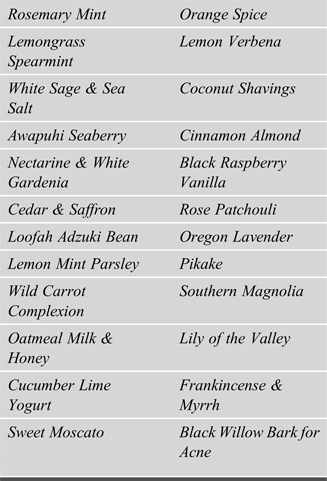
The incorporation of plant and food names is the most common feature, comprising 72% (243) of the 339 HS names. A sample list is provided in Table 1. In the following discussion, the number of (multiple) occurrences is provided in parentheses.
Sample list of HS names containing plant and food names

The term herb appears once in the list, along with several other names of specific herbs and spices. The herbs of genus Mentha are the most popular. Collectively, their names appear 22 times: mint (14), peppermint (4), spearmint (2), and horsemint. Minty herbs are known to have a stimulating effect on the mind and body. Names of the four essential herbs immortalized in the English ballad Scarborough Fair have been identified, i.e., parsley, sage (8), rosemary (3), and thyme. While the parsley plant is known for its soothing effect, rosemary (Latin ros marinum ‘the dew of the sea’) oil has been touted for its versatility. Like sage oil, the essential oil of thyme can act as a natural disinfectant. For scents reminiscent of ethnic cuisines, the keywords to look for may be ginger (5), lemongrass (3), basil (2), and clove (2) for lovers of Chinese, Thai, Italian, and Indonesian cooking, respectively. These herbs do more than spice up the meals; basil and ginger oils, for example, have an uplifting effect on emotions and on the body. Other names of more exotic culinary ingredients are anise, awapuhi, litsea, saffron, and yucca root. The generic term spice itself appears 13 times.
The data shows that HS selections appeal to all kinds of preferences. For a lighter veggie scent, one may consider cucumber (2), loofah (2), carrot (2), or seaweed. Although gourds (loofah and cucumber) are fruits, many of them are eaten as vegetables. Cucumbers have properties that refresh and soften the skin. Sometimes spelled as luffa, loofah is used to exfoliate and remove dead skin cells. Seaweed is popular in East Asia and can also be applied as a natural exfoliant. There is no lack of sweet scents either, exemplified by honey (14), vanilla (9), butter (3), chocolate (2), cinnamon, and just plain sugar. Honey is valued for its many skin-healing properties. Regarding the popularity of vanilla-based fragrance, Fox (Reference Fox2005) attributes it ‘to a subconscious association, in particular the pleasant childhood memories of its comforting milky warmth’ (Fox, Reference Fox2005: 8). For a warm breakfast aroma, HS names incorporating oatmeal (14), milk (6), or yogurt (2) are available. Milk and oatmeal baths are known to soothe itching. Natural homemade yogurt soaps can be used as gentle, skin-conditioning face soap. Finally, supplementing the menu list are names of caffeinated and alcoholic beverages, such as coffee (2), beer (2), cider, moscato, spritzer, and Apple Jack. A known stimulant, coffee can invigorate the body and improve concentration.
Fruits are gifts to humankind. They are rich in vitamins and sugars, and their fresh scents are appealing. The list includes many names of fruits commonly found in local produce, including apple (3), pear (2), and melon. Fruits within the citrus family are especially popular. Citrus and orange together occur 15 times. Citrus oils emit a sweet aroma and are believed to improve mood and brighten the complexion. Three other names of fruits in the citrus family are lime (7), lemon (6), and grapefruit (2). Lemon oil has strong antiseptic effects and is also useful for purifying the skin. The essential oil of grapefruit is considered an effective natural skin toner. For supple, wrinkle-free skin, members of the Prunus genus are good candidates. They are nominally represented in the HS names list by almond (6), cherry (3), peach (2), nectarine, and apricot. Apricot kernel oil and peach kernel oil can penetrate easily into sensitive, delicate skin to provide nourishment. Enriched with the antioxidant vitamin E, almond oil can help promote healthy skin in general.
Handmade soap names suggestive of more exotic tropical scents were also identified – coconut (3), fig (2), papaya, avocado, and pomegranates. Infused with omega-3 fatty acids and vitamins, coconut oil, and avocado oil can help the skin retain its moisture content. Papaya contains Papain, an enzyme with anti-aging and exfoliation benefits, while pomegranates and figs can help brighten and even out the skin tone. Olive oil, a key ingredient in HS with the term olive (4), is considered a good remedy for skin problems and is also an effective moisturizer. Finally, numerous names of ‘berries’ were uncovered. These include cranberry (4), blackberry (2), raspberry (2), strawberry, bayberry, blueberry, huckleberry, juniper berry, and seaberry. The fleshy fruits referenced may or may not edible, but they contain active ingredients that are beneficial for the skin.
The generic term floral appears once, but names of flowers are prevalent. Known as the ‘Queen of Flowers,’ the rose is a beloved floral staple for makers of skin care products. Any HS with the name rose (9) would not only smell as sweet as the flower, but will also help relieve tension and anxiety. The rose is not the most popular flower plant, however. This distinction belongs to lavender (lavender, 15), which is known to have relaxing effects on the nervous system. Equally, chamomile evokes the warmth of a soothing chamomile-infused tea that helps calm the nerves, and verbena (3) is associated with a refreshing and slightly lemony scent. Witch hazel refers to the mildly astringent herbal ingredient known to reduce excess oil and constrict pores. Other names of cultivated flowers identified in the list are gardenia (3), honeysuckle (2), magnolia (2), calendula, lilac, lily of the valley, plumeria, tuberose, wisteria, and pikake (Hawaiian name for Jasmine). While the specific designation flower is exemplified by sunflower, wildflower, and passionflower, the synonymous term blossom can be found in the soap names Orange Blossom, Linden Blossom, and Olive Blossom.
Names of plants with a more woody and earthy aroma are well represented, i.e. patchouli (7), cedar (4), Douglas fir (3), pine (3), sandalwood (3), amber (2), myrrh (2), cedarwood (2), frankincense (2), oak, and Nag Champa. A woody aroma is reminiscent of the outdoors for some, and the essential oils of these plants have an extremely calming effect on the mind and emotions.
Finally, one notable mention from the list is aloe (5), a plant name often found on skin care product labels in local retail pharmacies. A soothing moisturizer, aloe leaves skin healthy and elastic.
In several instances, names of plants and food are modified by a descriptor such as a colour term. In these cases, the descriptor further defines the particular variety of the plant species. For example, white collocates with gardenia, ginger, and sage. In another case, the word Spanish also modifies sage. However, white sage is different from Spanish sage. Other colour term–plant name collocations are red (rose), green (apple), and black (amber, cherry, clay, currant, raspberry, and sage). Collocations of plant names with a region term include Oregon (apple), Java (spice), and Arabian (spice). In other cases, HS may include plant names in conjunction with specific purposes, for example, Juniper Berry Shampoo & Body and Yucca Root Shampoo Body. Natural hair rinses are preferable because they act to stimulate circulation in the scalp. Other HS examples designating special purposes are Loofah Pumice Foot and Organic Olive Baby.
Inventive names
Inventive names can be described as colourful, witty, and unorthodox. Such colourful names include Lumberjack Lather, Jazzy Blue, Sunny Baby, Purple Haze, Shaman Scrub, Sweet Dreamweaver, Bluebonnet, Gardener's Revenge, Hawk's Nest, The Oracle, Christmas Memories, Sweet Bouquet, Waterford Faire, Shenandoah Starlight, Winter Survival, Winter Serenade, Earl's Girls, Blue Ridge Breezes, Moon Magic Natural, Red Hot Lover, Spread the Love, Piece of Peace, and Woodland Trail. The soap name itself can also be a confidence booster for the person wearing the soap: I'm Yummy and I Know It.
Among the colourful names are references to faraway places. These include Scottish Wedding, Tuscany Evening, Egyptian Dragon, Jamaica Me Crazy, Weekend in Maui, Moroccan Garden, Venice Vanyasa, Thai On One, and Gold Coast with African Black. Castile (4) refers to the region in Spain where a certain olive-based soap-making style has been originated and perfected. These HS names have extra appeal. Using these soaps will transport users to an exotic tropical island or faraway land.
Allusions to popular culture, sometimes combined with clever wordplay, were also identified. Miami Vice references the popular 80s TV show, Rozilla vs. Dry Skinea the Godzilla movie franchise, Tequila Sunrise and Ocean's 12 the Hollywood films, Woodstock Revival the music festival, Coal Play the band Coldplay, Bub Marley the famous Jamaican musician, and Like a Virgin the Madonna song. The process of word substitution can be found in Beauty and the Beach (beast becomes beach in the name of the fairy tale classic), Soap Pray Love (eat becomes soap ‘bestselling novel’), and Sweet Bali High (valley becomes Bali ‘teen novel series’). Song lyrics also served as inspiration for the HS names, such as Cleaning Me Softly with this Soap (Roberta Flack), I Can Think Clearly Now the Pain is Gone (Johnny Nash), and Somewhere over the Bathbow. Finally, one HS name is credited to a movie quote, i.e. Run Forrest Run.
Creative names cross-listed with the plant name category include Anise Star, La La Lavender, and Raspberry Porter. In two instances, aloe becomes the substitute for words beginning with the glottal fricative [h]: Aloe Be Thy Name (hallowed becomes aloe) and Aloe Can You Go (how low becomes aloe). An example of homophonous substitution can be found in Honey Bee Good. While Boardwalk Hempire is a play on the title of the hit TV drama Boardwalk Empire, Grapefruit Gatsby is inspired by the great literary classic. Additional pop culture-inspired examples are Sage Against the Machine (rage becomes sage) and Woody Wood Pepper (pecker becomes pepper).
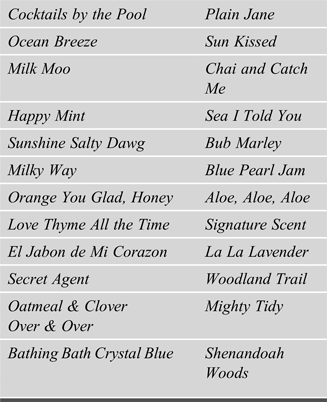
Unusual fonts and styles stood out perceptually. The linguistic strategies adopted include incorporating the use of vowel lengthening (LA Squeeeeeeze, Hippee), quotation marks (Army ‘Hooah’ Sandalwood), contraction (Goin’ Green), semi-syllable breaks (Neem-o-Politan, Staying A-Lime), capitalization (Life is RUFF Dog, MANfinity, Pepperlyptus REX, L'OATus), initial and abbreviation (Ms. Afro D. Sheak, Pub Suds), blends (Eucan Smudge Me), a numeral in place of a word (Nut 2 Sheabee), imperatives (Soap. Revolt!), and ‘netspeak’ (The Skin-E). Finally, there are also two instances of code-switching, i.e. Viva la Free Ya! and Melrose-y Sunset. Additional inventive and allusive examples are provided in Table 2.
Additional colourful, allusive, and inventive coinages

‘Other’ names
Sixteen HS names (5%) fall under the ‘Other’ category, which mostly includes names of other substances, such as minerals. Minerals have been known to help cells absorb and utilize the moisture that keeps skin smooth, soft, and resilient. While charcoal appears once, clay appears three times. The antibacterial properties of sea salt (sea salt, 2) encourage cleaning and protect against new infections. The soap name Dead Sea Spa makes reference to the lake situated between Israel and Jordan. The mud there has a high concentration of magnesium, calcium chloride, and potassium, all of which are considered healthy and beautifying for the skin (Shirazi, Reference Shirazi2014).
Discussion
With various fragrances and recipes for consumers to choose from, HS appeal to all kinds of scent preferences – floral, fruity, spicy, sweet, light, resinous, and woody. The list of HS names also highlights the diversity of plant species and natural food remedies that Mother Nature has made available. In general, HS names show that just about every part of a plant can be used – its flowers, seeds, leaves, fruit, bark, and roots. No matter one's personal preference, there is a block of soap for what one's skin or senses crave. This is facilitated by HS names, which assist consumers in identifying the key ingredients in their traditionally made, all-natural soaps. In this way, HS names preserve the integrity of the contents of the soaps. If the name states lavender, then it is essential lavender oil that is in the soap. If the name states coconut, then coconut oil is used, in addition to all of the enriching vitamins and minerals. For the most part, HS names help to promote the brand image of health and wellness.
In addition, HS names do not carry any legal liability, an issue that companies or individuals may encounter when they trample, intentionally or unintentionally, on someone else's good name (cf. Adams, Reference Adams1987 on generic product names). As shown, HS products from different brands can have the same name (e.g., Lavender, Honeysuckle). However, soap makers, most likely will not be sued for having the same name. This is legally acceptable, since no company or individual actually owns, say, the words lavender or lime and honey.
From an etymological point of view, HS names are fascinating. Aside from familiar common plant names, there are also exotic-sounding names, which might motivate interested consumers to learn more about them and their healing properties. For example, Awapuhi is Hawaiian, meaning ‘ginger’; Adzuki ‘little bean’ is of Japanese origin; Nag Champa ‘snake flower’ is Hindi; and anise can be traced back to Ancient Greek ánisos meaning ‘uneven’. Yucca, from Central and South America, is another name for the cassava plant. Thus, HS names and their origins are lexicographically enlightening as well as informative.
The predominant naming pattern, i.e. the incorporation of plant and food names, contrasts with that of the major-brand commercial soaps, which may not even have the label soap. They might be called beauty bars, moisturizing bars, body bars, or anti-aging nourishing bars. As Cheryl McCoy of Natural News explained, ‘That is because they aren't actually soap and can't legally claim to be; they're detergents’ (McCoy, Reference McCoy2009: 1). Consider one major popular brand which has the following named products in its ‘Beauty Bar’ line ubiquitous in local retail, grocery, and pharmacy stores: White Beauty Bar, Core Pink, Sensitive Skin, Gentle Exfoliating, Go Fresh Revive, Go Fresh Cool, and Go Fresh Restore. Even with the inclusion of aloe or coconut on a few of the bottles, the fancy names are just a guise. In fact, a quick examination of the ingredient list for one of the ‘beauty bars’ available in all retail stores shows that it primarily contains synthetic agents, artificial colouring, and other unpronounceable chemicals (e.g., Sodium Lauroyl, Isethionate, Stearic Acid, Sodium Palmitate, Lauric Acid, Sodium Isethionate, Kernelate, Parfum, Sodium Chloride, Titanium Dioxide [C177891], Zinc Oxide, Terasodium EDTA).
On the other hand, HS retailers may also engage in the practice of adopting a fancy or inventive name. As exemplified in 16% of the names, some of these names are colourful (Lumberjack Lather, Spread the Love), witty (Rozilla vs. Dry Skinea), and unconventionally offbeat (LA Squeeeeeeze, L'OATus). With a number of pop culture references and unconventional coinages, these names are more creative than informative. The incorporation of geographical terms, for example Weekend in Maui, Morocco Garden, in particular seems to be an effective marketing strategy, as the names paint an attractive picture in the minds of the buyers. These soaps, via their descriptive names, are helping to sell dreams, adventure, and romance. As for the unconventional orthography, the aim may be to present a style that is eye-catching to consumers.
A downside of HS names may be that, while the majority of HS names are befitting of health and wellness brands, they are not particularly memorable. In this case, product naming is contrary to the general observation noted in brand naming studies (cf. Robertson, Reference Robertson1989), which is that the brand name should be distinctive, memorable, legally protectable, and easy to pronounce. On the whole, HS names seem to defy this expectation.
A study of this nature also leads to other inquiries, such as whether the naming patterns of US-based HS are different from those of non-US-based HS, specifically, products originating in non-English-speaking countries. Future research on this issue could potentially contribute to studies on consumer market research as well as product naming across cultures.
 LINDSEY N. H. CHEN is currently an Associate Professor of General Linguistics at National Taiwan Normal University. She has examined and written about various kinds of proper names, including English given names, institution names, ethnically- marked names, and most recently, product names. This article on English names of handmade soaps stems partly from her passion for natural personal care products and interest in herbal medicine. Email: chenlindsey@yahoo.com